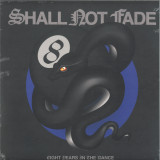
After last year's release on Shall Not Fade, Paul Rudder & Kresy are back - this time on Exploited for the infamous Black Jukebox Series.
‘Along With You’ bounces along with plenty of feel-good energy, channeling ‘90s energy with its thicc bassline pump and an earworm of a sugar-sweet vocal. Well-chosen vox cuts create an infectious rhythm in between the full vocal sections while soft synth arps tickle the surface of the track and epic snare rolls inject more energy in the breakdown and at key moments. Guaranteed to get massive reactions. Kresy’s Continuum Mix takes things into a lighter direction with gorgeous, sunny piano chords chiming in unison with a driving, uplifting bassline and pretty synth flourishes.
‘Her Dream Road’ pushes the EP into almost ambient house territory with its swirling pads and deep atmospheres, but the energetic percussion and warm bassline throb and melody give it plenty of dancefloor energy. Kresy’s Mellonized Remix pumps it up with plump organ bass, dreamy acid licks, soaring arpeggios, continual automation and epic pad progressions that make for an absolutely huge rework that’s full of life, atmosphere and colour.
Suche:rudder
- 1
Lixo - The Production Alias Of Alex Hislop, Founder Of Influential London Party Collective, Getme! - Returns To The Crew's Label Arm With New Ep 'cicada'.
The Follow-up To 2016's 'writer's Block'single Feat Trim And 2017's "ida" Ep In Collaboration With Quays.the "cicada" Ep Sees Lixo Explore The Gamut Of Electronic Music With Washed Out Vocal Sampling, Warm, Tribal Bass Sounds And Fluttery, Dreamscape Melodies That Tug At The More Experimental, Exploratory Corners Of London's Club Music Landscape.
With A Back Catalogue Already Spanning 19 Records - Including Key Releases From The Likes Of Lil Jabba , Slime, Trim And Dam Mantle - The London Party-come-label Getme! Have Established Themselves As One Of The City's Key Electronic Hubs Over The Last 10 Years. Formed By Alex Hislop (lixo) In 2006, The Brand Now Spans Events, Radio And Their Aforementioned Label Arm.
Daydream returns with a new various-artists release. Four tracks from label regulars Nayve and Twelve Clouds sit alongside contributions from two exciting new additions to the crew, Coral O’Connor and Paul Rudder. Together they deliver strong, club-ready house filled with deep, dubby sounds.
Das fünfte, den Durchbruch für Evan Dando bringende, Lemonheads-Album 'It's A Shame About Ray', wird zum 33-jährigen Jubiläum wieder als Single Vinyl in klassisch schwarz mit der Original-Tracklist nachgepresst (mit Download Card für die zusätzlichen Bonustracks der Deluxe Edition von 2022). Beschrieben von Musikjournalist und Autor Everett True als "Ein 30-minütiger Einblick in das, was es heißt, hart und schnell und locker und glücklich mit gleichgesinnten Kumpels zu leben, angetrieben von einer gemeinsamen Liebe zu ähnlichen Bands und Drogen und Alkohol und Freiheit". It's A Shame About Ray" hatte in jenen berauschenden, sorglosen Tagen des Jahres '92 eine beträchtliche Wirkung. Die Platte fängt perfekt Dandos Fähigkeit ein, die Sehnsucht und Lust der Teenager mühelos in einem zweiminütigen Popsong zu verpacken. Singles wie "My Drug Buddy" und der luftig-perfekte Pop des Titeltracks mögen herausstechen, aber die eigentliche Stärke des Albums liegt in den Tracks dazwischen; das wirklich fantastische 'Confetti' (über die Scheidung von Evans Eltern) und die atemberaubend lässige Akustik-Coverversion von 'Frank Mills' (aus dem Hippie-Musical Hair), eine Version, in der jedes Quäntchen Pathos und Gefühl für die verlorene Generation der 1960er mitzuschwingen scheint. Wenn Evan Dando Zeilen wie "I love him/but it embarrasses me/To walk down the street with him/He lives in Brooklyn somewhere/And he wears his white crash helmet" singt, weiß man erst richtig zu schätzen, wie wunderbar und verlockend Popmusik sein kann. Und dann gibt es da noch den Ansturm von Aufsässigkeit und Unverfrorenheit im wunderbar verkürzten 'Bit Part'; das aufgedrehte 'Ceiling Fan In My Spoon'... das war Jungs/Teenager-Popmusik mit Stil auf einem Niveau mit The Kinks, den frühen Undertones und den Wipers. "Ray sounds revelatory in its restlessness, mixing college pop with country flair and relocating Gus Van Sant's Portland atmosphere to New England." Pitchfork *****½ (Download only adiitional extras: 1 Mrs Robinson 2 Shakey Ground 3 My Drug Buddy (KCRW Session, 1992) 4 Knowing Me, Knowing You (Acoustic) 5 Confetti (Acoustic) 6 Alison's Starting To Happen (Acoustic) 7 Divan. Demo Recordings - Download only. 8 It's A Shame About Ray (Demo) 9 Rockin' Stroll (Demo) 10 My Drug Buddy (Demo) 11 Hannah & Gabi (Demo) 12 Kitchen (Demo) 13 Bit Part (Demo) 14 Rudderless (Demo) 15 Ceiling Fan In My Spoon (Demo) 16 Confetti (Demo))
- A1: Rockin' Stroll
- A2: Confetti
- A3: It's A Shame About Ray
- A4: Rudderless
- A5: My Drug Buddy
- A6: The Turnpike Down
- B1: Bit Part
- B2: Alison's Starting To Happen
- B3: Hannah & Gabi
- B4: Kitchen
- B5: Ceiling Fan In My Spoon
- B6: Frank Mills
- C1: Mrs Robinson
- C2: Shakey Ground
- C3: My Drug Buddy (Kcrw Session)
- C4: Knowing Me, Knowing You
- C5: Confetti (Acoustic)
- C6: Alison´s Starting To Happen (Acoustic)
- C7: Divan
- D1: It´s A Shame About Ray (Demo)
- D2: Rockin´stroll (Demo)
- D3: My Drug Buddy (Demo)
- D4: Hannah & Gabi (Demo)
- D5: Kitchen (Demo)
- D8: Ceiling Fan In My Spoon (Demo)
- D9: Confetti (Demo)
- D6: Bit Part (Demo)
- D7: Rudderless (Demo)
Lemonheads’ seminal album ‘It’s A Shame About Ray’, lovingly reissued for it’s 30th Anniversary. The long overdue reissue includes a slew of extra material, including an unreleased ‘My Drug Buddy’ KCRW session track from 1992 featuring Juliana Hatfield, B-sides from singles ‘It’s A Shame About Ray’ and ‘Confetti’, a track from the ‘Mrs. Robinson/Being Round’ EP, alongside demos that will be released for the first time on vinyl. This reissue celebrates their prestigious fifth album, these deluxe bookback editions feature new liner notes and unseen photos.
Described by music journalist and author Everett True as “A 30-minute insight into what it’s like to live hard and fast and loose and happy with like-minded buddies, fuelled by a shared love for similar bands and drugs and booze and freedom.”. ‘It's A Shame About Ray’ had a considerable impact back in those heady, carefree days of '92, the record perfectly captures Dando’s ability to effortlessly encapsulate teenage longing and lust over the course of a two-minute pop song.
Singles such as 'My Drug Buddy' and the breezy perfect pop of the title track might stand out (plus the add-on of 'Mrs. Robinson' which later copies included), but the album's real strength lies in the tracks in-between; the truly fantastic 'Confetti' (written about Evan's parents' divorce), and the eye-wateringly casual acoustic cover of 'Frank Mills' (from the "hippie" musical Hair), a version that seems to resonate with every ounce of pathos and emotion felt for the lost 1960s generation. To hear Evan Dando sing lines like 'I love him/but it embarrasses me/To walk down the street with him/He lives in Brooklyn somewhere/And he wears his white crash helmet' is to truly appreciate how wonderful and tantalising pop music can be. Then, there's the rush of insurgency and brattishness on the wonderfully truncated 'Bit Part'; the topsy-turvy 'Ceiling Fan In My Spoon'... this was male teenage skinny-tie pop music on a level of brilliance with The Kinks, early Undertones, Wipers.
Expected late October/early November
Scott Gilmore’s Volume 01, an Analog Synth Gem, Makes Its Vinyl Debut - Pressed at 45RPM for maximum fidelity.
Recorded on a vintage Tascam 388, the LP version of Gilmore’s alluring, easy-going instrumental electronic record arrives in the physical world via In Sheep’s Clothing Hi-Fi Records.
Los Angeles, CA — When the Los Angeles electronic musician and multi-instrumentalist Scott Gilmore recalls the creation of the songs on Volume 01, he describes specific moments of spontaneous inspiration. “I remember sitting at the tape deck, watching the leaves outside the window as they flittered in the sunlight—a moment of stillness that became intertwined with the melody I was recording,” Gilmore recalls, speaking of the track “Song For Cate.”
This sense of simplicity and presence is at the heart of Volume 01, which was recorded entirely on a Tascam 388 using a carefully curated selection of instruments.
Volume 01, an intimate, instinctual album that mixes lo-fi digital rhythms, strummed guitar, and melodic synth layers, is a collection of songs that captures Gilmore’s magnetic fluidity and the spontaneity of his process. Initially released digitally and as a limited edition cassette, Volume 01 is set to be issued on vinyl for the first time by In Sheep’s Clothing Hi-Fi.
The Tascam 388 is a classic mid-1980s analog machine that combines an 8-track reel-to-reel tape recorder with a built-in mixing console. Volume 01 exudes the kind of hazy, nostalgic warmth that only such recorders can provide. For the nine-song album, Gilmore harnessed analog synths including the Arp Odyssey, Yamaha CS-01, Korg DW-8000, Hohner Pianet T, Roland TR 606, and Roland SH 101, as well as bamboo alto saxophone, clarinet, electric guitar, and electric bass.
The album is awash in brief, propellant pieces. At just over four minutes, the relatively epic “Horizon Line” is driven by a three-note snare pattern, a two-note cymbal tap, with a humble bass-line serving as the rudder; Gilmore’s improvised keyboard runs move with an intuitive, conversational glee. The pensive "Shade" sounds like it could be a Penguin Cafe Orchestra demo. Closing track “D. Hareem” runs on a wobbly time signature but with an insistent, determined rhythm that belies genre descriptives. “I prefer to not know what I’m making as I compose,” Gilmore says. “It’s when I can’t clearly define what the music is that it’s then something that I want to put out into the world.”
In hindsight, Volume 01 was a portent. After its 2016 cassette release, Gilmore connected with International Feel, the Balearic imprint run by Marc Barrot, to release the sublime Subtle Vertigo. In 2019, Gilmore’s music caught the attention of Marc Hollander, the experimental composer and founding member of Aksak Maboul, which led to a signing with the Belgian label Crammed Discs. That deal enabled the creation of Gilmore’s solo album Two Roomed Motel and Doctor Fluorescent, a retro-futuristic, Vocoder-heavy 2020 collaboration with Eddie Ruscha V, a.k.a. Secret Circuit). Across these projects, Gilmore’s work has been mentioned in the same sentences as Stereolab, Arthur Russell, Woo, Air, R. Stevie Moore, and others, all of whom have combined synths and non-synths to memorable effect.
With the upcoming vinyl release, Volume 01 will set into wax an enduring set of works, offering listeners the chance to experience analog artistry in its most authentic, tangible form. In Sheep’s Clothing Records is honored to bring Gilmore’s work to vinyl.
- A1: Koko - About Our Amore
- A2: Sobstory - Wanna Feel
- A3: Subjoi - I Can’t Explain
- A4: Adelphi Music Factory - Everybody’s Dancing
- B1: Bryson Hill - Disco In The Desert
- B2: Absoloute & Hrsn - Til Morning
- B3: Third Son & Kilig - Heavy Lifting
- B4: Pagan - Feel So Good
- C1: Holo - Piano Principle
- C2: Bop - Holographic Joy
- C3: Paul Rudder - Check It Out
- C4: Lydia Eisenblatter - Go High
- D1: Testpress - We Can Always Go Back To Love
- D2: Dimmish - You And I
- D3: Lis Sarroca - Mekdantel
- D4: Toby Ross - Cool It
Hard-hitting, outspoken West Coast metalcore trio MUGSHOT has announced plans to release a new EP, "Cold Will," on November 3rd with their new label Pure Noise Records. The furious 5-track, neck-snapping record is an uninhibited commentary on sociopolitical travesties infecting the country, set to the tone of merciless rage and crushing riffs. Commenting on the EP, the band says: "'Cold Will' is crafted by the pains of life: Abuse, depression, manipulation, trauma, and other existential themes that present themselves as the rudder that directionally steers this record’s “ship.” Lyrical themes are met by and married with the crushing weight of dissonant riffs and frenetic drum patterns that further push the listener into this mental space of this record’s daunting thoughts and overall aggression. The hardcore inspired metal record consists of a frenzy of chaotically heavy riffs, abrupt tempo changes, and pure unbridled anger that all coalesce into one definitive statement. This record serves as the callout to any abusive person that has manipulatively used their power or title to take advantage of another. And to the people who we’ve lost because of these types of actions – this record is dedicated to them. When one’s voice is lost due to the distortions of life – our responsibility should be to amplify their voice and bring awareness to it."
Famed free jazz concert registration of an early New Direction for the Art performance. Recorded in 1971. Old-style Gatefold LP, with rare photographs & extensive liner notes by Alan Cummings.
The performance by Takayanagi Masayuki New Direction for the Art at the Gen’yasai festival on August 14, 1971 was an intense, bruising collision between the radical, anti-establishment politics of the period in Japan and the febrile avant-garde music that had begun to emerge a few years before. The ferocious performance that you can hear here was received with outright hostility by the audience, who responded first with catcalls and later with showers of debris that were hurled at the performers. Takayanagi though described the group’s performance to jazz magazine Swing Journal as a success, “an authentic and realistic depiction of the situation”.
In 1962, Takayanagi, bassist Kanai Hideto and painter Kageyama Isamu went on to form an AACM-style musicians’ collective called the New Century Music Research Institute. Every Friday, members gathered at Gin-Paris, a chanson bar in the fashionable Ginza district of Tokyo, to push the outer limits of jazz creativity.
But the pivotal moment for his music was the creation a new trio version of his New Directions group in August 1969, with the free bassist Yoshizawa Motoharu and a young drummer Toyozumi (Sabu) Yoshisaburō. Experiments eventually led to the creation of two basic frameworks for improvisation that Takayagi referred to as Mass Projection and Gradually Projection.
“La Grima” (tears), the piece that was played at the Gen’yasai festival, is a mass projection and listening to it, you can get a clear sense of what Takayanagi was aiming at. Mass projection involves a dense, speedy and chaotic colouring in of space that destroys the listener’s perception of time, and thus of musical development.
The ferocity of the performance of “La Grima” at the Gen’yasai Festival in Sanrizuka on August 14, 1971 was consciously grounded by Takayanagi in a particular historical moment, ripe with conflict and violence. A month after the festival, on September 16, three policemen would die during struggles at the site. This was the context that the three-day Gen’yasai Festival existed within. The line-up reflected the radical politics of the movement, with leading free jazz musicians like Takayanagi, Abe Kaoru, and Takagi Mototeru appearing alongside radical ur-punkers Zuno Keisatsu, heavy electric blues bands like Blues Creation, and Haino Keiji’s scream-jazz unit Lost Aaraaff.
New Direction for the Arts trio topped the bill on the opening day, playing an aggressive, uncompromising “mass projection” set of polyphonic improvisation. Alongside drummer Hiroshi Yamazaki and saxophonist Kenji Mori, Takayanagi soloed hard and continuously for forty minutes. This was performance as precisely calibrated metaphor: three musicians responding to the demands of the moment with instinctive force and fury, untethered by rules, leaderless yet not rudderless (the direction part of the group’s name was no accident). The piece was entitled La Grima – tears - and the fusion between the palpable anger of the performance and hopeless sadness of its title were also perfectly apt for the situation. This was a fight that the state was always going to win. Yet, by all accounts, the band’s set went down like a fart at a funeral. The band were showered with catcalls and debris throughout, and by chants of “go home” when the music finally came to an end.
However, looking back at the event in the year-end issue of Japan’s leading jazz magazine, Swing Journal, Takayanagi was surprisingly upbeat: New Directions brought a solid political consciousness to our performance and succeeded in an authentic and realistic depiction of the situation. But journalism revealed its superficiality in its inability to penetrate the core of the music. I don’t know much about anyone else, but we at least left behind a competent record.
It’s a fascinating statement in many ways. Perhaps on one-hand it can be read as stubborn, solipsistic and self-justifying, yet in conjunction with his statement in 1971 there are points that guide us towards an understanding of just what Takayanagi intended with his performance at the festival. As Kitazato Yoshiyuki has argued, it becomes an almost religious act, directed at the earth deities of the land. A union of anger, sorrow and malevolence that can be placed nowhere effective, all it can do is find expression and channeling. The forcible land seizures at Narita, the eviction of farmers from land that had been in families for generations, the destruction of communities: none of this can be prevented, not least by an artistic action. All that can be done is an attempt to mark the land itself, to soak it with the combined force of emotions and the volume of the performances, to bury something there that cannot be drowned out, even by the coming roar of jet engines.
Lemonheads’ seminal album ‘It’s A Shame About Ray’, lovingly reissued for it’s 30th Anniversary. The long overdue reissue includes a slew of extra material, including an unreleased ‘My Drug Buddy’ KCRW session track from 1992 featuring Juliana Hatfield, B-sides from singles ‘It’s A Shame About Ray’ and ‘Confetti’, a track from the ‘Mrs. Robinson/Being Round’ EP, alongside demos that will be released for the first time on vinyl. This reissue celebrates their prestigious fifth album, these deluxe bookback editions feature new liner notes and unseen photos.
Described by music journalist and author Everett True as “A 30-minute insight into what it’s like to live hard and fast and loose and happy with like-minded buddies, fuelled by a shared love for similar bands and drugs and booze and freedom.”. ‘It's A Shame About Ray’ had a considerable impact back in those heady, carefree days of '92, the record perfectly captures Dando’s ability to effortlessly encapsulate teenage longing and lust over the course of a two-minute pop song.
Singles such as 'My Drug Buddy' and the breezy perfect pop of the title track might stand out (plus the add-on of 'Mrs. Robinson' which later copies included), but the album's real strength lies in the tracks in-between; the truly fantastic 'Confetti' (written about Evan's parents' divorce), and the eye-wateringly casual acoustic cover of 'Frank Mills' (from the "hippie" musical Hair), a version that seems to resonate with every ounce of pathos and emotion felt for the lost 1960s generation. To hear Evan Dando sing lines like 'I love him/but it embarrasses me/To walk down the street with him/He lives in Brooklyn somewhere/And he wears his white crash helmet' is to truly appreciate how wonderful and tantalising pop music can be. Then, there's the rush of insurgency and brattishness on the wonderfully truncated 'Bit Part'; the topsy-turvy 'Ceiling Fan In My Spoon'... this was male teenage skinny-tie pop music on a level of brilliance with The Kinks, early Undertones, Wipers.
Tyyni is the third album by Finnish-born sound artist and musician Cucina Povera aka Maria Rossi. The second album recorded using a more studio-based scenario – as opposed to last year’s Zoom, a collection of in-situ, spontaneous recordings – Tyyni feels like a slowly unfurling mediation on the clash between nature and mechanical living, a rumination on the complexities of modern life that begin to unveil more about the inner landscape of the artist as it progresses. A Finnish word referring to still, serene weather, the title belies a new note of turmoil in Cucina Povera’s soundworld. Tyyni represents a more detailed focus on the sculpting of sounds that curl around Rossi’s hymnal vocal performances. It’s a more adventurous work than Rossi’s previous output that goes further into noise elements and vocal abstraction while maintaining the balance and ecclesiastical ecstasy of her debut Hilja.
While tension at the core of Cucina Povera is always prevalent, previously it was organic sounds that were used to counterpoint Rossi’s singing but on Tyyni these are often replaced with aggressive synths and distortion, profane clashes with the seemingly sacred hymns. Whether close mic’d and intoning in a loop or in full flight, Maria Rossi’s voice remains in the foreground, set here against a more synthetic backdrop. This development builds new worlds for Cucina Povera, a digital environment which brings in a sense of the alien for Rossi’s vocal to duel. The effect is often dazzling. On Salvia Salvatrix, an ode to the medicinal plant used to ward off evil spirits, Rossi’s invocation is encircled by a distorted synth sound tearing at the fabric of the composition. It’s an inspired juxtaposition, leaving the listener to appreciate both sounds as separate and as a duet. Anarkian kuvajainen embraces a sense of chaos, an accidental transmitting mobile phone’s pulse is swept up gently with looped synth swells as Rossi’s prayer-like vocal rhythmically teases the composition into loops that embrace and then drift apart. Teerenpeli flirts with a minimal beat rendered by sampler and processed, layered field recordings of capercaillies, while Side A ends with one of Rossi’s most beautiful, simple tracks yet recorded. Varjokuvatanssi is an a cappela recording built on top of a wordless glossolalia, a shadowy interplay which foregrounds the solo vocal.
Pölytön nurkka is the most melodic song yet recorded by Cucina Povera. While it still maintains an off-the-cuff performance style, the synthesized chimes and 4/4 beat are smothered by a distorted synthesizer which almost replicates the bravado of an electric guitar feedbacking into the night. Rossi’s subject matter talks of trying to start anew, getting rid of extraneous material, perhaps still feeling powerless to affect positive change. On Haaksirikkoutunut, the protagonist vocal is lost, a vessel rudderless on the ocean, buffeted by waves metaphorical or real, digital, atonal chords gurgling and splashing against the bow, a storm forever brewing on the horizon. Saniaiset recalls Coil in its eldritch, nocturnal tone and digital-bell like synth, Rossi’s half-spoken/half-sung voice attaining a creepy tone before flipping into flight. Album closer Jolkottelureitti uses an escalating, sequenced synth that splinters into both abrasive tones and harmonising chords creating a kosmische effect, reminding the listener of Kluster or synth-era Popol Vuh, all the while elevated by Rossi’s searching vocalising.
For an artist with such a singularly unique musical language, Cucina Povera is continually teasing new strands and emotive tones from an evolving palette. Most importantly, Tyyni appears to be pulling back the veil to uncover an artist finding a synergy between her own emotional inner world and practice. As such, on her third album, Maria Rossi has found a third way between abstraction and extraneous emotion, personal experience turned inside out to reveal more about the listener.
Repress
After recently making an appearance on the 100DSR compilation and having released on Ann Aimee in the past, Area Forty_One now steps up for a full EP on Delsin.
The Dutchman proves himself to be an elegant producer of electro that has a super future soul to it across the four tracks on offer.
First up, 'Nocturnal Passions Part I' skips on snappy drums through an ethereal galaxy lit up with neon trails and twinkling lights. It's a vastly spacious track full of celestial vibes and expert production before 'Reminiscence' deals in more serene pads and glassy melodies and conjures the sense that you are lost floating in deep space without a rudder. It's a beautiful place to be for the way it has no real drive or direction.
Then, 'Freefall' trudges along some heavy, gloopy drums. All around are huge mirrors of melody that shine and reflect light back at you and leave you marvelling at their sheer scale and sereneness. Final track 'Isolated Soul' sure does sound like a forgotten cut from the Blade Runner soundtrack with its sad synths, skipping beats and raining melodies. There's a rather menacing sense of tension pervading the whole track that makes it all the more engaging.
This is a truly captivating and musical EP that exudes a terrifically cosmic and celestial aura.. here's hoping it's the first of many from the still mysterious Area Forty_One.
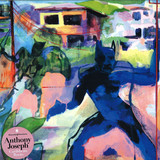
Strut team up for the first time with respected French label Heavenly Sweetness for the brand new album by the inspired poet, novelist and musician, Anthony Joseph.The Caribbean is an influence that runs through Joseph's discography, obliquely or headon, suggested or on full display. It resonates on each of his albums, from the furious trance of 'Bird Head Son' to the more polished 'Time'. On 'Caribbean Roots', he has now decided to turn a guiding thread and a reference point into a communications cable - a powerful bond that makes light of distance and braves the seas to link his island to that of his friends in the Caribbean arc, dancing to the strains of tumbélé and mendé only a few miles
from Port of Spain where people live it up to rapso and soca beats. Caribbean Roots' represents a return to his roots for Anthony Joseph, who has always remained true to a powerful, deep-seated sense of his Caribbean identity. Having started
out as a joint project with the outstanding percussionist Roger Raspail (Cesaria Evora, Papa Wemba, Kassav), 'Caribbean Roots' swiftly grew into a creative force incorporating
the rhythms, sounds and vibes that rock the Caribbean from San Fernando, Scarborough, Kingston and Les Abymes to Port-au-Prince and Havana. Backed by a band made up
of a blend of local musicians, the album attempts to unite the different islands into a single entity whilst ensuring that the identity of each is in no way diluted by the mix instead creating a richer and stronger alloy. The saxophones of Shabaka Hutchings (The
Heliocentrics) and Jason Yarde, the trumpet of Yvon Guillard (Magma), the bass of Mike Clinton (Salif Keita) and the trombone of Pierre Chabrèle (Creole Jazz Orchestra) all combine to form a group of Caribbean All Stars to which Andy Narrell, the master of the steel pans, brings ringing drum beats. The album features bursts of catchy rhythms and slow percussive riff progressions, as on a film soundtrack, incandescent voodoo funk and rhythmic high-speed frenzies shot through with free-jazz sax. This reunion of the Caribbean diaspora was never meant to come up with a formula divisible into eleven separate tracks - its goal was to explore and discover new sounds. And all of this under Anthony Joseph's guidance, as he spins his lyrical blend of afro-futurism and surrealism, commemorating the Caribbean people's sometimes violent resistance to colonialism. Anthony Joseph, one moment a chronicler reciting his text against a background of simple percussion, the next a storyteller possessed by the power of a hypnotic bassline, then an adventurer chanting among mangroves where the rhythm section and the brass have created an impenetrable thicket. At turns, an MC too, strutting to a fat, throbbing groove in vocal tandem with Sly Johnson or David Rudder to pay tribute to Mighty Sparrow, the undisputed and indisputable king of calypso
- 1