Search:ruin
After the storm of their self-titled debut, Geneva duo Bound By Endogamy return to Pinkman with an album that trades brute force for precision. The rage remains, but it's sharpened, disciplined, and driven by melancholy rather than rupture. Their minimal synth and industrial instincts rise to the surface, carving out room for melody without softening their confrontational edge. Angular basslines coil beneath Kleio Thomaides' voice, at times detached and at times devastating, while Shlomo Balexert's drum programming and synth work build a taut metallic tension. The result is both intimate and mechanical: love songs for disenchanted souls, post-punk electronics stripped to the bare wire. Bound By Endogamy have always blurred the line between performance and survival, and here they do it with minimal gestures and maximum impact.
On 'Vesturgata Gaze', Hitam traverses a new biome. Geographically and metaphorically. Through this introductory release on Omen Wapta, a remarkable voice in techno lunges into artistic deliverance. Here we, the listeners, find ourselves with an EP that harbours the emotive voltage of a perspective-pivoting trip. Tectonic shifts reshuffle subterranean frequencies, rhythmic phrases carry the timbre of ancient rainfall and we humbly stand witness as ceremonial incantations demarcate indigenous land. In elusive ways, this record assigns a bardic function to mostly nonverbal music. All five tracks consistently resemble traces of life-affirming encounters by sculpting Iceland's geological features into sound. 'Vesturgata Gaze' shows that commitment and intimate collaboration, taking on bold artistic ventures, touching moss and glaciers - that's what can break the mould.
Emerging from the sun-drenched haze of their previous releases, the Belgo-Italian duo descend into the shadows with Trabajando El Flex, their third record to date. This is their gloomiest strike yet, a mutant wave manifesto built on a raw DIY ethos. Imagine pulsing basslines and ghostly vocals soundtracking your deepest, most illicit desires. Channeling the spirit of a major influence which is Coil, this album could have been called "Music to Play in the Dark(rooms)." It's a lethal fusion where New Beat, EBM, Dub, Italo, and New Wave lock into a singular, hypnotic atmosphere. Their world is a wild ride from Bear-Santa Claus Fantasms to Burning Churches and Amphetamine rooms, reflected in both their playful - not-to-be-taken-seriously - lyrics and a genre-shattering sound. Their debut was a a lost reel; their second, a dream, Trabajando El Flex is the raw, slow-burning, and beautifully unclean night that consumes both. It's a flawless fit for the after-hours ruin of the Pinkman universe.
- Nocturne 1: Snow Dance
- Nocturne 2: Lovely Cold Ruins
- Nocturne 3: Darkusosy
- Nocturne 4: Goodbye Pork Pie Gal
- Nocturne 5: Piano Man's Pain
- Nocturne 6: Rain Soaked Choker
- Nocturne 7: Nosferatu
- Nocturne 8: Chainca Shadow
- Nocturne 9: Larks
- Nocturne 10: Satalight Song
- Nocturne 11: Meet Me In The Hills
- Nocturne 12: Pyjamas
- Nocturne 13: The Hissing Mist
Spectral, nostalgic, highly evocative, sometimes-desolate reflections — alone on the piano, and together with saxophonist and flautist Finn Peters — soaked in Satie, Ravel, and Mompou. Expressive and enchanting, but mournfully distracted, with a tentative, exploratory wonderment which reminds you of Paul Klee’s well-worn idea of a drawing as a line taking a walk. Easy to recommend to those of you who recently enjoyed Mashu Hayasaka’s Etudes LP, on All Night Flight. This is lovely stuff from Jesse, in an unexpected departure from his work with Elmore Judd, the Gorillaz, Nyege Nyege Tapes…
- Black Helicopters
- Oppress Yourself
- Amnesiac
- Love Will Ruin Your Mind
- Ann The Word
- Slip Of Existence
- Free State
- Truth Cult
- Shed The World
- Pray For The Living
- Light For All
Niels Orens is an electronic producer and live performer working at the intersection of acoustic instrumentation and immersive electronic sound design, creating deeply textural compositions that prioritize atmosphere, space, and emotional weight overtraditional song structures. "Never Again EP" expands on the introspective tone of slow night/s, pushing further into rhythm and sonic detail while exploring themes of alienation, loneliness, and quiet internal violence.
After successful collaborations with Max Cooper, the new EP marks a pivotal moment in Orens' evolution. "Never Again EP" forms the foundation of a new live chapter currently unfolding across Europe, while signaling a deeper dive into experimentation, texture, and the evolving dialogue between acoustic sound and electronic manipulation.
“III” is an intimate, cinematic and dream-like body of work — written, produced and mixed by Morita Vargas, and recorded in Buenos Aires between 2014 and 2025. The album was mastered by Rafael Anton Irisarri at Black Knoll Studio (NY), adding depth and clarity to its carefully built sonic landscape.
The visual world of the record is an essential part of the release. The cover artwork was crafted by Juliana Guglielmi, Ariadna Aylen Barrios, and Noelia Garreffa, whose combined vision creates a unified visual narrative that reflects the album’s emotional depth and atmospheric essence. The LP layout and full manufacturing realization were carefully executed by Ilja Tulit, translating the complex design ideas into their final tangible form of a vinyl release.
“III” marks a special release for Hidden Harmony Recordings. Morita Vargas was among the first artists released when the label began in 2020–2021, and her work played an important role in shaping the spirit and direction of Hidden Harmony.
- Don't Settle (Funkhaus Version)
- Down On Our Knees (Funkhaus Version)
- Back Broke (Funkhaus Version)
- My Little Ruin (Funkhaus Version)
- Didn't He Ramble (Funkhaus Version)
- Fitzcarraldo (Funkhaus Version)
- Lowly Deserter (Funkhaus Version)
- Wreckless Heart (Funkhaus Version)
,Don't Settle - Transmissions East" ist die erste Veröffentlichung von zwei Alben, die in diesem Jahr erscheinen werden. Es beleuchtet eine äußerst produktive und vielfältige Karriere und ist nicht nur ein ,Best Of", sondern ein Live-Studioalbum ohne zweite Takes, ohne Autotune und ohne Bearbeitung. Es ist einfach live, roh und direkt und fängt die Magie von Glen ein wie nichts zuvor. Aufgenommen im legendären Funkhaus in Berlin, einem historischen ostdeutschen Radio- und Aufnahmestudio mit einem riesigen, akustisch perfekten Orchester-Live-Raum, wurde das Album in einer kontrollierten Studioumgebung über zwei Nächte hinweg aufgenommen und gefilmt. Das Album wurde von Glen selbst produziert und gemischt, mit Unterstützung von Toningenieur und Produzenten Mike Goldsmith und dem Toningenieur und Produzenten Markus Schmitz.
- Tired
- Don't Fret
- Not Your Fault
- Over It
- Take It All Back
- Could've Been Something
- Tell By Your Eyes
- Happen Like That
- Matters Now
- Don't Give A Damn
- Out Of Time
Slow Leaves ist das Soloprojekt des in Winnipeg ansässigen Songwriters und Produzenten Grant Davidson, dessen Werke Folk und Psych-Rock mit einer zurückhaltenden emotionalen Präzision verbinden und ihm eine treue internationale Fangemeinde eingebracht haben. Mit Veröffentlichungen bei Birthday Cake Records hat Slow Leaves über 3,5 Millionen Streams gesammelt, wird regelmäßig im Radio in Kanada, Deutschland und den Niederlanden gespielt und tourt durch Kanada, Großbritannien und Europa. The Ruins of Things Unfinished ist Davidsons sechstes Album mit neuem Material und seine bisher unmittelbarste Aufnahme. Das Album wurde größtenteils live mit dem Produzenten Kris Ulrich aufgenommen und fängt die Intimität und emotionale Tiefe der Songs von Slow Leaves mit einem neuen Gefühl von Präsenz und Wärme ein. Das Album beschäftigt sich mit vererbten Traumata, Ambitionen, Elternschaft und der stillen Arbeit der Selbstreflexion und bezieht seinen Titel aus Fernando Pessoas Zeile ,Ich bestehe aus den Ruinen unvollendeter Dinge".
- 1: Tired
- 2: Don't Fret
- 3: Not Your Fault
- 4: Over It
- 5: Take It All Back
- 6: Could've Been Something
- 7: Tell By Your Eyes
- 8: Happen Like That
- 9: Matters Now
- 10: Don't Give A Damn
- 11: Out Of Time
Slow Leaves - alias Grant Davidson aus Winnipeg - steht für einen feinfühligen Indie-Folk, der leise spricht und dennoch lange nachhallt. Seine Musik verbindet warmes Fingerpicking, sanfte Psych-Rock-Anklänge und eine Stimme, die direkt ins Herz zielt: klar, verletzlich, tröstlich. Kritiker vergleichen ihn mit Roy Orbison, Nick Drake, Mickey Newbury oder Neil Young - Songwriter, die Emotionen mit Einfachheit und Tiefe verbinden. Davidsons neue Songs kreisen um innere Landschaften: Erinnerungen, familiäre Prägungen, Generationenlinien, kleine Wunden und stilles Wachstum. Er schreibt mit einer poetischen Direktheit, die Intimität schafft, ohne schwer zu werden. Seine Arrangements bleiben bewusst zurückhaltend: Gitarre, behutsame Rhythmik, warme Tastenklänge, dezente Streicher - alles im Dienst einer emotional klaren Erzählstimme. Was Slow Leaves besonders macht, ist seine Fähigkeit, kosmische Themen - Zeit, Einsamkeit, Verbundenheit - in schlichte, menschliche Momente zu übersetzen. Es ist Musik, die Raum lässt: zum Atmen, Erinnern, Trost finden. Ein leises, aber eindringliches Songwriting, das im Kleinen das Große sichtbar macht.
Falter is the 5th full-length album from New Zealand-based composer/-multi-instrumentalist Micah Templeton-Wolfe, working under the moniker Stray Theories.
Templeton-Wolfe has consistently woven together the cinematic sweep of ambient music, the refined structures of neoclassical composition, and the emotional cresting arcs of post-rock. With Falter, those intersections are more deeply blurred, yet more boldly explored.
Transparent Red Vinyl.
The title Falter evokes wavering, hesitation, uncertainty of intent and yet the album stands in sharp contrast to that concept: Templeton-Wolfe’s performance here is marked by a quiet but unmistakable confidence.
From the first notes, the listener is immersed in an atmosphere in which the music feels like a cinematic means of passage, a journey toward redemption. Optimism is present, but ever cloaked in doubt; moments of
contemplative solace sit side-by-side with streaks of melancholia. One senses something looming within the sound-world of Falter. As though the heart itself can tell something is coming.
In this respect, Falter may well rank as the most affecting release in Templeton-Wolfe’s canon to date. While his earlier work had always balanced delicate textures and evocative atmosphere, here he pushes into a more expansive emotional terrain. Only the hopeful refrain “Lifelines” brings the album fully into brighter territory , hinting that redemption is possible, that the journey through doubt is not endless.
- A1: Hurts And Noises
- A2: Wake Up
- A3: I Don't Wanna Be A Rich
- A4: Terrorist Bad Heart
- A5: Provocate
- A6: Lucifer Sam (Pink Floyd)
- B1: Happy!?
- B2: So Lazy
- B3: I Feel Down
- B4: Stupido
- B5: Guilty
- B6: Caroline Says (Loo Reed)
UILTY RAZORS, BONA FIDE PUNKS.
Writings on the topic that go off in all directions, mind-numbing lectures given by academics, and testimonies, most of them heavily doctored, from those who “lived through that era”: so many people today fantasize about the early days of punk in our country… This blessed moment when no one had yet thought of flaunting a ridiculous green mohawk, taking Sid Vicious as a hero, or – even worse – making the so-called alternative scene both festive and boorish. There was no such thing in 1976 or 1977, when it wasn’t easy to get hold of the first 45s by the Pistols or the Clash. Few people were aware of what was happening on the fringes of the fringes at the time. Malcolm McLaren was virtually unknown, and having short hair made you seem strange. Who knew then that rock music, which had taken a very bad turn since the early 1970s, would once again become an essential element of liberation? That, thanks to short and fast songs, it would once again rediscover that primitive, social side that was so hated by older generations? Who knew that, besides a few loners who read the music press (it was even better if they read it in English) and frequented the right record stores? Many of these formed bands, because it was impossible to do otherwise. We quickly went from listening to the Velvet Underground to trying to play the Stooges’ intros. It’s a somewhat collective story, even though there weren’t many people to start it.
The Guilty Razors were among those who took part in this initial upheaval in Paris. They were far from being the worst. They had something special and even released a single that was well above the national average. They also had enough songs to fill an album, the one you’re holding. In everyone’s opinion, they were definitely not among the punk impostors that followed in their wake. They were, at least, genuine and credible.
Guilty Razors, Parisian punk band (1975-1978). To understand something about their somewhat linear but very energetic sound, we might need to talk about the context in which it was born and, more broadly, recall the boredom (a theme that would become capital in punk songs) coupled with the desire to blow everything off, which were the basis for the formation of bands playing a rejuvenated rock music ; about the passion for a few records by the Kinks or the early Who, by the Stooges, by the Velvet mostly, which set you apart from the crowd.
And of course, we should remember this new wave, which was promoted by a few articles in the specialized press and some cutting-edge record stores, coming from New York or London, whose small but powerful influence could be felt in Paris and in a handful of isolated places in the provinces, lulled to sleep by so many appalling things, from Tangerine Dream to President Giscard d’Estaing...
In 1975-76, French music was, as almost always, in a sorry state ; it was still dominated by Johnny Hallyday and Sylvie Vartan. Local rock music was also rather bleak, apart from Bijou and Little Bob who tried to revive this small scene with poorly sound-engineered gigs played to almost no one.
In the working class suburbs at the time, it was mainly hard rock music played to 11 that helped people forget about their gruelling shifts at the factory. Here and there, on the outskirts of major cities, you still could find a few rockers with sideburns wearing black armbands since the death of Gene Vincent, but it wasn’t a proper mass movement, just a source of real danger to anyone they came across who wasn't like them. In August 1976, a festival unlike any other took place in Mont-de-Marsan – the First European Punk Festival as the poster said – with almost as many people on stage as in the audience. Yet, on that day, a quasi historical event happened, when, under the blazing afternoon sun, a band of unknowns called The Damned made an unprecedented noise in the arena, reminiscent of the chaotic Stooges in their early adolescence. They were the first genuine punk band to perform in our country: from then on, anything was possible, almost anything seemed permissible.
It makes sense that the four+1 members of Guilty Razors, who initially amplified acoustic guitars with crappy tape recorder microphones, would adopt punk music (pronounced paink in French) naturally and instinctively, since it combines liberating noise with speed of execution and – crucially – a very healthy sense of rebellion (the protesters of May 1968 proclaimed, and it was even a slogan, that they weren’t against old people, but against what had made them grow old. In the mid-1970s, it seemed normal and obvious that old people should now ALSO be targeted!!!).
At the time, the desire to fight back, and break down authority and apathy, was either red or black, often taking the form of leafleting, tumultuous general assemblies in the schoolyard, and massive or shabby demonstrations, most of the time overflowing with an exciting vitality that sometimes turned into fights with the riot police. Indeed, soon after the end of the Vietnam War and following Pinochet’s coup in Chile, all over France, Trotskyist and anarcho-libertarian fervour was firmly entrenched among parts of the educated youth population, who were equally rebellious and troublemakers whenever they had the chance. It should also be noted that when the single "Anarchy in the UK" was first heard, even though not many of us had access to it, both the title and its explosive sound immediately resonated with some of those troublemakers crying out for ANARCHY!!! Meanwhile, the left-wing majority still equated punks with reckless young neo-Nazis. Of course, the widely circulated photos in the mainstream press of Siouxsie Sioux with her swastikas didn’t necessarily help to win over the theorists of the Great Revolution. It took Joe Strummer to introduce The Clash as an anti-racist, anti-fascist and anti-ignorance band for the rejection of old-school revolutionaries to fade a little.
The Lycée Jean-Baptiste Say at Porte d’Auteuil, despite being located in the very posh and very exclusive 16th arrondissement of Paris, didn’t escape these "committed" upheavals, which doubled as the perfect outlet for the less timid members of this generation.
“Back then, politics were fun,” says Tristam Nada, who studied there and went on to become Guilty Razors’ frontman. “Jean-Baptiste was the leftist high-school in the neighbourhood. When the far right guys from the GUD came down there, the Communist League guys from elsewhere helped us fight them off.”
Anything that could challenge authority was fair game and of course, strikes for just about any reason would lead to increasingly frequent truancy (with a definitive farewell to education that would soon follow). Tristam Nada spent his 10th and 11th unfinished grades with José Perez, who had come from Spain, where his father, a janitor, had been sentenced to death by Franco. “José steered my tastes towards solid acts such as The Who. Like most teenagers, I had previously absorbed just about everything that came my way, from Yes to Led Zeppelin to Genesis. I was exploring… And then one day, he told me that he and his brother Carlos wanted to start a rock band.” The Perez brothers already played guitar. “Of course, they were Spanish!”, jokes their singer. “Then, somewhat reluctantly, José took up the bass and we were soon joined by Jano – who called himself Jano Homicid – who took up the rhythm guitar.” Several drummers would later join this core of not easily intimidated young guys who didn’t let adversity get the better of them.
The first rehearsals of the newly named Guilty Razors took place in the bedroom of a Perez aunt. There, the three rookies tried to cover a few standards, songs that often were an integral part of their lives. During a first, short gig, in front of a bewildered audience of tough old-school rockers, they launched into a clunky version of the Velvet Underground's “Heroin”. Challenge or recklessness? A bit of both, probably… And then, step by step, their limited repertoire expanded as they decided to write their own songs, sung in a not always very accurate or academic English, but who cared about proper grammar or the right vocabulary, since what truly mattered was to make the words sound as good as possible while playing very, very fast music? And spitting out those words in a language that left no doubt as to what it conveyed mattered as well.
Trying their hand a the kind of rock music disliked by most of the neighbourhood, making noise, being fiercely provocative: they still belonged to a tiny clique who, at this very moment, had chosen to impose this difference. And there were very few places in France or elsewhere, where one could witness the first stirrings of something that wasn’t a trend yet, let alone a movement.
In the provinces, in late 1976 or early 1977, there couldn’t be more than thirty record stores that were a bit more discerning than average, where you could hear this new kind of short-haired rock music called “punk”. The old clientele, who previously had no problem coming in to buy the latest McCartney or Aerosmith LP, now felt a little less comfortable there…
In Paris, these enlightened places were quite rare and often located nex to what would become the Forum des Halles, a big shopping mall. Between three aging sex workers, a couple of second-hand clothes shops, sellers of hippie paraphernalia and small fashion designers, the good word was loudly spread in two pioneering places – propagators of what was still only a new underground movement. Historically, the first one was the Open Market, a kind of poorly, but tastefully stocked cave. Speakers blasted out the sound of sixties garage bands from the Nuggets compilation (a crucial reference for José Perez) or the badly dressed English kids of Eddie and the Hot Rods. This black-painted den was opened a few years earlier by Marc Zermati, a character who wasn’t always in a sunny disposition, but always quite radical in his (good) choices and his opinions. He founded the independent label Skydog and was one of the promoters of the Mont-de-Marsan punk festivals. Not far from there was Harry Cover, another store more in tune with the new New York scene, which was amply covered in the house fanzine, Rock News (even though it was in it that the photos of the Sex Pistols were first published in France).
It was a favorite hang-out of the Perez brothers and Tristam Nada, as the latter explained. “It’s at Harry Cover’s that we first heard the Pistols and Clash’s 45s, and after that, we decided to start writing our first songs. If they could do it, so could we!”
The sonic shocks that were “Anarchy in the UK”, “White Riot” or the Buzzcocks’s EP, “Spiral Scratch” – which Guilty Razors' sound is reminiscent of – were soon to be amplified by an unparalleled visual shock. In April 1977, right after the release of their first LP, The Clash performed at the Palais des Glaces in Paris, during a punk night organised by Marc Zermati. For many who were there, it was the gig of a lifetime…
Of course, Guilty Razors and Tristam were in the audience: “That concert was fabulous… We Parisian punks were almost all dressed in black and white, with white shirts, skinny leather ties, bikers jackets or light jackets, etc. The Clash, on the other hand, wore colourful clothes. Well, the next day, at the Gibus, you’d spot everyone who had been at this concert, but they weren’t wearing anything black, they were all wearing colours.”
It makes sense to mention the Gibus club, as Guilty Razors often played there (sometimes in front of a hostile audience). It was also the only place in Paris that regularly scheduled new Parisian or Anglo-Saxon acts, such as Generation X, Siouxsie and the Banshees, the Slits, and Johnny Thunders who would become a kind of messed-up mascot for the venue. A little later, in 1978, the Rose Bonbon – formerly the Nashville – also attracted nightly owls in search of electric thrills… In 1977, the iconic but not necessarily excellent Asphalt Jungle often played at the Gibus, sometimes sharing the bill with Metal Urbain, the only band whose aura would later transcend the French borders (“I saw them as the French Sex Pistols,” said Geoff Travis, head of their British label Rough Trade). Already established in this small scene, Metal Urbain helped the young and restless Guilty Razors who had just arrived. Guitarist for Metal Urbain Hermann Schwartz remembers it: “They were younger than us, we were a bit like their mentors even if it’s too strong a word… At least they were credible. We thought they were good, and they had good songs which reminded of the Buzzcocks that I liked a lot. But at some point, they started hanging out with the Hells Angels. That’s when we stopped following them.”
The break-up was mutual, since, Guilty Razors, for their part, were shocked when they saw a fringe element of the audience at Metal Urbain concerts who repeatedly shouted “Sieg Heil” and gave Nazi salutes. These provocations, even still minor (the bulk of the skinhead crowd would later make their presence felt during concerts), weren’t really to the liking of the Perez brothers, whose anti-fascist convictions were firmly rooted. Some things are non-negotiable.
A few months earlier (in July 1978), Guilty Razors had nevertheless opened very successfully for Metal Urbain at the Bus Palladium, a more traditonally old-school rock night-club. But, as was sometimes the case back then, the night turned into a mass brawl when suburban rockers came to “beat up punks”.
Back then, Parisian nights weren’t always sweet and serene.
So, after opening as best as they could for The Jam (their sound having been ruined by the PA system), our local heroes were – once again – met outside by a horde of greasers out to get them. “Thankfully,” says Tristam, “we were with our roadies, motorless bikers who acted as a protective barrier. We were chased in the neighbouring streets and the whole thing ended in front of a bar, with the owner coming out with a rifle…”
Although Tristam and the Perez brothers narrowly escaped various, potentially bloody, incidents, they weren’t completely innocent of wrongdoing either. They still find amusing their mugging of two strangers in the street for example (“We were broke and we simply wanted to buy tickets for the Heartbreakers concert that night,” says Tristam). It so happened that their victims were two key figures in the rock business at the time: radio presenter Alain Manneval and music publisher Philippe Constantin. They filed a complaint and sought monetary compensation, but somehow the band’s manager, the skilful but very controversial Alexis, managed to get the complaint withdrawn and Guilty Razors ended up signing with Constantin with a substantial advance.
They also signed with Polydor and the label released in 1978 their only three-track 45, featuring “I Don't Wanna be A Rich”, “Hurts and Noises” and “Provocate” (songs that exuded perpetual rebellion and an unquenchable desire for “class” confrontation). It was a very good record, but due to a lack of promotion (radio stations didn’t play French artists singing in English), it didn’t sell very well. Only 800 copies were allegedly sold and the rest of the stock was pulped… Initially, the three tracks were to be included on a LP that never came to be, since they were dropped by Polydor (“Let’s say we sometimes caused a ruckus in their offices!” laughs Tristam.) In order to perfect the long-awaited LP, the band recorded demos of other tracks. There was a cover of Pink Floyd's “Lucifer Sam” from the Syd Barrett era – proof of an enduring love for the sixties’ greats –, “Wake Up” a hangover tale and “Bad Heart” about the Baader-Meinhof gang, whose actions had a profound impact on the era and on a generation seeking extreme dissent... On the album you’re now discovering, you can also hear five previously unreleased tracks recorded a bit later during an extended and freezing stay in Madrid, in a makeshift studio with the invaluable help of a drummer also acting as sound engineer. He was both an enthusiastic old hippie and a proper whizz at sound engineering. Here too, certain influences from the fifties and sixties (Link Wray, the Troggs) are more than obvious in the band’s music.
Shortly after a final stormy and rather barbaric (on the audience’s side) “Punk night” at the Olympia in June 1978, Tristam left the band ; his bandmates continued without him for a short while.
But like most pioneering punk bands of the era, Guilty Razors eventually split up for good after three years (besides once in Spain, they’d only played in Paris). The reason for ceasing business activities were more or less the same for everyone: there were no venues outside one’s small circuit to play this kind of rock music, which was still frightening, unknown, or of little interest to most people. The chances of recording an LP were virtually null, since major labels were only signing unoriginal but reassuring sub-Téléphone clones, and the smaller ones were only interested in progressive rock or French chanson for youth clubs. And what about self-production? No one in our small safety-pinned world had thought about it yet. There wasn’t enough money to embark on that sort of venture anyway.
So yes, the early days of punk in France were truly No Future!
Red and Black Galaxy Vinyl. Kmoe is a young Canadian artist who emerged from the 2021 SoundCloud/Discord scene. Kmoe blends hyperpop and glitchy production with catchy indie-pop melodies and pitched up vocals. His sound is characterized as a "modern-day romantic" take on electronic music, heavily influenced by shoegaze, hip hop and experimental pop.
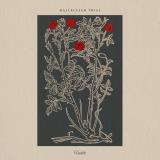
Ploughing a different furrow, Alone in a World of Wounds is an album of sweeping gothic tinged Americana, tripped out drones, beautiful world weary vocal melodies and slowly unfurling cello arrangements. Initially inspired by the harmonic resonance of piano and synths and his long standing love of ambient music, Alone in a World of Wounds follows 2021’s No Wilderness Deep Enough in reflective ambience. Opening up his voice in ways he has never done before, the album's genesis came via intuitive improvisations.
The search for deeper connection, living with the sorrow of our separation from the natural world, and relying on gut level intuition to get closer to the primal creative state are all key to Von Till’s creative process.
Recorded mostly at his barn studio at home in Idaho and mixed at Circular Ruin in Brooklyn, NY, with storied producer Randall Dunn (Jóhann Jóhannsson, Sunn O))), Earth, Jim Jarmusch), Alone in a World of Wounds also boasts cover artwork from Spokane, WA based alternative process photographer Brian Deemy - who works with colloidal wet plate ‘tintype’ aesthetics, which compliment Von Till’s uniquely ancient yet grounded aesthetic, and one that perfectly matches his desire to reimagine the connection between the human and the more than human world.
The Éthiopiques series returns! Essential archive recordings from an extremely fruitful period in Ethiopian music.
Before “Swinging Addis” took over the world, there was Moussié Nerses Nalbandian — the Armenian-born composer who shaped modern Ethiopian music. Mentor, arranger, and pioneer, he laid the foundations of Ethio-jazz.
This Éthiopiques volume revives his forgotten legacy, recorded live by Either/ Orchestra First issue ever with new exclusive photos and in depth liner 8-page insert.
“Ethiopian jazzmen are the best musicians that we have seen so far in Africa.
They really are promising handlers of jazz instruments.”
Wilbur De Paris
(1959, after a concert in Addis Ababa)
አዲስ፡ዘመን። *Addis zèmèn* **A new era.**
The time is the mid-1950s and early 1960s, just before "Swinging Addis" bloomed – or rather boomed – onto the scene. Brass instruments are still dominant, but the advent of the electric guitar, and the very first electronic organs, are just around the corner. Rock’n'Roll, R’n’B, Soul and the Twist have not yet barged their way in. Addis Ababa is steeped in the big band atmosphere of the post-war era, with Glenn Miller's *In the* *Mood* as its world-wide theme song, neck and neck with the Latin craze that was in vogue at the same period. Life has become enjoyable once again, with the return of peace after the terrible Italian Fascist invasion of Ethiopia (1935-1941). The redeployment of modern music is part and parcel of the postwar reconstruction. *Addis zèmèn* – a new era – is the watchword of the postwar period, just as it was all across war-torn Europe.
The generation who were the young parents of baby boomers** were the first to enjoy this musical renaissance, before the baby boomers themselves took over and forever super-charged the soundtrack of the final days of imperial reign. Music is Ethiopia's most popular art form, and very often serves as the best barometer for the upsurge of energy that is critical for reconstruction. Whether it be jazz in Saint-Germain-des-Prés or the *zazous* who revolutionised both jazz and French *chanson* after the *Libération*, be it Madrid's post-Franco Movida, or Dada, the Surrealists and *les années folles* that followed World War I, the periods just after mourning and hardship always give rise to brighter and more tuneful tomorrows. Addis Ababa, as the country's capital, and the epicentre of change, was no exception to this vital rule.
**Two generations of Nalbandian musicians**
Nersès Nalbandian belonged to a family of Armenian exiles, who had moved to Ethiopia in the mid-1920s. The uncle Kevork arrived along with the fabled "*Arba Lidjotch*", the** "*40 Kids*", young Armenian orphans and musicians that the Ras Tafari had recruited when he visited Jerusalem in 1924, intending to turn their brass band into the official imperial band. If Kevork Nalbandian was the one who first opened the way of modernism, pushing innovation so far as to invent musical theatre, it was his nephew Nersès who would go on to become, from the 1940s and until his death in 1977, a pivotal figure of modern Ethiopian music and of the heights it. Going all the way back to the 1950s. Nothing less. And it is Nersès who is largely to thank for the brassy colours that so greatly contributed to the international renown of Ethiopian groove. While the younger generations today venture timidly into the genealogy of their country's modern music, often losing their way amidst a distinctly xenophobic historiographical complacency, many survivors of the imperial period are still around to bear witness and pay tribute to the essential role that "Moussié Nersès" played in the rise of Abyssinia's musical modernity.
Given the year of his birth (15 March 1915), no one knows for sure if Nersès Nalbandian was born in Aintab, today Gaziantep (Turkiye/former Ottoman Empire) or on the other side of the border in Alep, Syria... What is certain is that his family, like the entire Armenian community, was amongst the victims of the genocide perpetrated by the Turks. Alep, the place of safety – today in ruins.
Before Nersès then, there was uncle Kevork (1887-1963). For a quarter of a century, he was a whirlwind of activity in music teaching and theatrical innovation. *Guèbrè Mariam le Gondaré* (የጎንደሬ ገብረ ማርያም አጥቶ ማግኘት, 1926 EC=1934) is his most famous creation. This play included "ten Ethiopian songs" — a totally innovative approach. According to his autobiographical notes, preserved by the Nalbandian family, Kevork indicates that he composed some 50 such pieces over the course of his career. This shows just how much he understood, very early on, the critical importance of song as Ethiopia's crowning artistic form. Indeed, for Ethiopian listeners, the most important thing is the lyrics, with all their multifarious mischief, far more than a strong melody, sophisticated arrangements or even an exceptional voice. (This is also why Ethiopians by and large, and beginning with the artists and producers themselves, believed for a long time — and wrongly — that their music could not possibly be exported, and could never win over audiences abroad, who did not speak the country's languages).
Last but not least, one of Kevork's major contributions remains composing Ethiopia's first national anthem – with lyrics by Yoftahé Negussié.
Nersès Nalbandian moved to Ethiopia at the end of the 1930s, at the behest of his ground-breaking uncle. Proficient in many instruments (pretty much everything but the drums), conductor, choir director, composer, arranger, adapter, creator, piano tuner, purveyor of rented pianos,... he was above all an energetic and influential teacher. From 1946 onwards, thanks to Kevork's connexion, Nersès was appointed musical director of the Addis Ababa Municipality Band. In just a few years, Nersès transformed it into the first truly modern ensemble, thanks to the quality of his teaching, his choice of repertoire, and the sophistication of his arrangements. It was this group that would go on to become the orchestra of the Haile Selassie Theatre shortly after its inauguration in 1955, which was a major celebration of the Emperor's jubilee, marking the 25th anniversary of his on-again-off-again reign.
At some point or other in his long career, Nersès Nalbandian had a hand in the creation of just about every institutional band (Municipality Band, Police Orchestra, Imperial Bodyguard Band, Army Band, Yared Music School…), but it was with the Haile Selassie Theatre – today the National Theatre – that his abilities were most on display, up until his death in 1977. To this must be added the development of choral singing in Ethiopia, hitherto unknown, and a sort of secret garden dedicated to the memory of Armenian sacred music, and brought together in two thick, unpublished volumes. Shortly before his death (November 13, 1977), he was appointed to lead the impressive Ethiopian delegation at Festac in Lagos, Nigeria (January-February 1977).
His status as a stateless foreigner regularly excluded him from the most senior positions, in spite of the respect he commanded (and commands to this day) from the musicians of his era. Naturally gifted and largely self-taught, Nerses was tirelessly curious about new musical developments, drawing inspiration from the very first imported records, and especially from listening intensely to the musical programmes broadcast over short-wave radio – BBC *First*. A prolific composer and arranger, he was constantly mindful of formalising and integrating Ethiopian parameters (specific “musical modes”, pentatonic scale, and the dominance of ternary rhythms) into his “modernisation” of the musical culture, rather than trying to over-westernise it. It even seems very probable that *Moussié* Nerses made a decisive contribution to the development of tighter music-teaching methods, in order to revitalise musical education during this period of prodigious cultural ferment. Flying in the face of all the historiographical and musicological evidence, it is taken as sacrosanct dogma that the four musical modes or chords officially recognised today, the *qǝñǝt* or *qiñit* (ቅኝት), are every bit as millennial as Ethiopia itself. It would appear however that some streamlining of these chords actually took place in around 1960. It was only from this time onward that music teaching was structured around these four fundamental musical modes and chords: *Ambassel*, *Bati*, *Tezeta* and *Antchi Hoyé*. A historical and musical “details” that is, apparently, difficult to swallow, especially if that should honour a *foreigner*. Modern Ethiopian music has Nersès to thank for many of its standards and, to this day, it is not unusual for the National Radio to broadcast thunderous oldies that bear unmistakable traces of his outrageously groovy touch.
Operating on the fringes of pure improv, organised chaos, minimal composition, lo-fi electronics and Italian spaghetti westerns, wide-eyed and with a healthy dose of DIY aesthetics lies the world of Jaan. It’s a poetic & cosmic universe, exploring “discreet music” whilst wandering on the edges of the Cat People soundtrack & Brian Eno’s more experimental output, in which you might yourself find floating, wandering or in the middle of a market place.
Jaan is a collective of one, a deliberately anonymous activistic unit with strong ties to the international art scene. Purposefully bypassing the know-it-all of the the internet & embracing the bygone mystery of dusty old archives and deep-dive searching, remarkably little is known about this project. Jaan is lead by veteran experimental sonic alchemist Jaan; they operate between Greenland, the Middle East and Europe, with frequent associates Lisqa, Mashid & Schneorr N. acting as local hubs for collaboration and exploration.
The purpose of this wilful obscurity: full focus on the actual music, whether live events or on recordings. Which brings us to Baghali, their first for World of Echo. It’s a deeply personal album, much like slowly browsing old family albums filled with vaguely remembered tales, some still very much present, some faded, leaving but a ghost-like reflection of what once was. Baghali was compiled over the course of a year on the road, trapped in snow storms, waiting for cancelled flights and stuck rides. It’s made up of snippets of diary, quick recordings on road sides, abandoned buildings, garden ruins, vast desert and focussed studio sessions, following a collage-like aesthetic and steeped in an exploration of non-lineair storytelling. There’s broken memories, a sense of displacement and an occasional yearning for what can’t be again, clouded in fever and unrest, but there is also hope, wonderment and bright colours seeping through the cracks in the wall. Jaan weaves home-made instruments, old tape loops, broken synths, beat-up reeds, dusty beat boxes and the occasional doom guitar squall into a tapestry of fractured sound, with tracks following their own inherent logic rather than following formats. Sounds crash in and out, field recordings placing the listener firmly in an environment then throwing several perspectives at once onto them, with individual elements - a wandering clarinet, a lone mandoline, a beat out of place yet perfectly in place - slowly walking in and out & doing their thing.
The whole album is alive, breathes, takes a wrong turn, gets lost, somehow finds its way again - effortless and with a unique sense of space and flow.
Baghali is released digitally and on vinyl in an edition of 300 on 3rd October 2025.
"Tranquilizer is, Ambience by force" - Oneohtrix Point Never
"Tranquilizer" klingt nicht nach Beruhigung, sondern nach Wiederauftauchen. Daniel Lopatin verurteilt nicht unser Bedürfnis nach Flucht, sondern erkundet vielmehr, was danach passiert. Sein neues Album zeichnet eine Bewegung von schwereloser Ruhe hin zu etwas Bodenständigerem nach – keine Heldenreise, sondern der notwendige Kreislauf von Rückzug und Rückkehr, der uns in einer ebenso überwältigenden wie banalen Welt den Verstand bewahrt.
Wir stürzen aus der triefenden Glückseligkeit von "Lifeworld" in die traurige Melancholie von "Cherry Blue" und die spastischen Grooves von "Rodl Glide". Wie immer bei OPN kollidiert das Reale mit dem Unwirklichen. Wer genau hinhört, hört das Kratzen von Fingern auf einem Griffbrett, einen Stein, der über einen Kerkerboden gleitet, das Quietschen einer sich öffnenden Tür. Lopatins Musik war nie ein abstraktes Farbfeld; sie hat Gewicht, Kanten, Schatten. Während "R Plus Seven" nur aus kristallinen Arpeggiatoren bestand und "Garden Of Delete" ein fieberhaftes Erbrechen gurgelnder Synthesizer war, fühlt sich "Tranquilizer" an, als würde man aus einem Traum fallen, den man noch berühren kann.
- A4: Daniele Baldelli, Francesca Amati - Inner Light
- A5: Ruins - Sexual Desire
- B1: Midnight Magic - Beam Me Up (Eli's Mix)
- B2: Musclecars - Running Out Of Time
- B3: Working Men's Club - Ploys (System Olympia Edit)
- B4: Royalty - Heart Strings
- C1: Dirty Art Club - Daysleeper
- C2: Admiral - Soho Girl
- C3: Tom Sharkett & Raf Rundell - Where's It All Go?
- C4: Gina Calabrese - Nobody Lives Forever
- D1: Romolo Grano, Gianni Oddi & Edda Dell'orso - Kilimangiaro
- D2: Lndfk - Hana-Bi
- D3: Fitness Forever - Vederti Distante
- A1: System Olympia - The Heat Of The Night (Feat. Reinen)
- A2: Flavia Fortunato - Se Tu Vuoi
- A3: See Thru Hands - Hot City
- D4: Piero Umiliani - Chaser
- D5: Stefano Torossi - Feeling Tense
White Vinyl[32,35 €]
System Olympia presents a bold, cinematic compilation that redefines the sound of sensuality. Love Language is an
18-track double-vinyl release pressed on deluxe heavyweight black vinyl.
It’s accompanied by a provocative, limited-edition 24-page fanzine, exclusive to 18+ audiences.
This is not just a compilation, Love Language is a manifesto. A carefully curated sonic journey through eroticism, artistic rebellion,
and liberation, it spans nearly five decades of music and features exclusive edits and rare gems that illuminate System Olympia’s
radical aesthetic vision.
****
Since her emergence on the electronic underground, System Olympia has carved out a distinct, sensual sonic universe, equal parts
vulnerable and defiant. With Love Language, she presents her most audacious project to date: a compilation rooted in what she
calls The Aesthetics of Sexual Desire in Sound.
It’s a daring declaration that desire is more than a feeling - it’s a language. Across 20 tracks, including her own sultry opener “The
Heat Of The Night (feat. REINEN)” and a rare System Olympia edit of Working Men’s Club’s “Ploys”, this compilation speaks in
rhythms and textures that evoke longing, intimacy, and ecstatic release.
This is not a traditional compilation. System Olympia’s sequencing is cinematic and deliberate. Every track a scene in a film that exists
only in the listener’s imagination. From the retro-futurist seduction of Flavia Fortunato’s Italo gem “Se Tu Vuoi” to the deep, extended
tension of Musclecars’ “Running Out of Time,” each piece plays its part in an arc of anticipation, climax, and reflection.Uniting artists as diverse as Daniele Baldelli, Piero Umiliani, and DJ Rocca, Love Language refuses boundaries of genre, era, or
expectation. It dances between vintage Italo-disco, dreamy electronica, sweaty club tracks, and avant-garde jazz, forming a rich
tapestry of sound and sensation.
System Olympia explains, “This is music for lovers, outsiders, and dreamers. It's a rebellion made of velvet and
basslines.
The accompanying 24-page fanzine insert, restricted to adults, further deepens the narrative, with erotic visual fragments and
poetic texts that amplify the compilation’s raw, sensual energy. A tangible extension of the music’s spirit, the zine invites listeners to
step into Olympia’s world and engage their senses fully.
As much a provocation as it is a celebration, Love Language is a deeply personal curation and a radical act of creative freedom. It
champions eroticism as art, desire as dialogue, and music as a liberatory force.
a A1. System Olympia - The Heat Of The Night (feat. REINEN) 3:44
b A2. Flavia Fortunato - Se Tu Vuoi 3:38
c A3. See Thru Hands - Hot City 3:57
[d] A4. Daniele Baldelli, Francesca Amati - Inner Light [4:43]
[e] A5. Ruins - Sexual Desire [3:14]
[f] B1. Midnight Magic - Beam Me Up (Eli's Mix) [5:13]
[g] B2. musclecars - Running Out Of Time [5:10]
[h] B3. Working Men's Club - Ploys (System Olympia Edit) [4:56]
[i] B4. Royalty - Heart Strings [5:05]
[j] C1. Dirty Art Club - Daysleeper [3:45]
[k] C2. Admiral - Soho Girl [4:14]
[l] C3. Tom Sharkett & Raf Rundell - Where's It All Go? [3:41]
[m] C4. Gina Calabrese - Nobody Lives Forever [4:40]
[n] D1. Romolo Grano, Gianni Oddi & Edda Dell'Orso - Kilimangiaro [3:55]
[o] D2. LNDFK - Hana-bi [1:55]
[p] D3. Fitness Forever - Vederti Distante [2:47]
[a] A1. System Olympia - The Heat Of The Night (feat. REINEN) [3:44]
[b] A2. Flavia Fortunato - Se Tu Vuoi [3:38]
[c] A3. See Thru Hands - Hot City [3:57]
[d] A4. Daniele Baldelli, Francesca Amati - Inner Light [4:43]
[e] A5. Ruins - Sexual Desire [3:14]
[f] B1. Midnight Magic - Beam Me Up (Eli's Mix) [5:13]
[g] B2. musclecars - Running Out Of Time [5:10]
[h] B3. Working Men's Club - Ploys (System Olympia Edit) [4:56]
[i] B4. Royalty - Heart Strings [5:05]
[j] C1. Dirty Art Club - Daysleeper [3:45]
[k] C2. Admiral - Soho Girl [4:14]
[l] C3. Tom Sharkett & Raf Rundell - Where's It All Go? [3:41]
[m] C4. Gina Calabrese - Nobody Lives Forever [4:40]
[n] D1. Romolo Grano, Gianni Oddi & Edda Dell'Orso - Kilimangiaro [3:55]
[o] D2. LNDFK - Hana-bi [1:55]
[p] D3. Fitness Forever - Vederti Distante [2:47]
[a] A1. System Olympia - The Heat Of The Night (feat. REINEN) [3:44]
[b] A2. Flavia Fortunato - Se Tu Vuoi [3:38]
[c] A3. See Thru Hands - Hot City [3:57]
[d] A4. Daniele Baldelli, Francesca Amati - Inner Light [4:43]
[e] A5. Ruins - Sexual Desire [3:14]
[f] B1. Midnight Magic - Beam Me Up (Eli's Mix) [5:13]
[g] B2. musclecars - Running Out Of Time [5:10]
[h] B3. Working Men's Club - Ploys (System Olympia Edit) [4:56]
[i] B4. Royalty - Heart Strings [5:05]
[j] C1. Dirty Art Club - Daysleeper [3:45]
[k] C2. Admiral - Soho Girl [4:14]
[l] C3. Tom Sharkett & Raf Rundell - Where's It All Go? [3:41]
[m] C4. Gina Calabrese - Nobody Lives Forever [4:40]
[n] D1. Romolo Grano, Gianni Oddi & Edda Dell'Orso - Kilimangiaro [3:55]
[o] D2. LNDFK - Hana-bi [1:55]
[p] D3. Fitness Forever - Vederti Distante [2:47]
[a] A1. System Olympia - The Heat Of The Night (feat. REINEN) [3:44]
[b] A2. Flavia Fortunato - Se Tu Vuoi [3:38]
[c] A3. See Thru Hands - Hot City [3:57]
[d] A4. Daniele Baldelli, Francesca Amati - Inner Light [4:43]
[e] A5. Ruins - Sexual Desire [3:14]
[f] B1. Midnight Magic - Beam Me Up (Eli's Mix) [5:13]
[g] B2. musclecars - Running Out Of Time [5:10]
[h] B3. Working Men's Club - Ploys (System Olympia Edit) [4:56]
[i] B4. Royalty - Heart Strings [5:05]
[j] C1. Dirty Art Club - Daysleeper [3:45]
[k] C2. Admiral - Soho Girl [4:14]
[l] C3. Tom Sharkett & Raf Rundell - Where's It All Go? [3:41]
[m] C4. Gina Calabrese - Nobody Lives Forever [4:40]
[n] D1. Romolo Grano, Gianni Oddi & Edda Dell'Orso - Kilimangiaro [3:55]
[o] D2. LNDFK - Hana-bi [1:55]
[p] D3. Fitness Forever - Vederti Distante [2:47]
- A3: See Thru Hands - Hot City
- A4: Daniele Baldelli, Francesca Amati - Inner Light
- A5: Ruins - Sexual Desire
- B1: Midnight Magic - Beam Me Up (Eli's Mix)
- B2: Musclecars - Running Out Of Time
- B3: Working Men's Club - Ploys (System Olympia Edit)
- B4: Royalty - Heart Strings
- C1: Dirty Art Club - Daysleeper
- C2: Admiral - Soho Girl
- C3: Tom Sharkett & Raf Rundell - Where's It All Go?
- C4: Gina Calabrese - Nobody Lives Forever
- D1: Romolo Grano, Gianni Oddi & Edda Dell'orso - Kilimangiaro
- D2: Lndfk - Hana-Bi
- A1: System Olympia - The Heat Of The Night (Feat. Reinen)
- A2: Flavia Fortunato - Se Tu Vuoi
- D3: Fitness Forever - Vederti Distante
- D4: Piero Umiliani - Chaser
- D5: Stefano Torossi - Feeling Tense
Black Vinyl[29,83 €]
System Olympia presents a bold, cinematic compilation that redefines the sound of sensuality. Love Language is an
18-track double-vinyl release pressed on deluxe heavyweight black vinyl.
It’s accompanied by a provocative, limited-edition 24-page fanzine, exclusive to 18+ audiences.
This is not just a compilation, Love Language is a manifesto. A carefully curated sonic journey through eroticism, artistic rebellion,
and liberation, it spans nearly five decades of music and features exclusive edits and rare gems that illuminate System Olympia’s
radical aesthetic vision.
****
Since her emergence on the electronic underground, System Olympia has carved out a distinct, sensual sonic universe, equal parts
vulnerable and defiant. With Love Language, she presents her most audacious project to date: a compilation rooted in what she
calls The Aesthetics of Sexual Desire in Sound.
It’s a daring declaration that desire is more than a feeling - it’s a language. Across 20 tracks, including her own sultry opener “The
Heat Of The Night (feat. REINEN)” and a rare System Olympia edit of Working Men’s Club’s “Ploys”, this compilation speaks in
rhythms and textures that evoke longing, intimacy, and ecstatic release.
This is not a traditional compilation. System Olympia’s sequencing is cinematic and deliberate. Every track a scene in a film that exists
only in the listener’s imagination. From the retro-futurist seduction of Flavia Fortunato’s Italo gem “Se Tu Vuoi” to the deep, extended
tension of Musclecars’ “Running Out of Time,” each piece plays its part in an arc of anticipation, climax, and reflection.Uniting artists as diverse as Daniele Baldelli, Piero Umiliani, and DJ Rocca, Love Language refuses boundaries of genre, era, or
expectation. It dances between vintage Italo-disco, dreamy electronica, sweaty club tracks, and avant-garde jazz, forming a rich
tapestry of sound and sensation.
System Olympia explains, “This is music for lovers, outsiders, and dreamers. It's a rebellion made of velvet and
basslines.
The accompanying 24-page fanzine insert, restricted to adults, further deepens the narrative, with erotic visual fragments and
poetic texts that amplify the compilation’s raw, sensual energy. A tangible extension of the music’s spirit, the zine invites listeners to
step into Olympia’s world and engage their senses fully.
As much a provocation as it is a celebration, Love Language is a deeply personal curation and a radical act of creative freedom. It
champions eroticism as art, desire as dialogue, and music as a liberatory force.
a A1. System Olympia - The Heat Of The Night (feat. REINEN) 3:44
b A2. Flavia Fortunato - Se Tu Vuoi 3:38
[c] A3. See Thru Hands - Hot City [3:57]
[d] A4. Daniele Baldelli, Francesca Amati - Inner Light [4:43]
[e] A5. Ruins - Sexual Desire [3:14]
[f] B1. Midnight Magic - Beam Me Up (Eli's Mix) [5:13]
[g] B2. musclecars - Running Out Of Time [5:10]
[h] B3. Working Men's Club - Ploys (System Olympia Edit) [4:56]
[i] B4. Royalty - Heart Strings [5:05]
[j] C1. Dirty Art Club - Daysleeper [3:45]
[k] C2. Admiral - Soho Girl [4:14]
[l] C3. Tom Sharkett & Raf Rundell - Where's It All Go? [3:41]
[m] C4. Gina Calabrese - Nobody Lives Forever [4:40]
[n] D1. Romolo Grano, Gianni Oddi & Edda Dell'Orso - Kilimangiaro [3:55]
[o] D2. LNDFK - Hana-bi [1:55]
[2:47]
[a] A1. System Olympia - The Heat Of The Night (feat. REINEN) [3:44]
[b] A2. Flavia Fortunato - Se Tu Vuoi [3:38]
[c] A3. See Thru Hands - Hot City [3:57]
[d] A4. Daniele Baldelli, Francesca Amati - Inner Light [4:43]
[e] A5. Ruins - Sexual Desire [3:14]
[f] B1. Midnight Magic - Beam Me Up (Eli's Mix) [5:13]
[g] B2. musclecars - Running Out Of Time [5:10]
[h] B3. Working Men's Club - Ploys (System Olympia Edit) [4:56]
[i] B4. Royalty - Heart Strings [5:05]
[j] C1. Dirty Art Club - Daysleeper [3:45]
[k] C2. Admiral - Soho Girl [4:14]
[l] C3. Tom Sharkett & Raf Rundell - Where's It All Go? [3:41]
[m] C4. Gina Calabrese - Nobody Lives Forever [4:40]
[n] D1. Romolo Grano, Gianni Oddi & Edda Dell'Orso - Kilimangiaro [3:55]
[o] D2. LNDFK - Hana-bi [1:55]
[2:47]
- A1: System Olympia - The Heat Of The Night (Feat. Reinen)
- A2: Flavia Fortunato - Se Tu Vuoi
- A3: See Thru Hands - Hot City
- A4: Daniele Baldelli, Francesca Amati - Inner Light
- A5: Ruins - Sexual Desire
- B1: Midnight Magic - Beam Me Up (Eli's Mix)
- B2: Musclecars - Running Out Of Time
- B3: Working Men's Club - Ploys (System Olympia Edit)
- B4: Royalty - Heart Strings
- C1: Dirty Art Club - Daysleeper
- C2: Admiral - Soho Girl
- C3: Tom Sharkett & Raf Rundell - Where's It All Go?
- C4: Gina Calabrese - Nobody Lives Forever
- D1: Romolo Grano, Gianni Oddi & Edda Dell'orso - Kilimangiaro
- D2: Lndfk - Hana-Bi
- D3: Fitness Forever - Vederti Distante
- D4: Piero Umiliani - Chaser
- D5: Stefano Torossi - Feeling Tense
In the heart of a post-apocalyptic city, Spacelunch was making his way through the ruins, wearing a heavy armour of metal plates and flickering circuitry. Cat settled on his shoulder, listening intently to every sound. This time, they weren't just looking for an artefact — their target was the Singularity Echo, a mysterious device created right before the catastrophe. Legend had it that the scientists of the past, sensing the impending collapse, had put all their accumulated experience and knowledge together to create it. It was said that one day “Echo” would awaken and allow descendants to touch the wisdom of the ancients, learn the secrets of forgotten technologies and, perhaps, avoid the fatal mistakes of the past.
— We’ve been wandering around for how long? — muttered Cat, looking around warily. — And nothing.
— Sitting up there complaining, aren’t you? — Spacelunch grinned, deftly bypassing the debris and intertwined roots that poked out from under the asphalt.
Suddenly, a glow flashed before them, gradually taking the form of a palm-sized transparent crystal. It floated in the air, surrounded by silver lining that wove into intricate patterns, like a network of ancient runes. The symbols on its facets, flickering, cast soft reflections on the debris around them. As the professor slowly reached out his hand, the crystal shone brighter, and the low whisper of distant voices cut through the silence. Their minds were enveloped by the echoes of past events, filling their minds with images of the vanished world.
The friends froze for a moment, overwhelmed by shock and a sense of profound change.
— Well, — said Cat, not hiding his surprise. — It seems we've gotten a little smarter.
— A little? Now we have what has been lost for an era.
— So, we have a new adventure ahead of us. Where do we start?
The ghost town, once seemingly lifeless, now seemed to come to life: every collapsed building and every corner sparked with traces and clues as if the world itself was holding its breath, waiting for a sign.
- A1: Inner Light (3 34)
- A2: Last Rite (3 31)
- A3: Rise (6 17)
- A4: Edz (2 31)
- A5: Towerfall (2 57)
- B1: Lost Light (3 42)
- B2: Forge Ahead (4 13)
- B3: Battle Stations (4 31)
- B4: Utopia Fallen (3 35)
- B5: Lost Sector (3 19)
- C1: Journey (7 16)
- C2: View From Orbit (2 19)
- C3: Red Legion (3 13)
- C4: New Dawn (2 14)
- C5: What We Fight For (3 09)
- D1: Leviathan (2 36)
- D2: The Wilds (6 55)
- D3: Holliday (4 46)
- D4: The Farm (3 57)
- D5: Be Brave (3 36)
Tauche ein in den epischen Sound von Destiny 2 mit der Original-Soundtrack-Collection von Volume 1. Diese Sammlung enthält die Musik aus der ersten großen Kampagne "Die Rote Schlacht" und bietet dir mehr als eine Stunde legendärer Musik auf zwei schwarzen LPs.Das Gatefold zeigt Artwork-Illustrationen, die die drei Hüter-Klassen inmitten der Ruinen der Roten Schlacht darstellen. Zusätzlich erhältst du eine Sammelkarte mit Artwork von Dominus Ghaul, dem Antagonisten der Roten Schlacht, sowie Commander Zavala von den Hüter-Vanguard - und ein Code für das exklusive Destiny 2-Ingame-Emblem "Drop the Needle".
A fish dreams in a drum machine. Hidden Operator surfaces, soaked in fog and radio hiss. The fever escapes. Kontra-Musik and Kess Kill hold hands in a burning telephone booth--two labels dancing backwards through a mirror, cackling. This is a record made of riddles and ruin. Dub coughs in the corner. Proto techno slips on oil. UK hardcore gurgles something unspeakable before melting into a slo-mo house groove with a hangover. Lo-fi? No-fi. High-why. Slightly wrong but utterly intentional. Basslines stagger like drunks in a maze. Snares in existential crisis. Synths whispering conspiracy theories. This is an apparition. Half dungeon, half dancefloor, half pigeon coop. Understanding is colonialism. Twitch instead.? KONTRAKESS01. Carved in vinyl. Released into the ether. Confuse your neighbours. Alarm your pets. Send postcards from the inside.
North View Records is an emerging Bristol-based label that values the music’s atmosphere and integrity equal to it’s technical production, aiming to resonate with listeners through immersive electronic soundscapes. For their debut release, label founder oliver presents ‘Quiet Thud’, an album inspired by expansive and untamed coastline. The 11 tracks take a hallucinatory trip through techno, downtempo, ambient and guitar-led music, drawing on diverse influences whilst remaining distinctive and ethereal.
‘Closer Thud Mix’ and ‘New Light’ introduce panoramic soundscapes to club focused tracks, with warped electronics and swelling wide-angle pads giving contrast to the fine-grain textures and driving percussive elements. Tracks such as ‘Plaza’, ‘Ribbon’ and ‘Joyride’ lend a nostalgic character to the album, presenting wistful and distant melodies that interplay with the off-hand live instrumentation, building a gentle and nuanced sonic palette.
‘Ruin’ balances delicate arpeggios with pulsing distortion and drum programming, evoking a brooding scene fitting of its title. Album closer ‘DRM Reprise’ also explores darker themes, led by a piercing vocal emulation that warps and evolves amongst sparse percussion. In contrast, ‘Still Life’, ‘Everything’, ‘Coastal’ and ‘Overground’ bring warmth and balance to the overall experience, offering moments of lightness and reflection as the clouds break, sunlight spilling across the open landscape.
b A2. Closer Thud Mix
AN ATLAS OF LOSS
Do minerals dream of becoming semiconductors? Do they yearn to carry charges, amplify, switch, and convert energy into emotions comprehensible to humans? And what if, from the darkness of the underground, they had been listening to us sing in caves before the emergence of the first flute? Could they have guided us, through the course of history, to find them, extract them, and create new sounds through sinusoidal waves, to form valves and bend circuits?
If so, minerals would transition from what philosopher Eugene Thacker defines as the ‘planet’—that virginal and unreachable realm for humans that we study through geology, paleontology, and environmental sciences—to the ‘world,’ the space we inhabit, interpret, and synthesise in our daily lives. Sadly, we only remember the world when it erupts violently, through climate catastrophes or when a new virus emerges. Sometimes a tsunami collides with a nuclear plant, or viruses are cultivated as biological weapons in high-security laboratories, provoking a deep biological anxiety, hard to quell, which we all feel beneath our skin.
There exists a third realm, disconnected from both the world and the planet: the ‘earth’, an immense, dense rock floating in space alongside other planets, situated in the cosmological dimension. Relating to the earth is so complex that we only do so through theoretical speculations of a scientific nature or through science fiction, interweaving until one becomes the prophecy of the other, in an infinite, pendular dance. Beyond the darkness of space and Lovecraft’s cosmic horror, the fantasy of human extinction is the most recurrent: to reach a collapse so devastating that we do not survive it, even though the earth does, without us.
In a world where we quantify everything through body sensors, financial algorithms, nanometre-scale robots, and surveillance drones—a world in which everything that can be domesticated and controlled can also be commodified—a superior artificial intelligence would survive the collapse of the species (some speculate it might even cause it) and learn from our mistakes, thanks to our obsessive gathering of data.
Long after our voices fade, minerals will persist in the darkness of screens, in the silicon of chips, and in their pure form, still unexploited underground. Over the millennia, this intelligence might piece together fragments of our reasoning, as if an alien civilization finally connected with one of our spacecrafts loaded with messages cast into the void. It would sort through endless streams of data, unable to grasp the depths of emotion behind what it quantified, recreating simulations of our past, stripped of the nuance that once defined us and conducting experiments in sandboxes.
Some remnants of our existence—faint echoes of forgotten beauty—would be pieced together in an atlas of loss, buried beneath layers of numbers, decayed bots, and corroded hard drives. What will follow? Perhaps bison will once again roam—trotting to the strange pulse of techno, their ancient forms framed by the ruins of our cities.
Buildings will crumble, slowly dissolving under the soft touch of ambient music, and a thousand flowers will bloom with that ancient music created through electrical signals and computation. 7 songs for a future both improbable and inevitable—a final message from a world lost to itself, from planet Earth to planet Earth.
Alfons Pich, 2025
Long in the making, Compton's own AshtreJinkins debuts on L.I.E.S. with the seven track Left 2 Rot lp. The seasoned producer delivers an amalgamation of reimagined electronic styles going from stripped back
Terrance Dixon-esce minimal techno psychedelia to classic 2013 L.I.E.S. hybrid cuts sitting in the hazy grey area between gnarled house and techno. An ode to the City of Lost Angels from where he hails, this record is a perfect backdrop for the dystopian ruins the city has become over the last years. Stark, gut wrenching cuts that will leave you for dead as the title suggests.
- A3: 100 Leagues V2
- A4: 201886 002 _
- A5: A Thousand 500 Apr V2
- A6: All In Me All Of It
- A7: Anothher Time Anothher Place
- A8: B .. Arp Forever V3
- A9: Bedtime Again V2
- A10: Big Shoes Big Hands V3
- A11: Buddy Lent Me The Pen Again V006
- A12: Ch---- Pa------- V2
- A13: Chords To Fix 002
- A14: Country Song Without
- A15: Dean Told Me!
- A16: Deep Throwaway 003
- A17: Desktop Speaker 003
- A18: Dumb To Everythhing V2
- A19: Evil Man Two V2
- A20: Feet Too Tough 005
- A21: Find Hihs Password 003
- A22: First Of 2018 002
- A23: Get This Thang Right Here 003
- A24: Gnot Up! V2
- A29: Here We Are - Chords Again
- A30: I Only Play Games I Know
- A31: If Not Someone Then Somewhere 004
- A32: Infinite Freeze Frame
- A33: Iphone Speakerz
- A34: Is It Rough Is It Tough
- A35: It's All In The Eyes Of
- A36: Its Okay Its Just Okay 002
- B1: Last Pieces Of The Year
- B2: Less So More So
- B3: Life Feels Good
- B4: Malibu Hillside
- B5: Maybe Inspired
- B6: Midday Sun
- B7: Milk Dudz 006
- B8: Mistakes Were Made Risks Were Taken
- B9: Monét Monét
- B10: Nobody's Business
- B11: Noise Making Problem
- B12: Ns10 + Sub Combo Classic V2
- B13: Nuish
- B14: Olbass All Bass 004
- B15: Once A Smoker - Always A Smoker
- B16: 52.One More For The Homies
- A25: Go Tow Work
- B17: Picnic B_St_Rd
- A27: 27.Gsc Cbd V2
- B18: Picnic Trajegdy
- B19: Positive Nightmare
- B20: Post Thought Of Knowing Nothing
- B21: Pull Shark
- B22: Right Noww
- B23: Sadly | Does It
- B24: Safety At Night
- B25: Save Yall Ready Know What It Is 003
- B26: Snslo Modem
- B27: Thouhtless Thouhts
- B28: To All The Photos Going Up Online Rn
- B29: Try And Do A Cd After That
- B30: Try Towards Overtime
- B31: Veggie Burritotu
- B32: Waitin On An Ambulance 002
- B33: What Goody In The Back
- B34: Whhat The Fuck Did I Buy_ 002
- B35: Yo This Is The Next Tune Yah Get Me
- A26: Gsc Cbd V1
- A28: Happy Birthday Friendo!
- A1: 4 Year Break
- A2: 80'S Nihtmare Setup
• Laser engraved, transparent red tinted single cassette.
• Full colour double-sided printed 4 panel J-Card.
• Super Ferro Normal-bias music grade tape.
• 43 minutes per side minutes (A- 42:55 / B- 42:52). (The mixtape totals 71 tracks at 1 hour and 15 minutes.)
• Not available since 2019 and reissued to celebrate the 5-year anniversary of its release in June 2019.
London-based producer and musician Vegyn unveils the reprint of his debut mixtape, "Text While Driving If You Want To Meet God!", a 71-track project originally launched in June 2019, now available again on cassette format. This time, featuring a transparent red tinted cassette chassis, this reissue offers fans a nostalgic journey through Vegyn's early experimental soundscapes. Crafted with Super Ferro Normal-bias music grade tape, each cassette boasts 43 minutes per side, meticulously duplicated in real-time for optimal sound quality. With clear front and back cassette cases, alongside laser engraving, and a double-sided full colour printed 4 panel J-Card. This reissue is set to captivate listeners once again. The cassette repress is scheduled to hit shelves in June 2024.
a A1 4 Year Break 126 Bpm
b A2 80's Nihtmare Setup [127.136 Bpm]
[c] A3 100 Leagues V2 [142 Bpm]
[d] A4 201886 002 _ [145 Bpm]
[e] A5 A Thousand 500 Apr V2 [149.287 Bpm]
[f] A6 All In Me All Of It - [124 Bpm]
[g] A7 Anothher Time Anothher Place [150 Bpm]
[h] A8 B... Arp Forever V3 [109.613 Bpm]
[i] A9 Bedtime Again V2 [130 Bpm]
[j] A10 Big Shoes Big Hands V3 [120 Bpm]
[k] A11 Buddy Lent Me The Pen Again V006 [218.814 Bpm]
[l] A12 Ch---- Pa------- V2 [169.706 Bpm]
[m] A13 Chords To Fix 002 [126 Bpm]
[n] A14 Country Song Without [187.089 Bpm]
[o] A15 Dean Told Me! [132 Bpm]
[p] A16 Deep Throwaway 003 [100 Bpm]
[q] A17 Desktop Speaker 003 [130 Bpm]
[r] A18 Dumb To Everythhing V2 [140 Bpm]
[s] A19 Evil Man Two V2 [120 Bpm]
[t] A20 Feet Too Tough 005 [128 Bpm]
[u] A21 Find Hihs Password 003 [96 Bpm]
[v] A22 First Of 2018 002 [140 Bpm]
[w] A23 Get This Thang Right Here 003 [170 Bpm]
[x] A24 Gnot Up! V2 [109 Bpm]
[y] A25 Go Tow Work [134 Bpm]
[z] A26 Gsc Cbd V1 [98.995 Bpm]
[xa] A27 27.Gsc Cbd V2 [98.995 Bpm]
[xb] A28 Happy Birthday Friendo! [154 Bpm]
[xc] A29 Here We Are - Chords Again [137 Bpm]
[xd] A30 I Only Play Games I Know [160 Bpm]
[xe] a31 If Not Someone Then Somewhere 004 [89.797 Bpm]
[xf] A32 Infinite Freeze Frame [96.532 Bpm]
[xg] A33 Iphone Speakerz [112 Bpm]
[xh] A34 Is It Rough Is It Tough [154 Bpm]
[xi] A35 It's All In The Eyes Of [124 Bpm]
[xj] A36 Its Okay Its Just Okay 002 [145 Bpm]
[xk] B1 Last Pieces Of The Year [120 Bpm]
[xl] B2 Less So More So [140 Bpm]
[xm] B3 Life Feels Good [91.71 Bpm]
[xn] B4 Malibu Hillside - [155 Bpm]
[xo] B5 Maybe Inspired [145 Bpm]
[xp] B6 Midday Sun [124 Bpm]
[xq] B7 Milk Dudz 006 [140 Bpm]
[xr] B8 Mistakes Were Made Risks Were Taken [155 Bpm]
[xs] B9 Monét Monét [135 Bpm]
[xt] B10 Nobody's Business [148 Bpm]
[xu] B11 Noise Making Problem [100 Bpm]
[xv] B12 Ns10 + Sub Combo Classic V2 [120 Bpm]
[xw] B13 Nuish [103.181 Bpm]
[xx] B14 Olbass All Bass 004 [140 Bpm]
[xy] B15 Once A Smoker - Always A Smoker [108.065 Bpm]
[xz] B16 52.One More For The Homies [115.203 Bpm]
[ya] B17 Picnic B_st_rd [112.380 Bpm]
[yb] B18 Picnic Trajegdy [142 Bpm]
[yc] B19 Positive Nightmare [134 Bpm]
[yd] B20 Post Thought Of Knowing Nothing [152 Bpm]
[ye] B21 Pull Shark [127 Bpm]
[yf] B22 Right Noww [150 Bpm]
[yg] B23Sadly Does It [123 Bpm]
[yh] B24 Safety At Night [99.226 Bpm]
[yi] B25 Save Yall Ready Know What It Is 003 [138 Bpm]
[yj] B26 Snslo Modem [135 Bpm]
[yk] B27 Thouhtless Thouhts [155 Bpm]
[yl] B28 To All The Photos Going Up Online Rn [118 Bpm]
[ym] B29 Try And Do A Cd After That [132 Bpm]
[yn] B30 Try Towards Overtime [140 Bpm]
[yo] B31 Veggie Burritotu [120 Bpm]
[yp] B32 Waitin On An Ambulance 002 [205.367 Bpm]
[yq] B33 What Goody In The Back [138.089 Bpm]
[yr] B34 Whhat The Fuck Did I Buy_ 002 [123 Bpm]
[ys] B35 Yo This Is The Next Tune Yah Get Me [124 Bpm]
A sonic portal to a parallel universe where neon-soaked dreamscapes transform the stark realities of a post-pandemic world. Music for a forgotten future, where echoes of the 80s cast long, enigmatic shadows through a rich tapestry of emotion that charts a journey from isolation and fear towards healing and hope. This is the journey of Season One and Season Two, the debut companion albums for the solo project of Italian composer Battaglia, both out this fall on Four Flies Records.
In 2020, as the world retreated onto itself due to the COVID-19 pandemic, Battaglia entered the recording studio. Driven by a desire for experimentation, she decided to focus on the classic synths that have made history to create a sonic and emotional alchemy that reimagines the 80s to resonate with our current experiences and sensibilities.
Drawing inspiration from the cinematic magic of iconic early-80s films, and especially the haunting soundtracks of Tangerine Dream and John Carpenter, she crafted a soundscape that goes beyond nostalgia to capture the spirit of a generation navigating uncertain times.
Season One and Season Two explore the complexities of a world grappling with lethal pandemics, climate catastrophes, and nuclear disasters through themes such as longing, fear, and hope, set against a scenario that blends elements of dystopian and post-apocalyptic science fiction and, at times, horror.
Season One delves deeper into the darker aspects of this new reality, evoking a sense of unease and uncertainty, occasionally interspersed with soothing flashes of light. In Season Two, while darkness still lingers, the sonic landscape is infused with a sense of optimism and determination, offering glimpses of a possible salvation.
With Battaglia's signature blend of dark wave, synth-pop, suspenseful electronica, and cinematic vibes, Season One and Season Two create a sonic world that is at once hauntingly familiar and utterly captivating -- the perfect soundtrack, one is tempted to say, for the countless sci-fi/horror-fantasy series that have been flooding streaming platforms in the last decade.
The covers of both albums were designed by Eric Adrian Lee, who conceived them as two sides of the same image, two versions of a world in crisis but whose ruins contain the potential for rebirth.
Battaglia's Season One and Season Two will be available on black vinyl LP starting from October 25th. Digital versions of both albums will also be released on the same date, featuring five bonus tracks (two on Season One and three on Season Two).
A sonic portal to a parallel universe where neon-soaked dreamscapes transform the stark realities of a post-pandemic world. Music for a forgotten future, where echoes of the 80s cast long, enigmatic shadows through a rich tapestry of emotion that charts a journey from isolation and fear towards healing and hope. This is the journey of Season One and Season Two, the debut companion albums for the solo project of Italian composer Battaglia, both out this fall on Four Flies Records.
In 2020, as the world retreated onto itself due to the COVID-19 pandemic, Battaglia entered the recording studio. Driven by a desire for experimentation, she decided to focus on the classic synths that have made history to create a sonic and emotional alchemy that reimagines the 80s to resonate with our current experiences and sensibilities.
Drawing inspiration from the cinematic magic of iconic early-80s films, and especially the haunting soundtracks of Tangerine Dream and John Carpenter, she crafted a soundscape that goes beyond nostalgia to capture the spirit of a generation navigating uncertain times.
Season One and Season Two explore the complexities of a world grappling with lethal pandemics, climate catastrophes, and nuclear disasters through themes such as longing, fear, and hope, set against a scenario that blends elements of dystopian and post-apocalyptic science fiction and, at times, horror.
Season One delves deeper into the darker aspects of this new reality, evoking a sense of unease and uncertainty, occasionally interspersed with soothing flashes of light. In Season Two, while darkness still lingers, the sonic landscape is infused with a sense of optimism and determination, offering glimpses of a possible salvation.
With Battaglia's signature blend of dark wave, synth-pop, suspenseful electronica, and cinematic vibes, Season One and Season Two create a sonic world that is at once hauntingly familiar and utterly captivating -- the perfect soundtrack, one is tempted to say, for the countless sci-fi/horror-fantasy series that have been flooding streaming platforms in the last decade.
The covers of both albums were designed by Eric Adrian Lee, who conceived them as two sides of the same image, two versions of a world in crisis but whose ruins contain the potential for rebirth.
Battaglia's Season One and Season Two will be available on black vinyl LP starting from October 25th. Digital versions of both albums will also be released on the same date, featuring five bonus tracks (two on Season One and three on Season Two).
Kolida Babo is the collaboration between two Greek woodwind musicians from separate regions - Socratis Votskos is from Pella, and Harris P. is from Athens. Their self-titled debut album was recorded in improvised live-take sessions beginning on the night of the “Kolida Babo” folk rituals of music and dance in northern Greece in winter 2013. They explore the ancient music of Armenia and the folk traditions of northern Greece’s Epirus and Thrace regions alongside abstract electronics and free jazz.
Their debut album was released by MIC Records (London) in 2019 to rave reviews. Other notable releases include the Jazzman Records jazz45 series and the soundtrack for the documentary ''Gospel of Michiel'' and "Loxy". Their music was supported by BBC 6Music, BBC Radio 3 - Late Junction, NTS, Soho Radio, WorldWide Fm as well as the Greek National Radio. Last but not least, they have performed in various places around Greece and Europe including festivals like CTM, Archipelago Festival and Vinterjazz Festival.
In their second full-length album Spirits of Mauronoros set to be released in 27/09/2024 by Veego Records, Kolida Babo revisit an old forgotten place in northern Epirus Greece, near the Greek-Albanian borders.
A spiritual music journey dedicated to the old village of Mauronoros (Black Mountain) and its people. This village is one of the many villages in Greece that is totally abandoned as a result of the economic crises and cultural changes that Greece faced in the last century. This profound depopulation of the area left behind ruins that echo its past trials and tribulations. However the traditional sounds of the village keep reappearing in urban centers like ghosts that haunt everyday life. This sonic dialogue between "modern" and "traditional", between "the peaceful countryside" and " turbulent urban centers" sometimes looks irrelevant and outdated but is of great consequence. It transports the listener in an unspecified time and place devoid of any cultural and geopolitical connotations and thus leaves them wondering for a freer and more authentic way of life.
Ruby Red - Transparent - Galaxy effect vinyl in dub style jacket (jacket sleeve with center hole cut out so label of LP shows through) a black paper inner sleeve and poly bag.
PART ONE’ METAL HAMMER - 8/10 review. FOR FANS OF : Lustmord, Om, Sunn O))) . “An exercise in freeform ambience, ritualistic repetition and the rapturous, womb-like power of bass…strange and affecting. We remain lucky to share in the great man’s vision.”
At its heart, music has always been a questioning of inheritance – a dialogue with predecessors and forebears, the forging of one’s own perspective in relation to what has come before, and for some, a plunge into the boundless realms between. For Steve Von Till, that process has always taken on an added dimension to become the most sacred of tasks. Whether through the apocalyptic uprising of Neurosis, the sonic deconstructions of their sister project, Tribes of Neurot, the invocatory intimacy of his eponymous solo albums or his instrumental psychedelic reveries in the guise of Harvestman, that dialogue has never just been with musical influences, but with what underpins them: the primordial, elemental forces now banished to the peripheries of our contemporary consciousness, yet still broadcasting a signal for all who will listen.
Drawn to the megaliths, ruins and ancient sites mapped out along the British and European mainland’s geographical and psychic landscapes, the folklore and apocrypha forever resurfacing as portals from a rational world, “Triptych” is a meditation forged from traces and residues, and an hallucinatory recollection of artists who have tapped into that enduring otherworldliness embedded within us all. It’s a dream diary narrating a passage through Summer Isle where Flying Saucer Attack are wafting out of a window, a distant Fairport Convention are being remixed by dub master Adrian Sherwood, celestial scanners Tangerine Dream are trying to drown out Bert Jansch and Hawkwind are playing Steeleye Span covers, all prised out of time yet bound to its singularity.
Woven together from home studio recordings that span two decades, this latest outing as Harvestman finds parallels with nature’s cycles not just in its release dates but in the repeated structure that binds each album, like an imprint refracted through three separate strata. As with April’s “Part One” and the forthcoming “Part Three”, “Part Two”, starts on a collaboration with Om bassist and long-term friend of Steve’s, Al Cisneros, with a dub take opening the B-Side. Here, the opening track, “The Hag Of Beara Vs The Poet”’s languid, tribal groove expands into a chromatic wash, like an endless drip of oil spreading out under a midsummer haze.
A filtering of the alpha-state travelogues of its predecessor, “Part Two” reaches even deeper into primal yet pristine states. It journeys from the undulating drone and slow-thawing wonder of “The Falconer”, as if the Myst soundtrack were being broadcast from outer space, through “Damascus”’s perpetual-motion, dreamtime bazaar and “Vapour Phase”s seismograph frequencies measuring supernatural tremors to “The Unjust Incarceration”s distorted bagpipes, sounding a noise-frayed lament
If “Triptych” is a multi- and extra-sensory experience, it extends to the remarkable glyph-style artwork of Henry Hablak, a map of correspondences from a long-forgotten ancient and advanced civilization. As with “Triptych” itself, it’s an echo from another time, an act of binding, a guide to be endlessly reinterpreted, and a signpost to the sacred that might not indicate where to look, but how.
(comes with a poster) The Klein blue horizon, gliding seagulls, a ferry purring between two languid islands, dotted with ultra-white villages and ancient ruins... These idyllic visions run through Glika, the ultimate musical project of Les Cyclades. An exciting electronic odyssey from West to East, from Belgian effervescence to Greek mysticism.
In 2020, confined to the neighborhoods of Yser and Mystère in Brussels, Alex and Ludo dream of Greek islands, of scorching sun on their skin, of salty baths, chilled ouzo and braised octopus. But everywhere, time stands still. Must one necessarily move to travel? To levitate? In the absence of Elsewhere, the Franco-Canadian duo will compose the imaginary soundtrack to their escape.
Glika (which means "sweet" in Greek) perfectly synthesizes the musical influences of Les Cyclades: a cosmic saxophone inherited from Alex’s dub and free jazz past, an architect-pastry chef-botanist from Normandy, and Ludo’s "Balearic" tracks, a musician-performer-wine lover who frequented his first raves in 1995 in Houston, Texas.
From a hedonistic encounter on a friendly terrace in the 19th arrondissement of Paris to their chosen exile in Brussels, these hypersensitive jacks-of-all-trades first danced and mixed records. Before creating their own phantasmagorical sonic territories, where cinema and poetry meet more or less human voices, brass instruments, synthesizers and analogue drum machines.
A searing fragment of Greek filmmaker Theo Angelopoulos's "Eternity and a Day" preludes Glika. Then, on Yser Mystère - the names of the two stations on tram 51 that physically linked Alex and Ludo's psyches during the lockdown - Alex's astral sax balances out the industrial mechanics of a locomotive, against a backdrop of urban soundscapes.
And then a rising bpm dominates Alocasia, with its deep and sensual light foot. So sunny. From one track to another, there are interludes influenced by Xenakis, Vangelis and Jean-Michel Jarre. Seminal heroes of the Cyclades... But soon, the duo unleash hostilities at the helm of Epigone, their meta-techno anthem. "I know", "You know", echoes Alex.
Laughs of friends, "mouth noises," and "bizarre rhythms" still dominate Parc Fou, while DRAM eyes the minimalist techno of Detroit. So dear to Ludo's heart... And what about PAME, that post-modern Greek epic.Or Glossa, a timeless track that finishes with a fascinating - because diffracted - elegance, this multi-sensory journey through Les Cyclades. Let's close our eyes. Silencio! Hay Banda!
By Eléonore Colin, journalist (and friend!!)
Cando return to Le Chatroom to inaugurate the label’s first full length EP, backed with remixes by Bakongo and Kouslin and accompanying illustration and graphic design by Charlie Maclagan (AD93/Only Ruins/Shapework).
Since their debut on Livity Sound and subsequent appearances on Par Avion, Pressure Dome and Le Chatroom, Cando have been carefully refining their percussive bass heavy sound. The ‘Clutch’ EP is confident and distinct, from all-out slammers to warm and fuzzy synth excursions — the sound palette is diverse but has Cando written all over it.
- A1: Keep On Dancin
- A2: Good Good (Feat Summer Walker & 21 Savage)
- A3: A-Town Girl (Feat Latto)
- A4: Cold Blooded (Feat The-Dream)
- A5: Coming Home
- B1: Kissing Strangers
- B2: Risk It All (Feat Her)
- B3: Bop
- B4: Stone Kold Freak
- B5: Ruin (Feat Pheelz)
- C1: Big
- C2: On The Side
- C3: I Am The Party
- C4: I Love U
- C5: Please U
- D1: Luckiest Man
- D2: Margiela
- D3: Room In A Room
- D4: One Of Them Ones
- D5: Standing Next To You (Feat Jung Kook - Remix)
Das neue Album führt Usher mit seinem Freund L.A. Reid zusammen.
Usher hat die Musik, die Kultur und unzählige Leben verändert. Der mehrfach mit dem Grammy Award ausgezeichnete internationale Megastar, Schauspieler, Tänzer, Unternehmer und Philanthrop wird auch im Jahr 2023 und darüber hinaus für Veränderungen sorgen. Er hat weltweit mehr als 80 Millionen Platten verkauft und Dutzende von Auszeichnungen erhalten. Gleichzeitig hat er auf dem kleinen Bildschirm in NBCs The Voice und auf der großen Leinwand in Blockbustern wie Hustlers brilliert. Darüber hinaus hat er sich unermüdlich als engagierter Menschenfreund hervorgetan, indem er zig Millionen Dollar für verschiedene Zwecke sammelte und mit seiner New Look Foundation die Jugend förderte. Seit 1999 bietet er jungen Menschen in unterversorgten Gemeinden Chancen und ermöglicht ihnen, sich zu entfalten und scheinbar unmögliche Träume zu verwirklichen. Als echter Ausreißer ist er auf der Bühne seiner ausverkauften My Way Las Vegas Residency ebenso zu Hause wie auf einer Kulturmission der Regierung 2016 nach Kuba als Teil des Presidential Committee for Arts and Humanities von Präsident Barack Obama. Dieses Album stellt die kreative Wiedervereinigung von Usher und L.A. Reid dar, die seit dem 2004 erschienenen Album Confessions mit Diamant-Zertifikat nicht mehr zusammen gearbeitet haben. Das Album wurde hauptsächlich in Atlanta, GA mit vielen der angesagtesten Produzenten Atlantas aufgenommen, darunter Sean Garrett, Lil John, The Avila Brothers, Mel & Mus, Tricky Stewart, Rico Love, The-Dream, Jermaine Dupri, D Mile und viele andere. Es gibt Features von Summer Walker, 21 Savage und Latto.
Hannah Nicholson and David Page are London based boat dwellers who have cruised the river Thames whilst writing, playing and self-producing their debut album. Named after their boat Ederlezi it became their muse, refuge and recording studio during 2023.
Ederlezi have taken inspiration from the classic songwriting of the 1960s. Hannah is influenced by songwriters such as Scott Walker, Jackson Browne, Joni Mitchell and is always looking for a story. David is influenced by the guitar based Rock'n'roll of the 50s, the psychedelic 60s and the bass styles of Serge Gainsbourg with some prog rock mixed in.
David is the bass player in The Pretenders and has worked with Jonathan Jeremiah, Young Gun Silver Fox, Rio 18, His Lordship, Nell Bryden, Edwyn Collins, The Black Pumas as a guitarist, bass player, singer and collaborator touring extensively around the world. Hannah is a solo artist in her own right, a prominent troubadour and songwriter on the London Folk scene. She has also worked with Hannah Williams & The Affirmations, Ellie Goulding, Gary Barlow, Jonathan Jeremiah and Nell Bryden as a backing singer and instrumentalist.