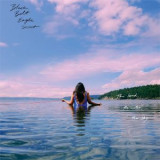
Limited edition run of 500 copies - pressed on transparent blue vinyl
Following a CD-only release in Japan in 2021, legendary downtempo producer Calm finally releases his “Before” album on vinyl and digital courtesy of Hell Yeah. The 10-track record is a slow-burning Balearic beauty.
Calm aka Kiyotaka Fukagawa has never been to the White Isle, but he sure knows how to capture its musical essence. He has done so over a long and storied career that has taken in 17 albums and some 35 EPs on many labels including this one over the last 20-plus years. His unique blend of ambient, jazz and leftfield was last showcased on this label in 2018 with his By Your Side album, and now he does it again with another timeless and escapist offering.
The record was written, arranged, mixed and produced by Calm, but with gorgeous musical embellishments, trumpets, flutes, saxophones, violins, bass and keys played by friends and guests like Shiba, Sinsuke Fujieda, Fumiko Takeshita, Tomokazu Sugimoto, Yuichiro Kato and Toshitaka Shibata. Tracks from it have already had support from Cosmo Coleen Murphy on Worldwide FM, while Phil Mison says it is "100% reminiscent of an old Café Del Mar or José Padilla record." He is not wrong.
As soon as the opening chords of 'Beauty on Earth' wash over you there is no escaping the naturalistic charm and beauty of this record. 'Long Summer Dream' layers mystic wind sounds and gentle percussive patterns into suspensory bliss, 'Blue in Void' is a plaintive moment of sombre sax and pensive piano, then 'Liminal Moment' awakens the soul with its gorgeous flute lines and looping arps.
There is perfect horizontal sunset house on 'I Love You,' 'Feel It' picks up the pace with seductive saxophone motifs and psychedelic synth loops and 'Before Sunrise Blue' is crushing downtempo melancholia. 'Kunpoo' reawakens you with leggy bass and expansive synths that reach for the heavens, while 'Freedom Sunset' is an epic 10-minute journey out to sea. Lastly, 'Let's Make Harmony' is super slow motion jazz-funk that swells the heart. Before is a superb album that is well-deserving of this double vinyl pressing and is sure to become a Balearic classic.
DJ Support:
Phil Mison, Colleen Cosmo Murphy, Chris Coco, Buena Onda Crew
Suche:run x
Prayer returns to Hooversound once again creating a melting pot of his influences. From classical, to jungle and breaks to ambient, Prayer has doubled down on his refusal to be pigeonholed into a stereotype.
#HOO11/06 is a release combining this EP with his previous release on Hoover - putting it on vinyl form for the first time!
Prayer has always been one to push hard on the emotional front, and definitely brings this energy to this release. Having recorded original piano music from the age of 16, he’s been able to create a distinctive sound that still yet blows expectations out of the park, with previous releases on Grade 10 and Black Acre as well as debuting on Hooversound in 2021.
This EP continues in a run of amazing releases from Hooversound Recordings - the London-based label founded by NAINA and SHERELLE in 2020 - including the likes of Chrissy, Mani Festo, Special Request x Tim Reaper and Sinistarr to name a few.
Yellow Vinyl
Message of the Artist:
“Before becoming a producer, I grew up with labels such as Cenobite, K.N.O.R., Cold Rush and Ruffneck Records; this emblematic 1990s hardcore sound has influenced me heavily, even though it has never explicitly featured in my music. But I feel it’s time to return from exile, and so I have started to dig up the relics and present my interpretation of that great style: The energetic kicks, the sweeping sounds, the samples. Enjoy my piece of modern arkaeology!”
Repress !
The long-awaited reissue of the best ever album of rare Eastern and psychedelic Jazz music by this famous Hungarian guitarist
Gabor Szabo, originally released in 1968. For the first time as extended edition with 2 bonus tracks: radio versions of Fire Dance
/ Ferris Wheel from the 1969 7” single 7”. Deluxe 8-sided Digipak CD and Gatefold Vinyl come with long, exclusively written
inner notes by the famous researcher and biographer Douglas Payne. Remastered by Martin Bowes at Cage Studios (UK).
Gabor Szabo was one of the most original guitarists to emerge in the 1960s, mixing his Hungarian folk music heritage with a deep
love of jazz and crafting a distinctive, largely self-taught sound. Born in Budapest, on March 8, 1936, Szabo was inspired by a Roy
Rogers cowboy movie to begin playing guitar when he was 14 and often played in dinner clubs and covert jam sessions while still
living in his hometown. He escaped from his country at age 20 on the eve of the Communist uprising and eventually made his way
to America, settling with his family in California.
He attended Berklee College (1958-1960) and in 1961 joined Chico Hamilton's innovative quintet featuring Charles Lloyd. Urged
by Hamilton, Szabo crafted a most distinctive sound; as agile on intricate, nearly-free runs as he was able to sound inspired during
melodic passages. Szabo left the Hamilton group in 1965 to leave his mark on the pop-jazz of the Gary McFarland quintet and the
energy music of Charles Lloyd's fiery and underrated quartet featuring Ron Carter and Tony Williams.
Szabo initiated a solo career in 1966, recording the exceptional album, Spellbinder, which yielded many inspired moments and
"Gypsy Queen," the song Santana turned into a huge hit in 1970. Szabo formed an innovative quintet (1967-1969) featuring the
brilliant, classically trained guitarist Jimmy Stewart and recorded many notable albums during the late '60s. The emergence of
rock music (especially George Harrison, Eric Clapton, and Jimi Hendrix) found Szabo experimenting with feedback and more
commercially oriented forms of jazz.
During the '70s, Szabo regularly performed along the West Coast, hypnotizing audiences with his enchanting, spellbinding style.
From 1970, he locked into a commercial groove, even though records like Mizrab occasionally revealed his seamless jazz, pop,
Gypsy, Indian, and Asian fusions. Szabo had revisited his homeland several times during the '70s, finding opportunities to perform
brilliantly with native talents. He was hospitalized during his final visit and died in 1982, just short of his 46th birthday.
Having co-produced Duran Duran’s acclaimed fifteenth studio album, ‘FUTURE PAST’, Erol Alkan returns to recent single ‘ALL OF YOU’ to deliver a very special Extended Rework. Paying tribute to the band’s pioneering ‘Night Version’ remixes that tipped their earliest material towards the dance floor, this grandiose reimagining equally recalls Alkan’s beloved reworks from over the years.
Recorded with founding members Simon Le Bon, Nick Rhodes, John Taylor and Roger Taylor, ‘All Of You’ also features lead guitar from Graham Coxon and backing vocals by Barli. Blessed with the raw material, Alkan distills each element into a glorious disco odyssey totalling nearly ten minutes, an epic but sensual dance floor trip that already ranks amongst his finest work.
Phantasy is proud to release 'ALL OF YOU (Erol Alkan's Extended Rework)’ (backed with an instrumental version) on a limited run of 12” vinyl.
- 1: Un Sandpiper
- 2: Shine
- 3: 50 Million Year Trip Downside Up
- 4: Mudfly
- 5: Demon Cleaner Best Of Edit
- 6: A Day Early And A Dollar Extra
- 7: I'm Not
- 8: Hurricane
- 9: Flip The Phase
- 10: Fatso Forgotso
- 11: El Rodeo
- 12: Gardenia Live - Edit Version
- 13: Thumb Live
- 14: Conan Troutman Live Edit Version
- 15: Freedom Run Live
The members of short lived Palm Desert, CA stoner/desert rock trailblazers Kyuss went their separate ways in 1995 after only four genre defining albums with Josh Homme and Nick Oliveri forming Queens of the Stone Age, John Garcia founding groups Unida, Slo Burn, and Hermana, and Brant Bjork joining Fu Manchu. 2000 posthumous compilation Muchas Gracias: The Best of Kyuss gathered a selection of 15 rare tracks, B-sides and live cuts. Available for the first time on vinyl in the U.S., Run Out Groove offers up a colored 2LP pressing of the hard to find album with deluxe packaging.
This land runs through Katherine Paul’s blood. And it called to her. In dreams she saw the river, her ancestors, and her home. When the land calls, you listen. And KP found herself far from her ancestral lands during a time of collective trauma, when the world was wounded and in need of healing. In 2020 she made the journey from Portland back to the Skagit River, back to the cedar
trees that stand tall and shrouded in fog, back to the tide flats and the mountains, back to Swinomish.
It is a powerful thing to return to our ancestral lands and often times the journey is not easy. Like the salmon through the currents, like the tide as it crawls to shore this is a story of return. It is the call and response. It is the outstretched arms of the people who came before, welcoming her home. The Land, The Water, The Sky is a celebration of lineage and strength. Even in its deepest moments of loneliness and grief, of frustration over a world wrought with colonial violence and pain, the songs remind us that if we slow down, if we listen to the waves and the wind through the trees, we will remember to breathe.
There is a throughline of story in every song, a remembrance of knowledge and teachings, a gratitude of wisdom passed down and carried. There is a reimagining of Sedna who was offered to the sea, and a beautiful rumination on sacrifice and humanity, and what it means to hold the stories that work to teach us something.
Chord progressions born out of moments of sadness and solitude transform into the islands that sit blue along the horizon. The Salish Sea curves along her homelands, and when the singer is close to this water she is reminded of her grandmother, how she looked out at these same islands, and she’s held by spirit and memory.
The Land, The Water, The Sky rises and falls, in darkness and in light, but even in its most melancholy moments it is never despairing. That is the beauty of returning home. When you stand on ancestral lands it is impossible to be alone. You feel the arms and hands that hold you up, unwilling to let you fall into sorrow or abandonment. In her songs Katherine Paul has channeled that feeling of being held. In every note she has written a love letter to indigenous strength and healing.
There is a joy present here, a fierce blissfulness that comes with walking the trails along the river, feeling the sand and th stones beneath her feet. It is the pride and the certainty that comes with knowing her ancestors walked along the same land, dipped their hands into the water, and ran their fingertips along the same bark of cedar trees.
This is a story of hope, as it details the joy of returning. Katherine Paul’s journey home wasn’t made alone, and the songs are crowded with loved ones and relatives, like a really good party. And as the songs walk us through the land it is important we hover over the images and the beauty, the moments that mark this album as site specific. The power of this land is woven throughout, telling the story of narrow waterways, brush strokes, salmon stinta, and above all healing.
Let it take you. Move through the story and see the land through her eyes, because it is a gift, a welcomed sʔabadəb.*
*The word “gift” in Lushootseed, the language of the Coast Salish people“
Cornetist Don Cherry first rose to prominence as part of the revolutionary Ornette Coleman Quartet that turned the jazz world on its ear in 1959 when it arrived at the Five Spot Café in NYC. Though Cherry co-led the album The Avant-Garde with John Coltrane in 1961, it wasn’t until he signed with Blue Note in 1965 that he began his career as a leader with a run of fiery albums including Complete Communion, Symphony for Improvisers, and 1966’s Where Is Brooklyn? This last session was a highly interactive quartet date that featured Pharoah Sanders on tenor saxophone and piccolo, Henry Grimes on bass, and Ed Blackwell on drums. This Blue Note Classic Vinyl Edition is all-analog, mastered by Kevin Gray from the original master tapes, and pressed on 180g vinyl at Optimal. from Coleman's playful lyricism.
Moreover, the rhythm team of Ed Blackwell on drums and Henry Grimes on bass provides a scintillating underpinning for the music that is worth listening to all on its own. Sanders' mix of Coltrane's yearning long notes, Ayler's ghostly, fluttering wail, Coleman's fast, bumpy phrasing and his own manic bagpipe screams certainly separates the faint-hearted from the stayers on the opening Awake Nu. But the conversation between Sanders and Cherry is light, lyrical and engaging on The Thing, and the saxophonist even gets into a stubborn, Sonny Rollins-like repeating Latin vamp on There Is the Bomb. An unflinchingly quirky classic. (THE GUARDIAN)
Swedish outsider anti-folk: Embedded in the ever exciting Swedish underground scene Enhet För Fri Musik continues the quest for innovation numerous legendary Swedish bands started during the 70s, Pärson Sound, Trad Gras Och Stenar, Arbete Och Fritid. Taking the ideas of communal music craft and experimentation, on this album the group comes to a unique combination of Jandek-like atonal guitar, organ, tape effects, field recordings, saxophone and Sofie Herner's amazing loner voice running over it.
- A1: Al Norte 01 00
- A2: Into Love / Stars 05 44
- A3: Exit Strategy To Myself 03 08
- A4: Where You Find Me 02 31
- A5: Ship 04 04
- B1: Loose Ends 05 31
- B2: Into The Ice Age 06 21
- B3: Oh Sweet Fire 03 50
- B4: Ghost 01 23
- B5: Sans Soleil 03 16
- C1: Night‘s Too Dark 02 55
- C2: *Stars* 01 10
- C3: Al Sur 03 18
- C4: Into Love Again 05 08
Yellow Vinyl[37,52 €]
2023 Repress On Vertigo Days, the first album in seven years for The Notwist, one of Germany’s most iconic independent groups are alive to the possibilities of the moment. Their music has long been open-minded and exploratory, but from its engrossing structure, through its combination of melancholy pop, clangorous electronics, hypnotic Krautrock and driftwork ballads, to its international musical guests, Vertigo Days is both a new step for The Notwist, and a reminder of just how singular they’ve always been. Most importantly, the core trio of Markus and Micha Acher and Cico Beck are reaching out: as Markus reflects, “we wanted to question the concept of a band by adding other voices and ideas, other languages, and also question or blur the idea of national identity.”
It’s been seven years since The Notwist’s last album, Close To The Glass, and in that time the various members of the group have been busy with side projects (Spirit Fest, Hochzeitskapelle, Alien Ensemble, Joasihno), guest appearances, a record label (Alien Transistor), movie scoring, helping organise the Minna Miteru compilation of Japanese indie pop & running a festival (Alien Disko). Those divergent paths feed back into Vertigo Days in surprising ways, from its structure, built from group improvisations, with songs flowing and melting into one another in a collective haze, to its spirit, which feels refreshed and alive. There’s something cinematic about Vertigo Days too, reflective of the group’s time working on soundtracks, and reflected in the rich, moody photographic artwork by Lieko Shiga that adorns the cover.
The first sign of this newfound openness was the album’s lead single, “Ship”, where the group were joined by Saya of Japanese pop duo Tenniscoats, her disarmingly hymnal voice sighing over a propulsive, Krautrocking beat. Elsewhere, American multi-instrumentalist Ben LaMar Gay sings on “Oh Sweet Fire”, also contributing “a love lyric for these times, imagining two lovers in an uprising hand in hand.” American jazz clarinettist and composer Angel Bat Dawid adds clarinet to the spaced-out dream-pop of “Into The Ice Age”, while Argentinian electronica songwriter Juana Molina gifts some gorgeous singing and electronics to “Al Sur”. Saya also reappears as a member of Japanese brass band Zayaendo, who guest on the album. Throughout, The Notwist also capture the openness of their live performances, too, where they mix and link their songs in unexpected ways.
Indeed, what’s most impressive about Vertigo Days is the way it sits together as one long, flowing suite, the album conceptualised as a whole entity – it’s perfect for the long-distance, dedicated listening experience. This is also captured by the album’s lyrics, which Markus states, “feel more like one long poem.” The dimensions of that poem are multi-faceted, something intensified by the geopolitical weirdness of its times: “As the situation changed so dramatically, while we were working on the record, the theme of ‘the impossible can happen anytime,’ more about personal relationships in the beginning, became a global and political story.” But it also works at a level of poetic abstraction, such that each song gestures in multiple directions – the deeply private pans out to the global. The one certainty is that there is no certainty. “It’s maybe mostly about learning and how you never arrive anywhere,” Markus concurs. To sit within uncertainty is brave, but it’s also where we feel most alive, and Vertigo Days is an album that is brimming with life, with enthusiasm and love for music and for community, all wide-eyed and dreaming.
LTD PICTURE DISC
This 2016 vinyl edition comes in LP picture disc with Gatefold Jacket, limited to 400 copies. Reissue on picture disc of Character, the seventh album in one of the creators of the Gothemburg Sound, Dark Tranquility. A comeback to their origins as shown in the previous Damage Done from 2002. Including the hit "Lost To Apathy", Character is, without hesitation, one of the greatest works in DT's wide and career and Swedish Death Metal.
It seems fitting that a trilogy of albums celebrating nature should conclude some eight years after its second chapter. Manchester-via-Todmorden based instrumental trio Plank’s first two LPs – 2012’s kosmiche-inspired Animalism and 2014’s more expansive and structurally disruptive follow-up Hivemind – enjoyed relatively quick gestation periods. However, Plank are firm believers in letting nature run its course, and so it is that their third LP Future of the Sea arrives early in 2023. “I always knew I wanted to make three albums inspired by nature” says Plank main-man David Rowe (synths / guitar). “Future of the Sea is another exploration into odd time signatures and traditional rock instruments alongside synths and electronics.”
“Future of the Sea is a celebration of the power and majesty of our oceans and how humankind has been destroying them through industrial scale fishing and global warming” says Rowe. “Rachel Carson put it more eloquently in her book The Sea Around Us: ‘It is a curious situation that the sea, from which life first arose should now be threatened by the activities of one form of that life. But the sea, though changed in a sinister way, will continue to exist; the threat is rather to life itself.’” A post apocalyptic underwater city scape adorns the cover in an illustration by Jake Blanchard, whose work you'll also see on Richard Dawson's latest album 'The Ruby Cord'.
The synthetic nature of Plank’s sprawling rock odysseys feel at their most pronounced on Future of the Sea which leans to the band’s love of Pink Floyd era Meddle, Camel, film score composers like John Carpenter and Vangelis, 70s experimentalists Harmonia, 1980s King Crimson and 90s post-rock adjacent group Tortoise. In polyrhythmic dexterity if not heaviness, Plank also take some influence from Meshuggah, and it’s in their movement between the 16 minute final album track’s sections that it feels most prominent. They swerve from crunching stoner rock jams to more ambient spatial explorations, crescendoing progressive peaks, 80s synth pop and finally a crushing riff-laden finale.
Sämtliche Songs des Nachfolgers ihres von der Kritik hochgelobten Debütalbums TAKE ME APART, das Kelelas Aufstieg in den Mainstream beschleunigte, wurden von ihr selbst geschrieben, arrangiert und zusammen mit Asmara co-produziert, während das Ambient-Duo OCA (Yo Van Lenz & Florian T. M. Zeisig) und LSDXOXO, neben Bambii, als Hauptproduzenten des Albums gelten. Auf RAVEN taucht Kelela aus den Gezeiten der ozeanischen Umlaufbahn ihres höheren Selbst auf, um Autonomie, Zugehörigkeit und Selbsterneuerung als Heilung zu erkunden. Die beiden Singles 'Washed Away' und 'Happy Ending' wurden von Pitchfork bereits als 'Schaufenster ihres schwebenden Soprans' und Beweis für ihren 'gehauchten, anmutigen Gesang' gefeiert. Mit ihren talentierten Bewegungen zwischen den Frequenzen von R&B und Dance Music konnte sich Kelela als künstlerische Interpolatorin von Musik, Kunst und Mode etablieren. Ihre Frühwerke CUT 4 ME (2013) und HALLUCINOGEN (2015) zementierten sie als führende Kraft in der alternativen Underground-R&B- und Elektronikwelt und eröffneten ihr Kollaborationen mit weiteren visionären Künstler*innen wie Solange, Gorillaz, Andrew Thomas Huang und Danny Brown. Mit ihrer durchdachten Mischung aus Eleganz, Futurismus, Göttlichkeit und Sinnlichkeit hat sich Kelela einen Weg gebahnt, der Stil sowohl als Bestandteil der Kunst als auch als Kunst an sich demonstriert.
Ltd. Clear Vinyl 2LP+DL
Sämtliche Songs des Nachfolgers ihres von der Kritik hochgelobten Debütalbums TAKE ME APART, das Kelelas Aufstieg in den Mainstream beschleunigte, wurden von ihr selbst geschrieben, arrangiert und zusammen mit Asmara co-produziert, während das Ambient-Duo OCA (Yo Van Lenz & Florian T. M. Zeisig) und LSDXOXO, neben Bambii, als Hauptproduzenten des Albums gelten. Auf RAVEN taucht Kelela aus den Gezeiten der ozeanischen Umlaufbahn ihres höheren Selbst auf, um Autonomie, Zugehörigkeit und Selbsterneuerung als Heilung zu erkunden. Die beiden Singles 'Washed Away' und 'Happy Ending' wurden von Pitchfork bereits als 'Schaufenster ihres schwebenden Soprans' und Beweis für ihren 'gehauchten, anmutigen Gesang' gefeiert. Mit ihren talentierten Bewegungen zwischen den Frequenzen von R&B und Dance Music konnte sich Kelela als künstlerische Interpolatorin von Musik, Kunst und Mode etablieren. Ihre Frühwerke CUT 4 ME (2013) und HALLUCINOGEN (2015) zementierten sie als führende Kraft in der alternativen Underground-R&B- und Elektronikwelt und eröffneten ihr Kollaborationen mit weiteren visionären Künstler*innen wie Solange, Gorillaz, Andrew Thomas Huang und Danny Brown. Mit ihrer durchdachten Mischung aus Eleganz, Futurismus, Göttlichkeit und Sinnlichkeit hat sich Kelela einen Weg gebahnt, der Stil sowohl als Bestandteil der Kunst als auch als Kunst an sich demonstriert.
- A1: Al Norte 01 00
- A2: Into Love / Stars 05 44
- A3: Exit Strategy To Myself 03 08
- A4: Where You Find Me 02 31
- A5: Ship 04 04
- B1: Loose Ends 05 31
- B2: Into The Ice Age 06 21
- B3: Oh Sweet Fire 03 50
- B4: Ghost 01 23
- B5: Sans Soleil 03 16
- C1: Night‘s Too Dark 02 55
- C2: *Stars* 01 10
- C3: Al Sur 03 18
- C4: Into Love Again 05 08
Black Vinyl[26,85 €]
2023 Repress on Yellow Vinyl
On Vertigo Days, the first album in seven years for The Notwist, one of Germany’s most iconic independent groups are alive to the possibilities of the moment. Their music has long been open-minded and exploratory, but from its engrossing structure, through its combination of melancholy pop, clangorous electronics, hypnotic Krautrock and driftwork ballads, to its international musical guests, Vertigo Days is both a new step for The Notwist, and a reminder of just how singular they’ve always been. Most importantly, the core trio of Markus and Micha Acher and Cico Beck are reaching out: as Markus reflects, “we wanted to question the concept of a band by adding other voices and ideas, other languages, and also question or blur the idea of national identity.”
It’s been seven years since The Notwist’s last album, Close To The Glass, and in that time the various members of the group have been busy with side projects (Spirit Fest, Hochzeitskapelle, Alien Ensemble, Joasihno), guest appearances, a record label (Alien Transistor), movie scoring, helping organise the Minna Miteru compilation of Japanese indie pop & running a festival (Alien Disko). Those divergent paths feed back into Vertigo Days in surprising ways, from its structure, built from group improvisations, with songs flowing and melting into one another in a collective haze, to its spirit, which feels refreshed and alive. There’s something cinematic about Vertigo Days too, reflective of the group’s time working on soundtracks, and reflected in the rich, moody photographic artwork by Lieko Shiga that adorns the cover.
The first sign of this newfound openness was the album’s lead single, “Ship”, where the group were joined by Saya of Japanese pop duo Tenniscoats, her disarmingly hymnal voice sighing over a propulsive, Krautrocking beat. Elsewhere, American multi-instrumentalist Ben LaMar Gay sings on “Oh Sweet Fire”, also contributing “a love lyric for these times, imagining two lovers in an uprising hand in hand.” American jazz clarinettist and composer Angel Bat Dawid adds clarinet to the spaced-out dream-pop of “Into The Ice Age”, while Argentinian electronica songwriter Juana Molina gifts some gorgeous singing and electronics to “Al Sur”. Saya also reappears as a member of Japanese brass band Zayaendo, who guest on the album. Throughout, The Notwist also capture the openness of their live performances, too, where they mix and link their songs in unexpected ways.
Indeed, what’s most impressive about Vertigo Days is the way it sits together as one long, flowing suite, the album conceptualised as a whole entity – it’s perfect for the long-distance, dedicated listening experience. This is also captured by the album’s lyrics, which Markus states, “feel more like one long poem.” The dimensions of that poem are multi-faceted, something intensified by the geopolitical weirdness of its times: “As the situation changed so dramatically, while we were working on the record, the theme of ‘the impossible can happen anytime,’ more about personal relationships in the beginning, became a global and political story.” But it also works at a level of poetic abstraction, such that each song gestures in multiple directions – the deeply private pans out to the global. The one certainty is that there is no certainty. “It’s maybe mostly about learning and how you never arrive anywhere,” Markus concurs. To sit within uncertainty is brave, but it’s also where we feel most alive, and Vertigo Days is an album that is brimming with life, with enthusiasm and love for music and for community, all wide-eyed and dreaming.
It could only have happened in Detroit. It was in the ashes of this Detroit, that Tribe Records was born - a community-led platform where artists took control of marketing, promoting, and releasing their own music. Two original founding members, saxophonist Wendell Harrison and trombonist Phil Ranelin, are still active in the Detroit jazz community, and act as global ambassadors for the Tribe legacy. In the years that have followed, the path Tribe blazed has become the blueprint for generations of independent artists. With the upcoming release of Ranelin and Harrison"s joint entry in the Jazz Is Dead series, they continue the mission of Tribe to provide "a new dimension in cultural awareness".
Studio One was founded by Clement "Coxsone" Dodd1 in 1954, and the first recordings were cut in 1963 on Brentford Road in Kingston.[1][2] Amongst its earliest records were "Easy Snappin" by Theophilus Beckford, backed by Clue J & His Blues Blasters, and "This Man is Back" by trombonist Don Drummond. Dodd had previously issued music on a series of other labels, including World Disc, and had run Sir Coxsone the Downbeat, one
of the largest and most reputable sound systems in the Kingston ghettos.
In the early 1960s, the house band providing backing for the vocalists were the Skatalites[3] (1964–65), whose members (including Roland Alphonso, Don Drummond, Tommy McCook, Jackie Mittoo, Lester Sterling and Lloyd Brevett) were recruited from the Kingston jazz scene by Dodd. The Skatalites split up in 1965 after Drummond was jailed for murder, and Dodd formed new house band the Soul Brothers (1965–66), later named the Soul Vendors (1967) and Sound Dimension (1967-). From 1965 to 1968 they played 9 a.m. to 5 p.m., 5 days a week, 12 rhythms a day (about 60 rhythms a week) with Jackie Mittoo as music director, Brian Atkinson (1965–1968) on bass, Hux Brown on guitar, Harry Haughton (guitar), Joe Isaacs on drums (1966–1968), Denzel Laing on percussion, and on horns (some initially and some throughout): Roland Alphonso, Dennis 'Ska' Campbell, Bobby Ellis, Lester Sterling, among others on horns during the era of Rock Steady. Headley Bennett, Ernest Ranglin, Vin Gordon and Leroy Sibbles were included among a fluid line-up, to record tracks directed by Jackie Mittoo at Studio One from 1966-1968.
During the night hours at Studio One from 1965-1968, singers like Bob Marley, Burning Spear, The Heptones, The Ethiopians, Ken Boothe, Rita Marley, Marcia Griffiths, Judy Mowatt, Alton Ellis, Delroy Wilson, Bunny Wailer[4] and Johnny Nash, among others, would put on headphones to sing lyrics to original tracks recorded by the Soul Brothers earlier each day. These seminal recordings included "Real Rock" (by Sound Dimension), "Heavy Rock", "Jamaica Underground", "Wakie Wakie", "Lemon Tree", "Hot Shot", "I'm Still In Love With You", "Dancing Mood", and "Creation Rebel".
Jackie Mittoo, Joe Isaacs, and Brian Atkinson left Studio One in 1968, recorded drums and bass for Desmond Dekker's and Toots' biggest hits at other Kingston studios, then moved to Canada. Hux Brown stayed in Jamaica to record on the soundtrack The Harder They Come, The Harder They Fall, and toured in Nigeria with Toots and the Maytals and Fela Kuti. The Soul Brothers (a.k.a. Sound Dimension) formed the basis of reggae music in the late 1960s, being versioned and re-versioned time after time over decades by musicians like Shaggy, Sean Paul, Snoop Lion, The Clash, String Cheese Incident, UB40, Sublime, and countless other Billboard originals and remakes trying to emulate their original Rock Steady sound at Coxsone's Studio One.