
pas en stock
Commandez maintenant et nous commanderons l'article pour vous chez notre fournisseur.
17,23 €
Last In: 16 months ago
Commandez maintenant et nous commanderons l'article pour vous chez notre fournisseur.

When one makes mention of Deee-Lite, the 90's house-funk trio of Lady Miss Kier, and DJs Dmitry and Towa Tei, invariably their Billboard smash single “Groove Is In The Heart” will come up, and for good reason. With its Herbie Hancock-sampling bassline, some classic rhymes from Q-Tip, and guest vocals by Parliament-Funkadelic legend Bootsy Collins, the song became an indelible classic of 90s music, a massive commercial hit for Deee-lite and is widely considered one of the greatest dance songs of all time. Although a massive success for the group, “Groove Is In The Heart” led to some pigeonholing from critics and reviewers, who had specific expectations for future records. Rather than deliver more of the same free-wheeling, breezy dance music of World Clique, Deee-lite took a more politically-minded approach with their second album, spurred largely by front-woman Lady Miss Kier, who had a lengthy history of political activism prior to forming the group. 1992's Infinity Within rendered several Dance-chart hit singles, but was not as commercially or critically lauded as its forebear. Deee-lite were undaunted by their change in commercial fortune, regrouping with the addition of junglist DJ Ani, replacing the absent Towa Tei to record their third record. 1994's Dewdrops In The Garden was the result of their efforts, which struck a remarkable balance between the celebratory grooves of World Clique, and the social justice-driven Infinity Within. Lady Miss Kier had done a lot of world-traveling in the time between albums, and the material in Dewdrops was a reflection of her experiences, applying a spirit of global togetherness to their house-funk grooves. Regrettably, Dewdrops In The Garden was not a commercial success, yet it still managed to render its share of #1 Dance Chart singles; the atmospheric techno bounciness of “Bring Me Your Love”, and the spacious funk-house track “Call Me.” Though Deee-lite would disband soon after Dewdrops In The Garden's release, the record remains an unheralded favorite among dance music devotees for its coupling infectiously bright, and soulful melodies, with banging dance-floor grooves, and unshakably optimistic vibes.
Commandez maintenant et nous commanderons l'article pour vous chez notre fournisseur.

Commandez maintenant et nous commanderons l'article pour vous chez notre fournisseur.

Kerrie is back on James Ruskin's Blueprint for her third EP. The "Act Of Resistance" EP showcases Kerrie's refined approach to techno, blending moody industrial tones with dub overtones and intricate sound design. Kerrie's in-depth knowledge and unwavering dedication to music shines through her notable back catalogue and bolshy, unforgiving DJ and Live sets. Honing her craft for over a decade, Kerrie achieved a milestone at the start of 2024 when Tresor announced her as a resident DJ.
Irish-born, Manchester-based Kerrie is a multidisciplinary artist and DJ. Having garnered a rich musical education through working at and holding a DJ residency for one of the UK's most respected record shops, Eastern Bloc, Kerrie's in-depth knowledge and unwavering dedication to music shines through her notable back catalogue and bolshy, unforgiving DJ and Live sets. Honing her craft for over a decade, Kerrie achieved a milestone at the start of 2024 when Tresor announced her as a resident DJ.
Following well-received releases on labels such as Don't Be Afraid, Cultivated Electronics, I Love Acid and Symbolism, Kerrie launched her imprint Dark Machine Funk DMF in 2020, and also debuted on Blueprint Records with her "Raw Regimen" EP.Truly welcomed to the Blueprint family, Kerrie delivered her second EP "Transient Belief" in 2023 and joined the crew at label showcases around the globe.
Since 2023 she has been fully committed to the studio and accommodating her increasingly busy tour schedule, forging a long-lasting path fuelled by drive, passion, authenticity and a community-first way of thinking.
She's now back on James Ruskin's label for her third Blueprint outing. The "Act Of Resistance" EP showcases Kerrie's refined approach to techno, blending moody industrial tones with dub overtones and intricate sound design.
Commandez maintenant et nous commanderons l'article pour vous chez notre fournisseur.

TRANSPARENT RED VINYL[28,36 €]
BIIG TIME ist das Projekt des DMA's-Gitarristen Johnny Took und seines Bruders, PLANET-Sänger Matthew Took. Mit der neuen Single "Bigger Than Nothing" kündigt das Duo sein Debütalbum "200K" an, das auf viel beachtete Australien-Konzerte mit den Courteeners und Jamie Webster folgt. "Bigger Than Nothing" mit seinen durchgehenden Harmonien, verzerrten Gitarren und Lyrics voller augenzwinkernder Selbstironie ist der Nachfolger der 2020er Debütsingle "It's You", die als faszinierendes West-Coast-by-Garage-Rock-Statement aufhorchen liess. Mit 4 DMA's-Alben und einer weltweiten Fangemeinde ist Took kein Unbekannter auf internationalen Bühnen, während sein Bruder Matthew mit dem 2022er PLANET-Debütalbum "Information Overload" bereits Künstler wie Liam Gallagher supportete.
il devrait être publié sur 30.05.2025

BIIG TIME ist das Projekt des DMA's-Gitarristen Johnny Took und seines Bruders, PLANET-Sänger Matthew Took. Mit der neuen Single "Bigger Than Nothing" kündigt das Duo sein Debütalbum "200K" an, das auf viel beachtete Australien-Konzerte mit den Courteeners und Jamie Webster folgt. "Bigger Than Nothing" mit seinen durchgehenden Harmonien, verzerrten Gitarren und Lyrics voller augenzwinkernder Selbstironie ist der Nachfolger der 2020er Debütsingle "It's You", die als faszinierendes West-Coast-by-Garage-Rock-Statement aufhorchen liess. Mit 4 DMA's-Alben und einer weltweiten Fangemeinde ist Took kein Unbekannter auf internationalen Bühnen, während sein Bruder Matthew mit dem 2022er PLANET-Debütalbum "Information Overload" bereits Künstler wie Liam Gallagher supportete.
il devrait être publié sur 30.05.2025
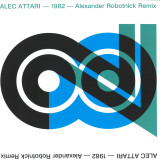
Alec Attari, a Turkish producer with a deep-rooted passion for minimal wave, EBM, and the most underground strains of Italo disco, makes a bold debut on our label with his extraordinary EP, « 1982 ». The title itself gives a knowing nod to the cult classic by Miss Kittin & The Hacker, and the release pays tribute to that landmark era when emerging technologies began producing both mainstream and underground hits later immortalized by pioneers like Ron Hardy at the Music Box and Frankie Knuckles at the Power Plant. The crown jewel of this record is an exceptional remix by Italian legend Alexander Robotnick. This version alone justifies acquiring the record, as it echoes the spirit of his classic "Problèmes d'Amour" with a mysterious, sinuous, and hypnotic vibe. Leading Side A is this striking track, aptly titled "Visage." Following it is "Time Machine," an electrifying nod to EBM and techno in the style of another icon, The Hacker. On A3, the original version of "Visage" brings its own serpentine elegance. Side B opens with "Visage" (Vondkreistan Remix), a track that recalls Ron Hardy's classic sets with a more electro, wave-tinged feel. Then, "Wave" brings to mind the finest era of Grenoble's Goodlife label, while "1982" closes the release with a powerful finale. This record glides between influences, from Legowelt and Alden Tyrell to Dopplereffekt, Random Factor, DMX Krew, and Anthony Rother. A true masterpiece from start to finish.
Commandez maintenant et nous commanderons l'article pour vous chez notre fournisseur.

Tony Christie is proud to announce his first new album in over 12 years - ‘We Still Shine’. Released on 16th February 2024, it is from the heart and sees Tony go back to his love of country music, something he has been planning to do with long-time producer and close friend Graeme Pleeth for many years. Now available on WHITE vinyl, this record has been half-speed mastered to DMM for ultimate audio quality and pressed on heavyweight vinyl contained within a printed inner sleeve and gatefold outer sleeve.
il devrait être publié sur 30.05.2025

Der 1999 veröffentlichte Soundtrack zu Eyes Wide Shut enthält eine einzigartige Trackliste mit Hits wie „Baby Did a Bad Bad Thing“ von Chris Isaak sowie Originalkompositionen von Jocelyn Pook, die den unheimlichen und spannungsgeladenen Ton des Films perfekt ergänzen. Ein herausragendes Stück, „Masked Ball“, wurde wegen seiner eindringlichen, atmosphärischen Qualitäten zur Ikone. Das Album wurde für einen Grammy Award in der Kategorie „Best Score Soundtrack for Visual Media“ nominiert, was die Anerkennung der Kritiker unterstreicht.
Commandez maintenant et nous commanderons l'article pour vous chez notre fournisseur.

Loco Dice kündigt sein viertes Album „Purple Jam“ an: Mit 12 Tracks und einer Fülle hochkarätiger Kollaborationen unterstreicht er die ständige Weiterentwicklung seines Sounds und die erfolgreiche Verschiebung von Genregrenzen.
Loco Dice ist eine absolute Legende und einer der einflussreichsten Charaktere in der elektronischen Musikszene. Seit Beginn seiner Karriere hat er seinen einzigartigen Genre Twist aus House & Techno mit starken Hip-Hop Einflüssen etabliert. Von den Anfängen als Hip-Hop-DJ in Düsseldorf bis hin zu Residencies in den legendären Ibiza-Superclubs wie Circoloco im DC-10 und Amnesia Terrace sowie im Space Miami in den USA war Loco Dice immer für seine Fähigkeit bekannt, tiefe, introspektive Sounds mit energiegeladenen Tracks zu mischen.
Das enorm hohe Level und kreative Spektrum dieses Albums wurde bereits mit den ersten Single-Auskopplungen zementiert: Auf „Heavy Heart“ mit Skrillex & Fireboy DML, „Road Runner“ mit Carl Cox, „Ice Cold Dealer“ mit Haftbefehl und „Juice“ mit The Martinez Brothers & Trinidad James sammeln sich bereits Millionen an Streams.
Das Album erscheint als farbige 1 LP (180 Gramm).
Commandez maintenant et nous commanderons l'article pour vous chez notre fournisseur.

"Something Soft", das zweite Album der irischen Post-Punk-Brandstifter M(h)aol, ist alles andere als soft. Von der ersten Note des Eröffnungsstücks von "Something Soft" bis zu den verzerrten Schreien des letzten Stücks fühlt sich die Platte antagonistisch gegenüber dem Konzept der Sanftheit an, klanglich und thematisch. Es ist eine unapologetische Annäherung an intersektionellen Feminismus, Tierschutz, Konsum und den Kampf um einen Platz in einer Welt, der es an Empathie mangelt. Was M(h)aol bietet, ist Katharsis in zwei Formen: die Art, die man bekommt, wenn man anderen gegenüber offen ist, und die Art, die man bekommt, wenn man mit Recht etwas kaputt macht. Wut und Empathie effektiv zu kanalisieren ist ein Akt der Widerstandsfähigkeit, und um "Something Soft" zu machen, mussten M(h)aol besonders widerstandsfähig werden. Nach ihrem gefeierten Debüt "Attachment Styles" änderte sich das Line-up von M(h)aol und bestand nun aus dem Kerntrio Constance Keane (Schlagzeug/Gesang, sie/ihr), Jamie Hyland (Bass/Gesang, sie/ihr) und Sean Nolan (Gitarre, er/ihm). Dieser Prozess veränderte die Herangehensweise der Band an das Songwriting und die Auftritte und führte zu einem unerwarteten Durchbruch. "Something Soft" zeichnet sich durch einen dringlicheren Sound aus, der sich eng um den Rhythmus von Hyland und Keane legt. In Songs wie "Pursuit" und "Snare" verbindet sich Keanes Gesang mit dem Schlagzeug, als würden ihre Worte durch ihr Spiel zum Leben erweckt und direkt aus ihrem Körper kommen. Vor dem Hintergrund dieser ängstlichen und schwadronierenden Tracks nimmt ihre Stimme den Raum eines inneren Monologs ein, in dem sie von einem angespannten Heimweg und von der Misogynie im Green Room aus einer Position der drolligen Beobachtung heraus erzählt - eine universelle Erfahrung, die in spezifischen Details wiedergegeben wird. Wie seine Vorgänger "Attachment Styles" und die "Gender Studies" EP wurde auch "Something Soft" von Jamie Hyland aufgenommen. Es ist die technisch ausgefeilteste der bisherigen M(h)aol-Aufnahmen, denn die Band, zu der auch Sarah Deegan vom Pixie Cut Rhythm Orchestra am Bass gehört, zog in das Dubliner Ailfionn Studio, wo sie die räumlichen Gegebenheiten und das Studio-Equipment nutzten, um ihrem Sound mehr Nuancen zu verleihen. Die zusätzlichen Sessions und das Können hinter den Reglern waren ein Segen, aber für eine Band, die es gewohnt ist, unter extremem Zeitdruck zu arbeiten, war dies eine unerwartete Herausforderung: Konnten M(h)aol das Gefühl der Unmittelbarkeit beibehalten, das ihre Musik bis zu diesem Zeitpunkt geprägt hatte? Songs wie "DM:AM" zerstreuten diese Sorge schnell, indem sie innerhalb von 20 Minuten aus einem Drone entstanden, den Nolan spielte, während Hyland ihr Aufnahme-Equipment aufbaute und sich beeilte, den Song einzufangen, sobald Keane und Deegan dazukamen. Eine der geisterhaften Hymnen von "Something Soft", "1800-Call-Me-Back", begann als Scherz, dass die Band einen Fußballgesang schreiben sollte, wurde aber weitaus komplexer - die köstliche Balance aus Chaos und Klarheit, die sie gefunden haben, wäre ohne Zeit unmöglich gewesen. "I Miss My Dog" ist weniger spontan, aber seine Meditation über Trauer baut sich in einem halsbrecherischen Tempo auf, von Rückkopplungen über Keanes Schlagzeugspiel und Gesang bis hin zu einem spektakulären Schluss, der die Trauer in Bass und Gitarre erstickt, eine der größten technischen Leistungen von M(h)aol bis heute. Der Feinschliff unterstreicht den schelmischen Charme von M(h)aol und lässt das Intime hymnisch wirken, indem persönliche Erfahrungen genutzt werden, um die allgemeinen Systeme, unter denen wir leben, zu beschreiben. Für diejenigen, die sich in den Songs von M(h)aol wiedererkennen, ist das Hören von "Something Soft" wie ein Sprung in einen lang laufenden Chat-Thread, voller Wut und Humor.
il devrait être publié sur 16.05.2025

DMV-by-way-of-the-U.K. punk duo Teen Mortgage have announced their debut album, Devil Ultrasonic Dream, out May 9th on vinyl via Roadrunner Records.
Produced by the band alongside longtime collaborator Kenny Eaton, the album’s first single, “BOX,” is a two-minute sprint of seething defiance, packed with hooks and unrelenting energy.
The album’s title, Devil Ultrasonic Dream, leans into the 1980s-era satanic panic in rock and roll. “The Devil Ultrasonic Dream,” explains frontman James Guile, “is about realizing a fantasy that Christian fascists don’t understand or want you to have. The devil—Satan—has always been a symbol of counterculture.”
Originally from England, Guile had been toying with the Teen Mortgage project under various monikers for years, crafting a sound steeped in sociopolitical commentary and built for the mosh pit, heavily influenced by classic ’80s punk. After relocating to Maryland five years ago, he connected with drummer (and former nurse) Edward Barakauskas via a Craigslist ad. Since then, the duo have spent years building Teen Mortgage’s presence in the DMV scene. In between a global pandemic and Barakauskas serving as an ER frontline worker, they managed to drop an EP and a string of singles before signing to Roadrunner Records in 2024.
Teen Mortgage has earned support slots with a stacked list of artists, from Weezer, Smashing Pumpkins, OFF!, and Alkaline Trio and return to the UK in June to play Download Festival and support Weezer at their Halifax Piece Hall show.
il devrait être publié sur 09.05.2025

Carlos Santana ist der große musikalische Kollaborateur, der seinen einzigartigen Gitarrenstil und seine weitreichende musikalische Vision mit einer großen Vielfalt von Künstlern verbindet, um etwas Neues, Einzigartiges und Transzendentes zu schaffen. Santanas Vision für Sentient war es, seine jüngsten Kollaborationen aus einer neuen Perspektive zu betrachten und sie zu einer klanglichen Pilgerreise durch Jazz, Hip-Hop, Soul, Rock und lateinamerikanische Rhythmen zu verweben. Er hat die Songs nicht nur so arrangiert, dass sie seiner Vision entsprechen, sondern viele von ihnen auch neu interpretiert und einige Aspekte der Tracks verbessert, um ein kohärentes Hörerlebnis zu schaffen. Die Songs auf Sentient reichen von aktuellen Hits und Kollaborationen mit Superstars bis hin zu seltenen, unveröffentlichten und übersehenen Tracks, die Carlos in einem neuen Kontext präsentieren wollte. Das Ergebnis ist eine spirituelle Reise durch die unendlichen Möglichkeiten der Musik, geführt von Santanas kompromissloser Muse.
il devrait être publié sur 09.05.2025
il devrait être publié sur 09.05.2025

Remember: you could be dreaming. Sinking or flying, sound-catching or singing. Witnessing a distant storm in silence, how it exposes purple clouds in unpredictable flashes. Hearing a submarine eruption and finding natal comfort in the warm, fragrant smoke that only wants to sheathe all your edges. The circus has left, only placards remain. And the snow. Look how the flakes sway to your feet without effort - any distance is misleading, illusory. There’s only dream and memory – the two wings of a bird that flaps with an ocean wave, blinks with an eye of a lighthouse. Fragile, you could be dreaming not alone, holding hands with the core of things. The molten core, like touching ice. You could be dreaming. Dreaming in perfect memories of shapes imperfect. Dreaming of the earth raining from the sky, of the wind inside the sea, of the lighthouse & the ship kissing, of exotic fishes in the bay of your ear. Everything is real. If you play. If you dare to ignore the margins. Echoes go on forever. They play with themselves in a stream of mirrors. Echoes of a forgotten language, of a language unwritten - a soothing, indifferent creole that reconciles feeling with understanding. Bathe in the fountain at the source of resonance. Bathe in the clouds on the eyes of intimate strangers passing. Disappear. Disappear and be seen, like the moonlit mist behind your eyes. And sway between hope and wisdom.
All songs written, performed and produced by Sasha Vinogradova and Alina Anufrienko
Recorded in Garnet village, Dmitrovsky region, Russian Federation (February 2020)
Commandez maintenant et nous commanderons l'article pour vous chez notre fournisseur.

Vinyl[22,90 €]
**Gangster Music Vol.3: The Most Gangster Music Trilogy of All Time Comes to a Triumphant Close**
Imagine curating a dream lineup of MCs and producers from every corner of the rap world—sounds impossible, right? Not for artist and illustrator Gangster Doodles, who has been bringing this vision to life for the past decade. Now, with “Gangster Music Vol.3”, the trilogy reaches its grand finale, and it’s bigger, bolder, and more unpredictable than ever before.
Gangster Doodles himself puts it best:
"It’s hard to believe that I’ve been actively working on this Gangster Music series for the past 10 years. The most gangster music trilogy of ALL TIME is almost complete!! And in my humble opinion Vol.3 is the most exciting out of the 3, both from a music standpoint (special shout-out to all my music heroes on Vol.3) and artistically speaking this is the most fun I’ve had in years”
Since launching Volume 1 in 2019 and following up with the second volume in 2022, Gangster Doodles has been shaping the Gangster Music series into a one-of-a-kind sonic universe—an unfiltered mix of underground titans, unsung legends, and rising stars. Volume 3 is the biggest installment yet, boasting a staggering 30 tracks that traverse the entire spectrum of rap and beat culture.
This time around, the lineup is as eclectic as ever. From legendary pioneers like Lee Perry and Tommy Wright III, to veteran producers such as Mr. Scruff and Peanut Butter Wolf, the album pays homage to hip-hop’s roots while pushing forward into fresh territory. The roster also includes established up-and-comers like Devin Morrison, Low Leaf, DJ Harrison, Quelle Chris, Homeboy Sandman, and Suzi Analogue, ensuring a mix of classic flavors and new-school innovation. The bubbling underground is well represented too, with artists like Raz Fresco, Atlanta’s 645AR, and Pro Era’s Chuck Strangers bringing their own distinct heat.
From pioneering SoundCloud rappers like Pouya to genre-bending composer John Carroll Kirby, from Birmingham’s Romderful to Chile’s RVYO, the album encapsulates a truly global soundscape, proving once again that Gangster Doodles’ ear for cutting-edge talent is second to none.
As always, the cover art is a vital piece of the puzzle. This time, Bootleg Garfield & Friends take center stage, bringing the same playful irreverence that has defined Gangster Doodles’ artwork for years. Fans are encouraged to engage, remix, and make the cover their own, staying true to the spirit of interactive creativity that has always fueled the series.
After years of meticulous curation, countless DMs, emails, and behind-the-scenes wrangling, Gangster Music Vol.3 is here to complete the trilogy in legendary fashion. Expect boundary-pushing beats, next-level lyricism, and a lineup that celebrates hip-hop in all its many forms.
“Thanks to everyone who’s actively supported and continues to tap-in. Believe & trust when I say I've got more dope stuff cookin’. STAY TUNED!! GANGSTER DOODLES 4EVER. 1LUV."
Gangster Music Vol.3 is out April 7th on All City. Stay tuned, stay tapped in, and get ready for the most gangster music experience yet.
il devrait être publié sur 30.04.2025

Lion, The Lion is Definition's summary of a phase of life. It roars with an unmistakable sense of strength, woven into every resonating beat and drifting melody.
Through shimmering synth textures, driving basslines, and subtle vocal traces, it carries you across a spectrum of emotional states—from feverish, pulsing energy to meditative introspection. Each track feels like a small yet significant battle won, a testament to resilience in the face of challenges. Percussion elements build tension, then dissolve into moments of calm, highlighting the dynamic interplay of fragility and power. Beneath its surface lies a constant wave of determination, anchoring the album’s softer elements in a foundation of raw strength.
Twisting tempos and sudden shifts in atmosphere propel you forward, ensuring that no section remains complacent or still. There is both grit and grace here, fused together in a complete experience that summons courage from the very first note. As the journey unfolds, a quiet resolve emerges, a promise of hope amid challenging times. Ultimately, the record stands as a moving ode to perseverance, asserting that true might resides not in grand gestures, but in the steady, unwavering pulse that keeps us going.
Commandez maintenant et nous commanderons l'article pour vous chez notre fournisseur.
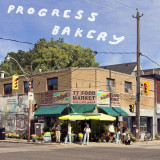
Yellow Coloured Vinyl[29,37 €]
Kneading dough is tricky – you should know how it’s supposed to feel. If you try too hard you could make it worse. It’s a beautiful practice – creation with a gentle touch, to work at something so it can be left alone. “If it’s too drawn out it’s awful. It’s easy to give too much.” Dance in the mirror. Contemplate your veiny hands. Who do they remind you of?
You begin by mixing flour and water. “What happens when your people die? Why’d they move the rock to the other side of Ulster Park?” Eliza Niemi asks two seemingly unrelated questions in a rising melody with guitar accompaniment, like fingers playing spider up to the nape of your neck. Gentle pressure. Strands of gluten form to bind the mix. A new question lingers in the binding. When she admits “but I don’t know how to tell if I’m feeling it or not,” that question surfaces through the text. It is reiterated throughout the album. When I’m working with dough I think the same thing to myself.
On Progress Bakery, her second album as a solo artist, Eliza knows to leave some questions alone – to let juxtaposition and tension be the proof. It doesn’t have to be hard. The feelings and revelations they provoke rise in the heat. The smell is sweet. Crispy on the outside and soft all the way through. She playfully slip-slides through words and sounds and images, delighting in surprise, skimming ideas like stones cast across clear water, touching down briefly with uncommon grace.
The question provoked between those opening lines resurfaces in the strands between songs – “Do U FM” is fully formed and beautifully layered, while “Novelist Sad Face” is a short, acapella rendering of gentle curiosity. What is holding these ideas together? Some songs demand more, seem to carry a whole load – eventually the skipping stone will halt to sink and resume its idle duty – while others drift in and out of focus, the way thoughts and dreams become interwoven before the mind is sunk into true sleep.
Music and words don’t always have to interact. Where she decides to keep them apart gives a new contour to where and how she puts them together. The kind of thing you’re supposed to take for granted with songs and their singers comes alive in Eliza’s hands – the little miracle of mixing, kneading, stretching, and stopping.
So often on Progress Bakery, Eliza teases out truth and meaning by asking questions. “Do I wanna be crying?” “Do you want me good or do you want me bad?” “Do I need an eye test?” “I’m writing songs in my head while you’re going over stuff with me — is that cruel??” In “Pocky” Eliza ends with a question that feels to me like the actual biography, succinct and revealing:
I don’t wanna be made to see
I just wanna ask “what’s that?”
Grace that ought to be rare, but in its care and precision is offered humbly, with great generosity, and without announcing itself. Eliza’s simple, miraculous music is given further form and shape by a group of collaborators – invaluable guest musicians Jeremy Ray, Evan Cartwright, Steven McPhail, Kenny Boothby, Ed Squires, Carolina Chauffe, Dorothea Paas, Louie Short, and Avalon Tassonyi. Together with Louie Short, who recorded, mixed, and produced the album along with Jeremy Ray and Lukas Cheung, Eliza has cultivated a richness in sound and texture that prods and provokes the ticklish ear. Barely audible guitar tinkering, a brief lo-fi field recording of trumpets, the harmonic clicking of a looped synthesizer, a flourish of reeds, a child’s conversation, each uncanny sound perfectly placed, rippling out under a soft breeze.
Lay in bed alone at night and ask aloud to the stillness,
“What were you doing at the Albuquerque Airport?
What were you doing there??”
And hear your question answered by a dream of swelling, undulating cellos. Try to grasp at the melody and structure. It’s not an answer (if there could be one), but it moves deeper, closer to the weird layer of fleeting moments and disconnected images, barely perceptible at its core. Wait for the dream reel to click into place.
Eliza took me for a ride in Nicole (her beloved Dodge Grand Caravan) and told me she’d been thinking of the album as an embodiment of transition – and I think every transition, known or unknown, carries the weight of new meaning, skittering off the surface tension of life as you know it, creating ripples, sometimes bouncing off and sometimes breaking through. There is a trick you can use to tell if a dough is glutinous enough. You’re supposed to stretch it out as thin as you can without breaking it and hold it up to the light. If you can see through, even if it renders the world murky and uncertain, you should leave it alone. I love this trick. It’s one that Eliza seems to know intuitively: work gently and ask questions and don’t always expect answers, and when you can, take a glimpse at something new, and then leave.
il devrait être publié sur 04.04.2025
Kneading dough is tricky – you should know how it’s supposed to feel. If you try too hard you could make it worse. It’s a beautiful practice – creation with a gentle touch, to work at something so it can be left alone. “If it’s too drawn out it’s awful. It’s easy to give too much.” Dance in the mirror. Contemplate your veiny hands. Who do they remind you of?
You begin by mixing flour and water. “What happens when your people die? Why’d they move the rock to the other side of Ulster Park?” Eliza Niemi asks two seemingly unrelated questions in a rising melody with guitar accompaniment, like fingers playing spider up to the nape of your neck. Gentle pressure. Strands of gluten form to bind the mix. A new question lingers in the binding. When she admits “but I don’t know how to tell if I’m feeling it or not,” that question surfaces through the text. It is reiterated throughout the album. When I’m working with dough I think the same thing to myself.
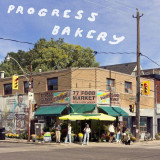
On Progress Bakery, her second album as a solo artist, Eliza knows to leave some questions alone – to let juxtaposition and tension be the proof. It doesn’t have to be hard. The feelings and revelations they provoke rise in the heat. The smell is sweet. Crispy on the outside and soft all the way through. She playfully slip-slides through words and sounds and images, delighting in surprise, skimming ideas like stones cast across clear water, touching down briefly with uncommon grace.
The question provoked between those opening lines resurfaces in the strands between songs – “Do U FM” is fully formed and beautifully layered, while “Novelist Sad Face” is a short, acapella rendering of gentle curiosity. What is holding these ideas together? Some songs demand more, seem to carry a whole load – eventually the skipping stone will halt to sink and resume its idle duty – while others drift in and out of focus, the way thoughts and dreams become interwoven before the mind is sunk into true sleep.
Music and words don’t always have to interact. Where she decides to keep them apart gives a new contour to where and how she puts them together. The kind of thing you’re supposed to take for granted with songs and their singers comes alive in Eliza’s hands – the little miracle of mixing, kneading, stretching, and stopping.
So often on Progress Bakery, Eliza teases out truth and meaning by asking questions. “Do I wanna be crying?” “Do you want me good or do you want me bad?” “Do I need an eye test?” “I’m writing songs in my head while you’re going over stuff with me — is that cruel??” In “Pocky” Eliza ends with a question that feels to me like the actual biography, succinct and revealing:
I don’t wanna be made to see
I just wanna ask “what’s that?”
Grace that ought to be rare, but in its care and precision is offered humbly, with great generosity, and without announcing itself. Eliza’s simple, miraculous music is given further form and shape by a group of collaborators – invaluable guest musicians Jeremy Ray, Evan Cartwright, Steven McPhail, Kenny Boothby, Ed Squires, Carolina Chauffe, Dorothea Paas, Louie Short, and Avalon Tassonyi. Together with Louie Short, who recorded, mixed, and produced the album along with Jeremy Ray and Lukas Cheung, Eliza has cultivated a richness in sound and texture that prods and provokes the ticklish ear. Barely audible guitar tinkering, a brief lo-fi field recording of trumpets, the harmonic clicking of a looped synthesizer, a flourish of reeds, a child’s conversation, each uncanny sound perfectly placed, rippling out under a soft breeze.
Lay in bed alone at night and ask aloud to the stillness,
“What were you doing at the Albuquerque Airport?
What were you doing there??”
And hear your question answered by a dream of swelling, undulating cellos. Try to grasp at the melody and structure. It’s not an answer (if there could be one), but it moves deeper, closer to the weird layer of fleeting moments and disconnected images, barely perceptible at its core. Wait for the dream reel to click into place.
Eliza took me for a ride in Nicole (her beloved Dodge Grand Caravan) and told me she’d been thinking of the album as an embodiment of transition – and I think every transition, known or unknown, carries the weight of new meaning, skittering off the surface tension of life as you know it, creating ripples, sometimes bouncing off and sometimes breaking through. There is a trick you can use to tell if a dough is glutinous enough. You’re supposed to stretch it out as thin as you can without breaking it and hold it up to the light. If you can see through, even if it renders the world murky and uncertain, you should leave it alone. I love this trick. It’s one that Eliza seems to know intuitively: work gently and ask questions and don’t always expect answers, and when you can, take a glimpse at something new, and then leave.
il devrait être publié sur 04.04.2025

Kneading dough is tricky – you should know how it’s supposed to feel. If you try too hard you could make it worse. It’s a beautiful practice – creation with a gentle touch, to work at something so it can be left alone. “If it’s too drawn out it’s awful. It’s easy to give too much.” Dance in the mirror. Contemplate your veiny hands. Who do they remind you of?
You begin by mixing flour and water. “What happens when your people die? Why’d they move the rock to the other side of Ulster Park?” Eliza Niemi asks two seemingly unrelated questions in a rising melody with guitar accompaniment, like fingers playing spider up to the nape of your neck. Gentle pressure. Strands of gluten form to bind the mix. A new question lingers in the binding. When she admits “but I don’t know how to tell if I’m feeling it or not,” that question surfaces through the text. It is reiterated throughout the album. When I’m working with dough I think the same thing to myself.
On Progress Bakery, her second album as a solo artist, Eliza knows to leave some questions alone – to let juxtaposition and tension be the proof. It doesn’t have to be hard. The feelings and revelations they provoke rise in the heat. The smell is sweet. Crispy on the outside and soft all the way through. She playfully slip-slides through words and sounds and images, delighting in surprise, skimming ideas like stones cast across clear water, touching down briefly with uncommon grace.
The question provoked between those opening lines resurfaces in the strands between songs – “Do U FM” is fully formed and beautifully layered, while “Novelist Sad Face” is a short, acapella rendering of gentle curiosity. What is holding these ideas together? Some songs demand more, seem to carry a whole load – eventually the skipping stone will halt to sink and resume its idle duty – while others drift in and out of focus, the way thoughts and dreams become interwoven before the mind is sunk into true sleep.
Music and words don’t always have to interact. Where she decides to keep them apart gives a new contour to where and how she puts them together. The kind of thing you’re supposed to take for granted with songs and their singers comes alive in Eliza’s hands – the little miracle of mixing, kneading, stretching, and stopping.
So often on Progress Bakery, Eliza teases out truth and meaning by asking questions. “Do I wanna be crying?” “Do you want me good or do you want me bad?” “Do I need an eye test?” “I’m writing songs in my head while you’re going over stuff with me — is that cruel??” In “Pocky” Eliza ends with a question that feels to me like the actual biography, succinct and revealing:
I don’t wanna be made to see
I just wanna ask “what’s that?”
Grace that ought to be rare, but in its care and precision is offered humbly, with great generosity, and without announcing itself. Eliza’s simple, miraculous music is given further form and shape by a group of collaborators – invaluable guest musicians Jeremy Ray, Evan Cartwright, Steven McPhail, Kenny Boothby, Ed Squires, Carolina Chauffe, Dorothea Paas, Louie Short, and Avalon Tassonyi. Together with Louie Short, who recorded, mixed, and produced the album along with Jeremy Ray and Lukas Cheung, Eliza has cultivated a richness in sound and texture that prods and provokes the ticklish ear. Barely audible guitar tinkering, a brief lo-fi field recording of trumpets, the harmonic clicking of a looped synthesizer, a flourish of reeds, a child’s conversation, each uncanny sound perfectly placed, rippling out under a soft breeze.
Lay in bed alone at night and ask aloud to the stillness,
“What were you doing at the Albuquerque Airport?
What were you doing there??”
And hear your question answered by a dream of swelling, undulating cellos. Try to grasp at the melody and structure. It’s not an answer (if there could be one), but it moves deeper, closer to the weird layer of fleeting moments and disconnected images, barely perceptible at its core. Wait for the dream reel to click into place.
Eliza took me for a ride in Nicole (her beloved Dodge Grand Caravan) and told me she’d been thinking of the album as an embodiment of transition – and I think every transition, known or unknown, carries the weight of new meaning, skittering off the surface tension of life as you know it, creating ripples, sometimes bouncing off and sometimes breaking through. There is a trick you can use to tell if a dough is glutinous enough. You’re supposed to stretch it out as thin as you can without breaking it and hold it up to the light. If you can see through, even if it renders the world murky and uncertain, you should leave it alone. I love this trick. It’s one that Eliza seems to know intuitively: work gently and ask questions and don’t always expect answers, and when you can, take a glimpse at something new, and then leave.
il devrait être publié sur 21.03.2025
