4 years in the making, this surprise collaboration between Drop and Ashong fuses soul and psychedelia with downtempo beats.
Ashong’s continuing mission to subvert expectations manifests greatly here, but the album is full of melodic hooks, layered to infinity alongside his acoustic guitar. Meanwhile Jonny Drop quietly flips samples unrecognisable from his extensive vinyl collections and once again makes a leap forward in his production identity.
Stand out single Puzzle Dust is a perfect slice of UK soul and jazz that sets everyone up for a unique sonic experience.
Cerca:s düb
New Jersey Dub Techno stalwart Eric Louis delivers Rollings Hills, featuring remixes from Thule Records artist OHM, Vuo Records boss Tm Shuffle and Australian rising talent Dan Goul (Mixcult, Berg Audio) on remix duties. Feedback and support from Andrey Pushkarev, Sascha Dive, grad_u, Eric Cloutier. Vinyl only.
Mittlerweile wissen die Heads, dass eine neue Platte von Soul Supreme ein garantiert sicherer Schuss ist. Nach gefeierten Hommagen an A Tribe Called Quest, J Dilla und Mos Def erscheinen zwei völlig originelle Jazz-Funk-Grooves des Amsterdamers Keyboarder und Produzenten aus seinem jüngsten Album "Poetic Justice" mit Jay "J-Zone" Mumford an den Drums, die hiermit zum ersten Mal auf 7" erhältlich werden.
- Erleichtert das Scratchen
- Schont den Motor des Plattenspielers und schützt die Schallplatten
- Durchmesser ca. 290 mm
- Höhe 3 mm
Features
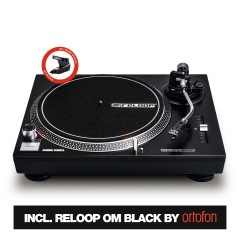
NEW in the MK2 version:
Newly developed top panel and reinforced housing construction
Reworked metallic buttons with improved feel & tactile response
Precision Pitch with selectable ranges of +/-8 %
Superior finish in deep black metallic
Quartz-driven DJ turntable with direct drive
Perfect for beginners
USB audio output for digitizing your records easily
Precise motor control with 2 speeds selectable (33 1/3 & 45 rpm)
Precision-engineered, die-cast aluminium platter with stable rotation
Statically balanced s-shaped tone arm with hydraulic lift and anti-skating - mechanism
Universal connection for pick-up systems (SME)
Extendible needle illumination
Built-in phono pre-amplifier (no grounding necessary)
Switchable phono and line level output
Shock-absorbing feet for vibration isolation
Sturdy, heavy construction with optimized damping features
Prepared for dust cover (available as optional accessory)
Incl. platter, OM Black pick-up system (by Ortofon), headshell, slipmat, counterweight, power cord, operating instruction manual
Technical Data
Turntable:
Type: direct drive turntable
Drive: quartz-driven direct drive
Motor: 8-pol., 2-phase, brushless DC motor
Turntable speeds: 2 speeds, manual (33 1/3, 45 RPM)
Starting torque: > 1kg/cm
Brake time: 50 dB (DIN-B)
Brake system: electronic brake
Platter:
Material: aluminium die-cast
Diameter: 332 mm
Tone arm:
Type: universal, statically balanced, s-shaped
Effective length: 230.5 mm
Overhang: 16 mm
Tracking angle error: < 3°
Applicable pick-up weight: 3.5 – 8.5 g (incl. headshell 13 – 18 g)
Anti-skating range: 0 - 7 g
Connections:
1x PHONO/LINE out (gold-plated)
General:
Power supply: AC 115/230 V, 60/50 Hz (US/EU)
Power consumption: 13 W
Dimensions: 450 (w) x 352 (d) x 144 (h) mm
Weight: appr. 6.76 kg
- A1: Ali Bawa -Yansama
- A2: Napo De Mi Amor - Kissakpiou
- A3: Alognon Degbevi & Les Vétérans Jazz - Baba Na Mi
- A4: Mamo Lagbema - Fati Waka
- B1: Koffi Ottytana Bebli - Doka
- B2: Gregoire Lawani - Habie
- B3: Deg Dos - The End Of All
- B4: Tomede Ehue - Bella Bellow
- C1: Mawuli Decker - Hlomede
- C2: Palete Wawa - Assini
- D1: Akofa Akoussah - Sumga Na Bacci
- D2: Roger Damawuzan - Miziqui
- D3: Agboti – Agaza Gbona
A treasure-trove of rare and unusual recordings mostly recorded in Lomé during the 70’s and 80’s . A fusion of traditional
voodoo chants, raw soul and even Electro Funk . Includes biographies and rare photos
Finding these tracks and their rights holders hasn’t become any easier even after few trips all over this west African country bordered by Ghana , Benin & Burkina Faso. After 8 years, We , at Hot Casa Records with the kind help of Roger Damawuzan decided to select thirteen tracks, a snapshot of some hundreds of rare and often forgotten tapes from the most prolific, professional and exciting phase of the country’s recording history included international stars like Akofa Akoussah, Gregoire Lawani to Roger Damawuzan compared as the James Brown from Lomé to forgotten tapes and brilliant songs in Mina, Kabyié and Fon language.
Many of the tracks featured here are peppered with innovation and experimentation highlighting how diverse, the music scene in Togo was at the time even if the political context influenced their creation. Many of the original albums these tracks are taken from high prices online due to their rarity and so it’s with great pleasure that we present a selection here that evokes a golden boomtime in Togolese music history.
Duo Lucas Brell and Marvin Uhde deliver fire-powered percussion to Osàre! Editions. Longtime friends
and collaborators, they channel a liquid medley of drum menace that flips sideways, swiftly pivoting
between wildly different tempos. As disorientating as it is formidable, Purest State Confusion offers up a
fractal prism of ever-shifting beat patterns – an endlessly warping vortex of guttural, narcotic sounds.
The titular number, a wormhole techno ordeal, builds steadily, layer upon layer. A crystalline dancefloor
pleaser, it subverts classic four-to-the-floor with a delayed kick drum that punctuates every 8th beat. Like
black oil diffusing in water, the bass creeps in menacingly to 'The Disappearer', in hard and fast contrast
with the sharp fluctuations of the amen break. Slamming in mercilessly, 'Channeling Bryn Jones' opens
up the B-side, its fluttering rhythms joining together with an infectious klaxon melody before the IDM
stylings of 'Brain Massage' closes out. Purest State Confusion was recorded at various locations in Leipzig and Berlin.
Final touches and mixing assistance were performed by Mike Bierbach at the WSNWG studios. The pioneering techno producer
inflects the record with his staunch taste for aerobic club rhythmics, teasing out the whirling tempos and
pointillistic harmonics.
Vinyl only. Limited
Enter the realm of sonic enchantment with Mixcult Records' latest offering, MCRV015 - VA - Tripping Dubs 3. This exquisite 4-track EP features a diverse array of artists, each contributing their unique vision to create an immersive auditory experience.
Arph kicks off the journey with "Forma Trium" (A1), a hypnotic blend of pulsating rhythms and intricate melodies that set the stage for what's to come. As the music unfolds, listeners are transported to a dancefloor drenched in mood and atmosphere, where every beat is a revelation and every note a moment of pure bliss.
Holm Torrance follows suit with "DP1" (A2), a mesmerizing exploration of deep basslines and ethereal textures that unravel like threads in the fabric of sound. With each passing moment, the music draws listeners deeper into its spell, revealing new layers of emotion and intrigue.
On the B side, Overt's "Square" (B1) injects a burst of energy into the mix, with its sharp beats and infectious grooves igniting the senses and driving the mood to new heights. As the colors of the music dance and intertwine, listeners find themselves swept away by the sheer power and intensity of the track.
Closing out the EP is Martin Aquino's "Apex" (B2), a hauntingly beautiful composition that showcases the artist's impeccable production skills and keen sense of melody. As the music unfolds, listeners are taken on a journey through sonic landscapes that shimmer with emotion and depth, leaving them in awe of the sheer talent on display.
Tripping Dubs 3 is more than just a collection of tracks—it's an invitation to explore the boundless possibilities of sound and rhythm, a testament to the transformative power of music. So step into the groove, and let the journey begin.
In 1967, Disperú commissioned trumpeter Toño Reyes to form a band and record an album with a series of songs that reflected the latest tropical music trends, in his own inimitable style. “Mister Boogaloo” combines the influences received from the likes of Mexican drummer Leo Acosta and the emerging Nuyorican boogaloo scene. First time reissue, including its original striking psychedelic artwork and remastered sound. In the few years that the Disperú record label was operative, it managed to open its doors to emerging artists, who were often ignored by the major labels but would go on to leave their mark on Peruvian popular music. In 1967, Disperú commissioned trumpeter Toño Reyes to form a band he called Toño y sus Sicodélicos. During the recording sessions for this album they performed a series of songs that reflected the latest tropical music trends, in his inimitable style. Instrumentals such as 'Mr. Boogaloo', 'El Guayacol', 'La Anticuchera', 'La Peinadora' and 'La Fiesta es Mañana' are versions that follow the lines traced by the Mexican composer and drummer Leo Acosta. In the early sixties, based in Los Angeles, Acosta played with the orchestras of Harry James, Sammy Davis Jr, Tony Bennett, Herb Alpert, and Dámaso Pérez Prado. Mid-decade, Acosta turned to the novel sounds of boogaloo, which immediately caught the attention of young South Americans. The song 'Borinque Bella' is another cover version, originally recorded by The TNT Band, based in New York. Another noteworthy influence on the album is the blind Venezuelan organist Tulio Enrique León, who performed cumbias and guarachas enhanced by his Hammond organ, as is the case of 'Chin chin'. Songs in vogue at the time complete the album. The best known is perhaps 'Es la Lluvia que cae', popularized in Spanish in 1967 by Los Iracundos. ‘Tequila' and 'No te bote', by The Champs and
Sonora Matancera, respectively, were also classics on Lima's radio stations. 'Las hojas secas', by the Mexicans Los Zignos, was so popular that it was even covered by Peruvian rock groups such as Los Steivos and Los 007. The success reaped by Toño y sus Sicodélicos took them straight to another record company, and the group’s records were also re-released in neighboring countries, always with striking psychedelic cover illustrations. First time reissue!
A year on from the release of his critically acclaimed album ‘Billy Valentine And The Universal Truth’ released in collaboration between Flying Dutchman and Acid Jazz Records, Billy returns with a brand new take on a classic of conscious soul. Returning to the studio with Bob Thiele Jr and the band that is made up Larry Goldings, Pino Paladino, Jeff Parker, James Gadson and John Philip Shenale, he has recorded three new numbers for release on the deluxe version of the album. The first to be released is his take on Gil Scott-Heron’s ‘Lady Day & John Coltrane’ which held audiences in rapt attention when performed live over the last year.
Another EP from the vaults of West Coast rave scene specialists, Michael Kandel and Tom Chasteen. A side has two versions of a fast passed dancefloor oriented production tactfully presenting woven layers of rhythmic elements underneath dubbed out effects, “Crazy Jane” possibly channeling moments of Debbie Harris' “Heart of Glass” on LSD. B side gets more aggressive on many levels with a bit of a downtempo Gabber feel to it, raging synths and generous cymbal action all around, 3 versions, one of them featuring samples from Jimmy Stewart's 1946 monologue in “It's A Wonderful Life”, another one with very non-western elements mixed in, and finally Juan Ramos bringing a very dancefloor friendly version with a slight Euro-Dance late Hi-NRG edge to it.
"Recorded in Heaven".
‘Out There’, the first album by the duo KOLORA, is a continuous collection of warm and layered soundscapes. The organic guitar sound of Liloe Barend in combination with the synthetic synthesizer sounds of Koenraad Wiering provide a calming sound palette.
The collaboration between Liloe & Koenraad arose during and because of the corona period. Both musicians live in the artist commuity ‘Heesterveld Creative Community’ in Amsterdam South East and were restricted by the corona measures. However, these limitations turned out to be fertile ground for a new musical collaboration: KOLORA.
In addition to KOLORA, Liloe Barend has her own solo project ‘Liloe Rix’ and is a guitarist in the cover band Steam Sister. Last summer she released her new EP with her solo project as a singer-songwriter.
Koenraad Wiering works in the music world as a producer and DJ. You can find him on stage as a DJ under his own name ‘Koenraad’ and also under various pseudonyms including: DJ Beukeboom and 06NRG. In addition to music, he also designins and build light installations.
- A1: Sungu Lubuka - Petelo Vicka Et Son Nzazi
- A2: Mfuur Ma - Groupe Minzoto Ya Zaïre
- A3: M.b.t's Sound - M.b.t's
- A4: Musique Tshiluba - Abeti Et Les Redoutables
- B1: Lalia - Trio Bydoli
- B2: Adeito - Tabu Ley Et L'orchestre Afrisa
- B3: Ngantsie Soul - Les Bantous De La Capitale
- C1: Nganga - Les Frères Soki Et L'orchestre Bella-Bella
- C2: Tembe Na Tembe Ya Nini - Orchestre Celi Bitshou
- C3: Lolo Soulfire - Lolo Et L'orchestre O.k. Jazz
- D1: Femme Ne Pleure Pas - Zaiko Langa Langa
- D2: Kiwita Kumunani - Orchestre O.k. Jazz
- D3: Fiancée Laya - G.o. Malebo
- D4: Ah! Congo - Orchestre National Du Congo
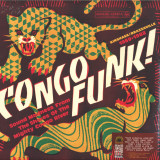
The making of Congo Funk!, our long-awaited journey to the musical heart of the African continent, took the Analog Africa Team on two journeys to Kinshasa and one to Brazzaville. Selected meticulously from around 2000 songs and boiled down to 14, this compilation aims to showcase the many facets of the funky, hypnotic and schizophrenic tunes emanating from the two Congolese capitals nestled on the banks of the Congo River.
On its south shore, the city of Kinshasa – capital of Democratic Republic of the Congo, the country formerly known as Zaïre – is often seen as Africa’s musical Mecca, the city that spawned such immortal bands as African Jazz, O.K. Jazz and African Fiesta, and the place to which aspiring musicians from throughout the continent would go to make a name for themselves.
But the city of Brazzaville on the north shore of the river – capital of the Congo Republic – played an equally important role in spreading Congolese sounds continentally. In addition to producing legendary bands such as Les Bantous de la Capital, it was the powerful transmitters of Radio Brazzaville that allowed the unmistakable groove of Congolese Rumba to be heard as far away as Nairobi, Yaoundé, Luanda and Lusaka thus turning the electric guitar into the continent’s most important instrument!
Although the musical landscape of these cities had been defined by a core group of bands in the late 1950s, the modernisation of Congolese music has been steadily evolving until the events surrounding the Muhammad Ali vs George Foreman boxing match marked a turning point. The promoter of that event known as “Rumble In The Jungle” was none other than the notorious Don King who needed 10 millions dollars to get Ali and Foreman into a boxing ring. The only candidate willing to put this kind of cash on the table was Mobutu Sese Seko, President of the Democratic Republic of the Congo.
Mobutu - the megalomaniac dictator who got to power with the support of the United States and Belgium in exchange for unlimited and affordable access to the riches of the country - had a soft spot for music and it doesn’t come as a surprise that he agreed to a three-day live music festival being organised prior to the “Rumble”. Zaïre 74 - as the festival was dubbed - was meant to hype the boxing match and many stars were invited.
Although a myriads of artists flocked in for the occasion, it was the performance of James Brown on Zairian soil that caused havoc among the younger generation, inspiring hundreds of would-be musicians to take up their electric guitars and reverbs cranked to the max in search of a new sound in which hyperactive Rumba was blended with elements of psych and funk. While the results were very different from the popular music of the three Musketeers - as Tabu Ley, Franco and Verckys were known - they weren’t a complete break with tradition.
These new sounds emerged at a time when the Congolese record industry – previously dominated by European major labels – was experiencing a period of decline due to rising production costs and needed a radical change. The void was filled by dozens of entrepreneurs willing to take chances on smaller scale releases. It was the beginning of a golden age for Congolese independent record labels, and the best of them – Cover N°1, Mondenge, Editions Moninga, Super Contact – preserved the work of some of the region’s finest artists, while launching a generation of younger musicians into the spotlight.
The movement was greatly helped by legendary radio shows but it was the dynamic productions of Télé-Zaïre that set the dynamite on fire. Legend has it that TV shows were so huge that president Mobutu himself ordered RTV du Zaïre to put on daily concerts since it halted criminal activities for the duration of the evening.
Congo Funk! is the story of these sounds and labels, but most of all it is the story of two cities, separated by water but united by an indestructible groove. The fourteen songs on this double LP showcase the many facets of the Congolese capitals, and highlight the bands and artists, famous and obscure, who pushed Rumba to new heights and ultimately influenced the musical landscape of the entire continent and beyond.
Coral Morphologic and Nick León’s Projections of a Coral City marks a series of collisions between distant
worlds: the organic and the artificial, the Eocene and the Anthropocene, sea and cement—and even, perhaps, ambient music and activism.
Coral Morphologic are the Miami duo of marine biologist Colin Foord and musician J.D. McKay; since 2007, they have used a variety of multimedia projects to generate environmental awareness of marine biodiversity—most notably Coral City Camera, an underwater webcam streaming live from an urban reef ecosystem in PortMiami.
Their citymate Nick León is a linchpin of South Florida’s contemporary leftfield electronic scene, with releases for Tra Tra Trax, Future Times, and NAAFI, and credits on records by Rosalía, GAIKA, and Iceboy Violet, among others.
This collaborative project dates back to 2022, when Coral Morphologic mounted a monumental projection-
mapping installation on Biscayne Boulevard. For five nights in late November and early December, macroscopic films of corals played out across the exterior of Knight Concert Hall. The installation was, on the one hand, a glimpse into a possible future, imagining how the city’s skyline might appear if unchecked global warming and rising seas led coral reefs to colonize the built environment. But it also represented a look back into the deep past, a reminder that Miami is literally built from marine limestone mined from the Everglades. Its concrete foundations began life, eons ago, as a marine ecosystem—the same ecosystem that may one day reclaim them. As above, so below.
As an album, Projections of a Coral City is a suite of interconnected movements spread across two sides of vinyl. The tones are watery, the mood elegiac, the colors a washed-out pastel. Forms that appear static on the surface gradually open up to reveal hidden depths teeming with microscopic movement. You might detect resonances with other aquatically minded works—Jürgen Müller’s Science of the Sea, Harold Budd’s liquid piano compositions, even the slow-moving melancholy of Dr. Roger Payne’s Songs of the Humpback Whale. But ultimately Projections of a Coral City creates the impression of a world unto itself—a hauntingly beautiful space at the meeting point between sorrow and hope.
——-
Balmat is a label with a cloudy outline. Jointly shepherded by Albert Salinas and Philip Sherburne, two friends living in Cardedeu, Catalonia, and on the Balearic island of Menorca, Balmat grew out of Lapsus Radio, a weekly show born almost ten years ago. Balmat’s mission is simple: to foster new ideas, expand upon personal obsessions, and put enveloping sounds out into the world.
“Balmat” means “empty” or “void” in Catalan. But quite apart from any negative connotations, we prefer to think of it in terms of possibility: a space waiting to be filled.
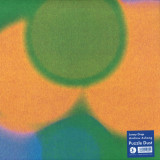
Mikal Asher, a scion of Jamaica's Morgan family dynasty, reunites with Chocolate Star Records here and does so with a collaboration with disco legend Gary Davis. Asher, akin to his brother Denroy Morgan, upholds the family's legacy of righteousness through music. Known as the Binghiman, he crafts captivating tunes with profound lyrics and has recorded in Ghana's Hustle Hard Studios and collaborated with industry pioneers in Kingston and Brooklyn, setting new standards in musical excellence along the way. Here, 'Wicked Ah Fi' transforms into a modern dub stepper, while 'Black Woman' offers a soulful, laid-back dedication to Davis' wife, Sonjia. This 12" also comes with innovative remixes from California-based DJ and producer Knoe1.
Limited Natural w/ Black Swirl Vinyl 7". This new 45 from Karma Chief Records showcases two tracks from Pale Jay's latest LP, Bewilderment. The A side, In Your Corner is an Afrobeat inspired song that addresses a conversation with the self. An uplifting tune at first glance, the lyrics lay bare the internal struggle for self-acceptance. The song explores the push and pull between self-love and self-judgement that can often leave us feeling lost and uncertain. The B side and title track to Pale Jay's latest LP 'Bewilderment' showcases the main elements of his unique sound palette: silky falsetto over soulful harmonies and dusty hip hop beats. 'Bewilderment' tells the story of the disintegration of a family, creating a captivating and soulful musical experience and a journey into self discovery.
Lee, a musician from Clewiston, Florida, gained prominence in the 1990s as part of the hip-hop duo Straight Coffee For George with friend Antonio 'T-Lyfe' Humphrey. He later formed The Square Egg, known for blending hip-hop, funk, jazz, and soul, earning recognition in Miami and New York. As a solo artist, Lee played renowned venues in New York and Buenos Aires, releasing albums like 'Naked' (2010), "Reasons To Buy This Album" (2014), and '2+2=5' (2017). His 2022 album, 'Maybe Now,' was a lush musical journey influenced by his life in Buenos Aires. His latest release, 'The Reprieve,' continues to push musical boundaries.
Kaiserdisco share their first Drumcode EP in eight years. With a knack for clever vocal hooks and crisp production, Kaiserdisco are never far from Adam Beyer’s thinking when it comes scheduling Drumcode releases. With this in mind, it feels almost unbelievable to think ‘Error in the System’ will be the duo’s first EP on Drumcode since 2016.
In recent times the pair has contributed tracks to the label, highlighted last year’s ‘Get on the Dancefloor’ on A – Sides Vol.12 and their popular single ‘Together One Time’ from 2022. ‘Error in the System’ marks their return to the EP format and is an absolute treat. Lead track ‘In the Music’ is a trippy roller that lures you into a dancefloor trance via an addictive vocal hook, before morphing into an acid - drenched stomper in the second half. The title track is a peak - time head spinner, characterised by muted tones and industrial effects, it’s an eerie and powerful slice of club machinery crafted for maximum impact.