Introducing the Headliner R4, a 4-channel analog rotary mixer
designed to elevate your DJ experience. Continuing the
tradition of precision, warmth, and affordability, the R4 is
packed with enhanced features and top-notch components,
including genuine ALPS potentiometers, ensuring an unparalleled mixing experience.
Crafted with four Line inputs, three Phono inputs, and one
Mic input on four stereo channels. Each channel boasts
essential features like gain control with peak LED, a 3-band
isolator EQ, headphone cue selector, generous channel volume
knob, and a filter activation switch, granting DJs precise control
over their sound.
At the heart of the R4 lies the Master channel, equipped with
an analog filter, headphone monitoring, and a comprehensive output control section.
Seamlessly toggle between High Pass / Low Pass Filter modes
with Frequency and Resonance controls to shape your signature sound.
Featuring independent Master and Booth outputs, both
equipped with volume controls and balanced XLR and
unbalanced RCA connectors, the R4 ensures seamless connectivity across various sound systems. Dual LED level meters for the Master output facilitate precise monitoring and
adjustment of audio levels. Additionally, the mixer boasts a
dedicated Record output with unbalanced RCA jacks, and an
additional microphone input with level control located on the
front panel.
The Headliner R4 stands as a testament to precision and
warmth in the DJ realm. Whether spinning house, techno, or
the timeless funk/soul/disco beats, this versatile mixer elevates
your setup, ensuring your mixes stand out with exceptional
quality and control
• Three stereo channels with selectable Line and Phono RCA inputs and one channel with selectable stereo Line and mono Microphone.
• Each channel features Gain control with Peak LED, 3-Band Isolator EQ, Headphones Cue selector with LED, channel
volume control and filter activation switch with LED.
• Master channel features analog filter, headphone monitoring and output control section.
• Analog filter features selectable High Pass / Low Pass Filter modes with Frequency and Resonance controls.
• Genuine ALPS potentiometers.
• Headphone Cue control section features headphones volume control, headphones mix control (Cue/Master), and split
monitor switch.
• High current headphone amplifier with dual 1/4” and 1/8” jacks.
• Independent Master and Booth outputs with volume controls, balanced XLR outputs and unbalanced RCA outputs.
• Additional Record output with unbalanced RCA jacks.
• Dual LED level meters for the Master output.
• Microphone input with level control on front panel.
• Sturdy metal enclosure with stained wood side panels for a classic look
• Modular internal construction for superior audio performance
• External split rail power supply connected via locking Mini XLR connector.
• Push-button power switch on rear panel
Microphone Input
Nominal Input Level: -50dBu
Frequency Response: 20Hz – 20kHz (+/- 0.1dB)
THD + N: 100dB (A-Weighted)
Crosstalk: 100dB
Übersprechen: < -65dB
THD + N: < 0,05%
Kopfhörerausgang
Maximaler Ausgangspegel: 70mA/Kanal in 150Ω
Minimale Lastimpedanz: 32 Ohm/Kanal
Stromversorgung
Typ: Extern mit verriegelbarem Mini-XLR-Stecker
Eingangsspannung: 100-240v ~ 50/60Hz
Ausgangsspannung: +/-15V; 500mA
Spezifikationen:
Abmessungen: 320 x 310 x 106 cm / Gewicht: 3,5 kg
Поиск:s systems
Все
“Music is my forever cove,” writes Portland, Oregon’s Luke Wyland of the ideas that give shape to Kuma Cove, his latest album under his own name. Though named after a real place on the Oregon coast, Kuma Cove casts its gaze far beyond the sightseer’s line of vision. Recorded live in the studio and blurring obvious lines between computer-based composition and electro-acoustic instrumentation, it is an album about flow, borders, transitory states, and shelter. Composed of discontinuous ripples and repetitions (“I’m forever searching for a better descriptor than looping, which feels too simple and flattened by overuse,” Wyland says), shaped into richly emotive arcs, and informed by his experience as a person who stutters, it is also an album about identity, self-expression, and the energies that sluice through and across what we perceive as linear time—like floodwaters seeking an exit, like streams running into the sea.
Artist’s Statement:
I made this record while spending significant time in the woods by the Sandy River in Corbett, Oregon,
where I've had my studio for the last five years. It is a diary of spontaneous live recordings edited to highlight the moments of clarity that emerge from long-form improvisations. These compositions express a slowing internal rhythm. An unwinding. A somatic recalibration as I enter middle age. A newly empowered vulnerability.
Here are the internalized cadences of my stutter, flowing freely from my fingers. The musicality of my disfluency is revealed in its frictions, elongations, and foreshortenings. Disruptions in linear time, where the bubbling cadences of my stutter find unexpected pathways, reveal the elasticity of the present moment. This is my idiosyncratic language, shaped and inspired by my disability. Subliminally mirroring internal processes, neural firings, cognitive entanglements...
The title, Kuma Cove, refers to a beloved cove on the coast of Oregon my wife and I return to yearly. There has always been something so magnetic about coves. The way they cradle one from the overwhelming enormity of the ocean beyond, muting a primordial fear. I experience these improvisations as ecosystems I'm able to inhabit for stretches of time, embodying the particular rhythms and sensorial textures within each. Music is my forever cove. Everything you hear is created live in Ableton on a setup I've been honing for 15 years. I celebrate MIDI and computer music as an extension of self and strive to make it as expressive as any analog instrument. I was a visual artist for the first half of my life and quickly adapted those skills to composing and producing on a computer. The transition felt natural within the landscape of DAW's interfaces, especially as a synesthete. Ableton and its community of Max creators continue to surprise me with its expansiveness.
I'm forever searching for a better descriptor than looping, which feels too simple and flattened by overuse. I envision sonic loops as tangled masses of time, three-dimensional knots spinning on tilted axes, or overlapping wreaths refracting out a myriad of colors. My practice is continually refocusing my ear to what is revealed in the repetitions, searching for the fingerprint of each. I find it incredible how technology lets us manipulate time like this. Nothing on this record is quantized or locked to a universal bpm. Experiencing numerous tempos at once feels important. Recordings as mirrors. Freedom from expected (conversational) flow as we hold time for each other.
-Luke Wyland, August 2024
Artist Bio:
Luke Wyland is an interdisciplinary artist, composer, and performer based in Portland, OR (USA). Wyland has been releasing critically acclaimed records for the past 20 years in the groups AU and Methods Body, as LWW, and under his own name, working with such labels as New Amsterdam, Beacon Sound, Balmat, The Leaf Label, and Aagoo Records. As a person who stutters, Wyland’s approach to music is informed by his idiosyncratic relationship with language. Wyland believes deeply in the cathartic power of live performance as a means for collective healing. Through an interdisciplinary art practice that focuses on improvisation, somatic embodiment, bespoke tuning systems, the cadences of disfluent speech, and time manipulation technologies, he’s collaborated with choreographers, high-school choirs, filmmakers, sound designers, and renowned musicians such as John Niekrasz, Holland Andrews, Colin Stetson, and Abraham Gomez-Delgado. He’s also the co-creator of the “It’s A Fucking Miracle” dance class with Tahni Holt.
Wyland has toured nationally and internationally and performed at the Whitney Museum, Ecstatic Music Festival, Issue Project Room, PICA’s Time-Based Arts Festival, End of the Road Festival, and Les Nuits Botanique, among others.
This third volume of Universal Synthesizer Interface delves further into early MIDI sequencing software for personal computers, focusing on Intelligent Music Software founded by Joel Chadabe in 1984. In a short period of time (1986-1990) Intelligent Music published a series of MIDI sequencing software titles that would have rippling effects throughout the music world: M, Jam Factory, UpBeat, MidiDraw, Ovaltune, Realtime, as well as an unreleased first version of Miller Puckette’s Max. These programs were a reflection of Chadabe’s desire to create interactive and intelligent algorithmic tools for home computers. Intelligent compositional tools had been floating around for decades in mainframe computer labs, but they had largely only been accessible to people working in academic or corporate laboratories. With the birth of Intelligent Music, these tools became available to anyone with a home studio. As the personal computers of this era had become less expensive and more accessible, they had also grown exponentially in processing power and seeming intelligence. In the music press from this time, we find the same two words used again and again to describe algorithmic computer systems: smart and intelligent. The tone of such articles may seem quaint by today’s standards, when AI and algorithmic control underpin so much of our technology, but the question of machine intelligence remains. Universal Synthesizer Interface VOL III Focuses exclusively on one of the more obscure of Intelligent Music’s software creations - UpBeat: The Intelligent Rhythm Sequencer, released in 1987, and hailed by reviewers of the time as “the world’s best drum machine.”
Two years ago, after Covid sent the industry into a tailspin I made the sad decision to stop pressing Holding Hands records to vinyl. This was gutting as the label had been putting records out from the first release and it had always felt like an integral part of the label’s identity.
It sucked but I always hoped that in the future I would be able to feel confident in pressing records again and I am so happy to say that the time has finally come again!
Earth Trax popped into my inbox with some demos and I instantly knew there was something special here. The tracks are absolutely timeless and will do the business on any dancefloor from now until the end of time.
The A sides have more of loopy club quality that you could listen to all night. The sort of thing that you just lose yourself to when it comes on in the club. You aren’t sure exactly when it came on but you suddenly realise that you’ve been gurning with your eyes closed for some indeterminate amount of time. Basically, they’re very chewy loops (note to self: potential cereal idea).
The B sides have more of a...for lack of a better word, B side quality to them. They’re both broken and they make me want to move my body from side to side in a sort of jagged cool 80’s way. Ones to make you move and think at the same time.
OK enough of my blather. Go and listen to the damn things yourself and decide if you like them, rather than trying to work it out from reading a bloody press release you weirdos.
All four tracks are produced and sculpted for the club. They want big sound systems and dark rooms.
Close your eyes, hold hands and experience transcendental space flight...
The first-ever official reissue of the pioneering 1986 ambient work, produced in full cooperation with Hiroshi Yoshimura’s estate !
"If Surround can be listened to as music that’s as close to air itself, allowing us to enter each listener’s sound scenery, or as something that exists within a new perspective, expanding the middle ground between sound and music, and transforming it into a comfortable space, it would be much appreciated.
— Hiroshi Yoshimura
Temporal Drift proudly presents the long-awaited, first-ever reissue of Surround, Hiroshi Yoshimura’s sought-after ambient classic.
Originally released as an album in January 1986, Surround was recorded by Yoshimura as a commission from home builder Misawa Homes, intended to function as an “amenity” designed to enhance the company’s newly built living spaces. A pioneer in the field of environmental music, Yoshimura’s previous works included Music For Nine Post Cards (1982), originally produced to be played back inside a museum space, and designing sound environments for public spaces and subway systems. Surround was recorded almost concurrently with the acclaimed and popular GREEN (1986); the two albums are described by Hiroyoshi Shiokawa in his liner notes as being Yoshimura’s yin and yang.
In his original notes for the album, Yoshimura recommends that Surround be placed in the same family of sounds “as the vibration of footsteps, the hum of an air conditioner, or the clanging of a spoon inside a coffee cup.” And, as he suggests, “with the addition of city noise from outside the window,” you may hear Surround in a completely new way."
his release marks the first complete album reissue on Canopy. Originally released in Nigeria in 1987, “Oppressor” was executive produced by Myke Moul himself and distributed domestically by EMI Nigeria & Tropic Records.
“Oppressor”, the album, finds the sweet spot between synth reggae, boogie, and euphoric Balearic island vibes.
Written by Myke Moul and arranged in collaboration with reggae star Majek Fashek in Nigeria, it was later re-crafted and recorded in France with a host of French musicians. Most notably the contribution of multi instrumentalist Pierre de St Front added engaging synthesiser parts and electronic drums.
Unfortunately the pressing of the album suffered from inherent technical flaws which adversely affected the sound quality and therefore even those lucky enough to find a copy, will not be able to enjoy it without considerable sonic defects. Therefore this remastered reissue will prove welcome to both collectors and new discoverers.
The titular track “Oppressor” stands out as a mid-tempo synth-reggae-boogie jam espousing the turbulent political times in Nigeria that were present in the late 80s. Elsewhere “Shadows in the Rain” is an instrumental cut displaying a jazz-funk sensibility which was unusual for a Nigerian artist at that time, and reflects Myke’s influences outside his home country. “Heading for the Top” is a boogie dance floor gem that shows the popularity of this genre at the time, as evidenced in many Nigerian releases and still sounds just as vital today. “Rescue us. O! Lord” shows Myke’s great song writing and Pierre’s fine musical skills working in tandem to create a reggae boogie tune, displaying the reggae & ska tendencies that were present in pop music in this era, from artists such as Grace Jones, Sly & Robbie or The Police.
All in all, the album demonstrates something fresh & exciting for Nigerian album reissues, touching down in a reggae fusion direction, with some fuller sounding production aesthetics, making the dynamics full and crisp on sound systems while also well suited to home listening.
2024 Repress
DVS1 returns to his own imprint HUSH with his unique sonic palette of beats and rhythms, delivering stripped-down and slow-building tracks with remarkable clarity, easily imagined to be played on massive sound systems. HUSH 06 features DVS1's trademark sound with his interplay of elements rising and falling, fluid percussions seamlessly weaving in and out of the arrangements, highlighting an ever-shifting emphasis that draws its energy from minimalistic features.
The eighth and latest slate of refined retro-futuristic synth-pop by Liz Wendelbo and Sean McBride aka Xeno & Oaklander is named after and inspired by "the study of what not to do, a negative image of a positive, the other side, the other:" Via Negativa (in the doorway light). Recorded in the fall of 2023 at their modernist Connecticut home fashioned into a two-story synthesizer laboratory and mixing studio, the album is uniquely visionary in spirit yet precision in execution, a contrast central to the duo's enduring chemistry. Embryonic piano sketches were translated to nuanced modular systems, which McBride weighted with "harmonic padding," tuned percussion, and a spectral transfer device capable of "rendering spasms of rhythmic overtonal filigree." Despite the technological complexity of their craft, emotively the songs require no deciphering - these are technicolor widescreen anthems of the cybernetic age. The eponymous opening track sets the pace, soaring sleekly over glittering synths and call-and-response vocals about arias, shattered light, and faces in stereo. From there the record expands and contracts, cycling through a gallery of moods and masks, animated by the band's fascination with drama, "the idea of personae," and theatrical characters. Track by track, a murky, tragic backstory reveals itself: forlorn figures navigating a treacherous mercury mine, alternately poisoned by fumes or buried in collapsing caverns. The tension between Teutonic, utopian synthetic pop and lyrical narratives of ghosts in silos, ruined mills, and the traumas of mineral excavation creates a compelling friction, alternately futurist and obsolete, elevated and subterranean. Wendelbo describes the music's polarities perfectly: "The heavy machinic din of extraction in contrast with the enchantment of the mined precious gems and metals." From bilingual odes to bloodstones ("O Vermillion") to cosmic chrome dance floor classics ("Lost & There" "The present tense can never feel real / So many pasts conspire in the burning sun") to strutting EBM sensualities ("Actor's Foil"), Xeno & Oaklander re-prove themselves masters of the axis of technology and poetry, snaking cables and synesthesia, mining melodies and myths across 15 years of focused artistry. Theirs is a muse still gilded and gleaming, burnished red and silver, attuned to "the unobservable, the unfamiliar, that which you don't see directly."
The eighth and latest slate of refined retro-futuristic synth-pop by Liz Wendelbo and Sean McBride aka Xeno & Oaklander is named after and inspired by "the study of what not to do, a negative image of a positive, the other side, the other:" 'Via Negativa (in the doorway light)'. Recorded in the fall of 2023 at their modernist Connecticut home fashioned into a two-story synthesizer laboratory and mixing studio, the album is uniquely visionary in spirit yet precision in execution, a contrast central to the duo’s enduring chemistry. Embryonic piano sketches were translated to nuanced modular systems, which McBride weighted with "harmonic padding," tuned percussion, and a spectral transfer device capable of "rendering spasms of rhythmic overtonal filigree." Despite the technological complexity of their craft, emotively the songs require no deciphering – these are technicolor widescreen anthems of the cybernetic age.
The eponymous opening track sets the pace, soaring sleekly over glittering synths and call-and-response vocals about arias, shattered light, and faces in stereo. From there the record expands and contracts, cycling through a gallery of moods and masks, animated by the band’s fascination with drama, "the idea of personae," and theatrical characters. Track by track, a murky, tragic backstory reveals itself: forlorn figures navigating a treacherous mercury mine, alternately poisoned by fumes or buried in collapsing caverns. The tension between Teutonic, utopian synthetic pop and lyrical narratives of ghosts in silos, ruined mills, and the traumas of mineral excavation creates a compelling friction, alternately futurist and obsolete, elevated and subterranean. Wendelbo describes the music’s polarities perfectly: "The heavy machinic din of extraction in contrast with the enchantment of the mined precious gems and metals."
From bilingual odes to bloodstones ("O Vermillion") to cosmic chrome dance floor classics ("Lost & There" "The present tense can never feel real / So many pasts conspire in the burning sun") to strutting EBM sensualities ("Actor's Foil"), Xeno & Oaklander re-prove themselves masters of the axis of technology and poetry, snaking cables and synesthesia, mining melodies and myths across 15 years of focused artistry. Theirs is a muse still gilded and gleaming, burnished red and silver, attuned to "the unobservable, the unfamiliar, that which you don’t see directly."
The eighth and latest slate of refined retro-futuristic synth-pop by Liz Wendelbo and Sean McBride aka Xeno & Oaklander is named after and inspired by "the study of what not to do, a negative image of a positive, the other side, the other:" 'Via Negativa (in the doorway light)'. Recorded in the fall of 2023 at their modernist Connecticut home fashioned into a two-story synthesizer laboratory and mixing studio, the album is uniquely visionary in spirit yet precision in execution, a contrast central to the duo’s enduring chemistry. Embryonic piano sketches were translated to nuanced modular systems, which McBride weighted with "harmonic padding," tuned percussion, and a spectral transfer device capable of "rendering spasms of rhythmic overtonal filigree." Despite the technological complexity of their craft, emotively the songs require no deciphering – these are technicolor widescreen anthems of the cybernetic age.
The eponymous opening track sets the pace, soaring sleekly over glittering synths and call-and-response vocals about arias, shattered light, and faces in stereo. From there the record expands and contracts, cycling through a gallery of moods and masks, animated by the band’s fascination with drama, "the idea of personae," and theatrical characters. Track by track, a murky, tragic backstory reveals itself: forlorn figures navigating a treacherous mercury mine, alternately poisoned by fumes or buried in collapsing caverns. The tension between Teutonic, utopian synthetic pop and lyrical narratives of ghosts in silos, ruined mills, and the traumas of mineral excavation creates a compelling friction, alternately futurist and obsolete, elevated and subterranean. Wendelbo describes the music’s polarities perfectly: "The heavy machinic din of extraction in contrast with the enchantment of the mined precious gems and metals."
From bilingual odes to bloodstones ("O Vermillion") to cosmic chrome dance floor classics ("Lost & There" "The present tense can never feel real / So many pasts conspire in the burning sun") to strutting EBM sensualities ("Actor's Foil"), Xeno & Oaklander re-prove themselves masters of the axis of technology and poetry, snaking cables and synesthesia, mining melodies and myths across 15 years of focused artistry. Theirs is a muse still gilded and gleaming, burnished red and silver, attuned to "the unobservable, the unfamiliar, that which you don’t see directly."
- Rejection Letter Sample
- No Network
- Contactless
- Gift Shop
- Every Elevator
- A4:
- Bad Deal
- Ketchup
- Brainfog
- Covfefe
- Homework
- Tennis
- Portal
Dischi Fantom’s Sussurra Luce series, blurring the boundaries between text, music and voice, returns with their fifth instalment, an expanded version of Hanne Lippard’s “Talk Shop”. Sculpting a fascinating bridge between radically experimental sound practice, conceptual art, and sound poetry, across its two sides the Berlin based multidisciplinary artist taps an almost dada sensibility, delivering a suite of poems and texts where singular words and sentences are looped and repeated creating a sensory experience of the efficiency and stress found in our private as well as public life.
Roughly a year ago, we had the pleasure of exploring the first two releases from Dischi Fantom’s emerging Sussurra Luce series, Ginevra Bompiani, Caterina Barbieri, and Tomoko Sauvage’s “Il Calore Animale” and Francesco Cavaliere’s “Zoomachia Disc 1”. An extension of the Milan based cultural platform Fantom’s broad and diverse activities (exhibitions, installations, performances, etc.) across numerous artistic disciplines, the series, curated by Francesco Cavaliere and Massimo Torrigiani, delves into the “science of imagination”, working with contemporary authors to explore and blur the boundaries between text, music and voice. Now the brilliant series returns with its latest entry, the Berlin based multidisciplinary artist Hanne Lippard’s “Talk Shop”. Released in a limited edition of 200 copies and coming with an LP-sized booklet, it combines orality and textuality with the idea of loop and repetition to explore the notion of time, and it’s a stunning gesture of performative poetics that plums a startling range of subjects through its sonorous forms.
Working across the fields of text, vocal performance, sound installation, printed objects and sculpture, for more than a decade Hanne Lippard has deployed language as the raw material for her work. Working within a practice that rests at the juncture of the spoken and written word, drawing upon content appropriated from the public sphere (found text) intertwined with her own words, Lippard’s work investigates how the rise in digital communication and mediation reprograms our relationship to language, presenting the subsequent fragility of language - its flaws, oddities, and potential for misinterpretation - and its attempts to convey meaning and sense.
“Talk Shop”, the fifth instalment of Dischi Fantom’s Sussurra Luce series and Lippard’s third recorded release - building upon the ground of 2020's “Work”, issued by Collapsing Market, and 2021's “PigeonPostParis”, released by Boomkat Editions - began as a live performance. Combining orality and textuality with the idea of loop and repetition to explore the notion of time, its relationship with the world of work today, and its personification through the experience of the human body - anonymity as the spearhead of the digital economy - the conceptual underpinnings of the piece depart from the notion that the human voice has become commodified by the ubiquitous nature of contemporary productivity, and intertwined with the mechanics of capital - the voices of satnavs, smart speakers and voicemail systems - while the written word has become increasingly anonymous online.
Addressing vocal anonymity as a spearhead of the digital economy, Lippard’s “Talk Shop” - regarded by the artist as “a compilation of poems and texts where singular words and sentences are looped and repeated creating a sensory experience of the efficiency and stress found in our private as well as public life” - taps an almost dada sensibility through its unexpected layers of meanings drawn from a maximalized approach to the potential of the human voice, creating an engrossing and challenging listen from the first sounding to the last, that continues to reveal itself and unfold with every return.
Sculpting a fascinating bridge between radically experimental sound practice, conceptual art, and sound poetry, it culminates as one of the most strikingly singular creative gestures we’re likely to encounter this year. Highly recommended and not to be missed.
Hanne Lippard (Milton Keynes, 1984) explores the social forms that govern discourse. Her artistic practice, which mainly takes the form of reading and sound installations, investigates the voice as an instrument of emancipation and alienation in times of hyper-connectivity. By mixing personal thoughts and appropriating texts from advertising, slogans and newspaper articles, the text becomes a mix of private and public that regains inventiveness and authorship through the use of the voice, becoming a body of its own. Her recent artistic research has focused on the use of the female body as a container of sounds, on the conscious and unconscious automation of speech and language.
Rian Treanor keeps knocking new doors of possibility with his new label Electronic Music Club and its initial focus on Rotherham Sight & Sound, participants of a community-based initiative in their shared post-industrial home town Rotherham. Utilising software synths designed by Rian and his dad Mark Fell, the trio twist out vortices of shearing, asymmetric anarchitecture, rudely resembling the sort of hyper-contemporary styles alluded to in Rian’s solo works, but inflected with cranky timing and an intuitive freedom that bears extraordinary results, especially when considering the fact the trio had no prior musical ability, and only encountered electronic music a few years ago.
After a couple of years of practice and performance, ‘Action Potential’ now firms up their quicksilver sound for club and home buzzes with seven actions that warp and morph from the needling jolts and hoof of ‘Pass The Go’, to shuddering detonations in ‘Dial’, each with a properly electrifying force carrying a genuine futureshock. Working within Rian’s systems-based framework, Anne, Kathleen, and Mick deploy a tactile feel for the machines, finely honed over the course of many sessions at the Rotherham Sight & Sound facility, that uses their visual impairments to synaesthetic advantage.
Between the wickedly metallic ragga swivel of ‘Hold’, the diffractive chain reactions of ‘When It Ends’, and more tempered, sloshing sensuality of ‘30 Seconds’, the trio follow their noses down wormholes that manifest an ideal of accessibility and expressionism within electronic music contexts that Rian and Mark have long worked towards, with Anne, Kathleen and Mick’s relative lack of cultural conditioning in this paradigm prompting them to act on pure instinct
While far from a household name in reggae, Judah Eskender Tafari cultivated a loyal fanbase and respectable catalogue during his recording career. The Studio One single, "Rastafari Tell You" sits at the top of a small set of deep cuts he recorded for Coxson Dodd's famed studio starting in 1978. These have continued to find a place at roots reggae sound systems and DJ rub-a-dub parties after nearly five decades. The earnest lyrics and spiritual mission of these early recordings would define Judah's entire career, extending through the decades to "Great Escape", a new Daptone 45 produced by label stalwart Victor Axelrod. The song alludes to the Old Testament in a vision of mankind gone astray, trying to escape the confines of Earth for salvation. Axelrod provides a lush roots backdrop against which Eskender shines in a way we haven't heard in years.
- 1: Red Mist White Knuckles
- 2: The Story Of War
- 3: Should Be Heaven
- 4: Don’t Be Afraid
- 5: Where’s The One?
- 6: Like An Avalanche
- 7: I Am Dead
- 8: What Is This Love?
- 9: Sunflowers And Starlight
- 10: The World I See Is Not The World I Want
On How It Ends (?), slinky melodies snake through nocturnal atmospherics, drawing you into a world built on poetic, painterly lyricism. Night Crickets, a long-distance groove affair that materialized during the drawn-out days of lockdown, has emerged once again to soundtrack our waking dreams.
David J (Bauhaus, Love & Rockets), Victor DeLorenzo (Violent Femmes) and multi-instrumentalist Darwin Meiners spearhead a loose collective of like-minded creative souls whom, through sheer tenacity and a burning desire to collaborate and create, transcend the restrictions of space and time. Audio files shared from Los Angeles to Milwaukee, from London to the San Francisco Bay, and the ghosts of Candlestick Park shimmer through the fog, coalescing in a glorious ‘gesamtkunstwerk’ that draws from the past, the present and the imagined future.
Declaring Bauhaus, Love And Rockets, and Violent Femmes iconic, foundational bands in the history of alternative music would receive little pushback from those in the know. San Francisco born artist Darwin Meiners is a fan of all three. A chance meeting with David J grew into a friendship, and Darwin not only became a bandmate, but his manager. After reaching out to Victor DeLorenzo through e-mail, Darwin met the Violent Femmes drummer after their set at Coachella. Soon, after the three collaborated on Darwin’s 2014 release Souvenir.
As the pandemic took hold, Darwin was looking for a new project to occupy the lock down time and approached Victor, who was keen to proceed and suggested that David join as well. The musical trust established between these three was immediate and Night Crickets were born. Within weeks a global process was initiated between them, the recordings eventually forming the album, A Free Society.
Following that release, inspired by how well – and quickly – they all worked together, the trio kept up their collaboration. “We are each free to discover musical connections that could only exist in an ideal creative setting” explains Victor. “We are very lucky to have three musicians who write, sing and play various instruments in one trio… our egos seem to melt into one when we face musical decisions, so our expeditions are always filled with pure discovery, humor and drive!”
How It Ends (?) was crafted with the same collaborative spirit as A Free Society. Each member contributed contributed unique elements to spur their collective creativity—whether a drum pattern, a lyrical concept, or a musical idea—and together, they expanded these initial sparks into the finished work. True to their approach, much of what you hear was captured in the first take, reflecting a genuine, unfiltered moment.
The music on the How It Ends (?) is a true evolution of the debut album. It is deeper and darker. Having said that, the dark tone is alleviated by a healthy measure of the buoyant, bouncy and melodic. “Much of the new material is very psychedelic and the contrast between this heavy, dark psychedelia and the more uplifting pop elements puts me in mind of The Beatles’ ‘Revolver’ album to some degree,” tells David J. “The recording process for the new album was exactly the same as the first in that we all recorded remotely, taking turns to share files and reacting spontaneously to the previous track, overdubbing then passing on once again until we all felt that the track was done.”
“While we didn’t start with a specific theme, the album emerged as a contemplative exploration of endings” says Darwin. “It touches on the loss of individuals, the shifting of ideas, and the fragility of systems. Beneath this sense of darkness and finality, however, there are threads of beauty and glimpses of hope. We invite you to immerse yourself in the album and experience the journey we’ve embarked upon.”
Milk Crate Mondays bursts onto the scene with their inaugural vinyl release, delivering a potent blend of soulful vibes. DJ Abel's 'Doin' Tyme Edit' iinjects new energy into Long Beach band samples, a reimagining that's sure to win approval. The flip side, 'Shady Megamix,' offers gritty head-nodding heat perfect for big sound systems. A stellar debut that sets the bar high for Milk Crate Mondays' future releases.
- A1: Michael Forzza - Let The Night Roar
- A2: Albert Chiovenda - The Affected One
- A3: Fran Hartnett - Incisions, Decisions (Joe Farr Remix)
- B1: Planetary Assault Systems - Function 2
- B2: Blawan - Tuesday's March
- B3: Divde - Mesosfera
- C1: Jochen Robberecht - Medusa Maze
- C2: Roberto - Congo
- C3: Möd3Rn - Identity
- D1: Spiros Kaloumenos - Angular Momentum
- D2: Childov - Lost
- D3: Lowerzone - Xtc
Medusa Outdoor's first double-vinyl album consisting of 2 vinyls and 12 quality techno-tracks selected with passion by Medusa Outdoor residents Michael Forzza and Jochen Robberecht.
It's a limited and hand-numbered gatefold double vinyl-album with tracks from Blawan, Planetary Assault Systems, Spiros Kaloumenos, Roberto and many others. Michael Forzza and Jochen Robberecht both dedicated one new track exclusively for this vinyl-album.
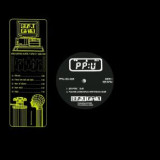
- A1: Perc
- A2: Please Come Back And Knock
- B1: Music Of Spheres
- B2: Asset
- B3: Feelu
Long time PPU contributor, video producer, and designer, SOFTgrid steps into the fold with their EP “Knock”. Includes “FEELU” as featured in the 2024 summer blockbuster Bad Boys IV : Ride Or Die starring Martin Lawrence & Will Smith.
Demoscene and Cracktro enthusiast, SOFTgrid started life navigating the dark waters of text user interfaces, with early memories of Bulletin Board Systems, and as time and technology progressed, they eventually obtained the various bits of software needed for their creation, this was by means of WAREZ servers in private chat rooms far from town hall.
SOFTgrid is most at home organizing their existence to a grid, be it pixels or the linear movement of sound on a timeline. ASCII and ANSI are their preferred means of expression, SID and PAULA chips their preferred means of communication.
Dublin based label Awareness Systems returns with their Combination 2 EP which is a split EP between label boss Pineal Navigation and the prolific Stanislav Tolkachev. After great support for Combination 1 EP from Marcel Dettman, Dave Clarke, Kaiser and Charlton to name a few, the second release continues it’s progress with four analogue live cuts furthering the label’s aim to heighten the energetic state through cerebral techno music.
With a track a piece on each side the record moves from the hypnotic machine rhythms of Stanislav Tolkachev’s A1 track "Battleground" which paints an apocalyptic landscape
with relentless bass heavy drum programming, into two tracks by Pineal Navigation which are both trippy and moody with heavy mo-town vibes. Lover's of Rob Hood and early Underground Resistance take note. The EP is rounded out by Tolkachev on B2 who delivers a relentless driving track of acidic machine funk.
First released over 30 years ago, this EP, as with Volumes 1 & 2, is where The Future Sound Of London started in 1991, these tracks under their pseudonyms. All four tracks were instrumental in establishing a new genre of electronica within dance music. They were ahead of their time and extremely progressive, and here three decades later they are making an impression. “Calcium” transcendental and otherworldly, “Owl” described as ‘one of the greatest breakbeat hardcore tracks ever created’. This edition of The Pulse EP is the first reissue in this original vinyl form since 1991, those initial pressings now expensive on Discogs. Genuine underground hardcore/rave history on vinyl to obtain one more time.