In 1975, under the oppressive air of military dictatorship in Brazil, brothers Lelo and Zé Eduardo Nazario invited bassist Zeca Assumpção to join their musical experiments in a basement under Sao Paulo’s Teodoro Sampaio Street. As teenagers, the trio had already been playing together in Hermeto Pascoal’s Grupo, alongside guitarist Toninho Horta and saxophonist Nivaldo Ornelas, and it was while working together under Hermeto’s direction that the Paulista rhythm section (as they were then known) began to realise their own potential.
With many nightclubs and venues closed in the mid-70s and government censors dictating the output of radio, TV and art galleries, many Brazilian artists fled during the years of dictatorship. But underground, Grupo Um were fusing avant garde ideals with contemporary jazz and Afro Brazilian rhythm; making phenomenally free and expressive music - in stark contrast to the sterile, conservative conditions being imposed above ground.
Just like Hermeto Pascoal’s Viajando Com O Som from the following year, Starting Point was recorded over two days at Vice-Versa Studios, by revered engineer Renato Viola. The studio was one of the best in Sao Paulo and musicians communicated with engineers through cameras and a monitor, allowing the group complete immersion in the process. They also made use of the studio’s hemispherical tiled room, which served as an acoustic reverberation chamber.
The album begins with Zé Eduardo Nazario’s thunderous drum solo on “Porão da Teodoro”, before clearing the clouds with the lone Berimbau which opens “Onze Por Oito”. Built around a hypnotic electric bass line, heady Fender Rhodes improvisations, and more rip-roaring drums, it’s a rapturous, electrifying freak-jam in 11/8.
Like some invertebrate deep-sea curiosity, the free-form “Organica” is made up of Lelo Nazario’s playfully eerie prepared piano, with Zé Eduardo’s percussion flurries darting around Assumpçao’s double bass. The equally non-conformist, percussion-only piece “Jardim Candida” features many of Zé Eduardo’s home-made instruments, including a long saw blade played with vibraphone sticks and violin bow. While working with Hermeto, Zé Eduardo famously built his own all-in-one percussion set-up known as the “Barraca de Percussão” (Percussion Tent) - the first of its kind in Brazil, which he would also use on Hermeto Pascoal’s Viajando Com O Som and throughout his career.
“Suite Orquidea Negra'' (Black Orchid Suite) was written by Lelo Nazario as the score for an imaginary movie - the story of a rare, black orchid which produced a substance meant to cure all diseases, but which had mysteriously disappeared from the laboratory… “As a screenplay it’s not very good” reflects Lelo in jest, “but the music ended up being very interesting, the way its parts are chained to one another carries a little of the mystery I imagined for the movie.”
The album closes with the triumphant “Cortejo dos Reis Negros” (Procession of Black Kings) - a groovy variation on the Maracatu rhythm, with a two-note bassline underpinning piano improvisations, exultant wordless vocals, cuicas, slide-whistles and a very special guest appearance from Zé’s dog Bolinha.
Starting Point was to mark the inception of one of Brazil’s most daring instrumental groups. Their debut now sits in the lofty echelon of otherworldly 70s Brazilian music, alongside the likes of Marcos Resende & Index’s self-titled debut, Cesar Mariano & Cia’s Sao Paulo Brasil, Azymuth’s debut and indeed Hermeto Pascoal’s Viajando Com O Som. But just like all of those titles, which were either shelved or largely ignored at the time, Grupo Um - so radically ahead of their time - struggled to find a label to release their debut album. So Lelo kept the tapes safe in his archives, which is where they sat for almost half a century. Finally, almost fifty years later, this mesmerising piece of history is here, and it was only the beginning...
Grupo Um’s Starting Point will be released by Far Out Recordings, on vinyl LP, with an insert featuring unseen photos and liner notes by the Nazario brothers, as well as a CD on 17th February 2023.
Search:sa ha ra
DJ Girl is a DJ and producer who was raised in Detroit, but since the pandemic has been based in Austin, Texas. She's the co-founder of the up and coming Eat Dis Records and her recent releases have been generating excitement in all the right places.
In some ways, 'Hellworld' feels like a direct relation to a lot of early 2000s Planet Mu releases. It could sit neatly alongside Hellfish or Neil Landstrumm, with a similar anything-goes, gleeful attitude, but instead DJ Girl mashes together a driving sound that is founded upon Detroit techno and electro, Chicago juke and Miami bass, with an old school/new school production style that's finessed with distortion and sparse IDM production.
It's a midwest USA style that takes a leaf from DJs and producers such as the wild-style hard techno of Lenny Dee, the tough midwest acid of Woody McBride and the system wrecking electro of Dynamix II, with a joyful, take-no-prisoners bounce.
'Hellworld' kicks off with the industrial juke of 'Get Down', followed by the powerful electro of 'Opp Pack Hittin' (the first of two tracks to feature MC Malik McFly).
'Technician' is a chirpy old school electro track that gets crazier as it progresses, while 'Lucky' mashes together samples and rough beats like an electro version of breakcore.
'Gallery' again features Malick McFly and switches between footwork beats, pumping techno and electro.
'So Hot' is hard 8-bar electro while 'When U Touch Me featuring Irish producer Lighght feels like a very manic take on hyperpop.
The album ends with the tough, spiralling acid of 'Groover' which wouldn't be out of place on a late nineties Jeff Mills mix. The fun is infectious on this one.
Welcoming Hermanez to Satya has naturally induced the label to transcend musical boundaries by opening up the creative parameters to more electronic artistry. Taking spring by storm, Hermanez has adopted 009 with grace and unequivocal individuality. With his full-body thrilling tracks, he empowers the listener to Rewire their listening programming, refreshing their palette with a high-energy burst of sexy flavors.
“The urge for freedom during the lockdown was a big thing for me. I personally had a production burst. Everyone needed to deal with what happened, so I did it in my own way by purely doing the only thing that kept me moving forward: creating a space to stock a feeling. Rewire is a story that is beyond words, as it is made up of healing sounds. Although there were cultural contradictions these past years, what mattered most for me was and still is people’s love for music. Overall, 009 was inspired by the beautiful collision of people and their experiences.” - Hermanez
Through defined grooves, rolling bass lines, granular uplifting synths and pad use, Rewire is literally wired with deeply hypnotic and mystical atmospheres. Hermanez truly strikes and presents us with four dance floor weapons.
When the body starts moving
And the mind stops racing,
The heart ends up pumping
And a smile keeps spreading.
Our programming is now rewiring
Our perspectives now expanding,
With all 5 senses heightening
Because of what is resetting,
Recalibrating and realizing.
Rewiring to a new reality.
- Ty Alexander
You Can Can is an echoed affirmation, an album which traces song forms around silence, field recordings, and degraded analog memories. This is folk music transmogrified and mutated, as if recorded and reconstructed in Pierre Schaffer’s GRM studio.
Not your typical Mariposa folk duo, the group is comprised of Toronto avant-music scene stalwarts, vocalist Felicity Williams (Bernice, Bahamas) and bricolage artist and synthesist Andrew Zukerman (Fleshtone Aura, Badge Epoch). The album feels like a somnambulant conversation, fragmented and half-remembered with Williams’ vocals traveling through a landscape of field recordings and Zukerman’s saturated concrète topographies. It is an electro-acoustic assemblage, both analog and digital, comprised of air, electricity, minerals, wood, and water. Although the album nods towards traditional forms of folk and musique concrète (if at this point it can be called a traditional form), it is outwardly and inwardly contemporary; non-linear, citational, opaque, and sui generis. In a way it feels like a sonic index of the narrative experiments found on the infamous Language school-related publisher The Figures, in the work of Lyn Hejinian, Clark Coolidge, and Lydia Davis. In the musical continuum, the album picks up where Linda Perhacs left off in the early 70’s—explored by Gastr Del Sol in the ‘90s—a convergence of rural acoustic idioms and urban avant-electronics. This is country music for the discerning cosmopolitan citizen of the 21st Century.
RIYL: Luc Ferrari, Brannten Schnüre, William Basinski, Oval, Eric Chenaux, Emmanuelle Parrenin About Everything In Time and Failure Figures, Felicity Williams says:
Everything In Time is indebted to the language of Brazilian author Clarice Lispector (as translated by Alison Entrekin). Drawing on insights from psychoanalysis, we trace the roots of melancholy to render them available to consciousness; words from the ghostly realm of the transpersonal filter through dreams and shine a beam of light onto a lone trillium in a forest at night. Other influences include the experience of not knowing, of being subject to a gestation outside of one’s control. This is an ode to the power of naming to obliterate, to set free.
Failure Figures is a meditation on the radical contingency of reality and the vicissitudes of the will. With Slavoj Zizek as my guide (think: “Hegel for dummies” - I’m the dummy in this scenario), I wander through the valley of the shadow of death, and take heart. The last verse refers to an experience I had recording at a studio in Brussels. I was singing in French, with which I have some fluency, and the producer was complaining to the artist whose song it was that my delivery was not convincing. Thinking I was out of ear shot, he said in French, “c’est comme elle n'est pas là”; I was pronouncing the words correctly, but I failed to express anything. So what or whom is responsible for conveying meaning, if not the form of the word itself? And if the connection between meaning and form is broken, how do we fix it?
Gratitude to Thom Gill (guitar) and Daniel Fortin (bass) who joined us on the recording of Failure Figures. Thanks as well to my old roommate Christopher Willes, who unwittingly left behind his hand bells deep in the hall closet. We unearthed them by accident, and the bells became an important sound element. Thanks to other past roomies Robin Dann and Claire Harvie, whose childhood piano and guitar respectively still reside with us, and were used in the recording. Field recordings were made in Toronto, Canada and Celestún, Mexico in 2020.
"‘Soil’ by Amsterdam-based producer and musician Jelee is heavily influenced by video game world-building. Like a beat alchemist, he carefully pours his love for beats into his lifelong passion for video game soundtracks. That far exceeds your typical 8-bits and bobs: Soil unfolds like a challenging adventure game, held together by a sonic palette of hip-hop-minded drum programming, jazz-inspired chords, and synthesized sounds.
The album features tight-knit homegrown collaborations with jazz multi-instrumentalist Guido Hoek, rising deejay Jerrau, producer lofi prototype (“one of Amsterdam’s best-kept secrets when it comes to beatmaking,” says Jelee), deejay, producer, and keyboardist Mo Wrights, and singer Erosi. With influences ranging from Brainfeeder’s roster to Zelda games, Jelee presents a multifaceted take on music.
Jelee’s music has been featured on compilations by Resilienza Records, Stamp The Wax, and Carista’s ‘Modern Intimacy Volume 1.’ Jelee is also known for his expressive live sets, such as the support act for Onra, Samiyam, and Salami Rose Joe Louis."
Having been given the seal of approval from Rolling Stone, NME, TheFace, Danny Howard (TOTW), Jack Saunders (TOTW), Zane Lowe, Mary Anne Hobbs, Matt Wilkinson and more. An artist on the rise and poised to soon be one of the world’s most recognisable names, in the last year alone, Nia has won a MOBO award for ‘Best Electronic/Dance Act’, the NME Award for ‘Best Producer’, been hotly tipped by BBC Radio 1 Dance as a ‘Future Star’ and Spotify as their ‘Our Generation’ cover star. With additional accolades such as #3 in the BBC Sound of 2023 Poll and a Brit nomination for the ‘Rising Star award’. Alongside her cover debut on one of the world’s most prestigious dance music publications, Mixmag, Nia Archives has been given the seal of approval from tastemakers across the board from British Vogue, Pitchfork, The Fader, i-D and CRACK. Sunrise Bang Ur Head Against The Wall is available across retail on Limited Edition Red Vinyl and will be released on Friday 10th March. This game changing EP features ‘Biana’, ‘So Tell Me’ and brand new single ‘Conveniency’ released on Friday 3rd Feb.
Cristiano Grim produced Parisian multi-instrumentalist DJ SOLANGE for the second release on his sub label FINALE RECORDS.
DJ SOLANGE runs Radio Belleville, certainly themost vivid underground project in Paris not only for the obscurity of the program, because of its location: a deep cave under the classic Belleville neighborhood of Paris, a few steps away from the Cemetery of Pere Lachaise.
The EP has been recorded down to the center of the earth in 2019, right before the fall of the world. A journey into the idiosyncratic bond between dreams and frustration.
Oneiric, evanescent, rough (Fruste in french), dark, claustrophobic, morose, sexy, improv, lost: like a dream, it ends only when you open your eyes.
Feedback Moves kicks off 2023 with a new record by @xcrswx and Lolina. @xcrswx are Crystabel Riley (drum-/human-skin) and Seymour Wright (saxophone), they released ‘Call Time/Hard Out’ on Feedback Moves in 2020. Lolina is an electronic and digital musician, who has previously released music as Inga Copeland and was a member of the band Hype Williams.
Their collaborative relationship stems back to 2020. Lolina invited @xcrswx to contribute new work to a radio residency on NTS. They made 3 pieces played across 3 episodes. After these were broadcast, further ideas were exchanged which led to a collaborative audio-visual piece, streamed on Cafe Oto’s website in February 2021. They also performed as a trio live at Café OTO in 2022.
The artists now present a split 10” vinyl. @xcrswx weave the above-mentioned pieces into a 10 minute piece titled ‘FIXES’. The duo strip their sound to bare components. Beginning with the sound of fireworks, the pair then work through stuttered snare shots and warbled, interplaying saxophone.
Lolina presents ‘FM’; some of her strangest and most subtle work to date. Echoing and furthering the abstract turntablism found on previous records ‘Who Is Experimental Music?’ and ‘Fast Fashion’. We hear found sounds, close and distant, rhythmically gathered and dissolved in a swirl of dub tone and timbre.
Tracks have had early play on NTS Radio, Clydebuilt Radio and are expected to be played on BBC Radio 3’s ‘Late Junction’ and ‘Freeness’ show’s.
KINGUNDERGROUND TO RELEASE SET OF 45s, FROM CAVENDISH MUSIC CATALOGUE. PAYING HOMAGE TO LIBRARY MUSIC, FURTHERING ITS EXPOSURE TO A NEW GENERATION OF LISTENERS.
Library Music experienced its heyday in the 60s and 70s, as thousands of instrumental tracks were produced by musicians and composers for the purpose of placements in radio, television, and film.
The first 45 of the to be released, classified as ‘Dramatic’ features tracks from both John Scott and Tony Kinsey. Titling was important to Library Music, because it needed to clearly represent the emotions being expressed through the music, so it was easy for television and film executives to find what they needed to complete their projects. John Scott wasted no time getting into the dramatics with the opening track “Milky Way”, it displays the importance of grabbing a listener from the top, as well as being concise clocking in at just 47 seconds. Scott was not only a master composer, but also known for his work on the Saxophone, including playing on John Barry’s soundtrack for ‘Goldfinger’ in the James Bond series.
The juxtaposition of Tony Kinsey’s composition on the record offers a dynamic not present in the two tracks from Scott. Kinsey is more patient in his approach to “Kaleidoscope” building the tension with multiple movements and highlighting several instruments. The way the keys and bass play off each other leaves just enough room for a guitar lick to sneak in, as if it is hinting toward something.
In all there will be 8 individual 45s, licensed from Boosey & Hawkes & Cavendish Music Library and released by KingUnderground. Including compositions by Tony Kinsey, John Scott, Sam Fonteyn, Ray Davies, and more.
From his heart-racing productions to resounding mixes and live sets, Alliance Club founder OTON has found his distinct voice mixing tantalising vocals and compelling grooves, translating his love for music from many influences. After several releases on his own label, OTON now septs up with four playful, wide-eyed tracks that mix well known classics with a maximalist approach.
Who said we didn't need another Beyonce edit? OTON proves us all wrong with his club stomping take on 'Baby Boy' culminating in music that has serious dance floor momentum, while keeping things uplifting and memorable. Madonna's iconic 'Frozen' then plays out against the backdrop of acid leads and electro flavoured breakbeat; the overall sound design feels poignant and the lyrics add dramatic melancholy in a cathartic end to the record's A side.
OTON doubles down on our dopamine receptors with 'Hump'. The tracks' propulsive bass and fast moving kick drums are submerged in pink hued synths that move like lasers before 'Juicy' closes the show with a jittery workout that could be used to make any crowd get down.
Holly Lester’s Duality Trax Label has quickly become synonymous for its blend of future facing sonics and mind-warping melodies, served together with a healthy dose of nostalgia. A label just as focused on making dancefloor destroyers as it is exploring left-leaning, personal projects, it’s within this duality where the label has found its success, never afraid to shy away from b side oddities or tracks edging more towards good-old-fashioned-fun.
DUALITY5 steers towards the latter, with Manchester based DJ & producer Aiden Francis providing the serotonin on tap with three lively dancefloor cuts, including a huge remix from Italy’s Matisa. Aiden had a big 2022, releasing music on Magic Carpet, Gestalt and beloved music platform and label Houseum, solidifying himself as one to watch in the euphoric unity of house, trance and techno.
Title track ‘Plastic Fantasy’ is the star of the show, a suitably sassy roller that places everyone's favorite blonde icon front left of the speakers. Subtle old school strings contrast with alien electronics, providing familiarity in an otherwise unfamiliar world. A bubble-gum vocal then rolls in cheekily over a driving bassline and dynamic percussion - used in a way I’m not sure the original creators had in mind. ‘Future Proof’ meanwhile demonstrates Aidens’ knack for contemporary progressive house music. With warm pads, swirling sonic textures and moments of blissful euphoria, it’s energetic enough to move a dancefloor, but gentle enough for home listening too.
The record comes to a close with ‘Aquamarine’, with Aiden opting in favour of free flowing breakbeats and mind expanding synths, together radiating a feeling of warmth and hope for days to come. Italian DJ and producer Matisa is on hand to round the EP off with a bass-heavy rendition of ‘Plastic Fantasy’ a no-holds-barred speed garage licked stomper, with the power to lure smokers back inside the club with their feet firmly planted on the dancefloor.
Cremation Lily’s »Dreams Drenched in Static« exists at the horizon of consciousness and heavy experimental music. Through the use of frenetic vocal melodies, tape degradation, and guitar noise, the album documents the liminal moments at the edge of sleep, and the distressing thoughts that often accompany late-night R.E.M. disturbances. The lyrics were largely written at three in the morning and serve to evoke the depression and meditations on death that seem to haunt these early hours.
Based in London, England, Cremation Lily is the project of Zen Zsigo. Like many Flenser artists, the work of Cremation Lily is difficult to classify. The project began in 2009 as sample-based ambient music, but has evolved to incorporate more rock-oriented guitar instrumentation and influence from a wide range of genres such industrial, shoegaze, tape loops, noise, and power electronics.
Although rooted in electronic music, Cremation Lily shares similarities with Flenser artists like Planning For Burial and Have a Nice Life, as well as black metal. »Dreams Drenched in Static« is the first Cremation Lily album to rely primarily on guitar and vocal-based contributions, and is the project’s most intentional and developed work to date.
Featuring music from a lost tape of devotional keyboard jams, field recordings of migrating birds, mysterious bells, meditative noise and crooked new beat/EBM, made god-knows-when and subsequently discovered in a Thessaloniki charity shop years later. It now somehow finds its way to vinyl, newly mastered by Rashad Becker, and sounding like a lost Hype Williams x Muslimgauze madness.
Originally discovered in a musty charity shop by Live Adult Entertainment, and issued in minuscule numbers on CD in ’21, Christian Love Forum’s raverential debut ‘Naked Light’ documents the fraternal post-church jams of siblings, Scott, Kiro and N•X, plus their mate Steve, who would regularly channel the light and pain of Sunday mass sermons into their ecclesiastic crud.
As previously heard on their blink ’n miss ‘Unconditional Love’ tape, the trio express their higher purpose thru ribboning microtonal keyboard jams that sound like Gurdjieff with a Casio and a knackered drum machine after too much sacramental wine. They hit the strangest, most affective seam of religious cinematic epic soundtracks, gnarled noise and clandestine Belgian new beat that seriously pushes our buttons, sounding quite unlike anything in the contemporary sphere, but eerily also echoing sentiments explored on record by James Leyland Kirby or Bryn Jones.
Now reshuffled and clad in custom artwork, ‘Naked Light’ is unveiled to believers and skeptics as a definitive article of faith. The lord works in mysterious ways within, manifest in stages of sun-bleached post-church field recordings, whirligig melodies, blown-out bouzouki and choral tape howls and a Béla Tarr soundtrack-like campanology on the A-side, before letting their passions flow in ‘Wicked City (Parts I-IV)’; a spellbinding side-long collage of slurred synths, neo-noir hardbeat rhythms and speaking-in-tongues vox recalling V/Vm’s new beat apocrypha as much as bits from Hype Williams’ hypnagogic ‘One Nation’, thee dustiest gooches of Dirk Desaever’s archive, or even aspects of Rat Heart at his cruddiest.
‘Naked Light’ rarely fails to induce uncontrolled eye movement in susceptible skulls, destined to become an occult hit with lapsed churchgoers, new beat fiends and anyone missing the enigma and ineffable flavour of ‘00s underground noise tapes in this auspicious year of AD2023.
recut and repressed !
When Belgium’s Bonzai Records released Cherrymoon Trax I “The House Of House” in 1994 it was like nothing I had ever heard before. It is a masterpiece that captures the energy and euphoria of rave culture from the mid 90s in such an iconic way. I picked this track out of my record collection a few months ago and felt compelled to create a tribute to this groundbreaking work.
My respect to the original producers Yves Deruyter; Alex Stephenson; Frederico Santini and Franky Kloeck. (Thomas Schumacher)
Italian DJ and producer Francis De Simone debuts on Lee Foss and Jamie Jones' label Hot Creations with London Bass. Having built a solid back catalogue in recent years, his first Hot Creations release embodies the dynamic sound of the Palermo-born artist, channelling chunky tech house and disco-flavoured melodies.
De Simone explains his creative thinking behind the EP. "These tracks fully express my devotion to music. I ranged a lot, trying to remember an 80's sound up to a more raw and synthetic groove with Latin vocals to embrace the different ethnic groups." Reflecting his thoughts to a tee, the title track rumbles with a massive bassline and chopped-up vocals that add an instant burst of energy. Things get weird on Saludos A Todos, as thumping kickdrums collide with a trippy melody and even trippier vocals, creating a wavey atmosphere. The ideal club curveball. On Off White, De Simone delivers a pacey number packed with burbling beats and clicky percussion, complemented by dreamy vocals. The hint is in the name on closing track, This Is Undergound. A big room delight, De Simone drops a stripped-back banger, where the lyrics do the talking in tandem with a driving bassline. An excellent addition to the Hot Creations discography.
Based in Palermo, Italy, Francis De Simone stems from a family of musicians. Having played the drums from age two, the versatile artist can make anything from rock, pop and jazz, but these days, De Simone pens electronic music. His father worked as a bouncer for various local discos and exposed De Simone to dance music from a young age, later inspiring him to produce house and techno with an uplifting tint. Releases on Glasgow Underground, LW Recordings and REALM Records have helped shape the profile of this flourishing artist, with plenty more to come further down the line.
- A1: Interlude Between Brussels & Rio
- A2: Dead End (Ft. Janet King)
- A3: Clout Chaser's Anthem (Ft. Janet King , Hua Li)
- A4: Jazz Cats Run (Ft. Sarah Mk)
- A5: 1996 Inner G
- A6: Shore Apart
- A7: Lord Have Mercy (Ft. Judith Little D ,Raveen)
- B1: Nunca Mais
- B2: In The Gaze
- B3: Mascarade
- B4: Moon Rising (10 Years) (Ft. Judith Little D)
Gayance joins forces with Rhythm Section for her debut album ‘Mascarade’ - a swaying dance that moves between poetic, soulful odes to the past, accounts of the Afro-diasporic feminine experience and playfully energetic dance floor grooves.
Mascarade is a collection of dancey, broken rhythms, interwoven with heartfelt stories and bright, unapologetic outpours of joy. In her own words, “It's the story of my 20's. I wanted to pay homage to this kid everybody knew, but not deeply. It's about taking back a power that is mine and was always in my hands...It's about making peace with the past and moving forward”.
Gayance (real name Aïsha Vertus) takes her alias from the Haitian creole word for joyfulness.Based in Amsterdam, born and raised in Montreal-Nord, she started as a DJ in 2013, and has toured the world with shows in Paris, Brooklyn, Marrakech, Berlin, Sao Paulo and more, bringing electrifying and contagious energy wherever she goes.
Her own production is influenced by underground UKG and the respective house scenes of Detroit and New York, with nods to the vivid, sun-soaked colours of Latin America. Shades of blues, jazz and gospel can also be heard in her newest project, pulling together styles from each corner of the world. Following her catalog of entirely self-released projects, Gayance announces her full-length debut album on Rhythm Section, bringing some fellow Montrealers along for the ride.
Modern Power electronics...TIP!!
Philipp Matalla lives and works in the triangle of Halle, Leipzig and Berlin, in Germany. He has previously released music on labels such as Optimo Music, KANN and Kashual Plastik. His new album on Meakusma delves into some of the themes that have so far defined his work, this time increasing the tension between moments of musical harshness and flickers of introspection, ease and downright beauty. Matalla aims not for perfection, instead deploying the listener's sense of imagination. His work toys with the notion of abstraction in electronic music, often going as far cutting short melodic and other ideas, making for a confrontational stance unafraid of leaving his material in a state of difficult to define rawness, based on versatile ingredients equally rooted in rural and urban territory. Stakes is a gorgeous and gorgeously far out album, integrating elements of psychedelic rock and dub, blending in melodic ideas that are at times abstracted, at times soothing. It is pastoral music for the digital age, where raw bursts of noise and energy dislocate and set the record straight. There is even a croonerish feel to some of its tracks, croonerish from a distorted future that is. Stakes is an experience in eclecticism and musical logic. It dissolves structures and ideas and turns musically recognisable elements on their head.
- A1: Strut Your Funky Stuff
- A2: Saddle Up
- A3: Saddle Up (Interprete Par Bon Entendeur Vs David Christie)
- B1: All Night Man
- B2: Love Is The Most Important Thing
- B3: Our Time Has Come
- B4: Don't Stop Me I Like It
- C1: Cindy Lou
- C2: Rally Down To Sally
- C3: Stress
- C4: Falling In Love In Summertime
- C5: Jaywalk
- D1: Saddle Up/The Right Trip
- D2: Medley David Christie
In order to celebrate the disco legend, Editions Miliani presents a
magnificent double album of remastered tracks by performer and
songwriter David Christie.
David Christie, a.k.a Jacques Pepino, passed away 25 years ago and for the anniversary of his death, Editions Miliani has compiled these tracks to bring to life timeless music that continues to make people dance! Carefully selected, the tracks include the "Saddle Up" version by Bon Entendeur.
David Christie has composed for artists such as Sylvie Vartan, Joe Dassin, Demis Roussos, Morris Albert, Gloria Gaynor, Jimmy James, Grace Jones and Tina Charles, for whom Christie wrote the 1976 hit "I Love to Love" that topped the UK charts. The album pays tribute to the career of this musical genius.
An artist with a rich history within modern house music and longstanding ties to Hot Creations, Ali Love makes his solo debut on the label with collaborator and Brazilian rapper Prince Andre. Ali takes on production duties here, and the result is a pretty unique slice of Brazilian hip house. ‘Da Da On’ brings a driving bassline, samba inspired percussion, whistles, and Prince Andre’s effervescent rhymes. This is an explosion of energy built for Carnaval. The dub highlights the track’s rolling drums and Carnaval atmosphere. Remixes are to follow on Hot Creations.
One of the premier songwriters of contemporary UK dance music, Ali Love has released material via Crosstown Rebels, Keinemusik, and Defected in recent times, and collaborated with The Chemical Brothers, Justice, Camelphat and Róisín Murphy, amongst many others. It was, of course, on Hot Creations, where Ali collaborated with Jamie Jones, Lee Foss and Luca C as Hot Natured, and whose ‘Benediction’ has now become a contemporary dance music classic. This is Ali Love’s long-awaited return to the imprint.
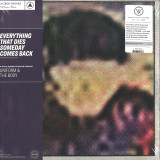
On the heels of their monolithic collaborative LP Mental Wounds Not Healing, the collaboration between industrial-noise post-everything bands Uniform & The Body returns with a second entry, Everything That Dies Someday Comes Back. Comprised of an amalgam of abrasive influence that spans Swans-y dirge and purge, Whitehouse’s clenched-jaw noise, middle-period Ministry’s penchant for metallic post-industrial everything, New Order’s nose for melodic emotionality, and Juicy J-inspired beats, Uniform & The Body’s approach delves deeper down the rabbit hole than before, igniting a sonic world of terror and bliss poised to grip the throats of fans yet again. Prepare for a record that the band self-describes as “the middle ground between Robyn and Corrupted, but weirder.”
Much like the collective’s bombastic debut, Everything was built over a series of collaborative sessions with Seth Manchester at Machines with Magnets in Rhode Island, mixing industrial-influenced synths, squalls of harsh noise, manipulated guitar, oodles of samples along with hard rock-inspired riffs, saccharine pop, and the alternately antagonistic and harrowing vocals of Michael Berdan