MUSIQUE POUR LA DANSE presents The Unreleased Themes From Hellraiser expanded ritual by Coil
Back in 1987, Clive Barker's supernatural body-horror classic Hellraiser hitted cinemas worldwide and introduced audiences to the demonic Cenobites. Barker was a devoted COIL fan (Peter Christopherson and John Balance), and he famously said they were the only band he'd ever heard on record whose music he'd had to take off because, in his words, "theymade his bowels churn.". He initially invited them to compose the film's music, and the group began recording cues. But the producers at New World Pictures ultimately rejected the material in favor of a more traditional approach, bringing in Christopher Young, whose final score remains excellent, if less experimental. What remains from Coil is an unfinished soundtrack with surviving fragments and rough ideas, abruptly left behind mid-process, a glimpse into an alternate Hellraiser movie, one we can only fantasize into existence.
Nearly 40 years later, key long-term collaborators and Coil's "secret third member" Danny Hyde located the original Hellraiser studio session tapes, and the bonus material recovered from them is presented here as an "expanded ritual" edition, reassembled into a standalone, possibly defnitive and strangely beautiful nightmare suite. Play it in the dark and experience the consequences of raising hell...
Notes by Danny Hyde
Original artwork by Trevor Brown
For fans of pain & pleasure, Throbbing Gristle, lost horror soundtracks & haunted electronics.
Search:sa ha ra
- 1: Jim's Room
- 2: Brad Haunts A Party
- 3: Our Day Trip
- 4: Counting Up Your Bones
- 5: Dumb I Am
- 6: Why Don't You Stay Home
- 7: The Old Woman
- 8: Treehouse Song
- 9: Lee
- 10: Settling Song
- 11: Bird Of Cuzco
- 12: If We Go To The West
Das eindringlich schöne Album "On Leaving" von Nina Nastasia kam genau zum richtigen Zeitpunkt und zeigt die supertalentierte Singer-Songwriterin aus New York in Bestform. Nina Nastasias seltene Gabe, ihre Stimme, ist eine intime, beflügelnde Präsenz, die dein Herz entweder zum Stillstand bringen oder zum Schmelzen bringen kann, die kraftvoll aufsteigen und sich drehen oder dich ganz sanft streifen kann und dir plötzlich Gänsehaut beschert. Mojo kommentierte ihre Fähigkeit, "die Luft aus dem Raum zu saugen". Ihre Songs sind gleichzeitig hart und zerbrechlich, knistern und glühen vor intimer emotionaler Ehrlichkeit und einer dunklen Unterströmung. Anlässlich seines 20-jährigen Jubiläums im Jahr 2026 ist On Leaving zum ersten Mal seit fast zwei Jahrzehnten wieder auf Vinyl erhältlich. Diese Neuauflage von On Leaving wurde 2025 von Josh Bonati für Vinyl remastered und ist auf limitiertem, klarem, farbigem Vinyl gepresst.
- A1: You (Original: Southern All Stars)
- A2: Yes-No (Original: Off Course)
- A3: Atsuki Kokoro Ni (Original: Asahi Kobayashi)
- A4: Ringo No Mori No Koneko-Tachi (Original: Mari Iijima)
- B1: Koi Ni Ochite – Fall In Love – (Original: Akiko Kobayashi)
- B2: Isso Serenade (Original: Yosui Inoue)
- B3: Woman – W No Higeki Yori – Feat. Megumi Mashiro (Original: Hiroko Yakushimaru)
- B4: Koishikute (Original: Begin)
■ Human is a deeply “human” cover album by Gota Nishidera (NONA REEVES), focusing on the world of 80s–90s Japanese kayokyoku and new music.
Following his well received 2023 solo cover album Sunset Rain, this new release features an unprecedentedly wide ranging selection of songs spanning works
by Kyohei Tsutsumi, Reiko Yugawa, and Eiichi Ohtaki, all of whom Nishidera either learned from directly or profoundly respects for their devotion to the study and
practice of pop music.
■ After experiencing major success across Asia including two China tours with NONA REEVES and solo performances in Taiwan Gota Nishidera revisited the essence
of Japanese pop music from a renewed perspective. The result is a meticulously crafted collection of eight ultimate tracks, tightly packed with the charm of Japanese
pop. Born in 1973, Nishidera absorbed the new wave of Japanese music that began in 1980 in real time, and here he updates that experience for the present day.
With arrangements and vocals filled with deep affection for the originals, he offers a modern and fresh reinterpretation of these classics.
■ The album is produced by long time collaborators Yuzuru Tomita, Tomoya Yamagata, and rising talent Yudai Ohi. On the track “Woman (from W’s Tragedy)”,
Nishidera performs a duet with Megumi Mashiro of Hicksville, a vocalist he has worked with for many years on NONA REEVES recordings and live shows.
■ Mastering is handled by ambient/balearic maestro Calm, delivering a stunning final sound.
■ The jacket design is created by Keita Fukumi, producer of the YouTube channel Gota Nishidera Channel NGC. Shot at Nishidera’s local barbershop in Sangenjaya
during his usual haircut, the artwork vividly captures the “human” essence at the heart of this project."
- 1: Space-Patrol (Raumpatrouille)
- 2: Shub-A-Dooe
- 3: Mclane In Command (Previously Unreleased)
- 4: Love In Space
- 5: Bolero On The Moon Rocks
- 6: Hyperion 29 Out Of Control (Previously Unreleased)
- 7: Song And Sound The Stars Around
- 8: Landing On The Moon
- 9: Piccicato In Heaven
- 10: Outside Atmosphere
- 11: Take Sex
- 12: Jupiter's Pop Music
- 13: Sky-Life
- 14: Guardians Of The Law (Previously Unreleased)
- 15: Ballet
- 16: Orion 2000
- 17: Danger For The Crew
- 18: The Space Patrol's Return
- 19: Space-Patrol (Raumpatrouille) (Original Tv-Version) (Pr
Black Vinyl[28,53 €]
Zum 60-jährigen Jubiläum von Raumpatrouille - Die phantastischen Abenteuer des Raumschiffs Orion erscheint die siebte Veröffentlichung unserer Peter-Thomas-Reihe als erweitertes, klanglich überarbeitetes Reissue auf CD und LP. Der ikonische Soundtrack gilt bis heute als einer der prägendsten der deutschen TV-Geschichte - futuristisch, rhythmisch, wagemutig. Peter Thomas verlieh der Serie eine einzigartige Klangsignatur, deren Strahlkraft weit über das Bildschirmformat hinausreicht. Der legendäre Vocoder-Countdown und Titelthema wurden zahllos gesampelt, gecovert und neu interpretiert - u. a. von Pulp, Pizzicato Five, Die Fantastischen Vier und Mousse T. In Zusammenarbeit mit Philip Thomas konnten vier bislang unveröffentlichte Stücke aus dem Nachlass des Komponisten ergänzt werden. Die LP basiert auf der Philips-Originalausgabe von 1966, erweitert um die neuen Titel - und enthält ausschließlich Musik, die in der Serie zu hören war, mit einer Ausnahme: "Bolero on the Moon Rocks", dessen Sample Pulp 1998 zu This Is Hardcore inspirierte. Die CD bietet über 60 Minuten Originalmusik, inklusive rarer Outtakes, ohne später hinzugefügtes Füllmaterial.
- 1: Space-Patrol (Raumpatrouille)
- 2: Shub-A-Dooe
- 3: Mclane In Command (Previously Unreleased)
- 4: Love In Space
- 5: Bolero On The Moon Rocks
- 6: Hyperion 29 Out Of Control (Previously Unreleased)
- 7: Song And Sound The Stars Around
- 8: Landing On The Moon
- 9: Piccicato In Heaven
- 10: Outside Atmosphere
- 11: Take Sex
- 12: Jupiter's Pop Music
- 13: Sky-Life
- 14: Guardians Of The Law (Previously Unreleased)
- 15: Ballet
- 16: Orion 2000
- 17: Danger For The Crew
- 18: The Space Patrol's Return
- 19: Space-Patrol (Raumpatrouille) (Original Tv-Version) (Pr
Sparkle Vinyl[34,24 €]
Zum 60-jährigen Jubiläum von Raumpatrouille - Die phantastischen Abenteuer des Raumschiffs Orion erscheint die siebte Veröffentlichung unserer Peter-Thomas-Reihe als erweitertes, klanglich überarbeitetes Reissue auf CD und LP. Der ikonische Soundtrack gilt bis heute als einer der prägendsten der deutschen TV-Geschichte - futuristisch, rhythmisch, wagemutig. Peter Thomas verlieh der Serie eine einzigartige Klangsignatur, deren Strahlkraft weit über das Bildschirmformat hinausreicht. Der legendäre Vocoder-Countdown und Titelthema wurden zahllos gesampelt, gecovert und neu interpretiert - u. a. von Pulp, Pizzicato Five, Die Fantastischen Vier und Mousse T. In Zusammenarbeit mit Philip Thomas konnten vier bislang unveröffentlichte Stücke aus dem Nachlass des Komponisten ergänzt werden. Die LP basiert auf der Philips-Originalausgabe von 1966, erweitert um die neuen Titel - und enthält ausschließlich Musik, die in der Serie zu hören war, mit einer Ausnahme: "Bolero on the Moon Rocks", dessen Sample Pulp 1998 zu This Is Hardcore inspirierte. Die CD bietet über 60 Minuten Originalmusik, inklusive rarer Outtakes, ohne später hinzugefügtes Füllmaterial.
Emotional Rescue returns after a much-needed year hiatus, refreshed and ready, as it moves into its 15th year, to further explore the environs of oft-forgotten musical secrets and present them to new heads and minds.
To celebrate, the label looks back to one of its favourite collaborations, the music of French ‘Ethno-Industrialists’ Vox Populi! in presenting a truly unique EP of “In Dub”, inspired remixes by 4 fellow Paris based artists of today in Full Circle, Froid Dub, Krikor and Shelter.
“In Dub” takes a selection of songs from the series of albums reissued or compiled on Emotional Rescue and sister label, Platform 23, and gives the Master tapes to this talented ensemble to offer their own, unique dub reworks. The project explores the on-going advances in technology offered, mixed with pure talent and a respectful homage.
Formed by Axel Kyrou and including wife Mitra, as well as long-term music and art partners Pierre Jolivet aka Pacific 231 and Francis Lafont aka FR6 Man, they forged a path from obscure, drum and drum-based cassette releases on to fully realized albums and compilations on their now cult Vox Man Records.
Alexis Le Tan and Joakim’s Full Circle project starts, with their electronic dub remake of Soleyman Dub from the ‘Alternatif Réalisme’ compilation (ERC079). With releases on Good Morning Tapes, Offen and their own “Released” label, their plaudits as master diggers and producers of dubby tripped-out inspired electronics – releasing slowed Trance some 10 years before anyone else – is inspired. Tuning in and turning on the original dub into a mantra style slow-breaks (Digi)dub is the perfect experimental flavour.
Jube Man is next, a twisted, psychedelic dub out by rising stars Froid Dub. The stand-out from the ‘Magiques Creations’ release (ERC052), an album that explored Vox Populi’s furtive post-industrial period of 1984 to 1988, Jube Man was the perfect selection by the duo of François Marché and Stéphane Bodin.
Froid Dub have steadily developed their “cold” Digidub style to acclaim –
releasing a steady flow of dub inspired electronics on their own label Delodio, as well as recently appearing on sister label Emotional Response’s 10th year anniversary collection, ‘All Trades’. Their haunting, shuffling and murky acid / piano dub, with the drifting “Space Echoing” of Mitra’s vocals from the live desk mix, creates a ghostly version to effect.
Next, master mixer, producer and engineer Krikor serves a steppers remake with his “OverDub” of Zen-Dub. With a career that spans releases on Tigersushi, LIES and Soul Jazz, his sound has developed from Electro, House and Techno, to Acid, Bleep, Dancehall, Dub and touches of Gabba.
Taken from Vox Populi!’s master-opus Aither (ERC030), the first of our reissues dating back to 2016, Zen-Dub’s pacey, lo-fi dub experience is transformed and overdubbed into an incessant sound system throb, a true bass quaking “steppa”.
To close, Micro Climax is put through Shelter’s increasing avant dub exposition. Appearing on the likes of Growing Bin, Emotional Response and his own Protopost, as well for – and being in-house designer – on the much-missed Séance Centre, Alan Briand aka Shelter productions have developed from Balearic, Edits and House to explore Avant, Raga and live Dub productions.
Appearing on the recent ‘Ethniques Pyschedeliques’ compilation on Platform 23 (PLA032), in original form Micro Climax is a sprawling 10-minute ethno-dub of whispered vocals, drone and sub bass. Shelter strips it back, keeping background effects, adding live bass and percussion to create a wonky, slow, shuffling ska-lite excursion to complete a true “In Dub”.
W.R.F. was formed in 2015 by Nina and late studio partner Andrew Weatherall to help wrangle the vast output recorded together beyond his solo releases.
Spotlighting nine tracks from the Apparently Solo series of EPs recorded between 2016- 2019 and released on Bandcamp in 2023, this lustrous time capsule marks the culmination of Walsh and Weatherall’s creative relationship born after they clicked at London’s earliest acid house clubs, becoming partners then managers of their Sabres Of Paradise/Sabrettes labels before taking different paths by the late '90s.
An accomplished musician, Nina had learned the art of studio technology by the time they reunited and started working together in 2012. Created at her Facility 4 Studio situated in the dangerous, gang-ridden no man’s land between Streatham and Mitcham, Anamchara captures the super-prolific creative stretch starting in 2015 that produced Weatherall’s Convenanza and Qualia solo sets, W.R.F.’s The Phoenix Suburb (And Other Stories) plus a whole lot more. According to Nina, Andrew envisioned the spectacular ‘Borderland’ as natural successor to ‘Smokebelch’, his most revered track. When it came to his remix, Nina enlisted renowned viola virtuoso Sarah Sarhandi and composed new harmonies with Pachelbel’s Canon in D Minor in mind.
The set also catches the breakthrough period when, through Nina’s careful coaxing, Andrew started using the computer system she’d set up to better express his musical visions by arranging the elements, grooves and melodies she sent him. Still considered the UK’s greatest DJ-producer, Andrew’s arrangements were inspired by his club-igniting sets. “This allowed me to mix the colours for his palette whilst he was painting the picture,” says Nina. Anamchara straddles the gamut of musical styles explored by W.R.F. at this time, from slower paced psychedelic “drug chug” outings ‘We Two’. ‘Heat To Meat Ratio’, ‘Hidden Watchers Part 1’ to banging acid house and techno sometimes inspired by the violence outside the studio door, including ‘SCHLAP’, ‘Crack-Ed’ and churning acid juggernaut ‘Yacidik’ (“After much dangling of the acid carrot, Andrew took a bite and, after one familiar raised eyebrow, never looked back,” says Nina).
Many tracks fly elements from the enormous sonic library Nina inherited from late partner Erick Legrand that she called The Akashic Library of Sound. Marking Andrew’s 2016 admission into the vault, ‘Rattly Old Puffin’ boasts Erick’s psychedelic guitar and tumbling drum loop Weatherall would run with, including on ‘Borderland’. “Erick was like our third member,” says Nina.
Bringing down the curtain, ‘Alma’’s exquisitely poignant melody that unfolds over thirteen time-stopping minutes was composed by Nina while navigating Erick’s birth and departure date anniversaries to accompany Andrew’s reading from Gordon Burn’s 1991 same-named novel at 2018’s Durham Literary Festival. Burn’s novel imagines early 60s popstrel Alma Cogan, who succumbed to cancer in 1966 surviving to reflect on fame. “Now it just makes me think of Erick. And every time I hear those well-placed cymbal crashes I can only think of the Captain himself.”
A beautiful grand finale for this astonishing selection of pure gold from the vaults.
Kris Needs / 2026
- 1: Clive Zanda - Ogun
- 2: Michael Boothman's Family Tree - Tabu
- 3: Lancelot Layne - Umbawa
- 4: Andre Tanker - River Come Down
- 5: Black Truth Rhythm Band - Save D Musician
- 6: Art De Coteau - Kerieka Woman
- 7: Mansa Musa - Beat The Drum
- 8: Sensational Roots - Calypso Zest
- 9: Frends - Mystery Music
- 10: Abdul Malik De Coteau - More Weight
Kaiso Power is a collection of rare jazz, calypso and percussive gems from Trinidad and Tobago from the revolutionary generation of the 1970s, bringing radical new political vision and reclaiming ancient spiritual consciousness through music. At the dawn of the 70s a shift was taking place all around the world. The streets of Port of Spain thronged with Black Power marches, trade union demonstrations and Carnival protest bands - one epicentre in a growing global exchange of ideologies and strategies among Pan Africanist circles in Jamaica, Guyana, London, New York, Montreal, Lagos, Accra and beyond. And when the meetings were over, the revolution moved to the cramped secret dance halls, the Carnival fetes, the steelband yards. The music always had a sharp edge. Searing commentary has always been part of the various types of music in Trinidad, and in the absence of lyrics, the defiant use of the drum maintains the resistance, as well as the re-framing of the playing of European instruments to the needs of the message. Lancelot Layne, Delano Abdul Malik De Coteau, Andre Tanker, Clive Zanda, Mansa Musa were more than artists, they were teachers, community workers and advocates for justice. These recordings are as raw as an all-night Carnival jam, the horns loud, the percussion ringing out, the bass dripping with joy and rebellion. Under the modern influences is a solid rhythm, an unbroken connection to Africa, the songs and keys and cadences brought across the middle passage. These songs are a peep into the untapped treasures of a revolutionary generation, looking at the world with fresh eyes and believing that music was a central part of the mission to build consciousness and regain confidence.
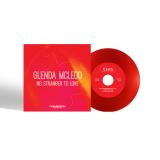
More Modern Soul madness from the team at Celestial Echo. No Stranger To Love is one of those rare tracks that crosses over both Modern and Northern scenes & has long been a favourite of collectors and selectors with original copies regularly changing hands for £100 + on the second hand market.
This lead to the synth laden funk track being picked up by Dam Funk & the Stones Throw crew, who shone a new light on the track via online mixes which has only increased the demand.
Officially reissued for the first time in 40 years and as always, officially licenced and remastered by Celestial Echo Records. Needless to say, buy or cry.
Repress on Transparent Red Vinyl
"after releasing an album in 2017 on the late lyon-based label s.k. records, and a tape on lost dogs entertainment, the duo OD Bongo — aka édouard ribouillault and amédée de murcia — have teamed up with carton records, zamzamrec, prix libre record, and basalte to present bongoville, the latest episode in their musical saga.
for nearly ten years, OD Bongo has been performing across europe, often late into the night, carrying drum machines, samplers, and synths. the duo's raw setup is designed for instinctive interaction, allowing them to shape their tones and mutant beats.
bongoville captures this energy in a story tinged with hazy techno, rusty dub and industrial trap, with juke & gqom influences. the rhythms bounce, accelerate, disintegrate, creak and eventually explode in a cloud of laughing gas.
in this frantic stop-motion race, chaos comes alive with heavy reverb: a possessed rollercoaster tracing saturated colours and playful distortions, where the loop prevails, where the delays stretch and where the bass saturates.
since 2015, édouard ribouillault and amédée de murcia blend genres such as techno, dub, noise and industrial in a wild bass music bubble."
MUSIQUE POUR LA DANSE presents The Unreleased Themes From Hellraiser expanded ritual by Coil
Back in 1987, Clive Barker's supernatural body-horror classic Hellraiser hitted cinemas worldwide and introduced audiences to the demonic Cenobites. Barker was a devoted COIL fan (Peter Christopherson and John Balance), and he famously said they were the only band he'd ever heard on record whose music he'd had to take off because, in his words, "theymade his bowels churn.". He initially invited them to compose the film's music, and the group began recording cues. But the producers at New World Pictures ultimately rejected the material in favor of a more traditional approach, bringing in Christopher Young, whose final score remains excellent, if less experimental. What remains from Coil is an unfinished soundtrack with surviving fragments and rough ideas, abruptly left behind mid-process, a glimpse into an alternate Hellraiser movie, one we can only fantasize into existence.
Nearly 40 years later, key long-term collaborators and Coil's "secret third member" Danny Hyde located the original Hellraiser studio session tapes, and the bonus material recovered from them is presented here as an "expanded ritual" edition, reassembled into a standalone, possibly defnitive and strangely beautiful nightmare suite. Play it in the dark and experience the consequences of raising hell...
Notes by Danny Hyde
Original artwork by Trevor Brown
For fans of pain & pleasure, Throbbing Gristle, lost horror soundtracks & haunted electronics.
Felipe Gordon is back on Shall Not Fade with his new album Tezeta and f*ck is it special.
Felipe Gordon is SNF label mainstay... (we released his triple repressed debut album "A Landscape Onomatopeya" in 2022 as well as 7 x 12" EPs on SNF over the years plus an extra 12" on Lost Palms)... so given his consistent and exceptional output on our record label you'd probably forgive some complacency with this write up, you might even afford us license to assume we're preaching to the choir and allow us to rest easy knowing that at this stage Felipe Gordon's records sell themselves.... Well none of those things are happening here because when an artist makes a record this complete, this good, you have to try to find the words. You use words like "timeless", "complete and "special". Words that can carry the weight. Because when you've listened to an album dozens of times, and not once, in any part, on any listen in any way has it fatigued you, you need to say. When a record felt so wonderfully familiar from the first listen and just kept on giving you the same feels ever since, you need to say. When a record makes you think about you how you feel about certain Air & St Germain albums (even when you know what it means to put that in a press release), you need to say. So here we are, saying these things.. Tezeta is a special record, one that exists in the rarefied air. A proper album. A record that every time you press play you will immediately remember why you own it and why you love it. A record that your subconscious will know so well that if shuffle is on you will know in an instant. An album that when it's in your collection and the first track starts you get a twinge of annoyance because you didn't listen again sooner and when the final track stops you stop too.
Given paint and a canvas we can most of us paint a picture, but only those that are gifted can paint something that makes us feel. Tezeta makes you feel. Feel familiarity when it's playing, yearning when its not, and absence when it ends. This alone would be enough to make the argument as to why this album is special and justify the gushing opening paragraph of this press release. But we're not done yet.
We don't really have a word in english for what Felipe Gordon has created with this album and how it makes you feel. "Tezeta" that word.
Tezeta is a one of four musical modes within the traditional Ethiopian modal music system known as Qiñit. Mulatu Astatke, the father of Ethio-jazz, frequently uses this mode, often translating it as "nostalgia" or "longing". Gordon says Mulatu's own tezeta recordings convey to him "feelings of melancholy and longing from a point of affection". This is exactly the feeling Gordon has captured. It is what he has woven through every recording on this album. Tezeta is the prime ingredient. It's the base note in recipe, it's sprinkled over the signature jazz-sampled house tracks. It powers the vast array of synthesizers Gordon deploys. It underpins the explorations into trip-hop. It's present in Gordon's varied vocal deliveries and it tunes his guitar. It's in the running order. It's the flow. Tezeta is tezeta in electronic music form, with 4/4, breakbeats, samples and synths.
Gordon says a big part of what differentiates this album from from his previous albums is that is was recorded in a period where he allowed himself to create music without the constraints of time or self-pressure which coincided with a moment of heavy personal growth which allowed him to reflect deeply on his work.
There is a word in Portuguese "Saudade" that Gordon says has a similar meaning to Tezeta - Saudade is defined as a deep, sometimes bittersweet, longing or nostalgia for someone or something that is absent or lost. But here at SNF we think that in Tezeta nothing has been lost. Quite the opposite. Through Felipe Gordon's artistic explorations we have all gained something very special indeed.
- 1: O Nevado (Feat. Alexandre Andrés)
- 2: O Abraço Da Serpente (Feat. Ilessi, Flavia Huarachi, Anders Skibsted)
- 3: A Cor Da Romã (Feat. Moa Edmunds Guevara)
- 4: Vera Cruz (Feat. Mané Fernandes, Albert Karch)
- 5: Misteriosa Buenos Aires
- 6: De Regreso (Feat. Flavia Huarachi)
- 7: O Ouro De Marawa (Feat. Gus Orihuela & André Maria)
- 8: O Garimpeiro E O Curumim (Feat. Ilessi, Flavia Huarachi, Anders Skibsted)
- 9: Entre Ríos (Feat. Luciana Insfran)
- 10: El Pajarillo Y La Mariposa (Feat. Flor Bobadilla, Cecilia Pahl, Alexandre Andrés)
- 11: Patagônia (Feat. Moa Edmunds Guevara, Pancho Rangonese, Albert Karch, Stanislav Zhukovsky)
- 12: Os Muitos Nomes De Salkantay
- 13: A Safira De Igarassu (Feat. João Machala)
- 14: Isla Del Sol (Feat. Júlio Rangel, Albert Karch)
- 15: Sentido De Su Ausencia (Feat. Iamana Mari, Gabriel Milliet)
- 16: Sequóias (Feat. Gustavo Assis Brasil, Albert Karch)
Caçador de Horizontes is the fourth and most ambitious album by Brazilian composer and songwriter Raphael Gimenes. Conceived as an expansive double album, it brings together voice and acoustic guitar with richly arranged strings, brass and a wide palette of percussion, engaging with the tradition of Brazilian songwriting while evoking the harmonic sensibility of artists such as Milton Nascimento, alongside elements of modern classical music.
Inspired by travels across the American continent, the album moves between intimate moments and large-scale instrumental passages, creating a cinematic and emotionally resonant atmosphere. Produced by Lucas Delacroix, Alexandre Andrés and Gimenes himself, it features more than 30 musicians from different countries and was supported by the Danish Arts Foundation (Statens Kunstfond).
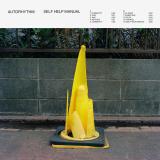
/// First track, Symmetry, debuted on BBC Radio 6 New Music Fix, 10th February: "A beautiful, beautiful album" /// I got my life back. On 17 February 2025, 1024 rays of ultra sound converged at an operation table in Bern, Switzerland, and disconnected a noisy circuit on my brain. 90% of the manifestation ceased – of a disease that I no longer wish to mention by its name. During the same period, I completed my new album: Self Help Manual. I’ve read more current research about the nameless disease than my neurologist, who despite that I didn’t follow his advice on suitable treatment, called me after the successful operation: a brave, brave man. I have composed the music in the same way as in my previous album – Songs for the Nervous System – through layers upon layers of improvisations in dialogue with my synthesizers, most of which are the same age as me. I made the majority of the songs in my studio in the remains of Old Hagalund in Solna. I edited the recordings in my bed during the waking hours of clarity at night. Some songs – NAC, Ketosis, Overkill – were recorded in the basement of my childhood home in Skutskär, in Norduppland, where I’d returned to be nurtured by my retired parents – who during a night when I couldn’t turn over in bed, or pull the blanket over me – made a list of what would happen to my belongings. To my friends who have stood out with me despite my disease, I want to state: you will not inherit me yet. On the new album, the electric bass takes on a leading role. ESG and Liquid Liquid have been important when I reinvented my baselines, limited and liberated by my poor fine motor skills. Plasma is my homage to Summertime Rolls by Jane’s Addiction, that I listened to frequently in my youth. I guess that no one will hear the resemblance. In several songs, the Fender Rhodes plays an important role, a magical instrument that I bought shortly after my diagnosis over a decade ago, and for a long time didn’t dare to touch out of respect for Herbie Hancock and Fela Kuti. A couple of songs draw inspiration from the Horn of Africa – Inner Nile and Delta. At first, subconsciously in the reverb-drenched Inner Nile, then more consciously in Delta. I’m sorry it doesn’t swing the right way, but it was my attempt to return to the cradle of humanity. Longevity is possibly my favourite. The melody is played by an arpeggiator that I controlled by pressing down different keys in an exhilarating sense of freedom. One song in particular, the second track – One – has caused friends to associate freely: one thought it sounded like Patrick Cowley, another like Sly & Robbie meets Kraftwerk, a third like Air – Moonlight Safari. I made one song just before the surgery: opening track Symmetry. It’s the mightiest and most minimal song. I made one song after the surgery: finishing track Self Help Manual. My previous medication pump is heard through the microphone of my Ovation Magnum. It’s the most hopeful song on the album. I took the cover photos with my Hasselblad during walks in Tokyo suburbs of Ōmori and Kamata more than ten years ago. It was something about the faith of the traffic cones that fascinated me – born in the same streamlined form, they had over the years become increasingly individual and lovable. The mixing was finalized by Christoffer Roth in the newly built Studio Dubious in Nacka. Rashad Becker, who in an interview said that he listens as much with his mouth as with his ears, mastered the album at Clunk in Berlin. Right now it feels like anything is possible. My recovery is perhaps a small step for mankind, but a giant leap for me. I hereby leave the music to you. Joakim Forsgren
Maybe it was inevitable that Vilhelm Bromander and Fredrik Rasten would find each other. A symbiotic musical alliance of suggestive combinatory magic that stretches back to the interstitial two day space that separates their dates of birth and manifests here as the movement between ‘perfect’ or ‘just’ intonation and the ragged, psychoactive energy of the slippages from and towards that togetherness that render otherwise simple patterns or generally understood repetitions as wildly other and alive.
Astral Twins shares ‘twin’ works by each composer. The patiently unfolding real time retuning of Fredrik Rasten’s guitars on the a-side’s Sojourns and Vilhelm Bromander’s quickened steps and spry looping melodies on the flip’s Partially Dancing.
Both artists have history of going deep into the aesthetic and acoustic impact of intonation (how you think about what is ‘in tune’). Where their first LP (...for some reason that escapes us, 2019, Differ Records) shared a gorgeous set of sustained tone colour fields, this time they lean more explicitly into the folk music traditions of Scandinavia and further afield, whilst echoing the zoned minimalist atmosphere of Arthur Russell’s classic Instrumentals.
Recorded up close and in real time at Fylkingen’s soon-to-be-abandoned temporary location in Stockholm’s southern suburb of Bredäng, Astral Twins sings with the possibility that one plus one can equal more than two.
Fredrik Rasten:
Sojourns explores the live retuning of guitar and double bass in a sequence of just intonation harmonies. A guitar ostinato runs throughout the piece where the retuning becomes an integral part of the composition. The slow pace reveals every detail in the transition from one harmonic arpeggio to another — how interfering waves emerge and disappear as the tonal interactions settle in electric clarity. The double bass shadows the guitar's process and comments with occasional pizzicato tones and register jumps, at times providing a low foundation for the sound and sometimes soaring together with the guitar. This is music that is deeply listening; experimental and at the same time humbly inviting many kinds of being with sound.
Vilhelm Bromander:
As the title suggests, this song has a partially dancing character. The title also has a double meaning with reference to the partials and harmonics that dance together. The basic idea was to write music in just intonation that instead of being drone-based is reminiscent of a lightly dancing folk music, where the joyous feeling of just being in the music — “musicking" — is allowed to lead the way.
The double bass plays repeated overtone double stops in an open harmonic progression with subtle modulations that is inspired in equal parts by Steve Lacy's persistent repetition of phrases as east-asian khaen music. The guitars and mandolin have a freer role, with plucked retuned strings that enhance the bass's modulations and provide forward movement. The music invites to both melodic and spectral listening, suddenly halting so that other focal points can reveal themselves. For example, a chord sequence suddenly transitions to a more spectral part where Fredrik is playing a bowed guitar with a chain, several plucking guitars, voices, and pitch pipes. I wanted to make something ‘orchestral’ with just two people and no overdubs: a dance of overtones and open resonant strings, where we seamlessly take turns standing in the foreground.
- 1: Cryin' & Pleadin
- 2: I Love You, I Need You
- 3: I Don't Mind
- 4: Stranger Blues
- 5: Hold On, I'm Coming
- 6: My Baby Sweeter
- 7: Just One More Time
- 8: Chicken Pickin
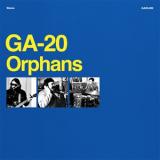
Eines der prägendsten Merkmale des Ansatzes der Blues-Newcomer GA-20 in Bezug auf traditionelle Bluesmusik ist ihr unerschütterliches Engagement, die Songs zu spielen, die sie lieben, oder wie Bandleader Matthew Stubbs es ausdrückt: ,Wir spielen die Musik, die wir selbst hören wollen." Kenner sind fasziniert von der mitreißenden Energie, die die Band in die Welt des Heavy Blues bringt, und von den Songs, die sie spielen. Mit ORPHANS hat die Band eine Sammlung von Blues- und Blues-nahen Titeln zusammengestellt, die perfekt in diesen Rahmen passen. Die Songs auf ORPHANS sind genau das - einzigartige Stücke, die man sonst nur bei Live-Shows hört, Singles, die zwischen den Alben veröffentlicht wurden, und einfache Favoriten, die die Band (Stubbs, Cody Nilsen & Josh Kiggans) schon lange aufnehmen wollte. Und genau wie der Blues eine Tradition des Ausleihens, Teilens und der Transformation ist, werden diese Melodien und Texte auf ähnliche Weise neu interpretiert und neu erdacht - Waisen und Streuner, die liebevoll adoptiert und mit neuem Leben erfüllt werden. Die Nachfrage der Fans nach einer richtigen Veröffentlichung dieser Songs in voller Länge sowie der Wunsch, Nilsens Gesang und seine Meisterschaft an der Begleitgitarre zu präsentieren, werden hier in physischer Form verwirklicht.
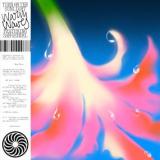
‘Warm Waves’ first appeared in 2020, ten years after Turn On The Sunlight’s debut self-titled album was first released in Japan. During that decade, Turn On The Sunlight’s Jesse Peterson and Mia Doi Todd welcomed their first child and co-founded a music venue in Los Angeles. When performance spaces were required to close at the start of the pandemic, Jesse’s focus shifted back towards home recording. Since ‘Warm Waves,’ five more Turn On The Sunlight albums have followed (including ‘Drives To The Beach,’ also on Tokonoma Records), all of which can be seen as an expansion of the musical direction set forth on this album.
The group heard on ‘Warm Waves’ consists of musicians who Mia and Jesse were regularly playing with at the time - Sam Gendel, Mitchell Brown, Andres Renteria & Gabe Noel - joined by Laraaji, Arji & Luis Pérez Ixoneztli, making their first recordings together.
The group’s blended signal was routed through Mitchell’s tape loops and modular synthesizer, which contributed to the unique communal sound of these recordings. Further extending this approach, Carlos Niño then reprocessed and reimagined ‘Passing Rain’ with Jamael Dean for his Elemental Beat Mix.
Originally released one week into the official lockdown period, some listeners found the warm, collective sound well-suited for the time of introspection and shifting priorities that followed. Now, in 2026, ‘Warm Waves’ returns on vinyl to once again encourage peaceful contemplation and open-hearted togetherness, in echo of the spirit of its creation.
Credits
Sam Gendel: Saxophone & Electronics on A1, A2, A3, B1, B2, B3
Laraaji: Voice & Zither on A3
Luis Pérez Ixoneztli: Bird Sounds on A1, Aerophones & Water Drums on B2
Mia Doi Todd: Voice on A1, A2, B2, B3; Piano on A3
Jesse Peterson: Guitar, Bass, Organ & Bird Sounds on A1; Organ on A2; Guitar & Bass on A3; Wooden Whistles, Guitar, Ukulele & Piano on B1; Ice Breaking on B3
Andres Renteria: Percussion on A1, A2, B1, B2, B3; Marimba & Percussion on A3
Mitchell Brown: Synthesizers & Magnetic Tape on A1, A2, A3, B2, B4
Gabe Noel: Bass on A2, A3, B1
Arji: Bells & Shells on A3
Carlos Niño: Production / Remix on B4
Jamael Dean: Additional Keyboards on B4
Produced, mixed & recorded by Jesse Peterson
Except B4, produced by Carlos Niño
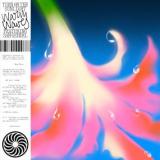
‘Warm Waves’ first appeared in 2020, ten years after Turn On The Sunlight’s debut self-titled album was first released in Japan. During that decade, Turn On The Sunlight’s Jesse Peterson and Mia Doi Todd welcomed their first child and co-founded a music venue in Los Angeles. When performance spaces were required to close at the start of the pandemic, Jesse’s focus shifted back towards home recording. Since ‘Warm Waves,’ five more Turn On The Sunlight albums have followed (including ‘Drives To The Beach,’ also on Tokonoma Records), all of which can be seen as an expansion of the musical direction set forth on this album.
The group heard on ‘Warm Waves’ consists of musicians who Mia and Jesse were regularly playing with at the time - Sam Gendel, Mitchell Brown, Andres Renteria & Gabe Noel - joined by Laraaji, Arji & Luis Pérez Ixoneztli, making their first recordings together.
The group’s blended signal was routed through Mitchell’s tape loops and modular synthesizer, which contributed to the unique communal sound of these recordings. Further extending this approach, Carlos Niño then reprocessed and reimagined ‘Passing Rain’ with Jamael Dean for his Elemental Beat Mix.
Originally released one week into the official lockdown period, some listeners found the warm, collective sound well-suited for the time of introspection and shifting priorities that followed. Now, in 2026, ‘Warm Waves’ returns on vinyl to once again encourage peaceful contemplation and open-hearted togetherness, in echo of the spirit of its creation.
Credits
Sam Gendel: Saxophone & Electronics on A1, A2, A3, B1, B2, B3
Laraaji: Voice & Zither on A3
Luis Pérez Ixoneztli: Bird Sounds on A1, Aerophones & Water Drums on B2
Mia Doi Todd: Voice on A1, A2, B2, B3; Piano on A3
Jesse Peterson: Guitar, Bass, Organ & Bird Sounds on A1; Organ on A2; Guitar & Bass on A3; Wooden Whistles, Guitar, Ukulele & Piano on B1; Ice Breaking on B3
Andres Renteria: Percussion on A1, A2, B1, B2, B3; Marimba & Percussion on A3
Mitchell Brown: Synthesizers & Magnetic Tape on A1, A2, A3, B2, B4
Gabe Noel: Bass on A2, A3, B1
Arji: Bells & Shells on A3
Carlos Niño: Production / Remix on B4
Jamael Dean: Additional Keyboards on B4
Produced, mixed & recorded by Jesse Peterson
Except B4, produced by Carlos Niño
A divine transmission continues…
The signal never stopped — it just went deeper.
For the second chapter of JESUS LOVES SKYLAX, we return to the source: raw emotion, machine soul, and the sacred pulse of the underground. A continuation of the Todd Edwards spirit — not imitation, but devotion. On the A-side, Byron The Aquarius opens with “House Music Was Good While It Lasted (Goodtimes)” — a bittersweet sermon in sound. Dusty, looping, hypnotic — somewhere between lost tapes and eternal truth, echoing the soul of Detroit at its most intimate. UK craftsman Tom Carruthers follows with “Crank Up” — raw, skeletal, almost industrial in its tension. A direct lineage from early machine music, channeling the stark energy of Cabaret Voltaire through a house framework. No compromise. Just rhythm and intent.
Flip the record.
Blue Mondays deliver “Warm Up For Ron Hardy (Disco Mix)” — a fever dream built for the booth. Loose, emotional, and dangerously effective. A tribute not in name, but in spirit — the kind of record that lives between two worlds, where disco dissolves into house under strobe lights and sweat. Closing the EP, CNVX – “L’Amour (Floorfillers Remix)” hits with pure peak-time electricity. Acid lines twisting through the mix, driven and ecstatic — a modern weapon forged in the language of the underground. A direct nod to the timeless pressure of Floorfillers energy, built for dancers who still believe.
✝ JESUS LOVES SKYLAX ✝
He still does.
STRICTLY LIMITED TO 100 COPIES ARTIST PROJECT After discovering techno at La Concrète, invited by my girlfriend, it was a revelation, and I very quickly felt the urge to contribute in my own way. My intention has been to create tracks infused with positive energy (even if the creative process sometimes leads into slightly darker corners of music). Still, I realized—rather late—the importance of the musical genre known as “techno.” Here is my reflection on it: Nothing is closer to village music (with everything that implies among indigenous peoples, for example—important and respected moments of communion) than techno. On one side, you have basic organic instruments and the voice; on the other, the most advanced technology available. But fundamentally, the difference is only superficial—the essence is the same: a guide, and people who participate intuitively, ultimately finding or discovering their own inner paths… individuation. Techno represents the re-emergence of a kind of initiation rite that had been missing in the West for quite some time—a sort of continuation of Woodstock, more spread out over time but just as powerful from a societal perspective. This release is my contribution to that revival, in the same way a villager might feel free to join trance music with a simple stick that sounds right, or a drum—something intuitive that all our ancestors must have practiced naturally at one point or another. In short, nothing pretentious—just something made with heart