Next up in Mr Bongo's Groove Merchant Records reissue series, sees an outing for a much-loved and heavily sampled funk/soul/blues album by Junior Parker. Originally issued under the title The Outside Man on Capitol Records in 1970 with an alternative cover, this reissue replicates the Groove Merchant release titled Love Ain't Nothin' But A Business Goin' On featuring the car cover released in 1971.
The Mississippi-born, Memphis-based blues singer, harmonica player and songwriter Junior Parker (aka Little Junior Parker) had a stellar career in music. Since the early 1950s he released records on labels such as Duke, Mercury, United Artists Records and more. Sadly though, Parker died at the young age of 39 during surgery on November 18, 1971.
Originally released under the alternate title a year before his untimely death, Love Ain't Nothin' But a Business Goin' On is drenched in Parker’s trademark buttery vocals and soulful grooves, swaggering between smokey blues, raw funk outings and orchestrated soul ballads (with sublime arrangements by Horace Ott).
The album also features three Beatles cover versions in the form of ‘Taxman’, ‘Lady Madonna’ and ‘Tomorrow Never Knows’. For 'Taxman', Parker completely reinterprets the song taking into a New Orleans funk realm, a sample of which was used as the main hook line on Cypress Hill's classic 'I Wanna Get High'. Elsewhere, 'Tomorrow Never Knows' is flipped into a tripped-out, psychedelic soul-swamp blues ballad, whilst 'Lady Madonna' is given a funky blues makeover.
As shown with Cypress Hill’s use of ‘Taxman’, since the ‘70s Parker’s legacy has been immortalised for future generations through the deep well of samples that his music has become a source of. Tracks from Love Ain't Nothin' But a Business Goin' On have been sampled by some of the biggest names out there, such as A Tribe Called Quest, DJ Shadow and De La Soul.
A seriously smooth album oozing with soul and emotion from a Blues Hall of Fame inductee, Junior Parker’s Love Ain't Nothin' But A Business Goin' On is a superb example of the early ‘70s crossover funk/soul sound.
Cerca:sad park
- A1: Brice Coefield Ain't That Right
- A2: Gerri Hall Who Can I Run To
- A3: Larry Hale Once
- A4: John Leach Put That Woman Down
- A5: Don Varner Tear Stained Face
- A6: De-Lites Lover
- A7: The C.o.d.'s She's Fire
- A8: The Combinations What' Cha Gonna Do
- B1: Ohio Players Love Slips Thru My Fingers
- B2: Gwen Owens Just Say You're Wanted (And Needed)
- B3: Charlie Gracie He'll Never Love You Like I Do
- B4: Mikki Farrow Set My Heart At Ease
- B5: The Appreciations I Can't Hide It
- B6: The Del-Tours Sweet And Lovely
- B7: Ronnie & Robyn Sidras Theme Instr
- B8: Billy Hambric I Found True Love
- C1: P.p. Arnold Everything's Gonna Be Alright
- C2: The Fuller Brothers Time's A Wasting
- C3: The Prophets I Got The Fever
- C4: The Furys I'm Satisfied With You
- C5: The Capreez How To Make A Sad Man Glad
- C6: The Showmen Our Love Will Grow
- C7: The Admirations Don't Leave Me
- C8: Sharpees Tired Of Being Lonely
- D1: The Precisions If This Is Love (I'd Rather Be Lonely)
- D2: Nolan Chance Just Like The Weather
- D3: Sandy Wynns The Touch Of Venus
- D4: The Olympics The Same Old Thing
- D5: Mickey Lee Lane Hey Sah-Lo-Ney
- D6: Robert Parker Let's Go Baby (Where The Action Is)
- D7: Little Hank Mister Bang Bang Man
- D8: The Du-Ettes Every Beat Of My Heart
Cate Brooks is back with her seventh release for Clay Pipe Music. Never one to stand still, ‘Easel Studies’ finds her pushing the boundaries of sound synthesis and experimentation on the Buchla Music Easel while still sounding beautifully beguiling and hypnotically melodic.
"On this day in 2015, at exactly Midday, I took delivery of a wildly exotic musical instrument. To call it a synthesizer would be a misrepresentation; it’s really more of a tactile, living, breathing entity than anything else. It had originally supposed to have been delivered on the day before, but had somehow been mislaid in the labyrinths of the Royal Mail sorting office at Elephant and Castle.
I sat patiently and quietly all morning, waiting for its imminent arrival. I had already read through the ‘manual’, which is more of a concept / design for living, written by synthesis legend Allen Strange.
With Noon approaching, I became a little anxious- my local postie, Barrie, was usually here by about 10:30am and there was no sign of him.
At 11:58, Barrie walked past, completely ignoring my house. Obviously concerned, I stood at the door and waited for him to walk back toward his van. As he came back, he smiled and I called out, quizzically “Barrie?”. His reply was “Yes I have!” and walked back to his van, collecting a large box and bringing it to my door. I remember the weather was muggy and my neighbour was attending to her rose bushes, as the cheery and helpful postie deftly navigated around her busy secateurs.
I took the box inside, opened the top and just looked at the inner box for a while. I took a photo of it, which I still have. It felt like quite a momentous occasion, because I felt that this instrument would take me to different sonic spaces than I was used to. It wasn’t my first experience with Don Buchla’s instruments by any means, as I’d learned to use his 200e system. But this was quite a different beast.
My cat Brillo came to inspect the box and I set the Music Easel up on the floor and plugged it in. The result of that very first experiment became “Pendula”.
In the following days and weeks of that summer, I created many more experiments on the Easel, quite often with Brillo either sat on me as I played, or trying to climb up on the instrument itself, attempting to move the faders and switches himself.
By the end of August, I had amassed some thirty-something pieces, which I put aside for future reference. I had learned a lot about this instrument, its idiosyncrasies, subtleties and ways of working.
Sadly, Brillo died in September of 2015. I like to think that his last summer with me was a comforting experience, curling up and listening to the sonic experiments taking place, as he regularly did for the sixteen years he was with me. The first track on the album, “Con Brillo” is my little tribute to him.
Fast forward to 2021 and I rediscovered all of these experiments. Some were almost unlistenable, but some had a beguiling charm about them- perhaps the sound of someone not really knowing what they’re getting into. They needed mixing and balancing, so I set to work. I also wrote a new piece, with exactly the same recording chain, in the same way, in the same room. This became the suitably titled final track “Hindsight”.
The Music Easel has remained a constant source of sonic worlds for me to explore. It because the main instrument on the album Agri Montana, for example and has cropped up on many other records I’ve made since.
I would especially like to thank David at Postmodular for selling the Music Easel to me, after phoning him and disturbing his Sunday afternoon outing to Hyde Park (sorry about that David). I always promised I would send him a copy of something I had produced on it, so hopefully he will enjoy Easel Studies."
As I finish writing this, I notice that it is, once more, exactly Midday.
I hope you enjoy Easel Studies too.
Cate Brooks (21st of May, 2023).
Singles V1 is a 6 track, 12-inch beautiful marine blue coloured vinyl EP. It is also the first physical release by Low Girl. As the title suggests the EP is a collection of the band’s singles up to the end of 2023 which features Big Now, So Cool, Blessing, Bored, Uh-Oh and Pockets. If you haven’t yet heard of Low Girl, be in no doubt, you will do soon. The band are a four-piece fronted by singer songwriter Sarah Cosgrove with band mates Toby Morgan, Tom Cosgrove and Bradley Taylor and it is clear to see that their popularity has been steadily growing since the release of their first single Big Now in 2021. The band have featured on the BBC Introducing Stage at the Reading Festival and played at the Texas SXSW Festival at the invite of The British Music Embassy in 2022. They have also regularly toured and provided support for acts such as October Drift, Pale Blue Eyes, The Murder Capital, Dream Wife and most recently Dekker. Low Girl’s indie pop, lo/fi sound, attributable to its vulnerable lyrics, synth licks and guitar driven riffs, has attracted admirers and radio airplay on BBC Radio 1, Radio X and particularly at BBC Radio 6 music, who have play listed a number of the band’s singles. Indeed, their single ‘So Cool’ was one of BBC Radio 1 Introducing’s singles of the week in April 2022 and ‘Bored’, was featured on the Late in the Day program’s International Women’s Day 2023 edition alongside Arlo Parks, Bjork, Sade, Nina Simone and other premier female artists. Sarah Cosgrove has also joined the panellists on one of August’s editions of Steve Lamacq’s round table together with Felix White and Deadletter’s Zac.
Ivan The Tolerable is the alter ego solo project of Middlesbrough based musical wizard Oli Heffernan. Aside from his solo work as ITT, Oli has played in numerous bands over the years including Year Of Birds, King Champion Sounds with members of the Ex, Detective Instinct, and Shrug, and has collaborated with icons like Mike Watts of the Minutemen, and J Mascis of Dinosaur Jr.
Ivan The Tolerable started by accident in 2013 when Heffernan recorded a bunch of songs for his band at the time (Year Of Birds). These were a bit too left-field for a speedy garage band, so Oli decided to put them out on tape himself, and hasn’t looked back since with releases on Up In Her Room, Stolen Body Records and Library of the Occult to name just a few.
We are delighted to bring you our next entry from the Ivan The Tolerable archive reissue series, 2019’s ‘Wild Nature!’ Originally released on CD by Ack Ack Ack Records back in 2019, the album has now been remastered and repackaged, and will be released on super ltd edition orange wax. Here’s a bit about the album in Oli’s own words.
‘Wild Nature was originally recorded sporadically during the first half of 2019. It started life in one house, then I moved and it was finished in another. I remember screenprinting the original CD artwork on the sly at my old job during my lunch breaks and hand-assembled a small run of about 50 that are all long gone. I also remember walking around Albert Park early one morning in thick fog with a field recorder to capture the sounds that were then processed to form 23 Minutes Over Albert Park (condensed to 4 mins for the reissue due to time constraints). I think this was also the last album I recorded vocals on and also the last one I recorded completely by myself - all instruments, recording, mixing, mastering and artwork done by me at home. I know the first and last tracks were recorded as a birthday present for someone but I cant remember much about the other songs i'm afraid - 4 years is a long time in my speedy world. I've been asked a bunch over the years about a vinyl edition of this one - so here it is. Enjoy - especially everything that went through the delay pedal, which is sadly no longer with us.’
2023 Repress
Frank Maston’s Tulips is a sample-ready film score to the best 70s movie never made. Originally a super-limited self-release on his Phonoscope label in late 2017, Tulips has already become incredibly sought-after. Be With were introduced to Maston by mutual friends Aquarium Drunkard and it didn’t take long before we decided this modern classic deserved a reissue.
Inspired by the deep-grooving soundtracks of Italian cinema - think Morricone, Umiliani and Alessandroni - Maston conceived the entire Tulips project as a continuation of these revered works. Frank designed the artwork and made two 16mm films to accompany the music: “It wasn’t just the LP… it was kind of a whole vibe I was trying to create. Not really trying to emulate the things that influenced me but more trying to make something that could sit alongside those records on a shelf. I’m still very proud of the project.”
There’s a distinct library music feel too, with wiry organ, spacey keyboards and loping 60s guitar hinting at KPM and DeWolfe. Like the best library music, Tulips creates a cinematic universe through sound alone, evoking moving images in the listener’s technicolour imagination. It turns out that was accidentally on purpose: “I was discovering a lot of library music for the first time… listening to a composer’s entire catalog or finding all this obscure stuff. I wasn’t entirely conscious of the influence until I started making this music and realized I was channeling the vibe. That’s when I began focusing more on weaving melodic themes throughout the record to make it function more like a soundtrack”.
Tulips was recorded between 2015 and 2017 in a small studio in a village called Zwaag in Holland, during downtime from Frank’s touring duties with Jacco Gardner’s band. “Tulips” comes from the title of the very first demo he made in Holland, it was the first thing that came to mind. Makes sense.
Recording in Europe with some very European influences in mind, Frank wanted to eschew any American influences. But we can still feel the studio wizardry of the likes of Brian Wilson and Harry Nilsson in there somewhere. A psychedelic bedroom-pop song-cycle, full of hypnotic hooks and dusty drums, Tulips manages to sound charmingly homemade yet wholly widescreen.
Dreamy opener “Swans” is an exquisite soul instrumental and recalls the soft-psych of Koushik, which Be With loves of course. Tropicalia influences abound in the cool and breezy “New Danger” and the KPM-references are loud and proud on the lush organ pop of “Old Habits”. Fast-paced “Chase Theme No. 1” manages to be both tense and laid back, decorated by acid-drenched spaghetti Western guitars. The glorious Gainsbourg-esque melancholia of “Infinite Bliss” is all gauzy flutes and happy-sad vocalizing and the title is almost perfect: it’s bliss, no question; *if only* it went on forever. Side A closes with “Evening”, a subtle bossa nova beat thing. Gorgeous.
Side B opens with the heat-shimmer guitars of “Rain Dance”, evoking an unreleased Byrds or Buffalo Springfield backing track. Yes, it’s that good. “Sure Thing” is music to accompany an elevator ride you never want to end, but in a good way! The ornate “Garçon Manqué” is as beautiful as the instrumentals on Pet Sounds (think “Let’s Go Away For A While”) and the wistful “Turning In” starts like a stroll in the park before Maston introduces a scorched-Earth guitar solo that would startle if it wasn’t so pitch-perfect. “Chase Theme No. 2” is a briefer, more keening counterpart to what we hear on side A. The head-nod bass-drums-keys funk of “Hues” rounds out this staggeringly assured set; still opening each phrase with a plaintive strum, but using vibrato and heavy reverb to accent the electric organ melody. Sublime.
All these top drawer musical references might sound like just more of the usual release notes hyperbole, but there’s a reason that this still-young LP already changes hands for big money. It really is that good. Of course that first pressing didn’t hang around for long and Frank’s regularly been asked about a re-press pretty much ever since.
Re-issuing Tulips on Be With made sense to Frank “because the record would fit in so well with the catalogue”. Having already delved into the archives of KPM and Themes, and beginning to do the same with Coloursound and Selected Sounds, the collaboration “just makes sense and seems inevitable”. We agree.
Frank wasn’t sure a record of instrumentals with obscure soundtrack references would be an easy sell when it was originally released, and was surprised when Tulips turned out to be exactly what some people wanted to hear. We reckon its timeless beauty ensures that it’ll *always* have an audience.
The record was originally cut to be played at 45rpm, a technical quirk that grants the home listener the opportunity to go deeper, for longer. Played at 33rpm, the more languid unfurling of the tracks proves just as wonderful a trip. As a psilocybin-soaked case study from Aquarium Drunkard back in January of 2019 describes, some of the songs sound as if they were intended to be heard that way. The slower speed allowing the listener to step inside and perhaps even “crack the code” of the music’s meaning.
Mastered for this vinyl reissue by Simon Francis and featuring alternative burnt orange artwork from Maston himself, this Be With pressing is limited to just 500 copies. Hypnagogic it may be, but please don’t sleep.
Limited Transparent Blue vinyl. “Pop” is a tag that’s been assigned to Minus the Bear throughout their career. It’s been used to set a distinction between the unique brand of complex indie rock they introduced on their first EP, and the more angular and aggravated sounds of their previous bands Botch, Kill Sadie, and Sharks Keep Moving. It’s also a tag that was thrown around frequently in the wake of their streamlined fourth album, OMNI. And it’s a descriptor that immediately comes to mind within the first few seconds of their classic second formal EP, They Make Beer Commercials Like This. Beer Commercials is the evolutionary step between Minus The Bear’s first two landmark albums, Highly Refined Pirates and Menos El Oso. Opening track “Fine + 2 Points” remains one of the band’s strongest opening tracks in their discography, charging out of the gates with a syncopated stomp that comes across as a more agitated take on Kylie Minogue’s “Can’t Get You Outta My Head.” If Minus The Bear were looking to make pop music without any of its major-scale bubblegum trappings, they nailed it here. The band follows it with “Let’s Play Clowns” and “Dog Park”—nods to Highly Refined Pirates’ formula of frenetic clean guitar work, bombastic choruses, and Jake Snider’s lyrics of detached romantic nostalgia. These tracks may represent Minus the Bear’s original trademark version of pop but on songs like “I’m Totally Not Down With Rob’s Alien,” the band eschews its restless energy for atmosphere and dynamics, creating a sound that’s inspired more than a handful of contemporary melodic post-rock bands. By the time the band belts out “Pony Up!” the listener has watched the three-year sonic transition between Minus the Bear’s first two full-lengths transpire within under half an hour, with their earlier math rock predilections yielding to the tightly wound club-banging pedalboard trickery that defined their sophomore album. Even if Beer Commercials doesn’t fit within your definition of pop music, the unorthodox energetic charm of this relatively low-profile release serves as an exciting reminder of why Minus the Bear became one of the most important and influential indie rock bands of the new century
This session was originally intended to be released on Mike King's highly regarded Reel Recordings label. Sadly, Mike passed away before the project was completed and consequently the session has instead sat on a shelf of the esteemed British jazz collector and historian Philippe Renaud for the past decade. UNTIL NOW.
Album includes extensive notes by Philippe and renowned Canterbury music expert Aymeric Leroy.
Original mastering by Mike King. additional mastering by Matt Parker.
Very special thanks to: Marino Dean, Philippe Renaud, Aymeric Leroy, Ricardo Bergerone.
Produced by Matt Parker for British Progressive Jazz in association with Improjazz.
Dedicated to the memory of Mike King.
Tape
Vestigios, Aeondelit’s second full length record after recently releasing an EP of shifting club music influenced by postmodern philosopher Leotard on Tel Aviv’s Sadan records, tells a lucid, captivating story of heritage, transformation, vulnerability and healing. It will be released via Berlin-based art platform and record label Unguarded as a digital and tape release with an artwork created by Petra Hermanova, and will be accompanied by limited textile pieces by Diane Esnault. Aeondelit’s music is strongly influenced by the rocky surrounding of his hometown Manizales and fuses electronic sensibilities, ambient streams and avant-percussive rhythms that build his sound identity. Aeondelit's evocative music has previously been released via the Insurgentes imprint, Vienna-based Ashida Park and was recently featured on the 'Unguarded 2 – Entangled' compilation. Cortés describes the meaning of Vestigios as such: “The memories of past generations: the lives that burn within me, are the pillars of who I am. They constitute longings and traps, sin and strength, the temple that breaks down and rebuilds. The different dimensions of consciousness converge in the mind, which constantly tells us who we are, synthesizing and projecting our contradictions. The pain that comes with getting in touch with our vulnerabilities opens the doors to healing through confrontation. This lays the foundation for a more honest relationship with our past, present and future. 'Vestigios' is the bridge between the temporal and the eternal, the crystallized remnant of pain caused by transformation and recognition of the convulsive underworld of our psyche.” Aeondelit, birth name Sergio Cortés, is a Colombian music producer who explores themes related to technology and human condition in sound. He focuses on the creative use of sample manipulation techniques and digital sound synthesis to deepen the idea of a dialogue between computer and human, and how both influence each other. Deep in Colombia's Andes, surrounded by big mountains and the sacred Nevado del Ruiz, Aeondelit has been forging his own sound identity, exploring the intersection points between sparkly experimental club music and melodic ambient electronic. His first release Editing Destiny on the Colombian label Insurgentes was well received by the public and DJs, named one of the best albums of 2020 on Mixmag. His last release on Sadan Records, Anima Minima, was reviewed and premiered on platforms like DJ Mag, THE BRVTALIST and Orb Mag. He is also the co-founder of the independent record label Nvrclose, where his debut album as Æon Series: Dualidad, was released. About Unguarded: Unguarded is a Berlin based experimental electronic music label and art platform. In 2020 long-term collaborators Tim Roth aka Sin Maldita aka 1k Flowers and Phillipp Hülsenbeck founded Unguarded to foster forward thinking artists with a focus on exploring cross-disciplinary collaboration and embarking on sonic adventures. Unguarded was founded in a time of turmoil and uncertainty for artists and music, trying to keep personal connections alive through shared personal and collective experiences between doom and destruction and glistening hope. Amongst their own contributions, Hülsenbeck and Roth gather a collection of genre-defying works by longtime collaborators as well as artists they bonded with in recent years. Their releases constantly escape from definition but through entangling their unique artistic marks, this diversity remains absorbing and compelling throughout their sprawling sonic miasmas. Combining earth-shattering club cuts, equally elegant and bouncy, Unguarded contributes to and connects the experimental music scene in and outside of Berlin. We invite the curious to a deep, tense but rewarding experience.
- Carpet Of Horses
- Chain Chain Chain
- Rosewood, Wax, Voltz + Glitter
- Buttered
- Gauze
- Idiot Son
- Variations On Nadia's Theme
- Oxtail
- Sad Cadillac
- Taxidermy Blues In Reverse
- There's Always Tomorrow
- Mouse-Ish (Dub Mix)
- Gun
- Words
- Chain Chain Chain (4-Track Demo)
- Idiot Son (Cleversley Version)
- Carpet Of Horses (Cleversley Version)
- Saint Anthony's Jawbone
- Wishing (If I Had A Photograph Of You)
Chicago rock ensemble Red Red Meat hit hard with 1995’s Bunny Gets Paid. Arguably the band’s most complete album, the record pairs Stones-indebted blues-rock roots with beautiful songs, sounding miles removed from the era’s grunge and radio-friendly alternative rock tropes. Recorded at Idful Studios in Chicago’s Wicker Park by producer Brad Wood (Smashing Pumpkins, Liz Phair, Tortoise), Bunny Gets Paid finds Red Red Meat’s core members, Tim Rutilli, Brian Deck, Ben Massarella, and Tim Hurley, straddling the line between their most accessible set of songs and a desire to explore a kind of “alternate fidelity,” employing layers of distortion, natural reverb, and room ambience. “At the time, I felt like we’d made a classic rock record,” Rutilli says. “I was like, ‘This is our Astral Weeks.’” But listening back 20 years later, Rutilli recognizes the band’s ambition, a desire to break songs down to their barest, most primitive elements to “see what survives.”
- A1: Garden Of Peace - Hochzeitskapelle, Tenniscoats
- A2: Higasa Amagasa -Hochzeitskapelle, Gratin Carnival
- A3: Itsuno Manika Watashitachi - Hochzeitskapelle, Eddie Marcon
- A4: Kaze No Uta - Hochzeitskapelle, Tenniscoats
- B1: Kitakana St March - Hochzeitskapelle, Satomi Endo
- B2: Kuroganemochi - Hochzeitskapelle, Eddie Marcon
- B3: Poisong - Hochzeitskapelle, Tenniscoats
- C1: Big Park - Hochzeitskapelle, Kanako Numata
- C2: Unknown Street - Hochzeitskapelle, Gratin Carnival
- C3: Miracle Happy - Hochzeitskapelle, Mitamurakandadan?
- C4: Dep - Hochzeitskapelle, Popo
- C5: Gold Rush - Hochzeitskapelle, Popo
- D1: Boat - Hochzeitskapelle, Popo
- D2: Ashioto - Hochzeitskapelle, Kanako Numata
- D3: When The Wind Blows, The Bucket Maker Gains - Hochzeitskapelle, Satomi Endo
- D4: Coppepan - Hochzeitskapelle, Mitamurakandadan
There’s a big clue to the pacific wisdom of The Orchestra in the Sky in the artist name – Hochzeitskapelle + Japanese Friends. For this is, indeed, music based in, and resonating with, friendship, camaraderie, collaboration, and creative exchange. Across two albums – one documenting recordings from Tokyo, the other an expansive double album of sessions from Kobe – Hochzeitskapelle gather around them some of the finest voices in Japanese independent and underground pop music, like Tenniscoats, Eddie Marcon, Yuko Ikema, and Kama Aina, and explore an open field of music, full of creative encounters.
You may already know Hochzeitskapelle as the German instrumental quintet formed by members of The Notwist, Alien Ensemble, and friends from the jazz scene. Across three albums, one a collaboration with Kama Aina (2018’s Wayfaring Suite), they’ve developed a way of playing together that’s intimate and playful, rich and human; it’s a music that’s deliberately rough around the edges, and that nestles cosily into the everyday. Their relationship with Japanese indie has developed over the years, doubtless encouraged by Saya´s „Minna Miteru“, compilations series of Japanese indie pop for Morr Music. A peripatetic gang, Hochzeitskapelle also recently backed Japanese singer-songwriter Makoto Kawamoto on her new album, Hikari.
In many ways, The Orchestra in the Sky feels like the culmination of a set of ongoing cross-cultural exchanges: the Minna Miteru compilations; tours of Japan by Hochzeitskapelle and The Notwist; and indeed, Markus Acher’s Spirit Fest group with Saya and Ueno of Tenniscoats. The latter are present throughout much of The Orchestra in the Sky, and Saya’s voice is particularly winning on songs like “Tsuki no oto”, where the two outfits are joined by brass ensemble Zayaendo. There are several lovely turns from singer-songwriter Yuko Ikema, and Eddie Marcon appear twice; their songs are still beautiful, spectral acid folk, but with Hochzeitskapelle filling the details with lush, sad brass and strings.
But it’s also the potentially lesser-known names that shine through The Orchestra in the Sky, like the frail folk of Gratin Carnival; the delightful, gentle pop songs by sekifu and Zayaendo member, Kanako Numata; a trio of beautiful, stumble-drunk melodies played in swaying consort with popo. That group, along with the presence of Zayaendo, Fuigo, and Mitamurakandadan?, make strong connections with the Japanese underground’s love of brass bands, partly informed by the tradition of chindon’ya, marching bands that walk the streets of Japanese cities. They also all appeared on the recent Alien Parade Japan compilation of such groups, assembled by Acher and Saya.
All things converge, then, on The Orchestra in the Sky, a smart, spirited collection of heavenly pop songs, intimate folk melodies, lungfuls of joyous brass, deep weeping strings, and swooning sighs. The last words go to Acher himself: “Many things we did in the last years come together here and it feels like something special was captured.” We hope you like what you hear.
'Elephantasia' is a glorious folk opus from 1972, long lost and attaining a legendary reputation for its candour and creativity, from the late Bangor-born singer/songwriter Dave Evans. Finally, the LP sees the light of day again via Earth Recordings, it is a true gem from the vaults of British folk history. For fans of Nick Drake, Bill Fay and Davy Graham - with a touch of Michael Chapman, Bert Jansch and Fahey for good measure. Dave Evans' story is like a Pinter play; he sailed the seas in the merchant navy, was taught guitar in a brief interlude by the "mythical" Morocco John, wound up sharing a room with Steve Tilston in 1963 when they attended Loughborough Art College and ran the local folk club, while learning to make stringed instruments, the art of wine making and ceramics. Over the next year, Dave got a domestic 2-track reel-to-reel tape recorder and experimented with its two speeds to produce the tracks 'Elephantasia' and 'Lady Portia'. He pulled in members of local prog band Squidd, including latter day Hawkwind member Steve Swindells on keyboards, John Merritt on bass and Rodney Matthews on drums, who also designed the 'Elephantasia' album cover, and went on to become a renowned fantasy artist. 'Elephantasia' the album was originally released in 1972, fully exposing Dave's finger picking style, lilting vocal and his dalliance with the tape manipulation. It sold around 2000 copies and over the years became a talked about rarity, deemed too progressive for folk, too folk for the new prog heads. In best plot-thickening style, Dave tried two more releases and then disappeared. The scant sleeve notes recounted the songs' creation, featuring tales of experimentation in sound inspired by elephants, old memories recounted with all of the unpleasant bits edited out, storylines for escapists, the residents of St Agnes Park, broken beauty queens and a fat feline. It's an eclectic but beautifully fluent narrative from a finger picking maestro with a warm and engaging vocal style that wowed Peel and Whispering Bob back in the day. Dave Evans sadly died in April 2021. Earth Recordings is proud to reissue 'Elephantasia' for the first time in over 50 years, in collaboration with his estate and original Village Thing producer Ian A. Anderson. "Cult status guaranteed." Uncut. Classic Black Vinyl, DL card. CD Digisleeve.
Straight Outta Caledonia is the first commercially available “Greatest Hits” of the outsider songwriter Jackie Leven, an artist
who has largely remained in obscurity in his native Scotland despite being one of the greatest wordsmiths – and singers – it ever
produced. A well-travelled musician who began making psychedelic, progressive music in the late 60s before emerging as an
epic storyteller full of pathos, humour and humanity in the 90s, Leven lived and wrote like many of the fragile, gregarious
characters of his songs; large, full of life and empathy. Leven passed away in 2011 after recording 30+ albums under different
guises or with his briefly successful New Wave band Doll by Doll. Straight Outta Caledonia is a compilation collated by Night
School Records on its Archival label School Daze that seeks to introduce Leven’s music to new generations.
In an age of isolation, alienation and loss of visceral experience, Jackie Leven’s music can be massive and welcoming. It feels
connected to some universal humanity and vibrates with vitality. His songs are often full of tragedy and comedy simultaneously,
cutting straight to the heart, often plugging directly into the nervous system of the listener. His lyrics are rich, dense with imagery
that can veer from apocalyptic to the comically banal in a sentence, with a songwriting panache that can be heavy handed to
almost bursting point before skewering the song with a clownish, warm punchline. His productions ranged from Bob Dylan’s
Rolling Thunder Revue style rock band orchestrations with strings and organ as on the epic Ancient Misty Morning or they could
be pared down to the purest form of folk song as on Poortoun: Leven on stage alone with an acoustic guitar, albeit played with a
mastery of the instrument that he often only hinted at. Musically his sound can bend traditional structures or stay completely
confined within them yet still forever push towards an ecstatic release, as on the cinematic Snow In Central Park.
The most exciting, jaw-droppingly effective tool at Leven’s disposal was his voice. A multi-octave instrument that, though
damaged during a savage assault in Fife, he used with flair; he had both a brazen disregard for the rules and a deep humility, all
of which is evidenced with every phrasing. A baritone that could flit up through the register – always touched by his gentle
Kirkcaldy accent – it’s the prime delivery method for his songs. Leven’s voice enabled him to inhabit the characters in his songs to
an uncanny degree, a skill that in turn enables the listener to empathise with them and, subsequently, the singer. It’s most evident
in stand out song The Sexual Loneliness Of Jesus Christ, a breathtaking re-telling of the life of its protagonist, not as a pure,
sinless messiah but as a sexually frustrated, solitary man condemned to an existential loneliness no one else will ever feel. In
many ways the track is the archetypal Jackie Leven song. Produced by Pere Ubu’s David Thomas, what strikes the ear first –
after the samples of unemployed workers in Glasgow following the closing of the Clyde shipyards – is the audacious, rhythmic
tremolo effect Leven employs through the verses before the production opens up to allow Leven’s vocal to lift into a soar, a
freeing glide powered both by the force of the singer’s chutzpah and the inherent, doomed destiny of the protagonist. With any
other singer such subject matter could come across as gauche or worse, pretentiously sonorous, but Jackie Leven’s genius was
such that he could be this cinematic and brazen while touching something elemental and true in the beholder. It’s a skill evident in
every song on Straight Outta Caledonia, the trademark of a songwriter who revelled and excelled in intensity with a lightness of
touch.
In his lifetime, Jackie Leven toured, wrote and recorded at a ferocious rate. He recorded under aliases to avoid record contract
restrictions, played house shows in Europe after or instead of official concerts, events which were often spoken word story telling
masterclasses as well as performances of his often bewilderingly dense songbook. His music has traditionally been catalogued
as “folk” music and has been largely banished to a small, dedicated group of international fans and apostles both private and well
known, like author Ian Rankin or Glenn Matlock. Since his passing in 2011 however, there has been a growing recognition
amongst a newer generation, with artists like James Yorkston or Molly Nilsson publicly stating the influence of the unsung
troubadour on their own craft. Jackie Leven’s fairytales for hard men are often forensic deconstructions of masculinity, sad and
ecstatic, light and shadow, always endlessly rich, a resource as bountiful as Leven himself’s human spirit undoubtedly was.
If your brain has a shortlist of bands that instantly evoke New Wave, Suburban Lawns deserve a slot right next to the likes of Devo, Talking Heads and the B-52’s. After putting out two singles on their own Suburban Industrial imprint, the Lawns signed to I.R.S. Records and released their debut LP in 1981. While the band gained cult status thanks in part to a Jonathan Demme-produced music video which aired on Saturday Night Live, their self-titled album would sadly be the five-piece’s only full-length statement. Suburban Lawns’ asymmetrical aesthetic is personified by co-vocalist Su Tissue, whose mesmerizing stage persona was at once childlike and terrifying. Her unique style embodies the awkward/arty female singer of the Reagan era, while the group’s male vocals—courtesy of Frankie Ennui, Vex Billingsgate and John McBurney—maintain the satirical themes of Southern California’s postwar mirage of limitless sprawl. Suburban Lawns’ catchiness can be attributed to their drum-tight performance and taut songwriting. Listen to the vocal trade-offs on “Anything,” which could have easily come out on any purely Punk label from LA at the time, while Tissue’s deadpan delivery on “Janitor” glides into the best art-warble this side of Lene Lovich, broaching the possibility of nuclear annihilation with a murmured “Boom, Boom, Boom, Boom.” From a West Coast scene dominated by 7-inch singles and EPs, the Suburban Lawns’ lone LP remains in a class with precious few. It’s not surprising that they found acceptance in the Hollywood punk scene, despite their Long Beach roots, and would influence other bands such as Minutemen. This is not a disc that will get parked in your collection hoping to get pulled once in a while; this is a record you will play.
'All Of This Will End' markiert für Indigo De Souza eine wärmere und kühne Ära. Es ist eine Aussage darüber, sich furchtlos von der Vergangenheit in eine von Dankbarkeit erfüllte Gegenwart zu bewegen, jeden Schritt zu fühlen und sich dafür zu entscheiden, liebevolles Bewusstsein zu verkörpern. Über 11 Songs hinweg ist das Album ein radikal optimistisches Werk, das sich mit Sterblichkeit, der Verjüngung, die die Gemeinschaft bringt, und der Wichtigkeit, sich jetzt zu zentrieren, auseinandersetzt.
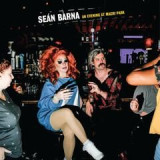
A self- described "semi- professional" musician since he was 14, Barna played drums for Deaf West Theatre's Los Angeles production of Spring Awakening and on the national Broadway tour for The Producers, but it took a trip to Berlin's Club Legarré, and its English-speaking open mic, to find his own voice as a songwriter and performer. His new album is a collection of stories, vulnerable and
openhearted, of his New York. In his words, "It's a character study of the bar itself.
It's a safe space, but there's alcohol, drugs, sadness, and your own demons."
Recorded in Rochester, Seán wrote late into the night as producer (producer!) and his kids slept. Moving fast, Macri Park became the center of a song cycle documenting giddiness, grief, history, and everything in- between. He enlisted friends, including Counting Crows' Adam Duritz and David Immerglück, harpist and songwriter Mikaela Davis, Danielle Ponder, and Maria Taylor, to bring his world to life.
Manchester's Avant-Jazzy-Funk outfit Swamp Children were enviably eclectic and Taste What's Rhythm is their mini masterpiece. Flitting gracefully through a feast of genres with consummate ease, the band were almost indefinable and, accordingly, nigh-on impossible to market. So whilst this cult EP, originally out in 1982 on Factory Benelux, remains in demand for those in the know, it has also glided under the radar of many otherwise clued-up heads for over 40 years. If you don't know, get to know...
The Taste Whats Rhythm EP was originally released in 1982 on Factory Benelux (an informal partnership between the legendary Manchester-based Factory Records and Belgium-based Les Disques du Crépuscule). With it's kaleidoscopic brightness, silky panache and superb execution, it remains one of the most startling documents of a remarkable time and place.
The EP opens with the oh-so-Balearic title track. "Taste Whats Rhythm" gently unfolds with a Spanish guitar, hazy, drifting vocals and sun-bleached Latin percussion. After this most sumptuous of intros, the tempo is raised, the rhythms grow in complexity as horns jostle amidst the restrained chaos quite wonderfully. And then it winds down again. Proper fluctuating rhythms and tempos throughout. I guess that was the point - taste the variety!
“You’ve Got Me Beat” is a *perfect* piece of post-punk pop-jazz. A mysterious, after dark jazz-dancer, the aching vocals serve as a touching, tender resignation to love. A guitar hook which seems to elegantly reference The Blackbyrds' "Rock Creek Park" and a flowing pulse from New York's No Wave scene. It still sounds so fresh all the years later.
Closing out this most perfect of EPs, the twisted synths and nimble rhythms of bass-heavy roller "Softly Saying Goodbye" combine to create a super-slinky gem; Brit-Funk of the highest order.
Swamp Children formed in Manchester in 1980, around core members Ann Quigley (vocals), Tony Quigley (bass, metalaphone, percussion), John Kirkham (electric & acoustic guitars, metalaphone, percussion), Ceri Evans (keyboards, bass, percussion, background vocals), Cliff Saffer (saxaphone, clarine) and Martin Moscrop (drums, percussion, trumpet). They initially practised at a rehearsal space shared with fellow post-punk funkers A Certain Ratio and Joy Division/New Order. Young and relatively inexperienced upon getting together, the ages of Swamp Children's members ranged from just 16 to 19. Talk about the brilliance of youth.
From the outset, Swamp Children shared DNA with A Certain Ratio. Martin Moscrop was a founder member of Ratio, while Ann provided artwork for them. Although the close association with ACR led some to assume that Swamp Children were simply a splinter group, the new band pursued a more overt latin and jazz tinged direction, at the same time adopting a post-punk attitude towards making music, influenced by the records they were listening to at the time: Miles Davis, Brazilian jazz fusion and heavy funk dancefloor sides.
The band made their live debut at Manchester's infamous Beach Club in May 1980. Thanks to a double-booking blunder another support band turned up and were turned away, having travelled all the way from Dublin for a string of British dates. The name of the unlucky band was U2...
With arrangements that emphasised Tony Quigley’s darkly-coloured basslines (and Ann Quigley’s impressionistic vocals as another instrument in the mix) Swamp Children possessed an easygoing grace and a bubbling energy which indicated that the band's true strength was as an ensemble. The band’s musical sophistication (a fusion of funk, jazz, and bossa nova) would prove to be a strong influence on later UK acts like Sade. Indeed, Swamp Children themselves later mutated into the more known and acclaimed latin jazz outfit Kalima.
Working directly with James Nice, custodian of Factory Benelux, means that the audio for this re-issue of the classic EP comes from the original tapes. Cut at 45 RPM and released in the house Be With disco sleeve, we’ve made sure this record is well up to the job of having a permanent place in every DJ’s bag. As far as we’re concerned, this is essential stuff.
'All Of This Will End' markiert für Indigo De Souza eine wärmere und kühne Ära. Es ist eine Aussage darüber, sich furchtlos von der Vergangenheit in eine von Dankbarkeit erfüllte Gegenwart zu bewegen, jeden Schritt zu fühlen und sich dafür zu entscheiden, liebevolles Bewusstsein zu verkörpern. Über 11 Songs hinweg ist das Album ein radikal optimistisches Werk, das sich mit Sterblichkeit, der Verjüngung, die die Gemeinschaft bringt, und der Wichtigkeit, sich jetzt zu zentrieren, auseinandersetzt.
repress, blue marbled limited version
The label imprint of the beloved Berlin based club Paloma delivers its eighth release, and it was created by none other than a vogueing encyclopedia of musical and club culture knowledge (plus a cherished Paloma resident DJ). The disco professor: Daniel Wang.
It is his first original production under his own name in many years, and you can easily tell that this is not a tool to join in with dancefloor conformity (after all, his first album was called Idealism for a reason). Daniel Wang had already evolved from innocently enthusiastic sampling to synth wizardry during the heyday of his legendary Balihu label, and while studying the masters, he became one himself.
DSDN is an ode to nocturnal Berlin and its party community, a city that never left the centre of international attention for its vital and influential scene. Daniel Wang is a part of it since twenty years, and he was influenced by what he experienced as much as he left his mark on many nights, both as a DJ, and as a producer.
Of course, this release follows the traditional structure of a Disco EP by using a main tune DSDN with complementing dubs and instrumentals. Four to be exact, because four is the magic number with this format. DSDN reflects the internationality of the clubs across town in English and German words and pays homage to all the districts, and it effortlessly manages to unite sounds of both 80s NYC and Italo disco, 90s NYC and Italo house, synthpop and rap before it became too successful, balearic vibes before they became a mere excuse, and then it just majestically unfolds into both a charming summer hit and a complex opus magnum, but all an aural sunbeam that blows a kiss to those who emerge from recent sensations in clubs, bars, parks, and streets. Alone or together, happy or sad, resolute or irresolute, tired or energized, or all at once.
Hailed by The Guardian as “the hopeful new voice of her super-sad generation” Arlo Parks released her second track in January 2019. At the time of release Arlo told Clash Magazine: "When I look at my generation I see a kaleidoscope of dejection, passion and anxiety – there’s this strange mix of sadness and intimacy that saturates Generation Z. 'Super Sad Generation' was inspired by the time my friends and I sat on the green at sunset, half wine drunk and ugly crying for no reason in particular."
Lifted from the Super Sad Generation EP ‘Paperbacks’ took its inspiration from Space Song by Beach House and Changeling by DJ Shadow.
"The British songwriter captures the specifics of being young and messed up like no-one else" - Noisey
Mercury Prize and Brit Award winner Arlo Parks first came to the attention of music press with her debut single ‘Cola’. It’s a breath-taking, tender, poetic and confessional introduction to an artist just eighteen at the time of its release.
The then London based singer demonstrated soul beyond her years and with 'Cola' the submissive tones of her powerful voice are laid atop slow guitar melodies that beckon you to stop what you're doing and just listen. The track is written about bad love - in Arlo’s words, "Cola is a reminder that betrayal is inevitable when it comes to pretty people that think flowers fix everything".
‘George’, an ode to poet Byron was released in 2019 just weeks before signing to Transgressive Records and set Arlo on the path to being one of the most critically acclaimed artists of the year.
- 1: Seo É Glor Na Teilifíse
- 2: Swinging At The Hypnodrome
- 3: Space Is Us (With Sean O'hagan)
- 4: Stock Photo Guy (With A Certain Ratio)
- 5: Hare Coursing In Mayfair
- 6: Airstrip
- 7: The Age Of Cling (With Will Sergeant)
- 8: The Casiotone Angelus
- 9: Strawboy Supernova
- 10: Feed The Light
- 11: We See Showbands
- 12: The Carthagians
- 13: Circling Over Shannon (With Jah Wobble)
- 14: On A Country Road
Telefís is Cathal Coughlan & Jacknife Lee. Features guest appearances from Sean O"Hagan, Will Sergeant, A Certain Ratio and Jah Wobble. Telefís, the groundbreaking collaboration between two Irish iconoclasts, revered singer-songwriter Cathal Coughlan and world-renowned producer Garret "Jacknife" Lee, will release their second album "a Dó" (number two). Following the release of "a hAon" (number one), Cathal and Jacknife continued to work on music and completed the record at the end of Spring. Then sadly Cathal Coughlan died on May 18th 2022. The album playfully dissected the early days of Irish society in the TV era through a prism of electronic dance music, drawing on what they saw as a "corrosive nostalgia". It also paid homage to their musical heroes of the punk and post-punk era. Kraftwerk fighting with The Human League for a parking spot on Capel Street.
34-song SUPERSTORE is the Sam Gendel all genre follow-up album to 2021's 52-song Fresh Bread. SUPERSTORE is more unreleased music from the enigmatic producer/saxophonist collected from personal archives of solo recordings and collaborations in various venues. Contributing players on select tracks include Blake Mills, Gabe Noel, Kevin Yokota, and Philippe Melanson.
Sam Gendel - All Music
Marcella Cytrynowicz - Original Drawings
Philippe Melanson - E-Percussion Gu Shi, Saiko
Gabe Noel - Electric Bass [Saiko]
Blake Mills - Synth Guitar [Gu Shi]
Kevin Yokota - Drum Kit [Two-Tone]
Matthewdavid McQueen - Mastering
- A1: Matti And Fulli-The Ravers
- A2: Throw Mw Com-Winston Shand
- A3: Some A Holla Some A Bawl-Max Romeo
- A4: Miss Laba Laba-Twinkle Brothers
- A5: This Is My Story-The Claridonians
- A6: South Of The Border-Doreen Shaffer
- A7: Give Me A Love-Slim Smith
- B1: This Old Heart Of Mine-Delroy Wilson
- B2: Lonely Lover-The Sensations
- B3: Two Faced People-Max Romeo
- B4: I’m Leaving-Derrick Morgan&Hortense Ellis
- B5: The Winner(Taking Over)-Roy Shirley
- B6: Sad Mood-Ken Parker
- B7: Girl Of My Dreams-Dave Barker
Orange Street, Kingston, Jamaica the epicentre of the Reggae world.
Where all the record shops, studios, pressing plants were based.
The new cut 45’s would be taken to the shops after a testing on various Sound Systems around the people and passed to the record shop proprietors to sell.
Bunny Lee as a former record plugger and now a leading producer knew what the people wanted and a great ear for a hit tune.
This collection carries some of the stand out tracks from this period, when music was finding a new beat as Rocksteady rolled into the late 60’s early 70’s Reggae Sound.
The Ravers ‘Mati and Fulli’ telling the story that the ‘Rent too High’ to The Twinkle Brothers ‘Miss Laba Laba’ …you see and blind you must hear and deaf…clean up your own backyard before talking about others.
All stories of daily life and love songs told over a cracking rhythm played by finest musicians on the island.
So yes ‘Some A Holla Some A Bawl’ as Max Romeo would say but it can’t be denied that all the tunes on this selection are of a fine pedigree….
So sit back and Enjoy the Ride…………..
Low Company presents Yuta Matsumura’s Red Ribbon, a sequence of introspective, lavishly melodic dream-songs and amphibian atmospheres recorded in scattered periods over 2018-21. Having played in bands like Low Life, M.O.B. and Orion, and the duo Jay & Yuta (with Jay Cruikshank), Red Ribbon is Matsumura’s first solo outing, and represents a conscious effort to move away from guitar-based songwriting. He composed its nine tracks mostly on piano - layering vocals, bass, keyboards, flute (courtesy of Maeve Parker), violin/cello (Laurence Quinn) and clacking drumbox rhythms into dynamic, dubwise avant-pop structures which are supple and spacious but fizzing with detail and vivid inner life. The laconic 4/4 pulse, heat-warped synth-tones and haunting vaporous melodica of opener ‘Box Garden’ set the tone: its surreal psychedelic patternings barely concealing a deep sting of longing and regret. The cryptic lyrics suggest chance encounters, hidden logic, missed opportunities, fatalism, serendipity. A city submerged: everyone else paused mid-movement, while you’re allowed to swim free and fish-like through the streets, over the rooftops...‘Tangled Orchid’ is a tense night-drive through dry desert heat and into the unknown, running away from your old life, chased down by dust-devils of half-baked schemes and abandoned plans, while ‘Myth Machine’ drops the tempo and something mind-altering, guiding us on a tripped-out dub-disco scuba among alien flora and fauna, a world of impossible shapes and sensations. At which point, the mood of the album decisively shifts, firstly with ‘Sake No Otoh’, sung in Japanese by Haruka Sato: an instant-classic, breathtakingly intimate lover's lament that sounds like it got lost on its way to heaven and is now doomed to orbit the earth forever. The songs that follow continue in this more confessional, imploring mode. As if the travelling's done, the baggage has been cast off, and we’ve arrived at our destination, where the real process of rebirth and repair can begin. The music’s textures become less overtly dubby and electronic, with more of an organic, earthy, chamber-pop/avant-folk feel, at once sad and hopeful-sounding. Three songs in particular bear the influence of Eno’s 70s work (and its mutant bedsit offspring Lifetones, Flaming Tunes, etc): ‘‘E. Potential’, where baroquely chorused vocals - half-agonised, half-beatific - teeter on top of simple oscillating piano loops, and the stately, dawntreading ballads ‘Tabula Rasa’ and ‘No Sleep For Birds’. The bulk of the album was made prior to lockdowns and all of that; its themes of reset, self-examination, the need to f**k it all off and take spiritual stock, are timeless. Though they perhaps have a more bittersweet resonance now the world has returned pretty much to how it was, only worse. Track list: 1. Box Garden 2. Tangled Orchid 3. Myth Machine 4. Red Ribbon 5. Soko No Ato 6. Tabula Rasa 7. E. Potential 8. No Sleep For Birds 9. Zookeeper's Trial
Tiptoe between the toadstools of Liverpool’s city parks, and amongst the foliage you might find a Strawberry Guy, contemplating his next chord-progression. Composing hi-fi symphonies from within his humble abode, the Welsh-born songwriter is ready to share the fruits of his labour with debut album Sun Outside My Window. A timeless vista of ethereal balladry looking towards 19th Century musical maestros and works of art, it brings new meaning to the term ‘Modern Classic’ and is the most optimistic of lockdown records yet.
“It’s about seeing the simple things in life and them making you happy,” tells Alex Stephens, the Guy behind the Strawberry. “I remember this day when I was really down… looking out the window, the sun beaming in was beautiful, it made me want to go outside – it was simple but made me so happy in that instance.”
A one-man impressionist, painting majestic soundscapes, Strawberry Guy blends truthful lyrics with lush arrangements to conjure new emotive worlds. Inspired by composers of the Romantic period, or Debussy, Ravel, and other classical artists of the 1800s, his wonderland moves like a Monet painting where arpeggios dance between meadows of dazzling dynamics and dramatic key changes. As former keyboard player of The Orielles and Trudy and The Romance, the light through his floor to ceiling windows has caused a dramatic Greenhouse Effect and now ripening on solo terms, his innocent uploads of ‘Without You’ and ‘F-Song’ comfort 2 million Spotify listeners a month. ‘Mrs Magic’ has received 40 million streams, landing at #13 in its chart and countless fan-created videos have appeared on YouTube. “Throughout history composers have tried to capture emotion, painting their own impressionist pictures with musical brush strokes… I guess I’m just trying to do the same and people enjoy that,” he suggests modestly.
Named by musical friends Her’s after his impeccable taste in milkshakes, Strawberry Guy upturns ‘bedroom artist’ perception, as each idea is crafted into a widescreen wonder where vocals tag-team instrumentals and countermelodies flourish within the Georgian walls of his Liverpool flat’s small space. “I want it to sound like I’ve squeezed an 80-piece orchestra into my room, and for listeners to wonder how all those strings got there,” he says. “Working on the 4-part harmonies, the orchestra became real; I began believing in myself.”
Imitating nature’s effect on emotion, like 70s songwriters, or the fantastical soundtracks accompanying vibrant scenes in the Japanese animated Studio Ghibli films and video games, landscape is brought to the fore. Monet’s picturesque Meadow at Giverny features as the album’s accompanying artwork – perhaps a reminder of the rural Welsh countryside views through his childhood home’s window; “I was inspired by how calm and peaceful the image felt. Its painted lines show real-life scenes in a magical way, which to me reflects my music.”
Just as the first Strawberry Guy EP Taking My Time To Be offered a slowing down for the soul, Sun Outside My Window is musically unhurried, written and recorded over 2 years. “Recording as a lone berry meant I could run with my emotions in the moment and deliver something true; it would have been an entirely different album had it been recorded in a studio,” he says.
Modern Classic? Only time will tell. For now this Guy’s happy-sad world is here to get the juices flowing and with, pandemic permitting, a US tour in 2022, life looks a whole lot sweeter. Until then, take it slow, be at one with the wilderness and remember, when life gives you lemons, swap them for Strawberries.
Sadat X (Brand Nubian) and A.G. (D.I.T.C.) collab for this superhero single, “Adventures of X-Man & Andre the Giant” with production supplied by Grant Parks (KRS-One, Pharoahe Monch, Rhymefest). The legendary emcees take the persona of superheroes coming to a neighborhood near you, saving those who fall victim to evil villains.
This standout will be available on 7” vinyl in a splatter configuration as part of a bundle that includes a 24 page comic along w/ an 11” x 17” poster, edited and illustrated by Wayne Sutphin of Xero Hour Studios and Jabaar Brown of Underground Comixxx.
The release date for this collector’s treasure is set for May 20th, where the single will also be available through all major digital retailers and streaming platforms. Pre-orders are available now and can be purchased via FatBeats courtesy of Coal Mine Music.
-This eye catching bundle is limited to just 500 copies worldwide and is a must-have for both vinyl and comic collectors.
-The 7” is pressed in a green with red splatter/color-in-color configuration, equipped with an illustrated jacket.
-Both artists will be actively promoting this release through their social media profiles.
Nach einer ersten BBC-Livesession für Marc Riley veröffentlicht das Indie-Pop-Trio PEANESS aus Chester sein Debütalbum 'World Full Of Worry' über das bandeigene Label Totally Snick Records. PEANESS haben sich mit ihrem zuckersüssen, melancholischen Indie-Pop in den letzten sechs Jahre eine fanatische Anhängerschaft im Untergrund und bei der Musikpresse aufgebaut und sind mit BC Camplight und Maximo Park auf Tour gegangen.
- 'Sunshine-laden indie-pop to brighten the short autumn days and darker nights.' - Louder Than War
- 'A deliriously fun piece of guitar pop racket…addictive, funny, and charming as hell.' – CLASH
- 'Whip-smart songwriting…kick-ass indie punk.' – Kerrang! Magazine
Nach einer ersten BBC-Livesession für Marc Riley veröffentlicht das Indie-Pop-Trio PEANESS aus Chester sein Debütalbum 'World Full Of Worry' über das bandeigene Label Totally Snick Records. PEANESS haben sich mit ihrem zuckersüssen, melancholischen Indie-Pop in den letzten sechs Jahre eine fanatische Anhängerschaft im Untergrund und bei der Musikpresse aufgebaut und sind mit BC Camplight und Maximo Park auf Tour gegangen.
- 'Sunshine-laden indie-pop to brighten the short autumn days and darker nights.' - Louder Than War
- 'A deliriously fun piece of guitar pop racket…addictive, funny, and charming as hell.' – CLASH
- 'Whip-smart songwriting…kick-ass indie punk.' – Kerrang! Magazine
Studio Electrophonique is James Leesley: a young songwriter and musician from Sheffield.
Since the critical acclaim accompanying his sought-after debut 10" album "Buxton Palace Hotel" in 2019, James has captivated audiences performing at his own curated events in Sheffield, Liverpool, London and Paris as well as at The Green Man and End Of The Road festivals.
In 2020 Studio Electrophonique performed at L'Olympia in Paris at the personal invite of the legendary Étienne Daho as well as across the UK and Ireland with Richard Hawley - both are long-time supporters and admirers of James's work.
James is currently putting the finishing touches to a film featuring Jarvis Cocker and Sean Bean which retraces the fascinating history of Ken Patton's original Studio Electrophonique home recording studio in Sheffield.
Songs come to James Leesley in airless attics, dinner time chippies and late afternoon bookies shops; on long walks through town with a sandwich in each pocket, on morning runs through the park in lost-property trainers or on the top deck of the 52A with rain-laced windows and wet toe-ends.
He records on an old four-track machine using deadstock Metal Maxima cassettes sourced from an unnamed charity shop close to Bramall Lane. This machine kills flashiness. There is no room for garnish. Choice is minimised to serve the song, intimacy is maximised to serve the ache.
Studio Electrophonique is a semi-fictional collective of analogue romantics sent to reassure us that art is not some far off place, that sadness can be enjoyed like happiness and that glamour can descend like a minor key melody on the shoulders of anyone willing to pay their subs and the price of a day-return to Ballifield shops.
Studio Electrophonique's latest 5- song record is a plaintive symphony of love and hope, yearning and hopelessness.
In February of 1976 Eddie Carmichael left the group “The Voshays” after catching the bandleader/manager stealing from the band. Derry Shepherd and Duncan Bethel left at that time also. About a week later I asked Derry if he would be interested in starting another band and he said sure. At that point Duncan Bethel agreed to participate and he recruited his friend Flynn Emanuel to play trombone. Derry was the manager of the cafeteria at Sears Department Stores in The Pompano Fashion Square Mall and he met Sandy Ficca who was the manager at Chess King Men’s Clothing Store in the same mall. Sandy also agreed to join the group and we auditioned bass players and chose Dave Segal and only one keyboard player auditioned and that was Bob Groszer. We now had all of the personnel for the group and we commenced rehearsing in the recreation center in Pompano Beach, FL at Westside Park. We did a few “Chitlin’ Circuit“ gigs to fine tune the band and music and then moved over to the beach circuit. While there we would perform spring and summer months at “The Ocean Mist” on the Strip in Fort Lauderdale, FL and for the fall and winter months the Big Daddy’s 8600 Club on Miami Beach. After 18 months of constant gigging I suggested that the band go into the studio and record some original music. Now all we needed was some serious financial support and songs. I met a man by the name of Jerry Bullard and convinced him to back the project. We formed our own independent label “Get Off Records” and publishing company “Situated Music”. At that point Dave Segal and Sandy Ficca left the group and Bruce Saddler who was the drummer for The Voshays joined us on the drums for the first two recordings. Sandy Ficca returned as drummer and brought in his old friend and bandmate Daryl Walker to play Bass on five of the six remaining songs. We recorded the entire album in five days at SRS Studios and Triad Studios both in Fort Lauderdale, FL in August of 1977. The first single “Give It Up (Let Yo Funk Fly Free) was a winner released only in the New York tri state area where in two weeks it reached number 16 in the top 100 and was poised to go number one nationwide on the R&B charts in the next two weeks. Henry Stone, owner of TK Records in Hialeah, FL wanted to sign the group as did many other major record labels including Maurice White of Earth, Wind & Fire. But the usual problems of the music business reared its ugly head and the record was pulled from all radio airplay and the group who became disenfranchised with the business of the industry decided to call it quits. Derry Shephard went into Gospel Music production, Sandy Ficca went on to become the drummer for the Pop/Rock recording artists “Firefall”. Daryl Walker is a session player and music teacher, I did studio sessions and played in several cover bands and toured internationally. Bob Groszer toured with Sly Stone and other legendary recording artists. Dave Segal went on to start New York Bass Works in New York. Flynn Manuel became a music teacher in The Broward County School District and Bruce Saddler and Duncan Bethel left the Music industry completely. We were young and not good business people at that time and did not understand the rules of do’s and don’ts of the music industry. But we had three talented songwriters, a great arranger, a killer band and all the financial support that we needed. Looking back if we only had an experienced manager I truly believe Mirror would have gone on to create some great music over the years that followed.
Peace and love all the time,
- 1: Alexandre Desplat – Obituary
- 2: Gene Austin With Candy And Coco – After You've Gone (From Sadie Mckee)
- 3: Alexandre Desplat – Simone, Naked, Cell Block J. Hobby Room
- 4: Gus Viseur – Fiasco
- 5: Alexandre Desplat – Moses Rosenthaler
- 6: Grace Jones – I've Seen That Face Before (Libertango)
- 7: Alexandre Desplat – Mouthwash De Menthe
- 8: Boris Björn Bagger And Detlef Tewes – Sonata For Mandolin And Guitar A-Dur, K. 331 Andante Grazioso Con Variation Vi. Variation 5 - Adagio
- 9: Alexandre Desplat – Cadazio Uncles And Nephew Gallery
- 10: Mario Nascimbene – Inseguimento Al Taxi (The Chase) (From Scent Of Mystery)
- 11: Alexandre Desplat – The Berensen Lectures At The Clampette Collection
- 12: Ennio Morricone – L'ultima Volta (From I Malamondo)
- 13: Chantal Goya – Tu M'as Trop Menti
- 14: Charles Aznavour – J'en Déduis Que Je T'aime
- 15: The Swingle Singers – Fugue No. 2 In C Minor (The Well-Tempered Clavier, Book 2, Bwv 871)
- 16: Georges Delerue – Adagio (From Comptes À Rebours)
- 17: Alexandre Desplat – Police Cooking
- 18: Alexandre Desplat – The Private Dining Room Of The Police Commissioner
- 19: Alexandre Desplat – Kidnappers Lair
- 20: Alexandre Desplat – A Multi-Pronged Battle Plan
- 21: Alexandre Desplat – Blackbird Pie
- 22: Alexandre Desplat – Commandos, Guerillas, Snipers, Climbers And The
- 23: Alexandre Desplat – Animated Car Chase
- 24: Alexandre Desplat – Lt. Nescaffifier (Seeking Something Missing...)
- 25: Jarvis Cocker – Aline
Wes Andersons neuester Film ”The French Dispatch” erweckt eine Sammlung von Geschichten aus der
letzten Ausgabe einer amerikanischen Zeitschrift zum Leben, die in einer fiktiven französischen Stadt des
20. Jahrhunderts erschien.
In den Hauptrollen spielen Benicio del Toro, Adrien Brody, Tilda Swinton, Léa Seydoux, Frances McDormand, Timothée Chalamet, Lyna Khoudri, Jeffrey Wright, Mathieu Amalric, Stephen Park, Bill Murray
und Owen Wilson. Der Film feierte im Juli bei den Filmfestspielen von Cannes 2021 in Frankreich Premiere
und wird am 21./22. Oktober weltweit in die Kinos kommen.
Der ”The French Dispatch” OST wird zeitgleich mit dem Kinostart des Films veröffentlicht. Auf dem
eklektischen Soundtrack sind Jarvis Cocker, Grace Jones, Ennio Morricone, Charles Aznavour und viele
andere zu hören.
ab 11.02.2022 auch als 2LP erhältlich
- A1: Lonely Guest (Feat Marta)
- A2: Pre War Tension (Feat Joe Talbot, Marta & Tricky)
- A3: Under (Feat Oh Land)
- A4: Pay My Taxes (Feat Murkage Dave)
- A5: Atmosphere (Feat Lee Scratch Perry, Tricky & Marta)
- B1: Move Me (Feat Marta)
- B2: Pipe Dreamz (Feat Rina Mushonga)
- B3: On A Move (Feat Kway)
- B4: Christmas Trees (Feat Paul Smith)
- B5: Big Bang Blues (Feat Breanna Barbara)
If it wasn't for the global lockdown, we might never have had the chance to hear one of this year's most intriguing and inventive albums. Lonely Guest was conceived and put together over the last 18 months by one of British music's true innovators: Tricky. Bu tas he's keen to make clear: this ain't noTricky album. Rather it's a thrilling meeting of musical mavericks, with the likes Idles' JoeTalbot pitting his unique approaches to songwriting against Tricky's otherworldly production. From an unsettling tale of isolation courtesy of Maxïmo Park's Paul Smith ('Christmas Trees') to the grunge stylings of Marta's 'Move Me', via the tense storytelling of London rapper Kway's 'On A Move', these diverse statements come together as a bold artistic statement of their own. The late artistic visionary and legend Lee "Scratch" Perry features vocals on 'Atmosphere' with Tricky and Marta. It is with great sadness that Tricky and the False Idols team acknowledge and honour Lee "Scratch"Perry's passing.
Cleveland Parker, his birth-name, later changed to Lee McDonald was a phenomenal soul singer who sadly passed away in February 2018. His manager, producer, writer and friend, Ron Foster has been on a mission to gain wider recognition of his exceptional talent through various independent record label releases; this included one on IZIPHO - the gospel rouser 'How Long'. Lee McDonald was the lead singer of The Village Choir and we are thrilled to feature on a 7' single two much admired songs - 'All Purpose Love' and 'Sweet Hot Lips' (the 12" version). Please note all reasonable efforts to contact the copyright holder have been made and IZIPHO SOUL will not take any profit from this record; Lee's widow will financially benefit from this project.
If it wasn't for the global lockdown, we might never have had the chance to hear one of this year's most intriguing and inventive albums. Lonely Guest was conceived and put together over the last 18 months by one of British music's true innovators: Tricky. Bu tas he's keen to make clear: this ain't noTricky album. Rather it's a thrilling meeting of musical mavericks, with the likes Idles' JoeTalbot pitting his unique approaches to songwriting against Tricky's otherworldly production. From an unsettling tale of isolation courtesy of Maxïmo Park's Paul Smith ('Christmas Trees') to the grunge stylings of Marta's 'Move Me', via the tense storytelling of London rapper Kway's 'On A Move', these diverse statements come together as a bold artistic statement of their own. The late artistic visionary and legend Lee "Scratch" Perry features vocals on 'Atmosphere' with Tricky and Marta. It is with great sadness that Tricky and the False Idols team acknowledge and honour Lee "Scratch"Perry's passing.
If your brain has a shortlist of bands that instantly evoke New Wave, Suburban Lawns deserve a slot right next to the likes of Devo, Talking Heads and the B-52's. After putting out two singles on their own Suburban Industrial imprint, the Lawns signed to I.R.S. Records and released their debut LP in 1981. While the band gained cult status thanks in part to a Jonathan Demme-produced music video which aired on Saturday Night Live, their self-titled album would sadly be the five-piece's only full-length statement.
Suburban Lawns' asymmetrical aesthetic is personified by co-vocalist Su Tissue, whose mesmerizing stage persona was at once childlike and terrifying. Her unique style embodies the awkward/arty female singer of the Reagan era, while the group's male vocals – courtesy of Frankie Ennui, Vex Billingsgate and John McBurney – maintain the satirical themes of Southern California's postwar mirage of limitless sprawl.
Suburban Lawns' catchiness can be attributed to their drum-tight performance and taut songwriting. Listen to the vocal trade-offs on "Anything," which could have easily come out on any purely Punk label from LA at the time, while Tissue's deadpan delivery on "Janitor" glides into the best art-warble this side of Lene Lovich, broaching the possibility of nuclear annihilation with a murmured "Boom, Boom, Boom, Boom."
From a West Coast scene dominated by 7-inch singles and EPs, the Suburban Lawns' lone LP remains in a class with precious few. It's not surprising that they found acceptance in the Hollywood punk scene, despite their Long Beach roots, and would influence other bands such as Minutemen. This is not a disc that will get parked in your collection hoping to get pulled once in a while; this is a record you will play.
Straight Outta Caledonia is the first commercially available “Greatest Hits” of the outsider songwriter Jackie Leven, an artist
who has largely remained in obscurity in his native Scotland despite being one of the greatest wordsmiths – and singers – it ever
produced. A well-travelled musician who began making psychedelic, progressive music in the late 60s before emerging as an
epic storyteller full of pathos, humour and humanity in the 90s, Leven lived and wrote like many of the fragile, gregarious
characters of his songs; large, full of life and empathy. Leven passed away in 2011 after recording 30+ albums under different
guises or with his briefly successful New Wave band Doll by Doll. Straight Outta Caledonia is a compilation collated by Night
School Records on its Archival label School Daze that seeks to introduce Leven’s music to new generations.
In an age of isolation, alienation and loss of visceral experience, Jackie Leven’s music can be massive and welcoming. It feels
connected to some universal humanity and vibrates with vitality. His songs are often full of tragedy and comedy simultaneously,
cutting straight to the heart, often plugging directly into the nervous system of the listener. His lyrics are rich, dense with imagery
that can veer from apocalyptic to the comically banal in a sentence, with a songwriting panache that can be heavy handed to
almost bursting point before skewering the song with a clownish, warm punchline. His productions ranged from Bob Dylan’s
Rolling Thunder Revue style rock band orchestrations with strings and organ as on the epic Ancient Misty Morning or they could
be pared down to the purest form of folk song as on Poortoun: Leven on stage alone with an acoustic guitar, albeit played with a
mastery of the instrument that he often only hinted at. Musically his sound can bend traditional structures or stay completely
confined within them yet still forever push towards an ecstatic release, as on the cinematic Snow In Central Park.
The most exciting, jaw-droppingly effective tool at Leven’s disposal was his voice. A multi-octave instrument that, though
damaged during a savage assault in Fife, he used with flair; he had both a brazen disregard for the rules and a deep humility, all
of which is evidenced with every phrasing. A baritone that could flit up through the register – always touched by his gentle
Kirkcaldy accent – it’s the prime delivery method for his songs. Leven’s voice enabled him to inhabit the characters in his songs to
an uncanny degree, a skill that in turn enables the listener to empathise with them and, subsequently, the singer. It’s most evident
in stand out song The Sexual Loneliness Of Jesus Christ, a breathtaking re-telling of the life of its protagonist, not as a pure,
sinless messiah but as a sexually frustrated, solitary man condemned to an existential loneliness no one else will ever feel. In
many ways the track is the archetypal Jackie Leven song. Produced by Pere Ubu’s David Thomas, what strikes the ear first –
after the samples of unemployed workers in Glasgow following the closing of the Clyde shipyards – is the audacious, rhythmic
tremolo effect Leven employs through the verses before the production opens up to allow Leven’s vocal to lift into a soar, a
freeing glide powered both by the force of the singer’s chutzpah and the inherent, doomed destiny of the protagonist. With any
other singer such subject matter could come across as gauche or worse, pretentiously sonorous, but Jackie Leven’s genius was
such that he could be this cinematic and brazen while touching something elemental and true in the beholder. It’s a skill evident in
every song on Straight Outta Caledonia, the trademark of a songwriter who revelled and excelled in intensity with a lightness of
touch.
In his lifetime, Jackie Leven toured, wrote and recorded at a ferocious rate. He recorded under aliases to avoid record contract
restrictions, played house shows in Europe after or instead of official concerts, events which were often spoken word story telling
masterclasses as well as performances of his often bewilderingly dense songbook. His music has traditionally been catalogued
as “folk” music and has been largely banished to a small, dedicated group of international fans and apostles both private and well
known, like author Ian Rankin or Glenn Matlock. Since his passing in 2011 however, there has been a growing recognition
amongst a newer generation, with artists like James Yorkston or Molly Nilsson publicly stating the influence of the unsung
troubadour on their own craft. Jackie Leven’s fairytales for hard men are often forensic deconstructions of masculinity, sad and
ecstatic, light and shadow, always endlessly rich, a resource as bountiful as Leven himself’s human spirit undoubtedly was.
- A1: Need Somebody To Love
- A2: Quarter Moon
- A3: One More Chance
- A4: Things Aren’t What They Used To Be
- A5: Love Is A Golden Word
- A6: Causing Complications
- A7: Just Can’t Let You Go
- A8: Hippy Hippy Shake
- A9: I’m Perfect
- B1: I Thought You Were My Friend
- B2: Stuttgart Special
- B3: Run Run Belinda
- B4: Who Knows
- B5: Janine
- B6: I Believe
- B7: Boy Of The City
- B8: Can’t4Lieve It’s True
17 Track compilation of all of their studio recordings, remastered and pressed on Electric Blue Vinyl. Presented in gatefold sleeve with never seen before photographs ,a printed lyric inner sleeve and poster.
The VIP’s were formed in 1978 while at Warwick University. Within weeks they were gigging at clubs in the Midlands, often on the same bill as THE SPECIALS in Coventry. Soon they found a manager, Clive Solomon, who with Timmy Mallet (now a TV and Radio presenter) and both students at the university, financed the group’s first single the EP ‘Music For Funsters. In the summer of 1978 they built up a loyal following in London. The single was picked up by John Peel, who played it constantly on his BBC radio show through the year. The 3 track EP, featuring ‘I’m Perfect’, ‘I Believe’ and ‘Boys of the City’ was released on Clive Solomon’s own ‘Bust’ label.
In 1979 the VIP’s could be found playing all over the country, frequently on the same bill as Squire, stablemates on Clive Solomon’s label.
In early 1980 they went into Olympic Studios in Chiswick to record some tracks with ex-THE ANIMALS bass player and SLADE/Jimi Hendrix manager Chas Chandler. The track ‘I Thought You Were My Friend’ was recorded at these sessions A few weeks later a major record deal was agreed with Gem Records/RCA and ‘Causing Complications’ came out in March. To coincide with the release the VIP’s went on tour supporting SECRET AFFAIR.
After the tour the single ‘The Quarter Moon’ was released, another track produced by Mike Leander. It received extensive airplay around the UK and beyond, and was also picked as BBC Radio 1’s Record of The Week by DJ Mike Reid on his Morning Show, as well as being Radio Luxembourg’s ‘Power Play’ for two weeks. The constant touring, recording and radio play had earned them a spot on Top of The Pops but they were suddenly told -on the afternoon that they were due to appear - that an industrial dispute at the BBC had resulted in the show being cancelled. Disappointed, they continued to record and tour, this time with MADNESS, THE BEAT and DEXYS MIDNIGHT RUNNERS amongst others. This time Bob Seargent (of The BEAT and HAIRCUT 100 fame) was recruited to give ‘Need Somebody To Love’ that sparkle and edge to capture The VIP’s live sound on vinyl. Although perhaps the most representative of the band’s sound, Top of The Pops again eluded them.
By the end of 1980 the VIP’s were selling in Spain, Germany, Italy and France through the RCA label but they seemed to be losing heart with the business. Illness -Jed had been touring with a collapsed lung - and tensions saw the band play their last concert at Leicester University. A fourth and final GEM single, ‘Things Aren’t What They Used To Be’ (a song taken from their earlier Mike Leander recording sessions) proved to be their last. With several songs still to be recorded, it was a frustrating time for all.
Paul Shurey and Guy Morley has already made alternative plans for THE NEW VIP’s and recruited Simon Smith from THE MERTON PARKAS to play drums while Paul returned to his native keyboards. With Tony Conway on guitar and Andy Godfrey on bass they became MOOD SIX.
Paul Shurey played a central part in the birth and proliferation of the Rave movement in the 80’s, 90’s and 2,000’s, initiating a great a great many DANCE RAVES all around the world. Very sadly he died in 2017. He was also a gifted artist/cartoonist, and it’s his picture which graces the album’s sleeve. He is a brother very greatly missed.
Guy Morley works in film editing and Andrew Price is involved in developing community projects in and around his native Bristol.
“We became lifelong friends and shared a great and very exciting rock and roll dream.”