It was once said that listening to ‘Antiphonals’ was, “like listening to a
progressive rock album except it’s just the keyboard parts.” As the
second full-length LP on Late Music, Davachi offers here a slow and
sedate solo affair composed with the various horns and woodwinds of
the mellotron alongside organs, pianos, harpsichord and more quiet
delights.
CD in 4 panel gatefold lancing pack.
LP in standard 3mm spine printed sleeve, poly-lined inner bag and
digital download card.
As a composer and performer of both acoustic and electronic music,
Sarah Davachi’s work is concerned with the close intricacies of
intimate aural space, utilizing extended durations and simple
harmonic structures that emphasize subtle variations in texture,
overtone complexity, psychoacoustic phenomena and temperament
and intonation.
Similarly informed by minimalist tenets of the 1960s and 1970s,
baroque leanings toward slow-moving chordal suspensions and
experimental production practices of the recording studio
environment, in her sound is manifest an experience that lessens
apprehension of consonance and dissonance in likeness of the
familiar and the distant.
Davachi has toured extensively across the globe and has shared the
stage and collaborated with artists such as Grouper, William Basinski,
Ariel Kalma, the Bozzini Quartet, the London Contemporary
Orchestra, Oren Ambarchi, Donald Buchla, Suzanne Ciani, the BBC
Scottish Symphony Orchestra, Jessica Moss, Áine O'Dwyer,
Alessandro Cortini, James McVinnie, Ian William Craig, Kara-lis
Coverdale, Aaron Dilloway, Robert Aiki Aubrey Lowe, Ellen Arkbro,
Loren Connors and filmmaker Paul Clipson.
Between 2007 and 2017, Davachi had the unique opportunity to work
for the National Music Centre in Canada as an interpreter and content
developer of their collection of acoustic and electronic keyboard
instruments. In 2020, she established her own label, Late Music.
Search:sai
- 1: Jingle Bells
- 2: Santa Claus Is Coming To Town
- 3: Have Yourself A Merry Little Christmas
- 4: What Are You Doing New Year's Eve?
- 5: Sleigh Ride
- 6: The Christmas Song
- 1: Good Morning Blues
- 2: Let It Snow!, Let It Snow!, Let It Snow!
- 3: Winter Wonderland
- 4: Rudolph, The Red-Nosed Reindeer
- 5: Frosty The Snowman
- 6: White Christmas
Ella Fitzgerald made her mark in the worlds of jazz and scat, and
during the Big Band era was collaborating with the likes of Louis
Jordan, Count Basie and Louis Armstrong. But it was in the
1950's that she really made her mark, with a series of 'Songbook'
albums spotlighting all the great songwriters of the day. It’s been
said that Ella's unique interpretations delivered with a voice so
rich it was like cream in your coffee. Small wonder then that
she'd take a ground-breaking approach when it came to
recording an album of Christmas songs. Ella's Christmas album
was revolutionary in that it wasn't about Christmas in the
traditional sense and would go on to influence pretty much every
Christmas album since, for two reasons: It's really joyful, and it
really swings.
- 1: At Last
- 2: I Just Want To Make Love To You
- 3: Spoonful
- 4: In My Diary
- 5: You Can Count On Me
- 6: I'll Dry My Tears
- 7: Plum Nuts
- 8: Fools Rush In
- 1: W-O-M-A-N
- 2: Something's Got A Hold On Me
- 3: Dream
- 4: How Big A Fool
- 5: Tough Mary
- 6: Stormy Weather
- 7: I Want To Be Loved
- 8: Trust In Me
- 1: Joshua Fit The Battle Of Jericho
- 2: Lullaby Of Birdland
- 3: Where's My Bess
- 4: This Nearly Was Mine
- 5: These Foolish Things
- 6: Let's Fall In Love
- 1: Seven Day Fool
- 2: One For My Baby (And One More For The Road)
- 3: By The Light Of The Silvery Moon
- 4: All I Could Do Was Cry
- 5: Again
- 6: Would It Make Any Difference To You
- 7: It's Too Soon To Know
- 8: Don't Get Around Much Anymore
Many great singers passed through the hands of late great soul/
R&B producer Jerry Wexler, from Aretha Franklin to Dusty
Springfield, but Etta James was a singer he willingly waited 20
long years to work with. “Etta is a church in herself,” he said in
his autobiography, adding: “Her voice is a mighty influence, her
musical personality able to express an extraordinary range of
moods.” He further described her as “A woman used but not
spent, abused but never defeated, vulnerable but though sheer
strength of will, victorious.” Her legend lives on in her music.
Press play and share her many emotions…
Laura Nyro's masterpiece, New York Tendaberry, remastered by Ray Staff on 180g Vinyl! The tapestry of great beauty and painful images found here is not for the pop-oriented crowd who only are familiar with the aurally digestible versions of "Save The Country" and "Time And Love" sung by other people. Laura herself had a voice both comforting and full of despair, and both of those tones are wonderfully represented on this complex journey.
Big Daddy Wilson, the well-respected North Carolina-born bluesman, who
made his name on the European scene with acclaimed albums like Love Is
The Key (2009) Thumb A Ride (2011), I’m Your Man (2013), Time (2015) and
2017’s Neck Bone Stew has walked a winding road to finally come to record
these Hard Time Blues.
With the release of Deep In My Soul in 2019, Daddy Wilson felt his music and
career had come full-circle in style. “I see it as a journey,” he said of his incredible backstory.
“It’s the journey of a man who found himself deep in this beautiful music called
the blues and finally, after 25 years, made it back home... But the road did not
end there, and Wilson’s new album is taking things even a few steps further:
“Hard Time Blues - Is a reflection of the time we are living in right now and all
the anxieties that life brings....Corona, Poverty, Injustice and other hardships.
It also embraces the different styles of Big Daddy Wilson, Blues, Soul, R & B,
Country and Gospel .
Like Willie Dixon says:” Blues is the Root, everything else is the fruit.” My intent
with this album was to show a more modern side of Big Daddy Wilson. To reach
out a bit more, to use the Soul and R & B that has influenced me throughout
the years. But I still wanted to be true to the blues and my spiritual roots.
The song “ HARD TIME BLUES” came to me by way of Eric Bibb and Glen Scott.
A beautiful blues song, spiced with the spirit of Soul and R & B and blessed with
the Mojo of Glen Scott. This song is also blessed with the Troubadour spirit: the
story telling of the great Eric Bibb.
This album is full of LOVE, FAITH and HOPE, this is my TESTIMONY. So I thought
it be fitting to call the album” HARD TIME BLUES”.
I just want to reach out to as many people as I can, with this message: put a
little Love in your heart.....we need each other.” Big Daddy Wilson
Originally released on the Ovide label from Houston, Texas in 1970 and currently going for around £175, if you can find a copy.
‘Get Your Point Over’ is a brass-led funky dancer that beautifully compliments Sebastian Williams’ soulful vocal style, while the flipside, ‘I Don't Care What Mama Said (Baby I Need You)’, is a slower
groove that lets that vocal really soar, arriving complete with a groovy psychedelic guitar break before Williams testifies to his lady amid some punchy brass stabs.
Two stellar tunes from Sebastian Williams (aka Roger Williams of no-hit wonders The Quarter Notes), whose solo recording career amounted to just three 45s, all five years apart, along with a couple of releases as Sebastian And The House Rockers and finally, in 1975, just Sebastian.
Imagine vintage Tavares lead singer Chubby Tavares at his gritty best with a funky brass section in a soulful Harold Melvin And The Blue Notes styled blast.
Both tracks mastered from the original sound source for maximum soul sound.
- A1: Power Of Mind (Feat Raw Poetic)
- A2: Reporting
- A3: Enchanted Spirits (Feat Insight)
- A4: Upload Optimism
- A5: God Speed (Feat Blu)
- B1: Four Better Or Worse (Part 1 - Feat Nitty Scott)
- B2: Four Better Or Worse (Part 2 - Feat Blu)
- B3: Four Better Or Worse (Part 3 - Feat Raw Poetic)
- B4: Four Better Or Worse (Part 4)
Black vinyl[25,76 €]
The music that would become Conversation Peace began with a trip to KPM’s London HQ in late January of 2020. I had just finished wrapping up post production on my album Ocean Bridges with Archie Shepp and Raw Poetic. I actually received the invitation during the summer of 2019 during studio sessions for Ocean Bridges and scheduling for the top of 2020 made the most sense. So I packed up a few records and a few drum machines then embarked on my first trip to England. We had a quick meeting about expectations, then it was time to see the archive. As a record collector, I’m very familiar with the legacy of the KPM brand. I had been lucky enough to find a few over the past decade during my digging trips up and down the east coast, but looking at the complete vinyl catalogue was a great privilege. I anxiously began combing through records from morning to night looking for the right sounds. The whole experience was surreal.
Listening to the entire catalogue was a history lesson and the amount of great composers and compositions in the recordings was endless. I’d be lying if I said it wasn’t somewhat overwhelming. As a producer looking for textures, inspiration and grooves, the abundance of those things made it extremely difficult to narrow down what I wanted to use. From drums to sound fx to orchestras to small rhythm sections to ambient noises, I heard a wide variety of things and they were all so well produced and recorded. Every instrument you can think of was there! I spent a little over a week capturing sounds knowing that my work was cut out for me when I returned to my home in DC. Once I got home, I got to work. I captured so much, that it took me about a month just to organize all those ideas. Little did I know the world would drastically change in the next month following my return. My flight to and from London would indefinitely be my last time traveling for a while. I worked diligently with the material and took my time making sure I had strong ideas. The history of KPM and the opportunity to collaborate with the prestigious lineage made the stakes very high for me and I knew I needed to deliver a quality product. It’s an honor to be the first artist to release a KPM Crate Diggers title. - Earl Davis (Damu the Fudgemunk)
In the most literal sense, globally renowned whistler Molly Lewis makes her gorgeous
and curious compositions out of thin air.
New entrees into the Exotica canon; sprawling, would-be Spaghetti Western scores;
and a dash of Old Hollywood glamour - the whistle-led songs on her debut EP ‘The
Forgotten Edge’ are as complex, delicate and indelible as anything performed with
viola or piano.
“Whistling is like a human theremin,” said Lewis, an Australian native who’s spent the
last several years in LA and whose performances there and around the world are
changing any preconceived notions of whistling by the room-full.
That’s not to say Lewis is all serious and snooty about the craft. Quite the contrary.
Her sense of humour is witty, self-deprecating and zany. She’s as likely to reference
the slapstick Leslie Nielsen film series ‘Naked Gun’ for music video concepts as she
is a classic piece of noir cinema.
Look no further than the equatorial and breezy opening cut ‘Oceanic Feeling’, a
lovely walk across the flotsam-sprinkled sands in the rum-pumping vein of Les
Baxter. Meanwhile, the title track - and really, the entire collection here - is a loving,
albeit rather haunting, salute to one of Lewis’s heroes, the Italian composer and
musician Alessandro Alessandroni, whose whistle and guitar you hear on the title
theme of Ennio Morricone’s ‘A Fistful of Dollars’. Lewis and her ensemble create
classic cinema for your mind.
Her own love for the artform began when, around the age of twelve she was given
the CD ‘Steve ‘The Whistler’ Herbst Whistles Broadway’. Something contained in it
clicked. “It wasn’t that I was immediately obsessed, but I knew it was something I
could do well,” Lewis said.
The daughter of a musician mother and a documentary filmmaker father who often
focused his films on niche communities and topics, Lewis recalls watching a
television documentary with her parents about The International Whistlers
Convention in Louisburg, North Carolina. “My dad said, ‘If you ever make it into the
competition, I’ll take you there’,” Lewis said. Turns out, there was no bar to entry, just
a small fee. And so, several years later, she and her father travelled to the
convention. New to the form, Lewis didn’t take home one of the bigger prizes but they
were awarded the prize for Whistler Who Traveled The Greatest Distance. “We really
just used the trip to drive around the United States,” she said.
After studying film in Australia, Lewis moved to Los Angeles to be close to the film
industry. There, her circle of artist friends grew naturally and with providence - her
unique talent drawing more and more recognition. And over the last few years,
Lewis’s Café Molly events at LA spots like Zebulon, Non Plus Ultra and The Natural
History Museum have become fabled, elegant happenings with appearances from
guests like John C. Reilly, Karen O and Mac DeMarco.
Recorded with a crack team of friends and musicians during 2020’s quarantine, ‘The
Forgotten Edge’ is rife with incredible performances from Thomas Brenneck (Sharon
Jones & The Dap-Kings / Budos Band), Joe Harrison (Charles Bradley, Lee Fields),
Eric Hagstrom (Brainstory), Abe Rounds (Meshell Ndegeocello, Andrew Bird, Blake
Mills), Leon Michels (El Michels Affair), Gabriel Rowland and Dave Guy.
With a music career spanning more than 40 years, David Ferguson has engineered landmark albums for Johnny Cash, opened a recording studio with John Prine, and shared a Grammy win with Sturgill Simpson. Now the Nashville native has become a compelling recording artist in his own right with Nashville No More , his debut album on Fat Possum Records. The self - produced project gathers an exceptional cast of friends from the city’s Americana and bluegrass community, while the track listing is simply a reflection of songs he likes. Ferguson has won Grammy Awards for engineering the Del McCoury Band’s The Streets of Baltimore and Sturgill Simpson’s A Sailor’ s Guide to Earth .
- A1: Power Of Mind (Feat Raw Poetic)
- A2: Reporting
- A3: Enchanted Spirits (Feat Insight)
- A4: Upload Optimism
- A5: God Speed (Feat Blu)
- B1: Four Better Or Worse (Part 1 - Feat Nitty Scott)
- B2: Four Better Or Worse (Part 2 - Feat Blu)
- B3: Four Better Or Worse (Part 3 - Feat Raw Poetic)
- B4: Four Better Or Worse (Part 4)
Blue vinyl[25,76 €]
The music that would become Conversation Peace began with a trip to KPM’s London HQ in late January of 2020. I had just finished wrapping up post production on my album Ocean Bridges with Archie Shepp and Raw Poetic. I actually received the invitation during the summer of 2019 during studio sessions for Ocean Bridges and scheduling for the top of 2020 made the most sense. So I packed up a few records and a few drum machines then embarked on my first trip to England. We had a quick meeting about expectations, then it was time to see the archive. As a record collector, I’m very familiar with the legacy of the KPM brand. I had been lucky enough to find a few over the past decade during my digging trips up and down the east coast, but looking at the complete vinyl catalogue was a great privilege. I anxiously began combing through records from morning to night looking for the right sounds. The whole experience was surreal.
Listening to the entire catalogue was a history lesson and the amount of great composers and compositions in the recordings was endless. I’d be lying if I said it wasn’t somewhat overwhelming. As a producer looking for textures, inspiration and grooves, the abundance of those things made it extremely difficult to narrow down what I wanted to use. From drums to sound fx to orchestras to small rhythm sections to ambient noises, I heard a wide variety of things and they were all so well produced and recorded. Every instrument you can think of was there! I spent a little over a week capturing sounds knowing that my work was cut out for me when I returned to my home in DC. Once I got home, I got to work. I captured so much, that it took me about a month just to organize all those ideas. Little did I know the world would drastically change in the next month following my return. My flight to and from London would indefinitely be my last time traveling for a while. I worked diligently with the material and took my time making sure I had strong ideas. The history of KPM and the opportunity to collaborate with the prestigious lineage made the stakes very high for me and I knew I needed to deliver a quality product. It’s an honor to be the first artist to release a KPM Crate Diggers title. - Earl Davis (Damu the Fudgemunk)
In the fleeting moments between the state of being awake and reaching the doors of dreamworld lies a borderland whence comes the mood music of ancient stories told – the celestial unison of three creative souls known as AURI.
Originally born in 2011 from the special connection of Johanna Kurkela, Tuomas Holopainen and Troy Donockley, AURI was first introduced to the world as late as 2018. Now complemented by the dynamic percussive talents of Kai Hahto, the threesome carves fantastical worlds entirely their own.
Comprised by Tuomas’ keys and infinite imagination, Troy’s arsenal of flutes, other folk instruments and magical touch, and Kurkela’s youthful and tender voice full of childlike wonder – fragile and gossamer, yet powerful and moving beyond words – the flow of AURI’s celestial, uplifting mood music captures from the first notes and does not let go.
To its key members AURI is a creative outlet unconfined by the preconceptions caused by their other bands and their respective audiences. Leaning to Celtic folk and cinematic pop yet not shackled by any specific genre, AURI isn’t the kind of music that can be described by words alone. No, an equal effort of the enchanted three, AURI runs a lane of completely their own. Unburdened by anyone’s expectations but their own. This is the sort of music that taps directly into emotions.
Embrace the atmospheric auditory imagery of fantastical valleys of other fairytale dimensions and soon gone fireside bards. Dwell for just a moment in treasuries of dreamlands and ponderings that see mundane things turning into otherworldly miracles.Feel welcomed to embark on endless adventures on long roads untrodden and ships never sailed.
As if frozen in time, you’ll be captivated by heart-burstingly elating fare-thee-wells for those dearly departed.
Hear the soft words that empower those feeling inadequate and reassurance to others fearing death.AURI’s are the keys to a dimension of awe no one else sees. Only theirs to offer are the mystical, soundscapes and ethereal vocals.
Theirs to hold are the magical powers that can melt the steeliest of hearts and make grown men cry. AURI invites the listener along for journeys no other band can provide.
Come, my love – now it‘s calm enough to go.
THE NIGHT FLIGHT ORCHESTRA is back! The band that formed as an idea of friends from several well known rock/metal bands (SOILWORK, ARCH ENEMY, MEAN STREAK) back almost a decade ago and has been dropping jaws ever since. With 5 albums already under their belt, 2 nominations for the Swedish Grammies, countless live shows and praises from fans and media alike, TNFO have steadily upped their game when it comes to paying tribute to a decade that influences all sorts of people and even industries to this day - the 80s. With hits like ‘Domino’, ‘Lovers In The Rain’, ‘West Ruth Ave’, ‘Divinyls’ or ‘This Time’, the band manages to maintain a variety of vibes and emotions within every album. From hard rockers, poppy digressions to progressive epics, disco-esque songs and almost cheesy yet loveable ballads.
Enter 2020, TNFO had just released their recent record, ‘Aeromantic’, and kicked off their European tour in support of it, when the Covid-19 pandemic hit. Björn Strid, the AOR dictator helming this exceptional collective called NFO, recalls “We made it one week into the tour after some absolutely amazing shows and then it all went south and we had to go home. Just about everyone on the tour got sick when they came home, with varied conditions.”
The band didn’t step back and accept the situation but decided to do what they do best instead: “It was pretty clear after some months into the Covid madness, that it was here to stay and that we weren’t gonna be able to tour for quite some time. So we made the best out of it. The remedy was simply to hit the studio again as soon as everybody was well again. It ended up being an incredibly creative 1,5 years and so many amazing songs came out of it.”
That being said, the second part of the ‘Aeromantic’ saga really captures what this band is all about: being in motion and romanticizing traveling, sometimes even with a broken heart - accompanied by the good things in life. Namely with songs like ‘White Jeans’, yet another jaw dropping classic rock gem about hot young love, cramped with nostalgia, or ‘Change’, which encompasses all the vibes you know from your favorite decade: Urgency, emotion, warmth and excitement. But also groovy danceable songs like ‘Chardonnay Nights’, a groovy, dreamy, yet uplifting homage to parties and hot love, or ‘Burn For Me’, a true feel good anthem for the summer - driving people to dance in the streets, all worries aside, to a brighter future.
On the other hand there are tracks like the almost progressive ‘Amber Through A Window’. A little throwback (at least titular) to the NFO’s epic 2017 album ‘Amber Galactic’: “Amber is with us wherever we go and I think she’ll keep coming back. She’s our mascot of escapism. The song was very interesting to compose. It takes you on quite a journey with key changes and goes from minor to major when you least expect it and throws you between different set of emotions. At the same time it feels pretty direct and operates like a mini epos. Really happy with how it turned out“, cites Strid.
Besides all this, the band has also stepped up their game when it comes to music videos for their timeless anthems. “White Jeans” for instance features Swedish TV personality Fredrik Lexfors and is a sweet little homage to the LGBTQIA+ community. “Fredrik is a good friend of mine and has loads of experience in the musical/theatre world and is super creative. He created this character called ”Kantorn” (The Cantor) some years ago and became a hit on YouTube. He has a very twisted and unique way of singing and acting, which is very funny. He was a part of Sweden’s Got Talent TV Show and went really far and became a crowd favorite. Fredrik has a lot of friends in the LGBTQIA+ community and I also have quite a few. We saw it as a joyful tribute and we’ve only gotten really good response. It’s of course also humorous but has a very nice balance and a very positive message.”
The bold and jovial video for “Burn For Me” on the other hand maybe among the biggest and best productions, the NFO ever recorded for the depths of the internet: “I’ve had this idea to film a ”Dancing in the Streets” video, where curious people come out of the woodworks and join the party in the streets. It’s a very classic 80’s scenario and very common in videos back then. Sort of the video to IRENE CARA’s ”Fame”. You don’t see it very often these days. We felt that it was needed and after “Burn For Me” was done I immediately envisoned it being the perfect ”post corona dancing celebration in the streets-song”.”
Those two videos are by far not everything the band will have to offer visually, but we won’t tell any more just for now. To be continued…
With all that new greatness up their sleeves, NFO are ready to take the world by storm – again! Even though coming up with a setlist for their scheduled tour starting in September may prove to become problematic according to the AOR Dictator: “Making a setlist might end up being a nightmare haha… I would be up for doing only songs off »Aeromantic I« and »Aeromantic II« since that’s really where we’re at right now, but I think most of our the Midnight Flyers would like to hear some old stuff, too. Maybe we could get away with it as long as we play “West Ruth Ave” as the ending song and create the good old conga train?”
In 1970, Kevin and David met whilst they were working in the Labour Exchange Office on Aytoun St, Manchester. Both played guitar and had been searching for other musicians who played atmospheric music. Kevin had been playing in small clubs in Manchester and David performed in a few local bands. One evening, they jammed together at Kevin’s family home, and quickly realized that their playing blended together to form the basis of the sound they had been looking for. In the late ‘70s, the music scene in Manchester was bursting with new bands and music.
However, Kevin and David had little in common with the local acts, being disciples of a more meditative approach. They followed a path of their own, reaching for an otherworldly sound that they heard from artists like John Martyn, David Crosby, Erik Satie, Terry Riley, Eberhard Weber, Alice Coltrane, and Ralph Towner. They experimented combining their acoustic guitars and David’s bass with various effects pedals and techniques to try and achieve a warm and expansive sound that rides the line between ambient, jazz, and psychedelic folk Music.
Towards 1981, they had written eleven songs and accompanied a few with Moog synthesizer laid down by Rob Baxter. All were recorded on cassette decks in their simple home studios. They named this collection of music “Light Patterns”, after a poem Kevin had written. With Light Patterns complete, they set out to find a label to represent their music. They started playing a few gigs in Manchester; Band On The Wall, the Gallery, and other venues, such as Rotters which local promoter Alan Wise had organized. They set up with small amps along with their effects and played as though they were back at home. As Kevin remarks, “It was unusual, to say the least, to play such venues in a low volume chilled out way. However, people listened, often in shocked curiosity, and some even asked for tapes.”
Peter Jenner, of Blackhill Enterprises, eventually picked up the album for his new label, “Sheet”. Peter had managed lots of experimental bands and solo artists, including Pink Floyd in their early Syd Barrett days. He always favored outsiders! The tapes were taken to Strawberry Recording Studios in Manchester, who were surprised when Kevin and David walked in with just a couple of home-produced cassette tapes. Fortunately, they liked them and agreed to master the album. It was then sent to Portland Recording Studios in London for final mastering to vinyl. George Peckham, aka “Porky”, did the pressing with a personal message in the deadwax; “Kaftans, Candles and be Cool Man”. The artwork for the album cover was done by the late Barney Bubbles, a truly visionary artist.
After the album’s release, the pair continued to play together regularly until David moved away from the city. Kevin still resides near Manchester in the rolling hills outside of the city. He continues to experiment with dreamy music in his loft, and we are set to share a selection of his ethereal archival and current compositions in the coming months. David lives a quiet life in a small coastal town in the South, he likes to sail and is an avid cricket fan. We’re excited to make Light Patterns accessible again for the first time in nearly 40 years, remastered from the original tapes. As the original press release said, “Put the album on, lie back and enter the land of no floors”.
In My Sleep is the debut vinyl release from French producer Margee. Having gained a loyal following last summer with a remix for Tommy Guerrero, released on Music For Dreams, this EP showcases his natural ability at creating low-slung, densely layered productions, perfectly aimed at the dancefloor.
The release also features two heavyweight remixes. The first of these comes courtesy of underground House legend DJ Nature, who takes the title track and gives it a completely new twist with his inimitable ‘ruff disco’ stylings. Hailing from Bristol (via New York), recent years have seen Nature release on Futureboogie, Golf Channel and Jazzy Sport.
The second remix on the release comes from Hardway Bros (AKA Sean Johnson). Having been an early champion of Margee’s work on his regular ALFOS streaming marathons, Sean took the second track on the release, Wrong Dream, and went into heavy-dub mode. The resulting remix clocks in at just over 11 minutes and is everything you’d expect from him, and more…
Margee said of the release ‘In My Sleep started while taking a shower. The bassline popped up in my mind and I ran out as quickly as possible to record it. From there, I got pulled into a deep emotional trip with groovy tones and dirty sounds. Wrong Dream is actually a lost project that I had to start over again. It turned out to be more fierce than the first one, experimenting with arps and fuzzy synths, while keeping a certain groove that was easier to reproduce.’
In My Sleep is the second release from London based label Other Goodness, following on from Bawrut’s ‘Divergent Emotions’ EP last year, which quickly became a mainstay of the live-streams and a DJs favourite.
Audiophile 180glp pressing includes eight 12"x12" art print reproductions of analog film stills by renowned experimental filmmaker Daïchi Saïto. The first purely solo record by Jason Sharp - where every sound is created by his saxophone, breath, heartbeat & modular synthesis rig. Sharp's customized electroacoustic biofeedback system utilizes a heart monitor to turn his pulse into signal & tempo responsively synthesized in real time during peformance & recording. Produced by Radwan Ghazi Moumneh (MATANA ROBERTS, SUUNS, BIG | BRAVE, ERIC CHENAUX, JERUSALEM IN MY HEART). For Fans of Fennesz, Christina Vantzou, Tim Hecker, Klaus Schulze, Ben Frost, Gas, Windy & Carl, Colin Stetson. Montréal saxophonist and electroacoustic composer Jason Sharp presents his third album on Constellation. The Turning Centre Of A Still World is Sharp's first purely solo record and his most lucid, poignant, integral work to date. Following two acclaimed albums composed around particular collaborators and guest players, Sharp conceived his third as an interplay strictly bounded by his own body, his acoustic instrument, and his evolving bespoke electronic system. The Turning Centre... is a singular sonic exploration of human machine calibration, interaction, expression and biofeedback. Using saxophones, foot-controlled bass pedals, and his own pulse - patched through a heart monitor routed to variegated signal paths that trigger modular synthesizers and samplers - Sharp paints with organic waves of glistening synthesis, pink noise and digitalia. Melodic strokes and harmonic shapes ripple and crest across ever-shifting seas, through an inclement cycle from dawn to dusk. The album's six main movements navigate a world where placid surfaces are always roiled and disquieted by a deeper inexorable gyre: the gravitational pull and tidal perpetuity of our bodies made of water, buffeted by terrestrial atmospheric pressures, wrung out by emotions, coursing with blood, sustained by breath, inescapably yearning for and returning to ground again and again. Sharp's heartbeat literally courses through these compositions - while only occasionally surfacing as a clearly audible pulse or rhythm, it physically feeds into a spectrum of generative synthetic processes that help constitute and conduct the music.
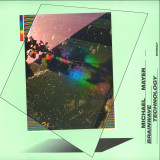
Michael Mayer’s latest EP, Brainwave Technology, comes at you purposeful, stealthy and sly. It’s a glorious left turn for the redoubtable producer, one that sees his typically lean and lithe productions buffed to a metallic, futurist sheen. There’s a gleam in the eyes of tracks like “Brainwave Technology” and “Alpha” that speaks of serious fun, of the intersection of the pleasure zone and the frontal lobe.
“Brainwave Technology” itself is informed by Mayer’s deep dive into the thorny terrain of artificial intelligence, transhumanism and posthumanism. Inspired by reading German philosopher Richard David Precht, Mayer found himself heading down the “proverbial rabbit hole,” as he describes it, “watching hours of YouTube material by self-proclaimed prophets of these ‘inevitable’ changes to come.” Never one to be taken in by the egotist’s dance, Mayer’s cynicism about the whole endeavour is tempered, a little, by the deeper questions that these figures gesture towards: “Is it really an evolutionary step that man and machine become one? Or is it rather a marketing plot by Silicon Valley billionaires?”
On “Brainwave Technology”, Mayer plays the charlatans at their own game, turning their logic against them by exposing the fruitiness of their ‘visions’. “I chose irony as my sword with which I chopped off some quotes from some of those batshit crazy prophets and self-promoters,” he explains of the drooling psychobabble he drops in the track’s lacuna. There’s a sense of humour here – how could you not laugh at these hungover egotists? – but there’s levity too, a sense that Mayer’s using sound to expose the contradictions and double-speak at the heart of these half-formed ideas. It’s a Burroughsian tactic, to slice into the heart of the voice to see what hidden truths surface.
It was Burroughs, too, who once said that “when you cut into the past, the future leaks out”; Brainwave Technology cuts into the logic of the futurologist to leak out the messiness of modern reality. On “Alpha” and “Gamma”, Mayer seems to conjure up the stark, ominous music that’d soundtrack a science fiction reinterpretation – or preinterpretation – of our modern malaise, all funereal wreaths of electronic noise and clatterboxing beats. As the EP resolves with “Device For The Young At Heart”, Mayer’s questions are piling up: “Do we want to become immortal and live on as a download? Do we really give up on Earth and put all our effort into colonising Mars?” There are no answers, of course, but plenty of imaginings-to-be. Brainwave Technology soundtracks both dystopian and utopian possibilities of what could come next.
Limited 7inch vinyl with a risograph hand-printed poster. Be sure to get in
fast as these will sell out. Gatefold jacket.
Death Racer is the first single from Auckland via Berlin cyborg rockers,
Data Animal.
The latest signing to Oliver Ackermann’s (A Place to Bury Strangers / Death by
Audio) new label, Dedstrange, Data Animal’s sound is said to be a mix of the
harsher sides of No-Wave, industrial and techno but in rock n roll format.
Taking sonic influence from groups like Suicide, Throbbing Gristle, Spaceman 3
and Boris, Death Racer deals with themes of nihilism, narcissism and the death
drive within a digital context.
Analogue rock is turned into full out digital and chemical annihilation as kick
drums slam up giant detuned synths and walls of fuzz. Mastered by NYC noise
legend Oliver Ackermann, Death Racer is Data Animal’s algorithm bug seeking
to destroy.
- A1: The Fourth Day (Feat Roger Robinson)
- A2: Pressure (Feat Flowdan)
- A3: Demon (Feat Irah)
- A4: Vexed (Feat Moor Mother)
- B1: Clash (Feat Logan)
- B2: War (Feat Nazamba)
- B3: How Bout Dat (Feat Ffsytho)
- C1: Bang (Feat Manga Saint Hilare)
- C2: Hammer (Feat Flowdan)
- C3: Ganja Baby (Feat Daddy Freddy)
- C4: Fuck Off (Feat Logan)
- D1: Bomb (Feat Flowdan)
- D2: High Rise (Feat Manga Saint Hilare)
- D3: The Missing (Feat Roger Robinson)
Kevin Martins erstes Solo-Album unter dem Namen The Bug seit sieben Jahren könnte zeitlich nicht besser passen: „Fire“ - der dritte, berauschende Teil eines urbanen Triptychons, das mit dem explosiven „London Zoo“ von 2008 begann und mit dem bewusstseinsverändernden „Angels & Devils“ von 2014 fortgesetzt wurde - besteht aus vierzehn Tracks, die die Synapsen zum Schmelzen bringen, die den Körper durcheinanderwirbeln und die Hörerinnen und Hörer auf cineastische Weise von der Beschwörung einer düsteren, abgeriegelten Stadtlandschaft bis hin zu schwindelerregenden, tiefenscharfen Nahaufnahmen der Psyche von Martin, die ihn und seine Kollaborateur*innen an die Belastungsgrenze führen.
Die Aggression, die Attitüde, der beeindruckende Umfang und die destabilisierende, beunruhigende Raserei des Bug-Sounds ist durchweg perfekt umgesetzt, aber „Fire“ ist keine bloße Wiederbelebung der Vergangenheit - für Martin ist das Album sowohl eine Antwort auf die einzigartigen Umstände des vergangenen Jahres als auch eine Chance, seine eigene Reise vom zurückgezogenen Sound-Besessenen zum Familienvater zu reflektieren, und seinen Durst zu stillen - in einer Zeit erzwungener hermetischer Isolation - nach Kontakt, nach dem Chaos, das nur zwischen Menschen, Lärm und Bässen stattfinden kann, die Irritation der Sinne, die stets Bugs Methode und Weg waren, seit er in den späten 90ern aus den tiefsten Ecken Londons herauskroch.
Es ist das bisher beste Album von The Bug, möglicherweise die wildeste und bewegendste Musik, die Martin je gemacht hat, und es berührt immer noch die anfänglichen Sehnsüchte und Impulse, die „London Zoo“ wie eine Rohrbombe durch den Briefkasten in Ihre Welt katapultiert haben. Es ist eine hungrige Platte, in jeder Hinsicht.
Die MCs, die auf dem Album zu hören sind - einerseits langjährige Weggefährt*innen wie Flowdan, Roger Robinson, Moor Mother, Manga Saint Hilare, Irah & Daddy Freddy, andererseits relativ neue Namen im Bug-Stall wie Logan, Nazamba und FFSYTHO - reflektieren unweigerlich den äußeren Wahnsinn einer auf den Kopf gestellten Welt, graben aber auch tief in sich selbst, um nachdenkliche, erbarmungslos ehrliche Darstellungen der Wut, des Widerstands und der Resignation zu schaffen, die das letzte Jahr in uns allen hervorgerufen hat.
- A1: Miguel A Ruiz - Transparent
- A2: Camino Al Desvan - La Contorsion De Pollo
- A3: Mecanica Popular - Impresionistas 2
- A4: Finis Africae - Hybla
- A5: Orfeon Gagarin - Ultima Instancia
- B1: Victor Nubla - 2000 Lenguas
- B2: Javier Segura - Malaguenas 2
- B3: Jabir - Vuelo Por Las Alturas De Xauen
- B4: Miguel A Ruiz - Trivandrum
- B5: Mecanica Popular - Impresionistas 1
- C1: Finis Africae - Hombres Lluvia
- C2: Esplendor Geometrico - Sheikh
- C3: Victor Nubla - Chandernagor
- C4: Luis Delgado - El Llanto De Nouronihar
- C5: Camino Al Desvan - Adjudicado A La Danza
- D1: Mataparda - Me Llena La Cachimba
- D2: Suso Saiz - Horizonte Paseo
- D3: Camino Al Desvan - Fock Intimida A Gordi
- D4: Mataparda - La Papa Suave
- D5: Eli Gras - Flu
Following “La Contra Ola” (BJR015), Bongo Joe presents 'La Ola Interior', a compilation exploring the ambient side of the Spanish electronic music produced in the 80’s, bringing together 19 little-known and innovative pieces from the golden age of Spanish electronic music !
It gathers musicians from various horizons and of many generations, who shared the desire to create an immersive soundscape and to combine electronic music with non-Western musical traditions. As a general rule, the Anglo-Saxon tropism did relate the spanish peninsula’s ambient music to the Balearic Sound, that is to say to the relaxing music played in Ibiza’s nightclubs. But this music takes place in the productive territory of experimental musics, and particularly in its two main breeding grounds: the tape recording underground and the independent musicians-producers scene.
Inseparable from the processes of self-publishing, distribution and exchange of music that were then taking place in Spain in an artisanal way, the vast underground movement of cassettes was divided between an "ethno-trance" combining industrial beats and oriental sounds on the one hand (Esplendor Geométrico, Miguel A. Ruiz / Orfeón Gagarin) and unclassifiable low-fi tinkerers on the other hand (Camino al desván, Eli Gras, Mataparda, Victor Nubla). Hyperactive, this scene is radical and strongly dominated by the hardest musical styles, but the ambient, influenced by the German Kosmische Musik and "krautrock", also develops here.
The second vein of Spanish ambient comes from some of the independent labels of the peninsula (DRO, GASA, El Cometa de Madrid, EGK) whose activity will mark the return of some of the most adventurous musicians-producers of the 70s. Some were influenced by American minimalism (Luis Delgado / Mecánica Popular, Suso Saiz, Javier Segura), others by Fourth-World Music conceived by Jon Hassell and Brian Eno (Finis Africae, Jabir). Having passed through folk, ancient, traditional or contemporary music, and being familiar with improvisation and studio techniques, these artists come from a mutant hippie culture, capable of phagocyting many musical styles from electronic ambient to ethnic improvisation and modal jazz.
These two scenes and generations that make up LA OLA INTERIOR intersect around a common interest in non-Western musical traditions. Their exploration may be that of the tribal origins of electronic rhythms or the Arab heritage of Spain. Above all, it is a dreamy exoticism, an immobile journey as the sounds, rhythms or instruments of these traditions are scrutinized by Western practices (avant-garde music, electronic technology). The result is a hybrid music, filtered and reinvented, neither Western nor extra-Western, with a pronounced taste for the fusion of opposites, which we have called "Acid Exoticism" because of its permanent search for trance or contemplation. Atmospheric, contemplative and serial, these musics still plunge us today into a sensorial journey, at the same time interior and distant, organic and technological, between exotic reminiscences and interior visions.