
Search:saint e

11
Madame E. is a musical setting of Georges Bataille's 'Madame Edwarda', a short novel that interlaces themes of eroticism, religiosity and death, and was written under the pseudonym Pierre Angelique in 1941, during the occupation of Paris.
Composer Mirco Magnani wrote eleven electronic pieces and presented them to actor/singer Ernesto Tomasini. They turned them into songs by adding vocal melodies and together they produced a libretto based on Bataille's French text. The result of their dynamic interpretation is a hypnotically spellbinding performance where the audience is transported through worlds - ancient and new - and where Tomasini's haunting falsetto conveys the tormented emotions in Bataille's work and becomes the instrument that articulates the writer's famously obscure themes.
The experimental operatic performance captures the atmosphere of heightened human passion, reminiscent of opera seria and revisited through hazy and minimalistic lens. The resulting dark and twitchy mood amalgamates old vintage electronic devices, string piano and Stella Veloce´s touching violoncello. The stage becomes a space where Eros and Thanatos, real and virtual, analogue and digital, cluster and melody, spirituality and technology are intermixed and turned unidentifiable, hence collapsing the binary logic of dualism.
Written by Magnani/Tomasini and produced by Mirco Magnani, with lyrics taken from "Madame Edwarda" by Georges Bataille, Madame E. was developed between Berlin and London where Magnani and Tomasini are respectively based. Recorded in Berlin, mastered by Murcof and released by Magnani's label Undogmatisch, a collective that also includes Nicolas Defawe (Urban Spree) and Valentina Bardazzi, the painter responsible for the album artwork.

- A1: Prologue (If I Ever Lose My Faith In You)
- A2: Love Is Stronger Than Justice (The Munificent Seven)
- A3: Fields Of Gold
- A4: Heavy Cloud No Rain
- A5: She's Too Good For Me
- A6: Seven Days
- B1: Saint Augustine In Hell
- B2: It's Probably Me
- B3: Shape Of My Heart
- B4: Something The Boy Said
- B5: Epilogue (Nothing 'Bout Me)
11

10
The soundtrack is an important part of the project. It was composed by Jean-Charles Bastion and includes three exclusive titles by
Laurent Garnier. The same type of freedom present in the movie is felt in the soundtrack: the main themes are repeated and twisted,
without getting frozen. Stunning, dreamy, dancy... The music is adapted to the rhythm of the story, like if it was Anna's mirror.
Anna misses the flight she was supposed to take to visit Greg, her boyfriend, in Barcelona. After the plane crashes, she falls into the vertigo of an avoided death. She starts to be pulled away from reality and present. While her couple breaks up, Paris becomes the mirror of her distress.
Paris Is Us, directed by Elisabeth Vogler, was shot between 2014 and 2017, from the National Music Day to Johnny Halliday's funeral, through Charlie's Walk and the Nuit Debout movement... An evolutionary and ambitious movie, mixing the destiny of the city to Anna's life. It is a movie where the unpredictable has the main role.


14
Silk Road Assassins, a trio consisting of Tom E Vercetti, Chemist and Lovedr0id, return to Planet Mu with their debut full-length 'State Of Ruin' two years after their first EP 'Reflection Spaces'.
The trio recorded over two years, working together to start with, then across different studios and via the internet when their lives became more separated. They also finessed the album at Abbey Road studios, making use of some short time to add in extra layers.
The three producers day jobs are in production music, music designed and created specifically for film and games, and this album uses these skills to explore the musical forms that they love. The album explores how trap and grime's minimalist form can be built and curved into musical architecture: elegant, opaque and layered, turning the sound into lush, melodic world-building.
The work gone into the album is revealed on repeated listens, every sound on this record feels built to sit within it's delicate ecosystem. The fundamentals of the music are given their own sense of purpose: hand claps spray, bells tumble, guitars splinter and lush melodies waft over and fill the track's spaces like light, glinting across snapping, crisp rhythms and deep bass tones.

- A1: Mahy - Antilles Méchant Bateau
- A2: Guy Conquete - Ban Moin Clé A Titine
- A3: Dolor - A Dardonnel
- A4: Joseph Lacides - Yo Ka Biguiné Joseph
- A5: Tino Saint-Val Mam\'Zelle Cancan
- A6: Dolor - Ki Vino
- A7: Dolor - Socié Cabrite
- B1: Gaby Siarras - Moana
- B2: Joseph Lacides - Citation Créole
- B3: Casimir Letang - Ménage Chalviré
- B4: Manuela Pioche - Pas Ban Moin Coup
- B5: Gerard Valton - Bel Mè A Présent
- B6: Beaujour - Ti Té Ya
- B7: Josianne Saint-Louis - Jeines Gaçons
- B8: Dolor - Vini Sauvé Moin
15
Fifteen track completion of deep biguines and Gwo Ka from the '60s French West Indies. The vinyl edition included a 4 page booklet + download code.
Biguine is a rhythmic style of music that originated in Guadeloupe and Martinique in the 19th century, which fuses 19th-century French ballroom
dance steps with African rhythms. Gwo Ka is found among all ethnic and religious groups of Guadeloupean society.
It combines responsorial singing in Guadeloupean Creole, rhythms played on the Ka drums and dancing. Gwo Ka is the musical and cultural product of the
region's African ancestry, forcibly brought to the Caribbean through slavery. Gwo Ka exists only in Guadeloupe, which is a very different island from much of
the Caribbean, in that it remains a 'department' of its original colonial master, France. Here the currency is the Euro and the baker sells croissants and café
au lait. This constant 'European-ising' of the island means that Gwo Ka plays a fundamental and important role in the defining of Guadeloupean identity.
'Antilles' Méchant Bateau', a low-tempo number with a bolero feel, indeed a pure case of the blues, and a terrific saxophone solo. What else would you
expect to set the tone for this selection, in which beguine regains its original colours, in the darkness of the Gwo Ka drums. This 45 by André Mahy, released
under the Aux Ondes sublabel, was recorded in the 1960s at Célini's, one of Guadeloupe's two main houses. Through its drum rolls and harrowing chant, it
recalled how, long before the mid-1960s, the Antilles' history was written in an ocean of teardrops - namely the Black Atlantic.

- A1: Orlando
- A2: Saint
- A3: Take Your Time
- A4: Hope Feat. Puff Daddy & Teishi
- B1: Jewelry
- B2: Family Feat. Janet Mock
- B3: Charcoal Baby
- B4: Vulture Baby
- C1: Chewing Gum Feat. Feat. A$Ap Rocky & Project Pat
- C2: Holy Will Feat. Ian Isiah
- C3: Dagenham Dream
- C4: Nappy Wonder
- D1: Runnin' Feat. Georgia Anne Muldrow
- D2: Out Of Your League Feat. Steve Lacy
- D3: Minetta Creek
- D4: Smoke
16
Producer, multi-instrumentalist, composer, songwriter and vocalist Devonté Hynes returns with his fourth album as Blood Orange, Negro Swan, released on Domino on August 24, 2018.
Raised in England, Hynes started out as a teenage punk in the UK band Test Icicles before releasing two orchestral acoustic pop records as Lightspeed Champion. In 2011, he released Coastal Grooves, the first of three solo albums under the moniker Blood Orange. His last album, Freetown Sound, was released to critical acclaim in 2016, and saw Hynes defined as one of the foremost musical voices of his time, receiving comparisons to the likes of Kendrick Lamar and D'Angelo for his own searing and soothing personal document of life as a black man in America. He has collaborated with Solange Knowles, Skepta, fka twigs, Carly Rae Jepsen, A$AP Rocky, Charlotte Gainsbourg, Blondie, and many other artists, and was recently one of four artists invited to the Kennedy Center to perform alongside Philip Glass. In addition to his production work, he scored the film Palo Alto, directed by Gia Coppola.
Negro Swan was written and produced by Hynes. Says Hynes:
'My newest album is an exploration into my own and many types of black depression, an honest look at the corners of black existence, and the ongoing anxieties of queer/people of color. A reach back into childhood and modern traumas, and the things we do to get through it all. The underlying thread through each piece on the album is the idea of HOPE, and the lights we can try to turn on within ourselves with a hopefully positive outcome of helping others out of their darkness.'

- A1: Saint Stephen
- A2: Bertha
- A3: Wharf Rat
- B1: Jack Straw
- B2: Truckin
- C1: Sugar Magnolia
- C2: Morning Dew
- D1: Brown-Eyed Woman
- D2: The Music Never Stopped
- D3: Estimated Prophet
The Grateful Dead forged its legend on the road, traveling countless miles between 1965 and 1995 to perform a world record 2,318 shows for millions of devoted fans. The band's refusal to ever play a song the same way twice has endeared generations of fans, many of whom prefer certain live versions of songs over their studio counterparts, and garnered the popular phrase among Dead Heads: There is nothing like a Grateful Dead concert.'
The live albums the band released during its 30-year career are the primary source for the collection, including tracks like Bertha' from Grateful Dead (Skull & Roses) (1971), Fire On The Mountain' from Dead Set (1981), and The Music Never Stopped' from One From the Vault (1991). A testament to its ongoing popularity, the revered double-album Europe '72 (1972), is represented by no less than five tracks, including Sugar Magnolia,' Jack Straw' and a searing rendition of Morning Dew.'
Other performances on the set were selected from the growing number of live releases that have emerged since the death of founding member Jerry Garcia in 1995. Some of those recordings include Touch Of Grey' from Truckin' Up To Buffalo (2005), a 1990 version of Eyes Of The World' with saxophonist Branford Marsalis featured on Wake Up To Find Out (2014), and Estimated Prophet,' which debuted earlier this year as part of Cornell 5/8/77, a recording of the Grateful Dead's mythic show at Cornell University in 1977, thought by many to be the band's greatest live performance.
Made for die-hard Dead Heads and new fans alike, The Best Of The Grateful Dead Live Vol. 1 1969-1977 will be available as a on 180-gram vinyl as a 2-LP set, covering the first half of the album, on March 23rd. The music will be available through digital and streaming services as well.

14
'Utopia' is the ninth studio album from the iconic artist Björk, out November 24th via One Little Indian Records. The album's artwork was created in collaboration of M/M, Jesse Kanda and James Merry and reflects the records sonic direction, optimism, lightness, utopia.
Of the album she explained to Dazed this Summer that, Maybe that's why it became a utopian theme - if we're gonna survive not only my personal drama but also the sort of situation the world is in today, we've got to come up with a new plan, If we don't have the dream, we're just not gonna change. Especially now, this kind of dream is an emergency.'
Björk wrote, produced and recorded the album between Reykjavik and New York, working closely with Arca and writing for, conducting and recruiting a thirteen piece flute orchestra which will be on the road with her next year.

5
For his third release, VERTV returns by presenting the first EP of the new Icône serie that focus on showcasing local talents and friends from the label's circle, the songs are put together in order to create a coherent yet versatile DJ friendly EPs that can be as much appreciated as a whole than separately.Built as a crescendo, Icône 1 is a great summary of the label interests from Jazz (Rafiki's La Fourche), urban melancolia (Monomite's City Life), deep funkyness (label's cofounder Neue Grafik & Lieu Saint are making their first appearance on VERTV here with Moutons Electriques and Sale Paradis) to spontaneous straighter-to-the-face lo-fiesque house killers (Mad Rey's Travail de Porc).Icone #1 is a great panomara of what you could expect from the people from VERTV.

15
Skam Records are very proud to release an album of unheard tracks from one of our very first artists and it feels good to have him back home.
Jega has always provided his own slant on the genre, with warm standout melodies and his always edgy solid beats driving it all. Its good to hear his machines working again after all these years.
Jega returns with a selection of the year before his seminal first release (Ska006). A collection of unreleased tracks from 1995, recorded live to Cassette Tape and DAT, and gathered 20 years later to form "1995".
This album provides a glimpse into the fledgling electronic music scene of the 90's.
Jega has released three albums on PLANET MU.

10
Four years since they released Dring, Nôze are making a very welcome return to Circus Company with their fifth album Come With Us, and once again the pairing of Nicolas Sfintescu and Ezechiel Pailhes has yielded a collection of captivating and curious songs that could only come from the unique sound world they inhabit. As has been evident throughout their career from their early experimental house days through to the more recent song-based material for Get Physical, the Parisian duo have always moved on from album to album, maturing their sound to deliver a new experience for themselves and their listeners every time. On this occasion, Come With Us finds Nicolas and Ezechiel in a particularly introspective mood. Even as their work has naturally turned more to home-listening craft over the years, here they revel even more in personal reflection both musically and lyrically. Tracks such as Saint' conjure up the romanticism of dustbowl blues with its vagabond guitar tones (played by long time collaborator Thibault Frisoni), while Nicolas's voice reaches new distinctive heights in spellbinding tales like Apache". Emiliano Turi also lends a new sense of natural groove to the Nôze sound with his live drumming, and as ever, Nicolas and Ezechiel are keen to bring their friends into the fold for guest vocal spots. Dani Siciliano spars beautifully with Nicolas on the disco-inflected album opener I Need To Know". dOP vocalist JAW, fresh from his Midtown project, joins in for the bittersweet balladry of Come With Me".

"Saint Cloud" von Katie Crutchfield alias Waxahatchee ist das fünfte Album der Indie-Songschreiberin und wurde im Sommer 2019 auf der texanischen Sonic Ranch in Tornillo und Long Pond in Stuyvesant, NY, aufgenommen und von Brad Cook (Bon Iver, Big Red Machine) produziert. Mit unerschütterlicher Ehrlichkeit unterzieht sich Crutchfield auf "Saint Cloud" einer offenen Selbstprüfung. Das Album entstand nach Crutchfields Entschluss Alkohol und Drogen hinter sich zu lassen, entsprechend widmet sie sich lyrisch dem Thema Sucht. Das schlägt sich auch klanglich in einer klareren und traditionelleren Ausrichtung des Albums nieder: "I think all of my records are turbulent and emotional, but this one feels like it has a little dose of enlightenment. It feels a little more calm and less reckless." gibt die Musikerin zu Protokoll. Auch musikalisch beschreitet Crutchfield neues Terrain, während die letzten beiden gefeierten Alben "Out In The Storm" (2017) und "Ivy Tripp" (2015) noch von lärmenden Gitarren bestimmt waren, streift "Saint Cloud" diese Wall of Sound Schicht für Schicht ab, um Platz für Crutchfields Stimme und Texte zu schaffen. Das Ergebnis ist ein Album geworden, das von klassischen Americana-Sounds durchwoben ist, aber mit einem modernen Touch. Auf "Saint Cloud" präsentiert sich Crutchfield erneut als eine der talentiertesten Geschichtenerzählerinnen der Gegenwart und sitzt so selbstsicher im Songwriter-Sattel wie noch nie zuvor.

- The Magpie's Flown
- Shapes Of Things
- Bridge Burner
- Trafalgar
- Beneath You Touch
- Traces Of You
- Untitled
- Keep Mojave Weird
- Blues That Kills
- House On Fire
- Have You Seen The Devil?
- A Surprise To You (No Surprise To Me)
- The Rope Puller
- Searching From The Losing Place
Es ist schon drei Jahre her, seit CTMF ihr letztes Studioalbum ,Failure Not Success" rausgebracht haben, und jetzt sind sie mit einem brandneuen Album zurück! Auf ,House On Fire" geben sie richtig Gas und man kann echt sagen, dass sie noch nie so gut geklungen haben! Das Album enthält Remix-Versionen ihrer Coverversionen von ,Untitled" von The Saints und ,Shapes Of Things" von The Yarbirds (beide bisher nur auf limitierten 7"-Singles erhältlich) sowie zwölf neue Aufnahmen, die von Billy Childish geschrieben wurden. Aufgenommen in den Ranscombe Studios, Rochester, Kent mit Toningenieur Jim Riley. CTMF: Billy - Gitarre/Gesang + Julie - Bass/Gesang + Wolf - Schlagzeug/Percussion.

- 1: F.c.i./ The Awakening
- 2: Annihilation Of Civilization
- 3: Living Good
- 4: Future Shock
- 5: Holy Trials
- 6: Gone Shooting
- 7: Parricide
- 8: Unauthorized Exploitation
- 9: B.o.h.i.c.a. (Bonus Track)
- 10: Run Again (Bonus Track)
- 11: Sloe-Death (Bonus Track)
- 12: Rise Above (Bonus Track)
EvilDead fans, listen up: 27 March 2026 will see the re-release by the American thrash metal act of their cult album ‘Annihilation Of Civilization’ including a number of bonus tracks. The original recordings date back to 1989 and have been remastered by Bill Metoyer (Slayer, Armored Saint). Remastered, 4 Bonus Tracks

- 1: Intro (Comshell 5)
- 2: Global Warming
- 3: Branded
- 4: Welcome To Kuwait
- 5: Critic / Cynic
- 6: The 'Hood
- 7: The Underworld
- 8: He's A Woman / She's A Man
- 9: Process Elimination
- 10: Labyrinth Of The Mind
- 11: Reap What You Sow
- 12: Darkness (Live)
- 13: The 'Hood (Live)
EvilDead fans, listen up: 27 March 2026 will see the re-release by the American thrash metal act of their cult album The Underworld’ including a number of bonus tracks. The original recordings date back to 1991 and have been remastered by Bill Metoyer (Slayer, Armored Saint). Remastered
- A1: Lotus Beats X Notation - Notebooks
- A2: Takeo - Elevator
- A3: Xander. - Driving Alone (Flip)
- A4: Softy X Eehou - Fazed
- A5: Meadowy - Bumping Gums
- A6: Sleepermane X Sling Dilly - Saffron
- A7: Swink - Pathway
- A8: Chronodrift - Follow
- B1: Marsquake - Still Learning
- B2: Aboueb X J'san - Missed Call
- B3: Yasumu X Dennisivnvc - Lightfall
- B4: Tosso - Night Shift
- B5: Aisake X Quist - Faded Memory
- B6: Saint Rumi X Erwin Do - Brooklyn Sunrise
- B7: Shopan - Eighty Five
- B8: Kupla - Reverence
- B9: Thaehan - Refaire Le Monde
- C1: Klemsis - Dreaming
- C2: Aimless X Rook1E - Catching The Sunrise
- C3: Mondo Loops X Towerz - Dropouts
- C4: Kanisan X Luqęt - Sleepless Nights
- C5: Hazy Year - Lonely
- C6: Phlocalyst X Myríad - Doinit
- C7: Surfin - All Nighter
- C8: Hoogway - Kickflip
- D1: Cxlt. - What A Day
- D2: Tibeauthetraveler - Fields Of Gray
- D3: Fnonose X Hm Surf - Amarillo
- D4: Trxxshed X Lomtre - Aether
- D5: Lov Sum - Iridiscente
- D6: No Spirit X Odd Panda - Opal
- D7: Allem Iversom X Little Blue - To Go
- D8: Amies - Solution
- D9: Ødyssee X Ian Ewing - Dusky
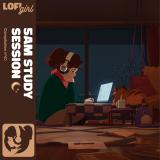
It’s 5 AM, the world is still quiet as dawn begins to rise. While most are asleep, a few of us are in the final stretch, finishing last edits or easing into the day, surrounded by scattered notes in the living room with a sleepy cat nearby.
5 AM Study Session is a tribute to the early risers and the night owls. This collection of 34 tracks carries early-morning focus and momentum, guiding you through the quiet and setting the tone for the day ahead. Sunlight slowly peeks in as the melodies play, creating a soundtrack for productivity and peace.
The physical edition captures the warmth of a fresh cup of coffee: pressed on double "Morning Latte" marble vinyl, the swirling beige and brown tones mirror the cozy, studious atmosphere of the artwork. A tangible reminder that the best work often happens when the world is still.
Slip on your headphones, pour a hot drink, and let the sunrise guide your workflow.

5
Der legendäre Italo Disco Hit „Shanghai“ von Lee Marrow aus dem Jahr 1985 feiert sein Comeback – jetzt als streng limitierte Maxi Single auf farbigem Vinyl. Diese exklusive Veröffentlichung vereint authentischen 80er-Jahre-Sound mit modernen Neuinterpretationen und ist ein echtes Highlight für Fans des Genres.
Seite A enthält die Originalversion von Shanghai, die mit ihrem treibenden Beat, markanten Synthesizern und unverwechselbarem Italo-Disco-Feeling bis heute begeistert.
Auf Seite B erwarten euch brandneue Remixe von Saint Tropez Caps, die dem Klassiker frische Club-Energie verleihen und gleichzeitig den Charme des Originals bewahren.

- 1: United We Stand
- 2: Fuck The Upper Class
- 3: P.o.l.i.c.e
- 4: Life Through A Stereo
- 5: Kids Of The Street
- 6: Boot Up Your Ass
- 7: Mr Greed
- 8: Passa Dig!
- 9: Comin' Home
- 10: Street Punk Bop
- 11: Praise That Working Man
- 12: Scum
- 13: Guns Of Gothenburg
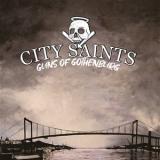
Ready for 10 Years since "Guns of Gothenburg"? Here's the last collector's reissue of the "rare and sold out since years"-CS albums on vinyl! The Swedish Punkrockers often heard that their 3rd album "Guns of Gothenburg" is still their best release! The combination of riot street punk, pub rock anthems, some high energy glam-elements and melodic rough'n'tough Oi! was considered as an absolute genre-highlight 2016 "Guns of Gothenburg features 12 songs like "Kids from the Streets", "United we stand", "Fuck the Upper Class" or "Street Punk Bop", which is still the encore-highlight at every City Saints show Stefan, singer and bandleader about the new release: "When we released Guns of Gothenburg on CD back in 2016, we felt that the songs were good, but we soon began having doubts about the mix of the album. In 2017, when we were approached to release it on vinyl, we had it remixed and remastered with a new song order. This version never made it onto the streaming services, and the limited edition of the LP has been out of print for a long time. Now we're thrilled to present this re-release of Guns of Gothenburg. The original painting used for the cover has been dusted off and restored and the recording has been remastered once again to bring it closer to our original vision. We sincerely hope you enjoy it. "Guns of Gothenburg" comes on 180gr. strongly limited vinyl in classic black and two multi-colored variants (only 333 copies all in all)
13
Ready for 10 Years since "Guns of Gothenburg"? Here's the last collector's reissue of the "rare and sold out since years"-CS albums on vinyl! The Swedish Punkrockers often heard that their 3rd album "Guns of Gothenburg" is still their best release! The combination of riot street punk, pub rock anthems, some high energy glam-elements and melodic rough'n'tough Oi! was considered as an absolute genre-highlight 2016 "Guns of Gothenburg features 12 songs like "Kids from the Streets", "United we stand", "Fuck the Upper Class" or "Street Punk Bop", which is still the encore-highlight at every City Saints show Stefan, singer and bandleader about the new release: "When we released Guns of Gothenburg on CD back in 2016, we felt that the songs were good, but we soon began having doubts about the mix of the album. In 2017, when we were approached to release it on vinyl, we had it remixed and remastered with a new song order. This version never made it onto the streaming services, and the limited edition of the LP has been out of print for a long time. Now we're thrilled to present this re-release of Guns of Gothenburg. The original painting used for the cover has been dusted off and restored and the recording has been remastered once again to bring it closer to our original vision. We sincerely hope you enjoy it. "Guns of Gothenburg" comes on 180gr. strongly limited vinyl in classic black and two multi-colored variants (only 333 copies all in all)
13
Ready for 10 Years since "Guns of Gothenburg"? Here's the last collector's reissue of the "rare and sold out since years"-CS albums on vinyl! The Swedish Punkrockers often heard that their 3rd album "Guns of Gothenburg" is still their best release! The combination of riot street punk, pub rock anthems, some high energy glam-elements and melodic rough'n'tough Oi! was considered as an absolute genre-highlight 2016 "Guns of Gothenburg features 12 songs like "Kids from the Streets", "United we stand", "Fuck the Upper Class" or "Street Punk Bop", which is still the encore-highlight at every City Saints show Stefan, singer and bandleader about the new release: "When we released Guns of Gothenburg on CD back in 2016, we felt that the songs were good, but we soon began having doubts about the mix of the album. In 2017, when we were approached to release it on vinyl, we had it remixed and remastered with a new song order. This version never made it onto the streaming services, and the limited edition of the LP has been out of print for a long time. Now we're thrilled to present this re-release of Guns of Gothenburg. The original painting used for the cover has been dusted off and restored and the recording has been remastered once again to bring it closer to our original vision. We sincerely hope you enjoy it. "Guns of Gothenburg" comes on 180gr. strongly limited vinyl in classic black and two multi-colored variants (only 333 copies all in all)
- Erg
- Dras
- El Khela
- Xilitla
- Estado
- Rub' Al Khali
- Pulque
- White Dwarf
- Mazil
Alex Zhang Hungtai steht auf ,Dras" still da, aber es ist eine Stille, die jede Menge Möglichkeiten hat. Diese neun Stücke wurden 2019 in der Saint Joseph Oratory in Montreal aufgenommen (kurz bevor ein Klavier kaputtgemacht wurde) und lagen während der Pandemiejahre auf seiner Festplatte, bis endlich der Funke übersprang. Was jetzt entsteht, fühlt sich an, als würde man jemandem dabei zusehen, wie er die Konturen seiner eigenen inneren Landschaft nachzeichnet, wobei jede Melodielinie eine sorgfältige Auseinandersetzung mit dem Unbewussten ist. Dies ist nur im weitesten Sinne ein Saxophon-Album. Das Terrain hier ist taktil und unerbittlich. Im Titeltrack werden schwierige Melodien auseinandergerissen und zu emotionalen Drones geformt, wobei Dissonanzen ineinandergreifen, während Töne mit metallischem Glanz ihren Weg durch die Sinne bahnen. ,El Khela" bricht sich in spektrale Schichten, die mit ewiger Schwerkraft ziehen, während ,Estado" Trost in seiner eigenen Dunstglocke findet, mit Rhythmen, die kaum hörbar sind, aber mit ihrer Kadenz, die sich an grauen Wänden abzeichnet, vorwärts führen. Es sind kleine Momente, die zu kathartischen Klangatmen werden und jeweils neue Passagen durch die psychische Geografie offenbaren. Es liegt Schönheit in den subtilen Wiederholungen des Openers ,Erg" und in den leuchtenden Progressionen von ,White Dwarf". Zhangs Saxophon wird zu einer Wünschelrute für das Unbekannte, während Elektrizität durch die Adern des Albums fließt und sein Atem alles an etwas wortlos Menschlichem verankert. Die digitale Bearbeitung dieser Kirchenaufnahmen verdeckt nicht das menschliche Element von ,Dras". Sie verwandelt das Rohmaterial in etwas, das zwischen äußerem Raum und innerer Landschaft navigiert. Als der Schlusssong ,Mazil" kommt, lässt Alex Zhang Hungtai sein Saxophon seine volle Resonanz entfalten. Tiefe, kehlige Klänge öffnen sich wie Abgründe unter melodischen Konstellationen, die in dichter Schwerkraft schweben. Hier herrscht Endgültigkeit, auch wenn sich etwas in diesen Passagen schwerelos anfühlt. Diese Musik ist durchdrungen von innerem Dialog, einem wortlosen Zauber, der über dem psychischen Abgrund tanzt. Tonale Sequenzen zerfallen in betäubende Klänge, eine scharfe, elegante Kante, die schneidet, ohne Blut zu vergießen. Dieses einsame Werk der Erforschung wird zu etwas Gemeinschaftlichem. ,Dras" ist eine Karte, um den Raum zwischen dem, wo wir sind, und dem, wo wir hingehen könnten, zu durchqueren.

- A1: The End
- A2: Polonium
- A3: It's All Over
- A4: Addis Abba Ft. Vinnie Paz
- A5: Imminent Danger (Interlude) Ft. Sunez Allah
- B6: Black Caesar Ft. General Steele & Maitre D
- B7: Spilled Sphinx Ft. Nejma Nefertiti
- B8: Bombardians Ft. Cf & Dontique
- B9: Think Dominant Ft. Skam2, Innocent & Maitre D
- B10: Water Seeds (Interlude) Ft. Eloh Kush
- B11: Masked Assassin
- C12: Tough Skin - Napoleon Da Legend Ft Skyzoo
- C13: Break The Chains Ft. Gregg Green
- C14: Kill Bots Ft. Passport Rav
- C15: Star Wars Ft. Crazy Dj Bazarro & Maitre D
- C16: Sinners And Saints
- C17: Mind War Ft. Goretex
- D18: G.a.m.o
- D19: System Error (Interlude)
- D20: Ultimate Power
- D21: Alan Wattage Ft. Ghost Machine
- D22: Save Point
- D23: The Beginning Ft. Bbass
23
G.A.M.O. (Gods Against Man's Oppression) recounts events leading to Napoleon Da Legend transformation after being bestowed a metal helmet, which is a weapon against our modern dystopia. The album features a blend of soulful and dystopic grit featuring the likes of Vinnie Paz, Goretex, General Steele, Skyzoo, Passport Rav, Nejma Nefertiti, Innocent?, SKAM2?, Eloh Kush, CF, Dontique and more. It has production from Dub Sonata, Maitre D, Homage Beats, Passport Rav Proffeny and Napoleon Da Legend. The result is 23 tracks that blend retro-sci fi "Noir Wave" and modern Boom Bap. It features an exclusive 2 page comic illustrated by UK's Dan Lish. Limited to 300 copies only.

- 1: Jumpscare
- 2: Star87
- 3: Misery
- 4: Blk Xmas Feat Bruiser Wolf
- 5: Waterproof Mascara
- 6: Counterclockwise
- 1: Corinthians Feat Despot
- 2: Pitchforks & Halos
- 3: All These Worlds Are Yours Feat Elucid
- 4: Maquiladoras Feat Al.divino
- 5: A Doll Fulla Pins Feat Yolanda Watson
- 1: Golgotha
- 2: Cold Sweat
- 3: Blk Zmby
- 4: Make No Mistake
- 1: Born Alone
- 2: Lead Paint Test Feat Elucid & Cavalier
- 3: Dislocated Feat Elucid
- 4: House In The Woods
19
also available
Vinyl[39,71 €]
GOLLIWOG is billy woods' first album in two years, preceded by 2023's Maps, his second collaboration with producer Kenny Segal. That nimble travelogue has little in common with woods' newest work, despite the fact that Segal shows up a couple times in the credits. GOLLIWOG is a haunting collection that weaves horror, humor, surrealism and Afropessimism into a cinematic tapestry, aided and abetted by a murderer's row of producers. African zombies, time traveling trap cars, malevolent ragdolls and a dying Frantz Fanon are just a few of the revelers in woods' danse macabre. GOLLIWOG features production from The Alchemist, Kenny Segal, EL-P, Conductor Williams, Preservation, Messiah Musik, Sadhugold, Ant (Atmosphere), Shabaka Hutchings, Steel Tipped Dove, DJ Haram, Willie Green, Jeff Markey, Saint Abdullah, and LA-based experimental jazz trio Human Error Club. Meanwhile, woods is joined on the mic by Backwoodz labelmates ELUCID and Cavalier, along with rappers Bruiser Wolf, Despot, Al.Divino, and singer-songwriter Yolanda Watson. GOLLIWOG is another triumph in the woods oeuvre, as layered and compelling as anything he has ever done. A black carnival pitched in a muddy field overnight, empty rides whirring and clattering in the dark.

Is the result of an unexpected and powerful connection between Meeks and Jedsa Soundorom.
Both have spent over 25 years immersed in music, coming from very different backgrounds but combining them to create something completely original.
Meeks, an experienced producer and beat-maker, made his mark during the French Touch boom of the early 2000s.
He worked with artists like Hernest Saint Laurent and Scratch Massive, earning respect for his attention to detail and his love of exploring sounds and textures.
Jedsa Soundorom, meanwhile, is a DJ and producer who’s traveled the world, always bringing new influences into his music and growing his unique style.
When they met a year and a half ago, it clicked right away. That connection became BUG DIVIsion, a project that blends Meeks’ careful precision with Jedsa’s raw energy, creating electronic music that feels both deep and natural.

- Eastern Wizard - Chant Of The Blue Wolf
- Maziri - Mi Silencio
- Idin Gorji / Mahdis Soltani - Sarv
- Nato (Fr) - Lonely
- Tamer Elderini - Mawlay
- Majnoon - Mektep
- Christos Fourkis - Aegean Myst
- Glender - Canto De Xisto
- Berk Ocal - Artsunkneri Gisher
- A X L - Awaly
- Marsey / Chris Bell - Reload
- Marco Tegui - Huayna Cocha
- The Saint - Mozanda
- Pablo Denuit - Timon
- Safar / Hind Ennaira - Janguariye
- Ravin / D-Compost - Champagne After Midnight
Mit Buddha-Bar XXVIII öffnet sich erneut das Tor zu einer Welt voller Eleganz, Sinnlichkeit und globaler Klangfarben. Die legendäre Compilation-Reihe, die längst zu einem internationalen Lifestyle-Phänomen geworden ist, präsentiert mit diesem Kapitel erneut einen Mix, der die Balance zwischen elektronischer Finesse, weltumspannenden Melodien und tiefen Chill- und House-Vibes meisterhaft hält. DJ Ravin, seit Jahren prägende Sound-Signatur des Buddha-Bar-Universums, führt Hörer:innen mit sicherer Hand durch eine Reise voller Atmosphäre und subtiler Spannung. Jeder Track reiht sich wie ein Mosaikstein in ein großes Ganzes ein - perfekt geeignet für entspannte Abende, stilvolle Lounges oder Momente der Entschleunigung. "Buddha-Bar XXVIII" steht exemplarisch für die besondere Kunst dieser Serie: Musik als Erlebnis, als Raum, als Stimmung. Eine Einladung, abzuschalten, einzutauchen und die Welt für einen Augenblick in warmen Farben zu hören.

- A1: Les Masques - Il Faut Tenir (1969)
- A2: Isabelle Aubret - Casa Forte (1971)
- A3: Christianne Legrand - Hlm Et Ciné Roman (1972)
- A4: Jean Constantin - Pas Tant D'chichi Ponpon (1972)
- A5: Billy Nencioli & Baden Powell - Si Rien Ne Va (1969)
- B1-: Marpessa Dawn - Le Petit Cuica (1963)
- B2: Jean-Pierre Sabar - Vai Vai (1974)
- B3: Sophia Loren - De Jour En Jour (1963)
- B4: Isabelle - Jusqu’à La Tombée Du Jour (1969)
- B5: Sylvia Fels - Corto Maltesse (1974)
- C1: Frank Gérard - Comme Une Samba (1972)
- C2: Ann Sorel - La Poupée Des Favellas (1971)
- C3: Charles Level - Un Enfant Café Au Lait (1971)
- C4: Andrea Parisy - Les Mains Qui Font Du Bien (1970)
- C5: Audrey Arno - Quand Jean-Paul Rentrera (1969)
- C6: Aldo Frank - T’as Vu Ce Printemps (1970)
- D1: Christianne Legrand - Cent Mille Poissons Dans Ton Filet (1972)
- D2: Clarinha - Lemenja (1970)
- D3: Hit Parade Des Enfants - Aquarela (1976)
- D4: Jean-Pierre Lang - Tendresse (1965)
- D5: Magalie Noël - Une Énorme Samba (1970)
- D6: Françoise Legrand - La Lune
Ever since the late 1950s bossa-nova revolution, Brazil’s influence on French music has been undeniable. Pierre Barouh, Georges Moustaki and a vast array of lesser known artists, all made the Musica Popular Brasileira (MPB) an axis of promotion at the service of a cool and metaphysical, modern and mixed Brazilian lifestyle. Some were seduced by the poetic languors of the bossa, some were looking for fun, and others just loved the American hybridization of jazz-bossa, jazz-samba.
What is bossa nova? One of its creators, Joao Gilberto said: "Its style, cadence, everything is samba. At the very start, we didn't call it bossa nova, we sang a little samba made up of a single note - Samba de uma nota so .... The discussion around the origins of bossa nova is therefore useless”. It is nevertheless useful to remember that these magnificent Brazilian songs, which the guitarist describes as samba, were shifted and balanced around improbable chords. "I like things that lean, the in-betweens that limp with grace," said Pierre Barrouh, quoting Jean Cocteau.
With emotion, arrangements for violin and supple guitar licks, bossa nova rapidly changed. A transformation that can be heard in the Tchic, tchic, French Bossa Nova 1963-1974 compilation, the result of a cultural reappropriation, which traveled through the United States and supplemented itself in France.
A musical revolution that has remained significant, bossa nova was born in Rio. From 1956 to 1961, Brazil lived through its golden years. In five years, the country had invented its modernist style. Elected president in 1956, Juscelino Kubitschek de Oliveira, an elegant man with a broad forehead, brandished a promising slogan: "Fifty years of progress in five years". He quickly got to work. Not worried about increasing debt, he launched the project for a new federal capital, Brasilia, designed by the communist architect Oscar Niemeyer. Volkswagen opened state-of-the-art factories and created the “fusquinha”, the Beetle. In Rio, the Vespa made its first appearance. The Arpoador Surf Club crew run into the “girl” from Ipanema, Helô Pinheiro - the tanned garota ("chick"), between a flower and mermaid, who at 17 walked by the Veloso bar, where the fiery author and composer, Tom Jobim and Vinicius de Moraes, were getting drunk on whiskey. From then on, bossa symbolized cool.
In 1958, Joao Gilberto recorded Chega de Saudade, which the directors of Philips denied, calling it "music for fagots". The marketing director, who believed in it, secretly pressed 3000 78-inch vinyls and distributed them at schools around Rio, creating a tidal wave.
American jazzmen then took over. In particular, trumpeter Dizzy Gillespie and guitarist Charlie Byrd. In November 1962, the Brazilian Ministry of Foreign Affairs funded a "Bossa-Nova" concert at Carnegie Hall in New York, inviting the genre’s pioneers. Unprepared, the show soon turned to disaster. But the troupe was invited to the White House by Jackie Kennedy. The first lady loved "the new beat" and in particular Maria Ninguem, a song by Carlos Lyra, later covered by Brigitte Bardot.
In Brazil, the 1964 military coup quickly ended this euphoria. The destructive atmosphere that ensued pushed many Brazilian musicians to leave, if not to exile. Thus, Tom Jobim, Sergio Mendes and Joao Gilberto arrived to the United States. In New York, Joao Gilberto met saxophonist Stan Getz. At the time, he was married to the Bahianese Astrud Weinert Gilberto, who had a German father. She had never sung before, but she knew how to speak English. Getz therefore asked her to replace her husband on The Girl From Ipanema. The Getz/Gilberto record with Tom Jobim on piano, was released in March 1964. Phil Ramone, the "pope of pop" was in charge of sound.
Bossa nova arrived in Paris through the classic “guitar-voice” channel (Pierre Barouh, Baden Powell, Moustaki…) But France loved jazz and Paris had already welcomed its American contributors. All these good people were to pass through Saint-Germain-des-Prés. The cabaret l'Escale became the Mecca of Latin American sound where one could find Pierre Barrouh and his friends, such as the Camara Trio, samba-jazz aces, whose only record was published by the Saravah label. With a band strangely called Les Masques (a band that included Nicole Croisille and Pierre Vassiliu, among others), the Camara Trio recorded an interesting Brazilian Sound, including the track Il faut tenir which is present on this tasty compilation of rarities.
Other enlightened musicians can also be found on the compilation, such as Jean-Pierre Sabar (songwriter for Hardy, Auffray, Leforestier ...) and the French pop rock organist Balthazar. In 1975, Sabar recorded Aurinkoinen Musiikkimatka on a Finnish label, which featured the crazy Vai, Vai, included on this record. We are now following the footsteps of Brazilian electronic musicians such as Sergio Mendes, Eumir Deodato or Marcos Valle who created funk and disco sounds on their keyboards and synthesizers. A style that influenced Véronique Sanson when she wrote Jusqu’à la Tombée de la nuit in 1969 for Isabelle de Funès, the niece of Louis and a great friend of Michel Berger - Sanson did end up singing this track on her 1992 Sans Regret record.
The pinnacle of exoticism and travel, Sylvia Fels’ Corto Maltese includes bongos, sea mist and ocean sounds. The title was taken from Jacky Chalard’s concept album written in 1974, Je suis vivant, mais j’ai peur (I am alive, but I am scared), based on Gilbert Deflez’s science fiction novel.
However, bossa nova extended the scope of popularity. "In the 1970s, I was a fan of Sergio Mendes, Getz / Gilberto. I fell in love with this music that I knew because I had been an orchestral singer, " explained Isabelle Aubret, who in 1971 delivered a composite record of covers by the very funky Jorge Ben, Orfeu Negro, Tom Jobim, Vinicius de Morais and Jean Ferrat. "I recorded this album for Meys Records in Paris, far from Brazil, with wonderful musicians, François Raubert, Roland Vincent, Alain Goraguer...". The latter wrote the arrangements for Casa Forte, a very percussive title borrowed from Edu Lobo, one of the initiators of the bossa who spent time in California. "Jazz and bossa came together and produced very rhythmic music. I love singing, it allows me to dream, to have fun, to feel a high on stage, and these songs brought me joy, made me swing, my singing felt like a dance.”
The world tours of French singers and their desire for the tropics, often brought them to Rio with its hills, forests, caipirinhas and tanned bodies. There are surprises though, like this Iemenja (Iemenja is the goddess of the sea in the Afro-Brazilian candomblé religion). Not unlike the composer and musician Jean-Pierre Lang, based in Sao Paulo, Claire Chevalier taught Brazil to Brazil. In 1970, the singer and painter published a 45-inch vinyl, Mon mari et mes amants (My husband and my lovers), under the improbable pseudonym of Clarinha (little Claire). She was then living in Rio, with her husband, Joël Leibovitz, who founded a band called Azimuth, and who owned a record label specialized in "sambas enredos" songs for samba school parades.
For its B side, she asked Pierre Perret to come up with lyrics for a song composed by Carlos Imperial: "Oh goddess of the sea, o goddess Iemenja, I bring a white rose to adorn your long hair ..." . "Perret came to see us, and we had fun, remembers Joël Leibovitz. We wrote Lemenja for fun, we recorded it at the Havaí studio, behind the Central do Brasil the central station. Erlon Chaves, the arranger who worked with Elis Regina, joined us" adding his share of Afro-Brazilian percussions and funky brass to the mix.
There is a common misunderstanding in Franco-Brazilian history: that bossa, admittedly hedonistic, is perceived as funny, even though the poets who wrote the texts are often philosophizing on the human condition. Its French interpreters pull it towards a carnival inspired universe, far removed from its fundamental essence. Thus, Jean Constantin covered the famous Samba da minha terra, an ode to the art of samba written by the classic Bahian composer Dorival Caymmi, renaming it with the enticing title of Pas tant de tchi tchi pompon: "On your pier there is no tchi tchi / when you arch your back, you know everything is alright ”(lyrics by Gérard Calvi). This expedited bossa aims for the absurd, but retains a certain elegance.
Indeed, Jean Constantin was not an idiot, the rather large man had a huge mustache and liked fantasy, (Les pantoufles à papa, Le pacha, inspired by cha-cha-cha-cha, salsa and jazz) but he was also the lyricist of Mon manège à moi interpreted by Edith Piaf, the composer of Mon Truc en plume by Zizi Jeanmaire and the soundtrack of François Truffaut’s 400 Blows. Le Poulpe, published in 1970, from which this bossa is extract, was arranged by Jean-Claude Vannier, an accomplice of Serge Gainsbourg’s Melody Nelson. In short: "There is enough of samba / By looking at the parasol / Because my poor cabeza / Is going to die in the sun".
Even the American actress Marpessa Down, who was at the heart of the bossa nova revolution with her role as Euridyce in Marcel Camus’ film Orfeu Negro, winner of the 1959 Cannes Palme d'or, fed the clichée with Je voudrais parler au petit cuica - "Tell me how you manage to always make people want to dance / It's true, I must admit that I cannot resist your magic" - in consequence, once can hear the cuica, a little drum inherited from the Bantu.
But bossa nova had many angles. Societal, of course, pushing actresses who were symbols of women's liberation like Brigitte Bardot, Jeanne Moreau, or Sophia Loren to engage in the exercise of accelerated bossa. In February of 1963, Sophia Loren made a record in French in Rome, Je ne t'aime plus, featuring the song De jour en jour, a bossa written by two Italians, Armando Trovajoli and Tino Fornai, which was released a little later by Barclay. Bossa accompanied the 1960s, a decade of moral liberation. Ann Sorel, who interpreted La Poupée des favellas, caused a sensation with L’amour à plusieurs, a provocative song written by Frédéric Bottom and Jean-Claude Vannier. As for the actress Andrea Parisy, she displayed her bourgeois cheekiness in Marcel Carné's Les Tricheurs before interpreting Les mains qui font du bien. And Magalie Noël, the friend of Boris Vian, who sung Johnny fais-moi mal, was hired to sing Une énorme Samba, composed by Alain Goraguer (arranger to Gainsbourg, Bobby Lapointe and Jean Ferrat) with lyrics by Frédéric Botton.
But in the end, of what wood is bossa nova made of? The answer is given by Christianne Legrand, daughter of Raymond the conductor, and sister to Michel the composer: "With me, with jà" - jà means "immediately" in Portuguese. In 1972, the singer, an expert in vocal jazz and a member of the Double Six, published Le Brésil de Christianne Legrand. Two songs included on the Tchic Tchic compilation that demonstrate how bossa, jazz, funk, rock, etc. work like a swiss army knife: the music is used to denounce broken systems, or miracles, HLM et ciné roman, Cent mille poissons dans ton filet, two songs from the O Cafona soundtrack, a successful telenovela broadcast, at the time in black and white, on TV Globo. The first was adapted in French by the fighter and friend of the Legrand tribe, Agnès Varda. The second is content with a play on words, jostling them into a summer fun.
Véronique Mortaigne
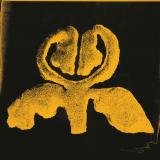
Artist and multi-instrumentalist Flaer looks to the landscape to explore pastoral melancholy on debut release, Preludes. It is released in a second edition black vinyl, with an alternate cover artwork.
Ensconced in his family home in rural Leicestershire in the early months of 2020, painter and musician Realf Heygate (b. 1994) picked up his childhood cello for the first time in several years and began to play. Setting himself parameters to only record onto 4-track tape with acoustic instruments – cello, piano and acoustic guitar – he assembled a suite of instrumental compositions that form the basis of Preludes, his debut album as Flaer and the inaugural release on Odda Recordings.
Channelling the tension and unease between the pastoral idyll of the English countryside and the darkness which lurks beneath the surface, the mini-album draws inspiration from the analogue aesthetic of 1970s folk horror films, weaving field recordings of birdsong, church bells and the natural environment into chimerical melodies that reflect on Heygate’s childhood experiences of rural England.
“It was really important not to isolate the sound from its environment,” he explains, describing the compositional and recording process as “site-specific”. Developed over a series of intuitive musical enquiries, the mini-album’s uncanny quality emerges from combining raw demo takes with overdubs of almost orchestral grandeur.
Heygate points to the final track as indicative of the work as a whole: “‘Follow’ really is the mantra for the release and embodies the practical approach I was taking to music making: not to force the music but see where it takes you.”
As a painter, Heygate’s practice takes artefacts through sequences of reproduction that embrace the fluctuating materiality of the copy. Since obtaining a degree in Fine Art from Central Saint Martins in 2017, he has exhibited solo at Peter von Kant and Springseason galleries in London, and has participated in group shows at Saatchi Gallery, Cob Gallery and Senesi Contemporanea.
Describing his artistic practice as one of self-erasure, music instead provides Heygate with a more personal and autobiographical outlet. Where the two worlds combine is on Preludes’ striking artwork, which features paintings of 13th century stone carvings from the font of the church in the town where he grew up.
Speaking to a time where people were connected to the land in a more profound way, each symbol is assigned to a track on the album, which Heygate likens to giving them a title.
“To add that one juxtaposition might open a whole new interpretation or language that might be hard to find otherwise,” he explains.“Over time it might reveal itself to you, which is why I'm excited about it being released. To throw them out there and see what comes of it.”
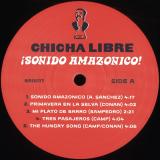
- A1: Sonido Amazonico 4 17
- A2: Primavera En La Selva 4 02
- A3: Mi Platto De Barro 2 21
- A4: Tres Pasajeros 4 04
- A5: The Hungry Song 4 06
- B1: El Borrachito 4 54
- B2: Pavane 3 46
- B3: Six Pieds Sous Terre 3 33
- B4: Un Shipibo En Espana 3 09
- B5: Indian Summer 4 58
- C1: La Cumbia Del Zapatero 2 41
- C2: Popcorn Andino 5 19
- C3: Yo No Fui 2 30
- C4: Gnossiene No 1 4 33
14
also available
Standard[29,20 €]
2024 Repress.
Chicha Libre’s debut album, Sonido Amazonico is finally available on vinyl in Europe. The double album contains all original tracks first published as a CD back in 2008. The vinyl edition is comprised of 3 sides of music, and a fourth side with an etching of iconic Venezuelan saint Jose Gregorio.
Chicha, Peruvian psychedelic cumbia, was first popularized outside of Peru by a compilation released by Chicha Libre's own Olivier Conan and entitled "The Roots of Chicha." The music proved popular around the world, being championed by people such as Elijah Wood, Matt Groening, Alex Kapranos and director Almadovar.
The Brooklyn band Chicha Libre started out as a tribute to Peruvian pioneers but quickly evolved into an original project which MTV has called “one of the world's preeminent Tropical Psychedelic band”. Indeed, while they remain true to their Chicha roots, Chicha Libre's quickly took a more psychedelic turn drawing from its members' alternative background.
Made up of Mexican, Venezuelan, French and American the band used surf guitar, organ sounds and Latin percussion to play a mixture of borrowed and homegrown sounds – but its music remains a freeform reinvention, not an exercise in nostalgic duplication.
The re-release coincides with the release of a new EP “Tequila y Aguardiente”, in collaboration with Son Rompe Pera and La Sonora Mazuren.

2
Water can retain or wash away memory; flowing or freezing. It gives life and shapes earth, while frozen imprints of an ancient past are waiting to melt – back into sound or fluid motion, or simply to dissipate and disappear. For their split release, Yoichi Kamimura and Olli Aarni offer two distinct reinterpretations of a performance recorded live at the Temppeliaukio Kirkko – a church in Helsinki built directly into solid rock and bathed in natural light – meditating on glacial landscapes and water cycles, using shared field recordings that bifurcate into two sonic visions of “ice journey”.
Yoichi Kamimura’s extensive recordings formed the bedrock of the original performance, notably from time spent on Suomenlinna Island just outside Helsinki in 2021, aiming to capture the remnants of the glacial movements that formed the area’s geology. Elsewhere, the voices of ringed seals, underground waterways of Kyoto, and icy rivers in Lapland from Kamimura’s library float in as well. “The small, charming, and gentle islands floating in the Baltic Sea—some with little cottages and restaurants—reminded me of the drifting ice in the Sea of Okhotsk between Japan and Russia,” describes Kamimura. Fragments of a Christmas choir creep in too, recorded at the church on Suomenlinna Island. Titled Kōri no ryokō , Kaimimura’s reinterpretation of the performance emphasises a shared future across all icy sea regions of the world: thawing ancient memories and the threat of disappearing entirely.
On Jäämatkailu, Olli Aarni presents his own expansive reworking of the same source material, heavily processed alongside his own field recordings from Vantaanjoki river and Suontee lake in Finland. “I was thinking about the processes of erosion, water carving rock, the prehistoric glaciers over the landscape in my own environment,” explains Aarni. The soundscape hums with both intimate details and macrocosmic flow, and a submersible bass rumble hinting at an iceberg far below the tip, morphing at time scales beyond human comprehension.
Side A is composed by Yoichi Kamimura using field recordings of drift ice (Shiretoko, Hokkaido, 2019–2022), the Lake Biwa Canal (Kyoto, 2020), the Therme Vals baths (Vals, 2017), spring water (a fountain next to Saint Benedict Chapel, 2017), a Christmas choir (Suomenlinna Church, Helsinki, 2021), ice in the Juutuanjoki River (Inari, 2021), and recordings from Yoichi’s and Olli’s concert (Temppeliaukion kirkko, Helsinki, 2021), KORG iPolysix, and KORG minilogue xd.
Side B is composed by Olli Aarni using the aforementioned sounds + field recordings of the river Vantaanjoki and the lake Suontee, sampled sounds, and a computer.

10
Die US-Kultband veröffentlicht ihr viertes Album.
Als die Idee für ein viertes Album (zum zweiten Mal) aufkam, war American Football klar, dass es düsterer werden würde. Nach einer einjährigen Welttour mit ausverkauften Konzerten zum 25-jährigen Bandjubiläum und der Veröffentlichung eines Coveralbums (mit Songs von Iron & Wine, Ethel Cain, Blondshell, u.a.) tat sich das Quartett mit Produzent/Toningenieur Sonny Diperri (My Bloody Valentine, M83, Kurt Vile) zusammen, um sein bis dato essentiellstes Album aufzunehmen. LP4 verbindet atmosphärische Soundlandschaften mit emotionaler Katharsis im Post-Rock-Stil. Anders als alles, was American Football bisher aufgenommen hat, fügt sie sich dennoch nahtlos in ihren stetig wachsenden und beeindruckenden Katalog ein. LP4 ist ein ambitioniertes künstlerisches Statement einer Band, die die Grenzen von Genre und Kultur immer wieder neu definiert. Es ist ein wunderschönes und vielschichtiges Album, das sich Zeit nimmt, seine Schönheit zu entfalten, während es gleichzeitig die dunkleren Seiten anklingen lässt, die sich so gut wie möglich verbergen. Das Album enthält Gastvocals von Brendan Yates (Turnstile), Wisp und Caithlin De Marrais (Rainer Maria).

- 1: Man Overboard
- 2: No Feeling
- 3: Blood On My Blood
- 4: Bad Moons
- 5: The One With The Piano
- 6: Patron Saint Of Pale
- 7: Wake Her Up
- 8: Desdemona
- 9: Lullabye
- 10: No Soul To Save
Die US-Kultband veröffentlicht ihr viertes Album.
Als die Idee für ein viertes Album (zum zweiten Mal) aufkam, war American Football klar, dass es düsterer werden würde. Nach einer einjährigen Welttour mit ausverkauften Konzerten zum 25-jährigen Bandjubiläum und der Veröffentlichung eines Coveralbums (mit Songs von Iron & Wine, Ethel Cain, Blondshell, u.a.) tat sich das Quartett mit Produzent/Toningenieur Sonny Diperri (My Bloody Valentine, M83, Kurt Vile) zusammen, um sein bis dato essentiellstes Album aufzunehmen. LP4 verbindet atmosphärische Soundlandschaften mit emotionaler Katharsis im Post-Rock-Stil. Anders als alles, was American Football bisher aufgenommen hat, fügt sie sich dennoch nahtlos in ihren stetig wachsenden und beeindruckenden Katalog ein. LP4 ist ein ambitioniertes künstlerisches Statement einer Band, die die Grenzen von Genre und Kultur immer wieder neu definiert. Es ist ein wunderschönes und vielschichtiges Album, das sich Zeit nimmt, seine Schönheit zu entfalten, während es gleichzeitig die dunkleren Seiten anklingen lässt, die sich so gut wie möglich verbergen. Das Album enthält Gastvocals von Brendan Yates (Turnstile), Wisp und Caithlin De Marrais (Rainer Maria).

The anonymous Only Music Matters crew serve up another EP of smoking sounds for discerning crowds. It's the smart sampling of a classic motif from jazz-house great Saint Germain that makes the opener 'AAA001A' so enchanting as a bluesy vocal drifts in and out of a dry, dubby, minimal tech beat. 'BBB001B' is more driving and gritty, a clipped tech cut to keep things moving in the dead of night, then 'BBB002B' brings another supple groove, this time with rays of synth rising out of the mix like the morning sun. Quirky sound designs and a skipping rhythm make it irresistible.


- A1: Eighteen Days
- A2: Sir Casey Jones
- A3: The Highest Tree
- A4: Deed I Do
- A5: Hide And Seek
- B1: Twig Folly Close
- B2: Lady Margaret
- B3: Cold Early Morning
- B4: Monday Morning’s No Good Coming Down
- B5: The Waterman’s Song To His Daughter
- C1: Seven Dials
- C2: Up The Hill
- C3: Quiet Joys
- C4: Would Be King
- C5: Stone Cold
- D1: Tell Me Tomorrow
- D2: Mary Anne
- D3: Dawn
- D4: Cod’ine
- D5: Flowers Of The Forest
“Released on Joe Boyd’s Hannibal label here was a band rooted in Thompson/Swarbrick Fairport but also a snatch of the Velvet Underground and a sprig of The Byrds. The Eighteenth Day Of May evoked a legendary era, and now they are a justifiably legendary band too.” – KLOF Mag
Beginning life as a trio in London, 2003, the original line-up consisted of Allison Brice (vocals, flute), Richard Olson (acoustic guitar) and Ben Phillipson (guitar, mandolin) before expanding the following year to include the rhythm section of Mark Nicholas (bass) and Karl Sabino (drums, autoharp) and finally Alison Cotton (viola).
This being the mid zeros, the independent music scene in the UK was reluctant to embrace a sun-dazed folk band but this, their sole album, has gradually feathered a bed of affection amongst international folk fans. Twenty years on, the album is now rightfully seen as a trailblazer for the myriad alternative/psych folk bands that emerged in its wake.
Andy Childs who signed the band originally takes up the story. “I first heard their music on a cover mounted CD with the much missed Comes With A Smile magazine and as far as I could tell no-one was making music like this anymore, certainly not with such panache and confidence. To my jaded ears it all sounded so uninhibited - old weird folk songs, Americana, original psych-folk, minimalist drones. Great melodies and all six of them could sing! A joyous, unfettered sound that could in one moment conjure up flashes of The Byrds and then effortlessly the spirit of Velvet Underground would drift through. They even covered a Spacemen 3 song. I loved the fact that they had the aplomb to tackle traditional folk songs like Lady Margaret and Flowers In The Forest and not be afraid to stamp their own identity on them.
Signing them to the Hannibal label was straightforward. If anything the album somehow sounds fresh and undated, even better than it did in the day when perhaps eclecticism was out of synch with the times; its subtleties have become more apparent.”
“Their rendition of Lady Margaret builds to a headswirling crescendo that challenges anyone who claims Shirley Collins, Buffy Sainte-Marie or Trees have recorded the definitive version and the hallucinatory The Waterman’s Song To His Daughter raises an already brilliant album to an unholy level” - IT’S PSYCHEDELIC, BABY Magazine

Italian DJ/producer Gledd delivers an EP of fiery afro edits for his first outing on Razor-N-Tape. Taking a deep dive into his crates of African Boogie, Highlife and Zouk fodder, the Saint Wax Records boss presents a driving and hypnotic 4-tracker primed for the floor with just the right amount of studio polish.

- 1: Angel
- 2: Freak
- 3: Grounded
- 4: Physical Stuff
- 5: Watch You Cry
- 6: Makeover
- 7: Looking Up I See A Cloud
- 8: Take Care Of Me
- 9: Light Span
- 10: Make Me Believe
- 11: Never Is Over
- 12: Shine It
Die Gegenkultur-Ikone Hyd bringt ihr zweites Album raus, voll mit dynamischen, abwechslungsreichen Popsongs. Hyd holt ihre kreativen Freunde mit rein, um die Musik zu machen, darunter Hudson Mohawke, Sophie, Finn Keane (der gerade ein mega Jahr hinter sich hat als Produzent für Charli xcx), Marcus Andersson, Saint Patrick und Sophies Bruder Benny Long. Das Artwork wurde vom Fotografie-Phänomen Michael Bailey Gates aufgenommen, die Vinyl-Schallplatte wurde vom Produzenten umru gestaltet und die Musikvideos wurden vom Schauspieler Bobbi Salvor Menuez gedreht. Hayden modelt regelmäßig für Courreges, Junya Watanabe und Balenciaga und wird von der Company Gallery (NYC) für ihre visuelle Kunst vertreten. Hyd war auch der Gründer von QT, einem Performance-Kunstprojekt, das aus Hayden, Sophie und AG Cook zusammensetzt und bei XL Recordings unter Vertrag steht. Hyds neues Album beschäftigt sich damit, was es bedeutet, sich zwischen Formen zu bewegen, eine Form zu übernehmen und sich gleichzeitig in eine andere zu verwandeln; queere Ökosysteme der Fürsorge. ,Als ich 2017 mein Augenlicht verlor, begann ich, anders zu sehen. In völliger Dunkelheit wird dir klar, dass du über deinen Körper hinaus existierst. Da habe ich angefangen, dieses Material zu schreiben."
14
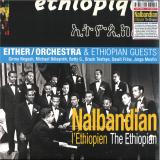
The Éthiopiques series returns! Essential archive recordings from an extremely fruitful period in Ethiopian music.
Before “Swinging Addis” took over the world, there was Moussié Nerses Nalbandian — the Armenian-born composer who shaped modern Ethiopian music. Mentor, arranger, and pioneer, he laid the foundations of Ethio-jazz.
This Éthiopiques volume revives his forgotten legacy, recorded live by Either/ Orchestra First issue ever with new exclusive photos and in depth liner 8-page insert.
“Ethiopian jazzmen are the best musicians that we have seen so far in Africa.
They really are promising handlers of jazz instruments.”
Wilbur De Paris
(1959, after a concert in Addis Ababa)
አዲስ፡ዘመን። *Addis zèmèn* **A new era.**
The time is the mid-1950s and early 1960s, just before "Swinging Addis" bloomed – or rather boomed – onto the scene. Brass instruments are still dominant, but the advent of the electric guitar, and the very first electronic organs, are just around the corner. Rock’n'Roll, R’n’B, Soul and the Twist have not yet barged their way in. Addis Ababa is steeped in the big band atmosphere of the post-war era, with Glenn Miller's *In the* *Mood* as its world-wide theme song, neck and neck with the Latin craze that was in vogue at the same period. Life has become enjoyable once again, with the return of peace after the terrible Italian Fascist invasion of Ethiopia (1935-1941). The redeployment of modern music is part and parcel of the postwar reconstruction. *Addis zèmèn* – a new era – is the watchword of the postwar period, just as it was all across war-torn Europe.
The generation who were the young parents of baby boomers** were the first to enjoy this musical renaissance, before the baby boomers themselves took over and forever super-charged the soundtrack of the final days of imperial reign. Music is Ethiopia's most popular art form, and very often serves as the best barometer for the upsurge of energy that is critical for reconstruction. Whether it be jazz in Saint-Germain-des-Prés or the *zazous* who revolutionised both jazz and French *chanson* after the *Libération*, be it Madrid's post-Franco Movida, or Dada, the Surrealists and *les années folles* that followed World War I, the periods just after mourning and hardship always give rise to brighter and more tuneful tomorrows. Addis Ababa, as the country's capital, and the epicentre of change, was no exception to this vital rule.
**Two generations of Nalbandian musicians**
Nersès Nalbandian belonged to a family of Armenian exiles, who had moved to Ethiopia in the mid-1920s. The uncle Kevork arrived along with the fabled "*Arba Lidjotch*", the** "*40 Kids*", young Armenian orphans and musicians that the Ras Tafari had recruited when he visited Jerusalem in 1924, intending to turn their brass band into the official imperial band. If Kevork Nalbandian was the one who first opened the way of modernism, pushing innovation so far as to invent musical theatre, it was his nephew Nersès who would go on to become, from the 1940s and until his death in 1977, a pivotal figure of modern Ethiopian music and of the heights it. Going all the way back to the 1950s. Nothing less. And it is Nersès who is largely to thank for the brassy colours that so greatly contributed to the international renown of Ethiopian groove. While the younger generations today venture timidly into the genealogy of their country's modern music, often losing their way amidst a distinctly xenophobic historiographical complacency, many survivors of the imperial period are still around to bear witness and pay tribute to the essential role that "Moussié Nersès" played in the rise of Abyssinia's musical modernity.
Given the year of his birth (15 March 1915), no one knows for sure if Nersès Nalbandian was born in Aintab, today Gaziantep (Turkiye/former Ottoman Empire) or on the other side of the border in Alep, Syria... What is certain is that his family, like the entire Armenian community, was amongst the victims of the genocide perpetrated by the Turks. Alep, the place of safety – today in ruins.
Before Nersès then, there was uncle Kevork (1887-1963). For a quarter of a century, he was a whirlwind of activity in music teaching and theatrical innovation. *Guèbrè Mariam le Gondaré* (የጎንደሬ ገብረ ማርያም አጥቶ ማግኘት, 1926 EC=1934) is his most famous creation. This play included "ten Ethiopian songs" — a totally innovative approach. According to his autobiographical notes, preserved by the Nalbandian family, Kevork indicates that he composed some 50 such pieces over the course of his career. This shows just how much he understood, very early on, the critical importance of song as Ethiopia's crowning artistic form. Indeed, for Ethiopian listeners, the most important thing is the lyrics, with all their multifarious mischief, far more than a strong melody, sophisticated arrangements or even an exceptional voice. (This is also why Ethiopians by and large, and beginning with the artists and producers themselves, believed for a long time — and wrongly — that their music could not possibly be exported, and could never win over audiences abroad, who did not speak the country's languages).
Last but not least, one of Kevork's major contributions remains composing Ethiopia's first national anthem – with lyrics by Yoftahé Negussié.
Nersès Nalbandian moved to Ethiopia at the end of the 1930s, at the behest of his ground-breaking uncle. Proficient in many instruments (pretty much everything but the drums), conductor, choir director, composer, arranger, adapter, creator, piano tuner, purveyor of rented pianos,... he was above all an energetic and influential teacher. From 1946 onwards, thanks to Kevork's connexion, Nersès was appointed musical director of the Addis Ababa Municipality Band. In just a few years, Nersès transformed it into the first truly modern ensemble, thanks to the quality of his teaching, his choice of repertoire, and the sophistication of his arrangements. It was this group that would go on to become the orchestra of the Haile Selassie Theatre shortly after its inauguration in 1955, which was a major celebration of the Emperor's jubilee, marking the 25th anniversary of his on-again-off-again reign.
At some point or other in his long career, Nersès Nalbandian had a hand in the creation of just about every institutional band (Municipality Band, Police Orchestra, Imperial Bodyguard Band, Army Band, Yared Music School…), but it was with the Haile Selassie Theatre – today the National Theatre – that his abilities were most on display, up until his death in 1977. To this must be added the development of choral singing in Ethiopia, hitherto unknown, and a sort of secret garden dedicated to the memory of Armenian sacred music, and brought together in two thick, unpublished volumes. Shortly before his death (November 13, 1977), he was appointed to lead the impressive Ethiopian delegation at Festac in Lagos, Nigeria (January-February 1977).
His status as a stateless foreigner regularly excluded him from the most senior positions, in spite of the respect he commanded (and commands to this day) from the musicians of his era. Naturally gifted and largely self-taught, Nerses was tirelessly curious about new musical developments, drawing inspiration from the very first imported records, and especially from listening intensely to the musical programmes broadcast over short-wave radio – BBC *First*. A prolific composer and arranger, he was constantly mindful of formalising and integrating Ethiopian parameters (specific “musical modes”, pentatonic scale, and the dominance of ternary rhythms) into his “modernisation” of the musical culture, rather than trying to over-westernise it. It even seems very probable that *Moussié* Nerses made a decisive contribution to the development of tighter music-teaching methods, in order to revitalise musical education during this period of prodigious cultural ferment. Flying in the face of all the historiographical and musicological evidence, it is taken as sacrosanct dogma that the four musical modes or chords officially recognised today, the *qǝñǝt* or *qiñit* (ቅኝት), are every bit as millennial as Ethiopia itself. It would appear however that some streamlining of these chords actually took place in around 1960. It was only from this time onward that music teaching was structured around these four fundamental musical modes and chords: *Ambassel*, *Bati*, *Tezeta* and *Antchi Hoyé*. A historical and musical “details” that is, apparently, difficult to swallow, especially if that should honour a *foreigner*. Modern Ethiopian music has Nersès to thank for many of its standards and, to this day, it is not unusual for the National Radio to broadcast thunderous oldies that bear unmistakable traces of his outrageously groovy touch.

French producer Yse Saint Laur'ant is exactly the sort of artist you want to hear from as the sun begins to shine more often. He's a master of escapist, beauty, classy grooves that marry disco and Balearic into pure magic. 'Space Ride' does that on a bubbly groove with a cosmic edge and 'Saint Tropez' brings loose-limbed funk and boho percussion to a Provencal sound. 'Monaco' is bathed in sunlight and made all the more classy with some gorgeous stings and mellifluous chord work then 'Esplanade' shuts down with a dubby, flute-led sound with a whimsical charm. Twenty First release on the much sought after Vinyl Only label.
