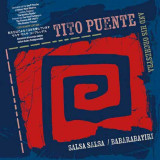
Cerca:salsa

A new 12” on Studio Barnhus from Sexy Lazer and Kaktus Einarsson, carrying dis4nguished Icelandic bloodlines into decidedly humid club territory. Across two tracks, the pair favor reduc4on over spectacle: taut beats, disciplined arrangements, and a strong sense of space, with the kind of detail that makes simple ideas hit with pure geyser force. While one side draws on 4ghtly coiled rhythms and freaky nocturnal tension, the flip sees the formula in its straightest, driest and most relentless form. Both sides moving with the calm confidence of a track that knows its DJ is expertly handling their task.

- A1: Fruko Y Sus Tesos - El Vidriero
- A2: Climaco Sarmiento Y Su Orquesta - Guiro Y Guacharaca
- A3: Afrosound - El Regresso De E.t
- A4: Los Corraleros De Majagual - Cumbia Campesina
- A5: Wganda Kenya - Shakalaode
- B1: Afrosound - La Sampuesana
- B2: Peregoyo Y Su Combo Vacana - Descarga Vacana
- B3: Fruko Y Sus Tesos - Salsa Na Ma
- B4: Wganda Kenya - Fiebre De Lepra
- B5: Latin Brothers - Duelo De Picoteros
- C1: Pedro Laza Y Sus Pelayeros - Navidad Negra
- C2: Afrosound - Carruseles
- C3: Los Alegres Diablos - La Magdalena
- C4: Latin Brothers - No Es Negra Es Morena
- D1: La Sonora Cienaguera - La Piojosa
- D2: Fruko Y Sus Tesos - Cantando Mi Son Muero
- D3: Juan Piña Y Sus Muchachos - La Nena
- D4: Afrosound - La Danza De Los Mirlos
- D5: Michi Sarmiento Y Su Combo Bravo - Salsa Con Monte
- D6: Conjunto Lirico Vallenato - Cumbia Cienaguera
20
Soul Jazz Records delve into the vast vaults of Discos Fuentes, one of the oldest and largest record companies in Latin America, known as "the Motown of Colombia". Discos Fuentes played a major role in spreading Afro-Latin sounds both to Colombia and around the world and this album explores that legacy. Latin Fire! features legendary Colombian artists such as Fruko, The Latin Brothers, Michi Sarmiento, Afrosound, Pedro Laza, Wganda Kenya and more and showcases the wide-ranging variety of styles that Discos Fuentes made unique to their sound. The album features music from the golden era of Fuentes; from late 50s and 1960s Cumbia through to the emergence of heavyweight and hardcore salsa and Afro-funk in the 1970s and up to the early 1980s.


- Meta Y Guaguancó
- Si Los Rumberos Me Llaman
- Cuando Suenan Los Tambores
- Galletana (Aka Calletana And Cayetana)
- Dulce Con Dulce
- El Sabio
- Caramelo A Kilo
- Mulence
- Yiri-Y Ri-Bom
- Sancocho E'güesito
- Invitación Guaguancó
- Tumba Tumbador
- Macho Cimarrón
- Rompe Saragüey
Classic Latin Tunes Became Sals Hits! Pablo Yglesias -aka DJ Bongohead- compiles Grosso Recordings an amazing serie with classics tunes from Caribbean music that became great successes of "Salsa". Some tracks have been remastered and restored, others are presented on vinyl again after many many years. "This is the four volume in our series on the Roots of Salsa...The main criterion was to pick tracks that sounded adequate for today's DJs to play at a gig or were sufficiently interesting (or enough of a surprise to fans of the later version) to merit inclusion. The other measuring stick was that they needed to come from the old-school, before the more modern era (from 1962 on) and all of its recording innovations and marketing strategies...for now, listen to these dozen gems and then go back to their more familiar cousins from recent times and compare and contrast, and we're sure you'll be enlightened and entertained." Liner notes by Pablo "Bongohead" Yglesias. Format and selection designed for DJs, collectors and general public.


- A1: Malavoi - Te Traigo Guajira
- A2: Los Caraibes - Donde
- A3: Tropicana - Amor En Chachacha
- A4: Ryco Jazz - Wachi Wara
- A5: Eugene Balthazar - Dap Pignan
- A6: Roger Jaffort - Oye Mi Consejo
- A7: Les Kings - Oriza
- B1: Les Supers Jaguars - Tatalibaba
- B2: Super Combo De Pointe A Pitre - Serrana
- B3: L'ensemble Abricot - Se Quedo Boogaloo
- B4: Henri Guedon - Bilonga
- B5: Les Aiglons - Pensando En Ti
- B6: Los Martiniquenos - Caterate
13
In Guadeloupe, many people think that jazz and ka music are like a ring and a finger. To some extent, the same could be said about so called Latin music and the music played in the French West Indies.
Both aesthetics were born in the Caribbean and bear so many connections that they can easily be considered cousins. In constant dialogue, there are lots of examples of their fruitful alliance and have been for a while. The English country dance that used to be practiced in European lounges came to be called kadrille in Martinique and contradanza in Cuba. They both featured additional percussion instruments inherited from the transatlantic deportation. Drawing from shared feelings about the same traumatized identity – later to be creolized – it would be hard not to assume that they were meant to inspire each other. The golden age of the orchestras that graced the Pigalle nights during the interwar period further proves the point. As soon as the 1930s, Havana-born Don Barreto naturally mixed danzón and biguine music in a combo based at Melody's Bar. In the following decade, Félix Valvert, a conductor who was born and raised in Basse-Terre in Guadelupe, also worked wonders in Montparnasse with La Coupole, which was an orchestra made up of eclectic musicians. Afro- Caribbean performers of various origins were often hired on rhythm and brass sections in jazz bands, which used to enliven the typical French balls of the capital. In the 1930s and onwards, Rico’s Creole Band was one of them.
Martinican violinist-clarinettist Ernest Léardée, who would become the king of biguine music as well as the main figure of French Uncle Ben's TV commercials (a dark stigma of post-colonial stereotypes), had musicians from the whole Caribbean sphere play at his Bal Blomet – and they all enchanted "ces Zazous-là" (according the words of Léardée's biguine-calypso piece). In les Antilles (French for French West Indies), music history started to speed up in the 1950s, when trade expanded and radio stations grew bigger. The Guadelupean and Martiniquais youth tuned in their old galena radio sets to South American and Caribbean music. As for the women traders, les pacotilleuses, they bought and sold goods across different islands (the "passing of items through various hands" was thought to be most pleasurable) and brought back countless sounds in their luggage. Such was the case of Madame Balthazar, who once returned from Puerto Rico with the first 45rpm and 33rpm to ever enter Martinique.
Out of this adventure was created the famous Martinican label La Maison des Merengues, a music business she opened and undertook with her husband and which proved to be a major landmark. At the end of the 1950s, in Puerto Rico, Marius Cultier competed in the Piano International Contest playing a version of Monk's Round 'Midnight. He won the first prize and this distinction foreshadowed everything that was to come. Cultier, the heretic Monk of jazz, was quickly praised for writing superb melodies, always tinged with a twist that conferred a unique sound to his music. It didn't take long for the gifted self-taught musician to get to play with Los Cubanos, making a name for himself thanks to his impressive maestria on merengues.
The rest is history. Besides, in the late 1950s, Frantz Charles-Denis, born into the upper middle class in Saint-Pierre and better known by his first name Francisco, went back home after working at La Cabane Cubaine – a club located rue Fontaine where he had caught the Latin fever. Francisco's music was therefore heavily marked by his Cuban cousins' influence, which gave the combos he led a specific style and also led to renewal. Things were swinging hard in La Savane, located in the main square in Fort-de-France. He set up the Shango club close by and tested out the biguine lélé there, a new music formula spiced up with Latin rhythms. Soon afterwards, fate had him fly to Puerto Rico and Venezuela.
As for percussionist Henri Guédon (percussions were only a part of his many talents), he was born in Fort-de-France in May 22nd 1944, the day marking the celebration of the abolition of slavery. As an old man, he could remember that in " his father's Teppaz, a lot of hectic 6/8 music was constantly playing...". In the opening lines of his Lettre à Dizzy, a small illustrated collection of writings published by Del Arco, he highlighted the huge impact that cubop had on him as a teenage boy, around 1960. He eventually turned out to be the lider maximo in La Contesta, a big band steeped in Latin jazz. He was also the one who originated the word zouk to describe music which brought the sound of the New York barrio to Paris. It was the culmination of a journey that started in Sainte-Marie: "a mythical place for bélé, the equivalent of Cuban guaguancó". In the early 1960s, the tertiary economy developed to the detriment of agriculture. Yet rural life was where roots music emerged in Martinique and in Guadeloupe.
Record companies played a major part in the process of Latin versions sweeping across the islands – before reaching everywhere else. Producer Célini, boss of the great Aux Ondes label, and Marcel Mavounzy, both the head of Émeraude records - a firm which was founded in 1953 - as well as the brother of famous saxophonist Robert Mavounzy, were big names to bear in mind. Although there were many of them - all of whom are featured on this record - Henri Debs was definitely the major figure in the recording adventure. He proved to be so influential that he even got compared to Berry Gordy. In the mid 1950s, when he acquired his first Teppaz, he worked on his first compositions: a bolero and a chachacha. Then, he became the one man who made people discover Caribbean music, from calypso to merengue. He was among the first ones to rush out to San Juan, Puerto Rico, to buy records and distribute them through a store run by one of his brothers in Fort-de-France. He had members of the Fania All Star come and perform there, which he was madly proud about. He was also the first one to pay attention to Haitian music, such as compas direct and various other rhythms which would soon flood the market. As a result, many of the combos hitting his legendary studio would end up boosted by widespread "Afro-Latin" rhythms. However, he never denied his identity: gwo ka drums were given a major role, although they were instruments which had long been banned from the "official" music spheres. The present selection bears witness to such a creative swarming. Here are fourteen tracks of untimely yet unprecedented cross-fertilization: all types of music rooted in the Creole archipelago have found their way, whatsoever, to the tracklisting. Whether originating from the city or being more rural, they all go back to what Edouard Glissant, in an interview about the place of West Indian music in the Afro-American scope, called "the trace of singing, the one which got erased by slavery." "It is so in jazz, but also in reggae, calypso, biguine, salsa... This trace also manifests through the drums, whether Guadelupean, Dominican, Jamaican or Cuban... None of them being quite the same. They all point to the idea of a trace, seeking it out and connecting to each other through it. This is the hallmark of the African diaspora: its ability to create something new, in relation to itself, out of a trace. It may be the memory of a rhythm, the crafting of a drum, a means of expression which doesn't resort to an old language but to the modalities of it." The opening track features one of the emblematic orchestras of this aesthetic identity, criscrossing many music types from the archipelago. The 1974 Ray Barretto guajira – Ray Barretto was a major New York drummer influenced by Charlie Parker and Chano Pozzo – is magnificently performed by Malavoi, a legendary Fayolais group (i.e from Fort-de-France). Additionally, the compilation ends on a piece by Los Martiniqueños de Francisco. It symbolically closes the circle as it is a genuine potomitan of Martinique culture which also functions as a tireless campaigner for Afro-Caribbean music. Practicing the danmyé rounds (a kind of capoeiria) to the rhythm of the bèlè drum, it delivers a terrific Caterete, a kind of champeta of Afro- Colombian obedience which was originally composed by Colombian Fabián Ramón Veloz Fernández for the group Wgenda Kenya. The icing on the cake is Brazilian Marku Ribas, who found refuge in Martinique in the early 1970s, bringing his singing to the last trance-inducing track. These two "versions" convey the whole tone of a selection composed of rarities and classics of the tropicalized genre, swarming with tonic accents and convoluted rhythms. It is the sort of cocktail that the West Indians never failed to spice up with their own ingredients. For instance, the Los Caraïbes cover of Dónde, a famous Cuban theme composed by producer Ernesto Duarte Brito, has a typical violin and features renowned Martinique singer Joby Valente and his piquant voice.
The track used to be – or so we think – their only existing 45rpm. The meaningful Amor en chachachá by L'Ensemble Tropicana, a band which included Haitian musicians among whom was composer and leader Michel Desgrotte, also recalls how Latin music was pervasive in the tropics in the mid-1960s. They were the ones keeping people dancing at Le Cocoteraie in Guadelupe and La Bananeraie in Martinique. Around the same time, another "foreign" band, Congolese Freddy Mars N'Kounkou's Ryco Jazz, achieved some success on both islands by covering Latin jazz classics – such as their adaptation of Wachi Wara, a "soul sauce" by Dizzy Gillespie and Chano Pozo whose interweaving of strings and percussions can have anyone hit the dancefloor. How can you resist Dap Pinian indeed, a powerful guaguancó by Eugene Balthazar, performed by the Tropicana Orchestra and published by the Martinique-founded La Maison des Merengues? It also acts as a symbol of the maelstrom at work. Going by the name Paco et L'orchestre Cachunga, Roger Jaffory used to play guaguancó too: his Fania-inspired Oye mi consejo is one example of his style. Baila!!!!! Dancing was also one of the Kings' focus points. Oriza is a Puerto Rican bomba and a "classic" originally composed by Nuevayorquino trumpeter Ernie Agosto, which reserves major space for brasses, giving it a special sheen.
Emerging from the New York barrios crucible was also La Perfecta, a Martinique group originating from Trinidad, whose name directly references the totemic Eddie Palmieri figure as well as his own band, also called La Perfecta. Here they borrow Toumbadora from Colombian producer and composer Efraín Lancheros and interpret it by emphasizing percussions, which set fire to the track even more than the wind instruments. The same goes for Martinique's Super Jaguars, who use Tatalibaba – a composition by Cuban guitarist Florencio "Picolo" Santana which was made famous by Celia Cruz & La Sonora Matencera – as a pretext for sending their cadences into a frenzy. In a more typically salsa vein, the Super Combo, a famous Guadelupean orchestra from Pointe-Noire that was formed around the Desplan family and had Roger Plonquitte and Elie Bianay on board, adapt Serana, a theme by Roberto Angleró Pepín, a Puerto Rican composer, singer and musician also known for his song Soy Boricua. Here again, their vision comes close to surpassing the original. In the 1970s, L'Ensemble Abricot provided a handful of tracks of different syles, hence reaching the pinnacle of the art of achieving variety and giving pleasure. They played boleros, biguines, compas direct, guaguancó and even a good old boogaloo - the type they wanted to keep close to their hearts for ever, "pour toujours", as they sang along together in one of their songs. Léon Bertide's Martinican ensemble excelled at the boogaloo which had been composed by Puerto Rican saxophonist Hector Santos for the legendary El Gran Combo.
Three years later, in 1972, Henri Guédon, with the help of Paul Rosine on the vibraphone, tackled the Bilongo made famous by Eddie Palmieri. Such a classic!!!!! And so were the Aiglons, the band from Guadelupe: choosing to execute Pensando en tí, a composition by Dominican Aniceto Batista, on a cooler tempo than the original, they noticeably used a wonderfully (un)tuned keyboard in place of the accordion. On the high-value collectible single – the first one released by Les Aiglons under the Duli Disc label – there is a sticker classifying the track under the generic name "Afro". Now that is what we call a symbol. Jacques Denis

- A1: Cao Cao, Maní Picao
- A2: Burundanga
- A3: Dile Que Por Mi No Tema
- A4: El Que Siembra Su Maiz
- A5: Rico Changui
- A6: Mi Bomba Sono
- A7: Suavecito
- A8: Juntitos Tu Y Yo
- A9: Facundo
- B1: Yerbero Moderno
- B2: Me Voy A Pinar Del Rio
- B3: El Merengue
- B4: Baho Kende
- B5: Contestacion De El Marinero
- B6: Desvelo De Amor
- B7: Cuidate Bien
- B8: Baila, Baila Vicente
- B9: Palmeras Tropicale
Celia Cruz was the undisputed Queen of Salsa. 23 gold albums and seven Grammy Awards attest to her longevity and popularity, and she was active right up until the year before her death in 2003. Eight years later, the United States Postal Service celebrated her life and legacy with a commemorative postage stamp, one of five honouring Latin music greats. She was the most influential female in the history of Afro-Cuban Music (as the Virgin Encylopedia of `Popular Music termed her) and her music lives on. Enjoy this 180g vinyl release and dance and drink a toast to her memory.

SIDE A. J. Diggns - Saturday Salsa with sizzling brass, deep pocket percussion, and a groove that’s pure motion. Whether you’re rocking the decks or rolling at the rink, this one brings that feel-good energy straight to your soul. It isn't Saturday without the "De La Brilla", Glow in Spanish —
SIDE B. King Most – BALLA EDIT From Radio Havana to West Africa, the spirit of Latin rhythm crossed oceans, bouncing oc antennas and into the soul of a continent. On BALLA EDIT, King Most channels that deep cultural echo—an infectious blend of clave, funk, and highlife sensibilities, flipped with modern finesse and analog warmth. Made to ride at block parties, or sets where borders blur and rhythms rule. Global grooves, rooted deep. Pressed heavy. Played loud

4
A-Trak, Mele, Aroop Roy, Josh Ludlow, ALOT on Toy Tonics? Yes! The Berlin label comes up with a heavy package of remixes for Sam Ruffillo & Kapote’s „Robot Salsa“ EP. The Latin House EP by the 2 Italian producers. This stuff is the perfect floor fillers for the summer of 2025. While the Afrohouse wave has reached its peak and is becoming a bit „tacky“ a lot of underground DJs turned into playling different styles of latin music connected to electronic dance. And here we got Salsa and Boogaloo turned into 90’s house and indie dance. All of these will make the dancers get their hands in the air. Smiling faces and lot of endorphins secured.

- 01: Baton Feat. Phill Most Chill, Dillon & Kyza
- 02: Walker Mill Road Feat. Yu & Richard Halligan
- 03: The Gift Feat. Prince Po, U-George & Jazz T
- 04: Hits Hits Hits Feat. Jehst
- 05: Perfect Match Feat. Large Professor, Tiye Phoenix & Nick Maxwell
- 06: Back In The Days Feat. Truck North & Richard Halligan
- 07: Aisle 9 Feat. Dynas
- 08: Get It Feat. Maddy & Wordsmiff Flip
- 09: Valiant Feat. Press1, Essa & Dr Syntax
- 10: Ego Juice Feat. Big Ole Lil Young Blaise
- 11: Influential Feat. Supastition & Boog Brown
Salsa Verde is the latest release from artist, Tom Caruana and, the newest instalment of Def Pressé’s series of projects made in partnership with KPM (and associated music libraries).
In 2021 Def Pressé entered into a deal with KPM whereby the deeper KPM and associated libraries can be used, exclusively, by Def Pressé. Sampled, replayed and reimagined, this vast catalogue has provided music for TV and Cinema for decades. Sampled, often illegally, by practically every Hip Hop producer ever, the library is available to select Def Pressé artists to utilise in order to create new pieces of music. This music is then fed back into the KPM/Sony AVI library for use in TV and Cinema, and the Def Pressé artist in question is then a KPM Artist in their own right. Completing the circle and hopefully providing music to inspire the new generation of beat makers/sample-based producers.
With several titles in the series, notable names like Blockhead, Damu the Fudgemunk and Stro Elliot since its inception in 2021, the Def Pressé Editions x KPM series, Crate Diggers continues into the seventh episode.
Producer & multi-instrumentalist Tom Caruana has been producing Hip Hop for over 25 years. Incorporating both samples and instruments in his production has helped him create a signature sound which covers a wide range of moods. He has produced quirkier and more humorous material for the likes of Dr Syntax & Professor Elemental, live production for his band Son Of Sam,
sample heavy material in a range of projects with MCs as well as notoriously remixing Wu-Tang Clan with The Beatles and Jimi Hendrix.
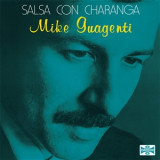
- Salsa Con Charanga
- Sonaremo El Tambo
- Delirio
- La Peluca
- La Puerta Del Dolor
- A Los Muchachos De Belén
- Ensaya Chamaco
- El Tibiri Tabara
"Salsa con charanga" is really a feast for all salsa music lovers, a true jewel, which deserved much better when it originally came out in 1978. In addition to being a great salsa album, has the distinction that was released on Orfeon, a Mexican record label, due to the diligent work of the extraordinary producer Bobby Marin, and which miraculously received air play when powerhouse Fania label and few others ruled radio in the salsa music world. It comprises eight great, solid tracks; some, new interpretations from other albums in which Mike Guagenti participated with his handsome and captivating voice - a crooner with a salsero soul -, that, at times, could remind us of the late Tito Rodríguez, and even Ray Ramos. "The Mike Guagenti album," as indicated by Marin, "is a compilation of recordings by other artists. Originally a salsa album, I brought in Cuban Pupi Legarreta (violin and flute) and [Panamanian] Mauricio Smith (flute) to give it a charanga sound." With the exception of the cut 'Salsa con charanga,' which is an instrumental, the rest feature vocals by Guagenti. "Salsa con charanga" has developed a cult following, and finding a copy of the original could be quite expensive. Luckily, this officially licensed and restored edition will fill that void.

“Salsa con charanga” is really a feast for all salsa music lovers, a true jewel, which deserved much better when it originally came out in 1978. It comprises eight great, solid tracks; some, new interpretations from other albums in which Mike Guagenti participated with his handsome and captivating voice - a crooner with a salsero soul -, that, at times, could remind us of the late Tito Rodríguez, and even Ray Ramos.
It In addition to being a great salsa album, has the distinction that was released on Orfeon, a Mexican record label, due to the diligent work of the extraordinary producer Bobby Marin, and which miraculously received air play when powerhouse Fania label and few others ruled radio in the salsa music world. It comprises eight great, solid tracks; some, new interpretations from other albums in which Mike Guagenti participated with his handsome and captivating voice - a crooner with a salsero soul -, that, at times, could remind us of the late Tito Rodríguez, and even Ray Ramos. "The Mike Guagenti album," as indicated by Marin, "is a compilation of recordings by other artists. Originally a salsa album, I brought in Cuban Pupi Legarreta (violin and flute) and Panamanian Mauricio Smith (flute) to give it a charanga sound." With the exception of the cut ‘Salsa con charanga,’ which is an instrumental, the rest feature vocals by Guagenti. “Salsa con charanga” has developed a cult following, and finding a copy of the original could be quite expensive. Luckily, this officially licensed and restored edition will fill that void.


PANORAMA Records is thrilled to announce the reissue of 'Salsa Na Ma' by the legendary Colombian band Fruko Y Sus Tesos. Known for their infectious rhythms and vibrant energy, this track captures the essence of salsa with a dynamic blend of percussion, horns, and vocals. Originally released in 1973, 'Salsa Na Ma' is a timeless classic that continues to ignite dancefloors, with the B Side 'El Preso' originally released in 1976, pairing nicely here.
Following the successful reissues of Gitte and Inger's electrifying cover of 'Can't Hide Love' and Gustav Brom's dancefloor gem 'Calling Up The Rain,' PANORAMA Records once again proves its dedication to bringing hidden musical treasures back into the spotlight. This limited 7 inch release of 'Salsa Na Ma' comes remastered and packaged in a vintage-styled sleeve, complete with a handstamp for an authentic feel, as if you found it in a dusty crate in Bogotá.
The label has garnered serious support from a stellar lineup of tastemakers and selectors in just the first 2 releases, including Patrick Forge, Rainer Trüby, Gilles Peterson, Zag Erlat, and more. This reissue is a must-have for collectors and dj's, promising to deliver a heavy dancefloor reaction. Don't miss out as Panorama Records continues to set the standard for quality reissues in the music world.
8
The Orquesta Broadway played a significant role in the evolution of Cuban music, and the album New York City Salsa’ stands as a testament to its creativity and lasting impact on the music scene. Released in 1978 on the Coco Records label, the album is often praised for its influence in merging different musical styles, including salsa and Afro-Cuban jazz. It features dynamic compositions and sophisticated arrangements that further solidified Orquesta Broadway’s reputation in the world of Latin music. Unavailable for many years, it is now released in a limited edition on TRANSPARENT DARK BLUE vinyl.

- A1: Perdiendo La Cabeza Vitín Avilés Y Su Orquesta
- A2: Oye El Que Sabe, Sabe Tito Rodríguez Y Su Orquesta
- A3: Oye A Moncho Mon Rivera Con Moncho Leña Y Sus Ases Del Ritmo
- A4: Que Corto Es El Amor Myrta Silva Y Orquesta
- A5: En Casa De Estanislao Belisario López Y Su Charanga
- A6: Papa Upa
- A7: Ocoricoco
- B1: Llegó El Dulcerito
- B2: De Media Caña
- B3: La Negra Tomasa
- B4: Torna A Sacramento
- B5: Si Armando Viene
- B6: El Figureo
- B7: 1Ponganse Duro
- C1: Yo No Era Así
- C2: Calletana
- C3: Espiritu Burlón
- C4: Canción De La Serranía
- C5: No Te Puedo Olvidar
- C6: El Juey
- D1: Tambó
- D2: Porque Me Critican
- D3: A La Loma De Belen
- D4: Carmelo
- D5: Mi Sazón Charanga Sensación De Rolando Valdés
- D6: El Que Se Fue, Sí Hace Falta
26
Erkundet das lebendige Erbe von Ansonia Records mit "Salsa Con Estilo", einer 2-LP-Compilation, die die Entwicklung der Salsamusik von ihren Wurzeln bis zum Höhepunkt nachzeichnet sowie eine Geschichte der New Yorker Salsa-Szene anhand der Musik aus dem Katalog des Labels bietet. Ansonia Records, ein wichtiges Familienunternehmen in der New Yorker Latino-Community, spielte eine bedeutende Rolle bei der Gestaltung der Latin-Musikszene. Unter der Leitung von Rafael "Ralph" Pérez veröffentlichte das Label vielfältige Klänge aus der Karibik und darüber hinaus, verpflichtete legendäre Musiker wie Arsenio Rodríguez und Myrta Silva. Die erste LP, "Roots of Salsa", stellt die tanzbarstenen Rhythmen und großen Refrains des Labels vor, die als Vorlage für viele folgende Salsa-Bands dienten. Die zweite LP, "Salsa Boom", endeckt versteckte Perlen des Salsa-Booms der 1970er Jahre vor, in dem sich Ansonia Records gegen größere Konkurrenten behaupten konnte."Salsa Con Estilo" ist nicht nur eine musikalische Reise durch die Entwicklung der Salsa, sondern auch ein Zeugnis des nachhaltigen Einflusses von Ansonia Records auf die New Yorker Salsa-Szene, die ihren Namen für immer in die Annalen der lateinamerikanischen Musikgeschichte eingetragen hat.

Hard-hitting Conguero, Johnny Blas has performed and recorded in the world of Latin music and jazz for over 45 years. He returns with his most recent and sixth musical production as a soloist, Salsa Para Ti. With a career spanning over 30 years, Blas has performed with distinguished artists sucha as Francisco Aguabella, Mindi Abair, Chuck Loe, Boney James, Evevlyn Champagne King, Max Bennett, Bobby Allende, Terry Gibbs, Dave Koz and Poncho Sanchez among many others. On the bongo, congas or timbales, Blas belongs to the cream of the crop. But in this instance he takes it further, by adding saxophone and flute solos to his percussion.
After his recordings A Night In LA (Dos Coronas, 1994), Skin and Bones (Cubop 1997), Mambo 2000 (Cubop 1998), King Conga (Cubop 1999) and Indestructible Spirit (Cubop 2007), Blas presents Salsa Para Ti, 11 pieces consisting of his own material plus some Jazz and Salsa classics such as Boranda, Round MIdnight and Baila Que Baila.
