Repress
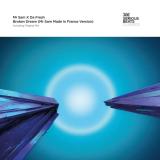
Sam Binga returns to drop his debut EP for Critical Music. Inviting back the infamous Redders for vocal duties, picking up where his trail blazing single AYO and the much loved 'Lef Dem' from Critical's 'Underground Sonics' LP left off. A deft combination of low slung beats and bass with a nod to the jungle tradition.
Cerca:sam c
Broken District is a new label launched by the creative minds of Jus Jam, Momla and Antwan. The project is born with the idea of exploring alternative music styles that blend the influences of the label's creators, including Jazz, House-Music, Hip-Hop, Funk, Soul, and more experimental sounds.
In order to give a global overview of the label's territory, Broken District kicks-off with a series of VA EPs, here delivering its second volume.
- A1: Debora
- A2: One Inch Rock
- A3: Ride A White Swan
- A4: Cosmic Dancer
- A5: Life's A Gas
- A6: Hot Love
- B1: Get It On
- B2: Jeepster
- B3: Telegram Sam
- B4: Metal Guru
- B5: Children Of The Revolution
- B6: Solid Gold Easy Action
- C1: 20Th Century Boy
- C2: The Groover
- C3: Truck On (Tyke)
- C4: Teenage Dream
- C5: Till Dawn
- C6: Light Of Love
- D1: New York City
- D2: Dreamy Lady
- D3: London Boys
- D4: I Love To Boogie
- D5: The Soul Of My Suit
- D6: Celebrate Summer
T. Rex - Gold brings together the Greatest Hits of Marc Bolan & T. Rex on 2LPs.
2x 180G Heavyweight LPs with Original Artwork housing the Very Best of Marc Bolan & T. Rex.
24 Classic Tracks including Get It On, Metal Guru, Hot Love, Children Of The Revolution,
Ride A White Swan, Telegram Sam, 20th Century Boy, & Cosmic Dancer.
- A1: Malta Bums - Mister Dj
- A2: Joint Effort - Then I Grew Up
- A3: Trine - Tie Me Down
- A4: Morning Reign - Can\'T Get Enough Of It
- A5: Red Mountain Supply Company - Together
- A6: Rex Garvin & Mighty Cravers - Strange Happenings
- B1: 1906 & Company - Freight Ryder
- B2: Band Of Gold - Like A Hurricane
- B3: The Penny Arcade - Funky Way
- B4: Sam Hankins & Ho-Dads - Shotgun
- B5: Animal Show Band - Tell Daddy
- B6: Big John K - Poor Souls
Part 1[14,08 €]
"a Heavy Selection Of Mod-rockers, Garage And Psych-funk Tracks," Runs The Sub-title Of New Compilation Series, Down In The Valley From Perfect Toy, Encapsulating In A Nutshell The Multifarious Pleasures On Offer.
Volume 2 Continues The Good Work Of Volume 1 With Yet Another Breathtaking Selection. Morning Reign's Previously Unreleased Can't Get Enough Of It Provides Big-ass Funky Thrills Along With This Volume's Only Cover - The Penny Arcade's Mod-funk Take On Funky Way. Next Come Two Frantic Garage-soul Cuts From A Pair Of Super-obscure Groups: 1906 & Company And Band Of Gold While Rex Garvin & The Mighty Cravers' Titty-shaking Instrumental Strange Happenings Slows Things Down To A Monster Shimmy With Retro Horror Movie Vibes. The Animal Show Band's Tell Daddy Provides The Male Answer To Etta James' Tell Mama And Rocks Just As Hard As The Original While Gino Scorza's Funk-tinged Soul Heater Little By Little (which He Originally Privately Pressed Himself) Gets Reissued For The First Time. Closing The Album Is A Real Treasure By Big John K In The Shape Of His Heavyweight Slab Of Soulful Blues-funk - Poor Souls.
Once Again, Chan The Man - Previously The Guiding Light For Perfect Toy's Down & Wired Series - Was The Driving Force Behind This Project. It Is His Incredible Knowledge, Combined With The Network Of Record Collectors, Djs And Vinyl Nerds That He Has Established Over The Past Few Decades Which Have Made It Possible To Come Up With Such A High-octane Selection Of Super-heavy And Extremely Rare Tracks. Accompanied By Detailed Liner Notes And Never-before-seen Photos Of The Artists, Down In The Valley 2 Sets The Bar High For Future Volumes.
(Disclaimer: release notes refer to the combined CD double-album release "Hot Flash: Best of The Voltags" on which all tracks appear together. "Electric Nightmare" and "Danger High Voltag" are released separately on vinyl format)
It does not happen that often any more that unreleased music from 40 years ago surfaces. Even more unlikely it is that the songs put on tape are such treasures. The Voltags were right at the forefront of the local Washington DC New Wave/Punk scene of the late 1970s. Influenced by Kraftwerk, Gary Numan, The Clash, and The B-52's, they have released only one 45rpm single during their existence. But during the time span of not even 18 months, they had recorded enough material for an entire album - but the songs remained in the can.
This is the story of The Voltags, a short-lived band which could have become famous and mentioned in the same breath as the aforementioned music legends of that era - if their songs had been released back in the day. Dive in and enjoy the sound of The Voltags, it is truly special. We here at Perfect Toy are thrilled to be label to finally release their work and we sincerely hope that they are finally getting the appreciation they so richly deserve.
Detailed information:
Dave Bennett and Hangnail Phillips grew up in Brookside Park, Newark, Delaware, USA, a small suburban college town nestled midway between Philadelphia and Baltimore. Their first band project evolved into Pump Productions (Pump) under which they released their only 45rpm single in 1970 (one of the two songs, "Pappy's Rug", can be heard on "Down & Wired 3", Perfect Toy Rec.). Soon after the recording of the single the two graduated from High School and disbanded Pump. Both moved on to form two new Newark bands. Dave was a founding member of "Snake Grinder & The Shredded Fieldmice" and Hangnail co-founded "Rudy Baker & The Vegetables".
In early 1979, two friends of Dave's, Nick Norris and Mike Fisher, became partners in a music production company, White Clay Productions. One of White Clay's first artists was Dave Bennett who had just written two excellent songs: "Electric Jungle" and "Son Of Sam". White Clay set up a recording session and Dave assembled a group of friends to record the songs. Before the recordings were even mixed, Dave asked Hangnail if he would join in a band to support the single and other songs he had written. When James Keesey (drums) and Rick Reid (bass) were added the line-up was complete. For a while they didn't have a name and then one day Nick Norris was looking at a photo of Dave standing next to a "Danger High Voltage" sign. Dave's head was in front of the E in Voltage and Nick laughed "Danger High Voltag" and so it was soon suggested that the band should be called "The Voltags" (pronounced Vol'-togs). After months of preparing a repertoire they were ready to play out. Their first gig was (October 20, 1979) at a gay disco in nearby Wilmington called The Backstage. On December 30, 1979, White Clay decided to put on a big show at the State Theater to celebrate the end of the Seventies ("The End Of The Decade Bash").
For the next year, with the help of White Clay, they recorded 19 songs, both studio and live recordings with White Clay's mobile unit. If not for these "off the board" recordings, many of their songs would have never been recorded. There was always talk of a second Voltags single but the strains of working so closely together were taking their toll on them and Dave decided to leave the group in December of 1980. The Voltags couldn't be The Voltags without Dave, and by the end of 1981, Hangnail, James and Rick, too, were ready to disband.
- all songs previously unreleased
- mastered from the original reel-to-reel tapes
- limited vinyl release
Gili Yalos selbstbetiteltes Album verbindet verschiedene Facetten äthiopischer Musik mit James Brown und Mulatu Astatke, Soul und Funk der Siebziger, Psychedelia und Ethio-Jazz. Die Songs werden von einnehmenden Rhythmen getragen. Groove, Beat und Flow vermischen sich mit einem großen Schatz
betörender Melodien und den Lyrics, die Yalo mit seiner einzigartigen Stimme auf Englisch und Amharisch
vorträgt. Für dieses wirklich außergewöhnliche Ergebnis arbeitete Yalo mit den Produzenten Beno Hendler
(Balkan Beat Box) und Uri Brauner Kinrot (Boom Pam, Ouzo Bazooka) sowie vielen talentierten Musikern aus
der quirligen Musikszene von Tel Aviv zusammen. Zwei Jahre hat Yalo an den Songs geschrieben, getrieben
von dem Wunsch, seine Wurzeln und Vergangenheit im Hier und Jetzt zu verankern. Damit gleicht "Gili Yalo"
der kreativen Aufarbeitung seiner eigenen Biografie. Und die ist nicht ohne: In der geheimen Operation
Moses floh er mit einer Gruppe äthiopischer Juden 1984 während der Hungerkatastrophe im Sudan zu Fuß in
Flüchtlingscamps, durch die Wüste hin zum gelobten Land. Dabei sang er für seine Familie. Es war die
Musik, die ihnen die Kraft gab, weiterzugehen.
On the Corner's DJ tool and eclectic favourite, Versus is back for a second instalment. There are some familiar faces occupying this tasty wax and some new comers pushing the needle further-out On the Corner.
As 2015's Versus sold-out we'd already acquired some fresh production talents and sent stems over to new and old friends alike.
Get your atlases out as we criss-cross the globe introducing you to artists from afar-afield as Nairobi, Manchester, Pune, Iringa, Detroit, and South London.
We kick off with Jinku, self-proclaimed space monkey hitting OtC wax for the first time. The producer is one-fifth of the East African Wave, a collective of young DJ Producers who are revolutionising the East African arts scene. As a 'sponge' of different influences, Jinku lays down a balearic reworking of fellow Nairobian, Makadem's 'Nyako'.
Of the returning artists none is quite as mysterious as the elusive and incomparable Black Classical - discordant-Ra-like organ meets Brazilian poly-rhythmic percussions bludgeoned with a heady slab of rave breaks make for 'Jeje': already a firm fave of Gilles Peterson.
Boundary pushing Contours brings a new swing to the 'Agama' groove, following the underground smash from Al Dobson Jr back where it all started with the release of Tamar Collocutor's first album in 2014.
Wonky psychedelic perambulations through the Traab al-Beidaan (Sahara) from Sam Jones who adds another construct to his mantle. Group as Salaam have a cassette release forthcoming and this construct comes from field recording sessions conducted during a feast out in the shadow of Africa's largest Windfarm by label head Pete OntheCorner. Vibes!
On the B-side, sprightly producer Daisho from the Indian hotbed of Pune brings a layered percussive heater hanging in the atmosphere with ominous synth b-lines and rightly tipped to be in the realms of and early Four Tet mover.
The release enters into a deeper shamanic dance territory in the final third: the beathead's elixir, M.I.X.G. and their massive xylophone (Embaire) are back and gets a heavy acid rerub as South London's FYI Chris appear OntheCorner wax again with
'Drop the beat'.
Peter Croce, head of Detroit's Rocksteady Disco brings it deep into the early hours for this euphoric 4am fix of OntheCorner's
afro-latin-electronic party experimentalists, Penya.
House music is a global love thang. Viennese label secret crunch releases its fourth EP and his 2nd various artists sampler, which unites producers from all over the world.
On Side A Vienna based Sam Irl opens with a jazz infused bouncy groove. "Come back" shines with its exciting musical diversity and suspense. Tijuana born Soul Of Hex alias Sebastian Vorhaus delivers a subtle rave vibe that grows into an uplifting groove.
On the b side Moff & Tarkin impresses with a subtle steady builder based on a funky baseline, fueled with floaty space sounds. Italian Clang 83 finishes in style with a deeper than deep banger.
Piyojo's work is an alternately contemplative and contorted journey through unconscious spaces in research of time' echoing electro-tribalism and ethereal minimalistic micro-music compositions
- A1: Enei - The Process
- B1: Break - In The Clouds
- B2: Sam Binga Feat. Eva Lazurus - Show U Something
- C1: Mefjus - Mirage
- D1: Kasra - Phases
- D2: Hyroglifics - Swish
- E1: Ivy Lab - Amber
- F1: Upbeats - Grasshopper
- F2: Foreign Concept - Breaking Again
- G1: Emperor - Bad Blood
- H1: Klax - The Mute
- H2: Halogenix Feat. Solh - Flames
- I1: Current Value - Leave Behind
- J1: Signal - Periphery
- J2: Shyun - Unfold
Critical Music reaches its 100th release in its 15th year, celebrating with the landmark album Fifteen Years Of Underground Sonics. Spanning the broad spectrum of drum & bass that the Critical sound represents, the exceptional 15 album is as bold as it is beautiful and looks to serve the test of time in the D&B history books.
>
Kasra Critical
On UKNOWYs latest release 'Homeless Soul Music' NEMOY delivers a trilogy of warm & unique house grooves further extending and developing UKNOWYs catalog of organic dance music. From the rolling and hard hitting banger 'We made it' to the percussive piece 'Particular Beat' to the laid back, bassline driven 'One for CKENZ' NEMOYs sophisticated blend of delicious synth- and samplework with additional remixes by Sam Irl & Chief makes for an overall exciting EP. Ranging from classic house cuts to afrobeat elements this crisp production will get into your head & legs!
Repress
Solid red 12 vinyl comes accompanied with a limited edition double sided 'Redders' Ep poster (insert). Vinyl purchase includes EP instrumentals as a digital download (Critical Store exclusive)
A man who guested on many a Critical release finally brings his very own EP with the hugeproduction backing of Gorgon Sound, Sam Binga, Hyroglifics and Moresounds. An onslaught of halftime bassline, dancehall and electronic twists in one EP ready to floor the room!
Our next release is a superb funky Latin double by Mr percussion Candido “Candido’s Funk” is great bass driven groove loaded with samples and latin horns, a perfect dancer for the dance floor. On the flip is “Soulwanco”, A very long awaited 7” delight uplifting percussive groove, more killer horns and bass lines, with a famous bongo sample at the start – a B-Boy / B-Girls delight. A MUST HAVE 45 for the collection
Hidden Spheres is a Rhythm Section mainstay for a reason: having released 3 EPs on the label, he has
developed his sound and fully emerged into a flow state. His residency at Public Records has enabled him to mould an EP perfect for any dancefloor, perfecting a Detroit indebted House style with influences from early Kerri Chandler and Ron Trent perfect for those heads down, hands-up moments.
Delivering 5 tracks that master dancefloor tension, it's difficult to pick a stand out. “Come On, Yeh” harks
back to the New Jersey House sound with dubby organ chord stabs and punchy 909 drums and a sublime bongo loop. “Don’t You Wanna” welcomes the house dancers, with a low-slung, heavily swung groove, resampled pads, and a deep spoken refrain that gives the track its title. Kicking off the B-side “Get Down” hits the subs, with unmistakably phat bass, moody strings and broad use of the iconic M1 organ bass patch “Organ2”. Followed by “I Feel Good” brings police sirens, 808s and swirling pads, to a glorious Deep House tune with a top chime motif that keeps the party moving. The final track of the B side, “You Don’t Know”, takes things down a notch, but maintaining the sublime tension with classic house piano chords and another wicked percussive loop.
Hidden Spheres has returned to his unadulterated House roots, with an EP that stays true to the classic sound. He has shaped an awesome body of work with character from deep spoken word samples, perfect use of dub sirens and grooves that can give any club a reason to invest in bigger
Those not familiar with Jones' style will listen slack-jawed at the sheer anticipatory nature of his sound collage. The five extended tracks are based on hypnotic and somewhat menacing grooves: a repetitive dub bass beat, waves of Middle Eastern strings and voices, layers of building hand percussion. The washes of sound and percussion come and go, often creating a sense of motion and change. All of the tracks are similar and even share elements. Mid-East tension is so accurately captured through the use of the region's instrumentation (especially percussion), sinister electronics, samples of men chanting, women crying, sounds culled from the horrors of war, and occasional angry distortion that the listener will be transported to the belly of the beast.
»Mullah Said« displays two aspects of the work of Muslimgauze. Firstly, musically, it is in the delightful drifting ambient vein. The percussion is mainly acoustic hand drums - providing a rhythm of aural features - the trademark shimmering string sound heard on a number of releases is much in evidence, rhythms are generally slower, there are lots of samples of people speaking in conversation, markets wherever. 'Mullah said' opens the disc with the lovely mix of these sounds. »Every Grain of Palestine Sand« continues the mood, with a slightly faster tempo, and more emphasis on the beat. But it soon locks into a mesmeric lassitude as various effects echo or smear the sounds, drums come in for short moments, different string sounds enjoin the play. »Muslims Die India« follows the mood though the voices seem darker, sadder, and then comes »Every Grain of Palestinian Sand« followed by »Muslims Die India«. Yes - not a typo, these tracks are repeated. Muslimgauze trend – to remix himself. Prime Muslimgauze middle eastern ambience - if you like that side you will love this album. The final track is short and different, a crackling ground over which a singer chants a song interrupted by machine-gun percussive bursts - »An End«.
For this edition, the label meets this duo of producers, that has been created by the musical synergy between Zonker and Daniel Gorziza, who go by the name – “SameSame”. This disc has been titled “Unconditional Society” and has been crafted with a mission to be brought to the worldwide dancefloors and to be foreseen by the adepts of the sound it conveys. The A side is opening with a deep trancey burner “Suspect Zero”, with time passing this side of the record is morphing into the prime-time speaker ripping sound of “Rip the Jacker. The B side will see more mellow feel to it and sometimes even could be said that the vibe turns relatively melancholic by the time the record reaches its natural conclusion. The words that have been shared do not translate the profoundness of the subject that the artists have carried through, but then again, sometimes them letters have to be present even if they are kept to the slightest. The frequencies communicate much superior to the words and by now you can stop reading this and immerse yourself into the sound.
One of the most innovative and ambitious albums ever made, Genioh Yamashirogumi’s Ecophony Rinne is a sonic masterpiece featuring over 200 musicians that expanded the limits of what music and sound could do.
Before Akira there was Ecophony Rinne. Originally released in 1986, Ecophony Rinne is a four-part symphony of “ecological music” by Geinoh Yamashirogumi that married ancient tradition with technological innovation, and changed the way we listen to music in the process.
Half-speed mastered at Abbey Road by Miles Showell, Time Capsule’s high-tech analogue reissue is the first to reproduce composer Ōhashi’s ground-breaking “Hypersonic Effect” theory on vinyl, cutting frequencies beyond the realm of human hearing into wax to capture the full spectrum emotional impact of this extraordinary work.
Founded by genius polymath Tsutomu Ōhashi aka Shoji Yamashiro, Geinoh Yamashirogumi is a shapeshifting collective of over a hundred members from across disciplines. Rejecting professional musicianship, Ōhashi cultivated an ethos where neuroscientists, psychologists, doctors, journalists, engineers and students could critique society through artistic expression and pursue their research in ethnomusicological performances that spanned global traditions, Eastern spirituality and Western classical form.
Ecophony Rinne represents the pinnacle of this vision - an expansive orchestral suite made with over 200 musicians that channeled Ōhashi’s thinking about mankind’s relationship with nature, and fundamental questions of life, death and rebirth.
Here pipe organ synths made from sampled Tibetan horns sit alongside field recordings from Central African forests, Buddhist mantras circle dummy head microphones, Javanese Jegog percussion ensembles pulse like verdant ecosystems, and the acoustics of temples, caves and landscapes are conveyed in the mix. Weaving together culture, nature and technology, it is a record that vibrates with the polyphony of life on Earth.
But Ecophony Rinne was not only musically innovative. Noticing the difference between vinyl and CD versions of the album where digital reproduction limited the sound, Ōhashi developed a theory of “Hypersonic Effect”, determining that ultra-high frequencies above 20khz can impact human perception even if they are inaudible. At once a physical and a psychological experience, to listen to Ecophony Rinne is to feel music differently.
The rest is history. After its release, Ōhashi was approached by director Katsuhiro Ōtomo to produce the soundtrack for Akira, the work for which Geinoh Yamashirogumi is best known. Emerging from the shadows at last, Ecophony Rinne was its transcendental blueprint, reissued in its most complete hypersonic form on vinyl for the first time.
Rather than describe nature, Ecophony Rinne embodied it. Rather than reflect culture, Ecophony Rinne defined it. Rather than explore technology, Ecophony Rinne changed it. As a work of art, it is more relevant than ever. You won’t have heard anything like it.
Analog Fingerprints Vol. 0 is a compilation bringing together the early 2000s works of Marco Passarani under his Analog Fingerprints alias, collecting key tracks originally released on Rome’s Plasmek and Pigna labels.
For Numbers, the story starts long before the label itself. In their formative years, digging in Glasgow’s Rubadub, Passarani’s records felt like dispatches from a future city. Releases on his own Nature Records and on labels such as Generator and Interr-Ference Communications were mind blowing: rooted in Detroit techno, Chicago house and electro, yet pushing somewhere new. Much like fellow travellers Autechre, who would remix him in 2001, Passarani’s music balanced machine funk with restless experimentation.
Information was scarce, and you would hear these records first on the dancefloor or at listening stations in shops like Rubadub. Print fanzines like Ear and early web outposts such as Forcefield offered only fragments. But there was a palpable axis forming between Detroit techno and a new European wave of record labels including Skam, Rephlex, Clone, Viewlexx and Nature itself. It was the sound that defined Saturday nights at Rubadub’s ‘69’ parties in Paisley, just outside of Glasgow.
Passarani’s records, in particular, were instrumental in bringing together the future Numbers co-founders. Richard had already booked him pre-Numbers; meanwhile Calum (Spencer) and Jack (Jackmaster), then 16/17 year olds working alternate Saturdays in Rubadub, were so enamoured with the Roman sound that they travelled to Rome for the Bitz Festival in 2003 to seek out Passarani and Lory D at their source.
The first Analog Fingerprints release landed as a 12” on Plasmek in 2001, following the fractured, IDM-leaning 6 Katun material. For Passarani, the project marked a recalibration. A DJ first and foremost, he had moved into production via early computer setups, from a Commodore Amiga through primitive PC audio, Cubase and Logic, later experimenting with Ableton. The IDM scene had offered a playground for trial and error, but there was always a tension between abstraction and the dancefloor. Analog Fingerprints became the bridge: still intelligent, but with more dance than distance. After years of broken beats and complex arrangements, he wanted directness without surrendering identity.
Working closely with Francesco de Bellis and Mario Pierro in the Pigneto district, the trio formed Pigna as a vehicle for reclaiming a more accessible dance sound, deliberately steering away from the minimal wave beginning to dominate Europe. Sessions were fast, instinctive, often stretching late into the night with friends dropping by. It was a studio as social space, production as collective energy.
“In that constant search for balance, Analog Fingerprints was my way of expressing something closer to the classic dance floor. The track 'Tribute' - a tribute to my favourite early Detroit techno track of all time, 'First Bass' by Separate Minds - came after I realised I had almost lost my connection with the dance floor. The simplest step was to take inspiration from early Chicago and Detroit and twist it in our Roman ‘Pigna’ way. My goal was to create more accessible dancefloor tracks by mixing my unconscious Italo roots with my teenage love for that early US sound, ensuring the result was as far as possible from the minimal sound that was starting to dominate everywhere.” - Marco Passarani
Technically, the Analog Fingerprints tracks span a transitional era: Roland TR-909, SH-101 and Alpha Juno hardware met early software experiments. A Novation Drumstation rack stood in for the unattainable TR-808, syncing with TB-303 and TR-606. Yet the true secret weapon was Jeskola Buzz, a tracker-style modular environment that allowed step-by-step parameter control and strange melodic constructions, later exported into the audio sequencer. Even the lead on ‘Tribute’ came from an early PPG Wave-style plugin. It was hybrid thinking at a moment when digital tools still felt unstable but full of possibility for technologists like Passarani.
Behind the music sat Finalfrontier, a loose Roman collective orbiting Nature and Plasmek. Distribution and production were intertwined; importing obscure records into Italy built connections with like-minded outsiders across Europe and the US. Expensive phone bills and fax machines forged an “electronix network” that linked Rome to Clone, Viewlexx, Skam, Rephlex, Rubadub and Detroit’s Underground Resistance. There was a shared sense of survival and resistance, of operating against commercial systems.
Passarani recalls “The first time I found a sheet of paper inside an Underground Resistance 12” with info about upcoming releases... and a huge picture of Spock on the back. Imagine that: you love the music, you love Star Trek, and there’s someone on the other side of the ocean sharing those same values and sounds. It was the perfect match. We even gave our original company the suffix ‘Finalfrontier’: that says it all.”
Feedback in that era arrived physically: distributor faxes, conversations with visiting DJs, the experience of playing abroad and meeting kids who had connected with the records. Glasgow became a key node in a scattered outlier network. Passarani personally brought the first two Nature releases to Fat Cat in London, playing them in-store. Shortly after, a fax arrived from Rubadub in Glasgow requesting copies.
“I still remember that phone buzz and the fax paper slowly sliding out, with someone I didn’t know saying they wanted 75 copies of Nature 001. Or like the time we got a fax from the Rephlex crew just saying, “Hello Nature Records, Keep up the good work.” That was how we knew the message was getting through. It was a fantastic feeling; just one piece of thermal fax paper as an analog notification - the mood for the entire week would change.” - Passarani
The connection to Glasgow has since stretched across generations. As Passarani reflects, links often fracture as scenes renew themselves, but in Glasgow something different happened. New and old mixed seamlessly. There was a visible trust in what came before, and a willingness to carry it forward rather than discard it. Observed from Rome, it was deeply encouraging.
Analog Fingerprints Vol. 0 captures that moment of exchange: Rome to Glasgow, Detroit to Europe, experiment to dancefloor. It documents an artist recalibrating his sound and a network of scenes discovering one another in real time, connected by vinyl, faxes and shared intent.
Memory Remains unveils a deeply emotional and intimate Unknown Artist release, a record driven by feeling rather than form.
Shaped and refined through careful dancefloor testing across 2025, these tracks revealed a rare sensitivity: minimalist structures wrapped in warm grooves, gentle tension, and soulful, intimate vocals that connect on a subconscious level.
This is music that doesn’t demand attention. It breathes, resonates, and stays.
Free from names and narratives, the release invites the listener into a private emotional space, where sound speaks louder than identity.
The journey is visually completed by an original artwork from Alisa Kirik, capturing the same fragile beauty and timeless mood that defines this release on Memory Remains.
- A1: Talla 2Xlc - Into The Wormhole (Ext Ended Mix)
- A2: Talla 2Xlc - Transmission (Extended Mix)
- A3: Talla 2Xlc - No Fate (Extended Mix)
- B1: Talla 2Xlc & Yakooza - City 2 City (Talla 2Xlc Extended Mix)
- B2: Talla 2Xlc Ft Bogart & Gable - The Dragon (Extended Mix)
- B3: Ultra - Free (Talla 2Xlc & Para X Extended Mix)
Vol. 1[18,28 €]
Techno Club Retro Vol. 2 – Vinyl Edition
Sechs legendäre Trance-Tracks aus den 90ern & 2000ern – in den erfolgreichen Talla 2XLC Reworks – auf exklusiv farbiger, streng limitierter Vinyl! Mit seinem Label Technoclub Retro! lässt Talla 2XLC unvergessene Trance-Klassiker mit viel Liebe zum Detail kraftvoll und emotional neu aufleben. Vol. 2 präsentiert die ersten sechs erfolgreichen Veröffentlichungen des Labels:
Side A:
• Dito – Shadows (Talla 2XLC Remix): Das Original aus 2000 – melancholisch und hypnotisch – erhält eine treibende Dynamik mit Gänsehautmomenten.
• Triple Concept – Tonetwister (Talla 2XLC Remix): Von 1998, bekannt für das ikonische NASA-Sample. Der Remix liefert eine wuchtige Bassline und modernes Clubfeeling.
• Alpha Breed – Epic Future (Talla 2XLC Remix): Ralphie B’s Meisterwerk von 1999, jetzt mit psytrancigen Akzenten – energetisch und atmosphärisch zugleich.
Side B:
• Talla 2XLC – Follow The Meteor: Ein Remake des Vectrex-Hits von 2004 – zwischen mystischem Drive und Adrenalinschub, perfekt für die Peak-Time.
• Plastic Angel – Schatten 2021 (Talla 2XLC & Para X Remix): „Schatten“ von 2001, neu aufgelegt von zwei Trance-Veteranen – emotional, druckvoll und voller Tiefe.
• Traveller – Bright Sign (Talla 2XLC Remix): Hardtrance trifft Psy – der 2002er Kulttrack bekommt fette Breaks, bunte Strings und kompromisslose Energie.
Techno Club Retro Vol. 2 ist eine kraftvolle Zeitreise durch die Trance-Geschichte – neu gedacht von einem Pionier des Genres. Für Liebhaber, DJs und Sammler gleichermaßen ein Statement auf Vinyl!
A label long synonymous with raw, off-centre electronics and uncompromising club tools, Bjarki’s bbbbbb recors welcomes a producer whose approach feels cut from the same cloth, London’s Henry Greenleaf. In an era where functionality often outweighs feeling, ‘Brawn’ is a record that doesn’t court approval; it insists on impact. Built for high-pressure systems and low ceilings, it channels force not as spectacle, but as design.
Greenleaf’s catalogue to date, spanning labels such as Par Avion, YUKU, and ARTS, sketches a restless trajectory between precision and collapse. His productions operate where rhythm becomes architecture: kicks land like poured concrete, subs buckle and flex beneath shifting percussive grids, and textures are stretched until they fray at the edges. Sound is treated as a physical material, layered and stress-tested, reshaped until the familiar mutates into something tactile and strange.
Across the EP, that philosophy takes full form. A1 ‘Brawn’ sets the tone with dense, piston-like drums and tightly coiled low-end pressure, balancing brute force with meticulous spatial control. ‘Jump Up To Be’ follows with a more fractured swing, percussive shards ricocheting across a framework that feels perpetually on the verge of rupture. On the flip, ‘Gawk’ strips things back to skeletal components, carving negative space between distorted pulses and menacing, warped rhythmic figures, before ‘UNTUNTUNT’ closes the record in driving fashion, delivering a raw, functional workout that reduces the groove to its bluntest, most hypnotic form.
True to the label’s ethos, ‘Brawn’ doesn’t chase trends or smooth its edges. It folds air and pressure into motion, pares club music down to its working parts, and leaves room for spontaneous chaos to erupt within the grid; moments where structure splinters, energy misbehaves, and control gives way just enough to keep things volatile. Engineered yet unpredictable, utilitarian yet unruly, the EP embodies the tension, unpredictability, and uniqueness that have long defined bbbbbb recors.
- A1: On Your Mind
- A2: Nguzo Saba (The Struggle)
- B1: Unknown Track #3
- B2: Sexy Mama
- B3: Ultima Linda
- C1: Earthquake
- C2: Dizzy Profile (Alt Take)
- D1: Let Me Be The One
- D2: Alicia
- E1: Samba De Romance
- E2: Naima
- E3: Kimba
- F1: I’m Really Gonna Miss You
- F2: Reflections Of My Past (Feat Dennis Tini)
DJ Amir takes another deep dive into the back catalogue of Detroit's legendary Strata Records to curate a 2nd volume in his Strata Records – The Sound of Detroit compilations. Whereas volume one took in the soulful edge of the Strata canon this volume, as Amir says, 'leans into the label's groovier, funkier edges whilst still celebrating its bold, avant-garde spirit.' DJ Amir's relationship to the Strata label has resulted in the release of the long lost Charles Mingus live 'Jazz in Detroit' box set released on BBE Music along with re-issues from The Lyman Woodard Organisation and re-imaginings of Strata's genre defying music by Berlin based DJ and producer collective, Jazzanova as well as remixes from Kai Alce, Wajeed, Henrik Schwarz, re.decay and DJ Amir himself and, of course, volume one of The Sound of Detroit. Featuring music from The Soulmates, Fito Foster, Keith Boone & Janice Coombs and The Contemporary Jazz Quintet amongst others, The Sound of Detroit volume 2 absolutely exemplifies the importance of Strata Records in the history of innovative Black music as well as its place in the cultural landscape of Detroit as a powerhouse city for art and music. Released by BBE Music in collaboration with 180 Proof Records as a triple vinyl LP and high res. digital download DJ Amir presents Strata – The Sound of Detroit volume 2 really is a gem of a compilation to grace any serious music head's record collection.
- A1: Bustin’ Loose - Soulbound (Extended Mix)
- A2: Bustin’ Loose - Soulbound (Dam Swindle Remix)
- B1: Magnolia & Sam Karlson - Abracadabra Ft. Relaye (Extended Mix)
- B2: Magnolia & Sam Karlson - Abracadabra Ft. Relaye (Phil Weeks Ghetto Mix)
- B3: Magnolia & Sam Karlson - Abracadabra Ft. Relaye (La Felix Remix)
Two original house cuts. One statement. Soulbound / Abracadabra lands as a double-header single as part of our new XPRESS Singles Series, bridging gritty South London soul with slick Franco-American house energy - a release designed for the salubrious moments on the dance floor.
“Soulbound” sees Bustin’ Loose deliver cutting-edge disco-soul infused house music straight from the concrete textures of South London. Sung and produced by Bustin’ Loose himself, the track rides a pumping, elastic bassline with warm strings and raw vocal emotion - modern house with classic soul DNA. Capturing the energy of London's expansive music culture, Soulbound is both uplifting, euphoric and street-wise. Inspired by the music of Fatboy Slim, rappers like JME and Ghetts and the club culture of London.
On the flip side, “Abracadabra” from Magnolia & Sam Karlson featuring LA wordsmith Relaye drips with French house sensibilities, blending glossy filters, catchy wah guitar and punchy grooves with razor-sharp rap vocals. Imagine Music Sounds Better With You colliding with the cool charisma of Q-Tip - hypnotic, stylish, and irresistibly repeatable.
The remix package pushes the release deeper into club territory:
• Dam Swindle transform Soulbound into a deep, bumping underground roller, rich in groove and late-night atmosphere.
• Phil Weeks delivers a signature Ghetto Mix of Abracadabra, crafted with his beloved MPC sampler - raw drums, stripped-back funk, and a pure nod to house music’s roots.
• La Felix closes the circle with a nostalgic, early-2010s-tinged deep remix of Abracadabra, balancing modern polish with timeless dance-floor warmth.
pdqb is an entity without a fixed form, moving through multiple timelines at once, performing in all of them simultaneously.
Every tone on this record was sampled somewhere else: in collapsed futures, unfinished pasts, and inside stress loops that never resolved. The tracks are not composed - they are retrieved, stitched together from moments that already happened and moments that haven't happened yet.
The music is unstable, dependent on who listens, and in which dimension, the tracks re-arrange themselves, revealing different harmonics, different fears, different exits. No two listeners hear the same, even if they play it at the same time.
The überskilled Detroit remixers provide a solution for Earthbound listeners - those unable to time-travel or shapeshift: By filtering pdqb's multidimensional signal through machine discipline, they force a temporary alignment - a version of a track that sounds the same to most listeners. Only then does collective rhythm become possible, a shared timeline where bodies on a dancefloor move to the same future at once.
---
Dr. Paul Dominic Quentin Bernard defines Future Traumatic Stress Disorder as a cognitive condition marked by a reversal of mnemonic orientation. Memory, in this model, no longer operates retrospectively but functions prospectively, encoding anticipated survival outcomes rather than past experience. Affected subjects do not recall what has been lived through; instead, they retain anticipatory memory structures of what will be survived. Bernard notes that this temporal inversion produces sustained psychological stress and warrants further empirical investigation.
Continuum - Vol. 16.219, Peer-Reviewed Scientific Journal
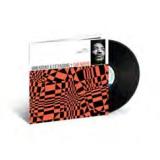
Stan Getz‘ Albumklassiker “Jazz Samba“ war ein derartiger Welterfolg, dass 1963 mit ”Jazz Samba Encore!” eine Fortsetzung folgte, allerdings diesmal nicht mit Gitarrist Charlie Byrd sondern dem legendären
Luiz Bonfá. Als Gäste glänzen hier Antônio Carlos Jobim und die Sängerin Maria Toledo, zu hören sind nicht
nur Titel aus Bonfás Feder, sondern auch drei Jobim-Klassiker, darunter ”Só Danço Samba” und ”Insensatez”. Die Wiederveröffentlichung dieser Latin-Jazz-Perle innerhalb der audiophilen Acoustic Sounds Serie
von Verve lässt den Hörer die musikalischen und aufnahmetechnischen Finessen des Albums perfekt erleben.
- A1: Mas, Que Nada!
- A2: Tim Dom Dom
- A3: Balança Pema
- A4: Vem Morena
- A5: Chove Chuva
- A6: É Só Sambar
- B1: Rosa, Menina Rosa
- B2: Quero Esquecer Você
- B3: Uála Uálalá
- B4: A Tamba
- B5: Menina Bonita Não Chora
- B6: Por Causa De Você, Menina
Jorge Ben’s 1963 debut, Samba Esquema Novo, introduced his infectious blend of bossa nova and samba, propelled by the timeless Mas Que Nada and Chove Chuva. While his later sound leaned more into rock and Afro-Brazilian rhythms, this album bursts with swirling melodies, rich harmonies, and big-band energy, all anchored by Ben’s distinctive, minor-key guitar work. A vibrant, era-defining classic.
- 01: De Alegria Raiou O Dia
- 02: Tudo Era Lindo
- 03: A Cruz
- 04: Hello Mr. Wonder
- 05: Bem Querer
- 06: Pra Que Vou Recordar O Que Chorei
- 07: Zé Marmita
- 08: Bichos E Crianças
- 09: O Metr?
Carlos Dafé (born October 25, 1947) is a singer and songwriter from Rio de Janeiro, recognised as one of the iconic voices of the Brazilian samba-soul era. Born into a family of musicians and trained at the conservatory, he rose to prominence in the 1970s alongside Tim Maia, Cassiano, and Hyldon, shaping the sound of Rio Noir with his warm baritone voice and soulful phrasing. His 1977 album, Pra Que Vou Recordar, became a cult classic among collectors and DJs worldwide, earning him the title of "Prince of Brazilian Soul." Still active today, Carlos Dafé remains an essential reference for artists exploring the boundaries between samba, soul, and MPB (Brazilian Popular Music). Released in 1977, Pra Que Vou Recordar reveals Carlos Dafé at the peak of his art, blending samba-soul, MPB, and the warm groove of the 1970s Rio de Janeiro scene. Surrounded by some of the city's finest musicians, Dafé showcases his baritone voice in deeply melodic arrangements and a series of songs that have become fan favourites. An album imbued with soul and elegance. The sound of BrazilianBlack music at its most sincere and timeless.
- A1: Abay
- A2: Tew Ante Sew
- B1: Mengedegna
- B2: Kahn
- C1: Sew Argen
- C2: Nafekeñ
- D1: Abet Wubet
- D2: Guramayle
- D3: Gud Fella
- D4: Guramayle (Slight Return)
180g Heavy double vinyl LP with liner notes by Tyran Grillo. Limited Japanese Obi for the first pressing. Original artwork by Russell Mills and photography by Jean-Baptiste Mondino.
The third Time Capsule is a body of dub reinterpretations by celebrated producer Bill Laswell of Ethiopian singer Gigi. Curated by Tokyo record collector, music researcher and seasoned reissue supervisor Ken Hidaka, it is the first time Illuminated Audio is pressed to vinyl after its CD release in 2003.
Ejigayehu Shibabaw was born in 1974 in Chagni, northwestern Ethiopia and by pursuing a career as a singer, went against her father’s strict, traditional gender roles. As Gigi, she embraced the same musical freedom she had strived for in her personal life, incorporating the Ethiopian church, funk, hip-hop, West and South African music into her work. She first settled in Nairobi, then Addis Ababa, where she quickly established herself as one of the city’s leading singers. A move to San Francisco in 1998 led to a long and fruitful creative partnership with bassist and producer Bill Laswell.
Around the same time, Chris Blackwell had stepped away from Island Records to start the art house film company and label Palm Pictures. He took an interest in Gigi and together with Laswell, pulled together an all-star cast of musicians for her self-titled US debut album, including Herbie Hancock, Pharoah Sanders and Wayne Shorter. It won international critical acclaim, not just for its musicianship but for making Gigi a “defining voice for the Ethiopian expatriate community”, as journalist Tyran Grillo praises in his Time Capsule liner notes. From the nation-defining 1896 victory over Italian invaders to the quiet revolutionaries who wear simple shemma garments, Grillo believes the themes in Gigi make it “a shower of sunlight on her homeland for those ignorant of its struggles.”
After its success, Blackwell encouraged them to go back into the studio to rethink the album and Illuminated Audio was born. “Anyone can make a voice sound worldly”, Grillo remarks, “but rare are those who can make one sound inner-worldly.” Gigi was clear with Laswell to give her vocals a minor role “because it’s already been done.” Instead her Amharic verse is fleeting, exhaling through the textures like ghostly fragments; soaring yet muted. Yet the album is still titled under her name, an assertion by Laswell of her central role in the album’s creation. Not only was it a fully endorsed project by Gigi, but she would be present throughout its development, giving feedback on half-finished ideas as Laswell played them back in the studio. “It works perfectly”, she reflected after the album’s release. “We wanted to capture the whole spirit of each track, and Bill’s remixes create a different music language that really puts you in a pleasant place”.
This new vocabulary takes its lead from a technical approach that Laswell had been perfecting during a furtive creative period at the turn of the millennium. Much like his ambient interpretations of Miles Davis (Panthalassa, 1998), Bob Marley (Dreams of Freedom, 1997), and Carlos Santana (Divine Light, 2001), Laswell approached Illuminated Audio by returning to the original multitrack masters. Gigi wasn’t just reworked, but recomposed into an expansive lattice of instruments, submerged in a watery ambience of dub and trance undercurrents.
Sonically, this new language that Gigi refers to, is manifested by the original album’s more understated parts being pushed to the fore. Explaining his contrasting methods, Laswell saw Gigi as being “put together in a way that fits”. Contrastingly, in Illuminated Audio, “a lot of things that I featured in the remix weren’t as audible in the original.” Instrumentation laying near-dormant, deep in the mix, are brought to the fore: the acid rock guitar and Wayne Shorter’s saxophone on ‘Tew Ante Sew’, Graham Haynes’ flugelhorn on ‘Nafekeñ’, Laswell’s bass on ‘Kahn’, the melodica in Mengedegna or the floating synths and talking drums in ‘Gud Fella’.
Brought to his attention by mentor DJ Nori, Hidaka describes Illuminated Audio as a “masterful sonic exploration into ethereal ambience and dub” and made sure this reissue also contained a full remaster to give its “deep musicality” much better dynamics and density in the overall sound. Hidaka admits that Laswell's music “is sometimes so out-there, it is often misunderstood” and, indeed, to dub album non-believers this might seem like a prolific producer imposing himself on another artist’s work; eternally developing rearrangements that never quite get to its destination. But that’s missing its true power and triumph. This is more than the reissue of a remix, but “a wholly unique musical entity”, as Hidaka describes. Illuminated Audio refers to the illuminated manuscripts that comprise the major part of Ethiopian art and its new compositions stand in proud solitude as a rare body of reworks that both informs and enhances their originals.
- A1: Legacy
- A2: First Step
- A3: Auditory Hallucination
- A4: Between Worlds
- A5: Healing
- B1: God Of War
- B2: Next Dimension
- B3: Through The Roof
- B4: Foggy Times
- C1: Thought Bubble
- C2: Dark Corners
- C3: Purgatory
- C4: Eyes Of A Ghost
- C5: Lump Sums
- D1: Overnight
- D2: Feeling Strange
- D3: The Climb
- D4: Problematic
- D5: Blind Faith
High Focus Records are proud to present the latest collaboration from Verb T & Illinformed. ‘Stranded in Foggy Times’ both continues and completes the trilogy that began back in 2015, with ‘The Man with the Foggy Eyes’, before broadening the horizons with last year’s release ‘The Land of the Foggy Skies’. This final chapter returns to the same conceptual landscape as its predecessors, but also sees Verb T & Illinformed returning to a more classic approach to album making. In spite of its concept, the Foggy Trilogy is something of a personal outpouring for Verb T, with the original aim being to vicariously discuss the trials and tribulations that play a part in his life, including his struggles with chronic illness and the feeling of alienation from leaving his hometown, while also reflecting on the state of the world as a whole. Their approach to making the album meant taking it back to the most natural form, where the idea for the track would be outlined, Illinformed would make the beat, Verb T would write to it and then they would tweak and adjust accordingly. The result is 19 of the most finely crafted tracks to emerge from the UK shores this year. As with the previous albums, ‘Stranded in Foggy Times’ finds Illinformed moving away from the more rugged sound that has shrouded the British scene over the last few months, thanks to his collaborations with the likes of Datkid and Wish Master, instead providing Verb T with an arguably more mellow backdrop. From the string and piano driven introduction on ‘Legacy’, to the blissful head-nod vibes of the closing track, ‘Blind Faith’, the union between beats and rhymes sits at the perfect level. The album also boasts one of the most impressive guestlists of the year, one that is very much a product of both players’ worlds. Thanks to Illinformed’s Bristol connection, there are features from the likes of Res One, Datkid, Leaf Dog, Smellington Piff and Chillman, as well as some locally sourced cuts from DJ Rogue. While on Verb T’s side of the fence, we have features from Rye Shabby and Moreone, along with a collaboration that reignites the same creative spark he found in his early days, as King Kashmere steps into the booth on Feeling Strange. All in all, ‘Stranded in Foggy Times’ does exactly what it sets out to do, by drawing the trilogy to a close while also providing insights into Verb T’s personal world and the world at large. The fact that it also happens to be one of the strongest rap albums of the year is the icing on the cake
- A1: Nobody Knows The Trouble I've Seen 3:22
- A2: Lost And Lookin' 2:09
- A3: Mean Old World 3:44
- A4: Please Don't Drive Me Away 2:12
- A5: I Lost Everything 3:19
- A6: Get Yourself Another Fool 4:00
- B1: Little Red Rooster 2:50
- B2: Laughin' And Clownin' 3:34
- B3: Trouble Blues 3:18
- B4: You Gotta Move 2:35
- B5: Fool's Paradise 2:32
- B6: Shake Rattle And Roll 3:22
Esteemed soul crooner Sam Cooke achieved much in a short space of time, notching 29 top-40 singles in his seven-year solo career. On Night Beat, released in 1963, Rene Hall’s tasteful arrangements allow Cooke’s voice to shine, most notably on ‘Lost And Lookin’; jump blues standards ‘Shake Rattle And Roll’ and ‘Little Red Rooster’ are playfully rendered, with Billy Preston’s organ on the latter. Originals ‘Mean Old World’ and ‘Laughin’ And Clownin’ remind of his strong song-writing ability and his spirited take of ‘Nobody Knows The Trouble I’ve Seen’ recalled his days with the Soul Stirrers. A prime album for all Cooke fans!
RareTwo Inc. aka DJ Sneak and Tripmastaz are back together for 33 chambers EP, the next Respect The Craft release.
Words by Sneak:
"On a hot Ibizan summer the Rare Two fellas spent a period of 33 days on the island making tracks in a house garage with a couple of pieces of affordable gear and a whole lot of talent. We managed to create 33 tracks often burning them on CD to take to djs like Ricardo Villalobos at Amnesia and seeing the instant reaction of the crowd. We are a mega team of same mentality dudes who create from the heart breaking all rules and getting music done for a purpose. The Tripmastaz and Sneak Team is one to expect many great dance floor killers. As we call them Guttah Styles!
Words by Tripmastaz:
Recently I found these projects and since they were done on just a laptop and cheap small speakers, I gave them proper analog mixing and mastering.
All tracks remain exactly the same form and arrangement as they were originally done, including track Aww Lawd, that was featured on R. Villalobos BBC Radio 1 Pete Tongs mix back in 2018.
Mike Grinser at Mandmade Mastering did the lacquer cut and made it sound very crisp and loud a lot like it would've been cut in the 90s.
Mysticisms’ Dubplate series reaches number 10 with the first in a series of specials, taking the genre blurring music of Persian and presenting updated remixes and versions by up-and-coming producers, as well as friends and family of the label.
Started as a sporadic offshoot of Mysticisms’ main releases, with the idea to highlight the wonderful sounds of dub influenced dance music, Dubplate has now become an integral part of the mission.
To start, South London’s Picasso joins the label, showcasing his declared abstract grooves and an EP of Dub and Tech House movers. While his productions aim for the dance floor, they are often characterized by complex rhythms and unconventional structures, prioritizing atmosphere and texture over traditional melodies.
Drawing inspiration from ambient, jazz, experimental influences and the heavy hand of dub, Sam “Andrews” McKay has crafted an EP of immersive “soundscapes”. Joining the legendary Persian (Peter Reilly) as co-selector, his retakes are all warped grooves, wide bass and dubby atmospherics.
Opening with Space Within Art, the street soul meets reggae rhythms are jettisoned, and a Dub House swing drives the track. The love, homage and vibration for Sound System culture remains, enchanting trippy reggae sampledelic vocals weaving in the brain.
Dunya 2 sees a shift, minds expanding. A jazz influenced breakbeat, harp, strings, building to a psychedelic swirl, driven by a dub bass in a clash, morph and glow.
The deep Digi Dub of D Dub Twist grows, warping the ‘JA riddim meets English hedonism’ in true Soundclash style. Touches of drone underlay, highlighting Sam’s experimental leaning, utilising Persian’s love of Eastern mystical samples to marry perfectly for a deep dub excursion.
The self-prescribed “odd-fellow” completes his versions, exploring his love of depth and abstract sound in closer, Jacob’s Dub. The warm roots vibrations in original form develop into a scatter gun House bumper. Dubwise, Lovers, Stepper, all merge around shuffling, trippy beats and skippy hats, Picasso’s groove is laid bare, driving the EP to finale.
Abstract the Mystery.
Death Is Not The End collaborate with Uzbek label Maqom Soul to deliver an LP counterpart to last year's mixtape of the same title, compiling specially picked & fully licensed individual belters from the ex-soviet studios of Central Asian republics between 1978 and 1989 - incl. Uzbek, Tajik, Kurdish & Uyghur artists pulling traditional folk motifs together with pop & rock and psych elements.
"These recordings do not form a smooth or coherent history. They feel more like a sequence of discoveries made at different moments and in different circumstances. Songs and instrumental pieces that once lived inside specific contexts radio broadcasts, philharmonic programs, touring routes now sit side by side, revealing hidden connections as well as clear fractures between them.
Nasiba Abdullaeva appears here as a voice from the end of an era. Trained within a conservatory system, she worked inside the format of the Soviet pop song while filling it with melodic logic that did not come from Moscow or Leningrad. Her voice is soft and sustained, shaped by Eastern melisma, and it never functions as decoration. Even in tightly structured songs there is a sense of resistance, an effort to preserve a musical language rooted in Uzbek tradition rather than fully adapted to an all Union standard.
The ensemble Sintez, later renamed Navo, represents a different path. Beginning as a student rock group, the band was gradually absorbed into the official VIA system with all its limitations and compromises. Yet it was precisely within those boundaries that Sintez and Navo developed a recognizable sound. Electric guitars and jazz rock harmonies do not overpower the folk material but remain in tension with it. Their recordings feel like negotiations between what the musicians wanted to play and what they were allowed to perform.
The Tajik ensemble Gulshan reflects an institutional approach carried to a high professional level. Formed under television and radio structures, the group treated folk material almost as a written score. Carefully constructed arrangements, close attention to orchestration, and restrained use of pop techniques define their sound. There is less spontaneity here, but a strong sense of discipline and structure, where national melody becomes part of a carefully controlled sonic framework.
Koma Wetan occupies a very different space. Formed in the 1970s, this Kurdish rock group approached poetry and folklore as tools of cultural assertion. Their psychedelic rock never feels like a stylistic borrowing. Instead it functions as a contemporary vessel for language and themes that might otherwise have remained unheard. Even today these recordings sound fragile and stubborn at the same time.
The Uyghur ensemble Yashlik, closely connected to a musical drama theatre, operated somewhere between stage performance and popular music. Their songs are built on folk melodies but shaped for wide audiences. What emerges is a constant attempt to preserve the recognizability of Uyghur musical identity without freezing it in a folkloric frame. Yashlik's music exists in a state of balance between representation and development.
Digging Central Asia does not attempt to establish hierarchies or offer a single wayof listening. Names and dates matter less than the sound itself. Tape noise, abrupt transitions, and unexpected timbres remain part of the material rather than flaws to be corrected. This music existed at the crossroads of multiple routes geographic, cultural, and ideological. Heard today in a new context, it no longer feels peripheral. Instead it stands as a reminder that the history of popular music is far more fragmented, layered, and polyphonic than it is usually allowed to be."
Alcides Neto is a Brazilian composer and multi-instrumentalist based in Narrm/Melbourne. Drawing inspiration from the folk traditions of his homeland, Alcides offers a fresh perspective on Brazilian music by blending traditional rhythms with contemporary Brazilian jazz, samba, bossa and more. Known for his distinctive percussive guitar playing and warm, soothing vocals, he brings an authentic Brazilian vibe to every performance. Alcides is set to release his debut album Amú via the Music in Exile label in early 2026, featuring eight original compositions recorded at Head Gap Studios, Melbourne. For fans of Gilberto Gil, Jorge Ben Jor, and all the Brazilian samba greats.
- 01: Maanitus &Amp; Tšiižik
- 02: Markka
- 03: Melkutus
- 04: Letška
- 05: Kuuen Parin Hoirola
- 06: Brišatka
- 07: Tšiižik
- 08: Kirkonkellot
- 09: Kirkonkellot Korkea
- 10: Hoirola, 3 Parin
- 11: Lippa
- 12: Kyngäkiža
- 13: Ristakondra
- 14: Vanha Polkka
- 15: Viistoista
- 16: Vanha Valssi
- 17: Kiberä
- 18: Maanitus Kuokan Kanteleella
- 19: Tuuti Lasta Nukkumahe
Vinyl[22,65 €]
Death Is Not The End present a further volume of Arja Kastinen's eerie amalgamations of 110 year old wax cylinders with her own meticulously transcribed takes, this time focussing in on Armas Otto Väisänen's field recordings of kantele player Iivana Mišukka (b. 1861 d.1919).
"Ivana Mišukka (1861–1919) was one of the Karelian kantele players recorded by the folk music researcher Armas Otto Väisänen on wax cylinders in 1916 and 1917. In the early 20th century, the remote areas of Border Karelia were undergoing the final phase of a transformation in musical culture, with the ancient runo song tradition giving way to newer forms of music. This transition is reflected in Mišukka's repertoire and choice of instrument. The ancient small kantele, hollowed out of a single piece of wood, was already rare at the turn of the century. Mišukka's kantele was a new type of instrument with 26 strings, constructed of several parts, but he played it using the traditional plucking technique. Like other Border Karelian kantele players, his repertoire consisted of music rooted in runosong culture, as well as newer dances and songs from the east and west. Most of the recorded material falls into the latter category.
Ivan Bogdanov Mišukka was born out of wedlock in Suursara village, Suistamo, on 1 May 1861. He began playing the kantele at the age of five or six, quickly mastering the instrument. In adulthood, he was considered one of the area's best master players. Mišukka was landless for most of his life and lived in different parts of the Suistamo parish. His first wife, Tekla Markintytär, died in 1897 at the age of 40, and his second wife, Jevdokia Filipintytär Jeminen, died in 1907 at the age of 50. Seven children were born from the first marriage, two of whom died young. The third wife, Maria Ignatintytär Gurnan (Kuurnanen), was a well-known master of lamentations. Together with Maria, Iivana Mišukka worked as a tenant farmer in the village of Suursara. Mišukka suffered from rheumatism, which prevented him from participating in physical work like Maria. This was apparently partly the reason why Iivana Mišukka went to earn extra money by playing the kantele on gig trips. He often had other traditional artists from Suistamo as his travelling companions, such as the runosingers Konstantin Kuokka and Iivana Onoila. Iivana Mišukka died in Leppäsyrjä village, Suistamo, on 18 May 1919 at the age of 58, and his kantele was donated to Teppana Jänis.
Mišukka only used 14 of the 26 strings on his kantele, playing the same tunes either a fourth higher or lower. He tuned his kantele to the major scale using fifths, except for a low seventh scale degree on the upper strings, but not below the fundamental. Since he did not use the seventh note of the scale on the upper strings at all, he could use the major scale both lower and a fourth higher with this tuning. According to Mišukka, the sound of higher, or 'finer', strings is 'more beautiful', while that of lower ones is 'greater'. Among runosingers, the size of the thirds varied, ranging from major to minor to neutral. A similar phenomenon can be observed in kantele tunings, where the third, sixth and seventh scale degrees vary in a comparable way.
During a meeting, Väisänen suggested that Mišukka play the smaller kantele belonging to Konstantin Kuokka. The idea was to bring it closer to the horn to improve the recording quality. However, the kantele was completely out of tune, and now Mišukka tuned it to the Lydian scale (track 18).
Using the old plucking technique, Mišukka placed his right middle finger on the fundamental tone, his right index finger on the second scale degree, his left middle finger on the third scale degree and his left index finger on the fourth scale degree, and his right thumb on the fifth. The thumb also played the notes above the fifth note of the scale. As Mišukka remarked to Väisänen: 'Peigaloll' tuloo enemb ruadoa' (the thumb has to do more work). However, he did not use the seventh note of the scale on the upper strings at all. Below the fundamental note, he played the seventh and sixth notes of the scale with his right middle finger of and the fifth note of the scale with his right ring finger. This fifth scale degree below the fundamental is almost always used as a drone. Sometimes, when the melody required it, Mišukka, like other players, also varied the fingering. He would also occasionally strike the same string with the side of his fingernail after plucking it.
The wax cylinder recordings of Karelian kantele players are kept in the archives of the Finnish Literature Society in Helsinki, Finland. Copies were made of them onto reel-to-reel tapes in both the 1960s and 1980s. The 1960s copies are mono and the 1980s copies are stereo. However, not all kantele recordings from these decades have survived.
The sound of the kantele is difficult to hear in wax cylinder recordings due to its low volume, and it occasionally becomes completely obscured by noise. During the copying process, the cylinder sometimes rotates unevenly, resulting in breaks or jumps in the music. Additionally, the rotation speed of the cylinder in the copies does not correspond to the performance speed of the original music, which alters the pitch. However, since Väisänen's precise notes are available in the archive, it is possible to deduce the melodies, their speed, and the tuning level of the kantele in the recordings. Of the copies of the original recordings from the 1960s and 1980s, I have selected the one that best met the requirements of this publication and adjusted the speed of the recording to align with Väisänen's notes. To enhance the listening experience, I have replayed the songs, which now partly overlap the old recordings on this release."
— Arja Kastinen
- 01: Maanitus &Amp; Tšiižik
- 02: Markka
- 03: Melkutus
- 04: Letška
- 05: Kuuen Parin Hoirola
- 06: Brišatka
- 07: Tšiižik
- 08: Kirkonkellot
- 09: Kirkonkellot Korkea
- 10: Hoirola, 3 Parin
- 11: Lippa
- 12: Kyngäkiža
- 13: Ristakondra
- 14: Vanha Polkka
- 15: Viistoista
- 16: Vanha Valssi
- 17: Kiberä
- 18: Maanitus Kuokan Kanteleella
- 19: Tuuti Lasta Nukkumahe
Tape[16,39 €]
Death Is Not The End present a further volume of Arja Kastinen's eerie amalgamations of 110 year old wax cylinders with her own meticulously transcribed takes, this time focussing in on Armas Otto Väisänen's field recordings of kantele player Iivana Mišukka (b. 1861 d.1919).
"Ivana Mišukka (1861–1919) was one of the Karelian kantele players recorded by the folk music researcher Armas Otto Väisänen on wax cylinders in 1916 and 1917. In the early 20th century, the remote areas of Border Karelia were undergoing the final phase of a transformation in musical culture, with the ancient runo song tradition giving way to newer forms of music. This transition is reflected in Mišukka's repertoire and choice of instrument. The ancient small kantele, hollowed out of a single piece of wood, was already rare at the turn of the century. Mišukka's kantele was a new type of instrument with 26 strings, constructed of several parts, but he played it using the traditional plucking technique. Like other Border Karelian kantele players, his repertoire consisted of music rooted in runosong culture, as well as newer dances and songs from the east and west. Most of the recorded material falls into the latter category.
Ivan Bogdanov Mišukka was born out of wedlock in Suursara village, Suistamo, on 1 May 1861. He began playing the kantele at the age of five or six, quickly mastering the instrument. In adulthood, he was considered one of the area's best master players. Mišukka was landless for most of his life and lived in different parts of the Suistamo parish. His first wife, Tekla Markintytär, died in 1897 at the age of 40, and his second wife, Jevdokia Filipintytär Jeminen, died in 1907 at the age of 50. Seven children were born from the first marriage, two of whom died young. The third wife, Maria Ignatintytär Gurnan (Kuurnanen), was a well-known master of lamentations. Together with Maria, Iivana Mišukka worked as a tenant farmer in the village of Suursara. Mišukka suffered from rheumatism, which prevented him from participating in physical work like Maria. This was apparently partly the reason why Iivana Mišukka went to earn extra money by playing the kantele on gig trips. He often had other traditional artists from Suistamo as his travelling companions, such as the runosingers Konstantin Kuokka and Iivana Onoila. Iivana Mišukka died in Leppäsyrjä village, Suistamo, on 18 May 1919 at the age of 58, and his kantele was donated to Teppana Jänis.
Mišukka only used 14 of the 26 strings on his kantele, playing the same tunes either a fourth higher or lower. He tuned his kantele to the major scale using fifths, except for a low seventh scale degree on the upper strings, but not below the fundamental. Since he did not use the seventh note of the scale on the upper strings at all, he could use the major scale both lower and a fourth higher with this tuning. According to Mišukka, the sound of higher, or 'finer', strings is 'more beautiful', while that of lower ones is 'greater'. Among runosingers, the size of the thirds varied, ranging from major to minor to neutral. A similar phenomenon can be observed in kantele tunings, where the third, sixth and seventh scale degrees vary in a comparable way.
During a meeting, Väisänen suggested that Mišukka play the smaller kantele belonging to Konstantin Kuokka. The idea was to bring it closer to the horn to improve the recording quality. However, the kantele was completely out of tune, and now Mišukka tuned it to the Lydian scale (track 18).
Using the old plucking technique, Mišukka placed his right middle finger on the fundamental tone, his right index finger on the second scale degree, his left middle finger on the third scale degree and his left index finger on the fourth scale degree, and his right thumb on the fifth. The thumb also played the notes above the fifth note of the scale. As Mišukka remarked to Väisänen: 'Peigaloll' tuloo enemb ruadoa' (the thumb has to do more work). However, he did not use the seventh note of the scale on the upper strings at all. Below the fundamental note, he played the seventh and sixth notes of the scale with his right middle finger of and the fifth note of the scale with his right ring finger. This fifth scale degree below the fundamental is almost always used as a drone. Sometimes, when the melody required it, Mišukka, like other players, also varied the fingering. He would also occasionally strike the same string with the side of his fingernail after plucking it.
The wax cylinder recordings of Karelian kantele players are kept in the archives of the Finnish Literature Society in Helsinki, Finland. Copies were made of them onto reel-to-reel tapes in both the 1960s and 1980s. The 1960s copies are mono and the 1980s copies are stereo. However, not all kantele recordings from these decades have survived.
The sound of the kantele is difficult to hear in wax cylinder recordings due to its low volume, and it occasionally becomes completely obscured by noise. During the copying process, the cylinder sometimes rotates unevenly, resulting in breaks or jumps in the music. Additionally, the rotation speed of the cylinder in the copies does not correspond to the performance speed of the original music, which alters the pitch. However, since Väisänen's precise notes are available in the archive, it is possible to deduce the melodies, their speed, and the tuning level of the kantele in the recordings. Of the copies of the original recordings from the 1960s and 1980s, I have selected the one that best met the requirements of this publication and adjusted the speed of the recording to align with Väisänen's notes. To enhance the listening experience, I have replayed the songs, which now partly overlap the old recordings on this release."
— Arja Kastinen
Version 2[41,98 €]
A fantasy retelling of Sergei Prokofiev’s classic children’s tale ‘Peter and the Wolf’ in the form of hip hop. The restlessly poetic award winning billy woods as Peter. The gritty, charismatic gravitas of Detroit's Mickey Diamond as the Wolf. It’s an escape. The story, rhymes, and whimsical production from North London's Sam Seed will transport you away.
Version 1[32,35 €]
A fantasy retelling of Sergei Prokofiev’s classic children’s tale ‘Peter and the Wolf’ in the form of hip hop. The restlessly poetic award winning billy woods as Peter. The gritty, charismatic gravitas of Detroit's Mickey Diamond as the Wolf. It’s an escape. The story, rhymes, and whimsical production from North London's Sam Seed will transport you away.