Dass in den späten 60ern und frühen 70ern des vergangenen Jahrhunderts sich in der deutschen Popmusik extrem viel bewegte und viel Neues entstand, pfeifen die Spatzen mittlerweile vom Dach. Zahllose Bücher sind bereits zum Thema 'Krautrock" erschienen, und viele LPs aus dem genannten Zeitraum sind wiederveröffentlicht worden. Günter Schickert hat in den 70ern nur zwei LPs veröffentlicht: "Überfällig" (Sky Records, 1979 / Bureau B, 2012) und "Samtvogel" (Brain, 1976). Exakt 50 Jahre nach Erscheinen der LP kommt der "Samtvogel" nun zurückgeflogen. Günter Schickert benutzte für "Samtvogel" ausschließlich Gitarren, Echogeräte und eine bescheidene Aufnahmetechnik. Das Album ist eine waschechte DIY-Produktion - in jeder Hinsicht radikal und dem damaligen Zeitgeist überhaupt nicht verpflichtet Diese Radikalität war es vielleicht, die es schwierig machte, ein geeignetes Plattenlabel für eine Veröffentlichung zu interessieren. Jedenfalls brachte Schickert "Samtvogel" 1974 zunächst einmal in einer Auflage von 500 Stück selbst heraus. Erst zwei Jahre später erschien das Album in einer weitaus höheren Auflage auf Brain. "Samtvogel" ist ein besonders wichtiges Album, weil es deutlich macht, was musikalisch in den 70ern alles möglich war Kein Zweifel: Das Album ist extrem, obwohl es musikalisch und spieltechnisch von hoher Qualität ist. Aber es entspricht eben keinem der damaligen krautigen Trends; und das ist wohl auch der Grund, weshalb es im kommerziellen Sinn nie erfolgreich war. Günter Schickert war mit seinen beiden, damals zu Unrecht unterbewerteten Alben "Samtvogel" und "Überfällig" im Gesamtkonzert der experimentellen deutschen Popmusik der 70er Jahre eine bemerkenswerte Ausnahmeerscheinung. "Samtvogel" war ein Wagnis, das zwar gelang, aber vielleicht erst heute, 50 Jahre nach seiner Erstveröffentlichung so richtig geschätzt werden kann. Asmus Tietchens, 2024
Поиск:sam k
Все
Repress!
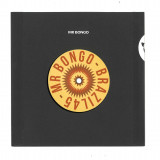
You know it's going to be a heavy record when DJ / collector Mr Thing asks you to keep a look out for a copy on your next digging trip to Brazil. Add on top of that, being sampled by Madlib on the track 'Curls’ on his Madvillain album!
Taken from Waldir Calmon's 'Waldir Calmon E Seus Multisons' album on Copacabana (1970), from looking at this unassuming record cover featuring a middle-aged man sporting an impressive pair of glasses you wouldn't expect it to become the fabric to one of the songs from the iconic 'Madvillain’ album. But… like many things in life, you shouldn’t judge a book by its cover. 'Airport Love Theme’, like its name suggests, falls into full-on lounge territory. It’s feel-good music made to be the soundtrack for a utopian world that never really was. Yet behind the silky-smooth groove is an addictive earworm waiting to be heard.
'Afro Son' taken from the same album, pushes things in a different direction towards a sound that is more firmly rooted in the Brazilian tradition. This quirky 60's-breakbeat-funk groove is reminiscent of French artist Jean Jacques Perrey's 'E.V.A.', also from 1970, in its melody and backbeat, where the Moog synthesizer of Perrey is replaced with a more orchestrated sound by Calmon. This track is magical, cinematic and breakbeat-laden with a hidden unknown exoticism.
Waldir Calmon had an active career in music working from the '50s right up until his passing in 1982. His career started early, forming his first ensemble at the age of fourteen, originally working in bands in nightclubs and writing jingles. He progressed in the early '50s to a long-running career working in television. In addition to his television work, he had success with his recording vocation, mixing in the same musical circles as greats such as Tom Jobi, João Gilberto and Doris Monteiro.
• Next installment in BRAZIL 45 Series.
• Sampled by Madlib on the track ‘Curls’ from his ‘Madvillain’ album.
• Quirky, cinematic, breakbeat-laden exoticism.
“Music for Lovers” is the new solo outing of multi-instrumentalist Samuel Rohrer (playing a combination of percussion, modular synthesizer and keyboard-based instruments on this recording).
The album’s title, which has been used for other albums in unrelated musical genres, might be deceiving: those who expect overly sentimental, fluffy pieces full of levity from start to finish, or sarcastic and cynical attempts at rejecting such “easy” listening, will be surprised by the emotional and tonal complexity on display here. In Rohrer’s own words, it is dedicated to “those brave lovers, who are ready to not only find, but eventually become truth,” and as such is an exploration of an evolving process rather than an idealized state.
Miss Louistines Version von 'Con Me' war einer der besten Deep Soul-Funde der letzten Jahre. Die sanfte Chicago-Interpretation der Paragons von Sam Dees' Komposition aus dem Jahr 1975 wird seit langem bewundert, aber diese Southern-Soul-Bearbeitung des mittlerweile zum Klassiker gewordenen Songs ist atemberaubend. Um diesen geheimen Song-Klassiker wirklich in den Mittelpunkt zu rücken, haben wir Sam Dees' eigene Version als B-Seite hinzugefügt. Auch diese blieb unveröffentlicht, bis Kent 1998 auf die Bänder zugegriffen hat und sie nun endlich auf Single erscheint.
"When you wish upon a star… that turns out to be Saturn.
Previously unheard Ra culled from the archives and compiled based on their association to that children's film corporation with the cartoon rodent.
Jazz aficionados and Disney nerds alike will marvel at how seamlessly Sun Ra and his Arkestra put their own unique twist on both well-known and overlooked Disney songs. Pink Elephants on Parade takes nine songs from Disney’s storied catalog and recontextualizes them as beautiful, fun, and sometimes terrifying pieces of Afrofuturist jazz. The collection also shows further proof of how Ra was always willing to transcend conventions of jazz. Listen to the full album and you will likely never look at the Disney music catalog the same way ever again.
Originally known for accompanying Dumbo and Timothy’s colorful alcohol-induced hallucinations, this song is given a whole new life by Ra and the Arkestra in more ways than one. It also feels faithful to the original at the same time, with the cacophony of horns, drums, percussion, and cowbell resembling that of a marching band. However, the demented grandeur of the song is turned up to eleven with zany vocal lines (hence the high-pitched “What’ll I do” inflections) and other performances that somehow sound more evil and gruff here than they did on Oliver Wallace and Ned Washington’s version. Though the Sportsmen’s vocals from that particular arrangement had a certain creepiness to it, the Arkestra takes a previously innocent sounding song and makes Pink Elephants On Parade sound even more terrifying."
Askkin's latest release, 'NECH027' marks his debut on Nastia's NECHTO. A former resident of techno nights at Faktice in Nantes, Askkin has found his footing in the Brussels techno scene. His work at Faktice, now a label co-founded with producer Exal, has garnered
attention across the European scene. With collaborations alongside artists like Hadone and releases on labels such as TWND and Maison Close, Askkin continues to develop a distinctive sound.
For Askkin, producing music serves as an expressive outlet, capturing a range of emotions and reflections. 'NECH027' conveys both introspective and uplifting moments, especially the
track "Social Medication" exemplifying his approach to blending light and darkness while maintaining a strong groove and energy.
The EP features five tracks: "Keep Your Chin Up", "Not All Silences Sound The Same", "Social Medication", "Tick", and "Yes". Each track showcases Askkin’s focus on deep emotions with a touch of hope, making 'NECH027' a notable addition to his growing discography.
- Meditation
- Going Home
- A-1 Funk
- Every Step Of The Way
- Black Magic Woman
- Gypsy Queen
- Oye Como Va
- Yours Is The Light
- Batukada Xibaba (She-Ba-Ba)
- Stone Flower (Introduction)
- Waiting
- Castillos De Arena, Part I
- (Sand Castle)
- Free Angela
- Samba De Sausalito
- Matra
- Kyoto
- Castillos De Arena, Part Ii
- (Sand Castle)
- Se A Cabo
- Samba Pa Ti
- Mr. Udo
- Toussaint L’overture
- Incident At Neshabur
One of the Most Exhilarating Live Albums Ever Released: Santana’s Lotus Documents 1973 Performances Distinguished by Passionate Soulfulness, Chemistry, and Inventiveness
Mobile Fidelity’s 180g 33RPM 3LP Set Features Reference Sound and Deluxe Trifold Packaging Faithful to That of the Original Japanese Import: Strictly Limited to 5,000 Numbered Copies, Includes Four Photo Inserts and Two Fold-Out Posters
The bizarre legacy of Lotus transcends its status as both the definitive onstage document of Santana’s career and one of the most spectacular live albums ever released. Originally issued in 1974, the triple LP contains exhilarating performances of the band recorded at two shows in early July 1973 at the 2400-seat Osaka Kosei Nenkin Kaikan concert hall. It bears witness to the eight-piece collective playing with a chemistry, inventiveness, cohesiveness, and soulfulness no other Santana lineup would ever surpass. Featuring seven previously unreleased tracks as well as remarkable renditions of material from Santana’s first four albums and the Carlos SantanaJohn McLaughlin collaboration Love Devotion Surrender, Lotus simultaneously suggests and inspires, dreams and delivers.
Transferred by original engineer Tomoo Suzuki, strictly limited to 3,000 numbered copies, and housed in deluxe trifold packaging faithful to that of the original pressing, Lotus benefits from reference audiophile treatment on Mobile Fidelity’s 180g 3LP set. Featuring rich tones, smooth dynamics, excellent separation, deep soundstages, and involving presence, this reissue pays tribute to both the virtuosic lineup and the magnetic fusion of Latin- and Afro-Cuban-influenced jazz, rock, psychedelia, R&B, and blues. The complexity of the spiritual passages, demands of the crescendos, delicacy of the calm transitions, electricity of the solos: everything is rendered with superb balance and free of the harshness, compression, and fatiguing peaks that would otherwise distract from the presentations at hand. Black magic, indeed.
- Court And Spark
- Help Me
- Free Man In Paris
- People's Parties
- Same Situation
- Car On A Hill
- Down To You
- Just Like This Train
- Raised On Robbery
- Trouble Child
- Twisted
Joni Mitchell Gets Jazzy, Counterbalances Love and Trust with Freedom and Confusion on Court and Spark
Mobile Fidelity's UltraDisc One-Step 180g 45RPM 2LP
Plays with Definitive Detail and Clarity: Pressed on MoFi SuperVinyl Strictly Limited to 5,000 Numbered Copies
Box Set Features New Liner Notes
1/4" / 15 IPS / Dolby A analogue master to DSD 256 to analogue console to lathe
Court and Spark, the most commercially successful album of Joni Mitchell's trailblazing career, arrived after a year in which she took some time to breathe and kept a low profile. The pause led to more breakthroughs for the singer-songwriter. Marking Mitchell's increasing drift toward jazz (and affinity for Miles Davis and John Coltrane), Court and Spark garnered four Grammy nominations, earned the Best Album of the Year vote in the prestigious Pazz & Jop poll, and ranks #110 on Rolling Stone’s list of the 500 Greatest Albums of All Time.
Sourced from the original analog master tapes, pressed at Fidelity Record Pressing on MoFi SuperVinyl, strictly limited to 5,000 numbered copies, and featuring new liner notes, Mobile Fidelity's UltraDisc One-Step 180g 45RPM 2LP box set presents the 1974 classic with definitive detail, tonality, and directness. Marking the first time the revered LP has received audiophile-quality treatment, it's one of six iconic 1970s Mitchell records Mobile Fidelity is reissuing on vinyl and SACD sets.
Benefitting from a virtually nonexistent noise floor, dead-quiet surfaces, and superior groove definition, this collectible edition reproduces without compromise the textures, details, and breathtaking craftsmanship that help make Court and Spark into what many fans believe is the Canadian native’s finest hour. Notes bloom and decay as they do amid an acoustic live environment. Soundstages extend far and deep, with black backgrounds and balanced tones adding to the uncanny realism.
The reference-grade presence and openness put in transparent view Mitchell’s incisive words and unique phrasing, as well as the contributions of her prized support musicians — including Tom Scott and the L.A. Express as well as guest turns by the likes of David Crosby, Graham Nash, Jose Feliciano, and Robbie Robertson. Mitchell, experimenting with the melodic parameters of guitar and piano, is rightly found at the center of it all. The jazz-rock rhythms of drummer John Guerin, slippery guitar lines of Larry Carlton, vibrant horns and reeds laid down by Scott — crucial to the songs’ shape-shifting arrangements — can now also be heard with fresh ears.
Visually and physically, the packaging of the Court and Spark UD1S set complements its distinguished status. Housed in a deluxe slipcase, both LPs come in foil-stamped jackets with faithful graphics that illuminate the splendor of the recording. This reissue is for listeners who desire to engage themselves in everything involved with the album, including Mitchell’s “The Mountain Loves the Sea” painting — a picture of waves embracing and receding away from a mountain, a metaphor for the record’s lyrical themes — on the cover art.
Pitching deceptively light compositions against underlying tensions, Court and Spark witnesses the singer-songwriter finding her footing with a group of top-shelf musicians who seemingly understand her visions as well as expanding her lyrical palette and venturing further into territory no artist had dared explore. Mitchell’s accessibly complex structures, beat-propelled rhythms, and spirited interplay with Scott & Co. both give the music a different identity than her prior efforts and point in the directions she soon headed.
Lyrically, Court and Spark matches the wit, integrity, originality, and intellect of anything in Mitchell’s oeuvre — no small feat. Offsetting positives with negatives, and considering circumstances from multiple angles, Mitchell explores issues connected to love and freedom, certainty and confusion, and trust and fear with unfettered boldness and introspective empathy. She teeters between surrender and retreat, and spends a majority of the record sussing out the complications and sacrifices involved with such actions.
Mitchell addresses the transactional nature of desire (the intimate title track, the upbeat “Raised on Robbery,” complete with rock ‘n’ roll pep from Robertson and zesty sax from Scott); anticipation and disappointment of romance (“Car on a Hill,” “”Down to You); fame and celebrity (“A Free Man in Paris,” “People’s Parties”); and sanity (the dark and stormy “Trouble Child,” a satirical cover of Annie Ross’ “Twisted”). Throughout, she sings with an emotionally penetrating beauty and devastating honesty that teaches about ourselves.
Or, as Mitchell relays on “People’s Parties”: “Laughing and crying/You know it’s the same release.”
- A1: A Festa Do Santo Reis
- A2: Não Quero Dinheiro (Só Quero Amar)
- A3: Salve Nossa Senhora
- A4: Try It (Um Dia Eu Chego Lá)
- A5: Não Vou Ficar
- A6: Broken Heart (Coração Partido)
- B1: Você
- B2: Preciso Aprender A Ser Só
- B3: I Don't Know What To Do With Myself
- B4: É Por Você Que Vivo
- B5: My Country (Meu País)
- B6: I Don't Care (Não Quero Nem Saber)
One of the funkiest records ever from Brazilian soul legend Tim Maia - and a set that also has him singing a bit of English language lyrics too! The groove here is that classic Maia blend of Brazilian roots with American funk and soul - echoes of forro or samba in some of the rhythms, mixed with psychedelic touches, and some harder-hitting funky lines too - all in a mindblowing blend that's perfectly topped with Maia's vocals - which are every bit as large and powerful as the man on the cover himself! Tim shifts effortlessly between Portuguese lyrics and American English - the latter of which really showcases his love of American soul on the titles"I Don't Know What To Do With Myself", "Broken Heart", and "I Don't Care". The album also features a version of Marcos Valle's "Preciso Aprender A Ser So", plus the cuts "Meu Pais", "A Festa Do Santo Reis", "Nao Vou Ficar", and "Salve Nossa Senhora" - all wonderful, all the way through!
For number 83 in the Brazil 45 series we have a real treat. Di Melo's self-titled debut album has long been collectible for its irresistible Brazilian-funk sound, pleasing the Brazilian, B-Boy breaks, funk collectors, and sample hunters alike. With original copies for the album now fetching crazy sums, we felt these tracks needed another moment in the sun for all to enjoy.
For this release we have selected two of our favorite cuts from this cult album, ‘Kilariô ' & ‘Pernalonga'. Coincidentally these two gems were released on Odeon Records in 1975 as a rare promo campacto (a Brazilian 7", which plays at 33rpm). 'Kilariô' is a pure Brazilian-soul classic. All the right elements gel together, whilst Di Melo works his relaxed vocal magic over the top. ‘Pernalonga', with its catchy guitar and horns intro, loose break-beat drum, has the feel-good factor which some may recognize as one of the samples behind N.A.S.A featuring David Byrne, & Chali 2na's 'The People Tree' from 2009.
Di Melo is still recording to this day, releasing an album with Cotonete on Favorite Recordings in 2019 - a true don!!!
We are pleased to announce the launch of a new series at Innervisions called “Quantum Spits”.
House music has been around for decades, and throughout its evolution, it has spawned numerous sub-genres. “Quantum Spits” aims to explore and celebrate this diversity by dedicating each release to a particular aspect of this thing we call House.
Our goal is to provide a platform for both established and up-and-coming producers to express their unique take on house music while also paying homage to the roots of the genre.
We are kicking off the series with Skatman, the Tunisian-born producer, DJ and label head. On „Rewarped“ he slams old school hip-hop samples into some raw and pumping house tracks, providing a fresh and up to date connection between these distinct musical eras to deliver six new cuts of raw concise electronic music.
“Taking familiar elements and giving them a fresh twist,” says Skatman aka Aziz Haddad.
* Seba has established a reputation as one of the finest purveyors of quality Drum & Bass over a distinguished career stretching back more than 25 years. From his early tracks on LTJ Bukem’s ground-breaking label Good Looking Records to his more recent work across Metalheadz,Commercial Suicide,Soul:r,Hospital and his own Secret Operations, Seba’s music retains a timeless appeal, bringing together beats and bass in classic yet inimitable style. Ethereal atmospheres, crisp breaks and sublime bass rhythms are hallmarks of a sound Seba has made his own.
* Oni showcases Seba’s versatility as an artist and shows why as one of Drum & Bass’s truly unique producers,Seba is as relevant and important today as ever, continually inspiring producers and fans alike.
- Rollin' Feat. Kirby
- Camera Feat. Girl Named Golden
- Deep Sea Feat. Hether
- Now That It's Over Feat. Hether & Flikka
- Racecar Driver Feat. Kirby, Hether, And Girl Named Golden
- So Get Up! Feat. Minova & Michael Rault
- Wishing Well Feat. Girl Named Golden
- Hide It Behind The Light I'm Shining Through Feat. Girl Named Golden
- Start Select Feat. Hether
- Forever And Ever And Ever And Ever Feat. Hether
- Goldie Feat. Dave Guy
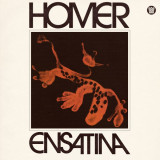
Homer Steinweiss has an incredibly storied career in music that started when he was just a teenager. He's drummed for nearly every "retro soul" group that mattered and his distinctive stickwork helped blend the raw-but-receptive soul sound back into the mainstream via the likes of Amy Winehouse & Sharon Jones. He's now one of the most in demand drummers in the world, playing with Jonas Brothers, Clairo, Solange, Adele, and Bruno Mars to name a few. With his debut solo release Ensatina, Homer is stepping to the forefront as both musician and producer. His new record is a reection of who he is now and a testament to how struggle often brings about a needed change. In 2020 Homer had to reckon with considerable emotional turbulence; at the same time that his band Holy Hive broke up, a personal relationship of 20+ years fell apart putting Homer in an uncertain place mentally. The fallout was signi‑cant enough for him to seek professional help. "I was going through these super manic highs and then very depressive lows," Homer describes. "And being in all that, it's just so tough to imagine that the other side is there, that it'll be ok." But, with time, professional help, and support from friends and family, Homer made it through and has been forever changed. This album is a product of that period of his life. The ‑rst song from these sessions, "Now That It's Over" perfectly sums up Homer's triumph through those tough times. It's a song of changing perspective and contemplation with haunting vocals from Hether and Flikka. "Paul (Castelluzzo_ aka, Hether), as a friend, saw me through these highs and lows," Homer points out. "I only had the one line, 'Now that it's over, I'm alright,' but he felt that lyric so much that he wrote all these sections and lyrics and basically completed the song. It was like he was writing to me." Hether also features on album standouts "Deep Sea", a modern love song, "Start Select", a juxtaposition of inspiration and melancholy, and "Forever and Ever and Ever and Ever" which is an incredible contemporary take on the B side soul ballad. Homer uses his innate gift for bringing seemingly opposing energies together on "Racecar Driver", pairing the vocals of Hether & long time friend and collaborator KIRBY to make a genre challenging banger. KIRBY also graces the album opener "Rollin'", an airy, warm-weather invoking song that her raspy voice perfectly compliments. He puts his drumming front and center on "So Get Up!", a bottom heavy infectious track that MINOVA's vocals turn into an instant hit that is sure to smash speakers. On "Wishing Well" & "Hide It Behind the Light I'm Shining Through" Homer is joined by girl named GOLDEN, who's unique voice effortlessly ‑nds the pocket in each tune. The man on trumpet, and fellow Big Crown label mate Dave Guy, puts his incomparable playing on the album closer "Goldie" which Homer says is the part of the movie where the credits roll. Making this album was a refuge for Homer and it put him back on track. Ensatina is a glimpse into the different energies and inuences that make Homer tick. To say he was always much more than a drummer would be an understatement, and this ‑rst solo offering is just the beginning of his next chapter.
- Rollin' Feat. Kirby
- Camera Feat. Girl Named Golden
- Deep Sea Feat. Hether
- Now That It's Over Feat. Hether & Flikka
- Racecar Driver Feat. Kirby, Hether, And Girl Named Golden
- So Get Up! Feat. Minova & Michael Rault
- Wishing Well Feat. Girl Named Golden
- Hide It Behind The Light I'm Shining Through Feat. Girl Named Golden
- Start Select Feat. Hether
- Forever And Ever And Ever And Ever Feat. Hether
- Goldie Feat. Dave Guy
Homer Steinweiss has an incredibly storied career in music that started when he was just a teenager. He's drummed for nearly every "retro soul" group that mattered and his distinctive stickwork helped blend the raw-but-receptive soul sound back into the mainstream via the likes of Amy Winehouse & Sharon Jones. He's now one of the most in demand drummers in the world, playing with Jonas Brothers, Clairo, Solange, Adele, and Bruno Mars to name a few. With his debut solo release Ensatina, Homer is stepping to the forefront as both musician and producer. His new record is a reection of who he is now and a testament to how struggle often brings about a needed change. In 2020 Homer had to reckon with considerable emotional turbulence; at the same time that his band Holy Hive broke up, a personal relationship of 20+ years fell apart putting Homer in an uncertain place mentally. The fallout was signi‑cant enough for him to seek professional help. "I was going through these super manic highs and then very depressive lows," Homer describes. "And being in all that, it's just so tough to imagine that the other side is there, that it'll be ok." But, with time, professional help, and support from friends and family, Homer made it through and has been forever changed. This album is a product of that period of his life. The ‑rst song from these sessions, "Now That It's Over" perfectly sums up Homer's triumph through those tough times. It's a song of changing perspective and contemplation with haunting vocals from Hether and Flikka. "Paul (Castelluzzo_ aka, Hether), as a friend, saw me through these highs and lows," Homer points out. "I only had the one line, 'Now that it's over, I'm alright,' but he felt that lyric so much that he wrote all these sections and lyrics and basically completed the song. It was like he was writing to me." Hether also features on album standouts "Deep Sea", a modern love song, "Start Select", a juxtaposition of inspiration and melancholy, and "Forever and Ever and Ever and Ever" which is an incredible contemporary take on the B side soul ballad. Homer uses his innate gift for bringing seemingly opposing energies together on "Racecar Driver", pairing the vocals of Hether & long time friend and collaborator KIRBY to make a genre challenging banger. KIRBY also graces the album opener "Rollin'", an airy, warm-weather invoking song that her raspy voice perfectly compliments. He puts his drumming front and center on "So Get Up!", a bottom heavy infectious track that MINOVA's vocals turn into an instant hit that is sure to smash speakers. On "Wishing Well" & "Hide It Behind the Light I'm Shining Through" Homer is joined by girl named GOLDEN, who's unique voice effortlessly ‑nds the pocket in each tune. The man on trumpet, and fellow Big Crown label mate Dave Guy, puts his incomparable playing on the album closer "Goldie" which Homer says is the part of the movie where the credits roll. Making this album was a refuge for Homer and it put him back on track. Ensatina is a glimpse into the different energies and inuences that make Homer tick. To say he was always much more than a drummer would be an understatement, and this ‑rst solo offering is just the beginning of his next chapter.
- My Old Friend The Blues (Acoustic
- Someday (Acoustic
- Guitar Town (Acoustic
- I Ain't Ever Satisfied (Acoustic
- Now She's Gone (Acoustic
- Goodbye (Acoustic
- South Nashville Blues (Acoustic
- Cckmp (Acoustic
- Transcendental Blues (Acoustic
- It's About Blood (Acoustic
- Dominick St. (Acoustic
- The Galway Girl (Acoustic
- Copperhead Road (Acoustic
- The Devil's Right Hand (Acoustic
- Sparkle And Shine (Acoustic (Live))
Live-Album des legendären Singer/Songwriters Steve Earle:
Steve Earle ist einer der renommiertesten Singer-Songwriter seiner Generation. Als Schützling der legendären Songwriter Townes Van Zandt und Guy
Clark wurde er schnell zu einem meisterhaften Geschichtenerzähler, und seine Songs wurden von Johnny Cash, Waylon Jennings, Joan Baez, Emmylou
Harris, The Pretenders und unzähligen anderen aufgenommen. 1986 erschien sein Album Guitar Town, das bis auf Platz eins der Country-Charts
schoss und heute als Klassiker des Americana-Genres gilt. Zuletzt wurde Earles Hit Copperhead Road aus dem Jahr 1988 zum offiziellen Song des
Bundesstaates Tennessee im Jahr 2023 ernannt. Nachfolgende Veröffentlichungen wie The Revolution Starts...Now (2004), Washington Square
Serenade (2007) und TOWNES (2009) wurden mit aufeinanderfolgenden GRAMMY® Awards ausgezeichnet. Sein jüngstes Album Jerry Jeff (2022)
besteht aus Earles Versionen von Songs, die Jerry Jeff Walker, einer seiner Mentoren, geschrieben hat.
Earle hat sowohl ein Buch als auch eine Sammlung von Kurzgeschichten veröffentlicht. Earle produzierte Alben für andere Künstler wie Joan Baez (Day
After Tomorrow) und Lucinda Williams (Car Wheels on A Gravel Road).Als Schauspieler hat Earle in mehreren Filmen mitgewirkt und hatte
wiederkehrende Rollen in den HBO-Serien The Wire und Tremé. 2009 spielte Earle in dem Off-Broadway-Stück Samara mit, für das er auch die Musik
schrieb, die die New York Times als „exquisit unterschwellig“ bezeichnete. Im Jahr 2020 wurde Earle in die Nashville Songwriters Hall of Fame
aufgenommen.
a The Devil's Right Hand (Acoustic[Live])
[b] My Old Friend The Blues (Acoustic[Live])
[c] Someday (Acoustic [Live])
[d] Guitar Town (Acoustic [Live])
[e] I Ain't Ever Satisfied (Acoustic[Live])
[f] Now She's Gone (Acoustic [Live])
[g] Goodbye (Acoustic [Live])
[i] South Nashville Blues (Acoustic[Live])
[j] CCKMP (Acoustic [Live])
[k] Transcendental Blues (Acoustic[Live])
[l] It's About Blood (Acoustic [Live])
[m] Dominick St. (Acoustic [Live])
[n] The Galway Girl (Acoustic [Live])
[o] Copperhead Road (Acoustic [Live])
- A1: Zwischen Planeten
- A2: Stimme Des Wegelagerers
- A3: Aus Dem Feuer, Aus Dem Licht
- A4: Immer Wieder Im Kreis
- A5: In Den Tiefen
- A6: Hinein, Hinaus, Hinüber
- A7: Fantasiegebilde
- A8: Der Verwunschene Hain
- A9: Blick Nach Drüben
- B1: Innerlich Außerhalb
- B2: Schimmernde Chimäre
- B3: Gemeinsam Hindurch
- B4: Mit Verbundenen Augen
- B5: Purpur-Trank
- B6: Im Sternstrom
- B7: Schlingerling
- B8: Endstation Sehnsucht
Turning their gaze to the buoyant culture of wyrd, modernist German folk music, Quindi welcome a spectacularly idiosyncratic offering from Johannes Schebler, aka Baldruin. Bewildering narrative twists, high drama and intricate delicacy make Mosaike der Imagination an engrossing listen from the outset, as baroque atmospheres and tumbledown drums intertwine with tactile string plucks and needlepoint synthesis in an authoritative bridging of ancient and hypermodern sonic sensibilities.
Schebler's catalogue as Baldruin is extensive, reaching back to the late 00s and covering a lot of ground through cassette albums on respected underground labels like SicSic, A Giant Fern and Lullabies For Insomniacs. Meanwhile, his work has been recognised as part of a broader movement of experimental electronic music in Germany taking inspiration from folk traditions, as documented on last year's essential Bureau B compilation, Gespensterland. Beyond his solo work, Schebler also works with Jani Hirvonen as Grykë Pyje (mappa), and both collaborate with Paul Wilson as Yayoba (Not Not Fun). Christian Schoppik of leading dark folk project Brannten Schnüre joins him as Freundliche Kreisel (STROOM). It's a tangled, fascinating and evocative sound world which Mosaike der Imagination offers a compelling window into.
No two tracks on the album follow the same pattern or palette, whether gliding through the Giallo synth undulations and post rock tonal arcs of 'Stimme des Wegelagerers' or spelling out miasmic incantations through flickering flames on 'Aus dem Feuer, aus dem Licht'. 'Hinein, hinaus, hinüber' revolves around meditative drum mantras and cascading melodic phrasing, densely layered and evolving with purpose. 'Gemeinsam hindurch' flicks between swooping strings and pizzicato plucks in a purely romantic expression of orchestration, 'Mit verbundenen Augen' is a bewildering choral voice study and 'Im Sternstrom' revels in ecstatic synth arpeggios. Nothing can be predicted except the vibrancy and clarity of Schebler's vision.
It's a vision which extends to the front cover artwork for Mosaike der Imagination — a glorious tapestry created by Finnish artist Jan Anderzén, with a responding design and layout from Schebler adorning the rear sleeve.
Stepping to the side of the cosy daydream reveries that inhabit much of the Quindi output, Mosaike der Imagination indulges the label's penchant for sophistication in a freakily fascinating new framework from the heart of an exciting movement in experimental folk music.
On his latest full-length, Low End Activist swerves towards weightless grime and suspended hardcore miniatures to tell a very personal story. The UK-rooted producer continues his habit of zeroing in on a distinct approach for each release, leaving a logical breadcrumb trail of soundsystem science in his wake as he channels decades of bass absorption into 14 atmospheric cuts that prize patience and precision over obvious club functionality.
Municipal Dreams plays out as a semi-autobiographical tour through the Blackbird Leys estate that the Activist grew up on. It’s a lived reflection on inequality and the ripple effect it has in working class communities, using the sonic palette to set the mood and scattering pointed samples throughout to spell out the story.
In sampling the exhaust of a stolen Subaru Impreza, ‘TWOC’ looks back to the recreational car theft which was standard entertainment for the kids in his community. There’s an underlying idea that this ‘council estate sport’ wouldn’t have been so prevalent if there were public services and opportunities presented to the scores of disaffected youth looking for somewhere to direct their energy and frustration.
In ‘Just A Number (Institutionalised)’ LEA alludes to the shattered juvenile detention system, growing up seeing friends and family members locked up at ease with little to no support on being released back into society, just meant that the same cycles of behaviour would play out over and over.
‘Violence’ samples from a short film shot by the drama division of the Blackbird Leys Youth Club to evoke the physical threat which formed a background hum to life on the estate. The industrial mechanics of the local car factory, which served an integral role as a workplace for many in the community, gets sampled in ‘They Only Come Out At Night’ while the ‘Everyone I look up to are either junkies or criminals’ sample in ‘Broke’ looks to a lack of positive role models.
Municipal Dreams isn’t a one-note indictment of life on the estate, ‘Innocence’ captures the simplicity of a child at birth before their environment has time to shape them. The Hope interludes cut through the grim honesty of the longer tracks while a subtle thread of wry humour finds its way into some of the talking heads cutting through the signature LEA murk.
But honesty is the operative word here, and the message feels all the more meaningful at a time when the UK’s social divisions are laid bare in the wake of a devastating stretch of austerity. Returning to Blackbird Leys to shoot images for the photo-zine and album cover, the Activist found the local community centre being demolished. The local pub stands derelict, its faded Welcome sign a grimly ironic portent of the options facing children of the estate in the wider world.
Funnelling his memories, hopes and fears into a singular twist on the bass weight tradition, LEA captures evocative scenes that land somewhere between kitchen sink realism and rave futurism.
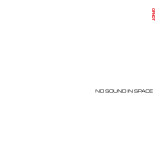
Blake Lee has always been fascinated by the unknown, and space, in its isolating, mysterious vastness, embodies this theme immaculately. The open void, captured so memorably by Stanley Kubrick in '2001: A Space Odyssey', is Blake's far-reaching canvas on 'No Sound In Space', a cinematic meditation on the cosmos that's painted in nuanced, emotionally sincere colors. The Los Angeles-based composer has been contemplating his full-length debut since 2021, using his guitar as a sonic paintbrush rather than find himself snared in its traditional aesthetic constraints. Transforming its characteristics with effects and subtle processes, he layers sustained tones and intimate improvisations, creating richly visual polychromatic utopias teeming with unknown life.
Since 2011, Blake has been most known for being the guitarist and a music director for Lana Del Rey, notching up three songwriting credits on her acclaimed ‘Ultraviolence’ full length. He sees his solo work is a form of escapism, a place where he can experiment and find comfort and catharsis outside of expectations and formal structure. The album was written instinctively, and Blake made sure he didn't force anything, letting go and getting out of his own way, listening intently as sounds and textures materialized organically. "I didn't want to ruin it by being a perfectionist," he laughs. And his collaboration with Kenyan sound artist KMRU, who runs the OFNOT label and contributes to two of the tracks on the album, occurred similarly organically.
Blake was moved to reach out to KMRU when he caught a performance of 'Natur' at Los Angeles' Zebulon in 2022, leading to a prolonged back-and-forth. They didn't meet in person until earlier this year, by which time they'd become firm friends, continuously sharing music and conversation. KMRU had lent a valuable ear to Blake, who sent early playlists of 'NSIS' that, over the months, slowly evolved into the finished album. It's the first release on OFNOT that's not by KMRU himself; the label emerged last year with the release of KMRU's own 'Dissolution Grip', and Blake's debut immediately expands its sonic universe. Alongside the playlists, Blake also provided KMRU with the tracks' raw stems, which KMRU began to edit and expand in his Berlin studio. 'Miura' and 'Waiting' are the result of this process, two sublime abstractions that augment Blake's dreamlike, euphoric tones with KMRU's pebbly distortions and booming low-end rumbles. And this same playful sense of freeness seeps into Blake's other compositions.
On the misty 'In A Cloud', he surrounds cascading string tones with soft-focus pads that swell until they're like crashing waves, and on the two 'Echoplexx' pieces, he uses delay and reverb to smudge his sounds until they're viscous residue, the harmonies obscured by whooshes of white noise and distant chimes. The mood is quieted somewhat on 'Moving Air', as Blake's swirling tones form half-heard lullabies, coalescing into a dense, melancholy crescendo, and he fills out the sound with reverberant airport recordings on 'Pan Am', letting pitchy My Bloody Valentine-esque drones warble beneath the transitory chatter. Each track melts into the next, forming a billowing, cryptic narrative that leaves more questions than answers. Blake is constantly searching, and fills his unoccupied space with warmth, perception and sensitivity.
Blake Lee has always been fascinated by the unknown, and space, in its isolating, mysterious vastness, embodies this theme immaculately. The open void, captured so memorably by Stanley Kubrick in '2001: A Space Odyssey', is Blake's far-reaching canvas on 'No Sound In Space', a cinematic meditation on the cosmos that's painted in nuanced, emotionally sincere colors. The Los Angeles-based composer has been contemplating his full-length debut since 2021, using his guitar as a sonic paintbrush rather than find himself snared in its traditional aesthetic constraints. Transforming its characteristics with effects and subtle processes, he layers sustained tones and intimate improvisations, creating richly visual polychromatic utopias teeming with unknown life.
Since 2011, Blake has been most known for being the guitarist and a music director for Lana Del Rey, notching up three songwriting credits on her acclaimed ‘Ultraviolence’ full length. He sees his solo work is a form of escapism, a place where he can experiment and find comfort and catharsis outside of expectations and formal structure. The album was written instinctively, and Blake made sure he didn't force anything, letting go and getting out of his own way, listening intently as sounds and textures materialized organically. "I didn't want to ruin it by being a perfectionist," he laughs. And his collaboration with Kenyan sound artist KMRU, who runs the OFNOT label and contributes to two of the tracks on the album, occurred similarly organically.
Blake was moved to reach out to KMRU when he caught a performance of 'Natur' at Los Angeles' Zebulon in 2022, leading to a prolonged back-and-forth. They didn't meet in person until earlier this year, by which time they'd become firm friends, continuously sharing music and conversation. KMRU had lent a valuable ear to Blake, who sent early playlists of 'NSIS' that, over the months, slowly evolved into the finished album. It's the first release on OFNOT that's not by KMRU himself; the label emerged last year with the release of KMRU's own 'Dissolution Grip', and Blake's debut immediately expands its sonic universe. Alongside the playlists, Blake also provided KMRU with the tracks' raw stems, which KMRU began to edit and expand in his Berlin studio. 'Miura' and 'Waiting' are the result of this process, two sublime abstractions that augment Blake's dreamlike, euphoric tones with KMRU's pebbly distortions and booming low-end rumbles. And this same playful sense of freeness seeps into Blake's other compositions.
On the misty 'In A Cloud', he surrounds cascading string tones with soft-focus pads that swell until they're like crashing waves, and on the two 'Echoplexx' pieces, he uses delay and reverb to smudge his sounds until they're viscous residue, the harmonies obscured by whooshes of white noise and distant chimes. The mood is quieted somewhat on 'Moving Air', as Blake's swirling tones form half-heard lullabies, coalescing into a dense, melancholy crescendo, and he fills out the sound with reverberant airport recordings on 'Pan Am', letting pitchy My Bloody Valentine-esque drones warble beneath the transitory chatter. Each track melts into the next, forming a billowing, cryptic narrative that leaves more questions than answers. Blake is constantly searching, and fills his unoccupied space with warmth, perception and sensitivity.
Die PBS-Serie Earth Focus befasst sich mit den komplizierten Verbindungen zwischen Südkaliforniens Naturlandschaften und städtischer Entwicklung. Jede Episode erforscht einen bestimmten Ort, darunter den Los Angeles River, das Diablo Canyon Nuclear Power Plant, Joshua Tree National Park und die Mojave Wüste. Der Soundtrack der Serie, komponiert von Elori Saxl, unterstreicht die emotionalen Erzählungen dieser Orte und betont das Zusammenspiel zwischen Menschen und der Natur sowie die Auswirkungen der vom Menschen geschaffenen Umwelt. Dabei ließ sie sich von Künstlern wie Alice Coltrane und Hiroshi Yoshimura inspirieren, Saxl hat die Musik mit digital manipulierten Aufnahmen von Wasser und Wind, analogen Synthesizern, MIDI-Samples und bearbeiteten Holzbläsern gespielt von Stuart Bogie (Klarinette, Bassklarinette, Flöte) kreiert. Diese einzigartige Mischung aus Klängen erinnert an das musikalische Erbe von Los Angeles und an die allgemeine Atmosphäre von Wind, Sonne und südkalifornischer Kultur. Die Musik bezieht sich lose auf die psychedelischen und traumhaften Klänge, die mit der Vergangenheit und Gegenwart von Los Angeles verbunden sind. Sie enthält jedoch einen modernen Twist, der reale und synthetische Elemente vermischt, um das zeitgenössische und zunehmend spürbare der von Menschenhand geschaffenen Landschaft in Los Angeles und den angrenzenden Regionen zu reflektieren.