Today, less than two months following the final tour date of their As Long As You Are tour, Future Islands announce the details of their new album People Who Aren"t There Anymore which will be released January 26, 2024. The seventh album from the band - Samuel T. Herring (vocals, lyrics), William Cashion (bass, guitars), Gerrit Welmers (keyboards, programming), and Michael Lowry (drums) - follows 2020"s As Long As You Are. People Who Aren"t There Anymore heralds a new chapter for Future Islands who, despite having formed nearly two decades ago, continue to challenge themselves and each other. Where they"ve pursued ever-higher energy anthems in the past, they"ve turned inward this time, and unlocked a new level of ferocity, delivering some of their most inspiring and most heartbreaking tracks by doing the opposite: taking their time, making each breath, each syllable, each cymbal crash count. The result is a powerful, defining statement from a group of musicians that have made the best album of their career. People Who Aren"t There Anymore was co-produced by Future Islands and Steve Wright, and mixed by Steve Wright and Chris Coady (who returns to working with the band for the first time since 2014"s Singles).
quête:sam kin
Today, less than two months following the final tour date of their As Long As You Are tour, Future Islands announce the details of their new album People Who Aren"t There Anymore which will be released January 26, 2024. The seventh album from the band - Samuel T. Herring (vocals, lyrics), William Cashion (bass, guitars), Gerrit Welmers (keyboards, programming), and Michael Lowry (drums) - follows 2020"s As Long As You Are. People Who Aren"t There Anymore heralds a new chapter for Future Islands who, despite having formed nearly two decades ago, continue to challenge themselves and each other. Where they"ve pursued ever-higher energy anthems in the past, they"ve turned inward this time, and unlocked a new level of ferocity, delivering some of their most inspiring and most heartbreaking tracks by doing the opposite: taking their time, making each breath, each syllable, each cymbal crash count. The result is a powerful, defining statement from a group of musicians that have made the best album of their career. People Who Aren"t There Anymore was co-produced by Future Islands and Steve Wright, and mixed by Steve Wright and Chris Coady (who returns to working with the band for the first time since 2014"s Singles).
'True Blue' ist eine Sammlung von Songs, die ursprünglich als technische Demos für das gefeierte 'Black Letter Days'-Album der Catholics gedacht waren. Die Aufnahmen wurden 2001 live auf 1-Spur-Kassette in den legendären Sound City Studios aufgenommen und fangen rohe und fesselnde Sounds von Frank Black und den Catholics bei Songs wie 'California Bound', 'The End Of Miles' und 'Cold Heart Of Stone''. Bisher nur als Bonus-CD im Boxset 'The Complete Recordings' erhältlich, ist 'True Blue' eine unverzichtbarer Release für Frank Black-Fans und bietet einen Einblick in eine Studio-Session mit den Catholics. Gepresst auf 140Gr. Vinyl, neu remastert von Phil Kinrade und geschnitten von Cicely Balston bei AIR Mastering. Präsentiert in einer strukturierten LP-Hülle mit neuem Artwork von Mark Reynolds sowie exklusiven Liner Notes von Produzent Ben Mumphrey. Ebenfalls enthalten ist eine Bonus-7inch-Single mit drei Outtakes, darunter eine bisher unveröffentlichte Version von 'The Black Rider'.
Cam Cameron appears to be another one of those performers from an infinite list of Black American artists that cut a solitary 45 single and then disappear into obscurity never to be seen or heard from again. Couple this with the passing of any of the relevant protagonists from the time along with any of the surviving ones ever diminishing memories and the job of collating events and artists back stories from over 50 years ago becomes that much harder.
Cam Cameron appears to be one of those artists (although our investigations are ongoing). Therefore, from the information currently gleaned, the artist Cam Cameron was none other than Alvin Cameron the writer of the featured song “You Say”, with Cam being a kind of nickname. The string arrangements on both “They Say” and “I’m A Lonely Man” were provided by the late John Andrew Cameron a hugely respected arranger, producer and songwriter within the Chicago music scene of the 1960’s and early 70’s, more often credited as Johnny Cameron. Johnny’s credits can be found on many recordings of the time often working with fellow Chicago music scene producer Clarence Johnson, some of the highlights from this liaison being the song “I Really Love You” recorded by both Jimmy Burns (Erica) and Bobby James (Karol) and the girl group, ‘The Lovelites’, on their acclaimed album “With Love From The Lovelites” (Uni). Johnny’s involvement with the Scott Brothers goes as far back as 1965 when he provided the musical arrangements on The Howard Scott penned song “I’ve Got To Get Over” recorded by Syl Johnson for the TMP-Ting label. Although they share the same surname, Alvin (Cam) Cameron is believed to be of no relation to Johnny Cameron.
“You Say” would gain a release on the independent Capri label owned by Sephus Howard Scott who together with brother Walter Scott composed the 45’s flipside “I’m A Lonely Man”. Howard also featured as one of the songs producers alongside the mysterious Edgar Mullins (a name which has been found on a couple of other tape boxes, the investigations continue).
Musical accompaniment was provided by The Scott Brothers Band, with both songs being recorded at RCA Victor’s Chicago number 2 Recording Studio at 445 North Lake Shore Drive, in the Navy Pier section. on the 10th of August 1967 and released on Capri Records during the month of February 1968.
Cameron’s “You Say” was another 45 that was first introduced to UK Soul Collectors via those much lamented and fondly remembered soul packs, always regarded as a quality collector’s 45 the only regular turntable action remembered was provided by Northampton’s very own discerning DJ Cliff Steele at venues such as ‘Detroit Academicals’, ‘Bretby Country Club’ and later ‘Albrighton’ during the leaner days of the UK Rare Soul Scene?! Hopefully a wider appreciation of both sides of this soulful Windy City 45 beckons! The second release in Soul Junction’s Capri series.
The Ganjas Meets Nairobi. The Space Rock of the Chileans together with the Dub of the Argentines. First time on vinyl celebrating 10th anniversary. Sounding laid-back and incisive at once, crisp production and rock sensibilities. The Ganjas are one of the best exponents of Chilean Space Rock and a fundamental-must-listen to understand the new Chilean psychedelic scene of the last decade. They began 25 years ago with long jam -kind -of-playing, with steady drum beats and simple basslines, but adding innovative and colorful lyrics and synths, without never losing the song structure. On the other side of the Andes, the eclectic by nature Nairobi laid the groundwork for a new style in Dub. Since 2009 they had released 3 studio albums and worked with the best legendary Dub producers: Mad Professor, Lee “Scratch” Perry and Sly & Robbie. Touring the same year 2014 in Chile they coincided with The Ganjas at BYM Studios for an unforgettable session that brought this recording, that boasts an intricate rhythm, sumptuous keyboards, and soaring guitars offering elastic grooves, disembodied vocals, and deep bass lines. The album itself revisits the past while also looking to the future. The songs are particularly creative, with the Bob Marley & The Wailers cover ‘The Heathen’ totally revitalized and other passages like ‘Pastor’ and ‘Eagle & Snake’ that travel through an incredible mix of styles, brilliantly blending Trip-Hop, Dub FXs from soundboard, a Brian Jones-esque style slide guitar, and songs like ‘Soul Salvation’ that brings an steady reggae beat with genius saxophones lines from Ignacio Czornogas (King Krule). Mastered by Cem Oral at Jamming Masters (Berlin). AVAILABLE 300 BLACK VINYLS. For fans of: Primal Scream (Echo Dek), Sumo, Dub Syndicate-Murder Tone, Upsetters, Peaking Lights, Peter Tosh-Mama Africa.
Vladislav Delay's complete "Hide Behind The Silence" series. Intuitive and raw music, momentary and reflective, released on Ripatti's own label Rajaton.
Stillness is a myth. Consider concepts such as ”still water”, or ”still air” for that matter. Go to a restaurant, ask them for a glass of still water, hold it against the light and see where we’re at. Even though the water itself has been captured and imprisoned in the glass, it never stops breathing. It’s filled with tiny particles, dancing. Everything can be explained on a molecular level, but since we’re not scientists – and even if you happen to be – it’s the natural world of perception that moves me.
Still air is very similar. A hot summer’s day with zero wind feels completely still. It’s the closest I have felt to complete stillness. Or for a more urban adaptation, imagine the same vibe inside a normal apartment. In those moments, revelations and mind- blowing experiences can be had with experiments in stillness.
Try this: Just sit down for a minute on a sunny day, making sure there’s enough natural light. Do absolutely nothing. Try not to breathe for a bit. (If you need a mental anchor, you can play Cage’s 4’33” in your head but nothing else.) Watch the tiny dots of dust dancing :..’ ̈.:; ́ ́*°.,’:,. ̈ ̈ ̈ ̈:,.’
The movement is crazy, but the feeling of stillness comes from witnessing how subtle it is. In (perceived) complete stillness, every act of microscopic mobility seems to speak volumes. Yet, it feels both reassuring and oddly threatening that the stillness is never complete. What if we would need absolute stillness? Or is it just enough that we can perceive something as such? Extremes attract, so for both water and air, extraordinary movement is equally fascinating. That is also a luxury item of sorts. For us to enjoy a very ”loud” body of water or air, we need to be safe, in enough control of the situation. So when you are, it’s worthwhile to pay attention and take it all in.
A rapid flowing free with extreme strength and just barely in control. Look at that water go! No still water on this one, only ”sparkling”. A windy day when birds seem surprised how hard it is to fly, but in the end they make it. Trees bend but don’t break. The wind shows you its movement but doesn’t hurt you. It feels friendly, like a big clumsy dog that doesn’t quite understand its size.
It’s beautiful to be a guest of the elements, but not at the mercy of them. A new kind of dialogue forms.
Q&A with Sasu Ripatti:
1) Tell us something about the EP series ”Hide Behind the Silence”, what’s the idea and what can we expect?
Exploration of inaction. Of many kinds. In arts and in personal life, or at bigger and more serious levels. Questioning myself as a human being as well as an artist. Acknowledging the growing activism all around, and the very clear need for it, and how it reflects my own inaction.
Musically speaking, after Rakka, Isoviha and Speed Demon, I finally found some relief, but more importantly lost the need to go musically ever more outward and intensive. I felt quite strongly certain periods/moods from the past and they made me revisit some musical ideas or states of mind I was exploring early on.
It’s about live moments being captured, not much premeditation or editing. More intuitive and raw, even though the end result (to me) feels and sounds quite introspective and calm. It’s not very ambitious. Momentary and reflective.
2) Your music doesn’t sound very silent. Does it come from somewhere behind the silence?
Oh, this time to me it sounds quite quiet and playing with space if not silence. I don’t know what’s actually behind silence, but I think silence is the source of everything. We just don’t understand it yet.
3) What kind of thoughts or experiences gave inspiration to this series?
Writing this in Nov ’22, it’s not a stretch to say the world has been really unwell. Sometimes, like Mika Vainio put it, the world eats you up. I feel a bit like that. And I try to hide in my studio and stay away from it all, but it’s getting harder by the day. I’ve been questioning myself and thinking if what us artists are doing is worth anything, and whether it’s just a selfish thing I’ve been doing for the past 25 years, running away from everything. I haven’t come to a conclusion yet.
4) Is it easy for you to be in silence, or around silence?
Absolutely. I not only hide behind silence but I also love silence. It’s only since I started going back to nature as a grown-up person that I sensed and was enveloped by silence, true silence. I have begun to appreciate it a lot. I think all the people should spend more time in silence.
All tracks composed and produced by Sasu Ripatti.
Artwork by Marc Hohmann, photography by Shinnosuke Yoshimori.
Mastering by Stephan Mathieu for Schwebung Mastering.
Vinyl cut by SST Brueggemann.
Publishing by WARP Music Ltd.
- To The New World!!
- Rebirth! The Straw Hat Pirates
- Jinbei Strait
- Surgeon Of Death
- Master’s Scornful Laughter
- Enemies Appear
- Spirit Of Guru
- The Weak Power Strengthens!
- A Man’s Battle
- I Think Of The Past
- Go Go! The Straw Hat Pirates!!
- Country Of Love, Passion & Toys, Dressrosa
- Frenzy! Colosseum
- Donquixote Doflamingo
- Trafalgar Law
- Admiral "Fujitora
- Violet’s Dance Of Passion
- Love Cannot Be Stopped
- Fight In The Colosseum
- Fierce Battle In The Colosseum
- Revolutionary Army’s Chief Of Staff, Sabo
- Gear Fourth
- Ballad Of Sadness
- Approaching! Birdcage Encirclement
- Garuchu~!!
- The Mink Tribe’s Battle
- The Samurai And Mink Tribe’s Bond
- Dressrosa’s Hidden Secrets
- Brook ~Healing Violin~
- Eyecatch ~New World Version~
- To The Origin Of Ace! – Main Title ~ Teachings Of Rayleigh
- Things We Desired
- World Vs Luffy: Final Battle
- Destroyer Of The World! World
- Loneliness, Solitude
- Gathering Of The Straw Hat Pirates! Towards Battle
- Releasing The Trap
- Straw Hat Pirates Vs Mad Treasure
- Luffy, To Victory
- Escape From Bonbori-Sama
- Next Time Preview ~We Go! Version~
- Doflamingo ~Overwhelming Force~
- The Thousand Year Island, Zou
Best OF[52,31 €]
Rediscover the original New World soundtrack for the first time on vinyl! Over 80 minutes to relive the adventures of Dressrosa, Punk Hazard, etc.... Fully Licensed.
Luffy, a mischievous boy, dreams of becoming the king of the pirates by finding the "One Piece", a fabulous and mysterious treasure. But, inadvertently, Luffy one day swallowed a "magical devil fruit" that turned him into a rubber man. Since then, he is able to contort his elastic body in all directions, but he has lost the ability to swim, the height for a pirate! Over the course of ever more incredible adventures and chance encounters, Luffy will gradually compose his crew and multiply friendships with the peoples he discovers, while facing formidable enemies.
Kohei Tanaka worked on the composition and arrangement of this album.
- A1: Give Thanks - Luciano
- A2: Loose Ball - Al Campbell
- A3: Distance Away - Sizzla
- A4: Only Jah - Charlie Chaplin & Jose Wals
- A5: Jah Is - Marcia Griffths
- B1: They Don't Know This - Ini Kamoze
- B2: Never Again - Beres Hammond
- B3: The Way I Am - Wayne Wonder
- B4: What I See - Sizzla
- B5: How Come You Don't Know Me - Beres Hammond
Top-Sampler mit 10 Klassikern, produziert von Reggae-Legende Philip 'Fatis' Burrell, der in den 1980er Jahren in den Channel One-Studios auf Jamaika seine Arbeit begann und später das Label Vena Recordings gründete, das im Laufe der Zeit zu Kings & Lions und später zum legendären Xterminator-Label wurde. Mit neun Protagonisten seines Labelstalls, angefangen bei Luciano und Sizzla, über Marcia Griffiths und Ini Kamoze bis Charlie Chaplin und Beres Hammond.
- Pray Them Bars Away
- Leather And Lace
- Forget Marie
- Cold Hard Times
- The Night Before
- Hey Cowboy
- No Train To Stockholm
- For A Day Like Today
- Easy And Me
- What's More I Don't Need Her
- Vem Kan Segla (I Can Sail Without The Wind)
- Me And The Wine And The City Lights (Session Outtake)
- Irst Street Blues (Session Outtake)
- Pray Them Bars Away (Alternate Version)
- Easy And Me (Alternate Version)
- For A Day Like Today (Take 1)
- First Street Blues (Take 1)
- Leather And Lace (Alternate Vocal Mix)
- The Night Before (Mono Single Mix)
- What's More I Don't Need Her (Instrumental)
- Pray Them Bars Away (Take 7 Instrumental)
- Easy And Me (Take 5 Instrumental)
- Cold Hard Times (Take 4 Instrumental)
- No Train To Stockholm (Instrumental)
- Me And The Wine And The City Lights (Instrumental)
- Hey Cowboy (Instrumental)
- Newly Expanded Deluxe Double LP Edition! - Double LP expanded edition includes outtakes, demos and instrumentals, including 10 previously unreleased recordings - 26 total tracks - Album remastered from pristine LHI master tapes by GRAMMYr-nominated mastering engineer John Baldwin - Liner notes by GRAMMYr-nominated reissue producer Hunter Lea including interviews with Torbjo?rn Axelman, Suzi Jane Hokom, Nina Lizell, Don Randi, Hal Blaine and Shel Talmy - Rare film production photos from the Torbjo?rn Axelman archive - Double LP housed in a gatefold jacket // Description: By the end of the 1960s Lee Hazlewood's LHI Records had burned piles of cash, gone through a half dozen distributors and failed to achieve the kind of chart success "Boots" had promised. Fortunately for Lee there was a land where he was still on the top of the charts, a place where women flowed like Bra?nnvin...Sweden was calling. Released as the last LHI LP, Cowboy in Sweden was a soundtrack to the 1970 cult classic film of the same name starring Lee Hazlewood. The film was a surreal psychedelic account of Lee's journey to his new homeland, while the soundtrack was a perfect compilation of Hazlewood's orchestral melancholy country pop songs. Recorded over a prolific globe trotting three year period, Lee's peak on LHI records was ironically the label's swan song.
Car Therapy Sessions is an EP of new and re-imagined songs by Faye Webster recorded at Spacebomb Studios with a 24 piece orchestra. The orchestra was headed by Trey Pollard who was responsible for both conducting and arranging, and Drew Vandenburg produced and mixed the EP. Car Therapy Sessions will be available on vinyl in the fall and is available to pre-order on April 13th. "I have a vivid memory of walking around London in 2018 listening to a mix of Jonny, which I had just written. I remember thinking "I want to perform this song with an orchestra". I truly have had my heart set on it since then, always talking about it and figuring out how or when to make it happen," says Webster. On the EP, Webster reimagines three songs from her critically acclaimed 2021 release I Know I'm Funny haha and 2019's Atlanta Millionaires Club. The songs "Kind Of", "Sometimes" and "Cheers" take on a cinematic and glimmering new sheen. In addition to the title track -"Car Therapy" - she also shares a sprawling and emotional work - "Suite: Jonny" - which combines fan-favorites "Jonny" and "Jonny (Reprise)." The two songs originally appeared on the Atlanta Millionaire's Club tracklist, two different views on the same narrative. Here they're presented together. It's remarkable how beautifully Webster's work can take on this orchestral treatment. Like Cole Porter, or Judy Garland - her delicate and emotional delivery packs a gut punch when dramatized by the EP's robust arrangements.
The esteemed Mr. Gary Davis is a disco funk pioneer who inspired countless hip-hop producers and MCs. This special, limited edition new full-length, Gary Davis vs Hip Hop, collects all the iconic tracks that most obviously wear that influence and inspiration on their sleeve. And the tracklist is a who's who of the greats in the game with names like J Dilla, M.F. DOOM, Styles P and Exile all featuring having sampled Gary's work. On the flipside of this record, you will find the original and sought-after sample songs that were made by Davis as well as some unreleased jams and instrumentals.
Repress!
10 years since the consumerist musings of Tesco, Matthew Herbert reanimates his Wishmountain project and heads deep underground to find the source material for Stonework: 1000 metres down.
Like many of Herbert’s projects, Wishmountain releases revolve around specific, material sound palettes, and for this latest album he’s drawn from a sample library created as a commission for the Stone Techno festival, which took place at the UNESCO World Heritage Zollverein mine in Essen, Germany. Working with sound recordist Lorenzo Dal Ri, Herbert and Dan Pollard captured a varied and wide variety of hits, tones, textures and one-shots from the frozen-in-time remnants of the Ruhr region’s coal-mining industry and from specific materials in the nearby Ruhr Museum and Mineralien-Museum. A sample library created by Matthew and Dan of the recordings was also used for the Stone Techno series, from which tracks have been commissioned by the likes of Luke Slater, Megan Leber, Ben Sims and KiNK drawing from the same sounds heard on this album.
These stone-cast sounds lend themselves to the Wishmountain framework – skeletal, quasi-industrial techno with an angular impulse and a subtle swing. Much like the breakthrough hit, 1996’s ‘Radio’ (made using samples of a broken radio), the limitations on the source material sharpen the focus of the music. What started out as a practical hardware restriction in the early 90s became a purposeful way of working for Herbert – one which carried through the 1999 album Wishmountainisdead to 2012’s Tesco with its sampling of the British supermarket chain’s 10 most popular products.
Musically, Stonework is consistent terrain for Wishmountain – austere and forbidding in one sense, playful and irreverent in another. But from a club music perspective, which Wishmountain absolutely is, it offers DJs a variety of rhythmic formations within the tool-like minimalism of the arrangements, opening up intriguing possibilities for mixing into, out of, or somewhere in between. For every 4/4 thrust and jerk there is a fractured, snaking meditation pivoting around other time signatures.
Crystal clear in its creative intention and simultaneously successful as surface-level club music, Stonework: 1000 Metres Down is a natural continuation for one of Herbert’s most celebrated, albeit intermittent, aliases.
An autumnal treasure, East Village’s Drop Out has spent the past thirty years finding new ears to bewitch and new hearts to melt. The only album from this British four-piece, recorded and released in the early nineties, it’s long been considered one of the hidden jewels of its time, and is talked of with hushed reverence by people who know. Bob Stanley of Saint Etienne once called it “an elegy for a particular brand of eighties guitar music, sweet minor chords and Dylanesque lyrics”, which captures what makes it so special; in summarising its era, though, it also effortlessly transcends it.
Like all great guitar gangs, East Village fell together as a four-piece; having relocated from High Wycombe to London in mid ‘80s, brothers Martin and Paul Kelly on bass and guitar, set on forming a group together, were joined by John Wood (guitar) and Spencer Smith (drums). Wood and the Kellys shared writing and vocal duties; it was an ideal combination, and one of the many charms of East Village is their various song writing voices, a tip of the hat, seemingly, to the 60s folk-rock groups who influenced them.
Originally influenced by garage-rock and freakbeat, the band eventually came through via the same scene as groups like Felt, The Go-Betweens, The Weather Prophets, and Primal Scream. They’d formed as Episode Four, releasing an EP, Strike Up Matches, in 1986, which has gone on to become one of most sought after releases of the C86 era. Their first two singles as East Village, ‘Cubans In The Bluefields’ (1987) and ‘Back Between Places’ (1988), were released on Jeff Barrett’s Sub Aqua label.
When it came time to record Drop Out, East Village found a supporter in Bob Stanley, who bankrolled the album sessions until Barrett re-signed the band to his new imprint Heavenly Recordings in 1990. The album that took shape is dusky, heartfelt, lamplit, full of chiming minor chords, close harmonies, rattling organs, all buoyed by a rhythm section that moves as one, steady and elegant. There’s melancholy here, certainly, on songs like ‘What Kind Of Friend Is This’, but also pleasure and freedom, on ‘When I Wake Tomorrow’ and ‘Silver Train’. The group were obsessed with Dylan’s Eat The Document at the time, and the album’s rich with references to the film; Drop Out’s character is also somehow close to the thin wild mercury sound of Blonde On Blonde, and the lambent light of the Byrds’ Notorious Byrd Brothers.
In one of life’s gentler surprises, ‘Silver Train’ became an unexpected radio hit in Australia when released there as a single in 1993. The story of East Village seems marked by such unexpected turns and surprising events. None was more surprising for their fans at the time, though, than their onstage split in 1991, leaving an unreleased album in the can. Encouraged by Jeff Barrett the band revisited the tapes two years on and while mixing the album for its posthumous release in 1993 invited Debsey Wykes (Dolly Mixture, Coming Up Roses, Saint Etienne, Birdie) to sing the quietly devastating album closer, “Everybody Knows”, a perfect, sad-eyed sign-off.
Listening now to Drop Out, its timelessness is clear. It could have been recorded by young folk-pop hopefuls in the late sixties, taking their shot at the big time; but it could just as easily have been recorded yesterday, by a group that’s both reverent to music’s past, but forward looking in spirit and temperament. It’s that kind of album. Drop Out’s pop poetry is fully formed, with a singular charm that takes in wistfulness, romance, and good times, and a clutch of deeply moving songs that are overflowing with melody and gracefulness. It’s pretty much everything you’d want from a guitar pop record.
It's also an album that’s slowly accrued its own legend. From its stunning cover art, photographed by Juergen Teller originally for a Katherine Hammett campaign, to the ten perfectly formed songs within, Drop Out’s significance in the scheme of things is such that, a decade ago, it was given a rare 10/10 rating in Uncut magazine, who called the album “the lost classic of its era”. Drop Out comes round every decade or so, each edition introducing new fans to its understated beauty, and this latest reissue is its most elegant and deluxe yet.
The 30th anniversary edition of Drop Out lands in two formats: an LP with tip-on style jacket and four-page insert, designed to partner with the 2019 vinyl reissue of their singles and rarities compilation, Hot Rod Hotel; and a double CD, featuring an extra disc compiling the group’s early singles and alternative versions. This CD edition previously has only been available in Japan, though it now features a new, superior mix of their second single, ‘Back Between Places’. Both feature new, typically eloquent liner notes from writer Jon Savage.
The members of East Village have all gone on to do inspired things: Martin Kelly joined Jeff Barrett at Heavenly and has managed label mainstays Saint Etienne since 1993; Paul Kelly formed Birdie with Debsey Wykes, and is now a renowned film director and graphic designer; both Paul and Spencer Smith played in Saint Etienne’s live band; John Wood moved to China to teach, and released a lovely, understated folk album, Quiet Storm, in Japan in 2006. But with the hazy perfection of Drop Out, they’ve all already etched their names in the firmament.
Kapelle Petra nennen ihr neuntes Album wie die Stadt, in der sie leben und von der die meisten nur den Bahnhof kennen - "HAMM". Ein lokaler
Bahnsteig bildet trefflicherweise das Artwork, Symbol für Ankommen und Weiterstreben zugleich, geschossen im Zusammenspiel von Licht und
Schatten. Das Licht fällt auf die „Freibad Pommes“, denen die Band in heiterem Uptempo ebenso ein Denkmal setzt wie der unvergesslichen
Stimmung, als Kind „barfuß“ mit dem Rad in den nassen Nachmittag zu fahren. Das Licht fragt „Wann ist wieder Samstag“ und scheint vom
Wochenende aus auf die Woche, die für zwei Tage all ihr Gewicht verliert. Das Licht hat sogar Freude daran, wie der Mensch sich in „Zwischending“
schlichtweg „nicht entscheiden“ möchte und feststellt: „Zwischen den Stühlen wird immer Platz für mich sein.“ Denn genau dort spielen Kapella Petra
besser denn je, zwischen den Stühlen von Popmusik und Indierock, mit einer Instrumentierung, die zugleich grazil und griffig klingt, verletzlich und
entschlossen.
Big Sigh brings together the best of Marika's previous works as an indie musician and adds a new layer of epic sounds and full-bodied production. Big Sigh is the "hardest record" Marika has ever made. As the title suggests, it is a relief of sorts - of sadness, of stress and lust, but mostly relief. Co-produced with Sam Petts Davies (Frank Ocean, Radiohead, Red Hot Chilli Peppers) & Charlie Andrew (Alt J, Wolf Alice, London Grammar). Lyrically there's always romance a longside grief, with elements of vulnerability and feeling trapped. "This album took a long time I got to the end of it I was quiet. I wanted to be away from it and let it sit in its own space. Now the dust has settled and I've got to re-enter the world of big sigh, and I'm excited." Stepping into a new world, moving forward, chipping away. Breath in, breath out. Big sigh."
A discreet but essential figure in the field of musical creation, Horacio Vaggione has been crafting an ambitious, precise and highly significant body of work for over the last fifty years, coupled with a demanding research activity. This disc offers four purely electroacoustic pieces which illustrate, each in their own way, this singular and fascinating grammar developed by Horacio Vaggione, a complex but fertile grammar which establishes a very special relationship between structure and texture, between matter and formula, to create a fascinating musical space, made up of polyphonies and metamorphoses. (François Bonnet, Paris, 2022)
--
«Schall» (1994), 07’30
Schall exclusively uses piano sounds sampled and processed with various digital techniques. The sound palette focuses on several shapes of various sizes which reiterate, altered to varying degrees, throughout the process. The granular paradigm is clearly assumed here, as is also that of the interactions between various temporal scales. Basically, there is a concern for the articulation of micro-events. The piece essentially plays with low-intensity frames, composed of various planes and punctuated by stronger objects, in a kind of polyphonic dialogue between proximity and distance. (H. V.)
«Rechant» (1995), 15’51
Initially, a few brief sounds of instrumental origin — percussions, flutes, strings. Processed by means of various digital techniques, projected on various temporal scales, analyzed and re-synthesized, worked in their parts (in their saliences), articulated in their edges as well as in their interactions, these sounds show, as Bachelard would say, «pluralism under identity». I thus tried to compose morphologies by targeting properties contained in the material and by projecting them on temporal perspectives of all sizes. The title, an allusion to the old polyphonic technique, refers to the iterative content of these morphologies as well as to the modalities of their interweaving. (H. V.)
«24 Variations» (2001), 09’50
The word «variations» applies here to the morphological transformations of the material, as well as to the various contexts in which these transformations appear. The result can be heard as a continuous interaction between sound particles of different sizes, composed of several layers, reflecting a preoccupation with detailed articulation spanning different time scales. (H. V.)
«Gymel» (2002), 09’25
In Gymel I tried to compose a space-trajectory using layered sounds, produced by morphological operations (splits, clusterings) that spread out from location to location in variously dense objects. The space was treated through phase-decorrelation, a technique which I use extensively, both to create spaces and to locate sounds and movements within a polyphonic (stratified) context. (H. V.)
LA BUSH TEAM SERIES
Let's dive straight into the heart of the matter: we're discussing a rare and unique series. A series that has made its mark not only on dance floors but also in people's minds. The La Bush Team, as its name implies, is connected to the legendary club LA BUSH and consists of three equally legendary members: Marino Stephano (CM - Dream Universe), Mauro Crisci (Hand's Burn - Good Shot), and Frédéric Dourlens.
This 4-vinyl release, launched in 1999 alongside a CD album (equally rare to find), indelibly etched its place in the history of Belgian Trance. Its collection of hits and a distinctive, instantly recognizable sound left an enduring impact. The vinyl records were an instant sell-out upon release, and in 25 years, they've never been re-released, remaining subjects of speculation.
Now, it's time to bring this series back into the spotlight. In celebration of the 25th anniversary of this iconic release, we've chosen to present you with a collection of the best tracks from the four vinyls of that era, along with exclusive bonus tracks from the CD album never before released on vinyl. All tracks have been remastered for this occasion, making these two samplers an absolute "must-have" for trance connoisseurs and vinyl collectors of all kinds.
You'll rediscover the famous Flanger (Vocal Mix), Renaissance, Backspace, First Day, and many others. Each sampler is a limited edition, so order before it's too late once again.
"Ultra-textured arrangements that radiate quiet power, locking listeners into a distorted landscape before evaporating without any fanfare."
Resident Advisor
"Both reflective and rapturous...focuses on altering the DNA of traditional Japanese instruments and building something new from it, without losing the essence."
Bandcamp Daily Acclaimed Japanese musician 99LETTERS joins Phantom Limb for new album Zigoku / 地獄, seamlessly processing traditional Japanese instrumentation into pitch-black techno and quasi-industrial sound design.
“This album is made with the theme of human death,” 99LETTERS (Osaka producer Takahiro Kinoshita) writes of Zigoku / 地獄 Eng: hell, his first album for Phantom Limb. “Even if I eventually end up in hell when I die, it might be a more peaceful place than I had imagined. The whole album may represent the world of death that I desire.”
Though the music of Zigoku / 地獄 is ostensibly programmed with dark, disorientating, disturbing sound design, 99LETTERS continues his now-characteristic practice of sampling, processing and disguising traditional Japanese instrumentation to develop a sound world both organic and unsettling. The very real presence of beauty, culture, and folklore remains throughout the record, in attendance as a kind of heaven to offset the willful hell of Kinoshita’s craft.
Appropriately - and in his typically cryptic language - Kinoshita speaks of human interference with reality and morality as key themes of the album: “Everyone has a good and bad person within them, which can be deceived by misinformation and superstition. The bad side can be ferocious and can easily hurt people. Sometimes I think that the present age is a complicated and difficult era to live in, and that this era may be hell.”
Rook Road – steht für eine Symbiose von Blues, Classic Rock und zeitgenössischer Rockmusik. Groovige Drums und ein druckvoller Bass schaffen ein Fundament, in das sich melodische und rhythmische Hammond Orgel- und Gitarrensounds einfügen, um einer Stimme mit einem unverwechselbaren Timbre die Möglichkeit zu schaffen, sich in all ihren Facetten voll zu entfalten. Aufgrund der großen Bandbreite verschiedenster Einflüsse der einzelnen Musiker, erschafft die Band einen eigenen Stil, welcher durch internationale Presse bekundet wird, den sie selbst als „Diversity Rock“ bezeichnet. Im Vordergrund stehen für alle Beteiligten die Songs, die, bedingt durch die Devise „No Limits“, von klassisch einprägsamen ocksongs
bis hin zu experimentellen Klangwelten reichen. Dabei können alle Beteiligten durch ihr langjähriges Wirken als Profimusiker auf einen reichhaltigen Erfahrungsschatz zurückgreifen, der dieser Band eine unverwechselbare eigenständige Note einhaucht. Durch unzählige Auftritte im In- und Ausland, ganz Europa und Nordamerika mit Bands, wie Lancelot, Uriah Heep, Nazareth, Scorpions, Meat Loaf, Fish, Manfred Mann haben sich die Musiker in der Vergangenheit ihre Sporen verdient und sich nun zusammengefunden, um gemeinsam neue Wege zu gehen.
Hot Apple Band’s long-awaited debut album, So Long, Noodle House is a collection of 11 tracks recorded between 2019-2022, mostly at Jack Kinder’s home studio in Strathfield, Sydney. Once the pandemic hit, Jack and Lewis Mosley had ample time to give birth to the songs, allowing for this body of work so it could become all that it deserved to be. The resulting album will no doubt please long-time fans, with a number of songs being staples from the band’s live repertoire. So Long, Noodle House is symbolic sign-off on the band’s past and an exciting peek into what’s to come. The record covers broad ground, from 70s imbued alt-country and catchy Beatles-era pop, through to emotive folk and soft rock. Coming-of-age themes run deep in the album, as Jack Kinder's lyrics touch on life changes, friendship, shitty jobs and of course, love. With Kinder's smooth vocals, clever arrangements and gorgeous vintage production, and Lewis Mosley’s unforgettable lead guitar, slide and keyboard performance, Hot Apple Band’s debut has the same charm of some of the best records from the early 1970s, radiating George Harrison, Crosby, Stills, Nash & Young, Harry Nilsson and Fanny in a similar style to modern counterparts such as Drugdealer, Weyes Blood, Daniel Romano and The Lemon Twigs.
.
At one time participating in ground-breaking medical scientific research, in another a relentless road-trip, hoovering up rare records and tapes, in the nooks and crannies of France, Algeria, or any country that he happens to land in. And then there’s his long standing show for Rinse France.
Following his slamming mix for the Japan Blues show on NTS last year, he kindly offered up a selection for Japan Blues’ first tape release. Algeria is the focus of this tape, taking a brief dip into Sameer’s broad collection, coinciding with his research for his documentary film about the social history of Rai music, "Rai is not Dead" for Arte.
Words from the Hadj: “The medehates are traditional vocal formations of women from western Algeria. Their main role is to give some compliments to the future wife during a wedding, and pray to all the saints through long songs which could last for hours, until reaching a sort of transcendental state amplified by looped percussions, traditional flute, and violon notes. Exclusively for women, no men (including young boys) admitted. This ceremonial tradition gave an intimate space for women to speak out about taboo topics like men-women relationships, love, sins like alcohol consumption etc. Since then, some of them started freely to mention all of that in this small circle and some of them have been recorded live for release on 7″. I picked up a few from my collection in order to make this mix. They represent one of the most powerful and wildest roots of the raw traditional form of rai which appeared in the 50/60s in Algeri
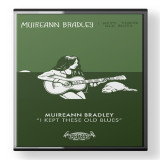
Muireann Bradley is a young blues, ragtime, roots and folk guitarist and singer based in Ballybofey in County Donegal Ireland. “This is my first album. Most of these tunes were originally recorded by the great blues men and women who were making records from the 1920s and 1930s right up in some cases to the early 1970s. I have also found inspiration for the renditions recorded here in the playing of some of the musicians who began recording this music in the 1960s and later, and who in some cases learned at the feet of the greats. Many of these guitarists played pivotal roles in the 1960s blues revival and subsequent “rediscovery” of many of the greats of country blues. I grew up steeped in these old blues in the hills overlooking the valley of the River Finn just outside the town of Ballybofey in County Donegal. My father would play this music constantly at home and wherever we went in the car and talk about it endlessly whether anyone was listening or not, telling stories about the lives of these musicians as if they were legend, mythology or the evening news. My father could of course play all this stuff on guitar, I remember watching him when I was very young and thinking “I want to be able to do that”. When I was nine he agreed to teach me and bought me my first little travel guitar. I worked hard to learn how to play but as time wore on I seemed to have less and less time to practice as I became more and more invested in the combat sports I was regularly training and competing in. Then in March 2020 the first Covid lockdowns happened and all contact sports were shut down. I was lost for a while but soon found my way back to the guitar. I was now listening, playing and practicing with a new intensity and focus. In a very serious moment, I wrote out a list of tunes I was going to learn. The first tune on that list was Blind Blake’s “Police Dog Blues”. I’m not sure now how long it took to get that arrangement together but when it was ready we videoed me performing it and posted it on YouTube. It ended up getting a lot of attention, I remember my parents being quite shocked and soon after that Josh Rosenthal got in touch… and here we are! Each individual track on this album was recorded live in the studio and represents one entire take with me singing and backing myself up on guitar simultaneously. Most are either first or second takes. Nothing has been added or taken away, no overdubs or modern recording tricks of any kind have been used at all so at least in some respects this album has been recorded in the same way as those classics of the 1920s and 1930s
There can be no doubt about it, when it comes to making speakers move, Leo Cap is something of a scientist; lurking around the Deep, Dark & Dangerous realms. Following a number of EPs and track features on DDD, ‘Underground Business’ is his debut full-length album. 11 slices of audio genius, the kind of tracks that make you question your very sanity when they drop.
Leo Cap’s style is well represented across this release, and as an album is the perfect showcase of his sound. One which is known for pushing the physical boundaries to which you can exert sound systems and speakers. Literally pushing insane amounts of air when these basslines drop.
The album tells the story of Leo Cap the artist, creating beautiful things only to destroy and break them. Not only is the music a parallel for his life, it is also a form of armour, pieces collected from here and there. A protection from a paranoid existence in the dark and murky underground.
This music is his kind of Undergound Business, “it’s really deep, it’s really dark and it’s really fucking dangerous man”. All the demons, all the darkness, and also all the fun. But there are no mistakes, this is how things are meant to be, life is is both dark and light, with music as it’s abstraction.
You can turn on the music and feel these things, this is real, this is Underground Business
Van Halen did more than announce to the world the earthshaking arrival of a revolutionary guitarist. Performed by an enterprising California quartet that took its name from two of its principal members, the 1978 debut ripped headlines away from punk, injected fresh energy into a then-moribund rock 'n' roll scene, reimagined how heavy music and throwback pop could coexist, and invited everyone to experience the top-down pleasures of a beach-front Saturday night every day of the week no matter where they lived. Painstakingly restored by Mobile Fidelity Sound Lab, and the first of a multi-album series in an exciting partnership between the famous reissue label and Van Halen, Van Halen delivers feel-good thrills and hormonally charged desires like never before.
Limited to 12,000 numbered copies, pressed on dead-quiet MoFi SuperVinyl at RTI, and mastered from the original analogue master tapes, Mobile Fidelity's ultra-hi-fi UltraDisc One-Step 180g 45RPM 2LP collector's edition pays tribute to the record's merit and allows fans to experience Van Halen's original blend of raw power, Hollywood flair, and vaudeville fun for generations to come. Playing with reference-setting sonics that elevate a 10-times-platinum landmark whose importance cannot be quantitatively measured, this definitive version provides a clear, clean, transparent, balanced, and turn-the-volume-up-to-11 view of an album that birthed entirely new styles. Since MoFi's unique SuperVinyl compound allows you to crank the decibels to your wildest desires without risking noise-floor interference, prepare to not only hear but feel Van Halen in your chest, no fifth-row concert seat necessary.
The premium packaging and gorgeous presentation of the UD1S Van Halen pressing befit its extremely select status. Housed in a deluxe box, it features special foil-stamped jackets and faithful-to-the-original graphics that illuminate the splendor of the recording. No expense has been spared. Aurally and visually, this UD1S reissue exists as a curatorial artefact meant to be preserved, touched, and examined. It is made for discerning listeners that prize sound quality and production, and who desire to fully immerse themselves in the art – and everything involved with the album, from the iconic cover art to the meticulous finishes and, yes, of course, Eddie Van Halen's pioneering fretwork and his brother Alex's double-bass percussion.
Indeed, could a piece of music that transformed how countless guitarists approached their instrument be more fittingly named than "Eruption"? Likely not, and in just 102 seconds, Eddie Van Halen rewrote, reimagined, and reconfigured a vocabulary last significantly updated a decade earlier by fellow six-string wizard Jimi Hendrix. Akin to the Washington State legend, Eddie Van Halen developed his own techniques and tones all the while making his seismic accomplishments seem effortless. Devoid of the pretence, ego, and showiness that infected many of his imitators, the Dutch native sticks to a straightforward approach that underlines the authority, prowess, and visionary scope of his playing and then-unheard-of finger-tapping skills. Throughout Van Halen, he establishes himself as an instant idol – a savant whose otherworldly combination of breadth, poise, feel, speed, force, and melody seems beamed in from another galaxy.
As does nearly every song on the record, whose cohesiveness and dynamic put into perspective the advanced chemistry and one-for-all spirit the youthful band had out of the gates. Having paid its dues for years in bars and clubs – going as far as recording a 24-track demo for Kiss bassist Gene Simmons at Village Recorders only to be spurned by management companies that felt its music wouldn't go anywhere – Van Halen finally got a deserved break when Warner Bros. executives signed the group in 1977. The subsequent recording sessions further testify on behalf of the band's synergy and alignment. Completed in just a few weeks with producer Ted Templeman, Van Halen was primarily cut live in the studio with minimal overdubs and edits. The explosiveness, energy, and electricity remain definitive, and as heard on this UD1S set, put the group on a private stage – humming amplifiers, Frankenstrat guitar, bright spotlights, sweaty headbands, and then some.
Van Halen yielded just one hit in the form of a Top 40 single (a breathless cover of the Kinks' "You Really Got Me") but practically every song on the revered LP has become a staple. Named the 202nd Greatest Album of All Time by Rolling Stone and considered by countless experts as one of the best debuts in history, the record displays what can happen with four distinct talents gel and strive for the same purposes. In Van Halen's case, the latter almost always involved partying, freedom, sex, and, in the immortal words of singer David Lee Roth, living "life like there's no tomorrow." The celebration manifests from the opening notes of the strutting "Runnin' with the Devil" – announced with the blare of droning car horns, Michael Anthony's robust bass line, and Alex Van Halen's thumping drumming – and continues through the conclusion of the white-hot "On Fire," goosed by Eddie Van Halen's race-track-ready lines, Roth's flamboyant deliveries, and the rhythm section's cat-like pounce.
Picking out individual highlights on Van Halen is akin to trying to count all the stars in a clear nighttime desert sky: There are far too many to identify, once you see one you notice another dozen you didn't spot before, and the cluster is best enjoyed as a whole. What's evident over repeat listens is the sheer diversity, a fact that's often overlooked: The high harmonies and background funk of "Jamie's Cryin'"; the insistent cane-and-a-tophat shuffle and doo-wop shoo-bop vocal break on "I'm the One"; the throwback acoustic blues that spreads into fast-paced, single-entendre wildfire on the Roth-led standout interpretation of John Brim's "Ice Cream Man." Like the man says, on Van Halen, all the flavours are guaranteed to satisfy.
More About Mobile Fidelity UltraDisc One-Step and Why It Is Superior
Instead of utilizing the industry-standard three-step lacquer process, Mobile Fidelity Sound Lab's new UltraDisc One-Step (UD1S) uses only one step, bypassing two processes of generational loss. While three-step processing is designed for optimum yield and efficiency, UD1S is created for the ultimate in sound quality. Just as Mobile Fidelity pioneered the UHQR (Ultra High-Quality Record) with JVC in the 1980s, UD1S again represents another state-of-the-art advance in the record-manufacturing process. MFSL engineers begin with the original master recordings, painstakingly transfer them to DSD 256, and meticulously cut a set of lacquers. These lacquers are used to create a very fragile, pristine UD1S stamper called a "convert." Delicate "converts" are then formed into the actual record stampers, producing a final product that literally and figuratively brings you closer to the music. By skipping the additional steps of pulling another positive and an additional negative, as done in the three-step process used in standard pressings, UD1S produces a final LP with the lowest noise floor possible today. The removal of the additional two steps of generational loss in the plating process reveals tremendous amounts of extra musical detail and dynamics, which are otherwise lost due to the standard copying process. Every conceivable aspect of vinyl production is optimized to produce the most perfect record album available today.
MoFi SuperVinyl
Developed by NEOTECH and RTI, MoFi SuperVinyl is the most exacting-to-specification vinyl compound ever devised. Analogue lovers have never seen (or heard) anything like it. Extraordinarily expensive and extremely painstaking to produce, the special proprietary compound addresses two specific areas of improvement: noise floor reduction and enhanced groove definition. The vinyl composition features a new carbonless dye (hold the disc up to the light and see) and produces the world's quietest surfaces. This high-definition formula also allows for the creation of cleaner grooves that are indistinguishable from the original lacquer. MoFi SuperVinyl provides the closest approximation of what the label's engineers hear in the mastering lab.
Parisian quintet En Attendant Ana's third album "Principia" is without a doubt their best yet. Bandleader Margaux Bouchaudon's voice anchors many of the songs on "Principia". The songs were composed from a place of confusion about the state of the world and their place in it, looking outward and inward for answers. Guitarist Max Tomasso - newly joined just before the recording of "Juillet" - feels more "moved-in", his guitar-work gliding effortlessly through. New member Vincent Hivert's bass-work is rubbery & flexible, urging on drummer Adrien Pollin's metronomic swing. The band's secret weapon, multi-instrumentalist Camille Frechou's trumpet & saxophone add a new layer of sophistication to the group's debonair indie pop. Bouchaudon says "One of the most important points we tried to focus on was the place given to each instrument. For the first time, we withdrew parts, we were careful not to play everyone at once and I think that the result is a much lighter album in which every musician has a specific place and moment". "Principia" is a great step forward without sacrificing the things that make the band unique, and absolutely feel like the next great phase of an already great band.
KID FRANCESCOLI, leader of the French Riviera Touch is back with the stellar album SUNSET BLUE out Sept 22nd 2023.
After a first sold-out world tour (over 200 concerts in Europe, USA, Asia...), and successful hits such as Nopalitos, Blow Up or Moon (now certified diamond, with more than 200 millions streams), the Marseille-based producer, crooner and multi-instrumentalist, Mathieu Hocine, is eager to share his most accomplished LP ever. This fine collection of soulful songs honor his Mediterranean roots, with elegant and pop melodies. His most recent success and the creation of his first original soundtrack with AZURO, installed him as one of the best French songwriters of his generation, with a unique signature sound.
"I live in Marseille, I spent my childhood in Corsica, I have Algerian origins, my first vacations with friends were in Barcelona, vacations with my first girlfriend in Roma,... Then, I had the chance to perform in Morocco, Greece, Turkey and Egypt: each time I spent time in the Mediterranean region, the people I met there made me feel like I was part of the same country. This shared multiculturalism is really comforting, it has its own poetry and strength, bringing uniqueness and empathy to the people. It is essential for me. I love my city: it’s the perfect place to feel good with sun, sea, family, friendships, love... It gets me emotional, bringing tears with a smile".
With his new musical gem, Mathieu Hocine unveils 11 elegant tunes of his finest craft: sunbathed French Touch (Run Run, 1986), romantic chillwave (Corsica), uplifting synthpop (You Are Everywhere, Like Magic), electronic-soul (Casino Soul), cinematic disco (Solaris), cosmic R&B (Sweet and Sour, Take Time), … Everything is in this record.
For the first time ever, Kid Francescoli paid tribute to his mixed origins with his collaboration with world-renowned lute and mandolin player Hakim Hamadouche (Rachid Taha, Patti Smith, Brian Eno, Tricky...), whom added Algerian patterns to the introspectives songs Drift in Blue and The Morning After.
"My ambition is to create pictures in people's heads with music, to transport them instantly into a movie"
SUNSET BLUE is an instant-crush album: crystal-clear, strong, personal but universal at the same time.
It's an ecstatic soundtrack for this moment when time is suspended, the golden hour when everything seems possible. It feels like Love is in the air, you're living your best life and you're at the right place at the right time. This album embodies this magic moment where we would like to last forever… Like an epiphany, Kid Francescoli's new album is a moment of pure pleasure, a soothing way to escape reality.
"I see myself as a melodist.I would like my music to feel like velvet. There's something cinematic, classy about it, and yet comforting. It's very simple, popular and synonym of love and passion"
His friend French 79 co-produced the album, while the american rapper Bamby H2O brought his NYC swag (on Sweet & Sour), Stan Neff (Polo & Pan, Kungs, Christine and the Queens...) took care of the mix and Alex Gopher (Daft Punk, The Blaze, Bon Entendeur...) added a final touch of magic when mastering. Nicolas Despis (known for his work with Etienne Daho, Hoshi, Juliette Armanet... and many famous French rappers) later joined this dream-team to craft custom-made artworks. SUNSET BLUE is a deeply personal quest, a human adventure for Mathieu Hocine (whom explores his maghrebian origins, his feminine side, his subconscious space, ...). It's a male's work, but don't get it wrong, this LP would be nothing without women’s touch : Julietta (on Run Run and Take Time), Sarah Gaugler from Turbo Goth (on You Are Everywhere and Like Magic), and iOni (on Drift in Blue).
“Music has this magical power to broaden your vision of the world. It's fascinating because, like dreams, it's the kind of irrational things science can't explain and that makes life exciting."
Planets aligned perfectly on this project and thanks to this five-star cast of collaborators, Kid Francescoli achieved his personal holy grail : he orchestrated a great 21st century pop-music album.SUNSET BLUE is a new turning point between organic and electronic, both a mediterranean travel and a Californian dream, a bridge between Ennio Morriconne and modern electronic music.
Also, while it might be called SUNSET BLUE in honor of the sea and the Portuguese / Brazilian concept called “saudade”, but it is a really optimistic album, whose true colors would rather be "yellow-orange-red" in nod to the sun.
Created in the midst of the world tour, SUNSET BLUE is a direct result of the lives’ energy and fans’ joyful vibes: going back in the studio after smiling, singing and dancing with people all around the world inevitably gave Kid Francescoli the desire to retranscribe this ecstatic feeling in music. This album is a sensitive experience, from sunrise to sunset, from first track to last one. It’s an exploration of an everlasting summer, reaching its climax in the very final seconds of the track Corsica, making us want to press play and dive into this jewel all over again.
A beautiful cosmic trip, whether you like to stay in bed cocooning, to travel far, far away or to dance ‘till dawn, to catch the first rays of light.
Make sure to catch Kid Francescoli on his next world tour to have a good time.
- A1: Jeito Bom De Sofrer
- A2: Papo Furado (Jive Talking)
- A3: Xibaba (She-Ba-Ba)
- A4: Andei
- A5: Back Streets Of Havana
- B1: Flora's Song
- B2: San Francisco River
- B3: Vera Cruz
- C1: Celebration Suite
- C2: Casa Forte
- C3: From The Lonely Afternoon
- C4: Black Narcissus
- D1: When Angels Cry
- D2: O Sonho (Moon Dreams)
- D3: Summer Night
- E1: A Secret From The Sea
- E2: O Cantador / I Just Want To Be Here
- E3: Light As A Feather
- E4: O Canto Da Sereia
- F1: Open Your Eyes You Can Fly
- F2: Hot Sand
- F3: Parana
- F4: Jump
- G1: Fingers (El Rada)
- H1: Samba De Flora
- H2: Amajour
- H3: The Road Is Hard (But We're Going To Make It)
- I1: Above The Rainbow
- I2: Love Lock
- I3: What Can I Say
- I4: Musikana
- J1: The Happy People
- J2: Peasant Dance
- J3: Dom-Um (A Good Friend)
- J4: Outernational Meltdown - Hungry On Arrival
- G2: Toque De Cuíca
- G3: Romance Of Death
Airto Moreira and Flora Purim, the legendary King and Queen of Brazilian Jazz, have captivated audiences for over six decades with their vibrant albums and exhilarating live performances. With a dedicated global fan base including the UK's jazz funk and jazz dance scene to Japan's concert halls, the power couple continues to make waves in the industry – Flora's 'If You Will' (2022) album was even nominated for a Grammy! The duo met and came together musically in Sambalanço and the Sambrasa Trio. The mixture of Airto's rural Brazilian background and percussion talents and Flora's classical training and involvement in the underground Bossa Nova movement, created a unique blend of sounds that resonates across generations. They have not only collaborated with music legends like Miles Davis and Chick Corea but have also produced ground-breaking music alongside the likes of Hermeto Pascoal. Despite facing numerous challenges, including Flora's arrest and incarceration in 1974, the duo's close connection with friends-musicians like Thelonius Monk and Cannonball Adderley, their persistence and absolute passion for music have propelled them to the pinnacle of success. They worked with renowned musicians like Wayne Shorter, Jaco Pastorius, Herbie Hancock, Joe Henderson, McCoy Tyner, George Duke and producers such as Orin Keepnews and Creed Taylor. Having been a part of numerous prestigious ensembles, including Dizzy Gillespie's United Nations ensemble, Airto and Flora's journey is a testament to their innovation and devotion to their craft. This collection offers a glimpse of that incredible journey, showcasing their extraordinary talent and unique sound and it’s also the first comp scanning their 60 year careers Compiled by Straight No Chaser editor/publisher Paul Bradshaw & Totally Wired Radio presenter Roberta Cutolo. Àṣẹ.
FAT JON returns with the 2nd installation of "tephlon Funk". This 12 track LP serves as a soundtrack to the eponymous manga published by Dark Horse Comics and comes with a 12"x12" manga poster, with a full print jacket. A must have for fans of FAT JON's work as Five Deez and on the Samurai Champloo soundtrack.
After releasing his seventh - arguably best and most popular album - The Odd Shower, The Bitter Springs' singer / songwriter Simon Rivers reinvented himself as Poor Performer, whose own debut, Like Yer Wounds Too, followed the same winning formula, widened somewhat by the inclusion of songs with a greater fragile beauty and introspection . . . though rarely without a degree of self-effacing humour and a rather stylish wit. Decades of self-releasing compact disc-only albums from the far southwestern suburbs of London, with scant regard for promotion or the normal machinations of showbiz - touring, for instance - did little to spread the word about Rivers' unique and prestigious talents. A conversational singer with a delightfully warm and convivial stone, Rivers' sense of the absurd and willingness to portray aspects of life generally unrecognised by pop music, one supposes it's not entirely unfair to have expect Top of The Pops to come calling. Yet the relative absence of cult of Simon Rivers fans is somewhat perplexing, for his lyrics, ideas and tunes all do merit it. There's little affectation in the sense of stage persona, but heaps of personality and intriguing, occasional perverse idea. It's hard to listen to anything he's down without a degree of sheer enjoyment. It's real, without affectation. The very real bumps heads with the slightly mental, just like in life! So what does this new guise - Oldfield Youth Club - have to offer? It's partially a revival of Rivers' first 'real' band, Last Party, and it displays hallmarks of that band's youthful energy. There's a bit of teen glam in Good News I'm Afraid and (Theme From Oldfield Youth Club, even while lead track We're The OYC and When Bob Grant Ruled The World add a dollop of an energetic ruefulness to the mix. A Kind Of Loving In A Loveless Town is an immediate classic, a song one could hear dozens of times before really reaching the core of its magic and majesty. Lest this sound like the work of a solo artist, it does feel like a band - a rather clever one, in fact. Including members Kim Rivers and Neil Palmer (both from Last Party), as well as trumpeter / vocalist Alison Targett, Oldfield Youth Club is a band with an obvious musical kinship. There's a connection to the literal style of Vic Godard's Subway Sect (and members have been shared between both acts) or early Go-Betweens . . . there's an alchemical sensibility shared by all three acts wherein their words and tunes inform each other in a deceptively casual but arresting manner. It's hard not to love, a rare work that earns immediate affection and just grows better from there.
Produziert von Joe Bonamassa und Josh Smith in den Ocean Way Studios in Nashville, Tennessee, enthält 'The Blues Album' Joannes persönliche Coverversionen von elf seltenen Blues-Klassikern. Dabei zollt sie Künstlern und Bands Tribut, die nicht zur offensichtlichen Auswahl gehören, wie z.B. Little Village, Little Milton, The Fabulous Thunderbirds, James Ray, covert gleichzeitig aber auch bahnbrechende Blues-Ikonen wie Albert King, Peter Green von Fleetwood Mac und Magic Sam. Einige Songs sind B-Seiten von Singles. War es eine bewusste Entscheidung von Joanne, Songs zu covern, die keine bekannten Blues-Standards sind? 'Wir versuchen, nicht die ausgetretenen Pfade des Blues zu gehen', erklärt Bonamassa. 'Jeder Song muss für sich selbst stehen und gleichzeitig den ursprünglichen Meistern Tribut zollen.'
- Al Green - Let's Stay Together
- Etta James - I Just Want To Make Love To You
- The Platters - The Great Pretender
- Screamin' Jay Hawkins - I Put A Spell On You
- The Shirelles - Will You Love Me Tomorrow
- James Brown & The Famous Flames - Think
- Aretha Franklin - Try A Little Tenderness
- Ben E. King - Stand By Me
- Peggy Lee - Fever
- The Clovers - Love Potion No. 9
- Ike & Tina Turner - A Fool In Love
- The Drifters - Save The Last Dance For Me
- The Impressions Feat. Curtis Mayfield - Little Young Lo
- Aretha Franklin - God Bless The Child
- Stevie Wonder - Contract On Love
- Al Jarreau - Ain't No Sunshine
- The Marvelettes - Please Mr. Postman
- Bob & Earl - Harlem Shuffle
- O.v Wright - Let's Straighten In Out
- Esther Phillips - Release Me
- Otis Redding - These Arms Of Mine
- Gladys Knight & The Pips - Every Beat Of My Heart
- The Supremes With Diana Ross - Your Heart Belongs To Me
- Sam Cooke - (What A) Wonderful World
- Betty Wright - Clean Up Woman
- Al Green - Tired Of Being Alone
- Everly Brothers - All I Have To Do Is Dream
- Barry White - Ghetto Letto
- Curtis Mayfield - She Don't Let Nobody (But Me)
- Dionne Warwick - Don't Make Me Over
- Ray Charles - Unchain My Heart
- Ann Peebles - I Can't Stand The Rain
- Galt Macdermot - Coffee Cold
- Aaron Neville - Hercules
- Gwen Mccrae - 90% Of Me Is You
- Ben E. King - Spanish Harlem
- Dinah Washington - Mad About The Boy
- James Brown - Please, Please, Please
- Brenda Lee - I'm Sorry
- Gene Chandler - Duke Of Earl
- Lavern Baker - Love Me Right
- Syl Johnson - I Hate I Walked Away
- Timmy Thomas - Why Can't We Live Together
- Nina Simone - Plain Gold Ring
Re-release Soul entwickelte sich gegen Ende der 1950er Jahre aus Rhythm"n"Blues, Gospel, Blues und Jazz. Im folgenden Jahrzehnt war Soul ein Synonym für schwarze Popmusik. Kennzeichnend dafür waren vor allem die Produktionen von Motown Records, zum Beispiel Diana Ross & The Supremes oder Sam Cooke. Seither sind herzergreifender Gesang und groovige Vibes die größten Stilmerkmale des Soul. Zu den weiteren Ikonen des Soul gehören Curtis Mayfield, James Brown, Aretha Franklin, Barry White, Sam Cooke, Al Green und viele mehr. Deren Erfolg ist eng mit dem Kampf der US-amerikanischen Bürgerrechtsbewegung gegen Rassentrennung und für Gleichberechtigung verbunden. 1969 benannte man die Rhythm"n"Blues- in Soul-Charts um. Der Soul-Orkan, der während der Sechziger in den Charts tobte, ebbte jedoch wieder ab, kam aber runderneuert in den 70ern als Phillysound wieder zu erneuten Hitparadenehren. 1982 änderte man die Chart-Bezeichnung von Soul in Black Music. Die vorliegende Kompilation vereint die legendären Stimmen des Soul mit ihren unvergesslichen Hits.
- Fred Astaire - Cheek To Cheek
- Louis Armstrong & His Orchestra - When You're Smiling
- Nat "King" Cole - My Baby Just Cares For Me
- Vic Damone - Let's Fall In Love
- Tony Bennett - I'm A Fool To Want You
- Gene Kelly - Singin' In The Rain
- Chet Baker - I Fall In Love Too Easily
- Frank Sinatra - I've Got You Under My Skin
- Perry Como - Papa Loves Mambo
- Sammy Davis Jr. - Something's Gotta Give
- Frankie Laine - I Can't Give You Anything But Love, Bab
- Johnny Mathis - Wonderful! Wonderful!
- Cab Calloway - Minnie The Moocher (Theme Song)
- Bing Crosby - Autumn Leaves
- Dean Martin - Sway (Quien Sera)
- Harry Belafonte - Day O (The Banana Boat Song)
- Bob Mcfadden & Dor - The Beat Generation
- Paul Anka - Put Your Head On My Shoulder
- Bobby Darin - Beyond The Sea
- Joao Gilberto - Chega De Saudade
- Mark Murphy - Firefly
- Oscar Brown Jr - Dat Dere
- Louis Prima, Sam Butera, Gia Malone & The Witnesses - S
- Mel Tormé - Comin' Home Baby
- Andy Williams - Moon River
- Leon Thomas - Song For My Father
- Brook Benton - Love Me Or Leave Me
- Bobby Cole - A Perfect Day
Die Wiederveröffentlichung eines Klassikers: Deer Ticks Debüt-Meisterwerk War Elephant jetzt erhältlich auf "heavy metal grey" Zweifach-Vinyl mit einer Ätzung auf Seite D und dem Original-Cover-Artwork. Ein bedruckter Einleger liegt bei.
John McCauley III hat das Album im zarten Alter von 21 Jahren geschrieben, arrangiert, eingespielt und aufgenommen. Es ist voll von Liedern, die weiser und nuancierter sind, als man für einen jungen Mann in seinem Alter vermuten könnte. Die Texte sind nachdenklich und warmherzig, ganz im Stil von Johns Singer/Songwriter-Helden wie Townes van Zandt, Neil Young und Richie Valens. Das Album endet mit einer Coverversion des 1962 mit dem GRAMMY? ausgezeichneten Songs des Jahres "What Kind of Fool Am I" von Sammy Davis, Jr.
Ein Debütalbum das sich der Genrekategorisierung entzieht und schon jetzt als Klassiker gilt. Ein Barroom-Rock-Album voller Hooks, das mit der eingängigen Düsternis der 90er Jahre in Seattle ebenso verbunden ist wie mit dem Honky Tonk der späten 80er Jahre in Minneapolis und den 70er Jahren in Austin.
Swedish producer Max I Million is simply on another level in the world of creating lush, jazzy hip-hop instrumentals, and he proves that point over and over again on his latest album, Shine On… From one
track to the next, the immensely talented beatsmith finds new ways to dazzle the ears with layers of creatively flipped samples, earworm melodies, and innovatively created sounds from household items. From the intro to the outro, Shine On…
embodies the spirit of what makes his music so compelling. This is the type of record you could put on your turntable and relax until you’ve had your moment of zen, or dig into the details of the music, like the unreal layering of “On My Mind” or the muddy funk of “Don King.” Those choices, both big and small, exemplify the love that Max put into this record, and they’re why Shine On… is absolutely his finest work yet.
Somebody somewhere once said that music doesn't mean anything; it is meaningful.
The Czecho-slovakian instrumental trio, Inheritance, invite you to rediscover their sonic journey with the reissue of their previous EPs, "Frames" (2014) and "Saturate" (2016), now elegantly entwined into a single captivating package released for the first time on vinyl, on Weltschmerzen. Comprising of the trio Jakub Volovár (guitar), Alex Strapková (piano), and Peter Kušnírik (drums), Inheritance was active in the mid 2010s in Brno, later unfortunately disbanding due to own personal pursuits.
Frames // Saturate embodies the melancholic and melodic tension characteristic of contemporary post-rock, complemented by the whimsy of piano-led instrumentals with a tint of indie-playfulness and a very slight yet powerful grain of sludge heaviness that can be traced back to Volovár's and Kušnirik's earlier post-metal project, Dawn to Come.
"Frames // Saturate" is first and foremost a compact sonic voyage. Volovár's evocative yet precise guitar work builds complex yet airy scaffolding, while Strapková's piano melodies create a tapestry of moods around it. Both EPs showcase Strapková's piano prowess, transforming each composition into a living organism. Kušnírik's drumming then acts as the steady pulse, guiding you through. These songs encapsulate the kind of mutualism and appreciation for (musical) interdependence that you can only develop throughout the years of practice and playing live.
You can hear how much fun it was for the band to play these songs, and that sense of joy translates directly into your own listening experience. It's the kind of music that makes you pick up an air guitar, (piano, or drums) - and sometimes everything all at once. It is music serious and poetic, yet fun and moving and complex at the same time.
2023 Repress
It's the quiet ones we should watch, they always say. Which is particularly astute advice right now, when loud, constant self-declaration and saturated 'brand' visibility have become the norm. But above the babble and brightness, some voices will always speak quiet volumes - with calm eloquence and the kind of certitude that comes from valuing the playing out, not just the prize.
Sweden's José González is just such a voice. He first charmed his way into the UK's earshot via the murmurous and elegant, classically finger-picked folk pop of his 2005 album, Veneer, which has since sold over a staggering 430, 000 copies in UK alone. Two years later came In Our Nature, a further exploration of José's influences (Argentinian Folklore, the '60s US folk tradition and the British pastoral folk-pop style of the same era), on which he resisted the temptation to beef up his alluringly introvert aesthetic. The albums made the UK Top 10 and Top 20 respectively.
Conceived as the natural third part in an acoustic trilogy, Vestiges & Claws is a(nother) hushed and delicate solo set that forefronts the artist and guitarist's compellingly intimate vocal style and intricate playing technique, but it's often strikingly rhythmic in nature and cohere's perfectly, with hand claps and taps on the body of his instrument underlining the songs' mantric rise-and-fall pattern, while elsewhere, over-dubbed guitar parts and multi-tracked vocal harmonies entwine to sweetly immersive effect.
The title refers to both cultural practices and biological features that survive despite having lost their original function, and to currently useful tools, ie the 'claws' of modern life.
Vestiges & Claws was recorded almost entirely by José and self-produced, mostly in his Gothenburg home, using computer plug-ins to achieve a warm, analogue sound. He prefers working alone, mainly for artistic reasons. 'There were a couple of things that enabled me to complete this record: one was curiosity, to be able to play percussion and do a lot of harmonies and also to produce and mix the album; the other was aesthetics. I love to listen to Arthur Russell and Shuggie Otis, to music that has been done mostly by one person in their solitary state.'
As José sees it, the record is his personal, 'zoomed-out eye on humanity on a small, pale blue dot in a cold, sparse and unfriendly space. The amazing fact that we are all here, an attempt at encouraging us to understand ourselves and to make the best of the one life we know we have - after birth and before death.
With Scream If You Don’t Exist, Richie Culver metamorphoses from outsider musician to underground fixture, feeling his way from the fringes towards a growing community of musicians that have gravitated towards his singular sound world. Building upon the stark catharsis of his previous dispatches, on his sophomore album the artist draws from grimdark drone, industrial noise, experimental hip-hop and UK rave to map out a space for himself, caught between genre and discipline. While on his debut, I Was Born By The Sea, Culver took a last glimpse back at his grey, salt-flecked past while struggling towards somewhere brighter, here, he documents the process of finding fresh waters, parsing through the complexity of inhabiting a more open and optimistic place while contending with the weight of his resolve, staring hard won self-acceptance in the face. The album’s title speaks to this creative and emotional work, serving both as the foundational paradox from which the artist’s new discordant sound emerges and as a call to action, a defiant cry in the face of existential angst.
Part of this process involves visiting familiar territory with renewed focus. Macabre opener ‘Hottest Day Of The Year’ signals an unpleasant memory with crow caw, queasy, gas leak ambience and dental drill whir as Culver recalls a life lived in nihilism: “Everything is just something that happened / Reductionism, muscles spasms, a mother’s first contraction.” Yet, on Scream If You Don’t Exist, Culver’s irresistible formula for ragged machine poetry is shot through with palpable urgency. No longer listless and despairing, he finds new intricacies for these compositions, tracing a stark interplay between crushing bass excavations and penetrating vocal clarity, a contrast picked out in the delicate threads of rhythmic pulse suggesting themselves in the blunt pressure and skittering creep of ‘Weakness’, on which Culver offers up vulnerability as a tentative solution to self-described emotional constipation: “Please do / Do take my kindness for weakness / For I am weak / And that is ok.” The amniotic soundscape of ‘YOLO (then u die)’ gives way to depth charge drone and unnerving machinic improvisations, like a noise show heard from deep in the Mariana trench, while on ‘Underground Flower’ the low-end fog lifts to reveal a brighter, colder scene. “Love me for who I could be / Not who I am,” he pleads, tending gently to his own tenacious bud.
Scream If You Don’t Exist gives us a glimpse of this flower in bloom. On the album’s cursed self-help tape title track stuttering loops of off-kilter keys and childlike repetition make light of the very real risk of disappearing all-together, a nervous breakdown rendered as a malfunctioning nursery rhyme. Paranoiac anthem ‘Say 4 Sure’ introduces bit-crushed boom-bap stomp, as though hammered out on a water-logged Game Boy, swarms of loose-wire noise sparking up against guttural grunts and ragged exhalations, while ‘On The Top’ enacts a seance for the hardcore spirit, with loops of rave piano and hiccuping vocal chops pirouetting through knackered samples, air raid sirens and the ghostly crash of breakbeat cymbals. As though in response to the solitary nature of much of his musical exploration, this time, the artist invites other voices into the world of Scream If You Don’t Exist. On ‘Swollen’, the unflinching, brimstone prophecy of Billy Woods sounds clear through an expanse of spirallic bass, preaching the same frayed gospel as Culver when he issues the quietly devastating contemporary diagnosis: “Computer broke but it still works for now / That’s the best you can say for most of us anyhow,” while another fearless correspondent from the fringes, Moor Mother, brings earthbound heft to the ambient drift and obliterating barrage of ‘Restaurants,’ teasing out meaning with elongated intonation and pitch-shifted intensity.
It’s during the album’s most meditative moments that we might recognise this space Culver has found for himself for what it really is. ‘OMG They’re Gone’ follows a chopped and slowed monologue from Culver’s wife, who works as a death doula, reflecting on her own experiences with grief and the reality of living within a culture both terrified and ignorant of the process. Floating over glistening ebb, etherised croons and luminous chimes, her words stand as a prescient reminder of the power of ephemerality. Just as Culver flourishes in imperfection, here we can find enormous strength in transcience. But it’s with ‘Just Jump In,’ which unfurls like a buoyant counterpart to the sparkling oil rigs of ‘I was born by the sea’, that Culver illuminates the hopeful waters we realise we’ve been making our steady way towards. “I know now / That you loved me,” he admits, a revelation a lifetime in the making. Through the rawest reflection Culver has found a way forward, driven by an optimism drawn from a resolve to be better, to love and be loved, an admission to weakness and the discovery of a new kind of strength. “Don’t test the water,” he reassures us and himself, “just jump in.”
Scream If You Don’t Exist will be released in November 2023 by Participant, on limited edition vinyl, and digital download . The release will be accompanied by a series of films directed by Mau Morgo, Josiane M.H Pozi, William Markarian-Martin, Simon Bus, and Bruxism.
The new recordings from The Dengie Hundred unfurl on Tain Records after a busy year releasing a solo tape on Sagome and a collaborative LP and tape with Japan Blues on Demdike Stare's DDS imprint.
Lammas Land is an album which meditates on the Walthamstow Marshes, an ever-changing watery landscape, rich with history and wildlife. The Dengie Hundred writes:
"I am sitting at my table overlooking the marshes listening to Lammas Land in November 2023, watching crows fight a never-ending aerial battle with the gulls. In summer, you can see bats from here every evening, fluttering around the windows as the light begins to fade, but today it is colder so there is smoke rising from the boats on the River Lea and the dog walkers are wrapped up tight against the wind.
Most of Lammas Land was made sitting right here, playing guitar and recording the sounds passing by. I would hang a microphone out of the window to capture the ‘putput’ boat which delivers provisions, or the trains that rattle along the tracks that cut across the marshes and up to Stanstead, carrying passengers to the airport and away.
I wonder what tourists make of the marshes as they cross them, the landscape opening up for a moment between the urban sprawl of the East End and the rampant development of Tottenham. They offer a jarring pause of green and sky. I feel very lucky to be living in that pause, a resident, for now…
The album contains a whole year of found sounds recorded from the window and while out walking. It is full of bird song and radio sounds, singing, life.
Many others have been inspired by this space, this pause. The author Esther Kinsky who wrote River, published by Fitzcarraldo Editions, captures this area so perfectly. I borrowed the two track names for this album from her book. I hope she doesn’t mind.
Also, the photographer Paul Fuller whose work reflects the atmosphere I feel here precisely. On hearing the music he wanted to collaborate on the Lammas Land project, He spent a year filming the marsh through the seasons. Some of his images are included with the vinyl release, and there is an accompanying film close to completion. I am so pleased this project is continuing in new forms.
The vinyl also contains a piece of writing, ‘Sound Fishing’, by Gemma Blackshaw, an author, art historian and curator who in a twist of fate also found herself spending time on the marshes, but that is her story, for another day."
The Dengie Hundred
Lammas Land
LP, with essay insert + five photographic prints
Cat No: TAIN02
Price: £14.49
Due next week
A: A hand full of ever thickening twilight
(Sample clips 1 / 2 / 3)
B: A string of pearls pulling
the night away
(Sample clips 1 / 2 / 3)
Repress!
To celebrate what would have been the world-renowned songwriter, Rod Temperton’s 70th birthday, one of the highlights of Heatwave’s ‘Central Heating’ album, and never before released as a single, the mystical ‘The Star Of A Story’ gets an official, remastered outing on 45! Backed with the intoxicating, funk joint ‘Ain’t No Half’ Steppin’ it’s an incredible insight into the magic of both Rod and Heatwave as a whole.
Formed in 1975, Heatwave, primarily a chart topping funk / disco outfit, dropped ‘The Star Of A Story’ an uncharacteristic yet deeply elegant and ethereal departure crafted by keyboardist, Rod Temperton. Like an eternally warming Balearic blanket, angelic, siren-like falsetto vocals from Johnnie Wilder lure from a distance as harmonies straight outta heaven drift across the airwaves.
It’s a serenade of the sweetest kind backed with sweeping cellos, soft keys and laidback acoustic guitars. A dream-inducing, drifting beauty that has been sampled numerous times by the likes of A Tribe Called Quest, The Pharcyde and Hudson Mohawke and even covered by the legendary George Benson.
On the flip side, a trademark Heatwave mid-tempo funk number, in the form of ‘Ain’t No Half Steppin’. Beginning with a head spinning intro that leads into a true showcase of the group’s collective power on the mic. Mario Mantese jams out on the bass as blaring horns, lively strings and grooving chord struts turn this up about as hot as you can get. Sultry, soulful and smooth bursting at the seams with funk richness it’s long been a staple of the some of the best DJs out there and famously sampled by Big Daddy Kane, amongst many others.
For Fans Of... Magic Sam, Otis Rush, GA-20, Albert King, Elmore James. Never before heard blues from 1969! The 2023 RSD release is now also available on black vinyl and CD! Pressed right in Cleveland, Ohio at Gotta Groove Records. On Remined Records, Colemine's re-issue imprint. Produced by Eli 'Paperboy' Reed. Recorded by Eli's father in 1969. Tapes have been hidden for over 50 years, now being released for the first time ever. "Fred Davis was a legend, but only in my living room. As a teenager, I started digging deeper and deeper into the blues records in my Dad’s collection. That was when I started to get the Fred Davis story in fits and starts. Fred could play like T-Bone Walker and had a keen voice like J.B. Lenoir, he said. He used to front a jump band in Kansas City, before something went down that sent him to prison at Leavenworth. In the summer of 1967, he ended up working alongside my Dad at Harco, the Cleveland factory where my grandfather was an executive. They became friends, bonding over the B.B. King and Bobby Bland records blaring from the AM radio on the factory floor. Fred taught my Dad the rudiments of blues guitar, but his style. Instead of barring with his first finger, he wrapped his thumb around the back of the neck. That left his other fingers free to create big, ringing voicings that imitated the Kansas City horn sections he heard in his youth. Fred could play up and down the neck and, even when he played and sang just by himself, he sounded like a full band. Or, at least, so the legend went. These were only foggy memories from thirty years previous, passed down from a father to a son. But then we found the tape. A quarter inch reel in a plain white cardboard box, hiding on a shelf in the attic. My Dad explained how it came to exist: He found some friends (acquaintances really) who had a band and some equipment. They setup in my grandparents living room where the upright piano was, and he invited Fred over to record some of his songs with the band backing him up. We found a place nearby that could dub the tape and put it on a CD for us. When we finally got the transfer back, the legend became real. With this music now professionally transferred and remastered, I can only hope that Fred Davis can finally receive the acclaim that he deserves; that he never received in his lifetime. The legend can finally go behind the confines of my living room and, with any luck, to the whole world." Eli 'Paperboy'
Banzaï Lab is proud to present 'Rogue Monsters 2', the new album from Al'Tarba x Senbeï.
Al'Tarba, the architect of sonic shadows, and Senbeï, the master of electronic textures, join forces once again on an opus that's off the beaten track.
A fusion work inspired by skate subculture, Rogue Monsters 2 transcends convention, blending heady rhythms and ethereal harmonies.
Retro samples blend with contemporary electronic melodies, recalling the fusion of styles and the abo- lition of musical chapels specific to the sound universe of 90's/early 00's skate culture. We're naturally reminded of the soundtracks to Larry Clark films (Bully, Kids), skate documentaries (Fully Flared, Video Days...) and video games (Extreme Games, Tony Hawk's Pro Skater...).
This second joint opus is much more than a simple album, it's a unique and timeless experience, fusing hip-hop, punk and electronic music.
Rogue Monsters 2 stands out in today's musical landscape, offering a bold vision of what defines an album, one that will appeal to those nostalgic for the Golden Era of the 90s as much as to those exploring new sounds.
25th anniversary limited edition yellow 2LP, download card included. Praise for What Burns Never Returns after its original 1998 release: As the purveyor of brainy, muscular instrumental rock, Don Caballero spent most of its early years labelled the “Geeks from Pittsburgh who don’t sing.” Now that the rest of the indie-rock world has warmed up to instrumental rock (see the popularity of Tortoise, et al.), Don Caballero reemerges from hiatus with its third full-length, What Burns Never Re-turns. Staying ahead of the learning curve, the band employs little of the muscle that marked its earlier efforts, instead adopting a more high-brow, abstract approach to its music making. The band is not improvising per se, but creating meticulously arranged, post-Kind Crimson-like songs that attack odd time signatures. Stunning in its acrobatic musicianship, intriguing in its relentless experimentalism, What Burns… is indeed a welcome return. — Tad Hendrickson, CMJ New Music Report // The follow up to 1995’s monolithic “Don Caballero 2”, “What Burns Never Returns” is a study in industrial-strength grace, like some archaic machine heaving in exorable arabesques. The metallic guitars and grinding rhythm section interlock with mechanistic precision, yet a very human friction shoots sparks of real beauty. — AJ Sutton, Billboard // What superior minds conceived these eight amazing instrumentals, at once impossibly complex and yet powerfully direct, and what mere men have the strength and discipline to perform them? … There are no druggy lyrics or samples or ironic reappropriations of outré instruments here - just thrilling purity and exhilarating single-mindedness.
CUT THE ENGINES is the third album by All Structures Align, following the critically acclaimed Details And Drawings and Distance And Departure (both released on Wrong Speed Records in 2022). All Structures Align began as a studio project reuniting brothers Tim and Adam Ineson of 90s underground rock heroes Nub. Their debut album Details And Drawings took everyone by surprise.
Rather than sounding like a tentative bedroom project, it arrived fully formed and with its own identity. It was an album of unhurried patience, of mounting tension (and eventual release) and it possessed a depth that rewarded repeated listens as irresistible hooks revealed themselves almost casually to the listener.
It also felt slightly out of time: no rush to the chorus, no gimmicks, no desire to pack out every second of space with sound. Lots of people agreed and the limited vinyl pressing sold out almost instantly. The follow-up came within the same year with the brothers recruiting drummer extraordinaire Neil Turpin (Objections, Bilge Pump, Polaris) to bring swing and pulse to their songs.
Distance And Departure was the result and widened their audience and acclaim further. So much so that the brothers decided to venture out and play live. To do so they brought in Oli Heffernan (Ivan The Tolerable, King Champion Sounds) on bass and Andrew Pollard (Polaris) on guitar and additional vocals.
If you’ve been lucky enough to see All Structures Align live over the last year, you’ll know this expanded band bring the songs to life beyond simple recitation. Those dynamic shifts in the music are now larger than life and fully multi-dimensional. Cut The Engines is the first All Structures Align release to capture the five-piece live band in the studio. Eight songs as spacious and measured as their previous work but with an increased directness and drama that seems to come from the interplay between people in a room.
Whilst never getting down to Ramones levels of brevity, the songs are compact and sharper than before, as though the addition of extra personnel has allowed their musical language to become more concise and effective. The songs still feel like rich novels condensed into short stories, but the band format has brought a confidence and ease to the telling that increases their impact. The resulting record is their most accessible yet, a slow-core indie-rock masterpiece that will intrigue and delight existing fans and newcomers alike for decades to come.
- A1: Ben E King - Stand By Me
- A2: The Platters - The Great Pretender
- A3: Ella Fitzgerald - Georgia On My Mind
- A4: Barry White - Lady, Sweet Lady
- A5: James Brown & The Famous Flames - Please, Please, Pleas
- A6: Timmy Thomas - Why Can't We Live Together
- B1: Sam Cooke - (What A) Wonderful World
- B2: George Mccrae - Rock Your Baby
- B3: Jimmy "Bo" Horne - Clean Up Man
- B4: Carla Thomas - B-A-B-Y
- B5: Dionne Warwick - Don't Make Me Over
- B6: Mavis John - Use My Body
- B7: Screamin' Jay Hawkins - I Put A Spell On You
- C1: The Isley Brothers - Right Now
- C2: Etta James - At Last
- C3: The Clovers - Love Potion No 9
- C4: Little Willie John - Fever
- C5: The Mar-Keys - Last Night
- C6: Brenda Lee - I'm Sorry
- C7: Aretha Franklin - God Bless The Child
- D1: Gwen Mccrae - 90% Of Me Is You
- D2: Curtis Mayfield & The Impressions - Gypsy Woman
- D3: Booker T & The Mg's - Green Onions
- D4: Bobby Byrd - Back From The Dead
- D7: Nina Simone - Work Song
- E1: Gil Scott-Heron - Lady Day And John Coltrane
- E2: Ray Charles - Unchain My Heart
- E3: Jackie Wilson - Reet Petite
- E4: Jerry Butler - He Will Break Your Heart
- E5: Mary Wells - The One Who Really Loves You
- E6: Smokey Robinson & The Miracles - You Really Got A Hold
- F1: Diana Ross & The Supremes - Your Heart Belongs To Me
- F2: Ike & Tina Turner - I'm Jealous
- F3: Doris Duke - Woman Of The Ghetto
- F4: Solomon Burke - Cry To Me
- F5: The Marvelettes - Please Mr Postman
- F6: Gladys Knight & The Pips - Every Beat Of My Heart
- F7: Dinah Washington - Mad About The Boy
- G1: Quincy Jones - Soul Bossa Nova
- G2: Betty Wright - Clean Up Woman
- G3: Esther Phillips - Release Me
- G4: The Everly Brothers - All I Have To Do Is Dream
- G5: Latimore - Let's Straighten It Out
- G6: Aretha Franklin - Try A Little Tenderness
- G7: Marvin Gaye & The Vandellas - Stubborn Kind Of Fellow
- H1: Otis Redding - These Arms Of Mine
- H2: Aaron Neville - Hercules
- H3: Rufus Thomas - The Dog
- H4: Sir Joe Quaterman & Free Souls - (I Got) So Much Troubl
- H5: Lavern Baker - Love Me Right
- D5: Lonnie Liston Smith & The Cosmic Echoes - Expansions
- H6: Gene Chandler - Duke Of Earl
- H7: Al Jarreau - Ain't No Sunshine
- I1: Ibeyi - River
- I2: Aloe Blacc & King Most - With My Friends
- I3: Kimberose - I'm Sorry
- I4: Terry Callier - Running Around (Fug City Mix)
- I5: Jamie Lidell - Building A Beginning
- I6: Asa - The Beginning
- J1: Selah Sue - This World
- J2: Cunnie Willams Feat Monie Love - Saturday
- J3: Cookin' On 3 Burners Feat Kylie Auldist - This Girl
- J4: Alice Russell & Nostalgia 77 Seven Nation Army
- J5: Greyboy & Quantic Feat Sharon Jones - Got To Be A Love
- D6: Stevie Wonder - Contract On Love
- A1: Underneath
- A2: Aida
- A3: You’ll See
- A4: Waiting
- A5: Watching
- A6: Forced
- A7: Hannah
- A8: Show Me Your Hands
- A9: Early
- A10: Foggy
- A11: Chasing
- A12: In The Back Of Our Minds
- A13: Comforting
- A14: Going In
- A15: Seeking
- B1: Aida (Lost)
- B2: The Following
- B3: Clouded Memories
- B4: Foggy
- B5: Brand New Day
- B6: Step By Step
- B7: Search For Corpses
- B8: Seeking (Reprise)
- B9: Earlier
- B12: Pulsing
- B13: The Escape
- B14: Dark Night
- B15: Waiting (Reprise)
- B16: Liebes Kind
- B10: Search Operation
- B11: Dreamscapes
• 180 GRAM AUDIOPHILE VINYL
• SOUNDTRACK FROM THE BRAND NEW NETFLIX
ORIGINAL THRILLER MINI TV-SERIES LIEBES KIND (DEAR CHILD)
• SCORE BY THE OSCAR-WINNING COMPOSER
GUSTAVO SANTAOLALLA (BABEL, THE LAST OF US) & JUAN LUQUI (THE LAST OF US, FINCH)
• LIMITED EDITION ON CRYSTAL CLEAR VINYL
Liebes Kind is the 2023 Netflix psycho-thriller series, based on the novel of the same title by Romy Hausmann. The story follows a mysterious woman’s escape from her harrowing captivity, which points investigators toward the dark truth behind an unsolved disappearance
13 years earlier. Liebes Kind starts where traditional thrillers end with redemption, but the true extent of this nightmare is revealed with the arrival of Lena’s parents at the hospital the same night.
The series is accompanied by a captivating score by the critically acclaimed duo Gustavo Santaolalla and Juan Luqui. The two released their Original Soundtrack this September with the help of Robert Messinger and Sergio Chiappetta. The globally renowned multi- instrumentalist, composer, and producer Santaolalla is also known for his Academy Award-winning scores for Babel and Brokeback Mountain, as well as the legacy score of The Last Of Us.
Despite all the dark elements of the series, the two composers were able to also capture the fragility of the characters. The Original Soundtrack for Liebes Kind is available as a limited edition on crystal clear vinyl.
Deer Tick’s debut album, ‘War Elephant’, is back (even though it never went anywhere). It is the same stellar album released in 2007 and then reissued by Partisan in 2008. This version of the album finds us returning to the original 2007 illustrated cover. This cover will become the new standard version of the album across all formats. The music and track listing remains the same.
John McCauley III wrote, arranged, played, and recorded the album at the tender age of 21. The album is full of songs wiser and more nuanced than John should have been able to produce according to natural law. The words are deliberate and heartfelt and follow the lead of singer / songwriter heroes of John’s like Townes van Zandt, Neil Young and Richie Valens.
The album concludes with a cover of the 1962 GRAMMY-winning Song Of The Year, ‘What Kind of Fool Am I’, made famous by Sammy Davis, Jr.
It can safely be said that this debut album is a genre defying classic; it’s a hook filled bar room rock album that is as connected to 90’s Seattle catchy gloom as it is to left-of-the-dial late 80’s Minneapolis and 70’s Austin honky tonk.
140g Heavy Metal Grey (gun metal grey) coloured double LP with an etching on side D, housed in a single sleeve jacket with printed insert.
Original release press included reviews from Pitchfork and The Line of Best Fit plus support from Billboard, Brooklyn Vegan, All Music and American Songwriter.
Vecchio's Afro-Rock is one big horn-heavy, bass-blasting, Latin groove funk-rock party. Only now, you're all invited because this, ladies and gentleman, is officially...a grail no more. With copies currently starting at 400 Euros for an original, this beautifully presented reissue, part of Be With's fresh campaign with Music De Wolfe, is well overdue. A magnificent and somewhat obscure library set that's just a total, cohesive joy from start to finish, this here is the soundtrack to all your smokin' summer BBQs and communal cookouts.
Afro-Rock is the debut album by Argentine keyboardist Luis Vecchio. Recorded for the sound library label De Wolfe, the album is frequently mentioned in hushed reverence among the beat digger DJ collecting crowd. It features fiery brass charts, funky bass lines, fluttering flute, choppy organ and additional hand tribal percussion. The band let loose too and jam hard; yet there's a certain thread of solidity that runs throughout, the tracks just belong together, not disparate sound and rhythm experiments like some library records; this is just straight up, no messin', consistent funk-rock FIRE! Hips will sway, heads will nod to the steady vibes. It's insanely good.
The humid, building funk of the appropriately titled "Megaton" is a dramatic explosion of swirling, dazzling organ lines, ferocious beats and heavy horns throughout. It just don't stop. The tempo slows slightly for the deep and deeply addictive "Renegade". It's all heavy jazz horn refrains, always triumphant, coupled with devastating percussive breakdowns and killer guitar riffing. It's an insistent organ-led juggernaut. The frenetic "Facade", up next, is no less driving, horns high up in the mix over rattling percussion and brilliant organs lines. Just sensational. The bright "Chabati" is another glorious extension of the optimistic Vecchio sound, the organs wilder than ever before. The moody "Green Hell" is a real highlight and closes out the A-Side with some outrageously funky refrains - be it horns, organ or guitars - and is complimented by gorgeous flute work that galvanises the piece, elevating it to downright heavenly status.
Knowing full well that he's on to a surefire thing, Vecchio opens the flipside in much the same vein. Indeed, "Boss" is yet another uptempo highlight, a sensual orgy of proud horns, hand percussion and melodic flute playing over driving organ and guitars. It's followed by "Nsambei", which is rightly adored for its briefly open drum break, fantastically propulsive percussion breakdowns throughout and the jazzy, loose organ and guitar shreds. The bright "Waboco" ups the tempo and the pressure, hanging on one hell of a guitar hook and infectious horn refrain. Perhaps foreseeing how this album would come to be viewed, the aptly-titled "Cult" is possibly the finest song on the record. Which is saying something, because this record is insanely good. Riding a steady, confident organ groove straight out the gate, the kinda melancholic flute line over the top serves as a beautiful counterpoint which the horns often come in and imitate/riff off. Goddamn this is so so good, it needs to be played everywhere. The overwhelmingly mighty 7-minute jam "Ngoma-ku" rounds out this quite staggering record brilliantly in its heavy, mid-tempo blues with countless extended solos.
The audio for Afro Rock has been meticulously remastered by Be With regular Simon Francis, ensuring this release sounds better than ever. Cicely Balston's expert skills have made sure nothing is lost in the cut whilst the records have been pressed to the highest possible standard at Record Industry in Holland. The original, iconic sleeve has been restored here at Be With HQ as the finishing touch to this long overdue re-issue.
C"mon Tigre, the innovative music collective known for their genre-blending compositions, releases their highly anticipated fourth album Habitat. Drawing inspiration from the concept of an ecosystem where various forms of life, both animal and vegetal, thrive and coexist, the album takes listeners on a sonic journey through the intricate and ever-evolving nature"s theater. C"mon Tigre"s ability to blend inï¬éuences from distant corners of the world enriches their music and visual imagery. The album is deeply inï¬éuenced by rhythms coming from Brazilian tradition, the backbone is rooted in samba, forro, through instruments and tempos that come from this cultural magnificence. However, it retains the African jazz, electronic, and mixed inï¬éuences that have characterized the project thus far. Connecting the dots, the result is a richly layered and genre-defying soundscape. The record boasts a stellar lineup of collaborations. Among these are Seun Kuti, heir to the legacy of the legendary Fela Kuti, whose afrobeat roots infuse the album with a potent and infectious energy. The record also features Xenia Franca, a dynamic Brazilian artist hailing from Sao Paulo, Arto Lindsay, recognized as a pivotal figure in the world of experimental music, Giovanni Truppi and the Californian collective Drumetrics which featured on C"mon tigre"s records since their debut in 2014.
- A1: Don't Miss
- A2: Real Oppy (Feat. G Herbo)
- A3: Hitman
- A4: Phil Jackson (Feat. Polo G)
- A5: Robberies
- A6: From The Hood (Feat. Lil Durk)
- A7: Pressure
- A8: Jimmy
- A9: Heartless (Feat. Tee Grizzley)
- B1: Jealous (Feat. Breezylyn & Tink)
- B2: Act Up
- B3: Think I'm A Hoe
- B4: All We Do Is Drill
- B5: Gangland (Feat. 42 Dugg)
- B6: Out Of The Streets (Feat. Moneybagg Yo & Hotboii)
- B7: When I Die
- B8: Family Dedication 2
Grandson is the second posthumous album from acclaimed rapper and Chicago legend, King Von. In a career that was ultimately cut far too short, King Von established himself as one of his generation's most vital storytellers, offering breathless intensity and visceral detail to animate the environment of his upbringing. Lovingly assembled by Von's closest collaborators, including producer Chopsquad DJ, the upcoming album features the same street sagas and invigorating anthems fans have come to expect. The album sees appearances from some of Von's heavy-hitting street rap peers, including Lil Durk, Polo G, Tee Grizzley, G Herbo & more. Singles include "Robberies," & "Heartless (feat. Tee Grizzley)."
- Olio 5:20
- Heaven 3:47
- Open Up Your Heart 5:22
- I Need Your Love 4:39
- The Coming Of Spring 2:42
- House Of Jealous Lovers 5:04
- Echoes 3:17
- Killing 3:37
- Sister Saviour 3:46
- Love Is All 4:15
- Infatuation
“The revelation that you didn’t need formal training to start a band in 1977 and the realization that you don’t need to be Merce Cunningham to dance are one and the same.” - Ryan Schreiber, Pitchfork,2003 47 minutes. Two sides. A single spine jacket. Confident and deliberate. Lightning in a bottle. The Rapture’s ‘Echoes’ was, and is, a clear-eyed kick in the teeth, a band at the peak of their powers and producers with an ambitious vision making. a. point. The whole ‘indie crowd finally learns to dance’ narrative is overwrought and irrelevant in 2023 - perhaps context is no longer king - but what remains clear is that this album, made by a San Diego punk band who had moved to New York via Seattle, and produced by the DFA in their own studio, where time and gear and ideas both good and bad were aplenty, maintains an energy and search for catharsis that could bulldoze even the most uptight. For whatever reason, it’s remained out of print on vinyl since its initial run. (Don’t worry, though, there were a lot of CDR promos lying around.) And now, with minimal pageantry, it’s back. Recut by Bob Weston, loud and cl
One of a kind Auftritt von Night Ranger am 09. November 2022. Im Key Bank State Theatre in Cleveland traten sie während der gesamten Show mit dem Contemporary Youth Orchestra auf. CYO besteht aus mehr als 90 Musikern im Alter von 12 bis 18 Jahren, die mehr als 40 Schulen in Ohio repräsentieren. Es ist ein komplettes Orchester, Bläser-, Streicher- und Schlagzeugensemble. Das Orchester spielte an diesem Abend zusammen mit Night Ranger bei allen 15 Songs. Das 1995 gegründete CYO hat sich zum Ziel gesetzt, Studierenden die Möglichkeit zu geben, sowohl neue als auch zeitgenössische Orchestermusik aufzuführen. Eines der regelmäßigen Projekte des in Cleveland ansässigen CYO ist die Zusammenarbeit mit bekannten Pop- und Rock-Acts wie Jefferson Starship, Styx, Pat Benatar sowie Kenny Loggins u.a. für Orchesterkonzerte mit den Werken der Künstler. Es ist ein etwas anderes Arrangement ihrer Musik, bei dem das Orchester mit dem Komponisten zusammenarbeitet. Diese Show war anders als jede andere Night Ranger-Show, sie sammelte nicht nur Spenden, sondern die Band beschloss auch, den gesamten Auftritt zu filmen um den außergewöhnlichen Abend zu dokumentieren. Diese einzigartigen Interpretationen ihrer größten Hits wurden zum ersten Mal aufgeführt. Die Setlist kombinierte die Klassiker der Band, neue Songs und Coverversionen, ein wirklich einmaligen Night Ranger-Konzertereignis.
- A1: It's Gonna Rain 3:27
- A2: Don't Care 2:08
- A3: Away From Home 2:55
- A4: Rich In A Ditch 2:46
- A5: Grandelinquent 3:09
- B1: Guerilla 3:32
- B2: Old School 2:44
- B3: Excesses 3:12
- B4: Kinetic Ritual 4:18
- C1: Thrills 2:20
- C2: Office Girls 2:16
- C3: Too Kool To Kalypso 2:27
- C4: Stay Ready 3:03
- C5: Strange Things Happen 2:41
- D1: Love Lessons 3:34
- D2: Yo Ho Ho 3:39
- D3: Someone Else 5:06
- D4: Office Talk 6:51
STEWART COPELAND'S KLARK KENT war das erste Soloprojekt eines Mitglieds von The Police. Die innovative Musik von KLARK KENT, die 1978 mit einer Reihe von Singles begann und 1980 in einem selbstbetitelten Debütalbum gipfelte (das kürzlich als limitierte Vinyl-Veröffentlichung zum Record Store Day neu aufgelegt wurde), war seit dem 1995 erschienenen Album Kollected Works nicht mehr erhältlich.
BMGs umfassende neue Sammlung KLARK KENT (erhältlich als Deluxe 2CD/2LP-Set) enthält neu remasterte Versionen aller ursprünglichen Singles, des kompletten selbstbetitelten Albums von 1980 sowie zwei unveröffentlichte Studioaufnahmen.
Kacy & Clayton first met Jeff Tweedy in the backroom of the Fillmore Auditorium in San Francisco in September 2016. The band had been invited to open for Wilco on night 4 of their annual 5-night run. While waiting for their soundcheck, Jeff appeared through a curtain backstage and introduced himself. In the conversations that followed, Kacy Anderson, Clayton Linthicum and Jeff Tweedy discussed their mutual appreciation of Davy Graham and Jeff’s understanding of Saskatchewan’s geography. Those conversations would eventually blossom into an invite to stop by Wilco’s studio, the Loft, a visit they made only weeks later. In January 2017, Kacy & Clayton returned to the Loft with a rhythm section and a batch of new songs. Over the course of 8 days, the band recorded 9 songs with Jeff Tweedy producing and Loft house engineer Tom Schick at the helm. These 9 songs are what would become the band’s fourth album, The Siren’s Song. While writing and recording The Siren's Song, Kacy & Clayton found inspiration in the music of Sammi Smith, The Everly Brothers, Link Wray's chicken shack LPs, country records with harpsichords, The Sir Douglas Quintet, Gene Clark, Jeannie C. Riley, as well as British traditional singers like Peter Bellamy and the Watersons. The Siren's Song is a product of these influences and an extraordinary progression in the band's own sound.
Orange Marble Vinyl. Middle of the Road was formed by original lead singer Sally Carr, drummer Ken Andrew, guitarist Ian McCredie and his bassist brother Eric McCredie on 1 April 1970 in Glasgow, Scotland. They had already played together under the name Part Four since 1967 and later in Latin American style under the name Los Caracas. Under the name Los Caracas they won the UK TV talent show Opportunity Knocks. They moved to Italy in 1970 because they had not found success in the United Kingdom. There they met the Italian music producer Giacomo Tosti, who gave the band their distinctive sound and gave them their international break.
Orange Vinyl. Middle of the Road was formed by original lead singer Sally Carr, drummer Ken Andrew, guitarist Ian McCredie and his bassist brother Eric McCredie on 1 April 1970 in Glasgow, Scotland. They had already played together under the name Part Four since 1967 and later in Latin American style under the name Los Caracas. Under the name Los Caracas they won the UK TV talent show Opportunity Knocks. They moved to Italy in 1970 because they had not found success in the United Kingdom. There they met the Italian music producer Giacomo Tosti, who gave the band their distinctive sound and gave them their international break.
- A1: Peter Tevis - A Gringo Like M
- A2: Don Powell - Cannibal (Cantata Ii)
- A3: Peter Boom - Splash
- A4: Christy - Solo Nostalgia
- A5: The Sorrows - Pioggia Sul Tuo Viso
- B1: Lisa Gastoni - Una Stanza Vuota
- B2: Trio Junior - Fruscio Di Foglie Verdi
- B3: Patrick Samson - Gloria
- B4: Le Voci Bianche Di Renata Cortiglioni - Guerra E Pace, Pollo E Brace
- B5: I Cantori Moderni Di Alessandroni - Matto, Caldo, Soldi, Morto Girotondo
- C1: Christy - Man For Me
- C2: Florinda Bolkan - Vai Via Malinconia (#4)
- C3: Jimmy Fontana - Metti Una Sera A Cena
- C4: Sergio Endrigo - Nuvole
- C5: Domenico Modugno - Filastrocca Vietnamita
- C6: Edda Dell'orso - Uccellacci E Uccellini (Titoli De Testa) (Titoli De Testa)
- D1: Massimo Ranieri - Luce Chiara Per Vergine "Curve Oscure
- D2: Swan Robinson - Un Po' Per Giorno
- D3: King Harvest - No One Can
- D4: Daniel Beretta - You & I
- D5: Um Amico
Während seiner außergewöhnlichen Karriere, die sich über mehr als sechs Jahrzehnte erstreckte, schuf der weltberühmte italienische Komponist Ennio Morricone mehr als 600 Originalkompositionen und einen einzigartigen und unverwechselbaren Stil, der avantgardistische Lösungen mit feinster Pop-Psych-Attitüde verband.
Zu den Künstlern, die den Maestro sampelten oder sich in ihren Produktionen von ihm inspirieren ließen, gehören: Jay-Z, Flying Lotus, Danger Mouse, Madlib, Mark Knopfler, U2.
Anlässlich des 95. Geburtstags des Maestros (10. November 2023) präsentiert CAM Sugar eine neue Sammlung von wenig bekannten Perlen, die von Morricone komponiert wurden und die 2020 die Morricone Segreto Collection ergänzen: Morricone Segreto Songbook.
Ein Beweis dafür, dass auch einer der berühmtesten Komponisten unserer Zeit noch Geheimnisse zu lüften hat.
Das Morricone Segreto Songbook enthüllt die poppig psychedelischen, düster-kinematografischen und avantgardistischen Klänge, die die ursprüngliche Sammlung kennzeichneten, mit einigen Ausflügen in den Folk-Rock der Zeit, zwischen ergreifenden Balladen und eleganten Chansons.
Diese Anthologie entstand aus dem Wunsch heraus, Morricones Filmmusiken zu erforschen und einige versteckte Perlen zu entdecken, die trotz des innovativen Niveaus der Kompositionen und der Modernität der Orchestrierung mehr oder weniger in Vergessenheit geraten oder in den Hintergrund gedrängt worden sind.
Ab dem 10.11 als 2LP oder 1-CD Digipack verfügbar.
Staff Pick in DJ Mag (print).
Sleek three tracker from Russ Brooker, a unknown quantity who is swiftly to become the name on everybody's lips, the 13threlease on Rua Sound.
"97-98" is every bit as sharp and shattered as any of the legendary tunes released in that storied era, with moody samples and a break so heavily pregnant with funk that it's a palpable relief when the levee breaks and it gives birth to some heavy rolling amens.
"Microfilm" starts off with a proper spy-flick title and immediately lives up to the name, with a cinematic sequence of cosmic cloak and dagger chimes and pads that quickly sprints off into the Pentagon in a brown flared suit with assorted extraterrestrials and the cast of Scooby Doo in hot pursuit – channelling crusty old Droppin' Science jams to great effect.
"Breathe" drops the tempo down to the 140-odd range with earthy rolling percussion, celestial atmospherics and the kind of studious and deliberate polyrhythmic funk wizardry that most producers don't cook up in a lifetime of releases, never mind on their honest-to-god-damn debut.
George Coleman (born March 8, 1935) is an American jazz saxophonist best known for his work with Miles Davis and Herbie Hancock in the 1960s. Coleman was born in Memphis, Tennessee and learned to play the alto saxophone in his teens. After his work with Ray Charles, George started working with B.B. King in 1953 and switched to playing the tenor saxophone.
George Coleman was a member of legendary outfits such as Max Roach’s quintet, The Slide Hampton Octet, Miles Davis’ Quintet and The Chet Baker Quintet. The list of his collaborations is impressive to say the least, Mr. Coleman recorded and performed with greats such as Freddie Hubbard, Herbie Hancock, Charles Mingus, Ahmad Jamal, Idris Muhammad, Pharoah Sanders, Ornette Coleman, Melvin Sparks, ArtBlakey…and many others.
Coleman was named an NEA Jazz Master, was added to the Memphis Music Hall of Fame in 2015, and received a brass note on the Beale Street Brass Notes Walk of Fame. George Coleman’s performances were included on classic recordings released by prominent labels from the likes of Blue Note, Atlantic, Prestige, Strata-East, Muse, Verve and Impulse!
On the album we are proudly presenting you today: Amsterdam After Dark (Recorded in 1978 at the famous NY Sound Ideas Studio and released on Timeless Records in 1979) the listener is treated to six majestic tracks of the highest caliber and features a remarkable outing of advanced musicianship by jazz-giants in their prime, delivering an inspirational gem of an album.
The all-star line-up includes Sam Jones (Dizzy Gillespie, Duke Ellington, Ben Webster) on bass, Billy Higgins (Donald Byrd, Thelonious Monk, John Coltrane) on drums and Hilton Ruiz (Roy Brooks, Rashaan Roland Kirk, Sonny Rollins) on piano. Most players featured here were also part of the legendary ‘Eastern Rebellion’ collective responsible for releasing multiple ground-breaking albums over several decades.
Amsterdam After Dark shows off George Coleman’s mastery of the sax, his brilliant vintage techniques and deep soulful tones. Coleman plays from the heart and is on top of his game. Expect both original compositions as well as standards, beautiful ballads with elegant (yet fierce) solos alternating between the instruments, growling blues-oriented themes…this is a contemporary sounding Hard Bop & Post-bop crossover album and a must have for any self-respecting jazz fan or collector!
- A1: Leise Rieselt Der Schnee 02:24:00
- A2: Stille Nacht, Heilige Nacht 02:20:00
- A3: O Du Fröhliche 02:53:00
- A4: Süßer Die Glocken Nie Klingen 02:45:00
- A5: Schneerose 02:40:00
- A6: Schau, Es Schneit 02:10:00
- A7: Schreib Deine Wünsche In Einen Brief 03:48:00
- A8: Ach Papi, Geh Doch Heuer Nicht Auf Die Weihnachtsfeier 02:38:00
- B1: Nürnberger Christkindlesmarkt-Walzer (Kinder-Wunderland) 03:15:00
- B2: Wünsche Zur Weihnachtszeit 02:57:00
- B3: Schau In Die Augen Der Kinder 02:58:00
- B4: Der Kleine Trommlerjunge (Durch Die Stille Der Nacht) 02:30:00
- B5: Viele Bunte Päckchen (The Christmas Song) 03:04:00
- B6: Eisblumen 03:26:00
- B7: Still, Still, Still 03:57:00
- C1: Wenn Ein Stern Vom Himmel Fällt 02:58:00
- C2: Weihnachtszeit - Kinderzeit 02:34:00
- C3: Wünsche Sind Wie Wolken 03:13:00
- C4: Merry Christmas Allerseits 04:36:00
- C5: Tage Des Friedens 02:45:00
- C6: Ein Guter Stern 03:52:00
- C7: Was Wirklich Zählt Auf Dieser Welt 02:47:00
- D1: Wer Ist Er 02:55:00
- D2: Du Allein 03:22:00
- D5: Auf Meinem Tisch Ein Weißer Bogen 03:47:00
- D6: Ihr Lieben Daheim 05:07:00
- E1: Ein Lied Für Alle, Die Einsam Sind 03:27:00
- E2: Nur Ein Lächeln 04:32:00
- E3: Ein Paar Worte, Ein Paar Töne 04:21:00
- E4: Ist Das Nichts? 04:40:00
- E5: Und Es Gibt Dich 04:08:00
- F1: Bring' Ein Licht Ins Dunkel 04:28:00
- F2: Das Jahr Deiner Träume 03:57:00
- F3: Nächstes Jahr Wird Alles Anders 03:59:00
- F4: Mein Größter Wunsch Mit José Carreras 03:52:00
- F5: Merry Christmas Allerseits 03:39:00
- G1: Jingle Bells 02:12:00
- G2: White Christmas 02:35:00
- G3: Tempo Di Natale (Weihnachtszeit - Kinderzeit) 02:38:00
- G4: Buon Natale Mio Amor (Leise Rieselt Der Schnee) 02:30:00
- G5: Magica Notte Felice (Süßer Die Glücken Nie Klingen) 02:48:00
- G6: Natale E´qui (O Tannenbaum) 02:34:00
- G7: Giorni Di Pace (Tage Des Friedens) 02:49:00
- G8: C´e´ Una Stella In Ciel Qui (Wünsche Zur Weihnachtszeit) 03:01:00
- G9: Corre E Va (Jingle Bells) 02:04:00
- H1: Bianco Natale (White Christmas) 02:39:00
- H2: Dolce Notte (Stille Nacht, Heilige Nacht) 02:23:00
- H3: Guarda Negli Occhi Del Bimbo (Schau´ In Die Augen Der Kinder) 03:03:00
- H4: Nevica (Schau´ Es Schneit) 01:59:00
- H5: Lungo Un Tavolo Di Natale (O Du Fröhliche) 02:57:00
- D3: Es Ist Zeit Für Die Liebe 03:20:00
- H6: Mon Beau Sapin 02:30:00
- H7: Minuit Chrétiens 02:38:00
- H8: Yo Creo (Ich Glaube) 03:54:00
- D4: In Dieser Welt 02:35:00
Udo Jürgens, wohin man auch hört! Nach dem Chart-Stürmer "da capo, Udo Jürgens - Stationen einer Weltkarriere" und dem kürzlich veröffentlichten Kinderliederalbum "Die Blumen blühn überall gleich" erscheint am 10. November die Edition "Die schönsten Lieder zur Weihnachtszeit". 3 CDs mit 55 Songs in 5 Sprachen, darunter deutsche und internationale Weihnachts-Klassiker, ein Duett mit José Carreras und einer von Pepe Lienhard neu arrangierten Version des spaßigen "Merry Christmas allerseits". 14 der Titel sind erstmals digital verfügbar, 2 bislang unveröffentlicht. Die einzigartige Sammlung liegt auch auf Vinyl vor. /// CD1 - Weihnachten zu Haus - Beinhaltet vierzehn Kompositionen von Udo Jürgens, darunter den Titel "Schneerose" aus dem Jahr 1967, der nach längerer Zeit wieder digital verfügbar ist. Dazu fünf absolute Klassiker: "Leise rieselt der Schnee", "Stille Nacht, heilige Nacht" (das berühmteste Weihnachtslied der Welt), "Oh du Fröhliche", (ein Lied aus Deutschland zu einer Melodie aus Sizilien), "Süßer die Glocken nie klingen" und "Der kleine Trommlerjunge" (1941 in den USA entstanden). Als Bonustrack "Merry Christmas allerseits", eine Live-Aufnahme aus Udos letztem Konzert in Zürich. Mit einer humorigen Einleitung des großen Meisters. /// CD2 - Weihnachten in aller Welt - Enthält internationale Weihnachtsklassiker wie "Jingle Bells" und den Welthit "White Christmas", geschaffen von Irving Berlin, 1947 von Bing Crosby zum ersten Mal veröffentlicht. Dazu zwei Songs auf Französisch, "O Tannenbaum" und "Minuit chrétiens", auch bekannt als "O Holy Night". Ferner alle Lieder von Udos Weihnachtsalbum "Buon Natale da Udo Jürgens", das in den 70er Jahren in Italien veröffentlicht wurde und hier erstmals digital verfügbar ist. Als Bonustrack "Yo creo", die spanische Version von "Ich glaube". /// CD3 - Zeit der Lieder, Zeit der Stille - Die Botschaft von Christi Geburt geht weit über das eigentliche Fest hinaus. Getragen von der Hoffnung, dass es Frieden werde, dass wir Menschen Freunde sind, ein Lächeln uns verbindet, dass Liebe regiert. Und dass jedes Jahr alles besser wird. Udo hat viele Songs über diese Themen geschrieben. Die emotionalsten davon gibt es auf der dritten CD zu hören. Darunter auch ein Duett mit dem Klassik-Star José Carreras "Mein größter Wunsch". Zum guten Schluss noch einmal das amüsante "Merry Christmas allerseits", neu arrangiert und eingespielt von Pepe Lienhard, selbstverständlich mit Udos unverwechselbarem Gesang. Ende gut - alles Udo!
New Zealand indie trifecta Mermaidens, are set to make a resounding splash in the music scene yet again with the announcement of their fourth self-titled album and release of the project's first single ‘I like to be alone’. The trio, comprising of Gussie Larkin (guitar/vocals), Lily West (bass/vocals), and Abe Hollingsworth (drums), has been on an impressive journey of musical excellence, boasting three critically acclaimed albums, international tours, and a slew of accolades to their name. With a sound that is both bold and adventurous, Mermaidens' music is a testament to their unwavering creativity and relentless work ethic. Their upcoming self-titled album, a product of the band's tireless efforts between 2019 - 2022, promises to be a captivating sonic journey, delving into themes of self-awareness, introspection, long-term love, and even channelling political anger and frustration. Recorded mainly at Surgery Studios in Wellington, with the engineering prowess of Lee Prebble and produced by Samuel Flynn-Scott of The Phoenix Foundation fame, the album also saw the band stepping up their production game with Gussie and Lily working their magic with Protools in their DIY home studios, showcasing their growth and versatility as artists. “Working with Sam has really been a round-trip in our creativity,” as Lily explains, “we grew up listening to Sam’s early records and here we are getting the inside scoop on how to make that kind of magic. Listening to Pegasus today still transports me to a time when I listened to music on a Walkman. In the best possible way - sometimes it felt like we’d added an evil genius to the mix, we’d be working on a song and he’d come in like a mad scientist with fresh ideas to try.” To give fans a taste of the upcoming album's brilliance, Mermaidens have released new single 'I like to be alone.' The song has been part of the band's live repertoire for a while and explores the fulfilling contentment of being alone and the struggle to convey this sentiment to a partner. Its relatable lyrics capture the essence of cherishing solitude while navigating the complexities of human connections. Gussie's candid and honest approach to self-discovery is complemented by the song's, Michel Gondry inspired video, as Gussie explains: “The giant jean pocket and denim world were created by Hannah Webster, a textile designer and illustrator based in Wellington. Hannah took all the wild ideas for props and made them come true! I’m still in awe of how she managed to sew a 6x6 metre backdrop for the denim world out of whatever scraps she could find. The video captures our playfulness and sense of humour, and is a hint of what’s to come for the rest of the music videos. I love the way the story wraps up with the three of us together, literally playing “in the pocket”. Mermaidens' self-titled album will be released on Friday 3 November 2023 and is available for pre-order now. UK listeners will be able to pick up an exclusive Rough Trade vinyl pressing in transparent red, along with an A3 poster and jumbo bumper sticker. Having released their last two albums through iconic local label Flying Nun, Mermaidens will be released independently. Creative control is an important pillar for the band, who are hands on in every facet of their projects. Mermaidens gather their community close via their hugely popular multi-city boutique festival Mermgrown, hosting peers including Womb, Hans Pucket, Vera Ellen (Girl Friday) and Kōtiro from 2021 onwards. They've been invited to share the stage with Death Cab For Cutie, Sleater-Kinney, Gang of Four, Parquet Courts, Lorde and The Veils, and have toured extensively in Europe, the UK, and Australia.
Two unreleased tracks from Brazilian Thrash Punk Metal gods, Ratos de Porao, recorded in 2022 on the same sessions as their "Necropolitica" album. Accompanied by beautifully shocking full color artwork this mean 7" presents two unreleased tracks by the kings of venomous metallized Hardcore Punk. Recorded in the same sessions as their "Necropolitica" album, these two bangers show a band at the top of their game after 40 years of career, as aggressive, rebellious and powerful as ever. Long live Ratos de Porao!
- A1: String Quartet No. 5 I
- A2: String Quartet No. 5 Ii
- A3: String Quartet No. 5 Iii
- A4: String Quartet No. 5 Iv
- A5: String Quartet No. 5 V
- B1: String Quartet No. 4 (Buczak) I
- B2: String Quartet No. 4 (Buczak) Ii
- B3: String Quartet No. 4 (Buczak) Iii
- C1: String Quartet No. 2 (Company) I
- C2: String Quartet No. 2 (Company) Ii
- C3: String Quartet No. 2 (Company) Iii
- C4: String Quartet No. 2 (Company) Iv
- D1: String Quartet No. 3 (Mishima) 1957 – Award Montage
- D2: String Quartet No. 3 (Mishima) November 25 – Ichigaya
- D3: String Quartet No. 3 (Mishima) 1934 – Grandmother And Kimitake
- D4: String Quartet No. 3 (Mishima) 1962 – Body Building
- D5: String Quartet No. 3 (Mishima) Blood Oath
- D6: String Quartet No. 3 (Mishima) Mishima/Closing
When Kronos plays a piece, they become fellow composers, true collaborators. Without them, we wouldn’t have the kind of string quartet playing that we find around us today. There are two kinds of string quartet playing: the ‘Before Kronos’ and the ‘After Kronos’.” – Philip Glass
‘Kronos Quartet has broken the boundaries of what string quartets can do.’ – New York Times
Nonesuch releases Kronos Quartet’s acclaimed album Kronos Quartet Performs Philip Glass on vinyl for the first time to coincide with Kronos Quartet: Five Decades, a year-long celebration marking the quartet’s 50th anniversary. Originally released in 1995, the album features David Harrington (violin), John Sherba, (violin), Hank Dutt (viola) and Joan Jeanrenaud (cello) performing Quartet No. 2 (Company) (1983), No. 3 (Mishima) (1985), No. 4 (Buczak) (1990), and No. 5 (1991), the first piece Glass wrote especially for Kronos. Recorded at Skywalker Sound in California, the album was produced by Judith Sherman, Kurt Munkacsi and Philip Glass. The cover art features Francesco Clemente’s painting The Four Corners (1985). At the time of the album’s release, the New York Times said, ‘It contains some of Glass's best music since Koyaanisqatsi. His ear for sumptuous string sonorities is undeniable,’ while the Washington Post called it ‘An ideal combination of composer and performers.’ It was a top 10 hit on Billboard’s Top Classical Albums, and spent 12 weeks on Billboard’s Classical chart.
In his original liner note, critic Mark Swed wrote, ‘Glass’ string quartets may contain his most intimate music. They are works through which a very public composer, perhaps the most important opera reformer of our age and a longstanding collaborator in large-scale music theater, holds up a mirror to himself and his way of composing. “In an odd way,” Glass explains, “string quartets have always functioned like that for composers. I don’t really know why, but it’s almost impossible to get away from it. It’s the way composers of the past have thought and that’s no less true for me. It’s almost as if we say we’re going to write a string quartet, we take a deep breath, and we wade in to try to write the most serious, significant piece that we can.” Glass says that as he sat down to write String Quartet No. 5, he had discovered that perhaps not taking a serious tone might be the most serious way to deal with it. “I was thinking that I had really gone beyond the need to write a serious string quartet and that I could write a quartet that is about musicality, which in a certain way is the most serious subject.”’
Glass’ first numbered quartet was written in 1966; however, he did not return to the string quartet medium until 1983, when he provided incidental music for a dramatization of Samuel Beckett’s prose poem, Company. During those 17 years, Glass had formed an ensemble and developed his style in a series of increasingly elaborate pieces for it. String Quartet No. 3 is also adapted to dramatic music, this time from his score to the 1985 Paul Schrader film, Mishima. It was with the music of Mishima that Kronos became associated with Glass, recording the string quartet sections of the soundtrack and subsequently working extensively with the composer on all five of his numbered quartets. Kronos also gave the first concert performances of Company and Mishima. String Quartet No. 4 was composed in remembrance of the artist Brian Buczak, who died of AIDS in 1988.
As Kronos’ anniversary season continues with further concerts around the world, Nonesuch will reissue Black Angels on vinyl on February 16. First released in 1990, the award-winning album includes George Crumb’s title piece, which inspired David Harrington to found the quartet. Called ‘an unusually elevated and searing Vietnam War protest’ by the New York Times, it sets a dark, powerful tone for this collection, which addresses the political/physical/spiritual consequences of war. Also featured are works by Charles Ives, István Márta, Thomas Tallis, and Dmitri Shostakovich. ‘Stylishly packaged, intelligently programmed, superbly recorded and brilliantly performed,’ proclaimed Gramophone. ‘In short, very much the sort of disc we’ve come to expect from the talented and imaginative Kronos Quartet.’ The Evening Standard included it among its ‘100 Definitive Classical Albums of the 20th Century’.
Born in Baltimore, Maryland, in 1937, Philip Glass is a graduate of the University of Chicago and the Juilliard School. By 1974, he had created a large collection of music for The Philip Glass Ensemble. The period culminated in the landmark opera, Einstein on the Beach. Since Einstein, Glass’s repertoire has grown to include music for opera, dance, theatre, orchestra, and film. His scores have received Academy Award nominations (including Kundun and The Hours, as well as Notes on a Scandal) and a Golden Globe (The Truman Show). Recent works include his memoir, Words Without Music, his first Piano Sonata, opera Circus Days and Nights, and Symphony No. 14. Glass received the Praemium Imperiale in 2012, the US National Medal of the Arts from President Barack Obama in 2016, and 41st Kennedy Center Honors in 2018.
Nonesuch’s relationship with Glass began in 1985, with the release of the score for Paul Schrader’s Mishima featuring Kronos Quartet. Over the years other Glass works on Nonesuch have included Einstein on the Beach (1993), Kronos Quartet Performs Philip Glass (1995), Music in Twelve Parts (1996), Glass Box (2008), as well as the soundtracks for Powaqqatsi (1988), Kundun (1997), Koyaanisqatsi (1998), and The Hours (2002), amongst others.
For 50 years, San Francisco’s Kronos Quartet – David Harrington (violin), John Sherba (violin), Hank Dutt (viola), and Paul Wiancko (cello) – has challenged and reimagined what a string quartet can be. Founded at a time when the form was largely centred on long-established, Western European traditions, Kronos has been at the forefront of revolutionizing the string quartet into a living art form that responds to the people and issues of our time. In the process, Kronos has become one of the most celebrated and influential groups of our era, performing thousands of concerts worldwide, releasing more than 70 recordings of extraordinary breadth and creativity, and collaborating with many of the world’s most accomplished composers and performers. Through its nonprofit organization, Kronos Performing Arts Association, Kronos has commissioned more than 1,000 works and arrangements for string quartet – including the Kronos Fifty for the Future library of free, educational repertoire. Kronos has received more than 40 awards, including three Grammy Awards and the Polar Music, Avery Fisher, and Edison Klassiek Oeuvre Prizes.
Kronos is prolific and wide-ranging on recordings. The ensemble’s expansive discography on Nonesuch includes three Grammy-winning albums: Terry Riley’s Sun Rings (2019), Landfall with Laurie Anderson (2018), and Alban Berg’s Lyric Suite featuring soprano Dawn Upshaw (2003); the 40th-anniversary boxed set Kronos Explorer Series; Nuevo (2002), a Grammy- and Latin Grammy–nominated celebration of Mexican culture; Pieces of Africa (1992), a showcase of African-born composers that simultaneously topped Billboard’s Classical and World Music charts; and Folk Songs (2017), Nonesuch’s 50th album with Kronos, which featured Sam Amidon, Olivia Chaney, Rhiannon Giddens, and Natalie Merchant singing traditional folk songs.
Zero Years Kid is the alter ego of Joachim Badenhorst, one of the most fascinating and adventurous Belgian jazz musicians from the last 2 decades. He plays with the international band Carate Urio Orchestra but also as musician with Naima Joris or Chantal Acda.
Zero Years Kid started of as a solo project, but has grown into a full and organic live band.
Badenhorst sees Zero Years Kid as a kindergarten to explore other ideas and interests besides of jazz. Together with Jan de Vroede, Lennart Heyndels and Erik Heestermans he brings a colorful amalgam of hip-hop, pop, dance and r&b with playful and poetic lyrics in his native language: Dutch. Next to his clarinet and sax he adds samples and electronica which results in a surprising fantasy world where it is wonderful to wander.
In 2019 debut album Ongerijmde Rijmen was released. Successor Geen Grenzen is ready and will be released on November 10th of this year on Klein. Geen Grenzen is an ode to breaking boundaries, to color outside the lines and to don’t get hung up on expectations.
The title track is a rework of No Limits by 2Unlimited. The song got translated, slowed-down and distorted to the universe of Zero Years Kid. The album is a poetic and humorous trip with a melancholic twist, and themes like the covid pandemic, intense arguments that are forgiven, writers-block, desire and love.
Five groups, one mythical studio - documenting the emergence of a generation!
The initial postulate was simple: five groups, one emblematic studio and 24 hours for each to imagine and record two unreleased tracks with one objective - the will to document a French jazz scene in the midst of renewal.
In these last few years, several innovative currents have shaken up the world of jazz and attracted new fans. They have bubbled up from Los Angeles, impregnated with hip-hop culture (Kamasi Washington, Terrace Martin, Thundercat), or from London, tinged with African rhythms (Nubya Garcia, Kokoroko, Ezra Collective). Meanwhile, in France, a new scene is emerging, carrying with it more of a dancefloor-oriented sound influenced by electronic music - an obvious kinship with the French Touch explosion of the late 90s.
Historically, every movement has been assimilated to a certain neighbourhood, to specific clubs where late at night, young guns stayed up to imagine the jazz of tomorrow - the Cotton Club for the jazz of the 20s, Minton’s Playhouse in Harlem for Be-Bop, the Black Hawk in San Francisco for West Coast jazz, Birdland in New York for Hard-Bop or a lot more recently, the Total Refreshment Centre which has been the playing field for the new London scene.
In Paris too, this new sound is associated with actual venues, places which have allowed these groups to form, create a repertoire and forge an aesthetic - Le Baiser Salé for Monsieur Mâlâ, La Gare/Le Gore for Photon, La Pêche in Montreuil for Ishkero, La Petite Halle for Underground Canopy and also le Duc des Lombards and le 38 Riv’ for Alex Monfort; it’s in a live context that this music will always continue to evolve.
Keeping this “live” spirit, with all its spontaneity, was actually the guiding line for the elaboration of this Studio Pigalle compilation. Each take was recorded in the most organic way possible, bringing all the musicians together in the same room to limit post-production alterations before the final cut was assembled, in just one day, by studio in-house sound engineer, Felix Rémy.
A feeling of urgency permeates a record guided by an artistic production taking care to crystalise the essence of this artistically free-range generation whose childhoods were rocked just as much by Bill Evans and Roy Hargrove as by J Dilla and Jeff Mills. One of the two tracks recorded is geared towards the dancefloor, and the other, more cosmic/ambient gives freer rein to individual interpretation.
There were therefore many possible ways of interpreting these guidelines for the five formations which number among the most distinctive on the current French musical landscape, and the occasion, for some, to rummage through their archives! With Transe (Mbappé) and Da Verdere (Vella), Monsieur
Mâlâ present us with two unreleased tracks issued from the very first rehearsals of the quintet reworked especially for this compilation. “Seen the aesthetic range of this group, it all worked out very naturally in the studio”, recounts keyboardist Nicholas Vella “Recording like they did in the sixties with all the channels live and working with small imperfections was a very interesting task, even when it came to the mix, we had to make do with the takes we had... “
“Our group is very recent, and with this session, in just two tracks, we had the opportunity to present the entirety of our musical universe,” says Photons pianist Gauthier Toux. “All too often, we assimilate this fusion between jazz and dance music to computers and post-production modifications. For “Dessine”, we kept the first take, and we must have recorded just three or four for the other track with more of a techno bent. In one day, we understood that we could play our entire repertoire live, from A to Z”.
“When the Komos label offered me this project, it immediately spoke to me”, remembers Alex Monfort “Straight away, I thought of “Since I Met You”, a track with a nine/four time signature which really is reminiscent of a new- soul groove, but with this extra cosmic vibe! I wrote the words to the chorus and Nina Tonji placed her voice on the track, adding her own verses. For “Tonight”, the up-tempo track, I wanted to head off in more of a hybrid direction inspired by Kaytranada or the Black Radio series by Robert Glasper. A cross-over between jazz and hip-hop which really does represent my world, and I also tried to place vocals centre stage (Emcee Agora)”.
“We truly resonated with the way Antoine Rajon imagined this compilation and the recording session”, confide Warren Dongué and Jérémy Tallon from Underground Canopy. “When arriving in this studio we felt as if we had gone backtothe70s! Inkeepingwiththespiritofthisera,heknewhowtoletus keep our spontaneity, without recording in too many takes, and that’s how we like to work”.
“We managed to adhere to the themes of the compilation without changing our instrumentation, we wanted to remain faithful to the sound of Ishkero on these new compositions and take them somewhere else” – says drummer TaoEhrlich -“Withoutaddinganyelectronics.Thesessionwassupervisedin a truly subtle and benevolent manner. From a human perspective, it was also a wonderful experience”.
Whether turned towards hip-hop, ethnic or electronic music, the artists featured on this Studio Pigalle compilation represent the eclecticism of a new generation in the process of writing the first chapters of its history. Open to experimentation, these artists continue to hold high an immutable love for improvisation and creation in the moment... another definition of the word Jazz!
Isabelle Adjani ist das, was man eine Ikone des französischen Kinos nennen kann. Mit ihren fünf César-Auszeichnungen (ein beeindruckender Rekord) in der Kategorie "Beste Schauspielerin" für "Possession", "Ein tödlicher Sommer", "Camille Claudel", "La Reine Margot" und "Skirt Day" hat sie keinen Zweifel an ihrem Starstatus gelassen - sowohl in Frankreich als auch international. Die Wartezeit auf ein Album von Isabelle Adjani schien nicht enden zu wollen.
Nach ihrer legendären Reise mit Serge Gainsbourg, die sie vom Grund des Swimmingpools (Adjanis eigene Worte in ihrer ersten musikalischen Veröffentlichung mit der französischen Musiklegende Gainsbourg, Pull marine) zu den Höhen des Ruhms führte, begann sie mit der unglaublichsten Besetzung zu arbeiten, die diese Ära zu bieten hatte - Benjamin Biolay, Etienne Daho, Gaëtan Roussel, Seal, Simon Le Bon, Christophe, Akhenaton, Daniel Darc, Philippe Pascal, David Sylvian, Youssou N'Dour und Peter Murphy. Diese Veröffentlichung ist das Ergebnis von 15 Jahren Sessions und Treffen, bei denen die Zeit einfach keine Rolle mehr spielte.
Das neue Album, das vollständig von Pascal Obispo produziert wurde und bei dem Pascal Obispo und Cécile de Laurentis gemeinsam Regie geführt haben, ist endlich aus seiner Puppe geschlüpft. Isabelle Adjani meldet sich mit ihrem einzigartigen Album "Bande originale" (dt.: "Soundtrack") zurück, das in Form von 12 Duetten ein musikalisches Großereignis für die Festtage sein wird.
Take the 101 north out of Los Angeles, and you'll pass by Agoura Hills, where the core duo of the band Dub Thompson grew up. Whatever you see in that town won't readily prepare you for the music they wrote while there, but you're free to look."Most everyone who's in a group who's our age lives on the Internet," says guitarist Matt Pulos. "The kinds of things that have shaped our band aren't anchored to any one time or place."Pulos and his bandmate, drummer Evan Laffer, are currently both 19 years old, and are putting that line of thought to the test; their musical influences travel from the Midwestern malaise of Big Black and Pere Ubu, to Kraut pioneers Can and Kraftwerk, while bowing to the British belligerence of The Fall and This Heat.Recording the album while living with Foxygen's Jonathan Rado at his rented house in Bloomington, the band had its first taste of a heavy Indiana summer, and all the humidity and insect life that buzzes along with it. "We woke up every day, ate hard-boiled eggs and stood on a porch," says Pulos of the experience.Their first collection of songs slyly unties the shoes of genre and convention, shapeshifts mischievously, and tramples on the promises delivered on the name itself.There are only eight songs on this rangy debut.Intense blasts of hook-filled noise rock ("Hayward!"), rocksteady marionette stomp ("No Time"), hypnotic bouts of doomy poetics ("Epicondyles"), outlandishly sexy groove rock ("Dograces"), and a number of other bite-sized forays into parts unknown are made manifest across 9 Songs. The vibes are strong here. Pulos sings and plays like he's working out long-standing grudges, pulling the most sinewy tones from an acoustic guitar and ripping huge chunks of demon flesh out of his electric. Laffer matches him step for step on the drums, an exacting presence behind the kit who pushes even the band's more placid moments into bouts of tension. Together they succeed in animating their musical ideas to startling, almost unnatural life. Reverb units, keyboards, samples and processing gluing everything together, saturated in the August heat and worn in until they sound second nature, it's like somehow you've been listening to these songs forever.
Weighing in with more of the deadly payloads that make systems weep, Alan Johnson return to Sneaker Social Club to finish what they started on 2022’s The Stillness EP.
Gareth and Tom’s sharp instinct for the fundamentals of crushing half-step pressure remain undiminished on this latest EP. Their sound palette reaches across contrasting strands of music culture, and every bar is teeming with micro details of sound design which give the tracks a living, breathing quality.
Ten Year Tonnage splits the EP open in whipcrack snares, DMZ flutes and a thick bed of sub, constantly shifting and teasing roots drops before opening up the mids and letting the low end snarl.
The chord hook on ‘Shapeshifter’ nudges towards some bold rave shapes, but there’s restraint and poise in the way the sounds get deployed. The Johnson way is one of suffocating space and uneasy tension, which obviously creates the best kind of dancefloor drama. As ‘Muay Size’ ably demonstrates, the likely lads are happy to pare a tune back to a skeletal framework and keep dancers waiting. When the pay-off comes, it’s not what you might expect, and that’s precisely why their sound is fresher than yours.
‘People Of The World’ goes even further out as it staggers and stumbles through skewed jazz samples and snatches of drums being thrown across the room. For all the splaying angles, there’s still a rock solid weight to the tune which proves Alan Johnson are more than comfortable taking things out to a weird fringe without losing their swagger.
- A1: Aretha Franklin - Try A Little Tenderness
- A2: Otis Redding - These Arms Of Mind
- A3: Peggy Lee - Fever
- A4: Aaron Neville - How Could I Help But Love You?
- A5: Stevie Wonder - Contract On Love
- A6: Gene Chandler - Duke Of Earl
- A7: Booker T. & The Mg's - Green Onions
- A8: Ben E. King - Stand By Me
- B1: James Brown & The Famous Flames - Think
- B2: Etta James - I Just Want To Make Love To You
- B3: Ray Charles - Unchain My Heart
- B4: Marvin Gaye & The Vandellas - Stubborn Kind Of Fellow
- B5: Dionne Warwick - Don't Make Me Over
- B6: The Supremes With Diana Ross - Your Heart Belongs To Me
- B7: Dinah Washington - Mad About The Boy
- B8: Sam Cooke - (What A) Wonderful World
It's been a little over ten years since Hailu Mergia reemerged on the international music scene. Following the first in a series of his classic recordings reissued in collaboration with Awesome Tapes From Africa, Mergia assembled a band and began performing live again after many years driving a cab in Washington, DC. His first show back appeared on the front page of the New York Times along with a stellar review and he took off from there performing his flavor of Ethiopian jazz all over the world in the years since, including Radio City Music Hall and Montreal Jazz Festival. Finally, we have a recorded document of the keyboard player's powerful DC-based trio _ which practices each weekend in his basement _ featuring Kenneth Joseph on drums and Alemseged Kebede on bass. Beautifully captured at one of their fiery live shows at the venerable Brooklyn non-profit cultural center Pioneer Works on July 1, 2016, the concert was recorded by PW staff and mixed by Ted Young with mastering by ATFA's expert audio extraction collaborator Jessica Thompson. The performance clarifies what many people across the globe already know: in his fifth decade of music-making Hailu Mergia continues to push the boundaries of his remarkable abilities. Mergia and his veteran band energetically and playfully unpeel layer after layer of harmonic and rhythmic interest out of a spectrum of Ethiopian repertoire. Modern jazz demands constant reinvention and improvisation, night after night creating new works out of known modes and classic standards. This band is unstoppable when it comes to turning age-old melodies (like "Tizita" or "Anchihoye Lene") upside down and inside out until they emerge as molten new works, often spontaneously. Mergia's original compositions (like "Yegle Nesh") shine brighter than ever here as well. Moving from keyboard to organ to accordion to melodica, he deftly switches instruments _ often during the same song. Mergia at 77 years old seems to be working harder than musicians half his age. "Pioneer Works Swing (Live)" brings into focus the kind of onstage group improvisation and deadly solo passages that reach for places Mergia and the band have never gone, on festival and club stages across four continents. Now that Mergia has released two new recordings along with four classic reissues, he is eager to let everyone hear what he's been doing on the road since he re-took the global stage for his victory laps. So much more than an old act from yesteryear, Mergia balances his legendary Ethiopian recordings with good old fashioned sweat-soaked live concert triumphs such as the one we have here.
The last twelve months have been a whirlwind for Henry Counsell and Louis Curran, the men who make up Joy (Anonymous). Having established themselves during the Covid-19 era by playing impromptu meet-ups on London’s South Bank, they have graduated to bigger venues, travelled to far-flung locales and recorded their second album, Cult Classics, while maintaining the spontaneous energy and irrepressible joy that made their name. Their music revels in the euphoria of being alive and all the feelings, good or bad, that come with it. It invites us into a community, draws us close and promises the night of our lives.
Recorded over the course of a year, the blueprint for Cult Classics was laid down over a two-week span at Imogen Heap’s Round House in east London. Joy (Anonymous) invited friends old and new to visit - they’d record live instruments in jam sessions upstairs and then retreat to a second room to flip and loop and generally mess with the sounds, moulding them into sizzling dance tracks. “Loads of people were coming up to me like ‘I thought this was going to be a dance record?’” Louis says, remembering the quietly beautiful music they’d be recording. “I’d be like, don’t worry about that, just keep playing.” He’d send it back to people later and they’d be floored - “That was my bit and you’ve made it... jungle!”
It was an organic and creatively fulfilling approach, one that didn’t allow any of the music to get stale or stagnate. As they built the tracks from the sounds they’d collected, Joy (Anonymous) would weave the new songs into their famously improvised live sets, testing them, refining them, taking note of the audiences’ reactions. In a year punctuated by a lot of travel, they’d also incorporate the voices of people they met along the way - “Beazley’s Poem”, which opens the record, features the words of a man who was working security at a Fred Again show at New York’s Terminal Five. “He was basically doing the opposite of his job and being a hype man, climbing on the fence and ramping up the crowd - we ended up hanging out with him - like, who’s this legend?” Louis explains. “He just speaks really amazingly about his life, all these amazing thoughts and opinions - he started jumping on the mic when we were playing, preaching these amazing messages to the crowd, like that we all need to be nicer to each other. The first time we played the record in its entirety, he introduced us and that’s the recording we’ve used.”
Joy (Anonymous) remain dedicated to the spirit of spontaneity. They shut a street down with a surprise waterside party in New York. On a trip to Copenhagen they played an impromptu set in a cafe, which turned into a house party and a night-long good time. In Lithuania, they ended up playing in a decommissioned prison. It’s harder, perhaps, to keep that spirit alive now that they are operating more within the confines of the music industry but they will keep lugging their kit to wherever the party calls for as long as they can. “I think if we lose that, we’ve kind of lost what makes us us,” Henry says.
Bursting with multi-genre reference points and disparate influences, Cult Classics is very much a dance album. The samples we made ourselves or we took from music that is quite different to dance music, but we definitely wanted to shout out a lot of the dance influences that we love,” Henry says. They listened to a lot of Daft Punk and Basement Jaxx as well as The Prodigy (“more rage stuff”), taking songwriting tips from their dance forebears, but also recording bits that felt more like jazz and motown (see: A Place I Belong and the lovely album closer, You’re In Or You’re Out). Emir Taha’s gentle classical guitar runs like a thread throughout Cult Classics, washing into the undertones of the record, tying it all together.
The album follows the beat of a night out, from frenetic, sweaty movement to the gentler winding down as the dawn breaks. At times it is euphoric, celebratory and pure, whirling fun, at others it seeks the joy in the darker emotions that life throws our way. 404 is designed to encapsulate everything about the Joy (Anonymous) journey so far. Skittering beats and ghostly vocals give way to vibrating house chords: sirens blare as we approach a dubstep drop. It’s dramatic and wild, ratcheting up, seeming to settle then hitting you with an intense and frantic breakdown before the ghostly vocal returns to lull us back into the world. It has the feel of a hungry cat playing with a mouse, toying with it before letting it get away.
What sounds like someone playing the spoons on playful, housey How We End Up Here is actually Louis’ restless habit of clicking his rings on everything, one of a myriad of calling cards and easter eggs that day one fans will recognise. They rework Miley Cyrus and Swae Lee’s Party Up The Street into a French-electro-inspired future classic, adding a note of melancholy to a tune that you can imagine hearing blaring from every car on a summer drive. The lyrics on Cult Classic are generally reassuring, inspirational, originally drawn from Henry in stream-of-consciousness freestyles. You’re fine the way you are, they seem to say - the repeated “No need to try” of A Place I Belong, the assurance that “It’s in me all the time” on In Me All The Time. Even the summery but regretful Did You Wrong hints at the growth that is possible from less than ideal behaviour. For Joy (Anonymous), joy isn’t about just being “happy” all the time - it’s about relishing every element of your being.
The name ‘Joy (Anonymous)’ is taken from the work Henry did with Alcoholics Anonymous groups: it is a way to build a community around sharing joy. Their impromptu live sets are known as ‘meetings’; they encourage fans to share moments of joy to their website. They care deeply about the scene they’ve come up in and are determined not to leave it behind. Every show is another chance to reach out and connect with people who love to come together and revel in music as loud as it can go.
Support slots for Fred Again and The Streets, wild B2Bs with Fred and Skrillex, and a set at Four Tet’s Finsbury Park all-dayer this summer have given the duo the opportunity to live out childhood dreams and introduced their infectious live shows to new audiences at huge venues.
With an album as assured and joyful as Cult Classics on the horizon (and a killer collab with The Blessed Madonna coming up), they’re only going to reach higher heights. But the essence of Joy (Anonymous) remains on the South Bank. Between shows at Ally Pally in September, they dragged their camping chairs and gear back down to the banks of the Thames: and it just felt right.
- 1: Gehe Zähle
- 1: 2 Einer Packt
- 1: 3 Louie, Louie
- 1: 4 Party
- 1: 5 Wohnung
- 1: 6 Dünne Finger
- 1: 7 Jahahihi
- 1: 8 Bessere Zeiten
- 1: 9 Mein Ernst
- 1: 0 Vater Kruses Fahrt Ins Glück
- 1: Bastard
- 1: 2 Heaven
- 2: 1 Kinderlied
- 2: Maul
- 2: 3 Alle Feind
- 2: 4 Osten War Rot
- 2: 5 Grüße Und Lügen
- 2: 6 Auf Dass Die Anderen
- 2: 7 Fertig, Raus
- 2: 8 Hund
- 2: 9 In Der Nähe
- 2: 10 Bitterwald
- 2: 11 Von Hier Zur Wand
- 2: 1 Lage Wie Laune
- 2: 13 Andersen
- 3: 1 Zurück In Den Usa
- 3: 2 Bang Bang
- 3: Kein Schulterklopfen
- 3: 4 Grüße Und Lügen
- 3: 5 Klump
- 3: 6 Stück Für Stück
- 3: 7 Bessere Zeiten
- 3: 8 Bang Bang
- 3: 9 Gehe Zähle
- 3: 10 Einer Packt
- 3: 11 Zurück In Den Usa
- 3: 12 Bastard
1988 in Hamburg gegründet (und 1991 wieder aufgelöst), war die Kolossale Jugend neben OZSWMK und Cpt. Kirk eine der ersten maßgeblichen Bands, die der so genannten "Hamburger Schule" zugeordnet wurden. 1989 erschien beim Label L'age d'or die erste LP "Heile Heile Boches" und 1990 folgte das zweite Album "Leopard II". Die dritte LP des Boxsets enthält Raritäten (Sampler-Beiträge, Single-Versionen) und Aufnahmen eines bislang unveröffentlichten Live-Konzerts aus dem Forum Enger (22.9.1989). "Heile Heile Boches" erschien 1989, im Jahr des Mauerfalls. International gab es zwar Hip Hop, Crossover, Hardcore und Alternative-Punk; in Deutschland lediglich deren Simulation oder Imitation, und außer einem inzwischen längst redundanten, wenn auch unverwüstlichen Deutsch-Punk nur wenig, das in der Musik als Bollwerk gegen den neu aufkeimenden Nationalstolz hätte dienen können. Aber es gab die Kolossale Jugend. Seit jeher am reingrätschen, nerven, ständig sich austauschend, vorantreibend und völlig immun gegen Versuche der Politik, Wirtschaft und Volksgemeinschaft sie für die heraufbeschworene Pop Nation Deutschland zu vereinnahmen. Schicksalsjahre einer Kaiserin: die Wendezeit. Das zweite Album, 1990, wurde folgerichtig "Leopard II" betitelt. Mithin sind Musik und Text auch denkbar schlecht für eine groß angelegte Verwertung geeignet; sie passieren in einem irrwitzigen Tempo. Die Texte sind maßlos, schwer zu fassen und immer einen Schritt voraus. Scheinbar ohne Anfang und Ende prasseln und hämmern sie so gewaltig drauflos, wie die Band auf ihre Instrumente drischt. Wir hören, wie jemand denkt und seine Kollegen verschaffen ihm den musikalischen Nach- und Ausdruck, den das Denken in so intellektfeindlichen Zeiten damals wie heute verdient. Aber das hat mehr mit Rockmusik zu tun, als das eingangs erwähnte, auch wenn man damit glaubte, nah am Original zu sein, denn die Reduktion und die Leerstellen sind kolossal. Und doch stand die Kolossale Jugend - die Band, die vom Himmel fiel, weil sie aus keiner klar definierbaren Tradition kam - am Anfang von etwas Neuem. Als sie sich 1992 auflöste, konnten sich weitere Akteure in und außerhalb Hamburgs an neuen Referenzrahmen mit Überschriften wie "Halt's Maul Deutschland"* oder "What's so funny about L'Age Poly d'Or" ** orientieren. Pascal Fuhlbrügge gründete und verließ L'Age d'Or, machte danach Musik mit Erneuerbare Energien, Sand 11 oder 8, sowie für Theaterproduktionen. Heute entwickelt er neben der Musik eigene Theaterstücke und spielt sie auch. Christoph Leich war dann lange Schlagzeuger bei Die Sterne und ist heute in der Musikbranche im Bereich Logistik tätig. Klaus Meinhardt zeichnete das L'Age d'Or Logo, gestaltete die Jugend-Cover, war Gitarrist beim Heinz Krämer-Werner Hornig Sextett und arbeitet als Illustrator. Kristof Schreuf starb völlig überraschend am 9. November 2022, er war Bourgeois with Guitar, Autor, Sänger und Texter der Band Brüllen. Seine Texte u.a. für taz, Jungle World und die Süddeutsche Zeitung waren Ereignisse. Die vorliegende Wieder- und teilweise Neuveröffentlichung ist ihm gewidmet.
It’s been a little over ten years since Hailu Mergia re- emerged on the international music scene. Following the first in a series of his classic recordings reissued in collaboration with Awesome Tapes From Africa, Mergia assembled a band and began performing live again after many years driving a cab in Washington, DC. His first show back appeared on the front page of the
New York Times along with a stellar review and he took off from there performing his flavor of Ethiopian jazz all over the world in the years since, including Radio City Music Hall and Montreal Jazz Festival.
Finally, we have a recorded document of the keyboard player’s powerful DC-based trio—which practices each weekend in his basement—featuring Kenneth Joseph on drums and Alemseged Kebede on bass. Beautifully captured at one of their fiery live shows at the venerable Brooklyn non-profit cultural center Pioneer Works on July 1, 2016, the concert was recorded by PW staff and mixed by Ted Young with mastering by ATFA’s expert audio extraction collaborator Jessica Thompson. The performance clarifies what many people across the globe already know: in his fifth decade of music-making Hailu Mergia continues to push the boundaries of his remarkable abilities.
Mergia and his veteran band energetically and playfully unpeel layer after layer of harmonic and rhythmic interest out of a spectrum of Ethiopian repertoire. Modern jazz demands constant reinvention and improvisation, night after night creating new works out of known modes and classic standards. This band is unstoppable when it comes to turning age-old melodies (like “Tizita” or “Anchihoye Lene”) upside down and inside out until they emerge as molten new works, often spontaneously. Mergia’s original compositions (like “Yegle Nesh”) shine brighter than ever here as well. Moving from keyboard to organ to accordion to melodica, he deftly switches instruments—often during the same song. Mergia at 77 years old seems to be working harder than musicians half his age.
Pioneer Works Swing (Live) brings into focus the kind of onstage group improvisation and deadly solo passages that reach for places Mergia and the band have never gone, on festival and club stages across four continents.
Now that Mergia has released two new recordings along with four classic reissues, he is eager to let everyone hear what he’s been doing on the road since he re-took the global stage for his victory laps. So much more than an old act from yesteryear, Mergia balances his legendary Ethiopian recordings with good old fashioned sweat-soaked live concert triumphs such as the one we have here.
- A1: I Still Can't Believe You're Gone – Willie Nelson
- A2: Love Sick - Bob Dylan
- A3: We Had It All - Donnie Fritts
- A4: Magnolia - J.j. Cale
- A5: In The Rain - The Dramatics *
- B1: By The Time I Get To Phoenix – Nick Cave & The Bad Seeds
- B2: I Don't Want To Talk About It - Crazy Horse
- B3: Dark End Of The Street - Ry Cooder
- B4: Kind Woman - Percy Sledge
- B5: Wait And See - Lee Hazlewood
- C1: Strong As Death (Sweet As Love) - Al Green
- C2: Shades Of A Blue Orphanage - Thin Lizzy
- C3: Heart Like A Wheel - Kate & Anna Mcgarrigle
- C4: When My Mind's Gone - Mott The Hoople
- D1: I'll Be Long Gone - Boz Scaggs
- D2: The Coldest Days Of My Life Pt 1 – The Chi-Lites
- D3: Roll Um Easy - Little Feat
- D4: Brokedown Palace - Grateful Dead
- D5: I Feel Like Going Home - Charlie Rich
Following on from the Primal Scream frontman’s brilliantly-received previous release for Ace, ‘Sunday Mornin’ Comin’ Down’ (accolades included being short-listed for Rough Trade’s compilation of the year), Bobby Gillespie brings us another slice of the music that soundtracks his life. And in this case, it’s his touring life. Drawing on the experience of ‘the way that the noise and clamour of the road can tire you out, wear you down and frazzle your nerves to shattered fragments of jangled exhaustion’, these are the records Bobby turns to for solace, for comfort, for empathy and for resourcefulness.
The compilation features an introduction from the man himself, talking us through his personal choices as though he’s sitting cross-legged on the carpet going through records with you in his lounge. Also long-time cohort of the band, Kris Needs has written extensive liner-notes, serving up an intensive track by track insight and analysis.
Titled after and kicking off with the Willie Nelson track of the same name, ‘I Still Can’t Believe You’re Gone’ leads us through a darker and deeper exploration than its predecessor, featuring Nick Cave’s funereal version of ‘By The Time I Get To Phoenix’ and Ry Cooder’s sparse and beautiful reworking of ‘Dark End Of The Street’. And we get there via such greats as Bob Dylan, JJ Cale, Donnie Fritts, Crazy Horse, Lee Hazlewood, Al Green, Thin Lizzy and so many more.
In Bobby’s own words: ‘These songs are soul savers to soothe frayed and battered nerves and to ease and settle the heart. They work on me like medicine every time. I would like to share this wonderful music that has given me strength, joy and inspiration over the years with you the listener, so that you too might get the same feelings of protection and inspiration that I do whenever I listen to these songs. We're all travellers on some kind of road through this life, and we all need respite from time-to-time - the music on this compilation is soul food of the highest order - I hope you enjoy it.’.
Vladislav Delay presents the fourth EP in his "Hide Behind The Silence" series with five 10" releases coming throughout 2023. Intuitive and raw music, momentary and reflective, released on Ripatti's own label "Rajaton".
Stillness is a myth. Consider concepts such as ”still water”, or ”still air” for that matter. Go to a restaurant, ask them for a glass of still water, hold it against the light and see where we’re at. Even though the water itself has been captured and imprisoned in the glass, it never stops breathing. It’s filled with tiny particles, dancing. Everything can be explained on a molecular level, but since we’re not scientists – and even if you happen to be – it’s the natural world of perception that moves me.
Still air is very similar. A hot summer’s day with zero wind feels completely still. It’s the closest I have felt to complete stillness. Or for a more urban adaptation, imagine the same vibe inside a normal apartment. In those moments, revelations and mind- blowing experiences can be had with experiments in stillness.
Try this: Just sit down for a minute on a sunny day, making sure there’s enough natural light. Do absolutely nothing. Try not to breathe for a bit. (If you need a mental anchor, you can play Cage’s 4’33” in your head but nothing else.) Watch the tiny dots of dust dancing :..’ ̈.:; ́ ́*°.,’:,. ̈ ̈ ̈ ̈:,.’
The movement is crazy, but the feeling of stillness comes from witnessing how subtle it is. In (perceived) complete stillness, every act of microscopic mobility seems to speak volumes. Yet, it feels both reassuring and oddly threatening that the stillness is never complete. What if we would need absolute stillness? Or is it just enough that we can perceive something as such? Extremes attract, so for both water and air, extraordinary movement is equally fascinating. That is also a luxury item of sorts. For us to enjoy a very ”loud” body of water or air, we need to be safe, in enough control of the situation. So when you are, it’s worthwhile to pay attention and take it all in.
A rapid flowing free with extreme strength and just barely in control. Look at that water go! No still water on this one, only ”sparkling”. A windy day when birds seem surprised how hard it is to fly, but in the end they make it. Trees bend but don’t break. The wind shows you its movement but doesn’t hurt you. It feels friendly, like a big clumsy dog that doesn’t quite understand its size.
It’s beautiful to be a guest of the elements, but not at the mercy of them. A new kind of dialogue forms.
Q&A with Sasu Ripatti:
1) Tell us something about the EP series ”Hide Behind the Silence”, what’s the idea and what can we expect?
Exploration of inaction. Of many kinds. In arts and in personal life, or at bigger and more serious levels. Questioning myself as a human being as well as an artist. Acknowledging the growing activism all around, and the very clear need for it, and how it reflects my own inaction.
Musically speaking, after Rakka, Isoviha and Speed Demon, I finally found some relief, but more importantly lost the need to go musically ever more outward and intensive. I felt quite strongly certain periods/moods from the past and they made me revisit some musical ideas or states of mind I was exploring early on.
It’s about live moments being captured, not much premeditation or editing. More intuitive and raw, even though the end result (to me) feels and sounds quite introspective and calm. It’s not very ambitious. Momentary and reflective.
2) Your music doesn’t sound very silent. Does it come from somewhere behind the silence?
Oh, this time to me it sounds quite quiet and playing with space if not silence. I don’t know what’s actually behind silence, but I think silence is the source of everything. We just don’t understand it yet.
3) What kind of thoughts or experiences gave inspiration to this series?
Writing this in Nov ’22, it’s not a stretch to say the world has been really unwell. Sometimes, like Mika Vainio put it, the world eats you up. I feel a bit like that. And I try to hide in my studio and stay away from it all, but it’s getting harder by the day. I’ve been questioning myself and thinking if what us artists are doing is worth anything, and whether it’s just a selfish thing I’ve been doing for the past 25 years, running away from everything. I haven’t come to a conclusion yet.
4) Is it easy for you to be in silence, or around silence?
Absolutely. I not only hide behind silence but I also love silence. It’s only since I started going back to nature as a grown-up person that I sensed and was enveloped by silence, true silence. I have begun to appreciate it a lot. I think all the people should spend more time in silence.
All tracks composed and produced by Sasu Ripatti.
Artwork by Marc Hohmann, photography by Shinnosuke Yoshimori.
Mastering by Stephan Mathieu for Schwebung Mastering.
Vinyl cut by SST Brueggemann.
Publishing by WARP Music Ltd.
For fans of Brian May, Slash, Zack Wylde, Classic Rock and Guitar Heroes! The Guitar Zeus 25th Anniversary 4LP/3CD set is a massive collection featuring the greatest guitar players ever including Slash, Brian May, Ted Nugent, Yngwie Malmsteem, Neal Schon, Richie Sambora, Zakk Wylde and many, many more. With 2 never released tracks featuring Tommy Thayer of KISS and Derek Sherinian (ex Dream Theater). This is the ultimate collection for any guitar enthusiast, there is nowhere else you can find this many guitar greats on one release! Curated by drum legend Carmine Appice who set the grooves for the groundbreaking psychedelic debut by Vanilla Fudge in 1967. Post-Fudge, Bogert and Appice formed Cactus (seen as an influence on King‘s X and Van Halen). Post-Cactus, the rhythm section found Grammy winning Guitar Hero Jeff Beck to form the first supergroup: Beck, Bogert & Appice (BBA). One of the premier showmen in rock, Appice became known worldwide for his astonishing live performances, in addition to becoming a highly sought-after session drummer, recording with countless artists throughout his career. In ‘76, he joined the Rod Stewart Band, touring, recording and writing two of Stewart‘s biggest hits, “Do Ya Think I‘m Sexy” and “Young Turks”. He would go on to form King Kobra, tour with Ozzy Osbourne and Blue Murder with John Sykes (Whitesnake) and Tony Franklin (The Firm)
- A1: Mack The Knife
- A2: Ain't Misbehavin
- A3: Cheek To Cheek
- A4: C'est Si Bon
- A5: When The Saints Go Marching In
- A6: Blueberry Hill
- A7: You Rascal You
- B1: Dream A Little Dream Of Me (With Ella Fitzgerald)
- B2: I Can't Give You Anything But Love
- B3: When It's Sleepy Time Down South
- B4: A Kiss To Build A Dream On
- B5: Georgia On My Mind
- B6: La Vie En Rose
- B7: When You're Smiling (The Whole World Smiles With You)
In the year 1900 a musical genius was born in New Orleans. This man
who has been aptly described as 'The man who revolutionised Jazz' is of course the King of the trumpet Louis Armstrong. Perhaps another Jazz great Duke Ellington sums it all up best when he said “Louis Armstrong is, of course, the man who, when heard playing trumpet, inspired thousands to play like him. Hundreds of thousands more were simply inspired to play the same instrument he played and who knows how many millions just loved to listen to him? Louis Armstrong is what I call an American standard, an American Original.”
There is no stopping the mighty SORCERER and in the autumn of 2023 the band will release their highly anticipated fourth album entitled ‘Reign Of The Reaper’. Again not content with repeating themselves the album features some of the darkest, heaviest and most aggressive material the band has ever recorded, and at the same time some of the most lyrical and beautiful. The band holed up in their home studios and wrote music all through 2022 and then once again headed to SolnaSound Recording in Stockholm, the studio owned, run and operated by Simon Johansson (Wolf, Soilwork) with Mike Wead (King Diamond). SORCERER are also known for their long title tracks with catchy and highly memorable choruses, and the second single ‘Reign Of The Reaper’ is no exception. Taking the listener through the realms of death and dread, this doom-laden epic with it’s many twists and turns will crush souls, leaving metal fans begging for more darkness and despair.
- King Of The Hill
- Resting Place
- Preacher 1
- Preacher 2
- Song C
- Sad Moon
- Pete & Manny
- Fortunate Sun
- Sneaking Up On Boo Radley
- Great Divide
- Line In The Dust
- See The Same Way
- Shadow Hand
- Sunlight Moon
- Listen To The Silence
- Funhouse
- Sunflower Cat
- Song D
- Swan Song
- Variations On Swan Song
- Living In The Sunshine
- Groove Infatuation
- Evening Sun
- Clown’s Tamborine
- Preacher In The Ring (Part 1)
- Fortunate Son
- Sneaking Up On Boo Radley
- See The Same Way
- Shadow Hand
- Funhouse
- Sunflower Cat
- Swan Song
- King Of The Hill
- Resting Place
Das bahnbrechende Album Spirit Trail von Bruce Hornsby aus dem Jahr 1998 wird dieses Jahr 25 Jahre alt. Im September werden BruceHornsby & The Noisemakers eine Herbsttournee, um diesen Anlass mit einer Spirit Trail:25th Anniversary Edition Box-Set.Spirit Trail 25th Anniversary ist ein 3-Album-Boxset, das das remasterte Album, vier unveröffentlichte Tracks und zehn Live-Songs enthält unveröffentlichte Tracks und zehn Live-Songs.
Black Vinyl[46,18 €]
Doppel-LP erhältlich auf gelbem Vinyl - Definitive Sammlung von Nancys seltenen Singles, Demos und bisher unveröffentlichten Stücken - Enthält 3 bisher unveröffentlichte Tracks, plus 3 Tracks, die ihr Vinyl-Debüt feiern - Das ausführliche Booklet enthält neue Interviews mit Nancy und Don Randi (The Wrecking Crew) PLUS nie zuvor gezeigte Fotos aus dem persönlichen Archiv von Nancy Sinatra - Der Ton wurde von den analogen Originalbändern von dem GRAMMYr-nominierten Toningenieur John Baldwin neu gemastert - Doppel-LP im Gatefold-Jacket mit 24-seitigem Buch - CD mit 40-seitigem Booklet // Light in the Attic feiert weiterhin die einflussreiche Karriere der Sängerin, Schauspielerin, Aktivistin und Ikone Nancy Sinatra mit einer fesselnden neuen Sammlung, "Keep Walkin': Singles, Demos & Raritäten 1965-1978", die vom GRAMMYr-nominierten Toningenieur John Baldwin neu gemastert wurde und 25 B-Seiten, seltene Singles, Cover, Demos und bisher unveröffentlichte Aufnahmen aus Sinatras reichhaltigem Katalog enthält. Das 2-LP-Set wird in einem erweiterten Klappcover präsentiert und von einem 24-seitigen Booklet begleitet (das auch in der CD-Ausgabe als 40-seitiges Booklet enthalten ist), das eine Reihe von Fotos aus der persönlichen Sammlung der Künstlerin sowie ein neues, ausführliches Interview mit Sinatra enthält. "Keep Walkin': Singles, Demos & Rarities 1965-1978" dient als Ergänzung zu der weithin gefeierten Retrospektive Start Walkin' 1965-1976 aus dem Jahr 2021, die die gesamte Karriere umfasst.
Ein wunderbar inspiriertes Kinoerlebnis von Anfang bis Ende. Eine Meisterklasse in Symphonic Extreme Metal, Mythologie und Storytelling!
Nach den heldenhaften Taten des atlantischen Volkes in 3.6.2.4 werden diejenigen, die das Glück hatten, den großen Fluten zu entkommen, nun an einem neuen Land angeschwemmt. In den Ländern und Meeren hat sich nun die Nachricht über die Länder und Meere verbreitet, die überlebt haben.
Es kursieren Geschichten über die Überlebenden, die die Gunst der Götter gewonnen haben. Diese Rätsel von Sykophanten verursachen große Unruhe und setzenChaos und Zerstörung in Bewegung. Aus Angst wird das Siegel der Büchse der Pandora entfernt, in der Hoffnung, ein gewisses Gleichgewicht der Kräfte auf der Erde herzustellen. In der Zwischenzeit verursachen die Gier und das Verlangen der Menschheit katastrophale Folgen und bringen eine so verheerende Zerstörung hervor, dass die Geister von Atlantis noch einmal zu den Drei Säulen reisen, um ein Portal zu öffnen. Riddles Of Sycophants ist eine Sammlung von Geschichten mit vielen bekannten und weniger bekannten Figuren aus verschiedenen Mythologien.
Die Geschichten des Albums sind inspiriert von der Folklore verschiedener Folklore verschiedener Nationen.
James Blunt ist mit neuer Musik zurück: Sein kommendes Album "Who We Used To Be" erscheint am 27. Oktober bei Atlantic Records, inkl. der aktuellen Single "Beside You".
"Who We Used To Be" ist das erste neue Studioalbum seit der Veröffentlichung von "Once Upon A Mind" im Jahr 2019.
Mit dem Erfolgsalbum erreichte er die Top 10 der Albumcharts in Deutschland und schaffte es bis auf #3 in Großbritannien. Für die neue Platte arbeitete der Brite nun mit einer ganzen Reihe von Produzenten zusammen, darunter Jonny Coffer, Red Triangle, Jack & Coke und Steve Robson. Seine zuletzt veröffentlichte Greatest-Hits-Sammlung "The Stars Beneath My Feet" hat mittlerweile mit mehr als 100.000 verkauften Einheiten Goldstatus erreicht.
Blunts 2004 erschienenes Debütalbum "Back To Bedlam" brachte den weltweiten Hit "You're Beautiful" hervor und gehört zu den zehn meistverkauften Alben des zugehörigen Jahrzehnts. Es erreichte - neben einer Vielzahl von weiteren Ländern - auch hierzulande die Spitze der Charts. Im Laufe seiner Karriere wurde der Brite nicht zuletzt mit zwei Echos, zwei Brit Awards und zwei Ivor Novello Awards ausgezeichnet und fünf Mal für den Grammy nominiert.
There is no stopping the mighty SORCERER and in the autumn of 2023 the band will release their highly anticipated fourth album entitled ‘Reign Of The Reaper’. Again not content with repeating themselves the album features some of the darkest, heaviest and most aggressive material the band has ever recorded, and at the same time some of the most lyrical and beautiful. The band holed up in their home studios and wrote music all through 2022 and then once again headed to SolnaSound Recording in Stockholm, the studio owned, run and operated by Simon Johansson (Wolf, Soilwork) with Mike Wead (King Diamond). SORCERER are also known for their long title tracks with catchy and highly memorable choruses, and the second single ‘Reign Of The Reaper’ is no exception. Taking the listener through the realms of death and dread, this doom-laden epic with it’s many twists and turns will crush souls, leaving metal fans begging for more darkness and despair.
■ In den frühen bis mittleren 60er Jahren war Gene McDaniels ein erfolgreicher Gesangstar. Er andete in den Charts mit den Singles "A Hundred Pounds of Clay", "Tower of Strength" und "Chip
Chip". McDaniels war jedoch ein nachdenklicherer und politisch bewussterer Mensch, als seine Hits vermuten lassen würden, und nach der Ermordung von Martin Luther King verließ er Amerika, um in
Europa zu leben und sich auf das Songwriting zu konzentrieren. Als er 1970 in die USA zurückkehrte, nannte er sich Eugene McDaniels the Left Rev. Mc D und seine Musik nahm eine scharfe Wendung in
eine neue Richtung.
"Outlaw" ist eine Sammlung von Songs, die sich an der Grenze zwischen Jazz, Rock und Funk bewegen. Am wichtigsten ist jedoch, dass McDaniels als Songwriter die Gegenkultur und die damaligen gesellschaftlichen Themen begeistert aufgriff, und "Outlaw" ist voll von klugen, pointierten Texten, die von Rasse, Klasse und kultureller Spaltung sprechen. Die Musiker (darunter Größen wie
Ron Carter, Hugh McCracken und Ray Lucas) bringen eine unauffällige Virtuosität in ihre Darbietungen ein. In einer Zeit, in der das Bewusstsein der Afroamerikaner in der populären Musik in
neue und provokative Richtungen explodierte, zeigt "Outlaw", dass Eugene McDaniels an der Spitze dieser Revolution stand
"Dolt land" diverges from the more metal- oriented "Budet" (2020); instead, it continues the acoustic approach of the EPs "Vilsna andars boning" (2018) and "Vilsna andars utmark" (2022). Like the aforementioned two seven- inches, "Dolt land" pays homage to Kinnekulle - a mountain whose nature, legends, and traditions have served as Grift's main source of inspiration since the project's conception in 2011.
Erik plays all the instruments himself - including acoustic guitar, melodica, glockenspiel, analogue synth, and percussion - and has also sampled nature sounds to create a truly immersive listening experience. Soothing and stirring, yet still feral and untamed; Grift's evocative music will resonate with fans of Sangre de Muerdago, Anna von Hausswolff, and Nebelung.
Kingdom Eighties is the latest videogame instalment in the award-winning Kingdom series by gaming studio Raw Fury. It's a single-player adventure game of micro-strategy and base building, heavily inspired by the memories and references of Eighties Americana. You play as The Leader, a young camp counsellor who will have to defend their town and family from the relentless attack of the mysterious Greed. Kingdom Eighties provides a minimalist feel with a beautiful, handcrafted modern pixel art aesthetic, combined with the neon lights of the Eighties and an Eighties inspired synthwave soundtrack.
The score is composed by Andreas Hald, a Copenhagen-based film and media composer who has written scores for movies and television. For Kingdom Eighties, Andreas used the exact same instruments that music producers were utilizing in the Eighties, using nothing but analogue gear and tools to create a signature, authentic Eighties sound. To top it off, the soundtrack was mastered for vinyl by Grammy Award-winner Adam Ayan at the Gateway Mastering Studios. The master audio went through multiple iterations to make sure the highest quality sound was obtained for this specific vinyl release.
Kingdom Eighties is available as a limited edition of 500 individually numbered copies on translucent magenta coloured vinyl. This 2LP set includes a poster of the game and a 4-page booklet with liner notes by the composer and game director. Additionally, it includes two full colour printed innersleeves and is housed in a deluxe gatefold sleeve with gloss laminate finish.
Color Vinyl[64,92 €]
Doppel-LP erhältlich auf gelbem Vinyl - Definitive Sammlung von Nancys seltenen Singles, Demos und bisher unveröffentlichten Stücken - Enthält 3 bisher unveröffentlichte Tracks, plus 3 Tracks, die ihr Vinyl-Debüt feiern - Das ausführliche Booklet enthält neue Interviews mit Nancy und Don Randi (The Wrecking Crew) PLUS nie zuvor gezeigte Fotos aus dem persönlichen Archiv von Nancy Sinatra - Der Ton wurde von den analogen Originalbändern von dem GRAMMYr-nominierten Toningenieur John Baldwin neu gemastert - Doppel-LP im Gatefold-Jacket mit 24-seitigem Buch - CD mit 40-seitigem Booklet // Light in the Attic feiert weiterhin die einflussreiche Karriere der Sängerin, Schauspielerin, Aktivistin und Ikone Nancy Sinatra mit einer fesselnden neuen Sammlung, "Keep Walkin': Singles, Demos & Raritäten 1965-1978", die vom GRAMMYr-nominierten Toningenieur John Baldwin neu gemastert wurde und 25 B-Seiten, seltene Singles, Cover, Demos und bisher unveröffentlichte Aufnahmen aus Sinatras reichhaltigem Katalog enthält. Das 2-LP-Set wird in einem erweiterten Klappcover präsentiert und von einem 24-seitigen Booklet begleitet (das auch in der CD-Ausgabe als 40-seitiges Booklet enthalten ist), das eine Reihe von Fotos aus der persönlichen Sammlung der Künstlerin sowie ein neues, ausführliches Interview mit Sinatra enthält. "Keep Walkin': Singles, Demos & Rarities 1965-1978" dient als Ergänzung zu der weithin gefeierten Retrospektive Start Walkin' 1965-1976 aus dem Jahr 2021, die die gesamte Karriere umfasst.
Akira Miyazawa,Masahiko Sato Masahiko Togashi&Yasuo Arakawa
FOUR UNITS JAPANESE JAZZ MEN SERIES VOL. 3
Repress!
Four Units is a kind of Japanese jazz “all star”. Recorded in Tokyo on April 1969, it was released the same year on Union records.
On the first two long songs that open this album, “Four Units” and “Dull Slumber”, we can feel the influence of the “avant-garde” scene of US jazz (and in particular ESP Disk), without however the music sounding too “free”. A whole new vibe on the astonishing cover of “Scarborough Fair”, in a modal style, where the shadow of McCoy Tyner seems to hang over the piano.
The next two tracks, “Rainbow Trout” and “Black Bass”, are still pretty much along the same line, sometimes oscillating towards “hard bop”, the album ending in a blaze of glory with a solo by Masahiko Togashi. While this album had a second pressing in Japan in the 70s, this is the first time it has been reissued with its gatefold cover. Musicians : Tenor Sax, Flute - Akira Miyazawa Piano - Masahiko Sato Drums - Masahiko Togashi Bass - Yasuo Arakawa Recorded in Tokyo, April 2 and 25th 1969
- A1: Nostalgia Feat Waan
- A2: Keep Your Head Up Feat Noah Slee
- A3: Feel Me Feat Nego True
- A4: Re Solution
- B1: Ballon Sogni Feat Falle Nioke
- B2: Didn't Know Why (You Lost Your Soul)
- B3: Come Back
- C1: Queen & King Feat Rhi
- C2: Reverie Feat Robin Kester
- C3: Law Of Attraction Feat Oshun
- C4: Love Hills Feat Nego True
- D1: Waiting For Tomorrow Feat Leonard Luka
- D2: Violet (You & Me) Feat Oli Hannaford
- D3: Give A Little Feat Pete Josef
Joris Feiertag is a Dutch producer and drummer from Utrecht in the Netherlands who makes music that is a finely balanced blend of organic and synthesized elements, often using ingenious syncopated rhythms combined with instruments such as the harp and kalimba. Roots is his third album on revered German imprint Sonar Kollektiv. The LP features not only a plethora of vocalists from across the globe, but also sees the producer playing with obscure samples and sounds, as he attempts to discover a new direction and find that sweet spot between dark and light; major and minor; new and old; uplifting electronica and soul
- A1: Intro
- A2: 2Rbostate Of Mind
- A3: Chords
- A4: Jazzbreaks
- A5: Lostgamez
- A6: Grinding
- A7: Plus
- A8: Ellipsis
- A9: Rightnow
- A10: Early Years
- A11: No Love
- A12: Ferror
- A13: She's A
- A14: Money
- B1: Exper
- B2: 2Rbo (Dub)
- B3: Never
- B4: Keep
- B5: Still Alive Feat King Solomon
- B6: Shifting Gears
- B7: Nightcap
- B8: Horse Opera
- B9: Leave For Good
- B10: Memento
- B12: Spacecowboy
- B13: Trial & Error
- B11: Brettmix
Catalogue number 6 from Dedicate highlights a reissue from a timeless beat mixtape dropped in a pre-streaming era in 2012. The original 2rbostatic was released as a handmade USB flash drive/Cassette tape hybrid in combination with a free download. For the first time now the remastered version will be on vinyl.
On 50 minutes playtime Kollege Schnürschuh expresses his affection for Hip-Hop with 27 (almost) exclusively instrumental tracks representing the full spectrum of musical influences in all shapes and forms. A short entertaining journey through MPC sampling and synth sounds with an extraordinary love for details.
Limited to 300 copies, this 2x12" double vinyl VA is the third physical release of the industrial techno label, Askorn Records. Including 8 tracks ranging from dark and tortured slow beats to hard and industrial techno bangers, this release brings together 9 producers from Belgium, UK, Poland, Australia and France: Twan, Dahryl, Mickey Nox, Tripped, 14anger, Draugr, Hel.IV, Ogmah and Hatelove.
A1: Twan & Dahryl - Ammunition
Pure industrial techno banger. 142bpm bomb full of fast rolling drums and screaming synths, this collaboration between
Belgium based artist TWAN and Dahryl from United Kingdom, is a furious dancefloor destroyer.
A2: Mickey Nox - Switching Horsepower
Classic industrial hammer by Mickey Nox from Australia. A crazy 4-4 techno track with his famous stomping kick, strange FX sounds, chopped with some glitchy voices. Sounds like an unstoppable engine.
B1: Tripped - Fat Load
Tripped demonstrates the perfect mix between hardcore and techno into this track, using his famous and indescribable style. Industrial hardcore and destroyed 909 gabber kickdrums, scary synths, amen breaks and terror atmosphere.
B2: 14anger - Bachman
Heavily distorted bass-line, overdrived kickdrum, an acid break and some electrical noises: Bachman is the latest 14anger
banging track. This raw industrial techno track definitely brings some oldschool rave vibes to this project.
C1: Draugr - Discipline
A dark and groovy track by Draugr. He brings his famous threatening atmospheres, spooky bass and catchy drums on
this one. Crunchy kickdrum, radar noises and a perfectly chosen speech about order and discipline.
C2: Hel.IV - Brave & Thick
Hard, dark and punchy as usual, let's introduce Hel.IV from Paris. Deep and hard kickdrum with catchy drums patterns
surrounded by a screaming distorted vocal sample, and an epic and menacing synth.
D1: Ogmah - No Feelings, Pure Wrath
New harsh and scary bomb by Askorn's founder, Ogmah. A slashing and industrial beast with some shrill highs drums,
creaky and industrial FX sounds, and a long break with scary vocals about sins.
D2: Hatelove - Snakebyte
A slow and dark track with a deep as hell atmosphere, produced by the one and only Hatelove from Poland. Full of filters
automations, psycho and spooky noises, banging drums and crazy sound design. Angering af.
The artwork is an engraving by the artist Daniel Girault from Brittany in France. This is the result of a dark and disturbing
abstract design engraved on a hard metal surface, made by cutting grooves into it with differents sharp tools. After being
drowned into an acid bath, this metal plate is finally pressed with black ink on a thick paper sheet.
In the late 1980s, Disco was taking a backseat to the burgeoning psychedelic scene in San Francisco, marking a pivotal shift in musical culture. A dynamic transformation was underway as the younger generation sought a fresh auditory adventure, all while the devastating AIDS epidemic cast a somber pall over the city's nightlife. Amidst this evolving backdrop, a subtle yet distinct sonic movement quietly emerged within the confines of San Francisco’s vibrant club scene, often referred to as "The Beat." Although Hip-Hop, New Wave, Gothic, Punk, and the burgeoning Modern Rock genre held considerable sway, the pre-RAVE clubs in SF witnessed the fusion of these genres into a unique amalgam of sound that insiders dubbed “The Beat.” This musical tapestry encompassed everything from Hip-Hop and Freestyle to Industrial, New Wave, Boogie, Miami Bass, and Techno – the unifying thread being the distinctive vibe that characterised this eclectic mix.
As House, Techno, and Raving gradually gained prominence along the West Coast, a distinctive interpretation of these evolving sounds took root. Drawing inspiration from influential hubs like New York, Chicago, Detroit, Europe, and notably the UK, which saw a wave of talented young DJs migrate to California, San Francisco became the backdrop for its own version of the second Summer of Love. While the exact chronology might spark debate – some recalling '92, while others leaning towards '93 – what remains indisputable is the era spanning from 1990 to 1994, an unparalleled epoch of exuberant dancefloor revelry on the western shores.
In the face of limited backing from major labels or established independent dance music entities of the time, a grassroots movement of labels and producers emerged organically, ardently championing this distinct sound and catapulting it onto the global stage. This sonic identity was deeply influenced by “the Beat,” acting as a creative wellspring that informed the musical landscape. While the tracks compiled in these volumes might not encompass the entirety of this transformative musical epoch, they offer a vivid snapshot of the melodious tapestry that coloured San Francisco and the broader West Coast during that era. Each track featured stands as a 100% Sure Shot that was played heavily by DJ Spun back in those very heady days.
Finally, but by no means least, we unveil the third and concluding volume of this extensive, impeccably curated chronicle of San Francisco's underground rave scene and its unique soundscape. Mirroring the same fervour and meticulous track selection as the first two volumes, 'The Beat By Spun' is nothing less than indispensable for any dedicated music enthusiast, DJ, or dancer. Once again, this collection showcases an outstanding array of tracks, featuring music from talents like Mattski, Bass Kittens, Hawke, and Deep2, all maintaining the high standards set by the previous volumes. It's a blend of rarities, classics, and obscurities, combining to deliver an exhilarating, almost transcendental experience to those who dare to immerse themselves in the sonics!
Repress.
If God had a disco, the DJ would be playing California gospel-soul group The Supreme Jubilees. 'We won't have to cry no more,' the tuxedo-clad group would sing, in high, angelic vocals over smooth grooves. 'It'll all be over.' Prepare to dance and contemplate death all at the same time.
A band of brothers and cousins, the group was founded from two familes: brothers Joe and Dave Kingsby plus Dave's son David Kingsby Jr., and keyboardist Leonard Sanders plus his brothers Phillips (drummer), Tim (bassist), and Melvin (tenor). The Sanders clan grew up singing together in the Witness of Jesus Christ church in Fresno CA, where dad Marion was pastor. Guitarist Larry Price-who belonged to neither family-completed the line-up that recorded the group's first-and, prophetically, only-album, It'll All Be Over.
Released in 1980 on the group's own S&K (Sanders & Kingsby) label, It'll All Be Over pinpoints a fatalistic mood exemplified by the title. Its lyrics drawn from the Old Testament, its sound from the church by way of the disco, and it's a feel captured by the album cover-a low, orange sun setting over the Pacific ocean. It is, as Jessica Hundley observes in the brand new liner notes, 'both apocalyptic and seductive.'
Making the album was not easy. Sessions began in Trac Record Co, a country and western studio in Fresno, CA, where the engineer was so put out by the group's requests for heavier bass in the mix, he stopped the session and kicked them out. They left with four songs-one side of the album-and the record was completed at Sierra Recording Studio in Visalia, CA. Leonard Sanders reported having a spiritual encounter in his sleep while in Visalia; the next day he recorded his part of the album's title track in a single take.
After the LP was pressed, the group took their music on tour, first in California, where they played with acts including the Gospel Keynotes, The Jackson Southernaires, and the Mighty Clouds of Joy, and then on an ill-fated trip to Texas. A follow-up album was planned for 1981, but it never materialized; having slept sometimes a dozen to a room in Texas, the men in the band were reluctant to leave jobs, wives, and kids for the hardship of the road. The group simply fizzled out, even if the friendships never did.
A copy of the album sold to a fan on that Texan tour made its way to a San Antonio record store, where it was discovered nearly three decades later by collector David Haffner (Friends of Sound). He managed to track down the Kingsby-Sanders clan at a Fourth Of July barbeque in Fresno in 2004. And he eventually introduced the group to Light In The Attic Records, which now presents the album, restored, remastered, and available to the public for the first time.
The best I can tell, we thought we'd get this album done in 2016. Roughly (not exaggerating) 60-70 songs later, we've whittled and worked and reworked the songs into 'After the Gold Rush Party.' Danny and I started this album while we lived in different cities (I was in DC and Danny was in OKC), then wrote some of them in the same city (OKC), and then the rest of them in different cities (I was in OKC and Danny was in Costa Rica and then Seattle). And weirdly, some of our most generative times happened when we weren't living in the same city. We've both grown up quite a bit and have real life jobs and families. In these songs we were grappling with trying to be punk rock (which we've never really been) while putting on a suit for work (hence, the Mr. Downtown character). But at the same time, punk rock has all but disappeared as a thing that exists - where are the punks, anyway? (See: Speed Racer). The songs read a bit like a travel guide. Part of the growing up process is coming to terms with one's own escapist tendencies - or embracing them, as you'd hear in a track like "Mexico" or "Culebra". Other times, the escapist themes come out musically, not lyrically, like in "She's a Betty" or "Tijuanarevor" maybe. Other times, we play around with just the idea that people are entitled to anything at all (Ms. Universe). And while Danny mixed most of the album, we have much to thank Chad Copelin for - he mixed four of these tracks, and we learned a ton from getting to spend time working with the man who recorded and mixed BRONCHO, Sufjan, Sports, and others. The time last summer we spent honing those four tracks were kind of the catapult for finishing up the rest of the tracks. So, to conclude, After the Gold Rush Party kind of represents us at this phase of the creative process. Big dreams, absurdly ambitious timelines, put into contradiction with the realities of family life, the challenges of the everyday, the mundanity of the workweek. "After the Gold Rush Party" is a nonsensical phrase, but it's exactly what we wanted to name the album. A frenzy of ambition, and then, the lull that lingers afterward.
- A1: Away Ft Marina P
- A2: Be Mine Ft Rayjah45 & Javada
- A3: Dans La Rue Ft Big Red & Durrty Goodz
- B1: Dark Days Ft Shumba Youth
- B2: Drop Ft Wazeer
- B3: High Grade Ft Xl Mad
- C1: Stalk Me Ft Javada
- C2: I Feel Ft Queenie & Syross
- C3: Outside Ft Lasai & Fabjustfab
- D1: Righteous Ladies Ft Ras Demo
- D2: High Ft Dub Fx
- D3: I Like Dem Girls Ft Ab Rude & Rayjah
It's rare to see Nassau, Covid and Grace Jones in the same sentence, but they were indeed part of the creative basis for DJ Vadim's brand new album, FEEL UP.
As a busy international DJ, this was nothing short of armageddon for Vadim. The skies were darkened, but rather than sink into inactivity and hibernation, DJ Vadim created within himself his own tropical music festival, an alternative universe that would share some kind of kinship with the recordings made at Compass Point Studios, orchestrated by Chris Blackwell for Grace Jones (1980-1982), James Brown, AC/DC, and many others...
It was a melting pot of world-class musicians, blending reggae, pop, soul and African rhythms and sounds... together creating one of the most influential albums of the period, and it was in this spirit that the inspiration and title of DJ Vadim's new album, FEEL UP (literally 'Feel good' / 'Have the strength, the courage'), was born.
Forty years after those sessions at Compass Point Studios, the same quest for discovery took place in Vadim's Barcelona studio. The desire for growth, self-discovery and the creation of new sounds took hold. The dubcatcher with its 80s digital sounds went out and came back with a wide variety of musical tapas.
Inhale, exhale, FEEL UP is the soundtrack you've been missing without even knowing it!
The first track of Godcaster's fervid self-titled album, Diamond's Shining Face, is a reentry, a display of a band metamorphosed into a harder, more devastating form.
Their previous releases and euphoric live demonstrations have established Godcaster as an unstoppable Promethean force, always moving towards their next conquest. For their self- titled second full- length, they have set out, armed with a new certainty, to communicate the feeling of overwhelming light they experience while performing "a brightness that moves beyond its common properties of health and guidance to become a force that burns and ravages.
There is a clear maturation from the group on Godcaster. Many of the brighter, bouncier elements fiercely executed on Long Haired Locusts and the Saltergasp EP have been all but buried and traded in for something heavier. The angular sass and joviality in the troupe's past have been stripped of frivolity, rounded out, dirtied, and stretched to create a more expansive, full-bodied practice.
Each of the songs are emotional, narrative vignettes showcasing a more deliberate and sincere lyrical and sonic turn. Nowhere is Godcaster's newfound immensity better demonstrated than on the album's two anchoring, ten- plus minute epics "the relentless Didactic Flashing Antidote, and the kinetic Draw Breath Cry Out.
The shorter pieces further demonstrate the dynamism and versatility of the group, with equally hypnotic and roaring pieces (Vivian Heck and Death's Head Eyed Hawkmoth), alongside gentle, welcome respites (Albino Venus and Pluto Shoots His Gaze).
It requires significant confidence in the work to release an eponymous album.
Trust that Godcaster is an immense declaration of self- actualization by the magnificent juggernaut known by the same name.
MONSTER HOUSE Original Motion Picture Soundtrack by Douglas Pipes! Monster House is a 2006 animated Horror film directed by Gil Kenan (Scream, Ghostbusters: Afterlife). The plot tells the story of
a neighborhood that is terrorized by a haunted house during Halloween. The movie features the voices of Steve Buscemi (Reservoir Dogs), Maggie Gyllenhaal (Donnie Darko, The Secretary), Mitchell Musso (Hannah Montana), Sam Lerner, Spencer Locke, Kevin James (The King of Queens), Nick Cannon, Jason Lee, Fred Willard (Spinal Tap), Jon Heder (Napoleon Dynamite), Catherine O-Hara
(Beetlejuice), and Kathleen Turner (Jessica Rabbit in Who Framed Roger Rabbit).
Monster House marks Sony's first computer animated film produed by Sony Pictures Imageworks. Produced by Roger Zemeckis (Back to the Future Trilogy) and Steven Spielberg's Amblin Entertainment, the film was released in 2006 and was met with praise from fans and critics for its blending of horror and accessibility to a broad audience as a feature animated film.
Roger Ebert gave the film his highest ranking of four stars calling it "one of the most original and exciting animated movies I've seen in a long time" and compared it to the work of Tim Burton. Douglas Pipes is an award winning American film score composer whose feature films include the Academy Award nominated Monster House, the Halloween horror anthology classic TRICK 'r TREAT, and the Christmas comedy-horror film Krampus.
Johnnie Taylor was an accomplished soul artist despite having little instrumental skill and he rarely wrote any of his own material. He was known variously as the ‘Blues Wailer’ and the ‘Philosopher Of Soul’ and recorded over 30 albums and 120 singles throughout a career that cemented his status as one of the leading male soul vocalists during the late sixties and throughout the seventies.
He started his recording career mid-50s with the doo-wop group The Five Echoes and gospel groups The Highway Q.C.’s and then in 1957, The Soul Stirrers, replacing Sam Cooke who had left the group for a solo career. Taylor followed that path a few years later signing for Cooke’s SAR label. and had a minor hit in 1962 with “Rome Wasn’t Built In A Day”.
in 1964 he moved to Stax Records where he started as a blues artist enjoying many fruitful years, most notably with “Who’s Making Love” selling more than a million copies. Following the unfortunate demise of Stax in 1976 he moved to Columbia Records where he went platinum with the hit “Disco Lady” (ironically not a disco track at all) and the album from which it came ‘Eargasm’ (1976) was a commercial peak he would never scale again. However, he continued with many collectable releases before moving to Beverly Glen Music in the early eighties and then Malaco Records in 1984, where his style became the more soul-blues based sound that was synonymous with the label. He remained with them until he died of a heart attack in Dallas aged 66 in 2000.
“Let’s Get Back On” Track comes from the CD ‘Gotta Get The Groove Back’ (1999) produced (and co-written with Charlie Brooks) by Frederick Knight, who also used the same backing track some 7 years later with his production of the David Sea track “Stay In My Arms” which was a modern soul favourite and will help to register the significance of this earlier production. It is now available as a vinyl release for the first time. It was taken from his final album although Malaco released ‘There’s No Good In Goodbye’ posthumously in 2003.
Robert Calvin Brooks, known professionally as Bobby “Blue” Bland spent his early career in Memphis, developing a sound that mixed gospel with blues and R&B and was known as the ‘Lion Of The Blues ‘and the ‘Sinatra Of The Blues’. His father abandoned the family not long after his birth and he acquired his name from his stepfather, Leroy Bland. His formative musical years were centered around the Beale Street scene and he was scouted by Ike Turner for Modern Records.
His progress was interrupted by a two year stint in the US Army and when he returned to Memphis he signed for Duke Records, run by Don Robey. Bland was illiterate and Robey helped him sign his contract which only gave him half a cent per record sold instead of the industry standard of 2 cents. He had his first hit in 1957 and continued a successful run of R&B chart entries without breaking through into the mainstream markets and was ranked number 13 of the all time chart-topping artists in Joel Whitburn’s “Top R&B/Hip-Hop Singles: 1942-1995”.
Duke Records sold out to ABC and with them he managed to return to the R&B charts but he still couldn’t succeed in the pop charts. In 1985 Bland signed for Malaco who were specialists in the Southern black music sound and he recorded many albums and toured for them, frequently with B.B. King, and was inducted into the ‘Rock And Roll Hall Of Fame’ in 1992.
Whilst “Heart Open Up Again” was a vinyl release in 1985 it was not chosen to be the single release from the Tommy Couch & Wolf Stephenson produced album Members Only (1985). This beautiful ballad, penned by George Jackson/Robert Miller/Michael Wooten, was never before released as a single and is a fabulous pairing with the topside – two of the best from two of the all-time greats.
Lucky number 17? You better believe it. We here at Brown Acid have been scouring the highways and byways of America for even more hidden stashes of psych/garage/proto-punk madness from the so-called Aquarian Age. There’s no flower power here, though—just acid casualties, rock stompers and major freakouts. As always, the songs have been officially licensed, and all the artists get paid. Kicking off this trip, Grapple’s “Ethereal Genesis” is a heavy psych gem from 1969 written by J. Bruce Svoboda, a.k.a. Jay Bruce, formerly of The Hangmen and The Five Canadians (who were actually the same San Antonio band). The latter’s 1966 garage favorite “Writing on the Wall” has been endlessly covered, but Grapple were never heard from again. With a guitar riff that blatantly rips off Sabbath’s “Black Sabbath,” Image’s mostly instrumental lysergic obscurity “Witchcraft ’71” (originally unveiled that very year) also boasts a horror-movie organ intro, a voodoo drum break and some championship chanting. Private press heads might recall late Image drummer John Beke from his ’80s reemergence with country rockers Crossfyre. Stone Hedge were a seven-piece rock band out of Michigan with a penchant for Creedence and anthropomorphism. “Smokey Bear” is their 1972 tribute to the official mascot of the U.S. Forest Services—not to mention the A side of their sole single—and it recalls the kind of organ-drenched swamp jam that soundtracked many a Burt Reynolds flick back in the day. If you think being a Southern rock band from Milwaukee doesn’t make much sense, that’s probably why Crossfire changed their sound along with their name—to Bad Boy—after signing with United Artists. Bad Boy’s severely underappreciated second album, Back To Back, is a 1978 hard rock jewel, but you can hear their boogie-woogie roots on this rare 1975 single. With a band name like Primevil and song title like “Too Dead To Live,” you probably expect some gnarly proto-metal riffage. Instead, you a get a harmonica-drenched, soul-infused rock rave-up from 1972. Primevil would release their sole LP two years later: Entitled Smokin’ Bats at Campton’s, it’s a reference to their trusty singer, harp player (and bat smoker?), Dave Campton. Brown Acid regulars already know Pegasus from their appearance with “The Sorcerer” on our Seventh Trip. “Ready to Rave” is the flipside to that 1972 single, in which they explain how they like their whiskey cold and their women hot. It’s another killer glimpse of what might have been if these one-and-done Baltimore hard rockers had been able to keep it together. One of two obscure singles released by Texas musician Bobby Mabe in 1969 (the other appears under the name The Outcasts), “I’m Lonely” delivers a heavy dose of vocal soul to the otherwise psych-garage presentation. Fans of fellow Houstonians the Moving Sidewalks—whom Bobby and his Outcasts may well have gigged with—will especially dig this one. Cedar Rapids, Iowa, may not be known as a cultural mecca, but they did give us Truth & Janey. This deadly hard rock trio delivered their holy grail full-length, No Rest for the Wicked, back in 1976. “Around and Around” is a Chuck Berry cover that originally appeared on a 1973 single the band released under the earlier name Truth. Originally released in 1973, “High School Letter” is the debut single from San Diego rock squad Glory. This infectious bonehead cruncher features future Beat Farmer Jerry Raney and the original rhythm section of Iron Butterfly in bassist Greg Willis and drummer Jack Pinney. Glory is what they got up to after their former bandmates left for L.A.’s garden of Eden. “Jack the Ripper” is a mercilessly bootlegged Cleveland classic from 1978 with a serrated punk edge and vocals that recall Mick Blood of Aussie savages the Lime Spiders. Or maybe it’s the other way around—the Lime Spiders formed the year after Strychnine carved off this lethal paean to the infamous Whitechapel slasher of olde.
- A1: Der Narr
- A2: Der Magier
- A3: Die Hohepriesterin
- A4: Die Herrscherin
- A5: Der Herrscher
- A6: Der Hohepriester
- B1: Die Entscheidung
- B2: Der Wagen
- B3: Die Gerechtigkeit
- B4: Der Weise
- B5: Das Glücksrad
- B6: Die Kraft
- C1: Die Prüfung
- C2: Der Tod
- C3: Die Mässigkeit
- C4: Der Teufel
- C5: Die Zerstörung
- D1: Die Sterne
- D2: Der Mond
- D3: Die Sonne
- D4: Das Gericht
- D5: Die Welt
2x12"[36,77 €]
DeLuxe Box. 2x 180g Vinyl in schwarzen gefütterten Innentaschen. Mit Karten der beteiligten Künstler, erklärendem Text und den Tarotkarten, welche in dem Album musikalisch behandelt werden.
Walter Wegmüller (1937 - 2020) war ein schweizerisch-jenischer Künstler und wuchs unter schwierigen Verhältnissen in Bern auf. Nach Ausbildungen in Basel, Bern, Paris und London begann er seine künstlerische Karriere. Neben der Malerei und plastischen Arbeiten beschäftigte sich Walter Wegmüller mit dem ganzen Spektrum der Kunst. Er erlangte vor allem ab 1974 mit der Publikation seines "Zigeuner-Tarot" international breite Beachtung. Er war auf zahllosen Ausstellungen in Europa und Übersee erfolgreich und wurde immer wieder mit Preisen und Auszeichnungen bedacht. Er vergaß dabei aber niemals seine Herkunft als Verdingkind und "Rom-Kind aus dem Stamm der Kalderasch". Im Jahr 1973 veröffentlichte er mit einer all-star-Band das Album Tarot. In der Band spielen erfolgreiche Musiker wie Klaus Schulze, Manuel Göttsching, Harald Grosskopf, Dieter Dierks, Hartmut Enke, Jürgen Dollase, Walter Westrupp Es blieb der einzige Ausflug von Walter Wegmüller in die Welt der Musik. Das Album wurde als Vinyl zuletzt im Jahre 1976 veröffentlicht. Als CD im Jahr 2000. Es liegt jetzt erstmalig remastert vor. Bei Sammlern besonders begehrt ist eine deLuxe Box, die neben 2 Vinylscheiben diverse Karten der Künstler sowie erklärende Texte zu dem TAROT Bezug darstellt und Reprints der Tarot Karten von Walter Wegmüller enthält. Diese Box wovon nur 1.000 Exemplare hergestellt wurden erzielt heute Preise von bis zu 800 Euro und mehr. Und selbst die CD-Ausgabe von 2000 ist unter 80 Euro nur schwer zu bekommen. Die originalen, analogen Masterbänder wurden mit höherer Auflösung überspielt und mit großer Sorgfalt remastert.
In our little history, the number 7, besides a kind of esoteric fascination, has marked important milestones in our evolutionary journey. This is why Raw Culture has decided to pay homage in grand style to its seventh year as an independent sound guarantor. To do so, it weaves a co-production with Oderso Rubini, historical memory of the Italian New Wave and head of Italian Records in the 80s. Out of this synergy comes our 24th release, Ping Pong, a dancefloor of dissonant bounces, where free-form suggestions, electronics and rhythmic improvisation find synthesis in a high-intensity competitive match. Starting from the sampling of Korean ping pong matches and the voices of the speakers, Renzini and Passini build a framework where the sound or voice of the electronically harmonised hoover amalgamates with powerful and syncopated drumming, a sound experiment poised between improvisational heavy jazz and Korean-style electronics.
The record is ideally divided into two converging visions highlighting the duplicity of the game, side A or Master Ping collects the first improvisations made by the duo in 2018 leaving almost unchanged the improvisational spirit close to a kind of degenerate free jazz. Side B or Master Pong made later explores more musical forms, with influences of the krautrock and electronic disco matrix, and sees the collaboration with other musicians from Bologna’s historic rock scene such as Gianluca Patini (Surprize, Slava Trudu, Volkwerk Folletto) on guitars, Giorgio Lavagna on vocals (Gaznevada, Stupid Set) and Enrico Serotti on electronic samples (Confusional Quartet, Stupid Set).
Moar is back with his Badlibs, this time covering a track composed by legendary producer Jay Dee aka J Dilla. This time the Badlibs are joined by pianist Floriant Pélissier, who covers the main theme on piano, accompanied by Elisabeth Jutel (Double Françoise) on backing vocals and Jean-Louis Potin on saxophone. Moar is behind the MPC to produce and arrange the track, while he entrusts his long-time friend King Most (SF / USA) with the task of remixing it for an explosive Samba version.
The artwork is by the young and talented Arthur Zupashaf, and the logo by friend Eno Kruger
Kevin Morby writes (and records, and imagines) at an almost incomparable clip, and his most recent album, This Is A Photograph, studies life, time and mortality through myriad lenses. It's a dynamic, buoyant record on big, heavy themes, so it only makes sense that Morby found he wasn't quite done with it on its completion. More Photographs (A Continuum) finds new nooks, corners and vantage points. "If This Is A Photograph is a house that you have been living inside of," says Morby, "then More Photographs is, perhaps, the same home just experienced differently. As if you, its inhabitant, have taken a tab of something psychedelic and now, suddenly, you've replaced your eyeglasses with kaleidoscopes." Here, Morby returns to his landmark album's bottomless themes with new wisdom, new imagination, and the winking, looping call backs that tie his full body of work together in uniquely special ways." Everything you once thought was familiar," he continues, "suddenly appears differently, shifting shapes, color and sonic landscapes." "Five Easy Pieces Revisited" captures the same moment from Bobby's point of view; "This Is A Photograph II" takes a similar tact, revisiting its predecessor from a different angle. "Triumph" explores more of the myths and deaths that surround Memphis, TN, this time inspired by Big Star's Chris Bell. And "Kingdom Of Hearts" arrives as an origin story to both This Is A Photograph and its new companion." With every collection of songs," says Morby, "I feel I must cast them out of me before moving onto the next project, and here I knew that what I had begun with This Is A Photograph was not finished. Releasing this collection is my tying a bow on that time and place in my creative life." With a luxurious nine tracks - three re-imaginings and six brand new songs - More Photographs (A Continuum) is prequel, sequel and primer to an already rich and generous record from one of our most luminous modern songwriters.
Die schwedische Band Samling wird im Herbst 2023 ihr viertes Album mit dem Titel "Autisten" auf dem Berliner Label Robotor Records der deutschen Rockband Kadavar veröffentlichen. Das Album verspricht eine Fülle abwechslungsreicher Tracks voller Melodien und Hooklines.
Samling ist die Idee des Singer-Songwriters Max Groundstroem, dessen Mix aus Pop, Rock und schwedischer Neo-Psychedelia ihnen einen Platz in der skandinavischen Musikszene eingebracht hat. Die Musik ist für ihre großartigen Hooklines, Melodien und Grooves bekannt und nutzt oft Humor, um Gefühle der Isolation und Entfremdung lyrisch auszudrücken.
Das neue Album "Autisten" wurde über einen Zeitraum von fünf Jahren produziert, was einen starken Einfluss auf den Gesamtklang und das Feeling der Platte hatte. Mit der Zeit kommen auch Veränderungen und neue Erfahrungen, die verwirrend sein können, wenn das Ziel ein klanglich und textlich konsistentes Album ist. Doch durch die Erkenntnis, dass die Songs ihre eigene Persönlichkeit haben werden, entstand ein Gefühl der Befreiung, das es Max ermöglichte, ein breiteres Spektrum an Songs und Genres kreativ zu erkunden.
- Ltd. Col. LP: (Colour In Colour Blue Transparent Vinyl)
Indonesian trio Grrrl Gang builds on their considerable worldwide buzz with Spunky!, their full-length debut album. Released on 22 September 2023 by Green Island Music in partnership with exclusive licensees Kill Rock Stars (United States), Trapped Animal Records (United Kingdom) and Big Romantic Records (Japan and Taiwan), the album is preceded by its title track and first single dropped on May 30, featured from the same title of the album, 'Spunky!' Spunky! arrives following some major life changes for Angeeta Sentana (vocals, guitar), Akbar Rumandung (bass, vocals), and Edo Alventa (guitar, vocals), including a switch in locale from Yogyakarta, the city where they formed the band while still in college. “This is Grrrl Gang’s first release after we graduated and got day jobs that made us have to move to Jakarta, which is undeniably 180 degrees compared to Jogja,” says Rumandung. “But moving to Jakarta enabled us to work with Lafa on Spunky! from start to finish.” The song itself essentially describes Sentana's experience during a manic episode. “I feel like I’m on top of the world, untouchable. I do things without thinking, always chasing after that feeling of instant gratification. I feel extra confident in myself to a point of grandiose thinking and that I could do anything,” Sentana explains. That would be Lafa Pratomo, the in-demand producer brought in to help shape the ten tracks that make up Spunky! With a resume that includes the likes of the chanteuse Danilla and legendary singer-songwriter Iwan Fals, Pratomo might not seem the obvious choice to take the Grrrl Gang producer’s chair. But according to Rumandung, “In terms of production, this was something new for us by working with someone outside of Grrrl Gang’s comfort zone.” Indeed, Pratomo considerably beefs up Grrrl Gang’s sound particularly Alventa’s guitar tones, Rumandung’s rumbling bass, and touring drummer Muhammad Faiz Abdurrahman’s muscular beats while preserving the band’s signature raucous energy, catchy melodies, and Sentana’s attitude-filled, equal-parts-honey-and-vinegar vocals. The music video for Spunky! premieres on the Grrrl Gang YouTube channel on the same day as the release of the song. The video, directed by Bathroom Girls, is part of a continuous movie, with Spunky! being the second chapter. It tells the story of an introverted girl who goes to a house party to validate herself among her peers. Despite facing challenges to her self-esteem, she manages to overcome her discomfort to survive the night. During the party, she watches Grrrl Gang perform Spunky! and is mesmerized by the confident performance of Angee, the lead singer. The girl imagines herself as Angee, a confident and cool person that she will never be. Hailing from the cultural city of Yogyakarta, Indonesia, Grrrl Gang is a rising force in the independent music scene with their infectious melodies, anthemic songs, and electrifying live performances. The power trio, composed of Angee Sentana on guitar and vocals, Akbar Rumandung on bass, and Edo Alventa on guitar, has been making waves in the Southeast Asian music scene since their formation in 2016. Grrrl Gang's music is a celebration of their collective roots and a testament to the power of pop music to connect people across cultures and borders. Their lyrics touch on themes such as feminism, mental health, and relationships with a raw honesty that speaks to a generation of young listeners. With their infectious energy, socially conscious lyrics, and unique sound, Grrrl Gang is poised to take the global music scene by storm and become a voice for a new generation
Skultura is Nick Dunston’s follow-up to the critically acclaimed Spider Season, which was released in July 2022. On Spider Season, Martin Johnson of Jazz Times said “Dunston is a sonic revolutionary in many ways, not the least of which is the instrumentation of his bands.”Spider Season also received glowing reviews from Pitchfork Magazine, TheWire, and New York City Jazz Record. While Skultura is an entirely new band,(featuring Cansu Tanrıkulu on voice/effects/electronics, Mariá Portugal on drums, Liz Kosack on synthesizer, and Eldar Tsalikov on alto saxophone/clarinet), fans of Dunston will find much to admire, and hear a compositional, improvisational, and notably, production style that is becoming uniquely his own. The repertoire of original music on Skultura ranges from spontaneous electro-acoustic ensemble exchanges, to carefully sculpted tone poems that meditate on the manipulated sample-based sides of the quintet. Composition, improvisation, and performance are no longer the only elements at playin Dunston’s recorded work. On Skultura, he continuously shapes the music with various sound-manipulation techniques to create an album that is meticulous as it is visceral. To quote Jacob Garchik’s liner notes, the ‘work is made of continuous waves of inspiration and creation, strata of improvisations made permanent, each layer related to the one below, or not’. Skultura is revered in Europe and the U.S., and will be co-released on the Berlin-based record label Fun In The Church, and the American tape cassette label Tripticks Tapes. Upcoming European performances in the Fall 2023 include Wels Unlimited Festival in Austria, and the Jazz Exzess concert series in Berlin.
- 1: Cold Blue Steel And Sweet Fire
- 2: Like Veils Said Lorraine
- 3: Medley: Bony Moronie/Summertime Blues/You Never Can Tell - With James Taylor
- 4: You Turn Me On I’m A Radio - With Neil Young & The Stray Gators
- 5: See You Sometime (Early Version With Bass & Drums)
- 1: This Flight Tonight
- 2: Electricity
- 3: Lesson In Survival
- 4: Blue
- 5: Banquet
- 6: Intro To For The Roses
- 7: For The Roses
- 1: Intro To Judgement Of The Moon And Stars (Ludwig’s Tune)
- 2: Judgement Of The Moon And Stars (Ludwig’s Tune)
- 3: Blonde In The Bleachers (Alternate Guitar Mix)
- 4: Barangrill (Guitar/Vocal Mix)
- 5: Sunrise Raga
- 6: Twisted (Early Alternate Version)
- 1: Piano Suite
- A. Down To You
- B. Court And Spark
- C. Car On A Hill
- D. Down To You
- 2: Help Me
- 3: Trouble Child (Early Alternate Take)
- 4: Car On A Hill (Early Alternate Take)
- 5: Bonderia
- 1: Introduction
- 2: Free Man In Paris – With Tom Scott & The L.a. Express
- 3: The Same Situation – With Tom Scott & The L.a. Express
- 4: Just Like This Train – With Tom Scott & The L.a. Express
- 6: Jericho
- 7: Woman Of Heart And Mind
- 1: In France They Kiss On Main Street
- 2: Edith And The Kingpin
- 3: Don’t Interrupt The Sorrow
- 4: Harry’s House
- 1: The Jungle Line (Guitar/Alternate Vocal)
- 2: Shades Of Scarlet Conquering (Alternate Version)
- 3: The Boho Dance (Alternate Version)
- 4: Dreamland (Early Alternate Band Version)
- 1: Raised On Robbery – With Neil Young & The Santa Monica Flyers
- 2: People’s Parties (Early Alternate Take)
Joni Mitchell Archives, Vol. 3: The Asylum Years (1972-1975) is the latest entry in Rhino’s ongoing, GRAMMY-winning series exploring the vast untapped archives of rare Joni Mitchell recordings — a project guided inti-mately by Mitchell’s own vision and personal touch. Joni Mitchell Archives, Vol. 3: The Asylum Years (1972-1975) will be available as a 4 LP with an accompanying book featuring photos and a conversation about this period between Joni Mitchell and longtime friend Cameron Crowe.
The collection begins with an early cut of “Cold Blue Steel And Sweet Fire,” one of two songs (along with “For The Roses”) test-driven during a visit to a Graham Nash David Crosby recording session at Wally Heider’s in Hol-lywood.
From there, listeners are treated to early demos and alternate versions from sessions from For The Roses, Court & Spark, and The Hissing Of Summer Lawns; historic live show recordings, including the entirety of Mitch-ell’s triumphant 1972 return to Carnegie Hall and a definitive gig with her Court And Spark backing band Tom Scott & the L.A. Express; and tracks from sessions cut alongside James Taylor, Graham Nash, and Neil Young.
q 5. Sunrise Raga [3:41]
- 01: Lean On Me
- 02: Halo - Tuscan Wedding Version
- 03: Northern Sky
- 04: I Still Cry
- 05: All Is Soft Inside
- 06: All My Tears - Piano Version
- 07: Sos (Live - Feat. Benny Andersson (Abba), Linnea Olsson & Nina Kinert)
- 08: Both Sides Now
- 09: Prisoner Of The Road (With Sivert Hoyem)
- 10: Where Will I Be
- 11: These Arms Of Mine
- 12: You'll Never Walk Alone
- 13: Hunting High And Low
- 14: First Day Of Christmas
Ane Brun hat das Jahr 2023 damit verbracht, die letzten zwei Jahrzehnte ihrer Musik zu rekapitulieren, in denen sie zehn Studioalben aufgenommen, unzählige Konzerte gespielt und sich als eine der beliebtesten Künstlerinnen Skandinaviens etabliert hat. Zum Abschluss dieses feierlichen Kapitels ihrer Karriere startet Brun heute in Helsinki ihre Jubiläumstournee und teilt eine weitere Sammlung mit ihren Fans. "Rarities 2" versammelt 14 Songs aus den Jahren 2007 bis heute, 10 davon bisher komplett unveröffentlicht. Zu den Highlights gehören Bruns Version von ABBAs "SOS", die 2009 live in Stockholm mit Benny Andersson von ABBA höchstselbst am Klavier aufgenommen wurde, und eine neue Version ihrer äußerst beliebten Coverversion von Beyoncés "Halo", die für die Akustikgitarre umgestaltet wurde. Das Album erscheint mit exklusiven neuen Artworks des preisgekrönten schwedischen Illustrators Jesper Waldersten.
- A1: Special D - Come With Me (Rob Mayth Remix)
- A2: G4Bby & Himbeere!S - Freiheit (Short Edit)
- A3: Italobrothers - My Life Is A Party (Ryan T & Rick M. Radio Edit)
- A4: Sample Rippers - Miracle Makers (Single Edit)
- A5: Inna - Hit (The Real Booty Babes Edit)
- A6: Dancefloor Kingz & Noyesman Feat Daniel Lago - Enchanted Island (Drummasterz Edit)
- A7: Pulsedriver - Cambodia (Talla 2Xlc Mix)
- B1: Sunset Project - Welcome Back (Empyre One Remix)
- B2: Alex M Vs. Marc Van Damme - Por Que No? (Dj Gollum Remix Edit)
- B3: Rocco - Drop The Bass (Short Edit)
- B4: Andrew Spencer - Stop Loving You (Ti-Mo Remix Edit)
- B5: Starsplash - Travel Time (Radio Edit)
- B6: Timster & Ninth - Complicated (Handsup Mix Edit)
- B7: Basslovers United & Averion Feat Grrtz - Kick Out The Lights (Dan Winter Bootleg Mix)
Nach dem Erfolg der ersten beiden TechnoBase.FM-LP‘s schickt ZYX Music nun die dritte Ausgabe ins Rennen, um die Herzen der Musikliebhaber des HandsUp-Genres zu erobern. Auch dieses Mal begeistert die Doppel-Vinyl mit vielen Hits und Ohrwürmern. Diesmal animieren Songs wie zum Beispiel „Drop The Bass“ von Rocco., „My Life Is A Party“ von ItaloBrothers, sowie „Come With Me“ von Special D. (u.v.m), zur idealen HandsUp-Party. Mit insgesamt 14 HandsUp-Songs eine starke Vinyl-Edition des Webradiosenders TechnoBase. FM!
KID FRANCESCOLI, leader of the French Riviera Touch is back with the stellar album SUNSET BLUE out Sept 22nd 2023.
After a first sold-out world tour (over 200 concerts in Europe, USA, Asia...), and successful hits such as Nopalitos, Blow Up or Moon (now certified diamond, with more than 200 millions streams), the Marseille-based producer, crooner and multi-instrumentalist, Mathieu Hocine, is eager to share his most accomplished LP ever. This fine collection of soulful songs honor his Mediterranean roots, with elegant and pop melodies. His most recent success and the creation of his first original soundtrack with AZURO, installed him as one of the best French songwriters of his generation, with a unique signature sound.
"I live in Marseille, I spent my childhood in Corsica, I have Algerian origins, my first vacations with friends were in Barcelona, vacations with my first girlfriend in Roma,... Then, I had the chance to perform in Morocco, Greece, Turkey and Egypt: each time I spent time in the Mediterranean region, the people I met there made me feel like I was part of the same country. This shared multiculturalism is really comforting, it has its own poetry and strength, bringing uniqueness and empathy to the people. It is essential for me. I love my city: it’s the perfect place to feel good with sun, sea, family, friendships, love... It gets me emotional, bringing tears with a smile".
With his new musical gem, Mathieu Hocine unveils 11 elegant tunes of his finest craft: sunbathed French Touch (Run Run, 1986), romantic chillwave (Corsica), uplifting synthpop (You Are Everywhere, Like Magic), electronic-soul (Casino Soul), cinematic disco (Solaris), cosmic R&B (Sweet and Sour, Take Time), … Everything is in this record.
For the first time ever, Kid Francescoli paid tribute to his mixed origins with his collaboration with world-renowned lute and mandolin player Hakim Hamadouche (Rachid Taha, Patti Smith, Brian Eno, Tricky...), whom added Algerian patterns to the introspectives songs Drift in Blue and The Morning After.
"My ambition is to create pictures in people's heads with music, to transport them instantly into a movie"
SUNSET BLUE is an instant-crush album: crystal-clear, strong, personal but universal at the same time.
It's an ecstatic soundtrack for this moment when time is suspended, the golden hour when everything seems possible. It feels like Love is in the air, you're living your best life and you're at the right place at the right time. This album embodies this magic moment where we would like to last forever… Like an epiphany, Kid Francescoli's new album is a moment of pure pleasure, a soothing way to escape reality.
"I see myself as a melodist.I would like my music to feel like velvet. There's something cinematic, classy about it, and yet comforting. It's very simple, popular and synonym of love and passion"
His friend French 79 co-produced the album, while the american rapper Bamby H2O brought his NYC swag (on Sweet & Sour), Stan Neff (Polo & Pan, Kungs, Christine and the Queens...) took care of the mix and Alex Gopher (Daft Punk, The Blaze, Bon Entendeur...) added a final touch of magic when mastering. Nicolas Despis (known for his work with Etienne Daho, Hoshi, Juliette Armanet... and many famous French rappers) later joined this dream-team to craft custom-made artworks. SUNSET BLUE is a deeply personal quest, a human adventure for Mathieu Hocine (whom explores his maghrebian origins, his feminine side, his subconscious space, ...). It's a male's work, but don't get it wrong, this LP would be nothing without women’s touch : Julietta (on Run Run and Take Time), Sarah Gaugler from Turbo Goth (on You Are Everywhere and Like Magic), and iOni (on Drift in Blue).
“Music has this magical power to broaden your vision of the world. It's fascinating because, like dreams, it's the kind of irrational things science can't explain and that makes life exciting."
Planets aligned perfectly on this project and thanks to this five-star cast of collaborators, Kid Francescoli achieved his personal holy grail : he orchestrated a great 21st century pop-music album.SUNSET BLUE is a new turning point between organic and electronic, both a mediterranean travel and a Californian dream, a bridge between Ennio Morriconne and modern electronic music.
Also, while it might be called SUNSET BLUE in honor of the sea and the Portuguese / Brazilian concept called “saudade”, but it is a really optimistic album, whose true colors would rather be "yellow-orange-red" in nod to the sun.
Created in the midst of the world tour, SUNSET BLUE is a direct result of the lives’ energy and fans’ joyful vibes: going back in the studio after smiling, singing and dancing with people all around the world inevitably gave Kid Francescoli the desire to retranscribe this ecstatic feeling in music. This album is a sensitive experience, from sunrise to sunset, from first track to last one. It’s an exploration of an everlasting summer, reaching its climax in the very final seconds of the track Corsica, making us want to press play and dive into this jewel all over again.
A beautiful cosmic trip, whether you like to stay in bed cocooning, to travel far, far away or to dance ‘till dawn, to catch the first rays of light.
Make sure to catch Kid Francescoli on his next world tour to have a good time.
- A1: Here I Come
- A2: Revolution
- A3: Street Dance (Feat. L'entourloop)
- A4: Roots Rock Reggae (Feat. Yaniss Odua)
- A5: Rappa Pam Pam
- A6: Who Fool Dem
- B1: Free Your Sould Interlude
- B2: Mister Babylon
- B3: No Matta
- B4: Expensive Love
- B5: What A La La (Feat. Johnny Osbourne & Manudigital)
- B6: Dancehall
- B7: Perfect Timing
Skarra Mucci is a Jamaican Reggae and Dancehall artist born in Kingston. Known as the "Dancehall President", his career counts 7 solo albums, including the essential "Return of the Raggamuffin" (2012) and countless classics and cult collaborations, such as the hit "My Sound" from the album "Greater Than Great" (2014) which exceeds 15 million cumulative Spotify and YouTube streams and the critically acclaimed album "Dancehall President" (2016) with its tour of more than 100 dates around the world, from Mexico to China.
5 years after the release of "Skarra Mucci & The One Love Family" (2018), this essential figure of Jamaican music, with his versatile flow and recognizable voice, announces a new studio album with multiple influences "Perfect Timing", which is scheduled for release on September 29, 2023.
The album opens with a hybrid roots-tinged hip hop riddim. Brass and percussion resonate throughout the track as Skarra Mucci gives way to a mesmerizing voice sample that gives the track “Here I Come” all its depth.
An introduction that sets the tone for an album tinged with a mix of genres by Skarra Mucci and his team of top producers brought together by Undisputed Records. "Perfect Timing" is indeed an ode to Reggae of all eras, full of nods to the Sound System culture, from its beginnings to the present day. From the choice of the featurings to that of the producers, nothing is left to chance to offer us a journey through the highlights of this rich culture which has never ceased to evolve, without any period being left behind.
For his 1st single, it is with a major player in the current Reggae scene that Skarra Mucci has chosen to announce the release of his 8th solo album by inviting the Martiniquais Yaniss Odua on the title "Roots Rock Reggae".
Accustomed to albums teeming with successful collaborations, "Perfect Timing" is obviously no exception to the rule. We find in particular on the title "Street Dance" the essential French producers of L'Entourloop, with whom he released the very successful EP "Golden Nuggets" (2019, 6 titles, 17M cumulative streams Spotify and YouTube) to drop once again a banger between Hip-Hop and Dancehall in line with their huge 2013 hit “Dreader Than Dread” (38M combined Spotify and YouTube streams).
Jamaican legend Johnny Osbourne also takes part in the celebration for a version of his classic of the digital era "What A La La", with Skarra Mucci on the Stalag riddim replayed for the occasion by the beatmaker specialist in the matter: Manudigital.
Skarra Mucci continues his exploration of various styles and influences with the very groovy "Dancehall", produced by the musicians of Dub Akom, in which he lets us perceive all his class and his swing. We also find the massive “Who Fool Them”, a UK stepper track produced by Evidence Music, but also the future Dancehall classic “Rappa Pam Pam”, or the huge “Misty Babylon” in a much more Roots register.
The album "Perfect Timing" ends with the eponymous title, on a riddim and Lovers Rock melodies carried by a joyful piano and a groovy bass. A finale in the form of a declaration of love for Reggae, this music which gave him so much and to which he gave everything.
See you on September 29, 2023 to discover "Perfect Timing", Skarra Mucci's new album.
- 1: Straight From The Heart (Feat. Leona Berlin, Karriem Riggins)
- 2: What's Best For Us (Feat. Pj)
- 3: So Confused (Feat. Kameron Corvet)
- 4: Angels Around (Feat. Tim Smith)
- 5: Crazy Games (Feat. Leona Berlin)
- 6: N???..Az (Skit)
- 7: My Turn Now (Feat. Kameron Corvet)
- 8: Losing You (Feat. Leona Berlin)
- 9: Last Time We Gonna Polite (Feat. Christian Scott)
- 10: New Dawn (Feat. Liselotte Östblom)
- 11: Blow My Mind/Let's Take It Back (Feat. Sy Smith, Javier Starks)
- 12: Sugar Bang Bang (Skit)
- 13: We Got Drums (Feat. Javier Starks, Soweto Kinch)
- 14: When They're Gone (Feat. Samora)
- 15: Fly Away (Feat. Nicholas Payton)
Er gilt als einer der herausragenden Drummer seiner Generation und ist auch als Multi-Instrumentalist und Songwriter eine absolute Ausnahmeerscheinung: Gregory Hutchinson. Er ist für seine Arbeiten mit unzähligen Stars bekannt, darunter Betty Carter, Red Rodney, Roy
Hargrove, Joshua Redman, Dianne Reeves, Lou Donaldson, Wynton Marsalis, John Scofield, Diana Krall und Harry Connick Jr, um nur einige zu nennen.
Hutchinson wurde in Brooklyn, New York geboren, wo er umgeben von Musik aufwuchs, vom geliebten Soul und R&B seiner Mutter bis hin zum Reggae seines Vaters - ebenfalls ein Schlagzeuger - und den explosiven Klängen des klassischen Hip-Hop , die ab den späten
1970er-Jahren die Straßen von New York City füllten.
Sein neues Album "Da Bang" koproduziert mit K arriem Riggins hat all diese unterschiedlichen Prägungen zu einem einzigartigen Ganzen verschmolzen. Im Herzen dieses Albums steht die überbordende Energie Brooklyns , angereichert mit Einflüssen verschiedenster
Genres und getragen von sehr persönlichen Lyrics.
Hutchinson geht in seinem Songwriting mit genau der Vielseitigkeit, Dynamik und Vorstellungskraft zu Werke, für die er seit vielen Jahren bekannt ist. Seine Eigenkompositionen decken dabei das gesamte
Farbspektrum ab.
Mit Karriem Riggins, PJ, Christian Scott, Soweto Kinch, Nicholas Pyton, Kurt Rosenwinkel, Sy Smith, Leona Berlin u.a.
- A1: Door Mekaar
- A2: Kanon Pittoresk
- B1: Ritme 7000
- B2: Drei
- B3: Karrotten
- C1: Improv 'Stille Willie' (Previously Unreleased Outtakes)
- C2: Kanonjam-Pedaal Kwijt
- C3: Improv 'Rockin' Rollie
- C4: Die Sterveloze Melodie
- D1: Kaas! (Live In Alpha Beverwijk Holland Sept 30 1978)
- D2: Oude & Spaanse Kaas
- D3: Karrottentokkel
- D4: Moedel Moedel Hij Pnaagt Mij
- D5: Improv Alpha
„III“ wurde ursprünglich 1978 privat veröffentlicht und war bei Sammlern schon lange begehrt. Es ist das einzige Album des niederländischen Progressive-Rock-Quartetts Het Pandorra Ensemble, das von zwei Gitarren angetrieben wird und dem sie einen Hauch von Anarchie in ihre Mischung aus Improvisation und King Crimson einbrachten.
Loser Edition auf kupferfarbenem Vinyl! Die Singer-Songwriterin JESCA HOOP lässt ihr neues Album "Memories Are Now" auf Sub Pop, dem Qualitätslabel aus Seattle, erscheinen. Zuletzt hatte sie dort zusammen mit Sam Beam (IRON & WINE) das Album "Love Letter for Fire" veröffentlicht, nun folgt ihr Soloalbum. Es ist ein Album voll wunderbarer Songs, die ursprünglich und voller Energie sind, und von einer Künstlerin stammen, die über viel Lebenserfahrung und emotionale Tiefe verfügt. JESCA HOOP zeigt in ihren Liedern ihr einzigartiges Talent für musikalische Erzählkunst und folgt weiter ihrer Berufung. Als grandiose Live Performerin ist sie bekannt für ihren wunderbar eklektischen Zugang zu Folk, Rock und elektronischer Musik. HOOP hatte vor der Kooperation mit Sam Beam schon fünf Alben und zwei EPs veröffentlicht, darunter die Kritikerlieblinge ,Hunting My Dress" und ,The House That Jack Built", und mit Künstlern wie SHEARWATER, WILLY MASON, BLAKE MILLS, ANDREW BRID, THE DITTY BOBS, GUY GARVEY und ELBOW getourt und kollaboriert und für die Labels Bella Union und Vanguard aufgenommen.
Pressed On Clear Vinyl! To celebrate the 25th Anniversary of UGK's first album, Get On Down goes the extra mile, presenting it for the first time ever on vinyl. AND 2LP clear vinyl at that, giving the strutting, funky grooves the chance to really stretch out on your system. Back in 1992, Southern hip-hop was still proving to the world that it could sustain a fan base that was chiefly raised on rap from New York and LA. The Geto Boys and 2 Live Crew had made strong cases by the earliest '90s, and Pimp C and Bun B were ready to make their own. Most of the trunk-bumping bass comes from drum programs and basic sampling on these tunes - in later years they would build their sound into something even fuller and deeper. Self-produced with additional work from Houston locals Bernie Bismark and Shetoro Henderson, the tracks here are minimal, slow and menacing, which matched their lyrical approach quite nicely. You can hear the beginnings of the group's true greatness in these early lyrical workouts - several taken from the regional cassette-only EP The Southern Way that got them signed to Jive - with tales of street hustles, relationships and self-reliance in a world stacked against them. They may have been done early-on, but that doesn't mean they aren't crucial to UGK's legacy - cases in point being the three singles: Something Good', a charismatic update to Bill Withers' Use Me Up', and Pocket Full Of Stones' (the latter featured on the Menace II Society soundtrack). Beyond the singles, deeper cuts like I'm So Bad,' Feels Like I'm The One Who's Doin' Dope' and Cramping My Style' made it clear to the world that this crew had the attitude and charisma to make even bigger waves in the years to come.
Millia, real name Akeem Asani, was born and raised in the Midwest and is now based in the Windy City. With his dancefloor-ready solo project seeing releases on Sweat Equity, Knightwerk, and a string of self-released singles online, Millia has received support from NTS regulars Re:ni & Laksa, Bradley Zero, and Otologic, as well as club and festival plays from Nick León, Tammo Hesselink, Gramrcy, LCY, and Shanti Celeste.
For his latest offering, Millia readies two rich organic and dub-influenced tracks for Roy Mills’ Local Knowledge imprint. ‘ACAB Break’ combines psychedelic samples with tripped out breaks, deep subs, and dense, spacey atmospheres. On the flip, ‘Trip Dub’ delves further into dubwise territory, delivering a tense percussive affair of cavernous soundscapes and weighty drums that stretch effortlessly across the B-side.
Elsewhere, with Kindtree and Concave Reflection, Akeem is part of the downtempo super-group Purelink, who enjoyed acclaim with their ‘Bliss / Swivel’ 12” and followed with their debut EP on UwU Dustbath and a performance at New York festival Sustain/Release. Akeem picked up Resident Advisor’s ‘Mix Of The Day’ for his Motion Ward mix in 2022, and has featured DJ mixes with Animalia, Knekelhuis, Warning and c-.
Zur Feier des 40-jährigen Jubiläums des belgischen Labels PIAS erscheint exklusive Auswahl an 12“-EPs mit Musik von einigen der wichtigsten und erfolgreichsten Wegbegleiter. Die belgische Kultband La Muerte wurde 1983 in Brüssel gegründet und gilt als einer der Wegbereiter des belgischen Underground-Rocks. Inspiriert vom Rock’n’Roll, Genre-Kino und deren Filmemachern wie Salvador Dali, Kenneth Anger oder Blake Edwards, schufen sie außergewöhnliche und extreme Musik.
Amy Dabbs might be one of the hardest working artists in the game right now. Making it in the current electronic music landscape is not an easy thing, which might be why this talented artist is so heavily invested in her musical output. With releases on Aus Music, Shall not Fade and her own Dabbs traxx, a monthly residency on Rinse FM and a tour schedule that seems to get busier by the minute, we’re happy to see her hard work is paying off. Add to that some support by artists such as Special Request, The Blessed Madonna, Jaguar and Cinthie and you know this Berlin-based artist is right where she belongs: in the spotlight.
With a love for all things high energy – including, but not limited to house music and breaks – Amy knows how to set fire to a dancefloor (or record for that matter). Her music has been described by Resident Advisor as “Elegant and soulful drum & bass, that’ll still catch the ears of house heads.” So here you go, house heads: Amy Dabbs on Heist. The ‘Only breaks can love your heart’ EP is packed with feelgood energy and comes with a Dam Swindle remix that has the duo laying down some pleasantly unexpected breakbeats on an altogether rush-inducing record.
Right from the start, you know you’ve got an anthem on your hands with ‘Everything alright’. The gorgeous vocals by Aika Mal give you that right amount of emotive, ravey energy and come wrapped in a package of solid breaks and mesmerizing chords. With a hint of acid and a couple of meticulously crafted breakdowns you’ll be singing along with this track before you know it.
The Dam Swindle remix drops the tempo a little bit, but with its 140 bpm, warm broken beat and UK bass, the duo delivers a curveball of a track with a lot of crossover appeal. They went for a more stripped back approach that combines introverted percussion with bouncy keys that complement the vocals perfectly for an altogether irresistible remix.
‘Crush’ is a signature Amy Dabbs tracks, with driving 909 percussion, female vocal chops, ethereal pads and classic strings. It’s a warmhearted affair laced with Amy’s feelgood DNA. On the flip you’ll find ‘Eleven eleven twenty two’; a classic deep house track with subtle hints of UKG in its sampling and bass. The pads and leads are moody and the skippy percussion gives this track the kind of energy you’d welcome when pulling an all-nighter.
Rounding off the EP, we’ve got the ep title track ‘Only breaks can love your heart’; another showcase of Amy’s knack to make house aficionados dance to drum and bass. There’s a certain contrast in pace – raging drums versus dreamy chords that makes you feel at ease listening to a fast-paced track like this. The vocals are equally hazy with a subtle 90’s and 00’s RnB feel. Bassface guaranteed on this one!
English: Melodies that stay in the ear, with at the same time merciless speed and brutality and always a clear political message – this is what the modern death metal band NECROTTED from Southern Germany stands for now more than 15 years! Founded back in 2008, the band from Abtsgmünd (Baden-Wuerttemberg) has since grown to become a notable force in the scene, constantly thrilling their growing fan base and the music press with both their musical releases and their energetic live shows. In the time of their existence, NECROTTED have already released four albums with ‘Anchors Apart’ (2012), ‘Utopia 2.0’ (2014), ‘Worldwide Warfare’ (2017) and ‘Operation: Mental Castration’ (2021) and two EPs with ‘Kingdom Of Hades’ (2010) and ‘Die For Something Worthwhile’ (2019). In addition, the quintet has played hundreds of live concerts over the years on smaller and bigger stages in various countries. Now, the new album ‘Imperium’ marks another milestone in the band’s history. The LP is once again designed as a concept album and consistently develops the elaborate storyline of its predecessor in a substantial as well as in a visual way. Also, NECROTTED continue to tread experimental parts in a musical way. Their proven recipe of melodic guitar riffs, thundering blast beats and oppressive slams is joined by more and more black metal elements. In the lyrics, which are basically written in English, there are also more and more text passages in the German native language, which are performed as usual in banefully deep growls and strident screams. ‘Imperium’ will be released in September 2023 via the label Reaper Entertainment Europe and will almost certainly leave a resounding echo in the field of contemporary, diversified death metal.
Majid Jordan is presented in a blue vinyl pressing. Majid Jordan was featured on and co-produced Drake’s triple-platinum #1 hit "Hold On, We’re Going Home" from Nothing Was The Same. Their next collaboration with the hip-hop superstar was "Mine" for Beyonce’s self-titled fifth offering. Solidifying their sound and identity, 2014’s EP A Place Like This would see them construct the framework for this, their self-titled full-length debut original issued in 2016. Majid Jordan features the single ""Something About You"" and the critically acclaimed track "My Love" featuring Drake.
Japan has produced some exceptionally talented jazz drummers and among them is Tatsuya Nakamura, who joins the BBE Music J Jazz Masterclass Series with his album ‘Locus’ from 1984, a session covering several bases, from heavy percussive samba to meditative avant-ambient. This is the album’s first ever reissue, although a track from ‘Locus’, ‘¼ Samba’, was included on J Jazz vol. 3. Nakamura began his drumming career as a teenager, inspired after seeing the documentary film “Jazz on A Summer’s Day” and listening to his idols Art Blakey and Miles Davis. By his early twenties, Nakamura was working with such luminaries as free jazz guitarist Masayuki Takayanagi, pianist Masaru Imada and band leader & composer Mitsuaki Kanno. In the mid-70s, like several other Japanese jazz players, Nakamura decided to make the move to New York where he studied drumming with Roy Haynes, and performed with members of the AACM and players from the loft and free jazz scenes including Richard Davis, George Adams, John Hicks, and Pharaoh Sanders. Returning to Japan, Nakamura continued playing as leader of his Japanese band The Jazz Fellows and in 1979, he went into the studio as leader for the classic “Where Is The Quarter” session featuring Masaru Imada, Hideto Kanai and Kenji Mori. This session includes the original percussion heavy version of ‘¼ Samba’ and was followed by a period back in NYC during which he recorded the funky/free session ‘Rip Off’ in 1980. 1984 saw Nakamura working as leader of a heavy-duty fusion septet and in February of that year he led them in a performance at Audio Technica Hall. The album ‘Locus’ on Sea Horse Records is the label’s one and only release. On ‘Locus’, Nakamura is joined by a stellar line-up. On trumpet is Shinobu Fujimoto and he’s joined by seasoned bass player Hideto Kanai (1931 -2011) who began playing in the mid-1950s, appearing on King Recs All-Star Jazz Series before going on to be a regular fixture on the legendary Three Blind Mice (TBM) label, backing many of its leading artists. He even released his own album on TBM, ‘Ode to Birds’ in 1975. On guitar is Kazumasa Akiyama. Born in Tokyo in 1955, he taught himself guitar at 10 years old and was influenced initially by The Beatles and Ray Charles, and later Jimi Hendrix, Cream, Chicago Blues, and jazz. When he was a student, he got a chance to appear on Sadao Watanabe's radio program ‘My Dear Life’, which led him to join the Isao Suzuki Group and Mikio Masuda Group. Akiyama released his first leader album ‘Dig My Style’ in 1978 and is still an active musician. On keys is the incredible Jun Fukamachi (1946-2010). Born in Harajuku, Tokyo, Fukamachi started playing the piano at the age of three, showing an extraordinary talent, recognised as a child prodigy. He became a professional musician while still in school and released his first album ‘Portrait of a Young Man’ on Polydor in 1971.
It’s been nearly eight years since the last Mondo Drag album came out. In that time, the Bay Area psych-prog band toured the US and Europe, performed at major festivals and—once again—reformed their rhythm section. But in the context of the band’s nearly two-decade existence, this period may have been the most fraught. Vocalist and keyboardist John Gamiño lost friends and family members. Meanwhile, humanity suffered the throes of a global pandemic. “It was a dark chapter,” he recalls. “I was going through a lot of stuff personally—there’s been a lot of death, loss of family members, and grief. Plus, the band was inactive. It felt like time was slipping away from me. I felt like I was wasting my opportunities. I felt like I wasn’t participating in my story as much as I could have.” This feeling of time slipping away is the prevailing theme on Mondo Drag’s new album, Through the Hourglass. “For me, Through the Hourglass really encompasses the quarantine/pandemic years,” Gamiño says. “But in a way that includes a couple of years before that for us, because the band was stagnant during that time. Living with that was really impactful on our daily lives. So, the album is reflective. It’s looking at time—past, present, future.” Luckily, Mondo Drag emerged from this dour period reborn. Freshly energized by bassist Conor Riley (formerly of San Diego psych squad Astra, currently of Birth), who joined in 2018, and drummer Jimmy Perez, who joined in 2022, Gamiño and guitarists Jake Sheley and Nolan Girard have triumphed over the seemingly inexorable pull of time’s passage. “Astra was the one contemporary band that we felt was on the same tip as us,” Gamiño says. “We saw the similarities and felt the same vibe. Conor moved to San Francisco in 2018 and heard we were looking for a bassist, so we got in touch. For us, it was like, ‘The synth player from Astra wants to play bass for us?’ We couldn’t think of anybody more perfect.” Perez, meanwhile, brings deep psych-prog knowledge and impeccable skill. “He’s an amazing drummer, and he allowed us to do what we’ve been trying to do,” Gamiño says. “Before he came along, it was like, ‘Where are the drummers who like psych and prog and can play dynamically?’ We ended up trying out metal drummers, but they couldn’t swing. Jimmy was the final piece of the puzzle.” The result is a dazzling and often plaintive rumination on the hours, days, and years—not to mention experiences—that comprise a lifetime. Two-part opener “Burning Daylight” smolders with melancholy, offering a whirl of multi-colored and hallucinatory imagery. “It’s about the California wildfires and a feeling of helplessness,” Gamiño explains. “There’s a juxtaposition between the dark lyricism and upbeat music which is meant to imply a sort of delusional state—and choosing our own delusion to overcome the crushing despair of reality.” Eleven-minute centerpiece “Passages” is a sprawling prog-rock adventure, festooned with lofty guitar melodies, sweeping organ flourishes and a delicately finger-picked outro. But the heaviest song, thematically speaking, might be the mournful and hypnotic “Death in Spring,” which borrows its title from the like-named Catalan novel. “In the novel, people are placed inside opened trees and their mouths filled with cement before they die to prevent their souls from escaping,” Gamiño explains. “The song is about three people I knew who lost their lives to gun violence, addiction, and mental health. It’s my way of cementing their souls in song form.” Mondo Drag fans might be surprised by this blend of hard reality with literary surrealism, but it’s a perfect example of how the last several years have impacted Mondo Drag—and Gamiño in particular. “On all of our previous albums, the lyrical content is more psychedelic and out there,” he acknowledges. “This is the most personal stuff I’ve ever done, so I’m definitely feeling vulnerable on this one.” The title Through the Hourglass comes from the opening of the long-running soap opera Days of Our Lives. It’s less inspired by a predilection for daytime TV than Gamiño’s connection with his late mother, who passed during the time since the last album. “I used to watch Days of Our Lives with her everyday growing up,” he explains. “The song is kind of a reinterpretation of the theme song, although it’s different enough that probably no one will catch it. Now that I’m getting older, I like to put these little Easter eggs in the songs for myself and for archival purposes—for memories.” Through the Hourglass was tracked at El Studio in San Francisco, with an additional ten days of recording at the band’s rehearsal space, which doubles as a hybrid analog-digital recording studio. The album was engineered and mixed by Phil Becker, drummer of space-punk mainstays Pins Of Light. “We’re still here,” Gamiño says. “We’ve been in the studio working on our craft and honing our skills. Now we’re re-emerging for the next stage of our life cycle.”
Der aus Seattle stammende Produzent Jeff McIlwain, alias Lusine, kehrt mit seinem 9. Album Long Light zurück und feiert damit sein zwanzigjähriges Bestehen bei Ghostly International. Lusine, der als Einfluss für unzählige elektronische Künstler wie die Londoner Loraine James und andere gilt, ist bekannt für viszerale, kinetisch neugierige Musik, die Techno, Pop und experimentelle Kompositionen miteinander verbindet. In den letzten Jahren hat McIlwain sein Handwerk mit mehr kollaborativer, songorientierter Arbeit in die Höhe getrieben. Long Light" zeigt die durchgehende Linie; seine charakteristischen Looping-Muster und Texturen sind dynamisch und dennoch minimalistisch wie immer. Strukturell geradlinig, straff und hell, strahlt das Material als das direkteste in seinem Katalog, mit Gesangsbeiträgen von Asy Saavedra, Sarah Jaffe und den Sensorimotor-Kollegen Vilja Larjosto und Benoît Pioulard. Lusine hat seinen Sound schon früh gefunden, aber er hat nie aufgehört, an seinem Potenzial zu feilen, geduldig die Ablenkungen zu dekonstruieren und die Rätsel zu lösen. Mit Long Light erreicht ein prozessgeleiteter Künstler ein außergewöhnlich erfreuliches Niveau an Klarheit und Unmittelbarkeit. McIlwain sieht den Titel, der der lyrischen Phrase "long light signaling the fall again" entnommen ist, die Benoît Pioulard für das spätere Titelstück geschrieben hat, als einen Leitfaden, der mehrere Bedeutungen widerspiegelt. "Es gibt diese Art von Paranoia, bei der man nicht weiß, was real ist, es ist ein Zeitalter der großen Angst und es gibt all diese Ablenkungen", erklärt McIlwain. "Es ist wie ein Spiegelkabinett." Dem langen Licht zu folgen ist der einzig wahre Weg, und diese Metapher wendet er auf die Aufnahmen des Albums an, die ebenfalls einen zyklischen Charakter haben, ähnlich wie die Jahreszeiten. Wie der Beginn des Herbstes schließt das Album eine Periode der Kultivierung ab; "Musikmachen ist ein Kampf und man muss eine Menge Geduld haben." Long Light ist der Beweis dafür, dass das, was jenseits des Lärms, am Ende des figurativen Tunnels liegt, all die Arbeit wert ist, die man auf dem Weg dorthin geleistet hat. In der gesamten Sammlung identifiziert McIlwain das zentrale Klangelement, einen Gesangsausschnitt oder eine einfache Beatsequenz, auf dem alles andere aufbaut. Auf dem Opener Come And Go" vervielfältigt er eine Gesangseinlage seiner langjährigen Mitarbeiterin Vilja Larjosto zu einem himmlischen Chor, der an den Sensorimotor-Hit Just A Cloud" erinnert. Es ist die Bass-Hook auf der Single "Zero to Sixty", die sich um die Stimme von Sarah Jaffe windet, deren geschmeidiger Tonumfang und coole Darbietung die Quelle für Lusines unverwechselbares Mapping ist.
ORKA is a duo comprising Francine Perry from London and Jens L. Thomsen from the Faroe Islands. They crossed paths in the vibrant club scene of London, an immersive world that had a profound impact on their creative journey. ORKA's music draws inspiration from the Hardcore Continuum and UK sound system culture, blending it with elements of minimal techno, progressive electro, and ambient music, resulting in a diverse range of stylistic influences. Now ORKA emerges with their long-awaited new album. Once again, they greet us with their distinct blend of earthy tones and a bold, adventurous spirit, taking us to a realm bursting with neon-lit hues, pulsating club beats, and an abundance of sensory stimulation. Aptly named "All At Once," the album title provides a clue to the auditory and sensory experience that awaits the listener in this immersive record. ORKA has continuously evolved as a project over many years and iterations, embracing fluidity and a relentless quest for fresh sonic amalgamations. Their journey has been marked by a gradual refinement, stripping away layers to reach the core essentials. This transformative process has unfolded over the years, reaching from their site-specific, cowshed sampling and band-based expedition in "Livandi oyða" (2007) to the bold, innovative exploration of minimalist techno in "Vað" (2016). However, their latest release, "All At Once," signifies yet another remarkable leap forward in their artistic evolution. The seeds of this artistic progression were already planted in previous releases like the <13 EP (2017) and the hard-hitting techno single "Juno" (2018). However, it is with the arrival of the album "All At Once" that ORKA's vision fully blossoms, unveiling a vivid and expansive sonic landscape. This latest offering presents a glorious and vibrant tapestry, showcasing a maximalist approach to techno that pulsates with energy coupled with their signature meticulous attention to sound design, reflecting a deep awareness and intentionality in their creative process. If this album was to be thought of as a place, it would be a shimmering, futuristic, buzzing kind of city with vibrating night-time drizzle from above and endless glowing lights in the distance. Several of the tracks are built around cut-up vocal samples that are divided from their semiotic meanings and reconfigured as loops, and thus mined for their timbral and percussive qualities. Recurring collaborators South London duo LV (Hyperdub, Keysound, Brownswood) are featured on a handful of these tracks, mixing in their complex cocktail of grime and bliss. The result is a sort of queer erotic dance-floor mysticism, and the closest to a full-blown dance record that ORKA have ever made. There must be a club in that shimmering futurist city of the night.. and it is a collective, inclusive and alluring place. There is no need to fear any dancefloor exhaustion by listening to this album though, as there are also moments of floating cyber beauty and pure enveloping warmth to be found among its tracks. As always, following the artistic journey of ORKA is a joyous experience, filled with unexpected twists and turns that keep us captivated.
The blues portion of the 1960 Newport Jazz Festival took place on Sunday afternoon, July 3, at the end of the long weekend of jazz performances. The program also included, among others, sets by John Lee Hooker, Jimmy Rushing, Sammy Price, and Otis Spann. Waters' portion of the show includes unforgettable versions of Hoochie Coochie Man, I've Got My Mojo Working, and Tiger in Your Tank.
"The King of Chicago blues at his very best." - ***** AllMusic
The latest project by "El Gusano", a moniker of the elusive Pablo Arrangoiz, aka Dj Fitness, Bauzer Vep, Señor Faxwater, Glue Boy, Goiz and too many more to list (seriously, check out his Bandcamp/discogs). Arrangoiz is a Mexican native based in Miami, known as much for his ever varying aliases as he is for his scrupulous production and sui generis live and DJ sets. Focused on incorporating Latin ritmos with contemporary elements of his other influences such as house, techno, free jazz, German new wave, electro, Miami bass, noise, and more, Arrangoiz’s production, much like the artist himself, is one of a kind.
Saka La Bolsita", the inaugural release on Impacto, the new label and love child of Miami powerhouse producers Nick León and Jonny From Space, is a sonic conglomeration of acid cumbia with slivering jazz chords, microtonal reggaetón constructed with a tuning system made by finding the overtones of air conditioners, demonic dembow with a dash of house, Autotune Festival sex music, and all out pure ratchet core with an El Chavó sample. Including collaborations with lifetime friend Matt Angel AKA "El Descarao".
Something a little special for the landmark AE Productions catalogue number AE050. Recorded circa 2012 and intended for release on High Noon Music, Mr Fantastic and J. Todd’s follow up to their superb ‘All The Critics’ has sat in the vaults ever since. With AE’s 50th release coming up we arranged with the kind help of High Noon Music to release ‘Don’t Worry’ on AE as originally intended on 7” with the instrumental on the flip, albeit around 11 years later.
The beat starts with a nice slice of Funk guitar which leads into Mr Fantastic’s customary big crunchy drums and a booming 808 sub kick. The intro sample then doesn’t reappear as is but is chopped to pieces and replayed with all guitar and bass parts taking on an entirely new groove which sits on the drums perfectly and is augmented with additional sounds.
Milwaukee’s finest J. Todd graces the track with a nice aggressive pacey flow which works as a nice counter balance to the vocal on ‘All The Critics’ and giving the track a more hardcore underground feel. J. Todd’s freestyle and tongue in cheek braggadocios battle rhymes ride the beat with ease which provides an easy listen considering the tough feel of the track.
We dug out an image taken around the time of recording to keep it in keeping with the image that may have been selected at the time had it been released. The audio is the original master from 2012 so as to retain the original flavour of the track but was done by our mastering engineer of choice Rola @ Khameleon Sounds. We hope you agree that the wait was worthwhile.
- 1: Come Dancing
- 2: Losing A Whole Year
- 3: Lithium
- 4: Saturday Night's Alright (For Fighting)
- 5: Do You Still Hate Me?
- 6: You Get What You Give
- 7: Bizarre Love Triangle
- 8: Cute Without The E
- 9: Lying From You
- 10: Get This
- 11: Hanging By A Moment
- 12: Look What Happened
- 13: Drive
- 14: Sink To The Bottom
- 15: In The Dark
Pure Noise Records and Pabst Blue Ribbon have teamed up again to present ‘Dead Formats Volume 2’, a 15-track compilation featuring the Pure Noise Records roster sharing their takes on classic songs from Elton John, New Radicals, The Kinks and scene favourites Taking Back Sunday and more. The concept with Volume 1 was originally curated as a way for fans to discover new, like-minded bands, the same way legendary comps like Atticus’ Dragging The Lake, Punk O Rama, or the Vans Warped Tour Compilations did in the 90’s and 2000’s. Volume 2 will open up a wealth of artists from across the years.
Today, Anjimile Chithambo, better known as Anjimile, announces his new album, The King, out September 8th, his first full-length since 2020’s breakthrough Giver Taker. To herald the announcement, he shares lead single, ‘The King’, accompanied by a visualiser by Daniela Yohannes, whose striking painting takes centre stage on the album cover.
Highlighting the artistic shift from Giver Taker to now, ‘The King’ opens with a lofty, melodic choir, an intro that belies the song’s motives. Suddenly, sinister arpeggios interrupt the reverie, and the voices grow darkly serious. Deeply steeped in the confusion, grief, and rage of being Black in America, ‘The King’ pushes back against the tired adage, “what doesn’t kill you makes you stronger,” hissing, “What don ’t kill you almost killed you// What don’t fill you//pains you// drains you.”
“If Giver Taker was an album of prayers, The King is an album of curses.” In his second album, Anjimile continues exploring what it means to be a Black trans person in America. The brutally honest reflection of 2020’s deadly summer is less reminiscent of the pink cloud of early sobriety and more rooted in the reality of seeing brutality with clear eyes. Drawing from influences ranging from religion, Phillip Glass, and lived experiences, the album is a grand step forward for Anjimile. Nearly every sound you hear on The King comes from two instruments: an acoustic guitar and Anjimile’s own voice. Other than a few beautiful contributions from Justine
Bowe, Brad Allen Williams, Sam Gendel, and James Krivchenia (Big Thief), the album is the result of a year in LA working intimately with Grammy and Juno winner Shawn Everett.
Today, Anjimile Chithambo, better known as Anjimile, announces his new album, The King, out September 8th, his first full-length since 2020’s breakthrough Giver Taker. To herald the announcement, he shares lead single, ‘The King’, accompanied by a visualiser by Daniela Yohannes, whose striking painting takes centre stage on the album cover.
Highlighting the artistic shift from Giver Taker to now, ‘The King’ opens with a lofty, melodic choir, an intro that belies the song’s motives. Suddenly, sinister arpeggios interrupt the reverie, and the voices grow darkly serious. Deeply steeped in the confusion, grief, and rage of being Black in America, ‘The King’ pushes back against the tired adage, “what doesn’t kill you makes you stronger,” hissing, “What don ’t kill you almost killed you// What don’t fill you//pains you// drains you.”
“If Giver Taker was an album of prayers, The King is an album of curses.” In his second album, Anjimile continues exploring what it means to be a Black trans person in America. The brutally honest reflection of 2020’s deadly summer is less reminiscent of the pink cloud of early sobriety and more rooted in the reality of seeing brutality with clear eyes. Drawing from influences ranging from religion, Phillip Glass, and lived experiences, the album is a grand step forward for Anjimile. Nearly every sound you hear on The King comes from two instruments: an acoustic guitar and Anjimile’s own voice. Other than a few beautiful contributions from Justine
Bowe, Brad Allen Williams, Sam Gendel, and James Krivchenia (Big Thief), the album is the result of a year in LA working intimately with Grammy and Juno winner Shawn Everett.
Despite her pride in what she had created with The National's Aaron Desner, her faith in music in this new, unforgiving reality had started to falter. She realised in this moment that the one thing she could lean into was her own talent and workethic, after all her greatest ambition had always been to self-produce an album, and this was the moment.
Helped by her partner Sean Sroka (Ten Kills The Pack), who co- produced and together crafted the vision and balance between organic and synthetic production. The process of writing new album
'I'd Be Lying if I Said I Didn't Care' was a journey of catharsis and self-confrontation. Sometimes it gave her anxiety, sometimes it gave her a song. This is Hannah's first record on Lucy Rose's Real Kind Records (Bess Atwell, Samantha Crain, Memorial).
Der norwegische Singer/Songwriter Marius Drogsås Hagen genießt mit dem Alternative-Pop-Universum seines Projekts Team Me internationalen Erfolg und Aufmerksamkeit und gewann zahlreiche Musikpreise. Der Back-to-Basics-Ansatz des neuen Albums 'Return To The Riverside' ermöglicht ihnen einen reduzierten und organischen Sound, die Texte sind direkt und einfach, das Ergebnis klingt erwachsen, schlank und fokussiert. Die zutiefst persönlichen Songs drücken die Liebe Hagens zu seiner Heimatstadt Elverum aus, aber auch die schlechten Erinnerungen an die dort verbrachte Zeit, und den Versuch, aus einer neuen Perspektive auf die Kindheit zurückzublicken und zu verstehen, wie sie die Höhen und Tiefen seines Lebens beeinflusst hat.
For their fourth album, »Bear In Town«, indie avant-pop supergroup Spirit Fest made a virtue of distance, with group members split across Europe, and recording sessions taking place after a brief 2021 tour of Europe. It’s an object lesson in perseverance and commitment, as the music here is some of Spirit Fest’s most moving yet. The six songs on this album illuminate different aspects of the transnational quintet’s character – lovely, heart-rending pop songs; melancholy chants; the joys of simple repetition – with the group’s guitar pop tended by gentle flourishes of piano and electronics.
Some of those flourishes were spirited onto »Bear In Town« across the waves, with Mat Fowler (Bons, Jam Money) contributing from Britain, while the body of the music was recorded in a small apartment studio in Munich by the other members of Spirit Fest: Saya and Ueno (Tenniscoats), Markus Acher (The Notwist) and Cico Beck (Joasinho, Aloa Input). »Bear In Town« is concise and powerful, the infectious joy of the spirit communicated, beautifully, by melodies that balance the heartfelt with the melancholy. Reflecting on those sessions, Acher says, »I think the album captures how well we played together at that time.« It’s all the more impressive given this material was put down live in the studio, with a few vocal overdubs. The depth of feeling at the core of Spirit Fest’s music is evident from the opening notes of »Bear In Town«.
»Kou-Kou Land«, the first song on the album, recalls several earlier Tenniscoats songs, like »Baibaba Bimba«, in the way the musicians weave gentle complexity around a simple, repeated chant; the stop-start structure of »Kou-Kou Land« builds anticipation, while Saya’s simple melody is lovely, delivered in an absent-minded hum that’s deeply affecting. »Lost & Found« revolves around a delightful descending chord change that breaks up the swaying, folksy verses, gorgeous electronic whirrs and purring winds floating through the song. The following »In Our House« possesses such sweet sadness, it’s one of Spirit Fest’s most moving songs yet.
»Like A Plane« repurposes a song that Markus Acher originally wrote and recorded for his solo EP of the same title, released on a 2022 10-inch single on Morr Music. The original was a gentle, introverted lament, but the version on »Bear In Town« has a widescreen tenderness, its melancholy framed by raindrop piano. The album concludes with two moments of playful splendour, the bossa-inflected »Hill Blo«, and the driving title track, both led by Saya, who is in stunning voice on this album; on »Bear In Town«, her awestruck wonder perfectly captures the sense of possibility in the song’s capacious chords. Like the rest of the album, it’s full of kindness, rich with psych-pop splendour… a balm for troubled times.
"Die Welt soll durch Zärtlichkeit gerettet werden" Fjodor Michailowitsch Dostojewski In von Krisen gebeutelten Zeiten bietet die Kunst allerhand Möglichkeiten, um dem entrückten Lauf der Welt die Stirn zu bieten. Eine davon liegt in der bewussten Umkehrung von Aggression und Rauheit. Für genau diesen Weg haben sich vier Musiker aus Köln entschieden - und folgerichtig ihre Band nach einer herzerfrischenden Tugend benannt: Die Zärtlichkeit lautet das Credo der Gegenwart. Gewissermaßen ist die Gruppe ein Produkt der Pandemie. Allwöchentlich trafen sich Sänger Andreas Fischer und Gitarrist Tobias Emmerich hinter domstädtischen Wänden, um ihren musikalischen Entwurf auszuarbeiten. Zum Vorbild nahmen sie sich den britischen Jangle-Pop der 80er-Jahre: The Smiths, Orange Juice, Felt. Samtweich klangen jene Formationen und wenngleich ihre Melodien durchaus beschwingt daherkamen, wurden sie doch immer aus Empfindsamkeit geboren. So verhält es sich auch bei Die Zärtlichkeit. Im März 2020 erschien ihre selbstbetitelte Debüt-EP, im November des selben Jahres veröffentlichten sie auf "Die Zärtlichkeit II" vier weitere Stücke. An dieser Stelle bleibe nicht unerwähnt, dass sich das Duo seit dem Beitritt von Bassist Merlin Engelien und Schlagzeuger David Dasenbrook zum Quartett erweitert hat. Mit "Heimweh Meisterwerke" ist nun der Moment für den ersten Langspieler gekommen. Ohne Zweifel steht jene Platte in den Zeichen von Anmut und Grazie. Doch Obacht sei geboten: Am Ende von "Reptil" etwa lauert in Gestalt von "Ulalala"-Chören ein gewiefter Spitzbubenstreich. Vorrangig tut es wohl, dass diese Band keine Bange hat vor Romantik. In Gärten tummeln sich von der Welt verlassene Tiere, der Mai lässt die Bäume hastig erblühen. So lieblich, so leichtfüßig die Lieder aber auch dahinziehen mögen - hinter so manch besungenem Himbeerstrauch hat sich der Pathos versteckt. Hört man etwa die folgenden Verse, möchte man vor Rührung vergehen: "Und ich darf mich nicht verraten, ich träume hier von dir. Und während ich hier träume, befreist du mich von mir" "Ein kurzer Weg" heißt das Lied, dem diese Zeilen entnommen sind. Es offenbart, wie schnell sich die Dinge - freilich durch die Liebe - zum Guten wenden können. Auch bei "Star" nimmt das Schicksal eine rasende Wendung, die hier jedoch schnurstracks in den Abgrund führt. Das Stück nimmt sich einen Menschen zum Protagonisten, der den Sternen näher scheint, als der Erde: "Trotz makelloser Hülle scheint dein Inneres verdorben". Gerade deshalb muss er verglühen - zumindest in dieser mit Scharfsinn vorgeführten Fallstudie. Von einem Besuch in den Gefilden der Kindheit erzählt der Titel "Geteilt". Das Licht am Morgen fällt noch immer wie damals vor dem Schulbeginn. Einige Klingelschilder tragen jetzt andere Namen, ein Baum ist verschwunden. Es ist die Geschichte eines Jemand, der sich aufgerieben fühlt zwischen der Vergangenheit und dem Jetzt. Zwischen Ankommen und Loslassen. Als bittersüße nostalgische Verklärung kommt das Schlusslied "In meinen Träumen" daher. Die letzten Zeilen liefern schließlich den Beweis: Am Ende gewinnt Die Zärtlichkeit. "In meinen Träumen bleiben die Menschen und Orte für immer"
Die zweifache GRAMMY®-Preisträgerin und Entertainment-Legende Tanya Tucker, die gerade in die Country Music Hall of Fame aufgenommen wurde, wird am 2. Juni 2023 ihr mit Spannung erwartetes neues Album ”Sweet Western Sound” bei Fantasy Records veröffentlichen.
”Sweet Western Sound” wurde erneut von Brandi Carlile und Shooter Jennings produziert und bringt das preisgekrönte Trio nach der Veröffentlichung von Tanyas bahnbrechendem Album ”While I’m Livin’” (2019) wieder zusammen.
Ihr erstes neues Album seit 17 Jahren, ”While I’m Livin’”, machte Tucker einer neuen Generation bekannt und gewann den GRAMMY für das beste Country-Album sowie den besten Country-Song für die ergreifende Single ”Bring My Flowers Now”.
”Sweet Western Sound” basiert auf Tuckers exquisitem & warmem Gesang und einer spektakulären Sammlung von Songs mit Tiefgang - ein selbstbewusstes Bekenntnis zur Vitalität und Zielstrebigkeit einer unbändigen und unersetzlichen Countrymusik-Ikone.
Recorded at Channel One and Randy's with a mix done at King Tubby's. 'Love Train' highlights The Revolutionaries 'rockers' sound and is a 'showcase' album which means the corresponding dub follows each vocal track. The album contains the original vocal cut of West Man Rock which was dee-jay'ed over by Ken Quatty under the same title, plus some outstanding Revolutionaries dubs of Jerry's vocal tracks. 'Love Train', was originally issued by Burning Sounds' sublabel Burning Rockers on red vinyl in 1979. Burning Sounds have on this re-issue album kept the original colour and label.
Following on from his 2020 solo debut "Tyson, Crying", Walker further refines his electronic sound, landing somewhere between techno, dub and house.
Incendiary pieces of electronic music that masterfully ascend to the spirit realm to elicit a perfect amount of gurn. Containing tracks that are equally at home on the steroid laden beaches of Ibiza as they are at a house party being played to the last lobotomised dregs circling the bags at 5am. Perfectly crafted - both lush and sparse at the same time - Walker takes the psychedelic, krauty sensibilities of King Gizzard and launches them into an electronic universe.
- 1: Hello
- 2: A Love From Outer Space
- 3: Crack Up
- 4: Timewind
- 5: What's All This Then?
- 6: Snow Joke
- 7: Off Into Space
- 8: And I Say
- 9: Yeti
- 10: Conundrum
- 11: Honeysuckleswallow
- 12: Long Body
- 13: In A Circle
- 14: Fast Ka
- 15: Miles Apart
- 16: Pop
- 17: Mars
- 18: Spook
- 19: Sugarwings
- 20: Back Home
- 21: Down
- 22: Supervixens
- 23: Insect Love
- 24: Sorry
- 25: Catch My Drift
- 26: Challenge
A.R. Kive collates the three most astonishing works from that most miraculous of duos - A.R. Kane - comprising the ‘Up Home’ EP from 1988 that signified the band’s dawning realisation of their own powers and possibilities, their legendary debut LP ‘sixty nine’ (1988) and its kaleidoscopic, prophetic double-LP follow up ‘i’ (1989).
In founder-member Rudy Tambala’s new remastering, the music on these pivotal transmissions from the birth of dream pop, have been reinvigorated and re-infused with a new power, a new depth and intimacy, a new height and immensity. Vivid, timeless and yet always timely whenever they’re recalled, these records still force any listener to realise that despite the habits of retrospective myth-making and the
safe neutering effects of ‘genre’, thirty years have in no way dimmed how resistant and dissident to critical habits of categorisation A.R. Kane always were. Never quite ‘avant-pop’ or ‘shoegaze’ or ‘post-rock’ or any of those sobriquets designed to file and categorise, A.R. Kive is a reminder that those genres had to be coined, had to be invented precisely to contain the astonishing sound of A.R. Kane, because
previous formulations couldn’t come close to their sui generis sound and suggestiveness. This is music that pointed towards futures which a whole generation of artists and sonic explorers would map out. Now beautifully repackaged, remastered and fleshed out with extensive sleeve notes and accompanying materials, ‘A.R. Kive’ reveals that 35 years on it’s still a struggle to defuse the revolutionary and inspirational possibility of A.R. Kane’s music.
A.R. Kane were formed in 1986 by Rudy Tambala and Alex Ayuli, two second-generation immigrants who grew up together in Stratford, East London. From the off the pair were outsiders in the culturally mixed (cockney/Irish/West Indian/Asian) milieu of the East End, with Alex and Rudy’s folks first generation immigrants from Nigeria and Malawi, respectively. The two of them quickly developed and fostered an innate and near-telepathic mutual understanding forged in musical, literary and artistic exploration. Like a lot of second-generation immigrants, they were ferocious autodidacts in all kinds of areas, especially around music and literature. Diving deep into the music of afro-futurist luminaries such as Sun Ra, Miles Davis, Lee Perry and
Hendrix, as well as devouring the explorations of lysergic noise and feedback from contemporaries like Sonic Youth and Butthole Surfers, they also thoroughly immersed themselves in the alternate literary realities of sci-fi and ancient history (the fascination with the arcane that gave the band their name), all to feed their voracious cultural thirsts and intellectual curiosity.
It was seeing the Cocteau Twins performing on Channel 4 show the Tube that spurred A.R. Kane into being - “They had no drummer. They used tapes and technology and Liz Fraser looked completely otherworldly with those big eyes. And the noise coming out of Robin’s guitar! That was the ‘Fuck! We could do that! We could express ourselves like that!’ moment”, recalls Tambala - and through a mix of
confidence, chutzpah, ad hoc almost-mythical live shows and sheer innocent will the duo debuted with the astonishing ‘When You’re Sad’ single for One Little Indian in 1986. Immediately dubbed a ‘black Jesus & Mary Chain’ by a press unsure of WHERE to put a black band clearly immersed in feedback and noise, what was immediately apparent for listeners was just how much more was going on here - a
tapping of dub’s stealth and guile, a resonant umbilicus back to fusion and jazz, the music less a conjuration of past highs than a re-summoning of lost spirits.
The run of singles and EPs that followed picked up increasingly rapt reviews in the press, but it was the ‘Up Home EP’ released in 1988 on their new home, Rough Trade that really suggested something immense was about to break. Simon Reynolds noted the EP was: Their most concentrated slab of iridescent awesomeness and a true pinnacle of an era that abounded with astounding landmarks of guitar-reinvention, A.R. Kane at their most elixir-like.
If anything, the remastered ‘Up Home’ that forms the first part of ‘A.R. Kive’ is even more dazzling, even more startling than it was when it first emerged, and listening now you again wonder not just about how many bands christened ‘shoegaze’ tried to emulate it, but how all of them fell so far short of its lambent, pellucid wonder. This remains intrinsically experimental music but with none of the frowning orthodoxy those words imply. A.R. Kane, thanks to that second generation auto-didacticism were always supremely aware about the interstices of music and magic, but at the same time gloriously free in the way they explored that connection within their own sound, fascinated always with the creation of ‘perfect mistakes’ and the possibilities inherent in informed play.
‘sixty nine’ the group’s debut LP that emerged in 1988 had
critics and listeners struggling to fit language around A.R. Kane’s sound. As a title it was telling - the year of ‘Bitches Brew’, the year of ‘In A Silent Way’, the erotic möbius between two lovers - and as originally coined by the band themselves, ‘dream pop’ (before it became a free-floating signifier of vague import) was entirely apposite for the music A.R. Kane were making. Crafted in a dark small basement studio in which Tambala recalls the duo had “complete freedom - We wanted to go as far out as we could, and in doing so we discovered the point where it stops being music”. There was an irresistibly dreamy, somnambulant, sensual and almost surreal flow to ‘sixty nine’s sound, but also real darkness/dankness, the ruptures of the primordial and the reverberations of the subconscious, within the grooves of remarkable songs like ‘Dizzy’ and ‘Crazy Blue’. Alex’s plangent vocals floated and surged amidst exquisite peals of refracted feedback but crucially there was BASS here, lugubrious and funky and full of dread, sonic pleasure and sonic disturbance crushed together to make music with a center so deep it felt subcutaneous, music constructed from both the accidental and the deliberate, generous enough to dance with both serendipity and chaos. ‘sixty nine’ remains - especially in this remastered iteration - ravishing, revolutionary.
The final part of this ‘A.R. Kive’ contains 1989’s astonishing double-LP ‘i’ which followed up on ‘sixty nine’s promise and saw the duo fully unleash their experimental pop sensibilities over 26 tracks, plunging the A.R. Kane sound into a dazzlingly kaleidoscopic vision of pop experiment and play. Suffused with new digital technologies and combining searingly sweet and danceable pop with perhaps the duo’s strangest and boundary-pushing compositions, the album did exactly what a great double-set should do - indulge the artists sprawling pursuit of their own imaginations but always with a concision and an ear for those moments where pop both transcends and toys with the listeners expectations. Jason Ankeny has noted that “In retrospect, ‘i’ now seems like a crystal ball prophesying virtually every major musical development of the 1990s; from the shimmering techno of ‘A Love from Outer Space’ to the liquid dub of ‘What’s All This Then?’, from the alien drone-pop of ‘Conundrum’ to the sinister shoegazer miasma of ‘Supervixens’ — it’s all here, an underground road map for countless bands to follow.” Perhaps the most overwhelmingly all-encompassing transmission from A.R. Kane, ‘i’ bookended a three year period in which the duo had made some of the most prophetic and revelatory music of the entire decade.
After ‘i’ the duo’s output became more sporadic with Tambala and Ayuli moving in different directions both geographically and musically, with only 1994’s ‘New Clear Child’ a crystalline re-fraction of future and past echoes of jazz, folk and soul, before the duo went their separate ways. Since then, A.R. Kane’s music has endured, not thanks to the usual sepia’d false memories that seem to maintain interest in so much of the musical past, but because those who hear A.R. Kane music and are changed irrevocably, have to share that universe which A.R. Kane opened up, with anyone else who will listen. Far more than other lauded documents of the late 80s it still sounds astonishingly fresh, astonishingly livid and vivid and necessary and NOW.
Here comes Emotional Rescue and Konduko's last in their series of Noel Williams/King Sporty reissues, this time looking at later electro productions and the hip-hop/boogie influenced 'Sun Country'. Vocals and co-production come from Williams' long-time partner Betty Wright and as well as a vocal and instrumental mix there's a longform remix by Bay Area disco dub stalwarts, 40 Thieves.
By this point in his career, the godfather of Miami Bass had travelled a long way from his Jamaican roots in reggae and soul, paying homage to the warm climbs of the Sunshine State and laying down a much copied template using the TR-808 drum machine create the electronic emulations of the breakbeat, claps accenting the backbeat and trademark low frequencies shaking the floorboards. The instrumental stretches the arrangement, emphasising the interplay between electronics, bass, vocal samples, scratching and fx, the voice transformed into a percussive element in its own right. The flip sees 40 Thieves flexing their understated understanding of electro funk, making for a rounded, generation-jumping package.
Boy Harsher, Portishead, Thom Yorke, Radiohead, Beak>, ERAAS, SUUNS. Over the past seven years, Public Memory's distinctive use of analog synthesizers, electronic beats mixed with organic percussion, lo-fi sound design, and gritty ambience has created a singularly eerie and shadowy world. The first seconds of Public Memory's new record, Elegiac Beat, thrust us immediately into that world. We are in media res, with a feeling of sudden movement from a sensible point A to B. Given some time however, we realize that there is something askew–a bit of brightness here, some shadows pushed aside, some jazz and funk amongst the dub and Krautrock. This is an unfamiliar, ambiguous mood that pushes Public Memory towards new ground. We still drift past the clouded lights and hollowed out buildings of previous albums, but with an occasional bounce in our step now, a bit of golden haze around the edges. First single "Savage Grin" cements this clearly. The track has a jazzy, trip-hop flavor, albeit filtered through Public Memory's narcotic, hazy lens. We could be in a hotel lounge in the alps somewhere on holiday, or out of time in a majestic, sparkling ballroom. But we still have the feeling of being haunted, or perhaps even hunted in some way. This feeling intensifies and comes to a head towards the ever-darkening end of the track, leading directly into "Afterimage", in which someone almost imperceptibly sings "I hear them coming" in a twisted, auto-tuned flail. Second single "7 Floor" begins with flanged drums and damaged synthesizer stabs, evoking a kind of apparition floating towards us in the mist. As the track moves on there is, similarly to "Savage Grin", a contrast in feeling between a cold exterior roaming and an interior, warmer, human place. This time however, we move from the colder to the warmer as the synths from the track's beginning make way for a Rhodes-style organ and backing string synth, infusing an unexpected sense of peace. But like "Savage Grin", the track moves to its end through an in-between place beyond the haze. Faded and distant synthesizers meld with voices–human, or perhaps otherwise–that beckon us, or perhaps warn us. We can't be sure which. Third single "Far End Of The Courtyard" brings us closest to classic Public Memory territory with hip-hop beats, chopped and screwed samples, lo-fi ambience, and ghostly electric pianos complementing the vocals. There is darkness, perhaps more here than in the previous two singles, but with a crucial moment of uplifting lightness so subtle it may be missed upon first listen. As an inverse to both "Savage Grin" and "7 Floor" we end with brightness, the jazzier side of the record pushed to the forefront as the track fades away on that golden haze. In the end though, the haze may be just that: a vapor, a mist, a slight dusting of some other world on top of the degraded one Public Memory so effectively portrays. Elegiac Beat is between two places, and as it straddles the line between the two, we are uncertain if the light it brings shines directly from the sun, or if it is dimly reflected through that majestic ballroom world. For fans of 1990s Bristol trip hop, coldwave, and Thom Yorke's The Eraser
- 1: The Big Bad Wolf
- 2: Meet The Bad Guys
- 3: Let’s Bounce
- 4: Push Pop
- 5: Step 3
- 6: Security Surprise
- 7: The Dolphin Heist
- 1: Going To Go Good
- 2: Turn On The Charm
- 3: Marmalade
- 4: A Heist For Good
- 5: The Sharing Laboratory
- 6: Save The Cat
- 7: Good Tonight - Ft. Anthony Ramos
- 8: So Long Suckers
- 9: The Lair Of Loot
- 1: Loot Loops
- 2: Bedtime Story
- 3: Double Crossed
- 4: Tricky Fox
- 5: The Crimson Paw
- 6: Secret Hideout
- 7: Evil Masterplan
- 8: The Sad Guys
- 9: One Last Push Pop
- 10: Finish Them
- 11: Huff + Puff
- 1: Just Robbing This Place
- 2: Freeway Escape
- 3: Who Said It Was The End?
- 4: Redemption
- 5: The Old Switcheroo
- 6: Feelin’ Alright - Elle King
- 7: Brand New Day
- The Heavy
The Bad Guys is a 2022 animation feature film by DreamWorks Animation. Directed by Pierre Perifel, the film stars Sam Rockwell, Richard Ayoade, Zazie Beetz, Alex Borstein and Awkwafina amongst others. The story follows a notorious fun-loving criminal animal crew. After a heist has gone wrong, the pack agree to become model citizens - or at least try to.
The score was composed by Daniel Pemberton who is known for composing the score to Spider-Man: Into the Spider-Verse (2018) and its sequel Spider-Man: Across the Spider-Verse (2023). He has also composed the soundtrack for King Arthur: Legend of the Sword (2017) and The Man From U.N.C.L.E. (2015). Besides the original score, this soundtrack also features the songs "Good Tonight" feat. Anthony Ramos, "Feelin' Alright" by Elle King and "Brand New Day" by The Heavy.
The Bad Guys is available as a limited edition of 500 individually numbered copies on yellow & orange marbled vinyl and includes a 4-page booklet with liner notes by Daniel Pemberton and Pierre Perifel.
Phil Upchurch is the kind of guitarist who makes a strong point by what he chooses not to play. There are speedier chopsmeisters, players who undertake more daring intervallic leaps, those who navigate trickier lines, but it would be hard to imagine a more soulful guitarist than Upchurch. From his laidback phrasing on Nat Adderley's bluesy boogaloo "Jive Samba" to his buttery-smooth vocal inflections on Steely Dan's "Jack of Speed" and on the bluesy title track, Upchurch's understated approach on Tell the Truth! is more about pure feeling than technique. And yet he's holding in that department too, as he so capably demonstrates on Roland Vasquez's "Long Gone Bird" and on his own stunning arrangement of Paul Desmonds' "Take Five," done up in a similar fashion to his arrangement for that tune on George Benson's crossover smash hit from 1976, Breezin'. His unaccompanied rendition of "St. Louis Blues" is another guitaristic highlight, showcasing what Upchurch calls his stride guitar technique: incorporating bass, chords and melody lines simultaneously, a la Joe Pass. The prolific studio guitarist covers a lot of basses and blows his own horn in fine style on his Evidence debut.
Wewantsounds is delighted to reissue Farid el Atrache"s cult album "Nagham Fi Hayati" released in 1974 on Voice of Lebanon. It is the soundtrack of the eponymous film starring El Atrache. Sampled by the Beatles and nicknamed the "King of Oud", El Atrache is one of the giants of Egyptian music together with Oum Kalthoum and Abdel Halim Hafez. The album which showcases El Atrache"s versatility and includes the monster groove "Hebina Hebina", is one of Brian Eno"s favourite albums. Reissued for the first time since the 70s, "Nagham Fi Hayati" also contains an unedited version of "Takassim Oud" highlighting El Atrache superb oud playing. Remastered for vinyl by Colorsound Studio in Paris it includes new.
Made when mono was still king, Bob Dylan's self-titled 1962 debut is as understated of an entrance as any significant musician as ever made. Already well-versed in American roots music, Dylan simultaneously pays homage to tradition and extends it by putting his own stamp on classic material that metaphorically functions as the soil of our contemporary songs and styles. Free of ego, and performed with masterful conviction, Bob Dylan ranks with the debut efforts of similar artistic giants Elvis Presley and the Rolling Stones.
Mastered from the original master tapes, pressed at RTI, and limited to 3,000 copies, Mobile Fidelity's restored 180g mono 45RPM 2LP version brings the contents of this seminal release as closest as they've ever come to master tape-quality in the original mono configuration. Transparent to the source, the simple sounds of Dylan's voice, acoustic guitar, and harmonica take on lifelike perspective and directness – the "husk and bark" to which Robert Shelton referred in his now-legendary New York Times review of a Dylan appearance at Gerde's Folk City. MoFi has made possible an inexpensive time-traveling trip back to the Greenwich Village coffeehouses and folk clubs in which Dylan cut his teeth, albeit in much better fidelity and without any annoying background chatter. Wider grooves mean more information reaches your ears.
As the preferred mix at the time of the recording, the mono version presents Dylan as he and his producers originally intended. Since the separation of the stereo versions isn't as sharp, the mono edition places Dylan's vocals in the heart of the musical action and as one with the accompaniment. It paints listeners an incredibly accurate portrait of the attention-getting, concrete mass of sound that features no artificial panning and straight-ahead immersion into the music. This is how almost everyone first heard this timeless album – making the mono mix all the more historically valuable and truthful.
Much has been made of the commercial indifference that greeted the album upon its low-key release. Yet focusing on sales figures and the reaction of a public not yet hip to Dylan's name or music is to miss the forest for the trees. Distinguished from the era's other folk efforts by way of the determination, brazenness, and lived-through-this worldliness Dylan approaches the material and sings the songs, Dylan lays the groundwork for the path he'd soon trailblaze and everyone else would follow.
By nodding to Woody Guthrie at the same time he completely re-imagines a sobering tune such as Blind Lemon Jefferson's "See That My Grave Is Kept Clean," Dylan straddles the past and future. He also displays, with challenging authority and savant-like expertise, the ability to handle weighty topics such as death, sorrow, and lamentation with the vaudeville flair, bluesy mannerisms, and poignant command of an artist three times his age.
As Dylan scholar and pop-culture critic Greil Marcus observed in 2010, "Everybody knew Joan Baez and the Kingston Trio; if you knew Bob Dylan, you knew something other people didn't, something that soon enough everybody had to know. Within a year, an album could put an adjective in front of the singer's name as if it were already common coin." It all starts here.
Track List
Black Truffle is pleased to announce The Leisure Principle, a new solo LP from London-based bassist and sound artist Otto Willberg. A key player in the London underground, Willberg is often heard on acoustic and electric bass in free improv settings and bands with Laurie Tompkins (Yes Indeed) and Charles Hayward (Abstract Concrete), as well as the fractured No Wave unit Historically Fucked. His previous solo releases have ranged from extended technique double bass to explorations of the acoustics of a 19th century artillery fort. But nothing Willberg has committed to wax so far prepares a listener for The Leisure Principle, six unashamedly melodic improvisational workouts created almost entirely with heavily filtered bass harmonica and electric bass. On the opening ‘Reap What Thou Sow’, a single-note bass harmonica loop pulses along underneath a roaming bass solo, the side-chained envelope filtering (where the dynamic behaviour of the bass determines the filter for both bass and harmonica) fusing the two instruments into a single stream of burbling shifts in resonance. After several minutes of patient exploration of this low-end landscape, the music suddenly opens up in widescreen with the entrance of Sam Andreae’s graceful melodica chords, spreading out across the stereo field. From this epic opener, each of the remaining pieces goes on to explore a slightly different aspect of the terrain. On ‘Shadow Came into the Eyes as Earth Turned on its Axis’, a similarly buoyant harmonica bass line provides the foundation, but this time playing a soulful descending riff, its almost R&B feel abstracted and half-obscured by the filtering. On ‘Mollusk’, echoed bass arpeggios skitter between elegiac chords somewhat reminiscent of the opening of John Abercrombie’s ‘Timeless’, before settling into a hypnotic groove. On the record’s second half, Willberg pushes further into the possibilities of his idiosyncratic instrumentation. On ‘Wetter’, bass and harmonica come together into a monstrous, growling jaw harp; on ‘Had we but world enough and more time’, the subtly shifting pulsating patterns start to feel almost like a kind of evaporated, drum-less dub techno until an eruption of wheezing bass harmonica gives the piece a comically folkish turn. Willberg’s melodically inventive and virtuosic bass performance calls to mind any number of fusion touchstones, from Jaco Pastorius to Mark Egan’s singing tone in the early Pat Metheny Group—even Anthony Jackson’s work with Steve Kahn. But with its radically reduced instrumentation, The Leisure Principle is also an exercise in minimalism, and the absence of percussion gives even its funkiest moments a strangely abstracted quality. At times, its uncanny blend of the abstruse and the immediate suggests the fried pop experiments of David Rosenboom or the skewed but deeply musical DIY of 80s underground groups like De Fabriek. Both easy on the ear and profoundly strange, The Leisure Principle proudly takes its place among the most eccentric offerings on the Black Truffle menu.
Rare Jazz-Funk album from 1978 by Headhunters founder.
Featuring an all-star line-up including Herbie Hancock.
Originally released in 1978 on Tobisha EMI Japan.
First vinyl reissue outside of Japan released in collab w/Totown Records. Comes with double side insert.
Paul Jackson (born in Oakland, California in 1947) needs little introduction. Paul began playing bass at the age of nine and was considered by many of his teachers to be a musical prodigy. Jackson was known as a “Musician’s Musician” and shaped a sound that launched a new direction in contemporary music: the so-called ‘Pulse Playing’, a trademark sound of close-meshed funk grooves combined with sensational rhythms. With this innovative approach, he influenced entire generations of jazz and funk musicians to come. Paul’s compositions were sampled by big acts from the likes of Prince, TLC, Mobb Deep and NWA…just to name a few.
Paul Jackson was a founding member of the Headhunters under Herbie Hancock (THE group responsible for their ground-breaking fusion and jazz-funk compositions that took the world by storm in the 70’s). The solid union between Hancock and Jackson has been especially evident in the many international tours they have made together…not to mention that he participated on most of the Headhunters albums and Herbie’s solo albums.
Paul has also worked as a producer and as a studio/live musician alongside acts such as Santana, Sonny Rollins and The Pointer Sisters. He was a frequent guest performer at renowned international festivals such as the Montreux and Newport events. Jackson’s composing has not gone without recognition and was nominated for Grammy Awards in 1974, 1975 and 1976. Like other highly talented, creatively motivated engineers of music, Paul has expanded his career to other mediums such as playing on blockbuster movie soundtracks such as “Death wish” and “Dirty Harry”.
Paul Jackson also wrote five solo albums worth listening to – including the monster of an album that is known as “Black Octopus” which is considered to be a kind of lost Headhunters album.
His debut album “Black Octopus” saw the light of day in 1978 and is a total piece of art filled with abstract sticky funky grooves, floating electric piano playing, strong thumping bass lines, raw heavy drums and amazing vocal acrobatics (Jackson himself takes vocals in 3 out of 5 songs, and his soulful singing voice strikes an emotional chord that does not go unnoticed).
On “Black Octopus” you’ll also find some of the best all-star musicians from the likes of Alphonse Mouzon (Roy Ayers, Betty Davis, Azar Lawrence)…and last but not least fellow Headhunters Bennie Maupin and Herbie Hancock himself.
With “Black Octopus” Paul Jackson wrote the book on how a jazz-funk-fusion album should sound like. The fact that the album was only distributed in Japan at the time (Jackson resided in Tokyo since the late 70’s, where he passed away in 2021) continues to increase its reputation as an album that is VERY hard to find. This is a must-have gem…not only for fans of jazz, funk and rare grooves, but also for DJs and collectors around the globe.
The final U.S. show, a triumphant and blistering bookend to the storied career of one of the most influential bands in rock music, featuring a unique and expansive eighty-five minute set list that spans Sonic Youth’s nearly three decade catalog. Mixed from multitrack by longtime live engineer Aaron Mullan and mastered and cut by Carl Saff. On August 12, 2011 Sonic Youth played their final US show on an outdoor stage overlooking the East River at the Williamsburg Waterfront in Brooklyn. Fitting that their storied career would bookend with a panoramic view of New York City where it all began 30 years before, having left in their wake one of one of the most powerfully influential careers in rock music. Following incredible sets from Kurt Vile and Wild Flag, the band took the stage. As the sun went down over the city, Sonic Youth ripped through a 17 song set that spanned from deep cuts off their first studio album and highlighting many other albums all the way through to their last, like a band with everything to prove. Or as Brooklyn Vegan’s Andrew Sacher said at the time: “While most bands who are thirty years into their career are either fading away or living off of the nostalgia of their older material, Sonic Youth continue to sound and perform as fresh as ever.” Steve Shelley explains the uniquely career spanning set list of Live in Brooklyn 2011 and how it came to be, as well as the importance of outdoor NYC summer shows in Sonic Youth’s legacy: “This show was a culmination of a run of really special outdoor summertime shows in New York City for us, starting in ’92 with Summerstage in Central Park when we played with Sun Ra. For the Williamsburg Waterfront show I wrote out the set list to present to the band and it was a lot of material we hadn’t played in a while, a lot of deep cuts, so I wasn’t sure if everybody would feel like doing it. After worrying about which songs the band might say yes or no to, I threw those concerns out the window and I just made a list of songs that I thought would be a great set. We practiced the week of the show at our space in Hoboken and put the set together. First we’d try and make sure we had a guitar in the song’s tuning, then we’d try to remember the arrangement and try and put it together, sometimes re-learning bar by bar. In the end I think the whole song list made it through. Even as early as ’86 and ’87 we stopped playing ‘Death Valley 69’ and ‘Brave Men Run’ with any regularity. We’d just get excited about new material coming into the set and songs would get ‘retired’ and wouldn’t get played again for years. So on this particular night in Brooklyn a lot of those retired songs and deep cuts got dusted off and played for this show. It turned out to be a pretty special event with a really special song list.” The band would go on to fulfill a contracted festival run in South America a few months later but, by then, the group’s center was severed beyond repair and the festival appearances didn’t hold the same kind of weight. “The stage was facing the East River from the Williamsburg, Brooklyn waterfront, and I recall the sun going down in the west during our set. It was a pretty magical, if kinda weird day. Fitting, somehow, that our ‘last show’ should be in New York City, our home and where it all began…” Lee Ranaldo The Williamsburg Waterfront show would fondly become referred to as ‘The Last Show’ by fans and band alike, equally for its triumphant high energy performance, its unique and expansive set list and locale. Newly remixed and remastered, Live in Brooklyn 2011 is presented for the first time on 2xLP, 2Xcd, August 18, 2023.
The story of Existence dates back to 2016 when a group of young Stockholm hardcore heads wanted to get into some good old Cro-Mags worship. After some changes in personnel, the current line-up of deranged idiots has been paving the way for a violent future since early 2017. They currently share members with several other bands, including Blood Sermon and Speedway and are all active in the local DIY community in different ways, for example running Alive and Well Fest. With an EP under their belt in 2018, several tours across Europe and beyond, as well as appearances on such stages as Outbreak, the sound began to evolve leading up to the masterpiece that is the debut LP, ‘Go to Heaven’. Clocking in at nearly 40 minutes we don't think anyone can truly be prepared for this insanely epic body of work. From Slayer, to Merauder, to H8000, to Arkangel to Integrity, this is a masterclass in metallic hardcore songwriting by the strong beating heart of Stockholm HC. Songs that take you on a journey from a classic metallic breakdown riff to acoustic guitar sections to sword samples needed a hand that was not afraid of the complexity, leading to Jonah Falco of Fucked Up on mixing duties giving this the depth that it deserved. At times introspective, and at other times classic brute force, the themes of the lyrics are well summed up with the painted artwork by Nora Löwenberg of a face behind shattered glass, exploring the multifaceted nature of humanity and the ever changing place of the self in today’s global world. So if this all sounds like your kind of hardcore, then listening to this LP will truly be… heaven.
- A1: We Crossed The Atlantic
- A2: The Love You Bring
- A3: When I Was Howard Hughes
- A4: Failed Adventure
- B1: Stars (Twilight Mix)
- B2: Grand Central
- B3: International Exiles
- B4: Merry-Go-Round
- B5: Radios Appear
- C1: City Terminus
- C2: Min Min Light
- C3: Oregon Snow
- C4: Cherry Lake
- C5: Blackout
- D1: Please Don’t Say Goodbye
- D2: Museum Station
- D3: Blue Train
- D4: You Were There
- D5: Something Better Beginning
Selected Songs 1997-2003 compiles some of the finest moments in the recording history of Hydroplane, the Melbourne-based indie-pop three-piece that operated alongside The Cat’s Miaow through the second half of the nineties. It’s the third release in what feels, now, like a loosely planned series by World Of Echo, documenting the music made by this group of friends in Melbourne sharehouses (The Cat’s Miaow’s Songs ’94-’98, 2022), or in the case of The Shapiros (Gone By Fall, 2023), while traversing the International Pop Underground.
Hydroplane would be familiar to anyone already following these breadcrumb trails – Andrew Withycombe, Bart Cummings and Kerrie Bolton were the group’s core, all members of The Cat’s Miaow. With Cat’s Miaow drummer Cameron Smith itinerant, having moved to London, the trio used this opportunity to expand their music. It’s a subtle, but important shift. If The Cat’s Miaow was about the perfect, minimalist, two-minute pop song, Hydroplane’s music was far more open-ended, embracing the loops and drones, sampled house-y shuffle beats, the burbling of a Roland Jupiter-4 synth, all of which the trio joined, effortlessly, to their endless capacity for moving, elegant melodicism.
They may have only planned to release one seven-inch single, but the sound Hydroplane created was so bewitching, so compelling, that the project’s lifespan ran for around half a decade, and they ended up releasing three albums, including a self-titled debut recently reissued by Efficient Space, and seven singles. There are all kinds of compelling things happening in the music compiled here – the hazy repetition of the gentler side of Krautrock is in here, somewhere, which also suggests Stereolab at their most intimate and disarmed; the gently drifting guitars, gauzy and oneiric, set the songs adrift and floating, each one lost in its own imagined, distracted world. Songs like “The Love You Bring” set indistinct tonal floats across dance rhythms, in a way not quite heard since My Bloody Valentine’s “Instrumental” – but with the added gift of Bolton’s gorgeous voice.
This loose coalition with dance music, and the quiet experimentalism at the heart of Hydroplane, also gestures towards peers like Hood, Acetate Zero and Other People’s Children, and releases on renegade labels like Wurlitzer Jukebox and Enraptured. Like those groups and labels, The Cat’s Miaow were reconciling independent pop music’s past – sweet melody and melancholy, chiming and droning guitars – with the futures promised by DIY electronics and nascent digitalia, the interface of indie and IDM that led to some of the underground’s most blissful, texturally swoonsome music. All that is here, but also, the poise of the melodies is pure Cat’s Miaow, though, with Bolton’s voice sailing, pacifically, over some of the most pared-down, gorgeous music made during their decade.
It was a time, too, when such music could make waves – “We Crossed The Atlantic”, one of their early singles, was picked up by John Peel, who played it repeatedly on his legendary radio show, the song reaching #13 on his 1997 Festive 50. That the song itself was a cover of a tune by 1960s Australian beatnik-pop-poet Pip Proud felt even more perfect – a group of outsiders paying tribute to another outsider, played on the radio one of the few broadcasters brave and human enough to take a chance on this music. But it was a time where everything was up for grabs, and genres were flowing into each other: folk songs went drone; indie re-discovered noise; ambient pop floated, again, out onto the dancefloor. And while they may have been sequestered away in Melbourne, Australia, Hydroplane felt core to that scene, a quietly driving force.
Compiling material from across their brief but mercurial career, this double album perfectly captures the magic and mystery of Hydroplane’s dreamlike, perfect pop songs.
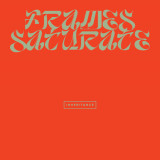
- 1: Spectacular
- 2: Best Believe
- 3: Vibe Check (Ft. Cadence Weapon)
- 4: Baby Boy (Ft. Paul Wall)
- 5: Loosen Up (Ft. B.k. Habermehl)
- 6: Alexis (Ft. Harriet Brown)
- 7: We Still Here (Ft. Harriet Brown)
- 8: Opportunist Convention
- 9: Kickin’ In
- 10: Don’t Tap In / Contusion (Feat. B L A C K I E)
- 11: Boss Up
- 12: Make A Baby
- 13: Jasper, Tx
With I Will Make a Baby in this Damn Economy, Fat Tony embodies the kind of quixotic figure he would rap about; a singular entity who’s motivated, confident, and hungry; a perpetual-motion-machine locked in a staring contest with his country. It’s the latest album in his catalog produced entirely by L.A-based producer Taydex since 2020’s Wake Up. Later that same year Fat Tony released Exotica, and ever since he’s demonstrated he is in his own lane as a professional rapper with the mind of a magician, as quick to conjure an image as pull it out from under you, deftly manoeuvring through so many details and references a listener feels as if they have witnessed the work of an illusionist. He paints these canvases inside of songs that rarely spill past three minutes; they’re pocket-sized diaries replete with acute observations, character studies, microdoses of storytelling, and single-minded ruminations on a topic that bud, blossom, and fade before too long. Fat Tony & Taydex’s I Will Make a Baby in this Damn Economy cements Tony’s status as someone whose albums are not so much lyrically-lyrical as they are picaresque.
As with any Fat Tony project, the bars are tight as ever, but are so fluid for the 34-year-old it’s almost easy to take for granted the details, warmth, and humanity inside his free-associative tales of day-one friends who’ve passed, edgelord grifters who want to spit game, and nights on ketamine. Taydex’s production sprints through disparate yet simpatico styles, dipping its toes into Pi’erre Bourne-esque bass (see lead single “Spectacular”), house (“Loosen Up”), and even hyperpop. Meditations on loss and grief are woven throughout, but Tony throws a few curveballs as well: Consider “Alexis,” which sweetly reflects on a long-term platonic friendship. Taydex finds a Teddy Riley-indebted New Jack Swing groove just deep enough for the feeling to land and underlines the song’s sincere candor. This is the appeal of Fat Tony writ-large: his boisterous voice and genial personality invite you to the party, then you stick around to hear what he’s saying, which is frequently more introspective and complex than one assumes.
Written and recorded in Taydex’s new studio in North Hollywood, Tony says, “We had much more freedom and flexibility in making this album and you can hear it. It felt like a family project.” If the album is comfortable and loose, it is also dense and substantial. The album’s final two tracks contextualize the immediacy of what came before it—the mezcal with ices drank, Paul Wall swangin’ through to drop knowledge, the Polaris Prize-winning rapper Cadence Weapon providing a vibe check. “Make a Baby” accounts for Tony who’s seen everything, and knows he’s met the one to be a father with, and yet chooses to take his time to get it done. Taydex’s beat recalls turn-of-the-century R&B and the millennial promise of an endless good time. Sombre closer “Jasper, TX” is Tony coming to grips with the story of James Byrd, Jr., a Black man from East Texas dragged to his death by three white supremacists in 1998. These songs are not only trademarks of Tony’s fastidious rapping—they are deeply personal examples of his approach to artistry and life itself, where every decision is made in the shadow of history.
It’s here the mission statement of I Will Make a Baby in this Damn Economy comes into focus—you get the sense he means it, he’s ready for it, he’ll fight for it. He’s waiting to take the world at its word.
- 1: Feed The Beast
- 2: Alone (Feat. Nicki Minaj)
- 3: King Of Hearts
- 4: Thousand Pieces
- 5: Uh Oh
- 6: Revelations
- 7: Bait(Feat. Banks)
- 8: Sex Talk
- 9: Hit It From The Back
- 10: Claws
- 11: Minute
- 12: Coconuts
- 13: Castle In The Sky
- 14: Brrr
- 15: Unholy - (Sam Smith Feat. Kim Petras)
Yellow Vinyl[36,56 €]
With 15 tracks of pure pop perfection, “Feed The Beast” moves beyond the characters found in Kim’s past music to draw more from her personal life and is a declaration about being willing to be consumed by her biggest passion. With pop music as her driving force, the album is Kim’s offering to her own beast that sees her embody a modern-day pop Andromeda – a spin on the classic Greek tale where the princess was about to be sacrificed to her beast. Unlike the tale, however, Kim has set out to rescue herself with a body of work that is heavily inspired by the euphoric Eurodance hits that she would lose herself in growing up.
new music in nearly 30 years Includes 11 brand new songs written by the band The Cowsills will be on the road through 2023 supporting the new record Some of the best music made in the last 60 years has been delivered by musical families. Think about it . . . The Everly Brothers, The Beach Boys, Bee Gees, The Jackson 5, The Staple Singers, Pointer Sisters, Kings Of Leon, Oasis . . . and The Cowsills! Starting in 1965, The Cowsills was composed of six siblings, performing their instruments and singing those glorious harmonies as only families can. Originally starting as a regional act (from Newport, Rhode Island), the group was “founded” by Joda Records owners Danny Sims and reggae/pop singer Johnny Nash (“I Can See Clearly Now”) in the mid-’60s for whom they recorded a handful of singles before turning towards more national recognition when they were signed to MGM Records in 1967. At this point, the group’s mother Barbara and young sister Susan joined the act and they were awarded a Gold record for over one million copies sold of their very first single for MGM, the sublime, “The Rain, The Park & Other Things.” This began a series of chart records that dominated the Top 40 for the next three years. Among the classic Cowsills recordings are “We Can Fly,” “Indian Lake,” “Hair” (from the rock musical Hair), and “Love American Style” (the theme song from the popular ABC-TV show of the same name). The group also recorded and charted with five successful albums during this time period. The band and their story were even the inspiration for the popular 1970s sitcom The Partridge Family. The group was also a prosperous touring attraction up through 1972, spreading their harmonious hope and love to an adoring fan base. They even had their own comic book published in 1968. As all families do, the group went through a series of changes, disbanding in 1972. But music never left the soul of this tuneful and melodic kin. Over the years, the group, as individuals, continued to make music and even reunited in 1978 and 1993 to make historic records that are woefully out of print. Now, nearly 30 years after their last recordings as a group, The Cowsills are returning with new music for the new world! Omnivore Recordings is proud to announce the release of Rhythm Of The World. Eleven brand new songs written by the band. The ambassadors of goodwill and love will be on the road through 2023 thrilling fans with their classic hits and soon to be new favorites!
With 15 tracks of pure pop perfection, “Feed The Beast” moves beyond the characters found in Kim’s past music to draw more from her personal life and is a declaration about being willing to be consumed by her biggest passion. With pop music as her driving force, the album is Kim’s offering to her own beast that sees her embody a modern-day pop Andromeda – a spin on the classic Greek tale where the princess was about to be sacrificed to her beast. Unlike the tale, however, Kim has set out to rescue herself with a body of work that is heavily inspired by the euphoric Eurodance hits that she would lose herself in growing up.
Life On Mars is the 1976 debut album by the American R&B/jazz fusion singer, arranger, musician, composer and conductor Dexter Wansel. The album is considered to be a "space-funk" classic, inspired by David Bowie's "Life On Mars?". Wansel composed his own sci-fi sounds with swirling, ring-like oscillators, cosmic sub tones, and metallic, otherworldly leads using his signature ARP 2600 synthesizer. Wansel's pioneering synth sound was shared on numerous records with artists like MFSB, Billy Paul, Evelyn "Champagne" King, Teddy Pendergrass, and The Jones Girls. The album inspired other artists and Wansel's "Theme From The Planets" drum beat intro is hailed as being one of the first foundation beats of hip-hop. His sampled music has been used by Kanye West, Lil Wayne, Drake, Rick Ross, J. Cole, Wiz Khalifa, and Ice Cube amongst others.
Life On Mars is available as a limited edition of 1500 individually numbered copies on translucent blue coloured vinyl.
- A1: Sammy Davis Jr. - What Kind Of Fool Am I
- A2: Frank Sinatra - I Get A Kick Out O You
- A3: Dean Martin - Standing On The Corner
- A4: Sammy Davis Jr. - All Of You
- A5: Frank Sinatra - There's No Business Like Show Business
- A6: Dean Martin - You're Nobody 'Til Somebody Loves You
- A7: Sammy Davis Jr. - That Old Black Magic
- A8: Frank Sinatra - Come Fly With Me
- B1: Frank Sinatra - I've Got You Under My Skin
- B2: Dean Martin - Volare (Nel Blu Dipinto Di Blu)
- B3: Sammy Davis Jr. - New York's My Home
- B4: Frank Sinatra - Anything Goes
- B5: Dean Martin - Memories Are Made Of This
- B6: Sammy Davis Jr. - Something's Gotta Give
- B7: Dean Martin - Promise Her Anything (But Give Her Love)
- B8: Frank Sinatra - Love And Marriage
Sababa 5, Tel Aviv’s funkiest export, upgrade their signature Middle Eastern psychedelic funk with the addition of Hoodna Orchestra’s dynamic brass section, another essential 45 from Batov Records’ Middle Eastern Groove series.
Labeled by the likes of Truth & Lies as a “serious contender in the world of instrumental funk”, Sababa 5 have created a modern sound, fusing funk, disco, and psychedelic rock with a wide range of Middle Eastern influences, culminating in last year’s acclaimed self-titled debut album, Named after their new studio address on the border of Jaffa and Tel Aviv, “Eilat 22” & “Elifelet 23” spring from the same sessions that delivered us the enormous ‘Funk #1 / Funk #2’ 45, as championed by the Nostalgia King, Skeme Richards, BBC Radio 6 Music host, Huey Morgan, and influential music portal, Music Is My Sanctuary.
Sababa 5’s tight-as-ever instrumental grooves are enriched by the bright bass sounds of The Hoodna Orchestra brass section, comprising Bar Ashkenazi on trumpet, Eylon Tushiner on tenor, and Elad Gelert on baritone saxophone. Hoodna are renown for their energetic take on Afrobeat, and have been touring and recording recently with Ethio jazz legend Mulatu Astatke, and here they supply a touch of JB’s meets Africa ‘70 energy.
On the flip “Eiffelet 23” grooves along like a Dap Kings funk nugget, except in this case there’s room for Eitan to improvise across the jam with a microtonal organ sound reminiscent of legendary Egyptian musician Magdi el- Husseini.
Due for full release on vinyl and digital on 2 June, “Eilat 22” & “Elifelet 23” open another page in Sababa 5’s rapidly diverse and ever-engaging discography, with two songs destined to head light up dancefloors over the coming months.
In the past, Mapache recording sessions have been pretty laid-back
affairs, with friends coming and going, the sessions starting and stopping
at the band's discretion--as relaxed a process as the immaculately sunny
vibes that their four albums would suggest - But on their dynamic and
ambitious fifth album of cosmic-folk, Swinging Stars, Sam Blasucci and
Clay Finch decided to take a trip and hunker down somewhere
particularly special
"It's a pretty impactful place," Finch says of the Panoramic House, the artist
retreat where Swinging Stars was recorded. "It's kind of dramatic. It's a castle-y
building on a hill, way up overlooking the Bay."
Located in Stinson Beach in Marin County, California, the Panoramic House has
recently hosted acts like My Morning Jacket, the War on Drugs, and Cate Le Bon,
and was the ideal combination of scenic beauty and self-imposed confinement to
allow Mapache to settle in for their most cohesive album yet.
"That environment yields itself to a higher level of focus because everybody's
together for a week," says Finch, explaining that the band stayed there during the
process, sharing every bit of their time and energy on a shared vision. "We were
all captive. No one could escape," he laughs.
Swinging Stars, an album of calm, second-nature swagger, is the natural result of
a band that's existed in one form or another for its founders' entire adult lives.
Finch and Blasucci first met as students at La Canada High School, just north of
Los Angeles, where they both had a guitar class: "There wasn't much supervision
or anything," remembers Blasucci. "It was really nice. And we got to just play
guitars together."


![La Muerte - [PIAS] 40](https://www.deejay.de/images/l/9/2/1027992.jpg)