Audiophile 180glp pressing includes eight 12"x12" art print reproductions of analog film stills by renowned experimental filmmaker Daïchi Saïto. The first purely solo record by Jason Sharp - where every sound is created by his saxophone, breath, heartbeat & modular synthesis rig. Sharp's customized electroacoustic biofeedback system utilizes a heart monitor to turn his pulse into signal & tempo responsively synthesized in real time during peformance & recording. Produced by Radwan Ghazi Moumneh (MATANA ROBERTS, SUUNS, BIG | BRAVE, ERIC CHENAUX, JERUSALEM IN MY HEART). For Fans of Fennesz, Christina Vantzou, Tim Hecker, Klaus Schulze, Ben Frost, Gas, Windy & Carl, Colin Stetson. Montréal saxophonist and electroacoustic composer Jason Sharp presents his third album on Constellation. The Turning Centre Of A Still World is Sharp's first purely solo record and his most lucid, poignant, integral work to date. Following two acclaimed albums composed around particular collaborators and guest players, Sharp conceived his third as an interplay strictly bounded by his own body, his acoustic instrument, and his evolving bespoke electronic system. The Turning Centre... is a singular sonic exploration of human machine calibration, interaction, expression and biofeedback. Using saxophones, foot-controlled bass pedals, and his own pulse - patched through a heart monitor routed to variegated signal paths that trigger modular synthesizers and samplers - Sharp paints with organic waves of glistening synthesis, pink noise and digitalia. Melodic strokes and harmonic shapes ripple and crest across ever-shifting seas, through an inclement cycle from dawn to dusk. The album's six main movements navigate a world where placid surfaces are always roiled and disquieted by a deeper inexorable gyre: the gravitational pull and tidal perpetuity of our bodies made of water, buffeted by terrestrial atmospheric pressures, wrung out by emotions, coursing with blood, sustained by breath, inescapably yearning for and returning to ground again and again. Sharp's heartbeat literally courses through these compositions - while only occasionally surfacing as a clearly audible pulse or rhythm, it physically feeds into a spectrum of generative synthetic processes that help constitute and conduct the music.
quête:sam sharp
Over the last 3 years, original 90’s D&B imprint Odysee has been steadily building its profile, both through its ‘Remix/Remaster’ series as well as a growing number of new releases. Label Partner Andy Odysee continues to develop his own unique sound with this third solo E.P. All three tracks work together as a triptych, whilst simultaneously maintaining their own unique identity.
Ruthless (In Purpose): Insidious (In Design) immediately establishes an ominous mood of brooding menace with its creeping bass stabs. As the drums enter, the track builds towards a drop of deep subs and driving breakbeat fury, punctuated by the ripped synth basses and curling drum edits that are fast becoming characteristic of Andy’s productions. There are subtle nods to the later Hokusai releases such as Sculptures Hide and even Black Domina; with eerie chiff-flute phrases, and those signature Mirage-style film-noire and dark avant-garde Jazz sounds nestling amongst the tapestry of beats and basslines.
As a contrast, Provocateur has a sweeter, almost sexier feel. A dreamy oscillating pad soon gives way to razor-sharp curling Jazz breaks and deep subs. The vocals border on the ‘saucy’ with their tantalising suggestions of ‘who thinks the technique is to make love to me’ and ‘the sexiest thing about me is my a**!’ There is a subtle darkness nonetheless to this track, with its plethora of dark film-noire samples. Although the framework of breaks & bass is strident enough for the dance floor, it is also the kind of track that is loaded with all those little production details that will reveal something fresh with each hearing.
The third track Status Anxiety is a frenetic, tense piece of music. Underpinned by a relentless bass synth stab that slips and slides throughout the track, the drum patterns are more elaborate, cutting between several different breaks, with abrupt stops to expose dark string sweeps, hammered Rhodes strikes and shimmering china cymbals. Again there is a subtle reference to the Hokusai releases, but with a fresh twist on that darker Jazz-infused style of Breakbeat D&B.
DJ Support
Source Direct, Law & Ben Repertoire, Mister Shifter, Basic Rhythm, Voodoo & Sensenet
Airplay from Mary Ann Hobbs, Liz Alker and Tom Ravenscroft and beyond
Reviews in Mojo, The Wire, Quietus, Uncut and more
On October 9ththe multi-instrumentalist Jack Wyllie (Portico Quartet/Szun Waves) presents his new project Paradise Cinema. It was recorded in Dakar, Senegal in collaboration with mbalax percussionists Khadim Mbaye (saba drums) and Tons Sambe (tama drums).
The impressionistic and dream-like quality of 'Paradise Cinema' is a stunningly effective realisation of Wyllie's experience, in ahypnagogic state of aural consciousness:
"I had a lot of nights in Dakar, when the music around the city would go on until 6am. I could hear this from my bed at night and it all blended together, in what felt like an early version of the record."
Atmospherically 'Paradise Cinema' is vaporous and enigmatic, but also percussive; existing in a paradoxical sound-space that's amorphous,yet still purposeful, serene, but propulsive and aesthetically sharp.
Khadim Mbaye and Tons Sambe, provide the rhythmic backbone of the record. There are traditional elements of mbalax rhythm, but it is often deconstructed or played at tempos outside of the tradition, so while it hints at a location it occupies a space outside of any specific region.
'Paradise Cinema' is also informed by notions of hauntology – a philosophical concept originating in the work of French philosopher Jacques Derrida– on possible futures that were never realised andhow directions taken in the past can haunt the present.
On the album's title Wyllie comments, "there are a handful of old cinemas in Dakar – these big modernist buildings dotted around the city built around independence. They're old and derelict now, but feel to me like monuments to that period, when the city was flooded with utopian ideas about its potential futures."
As such it sits closely to 4thworld music – situated in an imagined culture and time that never came to pass. And while it contains rhythmic references to Senegal it combines these elements with ambient and minimalist music to produce a sound that sits outside of any tradition.
Setting the tone for the long-player's themes is the optimism-driven, balmy beauty of 'Possible Futures', where rich-toned drums throb and levitate in a stratospheric ether.
Like a time-lapse video of plants in bloom, 'It Will Be Summer Soon' is the sound of anticipation and growth. Rhythmically it flickers and flutters, evoking rainfall, or the blurred wings of a bird in in flight.
Casamance moves through field recordings drifting in and out of focus, beats pitched-down low and unfurling saxophone, whilst the ambient 'Utopia' was made mainly with processed saxophone and suggests a longing for a perfect world.
Galloping percussion juxtaposes with a wistful mood on 'Liberté' – a title that referencesa derelict modernist cinema in Dakar of the same name– a hauntological landmark, made more poignant by the its name being part of the French national motto.
Tying into the cover artwork, Jack explains, "the 'Digital Palm is a telecommunications mast disguised as a palm tree in central Dakar. As a modern piece of technology that on first glance looks natural, it mirrors the combination of modern and acoustic elements."
Perhaps eliciting a time that never came, or maybe still in hope of it yet to come, 'Eternal Spring' concludes the LP's otherworldly beauty with hypnotic drums powering a subtly-building, sparkling and powerful crescendo.
Jack Wyllie is a musician, composer, electronic producer who draws on influences of jazz, ambient, and the trance-inducing repetition of minimalism.
Wyllie performs and records in Portico Quartet, Szun Waves (withLuke Abbott and Laurence Pike)and Xoros. He has also collaborated with Charles Hayward, Adrian Corker and Chris Sharkey and released on Ninja Tune, Babel, Leaf, Real World and Gondwana.
Khadim Mbaye and Toms Sambe play in various mbalax groups in Dakar. Khadim has also toured internationally with Cheikh Lo.
In September of 2019, Deliluh took flight with sights set on new horizons.
A long plotted scheme to uproot the group from their Toronto home and
airlift them into the touring bastion of Europe seemed like a pot worth
gambling their stack on.
Their future in the old world was read with wide-eyed optimism, emboldened
by two albums newly waxed and tour dates rolling in. Greener pastures with
foreign allure, a promised land chalk full of experimental art and sound, and a
plethora of unconventional venues ripe for the picking... it’s open season, what
could possibly go wrong?
Well, the best laid plans... ‘Amulet’ is the first release since Deliluh’s departure
from Toronto, an opening document of the group’s transition to Europe. Mirrored images of the same composition occupy each side; ‘A’ performed by their
previous four-piece lineup (Kyle Knapp, Julius Pederson, Erika Wharton, Erik
Jude) and ‘B’ by the current active two-piece (Knapp and Pederson). ‘Amulet’
is set to be released July 30th on 10” via Tin Angel Records.
The lyrics depict a jewel thief committing crimes with the conviction of a merciless zealot, and justifying them with a spite for the status quo. The protagonist
amuses with the threat of being “caught”, a fate seemingly imminent and yet
laughable in the crooked context of societal greed. Knapp delivers sharp criticisms with a swagger liberated of fear, imploring us all to root for the anti-hero
in a time when danger is craved en masse.
The tonal contrasts between both versions testify to the group’s versatility.
The A side pulls tension by way of minimalism, leaning into a sinister synth
sequence that navigates a pitch dark sonic terrain. Swooning guitar, plucking
violin, whispering synths and darting tape effects peek in and out of the periphery, circling with unsettled starkness around Jude’s gloomy bass drone, through
until Wharton-Shukster’s string soaring climax.
Flip to the B side, and the immediate motorik groove turns the sequence on its
head, snapping to a gritty dance track for nights long yearned for. Pedersen’s
modular synth takes on a fresh persona of dusted drums and otherworldly high
hats, cracking on the beat while guitar scratches, processed sax, and string
synths build with harmonic euphoria, all until the tape slips and pulls the rug
from under the DIY dance floor.
‘Amulet’ demonstrates Deliluh’s potential growing fearlessly in the face of a
tight game. They promise a plentiful stash of recordings soon to be unearthed,
giving the sense that their recently tested process of creation has been far from
hindered. What comes next is anyone’s guess, though Amulet at the very least
reassures that we’re still, as always, in trusted hands.
Knapp: “It’s ‘adapt or parish’ these days.. We’re fortunate to be safe and
healthy, and thankfully, we’re not afraid of taking risks or evolving.”
Pedersen: “It isn’t the end goal that matters, but what you learn while exploring the paths that lead into unexplored terrain.”
Fake Laugh & Tarquin first became acquainted a very long time ago, before they were either Fake Laugh or Tarquin. Two humans in their late teens with a keen interest in sound, they would indulge each other in whatever conversation they could muster while loitering in the corridors of their sixth-form college. Their place of learning existed in a sleepy Sussex town where once a year, the skies are filled with explosions, while burning effigies are carried through the cobbled streets by inebriated locals. The two did not suspect that much would become of their light friendship - but in good time that would all change…
In the years that followed, the two young artists moved to London and embarked upon their own totally distinct musical journeys - Fake Laugh was playing in venues with ‘rock bands’, while Tarquin was carving out a niche for himself in the bubbling, lava-like instrumental grime scene, which brought a new kind of heat to the clubs of the city. His vibrant, unapologetically obtuse (and at times absurd) brand of club-music delighted the ears of listeners, the feet of dance-floor dwellers and the brains of music theorists - all in one fell swoop. Having released with Mr. Mitch’s crucial Gobstopper imprint as well as big-guns Rinse, Tarquin has become a household name in the homes of those that know. All the while, Fake Laugh was in his bedroom writing scores of songs and occasionally releasing collections of the strongest cuts on a variety of indie labels who believed in his talent for timeless melody, focussed through his own rose-misted, yet modern lens.
It wasn’t until the fabled summer of 2019 that Fake Laugh & Tarquin would make music together in the same room. The first session resulted in album opener Slow, a song which for the previous two years, lay dormant in an acoustic form on a dusty Fake Laugh hard-drive. Fake Laugh had the idea that perhaps the song could be transformed into something far bigger and better in the hands of Tarquin - a theory which was proven correct.
Throughout Fake Laugh & Tarquin the pair continuously confound the listener, fusing sharp and glacial synthetic elements with warm organic tones and heartfelt vocal performances. Money was written at the start of the global pandemic, a time in which people had more financial concerns than usual. Rejecting total doom and gloom, Fake Laugh & Tarquin turn this dystopian angst on its head and create a one-of-a-kind club mover that pulls inspiration from the super-slick grooves of early noughties stalwarts Moloko and Groove Armada. The album twists, turns, morphs and mutates until it’s peaceful conclusion in the form of existential piano-ballad Meaningless Thin
- A1: The Nips - Gabrielle
- A2: Dolly Mixture - New Look Baby
- A3: The Blades- Revelations Of Heartbreak
- A4: The Crooks - Modern Boys
- A5: Inspiral Carpets - Saturn 5
- A6: The Users - Kicks In Style
- A7: Untamed Youth - Untamed Youth
- B1: Les Elite - Get A Job
- B2: The Gents - The Faker
- B3: The Name - Fuck Art Let’s Dance
- B4: The Scene - Something That You Said
- B5: The Killermeters - Why Should It Happen To Me
- B6: The Accidents - Blood Spattered With Guitars
- C1: The Fixations - No Way Out
- C2: The Leepers - Paint A Day
- C3: The Variations - Fight Back
- C4: The Same - Movements
- C5: The Kick - Stuck On The Edge Of A Blade
- C6: Daggermen - Ivor The Engine Driver
- C7: New Hearts - Only A Fool
- D1: The Long Ryders - Looking For Lewis And Clark
- D2: Ocean Colour Scene - The Day We Caught The Train
- D3: Nine Below Zero - Pack Fair & Square
- D4: The Jolt - I Can’t Wait
- D7: The Moment - Sticks & Stones
- D5: The Inmates - Dirty Water
- D6: Scarlet Party - 101 Dam-Nations
In 1979 as a 15-year-old Eddie Piller was perfectly placed to be at the epicentre of the Mod revival. An inquisitive passion
for music, a family connection to Mod royalty The Small Faces, and an attitude that saw him travelling his home city, then
the country and then the world to take in the sounds that were emerging. In the years since, Piller has been a legendary
figure within the music industry setting up and continuing to own the ground-breaking Acid Jazz label, signing multiplatinum artists such as Jamiroquai and The Brand New Heavies collaborating on compilations with Martin Freeman and as
an award winning broadcaster even setting up his own Totally Wired Radio station. In The Mod Revival he looks back at the
movement that set him on his way.
• Mod is a sixties youth movement original built on sharp clothes, American soul music and nights on the town, that has never
really died. The originals added young British groups to their likes and then moved on, but their influence echoed on
through the 1970s in Northern Soul clubs, and in the sixties influenced bands of the pub rock era. When punk arrived, it was
supposed to sweep away the past, but instead the Sex Pistols were covering the Small Faces. The Clash brought in Mod DJ
Guy Stevens to produce London’s Calling, The Buzzcocks sounded closer to the Hollies than The Ramones and in The Jam’s
Paul Weller there was a musical and sartorial nod to the past of The Who, The Beatles and pop art arrows.
• Weller had spent the 1970s becoming obsessed by mod and saw punk as having a similar youthful energy to the era he had
missed by being born a decade too late. For others Weller’s style proved an inspiration, and as the Jam broke through in late
1978, they saw a wave of bands follow in their wake, and they themselves influenced others to form their own groups. But
there were other things. In bleak late 70s Britain the glorious optimism of the 1960s looked bright and shiny, and as it was
only a decade or so in the past, it was easy to pick up original records, clothes and books for pennies, and as you bought
these you met other like-minded souls who did the same. For those a little too young for punk, it was a community of gigs,
scooters, clothes, bands and records, and for many it developed on through.
• Eddie never stopped being a mod and has a unique perspective having now lived through four decades of being intimately
involved in the music that has emerged from the mod scene. In this part two double vinyl edition (Part 1 and its CD
equivalent reached #14 in the UK compilations charts) Ed guides us through some of his favourite music from the scene. He
guides us through a plethora of bands whose influences include The Who, The Kinks and the Jam, to sixties soul and R&B,
those with an eye on psychedelia. The records have a vitality and a certain stylish swagger to them, that marks them out as
mod. In the deluxe booklet, Piller has written a 5000 word note describing what it meant to him and has granted access to
his own scrapbooksfrom his many years of gig-going from which pages and memorabilia are reproduced.
• Eddie Piller’s Mod Revival is a personal appraisal from the founder of The Modcast, on what the mod explosion of the late
70s and 80s means to him…
In January 2019, at the invitation of fiddler Hans Kjorstad, Alasdair
Roberts travelled from his home in Glasgow, Scotland to Oslo,
Norway, where the two men convened with five additional
Scandinavian musicians at Riksscenen, Oslo’s centre for
Norwegian traditional arts and music. Thus newly-formed, the
group worked on arrangements of songs - self-written and
traditional - from Alasdair’s back catalogue, in preparation for
performances at Riksscenen as well as at ALICE in Copenhagen,
Denmark and the bucolic western Danish island of Fanø. The
group was named Völvur (The Seeresses), a reference to the
ancient Icelandic apocalyptic text Völuspa (The Prophecy of the
Seeress).
In January 2020, Völvur visited England and Scotland, to perform
with Alasdair Roberts at Cecil Sharp House, London and at
Platform, Glasgow, the latter as part of Celtic Connections festival.
The group had new material - freshly written songs by Alasdair
and several traditional Norwegian songs sung by Marthe Lea - and
over a couple days at Sam and Rachel’s Studio in Hackney, laid
down the music which now flows forth as ‘The Old Fabled River’.
The musicians who make up Völvur - Marthe Lea, saxophone,
clarinet and voice, Fredrik Rasten, guitars and voice, Andreas
Hoem Røysum, clarinet, Egil Kalman, bass and electronics, Jan
Martin Gismervik, drums, percussion and the aforementioned
initiator of the project, Hans Kjorstad on fiddle - are a busy and
artistically inquisitive group, involved in a diverse range of projects
with a wide variety of musical interests, from folk and jazz to free
music, modular synthesis, microtonality and beyond. They make
an ideal pairing for such voyages in the alchemical world as
Alasdair pursues in his own music.
On ‘The Old Fabled River’, Alasdair Roberts og Völvur meld their
worlds: fiddle and vocal styles formed in the Norwegian valleys
blending now with exploratory clarinet, saxophone and metallic
bowed guitar drones, now fashioned into baroque folk
arrangements. In one case, instrumental accompaniment is laid
aside, as three voices locate a questing fullness harmonizing
together.
Over the past decade, Egyptian-born, Barcelona-based DJ and techno producer Raxon, known to friends and family as Ahmed Raxon, has popped out a steady stream of twelve-inch singles, precision-tooled, for labels like Cocoon, Drumcode, Diynamic, Truesoul, and Ellum Audio. An alumni of Kompakt’s Speicher series – check the insistent, vibrating pulses of “The Ancient” and “Dark Light” on 2019’s Speicher 107 – with Sound Of Mind, Raxon has produced a long-awaited debut album that’s ready and aching both for the dancefloor and the boudoir, traversing the heat of the club and the warmth of the home.
“The idea of an album has always floated around in my head for the past few years,” Raxon confirms, “but it was never the right moment in my mind.” Instead, he’s been insistently pursuing his vision of deep, elegant techno, taking him from early DJ gigs in Dubai, including the legendary audio tonic night, then relocating to Europe on the recommendation of Herman Cattaneo, all the while allowing his experiences to inform and transmute his producer’s thumbprint. He’s an architect by training (though he gave architecture up for electronic music), which might explain why Raxon productions are so sturdy and well-designed; but remember also that architecture is a field filled with brave experimentation, something Raxon definitely draws on throughout Sound Of Mind.
Like many albums from the past twelve months, Raxon’s debut developed partly thanks to the unique social situation the planet has found itself caught within. “In the beginning of 2020 I started working on a few tracks with the album in mind,” he recalls, “with no idea of what’s to come in the next few months. As catastrophic as the situation was/is, I found myself in the studio; in a way the lockdown gave me that creative freedom in the studio, to try to tell my story through sound.” And indeed, there is something in the way of ‘life writing’ about Sound Of Mind, particularly in the way Raxon’s productions pay subtle homage, perhaps, to his formative listening experiences in the late nineties.
It’s no retro trip, but there’s plenty of variety here, and a few moments that’ll tickle the collective memory – see the prowling pulsations of the opening “Majestic”, the alien breakbeat action of “Vice” and “Journey Mode”, where the interstellar tones feel like Foul Play or Steve Gurley, the leaking gas and woozy keys that make “Droid Solo” so subtly destabilising, or the strobelight drones that sputter and flare throughout “El Multiverse”, where dappled organ tones fight it out with interdimensional transmissions, all sucked into the vortex of a late-night techno mantra. Beautifully sculpted, Sound Of Mind feels consummate, an elegant set that pulls Raxon’s vision into its sharpest focus. Alive with possibilities, it’s a fever dream of creativity.
In den letzten zehn Jahren hat der in Ägypten geborene und in Barcelona lebende DJ und Techno-Produzent Raxon, der Freunden und Familie auch als Ahmed Raxon bekannt ist, eine ganze Reihe von 12inch-Singles auf Labels wie Cocoon, Drumcode, Diynamic, Truesoul und Ellum Audio veröffentlicht. Wir kennen Raxon außerdem durch seinen Beitrag zur Kompakt Extra/Speicher-Reihe – man höre sich nur mal "The Ancient" und "Dark Light" auf dem 2019 erschienenen Speicher 107 an. Nun hat Raxon mit “Sound Of Mind“ sein lang erwartetes Debütalbum produziert, das sowohl für den Dancefloor als auch für die eigenen vier Wände geeignet ist und dabei sowohl die Hitze des Clubs als auch die Wärme des eigenen Zuhauses durchmisst.
"Die Idee eines Albums schwebte in den letzten Jahren immer in meinem Kopf herum", bestätigt Raxon, "aber es gab nie den richtige Moment." Stattdessen verfolgte er leidenschaftlich seine Vision von tiefem, elegantem Techno, die ihn von frühen DJ-Gigs in Dubai, einschließlich der legendären Audio-Tonic-Nacht, dann auf Empfehlung von Hernan Cattaneo nach Europa führte. Im Laufe dieser Zeit sammelte er unzählige Erfahrungen, die es ihm erlaubten, seinen Stil als Produzent mehr und mehr zu transformieren. Raxon ist gelernter Architekt (obwohl er die Architektur für die elektronische Musik aufgegeben hat), was vielleicht erklärt, warum seine Produktionen so robust und gut durchdacht sind; aber man sollte auch nicht vergessen, dass Architektur bestenfalls immer ein Feld mutiger Experimente ist, etwas, worauf Raxon in “Sound Of Mind“ definitiv zurückgreift.
Wie viele andere Alben der letzten zwölf Monate auch wurde Raxon’s Debüt von der einzigartigen gesellschaftlichen Situation, in der sich der Planet momentan befindet, beeinflusst. "Anfang 2020 habe ich angefangen, an ein paar Tracks für das Album zu arbeiten", erinnert er sich, "ohne zu wissen, was in den nächsten Monaten auf uns zukommen würde. So katastrophal die Situation auch war/ist, ich fand mich im Studio wieder; in gewisser Weise gab mir der Lockdown auch eine kreative Freiheit im Studio, um zu versuchen, eine Geschichte durch meinen Sound zu erzählen." Und in der Tat gibt es auf “Sound Of Mind“ so etwas wie eine "Lebensgeschichte", besonders in der Art und Weise, wie Raxon’s Produktionen eine subtile Hommage an seine prägenden musikalischen Erfahrungen in den späten Neunzigern darstellen.
Es ist fürwahr kein Retro-Trip, aber es gibt hier viel Abwechslung und ein paar Momente, die das kollektive Gedächtnis kitzeln werden - zum Beispiel der sich langsam heran pirschende Pulsschlag im Eröffnungstrack "Majestic", oder die außerirdischen Breakbeats von "Vice" und "Journey Mode", in denen sich die interstellaren Sounds ein wenig wie Foul Play oder Steve Gurley anfühlen. Dann das ausströmende Gas und die wummernden Tasten, die "Droid Solo" subtil destabilisieren, oder die Strobo-Drones, die in "El Multiverse" herum sprudeln und flackern, wo einzelne Töne einer Orgel mit interdimensionalen Transmittern um die Wette strahlen und schließlich in den Strudel eines nächtlichen Techno-Mantras gesogen werden. “Sound Of Mind“ fühlt sich formvollendet an, wie ein elegantes Set, das Raxon’s Vision verstärkt in den Fokus rückt. Ein Fiebertraum voller Kreativität und Möglichkeiten.
Melbourne-via-Tasmanian four-piece Quivers first released
their 2018 debut We’ll Go Riding On The Hearses as hand-made
cassettes. The album dealt with singer Sam Nicholson’s loss
of his brother in a freediving accident, and “trying to not think
about that, and often coming back to ghosts, benders, water,
and pissing in the snow.” When demand for the album grew,
it received a vinyl release and led Quivers to tour the US, film
a KEXP session, and be selected by NPR Music for both the
Austin 100 SXSW preview and as a “Slingshot” artist to watch.
Their life-damaged but hopeful jangle pop has only sharpened
since then, and while 2021 follow-up Golden Doubt conjures
up REM or The Clean, there is a lyrical directness that sets this
record apart as always its own.
Golden Doubt is carried by shimmering guitars and the
harmonizing vocals of members Holly Thomas and Bella
Quinlan. Elevated by the production of Matthew Redlich
(Holy Holy, Husky, Ainslie Wills), the record explores what
comes after grief, and how one throws oneself back into love. As
Nicholson explains, the album tries to bottle “the rush of feelings
and fears when you give in to falling for someone. It’s also an
album in love with other albums, and the other bands around
us.” Before each take at Woodstock and The Aviary studios in
Melbourne, Australia, the band would imagine a scene together
(a waterhole for “Laughing Waters”, an overgrown carpark for
“Videostores”) and then dive in to capture live group takes.
Quivers need to get words on the page and sounds out to keep
moving on. Both Nicholson and Thomas lost their brothers in the
same year, and through that shared vulnerability they all have
together that runs deep. Golden Doubt is also a love letter to
playing music as a band and processing it all together rather than
just carrying it as a weight. The cancellation of a 21-date US
tour they had slated for 2020 has left them undeterred; Quivers
plans to continue being a band and get back out into the world
as soon as it’s possible.
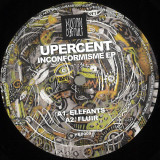
Bedouin’s Human By Default recruits Upercent for the four-track ‘Inconformisme EP’ this May.
Previously recording for Watergate, Kompakt and Adana Twins’ TAU, the Valencia-based DJ/producer arrives on Bedouin’s imprint for his debut appearance on the label, delivering some of his most accomplished productions to date on vinyl.
Across the record, Upercent displays combines his wide range of musical influences into a set of engaging downtempo dancefloor cuts with impeccable attention to detail. Opener ‘Elefants’ twists various acoustic instruments and vocal samples around soft shakers and warm low end, leading into theloose percussion of ‘Fluir’, grounded by a softly thudding kick amongst fluttering and glitched out FX.
On the flip, ‘Caduco’ combines the natural and the synthetic as hand percussion meets sharp synth stabs and glowing pads. ‘Hipocresia’ twists mangled horns over a low slung backbeat.
Split #1 marks the debut of a new vinyl series, to be hosted on the Various Artists catalogue of Pi Electronics. The split series will be bringing two artists on the same vinyl, with this very first release presenting music by Greek producers Fragedis and Nemmett.
Coming from different backgrounds of electronic music, prolific figure of the Cretan islands' dance scene, Fragedis and one of the Athenean founding members of the "π" crew, Nemmett, contribute their sharpest weapons to this release.
On the A-side, Fragedis delivers a techno/breaks cut of dystopian melodies and vocal samples with his opening track "Flantza". His second track, "Klirish" blends industrial leaning percussions with Detroit techno flavored synths.
On the flip side, Nemmett returns with his trademark industrial / breaks sound, in a hypnotic, rap vocal atmosphere with the track "Altars". His broken beat influences go more noise with his second track "Teeth", which concludes the B-side of the vinyl.
Exclusive: The "excerpt" version of "Teeth" is available only on the Pi electronics Bandcamp page.
- A1: Main Theme
- A2: Band Of Brothers (Suite One)
- A3: Band Of Brothers (Suite Two)
- B1: The Mission Begins Part Two - Day Of Days
- B2: Swamp Part Three - Carentan
- B3: Spiers’ Speech
- B4: Fire On Lake Part Four - Replacements
- B5: Parapluie
- B6: Boy Eats Chocolat
- B7: Bull’s Theme
- C1: Winters On Subway Part Six - Bastogne
- C2: Headscarf Part Seven - The Breaking Point
- C3: Buck In Hospital
- C4: Plaisier D’amour Part Eight - The Patrol
- C5: Preparing For Patrol
- D1: String Quartett In C-Sharp Minor (Opus 131)
- D2: Discovery Of The Camp
- D3: Nixon’s Walk Part Ten - Points
- D4: Austria
- D5: Band Of Brothers Requiem
Band of Brothers is a 2001 American war drama HBO miniseries based on historian Stephen E. Ambrose’s 1992 non-fiction book of the same name. Produced by Steven Spielberg and Tom Hanks, the series tells the story of “Easy” Company, 2nd Battalion, 506th Parachute Infantry Regiment, of the 101st Airborne Division, from their first jump training in the United States through their participation in major actions in Europe during World War II. The series received universal acclaim and went on to win many awards, including multiple Emmy and Golden Globe Awards.
Conceived at the heel of Italy's boot-shaped peninsula in Apulia, Patrick Belaga's Blutt makes music for the unruly imagination. The title is an old German word for 'naked', 'bare', but it can also mean 'blood' when spelt blut. Take away another letter and it makes 'butt'. None of these definitions and adaptations were what prompted the classically-trained composer and cellist to name his second album with a word simulating the sound of a punctured artery. That came later. Blutt's nine woozy compositions are inspired by a contemplative road trip with a friend, and the mysterious muffled music heard from an unidentified source. It was a combination of jazz and classical music that haunted Belaga's wanderings through the Byzantine town Gallipoli, and soon infected his dreams of long-gone civilizations. This record is its outcome, where organic instrumentals and electronic production merge into a sound that's both contemporary and ancient. Samples of mewing incantations and tape hiss sway atop the waltzing thud of piano chords on "Sigh". Composite layers of Belaga's cello play in downcast harmony on "Rust". There's a wistful sense for the romantic, in the eerie rhythm of a piece like "Momentum". The quarter tones of an Eastern European and Middle Eastern folk scale probe a profound melancholy via Kai Knight's violin. Its notes are haunted by a field recording of running water on "Unsoft", echoes of panpipes and a Jew's harp on opener "Lilt". As a consummate composer and performer known for his work with artists Wu Tsang, boychild, Josh Johnson and Asma Maroof, Belaga's Blutt is itself marked by flawless collaborations. Vocalist and instrumentalist Jazmin Romero sings and composes the surreal melodies of "Grey Eye". Multidisciplinary dance artist and producer Riley Watts contributes to the muted, motorik movement of "The Tunnel is a Tower". Together, the record plays as a stunning soundtrack to the strangeness of sleeping, and the heartbreaking transience of time. Like an intense dream half-remembered, the emotions persist after waking but for the sharp machinations just outside of the mind's reach. The album is mastered by Rashad Becker, featuring artwork by Giovanni Furlino & design by N MRE 08.
Elusive UK producer Kilig brings a six-track EP spanning the British sound palette - forward, complex, with inflections of jungle and garage - to the new Shall Not Fade Classic Cuts imprint. Off the back of releases for Scuffed and Origins in 2020, kilig pairs their intimate knowledge of London's rave scene with more minimalist tinges for What My Mind Needs EP, a simmering club record soaked deep in ambience.
Taking sombre organic vocal samples and delicately placing them over a sharp two-step rhythm, opening track "Closer" is intangible, fantasy-like - the memory of music in your ears after you've left the club. There are echoes of Burial's seminal Untrue across the EP. Kilig aptly reflects the certain melancholy of British club music in the gritty "Overthinking" and mournful "Without You", an ensemble of distorted vocals and dramatic droning synth.
The rest of the record pushes into a more euphoric atmosphere - the title track is a soaring rave number while "Clocking In", a wild beast of a track, glitches and confuses. "I Wanted To Call & Tell You" swells in waves of breakbeat, bringing together the emotional core of the record, fading to gentle keys, the dream of raves to come in 2021.
Orions Belte: «Villa Amorini» Jansen Records 2021 Do you remember the time the doorman ran after some drunken kids around the lake outside the club? As he dives into the lake, he scrapes his stomach on a sharp object in the water, but catches up and returns with one youth under each arm. At the same time the singer from the band playing inside, jumps from the loft hoping that the chandelier he grabs will hold him. It doesn’t. Endless afterparties and constantly trying to avoid visits from the police or the liquor control. Still nothing? This was the 90’s club scene in Bergen, and Villa Amorini was the place where everything happened. Starting as an 80’s fine dining spot, it evolved into an extravagant club with tons of artists and DJ’s in screaming shirts and oversized sunglasses. This sets the scene for Orions Belte’s second album. Still a mix of all the sounds they like, reminiscing eras they haven’t experienced, trying to navigate in their own musical atmosphere. Chaotic and calm at the same time. Villa Amorini is recorded at Norsk Riksstudio by engineer Njål Paulsberg, making sure the sounds were on point while leaving the band alone to play together for hours upon hours, chiseling out the base for the album. Where the debut was summery and a bit brighter, this album tends to lean a bit more towards the big city, night life and leftover food from the fridge. Mixed as always by the magnificent Matias Tellez.
10Questions is a record label by Dam Swindle's Lars Dales and graphic designer Bas Koopmans. The first release promises a lot for the coming series with signing the first EP with Demi Requisimo. Demi is one of the rising stars in dance music due to his energetic tracks and signature style, combining italo and electro with chopped up disco samples from around the globe.
The EP starts of with it's namesake track. 'Dictionary of fools' is a great example of Demi's knack for creating dancefloor bombs. The razor sharp bassline cuts through the track like a knife through butter but it's the female vocal that covers the track like a warm blanket. This track will get anyone's blood pumping and makes you wish you heard it first on a sunny festival.
'Noisey Cricket' ventures more into the 80's proto-house territory with it's distinctive drum programming and italo style bassline. The pads and vocal chops elevate the track to another level and underscore Demi's nose for finding just the right balance between electronic sounds and samples.
The final track of the EP, 'Atomic' is one of those tracks that sneak up on you. Demi takes a ballsy approach and let's you wait a full 3 minutes before the bassline comes in but lord it has never sounded sweeter. This is a party starter if you ever heard one and a beautiful example of how well Demi understands crafting a deceptively simple track with maximum impact. A master of his craft.
10Questions is a label build on the concept that the record and record sleeve are an integral part of the full experience of an EP. The artist is given a questionnaire and depending on his/her answers the artwork is made. This way the music and art co-exist in the same creative universe, that of the artist and the label alike.
*Repress*
Jerome Hill revives his Itsu Uno guise for the first time in 7 years and starts 2021 with some much needed fun.
He serves up 2 Cut n Paste Party Rocking Funk Bombs for the B-Boys and B-Girls.
No prizes for guessing the inspiration for "Shooter (Super Sharp B-Boy) although you'll not have heard it like this before. Meanwhile in "Battle Of The Breaks", Itsu Uno goes to town and serves up all manner of funky-ass beats and samples culminating in a finale that will get you ‘jumpin'
Fat Hop was started by Jerome in 2009 to house B-Boy Break jams, Old Skool style Hip Hop and Britcore.
- A1: Mexican Wine
- A2: Bright Future In Sales
- A3: Stacy’s Mom
- A4: Hackensack
- A5: No Better Place
- B1: Valley Winter Song
- B2: All Kinds Of Time
- B3: Little Red Light
- B4: Hey Julie
- C1: Halley’s Waitress
- C2: Hung Up On You
- C3: Fire Island
- C4: Peace And Love
- D1: Bought For A Song
- D2: Supercollider
- D3: Yours And Mine
- D4: Elevator Up
t’s the most popular album by one of the greatest power pop bands of all time... and it’s never seen a widespread vinyl release. Welcome Interstate Managers was hailed a classic from the day it came out in 2003, and featured Fountains of Wayne’s biggest hit with “Stacy’s Mom.” The song craft and lyrical wit of Chris Collingwood and the late, great Adam Schlesinger have never been sharper; there’s not a bad song on this record and lot of them (e.g. “Bright Future in Sales;” “Hackensack”) rise to the same lofty perch as “Stacy’s Mom.” Real Gone Music presents this landmark album in a 2-LP set pressed in red vinyl at Gotta Groove Records, and housed inside a gatefold jacket with two printed inner sleeves featuring lyrics. Also included as a bonus track: the non-LP b-side to the “Stacy’s Mom” single, “Elevator Up!” One of the 21st century’s greatest rock albums.
William The Conqueror have paid their damn dues.
Like the sportsman cutting chipped teeth in the
lower leagues before shooting to the very top, this
band have lugged all the amps, placated the inhouse sound guy for an easier life, their nails dirty,
their hair unkempt. Enough.
Except it’s never enough, because despite their
slinky, swampy, razor-sharp, blues-drenched, guitar
thrashed alt. rock songs that form new album
‘Maverick Thinker’ and suggest that the door is
opening for bigger rooms and broader audiences,
it’s those sticky basement bar stages where the
songs have always shed a skin and come alive.
The record put the three piece behind the glass at
Sound City Studios in LA, treading the same carpet
as the likes of Nirvana, Johnny Cash, Neil Young,
and Fleetwood Mac and they might well have
inhaled the spirit of them all.
William The Conqueror’s protagonist is Ruarri
Joseph who knows his way around a melody and a
verse. Joseph’s wryness suggests life just ain’t
plain sailin’ and he fizzes that sigh and lament into
something that breathes heavy with heart and with
soul.
Vinyl format comes in a gatefold sleeve with
printed inner sleeve and digital download card.
Luigi Madonna returns for his first Drumcode EP in five years, teaming up with fellow Neapolitan and label favourite Robert Capuano.
We got our last taste of the creative synergy that marks Luigi Madonna and Robert Capuano’s friendship when the pair dropped ‘Limitless’ in 2017, a brilliant addition to A-Sides Vol.6. Prior to that Luigi hadn’t dropped a cut on DC since 2015’s hook-driven ‘Magic Land’, while Capuano stands as one of the label’s most infallible contributors, last year’s ‘The Walker’ EP was typically impressive.
Crafted between two studios in a pre-COVID-19 world, the three-track conceptual EP opens with ‘Mad World’, as masterfully layered industrial hits and rides depict it’s narrative, while a pulsating melodic lead ensures heavy impact. ‘System Alert’ is inspired by the destructive effects of climate change and the track’s composition mirrors this malaise, as a pitch-bending synth elicits rhythmic chaos alongside Luigi and Robert’s deft drum work. ‘Headquarter’ is steeped in drama and cinematic charm, backed by a distorted vocal sample, stormy oscillating synths and a sharp percussive backdrop.