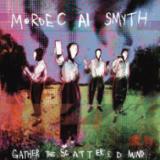
One which lyrically questions some of the radical changes affecting society. A society of increasing division and tension. Social media, influencers, online dating, the distraction of mobile phones, young adults financially trapped in the family home, AI, and bullying: are all scrutinised. Musically, the style has moved on since the last album, 'Things Are Getting Stranger On The Shore'. New members, Luxagen (keys, vocals) and Steve Thompson (bass) have added their considerable musical talents to an already strong line up of Mordecai (vocals, guitar) Tabitha (Sax, clarinet) and Michael Creech (drums, percussion). The new direction tips a nod to the "Art Rock" and "New Wave" music of the 1970's, with plenty of modern innovation in store to keep things sounding fresh and exciting. Previously, Mordecai Smyth has worked with Terry Bickers (House of Love/Levitation) and recently played live shows supporting Bickers' new band. He has had three albums released by Mega Dodo and has written soundtracks to historical films for the British Film Institute. 'Gather The Scattered Mind' is limited to 100 copies, comes in a gatefold sleeve with lyric insert.
Amore Libero – Free Love marks the first film score composed by Fabio Frizzi, written in 1974 for the movie of the same name directed by Pier Ludovico Pavoni. Set against the exotic backdrop of the Seychelles, the film tells the story of Simo, a free-spirited young woman played by Laura Gemser in her cinematic debut, blending sensuality and the spirit of liberation so typical of the 1970s.
Frizzi’s score perfectly captures the film’s atmosphere, weaving together evocative melodies, funky grooves, and progressive textures — an elegant, psychedelic soundscape that reflects both the tropical setting and the film’s themes of freedom and desire. The recording features the Goblin in their classic line-up: Fabio Pignatelli (bass), Massimo Morante (guitar), Walter Martino (drums), and Claudio Simonetti (keyboards), with Vince Tempera handling arrangements and orchestral direction.
Long regarded as a true holy grail for collectors, now, for the first time ever, it is officially reissued on vinyl, bringing back to light a fundamental chapter in Italian film music and progressive sound. An essential record that merges Frizzi’s melodic genius with the visionary energy of the Goblin, Amore Libero – Free Love stands as a timeless document of an extraordinary era in Italian cinema and its music.
A Record Store Day 2026 exclusive / Pearly light blue vinyl edition / 30x30cm insert with extensive liner notes
YOUNGE ist Adrian Younges Meisterwerk: ein Orchesteralbum, das aus der Perspektive eines Hip-Hop-Produzenten geschrieben wurde, und eine Hip-Hop-Platte, die mit der Disziplin klassischer und filmischer Musik komponiert wurde. Inspiriert von Komponisten wie Lalo Schifrin, David Axelrod, Ennio Morricone, Galt MacDermot und Geoff Barrow von Portishead, knüpft das Album an eine Tradition emotional aufgeladener, zukunftsweisender Musik an, die Jahrzehnte später durch Sampling still und leise den Hip-Hop geprägt hat.
Writings on the topic that go off in all directions, mind-numbing lectures given by academics, and testimonies, most of them heavily doctored, from those who “lived through that era”: so many people today fantasize about the early days of punk in our country… This blessed moment when no one had yet thought of flaunting a ridiculous green mohawk, taking Sid Vicious as a hero, or – even worse – making the so-called alternative scene both festive and boorish. There was no such thing in 1976 or 1977, when it wasn’t easy to get hold of the first 45s by the Pistols or the Clash. Few people were aware of what was happening on the fringes of the fringes at the time. Malcolm McLaren was virtually unknown, and having short hair made you seem strange. Who knew then that rock music, which had taken a very bad turn since the early 1970s, would once again become an essential element of liberation? That, thanks to short and fast songs, it would once again rediscover that primitive, social side that was so hated by older generations? Who knew that, besides a few loners who read the music press (it was even better if they read it in English) and frequented the right record stores? Many of these formed bands, because it was impossible to do otherwise. We quickly went from listening to the Velvet Underground to trying to play the Stooges’ intros. It’s a somewhat collective story, even though there weren’t many people to start it.
The Guilty Razors were among those who took part in this initial upheaval in Paris. They were far from being the worst. They had something special and even released a single that was well above the national average. They also had enough songs to fill an album, the one you’re holding. In everyone’s opinion, they were definitely not among the punk impostors that followed in their wake. They were, at least, genuine and credible.
Guilty Razors, Parisian punk band (1975-1978). To understand something about their somewhat linear but very energetic sound, we might need to talk about the context in which it was born and, more broadly, recall the boredom (a theme that would become capital in punk songs) coupled with the desire to blow everything off, which were the basis for the formation of bands playing a rejuvenated rock music ; about the passion for a few records by the Kinks or the early Who, by the Stooges, by the Velvet mostly, which set you apart from the crowd.
And of course, we should remember this new wave, which was promoted by a few articles in the specialized press and some cutting-edge record stores, coming from New York or London, whose small but powerful influence could be felt in Paris and in a handful of isolated places in the provinces, lulled to sleep by so many appalling things, from Tangerine Dream to President Giscard d’Estaing...
In 1975-76, French music was, as almost always, in a sorry state ; it was still dominated by Johnny Hallyday and Sylvie Vartan. Local rock music was also rather bleak, apart from Bijou and Little Bob who tried to revive this small scene with poorly sound-engineered gigs played to almost no one.
In the working class suburbs at the time, it was mainly hard rock music played to 11 that helped people forget about their gruelling shifts at the factory. Here and there, on the outskirts of major cities, you still could find a few rockers with sideburns wearing black armbands since the death of Gene Vincent, but it wasn’t a proper mass movement, just a source of real danger to anyone they came across who wasn't like them. In August 1976, a festival unlike any other took place in Mont-de-Marsan – the First European Punk Festival as the poster said – with almost as many people on stage as in the audience. Yet, on that day, a quasi historical event happened, when, under the blazing afternoon sun, a band of unknowns called The Damned made an unprecedented noise in the arena, reminiscent of the chaotic Stooges in their early adolescence. They were the first genuine punk band to perform in our country: from then on, anything was possible, almost anything seemed permissible.
It makes sense that the four+1 members of Guilty Razors, who initially amplified acoustic guitars with crappy tape recorder microphones, would adopt punk music (pronounced paink in French) naturally and instinctively, since it combines liberating noise with speed of execution and – crucially – a very healthy sense of rebellion (the protesters of May 1968 proclaimed, and it was even a slogan, that they weren’t against old people, but against what had made them grow old. In the mid-1970s, it seemed normal and obvious that old people should now ALSO be targeted!!!).
At the time, the desire to fight back, and break down authority and apathy, was either red or black, often taking the form of leafleting, tumultuous general assemblies in the schoolyard, and massive or shabby demonstrations, most of the time overflowing with an exciting vitality that sometimes turned into fights with the riot police. Indeed, soon after the end of the Vietnam War and following Pinochet’s coup in Chile, all over France, Trotskyist and anarcho-libertarian fervour was firmly entrenched among parts of the educated youth population, who were equally rebellious and troublemakers whenever they had the chance. It should also be noted that when the single "Anarchy in the UK" was first heard, even though not many of us had access to it, both the title and its explosive sound immediately resonated with some of those troublemakers crying out for ANARCHY!!! Meanwhile, the left-wing majority still equated punks with reckless young neo-Nazis. Of course, the widely circulated photos in the mainstream press of Siouxsie Sioux with her swastikas didn’t necessarily help to win over the theorists of the Great Revolution. It took Joe Strummer to introduce The Clash as an anti-racist, anti-fascist and anti-ignorance band for the rejection of old-school revolutionaries to fade a little.
The Lycée Jean-Baptiste Say at Porte d’Auteuil, despite being located in the very posh and very exclusive 16th arrondissement of Paris, didn’t escape these "committed" upheavals, which doubled as the perfect outlet for the less timid members of this generation.
“Back then, politics were fun,” says Tristam Nada, who studied there and went on to become Guilty Razors’ frontman. “Jean-Baptiste was the leftist high-school in the neighbourhood. When the far right guys from the GUD came down there, the Communist League guys from elsewhere helped us fight them off.”
Anything that could challenge authority was fair game and of course, strikes for just about any reason would lead to increasingly frequent truancy (with a definitive farewell to education that would soon follow). Tristam Nada spent his 10th and 11th unfinished grades with José Perez, who had come from Spain, where his father, a janitor, had been sentenced to death by Franco. “José steered my tastes towards solid acts such as The Who. Like most teenagers, I had previously absorbed just about everything that came my way, from Yes to Led Zeppelin to Genesis. I was exploring… And then one day, he told me that he and his brother Carlos wanted to start a rock band.” The Perez brothers already played guitar. “Of course, they were Spanish!”, jokes their singer. “Then, somewhat reluctantly, José took up the bass and we were soon joined by Jano – who called himself Jano Homicid – who took up the rhythm guitar.” Several drummers would later join this core of not easily intimidated young guys who didn’t let adversity get the better of them.
The first rehearsals of the newly named Guilty Razors took place in the bedroom of a Perez aunt. There, the three rookies tried to cover a few standards, songs that often were an integral part of their lives. During a first, short gig, in front of a bewildered audience of tough old-school rockers, they launched into a clunky version of the Velvet Underground's “Heroin”. Challenge or recklessness? A bit of both, probably… And then, step by step, their limited repertoire expanded as they decided to write their own songs, sung in a not always very accurate or academic English, but who cared about proper grammar or the right vocabulary, since what truly mattered was to make the words sound as good as possible while playing very, very fast music? And spitting out those words in a language that left no doubt as to what it conveyed mattered as well.
Trying their hand a the kind of rock music disliked by most of the neighbourhood, making noise, being fiercely provocative: they still belonged to a tiny clique who, at this very moment, had chosen to impose this difference. And there were very few places in France or elsewhere, where one could witness the first stirrings of something that wasn’t a trend yet, let alone a movement.
In the provinces, in late 1976 or early 1977, there couldn’t be more than thirty record stores that were a bit more discerning than average, where you could hear this new kind of short-haired rock music called “punk”. The old clientele, who previously had no problem coming in to buy the latest McCartney or Aerosmith LP, now felt a little less comfortable there…
In Paris, these enlightened places were quite rare and often located nex to what would become the Forum des Halles, a big shopping mall. Between three aging sex workers, a couple of second-hand clothes shops, sellers of hippie paraphernalia and small fashion designers, the good word was loudly spread in two pioneering places – propagators of what was still only a new underground movement. Historically, the first one was the Open Market, a kind of poorly, but tastefully stocked cave. Speakers blasted out the sound of sixties garage bands from the Nuggets compilation (a crucial reference for José Perez) or the badly dressed English kids of Eddie and the Hot Rods. This black-painted den was opened a few years earlier by Marc Zermati, a character who wasn’t always in a sunny disposition, but always quite radical in his (good) choices and his opinions. He founded the independent label Skydog and was one of the promoters of the Mont-de-Marsan punk festivals. Not far from there was Harry Cover, another store more in tune with the new New York scene, which was amply covered in the house fanzine, Rock News (even though it was in it that the photos of the Sex Pistols were first published in France).
It was a favorite hang-out of the Perez brothers and Tristam Nada, as the latter explained. “It’s at Harry Cover’s that we first heard the Pistols and Clash’s 45s, and after that, we decided to start writing our first songs. If they could do it, so could we!”
The sonic shocks that were “Anarchy in the UK”, “White Riot” or the Buzzcocks’s EP, “Spiral Scratch” – which Guilty Razors' sound is reminiscent of – were soon to be amplified by an unparalleled visual shock. In April 1977, right after the release of their first LP, The Clash performed at the Palais des Glaces in Paris, during a punk night organised by Marc Zermati. For many who were there, it was the gig of a lifetime…
Of course, Guilty Razors and Tristam were in the audience: “That concert was fabulous… We Parisian punks were almost all dressed in black and white, with white shirts, skinny leather ties, bikers jackets or light jackets, etc. The Clash, on the other hand, wore colourful clothes. Well, the next day, at the Gibus, you’d spot everyone who had been at this concert, but they weren’t wearing anything black, they were all wearing colours.”
It makes sense to mention the Gibus club, as Guilty Razors often played there (sometimes in front of a hostile audience). It was also the only place in Paris that regularly scheduled new Parisian or Anglo-Saxon acts, such as Generation X, Siouxsie and the Banshees, the Slits, and Johnny Thunders who would become a kind of messed-up mascot for the venue. A little later, in 1978, the Rose Bonbon – formerly the Nashville – also attracted nightly owls in search of electric thrills… In 1977, the iconic but not necessarily excellent Asphalt Jungle often played at the Gibus, sometimes sharing the bill with Metal Urbain, the only band whose aura would later transcend the French borders (“I saw them as the French Sex Pistols,” said Geoff Travis, head of their British label Rough Trade). Already established in this small scene, Metal Urbain helped the young and restless Guilty Razors who had just arrived. Guitarist for Metal Urbain Hermann Schwartz remembers it: “They were younger than us, we were a bit like their mentors even if it’s too strong a word… At least they were credible. We thought they were good, and they had good songs which reminded of the Buzzcocks that I liked a lot. But at some point, they started hanging out with the Hells Angels. That’s when we stopped following them.”
The break-up was mutual, since, Guilty Razors, for their part, were shocked when they saw a fringe element of the audience at Metal Urbain concerts who repeatedly shouted “Sieg Heil” and gave Nazi salutes. These provocations, even still minor (the bulk of the skinhead crowd would later make their presence felt during concerts), weren’t really to the liking of the Perez brothers, whose anti-fascist convictions were firmly rooted. Some things are non-negotiable.
A few months earlier (in July 1978), Guilty Razors had nevertheless opened very successfully for Metal Urbain at the Bus Palladium, a more traditonally old-school rock night-club. But, as was sometimes the case back then, the night turned into a mass brawl when suburban rockers came to “beat up punks”.
Back then, Parisian nights weren’t always sweet and serene.
So, after opening as best as they could for The Jam (their sound having been ruined by the PA system), our local heroes were – once again – met outside by a horde of greasers out to get them. “Thankfully,” says Tristam, “we were with our roadies, motorless bikers who acted as a protective barrier. We were chased in the neighbouring streets and the whole thing ended in front of a bar, with the owner coming out with a rifle…”
Although Tristam and the Perez brothers narrowly escaped various, potentially bloody, incidents, they weren’t completely innocent of wrongdoing either. They still find amusing their mugging of two strangers in the street for example (“We were broke and we simply wanted to buy tickets for the Heartbreakers concert that night,” says Tristam). It so happened that their victims were two key figures in the rock business at the time: radio presenter Alain Manneval and music publisher Philippe Constantin. They filed a complaint and sought monetary compensation, but somehow the band’s manager, the skilful but very controversial Alexis, managed to get the complaint withdrawn and Guilty Razors ended up signing with Constantin with a substantial advance.
They also signed with Polydor and the label released in 1978 their only three-track 45, featuring “I Don't Wanna be A Rich”, “Hurts and Noises” and “Provocate” (songs that exuded perpetual rebellion and an unquenchable desire for “class” confrontation). It was a very good record, but due to a lack of promotion (radio stations didn’t play French artists singing in English), it didn’t sell very well. Only 800 copies were allegedly sold and the rest of the stock was pulped… Initially, the three tracks were to be included on a LP that never came to be, since they were dropped by Polydor (“Let’s say we sometimes caused a ruckus in their offices!” laughs Tristam.) In order to perfect the long-awaited LP, the band recorded demos of other tracks. There was a cover of Pink Floyd's “Lucifer Sam” from the Syd Barrett era – proof of an enduring love for the sixties’ greats –, “Wake Up” a hangover tale and “Bad Heart” about the Baader-Meinhof gang, whose actions had a profound impact on the era and on a generation seeking extreme dissent... On the album you’re now discovering, you can also hear five previously unreleased tracks recorded a bit later during an extended and freezing stay in Madrid, in a makeshift studio with the invaluable help of a drummer also acting as sound engineer. He was both an enthusiastic old hippie and a proper whizz at sound engineering. Here too, certain influences from the fifties and sixties (Link Wray, the Troggs) are more than obvious in the band’s music.
Shortly after a final stormy and rather barbaric (on the audience’s side) “Punk night” at the Olympia in June 1978, Tristam left the band ; his bandmates continued without him for a short while.
But like most pioneering punk bands of the era, Guilty Razors eventually split up for good after three years (besides once in Spain, they’d only played in Paris). The reason for ceasing business activities were more or less the same for everyone: there were no venues outside one’s small circuit to play this kind of rock music, which was still frightening, unknown, or of little interest to most people. The chances of recording an LP were virtually null, since major labels were only signing unoriginal but reassuring sub-Téléphone clones, and the smaller ones were only interested in progressive rock or French chanson for youth clubs. And what about self-production? No one in our small safety-pinned world had thought about it yet. There wasn’t enough money to embark on that sort of venture anyway.
So yes, the early days of punk in France were truly No Future!
out of Stock
Last delivered 6 months ago available to reorder, subject to availability
A GOOD FUN record, the new album from Lipphead – aka the collaborative NYC duo consisting of the producer Tony Simon (Blockhead) and Eliot Lipp – will be the group’s 3rd official full- length, having released the first two records via Detroit’s Young Heavy Soul label.
Lipphead’s music occupies the sweet spot between Blockhead’s groovy, sample-based hip- hop and Eliot Lipp’s upbeat electronic funk. The duo have performed live at select festivals throughout North America and are booked to tour this album, 17 dates in the US starting right after release, April 3rd. European/UK festivals are confirmed in the summer and are waiting to be announced.
The internationally renowned NYC producer Tony Simon—aka Blockhead—has released 15 albums over the past 15 years, including four acclaimed records for Ninja Tune and numerous production jobs including notable works with Aesop Rock. He is regarded as one of the modern masters of instrumental hip-hop and has more recently been releasing music on other platforms like Future Archive Recordings and Backwoodz Studios.
Eliot Lipp is an electronic musician based in Brooklyn, New York. His work was picked up by Scott Herren of Prefuse 73 (Warp Records) after Herren heard him working the club circuit. In 2004, Lipp released his first studio album, S/T, with Eastern Developments Music, a label owned by Warp Records. Lipp has also released music with Pretty Lights Music and his own label Old Tacoma Records.
“Our process for this album was very much "Take this, and add to it" . We both made beats and sent them to the other to add things to. Eliot would generally start the arrangement process and then I'd come in and give my two cents. Gotta say, these Lipphead albums generally come together seamlessly . We definitely have a simple flow and method as to how we create things together, even though the "together" part comes at the end.” - Blockhead
“This is definitely the goofiest record so far. I imagine Lipphead did a little too much doomscrolling between ‘From The Back’ and this one, based on all the meme samples sprinkled throughout.
One difference this time around was that we made way more music than what ended up coming out. It was tough to figure out how to fit it all on one LP, we’ll definitely have some leftovers to drop later on.” - Eliot Lipp
A GOOD FUN record, the new album from Lipphead – aka the collaborative NYC duo consisting of the producer Tony Simon (Blockhead) and Eliot Lipp – will be the group’s 3rd official full- length, having released the first two records via Detroit’s Young Heavy Soul label.
Lipphead’s music occupies the sweet spot between Blockhead’s groovy, sample-based hip- hop and Eliot Lipp’s upbeat electronic funk. The duo have performed live at select festivals throughout North America and are booked to tour this album, 17 dates in the US starting right after release, April 3rd. European/UK festivals are confirmed in the summer and are waiting to be announced.
The internationally renowned NYC producer Tony Simon—aka Blockhead—has released 15 albums over the past 15 years, including four acclaimed records for Ninja Tune and numerous production jobs including notable works with Aesop Rock. He is regarded as one of the modern masters of instrumental hip-hop and has more recently been releasing music on other platforms like Future Archive Recordings and Backwoodz Studios.
Eliot Lipp is an electronic musician based in Brooklyn, New York. His work was picked up by Scott Herren of Prefuse 73 (Warp Records) after Herren heard him working the club circuit. In 2004, Lipp released his first studio album, S/T, with Eastern Developments Music, a label owned by Warp Records. Lipp has also released music with Pretty Lights Music and his own label Old Tacoma Records.
“Our process for this album was very much "Take this, and add to it" . We both made beats and sent them to the other to add things to. Eliot would generally start the arrangement process and then I'd come in and give my two cents. Gotta say, these Lipphead albums generally come together seamlessly . We definitely have a simple flow and method as to how we create things together, even though the "together" part comes at the end.” - Blockhead
“This is definitely the goofiest record so far. I imagine Lipphead did a little too much doomscrolling between ‘From The Back’ and this one, based on all the meme samples sprinkled throughout.
One difference this time around was that we made way more music than what ended up coming out. It was tough to figure out how to fit it all on one LP, we’ll definitely have some leftovers to drop later on.” - Eliot Lipp
Death Is Not The End present a further volume of Arja Kastinen's eerie amalgamations of 110 year old wax cylinders with her own meticulously transcribed takes, this time focussing in on Armas Otto Väisänen's field recordings of kantele player Iivana Mišukka (b. 1861 d.1919).
"Ivana Mišukka (1861–1919) was one of the Karelian kantele players recorded by the folk music researcher Armas Otto Väisänen on wax cylinders in 1916 and 1917. In the early 20th century, the remote areas of Border Karelia were undergoing the final phase of a transformation in musical culture, with the ancient runo song tradition giving way to newer forms of music. This transition is reflected in Mišukka's repertoire and choice of instrument. The ancient small kantele, hollowed out of a single piece of wood, was already rare at the turn of the century. Mišukka's kantele was a new type of instrument with 26 strings, constructed of several parts, but he played it using the traditional plucking technique. Like other Border Karelian kantele players, his repertoire consisted of music rooted in runosong culture, as well as newer dances and songs from the east and west. Most of the recorded material falls into the latter category.
Ivan Bogdanov Mišukka was born out of wedlock in Suursara village, Suistamo, on 1 May 1861. He began playing the kantele at the age of five or six, quickly mastering the instrument. In adulthood, he was considered one of the area's best master players. Mišukka was landless for most of his life and lived in different parts of the Suistamo parish. His first wife, Tekla Markintytär, died in 1897 at the age of 40, and his second wife, Jevdokia Filipintytär Jeminen, died in 1907 at the age of 50. Seven children were born from the first marriage, two of whom died young. The third wife, Maria Ignatintytär Gurnan (Kuurnanen), was a well-known master of lamentations. Together with Maria, Iivana Mišukka worked as a tenant farmer in the village of Suursara. Mišukka suffered from rheumatism, which prevented him from participating in physical work like Maria. This was apparently partly the reason why Iivana Mišukka went to earn extra money by playing the kantele on gig trips. He often had other traditional artists from Suistamo as his travelling companions, such as the runosingers Konstantin Kuokka and Iivana Onoila. Iivana Mišukka died in Leppäsyrjä village, Suistamo, on 18 May 1919 at the age of 58, and his kantele was donated to Teppana Jänis.
Mišukka only used 14 of the 26 strings on his kantele, playing the same tunes either a fourth higher or lower. He tuned his kantele to the major scale using fifths, except for a low seventh scale degree on the upper strings, but not below the fundamental. Since he did not use the seventh note of the scale on the upper strings at all, he could use the major scale both lower and a fourth higher with this tuning. According to Mišukka, the sound of higher, or 'finer', strings is 'more beautiful', while that of lower ones is 'greater'. Among runosingers, the size of the thirds varied, ranging from major to minor to neutral. A similar phenomenon can be observed in kantele tunings, where the third, sixth and seventh scale degrees vary in a comparable way.
During a meeting, Väisänen suggested that Mišukka play the smaller kantele belonging to Konstantin Kuokka. The idea was to bring it closer to the horn to improve the recording quality. However, the kantele was completely out of tune, and now Mišukka tuned it to the Lydian scale (track 18).
Using the old plucking technique, Mišukka placed his right middle finger on the fundamental tone, his right index finger on the second scale degree, his left middle finger on the third scale degree and his left index finger on the fourth scale degree, and his right thumb on the fifth. The thumb also played the notes above the fifth note of the scale. As Mišukka remarked to Väisänen: 'Peigaloll' tuloo enemb ruadoa' (the thumb has to do more work). However, he did not use the seventh note of the scale on the upper strings at all. Below the fundamental note, he played the seventh and sixth notes of the scale with his right middle finger of and the fifth note of the scale with his right ring finger. This fifth scale degree below the fundamental is almost always used as a drone. Sometimes, when the melody required it, Mišukka, like other players, also varied the fingering. He would also occasionally strike the same string with the side of his fingernail after plucking it.
The wax cylinder recordings of Karelian kantele players are kept in the archives of the Finnish Literature Society in Helsinki, Finland. Copies were made of them onto reel-to-reel tapes in both the 1960s and 1980s. The 1960s copies are mono and the 1980s copies are stereo. However, not all kantele recordings from these decades have survived.
The sound of the kantele is difficult to hear in wax cylinder recordings due to its low volume, and it occasionally becomes completely obscured by noise. During the copying process, the cylinder sometimes rotates unevenly, resulting in breaks or jumps in the music. Additionally, the rotation speed of the cylinder in the copies does not correspond to the performance speed of the original music, which alters the pitch. However, since Väisänen's precise notes are available in the archive, it is possible to deduce the melodies, their speed, and the tuning level of the kantele in the recordings. Of the copies of the original recordings from the 1960s and 1980s, I have selected the one that best met the requirements of this publication and adjusted the speed of the recording to align with Väisänen's notes. To enhance the listening experience, I have replayed the songs, which now partly overlap the old recordings on this release."
Death Is Not The End present a further volume of Arja Kastinen's eerie amalgamations of 110 year old wax cylinders with her own meticulously transcribed takes, this time focussing in on Armas Otto Väisänen's field recordings of kantele player Iivana Mišukka (b. 1861 d.1919).
"Ivana Mišukka (1861–1919) was one of the Karelian kantele players recorded by the folk music researcher Armas Otto Väisänen on wax cylinders in 1916 and 1917. In the early 20th century, the remote areas of Border Karelia were undergoing the final phase of a transformation in musical culture, with the ancient runo song tradition giving way to newer forms of music. This transition is reflected in Mišukka's repertoire and choice of instrument. The ancient small kantele, hollowed out of a single piece of wood, was already rare at the turn of the century. Mišukka's kantele was a new type of instrument with 26 strings, constructed of several parts, but he played it using the traditional plucking technique. Like other Border Karelian kantele players, his repertoire consisted of music rooted in runosong culture, as well as newer dances and songs from the east and west. Most of the recorded material falls into the latter category.
Ivan Bogdanov Mišukka was born out of wedlock in Suursara village, Suistamo, on 1 May 1861. He began playing the kantele at the age of five or six, quickly mastering the instrument. In adulthood, he was considered one of the area's best master players. Mišukka was landless for most of his life and lived in different parts of the Suistamo parish. His first wife, Tekla Markintytär, died in 1897 at the age of 40, and his second wife, Jevdokia Filipintytär Jeminen, died in 1907 at the age of 50. Seven children were born from the first marriage, two of whom died young. The third wife, Maria Ignatintytär Gurnan (Kuurnanen), was a well-known master of lamentations. Together with Maria, Iivana Mišukka worked as a tenant farmer in the village of Suursara. Mišukka suffered from rheumatism, which prevented him from participating in physical work like Maria. This was apparently partly the reason why Iivana Mišukka went to earn extra money by playing the kantele on gig trips. He often had other traditional artists from Suistamo as his travelling companions, such as the runosingers Konstantin Kuokka and Iivana Onoila. Iivana Mišukka died in Leppäsyrjä village, Suistamo, on 18 May 1919 at the age of 58, and his kantele was donated to Teppana Jänis.
Mišukka only used 14 of the 26 strings on his kantele, playing the same tunes either a fourth higher or lower. He tuned his kantele to the major scale using fifths, except for a low seventh scale degree on the upper strings, but not below the fundamental. Since he did not use the seventh note of the scale on the upper strings at all, he could use the major scale both lower and a fourth higher with this tuning. According to Mišukka, the sound of higher, or 'finer', strings is 'more beautiful', while that of lower ones is 'greater'. Among runosingers, the size of the thirds varied, ranging from major to minor to neutral. A similar phenomenon can be observed in kantele tunings, where the third, sixth and seventh scale degrees vary in a comparable way.
During a meeting, Väisänen suggested that Mišukka play the smaller kantele belonging to Konstantin Kuokka. The idea was to bring it closer to the horn to improve the recording quality. However, the kantele was completely out of tune, and now Mišukka tuned it to the Lydian scale (track 18).
Using the old plucking technique, Mišukka placed his right middle finger on the fundamental tone, his right index finger on the second scale degree, his left middle finger on the third scale degree and his left index finger on the fourth scale degree, and his right thumb on the fifth. The thumb also played the notes above the fifth note of the scale. As Mišukka remarked to Väisänen: 'Peigaloll' tuloo enemb ruadoa' (the thumb has to do more work). However, he did not use the seventh note of the scale on the upper strings at all. Below the fundamental note, he played the seventh and sixth notes of the scale with his right middle finger of and the fifth note of the scale with his right ring finger. This fifth scale degree below the fundamental is almost always used as a drone. Sometimes, when the melody required it, Mišukka, like other players, also varied the fingering. He would also occasionally strike the same string with the side of his fingernail after plucking it.
The wax cylinder recordings of Karelian kantele players are kept in the archives of the Finnish Literature Society in Helsinki, Finland. Copies were made of them onto reel-to-reel tapes in both the 1960s and 1980s. The 1960s copies are mono and the 1980s copies are stereo. However, not all kantele recordings from these decades have survived.
The sound of the kantele is difficult to hear in wax cylinder recordings due to its low volume, and it occasionally becomes completely obscured by noise. During the copying process, the cylinder sometimes rotates unevenly, resulting in breaks or jumps in the music. Additionally, the rotation speed of the cylinder in the copies does not correspond to the performance speed of the original music, which alters the pitch. However, since Väisänen's precise notes are available in the archive, it is possible to deduce the melodies, their speed, and the tuning level of the kantele in the recordings. Of the copies of the original recordings from the 1960s and 1980s, I have selected the one that best met the requirements of this publication and adjusted the speed of the recording to align with Väisänen's notes. To enhance the listening experience, I have replayed the songs, which now partly overlap the old recordings on this release."
On this 8 track EP every song has UK and USA lyricists side by side as equals. It includes older icons of Hip-Hop, established talent from the current underground rap scene, and young emerging rappers who haven't been given a platform until now. This project is a collaboration between producer Sam Seed, a dozen rappers, 4 record labels,
the 05:21 music platform and a DJ night. No filler, all killer.
Introducing Sam Seed
A rising name on the underground rap scene. North London producer Sam Seed has a list of top tier production credits to his name with artists including Vinnie Paz, Billy woods,
Mickey Diamond, Conway the Machine. The Unaligned Vol.1 is his eagerly awaited debut EP.
Mizery aus San Diego sind ein rebellisches Kraftpaket, das mit seinem Crossover-Hardcore-Sound für Aufsehen sorgen will. Mizery wurden 2014 mit ihrer EP ,Survive The Vibe" bekannt, gefolgt von ihrem 2016 erschienenen Album ,Absolute Light" (Flatspot Records). Mit ihren groovigen Rhythmen und dynamischen Live-Auftritten erregten sie schnell Aufmerksamkeit. Die Idee zu Mizery hatten die Kindheitsfreunde Jose Luna (Gesang) und Taylor Parker (Leadgitarre). Als die beiden den Schlagzeuger Cayle Sain trafen, wurde aus der Idee echt was. Bald darauf holten sie Miguel ,Mikey" Salazar am Bass dazu und begannen als Vierergruppe zu komponieren. Nach der Veröffentlichung des Albums tourten Mizery mit Genre-Größen wie Power Trip, Terror und Backtrack und nahmen Ahmad Ali am Bass auf, wodurch Mikey zur Rhythmusgitarre wechselte. Wie der Rest der Welt kam auch die Band während der Pandemie zum Stillstand, schrieb aber weiter Songs und war bereit, mit voller Kraft zurückzukommen. Im Dezember 2023 erschütterte der unerwartete Tod des Schlagzeugers Cayle Sain, der auch mit Twitching Tongues, God's Hate und GhosteMane auftrat, die Musikszene und brachte Mizery verständlicherweise zum Stillstand. Während sie ihre Trauer verarbeiteten und nachdachten, wussten die Mitglieder von Mizery, dass sie weitermachen mussten, und eine gefundene Aufnahme gab ihnen ein neues Ziel. Jose und Taylor entdeckten, dass Cayle die Vorproduktions-Demos, die sie ihm geschickt hatten, genommen und in einem professionellen Studio Schlagzeugspuren dafür aufgenommen hatte. Mit der Hilfe des Produzenten Taylor Young (The Pit) konnte die Band diese Schlagzeugspuren bekommen und sie für ihre selbstbetitelte EP verwenden. Die Mizery-EP, die am 20. März 2026 bei Flatspot Records erscheinen soll, ist ein offen politisches Album, das sich um Erneuerung und Reflexion dreht. In den sechs Tracks werden die Texte als Waffe eingesetzt, wie Jose erklärt: ,Es ist eine Reflexion einer Welt, die einige von uns sehen und andere ignorieren. Die Gewalttaten, die Angst vor Gewalt und die Auswirkungen von Gewalt." Die Songs weichen von einem geradlinigen Kurs ab und mischen mitreißende Rap-Gesangspassagen mit metallischen Riffs, einfallsreichen Grooves und einigen Überraschungen. Die Einflüsse stammen von Leeways ,Adult Crash", Merauders ,5 Deadly Venoms" und Only Living Witness' ,Innocents", kombiniert mit den Werken von Rage Against The Machine und P.O.D., die die Bandmitglieder in ihrer Jugend geprägt haben. Schon beim Opener ,Renegade Rhythm" wird klar, dass Mizery es ernst meint, wenn sie sich mit dem Zustand der Welt auseinandersetzen und dabei Musik machen, die im Kopf bleibt. ,The Weapon PT.II" ist der lauteste Track auf der EP und setzt auf Worte, um Veränderungen zu bewirken, statt auf physische Gewalt. Den Abschluss der EP bildet der selbstgerechte Song ,Eulogy" mit Gastgesang von Sammy Ciaramitaro von DRAIN. Der Song entstand als frühe Demo und war der einzige Track, für den Cayle programmierte Drums anstelle von Studioaufnahmen verwendet hatte. Um die Single zu vervollständigen, sprang Schlagzeuger David Stalsworth (Militarie Gun, Torena) bei den Aufnahmen ein und ist nun Mitglied von Mizery. Während manche die Veröffentlichung der EP als Triumph betrachten mögen, ist sie für Mizery ein Beweis für ihre Beharrlichkeit und zeigt, dass die Band bereit ist, in eine neue Ära einzutreten.
Mizery aus San Diego sind ein rebellisches Kraftpaket, das mit seinem Crossover-Hardcore-Sound für Aufsehen sorgen will. Mizery wurden 2014 mit ihrer EP ,Survive The Vibe" bekannt, gefolgt von ihrem 2016 erschienenen Album ,Absolute Light" (Flatspot Records). Mit ihren groovigen Rhythmen und dynamischen Live-Auftritten erregten sie schnell Aufmerksamkeit. Die Idee zu Mizery hatten die Kindheitsfreunde Jose Luna (Gesang) und Taylor Parker (Leadgitarre). Als die beiden den Schlagzeuger Cayle Sain trafen, wurde aus der Idee echt was. Bald darauf holten sie Miguel ,Mikey" Salazar am Bass dazu und begannen als Vierergruppe zu komponieren. Nach der Veröffentlichung des Albums tourten Mizery mit Genre-Größen wie Power Trip, Terror und Backtrack und nahmen Ahmad Ali am Bass auf, wodurch Mikey zur Rhythmusgitarre wechselte. Wie der Rest der Welt kam auch die Band während der Pandemie zum Stillstand, schrieb aber weiter Songs und war bereit, mit voller Kraft zurückzukommen. Im Dezember 2023 erschütterte der unerwartete Tod des Schlagzeugers Cayle Sain, der auch mit Twitching Tongues, God's Hate und GhosteMane auftrat, die Musikszene und brachte Mizery verständlicherweise zum Stillstand. Während sie ihre Trauer verarbeiteten und nachdachten, wussten die Mitglieder von Mizery, dass sie weitermachen mussten, und eine gefundene Aufnahme gab ihnen ein neues Ziel. Jose und Taylor entdeckten, dass Cayle die Vorproduktions-Demos, die sie ihm geschickt hatten, genommen und in einem professionellen Studio Schlagzeugspuren dafür aufgenommen hatte. Mit der Hilfe des Produzenten Taylor Young (The Pit) konnte die Band diese Schlagzeugspuren bekommen und sie für ihre selbstbetitelte EP verwenden. Die Mizery-EP, die am 20. März 2026 bei Flatspot Records erscheinen soll, ist ein offen politisches Album, das sich um Erneuerung und Reflexion dreht. In den sechs Tracks werden die Texte als Waffe eingesetzt, wie Jose erklärt: ,Es ist eine Reflexion einer Welt, die einige von uns sehen und andere ignorieren. Die Gewalttaten, die Angst vor Gewalt und die Auswirkungen von Gewalt." Die Songs weichen von einem geradlinigen Kurs ab und mischen mitreißende Rap-Gesangspassagen mit metallischen Riffs, einfallsreichen Grooves und einigen Überraschungen. Die Einflüsse stammen von Leeways ,Adult Crash", Merauders ,5 Deadly Venoms" und Only Living Witness' ,Innocents", kombiniert mit den Werken von Rage Against The Machine und P.O.D., die die Bandmitglieder in ihrer Jugend geprägt haben. Schon beim Opener ,Renegade Rhythm" wird klar, dass Mizery es ernst meint, wenn sie sich mit dem Zustand der Welt auseinandersetzen und dabei Musik machen, die im Kopf bleibt. ,The Weapon PT.II" ist der lauteste Track auf der EP und setzt auf Worte, um Veränderungen zu bewirken, statt auf physische Gewalt. Den Abschluss der EP bildet der selbstgerechte Song ,Eulogy" mit Gastgesang von Sammy Ciaramitaro von DRAIN. Der Song entstand als frühe Demo und war der einzige Track, für den Cayle programmierte Drums anstelle von Studioaufnahmen verwendet hatte. Um die Single zu vervollständigen, sprang Schlagzeuger David Stalsworth (Militarie Gun, Torena) bei den Aufnahmen ein und ist nun Mitglied von Mizery. Während manche die Veröffentlichung der EP als Triumph betrachten mögen, ist sie für Mizery ein Beweis für ihre Beharrlichkeit und zeigt, dass die Band bereit ist, in eine neue Ära einzutreten.
Formed in 1987 by Fruitbat and Jim Bob, Carter The Unstoppable Sex Machine burst onto the scene with their signature style of punk-pop infused with samples, drum machines, and social commentary. Join Jim Bob and Fruitbat, as they take a retrospective look back at the complete Carter U.S.M. singles, from 1988 to 1997.
First released in 1995, 'Straw Donkey' is an essential introduction to Carter The Unstoppable Sex Machine, featuring the U.K. Top 20 singles 'The Only Living Boy In New Cross', 'After The Watershed (Early Learning The Hard Way)', 'Rubbish', and 'Lean On Me I Won't Fall Over', along with classics such as 'Sheriff Fatman', 'Anytime Anyplace Anywhere' and 'Bloodsport For All'.
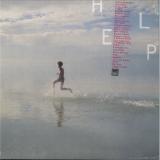
HELP(2) ist die Neuauflage einer der beeindruckendsten Charity-Aktionen der jüngeren Musikgeschichte. Bereits 1995 schlossen sich die Größen der britischen Musikszene zusammen, um mit den Erlösen der gemeinsamen HELP-Compilation Kindern in Kriegsgebieten zu helfen. Auch 2026 ist die globale Lage verheerend. Inspiriert vom legendären Charity-Sampler HELP aus dem Jahr 1995 hat sich in Großbritannien erneut ein Community-Projekt formiert, getragen von einigen der wichtigsten Musikerinnen und Musiker unserer Zeit. Ziel ist es, in bewegten Zeiten einen würdigen Nachfolger aufzunehmen: HELP(2). Wie schon beim Original, an dem unter anderem Radiohead, Oasis, Portishead, The Chemical Brothers, Massive Attack und Blur beteiligt waren, bringt auch HELP(2) Menschen zusammen, um die lebenswichtige Arbeit von War Child zu unterstützen: schnelle Nothilfe, Bildungsangebote, spezialisierte psychosoziale Betreuung sowie Schutz für Kinder, die weltweit von Krieg und Konflikten betroffen sind. Das Album macht auf den dramatischen Umstand aufmerksam, dass heute jedes fünfte Kind auf der Welt in einem Kriegsgebiet lebt. Entstanden ist das neue Album während einer außergewöhnlichen Aufnahmewoche im November 2025 in enger Zusammenarbeit mit den Abbey Road Studios. Als Executive Producer fungierte der vielfach ausgezeichnete Produzent James Ford. HELP(2) vereint eine beeindruckende Liste internationaler Künstlerinnen und Künstler, darunter Anna Calvi, Arctic Monkeys, Arlo Parks, Arooj Aftab, Bat For Lashes, Beabadoobee, Beck, Beth Gibbons, Big Thief, Black Country, New Road, Damon Albarn, Depeche Mode, Foals, Fontaines D.C., Graham Coxon, Greentea Peng, Kae Tempest, King Krule, Nilüfer Yanya, Olivia Rodrigo, Pulp, Sampha, The Last Dinner Party, Wet Leg, Young Fathers - sowie viele weitere helfende Hände. Die kreative Leitung des Projekts liegt in den Händen des renommierten Filmemachers und Oscar-Preisträgers Jonathan Glazer und seines Teams von Academy Films, die sowohl die visuelle Umsetzung als auch die künstlerische Gestaltung von HELP(2) maßgeblich prägten. Sämtliche Erlöse des Albums kommen War Child UK zugute und unterstützen den Einsatz für Schutz, Bildung und die Rechte von Kindern in Konfliktgebieten weltweit. HELP(2) steht für Hoffnung - für Kinder, deren Leben durch Krieg zerstört wurde - und für die Kraft gemeinschaftlichen Handelns. Es ist ein eindrucksvolles Zeichen der Solidarität von Künstlerinnen und Künstlern für eine sicherere und gerechtere Zukunft. Denn kein Kind sollte jemals Teil eines Krieges sein.
out of Stock
Last delivered 5 months ago available to reorder, subject to availability
With »News from Planet Zombie«, The Notwist return to view after years of exploration and experiment with an album rich in both melancholy and positivity, sketched across a suite of thrilling, fiercely committed pop songs. It’s an album reflecting a chaotic world, but responding with warmth and generosity, to achieve creative and spiritual consolidation. Recorded in their home base of Munich, it reconnects with the security of the local to explore the troubles of the global: a guiding impulse writ large across this album’s eleven songs. It’s also the first studio album since 1995’s »12« that the entire band recorded together in the studio in its expanded live formation.
A new album by The Notwist is always a curious endeavour; their musical language is as consistent and resilient as the contexts for creativity are unpredictable and ever shifting. For »News from Planet Zombie«, the core trio of Markus and Micha Acher and Cico Beck embraced the plural possibilities of writing together, bringing songs to the collective and then arranging, rehearsing and recording that material live, in the studio.
The result is an album that’s energised, fully in ›the now‹, with spectacular moments where you can hear the magic bubbling up in the dynamic between the Achers, Beck, and fellow members Theresa Loibl, Max Punktezahl, Karl Ivar Refseth, and Andi Haberl. If »Teeth« begins »News from Planet Zombie« quietly and reflectively, by »X-Ray« everyone’s supercharged, blasting out future anthems with the collective energy cranked up high. The chiming keys of »Propeller« skim the instrumental’s surface like stones across burbling water; »The Turning« clangs its way into one of the album’s most heartwarming melodies.
»News from Planet Zombie« was recorded over one week at Import Export, a non-profit space for arts and music. You can tell, too; there are some pleasingly rough edges here, as though The Notwist’s striving for hazy perfection means they’re also confident enough to let the songs breathe and mutate between our ears. That openness to chance also takes in guest turns from friends both local and international, reflective of a cosmopolitan Munich: Enid Valu joins in on vocals, while Haruka Yoshizawa guests on taishōgoto and harmonium, Tianping Christoph Xiao on clarinet, and Mathias Götz on trombone.
The Notwist aren’t best known for cover versions, but »News from Planet Zombie« features two: a gorgeous version of Neil Young’s »Red Sun« (from 2000’s »Silver & Gold«), which the group originally developed for a theatre play directed by Jette Steckel, and a take on Athens, Georgia folk-pop gang Lovers’ »How the Story Ends«. They slot into the album’s narrative perfectly, nestling in like old friends, revealing The Notwist as poetic interpreters. Played well, the cover version is both acknowledgement of fellow travellers and act of generosity, and The Notwist nail both aspects here.
And that narrative, the way the album plays out? »News from Planet Zombie« acknowledges the distress of our current geopolitical impasse, while reminding us there are collective ways forward. Fed through the figure of the zombie, Markus Acher explores our anxieties: »In the title and some lyrics I reference B- and horror-movies, which is a reference to the crazy world at the moment, which seems to be like a really bad and unrealistic B-movie.« But there’s a reminder here not to lose the thread entirely, that these things, too, will pass.
»The river here in Munich I often go to has been there forever and will be there long after us,« Acher reflects, pinpointing an important source of succour for him, »always the same but always changing. Very calming, but also always reminding me that like this river time only flows into one direction and you can’t go back. Every moment is very precious.«
Artwork by Marie Vermont
The Notwist:
Markus Acher: vocals, guitar
Micha Acher: bass, sousaphone, euphonium, trumpet
Cico Beck: electronics, keyboards, guitar, recorder, percussion
Theresa Loibl: bassclarinet, clarinet, piano, harmonium, organ
Max Punktezahl: guitar
Karl Ivar Refseth: marimbaphone, vibraphone, glockenspiel, congas, percussion
Andi Haberl: drums, dulcimer
+
Enid Valu: vocals on 1, 2, 3, 4, 5, 7, 9, 10, 11
Haruka Yoshizawa: taishōgoto on 6, harmonium on 9, 10, 11
Tianping Christoph Xiao: clarinet on 4, 10, 11
Mathias Götz: trombone on 4, 10, 11
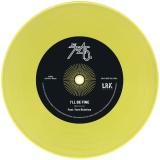
The 7:45s are a soul collective from Manchester, UK – the brainchild of songwriter and bassist Sam Flynn. Inspired by the house bands of labels from Motown to Big Crown, the young collective spotlights guest vocalists on each tune. Named after 7-inch vinyl, The 7:45s write snappy singles that blend the vintage feel of rare groove with the songcraft of perfect pop. BBC Radio 6 Music has played seven songs by The 7:45s this year.
Clocking in at under three minutes, 'I'll Be Fine' is a short and snappy soul sensation. The guitar hooks your ear, the rhythm reels you in, and the arrangement keeps you on your toes – adding exuberant horns, break downs and build ups. Featured vocalist Yemi Bolatiwa shines through the song's bittersweet theme, that it's better to have loved and lost… 'I'll Be Fine' has been played on BBC Radio 6 Music. Craig Charles called it "Proper up-tempo soul of the highest order".
With »News from Planet Zombie«, The Notwist return to view after years of exploration and experiment with an album rich in both melancholy and positivity, sketched across a suite of thrilling, fiercely committed pop songs. It’s an album reflecting a chaotic world, but responding with warmth and generosity, to achieve creative and spiritual consolidation. Recorded in their home base of Munich, it reconnects with the security of the local to explore the troubles of the global: a guiding impulse writ large across this album’s eleven songs. It’s also the first studio album since 1995’s »12« that the entire band recorded together in the studio in its expanded live formation.
A new album by The Notwist is always a curious endeavour; their musical language is as consistent and resilient as the contexts for creativity are unpredictable and ever shifting. For »News from Planet Zombie«, the core trio of Markus and Micha Acher and Cico Beck embraced the plural possibilities of writing together, bringing songs to the collective and then arranging, rehearsing and recording that material live, in the studio.
The result is an album that’s energised, fully in ›the now‹, with spectacular moments where you can hear the magic bubbling up in the dynamic between the Achers, Beck, and fellow members Theresa Loibl, Max Punktezahl, Karl Ivar Refseth, and Andi Haberl. If »Teeth« begins »News from Planet Zombie« quietly and reflectively, by »X-Ray« everyone’s supercharged, blasting out future anthems with the collective energy cranked up high. The chiming keys of »Propeller« skim the instrumental’s surface like stones across burbling water; »The Turning« clangs its way into one of the album’s most heartwarming melodies.
»News from Planet Zombie« was recorded over one week at Import Export, a non-profit space for arts and music. You can tell, too; there are some pleasingly rough edges here, as though The Notwist’s striving for hazy perfection means they’re also confident enough to let the songs breathe and mutate between our ears. That openness to chance also takes in guest turns from friends both local and international, reflective of a cosmopolitan Munich: Enid Valu joins in on vocals, while Haruka Yoshizawa guests on taishōgoto and harmonium, Tianping Christoph Xiao on clarinet, and Mathias Götz on trombone.
The Notwist aren’t best known for cover versions, but »News from Planet Zombie« features two: a gorgeous version of Neil Young’s »Red Sun« (from 2000’s »Silver & Gold«), which the group originally developed for a theatre play directed by Jette Steckel, and a take on Athens, Georgia folk-pop gang Lovers’ »How the Story Ends«. They slot into the album’s narrative perfectly, nestling in like old friends, revealing The Notwist as poetic interpreters. Played well, the cover version is both acknowledgement of fellow travellers and act of generosity, and The Notwist nail both aspects here.
And that narrative, the way the album plays out? »News from Planet Zombie« acknowledges the distress of our current geopolitical impasse, while reminding us there are collective ways forward. Fed through the figure of the zombie, Markus Acher explores our anxieties: »In the title and some lyrics I reference B- and horror-movies, which is a reference to the crazy world at the moment, which seems to be like a really bad and unrealistic B-movie.« But there’s a reminder here not to lose the thread entirely, that these things, too, will pass.
»The river here in Munich I often go to has been there forever and will be there long after us,« Acher reflects, pinpointing an important source of succour for him, »always the same but always changing. Very calming, but also always reminding me that like this river time only flows into one direction and you can’t go back. Every moment is very precious.«
Artwork by Marie Vermont
The Notwist:
Markus Acher: vocals, guitar
Micha Acher: bass, sousaphone, euphonium, trumpet
Cico Beck: electronics, keyboards, guitar, recorder, percussion
Theresa Loibl: bassclarinet, clarinet, piano, harmonium, organ
Max Punktezahl: guitar
Karl Ivar Refseth: marimbaphone, vibraphone, glockenspiel, congas, percussion
Andi Haberl: drums, dulcimer
+
Enid Valu: vocals on 1, 2, 3, 4, 5, 7, 9, 10, 11
Haruka Yoshizawa: taishōgoto on 6, harmonium on 9, 10, 11
Tianping Christoph Xiao: clarinet on 4, 10, 11
Mathias Götz: trombone on 4, 10, 11
out of Stock
Last delivered 7 months ago available to reorder, subject to availability
The album opens with a swinging version of "I'll Be There." The groove is up-tempo, slippery and almost gospel in intent, it's simply breathtaking.
Likewise, an extended version of George Harrison's "Something," is a blissed-out mind-bender.
Other covers, such as "We've Only Just Begun," and Bread's "Make It With You,"
The band has been sampled over 200 times, most often in the hip hop genre.
Born Again is available as a numbered limited edition of 750 copies on crystal clear vinyl and comes in a gatefold
Straight outta Gothenburg, DJ Blendah & The Printz blur the lines between remixes, edits and reworks, and “Get Funky in the Heart” is no exception. Taking the finest elements from Teddy Pendergrass, Dee-lite & Q-Tip, and adding fresh live bass and beats, this is a tried and (road)tested floor-filler! 122 BPM
On the flip, Studio 45 gaffer Del Gazeebo has relented to years of public demand to finally release “Know How to Shake?” to the public - a staple of his party sets over the years that has never since a vinyl release until now. Not only that, he's completely rebuilt it, with more sonic twists, turns and "party tricks" than ever before. It's the Young MC/Jacksons blend you never thought you needed, but essential all the same. 118 BPM
out of Stock
Last delivered 3 months ago available to reorder, subject to availability
Cheeba’s Funky Rock Ensemble are back with two sides of funky rock breaks for hairy b-boys !
After the great feedback of their debut release 18 months ago, they went back into the studio soon afterwards to record some more slices of hip-hop orientated funky-psyche beats aimed at the dancefloor. Since then, both new tracks have been on a one-off dubplate and getting aired all over the country to an enthusiastic reception - so it’s about time we got them out there for everyone else to, like , just dig, maaaaan !
DRUG-CRAZED LONDON HIPPIES takes you down to the seedy back street clubs of late 60s swinging Soho - to the early discotheque scene and the psychedelic experience of numerous young rock groups and their fans. With heavy fuzz, funky beats and dirty flute loops this takes you straight to those hedonistic dancefloors in the early hours.
YOU WANNA RIDE ? Stays in the same era and same counter-culture, but on the other side of the Atlantic with the free festival vibe of alternative lifestyles in California. More fuzz-rock sounds, blended with heavy beats , screaming hammond and wordless female vocals to take you on a deep trip - to lose yourself in a field as the sun rises.
out of Stock
Last delivered 7 months ago available to reorder, subject to availability
Der in Paris geborene Soulsänger und Songwriter Tiwayo, der wegen seiner zeitlosen, ausdrucksstarken Stimme den Spitznamen ,The Young Old" hat, gibt die Veröffentlichung einer limitierten 45er-Vinyl-Single bekannt, die zwei herausragende Tracks aus seinem kommenden Album Outsider enthält - produziert vom Grammy-Gewinner Adrian Quesada von den Black Pumas. Die am 20. Februar erscheinende 7"-Single vereint den Up-Tempo-Soul-Stomper ,Up For Soul" auf der A-Seite mit dem strahlenden und herzerwärmenden ,Sunshine Lady" auf der B-Seite. Mit einer limitierten Auflage von weltweit 500 Exemplaren ist diese Single ein Muss für Funk-/Soul-DJs und Sammler. ,Ich wollte, dass das Album einen Up-Tempo-Track hat, der wirklich bewegt", sagt Tiwayo über ,Up For Soul". ,Eines Nachmittags hörte ich Sly Stone und Johnny Guitar Watson, und am Ende des Tages war dieser Song geboren. Es ist eine spielerische Auseinandersetzung mit den Höhen und Tiefen des Musikerlebens - dem Trubel, der Freude und dem Chaos -, alles verpackt in der Soul-Energie der 70er Jahre." Aufgenommen mit Adrian Quesada und mit einem üppigen Streicharrangement von Sly5thAve, ist der Track ein Beweis für Tiwayos Fähigkeit, klassischen Soul frisch und lebendig klingen zu lassen. Auf der anderen Seite glänzt ,Sunshine Lady" als Moment der Zärtlichkeit und Hoffnung. ,Ein Freund hat mir mal gesagt, dass ich immer traurige Songs schreibe", lacht Tiwayo. ,Also habe ich versucht, etwas Fröhliches zu schreiben. Der Song handelt von Dankbarkeit - von der Person, die dich auffängt, wenn du am Boden bist. Er ist einfach, gefühlvoll und voller Licht." Mit dem geschmeidigen Rhythmus von Jay Mumford (Schlagzeug) und Terin ,Moswen" Hector (Bass) strahlt ,Sunshine Lady" den warmen, analogen Spirit eines verlorenen Soul-Klassikers der 70er Jahre aus. Beide Tracks sind eine Vorschau auf Tiwayos mit Spannung erwartetes drittes Album ,Outsider", das am 10. April 2026 erscheinen soll - eine Zusammenarbeit zwischen Tiwayo und Adrian Quesada, die Pariser Soul mit der rohen Hitze des Südens von Austin verbindet.
out of Stock
Last delivered 7 months ago available to reorder, subject to availability
World Of Echo announces the reissue of two remastered albums by Japanese guitarist and songwriter Naoki Zushi, 1988’s Paradise, and 2005’s III. Two classics of Japanese psychedelia, both Paradise and III were originally released on Org Records, the imprint of Shinji Shibayama of acid-folk group Nagisa Ni Te, with whom Zushi has guested on second guitar for decades. Both intimate and expansive, rich with revelatory songwriting and blasted, sky-scouring guitar, these reissues return these albums to print for the first time since the 2000s. It’s the first time III has been officially released on vinyl, with an extra, previously unreleased track, “Under The June Moonlight.”
Recorded in Kyoto’s Townhouse Studios in mid 1987 and released in limited-to-500 vinyl pressing in 1988, Paradise emerged from a scene in Kansai, Japan that was embracing the idiosyncracies of 1970s singer-songwriters, the soaring solos of early seventies psychedelia, and the DIY impulse of 1980s post-punk. While Zushi’s musical history stretched back to the early eighties – he was a founding member of Jojo Hiroshige’s noise outfit Hijokaidan – he found his feet with groups like Hallelujahs, whose dream-pop collection Niku O Kuraite Chikai Wo Tateyo was recently reissued by Black Editions, and Idiot O’Clock.
Paradise appeared two years after that Hallelujahs album and share much the same membership – Zushi’s backing band on several of the songs includes Shibayama on drums and Ken-Ichi Takayama (aka Idiot) on electric guitar, though just as often, Zushi plays all the instruments himself. The coordinates here are wide-reaching – you can hear the volume and intensity of Neil Young & Crazy Horse (on “Hallelujah: Left Side” and “Paradise: Midday”), the slow-motion magic of Galaxie 500, the idiosyncratic spirit of The Only Ones, all mixed up with tender guitar miniatures and stumbling garage-psych-pop moves.
Seven years later, after the transitional album Phenomenal Luciferin, Zushi released III. Perhaps his masterpiece, it’s already been bootlegged on vinyl, but this reissue is the real deal. The album was recorded at Studio Nemu over seven years, and sees Zushi backed by Shibayama (bass) and Masako Takeda (drums), his erstwhile bandmates in Nagisa Ni Te. By this stage, Zushi had started to really stretch out, and many of the songs on III swoon languorously, taking their sweet time to say what they need to say. It’s rich with lovely, melancholy songs, in a similar realm to bandmates Nagisa Ni Te, of course, but you can also hear traces of everything from Syd Barrett’s The Madcap Laughs, through seventies private press loner folk, to the slow-burn meanderings of the likes of early Low or Damon & Naomi.
When interviewed by Shibayama in the mid-nineties, Zushi said of Paradise, “it was a sort of collection of songs that had meant something to me up to that point… it was my paradise. I wanted to create paradise.” That’s something Zushi achieves on both of these albums – visionary Japanese psychedelia, en route to paradise. - Jon Dale
To celebrate its 25th anniversary, XL Recordings today announce a special, expanded version of Leila’s acclaimed second album Courtesy Of Choice. Originally released on 11th September 2000, the album followed the success of her Rephlex Records debut Like Weather and felt like a broadcast from a futuristic radio station no one else could tune into. Twenty-five years on, alongside collaborations with the likes of Bjork, Aphex Twin and Terry Hall and iconic performances at the likes of the V&A and Venice Biennale, more and more listeners have found the frequency. While Courtesy of Choice's influence continues to transmit through contemporary culture. the Iranian-born, London-raised producer remains utterly singular:
"I realised very early on that people don't really belong anywhere. That's what gives me the freedom to do any kind of music...I don't feel any commitment or loyalty to anything. My commitment is to noise." – Leila
This new version, Courtesy Of Choice… asides and besides, re-presents the original 14 track album — including the previously vinyl-only “Relax the Pleasuredome” — alongside a wealth of unreleased material. Leila chose to re-edit rather than remake the album (she has all the original data… midi and audio), choosing to set the parameters of only recovering buried details while preserving its spirit. “I wanted this reissue to be honest,” she explains. “Nothing added, just making sure the performances came through as they were meant to.” Among the twenty unheard tracks are Roya Arab’s striking collaboration on Cabaret classic “Mein Herr,” the surrealist collage “A Reasoning” with a sample of Max Ernst, the hypnotic “Acid Frog Fave,” the digi rave blowout “Birdie Rave,” and “techyarr”’s future forever funk from the realm of primetime Neptunes. Together they reveal both the breadth of Leila’s vision and the enduring power of an album that continues to sound ahead of its time.
out of Stock
Last delivered 7 months ago available to reorder, subject to availability
Way back in 1981, two musicians got together to make a record. Mike Collins played guitar and had just bought a Roland CR78 - the first programmable drum machine. Keith O'Connell played Fender Rhodes piano and Prophet 5 synthesizer. Excited about the quirky and unusual instrumental track they'd composed, when the duo entered London's Utopia Studios to finish off their creation, neither could have predicted what was to follow... Now viewed by many as one of the most influential early electronic dance records, 'Rude Movements' was swiftly picked up on by David Mancuso, who used it to devastating effect at his infamous 'Loft Parties', in turn introducing it to Larry Levan, Frankie Knuckles, David Morales and Kenny Dope, a group of young DJs who would go on to write the blueprint for dance music as we know it.
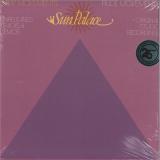
In the more than 35 years since its release, 'Rude Movements' has continued to inspire and excite, sampled by The Bucketheads' classic House track 'Whew!' (featured on recent BBE compilation '20 years of Henry Street Records') and listed by a veritable 'who's who' of dance music's elite as an all-time favourite. Rare and much sought-after on vinyl, BBE are happy to announce the release of a fully remastered version of 'Rude Movements' presented alongside the original demo version 'Raw Movements', plus three other versions of the iconic track. Also included on the vinyl package are the Afrika Bambaata inspired 'Street Beat' and 808/MiniMoog workout 'Palace Strut', as well as three other 80s SunPalace compositions. CD and digital versions expand the catalogue still further, with more experimental SunPalace magic. Timeless original, quirky and unique, these recordings are set to inspire yet another generation of DJs,
producers and music fans.
West Mineral returns with lushly amorphous actions by Shiner, Pontiac Streator & Ben Bondy aka Shinetiac; together fused for an immersive flux of vapoured dub, chopped and droned Billie Eilish, and fidgety algorithmic jams.
There's not a single, specific sound you can peg to the West Mineral axis at this stage in the label’s evolution - it's rather a set of shared aesthetics that freely bend into various interconnected shapes. Shinetiac's contemptuous, critic-baiting gear is the ideal example; on their last album, 2023's 'Not All Who Wander Are Lost', skittery, ketamized IDM sparkled over Spice Girls samples and the Foo Fighters' 'Everlong' was transmuted into Sneaker Pimps-style trip-hop. 'Infiltrating Roku City' might be a little less blatant with its out-and-out poptimism, but it takes a similarly dim view of conservative "big ambient" snobbishness. Just a few minutes of 'Bluemosa' should be enough to let you know what's up; the overall character of the sound is hazed, with frozen pads and garbled, dubbed-out voices smudged into a mess of effects and samples. But it sups up different nuances as it wriggles, absorbing scampering breaks, dizzy acoustic guitar strums and half-heard wordless vocals, flipping in the third act to emerge from its shell as minimalist balearic folk-pop - something like Bon Iver doing 'Electric Counterpoint'.
Brooklyn's Shiner, Philly's Pontiac Streator and Berlin-based Ben Bondy navigate the labyrinthine streaming landscape, guided by their own private experiences of mindless doom-scrolling and cruising the darkest corners of YouTube. They formulated 'Infiltrating Roku City' while they were rehearsing last year and spent the winter stitching together various recordings and jams into a layered, dry-witted commentary on our algorithmic reality. Laden with inside jokes and refried memes, it's surprisingly elegant gear; handling the most unseemly elements like sonic recyclers, earnestly repurposing pop and nostalgia to create an atmospheric echo of contemporary reality.
Screwing Chief Keef's enduring 'Citgo', 'Clublyfe (hulu)' emphasises the original's AFX-pilled euphoria with Robert Miles-style piano hits, replacing Young Ravisu's brittle 128kbps trap rhythm with a glitchy rattle that picks up dembow spikes as it rolls. 'I Hate Being Sober' vaporises the Chicago drill pioneer's 'Hate Bein' Sober', blocking out his voice with glitchy, downsampled interference and elasticated Rhodes. The trio team up with Orange Milk's goo age on the sublime 'Crisis Angel', catching a ray of Malibu's sunshine in the process, and reduce Billie Eilish's voice to a Romance-does-Celine cinder on 'Billie', stretching it to fit next to gassed Future ad-libs and swooping 808 Mafia sub womps. And although the album takes a murky diversion on 'Roku Axes Ultra’, and a cloud-stepping centrepiece ‘Purelink’ in homage to the eponymous dubbed ambient dynamos, it's back on course with 'Jiafei (NETFLIX)', taking aim at TikTok bot videos and welding screams from Florida metal band Underoath to AI-strength vocal curlicues.
out of Stock
Last delivered 7 months ago available to reorder, subject to availability
Alex Rex, the project of acclaimed musician and former Trembling Bells bandleader Alex Neilson, is set to release his fourth and final studio album, The National Trust, on March 28th. Written in the wake of the sudden death of his younger brother, Alastair, the album is a poignant reflection on loss, love, and renewal, deeply rooted in the landscape of Carbeth—a cabin community in the Scottish countryside that Alastair called home. For Neilson, the cabin became both a physical and emotional project, a symbol of restoration and reconnection.
"For the first four years after Alastair died, his cabin lay empty and exposed to the remorseless Scottish weather. It came to look like a rotten tooth in a beautiful mouth. Cladding was dropping off its veneer, the ashen baubles of dead wasps nests clung to the rafters, all his possessions were just as he'd left them but eaten by mice, moths and time. Ashtrays still carried the crushed centimetres of his old tab ends. The cabins are so joyfully animated by their host's specific personality and this one looked like a haunted house. Guilt, unrealised hopes and encroaching nature yoked together in a wandering sadness. Combined with the fact that I didn't know the right way round to hold a hammer made the project of its restoration seem hopeless.”
Neilson, however, gradually began chipping away at the task, determined to transform the cabin into something he hoped would resemble “a National Trust site occupied by a psychopath,” with a little help from some friends, including Lavinia Blackwall and Marco Rea.
“They poured love into the cabin and helped restore Alastair's original vision. The project also helped restore my relationship with Lavinia which had fractured after Trembling Bells broke up in 2017. Alongside long-term Rex lieutenant Rory Haye, we applied the same intensity of dedication that we did in renovating the cabin, into creating The National Trust.”
As with Neilson’s previous albums, the recording process was intentionally unpolished, with songs presented in the studio with no rehearsals and captured in just a few takes. This raw, immediate approach amplifies the emotional weight of the album, which Neilson describes as being at a “personal apex of sour self-reflection, mock misanthropy, and self-exposure.” Longtime collaborators Lavinia Blackwall, Marco Rea, and Rory Haye return, alongside guest musicians like Jill O’Sullivan (Jill Lorean) and Trembling Bells guitarist Mike Hastings, to bring Neilson’s vision to life. The result is a deeply personal and multifaceted work, blending acid wit with haunting introspection.
The songs on The National Trust traverse a wide emotional and thematic range. The title track opens the album with a sharp and confessional edge, exploring love, loathing, and cultural critique with Neilson’s signature wit. “Boss Morris” pays tribute to the all-female Morris dancing troupe that reinvents British folk with vibrant energy, while “Two Kinds of Song” turns self-referential humour into an avalanche of remorse, culminating in the unforgettable chorus: “I’ve got two kinds of song. Which one will it be; one where I hate myself or one where you hate me?” Elsewhere, tracks like “Psychic Rome” draw from the decadence and hysteria of ancient Rome, while “The Coward in the Tower” breaks new ground as the only song Neilson has composed on an instrument before recording.
Throughout the album, Neilson’s lyricism is as vivid as ever, transforming personal tragedy into poignant and often darkly humorous art. Yet, there is a sense of finality to this work. "Songwriting has encouraged me to see the whole world as a resource. The things people say and throw away can be chiselled and polished and plopped into a lyric. It’s the same with building the cabin- scouring the edges of society for pallets, discarded wood, ornaments for the garden. But while song writing brings to life orphaned parts of my personality, the cabin is a synthesis of all my interests – nurturing my emotional health instead of exploiting it. With that in mind, I think this will be my last album as Alex Rex.”
With The National Trust, Neilson closes a significant chapter of his career, blending masterful musicianship with deeply personal storytelling. Known for his collaborations with artists such as Bonnie "Prince" Billy, Shirley Collins, and Current 93, as well as his decade-long tenure leading the psych-folk outfit Trembling Bells, Neilson has long been celebrated for his eclectic and uncompromising vision. This final album serves as a fitting culmination of his journey as Alex Rex, capturing the essence of his artistry while offering a profound exploration of loss, renewal, and the enduring power of love.
Political thriller Je Suis Karl, produced by German director Christian Schwochow, has a strong Czech connection. The soundtrack has been created by Czech musician and composer Tomáš Dvořák, a.k.a. Floex, who joined forces with British composer and pianist Tom Hodge. The soundtrack for Je Suis Karl will be released on September 16, 2021.
"In this project, Tom and I built on music that we wrote together three years ago for the album A Portrait Of John Doe. While this was the first feature film for me, Tom has extensive experience with composing music for movies and series," commented Dvořák.
Co-produced by the Czech company Negativ and filmed in part in the Czech Republic, the movie features characters played by Czech actresses Anna Fialová and Elizaveta Maximová. The picture makes use of the story of a young German girl, Maxi, and her family to draw attention to rising extremism among right-wing nationalists. Je Suis Karl was premiered during this year's Berlinale film festival in the Berlinale Special section.
At the director's initiative, music for Je Suis Karl was composed based on the script before the emergence of the COVID-19 pandemic. “Christian Schwochow asked for a demo, but when Tom and I set to work in Prague, we came up with a huge amount of inspired stuff within a short time, and the music became the foundation of the soundtrack. Because of the pandemic, the music itself was created on a long-distance basis. It was a game of ping pong of sorts," Dvořák added.
The soundtrack for Je Suis Karl features a unique timbre, far from the traditional symphonic sound. Instead, the sonic design relies on a fusion of dark, discordant, dirty sounds that present the symphony orchestra in a novel fashion.
Floex and Hodge created a database of loops, sounds, soundscapes, and sonic experiments with no specific compositional context. In composing music for individual scenes, they used this musical database, remixed themes and versions of compositions, and worked with vintage equipment, such as the Yamaha MT4X cassette player. Considering the large quantity of music recorded, the album contains 14 compositions from the movie itself, plus bonus tracks that did not make it into the film.
Tomáš Dvořák, a.k.a. Floex, is a Czech clarinetist, composer, producer, and multimedia artist, the recipient of multiple Anděl Music Awards. His discography includes two long-play records, Pocustone and Zorya, soundtracks for the games Samorost 2, Machinarium, Samorost 3, Pilgrims, and Papetura, remix albums, and extended-play records. In 2018, he joined forces with Tom Hodge to release the album A Portrait Of John Doe.
British composer, pianist, and clarinetist Tom Hodge challenges the boundaries of contemporary experimental music. He composes music for film, series, documentaries, advertising, and ballet. His most recent projects include the soundtrack for Je Suis Karl and music for the movie The Mauritanian filmed by director Kevin Macdonald. He has released several solo albums, including Piano Interrupted and Second Moon of Winter, and has pursued a long-term collaborative partnership with musician Max Cooper.
John Paul Youngs Karriere erreichte mit der Veröffentlichung von „Love Is in the Air“ 1977 (international) und 1978 (Australien) ihren internationalen Durchbruch. Die von Harry Vanda und George Young
geschriebene Disco-Pop-Hymne wurde zu einem weltweiten Phänomen. Die B-Seite wurde seit 1992 nicht
mehr veröffentlicht (und war der Titelsong in Baz Luhrmanns Film „Strictly Ballroom“), was diese Vinyl-LP
zu einem echten Sammlerstück macht.
out of Stock
Last delivered 8 months ago available to reorder, subject to availability
From the heart of Tamanrasset in South Algeria, Imarhan transcend Tuareg tradition, weaving hypnotic synths into desert blues. The result is a timeless work—deeply respectful of their roots, yet alive with a stirring sense of modernity.
ESSAM is the band’s fourth album, recorded with the same core lineup, but marks a significant shift in their sound and approach. Musically, it marks a departure from the rocky, bluesy, psychedelic Tuareg guitar-driven sound influenced by Tinariwen’s heritage — moving toward something more open, modern, and exploratory.
For the first time, their long-time sound engineer Maxime Kosinetz stepped in as producer. He travelled to Tamanrasset with Emile Papandreou (of the French duo UTO), a multi-instrumentalist who introduced electronic elements by sampling live instruments and reprocessing them in real time with a modular synthesizer — subtly reshaping the band's sonic identity.
The album was recorded mostly live, in one big room at Aboogi Studio — the band’s own rehearsal and recording space in Tamanrasset. The studio, a converted concert hall, has become a kind of cultural hub for the local youth. Friends dropped by during the sessions to contribute handclaps, vocals, and just be part of the energy. It’s a space where people gather, hang out, play dominoes, smoke chicha — a rare communal spot in a city that doesn’t offer many for young people, somewhat like a youth and community center.
This context — the creative shift, the live recording process, the atmosphere around Aboogi — might be interesting threads to explore in the conversation.
The Helsinki-based Bowman Trio return with their second LP on We Jazz Records on October 18. "Persistence" is a strong effort, showcasing the young trio's knack at creating dynamic, sparse and memorable music which carries well the term "loft jazz" occasionally attached to it. Here, drummer Sami Nummela, trumpeter Tomi Nikku and bassist Joonas Tuuri present 9 strong originals, 8 of which are penned by Nummela and one by Nikku.
On the course of the new album, Bowman Trio moves from the introspective, calm moments of "Badwater", "Mac Elliot" and "Mä en jaksa" to the full swing of "The Chase" and the solid grind of "Persistence". The album closing track "Sista sommardagen" ("The last day of summer" in Swedish) is a hauntingly beautiful, delicately breezy ballad. Two years in the making, the album is a testament to the album title and a fine example of a band taking time in developing their sound to perfection.
Bowman Trio debuted in 2016 with the group's first LP also being the first release on Helsinki's We Jazz Records, and since then their reputation has grown in Finland and beyond. The trio is known for making music which invites the listener in and takes it sweet time in unraveling its secrets. Their sound is somewhat dry, naturally relaxed and there's a lot of room for manoeuvre within it for all of the players. That being said, each of the musicians in the trio know how to play for their team, and the compositions move forward constantly and effortlessly. Bowman Trio makes music which always feels close to you, like you're right there in the room with the band. That's "loft jazz".
180 GRAM AUDIOPHILE VINYL
- LIMITED EDITION OF 750 INDIVIDUALLY NUMBERED COPIES ON ORANGE COLOURED VINYL
Desmond Dekker recorded some of his best known songs together with his backing group the Aces (consisting of Wilson James and Easton Barrington Howard). Their debut album 007 (Shanty Town) includes their single of the same name, which made him Jamaican music's first outernational superstar, reaching the 14th place in the UK charts. You'll hear how the Ska music from the mid-60s is developing to the Rocksteady sound. This was 'Ska' or 'Blue Beat'—(or its new name for the slower tempo 'Rock Steady'), and the lyrics come from the Calypso-Mento method of telling about current events in music. So in a groovy way, Desmond, James and Barry (the Aces) have given a report of love, politics, nagging women, the celebration of the Fifth anniversary of Independence, and gang warfare. This is were it all started before Desmond became the international star.
Even before Bob Marley and Jimmy Cliff Jamaica already had their own international superstar, Desmond Dekker was his name. Famous because of his international hits, such as 'Israelites' (1968) and 'It Miek' (1969).
007 (Shanty Town) is available as a limited edition of 750 individually numbered copies on orange coloured vinyl.
The journey through French-speaking pop archives continues with this fifth volume, packed with fuzz, gimmicks, and dissent. Far from the charts, the selected tracks display a great creative freedom, often backed by corrosive humor. Welcome to the surprising, kaleidoscopic, and colorful world of the late sixties and early seventies, Wizzz!
Born in Montauban, Robert Pico stumbled into music by chance when he met René Vaneste, then artistic director at Pathé-Marconi. René brought him to Paris to record his first 45 RPM EP in 1964. A year later, Pierre Perret introduced him to Vogue, where he recorded his second album with Claude Nougaro’s orchestra. Sylvie Vartan then introduced him to RCA, where he recorded four singles, including the astonishing "Chien Fidèle," a track backed by a hair-rising fuzz guitar. Alongside his solo career, he also composed for other artists like Alain Delon (the song was recorded but remains unreleased), Magali Noël, Bourvil, and Georges Guétary. In the Paris of the sixties, he mingled with Mireille Darc, Elsa Martinelli, Marie Laforêt, France Gall, Françoise Hardy, Petula Clark, Régine, Dani, Serge Gainsbourg, Joe Dassin, Franck Fernandel, Charles Level, and Roland Vincent. Despite his efforts and winning a Grand Prix Sacem for his final record, Robert Pico didn’t achieve the expected success in show business and decided to leave Paris and return to the Southwest, where he devoted himself to writing. He is the author of 23 books (including Delon et Compagnie, Jean-Marc Savary Editions 2025, a memoir about his youth and his many encounters). Today, he is relieved to never have become a celebrity and devotes himself to his work with passion.
In 1969, the Franco-Italian movie Erotissimo was released, directed by Gérard Pirès (who later directed Taxi in 1998, written and produced by Luc Besson). This pop comedy features Annie Girardot, Jean Yanne, Francis Blanche, Serge Gainsbourg, Nicole Croisille, Jacques Martin, and Patrick Topaloff. The soundtrack was written by Michel Polnareff and William Sheller, with lyrics by Jean-Lou Dabadie. "La Femme Faux-cils," performed by Annie Girardot. It recounts the feelings of a rich CEO's wife who seeks to develop her sex appeal under the influence of advertisement and magazines. Groovy, sparkling and light, this track, with ITS lush arrangements humorously critiques consumer society and feminine beauty standards.
“Je suis l’Etat” (1967) is the flagship track of the first EP by singer-songwriter Spauv Georges, aka Georges Larriaga, better known as Jim Larriaga (1941-2022). Born into a family of bakers, the young man was initially planning to become a hairdresser when he discovered English-speaking music through Elvis Presley and the Beatles. After this revelation, he decided he would become a songwriter and gave himself five years to succeed. He recorded his first two EP’s independently for RCA under the pseudonym Spauv Georges; meaning “that poor George”, a nickname given to him by the mother of her friend Jean-Pierre Prévotat (future drummer of the Players, Triangle, or Johnny Hallyday). Portraying a depressed and eccentric young man, Spauv Georges created corrosive and amusing songs that didn’t reach a wide audience, despite a TV appearance with Jean-Christophe Averty.
Supported by his loyal friend and fellow songwriter Jean-Max Rivière, Georges Larriaga met the future singer Carlos in the early '70s, then Sylvie Vartan’s assistant. He wrote songs for Carlos, including the popular "La vie est belle," "Y’a des indiens partout," and "La cantine", which went onto become a huge hit in 1972. He also composed for Claude François (“Anne-Marie”, 1971), Charlotte Julian (“Fleur de province”, 1972), helped launch child singer Roméo (who sold 4 million records), and later wrote the hit "Pas besoin d’éducation sexuelle" (1975) for the young Julie Bataille. In 1971, Jim recorded an album for Disc'Az: “L’univers étrange et fou de Jim Larriaga”, which featured pop gems like “La maison de mon père”.
The story of the song "Zoé" began when Pierre Dorsay, artistic director at Vogue Records, asked Swiss singer and musician Pierre Alain to write a song for a new female singer. The inspiration came when he realized that Zoé (the artist's name) was also the name of France's first atomic battery, created in 1948, which consisted of uranium oxide immersed in heavy water! The lyrics reflect a bubbling energy that must be handled with caution, while the instrumentation echoes this atomic theme, notably with the use of a theremin.
Zoé’s career lasted only as long as a single 45 RPM, but it seems Christine Fontane was the vocalist behind this pseudonym, who is known for several EPs, a good "popcorn" album in 1964, and a handful of children’s singles in the '70s. Regardless, the photograph on the cover is of a different girl entirely.
Later, Pierre Alain continued his career, writing songs for himself, Marie Laforêt, Danièle Licari, Alice Dona, Arlette Zola (3rd place in Eurovision 1982), and achieving multiple gold and platinum records in Canada. Also an inventor with several patents, president of the Romande Academy, and head of the French Alliance in Geneva, he now composes atonal music, books, and poetry. Moreover, he is also the host of "Les Mardis de Pierre Alain" at "Le P'tit Music'Hohl" in Geneva.
Filled with oriental choruses and fuzz guitar, "Fou" is from Jacques Da Sylva's only EP released by Vogue in 1967. Despite the quality of this recording, all traces of this singer disappear after this first effort.
Valentin is a baroque pop singer born in Belgium. He is the songwriter and composer of most of the tracks on his three singles released in the late 60s in Canada. A legend says that he reincarnated himself as Jacky Valentin during the 1970s for a rock'n'roll revival career in Belgium, but his older brother sadly debunked this story. Valentin's first two singles were arranged by Claude Rogen, a Parisian session pianist who had come to Canada to promote the song “Mister A Gogo”, a cover of David Bowie’s “Laughing Gnome”, adapted by singer Delphine, his wife at the time. Far from his usual network, Claude Rogen arranged music for Polydor, including the arrangements for “Je suis un vagabond” in 1969, a jerk tune with string arrangements and a furious optimism.
Jacques Malia wrote, composed, and recorded his only 45 EP for Festival in 1966. “Histoire de gitan” is an incredible beat track with bohemian scat that tells the story of a gypsy musician who came to Paris to make it in the Music-Hall, to no avail. The hero of the song and its author probably shared a similar fate, as Jacques Malia faded into anonymity after this remarkable attempt.
Bernard Jamet recorded two EPs for Barclay in the late sixties and co-wrote several songs with Christine Pilzer, Pascal Danel, and prolific songwriters Michel Delancray and Mya Simile. The track “Raison Légale” (1968), his masterpiece, immerses the listener in a courtroom right when a murderer is being judged, with jerk rhythm and free arrangements. A unique, paranoid, judicial, and psychedelic oddity.
Jean-Pierre Lebrot-Millers started his career in show business in 1967 as a singer and songwriter for the Philips label. After three singles, he wrote several songs of a new kind with his friend Pierre Halioche, in the midst of the sexual liberation movement and the democratization of drugs. With provocative lyrics, “Les filles du hasard” and “Barbara au Chapeau Rose” were released on a Philips singles in 1968. The character of Barbara was inspired by a queen of Parisian nightlife during the psychedelic years: model Charlotte Martin, who dated Eric Clapton from 1965 to 1968, then Jimmy Page from 1970 to 1983. Jean-Claude Petit’s arrangements, with a table-filled intro, soul brass, and Hendrixian guitar, emphasize the flamboyance of a hedonistic and sexy character, whose dog is named Junkie because “Junkie est un nom exquis”! The track was recorded live in three takes with a full orchestra.
Upon its release, the record was censored by Europe 1 and RTL due to its references to drug use. Jean-Pierre Lebrot was then banned from the airwaves and later dismissed by his record label. He changed his artist name to Jean-Pierre Millers, while his companion Pierre Halioche became D. Dolby for a new dreamy composition, “Chilla”, which Jean-Pierre produced himself with arrangements by Jean Musy. Once again, the song was immediately censored everywhere. After this setback, he decided to stop singing and started taking on odd jobs to support his Swedish wife and their son until the day he met Jean-Pierre Martin, then production manager at Decca, who had worked with Manu Dibango. Martin offered Jean-Pierre Lebrot-Millers, then employed at Rank Xerox, the position of artistic director at Decca. He accepted and became, a year later, promotion director (radio, press, TV). He worked on Julio Iglesias’s first album for Decca, which became a massive hit and allowed him to meet Claude Carrère. The latter asked him to write new songs and find their performers, much like a “talent scout.” It’s through him that Jean-Pierre discovered Julie Pietri and Corinne Hermès. He composed “Ma Pompadour” for Ringo, Sheila’s husband, and took the microphone again for the syncope hit “Rendez-Vous” in 1982.
That same year, Jean-Pierre Lebrot-Millers tried to release a track for which he had heavily gone into debt: “Si la vie est un cadeau”. Having recorded it in London, he presented it to numerous professionals, all of whom refused to get involved. The same thing happened with Antenne 2 and the Sacem when he proposed the song as France’s entry for Eurovision. He then met Haïm Saban, who was producing cartoon soundtracks and had just launched the Goldorak theme song. Saban, having listened to the song, declared it had the potential to become a hit. He sent Jean-Pierre and Corinne Hermès to meet the CEO of the Luxembourg radio and television network. The latter received them, asked to hear a verse and chorus a cappella in his office, and immediately hired them to represent Luxembourg at Eurovision 1983. They reworked the arrangements and recorded a new version with Haïm Saban as co-producer. The song ended up winning Eurovision 1983, a great comeback for our hero. He continued producing and hung out with the band Nacash in Belgium when a couple came to introduce their daughter for an impromptu audition in a hotel room. The girl sang “Les démons de minuit” while dancing to a radio cassette. Impressed, he had her take singing lessons for a year and composed a song for her (for which he had the melody and title, but no lyrics). This required him to go on the hunt for a lyricist, who ended up being Guy Carlier. They recorded the song, which was initially a ballad, at Bernard Estardy’s CBE studio, and gave the singer a new name: Melody. They showed the song around their industry network without success. Later, Estardy called Jean-Pierre to suggest changing the rhythm and making it pop-rock. Orlando, Dalida’s brother, liked the result and decided to co-produce the track. “Y’a pas que les grands qui rêvent » became a classic hit. The song has since been covered by Juliette Armanet (as a ballad, like the original) and Valentina.
Born into an aristocratic Breton family, Hervé Mettais-Cartier worked as a DJ at Queen Kiss, a nightclub in Poitiers, where he formed the band Les Concentrés with Michel (an actor) and Christian (a radio technician). Together, they created a repertoire of whimsical songs (“Ma bique est morte”, “J’suis un salaud”, “Fils de dégénéré”...) that they performed on stage dressed in white (in homage to “concentrated milk”). They performed at Bliboquet and Olympia in 1968 for the 10th edition of the “Relais de la chanson Française” organized by L’Humanité-Dimanche and Nous les Garçons et les Filles, sponsored by Pepsi Cola. Winners in the author-composer category, alongside Danish singer Dorte, their visibility allowed them to record a 45, and appear on television in Jean-Christophe Averty’s show. The A-side of the disc features Bruno le ravageur, a casatchok dedicated to Bruno Caquatrix, the director of Olympia, nicknamed in the song “Coq Atroce” or “croque-actrices”. The B-side is dedicated to “Fils de dégénéré”, a quirky tribute to Hervé's aristocratic roots, mixing absurdity with sophisticated vocal harmonies.
After Les Concentrés, Hervé Mettais-Cartier formed the duo La Paire et sa Bêtise with his friend Olivier Robert. They performed in Parisian cabarets and toured with Pierre Vassiliu. In the late 1970s, Hervé began a solo career. He recorded two albums for the Motors label in 1978 and 1979, which did not achieve their anticipated success due to lack of promotion. In 1980, he met Bernadette, with whom he started a family and created a “Chansons à voir” (songs to see) show that he performed until his death at the end of 2024.
Publicité comes from the final EP by the Missiles (Ducretet Thomson, 1966), a disc that also includes “La (nouvelle) guerre de cent ans”, featured on Volume 4 of our Wizzz! series. Please refer to the booklet for the story of the band.
“He’s 1.82 meters tall, 28 years old, weighs 135 kg, is black and Belgian”: this is the description of singer Hegesippe on the back of his sole single (Decca, 1967). He appears on the album cover wearing a Greek toga, like a hippie gag – we are at the end of the year 1967. In “Le crédo d’Hegesippe”, this former bodyguard of Antoine and the Charlots plays the delightful card of the thick brute converted to Flower-Power and non-violence, with arrangements by Jean-Daniel Mercier, aka Paul Mille.
“Ethéro-disco” was released on a promotional record for clients of the Maréchal company (Liège, Belgium) for the New Year 1979. Over a funky rhythm, celebrity impersonations (Brigitte Bardot, Jacques Dutronc, Fernandel…) deliver an enigmatic text about pharmaceutical products like ether, bismuth, and aspartate. The track was composed by Dan Sarravah (responsible for Joanna's “Hold-up inusité” featured on Wizzz! Volume 3) and Tony Talado, who was also a singer (one 45 in 1967), songwriter (with over a dozen credits between 1964 and 1985 in various styles from surf music to disco), author (Devenez Végétarien, Dricot Editions, 1985), ad designer, and psychologist.
Décollez-les is on the A-side of Mamlouk's only single, a pseudonym for Marsel Hurten, who is known for his work on several EPs in the late sixties, as well as composing music for Hervé Vilard’s “Capri, c’est fini”, Claude Channes' “La Haine”, Annie Philippe’s “On m’a toujours dit”, and Nancy Holloway’s “Panne de Cœur”.
This strange song, with Afrobeat horns and absurd dialogues between a chef and his kitchen staff, is the result of a collaboration between Marsel Hurten and one of his neighbors, a photographer from Pavillon-sous-Bois (93), where the musician settled after returning from the Algerian War. A music video was shot to promote the record.
Marsel Hurten was born in Tourcoing (59) into a musical family. At a young age, he joined the brass band founded by his grandfather, playing the piston before studying trumpet at the conservatory, as well as teaching himself how to play the guitar. As an orchestra musician, he toured in France, Belgium, Germany, and England. He released a series of solo 45’s between 1965 and 1968 for the DMF and Az labels before stopping recording to focus on working for other artists (Gilles Olivier, Noëlle Cordier…).
“L’amour nu” (Vogue, 1971) is the work of the short-lived Belgian band Mozaïque. The track, written by singer Jacques Albin, closely resembles another of his compositions, “Carré Blanc”, which he recorded in 1969 for Disc’AZ.
Represented by the Lumi Son micro-label based in Marignane (Côte d'Azur), Jean-Marc Garrigues released two 45 RPMs in the late sixties, defending the French jerk sound. The song “Je dis Non” is a short, joyful ode to youth, pop music, and rebellion.
Songwriter and performer Jacques Penuel released three singles. The first one, “Astronef 328” (Fontana, 1969), features a dizzying series of chords punctuated by sound effects, a sci-fi story, and arrangements by Jean-Claude Vannier.
We would like to sincerely thank Pierre Alain, Moon Blaha, Marsel Hurten, Bastien Larriaga, Jean-Pierre Lebrot-Millers, Bernadette Mettais-Cartier, Robert Pico, Olivier Robert, Claude Rogen, Micky Segura.
out of Stock
Last delivered 8 months ago available to reorder, subject to availability
Having taken their name from a line in Hooray For Hollywood – inspired by the song’s jarring use in Robert Altman’s Philip Marlowe detective movie The Long Goodbye – there is an aptly cinematic quality to Any Young Mechanic’s music.
With intricate scenes, enthralling narratives and unique characters cropping up across the lyrics, and a kaleidoscopic yet coherently interwoven spectrum of moods and emotions stretching through the music, the Adelaide five-piece bring a fresh language to folk music’s natural propensity to spin a good yarn.
So rather than offering borrowed references illuminated by the cosy flickers of campfire flames, on their debut album The Modern Shoe Is Ruining The Foot, the Australian band’s urgent songs conjure up vivid, widescreen vistas that blend the genre’s enduring charms with a musical dexterity and sharp vision reaching beyond folk’s usual corners.
“We are trying to make folk music for now,” suggests frontman Sam Wilson. “Turning it on its head in a new, sometimes uncanny way, because we don't want to just do the old thing again. I don't think it’s interesting to make things again, so we’re searching for a contemporary edge.”
The roots of this original yet inclusive approach, in part, go back to the Adelaide music scene that helped to forge Any Young Mechanic.
The Duo Okvsho is one of the most promising prospects of upcoming musicians from Zurich, Switzerland. With the release of their „Traphouse Jazz EP“ via Boyoom Connective in 2018, Okvsho gained the attention of a wider audience for the first time through placements in Bandcamp Weekly, NTS Radio and many more. Their music is mostly inspired by the upcoming, young and vibrant UK Jazz Scene and their origins in beatmaking and house/electronic music.
The two brothers started out their musical careers at a very young age in Brazilian percussion groups and, due to their Hungarian roots, they are also familiar with traditional Balkan music. This background came to light on their 2020 released debut album “Kamala’s Danz“, in which they wanted to let their original musical backgrounds flow in and discover new ones at the same time. Especially through Placements of two Singles in the very popular Spotify-Playlist “State of Jazz“, Okvsho became one of the most interesting Names in the modern Jazz-Scene.
Through playing with local jazz-musicians their live-band project emerged, which celebrates improvisation, spontanity and jazz as dance music. Their Live-shows are characterized by driving rhythms and should make the listener feel like moving and immersing into a world without time and beyond their own.
out of Stock
Last delivered 8 days ago available to reorder, subject to availability
British singer-songwriter Lucy Kitt unveils her highly anticipated second album, Telling Me, a deeply personal collection that shifts focus from introspection to storytelling, capturing the lives and struggles of those closest to her. Drawing from her love of 70’s Laurel Canyon folk, 90’s indie rock, and country music, Kitt crafts narratives that blend her own experiences with compassionate observations of loved ones. Based on a raw acoustic “three chords and the truth” style of songwriting that ripples throughout, the album expands with full-band arrangements that give a huge range and richness to the sound.
Though influenced by American musical traditions, the Essex-native maintains her distinctive voice and authenticity, ensuring the music remains unmistakably her own. Following her 2018 debut Stand By, this new record represents a more mature approach to songwriting, written during her early 30s and completed in the 2021 lockdown – a storybook of songs capturing that moment in time.
Musically, Telling Me showcases Kitt's stripped-down acoustic foundations, while incorporating fuller arrangements that blend her love of Nick Drake, Bob Dylan, Gram Parsons, Joni Mitchell and Joan Baez, with music she loved as a teenager such as The Lemonheads and Veruca Salt. The album features collaborations with an impressive roster of musicians, including Jay Starkey on drums, Nashville-based pedal steel virtuoso Spencer Cullum, Treetop Flyer’s Sam Beer and longtime collaborator Pat Kenneally on drums and piano.
Recorded between 2021-2023 at London's Lightship 95 studio at Trinity Buoy Wharf, the album was co-produced and engineered by Dave Holmes, with some musicians contributing remotely from Nashville and London.
Kitt's commitment to authenticity extends to every aspect of the album, from the down-to-earth, home-based album artwork which represents her life right now as a musician and a working mum, with all the wonderful chaos that comes along with it. Also her decision to maintain her natural accent throughout her vocals. "I have always retained my authentic self in my songs," she explains. "Always singing with my own accent, despite the influences of all the bands and artists over the years."
Kitt has been songwriting and performing for over 20 years, starting in a riot grrl band in her teens in her hometown of Romford, Essex, before evolving into the thoughtful folk storyteller she is today. A semi-finalist at the BBC Young Folk Awards in the early 2000s, she has performed at major festivals including Glastonbury and Cambridge Folk Festival, building a reputation for intimate, lyrically-focused performances.
Telling Me is a resplendent collection of songs, capturing the human experience with great empathy, honesty and musical sophistication that has become Lucy Kitt's signature.
On his debut album “Scattered Memories”, the composer, musician and true master on the Iranian spike fiddle kamancheh SABA ALIZADEH blends his instrumental virtuosity with spherical electronics, samples of Persian music instruments and field recordings from his hometown Tehran.
Born in Tehran in 1983 as son of the world renowned Tar and Setar virtuoso HOSSEIN ALIZADEH, SABA ALIZADEH studied the Iranian spike fiddle with SAEED FARAJPOURY and KEYHAN KALHOR plus photography and later experimental sound art with MARK TRAYLE at the California Institute of the Arts, Los Angeles. His musical activities that lead him all around the globe for performances (a.o. at Carnegie Hall) branch into 2 different areas: on the one side ALIZADEH is a highly reputated virtuoso on his traditional instrument, on the other he likes to approach music from a more experimental / technological aspect in his electronic / electro-acoustic pieces. This not being enough, he founded Noise Works in 2014, a platform and label for organizing experimental concerts and for the transfer of knowledge of music technologies among young Iranian musicians which makes him a central figure at the forefront of the current, very vivid Persian music scene that gained a lot of attention through artists like SIAVASH AMINI, PORYA HATAMI and of course SOTE who included a track by ALIZADEH on the compilation “Girih: Iranian Sound Artists” that he had curated.
In 2018, ALIZADEH self-released his debut “Scattered Memories” on CD in Iran which now, in a reworked version, sees its deserved world-wide release as LP and DL. Over the course of 10 tracks ALIZADEH melts his 2 musical worlds into 1: tradition meets modernism, eastern sounds meet western production, folklore meets contemporary electronics. An album that will appeal to an open-minded “world music” audience as well as fans of current streams like ambient or drone in its most subtle forms.
out of Stock
Last delivered 6 months ago available to reorder, subject to availability
Compiled by Philip King “And then came the rise of synth pop : blokes with dodgy haircuts hunched over keyboard-operated machines stuffed with wires and do-it-yourself tone oscillators making sounds like a brood of geese passing gas in a wind tunnel. Whoopee! This is the way the ‘70s ended : not with a blood-curdling bang bang but with a cheap, synthesized, emasculating whimper.” NICK KENT, NME. All The Young Droids: Junkshop Synth Pop 1978-1985 is a new compilation that charts the underbelly of the epoch-defining sound of the synthesiser in 80s popular music. Compiled by Philip King (previously seen compiling All The Young Droogs, Glitterbest and Boobs - The Junkshop Glam Discotheque), the music here connects the dots between DIY synth enthusiasts grappling with new, cheap synthesisers at the tail-end of punk and wannabe, jobbing songwriters enthral to the new music pioneered by Gary Numan, Depeche Mode and Daniel Miller’s Mute Records. Featuring rare tracks of auto-didactic progressive pop music, proto-techno punk, shoot-for-the-stars-land-in-the-gutter chart flops and heralded, underground synth classics, School Daze paints a picture of beautiful failure. Complete with extensive sleeve notes written by King and never before seen imagery, all 24 tracks were remastered by RPM in-house engineer Simon Murphy, many from vinyl copies due to lost master tapes. The story told on All The Young Droids is one of the dawning opportunity presented by both the emergence to the market of cheaper analog synthesisers and the distribution networks plus indie labels that exploded with the advent of punk music in 1976. While the music that sprouted out all over the globe in the wake of these factors was decried as fake, plastic, a refutation of punk’s guitar-led revolution, it’s telling that much of the music on All The Young Droids.. was created in bedrooms, ramshackle studios and home-made set ups with often borrowed equipment. In the era of record labels jumping to capitalise on the success of The Sex Pistols, The Clash (both on major labels, of course) these artists struggled to stand out from a new gold-rush with next to no budget or PR team. With radio and labels desperate for the new Yazoo, what resulted was a testament to necessity being the mother of invention. At the time, the synthesiser was the music of the future, a shiny new machine that could paint like an orchestra with a single finger and a 4-track. In the hands of Manchester avant-pranksters Gerry & The Holograms it’s a pulsing, sardonic weapon.. the only instrument on the Messthetics classic lampooning of New Wave fashion. In Hamburg, a 16 year old Andreas Dorau used it to write and record (with his female classmates on vocals) a global smash in Fred Vom Jupiter (later licensed to Mute Records). The hard-to-find English version (Fred From Jupiter, natch) is included here. Many artists with alreadystoried careers caught the bug and recorded synthesiser-fuelled peons to space, computers, the future and, of course, love-interests. Harry Kakoulli, late of Squeeze, recorded a solo album in 1979 that included the incredible power-synth-pop smash-that-never-smashed I’m On A Rocket. Similarly, Ian North of Neo and American Power Pop stalwarts Milk ’n’ Cookies bought a Korg MS20 and used a tape machine to record We’re Not Lonely, an absolute lost-classic of minimal synth pop. We’re Not Lonely also features on the Junkshop Synth Pop sampler 7” twinned with John Howard unreleased track You Will See, released April 12th 2025. There are plenty of compilation debuts in evidence. Sole Sister were a mysterious trio who were featured on the Scaling Triangles compilation of female-fronted, queer-adjacent post-punk / underground music that also featured The Petticoats. Selwin Image were from San Francisco and featured members of the recently defunct power pop/punk group The Pushups. Their stupidly catchy The Unknown fizzes with New Wave energy - think XTC to Sparks but remains unreleased until now. Dream Unit’s A Drop In The Ocean is an early synth wave cut, positively teaming with Joy Division instrumentation, previously only released on a long-forgotten and super rare, self-released EP. Incandescent Luminaire’s Famous Names belies an archetypal struggle of a small-town trying to make it in a cruel industry but is a thrilling New Romantic-Synth Wave cross over with a OMD gloominess that’s a joy to hear. Feminist Minimal Wave track I Am A Time Bomb by performance artist Peta Lilly and Michael Chance is a revelation destined for new found cult status. It was released on 7” and lost until now. The flipside to the subterranean, never-made-it synth pop mentioned above are the ambitious, even fruity attempts at success that have a perennial elegance to their confidence. New Jersey-ite Billy London (real name Ed Barth) tried to cash in on the synth boom with Woman, released by a major label, a lurching new wave track built on the Louie Louie rhythm and a wonderfully camp Lou Reedstyle sleazy vocal before exploding in the synthesised chorus. The song bombed but with a chorus like this, you have to wonder why? Ex-Glitter Band member John Springate’s My Life is truly epic, with doomed chord progressions and massive sounding drums turning into at least 3 different songs in the course of the track. Before you wonder what’s going on the song resolves with a glorious return to the main refrain. The dry-ice-dressed dance floor is well catered for too. Design’s Premonition and Vision’s Lucifer’s Friend are stone-cold minimal synth bangers, well loved but given a new lease of life here. The Warlord’s The Ultimate Warlord was released in 1978, a homespun proto Hi NRG banger that was later re-recorded by The Immortals in Canada who had a club hit with it. One-man- band Disco Volante’s No Motion was re-issued by Synth wave label Medical in 2012 but makes its first vinyl compilation appearance here. Close your eyes and you can imagine what Lawrence of Felt would have sounded like with some cheap Korgs a little earlier in his career. Gibraltar-based trio The Microbes imagined a computer programming people to dance - how prescient - and ended up with a propulsive, robo-funk track with splendid rubbery bass playing over a tectonic drum machine. Previously picked up by Belgian label Stroom TV, Dee Jay Bert & Eagle’s heavily Euro-accented I Am Your Master demands the listener to “come to paradise!” In a frankly terrifying manner. All The Young Droids is the first compilation to peel away from the narrative that dour, Minimal Synth and Cold Wave were the only musical children of the first rush of synth pop. Philip King and School Daze Records describe a much more complicated world: along with the austere, Brutalist children of Daniel Miller (who produced Alan Burnham’s Bowie-Low-influenced Science Fiction here) was a plethora of desperate cash-ins, accidental mainstream hits, ambitious pop dramas and major label punts that went nowhere. Crucially, the compilation blurs the line between junk and treasure. What if the two things are interchangeable. What if it’s all science fiction?
out of Stock
Last delivered 22 days ago available to reorder, subject to availability
Rochelle Jordan is proudly stepping into her diva era. To those in the know, the Los Angeles-based British-Canadian singer and songwriter has long been an underground force coaxing together the mutually flirtatious scenes of daring alt-R&B and heart-pumping electronic music. With her longtime creative director/producer KLSH, she’s cultivated a singular marriage of sound — mixing soulful sensuality, house bump, DnB wildness, hip-hop swagger, and pure experimentalism — that’s spread not only through certain circles, but also to the mainstream. At the same time that her gauzy 2014 single “Lowkey” was going viral in 2023 — racking up 21 million streams on Spotify alone — she was in the studio cooking with tastemaking beatsmiths like KAYTRANADA and Sango, quietly preparing to melt dance floors and headphones alike.
Now, as the timelines merge, Jordan is approaching success with the sparkle of a brand new star and the stance of someone who’s earned everything she has. Her new musical chapter aims to carry forward the magic that fans feel in her coquettish vocals and bold soundscapes even as she reaches deeper into her pop bag. The fact that her first single of 2025, the darkly dazzling “Crave,” was produced by Chicago house legend Terry Hunter (Janet Jackson, Mariah Carey, Beyoncé) speaks volumes to this exact moment in Jordan’s ascendent trajectory.
“My goal when I first started making music was to bring back something that I felt had started to fade away for me,” says Jordan. “That certain essence or sound that would give me butterflies in my stomach when I’d listen to music — it would unleash some kind of chemical that would make me feel happy and excitable and curious, something that would make my soul shine. My number one goal is always: How do I give people that feeling when they listen to my music?”
Jordan grew up in Toronto raised by British-Jamaican parents. She remembers hearing one of her older brothers cycling through a variety of music at maximum volume in the room next to hers. “Reggae to soul to drum and bass to garage music to gospel,” Jordan recalls. “It was all intertwining for me at such a young age.” She developed her own sound quietly, and soon met KLSH through MySpace. They traded multiple songs back and forth daily until he flew her out to L.A. to record what would become her debut project, 2011’s R O J O. That collaboration hasn’t faltered since, resulting in sonically surprising, subtly infectious sets like Jordan’s breakthrough 2014 album 1021 (with “Lowkey”) and 2021’s dance-steeped revelation, Play with the Changes.
“If you’re talking about Rochelle Jordan, you’re talking about KLSH,” she says. “It’s one and the same. We come from the same inspiration source.” With him at her side to this day, Jordan is crafting new listening experiences as radiant as refracted light glimmering through a prism — an incredible space from within which to explore love in all its iterations — from romantic infatuation to self-affirmation, and strength in womanhood to pride for what she’s accomplished thus far.
More than a decade into her career, Jordan has arrived at a new stage of life and creativity — she’s a seasoned professional, a fully realized woman, and she’s excited to continue growing. “I know my story isn’t necessarily a new one,” she says. “I look at 2 Chainz, who became 2 Chainz way later on in his life. I look at Tina Turner, who became Tina Turner at 40. I want to be another story of resilience for people.” As she prepares to unveil more of her vision, and fans clamber for a long-awaited fourth album, Rochelle Jordan is casting aside self-doubt, and appreciating and underlining her status as a verifiably influential reigning diva in her one-of-one sonic space.
out of Stock
Last delivered 31 days ago available to reorder, subject to availability
Flickering in ultraviolet, there is an elusive place where blue pill meets red, ups become downs, and day merges with night. Those liminal spaces where anything is possible is where you’ll find Nightbus and their hypnotic debut album Passenger. Doom, uncertainty, and opportunity lurk in the shadowy corners of their murky existence with stops at disassociation, co-dependency, and addiction before reaching its final destination - a glimmer of hope.
The in-between of Nightbus’ own Gotham lies where Manchester’s city pulse meets Stockport’s outer realm. An audio-visual entity formed among a musical family of friends, freaks, and foes in messy mills and after hours on dancefloors alike, their sound bleeds from tension where collective creative forces are bound together and collide with the fallout of being torn apart. Before even playing a show, their So Young released single ‘Mirrors’ – a knowing nod of respect to some well-known gloomy Northerners - may have made old school indie heads shimmy at shows in Salford’s The White Hotel but also signalled the duo’s knack for offering listeners a Bandersnatch approach to hitchhiking their own personal Nightbus in whatever direction they choose to take. “Everyone can have their moment with our songs; the music is our response to who we are as young people, living in the city full of this energy right now,” they say.
Whilst reverb hefty melodies and dread-filled loops embody isolation from writing at each of their home studio set-ups, magic happens in the ether across 90s trip-hop, indie sleaze and electronica; Jake’s production layers Olive’s pop sentimentality with drums and samples whilst tales of a cast of faceless characters place Olive as puppet master; her severed self’s perspective manipulating their stringed limbs at arm’s length to see how their stories play out when scenes reflecting her own lie close to the bone. “It’s a bit fucked; like having this out of body experience with a made-up movie running through my head,” she says. “As I write I can see they’re all from a similar world, but they allow me to explore different feelings without giving away part of myself.”
Recorded at The Nave in Leeds with producer-engineer Alex Greaves (Heavy Lungs, Working Men’s Club), surprise and danger lies in every crevice. Brooding whispers turn to chants on 6-minute opus ‘Host.’ Improvised when performed live, its immersive shift in tempo leads to hefty dub courtesy of Jake’s pedals. Even then, you won’t know shit’s hit the fan until its mid-point reveal when ominous bass blasts a thunderous soundtrack as its protagonist defiantly walks away after committing the perfect crime. “It makes you wait, and more songs should have sirens,” Olive grins.
Leaning deeper into alter-egos via the video game-psychological horror of a Silent Hill dystopia, the band’s Fight Club moment ‘Angles Mortz’ turns its literal translation of death angles on its head as it reflects upon kink and internalised shame reincarnated as pride. Elsewhere the ice cool ‘Landslide’ is a Requiem for a Dream about the addiction of being in a band; ‘The Void’ explores co-dependency and estranged relationships; and carefully selected samples revive house track ‘Just A Kid’ from the band’s early incarnation. Passenger’s every direction is to face challenges head on. “That is what’s so great about horror; you can see through predictable patterns so when the unexpected occurs it's more realistic and uncomfortable… I want to own the dark stuff!”
As for Passenger’s first single, the pulsating ‘Ascension’ is a spiralling deep dive into death, suicide, and legacy around who or what we leave behind. A noughties club banger by way of NYC beats - ergonomically designed for those who like to stay out a little too often and too late - it throbs like a house party’s partition wall as the literal levelling up undergoes a neon transformation; blue glitching to pink, diffusing the white construct of the Nightbus Matrix. “It really does feel like the end of something and was purposely written that way,” they say, “the ascension is like a firework going off!”
With wheels in motion, Nightbus has become a movement surpassing sonic realms. Between shows from Porto to Brighton taking in The Great Escape, Rotterdam’s Left Of The Dial and Paris’ Supersonic; DJing; remixing; guesting (BDRMM’s Microtonic album); and even enlisting talented like-minds to craft a 3-part queer coming-of-age music video series which ties in with a new ‘hyperpop’ phase in the evolution of their popular Nightbus Soundsystem club night, heads are now being turned from sports brands to high-end fashion designers. “There are things we can’t reveal just yet,” tells Olive, “but we’re excited about the direction this beast we’ve created is heading.” As the album philosophises and asks one ultimate question; what does it truly mean to be ‘Passenger’? Nightbus may not claim to offer a definitive answer, but it might make you feel a bit better about those demons.
The vinyl LP at the heart of this éthiopiques 31 tracks 2 to 11 was one of the very last vinyl records ever released in Ethiopia. But above all it represents, we felt, the absolute masterpiece of the Ethiopian Groove – the Swan Song of Swinging Addis. The album leaves a clear idea for posterity of the level of sophistication and mastery that modern Ethiopian music had achieved, before being crushed under the Stalino-military heel of the Derg – as the bloody revolution that was unfolding came to be called.
Ethiopia1976.
The Revolution that broke out in February 1974 rolled on in a ruthless march. The whole of Ethiopian society was utterly stunned. The bouquets of flowers handed joyfully to the first tanks of the coup d'état were to wilt very rapidly. From September 1976 to February 1978, 18 months of Red Terror (the name given by the junta itself) spilled blood throughout the country. This fratricidal conflict took its heaviest toll among students and youth. The shift from feudalism to a cruel and primitive Stalinism left the country's citizens deeply traumatised, and snuffed out any pretence of activism, whatever the sector of society. This ice age was to last for seventeen long years.
ሙሉቀን፡መለሰ Mulukèn Mellèssè Muluqän Mälläsä
It was three tracks by Muluken that served as the opener for éthiopiques-1 more than 25 years ago. Seven more tracks appeared on éthiopiques-3 and 13, all accompanied by The Equators, which was soon to become the Dahlak Band.
The first track, Hédètch alu, also the very first piece that Muluken ever recorded, left audiences both unsettled and amazed. Reflecting the singer's extremely young age (he was just 17 at the time), this angelic voice mystified many, who thought they were in fact listening to a feminine voice. He was not yet 22 when he released his last vinyl record in 1976 with Kaifa Records (KF 39LP), one of the very last to be issued in Ethiopia, before the cassette tape became the dominant medium for music distribution – and before the new revolutionary regime put a stop to all independent musical life, via an unspeakable barrage of prohibitions and other persecutions.
Mulu qèn, literally, “A well filled day”. This tender maternal intention wasn't enough to ward off the cruelty of fate. His mother's premature death drove Muluken to leave his native Godjam, in northeast Ethiopia, to live with an uncle in Addis Ababa. Born Muluken Tamer, he took his uncle's last name – Mèllèssè.
The spelling Muluken appeared in his administrative records. Transcription of Amharic to the Latin alphabet, both in Ethiopia and for scholars, gives rise to controversies and quibbles that can never be neatly settled. French allows for a closer approximation of the original pronunciation, thanks to its battery of accent marks, confusing as they may be to anglophones.
Between rather accommodating administrative record-keepers and the various versions that pop up in interviews given by the artist, Muluken's year of birth oscillates between 1953 and 1955…
1954? One thing is certain: the artist's talent made itself known very early indeed, because he got his start in 1966-67, at the age of 13 or 14. Photos from the period attest to his extreme youth. It's a strange sort of initiation for a very young teenager to become a sensation in the heart of Addis's nightlife at the time, Woubé Bèrèha – the Wilds of Woubé. And what's more, in the club of the Queen of the Night, the Godjamé Assègèdètch Alamrèw herself, the very same that was portrayed by Sebhat Guèbrè-Egziabhér in his novel-memoir Les Nuits d’Addis Abeba2… The legendary female club owner who is remembered to this day by the capital's ageing boomers.
Muluken first tried his hand at the drums, before he grabbed the microphone. He emigrated briefly to the Zula Club, across the street from the old Addis Post Office, one of the ground-breaking bars of the burgeoning musical scene, before joining the Second Police Band in 1968, for around three years. He spent a few months with the short-lived Blue Nile Band founded by saxophonist Besrat Tammènè. As the musical scene grew increasingly successful, and pulled slowly but decisively away from its institutional ties, Muluken released his first 45rpm single in February 1972 (Amha Records AE 440). It was included in two LP Ethiopian Hit Parade compilation albums in September of the same year. All in all, Muluken released eight two-track 45s and the same number of original cassette tapes between February 1972 and 1984, the year that he departed for permanent exile in the USA. After converting to Pentecostalism in 1980, Muluken gradually abandoned all secular musical activity. In 1985, at the end of a concert in Philadelphia, he decided to quit concerts and recording for good. Mèlakè Gèbré, the historic bass player from the Walias band who was playing with him that night, recalls that everything appeared so irredeemably diabolical in Muluken's eyes, that it was to be the end of his contribution to Ethiopian Groove.
The end of the story, the beginning of a legend.
Dahlak Band, forgotten by History
Aside from his personal history and vocal talents, it must be remembered that Muluken Mèllèssè was one of the biggest names in the musical innovations that marked the end of the imperial period. These éthiopiques aim to convince those who are just discovering this hidden gem... As for Ethiopians themselves, they are to this day captivated by this singular and atypical figure in the Abyssinian pop landscape – even though he withdrew from public life some 40 years ago. Incorrigible devotees of poetic twists, of more or less hidden meanings, Ethiopians appreciate above all the care Muluken took in choosing his lyrics and the writers who penned them, such as Feqerte Haylou, Alemtsehay Wodajo and, here, Shewalul Mengistu (1944-1977). Love songs, written by women, a far cry from the conventional drivel that pleases sappy sentimentalists.
Muluken is equally acclaimed for his perfectionism when it came to music, the opposite of the overly casual approach that is all too common. He remained a faithful partner of musicians who came from a lineage that borrowed from several inventive and pioneering bands (Venus, Equators, Dahlak). Amongst them were certain artists who began their musical lives with Nersès Nalbandian at the Haile Sellassie Theatre and who come of age in around 1973 – at just the wrong time, you might say. Among them were the pillars Shimèlis Bèyènè (trumpet), Dawit Yifru (keyboards) and Tilayé Gèbrè (sax & flute). Most notably Tilayé Gèbrè, certainly one of the most important musicians, composers and arrangers of his generation, of the end of the imperial era, and of the early years of the Derg.
It was only in 1981 that a miraculous opportunity arose for Tilayé to escape the Stalinist paradise of the dictator Menguistou Haylè-Maryam. Once again it was Amha Eshèté (1946-2021) who provided a solution. The spirited and courageous producer, who had been in exile in Washington since 1975, succeeded, thanks to his incredible perseverence, in bringing the Walias Band to the USA. It was, in fact an extended Walias Band comprising ten musicians3, six of whom chose to slip away after a few concerts and the recording of an LP (The Best of Walias, WRS 100). Tilayé Gèbrè was one of these. He has been living in the USA ever since. There he joined the then-nascent Ethiopian diaspora, which lived largely unto itself, and was making only very modest headway in the American musical market. It seems unfair that Tilayé Gèbrè and the Dahlak Band were not able to benefit earlier from the public recognition that they do deserve.
A similar draining away of the top-rate talents would lead to the reorganization of the major groups of the “Derg Time”. The remaining artists spread themselves around between Ibex Band (renamed Roha Band), Ethio Star Band and a remodeled Walias Band. That spelled the end of the Dahlak Band.
With this record, produced by the essential Ali Abdella Kaifa a.k.a. Ali Tango, we can appreciate everything that the Derg not only destroyed, but also prevented from flourishing. This gem of Ethiopian-style afrobeat came out in 1976 (and, by way of a parenthesis, before the FESTAC 1977 in Lagos, which was attended by an impressive delegation of Ethiopian musicians — although Fela was already personna non grata in his own country). Despite everything that might distinguish this ethio-groove from Fela’s music – no colonial axe to grind, no question of political confrontation with the authorities, no claims to negritude or Africanism for the Ethiopian musicians, and less extrovertion! –, this LP fits beautifully into the saga of intense and electrified soul of the new “African” groove that Fela and Manu Dibango embodied so well from that point onwards.
In restoring this record to its place in the afrobeat epic, it can be seen that, if nothing else, the timeline bestows a legitimate pedigree and a historical primacy to works that had no international impact when they were originally released.
Warning! Masterpiece!
out of Stock
Last delivered 3 months ago available to reorder, subject to availability
Brixton Heights Records proudly presents the brand new single ‘Am I the Same Man?’, a soulful roots-reggae gem featuring a heavyweight all-star lineup including: Mafia & Fluxy on drum and bass respectively, the Ital Horns on brass, Gussie Clarke on mastering and Gaudi on falsetto vocals + BVs, dub mixing, piano and co-production alongside The Brixton Heights Orchestra.
Drawing inspiration from the timeless instrumental groove ‘Soulful Strut’ by Young-Holt Unlimited, the track channels vintage soul through a deep lovers-rock lens. A fresh and earnest reinterpretation of Barbara Acklin’s 1968 classic ‘Am I the Same Girl?’, this version flips the narrative with an adaptation on the lyrics voiced by none other than Gaudi singing in falsetto, resulting with a smooth, dub-infused love song that combines classic soul and international reggae into a modern masterpiece.
Gaudi is not stranger to falsetto-singing and backing vocals, in fact he has lent his distinctive vocal talent to albums by reggae giants such as Steel Pulse, Horace Andy, Lee “Scratch” Perry, Don Letts, Johnny Clarke, Mad Professor, Hollie Cook, Michael Rose, Creation Rebel, Africa Unite, Awa Fall, African Head Charge, Lion D & Capleton.
Mixed and co-produced by Gaudi at his Metatron Studio in London UK and mastered by Gussie Clarke at Anchor Studios in Kingston Jamaica, ‘Am I the Same Man?’ is more than a cover version, it’s a heartfelt transformation that captures the emotional core of the original song while creating a whole new vibe that speaks to today’s lovers and soul seekers alike.
The B-side presents a meticulously crafted dub version by Gaudi, produced exclusively with analogue equipment and vintage studio hardware. The mix brings forward the intricacies of the original instrumentation and enhances the lyrical elements through spacious delays and warm, analogue textures. Last but not least, in order to maintain the highest level of authenticity and an organic sonic texture, all recordings were done at 432Hz, tuned to resonate naturally.