Big Vern, also known as DJ Vern was a resident DJ on Weekend Rush, a pirate radio that broadcast out of the Nightingale Estate in Hackney. To be precise, it broadcast out of the Embley Point high rise, the same tower that Kool FM as also broadcasting out of at the same time. It was here that Vern met DJ Ash, a resident of Kool FM and the two of them joined forces for their release on Tearin Vinyl in 1994.
Around the same time as the two of them teamed up, Vern was also running his own label, World Bass Records. It was on this label that Vern formulated his own distinctive East London sound of Jungle. His debut release on the label in 1994 – The V Experience EP, was a 3 tracker that received a lot of rotation back in the day. This release was followed a 12” in 1995 which had one of Vern’s tracks on there – ‘Vision’.
Fast forward 27 years to 2022 and Vinyl Fanatiks have repressed all 4 of those tracks on one EP titled ‘Vision Of Experience’, an EP that showcases the raucous sound of Vern and his integrate and rambunctious skill and ability to manipulate a sampler to create some of the heaviest jungle of the era.
Both of the original releases are highly collectable and withstand the elements of time and capable of going toe to toe with any recent jungle output from the 21st century.
Support the architects…
Search:same
The Telescopes Radio Sessions collects together the essence of three live session recordings in 3 different countries over a three year period between 2016-2019. This is the third in a series of radio session releases from Tapete Records that have so far included The Monochrome Set and Comet Gain. More session releases are being lined up for the rest of the year and beyond - enjoy the sonics and stay tuned. Over the years I have read a lot on people’s impressions of The Telescopes. Some folk think it’s a collective, others imagine it used to be a band and feel nostalgia towards what they consider to be the original line-up (even though many had come before, during and since) and some people refer to it as currently a solo career. In a way this is all true and none of it is. When faced with these kind of questions, along with questions about the style of music that The Telescopes make I often say The Telescopes house has many rooms, which explains things perfectly for me but for people on the outside looking in it only serves to increase their confusion. For me, confusion isn’t such a bad thing. Everything is born into confusion, the sense we try and make of that chaos is interesting and excites me. The universe often disorientates, it sends me a jumble of thoughts and impressions coupled with a feeling of something I need to express… if I could only decipher the encryption. This is how The Telescopes music comes to be and it is also how The Telescopes came to me. I regard The Telescopes as an entity of it’s own that introduced itself in my darkest hour and I was chosen as its vessel. From the second it arrived I was obsessed to the point where there was nothing else. A bit like having an imaginary friend. As the obsession grew it began to infect others, everybody loved my imaginary friend and wanted a piece of it. As its success grew however, so did the corruption, until one day the entity fell silent. The silence lasted for years, I tried everything to reconnect but it was having none of it. I had been a bad caretaker, I had let the house become infested and I had lost my way. This epiphany served to remind me of simpler times when anything felt possible with this entity by my side. It had trusted me with something so simplistically profound and I had let it down. The realisation of this was a eureka moment. I am not The Telescopes, I never was and never will be, I am the caretaker, the lighthouse keeper and if a job is worth doing it is worth doing well. With this dawning, I felt a crack open up in the cosmic egg and a familiar confusion in my head. The entity had returned. It was time to start untangling its tangled threads once more, to make sense of what it was saying, this time without corruption. It’s all about listening. I listen to what my cosmic friend sends me and channel this expression into what you hear through your speakers. It may take one person to achieve this, it may take more. There is no set line up or instrumentation that can hold The Telescopes. Whatever it takes to hit the zone, whatever is available, absolute focus is imperative. Sometimes it takes sabotage to keep that line of vision intact, there is no room for preconceptions or complacency in making the music. The Telescopes music is the now
incarnate and a state of total being is necessary to achieve. From the outside looking in... again, it’s all about listening. What comes through your speakers is the only thing that matters. The music either reaches you or it doesn’t. Everything else may seem interesting or confusing but ultimately it is corruption. So if you’ve bought the record, read the sleeve notes and bought a ticket to see a live show, don’t be surprised if the line-up is or isn’t the same as the recording. The only thing that is for sure is that The Telescopes as an entity is speaking to you in its own voice in every scenario.
Of course the difference between albums and live shows is that you can play the record over and over again to the point where you know every line and every note that was played. Whereas with live events you are left with an impression that can only be replayed in your mind. It can be frustrating at times. When you are touring with a great line-up and feel like something exciting is happening, you want everyone to hear it, not just the people at the shows but the people that couldn’t make it on the night as well. There is no guarantee that there will be the same line-up at a live show as there is on the album. This is why live sessions are important, they document a side of things that is often fleeting. Here we have three sessions, all different people transmitting The Telescopes sound on each. Some are regulars, some dip in and out and some were just passing through. In each case The Telescopes chose them as their vessel and as the lighthouse keeper I did everything I could to help them on that journey while trying to be a good caretaker to the house of many rooms. The Telescopes have been invited in for many sessions over the years, the first two were for John Peel on BBC Radio 1. We also recorded a session for Marc Riley and Mark Radcliffe before their
celebrity when they had a show on BBC Radio Manchester. We could have compiled this album from those sessions, it was certainly considered but Tapete and myself believe this selection gives an exciting glimpse into that fleeting side of The Telescopes in a constant state of flux that is left mostly to myth and imagination. For those who listen to the records but have never had the chance to take in the live experience, welcome to the other side. For those that follow us live, here’s a little reminder and a keepsake. Infinite suns. Stephen Lawrie February 2024.
These recordings come from the same sessions that produced 1961's My Favorite Things. This is one of the least well-known Coltrane albums, partly because it is an all blues format and partly because it was released at the end of his association with Atlantic records.
Plays The Blues features the talents of McCoy Tyner, Elvin Jones and Steve Davis. It is the beginning of his work with Tyner and Jones in quartet form. For that alone this recording would be important. Although this album is called Plays The Blues, this is by no means the only blues which Coltrane plays. There are blues elements, moods and feelings in all of his best-known recordings. Listen to "Slowtrane," "Blue Train," "Bessie's Blues" among others and one can't help but hear the blues vibe.
The original six tracks are fantastic and have that same blues vibe. They hit the listener right in the heart and soul and don't let go. All six are superb, but "Blues To Bechet," "Mr. Day," "Mr. Knight" and "Blues To Elvin" are absolute classics.
Cut at 45 RPM. Pressed on 180-gram vinyl at Quality Record Pressings, and housed in tip-on old style gatefold double pocket jackets with film lamination by Stoughton Printing.
Tuk Smith & The Restless Hearts is an American rock band from Nashville founded and fronted by former Biters leader Tuk Smith, originally from Atlanta, now living in Nashville. The band released their debut single "What Kinda Love" on January 10, 2020 and were also added as an opening act for The Stadium Tour with Def Leppard and Mötley Crüe on the same day. Then came the onset of Covid 19. “When the pandemic hit, it was like hitting the reset button on my music career” recalls Tuk, “everything got taken away…album campaign, stadium tour, record deal. The world was in lockdown, and the only way to escape was to throw myself into writing. My thoughts began exploring the past, and the inspiration for the songs just came in tidal waves.”
The new collection is a rock ‘n roll silver lining that came out of the solitude and reflection of the pandemic. Ballad Of A Misspent Youth is the new single (and subsequent album of the same name) released summer of 2022 on Tuk’s new record label MRG, through Virgin Music. Tuk explains, “I decided to make a rock and roll record for me and what I like because there was no label, there was no committee involved…just me and my stories. I wanted to create a setting and an authentic feeling about everything. I reunited with long-time friend Dan Dixon and recorded these songs in his garage studio, and there is a purity to the work that came from all the circumstances of that time.” Growing up as an outsider in rural Georgia, Tuk found solace in hardcore punk acts like Black Flag and The Exploited. From there, Smith branched out into exploring seventies New York bands like The Dead Boys and New York Dolls, which lead him across the sea where he embraced first-wave British acts like The Buzzcocks and the Clash. Smith wasn’t just a casual fan of these acts, he was obsessed with them and traced their lineage with fervent dedication. “I was always into the Clash growing up and Mick Jones’ favorite band was Mott The Hoople, so through the years I ended up developing a love of the first wave of British glam, power pop and things like that,” he explains. Soon Smith was forming his own acts, touring relentlessly and building a following with his high-energy live shows, including his tour of duty as lead singer for the Biters, who he fronted for nearly a decade. He offers “Then after being on the road for years, I had a reckoning about where I was at and the future ahead. …I realized the only way to achieve something meaningful was to be a good songwriter…that clicked. I went on a musical diet where I stripped the obscure stuff away, and I really started focusing on the greats. When I started clicking that it was just about the songs, things changed. I had already put my 10,000 hours in the van to play in the dive clubs, but then I put my 10,000 hours into figuring out how to write. I also started working with other songwriters. I humbled myself… it was an education, like going to school.” Tuk elaborates, “I wanted to kind of branch out musically and do different things, and I figured to go solo would be better. My manager actually suggested I call my new band “The Restless Hearts” and that's what he would call me all the time. It was the title of a Biters song that people loved and I’d seen a few restless hearts tattoos at our shows along the way… and so Tuk Smith & The Restless Hearts was born. I was in a period where I changed everything including the way I lived my daily life. I experimented with different ways to tap into positive/creative energy…it was an evolving overall process (and still is).” Tuk summarizes, “Things used to be about debauchery, and now they’re more about dedication. I mean, I was always driven, but I was sometimes focusing on the wrong things. Now I focus on the music and the craftsmanship of writing and producing and performing. “
Upchuck are experiencing a moment. The Atlanta punk collective just came off multiple tour runs with their good friend Faye Webster. Their Ty Segall-produced second album Bite The Hand That Feeds, with all its buzzsaw guitars and high-speed rippers and headbanging sludge, arrived in October. Later this year, they’ll make appearances at multiple festivals including Coachella. In the midst of relentlessly barreling ahead, the band and their label Famous Class are taking a beat to revisit how they got here. After working with Segall on Bite the Hand That Feeds, the band floated the notion that they wished they could hear what their collaborator could do with the songs on their 2022 debut album Sense Yourself. Holed up in his studio over Christmas with COVID and nothing else to do, Ty Segall began toying with Sense Yourself, sifting through folders of unlabeled stems to find the best guitar parts, emboldening the drum sound, and bringing greater clarity to KT’s vocals, all while bolstering the urgency of the band’s overall attack. With Segall’s new mix, Upchuck’s intense and righteous debut now impossibly overflows with even more fuzz and fury. In Segall, they found a kindred spirit whose studio approach made sense for just how hard they wanted this music to hit. “When we first went to record with Ty for Bite the Hand That Feeds, Mikey and I walked into the guitar room and Ty said, ‘Don’t touch the EQs.’ We looked at the amp and everything was on 10 except the master volume,” Hoff said. Previously, the band had been encouraged to capture the unvarnished sound of the studio. They’d toured with Segall’s band Fuzz, so everybody had the same goal while recording together: Capture the electricity of their intense live set. The band’s shows have a reputation for coming unglued, and there’s no greater document of that than Sense Yourself’s iconic album artwork. With no text, it’s a candid photo of a moment from a show shot on film without editing: blood streaked across KT’s face as they shout into the mic. In the middle of their EP release show, KT was in the pit as a fan started crowd surfing inside a shopping cart. A loose piece of metal near a wheel caught the singer right near the eyebrow and blood was everywhere, an instant piece of iconography snapped by probably every camera phone in the room. When Hoff revisits the message of this first album and Upchuck’s first songs, he thinks back to the year before the band even started when he and KT were hanging out. “We were sitting around talking for eight hours like ‘fuck, that's fucked up, that's fucked up.’” Upchuck became a vehicle for these five people to process how fucked up everything it is—to digest these formative hours-long conversations and put them to bludgeoning, intense rock music. The music is also fun as hell, and that’s part of the point. “There's a lot we need to do as people and a lot of things we need to fix in society but also like come on man like have your fun, wild out, have your drink,” KT says. “But be on your shit at the same time. Check your folk.”
The Prodigy Carlos Nilmmns Is Back on Skylax With Once Again a Splendid 12 Inch! His Style Is a Mixture of Refinement and the Most Beautiful Things That House Music Has Ever Produced, Moodymann, Theo Parrish in the Lead but Not Only That, We Must Also Add the Masters Lalo Schifrin, Donald Byrd and Even Henry Mancini. This Ep Starts With a Bang With the Sublime "Nes", Three Letters Which Alone Sum Up the Small Miracle of Bringing Together Both the Ghosts of Detroit and the Most Beautiful Cinematic Music Directly Inherited From the Glorious 70s. "Believe" Plows the Same Furrow With a More Mental Universe and to Conclude "Parisian Nights" (Jazz Version) Which We Swear Would Not Have Been Missing on an Impulse Album. Side B Opens With "Celebration" Which Sounds More Club Tool for Once With Obviously This Je Ne Sais Quoi That Is Far Superior to All Current House Productions. and This Ends With the Club Version of "Parisian Nights", a Real Volute of Sound. His Style Reminds Us Very Strangely and Quite Paradoxically of the Illustrious Terre Thaemlitz Aka Dj Sprinkles. Music for the Soul and the Body....
Die beiden ehemaligen Plants And Animals-Mitgliedern Adèle Trottier-Rivard und Nicolas Basque aus Montreal erkunden emotionale und physische Terrains mit intensiver, roher und dennoch wohlwollender Radikalität. Der Einfluss von Moondog, Stereolab und mehr denn je von Suicide ist im direkten, einzigartigen Ansatz des Albums zu hören, das auch Gruppengesänge enthält, die von Girl Guide-Ausflügen im Wald inspiriert sind. Bibi Club füllen ihr neues Album "Feu de Garde" mit unerbittlichen Rhythmen und englischen und französischen Vocals. Schwarzes Vinyl plus Einleger mit Lyrics.
“Not a lot of people talk about the true origins of bluegrass music,” says Swamp Dogg, “but it came from Black people. The banjo, the washtub, all that stuff started with African Americans. We were playing it before it even had a name.” Blackgrass, Swamp Dogg’s remarkable new album, is no history lesson, though. Produced by Ryan Olson (Bon Iver, Poliça) andrecorded with an all-star band including Noam Pikelny, Sierra Hull, Jerry Douglas, Chris Scruggs, Billy Contreras, and Kenny Vaughan, the collection is a riotous blend of past and present, mixing the sacred and the profane in typical Swamp Dogg fashion as it blurs the lines between folk, roots, country, blues, and soul. The tracklist is an eclectic one—brand new originals and vintage Swamp Dogg classics sit side by side with reimaginings of ’70s R&B hits and timeless ’50s pop tunes—but the performances are thoroughly cohesive, filtering everything through a progressive Appalachian lens that nods to tradition without ever being bound by it. Special guests like Margo Price, Jenny Lewis, Justin Vernon, and The Cactus Blossoms all add to the excitement here, but it’s ultimately the 81-year-old Swamp Dogg’s delivery—sly and playful and full of genuine joy and ache—that steals the show. The result is a record that’s as reverent as it is raunchy, a collection that challenges conventional notions of genre and race while at the same time celebrating the music that helped make Swamp Dogg the beloved iconoclast he’s known as today.
The landmark 2006 album that showcased Brooklyn's legendary Hip Hop collective with their original lineup for the first time since their 1997 debut LP "For the People." Buckshot, Smif-N-Wessun, Heltah Skeltah, and O.G.C. sound as raw as ever over a hall-of-fame production lineup including beats by Pete Rock, Large Professor, Da Beatminerz, 9th Wonder, Marco Polo, and more.
Mr Bongo proudly presents the debut album from Tasmania-born, Melbourne-based, Finn Rees. Gliding across a swirling palette of saturated hues, Dawn Is A Melody feels vintage yet vibrant, new but familiar at the same time. A spiritual, deep and textured jazz record, tipping its hat to greats from the past, capturing memories and reformulating them into new ideas with the help of some of Melbourne’s finest talent.
Expert keys player for the likes of 30/70 and Elle Shimada, alongside one-half of Close Counters, this debut LP was Finn’s conscious departure from the realm of groove-based jazz. Instead, Dawn Is A Melody places the piano and arrangements centre stage, giving Finn and his fellow Melbourne crew freedom to explore the spaces in between, new emotions and alternate soundscapes.
In Finn’s own words: “My intention with Dawn Is A Melody was to create a world; a microcosm of colour. Something rich and beautiful that allowed the melodies and compositions to reach their full potential. It was driven by hope, curiosity and the search for beauty and reassurance in this ever-changing world. The emotion behind the music is really about the journey of life, growing up and changing, as well as my relationship with Tasmania’s natural landscapes where I grew up, a part of the world that is incredibly unique and beautiful.”
The album arcs between opening, middle and end. Beginning with the optimism of ‘Looking Up’ and ‘Lagoon’, the former a celestial, string and harp marbled slice of positivity, the latter a spiritual journey of exuberance and hope, Finn’s fingers dancing across the ‘70s Yamaha grand piano. From there the songs blossom outwards with the cinematic soulful journey of ‘It’s Behind Me Now’ and Brazilian-inspired ‘Expansion’, as the divine ‘Crossing’ signals a transition to a new realm. The energy is transformed from the rich cosmic textures to a more intimate and personal feeling with ‘Ablaze’, ‘Between Spaces’ and ‘As It Passes’ which blissfully fades down to simply piano and strings to close out the record.
Recorded at Rolling Stock in Collingwood, Melbourne, Henry Jenkins was drafted in as recording and mix engineer, his minimal vintage mic setups giving a live aesthetic and warmth to the arrangements. Lucky Pereira and Blakely McLean Davies form the rock-solid rhythm section, with a hand-picked line-up of other Melbourne talent on display, including Cheryl Durongpitikul on tenor sax, Siwei Wong on harp, Audrey Powne on trumpet and Allysha Joy on vocals to name only a few.
Plotting a course from Alice Coltrane, through Herbie Hancock, to Arthur Verocai, this is a debut nourished by the past but firmly made in the present. A record unable to be age-stamped, casting ambiguity as to when, what era and by whom it has been crafted. Like a vintage lens capturing a current scene, Dawn Is A Melody is warm and familiar yet focused on the here now.
THE 1968 ALBUM ON WHICH JOHNNY CASH BECAME A LEGEND: AT FOLSOM PRISON AMONG THE MOST IMPORTANT AND POTENT STATEMENTS OF THE 20TH CENTURY
Johnny Cash already knew his way around Folsom Prison when he and his band stepped inside the institution’s forbidding walls on the morning of January 13, 1968 to record At Folsom Prison. He’d played there two years prior. But this time was different.
Cash took the stage that day for two shows amid a darkening sociopolitical atmosphere and a raging war in Vietnam, as well as the knowledge his career and health hung on by a thread. The Arkansas native shared many of the long odds and abject failures of the inmates for which he performed. The songs he chose, and the conviction with which he delivered them, say as much. The point at which Cash transformed from a country star into a legendary artist, and a bold statement about the American prison state and its commitment to rehabilitation, the triple-platinum At Folsom Prison remains one the most important, potent, and fabled records of the 20th century.
You can hear it echo off the walls of the room; pulse through the itchiness of the Tennessee Three’s acoustic-based boom-chick rhythms; crackle in the announcements conveyed over the intercom; ring in the comedy of the off-cuff remarks and pair of novelty tunes; sense it in palpable energy that wells up within Cash and his audience. And you can experience it like never before via Cash’s knockout singing. The bedrock foundation of all his music, the singer’s baritone resonates with profound degrees of depth, pliability, and passion that underscore how much this appearance meant to him — and the extent he was living the narratives.
Indeed, every song on At Folsom Prison serves a purpose and speaks to the conditions — mental, emotional, physical, geographical, legal, social — the inmates confronted on a daily basis. Beginning with the explicit messages of the opening “Folsom Prison Blues,” Cash makes it clear he understands and shares many of their plights. Not for nothing did the myth of Cash having done hard time persist for decades once this record hit the streets. That’s how real it is, and how dedicated Cash remains to conveying every note with the same truth he invests in the impromptu comments he makes between and amid songs.
Listen to the sorrow, regret, pity, and loneliness of Merle Travis’ “Dark as the Dungeon,” Cash pulling syllables til they threaten to break and inhabiting the mood of bleak phrases such as “pleasures are few” and “the sun never shines.” Witness the isolation, dejection, and sadness punctuating the walking-blues “I Still Miss Someone,” matched in gravity by a solemn reading of “The Long Black Veil” — a traditional dirge that involves murder, cheating, and deception. Cash cuts even deeper on a heartbreaking solo rendition of “Send a Picture of Mother” and plainspoken version of Harlan Howard’s “The Wall,” detailing a suicide disguised as jailbreak through cliched-jaw deliveries that softly curse the impossible situation.
In chronicling temptations, mistakes, mortality, punishment, and life “inside” — for better or worse, the stories of the disenfranchised, forgotten, written-off, and unrepentant — At Folsom Prison also has a blast playing the outlaw role. Cash captures wild-eyed craziness and out-of-control mayhem on a revved-up take of “Cocaine Blues,” taking extra satisfaction in its dastardly tales by way of voice that shifts into character for the sheriff and judge. The gallows humor and racing drama of “25 Minutes to Go”; quicksilver accents and resigned acceptance of “I Got Stripes”; train-whistle blare and twangy locomotion of “Folsom Prison Blues” — all fight the law only to see the law win.
Cash remains deeply committed at every moment, and inseparably connected with the tortured souls removed from the goings-on of the outside world. No wonder all but two songs here stem from the day’s first performance that saw Cash, Luther Perkins, Marshall Grant, and company give everything. As does the Man in Black’s soon-to-be-wife, June Carter. The couple’s fiery duet on “Jackson” scorches; their combination of surrender and fortitude “Give My Love to Rose” puts us in the dying protagonist’s shoes.
And with the closing “Greystone Chapel,” famously penned by convict Glen Sherley, who watched it all happen under the watchful eye of guards, Cash separates the corporeal from the spiritual, relaying lessons about salvation and survival. Heady themes to which he’d return for the remainder of his illustrious career.
1STEP Process 180g 45rpm Double LP Pressed on VR900-Supreme Vinyl!
Mastered from the Analogue Mix-Down Tapes of the Original Digital Recording by Bernie Grundman!
Ultra-Luxe "Monster Pack" Jacket with a Deluxe 16-Page Booklet & Striking Outer Slipcase!
New lacquers cut after each run of 500 pressings!
Strictly Limited to 5,000 Numbered Pressings!
Impex 1STEP #5 celebrates Patricia Barber's 1999 "return" to The Green Mill, Chicago's fabled jazz club. Conceived as a "companion" to her Grammy-winning studio album Modern Cool, Companion finds Barber and her touring band in inspired form, playfully and energetically performing hits and deep tracks from her celebrated oeuvre.
The dynamic interaction between the artist and her reverent audience adds a palpable sense of space and community. At the same time, the fans' hushed attention creates a studio-like sense of precision and detail. The snap and crackle of Barber, her grand piano, and her onstage partners practically leaps off the groove into your listening room!
Companion's fan-favorite reputation is enhanced immeasurably by Jim Anderson's jaw-dropping, lifelike recording. Eschewing the crystalline sterility of digital recordings of the time, Anderson's sound is always warm, natural, and lacking unforced "hype."
Like Anderson, Impex aims to present great recordings that are as natural as possible. And we couldn't wait to put our favorite Patricia Barber release, using Jim's analog mix-down master tapes, on 180 grams of VR900 Super Vinyl. The deep, inky black backgrounds and absence of surface noise will pull listeners right into those three evenings in 1999, capturing a seminal modern jazz artist at a creative and professional peak and reveling in a perfectly rendered and joyous audio time capsule.
Finally, our deluxe Impex Treatment packages the whole party with a lovely outer slipcase, a booklet containing a new note from Patricia, and a dazzling array of photographs from the evenings by frequent Barber collaborator Valerie Booth, exclusive to our 1STEP. Heavy paper stock with spot gloss coating and a faithfully recreated exterior design will satisfy original fans and aesthetes throughout the music-loving world.
Another Michael's next chapter begins with Pick Me Up, Turn Me Upside Down, their new album due out this spring on Run For Cover Records. Following last year's sibling album Wishes to Fulfill, Pick Me Up is a more expansive output, patiently unfolding to reveal an exploratory side that brings new hues into the band's vibrant sound. Helmed by lead singer/songwriter Michael Doherty and producer/bassist Nick Sebastiano-along with signature contributions of multi-instrumentalist/vocalist Alenni Davis, drummer Noah Dardaris, and longtime engineer/co-producer/confidante Scoops Dardaris-Pick Me Up, Turn Me Upside Down came to life over three years of intermittent writing and recording sessions that proved unexpectedly fruitful. The band decamped at Headroom Studios in Philadelphia, PA, as well as the same Ferndale, NY house where they made their debut LP, 2021's New Music and Big Pop. The songs on Pick Me Up, Turn Me Upside Down often take the knack for melody that defined Wishes To Fulfill and apply it to left turns like the hypnotic quasi-krautrock of "I've Come Around To That," the sparse balladry of the title track, or the pulsating synth explorations of "The Diner's Spoon." The album's world is weirder and more improvisational, like in the twisting ends of "Hub of Dreams" or the spontaneous performances of "Like I Won A Car"-but Doherty's warm singing and conversational lyricism always keep things grounded. On Pick Me Up, Turn Me Upside Down, the band didn't set out to capture the all encompassing, existential value of music, but they did contribute to it-offering more songs to the world, and with them, chances to create one of those moments.
BGP are excited to launch their new 7s at 33 series which aims to deliver classic album length tracks in their full length on 7-inch singles.
Although a new series, we have experimented with this before, releasing Tom Moulton’s extended version of Patti Jo’s ‘Make Me Believe In You’ in 2016 to an ecstatic response and great sales.
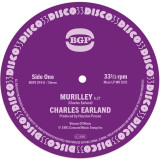
‘Leaving This Planet’ was the title track of Charles Earland’s 1974 album of the same name: one of the finest jazz albums of the 70s. This Track was played at the Loft and other New York dance clubs in the 70s.
Here it is coupled with ‘Murilley’, an organ led vocal number that was a massive jazz dancer at the Wag Club, Dingwalls and beyond in the 80s.
- A1: Space Odyssey
- A2: Against The Odds
- A3: Lush Feat. Tkay Maidza
- A4: Be Easy Feat. Magi Merlin
- B1: Mars Feat. Kurtis Wells
- B2: Gaspard’s Dream
- B3: Blurry
- B4: Quest (Real Love) Feat. Poté
- C1: Interface
- C2: Too Much Of The Same Things Feat. Kurtis Wells
- C3: Closer To The Source (Signals)
- C4: No Escape Feat. Barney Bones
- D1: Sunseeker Feat. The Code
- D2: Left In The Air
- D3: Music For The End
Color Vinyl[26,85 €]
‘EVERYTHING IS HERE’ is a journey through space and time, inspired by the more rarefied aspects of prog rock and the wistful side of psychedelia.
Fusing these influences with the accessibility of French electronic and the groove of R&B and disco, this album depicts the sweet dizziness of contemplation. Nostalgic, yet determined and modern in it’s genre blending, the first album of Kartell truly reveals what’s been underlining in his previous EP.
Taking influences in the space and dream pop aesthetic, the musical approach of the album embraces the 60’s and 70’s fascination for outer space, exotic locations, technologies and science fiction which was on the edge of becoming reality.
Nebulous textures and otherworldly sounds characteristic of space rock are infused throughout the record, while keeping a focus on making catchy songs, leaning on a minor-key groove and a pop yearning. It’s also a challenge and an artistic proposition to gather a wide range of genres to tell a story. Densely produced and cinematic, the album draws a truly living landscape where live bass, drums and guitars hold the line, evolving around hazy effects and synthesizer layers.
Storytelling was released on 3rd June 2002 as the soundtrack to the Todd Solondz movie of the same name.It was recorded and produced in 2001 at the famous The Magic Shop Recording Studio in New York which closed in 2016. Some tracks were also recorded at Water Music Recording Studios in Hoboken, New Jersey and CaVa Studios, Glasgow.
Long unavailable warehouse find. Double LP for £7.50 Munster Records proudly presents a collection of Patrik Fitzgerald's Small Wonder and Polydor releases. A combination of punk's outrage with a streak of optimism, rare for its time and place, collected for the very first time on a double LP package. Patrik Fitzgerald was one of the oddities that punk rock threw up in 1977. A lone singer with an acoustic guitar regaling punk audiences with lyrical songs and interspersing them with chats, stories and poems. He is the great forgotten songwriter from the Class of '77. Patrik Fitzgerald never became a household name or punk icon like Rotten, Strummer or Weller, but to his loyal followers he is just as important and as inspirational. Same goes for Mark Perry, Vic Godard and Robert Lloyd.
-Debut full-length album from Miami-based soul jazz trio Fat Produce. -Featuring musicians who played with The White Blinds, Scone Cash Players, Jungle Fire, War, The Bombillas. Featured in Relix Magazine’s April/May new artist spotlight to over 250k subscribers.
-Upcoming shows in California and Florida. F-Spot Records proudly presents the debut LP "Fresh Squeeze" from Miami-based soul jazz trio Fat Produce. Led by guitarist Addison Rifkind (The Soul Vaccinators) and drummer Michael Duffy (The White Blinds, Jungle Fire), this duo is joined by world-renowned bass player Rene Camacho (Poncho Sanchez, War) to bring you 14 all-new and original soul jazz instrumental cuts that's a guaranteed head-nodder from start to finish. When Rifkind and Duffy first met on a gig with organist Adam Scone (Scone Cash Players), both felt an instant chemistry musically, and the seeds of Fat Produce were born. In sharing their passion for classic soul jazz, in addition to funk and hip-hop, Rifkind and Duffy started to dive in, taking the idea of a guitar trio to new heights unlike anything you've heard before. After a year of playing gigs and honing their craft, both descended back to their hometown of Los Angeles, CA, to meet up with Rene Camacho and spend two days recording at The F-Spot HQ under the helm of producer and label owner David M Celia. Recording all live in one room to 1/2" tape, the resulting sessions truly captured the essence of Fat Produce's sound. Forced to be in the moment tracking live with no overdubs, "Fresh Squeeze" highlights the authentic tone and feeling from those two special days spent breathing new life into the guitar trio format. From the more straight-ahead soul jazz tunes like "Sticky Beets" and "Slick" to more outside-the-box cuts like "SON!" and the afrobeat-inspired "Afrenetic," rounded out with groove-focused compositions such as "Cadillac Converter," Grease on the Range," and "818 Don't Hate," this LP brings a variety of styles and feels, while all keeping it under the same umbrella of guitar, upright bass, and drums. Highlighting the chordal and melodic stylings of Addison Rifkind, the signature drum tone and feel of Michael Duffy, and tastefully executed playing from bassist Rene Camacho, "Fresh Squeeze" is the perfect sonic experience. From the first note on side A to the last hit on side B, it's a full sound, a timeless listen, and one slated to be on repeat for decades to come
A band who have justifiably been championed across the world, Tokyo’s Melt-Banana have been responsible for some of the most complex punk rock ever made … that far outshines ninety-nine percent of most other bands out there. The band once described their live show as “Shooting machine gun and laser beam, chaos in order.” And I think that pretty much sums them up. — Olli Siebelt, BBC No wave without the self-conscious pretension, avant garde composition compressed into one-minute-or-less bursts, urgency, intricate destruction, pure glorious abandon. Melt-Banana play the same way that Repulsion, Naked City, The Ruins, or The Boredoms all make you want to scream and dance and kill your neighbors. This is not music that we are conditioned to accept. This is you delirious with joy scraping your five senses off the floor. —Matthew Moyer, Ink19 Melt-Banana are in a league of their own. There are other extreme hardcore bands out there who are experimental and unique but Melt-Banana are more than that. They area giants amongst infants. Masters amongst pupils. Kings amongst serfs. Nobody can do what they do and nobody can adequately use words to describe them. —Jeb, Crass Menagerie
A floating drift toward a mysterious reality, between Nature and Cosmos, poised between sleep and wakefulness, temporal co-presences and impossible spatial ubiquities. In this phantasmagorical saga, inspired by TV science-fiction as well as 60s and 70s horror movies, Nicola Giunta/Lay Llamas creates a miraculous balance between original inserts and retrievals of freely chosen fragments from old audio documentaries on vinyl, perfecting the art of sound collage in an absolutely psychedelic way. Nonlinear dream textures become labyrinths of sudden openings, empty rooms, interstellar platforms, narrating voices from other worlds or ghostly churches from beyond the grave. A piercing electronica of cosmic synths, dense with the mists and dusts of distant times, past and future at the same time, where lysergic percussions merge with echoes of flutes vibrating in endless tropical forests and natures. Until the final awakening, in the reality of the first light of dawn. Originally released on cassette by Miracle Pond