2022 Repress
Tapper Zukie's 'Black Man' album originally came out in 1978 as a Jamaican only release on Tapper's' Stars imprint. Long deleted it has become a classic in Mr Zukie's vast cannon of musical biscuits and is well overdue this worldwide release for the first time.
Tapper Zukie (b1956. David Sinclair, Kingston, Jamaica) was raised in the rough and tough West Kingston area of Jamaica, between the districts of Trench Town and Greenwich Farm. Living pretty much on the streets from an early age, the youths including the young Tapper had no choice but to fall into the hands of the Political Parties that controlled various ghetto areas of the town. Music seemed like the only way out of a life of crime and gang culture. A path that Tapper Zukie found by the mid 1970's was establishing himself as a named star on the DJ Roots circuit. Back home in Jamaica he was also getting a name for his production work for other local singers such as Prince Allah and the group Knowledge. To release these productions and his own material in Jamaica, Tapper started up his own label called Stars. It's this label that saw the initial release of this album 'Black Man'. A great collection of Tapper tunes such as his biblical cut 'My God Is Real', 'Revolution' and the tile track of this collection 'Black Man' and some work overs of some of his felloe Jamaican Artists like 'Poor Man Problem' a work over of Johnny Clarke's ' Blood Dunza' and also Mr Clarke's Leggo Violence'. 'Yaga Yaga' re working Horace Andy's and Tapper's big hit 'Natty Dread ah She Want'. 'Gather Them' a reworking of Knowledge's tune of the same name with the help from bands like Jah Wisdom and Delroy Fielding. A great collection of tunes and reworkings that we hope will find a wider audience with this release.
For the CD issue of this release we had added Tapper's 'Liberation Struggle', 'Get Ready', 'Prophesy' and 'Fire Bun' tracks from Tapper Zukie's back catalogue that seem to sit well and follow the theme and meanings of the 'Black Man' album.
quête:same
- Candyman
- Richland Woman Blues
- Police Dog Blues
- Shake Sugaree
- Vestapol
- Stagolee
- Green Green Rocky Road
- Frankie
- Police Sergeant Blues
- Buck Dancers Choice
- Delia
- Freight Train
Cassette[21,22 €]
Muireann Bradley is a young blues, ragtime, roots and folk guitarist and singer based in Ballybofey in County Donegal Ireland. “This is my first album. Most of these tunes were originally recorded by the great blues men and women who were making records from the 1920s and 1930s right up in some cases to the early 1970s. I have also found inspiration for the renditions recorded here in the playing of some of the musicians who began recording this music in the 1960s and later, and who in some cases learned at the feet of the greats. Many of these guitarists played pivotal roles in the 1960s blues revival and subsequent “rediscovery” of many of the greats of country blues. I grew up steeped in these old blues in the hills overlooking the valley of the River Finn just outside the town of Ballybofey in County Donegal. My father would play this music constantly at home and wherever we went in the car and talk about it endlessly whether anyone was listening or not, telling stories about the lives of these musicians as if they were legend, mythology or the evening news. My father could of course play all this stuff on guitar, I remember watching him when I was very young and thinking “I want to be able to do that”. When I was nine he agreed to teach me and bought me my first little travel guitar. I worked hard to learn how to play but as time wore on I seemed to have less and less time to practice as I became more and more invested in the combat sports I was regularly training and competing in. Then in March 2020 the first Covid lockdowns happened and all contact sports were shut down. I was lost for a while but soon found my way back to the guitar. I was now listening, playing and practicing with a new intensity and focus. In a very serious moment, I wrote out a list of tunes I was going to learn. The first tune on that list was Blind Blake’s “Police Dog Blues”. I’m not sure now how long it took to get that arrangement together but when it was ready we videoed me performing it and posted it on YouTube. It ended up getting a lot of attention, I remember my parents being quite shocked and soon after that Josh Rosenthal got in touch… and here we are! Each individual track on this album was recorded live in the studio and represents one entire take with me singing and backing myself up on guitar simultaneously. Most are either first or second takes. Nothing has been added or taken away, no overdubs or modern recording tricks of any kind have been used at all so at least in some respects this album has been recorded in the same way as those classics of the 1920s and 1930s
"Dear music lovers, this album represents the truest and purest essence of myself in a 'now state' at the end of my thirties. I really don't care about aging, but I care about these ten songs. They make me happy, sad, aware, they make me laugh, cry and confident - hopefully, they make you feel the same or make you feel at all, too. For me, they shatter the rising coldness in this world. This wholesome musical powerhouse is about 'people in white cars' - it's a weird metaphor. Learn all about it on this album." - Rico
- A1: Ventilateur - Esmer
- A2: Ventilateur & Luca Missiaen - For Better Days
- A3: Ventilateur - Aloam
- A4: Ventilateur - Steenweg
- A5: Ventilateur - Tour De Force
- B1: Ventilateur & Sebastien Dewaele - Volk
- B2: Ventilateur & Nathan Daems - Brûl
- B3: Ventilateur - New Houses, Lost Memories
- B4: Ventilateur - Steenweg (Reprise)
- B5: Ventilateur - Hysbak
- B6: Ventilateur & Reena Riot - Rage De Vivre
VENTILATEUR is an instrumental project combining sounds from the vivid worlds of contemporary jazz and postpunk. The three-piece band, consisting of Iben Stalpaert on drums, Jasper Hollevoet on bass and Daan Soenens on guitar, uses angular rhythms and flowing melodies to construct compositions that embody both contrast and cohesion. Originally from Bruges, the band currently has Ghent as its homebase.
The trio released its self-titled debut EP on 22 March 2019. VENTILATEUR won awards at Fresh Fish, Red Rock Rally and Burgrock that same year and was one of the laureates of the then brand new Sound Track. Thanks to Sound Track 2020, the band received a residency at Het Entrepot in Bruges and a year of professional coaching from VI.BE and other national players in the music landscape.
In 2020, VENTILATEUR joined forces with young Ghent theatre collective Camping Sunset for the performance Happiness. The band composed the soundtrack for the play and also performed it live during the five-week run of the production. The music was subsequently recorded and released under the title A Soundtrack For Happiness at the Brussels label Sentimental.
In 2022, VENTILATEUR released its first full-length album with W.E.R.F. Records. Hoofdplaat, titled after the village near the manor house that served as its recording location, is the result of a long process of purification. VENTILATEUR presents the essence of their sound, stripped from all ballast.
VENTILATEUR balances on the border between the ‘niche’ world of instrumental jazz and the accessible world of the pop-rock circuit. From this position, the band aims to bring instrumental music to a wider audience. Apart from being purely intrinsically artistic, the trio's ambition is to excite a new audience for cultural participation and specifically the rich genre of jazz. Through their choice of accessibility within the experimental, the band aims to form a bridge between a wider audience and a musical world still too often labelled as ‘niche’. The musicians not only focus on the club and festival circuit, but have already written soundtracks for some short film projects and are also reaching out to the theatre world.
In its early years, VENTILATEUR was mainly known within the Flemish arts landscape on the Bruges-Ghent-Brussels axis. A soundtrack for Happiness and Hoofdplaat introduced VENTILATEUR to a new audience. Songs from the albums got airtime from Radio 1, Klara and other stations, and singles appeared in national playlists. The band’s music was also picked up by VRT, which used the single Nectar during several programs. In 2023, the band scored their biggest gig yet: Ghent Jazz on a podium curated by their label, W.E.R.F. Records.
VENTILATEUR as a project can count on the support of organisations such as W.E.R.F. Records, Cactus Music Centre, Het Entrepot and VI.BE. The band also has close ties with theatre companies such as Camping Sunset, Compagnie Cecilia and Ontroerend Goed and, of course, numerous connections within the Flemish and Brussels music scene.
- 01: Crazy Magician Man
- 02: Earth Boy
- 03: Canadian Suit
- 04: Eeee Wow!
- 05: The Mysterious Land Of Might And Magic
- 06: Submarine
- 07: Flat Tire, Vampire
- 08: Where Should We Go
- 09: Chemical X
Before they were Alligators, They were Ladies.
Ben Avgay (Silvi Jan) and Eden Atiya (Rasco) met in 2020, both working on their own musical projects and bands. In 2021 love has sprung and it was inevitable that the two would start their own musical project. Thus came Alligator Ladies to the world, a love-child of two people who share excitement for the same genres and aesthetics. Influenced from garage, freak folk and mystical creatures such as Ramases & Selket, Thee oh Sees, Ty Segall, MGMT and more, Ben and Eden begun writing songs and recording Demos in their home studio. Eden's song writing qualities and Ben's production, sound engineering and orchestrations mesh together to form the two-headed monster we call - Alligator Ladies.
"It was only natural for us to make this album the way that it is - short, funny and emotional"
“BLADE N” is the long-awaited new album from Japanese rapper Karavi Roushi, who appeared on the Japanese hip-hop scene with his debut solo album “Kiyosumi Kurokawa”. This, his second solo album, is a collaborative release with Aquadab, the Japanese track maker/sound designer who co-produced “Kiyosumi Kurokawa”. The album showcases the preternatural mind-meld between rapper and track maker.
Karavi Roushi came before the public as a member of Nagoya hip-hop collective Hydro Brain Gang on Nero Imai's album “Return Of Acid King” (2017). He then launched the label Super Lights with Aquadab and released his first solo album “Kiyosumi Kurokawa” in 2019 with graphic design by Takara Ohashi. Although an unknown newcomer, the album reached #15 on the iTunes Hip Hop Japan album chart and received plaudits not only for its music but also for the artwork by Ohashi. After the album, Karavi Roushi dropped his first collaboration tune with Aquadab on “S.D.S =Zero=” (2020), a compilation of Generation Z Japanese underground artists produced during the Covid pandemic. That tune, “Tokyoite”, became a favorite of the participating artists.
"BLADE N” was created by the three-person team of Karavi Roushi, Aquadab & Ohashi. Consciously developing their musical methodology, they intentionally use instrumental tracks to interrupt the rappers' voices and flows, something which has traditionally been avoided, and explore the possibility of creating a style that puts the rapper and track maker on equal footing in complex, woven tracks. On the album, Karavi Roushi's paranormal voice, which sometimes sounds like a mutant synthesizer, adds incisiveness, and in the artwork Ohashi visually extracts the story world hidden in “BLADE N”, giving the cover art the same impact as that of “Kiyosumi Kurokawa”
- A1: Like A Ship
- A2: I'm Drunk & I'm Real High (In The Spirit Of God)
- A3: Yes God Is Real
- A4: Packing A Grip
- A5: Pray A Little Longer
- B1: If Jesus Came
- B2: Troubles Of The World
- B3: I Know I've Been Changed
- B4: God Will Answer
- C1: Same Thing It Took
- C2: Somebody's Watching You
- C3: Peter & John
- C4: I Know Him
- D1: Share Your Love With The Master
- D2: I Thank You Lord
- D3: Come On Strong Stay Along
- D4: Been Trying
- D5: I'll Take Jesus For Mine
Unofficially the third entry in our Good God! series of ecstatic worship, Born Again Funk picks up where A Gospel Funk Hymnal leaves off. Yes, the prodigal sons of Thomas Dorsey arrived in there multitudes, only some of them toting fuzzboxes and Fender amps. These are the most devout songs, but done up amid the hot, sweaty, earthy moonshine rhythms downed by any blues singer thumbing his way up north from the Mississippi delta. Born Again Funk hones in on wholly modern vulgarity brought to a joyful strain of American composition, and performers unafraid of expressing their devotion with both inspiration and invention. They were acolytes faithful to a spirit, but never to an ordained sound.
- A1: Peggy Gou - Hungboo (Dj Kicks Exclusive)
- A2: The System - Vampirella
- A3: Pegasus - Perseguido Por El Rayo
- B1: I Cube - Cassette Jam 1993 (Dj Kicks Exclusive)
- B2: Sly And Lovechild - The World According To Sly & Lovechild (Andrew Weatherall Soul Of Europe Mix)
- C1: Deniro - Epirus
- C2: Psyche - Crackdown
- D1: Hiver - Pert (Dj Kicks Exclusive)
- D2: Aphex Twin - Vordhosbn
For Peggy Gou, recording an instalment of !K7’s DJ-Kicks series was one of the items on her list of career goals. “It’s the premier class of DJ mixes,” she says. “Some of my favourite selectors have contributed to it.” In 2019, Peggy Gou was able to tick that off her list as she proudly presented the 69th edition of the mix series.
To kickstart 2025, which is !K7's 40th anniversary year, the release is re-issued on a tigerfur-coloured 2LP. Peggy started working on the mix in 2018. It was a busy time for the then 28-year-old: she’d just scored her first Mixmag cover and her single ‘It Makes You Forget (Itgehane)’ was receiving awards and critical acclaim. Each month she would DJ in 20 nightclubs all over the world. And yet, the goal for her mix was ambitious: instead of trying to capture the energy of her DJ sets, she aimed to create a portrayal of her own musical journey.
An 18-track listening session that takes you straight into Peggy Gou’s living room where she plays you the formative tunes from her collection. No genre boundaries – she moves across disco, house, techno and electro. No tempo limits – the mix ranges from 90 to 150 BPM. And no age restriction – the earliest tunes on the mix are from 1983.
The same level of attention was brought to the arresting cover artwork, in which the well-documented animal lover references both Korean iconography and the endangered status of the creature of the country's foundational mythology, the tiger. The album artwork shows Gou posing alongside a tiger. "As the first Korean woman to contribute to the DJ-Kicks series I wanted to do something from my heritage," she said in a statement. "I chose the tiger, which is very important in Korean traditions and a metaphor for my personality. As it is inhumane to shoot with a real tiger, I and the photographer Jonas Lindstroem used a library image to make a composite. The tiger disappears when you turn to the inside-cover photo, to highlight that these beautiful animals are already extinct in my home country and in danger of disappearing from our world entirely.”
- A1: 73 Mk8 Revisited
- A2: Metropolis Revisited
- B1: Music In My Mind Revisited
- B2: Jaxx Revisited
- C1: The Tree Knows Everything Revisited (Featuring Kirsty Hawkshaw)
- C2: Circles Extended Revisited
- D1: Mother Earth Revisited
- D2: Dirty Harry Revisited
- E1: F-Jam Revisited (Featuring Mc Conrad)
- F1: Aromatherapy Revisited
Red Vinyl[42,82 €]
‘Colours Revisited’, a revision of Adam F’s MOBO Award-winning 1997 debut album is a story of musical rebirth and passion. Adam F, realising that ‘Colours’ had found a new audience—partly thanks to artists like PinkPantheress—decided to recreate the album. Instead of simply remastering the tracks, Adam went all in. Over two years, he meticulously reworked the original music, from restoring vintage instruments like his Fender Rhodes piano to enlisting UK jazz legends like Julian Joseph. Vocalists including Kirsty Hawkshaw and the late MC Conrad re-recorded their parts, while new solos from world-class musicians added fresh life to the tracks.
“Colours holds a special place in my heart because it was not only my first solo album, but also because I had the opportunity to collaborate with diverse talents,” says the seminal producer on his ground-breaking album. “Musicians of a calibre such as Dave Ital (Guitars), The Jazz Great Julian Joseph (Keyboards and Fender Rhodes), MC Conrad (MC/Artist), Roni Jordan (Jazz a guitarist who had a hit with Miles Davis’ “So What”), Tim Philbert/Tim the Bass (Bass), Greg Leicester (Bass), Maurice Capillaire/MC MC (Live MC)…”
Adam continues “We were honoured to be nominated for MOBO “Best album of the year” alongside renowned acts of that time, including Hinda Hicks, Des’ree, Lighthouse Family, and Massive Attack. In fact, I was so convinced that we wouldn't win that I didn't prepare a speech, and that definitely showed in my genuine surprise. Colours also went on to be a top 20 UK National Chart hit which lead to Metropolis winning Tune of the Year at the Underground Awards. Music In My Mind from the same album was inspired from Herbie Hancock ‘Rocket’ and ‘I Thought It Was You’.
“Fast forward to 2020, I never thought of ever revisiting ‘Colours’. But it seems that time has come round full circle, the interest is there.” The revisited album deftly weaves together the energy of new live instrumentation with the 80’s British electronica and jazz fusion inspired sounds of the original.
The result is a project which not only brings the album into the glistening present but somehow manages to add further depth and sense of understanding of the original ‘Colours’, the influences latent within it and how and why it has gone on to influence so many others since it’s inception throughout the world. This is a must have album which pays homage to what has become a cornerstone of British electronic music history.
- A1: 73 Mk8 Revisited
- A2: Metropolis Revisited
- B1: Music In My Mind Revisited
- B2: Jaxx Revisited
- C1: The Tree Knows Everything Revisited (Featuring Kirsty Hawkshaw)
- C2: Circles Extended Revisited
- D1: Mother Earth Revisited
- D2: Dirty Harry Revisited
- E1: F-Jam Revisited (Featuring Mc Conrad)
- F1: Aromatherapy Revisited
Black Vinyl[41,98 €]
‘Colours Revisited’, a revision of Adam F’s MOBO Award-winning 1997 debut album is a story of musical rebirth and passion. Adam F, realising that ‘Colours’ had found a new audience—partly thanks to artists like PinkPantheress—decided to recreate the album. Instead of simply remastering the tracks, Adam went all in. Over two years, he meticulously reworked the original music, from restoring vintage instruments like his Fender Rhodes piano to enlisting UK jazz legends like Julian Joseph. Vocalists including Kirsty Hawkshaw and the late MC Conrad re-recorded their parts, while new solos from world-class musicians added fresh life to the tracks.
“Colours holds a special place in my heart because it was not only my first solo album, but also because I had the opportunity to collaborate with diverse talents,” says the seminal producer on his ground-breaking album. “Musicians of a calibre such as Dave Ital (Guitars), The Jazz Great Julian Joseph (Keyboards and Fender Rhodes), MC Conrad (MC/Artist), Roni Jordan (Jazz a guitarist who had a hit with Miles Davis’ “So What”), Tim Philbert/Tim the Bass (Bass), Greg Leicester (Bass), Maurice Capillaire/MC MC (Live MC)…”
Adam continues “We were honoured to be nominated for MOBO “Best album of the year” alongside renowned acts of that time, including Hinda Hicks, Des’ree, Lighthouse Family, and Massive Attack. In fact, I was so convinced that we wouldn't win that I didn't prepare a speech, and that definitely showed in my genuine surprise. Colours also went on to be a top 20 UK National Chart hit which lead to Metropolis winning Tune of the Year at the Underground Awards. Music In My Mind from the same album was inspired from Herbie Hancock ‘Rocket’ and ‘I Thought It Was You’.
“Fast forward to 2020, I never thought of ever revisiting ‘Colours’. But it seems that time has come round full circle, the interest is there.” The revisited album deftly weaves together the energy of new live instrumentation with the 80’s British electronica and jazz fusion inspired sounds of the original.
The result is a project which not only brings the album into the glistening present but somehow manages to add further depth and sense of understanding of the original ‘Colours’, the influences latent within it and how and why it has gone on to influence so many others since it’s inception throughout the world. This is a must have album which pays homage to what has become a cornerstone of British electronic music history.
Few sounds transcend time and space quite like the driving pulse of Afrobeat, and few artists, for that matter, have defined their own domains quite as profoundly as Tony Allen—the very beat of Afrobeat itself. In 2011, Allen recorded one of his inimitable rhythmic dialogues as part of the Afrobeat Makers Series for the Parisian imprint Comet Records. Charged with the same fervour for uninhibited expression that defined his trailblazing career, Tony Allen’s drumming, free from convention and charting its own course, emanates a cadenced stream of consciousness that speaks its own truth.
If Allen’s language was his beat, then on this record, La BOA—La Bogotá Orquesta Afrobeat—becomes his latest and most fitting interlocutor. What began as a tribute—a song named after Allen—now feels like the prelude to a deeper dialogue in a meeting that seems more like fate than mere happenstance.
Led by producer Daniel Michel, the ever-evolving band has spent over ten years embodying the fluid, transformative spirit of Afrobeat, imprinting it with their distinctly Colombian sensibilities. From Casa Mambo in Bogotá, Michel’s Mambo Negro Records has become a cornerstone of Colombia’s underground scene championing Afro-Colombian and independent music throughout that time.
Across this LP, Allen’s recordings lay down the canvas upon which La BOA paints its own vision of Afrobeat—raw and expansive, locking step with his drum tracks while building around the unmistakable blueprint of their Colombian rhythms: exuding Caribbean beat, rolling with Pacific groove, and, above all, shaped by the rarefied air of the Andean melting pot that is Bogotá. What ensues is an enduring conversation that crosses eras, borders, even life and death—a celebration of the passing of the baton and the boundless nature of Afrobeat as a genre that refuses to settle. Where the beat of Lagos meets the brass of Bogotá, so too La BOA meets Tony Allen.
Soul Station is a masterpiece of melodic improvisation, rhythmic interplay, and emotional depth and showcases Hank Mobley's ability to create music that swings hard but remains accessible and lyrical
The album remains a classic in the jazz canon, essential not only for understanding Mobley's contribution to jazz but also for appreciating the broader hard bop movement of the late 1950s and early 1960s. Released in 1960 it is widely regarded as one of his finest works and a classic in the hard bop genre: Hank Mobley was part of the first wave of musicians who helped shape the hard bop sound, a style that blends bebop with blues, gospel, and R&B influences. Mobley was known for his smooth, melodic playing, and while he didn't receive the same level of fame as contemporaries like John Coltrane or Sonny Rollins, he was respected for his consistency and lyrical improvisation. The album features an exceptional quartet of jazz legends: Hank Mobley, Art Blakey, Wynton Kelly and Paul Chambers: this quartet is especially notable because Mobley recorded with Art Blakey's Jazz Messengers and the rhythm section (Kelly and Chambers) was a part of the classic Miles Davis quintet at the time. Their tight interplay and experience shine throughout the record. "Soul Station" stands out because it encapsulates Mobley's mature, melodic sound and his ability to craft memorable, emotionally resonant music without relying on flash or pyrotechnics. It's a must- listen for any jazz enthusiast, and it's often recommended as a starting point for those exploring Mobley's extensive discography.
Alton Miller releases Last Tracks In Africa EP, lastest Jams recorded at the South Africa Studio. It is recognizable the reconnection to his own essence. The tracks are full of Soul, with a Deep and Organic Imprint. Nomumbah's versions reshapes as Masterclass, same feeling, contemporary elements and sounds, between electronic and warm Brazilian vibes. The release preserves the most sleek of Alton's signature.
Music is like literature: getting through a second novel or second album is often a perilous exercise. Spatsz and Mona Soyoc, propelled into the limelight by their explosive Try Out, headed off to New York to record a follow-up to this fabulous debut. By Pass (1983) follows in the musical and sonic footsteps of its predecessor. The same sticky synth layers, the same flayed vocals capable of voluptuous flights, KaS Product still navigates the murky waters of a nervous, unhealthy cold wave, somewhere between the gall of Suicide and the gothic melodies of Siouxsie. And the melodies are always there, as on the stunning "Tina Town" and "T.M.T", two of the most successful tracks on an album that holds up remarkably well, and also deserves a closer look at its detours, such as "Taking Shape" or "Tape" at the end of the disc.
There are records that come from the soul. No matter how primitive may be the recording techniques the musician has access to, the soul gets its way to the heart and mind of the listener. Samtvogel' is one of those records. Günter Schickert recorded that amazing piece of human greatness in 1974, using the media he had at the time, putting his brain at work to find the best way of taping everything he had to say. When I was recording Samtvogel' in 1974 I had only 2 Taperecorders. I played one track and while listening I added the second one. And so on. Four times. When I mixed all together I borrowed a 3rd taperecorder. And still added the last track to the master. I had a small mixer with 2 stereo and 1 mono but it was possible to pan tracks. No equalization. It all came out of my still living G2000 Dynacord guitar amplifier, of course valve, with no master, even the voice recorded through it. If I made a mistake in 1 track I had to repeat it from the beginning. And if while mixing I was not fast enough in changing the tape I had to start again. So it took me more than 3 months to get ready.'
Thanks to these three months of work, between June and September of 1974, 'Samtvogel' was privately issued that same year. It would later be issued on the Brain label, with a small change in the artwork -titles added to the front cover, which weren't on the original private pressing. Brain also reissued it on the label's Rock On Brain' LP series, this time with a completely different sleeve. The album contained two tracks on side one and just one on side two, and its sound has often been compared to the most explorative works of Syd Barret - however it must be pointed that Schickert did not need any mind spreading substances to allow his sounds float out of his mind & soul, they just came out in the most natural way. It will also appeal to fans of the echoed athmosferic guitar work of other kraut innovators such as Ash Ra Tempel, Manuel Götsching or A.R. & The Machines, and some may find on the vocal passages certain resemblances to Damo Suzuki on Can's 'Tago-Mago' era.
The Wah Wah reissue is housed in a quality sleeve that reproduces that of the original 1974 private pressing and features a 4 page insert with liners and photos - sound remastered at Eastside mastering Berlin. Get this bird now, before it flies away again!
There are records that come from the soul. No matter how primitive may be the recording techniques the musician has access to, the soul gets its way to the heart and mind of the listener. Samtvogel' is one of those records. Günter Schickert recorded that amazing piece of human greatness in 1974, using the media he had at the time, putting his brain at work to find the best way of taping everything he had to say. When I was recording Samtvogel' in 1974 I had only 2 Taperecorders. I played one track and while listening I added the second one. And so on. Four times. When I mixed all together I borrowed a 3rd taperecorder. And still added the last track to the master. I had a small mixer with 2 stereo and 1 mono but it was possible to pan tracks. No equalization. It all came out of my still living G2000 Dynacord guitar amplifier, of course valve, with no master, even the voice recorded through it. If I made a mistake in 1 track I had to repeat it from the beginning. And if while mixing I was not fast enough in changing the tape I had to start again. So it took me more than 3 months to get ready.'
Thanks to these three months of work, between June and September of 1974, 'Samtvogel' was privately issued that same year. It would later be issued on the Brain label, with a small change in the artwork -titles added to the front cover, which weren't on the original private pressing. Brain also reissued it on the label's Rock On Brain' LP series, this time with a completely different sleeve. The album contained two tracks on side one and just one on side two, and its sound has often been compared to the most explorative works of Syd Barret - however it must be pointed that Schickert did not need any mind spreading substances to allow his sounds float out of his mind & soul, they just came out in the most natural way. It will also appeal to fans of the echoed athmosferic guitar work of other kraut innovators such as Ash Ra Tempel, Manuel Götsching or A.R. & The Machines, and some may find on the vocal passages certain resemblances to Damo Suzuki on Can's 'Tago-Mago' era.
The Wah Wah reissue is housed in a quality sleeve that reproduces that of the original 1974 private pressing and features a 4 page insert with liners and photos - sound remastered at Eastside mastering Berlin. Get this bird now, before it flies away again!
There are records that come from the soul. No matter how primitive may be the recording techniques the musician has access to, the soul gets its way to the heart and mind of the listener. Samtvogel' is one of those records. Günter Schickert recorded that amazing piece of human greatness in 1974, using the media he had at the time, putting his brain at work to find the best way of taping everything he had to say. When I was recording Samtvogel' in 1974 I had only 2 Taperecorders. I played one track and while listening I added the second one. And so on. Four times. When I mixed all together I borrowed a 3rd taperecorder. And still added the last track to the master. I had a small mixer with 2 stereo and 1 mono but it was possible to pan tracks. No equalization. It all came out of my still living G2000 Dynacord guitar amplifier, of course valve, with no master, even the voice recorded through it. If I made a mistake in 1 track I had to repeat it from the beginning. And if while mixing I was not fast enough in changing the tape I had to start again. So it took me more than 3 months to get ready.'
Thanks to these three months of work, between June and September of 1974, 'Samtvogel' was privately issued that same year. It would later be issued on the Brain label, with a small change in the artwork -titles added to the front cover, which weren't on the original private pressing. Brain also reissued it on the label's Rock On Brain' LP series, this time with a completely different sleeve. The album contained two tracks on side one and just one on side two, and its sound has often been compared to the most explorative works of Syd Barret - however it must be pointed that Schickert did not need any mind spreading substances to allow his sounds float out of his mind & soul, they just came out in the most natural way. It will also appeal to fans of the echoed athmosferic guitar work of other kraut innovators such as Ash Ra Tempel, Manuel Götsching or A.R. & The Machines, and some may find on the vocal passages certain resemblances to Damo Suzuki on Can's 'Tago-Mago' era.
The Wah Wah reissue is housed in a quality sleeve that reproduces that of the original 1974 private pressing and features a 4 page insert with liners and photos - sound remastered at Eastside mastering Berlin. Get this bird now, before it flies away again!
- Respite For The Tulpamancer
- Gajo
- Doll Park Doll Park
- Dissimulato
- Losing Faith
- Busy Walks Into The Memory Palace
- Paraphrase Of A Shadow
- Riddlecraft
- Gaolbreaker's Dream
- Tip The Ivy
,respite -- levity for the nameless ghost in crisis", aka ,r--L4nGc`, ist Colin Selfs drittes Album, nach dem gefeierten ,Siblings` (2018) und der dazugehörigen EP ,Orphans` (2019).In ,r--L4nGc" bewegt sich die Musik des in Berlin und New York lebenden Künstlers, Komponisten und Puppenspielers nahtlos zwischen schwebenden, unheimlichen Pop-Vocals, immaterieller experimenteller Elektronik und knallharten Dancefloor-Rhythmen. Strahlende, grenzenlose Schönheit und unentrinnbarer Terror sind ein und dasselbe. Unter Einbeziehung von Selfs langjähriger Praxis des Puppenmachens und auf der Grundlage eines bewussten Exils, das es dem Künstler ermöglichte, sich mit verlorenen Seelen auf anderen Existenzebenen zu unterhalten, ist ,rünL4nGc" eine integrierte Vision der eklektischen Praxis des Künstlers. Self singt in Polari, einer vergessenen Form des Slantwise-Englisch, das von queeren Subkulturen seit Jahrhunderten verwendet wird, um sich der Entdeckung zu entziehen, und performt für unsere verstorbenen Lehrer und Freunde und für den Rest von uns, die bereit sind, mit unheimlichen Geistern zu kommunizieren. Für Fans von Perfume Genius, Björk, Holly Herndon, Psychic TV, Oneohtrix Point Never, Lyra Pramuk, Bat For Lashes, SOPHIE, Talk Talk. "respite - levity for the nameless ghost in crisis", aka "r-nL4nGc", is Colin Self's third full length album, following the acclaimed "Siblings" (2018) and its companion EP "Orphans" (2019). In "r-L4nGc" the Berlin and New York based artist, composer, and puppeteer's music travels seamlessly from soaring, uncanny pop vocals to immaterial experimental electronics and hard-hitting dance floor rhythms. Radiant, limitless beauty and boundless, inescapable terror are one and the same. Incorporating Selfü's long standing practice of dollmaking, and drawing upon a conscious exile that allowed the artist to settle into conversation with lost souls on other planes of existence, "r-L4nGc" is an integrated vision of the artist's eclectic practice. Singing in Polari, a forgotten form of slantwise English used by queer subcultures for centuries to evade detection, Self performs for our departed teachers and friends, and for the rest of us, ready to commune with uncanny spirits. For fans of Perfume Genius, Björk, Holly Herndon, Psychic TV, Oneohtrix Point Never, Lyra Pramuk, Bat For Lashes, SOPHIE, Talk Talk.
[f] [CANTING]
Two records came out in 1988 that forever changed the perception of "experimental" or "serious" music produced in Portugal. These were "Plux Quba" by Nuno Canavarro and "Música de Baixa Fidelidade" by Tózé (António) Ferreira. Both were released by the same label - Ama Romanta -, an influential independent imprint closely linked to avantgarde pop band Pop Dell'Arte. Because those records appeared in what could be perceived as an "alternative pop" framework, they rescued this difficult music from Academia. It helps that Canavarro played in a successful new wave pop band (Street Kids) during the period 1980-83. By association, being a friend since 1976, António was in close contact with many of the musicians and bands that were part of the equally celebrated and detested Portuguese Rock Boom (roughly 79-82).
He was not a musician then but through his friendship with Canavarro, who had the means to acquire electronic equipment, António became involved with that equipment and shared Canavarro's passion for experimentation and curiosity for knowledge. They tried to get hold of as many technical magazines as possible and learn while testing ideas. In 1983, Street Kids were about to break up, young lives drafted into the Army and maybe, in Canavarro's case, a whole new passion for challenging music similar to his bandmate Nuno Rebelo, by then in the process of discovering a wide range of "other" music mainly through Jorge Lima Barreto. Barreto, who had started Telectu with Vítor Rua, possessed a huge book and record collection and, like Rua before them, Canavarro, Rebelo and Ferreira became fascinated by the pool of knowledge they now had access to by frequenting Barreto's house in Lisbon. He was roughly a decade older, had published several books and other writings throughout the 1970s, cultivated an anarchic stance and a penchant for cultural indoctrination. Rebelo was the first to be introduced via his contact with Rua (who had invited him to play in his other band GNR).
Overwhelmed, he felt the need to share his enthusiasm with friends and eventually took a few to the house in true pilgrimage fashion. To see the Light. Among the few he led there was even João Peste, founder of Ama Romanta. Canavarro and Ferreira preceded him.
Ferreira recalls an exciting learning process added to his experiments with Canavarro's array of synths such as the Korg Ms 20, Korg polysix, ARP Axxe, Roland SH-01, the Ensoniq Mirage sampler... He read in a magazine article about someone who had studied at the Institute of Sonology (then in Utrecht, Netherlands) and went there during a vacation trip in the Summer of 1983. He became excited by the prospect of studying at the Institute but money was a problem. Canavarro, on the other hand, was admitted there in the following year. Back in Portugal, Ferreira eventually abandoned his Chemical Engineering studies in Lisbon's Technical Institute in favour of a more focused music practice. He collaborated with Telectu during 1984 and 85 as a sort of technical engineer, implementing some recording solutions and background tapes and went to work at a thermoelectric power plant in Sines, hoping to make enough money to fund his musical studies. He did and proceeded with the paperwork for admission at the Institute of Sonology, now based in The Hague. António studied there in 1986-87 and the present album includes two compositions developed at the Institute: "More Adult Music" and "This Is Music, As It Was Expected", both featuring the voice of Rodney Waschka II. Among other activities and talents, Rodney is an expert in computer music and to António his voice sounded similar to Robert Ashley's, whose work he admired.
What happened at the Institute was a systematization of António's self-taught practice. Computer software, Musique Concrète, noise and silence, organisation of abstract ideas and sounds. The original notes on the back sleeve of the LP give some indication of process and thinking, but a more detailed account was given by António in the liner notes of the CD reissue in 2002, which are also included in this 2025 LP reissue.
The music sounds deep and detailed, despite the fact of António calling it low-fi ("Baixa Fidelidade"). It flows like an improvised performance where several musicians might be responding to each other, respectful of their mutual space. Drama occurs, as a natural emotional connection is sought by the listener. Piano, bells, drone, processed voices, even the clear narrative of Rodney Waschka II, contribute to create a sort of alternative perceptual reality. The sounds are almost tangible, more a part of the physical world than ethereal manifestations and thus it would not be correct to invoke "ambient music" as a selling point. But although "physical" and distinct, this music is still alien, more so in Portugal's 1988 environment. In March, helped by Canavarro, António set up a home studio and there he recorded the remaining material for this album: "Algumas Pessoas Olharam O Sul E Viram Deserto", "Um Som, Seguido De Uma Cena Negra E Malva" and "O Verão Nasceu Da Paixão De 1921".
"Música de Baixa Fidelidade" stands not only as a proof of great resilience but as one of those magnificent works of art coming from someone who balanced technical inclination and emotional sensibility. Because of that, Tózé Ferreira is able to decode the phantom world of sound for anyone who cares to experience the sensation of inhabiting a version of the Future. First ever vinyl reissue, reproduction of the original artwork with an additional insert. Made in collaboration with the artist and the support of Paulo Menezes (Plancton Music), who provided valuable assistance. Remastered by Taylor Deupree.
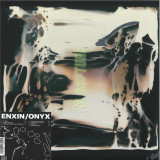
Enxin/Onyx, the duo of Nicky Mao/Hiro Kone and Tot Onyx (formerly group A), joins Other People with their debut album "In Rupture," capturing the same mesmerizing energy for which their live sets have become known.
“In Rupture” is not painless but in rupture lies possibility. The elasticity of this time pitching us across unknown terrain, revealing new potentialities, eclipsing static being. Whether in breach, collision,shimmer or severance, Enxin/Onyx explores these as occasions for transformation. Peeling back the layers through discord and harmony, exciting the inversion of expectation, towing the listener to depths and back up again to illuminate the senses. At times metallic and feral, at others murky and sharp, each song serves as an offering for all that is in rupture; body, spirit, land, ecosystem.
The opening track “A Void” calls to mind some mutation in its mechanical ecstasy, but for what purpose remains unknown. Even in the near moments of stillness, “Needle Pierces the Threshold” breathes a forceful disquietude. Tommi’s vocals pulling the listener down into some subterranean
madness, to unravel upwards from all sides, flooding the once parched landscape. In “Embers Kissthe Eye”, all of time emerges in one moment, compelling the subject’s gaze towards a new horizon.
The album follows its subjects through exile, exhumation and discovery. Through this process plates shift, fissures are revealed and what once appeared to be indomitable absolutes crack, pointing towards their inevitable collapse. To be in rupture is regeneration, to be in rupture is to return.