D'Cruze, the legendary DnB producer synonymous with some of Suburban Base's biggest tracks such as 'Lonely' and 'Watch Out' now sees some of his unreleased productions finally getting a much sought-after release.
The Hidden Trax EP's theme comes from concept that the D'Cruze limited US only edition album contained tracks that were only discovered if you allowed that album to play on beyond what was supposed to be the last song, after a gap of silence no track ID and not listed on the track titles. This is where you’d find 'Bittersweet' pt 2 as a hidden track on the CD. This was Bittersweet’s only ever appearance having never been released in the UK and never released on vinyl or digitally worldwide.
The lush rolling workout of ‘Hardstep' is probably our most requested track that has never had a vinyl release having only briefly appeared on the very limited CD only ‘Subbase Sampler’, demand for a vinyl pressing of this has been called for since 1996.
Another beautiful hidden gem 'Sublime State' from 1995 wouldn’t be known to our UK audience as it’s an exclusive tune to the US only CD release that has never seen a UK or vinyl release.
Rounded off with the incredibly beautiful 'Meus Precious Filius', an unheard unreleased D’Cruze track that was considered a 'lost DAT' until recently surfaced. We are now able to bring this to the world as an epic slice of fresh music from D’Cruze.
The EP is presented on blue and black splattered vinyl making every single piece uniquely different. Original custom sleeve artwork is provided by Suburban Base legendary artist Dave Nodz in his iconic graffiti influenced style.
These are already high demand tracks all brought together for a fantastic value 4 track EP, so grab yourself a piece of future history now whilst we have these available for a limited time.
Buscar:sample this
For fans of Turkish Psychedelic Funk and Anatolian Rock. Alexander Korostinsky (Whatitdo Archive Group and The Sextones) marks his solo debut with two heavy psychedelic tracks. 7" vinyl is limited to 300 copies.
Record Kicks busts down the doors with yet another 7" heater– this time by Alexander Korostinsky (The Sextones, Whatitdo Archive Group), an accomplished songwriter/producer making his debut as a solo artist with a heavy psychedelic 7" available at selected stores next June 17th and limited to 300 copies worldwide. Korostinsky gives a loving nod to the sound of 60s and 70s Anatolian Psych Rock all while staying true to his unique songwriting style and recording approach. On the A side is "Bones of God", a psychedelic Turkish-infused cut featuring an electric saz and sitar dancing across tape-y drums and his distinctive bass playing. On the flip side, "Altin Maske'', a hypnotic exploration into Korostinsky's mind as a solo artist– think a Turkish David Axelrod and you'll be set. "Altin Maske's" twists and turns guide the phased out drums and electric saz into a beautifully psychotic meltdown.
Meticulously recorded and produced entirely on a Tascam 388 by Korostinsky at his own Archive Group Studios,this 45 is imbued with Korostinsky's love of analog recording production and vintage records. One listen and you'll notice thatthese songs are begging to be sampled and are a must have for any serious crate-digger. If this first release is any indication of what we can expect from Korostinsky in the future, then we are excited to see where he takes us next.
The 7" vinyl is limited to 300 copies worldwide which makes it an instant collector's item.
Side A / Double A / The Game
Are you ready to play the game? More big drums heat for the dance floor, courtesy of label boss, Double A. Breaks everywhere, huge fills, horn stabs, some sneaky dancehall vocal samples, and a cheeky breakdown keep this one rolling. 1970’s afro funk business for sure, with plenty of elements across multiple genres to pique the interest of any crowd.
Side B / DJ Fleg (feat. Lean Rock) / Dimension Five / Latin Escapades
If you’re a b-boy or b-girl then there’s no introduction necessary here for Fleg or Lean Rock.
For everyone else, get ready for a party breaks master class. Fleg brings the classic loop heat on “Dimension Five”. Expertly produced, this one snaps hard. If you didn’t know, you’d never guess it started its life as a mellow jazz track. For “Latin Escapades” Fleg teams up with Lean Rock for some completely bananas breaks action over latin horn stabs. Both of these are instant party starters and versatile enough for any funky set.
HAVEN return with another killer EP from Berlin duo New Frames - Mathis Mootz (aka The Panacea) and David Frisch. There's no messing around in their second release on the imprint, with the A1 track 'Clownhouse Reality' designed pummelling bodies with it's driving 4-4 rhythms, spiky synths and perfect techno sound design. The A2 continues this formula with 'Variation Is A Feature Not A Flaw' - where the huge pounding drums and rolling break samples interplay with wailing sound effects and a lively side-chained mid-range synth in another dance-floor burner.
The tempos increase on the flip with the B1 track, 'Proton Isospace', leading the charge with its sinister melodic stabs, rolling drum patterns, and creeping washes of mid-bass guaranteed to get feet moving. The B2 ends the record with a massive Manni Dee remix of New Frames modern classic 'Scatter' released on the first Sardonic Tonality compilation back in 2019. The UK producer proves his mettle in this re-imagining with colossal drum work, a monster rap line, and a cheeky half-time build up to close out another hefty offering from the HAVEN camp.
Reissue from Blahh !! as demand grows for this 4 track garage house flavoured ep. Swing in overdrive, from the deeper shuffle of "Closer" to the heavy bump of "I Don't Want U". "Freak Me Out" is a wonderfully frantic workout with all manner of samples and skittish key flex pinging around an uptempo groove, before "Talkin' About" pushes the swing even harder to conjure up a jazzy feeling smattered with sax licks and squelching synth stabs.
New album by the Berlin-based musician, composer and producer MIDORI HIRANO aka MIMICOF, entirely recorded using the EMS SYNTHI100 at Electronic Studio Radio Belgrade during an artist residency: contemporary electronic music / ambient for the advanced listener.
Midori Hirano is a Japanese musician, composer and producer based in Berlin. She started learning the piano as a child and later studied classical piano at university. Therefore the music she releases under her own name is based on the use of piano, but yet experimental and an eclectic mixture of modern digital sounds with subtle electronic processing and field recordings. So far, Hirano released 7 solo albums under her civilian name on labels such as Sonic Pieces and DAUW.
Under the moniker MimiCof she explores the realm of more experimental music and detailed rhythmic patterns, combined with an idea of drawing melodic shapes and harmonies. As MimiCof she performed at prestigious festivals and events such as CTM, Heroines of Sound Festival, Boiler Room Berlin and L.E.V. Festival, and was selected by Frank Bretschneider for the first volume of the "Sichten" compilation series on his raster label.
Besides producing her own works, Hirano has composed music for dance performances, video installations and films which have been screened at Berlin International Film Festival, Krakow Film Festival, SXSW Film Festival and HongKong International Film Festival (among others) and remixed tracks by artists including Rival Consoles, Foam And Sand aka Robot Koch, Liars and Pascal Schumacher.
While the last MimiCof album "Moon Synch" (2017, Alien Transistor) was recorded on the Buchla analogue modular Synthesizer at EMS Elektronmusikstudion in Stockholm, her latest effort "Distant Symphony" (the 4th as MimiCof) was created on a different synthesizer: the EMS SYNTHI 100 Synthesizer at Radio Belgrade. All sounds from this instrument were recorded as single sound samples at first, then mixed and modified into three long pieces of music, so that the audience can experience the machine's uniqueness and versatility of sound. Hirano understands this work as a gesture of respect for the SYNTHI 100's character: though a vintage instrument, it has never lost the beauty of its modern sound.
- A1: Sleepwalkers
- A2: Money For All
- A3: Do You Know Me Now?
- A4: Angels
- B1: World Citizen - I Won't Be Disappointed
- B2: Five Lines
- B3: The Day The Earth Stole Heaven
- B4: Modern Interiors
- C1: Exit - Delete
- C2: Pure Genius
- C3: Wonderful World
- C4: Transit
- D1: World Citizen
- D2: The World Is Everything
- D3: Thermal
- D4: Sugarfuel
- D5: Trauma
REMASTERED
Grönland Records announce a revised, remastered reissue of “Sleepwalkers” by DAVID SYLVIAN. Available as a gatefold 2LP with exclusive art print and as a gatefold digipack CD, this new edition also features the previously unreleased track “Modern Interiors”.
in the 00s, DAVID SYLVIAN produced two of his strongest and most solitary statements, BLEMISH and MANAFON. but those records don’t tell the whole story. during that the same period, SYLVIAN created an alternate body of work: a series of collaborations and side projects with leading talents of pop and improv, electronic and contemporary classical music. the best of these recordings are gathered here on SLEEPWALKERS, meticulously sequenced and remixed: the fruits of one-off meetings and lifelong partnerships, they jump from bliss to intrigue, romance to sensuality, as arch experiments lead into the lushest pop.
the single ‘world citizen – i won’t be disappointed,’ written with RYUICHI SAKAMOTO, is a sublime example, with an impeccable melody and lyric warmed by SYLVIAN’S gorgeous tenor. SYLVIAN has worked with SAKAMOTO for close to three decades. by contrast, on ‘pure genius,’ a collaboration with CHRIS VRENNA aka tweaker, he sounds like he’s walked into a heist flick, singing the part of a delusional, dangerous bedroom genius. as sylvian explains, tracks like this ‘give me a chance to write in a way that’s completely non-personal, playful. it’s an exercise of some kind, working within the parameters of a given assignment.’
intrigue of a different kind drives ‘sugarfuel,’ with music by JEAN-PHILIPPE VERDIN, aka READYMADE FC. the lyrics offered ‘an opportunity to grapple with a more overt sexual theme than anything i’d previously attempted, as suggested by a vocal sample in the original track provided, a threateningly insistent ‘i’m on your side.’ so i took that as my point of entry and ran with it. i would love to write more on this subject should i find the right context. you’re always aware of walking a thin line exploring sexuality with language alone. the failings of the great and the good are strewn all around.’
NINE HORSES’ ‘wonderful world’ strolls in on a black tie bassline and the echoing coos of swedish chanteuse STINA NORDENSTAM, whose high chirps brush hands with SYLVIAN’S lead; there’s the blistering ‘money for all’ by FRIEDMAN and SYLVIAN, an oblique response to the fallout of 9/11 and the war on iraq. this is followed by the last known recording of SYLVIAN’S singing voice in over a decade, ‘do you know me now?’, a live studio recording later augmented by JAN BANG, EIVIND AARSET and ERIK HONORÉ. it’s certainly a title that’s become more relevant over time as SYLVIAN, in the latter stages of his career, repeatedly comes face to face with a new generation of admirers fixated on the life and times of the band formed by his younger self. SYLVIAN is one of only a handful of musicians to have successfully moved on from overt pop beginnings into a domain all his own but is consistently plagued by the misguided desires or expectations of some unfamiliar with his evolution to do a u-turn, pick up where he left off in the late 90s. although this compilation, as well as his writing for NINE HORSES, adequately shows SYLVIAN’S traditional love of melody is
intact, that it’s consistently remained part of his output, there’s no denying his focus has shifted, evolved.
the refusal to embrace complacency, the need to cover new ground ‘as older generations of popular musicians have a moral duty to explore despite, or because of, the greater possibility of failure’ will, i believe, lead to a reassessment of his later work that embraces a sightly more complex relationship with what we’re referring to as ‘melodic’, accompanied by an exploration of improvisation without dogma or beholden to any ‘givens’ for which he’s not infrequently been castigated. for SYLVIAN, there are no such boundaries. it’s obvious that different facets of his work co-exist without conflict but not necessarily for the majority of his audience. again, this places SYLVIAN in the odd, rare, unenviable(?) position of moving forwards leaving many in his devoted audience behind as, should he decide to return to music, it’s unlikely he’ll be aiming to placate an audience in love with work that preceded the 00s. in fact we’ve no idea where new work, should it surface, may lead.
SLEEPWALKERS also spotlights the innovators who contributed to MANAFON and BLEMISH. CHRISTIAN FENNESZ hangs a crackling, shimmering curtain behind the vocal on ‘transit,’ matching his signature mass of sui generis sounds to sylvian’s stately performance. and the title track began with an instrumental handed to SYLVIAN by MARTIN BRANDLMAYR of POLWECHSEL, soon after the first recording session for MANAFON. spite crackles in the gaps between the percussion, and onkyo artists TOSHIMARU NAKAMURA and SACHIKO M set the stage for the scathing lyrics in the chorus.
it cuts close to the bone and so do the two spoken word cuts, ‘angel’ and ‘thermal,’ produced by SAMADHISOUND recording artists JAN BANG and ERIK HONORÉ (and featuring ARVE HENRIKSEN on trumpet). SYLVIAN describes the latter work as a ‘love poem’ to his daughter. ‘‘thermal’ reflects on a period when our time in sonoma, ca was coming to an end. we’d stayed in temporary accommodation which had lulled us into a false sense of security. we had pear, apple, lemon, and figs trees growing in the yard. a small but exotic paradise. a cocoon. but the cracks were beginning to show in the relationship between ex-wife INGRID CHAVEZ and i which is where i think this underlying sense of anxiety, which runs throughout the poem, is derived from, coupled with the need to provide physical and spiritual stability to the children, the youngest of whom was just under two at the time. the poem is addressed to her. our world was dissipating, coming apart at the seams, but we were an island unto ourselves.’
‘five lines’ marked the start of a new partnership with acclaimed young composer DAI FUJIKURA, who at the time of recording was also working on remixes of MANAFON for what became DIED IN THE WOOL. the string quartet was performed by the celebrated ICE ENSEMBLE and written for SYLVIAN, who FUJIKURA cites as an early influence. says SYLVIAN, ‘the composition moves through numerous changes in time signature but as i had no knowledge of what these were i just relied on my gut instinct, and responded, as i always do, with what felt right to me, composing an entirely new melody in the process. some months later i was working in a studio in london and dai dropped by. i rather tentatively asked if he’d like to hear a rough mix of the song as it stood, painfully aware that my contribution might make no sense to him at all but, to my relief he loved the result.’
there’s one further new addition to this collection, the first official release of a track composed in response to the tsunami in fukushma, ‘modern interiors’, featuring SYLVIAN once again in collaboration with BANG and AARSET.
like 2000s EVERYTHING AND NOTHING, SLEEPWALKERS is a retrospective of a particular decade when SYLVIAN was free of major label interference and could follow his own instincts without having to explaining himself – but it’s also an eye-opening complement to his solo releases. as SYLVIAN explains, ‘some collaborations seem to be a one-off exchange but you can never be too certain of that fact. others have been long term. in this respect, RYUICHI comes to mind. there’s others with whom you hope to continue working as you feel you’ve barely scratched the surface. other times offers come out of the blue, welcome, inspired. regardless, it’s wonderfully explorative to have so many possibilities to juggle with. each collaboration seems timely. it’s as if there’s a rightness to the exchange at a given moment in time.’
in the meantime, we hope you enjoy the work presented here, personally selected, remixed and sequenced and entirely remastered. these are the orphans, abused, estranged, exotic, migrating from diverse corners of the globe, brought together under one roof which they're learning to share despite their differences.
‘as many of you will already be aware, despite relatively continuous work on solo albums, i’ve maintained strong ties with a number of musicians throughout my life in one context or another. on this new collection, let’s call it SLEEPWALKERS 2.0, a selection of collaborative work produced over the period encompassing blemish through to manafon, i’ve included compositions by nine horses as well as more fleeting flirtations and one-offs. neglected offspring. represented also is long term friend and writing partner, RYUICHI SAKAMOTO, as well as more recent but potentially equally productive partnerships such as CHRISTIAN FENNESZ, ARVE HENRIKSEN and contemporary classical composer DAI FUJIKURA.
i hope you enjoy the work presented here, personally selected, remixed and sequenced and entirely remastered. these are the orphans, abused, estranged, exotic, migrating from diverse corners of the globe, brought together under one roof which they're learning to share despite their differences.
we contain multitudes. we’re nothing if not contradictory.’
DAVID SYLVIAN, 2010
(consistency is contrary to nature, contrary to life: aldous huxley)
Having initially met more than a decade ago at a local community radio station, sometimes doing guest slots on each other’s live, improvised noise shows, Cormac Culkeen and Dave Grenon knew they had a mutual interest in working with sonic textures. They listened to each other’s bands for a handful of years, and in 2017, “made good on a threat” that they’d been making for quite a long time: to start a band. At Cormac’s gentle but clear urging—declaring that they’d gone ahead and booked a space in which to record a video—the two wrote their first song, “Sebaldus,” an ambitious 12-minute trip, which also serves as the fireworks finale to their self-titled debut album. With surges of pathos that smooth out into something more soothing in turn, Cormac goes: “The hunter, you’ve seen him / The archer, his arrows are strong / And hunger, you’ve known her / I know the winter is long.” The track is as much about enduring a Canadian winter as it is about the eponymous 8th century hermit, shot through with sublimated desire. As Cormac put it, Joyful Joyful’s songs are “a little bit outside of time.” But while the lyrics beg close, oblique reading unto themselves, there’s also a distinct sense that they’re only one of many more ways that the duo shapes sound. Cormac, whose voice is like a sea with irregular tides, lights up about an idea in traditional sean-nós Irish music that songs already exist and are out there; it’s up to the singer to become the conduit. This belief in music as something to be channelled, and something more than sound, resonates with the singer’s fundamentalist religious past. To paraphrase: lots of group singing, harmonies, no instrumentation, totally unmediated, no priest, congregational—not choral, not a performance, not about talent, the spirit moves through people. “Of course that informs how I think about singing,” Cormac says. So, when they were exiled from the church because of their queerness, they took the music with them, dislocating it from its dogmatic bounds but not from its transcendent potential. This record might be thought of, then, as a kind of queering of sacred, devotional traditions—or at the very least, a space where all of these things can be held at once. Perhaps perceivable by some as contradictions, these intersecting influences create the conditions for an incredibly singular sound. Dave is steady and exploratory in his handling of this multiplicity, arranging sounds as they’re revealed, corralling them, coaxing them into form. “Because Dave is there,” Cormac says, “I get to sing three times higher, and three times lower, and faster, and backwards, and all of these sounds! That are there. They’re all there.” When asked about early musical memories, Cormac recalled an immediate fascination with harmony: from demanding that the first person they ever heard singing it explain what they were doing, to always (still, to this day) singing in harmony with their twin sister around the house, to being part of a children’s choir that sang soprano in Handel’s Messiah—not realizing until they entered the room with all the other ranges that their learned melody was but one part of the whole. Just as tellingly, Dave reflects on his early attraction to “abstraction and becoming abstract,” describing childhood afternoons messing with microphone and speaker feedback loops, producing long, enduring sounds with almost undetectable variations. In a way unique to the coalescing of these two listeners, notions of harmony are central to their output. Dave samples field recordings, old keyboards and synths, and vocal drones, running the live singing through four or five parallel effects chains, sampling and treating everything again in the moment. “Another way to put it is that Cormac’s voice comes into the board and then comes back out shifted, delayed, and shattered; Cormac and I hear it, live with it, and respond,” Dave says. This work is contingent not only on a deep intuition (neither of them read sheet music) of polyphony and due proportion (something St Thomas Aquinas famously listed as an attribute of beauty) but also on their connection to each other and ability to read subtle cues. Dave says they’d hold each other’s hands while performing if it was more convenient to do so, riffing on something else Cormac mentioned about traditional Irish singing: that someone would always hold the singer’s hand, for fear that without a tether to the ground they might find themselves utterly lost, unsure how to return. Joyful Joyful doesn’t shy away from offering such experiences of departure; they’re willing to unsettle their audiences because they themselves are unsettled. Their shared penchant for spooky, heavy music, and self-described “omnivorous” listening practices equip them with an array of sonic concepts that support this effort; Diamanda Galás, The Rankin Family, Pan Sonic, Pauline Oliveros, Keith Fullerton Whitman, Yma Sumac, and Catholic hymnody were just a few that came up. Observing their audience gives them insight about the effect of each song—something they considered while arranging the album. Its arc is marked by soft, sometimes sudden oscillations between cacophony and euphony, day and night (listen for insects), and from sexual, visceral entanglements to more ephemeral, celestial ones. Front to back, it arouses expansion, unraveling. Of lightning, Vicki Kirby writes: “quite curious initiation rites precede these electrical encounters. An intriguing communication, a sort of stuttering chatter between the ground and the sky, appears to anticipate the actual stroke.” By all accounts, something similar seems to happen at Joyful Joyful shows, between those on the stage and those off it, between what’s earthly and what’s beyond. “A lightning bolt is not a straightforward resolution of the buildup of a charge difference between the earth and a cloud … there is, as it were, some kind of nonlocal communication effected between the two,” writes Karen Barad, extrapolating on Kirby’s thought. Cormac acknowledges that while they and Dave play a role in this mysterious charge that comes about, they’re not solely responsible. However ineffable it may be, it’s undoubtedly a form of communion—and a sensuously shocking one at that
Tresor Records is proud to announce 333 Mirrors from Torus, the artist alias of Joeri Woudstra. Coupled with its catalogue number
333, it indicates the large-scale conceptual thoughts behind the record, typical of Woudstra's practice. As an artist, he sets out to
frame re-interpretable references that trigger some subconscious recognition in listeners, with no set way to interpret them but leading to singular feelings and thought processes. The eect, a combination of static electronic sounds and looser field recordings, speaks to each listener differently.
333 Mirrors is, in part, the continuation of a project called These Cars Do Not Exist, made with videographer Mark Prendergast during the Covid-19 limbo. The live performed short film sold out selected popup cinemas in 2020 in a short sprint of shows. Two of the tracks on that project, Sound of the Drums and Chroniko, are re-imagined on 333 Mirrors, emanating as versions created in live performances. Set to be released as a single, Chroniko VIP will be accompanied by an enduring theme from that project, the three-winged bird, this time deceased. On 333 Mirrors, in exploring the ambient, stretched sonic universe of this project more, Woudstra moves from these three winged birds to the phoenix, finding a rebirth on the b-side with tracks that inhabit a similar sound as Deep Mid, Torus's inclusion on the recent Tresor 30 compilation. The sound of Torus places importance on the multi-faceted approach to sampling, pushing the idea behind the practice beyond usual boundaries. How to break the unwritten rules? Woudstra looks within by resampling previous Torus releases and reverse-engineering the sounds of the most revered pop and electronic musicians alive today, references that trigger recognition, melancholy and nostalgia in the listener.
3000 Mirrors features a staccato arpeggiating rigid pattern, the sonic eect of standing in front of a strobe until it becomes the anchor. Silence and interruption are used as a device to explore the physically uncomfortable, more the central compositional tool than the disrupted harmonic structures. Woudstra has never stepped foot in Tresor, so when writing this record, an enduring question spoke to him, what is Tresor when you have never been? How do you sample the essence of an unknown location? The closing track, Omnia, is the sound of anticipation, where the rave beckons. This imagined industrial space is calling for you.
140g Black vinyl LP – Printed inner sleeve – Sealed plastic sleeve
In Trux We Pux is an editorial project organized by the Porto based label and collective Favela Discos. Focusing on the city’s thriving experimental and improvised music scene, it sets out to portrait in a series of four volumes some of the characteristic sounds and collaborative practices that have been in development in Porto during the last few years.
In Trux We Pux 02 contains the first of Favela Discos’ collective pieces to be published, and it was chosen to represent a long series of site-specic pieces developed by the collective since its formation. Most of the time these pieces remain lost in time or in the label’s archives.
Desilusão Óptica is an audiovisual piece developed for the festival Serralves em Festa 2017 and was recorded between the concert and rehearsals. The piece is influenced by the book Musicophilia by Oliver Sacks, and tries to explore the notion of auditory hallucination, in this case based on the idea of a phantom sound unconnected to its object.
Starting quietly with a single flute note, Desilusão Óptica slowly grows fuller but more uncomfortable as the pitch rises gradually in a hypnotic effect. The sound we hear is a mix of the sound produced live, its manipulation and repetition, thus the piece exists between the time when it happens, its immediate repetition and ghosts of past sounds.
The flute, delayed and sampled, embodies both the sounds it produces and memories of past sounds, creating a confusion between objecto and sound. The sound is produced by an object but is at the same time separated from it, like in Mulholland Drive when we watch a singer emotionally dedicated to a performance and whose voice keeps on singing even when her body collapses.
Like in Dub Music, the musicians are divided into two groups: those who play, in this case divided by winds, percussion and electric guitars, and the dub master / sound manipulators who launch samples of previous recordings and manipulate the sound that is produced live, through loopers and delay pedals.
- A1: Kurrytee (Midi_2_Cv)
- A2: Smit
- A3: Day Aft8R (The_Greyz)
- B1: Poly_Ana Summers (Schoolyard Surph Beat)
- B2: Carniblurr.lane 6
- B3: Mixolydian Transition 18
- C1: Kurzweil Dame
- C2: Bouhed Trot
- C3: (Take1)
- D1: Triangulate Dither (Night More Sleepy Version)
- D2: Frikandel (The End Bit)
- D3: Yamaha Hills (Edit)
- D4: Late Ither (Ma8Ema8Mati7S Afsxissor Nap Version)
Repress
Brainwaltzera's debut LP 'Poly-ana' follows quickly on the heels of the producer's Aescoba EP - also released this year via FILM. Across thirteen tracks of both previously released material and fresh excursions into the artist's world, Brainwaltzera explores sounds ranging from luscious, downtempo grooves and expertly reduced braindance cuts with nods to early 90's experimental IDM to harder, more caustic outings - all bound together by a recurring theme of otherworldly ambience. Taking its name from a variety of sources dear to the artist, including polyphonic analogue synthesizers and the Pol-lyanna Principle itself - a theory that suggests individuals recall pleasurable experience more acutely than displeasing ones - the title represents a meeting point in the artistic process between creative method and conceptual choices. Production techniques range from more traditional hardware synthesis to the incorporation of a modified dot matrix printer acting as a modulation source for MIDI parameters. Sample sources include VHS material from the produ-cer's own childhood and ambient Bullet Train samples from an on-the-fly production session traveling from Tokyo to Kyoto. According to the enigmatic producer, memory and its fundamental role in the human experience is one of the central themes of the record. While the artist's own experiences shaped the sound of the record, there is no attempt to impose them on the listener through blatant exposition.
In 1997 and 1998, the late great Japanese composer, producer, and DJ Susumu Yokota released two of the most eclectic albums of his decades-long career, Fruits of The Room and Greenpeace. Recorded under his Stevia alias for Tokyo Techno pioneer DJ Miku’s Newstage Records/NS-COM, they were Yokota-san’s homage to the foundational days of club music in Japan.
This year, Glossy Mistakes are proud to present the first official vinyl editions of Fruits of The Room and Greenpeace, originally released on CD during the golden days of the format. Packaged in reimagined cover artwork created by the celebrated Japanese visual artist Masaho Anotani, these two albums perfectly capture the diversity at the heart of Yokota-san’s oeuvre. Across Greenpeace sees Yokota-san conjuring up a heady concoction of dusty loops, sampledelic breaks, kraut-rock and psychedelic downbeat. A remarkable listening experience based on the inspired era of a genius.
When Yokota-san wrote and produced the music on Fruits of The Room and Greenpeace in 1997, he was reflecting on the broader culture that surrounded dance music in Japan in the early to mid-nineties. It was an era when the psychedelic culture of late sixties America, the afterglow of UK acid house/rave, the new age movement and cyberpunk dovetailed together. Within DJ Miku and Yokota-san’s social circles, the thinking of Timothy Leary, Ram Dass, Allen Ginsberg, Jack Kerouac and William S. Burroughs electrified the air.
By 1996, the moment, brilliant and blinding as it was, was over. “We all felt that the rave scene fizzled out,” DJ Miku says. As he puts it, there was a collective feeling around him that it had all become too much. From the calm that followed, DJ Miku, Yokota-san and their open-eared peers made the decision to switch tracks and start from scratch. DJ Miku believes that with his Stevia releases, Fruits of The Room and Greenpeace, Yokota-san wanted to express the sweet and sour nature of the passing of those wild early days and his wish for true peace. “At the time, we saw eye-to-eye, with an implicit understanding of each other,” he explains. “Even now, twenty-five years later, I am confident it was like that.”
- A1: Polite Meeting (Intro)
- A2: Funky Voltron (Feat. Insight)
- A3: I See Colours
- A4: Fumbling Over Words That Rhyme
- A5: Murder Mystery
- A6: Torture Chamber (Feat. Percee P)
- B1: Making Planets (Feat. Mr. Lif)
- B2: Time Outt (Segue)
- B3: Rock And Roll (Feat. Dagha)
- B4: Beauty
- B5: The Science Of Two (Feat. Insight)
- B6: Smile
- B7: Promised Land
Picture Disc[33,82 €]
Available for the first time as a Picture Disc! While Edan’s critically acclaimed debut, ‘Primitive Plus’, was a celebration of hip-hop’s golden age and a true throwback, his sophomore album, ‘Beauty And The Beat’, is a vast musical collage that contains many different influences; hip-hop, rock, pop, dusty breaks, hazy loops, luxurious off-kilter samples and curveball tempo changes that are all crafted into one cohesive piece of art. In 2015, FACT placed it at number 30 on the "100 Best Indie Hip-Hop Records of All Time" list. In 2013 NME placed it at number 392 on the "500 Greatest Albums of All Time" list.
“A Psychedelic gem. It’s like ‘The Grey Album’ in technicolour” – Vice
“This is a record that exults in the joy of musical creation. It should prove impossible not to love” - The Times
“Perhaps one of the greatest US hip-hop album you’ll hear” – DJ
NME 8/10
Pitchfork 8.8/10
MOJO ****
Uncut ****
Stylus A-
HipHopDX 4.5/5
Entertainment Weekly A-
- A1: Polite Meeting (Intro)
- A2: Funky Voltron (Feat. Insight)
- A3: I See Colours
- A4: Fumbling Over Words That Rhyme
- A5: Murder Mystery
- A6: Torture Chamber (Feat. Percee P)
- B1: Making Planets (Feat. Mr. Lif)
- B2: Time Outt (Segue)
- B3: Rock And Roll (Feat. Dagha)
- B4: Beauty
- B5: The Science Of Two (Feat. Insight)
- B6: Smile
- B7: Promised Land
Black Vinyl[28,53 €]
Available for the first time as a Picture Disc! While Edan’s critically acclaimed debut, ‘Primitive Plus’, was a celebration of hip-hop’s golden age and a true throwback, his sophomore album, ‘Beauty And The Beat’, is a vast musical collage that contains many different influences; hip-hop, rock, pop, dusty breaks, hazy loops, luxurious off-kilter samples and curveball tempo changes that are all crafted into one cohesive piece of art. In 2015, FACT placed it at number 30 on the "100 Best Indie Hip-Hop Records of All Time" list. In 2013 NME placed it at number 392 on the "500 Greatest Albums of All Time" list.
“A Psychedelic gem. It’s like ‘The Grey Album’ in technicolour” – Vice
“This is a record that exults in the joy of musical creation. It should prove impossible not to love” - The Times
“Perhaps one of the greatest US hip-hop album you’ll hear” – DJ
NME 8/10
Pitchfork 8.8/10
MOJO ****
Uncut ****
Stylus A-
HipHopDX 4.5/5
Entertainment Weekly A-
SOUR records is a label based in Paris whose aim is to put underground talents on wax. This second release brings back deep house in the limelight. It contains dope and dirty oldschool grooves with a fresh twist made by parisian producer Ernesto.
The two groovy & jazzy tracks on the A-side are full of club energy. And the beautiful 8-min long electronic journey on the B-side is perfect for stirring up the crowds under a rising sun next summer. Warm samples, groovy analog basslines, bouncing beats and lush ambiances : this E.P. is the kind of cocktail you just can't stop sipping...
Cheers !
180g vinyl pressing.
During the late 2010s, music lovers around the world began obsessively listening to increasingly esoteric albums on Youtube. More often than not, they’d leave the browser on autoplay. This was how Facundo Arena, the composer and producer behind The Kyoto Connection, discovered the technonaturalistic pleasures of Kankyō Ongaku (environmental music), a distinctly Japanese interpretation of European, British and American minimalist composition and ambient music. “It was a kind of algorithmic magic,” he says.
Upload by upload, the utopian music of Hiroshi Yoshimura and his 80s Japanese contemporaries transported Facundo back to his childhood. When he was five, his father placed him in karate lessons and began watching martial arts movies with him. From those early experiences, Facundo became fascinated Japanese history, tradition, and culture, particularly that of Kyoto - the cultural capital of Japan. Kankyō Ongaku reminded him of hearing the sounds of Japanese folkloric instruments as a young boy, and suddenly, the way the influence of Japan had manifested in his music made sense. “I had the sensation that for many years, I’d been doing something similar to the style,” he explains.
Inspired, Facundo used an iPad and an old Akai cassette deck to record Postcards, his homage to Japanese minimalism and Kankyō Ongaku. By this stage, he was twelve years deep with The Kyoto Connection, the musical project he launched in 2005 in his hometown of Buenos Aires, Argentina. Over that late 2000s and 2010s, Facundo, later on joined by collaborators Rodrigo Trado (drums), Jesica Rubino (violin) and Marian Benitez (vocals, now his wife), released numerous D.I.Y albums. Project by project, they followed the threads between 80s synth-pop, ambient, new age, house, techno and acoustic composition.
Postcards introduced The Kyoto Connection to listeners around the world and brought Facundo into our orbit. During Argentina’s covid lockdown, Facundo received a set of soundscapes recorded in Kyoto by the Japanese musician and sound designer Masafumi Komatsu. Over several insular months, he decorated them with synthesisers, samples and subtle rhythms, creating The Kyoto Connection’s next album, The Flower, The Bird and the Mountain to be released via Isle Of Jura offshoot Temples Of Jura.
Ostensibly made up of twelve distinct tracks, listening to The Flower, The Bird and the Mountain feels more akin to spending calm, meditative time in twelve specific environments. Although the foundations they rest on are recordings made in geographic locations around Kyoto, Facundo has yet to visit Japan. As a result, the landscapes he paints sit somewhere between fiction and fact, richly pictorial sonic imagination juxtaposed with echoes of reality. Regardless, as his bubbling melodies and glistening synthesisers glide against Masafumi Komatsu's recordings, Facundo guides us into a blissful zone of tranquillity well worth spending time within.
- A1: Live At The Sahara Tahoe, 1973 (Remaster 2022)
- A2: Farben Says Love To Love You Baby (Remaster 2022)
- A3: Muskeln (Remaster 2022)
- B1: Suntouch Edit (Remaster 2022)
- B2: Farben Says As Long As There's Love Around (Remaster 2022)
- B3: 6Ff (Remaster 2022)
- C1: Beautone (Remaster 2022)
- C2: Farben Says So Much Love (Remaster 2022)
- C3: T Microsystems (Remaster 2022)
- D1: Raute (Remaster 2022)
- D2: Silikon (Remaster 2022)
- D3: Farben Says Love Oh Love (Remaster 2022)
On textstar+ Jan Jelinek brings together the material from the CMYK series, four EPs he released between 1999 and 2002 under the pseudonym farben (the German word for both colours and paints), on a vinyl double LP for the first time. The selection of tracks has been remastered from the original tapes, joined by two additional pieces that appeared on compilations during the same period.
A Polaroid. Still life with tangled leads and consumer electronics, late twentieth century. Black and various shades of dirty white are the dominant non-colours. The image’s spatial depth remains diffuse, the links between its elements speculative. A note stuck to the wall (a legend, perhaps, or an all-explaining blueprint in text form?) is impossible to decipher. You can’t see what connects the picture’s signs. You have to hear it.
farben says: Every sound is a text. A bearer of meaning in search of a reader. Hoping the ideas inscribed in its autonomous existence will be understood as intended. While its beauty lies precisely in misunderstanding, in reading the coded message a new way every time. A thousand colours of sound, a thousand different ways to hear, to see, to understand.
On textstar+ Jan Jelinek brings together the material from the CMYK series, four EPs he released between 1999 and 2002 under the pseudonym farben (the German word for both colours and paints), on a vinyl double LP for the first time. The selection of tracks has been remastered from the original tapes, joined by two additional pieces that appeared on compilations during the same period. Another new element is the Polaroid, showing the origins of a world: Jelinek’s home studio in Berlin at the time.
farben says: Move your body! The project has its roots in Jelinek’s love of house as a reductionist vision of soul. Of four to the floor as a proposition that can be accessed anywhere. Of electronic dance music as a realm of possibility that can be continually expanded. farben was written as contemporary house music. As a text about excitement and euphoria. The arrangements were made directly while recording to DAT, on a twelve-channel mixing desk. Several track titles suggest a link to live concerts, coupled with the context of machine music and bedroom recording. Others affirm pop music’s most extravagant stock phrases about various states of love.
Jelinek produced the tracks with the aim of making music for dancefloors. An idea that failed very productively. In the locations to which it was originally addressed, the project barely figured. But people did listen, and they listened all the more closely to this music that opened up new acoustic and associative scope for house. farben is the opposite of genre: a music spawning new terms (clicks & cuts, micro-house) that never manage to fully capture it.
farben says: Signifiers. The four CMYK EPs are designed as a network of references that cannot be missed but that can also never be precisely deciphered. The vectors of sound, word and image point to Isaac Hayes and Ornette Coleman, to Detroit and the first generation of the Red Army Faction, to Karl Marx and Friedrich Engels. So multifarious that they are distorted to the point of recognition. Overall we hear sonic docufictions whose appealing vagueness derives precisely from this oscillation between clarity and ambiguity, which is also the source of their poetry: the lyricism of the pure circulation of signs.
The artwork is based on photographs of former Red Army Faction members, broken down into the four colours of the CMYK model. The motifs dissolve into individual dots of a single colour, so close to the faces that their expressions are only hinted at. Taken together, the individual colours compose a new whole out of fragmentary material, defying definition and thus maintaining their vibrancy. The same occurs on the level of sound. The sampler Jelinek used for these tracks had to be fed with floppy disks, imposing a memory limit of 1.44 megabytes per audio quotation from soul or jazz records. As a necessary consequence of this, the individual references, like the dots of colour, are dissolved into details and abstractions. They appear as splinters that recombine in new ways to create new meanings. The joy of collapsing metaphors.
farben says: New departures. Even two decades after its original release, textstar+ does not come across as an epitaph to the modern era. Instead, it appears as a euphoric affirmation of the utopias of the twentieth century, translated into new sound texts via the aesthetic strategies of abstraction, collage, networking and speculation. 1.44 megabytes of history, one thousand signifiers, one album. From “Live ...” to “... Love”.
Arno Raffeiner, 2021
Noamm, the darkest entity on Planet Earth delivers an extraordinary album full of analog sequences and surgical drums. Haunting electro at its best! Warning: the content included in the track Necro Science maybe disturbing or traumatizing for some audiences. This track includes sounds and voices sampled directly from the autopsy room.
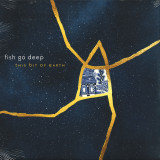
Greg Dowling and Shane Johnson return to the Go Deep label for their third album, ‘This Bit of Earth’. Beginning work in the relative normality of 2019 and finishing over the strange summer of 2020, the resulting music mirrors the thoughts that such upheaval brings out - our world and our place in it - while also functioning as a kind of travelogue of journeys past and planned, real and imaginary.
Mixing samples with modular synths, programmed drums with jazz loops, and quirky plugins with outboard gear, the album ranges far and wide while retaining a warm, natural core sound.
The title track opens proceedings on an ambiguous note. A simple double bass motif weaves around a misheard vocal sample, layers of piano and vibraphone take up the call, and the whole thing gradually spins off axis to a distorted, disjointed finish. ‘Suburban Key’ follows on a groove of busy drum work and deep sub bass, the stately piano and strings setting the stage for an undulating synth solo.
Further in, ‘Alice on Jupiter’ takes a deep breath and blends field recordings, gently swelling pads, modular bursts and a recurring picked melody.
‘Back Trace Dub’ strolls the imagined streets of Irish author Kevin Barry’s ‘City of Bohane’, noting the “taint of badness” in the air and revelling in the tense, dub-noir atmosphere. Later on, the spoken word intro of ‘I Could See’ expresses the dread of confinement and the relief and ecstasy of release, a theme the music reflects as it steadily builds to a joyful climax.
And closing the album on an optimistic note, the languid, emotional Culatra Ferry remembers better, beautiful days in the sun and looks hopefully forward to more.
“Highlights are the stunning sonics of Suburban Key, with its dusty groove and fast paced drums, stately piano, and cinematic strings reminiscent of a Four Hero orchestral masterpiece. High As Scaffold is full of warmth and soul and is yet another example of Fish Go Deep going even deeper into the dark blue waters of their brilliant musical minds.” Ban Ban Ton Ton review, Japan
“So good. Real beauty” Laurent Garnier, Radio FG, France
“Really liking this, would love to support on radio” Colleen 'Cosmo' Murphy, WorldwideFM, UK
“Lovely album” Osunlade, Yoruba Soul, US
“Very very nice album...love the new directions here” Charles Webster, Openlab, SA
“Absolutely beautiful piece of work” Darimont, RWAV, Germany
“A lovely LP of eclectic sounds” Jimpster, Freerange Records, UK
“Delightful album this. Very much appreciate the musicianship and we need that in the world right now as the commercial music world starts to fire up its nonsense for the new beginning” Vince Watson, Yoruba, Netherlands
“Such a fucking great body of work, and on par with ANY of the great albums I've listened to recently” Billy Scurry, Ireland
“There’s some REAL magic here. Possibly the deepest year from this duo” Charles Levine, Soul Clap, US
“A fabulous surprise. I'm sure if he were still alive Jose Padilla would have hailed this as his number one album of the year, it certainly is mine” Steve Miller, Afterlife, UK
“Great album... will play in next shows” Franck Roger, Real Tone, France
“Beautifully produced and great atmospherics” Ashley Beedle, Black Science Orchestra, UK
Radio and DJ support from Ron Trent, Hector Romero, Ame, Cian Ó Cíobháin, Bill Brewster, DJ Sprinkles, Harri, Honey Soundsystem, Alexkid, Moodymanc, Hifi Sean, Kassian, Freddie Garcia, 6th Borough Project, Stuart Patterson, Lars Behrenroth, Fred Everything, Mark Roberts, Cut n Shut, Will McGiven, Stefano Tucci, Tristan Jong, Matthias Schober, Trevor Fung, Ben Davis, Max P and more.
Having had the legend Roy Davis Jr. bless their last EP, Italian label Nicepeople follow up with another bumping four tracker drenched in house niceness, this time courtesy of label co-captain Giuseppe Scarano. On the A, fiery funk fuelled business with a skippy house soul in the form of ‘Gotta Move’ alongside a clubbier, bass grooving remix from Gourment De Funk.
Flip it to find two deeper cuts, the deftly sampled ‘Sunday Joint’, and the late night / early morning riser ‘Beat Onto Heaven’.