»Neon City« is the debut release by Erik K Skodvin & Otto A Totland's Deaf Center project, finally re-issued 18 years since its first appearance.
Listening to »Neon City« in 2022 is like taking a melancholy journey down rainy city streets of the early naughts, made by the then two young Norwegians in their mid 20s after spending time together in a basement full of vintage items. Armed with young optimism and a sense of musical experimentation, they started sampling everything around them, be it an old television broadcaster, tape recorders, a game of table tennis or conversations on film and merging it with pianos, plucked guitar, strings and anything in-between. The record turned out as something unique in the fields bordering post classical and ambient music, though without landing on any set genre. The record was filling a place in music that was barely touched upon and made them further experiment with samples and classical music which landed them on the 2005's classic »Pale Ravine«.
Although Erik and Otto both had been making music solo before, »Neon City« was the start of their more focused future paths as purveyors of both light and darkness in music that seeps through your soul to battle the anxieties of the world. We're glad to see this important start again be available to new ears. The record comes with a remix of the opener track “Dial” by Helios aka Keith Keniff, taken from the same original.
Search:sample this
Having produced the Emskee – Wall To Wall 12” released early 2021, AE boss Mr Fantastic is back with another slab of essential Hip Hop made without pretence or adhering to modern trends – in others words, how it used to be. Featuring Teekay of Dragon Fli Empire, hailing from Calgary, Canada, ‘Breakdown’ is a stand-alone single with no plans as being part of any album release right now and comes with the Instrumental version on the flip. Pressed on black vinyl and supplied in full colour card sleeve, as is the standard high-quality packaging from AE Productions.
Although only being acquainted via the internet, Mr Fantastic and Teekay have mutual admiration for each other’s work which lead to this collaboration. This funky 45 features crisp drums and disco funk samples that have been chopped into that good old Hip Hop. The beat has a reasonably sparse stabbing feel with subtle wah-wah guitar between the stabs which bounces along not just at a perfect tempo for DJ’s but also sonically perfect for a big sound system, hence this track being picked for a single release and packs that punch that sounds best played loud. No moody introspective thing here, this is crowd rocking Hip Hop.
Teekay’s rhymes flow over the beat like it is 2nd nature to him because, well, it is 2nd nature to him, and is further evidence of why his group Dragon Fli Empire alongside DJ Cosm, have been able to maintain a steady string of superb releases going all the way back to 2002 and have toured Canada, USA and Europe. The chorus features Mr Fantastic’s turntable skills backing up Teekay’s vocal giving a nicely conceived and executed song structure with a little help from 2 of Soul and Funk’s legends.
The artwork for this one was hand painted by Bristol graffiti heavyweight Turroe who favoured a nod to comic book covers for the theme which was then scanned and arranged into the sleeve format with courtesy of AE artwork regular Nick Pointon of Fine Print.
Miles Kane is back with brand new album 'Change the Show', set for release on 21st January 2022 via BMG.
Following a chance “no frills session” with psych-rock duo Sunglasses For Jaws at the band’s Hackney studio, Miles’ fourth solo album ‘Change the Show’ really began to take shape. “I saw myself in their energy, but also their taste and their knowledge of music,” Miles explains. “It was the first time I’d felt old!”
Opening with the honest soft croon of ‘Tears are Falling’, the album is a joyous ride from start to finish and features a surprising, but spectacular appearance from Grammy-nominated singer Corinne Bailey Rae for a duet on ‘Nothing’s Ever Gonna Be Good Enough’. ‘Don’t Let It Get You Down’, the first track released from the record, is Miles Kane at his very best: energetic, infectious and full of swagger, the track opening with a sample from fellow Wirral alumnus Paul O’Grady. It's an album that best represents Miles himself: charmingly authentic, and like nothing else you'll hear in pop music today.
“This album was born out of an intense period of self-reflection; having all this unexpected time on my hands,” Miles said of the last 18 months. “I wrote songs about big highs, big lows, daydreams, true friends and deep feelings. I learnt to let the future unfold of its own accord, while staying true to myself and that has led to what feels to me like a really uplifting album!”
A record for fans both new and old, ‘Change the Show’ is the Miles Kane album we’ve all been waiting for. The apotheosis of his previous works, incorporating those classic rock and glam influences, but focusing more closely on Motown, soul, and Fifties R&B.
Grey Vinyl
Polymorphism Records continue their intercultural and cross-genre work with their third release E Source. Female vocals return to the label with four original tracks by Russian artist Sestrica, who brings in her characteristic emotional narrative. A remix by Konx Om Pax and
a rework by Antwood make up the crew boarding on a galactic grey/silver vinyl.
PM003 takes off with electro-to-techno beats fuelled by a mild, wrapping acid melody in Today We Meet, where the uplifting countdown to launch can be felt. Sentimental Value gets
us deeper into the spatial trip. Darker samples and a heavier bassline give extra gravity to the anthem of the journey across sonic galaxies. Floating to slow, surrounding sounds and loops we land on a calmer planet called Intention. Its tidal sensation is created by an
orchestral combination of meditative vocals and other layers of composition. New Era enters an orbit of elegant syncopation within a rotating reverb stardust. Ancestral beeps subtly acknowledge legacy to be taken forward to the next odyssey.
Musician and graphical artist Konx Om Pax from Glasgow beautifully introduces nostalgia to New Era with playful breaks and scratches, getting us back to our roots in this excursion visiting alien territoires. Sestrica’s vocals from her original track are drawn into the remix as
echoing words rendering a mysterious aura, travelling through a deep trance of diverse yet harmonic rhythms and effects. A journey within a journey.
Canadian producer Antwood’s rework of side A jumps into an epic vortex of more experimental, unexpected sounds. The album-closer builds up towards absolute chaos, to then create a vacuum to emptiness. A supermassive (tribute to black holes intended) drop
leads to the last minutes of the EP: up tempo cyber-influenced sounds that bring us to a bright futuristic landscape ironically far from a dystopian prophecy.
Purely coincidental fact: the last track of PM002’s originals being Crisis Apparition and its homologue in PM003 New Era, hope seems to be peeking through current times to send an accidental message with this first series of the label.
Mind the overuse of Space metaphors; in this year 2021 where humans are going farther and further in exploring new places out there, it is a tribute and celebration to discover new musical journeys like this out here, on Earth.
Environmental sustainability and social justice are core values of Polymorphism Records. Following their strong interest in contributing to a good cause, shown from the early days, all Bandcamp digital sales are donated to projects such as Team Trees or The Ocean Cleanup.meet f B3 E Source side A (Antwood rework)
- A1: 4 A While
- A2: Next Door
- A3: Mule
- A4: Obscure
- A5: Out Of Control
- A6: Red And Yellow
- A7: I Don´t Care
- A8: Sleeping Alone
- A9: U Know
- B1: Job
- B2: My Hope Is Fading
- B3: Fernando
- B4: More Flute
- B5: Break Again
- B6: New Life
- B7: Trouble Dub
- B8: Everything Is Blue
- C1: Word´s Don´t Say Much
- C2: Drunk Again
- C3: As We
- C4: Babies Laugh
- C5: For The System
- C6: Get It
- C7: Pattern Select
- D1: That Easy
- D2: Till The Sun Comes Up
- D3: Try My Organ
- D4: Love Ocean
- D5: Murphy Combo
- D6: After The Lights
- D7: Go On
- D8: Ahahahaha
- D9: Every Man Has To Carry
- D10: Kaputtnick
- C8: Ach
- C9: Dream Chaserc10 | All Good
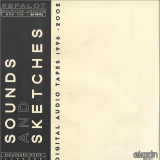
Lo-Fi was rather an involuntary attribute in the 90s. 90s hip hop instrumentals with the sound aesthetics of old 12-bit samplers are the blueprint for everything that runs under chill and lo-fi beats today. For this double LP, SEPALOT dug deep into his demo box, listened to countless DAT cassettes and dug up 36 pearls from the period 1996 - 2002.
Sepalot: "I had to laugh a lot at times and was sometimes embarrassed, but the innocence of the early days also has an insane power. The best beats demos and sketches from my early days now get their moment."
Endlessly sampled, covered, quoted and requoted, this may well be one of the most influential hip-hop singles ever released. But, in many ways, its importance goes beyond its sheer classic status as a single in its own right.
In retrospect, it shows the duo of Erick Sermon and Parrish Smith as pioneers in production, creating a funk-based sound that helped to provide a blueprint for artists on the other side of the country. In 1987/88, most West Coast rap still adhered to an East Coast audio blueprint. By 1989, they were leaning as heavily on Zapp and Roger Troutman samples as EPMD were on this single.
The foundations of the track are interesting, with a snatch of Juice’s much-plundered ‘Catch a Groove’ (which has popped up everywhere from The Beastie Boys to Kings of Pressure) overlaid with big chunks of Kool & The Gang’s ‘Jungle Boogie’ and Zapp’s irrepressible ‘More Bounce to the Ounce’. Vocodered funk was a rarity in New York hip-hop until this song, but it’s the West Coast G-Funk artists who really ran with it.
Its popularity spanned the country (and the globe, to be fair), with EPMD performing numerous shows in California on the basis of the sound, moving away from their James Brown-obsessed peers to display their own musical tastes. That said, the flipside – here presented on 7” and, indeed, on any single, for the first time – takes it back to that JB-era. ‘(It’s Not the Express), It’s the JB’s Monaurail by The JB’s is woven with Otis Redding and Beastie Boys to create a mid-tempo headnodder par excellence. It was always too good not to be a single.
Aussie producer Captn K is dishing up another great slice. This time Marvin Gaye's Get It On goes from slow sex chant to upbeat sex bomb. It still maintains its smoothness with joyess synth stabs and a grooving electro 808 breakbeat. I Need Some Loving with a repative sample and hook has no kick and just begs to be slipped under some minimal beats. Side B sports Captn k's signature style in the form of an 8min dream wrapped in vinyl. It Will Take An Eternity To Break Us is littered with uplifting vox samples and the most gorgeous pads, you will lose time listening to this one.
Lockdown took its toll on Clive. Not the isolation or sense of impending doom - that was normal - but specifically the worldwide marmite shortage in April. On the verge of a 'Driving to Dundee barefoot' style meltdown, Clive found solace in his 20 year obsession with Alan 'foot on a spike' Partridge.
Taking Musique Concrete to its textbook conclusion, Clive has made music only using sounds from TV series 'I'm Alan Partridge'. Over 100, mainly foley samples were repurposed into the two title tracks of the Alan EP.
Alan A is a raw yet melodic, big plate of House. Containing everything from drawer slams to air bass, cereal destruction to Black Beauty, this orchestra of found sound makes for some unique and exciting rhythmic textures. Grab a cup of beans and enjoy.
Things take a dubby turn for Alan B. Late night broken beats and sultry bass worthy of Alan's Deep Bath. Featuring Lynn on jungle time-stretched vocals.
The EP is bought to a close by off-kilter acid-tinged synthwave nugget, Linton TT. It doesn't fol-low the Partridge sampling rules but needless to say has the last laugh.
Bonus Easter egg for the vinyl heads is a "Dan!" locked groove at the end of side A. Cook a cat!
Label info:
Income Trax is Clive from Accounts' filing cabinet of curiosities. Home for his more eccentric and exotic ideas.
Artist Bio:
Regional tiddlywinks champion, stationary cupboard loiterer and all-round beige sky thinker, Clive From Accounts likes two things; pens and music. But mainly pens. Using springs, tape and old synths with fonts he admires, Clive creates the musical equivalent of warm photocopies. If it's going to be that kind of party, Clive's going to put his Filofax in the mashed potato.
It's been an interesting couple of years for Clive. After being picked up by keen-eared funk wizards Fouk, Clive's vinyl debut hit the shelves perfectly to coincide with the largest record shop and club closure in living memory. Undeterred and with a fire in his belly no amount of pepto-bismol could squash, he pressed on.
A string of releases on highly respected labels On The Corner in London (making the Guardian's best tracks of 2020) and Dirt Crew Recordings in Berlin have led him nicely into the second half of 2021 with an EP on New York disco colossus Razor n Tape and the debut release of his own label: Income Trax.
At the center of Dadub's SA020 lie the myths of the ancient Greek goddess Demeter - her search for daughter Persephone, the drink at the Eleusinian Mysteries ceremonies in her honour, and the fungus which gave the drink its psychoactive properties. The opening track is 'Mistresses March', a thumping narrative of Demeter's search for her abducted daughter Persephone. At the fundament lies a test of a new generation VST - 'Diachronic' - which is used to manage audio samples. The textures which merge during the near 12-minute march scrape and plummet, raining down upon the ominous marching band beat. This is an odyssey, unhappy and unflinching. Based on the handmade modular synth system from Nicola Buono and Lino Monaco, the representation of ceremony drink 'Kykeon' is on one hand a flowing narrative and on the other a demonstration of intense artistic scrutiny: a perfect, unremitting thud. There is, at five minutes, a subtle key pattern, light but not impermanent under the cacophony of chaos. This is indicative of the ceaseless self-examination. Little details, significant differences. Powered by a sound and groove generator invented by Daniele de Santis (Grün), 'Ergot Kernel' is a chemical cauldron. It's a beat continuously emerging from the undergrowth; an imperious column rising; a train ploughing on, coursing through an arid landscape. Conversely, the atmosphere is bright, full of electricity and warmth, with moisture descending. Dadub's SA020 is a journey through a Greek myth, with textural magnificence and technological innovation.
A variety of ambient and experimental cuts to be found here. A re-release of sorts, all original tracks were done by Enitokwa (Takashi Hasegawa) as rehearsal for a live performance at Tokyo - Batofar Festival in Paris in 2001 and were released on a limited CDR "promo." in 2002. All 8 tracks were recorded and mixed live in one sitting, and have been remastered, given names and pressed on heavy vinyl with a beautiful cover design by Berlin artist Nik Patrick.
The sample sources were largely inspired by records that Takashi listened to in High School - and feature two hugely well known British hands (one of whom have just reformed and have a new album out…), some old Jazz, Bossa Nova and Hawaiian records, as well as samples from ambient legends Deep Forest and Brian Eno. The result is an earthly nostalgic feel with deep moods to match the times we are living in.
The first track ‘Pop’ bursts into life with an etherial presence. ‘Ssab’ and ‘Chinese Girl Goes to Hawaiii’ have a rather filmic quality to them, whilst ‘Resonating’ seems to float over the wreckage of human activity, a post apocalyptic vision of Planet Earth. ‘Liquid Sky’ is a minimal groove which could be a sonic report from an eerie space station, which is itself a remix of Dub Sonic aka Takehito Nakazeto’s ‘Donigma Dub’.
‘Hope on Hop’ will appeal to today’s generation with its Techno and D’n’B influences, and features voices taken from Wim Wender’s ‘Paris Texas’. Track 7, ‘Mingos’ turns Gal Costa’s voice into a soaring atmospheric haze of digital memory, and the track ‘Holy Spiral’ is a combination of this one and ‘Resonating’, an ascendent 12 minute march to the release’s final close.
Takashi Hasegawa is a respected DJ, producer and live performer who plays live electronic and DJ sets regularly today in venues and festivals across Japan. He has been producing house, techno, experimental and ambient music since the 90’s - spending some of that time in the United States, including working in the music scene in the New York, before returning to Japan working as a sound engineer, A&R and producer for the famous Tokyo-based record label Club Yellow. Now based in Osaka-Fukuoka, Takashi’s music is still resonating with fellow music lovers around the world.
Now, 20 years on from its creation, this music is rediscovered and given a wider audience. The sound on ’Re-Promo’ interestingly gives an insight into the music Enitokwa is currently working on - reflecting the cyclical nature of creative output - and represents a slight departure from the swirling delicate ambient textures that you can hear in o.n.s.a and on the intricate and more musical 2069, released in 2017 and 2016 respectively.
Each track has a video accompaniment to be released in various media outlets, the label head Tom Ransom having partnered with diverse artists in Colombia, Denmark, Japan, Poland, France, Britain and China to create a wide range of visual outputs.
The release also sees two digital only remixes, one coming from London and Wigan’s enigmatic Isherwood (Edward Regan), and the other from Mat Fink - a unique DJ and up and coming producer raised in Pittsburgh and Berlin. Watch out for these…
Machines used:
Yamaha SU700
Sequential Circuits Pro One
Roland TR909
Roland TR808,
TC Electric D-Two
MAM RS3
Pedals
Remastering and additional audio treatment by Kabamix (LMD) on Dec.4.2017.
Dedicated to Takehito Nakazato (SONIC PLATE)
Fresh sounding and (mostly) slower paced house tracks with a twist coming out of Detroit. Filled with a sample-soaked miasma of sonic mutations that will appeal to fans of Moodymann, Theo Parrish, Urban Tribe... From the first to last thud, it moves the listener from head-shaking bewilderment to head nods of agreement at a moment's notice. Not much is known about K-6000, but based on this initial offering it is evident that the orbit of this group is broad...
For a number of years now, A Guy Called Gerald has largely made music only for himself. But this special EP is borne from Gerald’s unique and long-lasting friendship with Analog Room founders Mehdi Ansari, Siamak Amidi and Salar Ansari. They first met in 2013 when Siamak booked Gerald to play his Analog Room party in Dubai – a leading underground light in the UAE’s then emergent scene. Away from the glossy VIP hotels and expensive bottle service parties
typically associated with Dubai, Analog Room only deals with quality bookings of the caliber of Move D, Roman Flügel, Moritz Von Oswald and the likes. Gerald immediately fell in love with the party. Its strict music-first, no-nonsense policy appealed to him and he’s returned many times over the years.
By then, of course, A Guy Called Gerald’s musical legacy was already assured. The Manchester icon is best known for his 1988 hit single Voodoo Ray – the touchstone of his hometown’s dawning acid house scene. As well as being an early member of 808 State, Gerald embraced breakbeat and jungle, ran his own Juice Box Records label and worked with the likes of Columbia, Perlon, K7! and many other vital labels. His skills on everything from synths to keys, samplers to
drum machines stood him apart then – and still do today.
“This release is based on a real friendship,” Gerald explains. “I feel part of the Analog Room family. Back in the early days, that’s how it was. These days, it’s like, ‘Oh, you’re famous, let’s do something.’ I’m not interested in that. I’m not interested in being a celebrity or living that life. I’m the same as I was 30 years ago, all I care about is the music. With Mehdi, we have spent hours jamming in private in Dubai, we have partied together. We’ve vibed together for so long and he’s shown me new parts of the world I should be making and playing music in, away from the trendy scenes in other places. So this is an exclusive just for him.
I’m not looking at doing anything else with anyone, and the music is just about celebrating individuality rather than trying to fit in anywhere.”
When Iranian-born Mehdi decided to start Moozikeh Analog Room – which translates from Farsi as “the music of the Analog Room” – Gerald was one of the first artists he asked to release on the label. It might have taken some time for Britain’s Dirty Little Secret to materialize, but boy it’s been worth the wait.
Says Mehdi, “The magic comes through proper relationships and friendships.
That’s why Analog Room worked. It was a great room, an amazing sound system, with amazing artists doing their thing. Bookings were so on-point because we had agents around the world, on the dancefloors, spying up artists who were killing it,
and Gerald was one of them. He was a perfect fit from the first gig and our friendship grew from there. He’s always been very kind to me. We have this common language of music without any bullshit, and that is where this EP comes from.”
The EP is a mixture of different things. Some of it is unreleased material from the vaults revisited, some of it is brand new. It opens up with the devastating Old Skool – a writhing, physical track with naughty bass. The drums hark back to Gerald’s early days of making jungle but reimagined through a modern perspective. As the synths spray about the mix and the percussion bounces atop the jostling drums, muttered vocals draw you in deeper. Sugoi is an experimental
track that fuses ambient synth design with the spacious and eerie atmospheres of jungle. Nimble drums get you on your toes as the spangled synths twist and turn in all directions. It is a thrillingly original, impossible to define track.
Flash Fight is built on a captivating rhythm that sits in the area where house, techno and jungle intersect. It is warm and cavernous, physical yet elegant as it bounces on rubbery kicks and lithe synths roam in and out of earshot. Perfect for those sweaty, cozy back rooms, it’s another masterclass from Gerald. Closing out the EP is False Religion, a deep-rooted house track with elastic drums and
haunting, wispy pads. As a subtle acid bassline rises and falls way down below,
Gerald’s own mystic whispers leave listeners hypnotized.
Following on from Analog Room co-founder Salar Ansari’s debut release on the label, this EP is a statement of intent. More releases will follow from some of Analog Room’s most frequent international guests, but only when the time is right. Moozikeh Analog Room is a label of love, one that is focused on putting out the best possible music at all times rather than chasing hype.
A timely reminder of why A Guy Called Gerald is one of the world’s most enduring electronic artists.
- A1: Wake Up Tomorrow (Feat Kacy Hill)
- A2: Gemini & Leo
- A3: Purple Tones
- A4: There Must Be A Song Like You
- B1: Aguas Frias
- B2: Aureole
- B3: Hometown Dream
- C1: Agosto (Feat Buscabulla)
- C2: Outside The Outside
- C3: Brown Fluorescence
- C4: Wind Conversations
- D1: Thank You For Ever
- D2: La Naranja
- D3: Telescope (Feat Benamin)
- D4: Mirror Talk
When Roberto Carlos Lange, the musician known
as Helado Negro, began writing ‘Far In’
immediately following the release of his acclaimed
2019 ‘This is How You Smile’, he could not have
predicted that we would soon need to learn how to
stay at home and be the stars of our domestic
dancefloors with intimate and online communities.
The titular pair in ‘Gemini and Leo’ stay indoors to
discover each other anew with music recalling
Lange’s youth growing up in South Florida
listening to 80s club songs, and their return
sampled in 90s hip-hop.
Visions past and future meet in a euphoria of
uptempo drums, Jen Wasner’s (Flock of Dimes)
funky bassline, and Opal Hoyt’s (Zenizen) galactic
swirl of warm and steely synths and bright backing
vocals.
What was a prophesying rehearsal for the
musician will, we can hope, soon be our fresh
start, a choice to bring that energy home, or go out
to meet it.
- A1: Yvré-L'evêque Feat. C.a.r, Tolouse Low Trax Broken Pleasure Remix
- A2: Les Mystères De Lorient Feat. Narumi Herisson, Khidja Remix
- A3: Marilyn Drum, Golden Bug & In Fields Remix
- B1: Yvré-L'evêque Feat. C.a.r, Krikor Remix
- B2: Bar A Gwin Feat. Macdara, Rubin Steiner Remix
- B3: Les Mystères De Lorient Feat. Narumi Herisson, Marvin & Guy Remix
- B4: Phare Ouest Feat. Yula Kasp, Narumi Rework
After the release of their first album, Il Est Vilaine ask to artists and friends to deliver a series of high-flying remixes: Tolouse Low Trax, Krikor, Khidja, Marvin & Guy, Golden Bug, Rubin Steiner, C.A.R…
Tolouse Low Trax opens the ball with a destructured version of Yvré- L'évêque while keeping the darkness of the track. We can hear a nod to the track "Holland Tunnel Dive" anthem of the Salon des Amateurs.
For the eponymous track Khidja were inspired by the sounds of the land of the rising sun which is a good thing to accompany the song of Narumi Hedgehog! A bright version and influenced by YMO's era Sakamato.
Golden Bug & In Field proposes an alternative just as trippy as the original version of Marilyn Drum, a trip between neighborhood hospitals and crazy guru.
Another version of Yvré-l'Evêque this time Krikor takes care of it and takes out his sampler for a digi-dancehall version that only he has the secret, Faya !
Rubin Steiner delivers a version back to the roots of Bar à Gwin mixing deep house texture and 80's-NY-hip-hop/electro.
The two Italians of Marvin & Guy bring out the hits, the guitars and the arpeggios for an epic version of Mystères de Lorient.
To close the album, we find Narumi Hérisson at the controls of her piano for a dreamy and sensitive version of Phare Ouest where her voice and that of Yula Kasp are mixed in the greatest harmony!
The third release on U-TRAX in 1993 was also a third debut, this time by Natasja Hagemeier and Jeroen Brandjes. Early in their career, they used several artist names, but became most commonly known as The Connection Machine. With their debut mini-album The Dream Tec Album they more or less described their style: dreamy techno. It became an instant Dutch techno classic and U-TRAX is proud and delighted to offer a fully remastered re-release, including three never before released bonus tracks (one of which is digital-only).
Natasja and Jeroen resided in Utrecht back in the 90s. In 1991 they assembled all their ideas and recorded the track "24 Hours" with DJ Paradize. Soon after this experience, they started to buy their own gear, all strictly MIDI (which wasn't too obvious in those days). In their early recording years, they had three producer-names (Syndrome, The Connection Machine and Bitch&Bites), that were all collected under the The Utroid Machine Missions umbrella, which was used for their debut on U-TRAX.
All tracks on The Dream Tec Album are The Connection Machine's earliest works, from the 1991/1992 years.
"An Overflow of the Mind" is a beautiful, dreamy track with almost divine sounds and strange voice-samples that serves perfectly as an introduction to their entire repertoire.
Their first production was "24 Hours", and what a brilliant one it is! A well-known jazz-musician talks about a "24 hour party going on", on top of a sinister and trancey rug, woven of sampled sounds from pioneers in electronic music and nailed down to the floor with a deep pounding bassdrum. At the time they made this track, 141 bpm was unbelievably fast...
"Evilish Cosmos" is all about a very sad and personal emotion, so everything we say about it will be absolutely wrong. Just listen to the meandering piano line, distorted voice samples - and feel it.
The first bonus track on this release is "Recognized Pain", which was intended to be part of the original The Dream Tec Album. It had appeared on the Phuture Classical Section C cassette in 1993, on the famous Drome Tapes label that formed the roots of U-TRAX. It truly is an amazing track: pure sonic terror with haunting rhythms, psychedelic synth lines and shards of voice samples that make the listener feel slightly uncomfortable.
"X_Manray" is many electronic music lover's favorite track. It is sooo deep that it is hard not to get hypnotized by it. Warm strings are coupled with deep beats that show up and disappear every now and then. Could serve perfectly to start off any DJ's set, as long as she or he has the guts.
Though "Braindrain" is probably the most danceable track on this album, it is carefully designed to tease the listener. Everything in this track drops in too late and every tone, melody or loop last exactly a few bars too long. Designed as a DJ-teaser and so it is.
The second bonus track, "Cafe d'Anvers", is another previously unreleased work, of which unfortunately no master recording was saved. All that is left, as far as we know, was an old VHS Hifi tape from the U-TRAX Archives. And that is where this bonus track was taken from. Mastering engineer Thee J Johanz managed to restore the quality of the recording somewhat, while at the same time maintaining its dark, clubby sound, a tribute to the famous club of the track's name in Antwerp, Belgium.
"Dream Affected Dream" is one of the most recent productions on this album. It was recorded with CNN playing live on top of it. At this exact moment, CNN was having an interview with David Koresh, the leader of the infamous Branch Davidians sect from Waco, Texas, while they were under siege by an armed police force. Natasja and Jeroen were just ready to record Dream Affected Dream, and spontaneously decided to mix in the audio from CNN. Not very long after that, the cult members set fire to themselves. A very strange and oddly funky track, that also serves as a time-document.
The final track is another bonus track. Like Cafe d'Anvers, "Voight-Kampff" is taken from on old U-TRAX VHS Hifi tape and masterfully mastered into a lovely relaxed dreamtech piece. Very suitable to start the Sunday after a long night of clubbing. This track is available for free to buyers of the complete digital album only.
Original release date: July 1993.
The second release in January to celebrate the 25th anniversary of Frank de Groodts career as a recording artist is a re-press of his legendary Sonar Bases 4 10 double 12 . Exactly 21 years ago, in January 1997, Frank elevated to electro stardom with this astonishing combination of dark electronica and electro beats.
Frank at the time lived just outside the city of Amersfoort, which is where he was born and lives again these days, some 30 minutes northwest of Utrecht. His first ever release in January 1994 was a techno EP on U-TRAX, as Pieces of a Pensive State of Mind. Later that year, he released his first 12"-es on Djax records as The Optic Crux, and he continued to keep making up artists names in the following 25 years, like Fastgraph and The Operator. He is also one half of the live outfit Random XS (together with DJ Zero One), collaborated with Arno Peeters (a.k.a. Spasms) as Urban Electro and with Detroit's Dennis Richardson as Ultradyne. And that s not even all of his alter egos.
The sound of these eight unique tracks called for a new moniker back in the nineties: Sonar Base (ironically misspelled on the original release as Sonar Bass). All track on this re-press have been remastered for maximum impact. The double vinyl goodness kicks off with Earth Probe, that very subtly creeps towards us, before it kicks in with a rather obese bassdrum. As if Frank wanted to ease his listeners into his then new sound, this track basically is in techno/acid style, but has the slower tempo that characterizes the rest of the electro tracks of this release.
Immediately following, is the unrivaled beauty of Welcome To Sonar Base #4, a track that slowly builds up before it takes us on a deep space journey at two thirds. The 11 minute Sonar Base #5 has been a DJ favorite for 21 years, reaching out to both electro and techno lovers, while Sonar Base #6 is the type of ultra-pure electro that really puts your woofers to the test.
Arrival At Dwell Probe is another one of our favorites, with superfine beats, desolate voice samples and deep and moody synths. Very musical, truly a top piece that will leave you totally unprepared for Blunted. This track has the rolling type of hiphop-style beats that mix well with LL Cool J's Mama Said Knock You Out, but of course has the space-station atmosphere that makes it unmistakably a Sonar Base track.
The fast pace and merciless beats of Intergalactic Anecdote rush us to the finale: Sonar Base #10, a worthy closing track, with deep bassdrum patterns and melancholic strings that also please fans of broken beats. It stops and goes and keeps demanding your attention, making you wanting to go back again to the first track disc and start your Sonar Base trip all over again.
The Artists Formerly Known As The Connection Machine (Utrecht, Netherlands) go raw and mean on this one! If the underground The Hague-style from the 90s is your thing, this 12" is your cup of tea. 4 hectic 808/303 trax, all mixed in a dirty way, with loadsa fx on the 303.
The Connection Machine/Cray Emoticon is the multi-talented duo of Natasja Hagemeier and Jeroen Brandjes, who debuted on U-TRAX in 1993 with their instant classic and much sought after 'The Dreamtec Album' (catalogue no: 3 UTR UMM 1). They went on to create another epic release called 'The Black Hole EP' on U-TRAX (catalogue no: 5 UTR UMM 2), but not after they presented 'Bitflower', a true work of art on Planet E from Detroit. Later they released the CD album 'Painless' on Down Low Music and in more recent years two 12"s (shared with The Lost Trax) and an album on Tabernacle Records from the UK.
The title track is originally meant as a replacement for the original game music of level 9 of the 2nd episode (E2L9) of the computer game Doom. The artists thought the original score wasn't doing right to the intensity of the game and made their own apocalyptic soundtrack. 'Gnawing The Heart' already proved its usefulness on many a dancefloor, whilst 'Choice Chip' will satisfy the ultimate speed freaks amongst you. If you're not into drugs or mushrooms, 'I Wish My Zapper Was A Gun' can deliver you the same effects: it's a psychedelic space-acid trip, built around a sample of the sitcom 'Neighbours'.
You can't get wrong with this vintage and merciless dance floor material from the mid-nineties.
Original release date: October 1995.
By the time of their second album, 1989’s ‘Unfinished Business’, EPMD were firmly cemented in the rap stratosphere. With one certified classic album under their belts, they proved they were no one-hit wonders, with the sequel possibly even better. A concise 12 tracker once again produced by the artists themselves, it saw them adhering to the ‘if it ain’t broke, don’t fix it’ maxim, while going somewhat ‘bigger’.
In other words, guests started to appear – not just on the records, but in the videos – and marketing budgets were higher. None of which watered down their sound. In fact, this is the ultimate EPMD record: a beat that’s simple but perfect, and two top-of-their-game MC’s going back and forth. But the appearance of NWA in the video for ‘The Big Payback’ hints at their reputation at the time – and at the cordial relations between coasts before the deadly beef that was to come.
‘Payback’ takes both its title and core sample from James Brown’s ‘The Payback’ from 1973, and then weaves two more JB elements with it, including the addictive stabs from ‘Baby, Here I Come’. It’s a golden track from the golden age.
The B-side is another gem from the same album, and only released before on 7” in a very rare, limited pressing. ‘So Wat Cha Sayin’ was the album’s lead single, and shows EPMD’s wide sampling palette. There’s bits of BT Express, a whole lot of Funkadelic and, brilliantly, some drums lifted from Soul II Soul’s gem from just the year before, ‘Fairplay’. Lyrically, it’s just all about threats to sucker’s MC’s – what else do you want from EPMD?
• A certified Hip Hop classic.
• Samples James Brown’s ‘The Payback’ from 1973.
- A1: Sagittarius A (Right Ascension) 05 15
- A2: Pleasure Discipline 05 57
- A3: Ertrinken 05 38
- B1: Growth Cycle (Featuring Robert Owens) 05 52
- B2: Zahlensender 08 04
- B3: The Approach 03 27
- C1: Nylon Mood 06 26
- C2: Alphabet City 05 43
- C3: Don't Ask, Don't Tell 06 10
- D1: No Entiendes 06 56
- D2: Kurzstrecke 06 43
- D3: Golden Dawn (Featuring Stefanie Parnow) 07 14
- E1: Interdimensional Interferenc 05 58
- E2: Distant Paradise 08 05
- F1: Be (Featuring Robert Owens) 04 50
- F2: Vampir 06 29
- G1: Downtown | 161 11 38
H- side is etched
The American cable-television industry exploded in the 1980s, pushing broadcasts of diverse programming and emissions of low-laying cultures into homes. Community stations piggybacked on the digital developments of the time, extending their existence through telephony and broadcast a iliates. For those growing up in this time, in locations such as New York City, the localized communications beamed into their homes exposed them to an impressionable array of disparate sounds and visions.
Move into the 1990s and New York was filled to the brim of emergent cultures drawing from this ebullition of communication. From Rammellzee’s shapeshifting to the late Judy Russell and Frank and Karen Mendez’s Nu Groove imprint fusing reggae, poetry and house, nascent ideas emanated from the city walls, from within stores such as Sonic Groove store and on VHS releases such as Stakker’s The Evil Acid Baron Show, a legendary technicolor psychedelic trip along the wildest frontiers of acid house. As scenes expanded and identities developed, such individuals weather the events of the visceral now, expressing themselves right into an unpredictable future.
Function’s long career has seen him uncover a vast range of sonic identities, a mainstay through house, techno and industrial with collaborations with the likes of Regis, Damon Wild alongside his highly influential Infrastructure imprint. With influences deeply tied to pop art, rave and gay scenes, and early memories of block-parties emitting Kraftwerk and Strafe, he found himself seeking out the undercover illegal nights of the 90s on a quest of sexual unearthing, mixing the ever-yearning escapology mission of disco with the influential DJ sets of Jeff Mills.
For his new album Existenz, he marks a clear step away from the corporeal techno of his recent releases. Pivoting around themes of religion, sexuality, trauma and healing, it is a work expansive and celebratory, a clear liberation from a deeply internalized past. Formed from a collection of recordings made in a period from late 2016 to mid 2019, Existenz takes the form of a creative outburst in reaction to a number of traumas - recent, childhood and throughout Function’s life. Life partner Stefanie Parnow assisted the production process in its entirety, providing inspiration, spiritual healing and featuring vocal contributions.
Cosmic synths soar and swoop in ‘Pleasure Discipline’ through towering stacks of rhythm that stutter and creak to a halt before rebooting, a firm robotic response to human intervention. ‘Zahlensender’ reflects a spatial tetris of urban life, as digitalization set within an XYZ matrix confronts the sprawling city. Constant arpeggiated meditations echo synaptic transmissions, e ecting a dissolution of boundaries. ’The Approach’ recalls the unification of the self, a state of delirium non-subjective and smooth, as all connections and functions give way to simple intensities of feeling, crossing the threshold into spirituality. ’Golden Dawn’, featuring Stefanie Parnow, marks a further elevation of dubbed-out euphoria, as once more positive rays emerge. His ode to the effortless short-trip urban navigation 'Kurzstrecke' finds Function in motion, upfront and bold, snapshots of conversation and flickers of light. 'Ertrinken' finds metallic bass jabs swamping snipped synthetic voices, with hidden stores of emotion set as a nod to the history of vocoders as a tool for encrypted military communication. House icon Robert Owens features on 'Growth Cycle' and 'Be', entrenching a celebratory atmosphere over Function's clubwise leanings. Closing track 'Downtown 161' reflects the unmistakeable filtered and squashed interjections of television, and sampled dance vocals - a sound for the curious, dreamers and dancers.
With Existenz, Function reveals an essential body of work, spread over 4LP - thought experiments on the role of identity and spirituality after a lifetime of upheaval and trauma. Leading up until the release date, Function will undertake an album promo tour with select dates - A/V shows at Berlin Atonal and Rural festival in Japan, and three dates as part of his Bassiani residency.
* taken from the digital version of bio-rhythm 3 and not included on the vinyl version of the album.
Network’s two groundbreaking bio-rhythm albums in 1990 were each accompanied by much loved 12” preview samplers of tracks from the iconic compilations.
For the third release - a mere 31 years after the first sets - Network have added a fresh twist. The sampler this time around contains 2 tracks from the bio-rhythm 3 vinyl release and 2 that will only be otherwise available on digital format.
It makes the sampler a must have for all electronica vinyl junkies.
Nexus 21 “Silicon”, a mainstay of the duo’s much acclaimed live sets, was recorded in 1991 but not released at the time. Memories are thin as it why such a gem was ignored but the most probable explanation is that the transformation of Nexus 21 into Altern 8 took attention away from the track. After being found in the tape vaults it has been remastered for the bio-rhythm 3 project.
It is joined on side A by the Octave One remix of 10th Planet “Strings Of Life” - which is not on the album vinyl. There is a proper labyrinthe story behind this remake of the Rhythim Is Rhythim classic of classics. Kool Kat, the predecessor to Network, arranged for Rhythim Is Rhythim to play live supporting Inner City at a London Town And Country Club concert in September 1989. The label recorded the show which featured Derrick May and his guest Carl Craig.
Fast forward to 1995 and the tapes were handed over to Ashley Beedle to reconstruct and remix for a release on Network under Ashley’s 10th Plane moniker, . On to 2003 and Network’s Neil Rushton was running the suSU label where an attempt to record a vocal of Strings Of Life with none other than Shara Nelson on vocals was made using the 10th Planet parts. That never came to completion, but at the time Neil was working with Octave One and they conjured up this recreation, which has only ever been previously released as a track on a suSU compilation. FIRST TIME ON VINYL ANYWHERE FOR THIS AMAZING VERSION OF “STRINGS OF LIFE”.
“Neurosilence” - Doggy is previously unreleased recording by Birmingham’s Peter Duggal. His bleep classic “Labyrinthine” would have been totally at home on Kool Kat/Network and in recent months both label and artist have both been shaking their heads as to how it didn’t happen. The release of the stark “Neuroslince” finally sees an 0121 alliance bond together.
The 4th track “In The Presence Of Beauty” is taken from the digital release of bio-rhythm 3 and is a truly beautiful “Reprise” take on the version on the vinyl album.