Two of the most sensitive and sweet big room bangers to ever fill a floor, here’s Stay Here and Writer, the results of a recent machine jam between heavyweights of emotional dance music, Fort Romeau and Gold Panda.
Stay Here strikes first with slowly simmering synthesizers intertwining with slinky guitars and delicate vocal samples, while b-side Writer shows up to the party loaded with restrained euphoria, steady beats paving the path for the fragile acoustic elements of its glorious, beatless ending.
All of this spiked with just the right amount of acid to keep things constantly entrancing!
The record comes wrapped up in designer Eliot Axelsson's blurry shapes and vivid colours, arriving on vinyl and in digital form through Studio Barnhus on November 8.
Cerca:sample this
This self-titled LP marks the fifth release of Scottish artist Murray Collier’s Dip Friso project, his longest running alias and the solitary vanguard of his own Real Landscape imprint. Across the six tracks he delivers another collection of warped percussive loops, heavily manipulated guitar work and psychedelic sound experiments that drift between popular music forms ('I’ll Get to Hiding') and whittled down takes on electric blues and shoegaze ('Another Country’). The former features the instantly recognisable croon of Still House Plants vocalist Jess HK embellishing a backdrop of tape loop alchemy, an inspired pairing given the shared history of Glasgow dwelling. ‘Thin Ayrshire’ (written with Hannan Jones) treads a similar path with Collier’s own beyond-unrecognisable voice featuring, broken suddenly by a brief flash of 12th Isle’s Loris S. Sarid & Innis Chonnel’s ‘Spalted Water Portal’ thanks to a recycled tape spool. ‘A Sorry Business’ takes on avant-jazz inspired puddle skronk, a stunted casio bleep propelling forward guitar dirge and cymbal crashes, whilst Australian minimal wave heroes The Systematics are paid homage via a farewell cover of their track ‘Midnight on Balancing Day’ (here ‘Midnight’).
All in, the album sees the project incorporating more instrumentation and a full use of vocalists, leaning less heavily on gauzy sample collage styles and providing a more introspective look at the hazy, dubwise world Collier has been building for the past half a decade.
Gi Gi returns to Quiet Time with a new album, Dreamliner. His last full-length for Quiet Time, Lumino Pleco, was built on familiar samples, melted into a skunky sludge. It evoked a heat-warped meditation cassette unearthed from a Goodwill located in a black hole. The Texas producer’s latest, Dreamliner, is comparably immediate and propulsive. Here, Gi Gi explores spacey, kosmische-laced trip-hop. At first, these eight tracks come across placid and twinkly — calling to mind glitter stars twinkling atop a navy canvas, or tropical sun beams cutting through crystal water. But a jaggedness becomes apparent when lended a focused ear. Beneath slow motion arpeggiations and lullaby melodies, dubby percussion and sound effects gnash and quiver.
"No Input" is the debut eponymous EP by the electronic duo composed by the Palestinian modular synthesis artist Karim Atari, and the Italian electronic music producer and co-founder of Abu Recordings, boyjayne.
The 20-minute EP features an eclectic mix of acid, electro and downtempo dub techno inspired by the likes of Drexciya, Filmmaker, and E.R.P. With this EP, No Input sought out to make distinctive high-energy tracks for the dance floor. Their approach combines modular synthesis and sample manipulation techniques, creating a sound that is at once reminiscent of classic techno and electro and unpredictable in its novel reinterpretation.
William Kiss lands on Rekids with the ‘The Beat’ EP this November, hot on the heels of a remix for Mathias Kaden’s ‘Circulate’ EP on the label in September.
The A-side starts with title track ‘The Beat’, bodied toms footing the rhythm while high-pitched percussion keeps an irresistible groove above. With an expertly sampled, playful vocal, Kiss’ ‘The Beat’ is another unmistakable club hit that will effortlessly find its way into the peak time. The B-side hosts ‘Midnight Club’, which features more organic drums mixed with a classic House vocal and zippy strobe-light-inducing synths, closing out William Kiss’ debut on Radio Slave’s flagship label in his signature drummy style.
Having won support from Laurent Garnier, HAAi, Call Super, Robert Hood, and more, William Kiss has been going from strength to strength. He previously appeared on Radio Slave’s labels via his ‘Clap For Me’ EP on Rekids sibling label RSPX, with further releases on labels like GUDU, Bush Records and Three Six Zero alongside the launch of his collaborative project, Not Without Friends, with Luke Alessi and Jordan Brando on RÜFÜS DU SOL’s Rose Avenue.
The small but already well-formed Stereo:type label has got a trip of new EPs all dropping this summer. UK producer Risk Assessment is behind them all and each one explores a classic disco sound with some modern dance floor weight. 'She's On The Floor' is a celebrity and feel-good jam with heart-swelling strings. 'Rhyme' cuts up a classic vocal sample and layers it over some house-leaning beats while 'Delicious' is a wig-out lead by its shimmering synth stabs. Last but not least is the breezy and sunny 'Let's Do It'.
No one has lived a life quite like Marcos Valle. He became an overnight international sensation, fled a military dictatorship, dodged the Vietnam war draft, had his music sung by Homer Simpson, made enemies with Marlon Brando, and became an unsuspecting fitness guru for multiple generations. But to truly understand the great Brazilian composer, arranger, singer and multi instrumentalist, one must listen to his music.
Lead Single (Life Is What It Is) : Between the release of his first album in 1962 and today, Marcos Valle has released twenty-two studio albums traversing definitive bossa nova, classic samba, iconic disco pop, psychedelic rock, nineties dance and orchestral music. He has also had his songs recorded by some of the all time greats, including Frank Sinatra, Sarah Vaughn, Sergio Mendes, Elis Regina, and (last but not least), Emma Button of the Spice Girls. He has also had his music sampled by Jay-Z, Kanye West, Pusha T and many more.
With his twenty-third studio album Túnel Acustico, Valle set out to bring it all together.
“I believe my music is many things. It goes in different directions. I have many different ways of writing music, sometimes it’s melodies and harmony, sometimes the groove is the focus. But all the music I have made over my sixty year career is unified. It is all natural and it is all sincere. And this is what I wanted to bring to my new album.”
A prominent feature of Valle’s career has been his dual residence between Brazil and the USA. Originally moving over in the mid-sixties on the back of bossa nova’s international proliferation, Valle toured with Sergio Mendes and became hugely in demand as a composer and arranger. But the Vietnam War loomed and the threat of being drafted saw him return to Brazil. He spent the following years in Rio writing music for TV and film, as well as four cult favourite albums in collaboration with some of Brazil’s most groundbreaking musicians including Milton Nascimento, Azymuth, Som Imaginario and O Terco.
By 1975, Brazil's military dictatorship was at its most oppressive, making living and working increasingly difficult. Valle moved back to the US where he would reside in LA, writing songs for, and collaborating with the likes of Eumir Deodato, Airto Moreira, Chicago, Sarah Vaughn and Leon Ware, amongst others.
Túnel Acústico features two songs originally conceived during Valle’s time on the West Coast: “Feels So Good”, a stirring two-step soul triumph written in 1979 with soul icon Leon Ware, and the sublime AOR disco track “Life Is What It Is”, composed around the same time, with percussionist Laudir De Oliveira from the group Chicago.
Built around an unfinished demo Marcos found on a shelf in his house 44 years after it was made, the “Feels So Good” demo was restored with the help of producer Daniel Maunick, who also utilised AI stem-separation to remove the placeholder vocal ad-libs. Valle added Portuguese lyrics to sit alongside Ware’s vocal hook, as well as extra keyboards and percussion.
Also written in late seventies LA, “Life Is What Is It” was co-penned by Laudir De Oliveira from the band Chicago and first released on the bands’ Chicago 13 album with lyrics by Robert Lamb. Another nod to his good times in LA, Valle recorded his own version for Túnel Acústico, upping the tempo and deepening the groove for a blast of irresistible summer soul.
On Túnel Acústico, Valle's core band features two members of the renowned Brazilian jazz-funk group Azymuth: Alex Malheiros on bass and Renato Massa on drums. The rhythm section is completed by percussionist Ian Moreira, with additional contributions from guitarist Paulinho Guitarra and trumpeter Jesse Sadoc.
The contemporarily composed music on Túnel Acústico features an impressive lineup of guest lyricists, including renowned Brazilian artists: Joyce Moreno (Bora Meu Vem), Céu (Nao Sei), and Moreno Veloso (Palavras Tão Gentis) as well as Valle's brother Paulo Sergio Valle (Tem Que Ser Feliz).
The album closes with "Thank You Burt (For Bacharach)", a tribute to the legendary composer who passed away in 2023.
Túnel Acústico will be released on 20th September 2024 via Far Out Recordings. Valle is set to tour Europe and America in support of the album.
Making a return to his Chronicle alias for the first time since 2001, Tim Cant brings his unique blend of laid back atmospherics to the Spatial family for the first time with Time and Space on Curvature. Sit back, relax, or dance Chronicle has you covered for either with this welcome return to the scene.
A1 Geosynchronous
Getting straight to business with an intro of thick Hot Pants breaks, Geosynchronous sees Chronicle bring his unique take on atmospherics to Curvature in welcome style. An early breakdown with synths and subtle melodies is followed by a dreamy layer of two step amens and 808 basslines, completing a collage of beats as the increasingly memorable melodies slowly weave their story throughout the track.
A2 Life On Earth
A dream like, reflective affair is up next with Life On Earth Chronicle returning to the late 90s vibe of the moniker with a plethora of classic FX, vocal samples and long constant synthwork cascading above. Utilising a simple but effective core melody, danceable two step breaks and layers of detail that would fit in any retrospective set from the Progression Sessions era to the modern renaissance, this is one to savour.
B1 Future Fragments
A real treat for fans of synthy, sci fi tinged atmospheric goodness from eras gone by as Chronicle transports you to 99 Shepherds Bush Empire you had to be there now you can be with a track that encapsulates the era perfectly. Drizzling the mix with frequent echoing effects and washes of spacey synths and pads over an earworm melody not to mention the crisp rolling breaks this is a versatile and enduring track youll keep going
back to.
B2 Nostradamus
Closing out the EP, we have Nostradamus which opens lightly with hi hats and airy padwork before finely edited old school breakwork injects energy to the mix.
The breaks build with additional elements creating a very danceable and rhythmic loop, punctuated by a catchy melody. One sample proclaims The Future Is Power - if its in the hands of producers like Chronicle, effortlessly channeling the past with a modern twist, we know
we are in good hands.
Words by Chris Hayes Spatial Red Mist
Robert Glasper’s holiday album In December was released last year as an Apple Music exclusive. We’re now able offer it widely available to physical retail and all DSPs!
Is there anything to be done with carols like “God Rest Ye Merry Gentlemen” and “Joy to the World” that hasn’t been done in the past 300 years? If there is, Grammy-winning pianist, composer, and producer Robert Glasper is the kind of artist to do it. “I like covering songs that people know well,” Glasper tells Apple Music. “That’s what I’ve done throughout my whole career.” It’s true: As a jazz pianist, he’s obviously learned his way around making classics his own, whether they were written by Mongo Santamaría or Kurt Cobain. But, he says, “The biggest challenge in making a holiday album was trying to do it in a way that feels festive but at the same time feels real and not corny.”
He succeeds on both fronts on In December, his holiday album that mixes classic carols with a set of originals, and which was recorded in Spatial Audio. Part of what keeps it credible is the fact that Glasper’s hiphop/R&B/jazz fusion is done on a compositional level instead of just a cosmetic one (no collages of sampled sax solos and drum loops here). The covers reveal a lot about his musical worldview: Sung by Tony winner Cynthia Erivo (The Color Purple), “God Rest Ye Merry Gentlemen” is turned into dark, airy neo-soul, while “Joy to the World”—sung by Alex Isley—feels like a Stevie Wonder ballad. But the originals reveal even more. “The intention for this album was less about Christmas songs and more about songs that feel good during the holidays,” Glasper says. “I stayed away from thinking too much about Christmas and its traditional lingo, and concentrated on real things people go through during the holiday season.”
- A1: The J.b.’s Gimme Some More
- A2: The J.b.’s Pass The Peas
- A3: Lyn Collins Think (About It)
- B1: The J.b.’s Givin’ Up Food For Funk (Part 1)
- B2: Lyn Collins Mama Feelgood
- B3: The J.b.’s Hot Pants Road
- C1: Lyn Collins Rock Me Again & Again & Again & Again & Again & Again
- C2: Fred Wesley & The J.b.’s Damn Right, I Am Somebody (Part 1)
- C3: Lyn Collins Take Me Just As I Am
- D1: Fred Wesley & The J.b.’s If You Donít Get It The First Time, Back Up And Try Again, Party
- D2: Maceo & The Macks Parrty (Part 1)
- D3: Fred & The New J.b.’s (It’s Not The Express) It’s The Jb’s Monaurail (Part 1)
- D4: Fred Wesley & The Jb’s Same Beat (Part 1)
Repress! Get On Down is bringing back one of the best James Brown funk compilations to vinyl. Funky People Part 1 features the top tier of artists from Brown's People Records label, including The J.B.s, Lyn Collins, Fred Wesley, and Maceo Parker. Some of the James Brown organization's all-time best material is collected here, including The J.B.'s "Pass The Peas" and "Hot Pants Road", Fred Wesley's in your face politics through funk statement "Damn Right, I Am Somebody", Lyn Collins' smash hit "Think (About It)" and many more. These songs have been sampled in countless hip-hop songs over the years. Newcomers and diehard fans alike continue to dig into the James Brown and People Records vaults, and the more they do so, the more they realize that it's a nearly never-ending source of truly next-level funk and soul music. Thanks to the exhaustive efforts of Get On Down, this aural goodness will keep flowing to the public.
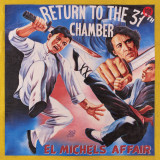
The wait is over, Return To The 37th Chamber is El Michels Affair's highly anticipated follow up to 2009's underground cult classic Enter the 37th Chamber. Churning out classic records since then for the likes of Lee Fields, The Arcs, The Shacks, and tons more, it is clear that EMA's signature sound is stronger & sharper than ever. This time, in addition to re-interpreting the Wu compositions for a live band, EMA pays homage to the production and sonic fog that makes a RZA beat so recognizable. Producer and bandleader Leon Michels recorded the album completely analog, sometimes hitting 6 generations of tape before it was ready for mixing, giving the Return to The 37th Chamber it's own hazy sound. Adding to the unique fidelity, the record is laced with psychedelic flourishes, John Carpenter' synths, heavy metal guitars, triumpha0nt horns, and traditional Chinese instruments that make up for the lack of the Wu's superlative vocals. From start to finish it's a dark trip that walks the line between RZA's timeless hip-hop aesthetic and the cinematic soul EMA has become known for. El Michels Affair tackles some classics like 4th Chamber and Wu Tang Aint Nuthin to Fuck Wit, as well as some deeper cuts like Ol Dirty Bastard's Snakes, Raekwon's Verbal Intercourse, and Shaolin Brew, Wu-Tang's contribution to the St. Ide's Hip Hop endorsement campaign from 1994. This time El Michels brings some of the Big Crown family along for the ride. Lee Fields handles vocal duties on Snakes and is joined by Shannon Wise of The Shacks for their version of Tearz, which pays as much homage to the Wendy Rene sample as it does to the Wu-Tang Clan. Lady Wray makes an appearance on the cover of Method Man's hit, All I Need, lending her vocal prowess to what gave the Wu one of their biggest hits of all time. Interspersed throughout the record are some original interludes that are like the rug that ties the room together,' giving Return To The 37th Chamber a cinematic narrative that makes it a proper El Michels Affair record and not just a collection of covers. From the music to the presentation, this album is a perfect example of what can only be achieved through diversity. The end result is as much a kaleidoscope of influences and multiculturalism as the city it was recorded in. El Michels Affair is once again, sounding out the city' that raised them, pulling elements of art and culture from across the country and around the globe to create an album truly unique in it's own right.
Emerging producer Très Mortimer dishes out eight huge heaters on the highly-anticipated ‘M1 City’ release, a dedication to the mighty Korg M1, coming to Seth Troxler’s Slacker 85 on 25th October.
Kicking off ‘M1 City’ is the simplistic, but refined and booth-rattling ‘Work That Body’. A crisp M1 stab is the main character in this, amplified by thunderous and high energy drums.
Then there’s ‘Secrets’, a house jam inspired by the likes of MK that utilises TR-909 drums, a subtle rolling bassline, intimately whispered and soulfully sung vocal shots, and, of course, classic Korg M1 synth stabs. Together with dramatic contemporary builds, a highly danceable house smasher is formed.
‘No More’ is pure gasoline for the dancefloor. Très pairs another barrage of clean M1 stabs with a rousing vocal sample that leads into, with the help of a rolling snare, another highly effective house drop. Following the extremely saucy ‘Big Daddy’ skit, we’re dropped straight into ‘One Of Those Nights’, a show-stopping track complete with cutting, sharp stabs, a bulging bassy synth and a West Coast-esque synth sound.
‘Bitch I’m From Chicago’ feat. Gleebz is, as the title suggests, a dedication to the city where house music found its name. Batting off all the poser cities like LA and Miami in the sassy lyrics, it embodies the spirit of Chicago with hefty kick drums and weighty chord stabs.
At the tail end of the release, ‘Let Me Go’ and ‘Love’ (featuring vocalist 7000 (7K)), bring things to a rousing emotive close. Both tracks see Très put clean vocals over piano riffs, giving off differing moods – the former is euphoric, the latter melancholic. Synths bubble beneath, and each track funnels their own respective house grooves, resulting in two tracks fit for both the dancefloor and headphones.
Très Mortiner explains: “The M1 sound is classic. It automatically transports you back to those timeless house songs that never get old. For me, house music is all about connection. People experiencing a little moment of euphoria together when they hear a riff that they all know on the dance floor. That’s what it’s all about. With this project I wanted to tap into that 90s rave sound and spirit. I wanted it to sound like the OG Chicago rave scene.”
“M1 City is my first project to be released on vinyl. I think vinyl is very much alive. It’s essentially for music connoisseurs now. I don’t expect people to have a vinyl collection when all music is always available to everyone on their phones. Nevertheless, I love the idea of some random DJ finding this record in a shop in 10 years. Who knows what I’ll be producing then?”
Très Mortimer is a key figure in Chicago's house scene, steadily building a strong following with his no-nonsense, dancefloor-driven sound. Drawing inspiration from his Polish roots, Trés has signed with major labels like Mad Decent, Insomniac’s IN/Rotation, and Ministry of Sound, while also launching his own imprint, Optics Records. He made his mark with a clever rework of Zombies' 1968 hit ‘Time Of The Season’ (1M+ streams). Standout releases include his downtempo collaboration with plumpy, "BAMBU," and his latest single, "At Night I Think Of You," which was recently given a remix makeover by Seth Troxler and Nick Morgan.
Slacker 85, launched in 2023, is the record label behind ‘M1 City’. Founded by Seth Troxler, it aims to give a platform to "oddball, esoteric and diverse sounds," positioning itself as a counter to the polished, refined dance artists dominating the scene. Troxler, upon the label’s launch, declared that he wanted to create something for "the anti-hero, the kids who could have done it but didn’t care to try”—essentially, "the slacker." So far, it’s delivered a range of releases from artists like Jackmaster, Danny Daze, Dan McKie, and Andre Salmon, offering tracks rooted in house music's past but evolving within its present boundaries.
‘M1 City’, this ode to a piece of gear that consistently finds itself at the heart of house music history, highlights Très Mortimer’s respect for and knowledge of the scene and its key gear. Trè combines this admiration and inspiration of house music’s greats with a modern sensibility, resulting in eight tracks worthy of today’s dancefloors and today’s ravers.
Bassline veteran and all-round soundsystem sorcerer Marcel Deptford lands on Sneaker Social Club with two ruff-n'-tuff rave-n'-b re-flips that run as a prelude to big things to come.
This is the first time you will have heard a record under the name Marcel Deptford, but he's got serious skin in the game with an imposing history in the legendary bassline scene from the late-00s. His records as DS1 are the stuff of legend for anyone keyed into the Niche-centric sound, but more recently he's put out some serious heat as Haider running his own Breaker Breaker label and popping up on Aus and the like.
If you're a fan of millennial RnB there's every chance you'll recognise the vocals that breathe life into Deptford's two tracks for this Sneaker release. Moving beyond simple edit territory, the voices are bedded deep down into gritty rave productions that boast the kind of dirt bag sonics that call straight back to the OG days of breakbeat hardcore. 'Rock The Boat' has bloated bass pushing into the red, clattering breaks chopped up with a rugged swagger and a dreamy, haunted dose of dub poured all over the vocals.
'Make It Hot' has a lighter, swung feel which nods to garage, but there's still plenty of weight on the low end. Once the lead vocal sample steps back to open up the space, Deptford's knack for strong melodic hooks comes through in a blown out arp line which the bassline dutifully follows.
Hitting every sweet spot from the low-down dirty rave receptors via moody head-nodding restraint on to iconic vocals, Marcel Deptford shows exactly what he's capable on this release ahead of a more extensive dive into his legacy, due further down the line.
Another sad example of how unfair the music business can be. According to some sources, in June 1990, just a few weeks before Enigma's hugely successful track "Sadeness (Part I)" was released, Hartmut Gawehn (one half of Sloopey G.) brought a demo tape of „Domine“ to Virgin Records in Munich. The demo was quite well received, generating a great deal of interest on behalf of Virgin's A&R department. Interestingly enough, Michael Cretu of Enigma happened to have a music publishing company in the same building, just one floor above Virgin. Shortly thereafter, Enigma's "Sadeness (Part I)" was released, bearing a shamelessly striking resemblance. This "coincidence" led the production team at FURORE Studio in Düsseldorf into a long and complicated legal battle over their intellectual property, which dragged on for years — but with little success for the pioneers of this sound.
Here you can listen to the original tracks of the DOMINE production, along with a previously unreleased track from the same era. Downtempo breakbeat/house rhythms combined with religious samples and vocals — a sound that was very much ahead of its time. Get closer to God and to the truth behind the sound that helped sell so much perfume during the 90s. Must have for any true early house aficionado.
Bobbi Lu is the moniker of Lucy Ryan, born and raised in Oxfordshire in the UK, now living in Bruges after following love a few years ago. As a DIY bedroom producer, she’s released a handful of singles and is now ready with a debut album – ‘Arrow, Four’ – that will be out on 25 October. Drawing inspiration from acts like Radiohead, FKA Twigs, Jockstrap and Saya Grey, Bobbi Lu intertwines piano melodies with deep crunchy bass, electronica and samples, coming together in a dystopian and mysterious sound. As Ryan started gigging, she quickly attracted attention and went from supporting acts like The Haunted Youth and Sylvie Kreusch to playing her own headline shows and amazing festivals like The Great Escape (UK).
‘Arrow, Four’ is a collection of ten songs, written over the course of a few years, the process of each one completely different. “I guess the individual tracks have their own story, but in my head each story is just a symptom of a bigger theme, mostly inspired by the book Future Shock by Alvin Toffler. In it he talks about people’s ability to adapt having essentially a limit, and with growth accelerating could we be overloaded and experience a 'future shock'. And maybe that’s already happening, most notably in the form of mental health struggles.” “It made me think of how progression creates new challenges, an arrow going one way is pulled back by another in the opposite direction. I feel like it’s a topic more relevant than ever, especially with AI most recently. I think I use this topic to fuel my lyrics mainly as a way of forgiving myself and others, in those moments where we struggle and make mistakes, that we're all just doing our best in trying to keep up with a rapidly changing environment.” This is also reflected in the artwork by Maarten Derous. “It ties everything together. He came to me after listening to it and said something that came out for him was fragility, which at the time I completely did not think of. But he nailed it. It’s like, yes do it, be fragile and take it easy, it’s a pretty good answer to stuff being pulled in all directions.”
Limited LEMON Vinyl Edition
“Friends, they are my ticket out of this place I am in… feels like nothing more than a dirt bike vacation stop between Phoenix and San Diego.” Dirt Bike Vacation—for Worried Songs Records—explores the sonic world of the late amateur guitar player, Charles ‘Poppy Bob’ Walker, through a captivating set of instrumental songs made in the mid-1980s. Recorded on a single-track, Marantz field recorder, the project is a transportive document of Walker’s days spent as a meatpacking employee in Yuma, Arizona and the dailiness of that existence: driving to work, sitting in his backyard, walking around drunkenly, unwinding on the couch with a friend. These sketches, showing an experimental tendency, are surprisingly ahead of their time; some exhibit ad hoc tape delay (“Granite Bluffs,” “Goodbye YMCA”), while others make use of primitive overdubbing (“Continuation to Moon Doctor”). Not dissimilar to works such as Bruce Langhorne’s The Hired Hand soundtrack, Walker’s guitar playing is melodic, texturally rich and beautifully sober. On a musical tour from Nashville to Los Angeles, musician-archivist, Cameron Knowler, uncovered these songs from a series of dusty cassette tapes housed at a branch of the Yuma County Library. Originally tipped off by cryptic metadata entries found through an online finding aid, Knowler requested a sound sample and was immediately drawn in by their eerie, yet hopeful nature: “I didn’t care what they sounded like at first, but once I heard just a few seconds, I had to find out everything I could about Charles, who he was, and if he was still alive.” As it turns out, the two had miraculously crossed paths over 20 years prior when Cameron was a young boy accompanying his mother, a gem trader, on a biyearly sojourn to Quartzsite, a town 80 miles north of Yuma: “Charles, sitting down and smoking in a recliner, withdrawn, held what I now understand to be a mid-1990s Martin D-28 guitar. Unlike other old-timers, his instrument was sharply tuned and had a nice sound, even to my young and uncalibrated ears. Though his left hand showed signs of highly developed arthritis, his musical ideas were animated by a palpably deep understanding of fretboard anatomy, arrangement and harmony.” Sorting through the index cards associated with these tapes, Knowler was able to gain a detailed sense of most recording’s provenance, whereabouts and time: Walker’s Datsun pickup truck chugging along boiling hot Interstate 80, the Marine Corps Air Station parking lot, the Eastern Wetlands on the banks of the Colorado River, a fishing trip to Martinez Lake. Trying to reduce the amount of his own subjectivities coloring the work, Cameron constructed titles and track sequences by borrowing information gleaned from Charles’ handwritten notes: “I tried to organize everything by time of day, giving the listener the sense of how a Yuma day might sound and feel like, and each song title—even the record itself—is borrowed from his own words.” This proved no small task, as many notecards had to be deciphered and then coupled with their native tapes which needed extensive restoration treatments. The result is a project very much out of the blue, and one that is intensely personal to Knowler, having grown up in the same town under similar circumstances. “It feels like a part of my own journey as a guitarist reckoning with the defining marks of a gothic border town,” he remarks. “At the time I would’ve met Walker, I didn’t have much outside influence, but he has been in there all the while.” In their current form, the tracks combine to create a sonic journey that boldly contributes to the traditions of acoustic guitar soli, archival digs and field recordings all the same; most importantly, it is a creative document which shows a day-in-the-life of a man grappling with the human experience under a ubiquitous Yuma sun.
In 2007 an Italian film festival invites Mouse on Mars to score a film of their choice. The organizers claim to be able to clear the rights for any movie the band chooses. Werner Herzog’s fictional documentary Fata Morgana, which merges footage of several desert explorations by Herzog and his team into one continuous association, has long been a band’s favorite. The film comes with a soundtrack by Mozart, Leonard Cohen, Third Ear Band and field recordings. Andi Toma and Jan St. Werner are sent a DVD to Düsseldorf and start working. The idea is to score the film in real time so instrumentation has to be readily at hand: guitar, percussion, electronics, mouth harp, pedals, software, tapes, samplers. Once the arrangement for the three-part film is sorted Mouse on Mars bring their score to stage. Herzog Sessions is performed twice: first when the band still thought the rights had been cleared, and a second time at London’s Southbank Center knowing that Herzog would have never approved a new score.
--
Mouse On Mars – London Queen Elizabeth Hall soundtracking Werner Herzog.
By Mike Diver, 24.04.2009
Filmed in 1971, Fata Morgana is perhaps not one of Herzog’s best-known works (think Grizzly Man, Rescue Dawn, et cetera…), but then Mouse on Mars have never been ones to embrace the mainstream, quietly letting their modern, experimental take on krautrock do the talking over the years, thus producing some quietly brilliant electronica that far outweighs their modest profile.
The film itself is not altogether dissimilar to the wonderful, Phillip Glass-scored Koyaanisqatsi, with sweeping landscape shots and no obvious plot or narrative, though Fata is concentrated purely in one place – in and around the Sahara Desert, switching from images of barren wasteland to desert tribes and dead, skeletal cattle.
The obvious thing to do when soundtracking such powerful imagery is to vie for dreamy electronic soundscapes which can be sustained for a long period, and whilst this ambient shoegaze approach was present and correct (also carefully constructed and highly effective), Mouse on Mars added a human element to the performance, incorporating a live dimension by using and looping guitars, harmonicas, processed vocals and even a live horn player (quite possibly a flugelhorn. Look it up if you don’t believe me) for the final section of the film.
Some of the most interesting points arose when the duo suddenly switched from solemn, ambient tones to glitchy, bouncing electro (reminiscent of their more upbeat work) whilst on the same film shot – causing the audience mood to flick from tripped-out bliss to attentive semi-wired, utterly subverting any idea of a narrative the film may have possessed. Clever stuff.
Ranging from sinister to surreal to humorous, all the moods portrayed in Fata Morgana were successfully matched by Mouse on Mars’ live rescore – no mean feat. The duo also went above and beyond the call of duty with their own soundtrack, adding a fascinating personal signature to an already unique film.
THE DYNAMICS • DRAG’N'FLY
by VINCENT HELLO.
Jamaica, 1960s. Ska artists, rock steady and reggae take back some soul songs of the United States, thus giving their versions that will in turn become future classics. The hits of the moment are also seasoned with Jamaican sauce, no matter where it comes from Original, pop, country, jazz... The rhythms of the island permanently transform the tracks of origin. In 2024, with their third album called Dragn'fly and decorated with a beautiful dragonfly (a "dragonfly" so in the language of King Tubby) the Dynamics honour Jamaican tradition and dynamite 10 versions of hits from yesterday and today. The Dragonfly spread his wings reggae, soul, funk to land in all headsets at the heart of good stereos and on spicy dancefloors. Because this dragonfly is a true superfly that speaks to the heart... and legs.
After two albums whose success led them to walk the globe of Glastonbury in Tokyo, honoured by the large elders (the first part of Lee Perry here, a regular dj support of Don Letts over there) the Dynamics are alive so their 'soul reggae vocal sound system” in front of audiences specializing in Jamaican or to those who are who were lucky enough to meet them by chance in Chemical Brothers... or Lady Gaga.
The Dynamics have forgotten the weight of ancestors to make their own recipe. They proclaim it, they are Sound System! The voices of Mounam, Steve Levi and Mr Day are in the front row, so making lovers, preachers, crooners and crooners to Turns of Duty, while Fab Master Flab all in one of the roots and futuristic echos. But if the mind is a sound system, the dynamics sounds also as a group through instruments live performances that plunge the tracks into a fervor unique. And then there are the hits, so, from all times and of all styles.
The low rider becomes toaster and leaves the road a American carried by these vocal harmonies Sky to take the exit Kingston. On the roadside, the joker delivers his lovers soft rock after a small detour to Muscle Shoal, The time to borrow a guitar from Duane Allman. In the south again, Mounam “Mrs Dynamics” meets the spirit of «Mr Dynamite» and tells him his radical, soul version. “ man’s world...” inna digital style! The spiritual anthem “you got to have freedom” by Master Pharoah Sanders becomes a universal skank, pop and dub who sends resounding high its universal message Dance! The dynamics are mutating the classic of ESG into a small, minimal pop bomb that is not without resemblance to the Neptunes of Mr Pharell Williams. On the edge of the track, Peter Gabriel sees his “Sledgehammer” groover as he does could imagine it and dissolve into sublime soul scrolls. Later, “After laughter...” soul classic celebrated and sampled Born into a rock steady air promised also to eternity. JJ Cale’s "cocaine," leaves its on the dancefloor for a reggae disco version, necessarily! And then, we must conclude. So it’s time to send an original title. It will be "Rubba Sub", to the aromas of sleng teng, which proves that far from the hits, the Dynamics deploys same layouts to deliver fresh and authentic sounds. And when the dub echoes evaporated, that the riddims have been silent, only remains an album majestic, in turn a future classic, full of unique Dynamics sound that mixes with instinct the echoes of yesterday to its own voices today.
Repress!
The seventh release on M.A.D Records - label bosses Make A Dance are back.
The El U Vee E.P sees the London duo serve up an eclectic mix of influences from across the board. ‘Cool Girls’ opens with italo arps, gated snares and seductive vocal samples. Title track ‘El U Vee’ follows, blending house heat with a dash of Latin spice. This is a love-song body groover.
Flip it over and find the percussive basement jam ‘Oh Yeah’, before ‘No Way Out’ rounds off the EP with an acid tinged, new beat blend of M.A.D.ness.
‘Expansions’ reaches its 50th anniversary of recording this year. The ground-breaking jazz funk track is one of the most influential records in club music, being a dancefloor hit in the UK and New York on release, and going on to be a foundation piece for club culture.
It has been sampled, quoted and remade and now for the first time the full length version is available on a 7-inch single. It is paired with ‘Cosmic Funk’