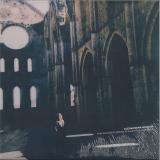
Genre-defying producer, DJ, and Disco Halal founder Moscoman returns with Caviar, his most ambitious album yet. Moving beyond the club, Caviar is built for live performance - blending indie, shoegaze, and grunge influences with real instrumentation, deep emotion, and a sense of movement.
Featuring collaborations with COMA, SCUDFM, Tom Sanders, Justin Strauss, The Golden Dreggs, and Talee, the ten-track album was written between LA and Berlin, shaped by experimentation, travel, and reinvention. With echoes of The Cure, The Smiths, and Cocteau Twins, Caviar merges nostalgia with Moscoman’s signature “happy-sad” sound, crafting something both raw and refined.
quête:san dee
Furthering the passionate exploration of cinema that has guided her two previous LPs - 2017’s ‘Fassbinder Wunderkammer’ and 2020’s ‘I Should Have Been a Gardener’ - the Milanese guitarist/composer, Alessandra Novaga, returns to Die Schachtel with ‘The Artistic Image Is Always a Miracle’, two sides off shimmering, tense compositions – culminating as one of her most creatively ambitious and conceptually rich outings to date – freely inspired by the life and work of the Russian director Andrej Tarkovsky and the music of Johann Sebastian Bach.
Classically trained at the Musik Akademie in Basel, Switzerland, over the last decade Alessandra Novaga has emerged as one of the leading figures within northern Italy’s thriving new, experimental, and improvised music scene, rendering striking solo efforts, in addition to collaborations with Loren Connors, Stefano Pilia, Elliott Sharp, Nicola Ratti, Paula Matthusen, Sandro Mussida, Kid Millions, Travis Just, Francesco Gagliardi, and others. Remarkably ambitious and forward thinking, her approach to the guitar embarks upon a relentless deconstruction and rethinking of her instrument’s unique properties through distinct applications of structure, resonance, space, and tone, creating in a deeply personal and emotive music, seeking narrative and meaning within the abstractions of sound.
In 2017, with the LP, ‘Fassbinder Wunderkammer’, issued by Setola Di Maiale, Novaga embarked upon the exploration of her love of film. Having begun with Rainer Werner Fassbinder, this was followed in 2020 by Die Schachtel’s release of ‘I Should Have Been a Gardener’, a deeply intimate mediation on the life and work of Derek Jarman. Rather than focusing on a fixed point of inspiration or a single film to work from, these pieces achieve a form of abstract portraiture, distilling elements drawn from these filmmaker’s life and work into ambient networks of texture and tonality. ‘The Artistic Image Is Always a Miracle”’ freely inspired by the Russian director Andrej Tarkovsky and the music of Johann Sebastian Bach, finds Novaga radically expanding her sonic palette within this approach.
The seeds of ‘The Artistic Image Is Always a Miracle’ can be traced to a conversation that Novaga had with Alan Licht (contained in the highly regarded Common Tones: Selected interviews with artists and musicians 1995–2020, Blank Forms, 2021), relating to the connections between music and cinema, which led her to consider Andrej Tarkovsky’s use of Bach's music within a symbiotic framework: how the music illuminates the imagism of the films, and the film illuminates new dimensions of the music. Slowly developing over the subsequent years, the resulting album comprises six individual works, some of which draw directly upon pieces of Bach’s music that Tarkovsky used in his films – specifically 'Erbarme dich, Mein Gott', 'Das alte Jahr vergangen ist', and 'Ich ruf zu dir, Herr Jesu Christ' - while others draw upon the sensibilities and moods evoked in the imagination by the director’s films.
As a point of departure and illumination into the process and spirit that underscored the creation of the album, Novaga points toward a passage in Tarkovsky’s "Sculpting in Time”:
“Art is born and takes hold wherever there is a timeless and insatiable longing for the spiritual, for the ideal: that longing which draws people to art. Modern art has taken a wrong turn in abandoning the search for the meaning of existence in order to affirm the value of the individual for its own sake. What purports to be art begins to look like an eccentric occupation for suspect characters who maintain that any personalized action is of intrinsic value simply as a display of self-will. But in artistic creation the personality does not assert itself, it serves another, higher and communal idea.”
‘The Artistic Image Is Always a Miracle’ can be understood as a realisation of the collectivism of which Tarkovsky speaks, in the service of something far beyond the expression of self. Encountering Novaga moving into fairly uncharted waters, three of the album’s pieces incorporate the human voice we encounter the voices of others: that of the poet Arsenij Tarkovsky, the director’s father; a singer from Bach’s ‘Erbarme dich, Mein Gott’, capturing a broadcast in an underground parking lot, and Novaga’s own, rendering the melody from Bach’s “Ich ruf zu dir, Herr Jesu Christ”. Roughly alternating between solo excursions on guitar and bristling electroacoustic pieces, over the course of the album’s two sides Novaga weaves one of her most abstract and ambitious bodies of recordings to date, shifting between the complex tonal mediations generated by the six strings of her instrument, and phycological densities activated by the expanded pallet of sonority made possible by the tactics and approaches of musique concrète.
An immersive, deeply engaging meeting of beauty and melancholy within a labyrinth of voices and ideas, ‘The Artistic Image Is Always a Miracle’ transfigures the life and work of Andrej Tarkovski – one of the greatest auteurs in the history of cinema – into a singular, experimental statement of collective truth. Belonging to recent, ambitious stream of contemporary new music releases on Die Schachtel that’s already included Novaga’s ‘I Should Have Been a Gardener’, Stefano Pilia’s ‘Spiralis Aurea’, Jim O'Rourke & Giovanni Di Domenico’ ‘Immanent In Nervous Activity’, Claudio Rocchetti’s ‘Labirinto Verticale’, and Damāvand’s ‘As Long As You Come To My Garden’, among others, ‘The Artistic Image Is Always a Miracle’ is available on as a limited edition of 300 dark turquoise vinyl LPs released on June 21, 2024. The LP, designed by Bruno Stucchi / dinamomilano, comes with an 8-pages insert illuminated by Alessandra’s text as well as the lovely and intense photographs of Matilde Piazzi.
* Das Rilke Projekt - Europas erfolgreichstes Poesie Projekt * Von den Schöpfern und Produzenten Schönherz & Fleer * Ausgezeichnet mit dem Internationalen Buchpreis Corine des Nachrichtenmagazins Focus * Nominiert für den Deutschen Hörbuchpreis in der Kategorie: Innovation * Seit vielen Jahren mit großem Erfolg in Deutschland auf Tournee mit renommierten Schauspielern und Musikern * Das in den letzten 25 Jahren mehrfach mit Gold ausgezeichnete Projekt mit großen Künstlern * Nach bislang 6 Alben – Jetzt die große Retrospektive zum Jubiläum + brandneue Musik! * 150 Jahre Rilke + 25 Jahre RILKE PROJEKT! * Das neue Album „So viel Himmel“ mit Highlights aus 25 Jahren * Mit vier brandneuen Songs von Florian Künstler, Roland Kaiser, Madeline Juno & Laith Al-Deen * Zu den weiteren Albumgästen der Retrospektive zählen Iris Berben, Peter Maffay, Otto Sander, Nina Hagen, Jürgen Prochnow, Hanna Schygulla, Udo Lindenberg, Till Brönner, Dietmar Bär, Ben Becker, Hannah Herzsprung, Hannelore Elsner, Katja Flint und Sol Gabetta.
Demuir marks an inaugural release on Hot Creations with High. Alive. And Dirty., a
diverse four track EP made up of all original records.
The EP opens with Santa and The Elf. A penetrating bassline ratchets up and down, as horn
like synths whir occasionally in the background, alongside tassel-like hi-hats. Up next, the title
track High. Alive. And Dirty. provides stunning contrast. A happy, funk-fuelled number, the
track incorporates disco elements with “positive and soulful vibes”, before Rawness - Beat 3
features a “raw native structure”, bongo sounding drums and tropical vocals to from a well-
rounded, feel-good record. Eerbawdy Wants to Deeezsko rounds off the EP in fine form, with
more disco elements and chiming, emotional keys.
Canadian-based Demuir is a distinctive talent in the electronic music sphere. A prolific
producer, Demuir has already made a home on labels including I’m A House Gangster as well
as Cassy’s Kwench Records, whilst he is soon set to release on Loco Dice’s iconic Desolat
imprint.
- Hot Rotten Grass Smell
- Bull Believer
- Got Shocked
- Formula One
- Chosen To Deserve
- Bath County
- Quarry
- Turkey Vultures
- What's So Funny
- Tv In The Gas Pump
END[GER] Die Band Wednesday aus Asheville, North Carolina errichtet im Laufe der zehn Songs von "Rat Saw God" einen Schrein voller aufregender Details: Halb lustige, halb tragische Botschaften aus den Südstaaten, die sich klanglich irgendwo zwischen dem wimmernden Skuzz von Neunzigerjahre-Shoegaze und klassischem Country-Twang entfalten - mit verzerrter Pedal Steel und Frontfrau Karly Hartzman, die mit ihrer Stimme, den Lärm durchschneidet. Ein Song von Wednesday ist wie ein Quilt. Eine Kurzgeschichtensammlung, eine verschwommene Erinnerung, ein Flickenteppich aus Porträts des amerikanischen Südens, der disparate Momente einfängt und als Ganzes doch irgendwie einen Sinn ergibt. Karly Hartzman, die Songschreiberin, Sängerin, Gitarristin und Leiterin der Band, ist eine Geschichtensammlerin als auch eine Geschichtenerzählerin: Eine aufmerksame Beobachterin von Menschen und witzigen Bemerkungen. "Rat Saw God", das neue und beste Album des Quintetts aus Asheville, ist ekphrastisch, aber ebenso autobiografisch und vor allem sehr einfühlsam. Es wurde in den Monaten unmittelbar nach der Fertigstellung von dem zweiten Album der Band, "Twin Plagues", geschrieben und innerhalb einer Woche im Drop Of Sun Studio in Asheville aufgenommen. Die Songs auf "Rat Saw God" erzählen keine Epen, sondern das Alltägliche. Sie sind lebensnah, erzählen vom wahren Leben, sie sind verschwommen und chaotisch und seltsam zugleich - was Hartzmans eigenem Ethos entspricht: "Everyone's story is worthy. Literally every life story is worth writing down, because people are so fascinating." A Wednesday song is a quilt. A short story collection, a half-memory, a patchwork of portraits of the American south, disparate moments that somehow make sense as a whole. Karly Hartzman, the songwriter/ vocalist/guitarist at the helm of the project, is a story collector as much as she is a storyteller: a scholar of people and one-liners. Rat Saw God, the Asheville quintet's new and best record, is ekphrastic but autobiographical and above all, deeply empathetic. Across the album's ten tracks Hartzman, guitarist MJ Lenderman, bassist Margo Shultz, drummer Alan Miller, and lap/pedal steel player Xandy Chelmis build a shrine to minutiae. Half-funny, half-tragic dispatches from North Carolina unfurling somewhere between the wailing skuzz of Nineties shoegaze and classic country twang, that distorted lap steel and Hartzman's voice slicing through the din. Rat Saw God is an album about riding a bike down a suburban stretch in Greensboro while listening to My Bloody Valentine for the first time on an iPod Nano, past a creek that runs through the neighborhood riddled with broken glass bottles and condoms, a front yard filled with broken and rusted car parts, a lonely and dilapidated house reclaimed by kudzu. Four Lokos and rodeo clowns and a kid who burns down a corn field. Roadside monuments, church marquees, poppers and vodka in a plastic water bottle, the shit you get away with at Jewish summer camp, strange sentimental family heirlooms at the thrift stores. The way the South hums alive all night in the summers and into fall, the sound of high school football games, the halo effect from the lights polluting the darkness. It's not really bright enough to see in front of you, but in that stretch of inky void - somehow - you see everything. The songs on Rat Saw God don't recount epics, just the everyday. They're true, they're real life, blurry and chaotic and strange - which is in-line with Hartzman's own ethos: "Everyone's story is worthy," she says, plainly. "Literally every life story is worth writing down, because people are so fascinating." But the thing about Rat Saw God - and about any Wednesday song, really - is you don't necessarily even need all the references to get it, the weirdly specific elation of a song that really hits. Yeah, it's all in the details - how fucked up you got or get, how you break a heart, how you fall in love, how you make yourself and others feel seen - but it's mostly the way those tiny moments add up into a song or album or a person.
Berlin musician and DJ Nastia Reigel presents her debut solo album, Identity, on Function's legendary Infrastructure New York imprint. Following a constant output of EPs on heavy-hitting techno labels like fabric, Rodhad's WSNWG and Token, and playing regularly at the likes of Berghain, Reigel now returns with new music that pushes deep into the core of her craft. She has honed and sharpened her sound into something sleeker and more uninhibited. Identity embodies the core of Nastia's production DNA, showcasing her as a powerful and precise engineer. These eight new tracks, mixed by herself, all offer something distinct and carry her unmistakable signature. Much like human identity itself, the album explores contrasting layers of tension, groove and mood, oscillating from hypnotic rollers to peak time intensity with ease. It is both a personal artistic statement and a DJ-ready techno toolkit for fans of Function and Sandwell District.
Fabio Nobile is a drummer and multi-instrumentalist who has been active on the music scene for over 25 years. Today, his musical
exploration draws from the deep roots of Afro traditions and the expressive freedom of jazz—two musical cultures that are an integral
part of his identity.
Sankofa Soul is a musical project born from the encounter between jazz, African traditions, and the search for a profound connection
between past and present. The term “Sankofa” comes from the Akan language (spoken in Ghana) and means “to go back and fetch what
is good” —an invitation to look to the past to better understand the future.
In an era where music is evolving at a rapid pace, Sankofa Soul looks to a rich and multifaceted cultural heritage, while also embracing a
modern voice—a universal call to reconnect with our European origins through the lens of African legacy.
Each track on Sankofa Soul reflects Fabio Nobile’s experiences, studies, and roots, forming a dialogue between past and present, the
sacred and the profane, individuality and community.
Sankofa Soul is a heartfelt tribute to West Africa, with a special focus on Nigeria.
Zuma Rock leads us into the rich and ever-changing soundscape of West Africa—a space where tradition meets innovation, and rhythm
tells stories older than words. Here, the legacy of Fela Kuti’s Afrobeat pulses through every beat, anchoring the music in political fire and
deep ancestral roots. At the same time, the unmistakable horn section weaves a vibrant fusion of Afro-Funk and Jazz. In Zuma Rock, we
enter a dialogue between past and present—a musical return to the source.
And then appears Kalakuta Republic, a heartfelt homage to the self-declared commune that was home to the legendary Fela Kuti—a
reminder not to forget the rebellious spirit of the Kalakuta Republic. This track gives voice to the very essence of Afro-jazz, wrapped in a
hypnotic 12/8 rhythm that echoes ancient African traditions. Its immersive pulse blends seamlessly with jazz’s boundless expressive
freedom, creating a vibrant, compelling dialogue suspended between ancestral roots and modernity.
Landed in Lagos and I Read the Stars naturally embrace the distinctive sound of Manu Dibango, while Say Your Prayer Now reminds us
how the evolution of Jamaican reggae—and its cultural and musical foundations—remains deeply linked to Mother Africa.
This is Sankofa: the soul’s journey back to the past to move forward.
Ryan Silva, known professionally as Plato III, is an American rapper, producer, and songwriter. He is recognized for his introspective lyrics, fusing personal narratives with sharp insights on race, class, and identity. His music blends hip-hop with influences ranging from indie rock to r&b and funk, creating a sound that is both boundary-pushing and deeply rooted in his experiences.
After self-releasing several projects throughout the 2010s, Plato III gained wider attention with his 2022 Polyvinyl debut, The Devil Has Texas, a vivid exploration of his trailer park upbringing in West Texas. On his new album, Grown, Silva pushes his artistry even further, with a more pop-forward approach that showcases his innovative sound and compelling storytelling. Produced by Phillip Odom (Militarie Gun, Say Anything), Grown features Silva’s most mature work to date, examining the weight of responsibility and aging under the strain of capitalism. Musically, the album bridges modern rap with "grown folks music," drawing inspiration from the soul of Al Green and Marvin Gaye to the funk and boogie of Prince and Earth, Wind & Fire. Grown offers a fascinating look at Silva’s reflective inner dialogue, cementing his status as one of contemporary music’s most original voices.
François and Sylvain Rabbath have turned six years of touring into a joint album that patiently and intensely distills a variety of musical flavors gathered from around the world.
Since the early 1960s, François Rabbath's double bass has resonated through enough landmark recordings to fill several shelves in a record collection. As an arranger, composer, and musician, his imprint on music goes far beyond his collaborations with Barbara, Paco Ibáñez, Charles Aznavour, or Édith Piaf. Aspiring double bassists owe him a groundbreaking method for learning the instrument. Born into a lush musical universe that quickly became his own, his son Sylvain first accompanied him on his travels before settling at the piano and sharing stages around the world at his side.
Those years of accumulating visas in their passports were put to good use by father and son. The continents, countries, and cities they passed through became a rich source of inspiration for composing Amall, the album by the Rabbath Electric Orchestra.
Long hours spent in the air or on the road, watching passing landscapes that never stayed the same, were transformed into compositions imbued with the atmospheres of the places they crossed or visited. Inspiration sometimes struck with force, like a green oasis appearing in a desert of stone—unexpectedly, as glowing red rocks suddenly dominated an otherwise open landscape with an endless horizon, while the mind wandered into a state between meditation and introspection.
Born from these travels, the pieces took on their final colors once brought into the studio, refined, and finally arranged to welcome the guitars of Keziah Jones and Matthieu Chedid, the piano of Laurent de Wilde, the bass of Victor Wooten, the saxophone of Raphaël Imbert, and the percussion of Minino Garay. Enhanced by the scale of the jazz-soul orchestrations, by the richness of arrangements bursting from strings, brass, rhythms, or keyboards, the epic breath of vast plains became ingrained. The urban tension of funk, echoing their movements, found its place—alongside more electric expressions or the ambience of a darkened room.
Melancholic and melodious, expressive and edgy, the bowed double bass—played in the high register where few dare to go—emerged as the musical guide. One that draws a path between Seville and Minneapolis, connects François Rabbath's native Syria to France, and bridges South America to Europe. It sets the tone to follow—the emotion that will carry the piece, and if not filled with light, will carry it there nonetheless.
Musical visions packed in luggage, transported in cargo holds, or imprinted in their minds just long enough to cover the distances to the next stop—father and son deepened their bond, beyond family and art. And their hands have never held each other more tightly.
François et Sylvain Rabbath ont fait fructifier six ans de tournées pour un album commun distillant patiemment et intensément la variété de parfums musicaux récoltés autour du monde.
Depuis le début des 60’s, la contrebasse de François Rabbath résonne dans assez de références pour combler plusieurs étagères d’une collection de disques. Arrangeur, compositeur, musicien, l'empreinte laissée dans la musique va bien au-delà de ses collaborations avec Barbara, Paco Ibanez, Charles Aznavour, ou Edith Piaf. C’est à lui que les
apprentis contrebassistes doivent une méthode novatrice pour apprendre l’instrument.
Né dans un univers musical luxuriant qui est vite devenu aussi le sien, c’est d’abord dans ses voyages que son fils Sylvain l’a accompagné, avant de s’installer au piano, et parcourir les scènes du monde à ses côtés. Ces années où les visas se sont entassés sur leurs passeports, père et fils les ont mises à profit. Continents, pays, et villes qui se sont succédés sont devenues un gisement pour composer Amall, l’album du Rabbath Electric Orchestra.
Les longs moments passés dans les airs ou sur la route à contempler un paysage qui défile sans pour autant rester le même, se sont convertis en compositions habitées par les ambiances de ces endroits traversés ou visités. Là où l’inspiration s’est imposée parfois brutalement, sous
la forme d’un oasis de verdure surgissant au milieu d’un désert de pierres. Au hasard d’imposantes roches rougeoyantes s’invitant dans un paysage jusqu’alors dégagé sur un horizon sans fin, quand l’esprit se laisse aller à un mélange de méditation et d'introspection.
Nés de ces pérégrinations, les titres ont pris leurs couleurs définitives une fois ramenés en studio, peaufinés puis, enfin, pensés pour y inviter les guitares de Keziah Jones et de Matthieu Chedid, le piano de Laurent de Wilde, la basse de Victor Wooten, le saxophone de Raphaël Imbert, les percussions de Minino Garay. Sublimé par la dimension des orchestrations jazz-soul, par la richesse des arrangements jaillissant des cordes, des cuivres, des rythmiques ou des claviers, le souffle épique des plaines immenses s’est imprimé.
La nervosité citadine du funk rythmant les déplacements a trouvé sa place, non loin d’une expression plus électrique ou d’une atmosphère de salle obscure.
Mélancolique et mélodieuse, expressive et nerveuse, la contrebasse jouée à l’archet, dans les notes hautes du manche où peu s’aventurent, s’est érigée en guide musical. Celui qui trace le chemin entre Séville et Minneapolis, relie la Syrie natale de François Rabbath à la France,
réduit la distance entre l’Amérique du Sud et l’Europe. Donne la note à suivre, l’émotion qui traversera le morceau qui, s’il n’est pas habité par la lumière, le portera néanmoins jusque là.
Visions musicales mises dans le coffre, transportées en soute ou imprimées dans l’esprit le temps de couvrir les distances qui les mèneront aux prochaines, c’est côte à côte que père et fils ont prolongé leur lien par delà des seules limites familiales et artistiques. Et leurs mains ne se sont jamais serrées aussi fort.
credits
Back in 2020 we released the original of ‘Oliver Dollar & ADMN feat. Mr. V - Sanctuary’ on Industry Standard.
The original is a sublime track with a nod to a vintage deep house sound. ’Sanctuary’ features Mr. V’s spoken word vocal over a slick rhythm section, lush chords stabs, and ethereal synth pads.
Fast forward to 2025 and we are delivering a vinyl release featuring the original mix, and 2 new remixes from France’s DJ W!ld, and Detroit’s Bendersnatch.
DJ W!ld comes with a deep, rolling take on the track, with a low slung baseline, and trippy breakdown that will wig out the dance floor. Bendersnatch take their version into trackier territory with a heavy kick, stripped back vibe and FX on the vocals that give this version another dimension to the package.
The vinyl release will proceed this come some months before we release these remixes digitally, so get them while they are hot on wax!
Book[37,40 €]
In the final month of 2024, Meitei arrived in Beppu, a city long steeped in vapor, myth, and mineral memory. Invited to create onsen ambient music commemorating Beppu’s 100th anniversary, he immersed himself in the city’s geothermal psychogeography, where sound rises from the ground and time clings to mist.
Known for his Lost Japan (Shitsu-nihon) works, which channel forgotten eras into flickering auditory relics, Meitei took residence in the warehouse of Yamada Bessou, a century-old inn perched by the bay. Over two weeks, he listened intently to steam, to stone, to the atmosphere itself. The resulting work, Sen’nyū, traces the inner spirit of onsen culture. Like water finding its path, the music emerged with quiet inevitability, shaped by Meitei’s synesthetic sensibility and deep attunement to place.
Equipped with a microphone, he wandered Beppu’s sacred sites: Takegawara Onsen, Bouzu Jigoku, Hebin-yu, and the private baths of Yamada Bessou. There, he captured the breath of the springs, bubbling mud, hissing vents, wind against bamboo, and the murmurs of daily visitors. These field recordings became the sonic bedrock of Sen’nyū, an act of deep listening that attempts to render even the rising mist and shifting heat into sound.
Unfolding as a single, continuous piece, Sen’nyū drifts like fog through sulfur and stone. It traverses the veiled madness of Bouzu Jigoku, the spectral resonance of Yamada Bessou’s inner bath, and the hushed voices of Takegawara Onsen. It is a gesture of quiet reverence, for water’s patience, the land’s memory, and the hands that have bathed here for generations.
Where Meitei’s earlier works conveyed his personal impression of a fading Japan, Sen’nyū is grounded in tactile presence, music not imagined but encountered. Here, his practice moves closer to the spirit of kankyō ongaku, environmental music born from place, shaped by it, and inseparable from it.
As part of the project, Meitei conceived a two-day public sound installation inside Takegawara Onsen, culminating in a live performance. Bathers soaked in mineral-rich waters while submerged in sound, an embodied ritual of place, body, and listening.
Sen’nyū marks Meitei’s first full-length work centered entirely on onsen and opens a new chapter of his Lost Japan project under the expanded title 失日本百景 (One Hundred Lost Views of Japan), a series exploring extant sites of longing still quietly breathing within contemporary life. The album will be accompanied by Meitei’s first photo book, a visual document of his time in Beppu. A new layer is added to the world he has, until now, built only through sound.
Sen’nyū continues Meitei’s devotion to Japan as subject, while opening new terrain: both ritual and remembrance, an immersion into the mineral soul of Beppu.
180 gram pressing.
Producer, DJ, multi-instrumentalist and live performer Alek Lee returns with his second LP, an immersive instrumental journey shaped by his raw, smoky, guerrilla-style production. Cold Feet invites you deep into the Alek Lee universe, rich with swirling synths, layered percussion, Balearic guitar lines and dub-infused horns.
From the psychedelic, Sade like grooves of the title track and “Too Soon,” both steeped in cinematic mystique, to the sun drenched energy of “Pino Pino” and “The Right Thing,” which shimmer with Balearic disco flair, the album glides effortlessly across moods and tempos. A highlight arrives with the summer dub anthem “Was Was Was,” featuring long time collaborator and former Shame On Us bandmate Yovav Arzi on electric guitar.
The journey winds down with “Illusions,” a sultry, downtempo banger laced with an oriental twist, before dissolving into the final track “Cold Feet Desert”, a return to stillness, barefoot on white desert sand beneath a star strewn sky.
With a career spanning over two decades, Alek Lee has carved out a unique space in the global music scene. Known for his long, genre defying DJ sets and dynamic live performances, he moves fluidly between dub, house, and his own idiosyncratic productions. As a solo artist and through projects like Shame On Us and Project Runaway, Alek has played some of Europe’s most respected venues and festivals, including Sisyphos, Kater Blau, Glastonbury, Garbicz and Fusion. His releases have earned radio play from BBC6’s Iggy Pop and NTS’s David Holmes and featured on Peggy Gou’s Boiler Room and France’s legendary Radio Nova.
Now based in Athens, Alek continues to evolve his distinctive sound with Cold Feet, his most expansive statement yet.
- Krystal Ball
- Psychosis Is Just A Number
- Ceo Of Personal & Pleasure
- Life's A Zoo
- Red Flag To Angry Bull
- Panglossian Mannequin
- Deep Sight
- When Dogs Bark
- Crocodile Cloud
- Favorite Sun
When NYC-based experimental dance punks Guerilla Toss, active since 2011, were in Vermont recording their new full-length album You're Weird Now, frontwoman Kassie Carlson would prepare what she called 'punk lunch': a communal meal made by raiding the studio fridge for whatever was left and assembling a sandwich from the most random ingredients imaginable. Regularly joining punk lunch were two legends from their own corners of the weird music world: Stephen Malkmus (Pavement, The Jicks) and Trey Anastasio, Phish guitarist and owner of The Barn; the recording studio where Guerilla Toss were making You're Weird Now, with Malkmus in the producer's seat. Engineer Bryce Goggin, who has worked with Malkmus since Crooked Rain, Crooked Rain, and Ben Collette, Phish's longtime engineer at The Barn, were also part of the crew. While the idea of the guy from Phish and the guy from Pavement sitting around with Guerilla Toss, congenially assembling sandwiches from random foodstuffs dug up from the depths of a studio fridge, might seem absurd, it also makes total sense. Because really, if there's any band that serves as the natural bridge between slacker punks who saw Pavement way before you did, wild-eyed wooks who've seen Phish more times than you ever will, and even the eccentrics in '90s drip following former GT tourmates Primus-it's Guerilla Toss. A band so imaginative and unapologetically themselves, they're basically the real-life manifestation of a utopian, post-snob world where all musical ideas are worthy of expression and everyone is welcome. You're Weird Now powers this message. Guerilla Toss' fifth album and second for Sub Pop is a hugely creative and joyful statement about the joy of creativity. With You're Weird Now Guerilla Toss reclaim the word "weird" for everyone brave enough to let their freak flag fly and stay true to their artistic vision no matter what-a way riskier act than it's ever given credit for, and one that requires a certain amount of serene self-confidence that it takes time and effort to cultivate and sustain. And they do so with the enthusiastic support of their musical predecessors: a standout moment arrives with "Red Flag to Angry Bull," which builds to a campfire sing-along-worthy outro featuring Malkmus and Carlson duetting over a chatty, classically Phish-y (there's really no better word for it) solo from Anastasio. The band hopes the message of You're Weird Now will resonate not only with music heads but anyone who struggles with feeling weird in a world where it will always be hard to be different. At the end of the day, it's all about the spirit of punk lunch: there's room for everyone because music is for everyone. "Everyone loves and appreciates music," says Carlson. "If you don't like music, you're kind of an asshole." That's not weird-that's just true.
- A1: Floodbound
- A2: Cure Your Ills
- A3: ? | I'm No Good Without You
- A4: For A While
- A5: Golden Vanity
- A6: Rainmaker, Sunseeker
- B1: The House On The Hill
- B2: Ruby Red
- B3: She Never Sleeps
- B4: The Hanging Stars
- B5: Hang Me High
- B6: Crippled Shining Blues
- B7: Running Waters Wide
*Long overdue reissue of the first album by The Hanging Stars to coincide with their tour support slot with Edwyn Collins – initial 300 copies come with 12 x 12 print*
“In late-Sixties California, the Byrds and Flying Burrito Brothers combined traditional country music with hippy rock to great success. The influence lingered and whatever cultural relevance it has this is a delightful, transporting listen” – The Times 4/5
London-based psych-folk outfit The Hanging Stars re-release their much-loved debut album Over the Silvery Lake on Crimson Crow. Blending folk pastoralism with swampy 60s Americana, they sound like the missing link between the California desert sun and the grey skies of London Town. The album was recorded between LA, Nashville and Walthamstow, with each of these vastly different places leaving an indelible mark on the songs.
Now signed to the Loose Records label and fronted by London-based songwriter, singer and guitarist Richard Olson (The See See, Eighteenth Day of May), The Hanging Stars are essentially a loose collective of people who weave together a blissed-out psychedelic tapestry. The rest of the core band is made up of Sam Ferman on bass and Paulie Cobra on drums, Horse on pedal steel and Patrick Ralla on banjo, guitar. They jam rather than write and hang out rather than rehearse, harnessing a kind of tipsy euphoria resplendent with luscious arrangements and glorious vocal harmonies.
During 2015, prior to this album’s original release the band released two critically acclaimed singles via The Great Pop Supplement (both of which also appear on the album). “Golden Vanity” was premiered by The Line of Best Fit who said; “you'd be forgiven for thinking you'd just unearthed a rare deep cut from the late 60s/early 70s boom of psychedelia infused Americana” and “The House on The Hill” was described by The Guardian as; "a hazy, desert-dream of a song, nicely sharpened with steely-eyed guitars, Mersey-laced harmonies and just a whiff of the Gun Club”.
There are a number of allusions to nature and the weather on the album, borne in part out of the contrasting surroundings in which it was produced. The band’s fascination with Americana led them to record some of the material Stateside, laying down some of the parts at Battle Tapes Studios in Nashville (Lambchop, Paperhead), as well as at Vision Quest Studios in Los Angeles with Rob Campanella. His work with The Quarter After, The Brian Jonestown Massacre, Beachwood Sparks The Tyde, and GospelbeacH was a perfect match to capture their sound and they even had San Franciscan legend Chrystof Certik step in on lead guitar for a couple of tracks.
Following the LA recordings, a trip to the Californian desert provided the core notion of what they wanted to produce - a shard of light that they clung on to whilst recording the rest of the album in the significantly more rain-soaked atmosphere of Walthamstow, London, under the watchful eye of Brian O'Shaughnessy at Bark Studios (The Clientele, Comet Gain). As the band explained at the time: “Ultimately we hope you can hear both the sand and the rain in this record.”
The Hanging Stars place themselves firmly as part of a long folk tradition encompassing European and North American influences – as a continuation rather than a pastiche of these styles. This is the sound of a band really coming in to their own, fully formed and in no doubt of their vision. With Over the Silvery Lake they succeeded in producing a record, which has the country, blues and folk traditions at its heart.
- The Garden Spot
- Witch Grass
- Chinook
- Wading The Plain
- Open Space Properties
- Telegraph Weed Waltz
- Fracking Starlite
- Field House Deer (Mice)
- Tender Of Land
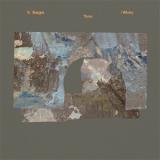
Tender / Wading zeigt Matthew Sage, alias M. Sage, in den Ausläufern und Weiden Colorados, wo er schreibt, aufnimmt und zu einem Stück seiner Heimat und Identität zurückkehrt, wobei ein Akt der Fürsorge den nächsten nach sich zieht. Das Album, das hauptsächlich auf Klavier und Klarinette aufgebaut ist und dann mit Gitarre, modularem Synthesizer, Percussion und Feldaufnahmen aus der Umgebung seines Zuhauses verziert wurde, ist eine weitreichende, ruhige Vision von Vitalität, radikaler Sanftheit und dem beruhigenden Gefühl, nach Hause zu kommen, auch wenn sich das Zuhause verändert hat. Seit den frühen 2010er Jahren hat Sage ein eigenwilliges Musikrepertoire zusammengestellt, das sich in verschiedene Klangrichtungen erstreckt, sich in Veröffentlichungen auf Geographic North, Orange Milk und Moon Glyph manifestiert und sowohl kritische Aufmerksamkeit als auch eine treue Zuhörerschaft für jede neue Wendung erlangt hat. 2023 debütierte Sage bei RVNG Intl. mit Paradise Crick, das zeitgleich mit seiner laufenden Arbeit im improvisierten Ambient-Jazz-Quartett Fuubutsushi erschien. Nun präsentiert er sein nächstes Soloalbum und seine neue Richtung. Tender / Wading folgt auf Sages Rückkehr nach Colorado nach fast einem Jahrzehnt in Chicago, wo er nun mit seiner jungen Familie dreißig Meilen außerhalb seiner Heimatstadt ein paar Hektar verwildertes Land bewirtschaftet. In einem ganzheitlichen Kontrast zu Cricks synthetischer Klangwelt schafft Sage Kunst aus dem Akt des Pflegens neuen Wachstums, hinterfragt Konstrukte des häuslichen Lebens und versteht die Spuren seines früheren Selbst durch die schmutzverschmierte, schweißvernebelte Linse der Gegenwart. Das Ergebnis ist sein bisher autobiografischstes Material, geprägt von Zeit und Veränderungen in der Wahrnehmung sowie bedeutungsvollen Details aus Sages psychischer Suche. Sage vergleicht das Gefühl, verschiedene Versionen von sich selbst zu sehen, mit der berühmten Hase-Ente-Theorie des Philosophen Ludwig Wittgenstein. ,Es ist dieselbe Zeichnung, aber je nachdem, wer man ist, wo man ist und wann man ist, sehen manche Menschen einen Hasen und manche eine Ente oder beides", erklärt Sage. Hier sind das Subjekt und der Betrachter, zurück in vertrauten Landschaften, als Partner und Elternteil, der Gestrüpp zurückschneidet, gedemütigt von invasiven Pflanzen, Schädlingsbefall und verdichtetem Lehmboden, seine Prioritäten haben sich grundlegend geändert. Und doch ist auch dieses andere Ich da: ein gewiefter Akademiker, der oft in Memes denkt und das Ziehen seines Handys in der Hosentasche spürt. ,In diesem Album geht es darum, diese Wahrnehmungsverschiebungen zu ergründen und ihnen Raum zu geben, beides zu tun: hüpfen und quaken." Es ist ein inneres Kind, das Sages intermediale Praxis in seinem Atelier leitet, einer Scheune, die nach dem großen Umzug im Jahr 2022 im Rahmen einer hausweiten DIY-Renovierung umgebaut wurde. Im Inneren werden Gedichte zu Zeichnungen, zu Skulpturen im Hinterhof und darüber hinaus, und alberne Ausflüge in den Vogelgesang oder die Freude an der Herausforderung, Klarinette zu lernen, weichen ernsthafter Musik. ,Ich glaube, ich habe entdeckt, dass es diese Linien gibt, die alles miteinander verbinden", sagt er. ,Und dieses Album ist voller hartnäckigem Optimismus und Hoffnung, aber auch der Bewusstheit, dass wir uns in einer späten Phase befinden, und dem Versuch, mit der Rhetorik dieser Phase umzugehen." Für Tender / Wading setzt Sage einen unverwechselbaren Sound ein: eine pastorale Art von Folk Kosmiche, kontemplativer elektroakustischer Barn Jazz für die Front Range, voller blasser Puddle Blues und rostigen Oil Drum Reds. Die meisten Songs entstanden auf einem 1910er Hamilton-Klavier, das kurioserweise in Chicago gebaut, von den Vorbesitzern zurückgelassen und von Mäusen bewohnt worden war. Die zufällige Begegnung mit dem Instrument fühlte sich kosmisch an, nicht nur wegen seiner Verbindung zur Windy City, sondern auch wegen Sages sich weiterentwickelnder Herangehensweise an das Songwriting nach Fuubutsushi. Er fühlt sich hinter den Tasten wohler und kehrt zurück zum Schlagzeug (seiner Jugendliebe). In einem passenden Raum für Holzblasinstrumente umarmt er das Elementare und Absichtliche und verleiht der Musik von Anfang an mehr strukturelles Gewicht und Wärme. Tender's M. Sage verbindet die Studioexperimente und Improvisationen seiner Vergangenheit mit einem geschärften Ohr für melodische Phrasierungen und Akkordwechsel und hat seine übliche Fülle an Demos auf neun finale Stücke reduziert. Seine charakteristischen Weltbilder bleiben erhalten, von Holzhauskröten, die in statischer Elektrizität schwimmen, über raschelndes Gras und Regen, der in die Dachrinnen plätschert, bis hin zu walzenden Sternbildern im Mondlicht. Während Cricks Universum aus magischem Realismus und digitaler Fantasie entstanden ist, greift Tender / Wading direkter auf menschliche Erfahrungen zurück. Er weist schnell Vorwürfe zurück, es handele sich um ein hochkonzeptionelles Album: ,Ich mache einfach die Musik, die ich selbst gerne in meinen Kopfhörern hören würde, während ich Unkraut jäte oder so." Es könnte beides sein, wie der Hase und die Ente behaupten würden: zutiefst persönlich und abstrakt, eine faszinierende und natürliche Wendung eines experimentellen Künstlers des 21. Jahrhunderts, dessen Vermächtnis sich in Echtzeit weiterentwickelt und wächst.
- A1: Talco - Noche Especial
- A2: Dj Lelewel - Piano Dub (Milord Remix)
- A3: El Latino Man - Boss En San Andrés
- A4: Ray Ridha - Non Va Bene (Luca Sorrentini Remix)
- B1: Vanitas By Contessa Pinina Garavaglia - Audace Ci Piace (New Sound Mix)
- B2: Tonny Montana - Amore Me Conbenso
- B3: All Trouvee - Darling (Instrumental)
- B4: Gabriella Bove - Autoblu
An incredible journey through the dark and seductive soundtracks of the Italian nights, this compilation takes you deep into the after-hours soul of Rimini, Riccione, and Milan between the late 1980s and the early 1990s — a period of wild experimentation, underground parties, and sonic exploration. Eight rare and visionary tracks, all produced in the Belpaese, reflect a sound that was too ahead of its time to be fully appreciated back then, yet feels incredibly fresh and relevant today, as if they were made for the dancefloors of now.
In the middle of this evocative collection, a blasting remix by Milord stands out — a peak-time weapon that has already destroyed dozens of dancefloors with its hypnotic energy and raw power. Also featured is the stunning debut of Luca Sorrentini, who breathes new life into an obscure Italo-Arabic track originally composed by Ray Ridha
Credits.
Back from the undead in the fresh (because we believe in upgrades & afterlifes!) is this new pressing of the first of all Gastr del Sol records, The Serpentine Similar. It is one of several distinct initiators of a definitive musical drift in the 1990s, and a drift all of its own, to boot! At the time, this album was largely heard within an underground whose boundaries were clearly defined - but if today"s sound-pool of "commercial" music is deeper and wider than it was back then, it is without a doubt due to the cracking open of certain doors of perception by Gastr del Sol, alongside their esteemed others. The year was 1992. After a bruising run of tour dates the year before, the final lineup of Bastro, a power-trio of David Grubbs, Ken (Bundy) Brown and John McEntire, retired, exhausted. Shortly thereafter, they were rebirthed, sans drums, via a new set of ideas composed in the cut-down configuration of Grubbs on guitars, keyboards and vocals and Brown on bass. Playing in duo format opened up sound and intention, leaving the need for speed (and the stock in rock) out, while letting in an expanse of brooding, droning acoustic space that highlighted the songs" serpentine shapes. This was something so radically different as to require a new calling card: henceforth, Gastr del Sol. Signing to Teen Beat, Gastr del Sol completed The Serpentine Similar in late 1992 for release the following year (the DC reissue came in "97). In the final rendering, Serpentine"s roof-rent, white-sky execution was attenuated with several percussion appearances from the prodigal John McEntire. Over the next five years, his cameo presence was a constant in Gastr del Sol"s steadily-evolving tradition of significant breaks from tradition at every turn. There would be an even more significant tradition-breaker onboard for all this; following the release of The Serpentine Similar, Jim O"Rourke joined Grubbs in Gastr as Brown exited (to focus on Tortoise, with McEntire et al). For the new Gastr duo, a world of new directions in music awaited, the future became the past, and the music of Gastr del Sol emerged from the thin air, then returned there. Now, The Serpentine Similar has been returned to vinyl from the temporal streams of contemporary music listening, a glorious rematerializing of all its spatial details on LP for the first time in 20 years.
GER Das gefeierte ruandische Folk-Duo The Good Ones kehrt mit einem besonderen Album zurück: Rwanda Sings with Strings verbindet ihre charakteristischen akustischen Songs mit feinfühligen, improvisierten Arrangements für Cello und Violine. Produziert von Grammy-Gewinner Ian Brennan (Tinariwen, Ramblin" Jack Elliott), wurde das Album komplett live und ohne Overdubs in einem Hotelzimmer aufgenommen - nur einen Tag vor ihrem NPR Tiny Desk-Auftritt. Die Streicher - Gordon Withers (Cello) und Matvei Sigalov (Violine) - kannten sich vorher nicht, spielten ohne Noten oder Proben, und schufen dennoch in einem Take eine magische Klangwelt. Sänger und Gitarrist Adrien Kazigira schrieb über 23 neue Songs, von denen 19 aufgenommen wurden. Wie immer singt er in Kinyarwanda, der Landessprache Ruandas. Die Lieder handeln von Liebe, Verlust, ländlichem Leben und gesellschaftlichem Wandel - mit einer emotionalen Tiefe, die an Nick Drake, Boubacar Traoré oder Astral Weeks erinnert. Begleitet wird Kazigira von Janvier Havugimana, der wie gewohnt auf Alltagsgegenständen Perkussion spielt. Ein zutiefst menschliches, intimes Album - roh, poetisch und voller Hoffnung. Celebrated Rwandan folk duo The Good Ones return with a deeply intimate and emotionally rich album. Rwanda Sings with Strings pairs their signature acoustic sound with delicate, improvised arrangements for cello and violin. Produced by Grammy-winner Ian Brennan (Tinariwen, Ramblin" Jack Elliott), the album was recorded entirely live-no overdubs-in a Washington, D.C. hotel room, just one day before their NPR Tiny Desk performance. The string players-Gordon Withers (cello) and Matvei Sigalov (violin)-had never met before the session and played without sheet music or rehearsals. Yet, in a single take, they created a soundscape that feels both spontaneous and transcendent. Lead singer and guitarist Adrien Kazigira wrote over 23 new songs for the project, 19 of which were recorded. As always, he sings in Kinyarwanda, Rwanda"s national language. The songs explore themes of love, loss, rural life, and cultural change, with a poetic depth reminiscent of Nick Drake, Boubacar Traoré, or Astral Weeks. Kazigira is joined by Janvier Havugimana, who provides harmonies and percussion using everyday objects like cups, plastic wrap, and old boots. A raw, heartfelt, and hopeful album-quietly powerful and profoundly human.
black vinyl[14,71 €]
The new release on Flaneurecordings by Dana Shanti with her song 'Rain' promises an exciting sound experience. Dana Shanti is known for her remarkable musical talent and her ability to combine different instruments to create a unique sound. The remixes by Charles Webster, known for his deep and atmospheric soundscapes, add a special flavour to Dana's voice. Especially the 'Charles Webster Dub' is a highlight and perfect for the dancefloor.
A remix by Oliver Marquardt, also known as DJ Jauche, enriches the release. A representative and avant-garde of the early Berlin club scene, he brings his own creative influences to the track. With this combination of talented artists and innovative remixes, 'Rain' is sure to win the hearts of music lovers and clubbers alike.
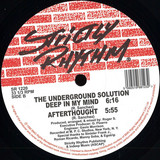
Absolutely ESSENTIAL record right here - The Underground Solution aka The 'S' Man aka the legendary Roger Sanchez is a name that you should all be familiar with by now, and his 1990 ANTHEM 'Luv Dancin' is an NYC deep house benchmark. That's right, this originally came out in 1990. That's a heck of a long time ago. Thing is, this record, when played at the right time will still cause maximum damage in the club. Riffing on disco classic 'Is it all over my face' and with elements of 'The bottle' interspersed with a deep, rolling garage bassline and dreamy keys and pads Sanchez crafted a solid gold cut, a timeless piece of dance music that still inspires today and is often imitated yet obviously never bettered! The flipside cuts 'Deep in my mind' and 'Afterthought' are also sublime exercises in the deepness, The 'S' Man's trademark eerie pads, bleeps and dope drum programming evident throughout, making these tracks huge hits from NYC to Sheffield and beyond! This whole EP is flawless and if you dig the deeper side of this stuff then you're in for a treat - Now's your chance to bag a bonafide, hands down classic record!
'Luv Dancin' has been skilfully remastered from all original master sources and fully licensed and reissued officially for 2017.