A Human Home“ wurde während des Einschlusses in Lucys Zimmer in Berlin geschrieben.
Es ist eine intime und ausdrucksstarke Sammlung von musikalischen Skizzen, die erforschen, was es bedeutet, ein Zuhause zu finden und sich zu Hause zu fühlen.
Mit einer Reihe von zufälligen und absichtlichen Kollaborationen aus der Ferne dokumentiert es einen spezifischen, persönlichen und universell geteilten Moment in der Zeit.
Die Entstehung des Albums war ein bewusster Versuch, den Einfluss von anderen auf ihren kreativen und persönlichen Prozess zu fördern.
Sie erkennt an, wie viel Heimat nicht nur an einem Ort liegt, sondern auch an den Menschen, die wir lieben.
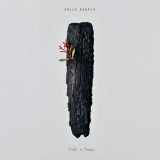
Das Artwork des Albums wurde von Julia Schimautz von Don't Try Anything New gestaltet, die Fotografie stammt von Francis Broek und das Styling von Lenny-Dee Doucha.
Suche:san dee
- A1: Camber Sands
- A2: Deep Emotions
- A3: Living The Dream
- A4: Preaching To The Choir
- A5: Pretty D
- B1: The Forty Foot
- B2: London Snow
- B3: Clean
- B4: The Wind
Ltd. Silver Vinyl[30,46 €]
"Good Grief" ist das erste neue Soloalbum seit 25 Jahren von Bernard Butler, Gitarrist und Songschreiber der Brit-Pop-Kultband Suede. Butler entwickelte sich zum mehrfach ausgezeichneten Songwriter und Produzenten (u.a. BRIT Award 2009 als Best Producer), zu dessen Referenzen zwei bahnbrechende Alben mit dem Folk-Musiker Sam Lee, ein für den Mercury Prize nominiertes Projekt mit Schauspielerin Jessie Buckley, Kollaborationen mit Bert Jansch, Ben Watt (Everything But The Girl), The Libertines und Tricky sowie das mit dem Grammy ausgezeichnete, millionenfach verkaufte Debütalbum von Duffy zählen.
Round-Circle-Shows mit seinen Freunden Norman Blake und James Grant in Schottland brachten Butler auf den Geschmack, sich wieder auf die Bühne zu wagen. Abseits der Sicherheit seiner Gitarre schrieb er Worte auf, bevor er die Melodien um die Zeilen herum schnitzte. "Good Grief" trifft auf einen Bernard Butler mit über drei Jahrzehnten Arbeit, frei um wieder aufzutreten, gestützt von wild kontrastierenden Erfahrungen von Verlust, Freude und Verwirrung. Das Album ist eine Reise von der Stadt zur Küste und zurück und dazwischen ein gesamtes Spektrum menschlicher Emotionen.
"Good Grief" ist das erste neue Soloalbum seit 25 Jahren von Bernard Butler, Gitarrist und Songschreiber der Brit-Pop-Kultband Suede. Butler entwickelte sich zum mehrfach ausgezeichneten Songwriter und Produzenten (u.a. BRIT Award 2009 als Best Producer), zu dessen Referenzen zwei bahnbrechende Alben mit dem Folk-Musiker Sam Lee, ein für den Mercury Prize nominiertes Projekt mit Schauspielerin Jessie Buckley, Kollaborationen mit Bert Jansch, Ben Watt (Everything But The Girl), The Libertines und Tricky sowie das mit dem Grammy ausgezeichnete, millionenfach verkaufte Debütalbum von Duffy zählen.
Round-Circle-Shows mit seinen Freunden Norman Blake und James Grant in Schottland brachten Butler auf den Geschmack, sich wieder auf die Bühne zu wagen. Abseits der Sicherheit seiner Gitarre schrieb er Worte auf, bevor er die Melodien um die Zeilen herum schnitzte. "Good Grief" trifft auf einen Bernard Butler mit über drei Jahrzehnten Arbeit, frei um wieder aufzutreten, gestützt von wild kontrastierenden Erfahrungen von Verlust, Freude und Verwirrung. Das Album ist eine Reise von der Stadt zur Küste und zurück und dazwischen ein gesamtes Spektrum menschlicher Emotionen.
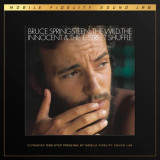
Released only eight months after his exhilarating debut, Bruce Springsteen's The Wild, the Innocent & the E Street Shuffle contains rousing dispatches from the boardwalk, the street, the beach, and the bedroom. It explodes with energy, dares to dream, teases with humour, crackles with tragedy, clings to hope, and overflows with discovery, youthfulness, and personality. It features an unforgettable cast of characters — corner boys, teenage hustlers, doomed lovers, jazz men, junk men, factory girls, fortune tellers, alley cats, pimps, escorts, and more — illuminated by vivid colour, breathtaking detail, and poetic action.
Musically, the heartfelt 1973 record is inhabited by sympathetic vignettes and cinematic arrangements steeped in rock 'n' roll, soul, jazz, and R&B. It finds the New Jersey native looking beyond the parameters of his preceding record and seeking to move on from environments he knows well (and chronicles here) by rushing headlong toward unknown territories, adventures, and people. Underpinned by the singer-guitarist's ambitious poetic enterprise and will to succeed, The Wild, the Innocent & the E Street Shuffle is the album on which Springsteen becomes the Boss.
Mastered on Mobile Fidelity's renowned mastering system, pressed at RTI on MoFi SuperVinyl, and strictly limited to 7,500 numbered copies, Mobile Fidelity's UltraDisc One-Step 180g 33RPM LP set is the definitive-sounding version of Springsteen's sophomore record. Benefitting from SuperVinyl’s nearly non-existent noise floor, superb groove definition, and dead-quiet surfaces, The Wild, the Innocent & the E Street Shuffle plays with a clarity, energy, presence, and openness that complement the expressiveness, dynamics, and scope of the seven restless songs that comprise a work Rolling Stone ranked the 345th Greatest Album of All Time.
Beyond the audiophile sonics that practically place you behind the console at 914 Sound Studios — listen to the separation between the instruments, natural decay of the notes, interplay within the widescreen soundstaging, and nothing-to-lose youthfulness of Springsteen’s voice — this reissue takes seriously this record’s influential merit by presenting it in packaging that underlines its status. Tucked in a beautiful slipcase, the LP is housed in a special foil-stamped jacket with faithful-to-the-original graphics. This reissue is made for listeners who prize sound quality and who want to engage themselves in everything involved with the invigorating set that busted Springsteen loose from the club circuit and landed him on the radio
Determined to liberate anyone within earshot and unafraid to come on strong, The Wild, the Innocent & the E Street Shuffle serves as the debut of the E Street Band — not only heard but seen for the first time by most of the public courtesy of the back-cover photograph. This is where saxophonist Clarence Clemons, organist-accordionist Danny Federici, and pianist David Sancious step out of the shadows — and drummer Vini Lopez and bassist Garry Tallent again stoke a fiery rhythmic engine that helps drive the untamed, reimagined big-band swing of “Kitty’s Back,” breathless R&B thrust of “Rosalita (Come Out Tonight),” and carefree dance steps of the funky “The E Street Shuffle.”
Of course, the main attraction remains a then-24-year-old visionary on the precipice of becoming a sensation and turning a then-bloated rock scene on its head. Recorded over three months while Springsteen and company were busy touring his debut LP, The Wild, the Innocent & the E Street Shuffle reflects the high-octane approach the vocalist embraced onstage and drifts away from the label-dictated acoustic-based frameworks of his debut. The set also witnesses Springsteen deepening his observational skills, with narratives such as the romantically tinged “4th of July, Asbury Park (Sandy)” and redemptive epic “Incident on 57th Street” mirroring changes taking place in the singer’s own life, small towns, and America at large.
A thrilling collision of memories, reflections, and composites — Sandy, Rosalita, and the latter’s parents are all based on actual people Springsteen knew, as is the community depicted in the opening track — the aptly titled The Wild, the Innocent & the E Street Shuffle resonates decades on due to its truths, authenticity, and spirit. Those characteristics — as well as the fact that many of its lengthy songs come on as the equivalent of sweaty, feverish soul revue that won’t stop until you’ve been exhausted — also explain how this now-iconic album triumphed over the reservations of industry “experts” that both demanded Springsteen re-record it and instructed deejays not to play it.
Yet there’d be no stopping a record that saw the past, present, and future, a band whose will would not be denied, and a phenomenon who was born to run. A never-ending invitation to act real cool and stay up all night, The Wild, the Innocent & the E Street Shuffle always feels alright.
The relatively short life of San Francisco's Aluminum has so far yielded a single (Spinning Backwards, 2020) and an EP (Windowpane, 2022), but their debut LP, Fully Beat, overflows with tenured confidence and a singular style that deftly comprises shoegaze, big beat, and jangle pop. With influences ranging from Orbital, to Wipers, to The Avalanches and Sly and the Family Stone, theirs is a multifaceted take on established forms, fed through fuzz and led by honeyed, male-female vocal harmonies from Bay Area post-punk veterans Marc Leyda (of Wild Moth) and Ryann Gonsalves (of Torrey). "Smile" begins with deceptive sparseness, adding neon swirls of stacked tremolo over a mesmerizing lyrical refrain, and hinting at the dynamism to come with understated grace and grit. "Always Here, Never There" is Fully Beat's first pure hit of melodic pop: its liquid bass groove winds beneath a melancholy-sweet synth hook and Leyda's plaintive vocals, while drummer Chris Natividad's deep, pillowy snare and propulsive style maintain a driving pace. Lead single, "Behind My Mouth", shifts gears into a big beat shuffle and howl of overdriven guitars, which relent to Gonsalves' rolling bassline and playful, snarky vocal. Composed across several weeks of experimentation, it is a prime iteration of Aluminum's meticulous world of sound, which nevertheless carries an air of wry nonchalance. Asking, "Do you ever see behind my mouth?", Gonsalves notes that the song "comes from a place of wanting to be understood authentically, and to communicate intentionally." This approach speaks to the album's broader theme of exhaustion amid the demands of the modern grind: working unfulfilling jobs to pay exorbitant rent, feeling society break at the seams, and trying to maintain a meaningful personal life with the remaining scraps of morale. The response, then, must be to find joy. These songs were crafted over a half-dozen months in basements and practice spaces, creating an abundance of authentic passion and catharsis that's as nostalgic and comforting as a cherished, tattered band t-shirt. The closer, "Upside Down", is a full-throttle blare of joyous release - "a straight-up love song," according to Leyda. The deliberate choice to end it with a gradual fade, rather than a dramatic climax, smartly suggests the ambivalence of acceptance - perhaps fitting, when considering the immensity of the album's subject matter. It also hints that there is much more to be said, and as such a rich and compelling debut, Fully Beat shows that Aluminum are only getting started.
Composed by Jim O’Rourke and pieced together by Jim together with longtime collaborator and trumpeter Eivind Lønning at Jim and Eiko Ishibashi’s home in the Japanese mountains, this engrossing new album blows brass wails and tense fanfares across O'Rourke's manipulated Kyma tapestries for a deep, captivating trip into the aether.
Eivind Lønning has been sharing ideas with O'Rourke for several years: the duo collaborated on music for the Whitney's 'Calder: Hypermobility' exhibition, and Lønning played trumpet on O'Rourke's brilliant 2020 album 'Shutting Down Here'. For this new work, Lønning headed to O'Rourke and EIko Ishibashi's home studio in the Japanese mountains, where he teased unfamiliar, alien textures from his trumpet to open the labyrinthine three-part composition. O'Rourke took the material and subsequently funnelled it through his Kyma system, transforming it into a swirl of sound that hums alongside Lønning's original takes. The album was composed, mixed and mastered by O'Rourke, with everything's based on Lønning's virtuosic performance.
The album begins by cautiously introducing us to its sonic palette: wavering, bird-like horn wails that O'Rourke contorts around quiet synth oscillations and computerised swarms. Lønning's spittle-drenched blasts are given the spotlight, but O'Rourke's manipulations - often gentle and illusory, and sometimes utterly lacerating - lift the sounds into completely new territory. When Lønning begins to turn rhythmic cycles using the trumpet keys, popping with his mouth to compliment its leathery timbre, O'Rourke replies with dense, hallucinatory drones, juxtaposing unstable electronics with Lønning's breathy, sustained notes. All these sounds coalesce into a dizzy vortex, but O'Rourke is careful not to overwhelm the senses, dropping to near silence as the first act transitions into the second. O'Rourke pelts Lønning's vertiginous wails, steadily mutating them into Xenakis-like stabs until they sound like cybernetic strings and icy tones that extract the tension from Lønning's brassy harmonics.
The third act is more screwed, with O'Rourke allowing Lønning's improvisations wail into cathedral-strength reverb, accompanying the sound with glassy penetrations and throbbing subs. Here, Lønning sounds as if he's heralding the arrival of a celestial being, piercing the atmosphere with bright, sustained tones and muted, jazzy flourishes. O'Rourke hangs back, carefully spinning the notes into naturalistic fibres and orchestral drapery, before he allows the electronics to subside completely and the trumpet to echo into the imposing negative space.
'Most, but Potentially All' is a dumbfounding piece that shifts the dial on contemporary experimental music; dizzyingly complex but never showy, it's the kind of record you can spin repeatedly and hear something different each time. As an exploration of the trumpet, it's a unique expression, and as a progression of electro-acoustic compositional techniques, it draws a deep trench in the sand, setting a new standard.
Odopt is back on Especial and this time is in collaborative mode with Sebastian Hoyos aka Sano, who is a regular on the likes of Matias Aguayo's Comeme and Munich's Public Possession. The pair cook up a fine globally-minded club trip that comes with another label return, this time from remixer Jamie Paton.
The original 'Picha' first started as a sketch in 2016 then became a demo in 2019 now finally arrives on wax. It's a raw percussive workout with razor-sharp snares and plenty of cowbells. Next to an instrumental comes the Paton remix and it is a trademark deep and dubwise piece of work with widescreen dynamics.
Both Tymon Dogg and Richard Dudanski had musical roots playing in The 101'ers with future Clash singer/guitarist Joe Strummer. All three shared a deep love for southern Spain, due perhaps to the influence of the Romero sisters, Paloma (later "Palmolive" of The Slits) and the artist Esperanza, who were among the first Spanish punk refugees in London. Tymon's career began with beguiling interactions with Apple Records, The Moody Blues and future Led Zeppelin members John Paul Jones and Jimmy Page before he discovered his true musical self as a punk / folk experimentalist, opening shows for the likes of The Slits, Raincoats and Pop Group and becoming the longest-running musical foil in Strummer's career, continuing into The Clash and Mescaleros. Similarly, Richard played in Basement 5, Public Image Ltd, The Raincoats and others before following Esperanza back to Granada...which subsequently became second home to Tymon and Joe. Spain is not without its own punk heroes, and chief among them was Granada's Antonio Arias, another pal of Joe's and leader of Spain's musical heroes, Lagartija Nick, which also included Dacoits members Juan Codorniu and JJ Machuca. Antonio sings the albums two Spanish-language songs. while Tymon sings the other nine...and there's an instrumental, "Mongols", which the band considered too epic as a stand-alone instrumental to mess with! Tymon sings three songs from his past: "The Wheel Of Life And Death" has been heard before as a live bonus track on the expanded reissue of "Battle Of Wills", "Conscience Money" was heard in a very different version on the impossible-to-find "Made Of Light" album, and an embryonic take of "Something To Prove" turned up the even rarer 1989 solo album, "Relentless". If you imagine the playful elasticity of "Sandinista!" recast into a more straightforward record, with Tymon taking the lead on something more than that album's "Lose This Skin", you're halfway there. Guests include Killing Joke bassist / famed producer Youth and Dr Robert from The Blow Monkeys
Repress!
DJ Sneak started releasing music around 30 years ago, whilst Hard Times was also knocking out records at the same time from the likes of Masters At Work, Todd Terry and Roger Sanchez. Sneak has played for the legendary club night many times, but this is his first outing on the label. Sneak delivers 4 peak time classic cuts reminiscent of his early work, which fits in perfectly with the equally longstanding Hard Times label.
Die britische Elektronik-Band Morcheeba veröffentlichte ihr sechstes Studio Album „Dive Deep“, das zweite Album ohne die ehemalige Lead-Sängerin Skye Edwards. Stattdessen haben die Bandmitglieder (und Brüder) Ross und Paul Godfrey für die Aufnahmen mit mehreren Gastmusikern zusammengearbeitet, darunter der Rapper Coo Calm Pete, der norwegische Alternative-Sänger und Songwriter Thomas Dybdahl, die französische Sängerin Manda Zamolo und die gefeierte Pop/Rock-Sängerin Judie Tzuke Zwei Singles wurden bereits vor der Veröffentlichung des Albums veröffentlicht, "Enjoy The Ride" und "Gained The World".
The third major release from deadbeat Records – East London’s newest home for delinquent house, techno and breaks – sees I Love Acid heads Posthuman swagger out of the shadows with a wry smile, packing a full clip and one in the chamber.
DBR003 offers 4 peak cuts of early-hours madness. Pure and simple. And we are not talking fucking beautiful sunrises here. This is 4am, sanity wearing off, blurred vision, locked jaw, pumped fist, heart in your mouth kind of music. Where Extender drops in hard upfront with its jacked, high energy rave stabs,
Head Wrench’s relentless acid worm burrows a little deeper into your amygdala before splitting it wide open. On the flipside, Wobble Tool’s suitably drippy hook oozes over a brooding, proggy baseline, but only after Builder growls out the gate, an irresistible dancefloor-melting monster with an appetite for destruction
Warehouse Find!
Red D is back for a follow up to his brilliant Chez EP which dropped last year and this time he's going for the jugular! The man responsible for
some of the finest house music of the last decade as FCL (with San Soda) and FCL vs VFB (with Motor City Drum Ensemble) knows a thing or two about
what makes the dancefloor lose its s**t, with tracks such as Let's Go Seven, It's You and Can We Try all testament to this.
When he's not DJing at the likes of Panorama Bar or hosting his own stage at Tomorrowland, Red D can be found running his own mighty fine We Play House label from his Ghent HQ.
Moan The Mania opens this release in suitably back to the raw fashion! A minimal drum machine groove and clipped bassline lay the foundations of this tribute to all things jacking with a sprinkling of porno groans to help you on your way. This is sleazy machine funk at it's very best. Next up we have a remix from Eli Escobar, the native New Yorker who has recently been making major waves following the release of his LP Happiness on Classic.
As someone who has remixed the likes of Lana Del Rey, Kim Ann Foxman, Honey Dijon and Holy Ghost we knew he'd be the man to take Red D's baton and run with it.
Keeping the overall vibe of the original intact
Eli cranks the energy further with additional in your face percussion parts and a couple of perfectly placed build ups. Flipping over we have Chase The Cat which takes a similarly stripped-back and minimal approach as Moan The Mania but goes heavier on the 707 beats. Finally we have Dusk Or Dawn closing the release with a deeper mood.
Simple FM synth stabs and glassy chimes provide a tender and naive-sounding counterpoint to the basic beats.
Red D proving once again that limiting your tools and not over-complicating things can often have so much more impact when it comes to house music.
The opening line of Emily Dickinson’s short poem ‘‘Hope’ is the thing with feathers’ inspired the central image of Emily Barker’s new single ‘Feathered Thing’, written while she navigated cumulative grief.
When Barker was first introduced to producer Luke Potashnick (Gabrielle Aplin, Jack Savoretti, Katie Melua) in May 2022, she brought with her a full album’s worth of songs. But after visiting Potashnick’s storied studio, The Wool Hall and hearing his ambitious production ideas, she was inspired to write one more song.
“I also needed to process some heavy news” she comments. Barker and her husband Lukas Drinkwater had been trying to start a family. Following a couple of failed IVF cycles (and other “starts that we’d lost”), they investigated adoption and had decided to relocate to Australia to be closer to Barker’s family.
“It felt like we couldn’t work out what we wanted, but we finally reached a point where we both felt at peace with not having kids,” Barker recalls. “It had been an incredibly intense time, coinciding with a house move and the pandemic.”
And then Barker found she was pregnant. “We’d done all these things to try to make it happen, and then it happened naturally (and against all biological odds). Having previously navigated losses throughout our pregnancy journey, we now had to get our heads around what having this new person in our lives might look like - emotionally and practically.”
Soon after work began on the album, Barker had a miscarriage.
“Songwriting has always been a way of processing throughout my life.” Barker reveals how the new song came quickly as she sat at her piano at home. She shared an early version with Potashnick and remembers him politely asking, “Do you mind telling me what this is about?”
“I think I’d left it too abstract, initially,” she reflects. “It was difficult to open up about the miscarriage, but Luke was very supportive and encouraged me to dig a little deeper without necessarily being specific. I revisited the lyrics, and the result is much stronger.”
“I went to the burnt-out woods/ A tourist with some damaged goods/ Remembered how the trees withstood fires before…”
“The opening line is a metaphor for knowing that I’ll get through this,” Barker clarifies. “It’s about recovery and hope, allowing yourself both the space to grieve and permission to move on”. But Barker’s optimism is never misplaced – she knows the imprint of imagined futures and lost children are carried in hearts and minds forever:
“It’s so hard to let go, wanted to know wanted to know you …”
“I think that it's important to share and normalise these stories, which are all too common, yet not openly spoken about. People hide their pain and don’t want to burden friends and family. I think behind all this anguish, there’s a deep, often untold story.”
Now that Barker is settled back in Western Australia, she’s embracing being an auntie. “I’ve got three younger siblings over here who I’m close to, and they all have kids,” she enthuses. “I look after my brother's kids, aged two and five, one morning a week.”
Recorded - along with the entirety of the new album - at The Wool Hall, ‘Feathered Thing’ begins gently, with oscillating piano and distant drums, until the arrangement gradually transforms into an instrumental dervish of vibrant strings, bass drones and cymbal crashes. Throughout, Barker’s vocals float tantalisingly like a slipstreaming feather.
Watch the video, filmed at The Wool Hall here. The Wool Hall is a studio in Beckington, Somerset, set up by Tears for Fears in the 1980s and used by artists including The Smiths, Pretenders, Joni Mitchell and many more.
Emily Barker is an award-winning singer-songwriter, best known as the writer and performer of the theme to the hugely successful BBC crime drama ‘Wallander’ starring Kenneth Branagh.
Her last album, 2020's ‘A Dark Murmuration of Words’, was produced by Greg Freeman and recorded at StudiOwz, a converted chapel in the Welsh countryside. Lyrically probing, by turns both dark and optimistic, Barker searches for meaning through the deafening clamour of fake news and algorithmically filtered conversation, delivering a timely exploration of the grand themes of our age. It garnered widespread acclaim, with Uncut calling it “…a kind of Australian equivalent of PJ Harvey’s Let England Shake”.
Barker has released music and toured as a solo artist as well as with various bands and collaborations, most notably her long association with Frank Turner, and has written for TV and film, including composing the soundtrack for Jake Gavin’s lauded debut feature ‘Hector’ starring Peter Mullan and Keith Allen.
‘Fragile as Humans’ is scheduled for release on May 3rd 2024 through Everyone Sang/Kartel Music Group. The album will also feature earlier singles: the vast, cinematic ‘Wild to be Sharing This Moment’ and the meditative, crestfallen ‘Loneliness’.
A tribute to one of the greatest songwriters & artists of our time! Features newly recorded covers from Keith Richards, Joan Jett and the Blackhearts, Rufus Wainwright, Lucinda Williams, Maxim Ludwig & Angel Olsen, Rickie Lee Jones, Mary Gauthier, Bobby Rush, Automatic, The Afghan Whigs, and Rosanne Cash. Special Record Store Day Edition pressed on Silver Nugget vinyl and housed in a silver laminated jacket Booklet features liner notes by compilation producer & former Lou Reed publicist Bill Bentley, featuring photos by Mick Rock and Timothy Greenfield-Sanders. "To me, Lou stood out. The real deal! Something important to American music and to ALL MUSIC! I miss him and his dog." - Keith Richards "Lou seemed fearless to me, like he'd rather die than be a people-pleaser. I took inspiration from that." - Rosanne Cash "Lou Reed is my earliest influence, my introduction to punk rock, and the soundtrack to the beginning of my romance with Maxim." - Angel Olsen "Lou Reed has been gone now for many years. He's one of the few people whom I miss as much now as when he left. There are so many instances where I wonder what he would say or what he would think. His general aura would always lend something really unique to the room. Thank God he left his great music and recordings. His personality is sorely missed. Love you, Lou." - Rufus Wainwright // It goes without saying that the legendary Lou Reed was a true rock 'n' roll pioneer. From The Velvet Underground's debut in 1967 all the way through the end of his days, Reed sang truth from his heart. He lived life to the limit-and then some. The Power of the Heart is a tribute to Reed's freedom of expression with covers spanning his ground-breaking years with the Velvets into his majestic solo career. Each track is a glorious extension of the Rock 'n' Roll Animal's soul, ever adventurous and avant-garde. The Power of the Heart: A Tribute to Lou Reed kicks off with a legend in his own right, Keith Richards, reimagining the Velvets' classic, "I'm Waiting for the Man." Richards' rendition instantly invites you on board this unforgettable ride. In stark contrast, "Perfect Day" is somehow even more melancholy than the original given the Rufus Wainwright treatment, featuring sparse fingerpicking and gentle harmonies. Joan Jett and the Blackhearts deliver a version of "I'm So Free" that would have even Lou rockin' in his grave. It's thrilling to hear these songs reinterpreted and sung by such heavyweights; you can even hear as Lucinda Williams channels the spirit of Lou with her take on "Legendary Hearts." Other notable tracks include a punk-drunk, loved-up duet by real-life lovers Angel Olsen & Maxim Ludwig with "I Can't Stand It," and Rickie Lee Jones' reimagining of "Walk on the Wild Side," both whimsical and enticing with her whispery vocals, stripped-down percussion, and a piano fit for a late-night lounge. This tribute album truly defies genre, but its throughline, in the end, is its heart: a deeply thoughtful collection of songs that shaped a generation, each paying homage to a man whose body of work still sings.
Finland's UNEARTHLY RITES are preparing to release their debut album. On Ecdysis UNEARTHLY RITES' potent old school death metal songwriting offers a rallying cry against corporate greed and environmental negligence, with a scathing rebuke of those culpable of ecocide and climate destruction. At the beating heart of Ecdysis lies UNEARTHLY RITES' insistence for a better world, with the perilous effects of capitalist interests taking precedence over nature and human life at the core of the group's concerns. Through their collective work in environmental activism, including anti-mining campaigns in the arctic north that focuses on the challenges faced by the indigenous Sámi peoples, Ecdysis is less a despairing cry as it is a plea for change. The band's caustic approach to extreme metal and punk adds a feverish urgency to proceedings, with the rhythm section of bassist Vikman and guitarists Simo Perkiömäki and Santtu Markko evoking the genre's most brutish traits against Sisli Piisilä's visceral vocal delivery. Despite their rage and despondency at institutional apathy on the title track and the harrowingly doomy highlight cut Sacrifice Zones, album closer Doomed shuns inaction and resigned complicitly by directly challenging the listener to choose their side for humanity's sake and future.
Black Vinyl 2024 Repress
Polygonia & MTRL - Division / Taris EP incl. Remixes by Claudio PRC and Mary Yuzovskaya
A1. Polygonia - Division
Right from the start the listener is cast into orbit with driving percussion and abstract sound effects. Soon they are followed with a morphing bass sound and cymbals which lock the groove into place, cranking the drive to the max. As the track progresses the landscape of sound reveals its nature with metallic quality, like schrapnel from a barren city. Truly a Deep Techno banger which will without a doubt fill a dance floor.
A2. MTRL - Taris
The listener is slowly submerged into the waves of percussive bass sounds and menacing sweeps of noise which remind of a storm in a desert, the horizon only slightly glimmering behind the veil of sand. Soon the listener is introduced with a pounding kick drum, almost making the landscape seem even more ruthless as the track progresses.
Quality, heady Deep Techno.
B1. Polygonia - Division Claudio PRC Remix
The hypnotic Techno maestro Claudio PRC twists the idea of the original track into a mind explorative voyage with a triplet feel. The remix is shrouded in melancholy with distant pad sounds, which add a nice tension to the track. As usual, a brilliant remix from Claudio PRC.
B2. MTRL - Taris Mary Yuzovskaya Remix
On the remix the Berlin based producer is molding the source material into a driving and psychedelic track, functional yet synapse tingling. Now the bass has a bit more liquid-like quality and the overall soundscape is more abstract. Hallucinatory effects of noise are filling the spaces between the sounds, almost like being surrounded with faint whispers. Driving and psychedelic Deep Techno done with finesse.
Words by Latmos
- A1: Cosmocomics & Kotowicz - Stars Of Midnight
- A2: Ron Brown - How Thight Is It
- A3: Will Sonic - Stab Dub
- A4: Julius Rennert - Juice
- A5: Das Carma - Destiny
- A6: Panouse - Kussens Skygge
- A7: Baerlz - Wie Ein Wulkan
- B8: Jesusdapnk & Ivonne Calvillo - Body
- B1: Frank Virgilio - The Prefatio
- B2: Buzz Compass - More Love
- B3: Nonduality - Lapdog
- B4: Staghorns - It’s Been2Long
- B5: Meeshoo - Modisco
- B6: Decent Rides - Odysses Ot The Beats
- B7: Mathew Ferness - This Is How
- B8: Moox - Let It Go
Dive into the soulful sounds of house with "Inhale Exhale," a label that takes you on a journey through deep, funky, disco, and soulful beats. Introducing "inextape003," our latest compilation that delves into the depths of rhythm and groove. Immerse yourself in tracks curated to elevate your senses, where every beat is an invitation to let go and feel the pulse of the underground. Inhale the vibes, exhale the ordinary, and let "Inhale Exhale" redefine your house music experience. Welcome to a world where the beats are deeper, the vibes are smoother, and the dance floor is your sanctuary.
Iconic death thrash metal band PENTAGRAM (Chile) was formed in Santiago, Chile in 1985. At the time, the country was roiling from political upheaval, but that didn't stop Anton Reisenegger, Juan Pablo Uribe, and (former drummer) Eduardo Topelberg from ingesting and eventually emulating the brutalist, evilest forms of metal from around the world. PENTAGRAM (Chile) now unleash their new album ' Eternal Life of Madness’ and is comprised of guitarist/vocalist Anton Reisenegger, guitarist Juan Pablo Uribe, drummer Juan Pablo Donoso, and bassist Juan Francisco Cueto. PENTAGRAM (Chile) marched forward from their debut 'The Malefice' (2013) while preserving the savage DNA that informed Darkthrone, At the Gates, Dismember, Napalm Death, and many others. The band ’s new album 'Eternal Life of Madness’ feature the crushing heft of "Possessor," "El Imbunche," "The Portal," and "Deus Est Machina, » which is a far-off salute to the group's classic "Spell of the Pentagram" from their 1987 first Demo. PENTAGRAM (Chile) doesn't exist merely for nostalgia reasons—though supporting Slayer in Santiago in 2019 was a highlight of past accomplishments. Their timely resurrection is unadulterated metallic passion. "When the pandemic hit, and I was in lockdown at home in Spain, I started writing riffs for a new LOCK UP album," says Reisenegger, who plays guitar in grind legends BRUJERIA and Chilean groove-thrash masters CRIMINAL. "I realized some of the stuff I wrote had the original Pentagram (Chile) feeling, so I put those ideas aside. They started piling up, so when the LOCK UP ’The Dregs of Hades' record was done, I began arranging them and working remotely with our drummer, Juan Pablo Donoso. I didn't even realize I had all that material in me, but it was somehow untapped. We had a 'false start' a few years before when original guitarist JP Uribe, JP Donoso, and I got together and started jamming on some new riffs. 'The Portal' came out of those sessions. » Though never explicitly political lyrically, PENTAGRAM (Chile) have issued angst-ridden proclamations throughout their 39-year existence.
TLM034 will be our 45th release since 1996 and 25th since reforrning the label in 2019. It seemed inevitable that this release would be one of our Best Of Various EPs featuring new and established artists as we have done previously. Starting off this milestone release we have the ever growing Cumulative Collective with AskaFara.
An Epic 10 minute track pushing all the right buttons for listening and the dancefloor alike. Featuring Cormac Fulton, Stefano De Santis, Takashi Nakazato, Ayumi Suzuki and Mitsuru Tanaka, musicians from England, Italy and Japan respectively. All brought together by head of the label Steve Conry who also produced and mixed the track with Stefano De Santis. Track 2 on the A side is by a new name to most, Takahiro Fuchigami with Strange Acquaintance. A beautiful broken beat track with a distinctively Japanese sound.
Onto side AA and that kicks off with Melchior Sultana and The Playground. Melchior has previously released on TLM in 2022 and 2023. For 2024 he delivers a superb jazzy deep house track in his own particular Mediterranean style. Next up is Brazilian multi instrumentalist Fabio Santanna with Melô Da Cuíca, a fantastic Brazilian Boogie track. Fabio came to our attention from his release Chega Mais Lincoln on Joutro Mundo’s superb Brazilian label Onda Boa. Finally rounding off the AA side is The Robinson from Italy with Song 1. A brilliant blues tinged broken beat track that gets better every time you hear it.
- A1: Magic Momentum
- A2: Rockets To Mars
- A3: The News These Days
- A4: Life (Skit)
- A5: Love Vibration
- B1: Original Flow
- B2: Hold On
- B3: Surviver (Skit)
- B4: Tatamaka Pt.1
- B5: Tatamaka Pt.2
- C1: Time (Skit)
- C2: Time
- C3: Jinja (Skit)
- C4: Kochirakoso
- C5: Our Tactus
- C6: Nah Personal
- D1: No Chains
- D2: Push Comes To Shove
- D3: We No Let Y'all In
- D4: Mexico (Skit)
- D5: Future For Our Children
We Release JAZZ is very happy to announce an exciting new body of work by Joseph Deenmamode aka Mo Kolours. The singular musical spirit’s new 21-track album Original Flow is available as a double LP housed in a heavy 350gsm sleeve with original artwork by Mo Kolours himself and the classic WRJ obi strip, as well as in digipack CD and digital formats.
A catalog of critically acclaimed records, including his self-titled debut (2014), ‘Texture Like Like Sun’ (2015), 2018 album ‘Inner Symbols’ and three companion EPs, established Deenmamode as a prodigious musician and vocalist. Pitchfork extolled his “hypnotic, tribal-infused dance grooves”, DJ Mag appreciated the “colourful celebration of soundsystem culture”, and Resident Advisor advocated that “no one sounds quite like Mo Kolours”. Musical analogies were drawn by The Guardian as “The best album Curtis Mayfield never made with A Tribe Called Quest and Lee Perry” and Mojo as “like Marvin Gaye produced by J Dilla”.
Five years ago, Deenmamode moved to the Japanese countryside. Far away from familiarity, he contemplated his place and further questioned his identity. “I had none of my ‘own’ people around. I had time to really find what makes me tick musically. Japan has helped me go back to those subconscious leanings, really go deep, and reflect the aspects that make up my story”.
The tracks on ‘Original Flow’ have been constructed from sessions, improvisations and soundbites captured around the world during this time; collecting contributions from musicians including Deenamode’s brothers Reginald Omas Mamode and Jeen Bassa plus Andrew Ashong, Charles Bullen, Dwaye Kilvington, Eddie Hick, Stefan Asanovic, Myele Manzanza, Ross Hughes, and Tom Dreissler. Deenamode says “I’m proud of this album’s creative process. Coming from a tradition of scouring through hours of records, I wanted to create my own samples, to find that perfect loop that no other producer could put their hands on. I decided to invite a group of friends and acquaintances, who also happen to be incredible musicians, to a studio in Crystal Palace to improvise based on some loose ideas I had. We spent all day, and recorded everything”.
‘Original Flow’ is an album of UK street-soul nouveau, future indigenous jazz fusion, Rasta Segga, Nyahbinghi jazz, Malagasy Hebrew hip hop. While retaining a spirit of exploration and improvisation, it sees Deenmamode grow and flex beyond beat tape brevity, expanding composition and stretching his musical muscle to play live with other musicians. Themes of empowerment, overcoming adversity, and mental liberation coexist with notes from ancient history, futurism, and science, as well as musings on family and togetherness.
‘Magik Momentum’ springs from a discussion that features at the start of the song, an inspiring mentor answering a question from Deenmamode about improvisation and what role it plays in life when planning and manifesting the future. ‘Rockets to Mars’ questions the lack of care for the billions of people with nothing, while governments plan to explore space. “This sparked a comparison in my mind to a Sonny Okuson song that I would reference when performing. Okuson’s song talked of the lack of resources in many communities in the world, while governments go to the moon”.
He says the music behind ‘The News These Days’ is “possibly my favourite on the album”. Looped like he would a late sixty jazz-fusion sample, there was nothing added and the track was complete within a matter of minutes. “It was the first and best moment from the entire Crystal Palace session”, he adds. The album’s contrasting title track with minimal instrumentation played solo by Deenamode. While frustratingly searching for gems in past recordings, he thought in a burst of ego, “I don’t need no-one else to make a dope beat!” picked up his ravanne, (the traditional frame drum of his fathers home-land of Mauritius), pressed record, and started to play. He says, “In my thoughts were the rhythms of the Nubians in Upper-Egypt and Sudan, the swing of the huge drums played by Mauritanian women, of-course the Sega beat of Mauritius, and the ever inspiring beat of James Yancey”.
Driven by UK broken beat, Cuban congas, Nigerian and Mauritian inflections, ‘Love Vibration’ follows the concept that all emotions carry a vibratory frequency and pays homage to the frequency of creation and the power of love. The two part ‘Tatamaka’ tells of the history of Deenmamode’s ancestors, the maroons of Mauritius. “We are people who managed to run from our oppressors and find refuge in a corner of the island called ‘Le Morne’ where they could not reach us. One bloody day they came in numbers to re-capture, to revenge. Many of us chose to jump to our deaths, rather than be taken back into subjugation. The poem by Creole Richard Sedley Assonne says; “there were hundreds of them, but my people, the maroons chose the kiss of death over the chains of slavery”. Tatamaka was the name of a famed maroon leader who was murdered for claiming his, and our people’s freedom. The song is the imagined journey of escape and freedom by an ancestor of the maroons of Le Morne”.
Born in the west midlands and raised on the traditional sega music of his father’s Indian Ocean homeland of Mauritius alongside records by the likes of Jimi Hendrix, Santana and Michael Jackson; his influences expanded with late 90s jungle and drum and bass nights in Bristol, experiments at art college in Camberwell, and the rich culture of Peckham, “at the time we called it the Afro Quarters of London” says Deenmamode, adding hip hop, dub, soul and soundsystem styles to his individual sound.
He explains, “I love drum music, from hand-drums to 808s. I love music from the ancient past, heritage music, indigenous music, traditional music passed down from the beginning of time. Music from the body, hand claps, grunts and foot stomps. Music with audible depth, busy, bustling, highly charged. Music from the soul, the music from beyond. I love music from the islands and the mountains. The music of the streets, hustle music, alleyway beats. Club music”.
He describes the creative process as thinking in images. “The visual world and the world of sound seem to intermingle in my thought process. When I play the drum with my eyes closed, a world of imagery dances and moves with beat. Improvised drumming feels like I am listening to what I want to hear, rather than trying to play what I want to hear. Following the rhythm and finding new pathways to walk within the patterns is what I experience. In this way I often feel I am just a listener, instead of the player”.
Original Flow is pressed on biovinyl, a sustainable alternative to traditional vinyl. Biovinyl replaces petroleum in S-PVC by recycling used cooking oil or industrial waste gases, resulting in 100% CO2 savings in bio-based S-PVC production. Furthermore, it is 100% recyclable and reusable, embracing the circular economy ideology.