Ordering for 2026 repress
Under one of his most notable guises, Larry Heard is pleased to present a new album for 2018. 'Cerebral Hemispheres' is his first full length album as Mr. Fingers in almost 25 years. Famous as one of the most important heads in the dance music around the world, Larry has enjoyed a successful career as a producer, remixer, collaborator, vocalist and DJ spanning 35 years. Due for release on his own imprint Alleviated Records, 'Cerebral Hemispheres' features 14 new pieces of music that allows the listener to fully immerse themselves and dig deep into Larry's musical world.
Поиск:san paolo
Все
- 1
- A1: Alex Castelli – Enjoy (O0Omix)
- A2: Marco May - Typhoon (Trance Mix)
- A3: Davide Sgarbi Project - Feel The Drums – Bass
- B1: X-Form - Pleasure Voyage (Apollo Mix)
- B2: Gianluca Erre - Physical Impact
- B3: Paolo Kighine – Nasdaq Guy
- C1: Roland Brant – Mastermind
- C2: Cladiv Project - The Reel (SMolanteperleiversion)
- C3: Zenith Dj Vs Avex – I’m Your Deejay (A0Ack Mix)
- D1: Gianni Parrini - Android (Gianni Parrini Club Rmx)
- D2: Trilogy - Nebulosa (Liquid State)
- D3: Marco Carola - Apollo 13 (Hard Mix)
This official double vinyl is dedicated to Duplé, the historic nightclub that defined enre
generaons of clubbers.
It's a special project: two vinyl records collecng the tracks that made Duplé's history over the
years—the ones you danced to, shouted out, sang along with, and that sll give you goosebumps
on the first listen. An insert with historical notes and flyers recalling the most significant magical
nights is included.
This is not a simple record release, but a collector's item: a piece meculously curated, featuring
tracks that are somemes hard to find, selected specifically to tell the story of the club's soul and
its legendary events. This "Duplé Paura" double vinyl is a tribute to all who experienced its magic, both yesterday and
today.
Hell Yeah have been busy making musical connections and reaching out to like-minded beatmakers once again. This time, it is Pier Paolo Polcari aka Polcari, a founding member of cult Italian band Almamegretta, who steps up with the magnificent new album I Will Try To Imitate The Birds. The eight-track record also features Adriano Viterbini, another Italian music icon and guitarist with the revered Bud Spencer Blues Explosion and I Hate My Village as well as Ubjk, San Ignacio and Sergio Dileo.
Label head Marco first got in touch with Polcari after he remixed Italian cultural hero Sergio Messina's cover of 'Fly Away' back in 2021. The pair began sharing music, discussing their favourite records and, eventually, the natural next step was to work towards the album now served up here.
The multi-talented Polcari is a master of downtempo sounds and as well as several solo projects that fuse trip hop, folk, dub and world music, he made a global mark as part of Almamegretta. The revered Naples band formed in the late 80s and has worked with greats like Massive Attack and Adrian Sherwood across more than 15 albums and are currently on a special 30th anniversary tour. Also playing on the album are Adriano Viterbini, a composer and member of blues-rock outfit Bud Spencer Blues Explosion, San Ignacio who is a downtempo and cumbia innovator behind the much sought-after albums like La Identidad Es Una Trampa and Sergio Dileo, sax player in the much-loved Naples band Nu Genea as well as being a busy jazz collaborator.
Opener 'Jardino' Feat. San Ignacio sets a laidback vibe from the off with gently breaking drums topped with whimsical melodies. 'Vita Nova' is cavernous dub with more lush instrumentals, xylophones and wispy synth motifs making for a world escape and 'Mundo' (Feat. Ubjk) has an air of Eastern melody with delicate pads and glowing keys floating above the pillowy drums. 'The Birds' (Feat. Adriano Viterbini) has fluttering harp strings that bring real beauty to a downtempo groove packed with vocoder vocals, synth smears and organic percussion.
'Orcos Ou Fadas' carries on with a rich blend of strings and percussion, shuffling rhythms and curious moods, 'Raifuki' lurches on moody drums and introverted melodies and 'Ligea' Feat. Sergio Dileo brings some romantic Latin rhythms and seductive clarinet while 'Superluna' completes the odyssey with more wavy dub and magnificent collages of melody and percussion.
I Will Try To Imitate The Birds will lift you off your feet and carry you away to a lush world of cathartic, sun-kissed musical pleasure.
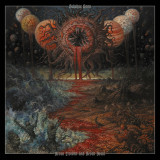
SULPHUR AEONs neuestes Werk ist gesegnet mit Kontrasten, klanglicher Ebbe und Flut. Ein Taifun kantiger Riffs und wilder Blastbeats, raffinierte Melodieschichten, dichte Atmosphäre und triumphal gesungene Refrains reißen dich mit. Ätherische Akustikgitarren, subtile Synthesizer, einen Hauch von Gothic ('The Yearning Abyss Devours Us'), satte Leads, E-Bow-Parts, heftige Aggression ('Arcane Cambrian Sorcery'), monumentale Schwere, die in hypnotische Gesangsmuster übergeht ('Seven Crowns And Seven Seals'), und ein großes Finale ('Beneath The Ziqqurrats') - "Seven Crowns And Seven Seals" überschreitet Genres; es wütet und zerstört, lullt dich im nächsten Moment in gefährlich täuschende Ruhe, nur um dich unwiderbringlich in den dunklen Strudel des Ozeans zu reißen. SULPHUR AEON meistern ihren durchdringenden Cinematic Death Metal der Extraklasse, gehen über sich hinaus und klingen dabei doch unverkennbar kohärent - perfekt eingefangen und verfeinert von den langjährigen Mitarbeitern Simon Werner und Michael Zech (Secrets Of The Moon, Bølzer etc.), während das Mastering von V. Santura (Triptykon, Dark Fortress) übernommen wurde. Was das Artwork betrifft, so haben SULPHUR AEON diesmal mit der Tradition gebrochen, wieder mit Ola Larsson zu arbeiten, und sich mit dem Italiener Paolo Girardi zusammengetan, um eine Lovecraft'sche Apokalypse darzustellen, die der Opulenz und Dynamik des Albums einen raueren Stil entgegensetzt.
Siavash Amini is a composer from Tehran, Iran. He Has worked with labels like Room40, Hallow Ground, Opal Tapes and Umor Rex for the better half of the past ten years. He has performed at festivals like CTM & MUTEK and many other well known international events. Apart from it Siavash is a co-founder of the “SET experimental art events” and “SETfest” in Tehran, Iran. His work ranges from fragile ambient pieces and brittle IDM (incorporating his distinctive style of atmospheric guitar playing) to noisy drones and bleak modern classical pieces. His compositions have been inspired by films such as Andrei Tarkovsky's The Mirror as well as novels by Dostoyesvky and poems by T.S. Eliot.
Saffronkeira is the Sardinian sound researcher Eugenio Caria being active in the electronic music scene since almost two decades. His most recent work - a cooperation with the Italian jazz trumpet legend Paolo Fresu - earned a lot of praise from the international music press for the pure timelessness of the album.
"Upon hearing a small snippet of sound an image is conjured, not a memory but not unfamiliar. A shell of a memory, thousand events superimposed on each other. While trying to extract points of a narrative to ease the discomfort of this recollection, I try to separate and unfold the image and with it the points of the spectrum which make up the sound, a shell of a narrative. Here is an album based upon an almost entirely imagined/ synthesized happening upon hearing a snippet of sound. It sounded like of a whole story that never happened but yet I felt myself amongst it’s participants, a sound triggering a false memory. Each sound in Eugenio’s collection of sounds and ideas guided me a to a point in the narrative and it’s construction. He had handed me a portals of some kind to a few scenes of the whole narrative. This is the soundtrack for that false memory from all the perspectives I can think of."
Killer Groove Records proudly presents the debut 45 by Italian cinematic funk trio Atabasca. A syncopated journey where funk, psychedelia, and cinematic groove merge into a timeless narrative suspended between rhythm and vision.
"Cacopoulos" and "Kundela Mawedi" mark the birth of Atabasca's sonic universe: the first two singles from the upcoming self-titled debut album,which will be released on March 27 in limited-edition LP, CD digipack, and digital formats.
On the A-side, "Cacopoulos" is an impetuous, visionary ride that fuses the power of instrumental groove with the evocative imagery of library music and Italian golden-age soundtracks. From the first beat, listeners are drawn into a dry, dusty landscape driven by a primal drum groove and the acid twang of a guitar that evokes the spirit of classic Westerns. Indeed, "Cacopoulos" pays homage to I Quattro dell'Ave Maria (Ace High) and to the legendary Eli Wallach, the sly outlaw who turns deception into revenge, a subtle yet powerful nod that ties the trio's sound to imagery steeped in dust, dreams, and redemption.
On the flip side, the sound of an old lap steel guitar evokes the gentle waves of the sea, opening the doors to "Kundela Mawedi", a dreamy track with exotic tones and heavenly atmospheres. The sonic journey unfolds through hypnotic rhythms and echoes of ancient cultures, where ethereal voices and warm, entrancing bass lines intertwine with psychedelic riffs and evocative guitar melodies, merging into a soundscape rich in warmth and mystery. The chorus, with its unexpected choral chant, adds a spark of magic. An elegant twist that gently stirs the dreamlike mood and transports the listener into a new sonic dimension, steeped in mysticism and tribal vibrations. "Kundela Mawedi" is more than just a song: it's a sensory experience, a musical ritual where tradition meets psychedelia, sand meets sea, and the soul dances upon the waves of time.
Recorded in a single take, the session captures the raw energy and natural atmosphere of the performance. Artistic production was handled by the trio alongside Andrea Fabrizii (digger, musician, producer, and catalogue curator for CAM Sugar), while Riccardo Ricci mastered the tracks at Velvet Room Mastering Studio in Brighton.
A killer double-sider, blending psychedelic and funk moods with percussive, jazzy textures. A must-have gem for every groove-loving DJ.
Like a desert blooming within the evergreen forests of the planet's far north, a unique, alien, disruptive environment: this is the vision behind Atabasca, the project of Luca Mongia (guitars, lap steel, keyboards, vocals), Paolo Mazziotti (bass, keyboards, vocals), and Valerio Pompei (drums, percussion, vocals). Individually active for over twenty years on both national and international scenes, the three musicians came together in 2023 to create a project that merges experience, experimentation, and creative freedom. Their music is imaginative and at times dreamlike, blending the classic concept of the instrumental trio with the worlds of film scoring and sound design.
Atabasca's sound moves through jazz-funk, world, and cinematic territories, weaving together afrobeat, desert, and psychedelic influences into a personal and timeless language. Each piece is a scene; each sound, a fragment of a world, a journey between reality and imagination where groove, texture, and organic timbre merge into a singular sonic ecosystem: a perpetually shifting balance that generates new inner landscapes.
Fans of Khruangbin, Surprise Chef, and instrumental psych-funk, take note!
- A1: Filastrocca (Nursery Rhyme) 1:11
- A2: Scuola Di Retorica (School Of Rethorics) 2:08
- A3: Retarius In Lotta (Retarius' Fight) 2:13
- A4: Scena, Fiaba, Pantomima (Scene, Tale, Pantomime) 5:24
- A5: Quartilla 0:31
- A6: Quartiere Dei Bordelli (Brothels' Quarter) 2:26
- A7: Mercato, Nebbia (Market, Fog) 1:02
- A8: Orgia (Orgy) 2:34
- B1: Bali 7:02
- B2: Epitaffio (Epitaph) 1:09
- B3: La Nave (The Ship) 1:34
- B4: Inizio Tempesta (Storm Begins) 1:04
- B5: Tempesta Violenta (Violent Storm) 1:30
- B6: Succhiata (Sucking) 0:12
- B7: Naufragio (Shipwreck) 1:33
- B8: Giardino Di Circe (Circe's Garden) 0:43
- B9: Proseleno 0:51
- B10: La Maga (The Witch) 1:19
- B11: Mangiando Il Cadavere + L'uccello (Eating The Corpse + The Bird) 2:27
Within the world of theatrical archives, there are the known, the unknown, the forgotten, and the lost. Demetrio Stratos' stage compositions for Teatro dell'Elfo's groundbreaking 1979 production Satyricon - directed by future Oscar winner Gabriele Salvatores - represents one such lost artifact now wondrously returned to life. This radical sonic work, integrating extended vocal techniques, Balinese instruments, and pioneering whale song recordings, stands as the final masterpiece of Italy's most visionary vocal experimenter, lost for over four decades until Die Schachtel's extraordinary recovery. As Stratos himself explained: "The musical operation performed on Satyricon is particular: the composer-musician here does not compose, but borrows ready-made music, vivisects it, melts it, intervenes and recomposes it on magnetic tape. The structure of the signifier, from a morphological point of view, presents itself as a conceptual collage." The music is obtained by utilizing compositions and musical elements from David Behrman, Joan La Barbara, Balinese Ketyak, Turkish Nay flute, Yugoslavian bagpipe, Pan flute, and whale song, with synthesizer interventions by Paolo Tofani. It began as part of something known - a wild, immersive theatrical event that inaugurated Teatro dell'Elfo's historic venue in 1979, was almost entirely forgotten, becoming lost and then unknown. The original production marked a radical departure for the company: no longer popular street theatre, but a dark, immersive, sophisticated spectacle that transformed their space into a rough wooden arena with a sand floor. Demetrio Stratos, working with Paolo Tofani (fellow Area member), created an entire sonic universe that subverted every conventional function of stage music. Their composition wasn't accompaniment, but autonomous sonic dramaturgy that integrated extended vocal techniques, archaic electronic elements, Nay flutes, Balinese instruments, and pioneering whale song recordings. The result was a three-dimensional soundscape that enveloped audiences, creating an otherworldly acoustic dimension. Stratos' score even intervened in the actors' vocal delivery, with the recordings capturing both the performance and his coaching sessions with the cast. The production featured young actors destined for fame - Elio De Capitani, Ferdinando Bruni, Cristina Crippa, Corinna Agustoni, Ida Marinelli - guided by Gabriele Salvatores in this adaptation of Petronius' ancient novel. Shortly after the Satyricon performances, Stratos was hospitalized for the condition that would lead to his death at just 33 years old. This work represents his final composition - a haunting farewell from one of Italy's most innovative sound artists. Die Schachtel presents this recovered work in collaboration with Teatro dell'Elfo, pulled from the original magnetic tape and carefully restored. Satyricon '79 is one of the great artifacts of 1970s Italian avant-garde - a wild, grinding sonic expose which sucks the ear into its depths, made in the spirit of collaboration and creative risk-taking. The edition includes critical apparatus with essays, testimonies from protagonists, and period photographic documentation, documenting an unrepeatable moment where theatre, vocal research and sonic experimentation converged. This release marks a poignant moment in experimental music history - Stratos' final work, now rescued from the archives and restored to its rightful place in the canon of Italian avant-garde masterpieces. A true wonder of towering historical importance. As essential as it gets for any fan of experimental music, or the history of the Italian avant-garde. Fully restored and newly mastered from the original analog tapes. Absolutely essential.
- A1: Let The Guitar Play (Radio Version) Feat. Darryl "Dmc" Mcdaniels
- A2: Stranger In Moscow (Sentient Version)
- A3: Whatever Happens (Sentient Version) With Michael Jackson
- A4: Please Don't Take Your Love (Sentient Version) With Smokey Robinson *Previously Unreleased
- B1: Get On (Sentient Version) With Miles Davis & Paolo Rustichelli
- B2: Vers Le Soleil (Sentient Version) With Paolo Rustichelli
- B3: Coherence Feat.. Cindy Blackman Santana) *Previously Unreleased
- B4: Blues For Salvador
Carlos Santana ist der große musikalische Kollaborateur, der seinen einzigartigen Gitarrenstil und seine weitreichende musikalische Vision mit einer großen Vielfalt von Künstlern verbindet, um etwas Neues, Einzigartiges und Transzendentes zu schaffen. Santanas Vision für Sentient war es, seine jüngsten Kollaborationen aus einer neuen Perspektive zu betrachten und sie zu einer klanglichen Pilgerreise durch Jazz, Hip-Hop, Soul, Rock und lateinamerikanische Rhythmen zu verweben. Er hat die Songs nicht nur so arrangiert, dass sie seiner Vision entsprechen, sondern viele von ihnen auch neu interpretiert und einige Aspekte der Tracks verbessert, um ein kohärentes Hörerlebnis zu schaffen. Die Songs auf Sentient reichen von aktuellen Hits und Kollaborationen mit Superstars bis hin zu seltenen, unveröffentlichten und übersehenen Tracks, die Carlos in einem neuen Kontext präsentieren wollte. Das Ergebnis ist eine spirituelle Reise durch die unendlichen Möglichkeiten der Musik, geführt von Santanas kompromissloser Muse.
- A1: Caravan (Tizol, Ellington) 5:50
- A2: Wishes (F. Sotgiu) 3:05
- A3: Ballad For Aisha (Tyner) 5:11
- A4: Stranatole (F. Sotgiu) 2:50
- B1: Black Bats And Poles (Walrath) 4:14
- B2: 7Th Street (F. Sotgiu) 4:48
- B3: Wise One (Coltrane) 3:24
- A1: Afro Blue (Santamaria) 3:37
- A2: Duke Ellington’s Sound Of Love (Miingus) 4:48
- A3: Take Five (Desmond) 5:00
- A4: Lotus Blossom (Strayhorn) 1:06
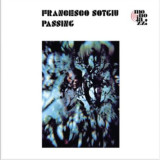
- B1: Passing (F. Sotgiu, L. Bonafede) 7:09
- B2: Calm (F. Sotgiu) 4:35
- B3: My Foolish Heart (Washington, Young) 6:37
Francesco Sotgiu has forged a unique and very swinging project of songs. With a quintet consisting of Luigi Bonafede on piano, Emanuele Cisi and Riccardo Luppi on woodwinds, Salvatore Maiore on bass, Francesco on drums, and with special guest Paolo Fresu on trumpet to cap off this heartfelt collection. There is also a nice diversity of groups within this larger collection. A nice trio piece called “Calm” featuring Paolo Birro sitting in with Marco Micheli and Francesco. And one called “Lotus Blossom” where Francesco shows his considerable skills and soul on violin. But the bulk of the material is straight-ahead jazz and is totally swinging and soulful, proving that jazz has no borders and is a worldwide language to which Francesco has added to that tradition with this project and all the great voices he has included here. Bravo maestro.
This is the comment of Gil Goldstein, American accordion player who won 5 Grammys and collaborated with giants such as Gil Evans, Wayne Shorter, and Michel Petrucciani.
This record was recorded in the middle of the pandemic times, and most of the work for preparing this record took place via the telephone: the selection of the songs on paper, the exchange of ideas on arrangements, staff and instruments, a sort of “phone rehearsal” of the structure of the songs, with the choice of a solo; everything else, everything that will happen in the recording sessions, is the result of a controlled improvisation, a jam session masterfully captured in the studio through the use of well-positioned ribbon microphones.
This is why “Passing,” literally “passing” or “crossing”: because the musicians have gone through listening to these songs as teenagers, and find themselves today, as a mature meeting of old friends who create an informal game made of nostalgic fun, great personality, confrontation, and deep spirituality. In the classic “Caravan” by Ellington and Tizol or “Afro Blue” by Mongo Santamaria, Coltrane toning, the Latin accent of the rhythm section supports the interpretation of the theme and the interplay in the solos between the soprano and tenor saxophones by Cisi & Luppi, and the piano by Bonafede.
A certain elegance in the execution distinguishes pieces such as Duke Ellington’s “Sound of Love,” yet another tribute by Mingus to the Duke, with a calibrated solo on the double bass of Maiore and the flute by Luppi, the immortal “Take Five” by Paul Desmond, with the highlighted soprano by Cisi, “Wishes,” “7th Street,” and the eponymous “Passing,” all pieces composed by Sotgiu, characterized by the precise medium/fast drive of the drums and a certain “cinematic” taste of the main themes.
In songs such as “Black Bats and Poles,” composed by trumpeter Jack Walrath for the Mingus Orchestra, and in “Stranatole,” an original piece in which Sotgiu writes a theme of Monk’s influence and enjoys overturning the traditional “Anatole Jazz” structure, the quintet opts for an effective hard bop language, with exciting moments of dazzling virtuosity in Bonafede’s solo. While in Coltrane’s “Wise One” and McCoy Tyner’s “Ballad for Aisha,” we enter a modal, mystical, and ceremonial jazz, of a cosmic depth, which seems to hover in the sweet volume of the great hall of the recording studio. These are truly magnificent interpretations.
A special separate mention for two classics such as “My Foolish Heart” by Victor Young, performed in trio by Sotgiu, Maiore, and the unmistakable trumpet by Paolo Fresu, and the (unfortunately very short) “Lotus Blossom” by Billy Strayhorn and Duke Ellington, which in the piano-violin duo of Birro and Sotgiu, in a minute gives a suspended momentary magic, sums up the roots of African-American jazz music, and also referencing an old-fashioned Italian musical sensitivity, typical of Nino Rota’s music for Federico Fellini’s films.
Maria Callas was born to a Greek family in New York in 1923. Her vocal training took place in Athens, where her teacher was the coloratura soprano Elvira de Hidalgo, who had sung with Enrico Caruso and Feodor Chaliapin. After early performances in Greece, Callas’s international career was launched in 1947 when she performed the title role in Ponchielli’s La Gioconda at the Arena di Verona in Italy.
Her voice defied simple classification and her artistic range was extraordinary. In her early twenties she sang such heavy dramatic roles as Gioconda, Turandot, Brünnhilde and Isolde, but over the course of her career her most famous roles came to be: Bellini’s Norma and Amina (La sonnambula); Verdi’s Violetta (La traviata); Donizetti’s Lucia di Lammermoor and Anna Bolena, Cherubini’s Medea and Puccini’s Tosca. Though her timbre was not always conventionally beautiful, Callas’s musicianship and phrasing were in a class of their own. She brought characters to vivid life with her skill in colouring her tone and making insightful use of the text.
She is credited with changing the history of opera: by placing a perhaps unprecedented emphasis on musical integrity and dramatic truth, and by transforming perceptions – and reviving the fortunes – of the bel canto repertoire, particularly Bellini and Donizetti.
The 1950s marked the height of Callas’s career. Its base lay in the opera houses of Italy, and she became the prima donna assoluta of Milan’s legendary La Scala – notably in the productions
of Luchino Visconti – but her operatic appearances also encompassed London’s Royal Opera House, the New York Metropolitan Opera, Paris Opéra, the Vienna State Opera, and the opera houses of Chicago, Dallas, Houston, Lisbon, and, in the early 1950s, Mexico City, São Paolo and Rio de Janeiro.
From 1959, when she started a life-changing love affair with the Greek shipping magnate Aristotle Onassis, her performing career slowed down and her voice became more fragile. Her final stage performances came in 1965, when she was only 42.
There were many plans for a return to the stage – and for further complete recordings – but they never reached fruition, though in 1974 she gave a series of concerts in Europe, North America and Japan with the tenor Giuseppe di Stefano; he had partnered her frequently in the opera house and in the studio, not least in the 1953 La Scala Tosca under Victor de Sabata, considered a landmark in recording history. Callas died alone in her Paris apartment in September 1977.
- Ermione
- Elena
- Menelao
- Tindaro
- Nuovo Sposo
- Uccidere Elena
- Amata Luce Addio
- Pilade
- Niente Di Sacro
- Pugnali
Die Schachtel Records is proud to present Ifigenia/Oreste, a new vinyl LP by celebrated Italian composer Paolo Spaccamonti. This album marks the seventh installment in the label's renowned Decay Music series, which has become synonymous with deeply emotive, abstract, and electronic/ambient music, which has so fare featured works of such names as Stefano Pilia, Giovanni di Domenico, Sandro Mussida, Vértice, Damavand and Claudio Rocchetti. Aim of the series is composing a fascinating scenario of the most interesting names of experimental musicians – mainly of Italian origins - working at the intersection of sound and music, abstract and visual, storytelling and abstract composition.
Paolo Spaccamonti has long been a significant figure in the contemporary music scene, known for his ability to bridge the worlds of instrumental, electronic, and experimental music. His most recent release, Nel Torbido (2023), is a testament to his ever-evolving artistry. With Nel Torbido, Spaccamonti delivered a haunting and immersive sonic experience that oscillates between tension and release, bringing together moody soundscapes, unsettling textures, and his signature understated guitar work. His exploration of silence, noise, and melodic tension has earned him recognition as one of the most unique voices in modern composition.
Composed by Spaccamonti, Ifigenia/Oreste is the original score for the theatrical production IFIGENIA / ORESTE, directed by Valerio Binasco and produced by Teatro Stabile di Torino. The music, both haunting and subtle, mirrors the play's minimalist and intense staging, immersing listeners in an evocative soundscape that blends ambient textures with guitar-driven melodies. The music was recorded and processed by Filippo Conti, with additional production and mixing by Stefano Pilia. The vinyl’s design has been crafted by Bruno Stucchi of Dinamomilano, making this release a fusion of sound, visual, staging and cultural reference.
In reflecting on his collaboration with director Valerio Binasco, Spaccamonti said: "From the first meeting with Valerio, it was clear that we aimed to create a production stripped of any unnecessary stylistic embellishments. Ifigenia and Oreste had to be severe, devoid of visual distractions, simple yet extreme in its own way. I sought to follow the same path with the music. The foundation is always the guitar, but I wanted to avoid overloading it, either harmonically or sonically. Sometimes, I treated it like a fragmented background noise; other times, I ventured into more aggressive, melancholic, or even melodic terrains, but always in a very human way. The text demanded an atmosphere that lived in the alternation of silence and rarefaction, like in the films of Bresson and Lanthimos. Short scenes interrupted by moments of darkness. In a marked rhythm, a suspense constantly suggesting the advance toward death, announced from the very first scene. Hence, the emphasis I wanted to place on silence through the music, even within individual tracks. Long, granular tails, like the (few) lights on stage."
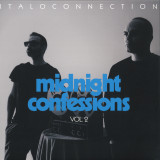
2021. Italoconnection, the partnership of Fred Ventura and Paolo Gozetti, released Midnight Confessions Vol 1. Three years on, the awaited second volume has arrived. All of the analogue emotion that characterised the first collection is present from the outset, warm throbs of bass coupled with clean melodies in “The Wait”. Smoky lyrics permeate the nine track album, the unmistakable timbre of Ventura’s voice recanting tales of optimistic encounters and lost love. As with the 2021 release, collaborations with fellow italo romantics are peppered throughout. Francesca Gastaldi returns to work with Italoconnection once again. Having featured on their Humanize EP, Gastaldi’s vibrant voice shines through the smouldering synthlines and robust beats of “Live Forever”. Jaia Sowden takes centre stage for “Just Like Water”. A story of discontent and disconnect is sang over bittersweet keys as eastern undercurrents flow. Contemporary commentary is intertwined with undulating melodies and distant lyrics in “Cold War Lovers”, a cold wave edge cutting through the sounds and words of “Systematic” .The dancefloor surfaces throughout the record. Bodies are pulled tight by the bold and bright bars of “Why” before drifting apart in the lovelorn lamentations of “Lover 2 Lover”. “Europa” pays homage to the machine music of the continent as a litany of influences are drawn upon . The title piece closes. A fragile drum pattern is bolstered by cascading chords, piano notes sailing alongside words by Gastaldi and Ventura. Welcome confessions from musicians who live and breath the synthesizer traditions of Italy.
Special exclusive 7" from Il Sogno Del Marinaio, the avant-rock trio formed by legendary bassist Mike Watt (Minutemen, Firehose, Stooges), cult Italian experimentalist Stefano Pilia (Massimo Volume, In Zaire, Afterhours, Rokia Traore) and drummer Paolo Mongardi (Zeus, Fuzz Orchestra, Fulkanelli). Directly from fratello Mike Watt's words: "the "wing and a prayer" seven inch on _improved sequence_ was a product of the covid19 sitch around xmas of 2020. it was put together remotely, w/me here in san pedro, california, usa while from Italy stefano pilia (in bologna) and paolo mongardi (in imola) brought what they had from italy ... yes, the internet can be used for more than spreading hate and lies - it can also be used to collaborate in the spirit of artistic expression! cazzo, imagine that? il sogno del marinaio had finished work w/their "terzo" album and I thought a good way to rally the band would be to focus on a smaller release that reflected the current sitch we were in - see, the basic tracks of "terzo" were recorded in eleven months earlier here in my pedro town at _casa hanzo_ (stefano pilia and paolo mongardi traveling here by plane) so we had no idea what was ahead of us concerning the challenges of that fucking virus sitch. now the "terzo" album was not finished w/those basic tracks getting recorded, we had spiel (vocals) to add plus other stuff and of course it had to be mixed (tim in wales did a great job w/this - much respect to him!) so those experiences of those early covid19 times got "superimposed" on the music that was created right before it was on us, very trippy. that was a big reason I brought the three tunes of this "wing and a prayer" seven inch to stefano pilia and paolo mongardi - all they had was my bass but I believed they could "take the ball and run w/it" cuz that's how powerful I believe music to be: it can be able to overcome 'pert-near any hell trying to stomp it down. stefano pilia chose "wing and a prayer" to mix, paolo mongardi chose "tantrum" and I got what was left: "hail mary pass" - oh, I got my buddies stephen perkins to help w/percussion and petra haden to help w/singing, violin and mandolin. so one reality reality is w/these three tunes is that no one is actually playing w/each other in real time on this little record! it's all done by trading files via the internet...the starting for all three tunes being was my bass - ain't that a trip? shows how bass can be that springboard or launch pad I've always known it could be when not aiding and abetting a tune after the fact – both these "roles" for bass have been very interesting to me, going back to my early days as a minutemen and writing tunes for d boon and George hurley and by also bringing bass to their stuff
Following the release of Lee Selmoco's "Mosaico" we continue our journey with Vedette Records to bring back to life part of their incredible catalog, with the reissue of the first instalment of the "High Tension" series by Lesiman. Born in Florence in 1935, Paolo Renosto, the man behind the moniker Lesiman, was an incredible composer, experimenter, music teacher and piano player whose amazing skills and sound research brought him to work with Luigi Dallapiccola and Bruno Maderna, as well as being a member of the Associazione Nuova Consonanza of Roma. He obviously joined, for some time, the renowned Gruppo d’Improvvisazione, with Franco Evangelisti and Domenico Guaccero. Released exactly 50 years ago and packed with dramatic tension, obscure drums and asphyxiating atmospheres revolving around the theme of war, composed with the additional input of Romolo Grano, Sandro Brugnolini and Guido Baggiani, this first volume in the series is a holy grail in Italian libraries as well as a prime example of "music especially crafted for films, television, radio, publicity and industrial use". Now available on vinyl for the first time as a limited edition of 500 copies.
Terzo is the third album by Il Sogno Del Marinaio, the avant-rock trio formed by legendary bassist Mike Watt (Minutemen, Firehose, Stooges), cult Italian experimentalist Stefano Pilia (Massimo Volume, In Zaire, Afterhours, Rokia Traore) and drummer Paolo Mongardi (Zeus, Fuzz Orchestra, Fulkanelli). This new batch of recordings is an incredible document of a band that’s creating their own path, ascending to new heights while bending the traditional
rock format.
Recorded at Casa Hanzo in San Pedro (US) and completed at Blindsun in Bologna (IT) the album features collaborations with Ramon Moro on trumpet and Petra Haden on vocals. Mixed beautifully by thighpaulsandra (Coil, UUUU, Spiritualized) and mastered by Giovanni
Versari with artwork by Michelangelo Setola. Terzo is the sound of a band that’s completely confident in their chops, their past suggesting that new possibilities have now been found and that the only territory that needs exploring is free-spirited, magical, restless and uncompromising. “Il Sogno Del Marinaio’s strength is in its effortless balance between Watt’s formidable past and his still potent future.” - Pitchfork.
The word Asapani is part of the artistic vocabulary of Paolo "Batà" Bianconcini, percussionist of the La Scimmia Records collective, founding member of the Circolo Psiconautico and part of the Neapolitan bands Parbleu, Funkin' Machine and Nu Genea. This ancient-sounding term is a creation of the artist, who defines it as a word of nature, but also the (italian) acronym of Listen to the Silence, Listen to the Peace, Listen to the Inner Nothingness. More than a simple term, an exhortation.
The music contained in Asapani was written and produced between 2022 and part of 2023 by Paolo “Batà” Bianconcini who together with the Circolo Psiconautico (Paolo Petrella on bass and synth, Pietro Santangelo on wind instruments and Roberto Porzio on synths) and takes shape from observation of time and the infinite possibility we have of blocking its fragments and making them our own and then sharing them in another form. The intent is to transport the listener outside of himself, through sound vibrations, during the span of four long tracks that melt into each other feeling like one singular body of work.
This album spans several genres, but at the same time is unique in its style. Spiritual jazz blended with primitive settings, achieving a sensation of sonic primitivism. The listener is projected into a circle of musicians who, sitting around a fireplace, are transported towards infinity by their internal vibrations.The research starts from the four elements of nature (water, fire, earth and air) and thus uniting and fusing with each other they make us question our existence, our depths.
As Batà himself explains, starting from the four fundamental elements in order to keep the search for the fifth element constant.
A location, Melizzano, on the western slopes of Monte Taburno, where the Batahaus stands, the physical and spiritual home of Batà, a magical place in which the Circolo Psiconautico meets, with the aim of navigating the waves of the unconscious and composing music which, through contamination and experimentation, captures the moods of the moment and projects images and colours from the inside out that speak to everyone. Like a real club, the Psiconauti come together to give each other the chance to explore together, create suggestions and get excited among friends.
- A1: Walter Rizzati - L`unica Chance
- A2: Chrisma - Amore
- A3: I Robots - Tabù Tubà (Part 1)
- B1: Luca D`ammonio - Oh Caron
- B2: Ramasandiran Somusundaram - Contrabbando Di Fagioli
- B3: Jean Paul & Angelique - Africa Sound
- C1: Weyman Corporation - Kumbayero
- C2: African Revival - Soul Makossa
- C3: Lara Saint Paul - The Voodoo Lady
- D1: Beryl Cunningham - Why O
- D2: Augusto Martelli & The Real Mccoy - Calories
- D3: Prognosi Riservata - M A.a.g.o
Africamore: The Afro-Funk Side of Italy (1973-1978)
Continuing Four Flies' dedication to delving into lesser-explored periods of Italian music, Africamore takes us on a captivating journey into the intersection of Afro-funk and the Italian soundscape during the six years between 1973 and 1978 - a time when disco was looming on the horizon and the nightclub market was rapidly expanding.
Before reaching Italian shores, the infectious sound originating from African and Afro-Caribbean roots traversed both the Mediterranean and the Atlantic, landing on New York dancefloors, where DJ Dave Mancuso discovered "Soul Makossa" by Manu Dibango. In 1973, from Mancuso's Loft parties, the song's hypnotic groove spread to the rest of the globe, including in Italy, where it sparked a wave of imitations and variations.
Tribal influences thus found their way into Italian soul-funk and early-disco productions released between 1973 and 1978 – from psychedelic-tinged tunes like Jean Paul & Angelique's "Africa Sound" to the Afrobeat-inspired club banger "Kumbayero" by composer/producer Albert Verrecchia (aka Weyman Corporation); and from groundbreaking Afro-cosmic songs like Chrisma's "Amore", co-written by Vangelis and featuring the rhythms of Ghanaian-British Afro-rock band Osibisa, to mind-blowing floor-fillers like Beryl Cunningham's "Why O", a re-write of Nat King Cole's "Calypso Blues" arranged by Paolo Ormi, with percussion breaks that sound pretty much like what would later become known as techno.
Combining feel-good vibes with driving rhythms, world-style percussion, and even synths, all these productions pushed the boundaries of dance music at a time when disco had not yet taken over. In doing so, they sowed many of the seeds of the later Italian cosmic scene and its unique mixture of African elements, disco-funk and electronic music.
This was a brief but nuanced period in Italian music history, one that deserves to be rediscovered, with love.
Africamore is due out on March 22nd and will be available as a gatefold 2LP and digipak CD. Both formats come with stunning artwork by Kathrin Remest and liner notes by Pierpaolo De Sanctis and Elena Miraglia.
repress !
A lovely selection of mixes from Paolo Baldini’s Dubfiles, all mixed
at his Alambic studio in San Foca Italy. The vocal is supplied by Al Brown and music is from his band from the 80s the Inner Force.
There are 3 rumbling dubs as well as the opening vocal cut from
Al Brown. We have added some keyboard action from Toike Mitsuhiro.
The best of the traditional elements of Jamaican music, with modern mixing, and all done with a strong sense of respect towards
the original recording and playing. Comes in a custom Pressure Sounds sleeve.
SULPHUR AEONs neuestes Werk ist gesegnet mit Kontrasten, klanglicher Ebbe und Flut. Ein Taifun kantiger Riffs und wilder Blastbeats, raffinierte Melodieschichten, dichte Atmosphäre und triumphal gesungene Refrains reißen dich mit. Ätherische Akustikgitarren, subtile Synthesizer, einen Hauch von Gothic ('The Yearning Abyss Devours Us'), satte Leads, E-Bow-Parts, heftige Aggression ('Arcane Cambrian Sorcery'), monumentale Schwere, die in hypnotische Gesangsmuster übergeht ('Seven Crowns And Seven Seals'), und ein großes Finale ('Beneath The Ziqqurrats') - "Seven Crowns And Seven Seals" überschreitet Genres; es wütet und zerstört, lullt dich im nächsten Moment in gefährlich täuschende Ruhe, nur um dich unwiderbringlich in den dunklen Strudel des Ozeans zu reißen. SULPHUR AEON meistern ihren durchdringenden Cinematic Death Metal der Extraklasse, gehen über sich hinaus und klingen dabei doch unverkennbar kohärent - perfekt eingefangen und verfeinert von den langjährigen Mitarbeitern Simon Werner und Michael Zech (Secrets Of The Moon, Bølzer etc.), während das Mastering von V. Santura (Triptykon, Dark Fortress) übernommen wurde. Was das Artwork betrifft, so haben SULPHUR AEON diesmal mit der Tradition gebrochen, wieder mit Ola Larsson zu arbeiten, und sich mit dem Italiener Paolo Girardi zusammengetan, um eine Lovecraft'sche Apokalypse darzustellen, die der Opulenz und Dynamik des Albums einen raueren Stil entgegensetzt.
SULPHUR AEONs "Seven Crowns And Seven Seals" ist der offensichtliche und - zumindest im Moment - möglicherweise auch der Höhepunkt einer Band, die besessen von ihrer Kreativität ist und sich leidenschaftlich und bereitwillig der Herausforderung stellt, Musik zu produzieren, die so zeitlos und originell ist wie das literarische Vermächtnis von H.P. Lovecraft. Stürzen Sie sich in die dunklen Gewässer und lassen Sie sich von der Flut des Ozeans verschlingen...
The concept behind the debut album by Neapolitan producer Paolo Petrella, (also known for Fratelli Malibu, SuperMegaFuckinMachine, and Nu Genea's live band bass player) is both straightforward and unparalleled. It involves re-imagining Renato Carosone's iconic hits infused with the vibrant essence of Cumbia. An original and fresh perspective of the history of Napoli, re-thinking traditions while blending cultures, like an imaginary colony of South Americans living in Napoli’s fishermen neighborhood of Santa Lucia.
Cumbia Luciana sounds like the manifestation of a dream, as the poem on the liner notes recites:
“It's 3pm in the afternoon, the sea is calm and there are some clouds in the sky from time to time the sounds of mopeds can be heard in the street. A boy is in his bedroom and out of boredom keeps time by tapping his fingers on the bed frame.
He leaves the house for a walk keeping the sea on his side. Rumor has it that ten days ago immigrants arrived from Peru,
the boy walks and listens it's Sunday, day of celebration, it's 3.30pm the boy walks and listens he is interrupted by a whole new sound, never heard before from a window of a ground floor house men are playing, the boy stands under that window for a while”
- A1: Ennio Morricone - Mio Caro Assassino (From Mio Caro Assassino/My Dear Killer (1971)
- A2: Bruno Nicolai - La Notte Che Evelyn Uscì Dalla Tomba (Feat Edda Dell'orso - Long Version - From La Notte Che Evelyn Uscì Dalla Tomba/The Night Evelyn Came Out Of The Grave (1971)
- A3: Bruno Nicolai - La Dama Rossa Uccide Sette Volte (Edit - From La Dama Rossa Uccide Sette Volte/The Red Queen Kills Seven Times (1972)
- A4: Stelvio Cipriani - Tribal Shake (From Reazione A Catena/A Bay Of Blood (1971)
- A5: Stelvio Cipriani - Il Sesso Del Diavolo (Finale) (Finale)
- A6: Stelvio Cipriani - Deviation-M1 (From Deviation (1971)
- B1: Riz Ortolani - L'etrusco Uccide Ancora (Titoli) (Titoli)
- B2: Daniele Patucchi - Giallo In Tensione (From Frankenstein '80 (1972)
- B3: Ennio Morricone - Ansimando (Feat Edda Dell'orso - From Macchie Solari/Autopsy (1975)
- B4: Manuel De Sica - Black Dream (From Mystery Tour (1985)
- B5: Paolo Gatti & Alfonso Zenga - Cerro Torre (From Cesare Maestri: Il Ragno Delle Dolomiti (1980)
- B6: Berto Pisano - Greta (From La Morte Ha Sorriso All'assassino/Death Smiles On A Murderer (1973)
- B7: Sante Maria Romitelli - Bambola Sensuale (From La Rossa Dalla Pelle Che Scotta/The Sensuous Doll (1972)
- C1: Adolfo Waitzman - Languidamente (From Pensione Paura/Hotel Fear (1978)
- C2: Nico Fidenco - Il Demonio In Convento (From Immagini Di Un Convento/Images In A Convent (1979)
- C3: Ettore De Carolis - Flavour Of Death (From Il Cavaliere, La Morte E Il Diavolo (1983)
- C4: Marcello Giombini - Un Gioco Per Eveline-M11 (From Un Gioco Per Eveline (1971)
- C5: Carlo Maria Cordio - Absurd (From Rosso Sangue/Absurd (1981)
- C6: Stelvio Cipriani - Devil Dance (Performed By Goblin - From Un'ombra Nell'ombra/Ring Of Darkness (1979)
- C7: Daniele Patucchi - E Tanta Paura-M2 (From E Tanta Paura/Plot Of Fear (1976)
- C8: Marcello Giombini - Orinoco: Prigioniere Del Sesso-M19 (From Orinoco: Prigioniere Del Sesso (1980)
- D1: Franco Micalizzi - Bargain With The Devil #3 (From Chi Sei?/Beyond The Door (1974)
- D2: Stefano Liberati - The Prophecy (Version A - From I Pensieri Dell'occhio (1978)
- D3: Luigi Ceccarelli - Walking Through The Shadows (From Difendimi Dalla Notte (1981)
- D4: Daniele Patucchi - Minaccia Sulla Citta (From Belve Feroci/Wild Beasts (1984)
Red vinyl[28,53 €]
PAURA explores the horror repertoire from the precious CAM Sugar archives taking us on a hypnotic journey into the labyrinths of fear, through the different variations that Italian horror took on from the esoteric and supernatural to the slasher films of the early 1970s; to reinterpretations of Romantic literature and gothic fiction to the splatter films of the ‘80s; and from witchcraft to metropolitan horror. This is not a real “best of” but an eclectic menu full of mysterious voices, childlike lullabies, sweet melodies, obsessive music boxes, obstinate harpsichords, crazy distortions and threatening synthesizers, conceived as a succession of sequences, as if a film edit. The new collection includes some of the most creative music ever written and strives to do justice not only to some of the best known composers in this genre, but also to many great unsung composers: From celebrated composers like Ennio Morricone, Riz Ortolani & Stelvio Cipriani to long-forgotten personalities who fed the industrial backbone of Italian cinema such as Daniele Patucchi, Marcelo Giombini & Berto Pisano. The collection includes 6 previously unreleased tracks plus 3 tracks released on vinyl for the first time and 5 tracks available commercially for the first time (originally released only as a limited promo item).
TEMPLE OF DREAD bleiben dem Old School Death Metal grundsätzlich auch auf ihrem vierten Albumhammer "Beyond Acheron" treu. Dazu haben die Ostfriesen den Fokus auf eine dunkle und schwere Atmosphäre gelegt und mit einigen schönen Prisen Melancholie sowie schwarzen Momenten abgerundet. Das stählerne Sahnehäubchen liefern Gastbeiträge des ehemaligen MORGOTH und INSIDIOUS DISEASE Sängers Marc Grewe sowie GOD DETHRONED Frontmann Henri Sattler ab. Die Texte stammen aus der blutigen Feder von Bandfreund und Wortschmied Frank Albers. Die Zeilen des Psychologen drehen sich um antike Mythen und Historie mit Protagonisten wie Ikarus, Vulkan, Hades, Kleopatra und Marcus Antonius. Auch das Cover Artwork von "Beyond Acheron", das vom gefeierten italienischen Künstler Paolo Girardi gestaltet wurde, bleibt beim antiken Thema und zeigt Charon, den Fährmann der griechischen Unterwelt Hades. Die massive Produktion von "Beyond Acheron" stammt von TEMPLE OF DREADs Schlagzeuger Jörg Uken, der in seinem weit bekannten Soundlodge Tonstudio unter anderem bereits Alben von DEW-SCENTED, GOD DETHRONED, OBSCENITY, SUICIDAL ANGELS und WARPATH aufgenommen hat. TEMPLE OF DREAD wurden auf Spiekeroog im Jahr 2017 von Gitarrist Markus Bünnemeyer als Ventil für seine Old School Death Metal Ambitionen gegründet. Im Jahr 2018 stießen Sänger Jens Finger und Schlagzeuger Jörg Uken dazu, mit denen Bünnemeyer auch bei Slaughterday aktiv war. Schon im nächsten Jahr erschien das Debütalbum "Blood Craving Mantras" (2019). Das Trio erwies sich als äußerst kreativ und zwei weitere Alben folgten binnen kurzer Zeit: "World Sacrifice" (2020) und das von der Kritik hochgelobte "Hades Unleashed" im Jahr 2021. Mit "Beyond Acheron" setzen TEMPLE OF DREAD neue Maßstäbe für intelligente Death Metal Brutalität!
Drop a needle on Psyché's debut album and you'll see visions, or rather Mediterranean visions, be they of waves of heat shimmering above dunes of sand, or of women dancing around a bonfire on a rocky plain, or of bushy cliffs overlooking emerald-green and turquoise sea. The name Psyché is of course ancient Greek for 'soul' or 'mind', signifying the band's love of psychedelic funk, but also the wide range of Mediterranean influences – from Southern Europe to the Balkan Peninsula, and from Anatolia to the Maghreb – that provide an endless source of inspiration for their hypnotic sound and minimalist style.
Psyché members Marcello Giannini (Guru, Nu Genea, Slivovitz), Andrea De Fazio (Parbleu, Nu Genea, Funkin Machine) and Paolo Petrella (Nu Genea) have been active in the Naples music scene for almost two decades, most notably during the first wave of the new Neapolitan Power movement (Slivovitz, Revenaz Quartet). Over the years they have often crossed paths and collaborated on side projects in various genres (math-rock duo Arduo and, more recently, synth-pop duo Fratelli Malibu), before working together as the rhythm section of Nu Genea's live band. Following their first tour with Nu Genea in 2018, they started Psyché with the intent of exploring more minimalist styles and making music with just a few elements.
A unique combination of psychedelia, groove and improvisation, the music of Psyché goes back to the roots of our future; it evokes visions of a mythical past, blending centuries-old music traditions and mixing them with modern genres. Like a warm Mediterranean breeze, it travels across lands, seas and eras, distilling essential rhythms and cosmic pulsations.
The album's opener "Kuma" (titled after the first ancient Greek colony on the Italian mainland, now an archeological site near Naples) is like a vibrant, magical wave. With its deliberately simple harmony and sharp guitar riffs, it travels across the Mediterranean from Italy to North Africa, first lapping gently on Greek and Turkish shores – with some compositional elements reminiscent of Italian pop legend Lucio Battisti – and then speeding up and landing on the driving, syncopated rhythms of afrobeat. While listening to it your eyes fill with images of small white houses shining in the sun, of fig trees heavy with fruit, of spice bazaars and colourful medinas, and you can almost feel the desert wind blowing in your hair.
The journey continues with two examples of Psyché's bold and elegant approach to contemporary afrobeat and cumbia fusion: "Cumbia Mahàre" and "Amma". The former combines minimal synths and exhilarating rhythmic patterns of drums, percussion, guitar and bass, drawing us into the movements of an imaginary ritual dance (the term mahàre was used in Southern Italian dialects to indicate witches). Next is the cinematic and mysterious ambiance of "Angizia" (a snake goddess worshipped by the Marsi in ancient Italy), another fascinating mixture of different sonic traditions and cultures where hip-hop/funk drums are blended with Maghreb influences, Balkan echoes, and hypnotic, Theremin-like synths that have sort of a sci-fi movie quality to them.
The title track "Psyché", with its uptempo afro-rhythms, ethereal vocalizations and refined percussion, is almost a manifesto of the band's style and confirms the freshness of their minimalism, which is not afraid of taking in the sun of lands confined between the sea and the desert. The following "Manea" (named after the Roman-Etruscan goddess of the dead) is an afro-funk number with smooth and introspective dreamy jazz touches, and with an arrangement dominated by a guitar that, dripping notes like drops of water, creates a delicate, cinematic sound. Next, we come to "Hekate" (the Greek goddess of magic, witchcraft and crossroads), a track that fuses psychedelia, spacious Latin guitars and a fast, tight groove. The album comes to a close with the exquisite melodic ballad "Kelebek", which seamlessly combines hip-hop drums and dreamy guitars, and whose warm, flowing sonorities and evocative atmospheres conjure the image of a butterfly (which is what kelebek means, in Turkish) floating over the Mediterranean and, from there, the world.
Drop a needle on Psyché's debut double-sider – the debut album is out on May 19th – and you'll see visions, or rather Mediterranean visions, be they of waves of heat shimmering above dunes of sand, or of women dancing around a bonfire on a rocky plain, or of bushy cliffs overlooking emerald-green and turquoise sea. The name Psyché is of course ancient Greek for 'soul' or 'mind',signifying the band's love of psychedelic funk, but also the wide range of Mediterranean influences – from Southern Europe to the Balkan Peninsula, and from Anatolia to the Maghreb – that provide an endless source of inspiration for their hypnotic sound and minimalist style.
Psyché members Marcello Giannini (Guru, Nu Genea, Slivovitz), Andrea De Fazio (Parbleu, Nu Genea, Funkin Machine) and Paolo Petrella (Nu Genea) have been active in the Naples music scene for almost two decades, most notably during the first wave of the new Neapolitan Power movement (Slivovitz, Revenaz Quartet). Over the years they have often crossed paths and collaborated on side projects in various genres (math-rock duo Arduo and, more recently, Italo-disco duo Fratelli Malibu), before working together as the rhythm section of Nu Genea's live band. Following their first tour with Nu Genea in 2018, they started Psyché with the intent of exploring more minimalist styles and making musicwith just a few elements.
A unique combination of psychedelia, groove and improvisation, the music of Psyché goes back to the roots of our future; it evokes visions of a mythical past, blending centuries-old music traditions and mixing them with modern genres. Like a warm Mediterranean breeze, it travels across lands, seas and eras, distilling essential rhythms and cosmic pulsations.
"Cumbia Mahàre", on side A of the 7-inch, dives deep into the origins of rhythm, drawing us into the movements of an imaginary ritual dance (the term mahàre was used in Southern Italian dialects to indicate witches). Through the interplay between minimal synths and exhilarating rhythmic patterns of drums, percussion, guitar and bass, Psyché take a fresh and bold approach to contemporary afrobeat and cumbia fusion.
"Ophis", on side B, is a mesmeric blend of African, Balkan and Turkish rhythms and sounds. Ethereal vocalizations and warm, hypnotic bass lines combine with psychedelic riffs and haunting melodies on guitar to evoke ancient cultures whose spiritslithers like a snake across the dunes of a sun-scorched desert.
'Unconscious Collective' is the first album by PS5 - the new ensemble led by Pietro Santangelo (Nu Guinea, Slivovitz, Fitness Forever) - and it will be out for Hyperjazz Records on 21th May 2021.
It's a musical experiment where layered memories and hidden feelings resonate as if they arise directly from the most recondite part of the unconscious and produce a suspension of the stream of consciousness. With the aim to create a state of trance and override the human reason, this is an imaginary round trip across the Mediterranean Sea and the Atlantic Ocean, ideally connecting Naples with North Africa and Latin America.
The arrangements wrote by Santangelo are based on great freedom of improvisation: while the melodic textures of the two saxophones didn't give any clear references, the other musicians followed the rhythmic pulse and its unpredictable ways. The music moves naturally along an imaginary line highlighting the ancestral connection between Jamaica and Ethiopia or between Nigeria and Cuba. In the background, Naples is a synthesis of all the sonic ingredients, mixed and cooked in its own mystical and spicy belly.
Besides Santangelo himself on the tenor and soprano saxophones, the collective is made up of: Paolo Bianconcini, a brilliant Neapolitan percussionist with a very deep Afro-Cuban background; Giuseppe Giroffi, young and talented alto and baritone saxophonist; the bassist Vincenzo Lamagna and the drummer Salvatore Rainone, both loyal members of the former Santangelo's trio.
Recorded live at the Auditorium Novecento in Naples, the legendary studio of Phonotype Records, 'Unconscious Collective' is mixed in analog format by Fabrizio Piccolo, and mastered by Davide Barbarulo at his 20Hz20KHz Studio.
Pietro Santangelo
Pietro was born, lives and plays in Naples. As a saxophonist and composer, he has released five albums with Slivovitz and one with his PS3 trio (Clinamen, Emme records 2017). Graduated in Digital Sound Processing at the Faculty of Physics of Federico II University, he is involved and engaged in the Italian scene of radical improvisation (Franco Ferguson, Elio Martusciello and Officina Arti Soniche, Collettivo NISE).
Multi-instrumentalist since forever, he has collaborated with Nu Guinea, Enzo Avitabile, Fitness Forever, Marzouk Mejri, Dennis Bovell and many others.
He's also author of soundtracks and electronic musician. He appreciates analog photography, loves walking outdoors. He hates biographical notes.
- A1: Horvitz Morris Previte Trio - Todos Santos
- A2: Christina Petrie - Ballads
- A3: Christmas Decorations - Broken Leg Hours
- A4: Gilles Chabenat And Frederic Paris - De L'eau Et Des Amandes
- B1: Antonietta Borgoli - Dindindino Dindindalo
- B2: Tanto Pressanto - I Mues Immer A Di Tanke
- B3: Yuko Kono - Triangle
- B4: The Unthanks - Waiting
- C1: David Lang - Just (After Song Of Songs)
- C2: Rachel Bonch-Bruevich - Untitled (Ddr 1972)
- D1: Merula - Dags Att Sova
- D2: Stella Vander - Ondes
- D3: Hydroplane - The Love You Bring
Over the better half of a decade, Time is Away, the London-based duo of Jack Rollo and Elaine Tierney, have made tender and heartfelt transmissions through countless mixes, sound works and radio. Exploring deeply human themes of memory, persistence and resistance using an assemblage of source material, the duo's unique mode of storytelling culminates in Ballads, a new suite of songs and, significantly, their first officially licensed compilation.
From the opening notes of Horvitz Morris Previte Trio's jazz romanticism to Gilles Chabenat and Frédéric Paris's lively reimagined standard, the haunting vocal seance of Tanto Pressanto and the mesmerising swirls of The Unthanks, Yuko Kono and Rachel Bonch-Bruevich, the spirit of Ballads roams through generations of affectionate songwriting and conjures images both candid and surreal. The voice of poet and longtime collaborator Christina Petrie appears briefly and contemplates the "sighs and replies… the space between verses" of the Ballad, its beauty, its place in our lives. What is the Ballad but a reflection of our soul? "Perhaps I'll wander in search of it", she bittersweetly concedes.
At the suite's cusp is an alternate version of David Lang's 'Just (After Song of Songs)', a thirteen-minute meditation on devotion which featured in Paolo Sorrentino's Youth (2015). The track's universal themes of faith and desire radiate throughout and elucidate Time is Away's peerlessly precise yet gossamer touch.
Funk friven early Italo Disco by Phono! "Music Is My Sex" is to be inserted in the Italo-Disco trend of the early 80s, but also with a nod to Funk and Disco Music from overseas. The use of the Nile Rodgers-style guitar completes a rhythmic base in which the bass is played on the synthesizer, while the melodic lines are entrusted, in addition to the voice, to the electronic keyboards. Three members of Phono sang the various verses, while the bridge was entrusted to a carpet of keyboards. The keyboardist and arranger Paolo Biasich, a great fan of electronics, had built some synthesizers (also used by Giorgio Moroder) used in the song. The piece was recorded in Sandy Dian's studio in Gambellara (close to Vicenza), whit text by the eclectic author and dee-jay Art De Rosa was a declaration of love for the music that goes around ("around and around") and that "gives us more", coming to compete with sex... The vocal version on the A side of the vinyl is joined by an instrumental version on the flip that ends with a piano solo. Limited edition of 300 copies in vinyl reissue at 180 grams.
Siavash Amini is a composer from Tehran, Iran. He Has worked with labels like Room40, Hallow Ground, Opal Tapes and Umor Rex for the better half of the past ten years. He has performed at festivals like CTM & MUTEK and many other well known international events. Apart from it Siavash is a co-founder of the “SET experimental art events” and “SETfest” in Tehran, Iran. His work ranges from fragile ambient pieces and brittle IDM (incorporating his distinctive style of atmospheric guitar playing) to noisy drones and bleak modern classical pieces. His compositions have been inspired by films such as Andrei Tarkovsky's The Mirror as well as novels by Dostoyesvky and poems by T.S. Eliot.
Saffronkeira is the Sardinian sound researcher Eugenio Caria being active in the electronic music scene since almost two decades. His most recent work - a cooperation with the Italian jazz trumpet legend Paolo Fresu - earned a lot of praise from the international music press for the pure timelessness of the album.
"Upon hearing a small snippet of sound an image is conjured, not a memory but not unfamiliar. A shell of a memory, thousand events superimposed on each other. While trying to extract points of a narrative to ease the discomfort of this recollection, I try to separate and unfold the image and with it the points of the spectrum which make up the sound, a shell of a narrative. Here is an album based upon an almost entirely imagined/ synthesized happening upon hearing a snippet of sound. It sounded like of a whole story that never happened but yet I felt myself amongst it’s participants, a sound triggering a false memory. Each sound in Eugenio’s collection of sounds and ideas guided me a to a point in the narrative and it’s construction. He had handed me a portals of some kind to a few scenes of the whole narrative. This is the soundtrack for that false memory from all the perspectives I can think of."
- A1: Ennio Morricone - Mio Caro Assassino (From Mio Caro Assassino/My Dear Killer (1971)
- A2: Bruno Nicolai - La Notte Che Evelyn Uscì Dalla Tomba (Feat Edda Dell'orso - Long Version - From La Notte Che Evelyn Uscì Dalla Tomba/The Night Evelyn Came Out Of The Grave (1971)
- A3: Bruno Nicolai - La Dama Rossa Uccide Sette Volte (Edit - From La Dama Rossa Uccide Sette Volte/The Red Queen Kills Seven Times (1972)
- A4: Stelvio Cipriani - Tribal Shake (From Reazione A Catena/A Bay Of Blood (1971)
- A5: Stelvio Cipriani - Il Sesso Del Diavolo (Finale) (Finale)
- A6: Stelvio Cipriani - Deviation-M1 (From Deviation (1971)
- B1: Riz Ortolani - L'etrusco Uccide Ancora (Titoli) (Titoli)
- B2: Daniele Patucchi - Giallo In Tensione (From Frankenstein '80 (1972)
- B3: Ennio Morricone - Ansimando (Feat Edda Dell'orso - From Macchie Solari/Autopsy (1975)
- B4: Manuel De Sica - Black Dream (From Mystery Tour (1985)
- B5: Paolo Gatti & Alfonso Zenga - Cerro Torre (From Cesare Maestri Il Ragno Delle Dolomiti (1980)
- B6: Berto Pisano - Greta (From La Morte Ha Sorriso All'assassino/Death Smiles On A Murderer (1973)
- B7: Sante Maria Romitelli - Bambola Sensuale (From La Rossa Dalla Pelle Che Scotta/The Sensuous Doll (1972)
- C1: Adolfo Waitzman - Languidamente (From Pensione Paura/Hotel Fear (1978)
- C2: Nico Fidenco - Il Demonio In Convento (From Immagini Di Un Convento/Images In A Convent (1979)
- C3: Ettore De Carolis - Flavour Of Death (From Il Cavaliere, La Morte E Il Diavolo (1983)
- C4: Marcello Giombini - Un Gioco Per Eveline-M11 (From Un Gioco Per Eveline (1971)
- C5: Carlo Maria Cordio - Absurd (From Rosso Sangue/Absurd (1981)
- C6: Stelvio Cipriani - Devil Dance (Performed By Goblin - From Un'ombra Nell'ombra/Ring Of Darkness (1979)
- C7: Daniele Patucchi - E Tanta Paura-M2 (From E Tanta Paura/Plot Of Fear (1976)
- C8: Marcello Giombini - Orinoco Prigioniere Del Sesso-M19 (From Orinoco: Prigioniere Del Sesso (1980)
- D1: Franco Micalizzi - Bargain With The Devil #3 (From Chi Sei?/Beyond The Door (1974)
- D2: Stefano Liberati - The Prophecy (Version A - From I Pensieri Dell'occhio (1978)
- D3: Luigi Ceccarelli - Walking Through The Shadows (From Difendimi Dalla Notte (1981)
- D4: Daniele Patucchi - Minaccia Sulla Citta (From Belve Feroci/Wild Beasts (1984)
Red vinyl[63,49 €]
PAURA explores the horror repertoire from the precious CAM Sugar archives taking us on a hypnotic journey into the labyrinths of fear, through the different variations that Italian horror took on from the esoteric and supernatural to the slasher films of the early 1970s; to reinterpretations of Romantic literature and gothic fiction to the splatter films of the ‘80s; and from witchcraft to metropolitan horror. This is not a real “best of” but an eclectic menu full of mysterious voices, childlike lullabies, sweet melodies, obsessive music boxes, obstinate harpsichords, crazy distortions and threatening synthesizers, conceived as a succession of sequences, as if a film edit. The new collection includes some of the most creative music ever written and strives to do justice not only to some of the best known composers in this genre, but also to many great unsung composers: From celebrated composers like Ennio Morricone, Riz Ortolani & Stelvio Cipriani to long-forgotten personalities who fed the industrial backbone of Italian cinema such as Daniele Patucchi, Marcelo Giombini & Berto Pisano. The collection includes 6 previously unreleased tracks plus 3 tracks released on vinyl for the first time and 5 tracks available commercially for the first time (originally released only as a limited promo item).
A singular group of ?experts? issues a notice of extraordinary urgency in the vicinity of various atmospheric phenomena, which are partially localized and, above all, of high intensity. Yet the sun shines with strength over the Neapolitan favela. ?Allerta Meteo? is the first album of sparkling sonics by The Funkin? Machine Collective and the newest release of Periodica Records? Pegaso Series, comprising a cross-section of jazz and funk sounds, with bright colors that are good for any season, whether rain or shine. The voice of Andres Balbucea - the binding soul of the opera - is supported by the unmistakable flow of Speaker Cenzou during the vibrant ''L'ora d'o Groove'', accompanied by the performances of Roberto Porzio on the synthesizers, Alessio Pignorio and Riccardo Betteghella on the guitars, Vincenzo Lamagna bass guitar, Andrea De Fazio drums, Paolo Bianconcini on percussions, and the extraordinary participation of Pietro Santangelo in the cinematic ''Django'' and Jeroen Verberne on Trombone in ''Rafiki''. An authentic wave of warm notes destined to overwhelm the most observant listener, the first hour followers and all the citizens.
An exchange between several voices of African artists (the Congolese Flamme on guitar, the late Cameroonian Hilaire Penda on bass, the Beninese Angélique Kidjo on vocals, and the dj singer producer
from South Africa Mo Laudi on the mike) gathered for the dance and celebration of this World Heritage work. The most popular anthem of classical music revisited in Afro Pop mode for crowds around the world. About this project, the producer Philippe Cohen Solal (ex-Gotan Project) tells: « When Mo Laudi, a Paris-based South African DJ, joined me in the studio, he delivered a great rap full of positive energy and geopolitical rhymes, from Patrice Lumumba to Biko and from Congo to São Paolo. Then Queen Angelique Kidjo, like a divine diva, fervently sang her hymn "Lonlon" in the Mina language, where the Afro literally meets the Bolero. We will not forget the fine team that allowed me to concoct this sacred cocktail: Flamme Kapaya,
outstanding Congolese guitarist, the Parisian DJ-beatmaker Lazy Flow and the late Hilaire Penda, Cameroonian bass player who unfortunately left us since. Benin, South Africa, Congo and Cameroon meet in Paname, the capital of World Sound, but the musical adventure did not stop there. The remixes take us straight to London with Poté, to Berlin with Daniel Haaksman and to Johannesburg with the super-group Batuk formed by the godfather of the African electro Spoek Mathambo, the kwaito maestro Aero Manyelo and the Mozambican singer Manteiga. At a time when travel is prohibited or
not recommended, let us be glad that music does not need certificates or passports and knows no borders ».
- A1: Tony Esposito - Je-Na
- A2: Radio Band - Radio Rap (Instrumental)
- A3: Miro - Safari Of Love
- A4: Tullio De Piscopo - Medium Rock
- A5: Markus Stockhausen & Jasper Van't Hof - Aqua Sansa
- A6: Roberto De Simone - Ii Coro Delle Lavandaie (Leo Mas & Fabrice Balearic Voodoo Mix)
- B1: Paolo Modugno - Danza Nell'acqua
- B2: Paolo Modugno - Racconti Dell'arbre Du Tenere
- B3: Blindboy - I Dream (Joe Morris 'Wolves Of Asha' Mix)
- B4: Enzo Avitabile - Devozioni Dialettali (Leo Mas & Fabrice And Gemolotto Ex Voto Remix)
- B5: Roberto Aglieri - Danza N. 1 #2
- B6: Roberto Aglieri - Sogno Di Mezzogiorno
- B7: Roberto Aglieri - Ticino (Parte 4 (Il Merlo) - Bonus Track)
"This release is individually 200 hand-numbered limited edition CASSETTE (100 PINK and 100 SMOKE TRANSPARENT) with a sort of 'greatest hits' of (almost) all Archeo releases (AR001-AR011) + an unreleased bonus track from Roberto Aglieri (Ticino parte 4 - Il merlo), celebrating 3 years of the label, from 2014 to 2017 - selected with love by Manu- Archeo (AR001C).
Archeo Recordings is a reissue record label that regenerates old, lost, obscure and forgotten rare gems of predominantly Italian music but also all over the world of the 70s, 80s and 90s.
All outputs are licensed by the artists and the vintage labels; audio tracks are remastered in their original form; the sleeves and center labels are graphically recreated for today but all based on the original images.
Archeo would like to make the music available to a wider audience of collectors, DJs, music lovers of a forgotten time.
All releases are hand-numbered limited edition vinyl. The first copies of each release are pressed in coloured vinyls."
- A1: Tony Esposito - Je-Na
- A2: Radio Band - Radio Rap (Instrumental)
- A3: Miro - Safari Of Love
- A4: Tullio De Piscopo - Medium Rock
- A5: Markus Stockhausen & Jasper Van't Hof - Aqua Sansa
- A6: Roberto De Simone - Ii Coro Delle Lavandaie (Leo Mas & Fabrice Balearic Voodoo Mix)
- B1: Paolo Modugno - Danza Nell'acqua
- B2: Paolo Modugno - Racconti Dell'arbre Du Tenere
- B3: Blindboy - I Dream (Joe Morris 'Wolves Of Asha' Mix)
- B4: Enzo Avitabile - Devozioni Dialettali (Leo Mas & Fabrice And Gemolotto Ex Voto Remix)
- B5: Roberto Aglieri - Danza N. 1 #2
- B6: Roberto Aglieri - Sogno Di Mezzogiorno
- B7: Roberto Aglieri - Ticino (Parte 4 (Il Merlo) - Bonus Track)
"This release is individually 200 hand-numbered limited edition CASSETTE (100 PINK and 100 SMOKE TRANSPARENT) with a sort of 'greatest hits' of (almost) all Archeo releases (AR001-AR011) + an unreleased bonus track from Roberto Aglieri (Ticino parte 4 - Il merlo), celebrating 3 years of the label, from 2014 to 2017 - selected with love by Manu- Archeo (AR001C).
Archeo Recordings is a reissue record label that regenerates old, lost, obscure and forgotten rare gems of predominantly Italian music but also all over the world of the 70s, 80s and 90s.
All outputs are licensed by the artists and the vintage labels; audio tracks are remastered in their original form; the sleeves and center labels are graphically recreated for today but all based on the original images.
Archeo would like to make the music available to a wider audience of collectors, DJs, music lovers of a forgotten time.
All releases are hand-numbered limited edition vinyl. The first copies of each release are pressed in coloured vinyls."
Three mixes from the brand new Berlin based label/project 'In Love We Trust'.Classic New York house inspired for the A side opening tune, driven by an off partiture alto-sax unfolding over a throbbing bass, four to the floor beats and great message delivered by a strong male voice, followed by a slower tempo roller-skate, atmospheric, Garage inspired disco cut with a solid 80's style linn drum grove, catchy riffs and a powerful bass line.
Rougher beats and a more acidic vibe for the flip side, direct and effective floor stomper guaranteed to raise heartbeats.
- 1