‘Instant Opaque Evening’ is an epic offering from The Underflow, the new trio of Mats Gustafsson, David Grubbs and Rob Mazurek. It makes vast strides on the heels of their self-titled 2019 debut (Corbett vs. Dempsey/Underflow Records) with nearly 90 minutes of intensely focused live performances from January 2020 shows in France, Belgium, Italy and Poland. That tour was a revelation for all three members, experienced as they are, with this still-new group’s freedom to walk onstage each night determined to surprise one another, moving from long instrumental improvisations into and out of songs and covering a terrific amount of ground at each of these concerts.
‘Instant Opaque Evening’ conveys this broad sweep, from the full-tilt electronics of ‘Self-Portrait As Interference Pattern’ and the climax of the seventeen-minute ‘Instant Opaque Evening’ to the inspired, alternate universe chamber music of ‘Planks’ and ‘A Thin Eternity’ and the group’s spontaneous arrangements of three previously recorded songs by Grubbs, ‘Gethsemani Night’, ‘An Optimist Declines’ and ‘Cooler Side Of The Pillow’.
The short version of the long tale of intersecting paths bringing together these three musicians begins in Chicago in the 1990s, with all three active participants in numerous convergences among jazz, free improvisation, experimental rock and more. Both Gustafsson and Mazurek appear as guests on Gastr del Sol albums (‘Upgrade & Afterlife’ and ‘Camoufleur’ respectively; that’s Rob’s cornet taking ‘The Seasons Reverse’ to new heights) and shortly thereafter Grubbs and Gustafsson recorded two duo albums, including the deep minimalism of ‘Apertura’, a talismanic favourite of both musicians.
David Grubbs has played in Gastr del Sol, the Red Krayola and Squirrel Bait and performed with Tony Conrad, Susan Howe, Pauline Oliveros, Will Oldham and many others. He’s the author of the books The Voice in the Headphones, Now that the audience is assembled and Records Ruin the Landscape.
Saxophone player, improviser and composer Mats Gustafsson is known as a solo artist and for international tours and projects with, among many others, Sonic Youth, Merzbow, Jim O’Rourke, Barry Guy, Otomo Yoshihide, Yoshimi, Peter Brötzmann, Neneh Cherry, Christian Marclay, Albert Oehlen, Ken Vandermark and the working groups FIRE!, THE END, LUFT, ANGUISH and Gush, as well as collaborations with contemporary dance, theatre, art, poetry and projects with noise.
Rob Mazurek is a multidisciplinary artist with a focus on electro-acoustic composition, improvisation, performance, painting, sculpture, video, film and installation, who spent much of his creative life in Chicago and then Brazil. He currently lives and works in Marfa, Texas. He leads/co-leads many ensembles of various sizes and shapes including his flagship large ensemble Exploding Star Orchestra, Chicago Underground and São Paulo Underground. He has
collaborated with Bill Dixon, Pharoah Sanders, Roscoe Mitchell, Jeff Parker, Nicole Mitchell, Chad Taylor, Jim O’Rourke, Naná Vasconcelos and many others.
Buscar:sanders
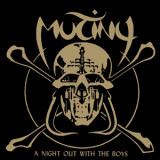
- Rare P-Funk album from 1983 - Funkadelic/Parliament All-Star Line-Up - First ever vinyl reissue - Comes with a repro of the original insert - 180g Black Vinyl Edition - Limited to 500 copies, comes with obi strip // Jerome "Bigfoot" Brailey is an American drummer who started performing in the early 1970s with several R&B groups from the likes of The Unifics, The Chambers Brothers and The Five Stairsteps where he developed his unique style and finesse on drums. Later in 1975 he joined George Clinton's P-Funk collective and has appeared on many of Parliament & Funkadelic's most popular recordings (some of which he also co-wrote). Brailey played on classic albums like `Mothership Connection' and `One Nation Under A Groove'. Samples from that body of work (and his drum arrangements) have since then appeared on hundreds of hip hop and contemporary R&B songs by renowned artists such as Kendrick Lamar and Childish Gambino. Jerome Brailey is a member of the Rock and Roll Hall of Fame (inducted in 1997) and part of their `50 greatest drummers in the Hall' list (stating that his drum style kept Parliament-Funkadelic rooted in the old-school `James Brown-style funk')_next to this achievement, he was proclaimed by Rolling Stone as one of the `100 Greatest Drummers of All Time' for his steady kick drum, shifty hi-hat action and intricately unpredictable snare patterns. Brailey earned numerous Gold and Platinum records with the P-Funk Organization and has worked as a session drummer for many talented artists such as Herbie Hancock, Buddy Miles, Snoop Dogg and Pharoah Sanders. George Clinton's funk empire was not without its disagreements and Jerome Brailey's `Mutiny' project was a direct result of just such a disagreement (as well as one of the more notable offshoots of the P-Funk axis). Mutiny performed in a style not far removed from the classic P-Funk style and with a lot of emphasis on the dual lead guitar work, but what makes them unique compared to their contemporaries is that at times their recordings also emit a darker, more sinister feeling. Besides Brailey on drums (and on most of the lead vocals) Mutiny featured a funk-alumni line-up and released three amazing and collectible albums: `Mutiny On The Mammaship' (CBS, 1979), `Funk Plus The One' (Columbia, 1980) and `A Night Out With the Boys' (J. Romeo, 1983)_these were followed by two comeback albums: `Aftershock' (Rykodisc 1995) and `Funk Road' (Catbone, 2013). The `Mutiny' album we are proudly presenting you today (A Night Out With The Boys) is an underrated gem made by musicians who defined the funk scene of the '70s and '80s! Featuring an all-star line-up that includes Rodney Curtis (Fred Wesley, Maceo Parker), Michael Hampton (Funkadelic-Parliament, Deee-Lite), Kenni Hairston (Cameo) and Maceo Bond of Osiris/Afrika Bambaataa fame! `A Night Out With The Boys' has it all: Jerome's trademark drumbeats, funky bass grooves, driving riffs accented by stinging synth parts, slow spacey (and prominently featured) guitars, top-notch lead vocals and chants that recall Sly Stone's "Loose Booty". The whole album is a hot dance jam with crisp percussion_an extremely infectious, locked-in-the-pocket bass-heavy monster-funk-bomb that any serious self-respecting funk fanatic must have in his/her collection!
Abbey Lincoln, often remembered for her seminal work with Max Roach, was a powerful performer and indeed one of the greatest Jazz voices of all time. "Straight Ahead" stands as one her best albums. Lincoln is matched here by a ultra-stellar line up including Jazz masters such as Booker Little — trumpet, Julian Priester — trombone Eric Dolphy — alto saxophone, bass clarinet, flute, Walter Benton and Coleman Hawkins — tenor saxophone, Mal Waldron — piano, Art Davis — bass, Max Roach — drums, Roger Sanders and Robert Whitley — congas. "Straight Ahead" is the perfect combination between Lincoln 's strong "Afro-Blue" tone singing, conscious lyrics and angular modern Jazz arrangements. Recorded in New York in a one-off studio session held on February 22, 1961 and released by Candid Records in the same year, the album includes highlights such as Oscar Brown jr's "When Malindy Sings", Thelonious Monk's "Blue Monk", Billie Holiday and Mal Waldron's "Left Alone" and "African Lady" a Randy Weston composition based on lyrics by the great writer Langston Hughes.
It seems that every major jazz artist has a one-off sort of record in their discography, be it with strings, voices, spoken word or - as in this case - a foray into the funkier side of jazz. Charlie Rouse (going here as Charles Rouse) gets his chance on Two Is One, a funky soul jazz excursion on Strata-East, the artist-run label where creativity and pushing boundaries was at the forefront. Playing mostly with a group of session musicians, Rouse put together an album that may stray a bit from his hard bop roots, but is nonetheless an enjoyable and at times inventive record. The style of music played here - sophisticated soul jazz with some post bop and spiritual jazz thrown in for good measure - is very much a product of it's time. 1974 saw a whole slew of artists stretching the boundaries of what jazz music could be, combining elements from the past two decades into electric jazz adventures. The piano-less group that Rouse put together is a funky one, with lots of rhythmic playing behind either the searching solos of Rouse on the tenor or some inventive electric guitar work from either George Davis or Paul Metzke who appear together on all but a couple of tracks. Cal Scott gets plenty of time to shine throughout on what sounds like an electrified cello, an unusual instrument for modern jazz to be sure, but one that manages to fit in just fine here.
The first side of the album is all slow burning soul jazz, highlighted by the opening track "Bitchin'" where Rouse shows off that he is more than capable of setting down soulful lines over a funky backbeat. The second side is where the group gets a whole lot more inventive, particularly on the title track where they mix some post bop madness with the soul jazz sound. "Two Is One" features different tempos throughout: in the "first section" the bass plays in 9/8 time, the drums in 6/8 time and the cello and tenor are in 3/4 time. For the "second section" the rhythm section switches to 7/8 time while cello and tenor move to 4/4 time. Stanley Clarke is on bass here and his deep and twisty electric bass line is placed prominently up front.
"Two Is One" is certainly the highlight of the album from a pure jazz standpoint, and it lives up to it's title, which according to Gene Lewis' liner notes is taken from a Thelonious Monk phrase meaning two people so in tune with one another that they become one. The album finishes off with "In His Presence Searching," a spiritually informed jazz number that is reminiscent of the work being done during this period by the likes of Pharoah Sanders and Gary Bartz, (while not being quite as out there as their best work). The tune is all rhythmic glory, with Rouse and Scott playing introspective and penetrating solos throughout. It's a nice album closer, and a good reminder that while Two Is One may be best known for it's funkier excursions, Rouse had a few tricks up his sleeve and the album, when taken as a whole, is a complete statement from a legendary jazz musician.
- 1: Maps Of Hyperspace – Theta
- 2: Maps Of Hyperspace – Beta
- 3: Sanderson Dear - A Place For Totems
- 4: Sanderson Dear - What Once Was
- 5: John Beltran - The Descendent
- 6: John Beltran - High On Rain
- 7: Louis Haiman - Breathing-In
- 8: Louis Haiman - Beachfront Watch
- 9: Diahgonal - Here I Am
- 10: Diahgonal - There U Are
- 11: Aural Imbalance - Flow Control
- 12: Aural Imbalance - Clean Slate
- 13: Off Land – Hypernova
- 14: Off Land – Collapsar
- 15: Glo Phase - Patina Sunset
- 16: Glo Phase - Fire Flies
- 17: Adriano Mirabile – Xingu
- 18: Adriano Mirabile – Cajú
- 19: Driftsystem - Five Rivers Surround Me
- 20: Driftsystem - Augminter
A lucid dream meeting of synth waves, aquatic jazz spirits and drum-triggered electronics.'Linha D'Água'translates as 'water lines', fitting for an album that traces boundaries between water and air through an echo chamber of dizzying oceanic layers and free flowing ideas.
This is not a record based on genres. It's an album that navigates through atmospheres, through explorations and discoveries, through curiosity and dialogue. The eight tracks were recorded in a single day in the studio, but it is the result of more than two years of collaborations.
Mauricio Takara and Carla Boregas are two towering figures of the Brazilian underground/experimental scene, where they provide the rhythm section for demented genre-bending trio Rakta. While that band is all ritual percussion and red-blooded passion, as a duo they're a blue-water flowing counterpoint. From the drums, Takara fires melodies and, with the synthesizer, Carla sculpts the sound. The result iscaught somewhere between abstract improvisation and propulsive rhythm. Each song's an organic layering of manipulated synthesizers and acoustic sounds; teasing new rhythms from the drum kit via MIDI (and a near-telekinetic bond between Carla and Mauricio).
Sometimes'Linha D'Água'driftsclosest to ambient music, as in the title track, in 'Mãe D'Ouro' and 'Bocca Chiusa'; sometimes it runs into free jazz, as in 'Traçado Entre Duas Linhas'. There are moments when Carla and Mauricio explore a universe of tension that comes closest to the cosmic music of 70s Germany, as in 'Rosa de Areia' and 'Constante de Distância'; in others they evoke the metallic sounds of Indonesian gamelan (on 'Execution').
Carla Boregas is a founding member of the band Rakta, which started in 2011. She co-founded Auta, a DIY space dedicated to adventurous music in São Paulo hosting artists like Feminine Hi-Fi and Deafkids. She is also part of the transdisciplinary duo Fronte Violeta.
Mauricio Takara also plays drums/percussion with the bands Hurtmold and São Paulo Underground (with trumpeter Rob Mazurek from Chicago). Takara has played with a dizzying array of improv / experimental / jazz figures such as Pharoah Sanders, Damo Suzuki, Yusef Lateef, Joe Lally (Fugazi), Naná Vasconcelos, Prefuse 73, Makoto Kawabata and more.
In March of 2020 bassist Dezron Douglas & harpist Brandee Younger were nestled in their apartment in Harlem, New York, not long after every live concert in the world was cancelled and most folks in the United States were forced to shelter in place for the covid lockdown. With all their gigs cancelled and their incomes strapped.. the two came up with an idea. They would host a live-stream performance from their living room, where they would perform classic tunes for friends and family to watch online, and folks could send them donations. They called it “Force Majeure: Brunch in the Crib with Brandee & Dezron,” the first part in homage to the ubiquitous contract clause that never seems to have any use (except all of sudden, c/o a covid-induced live music industry collapse). The immense popularity of their first performance roped them into doing it again, and again, until it eventually became a weekly ritual for Douglas, Younger, and their many friends and family who tuned in every Friday morning (ourselves included). Knowing the beautiful, natural sound they made in their living room would be as enjoyable (or more) as a record as it was through a social media stream… we mailed them a microphone to record themselves. What’s heard on this album, Force Majeure, is a collection of highlights from Douglas & Younger’s legendary lockdown livestream brunch sessions. It includes gorgeous interpretations of songs by Alice & John Coltrane, The Stylistics, The Jackson 5, Pharoah Sanders, Kate Bush, Sting, and The Carpenters… plus some solid gold nuggets of their banter between tunes. It’s an uplifting suite of real, soulful comfort music – a spiritual salve, emanating warmth from the hearth of a Harlem sanctuary.
Dezron Douglas & Brandee Younger are long time companions in life and in music. The two East Coast natives met early in life and have accompanied each other, personally and professionally, through their equally prolific careers. Douglas, a bassist who has established himself as a musician’s musician, is known to many for his work with Pharoah Sanders, Ravi Coltrane, David Murray, and Keyon Harold. Younger, a harpist who has distinguished herself as one of the premiere voices in her field, is known for her work with Jack DeJohnette, Charlie Haden, Stevie Wonder, The Roots, Lauryn Hill, and Moses Sumney. To the day Douglas and Younger often accompany each other in many of the ensembles they lead, respectively. The two played together in sessions for Makaya McCraven’s 2018 release Universal Beings, on which they are both featured artists. Of Force Majeure, McCraven says: “It’s a testament to the power of music to uplift us through the most challenging times.
- A1: Sun Core Tet (Parable 99)
- A2: A Wrinkle In Time Sets Concentric Circles Reeling
- A3: Galaxy
- A4: The Careening Prism Within (Parable 43)
- A5: Abstract Dark Energy (Parable 9)
- B1: Parable Of Inclusion
- B2: Dimensional Stardust (Parable 33)
- B3: Minerals Bionic Stereo
- B4: Parable 3000 (We All Come From Somewhere Else)
- B5: Autumn Pleiades
COLOR VINYL LP
Indie Retail Exclusive *Cosmic Moment* Color Vinyl LP Multidisciplinary abstractivist Rob Mazurek has made an indelible impact on creative music over the past 30 years. Emerging from the musical nexus of the 1990s Chicago scene, he's written more than 400 compositions and is featured on more than 70 recordings (including International Anthem's very first, IARC0001, Alternate Moon Cycles). He's led many ensembles - including the Chicago Underground (Duo, Trio, Quartet & Orchestra), Isotope 217 (alongside members of Tortoise), Pharoah and the Underground (feat. Pharoah Sanders), and a duo with Jeff Parker. He's been on the cover of WIRE Magazine twice and is well-known as one of the prime 21st century progenitors of "The Chicago Sound."
Powerful new spiritual jazz from Chile on Soul Jazz Records!
This album comes as a very limited one-off unique pressing of 1000-edition vinyl, limited editon CD and digital release.
Enrique Rodríguez and the Negra Chiway Band group have an instantly powerful and unique sound that is reminiscent of the ensembles of Sun Ra and his Arkestra as well as Horace Tapscott and his Pan-Afrikan Peoples Arkestra, one that channels the righteous spirits of Alice Coltrane, John Coltrane, Pharoah Sanders, Archie Shepp and McCoy Tyner together with a stunning Latin rhythmical and new consciousness and percussive energy. Added to this are elements of the Samurai film soundtracks of Akira Kurosawa, Popol Vuh’s musical spirituality (especially their work with film director Werner Herzog), Tibetan Buddhism and over-blowing chants, that all combine to give a truly unique new sound.
Enrique Rodríguez is a composer, percussionist, keyboardist, and producer from Santiago, Chile, whose work shows many similarities with the music featured on Soul Jazz Records’ recent collection ‘Kaleidoscope - New Spirts Known and Unknown’, featuring new forward-looking jazz artists including Mathew Halsall, Theon Cross, Emma-Jean Thackray and Makaya McCraven.
Like all these artists, Rodríguez’s work is a progressive and experimental fusion of earlier influences that combine into a new and definitely 21st century ground-breaking sound that, on account of its South American setting, give the group its truly unique feeling. Hypnotic modal piano riffs, powerful brass and flutes, an army of Latin percussion instruments, and addictive vocal chants all combine in this powerful mix of radical 60s Afro-centric jazz, eastern spirituality and cosmology, and Latin American rhythmical movement.
The Great Dismal, NOTHING’s new full-length album explores existentialist themes of isolation, extinction, and human behavior in the face of 2020’s vast wasteland. Closing in on the band’s ten-year mark, frontman Domenic Palermo finds himself stringing together songs of misanthropic tales of Philadelphia with a refined and refreshed take on NOTHING's classic sound. “The Great Dismal refers to a swamp, a brilliant natural trap where survival is custom fit to its inhabitants,” Palermo states. “The nature of its beautiful, but taxing environment and harsh conditions can’t ever really be shaken or forgotten too easily.” The ever progressive NOTHING keep true to their chaotic outlook on life, keeping a keen eye to avoid repetition. With a radical cast of talented contributors such as harpist Mary Lattimore, classical musician Shelley Weiss, and singer/songwriter/producer Alex G., The Great Dismal showcases yet another essential side of the band’s trademark American Post-Shoegaze.
- A1: Das Goldene Zeitalter - Don't Give Up Your Smile Today
- A2: Nu Art Quartet - Black Bandit
- A3: John Tinsey - Freedom Excelsior (Part 2)
- A4: Obie Jessie Quartet - Black King
- A5: Walt Bolen - Peace Chant
- B1: Genghis Kyle - Bakit Ba
- B2: Luna Brothers Trio - Mozambique
- B3: Hozan Yamamoto - Spotlight On Sapporo
- B4: The Milestones - Funk
From 1963 to 2014: "Peace Chant - raw deep and spiritual jazz" exhibits 51 years of music. A well matched anthology with sounds to dive into, hard rhythms to dance to and vocals to meditate on.
The Tramp Records crew has compiled 9 tracks in nice order and dramaturgy. Some tunes you might have never heard before unless you own one of the rare original vintage vinyl records. Peace Chant is released on two separate LPs with own catalogue numbers and on one CD. Some songs I can't get out of my mind:
The previously unreleased "Don't Give Up Your Smile Today" is opening the compilation. It's from Das Goldene Zeitalter, a band that didn't survive - but whose members had a huge influence on German jazz, soul, afrobeat and funk within the last years merging into groups like The Poets of Rhythm, The Whitefiled Bros., and The Malcouns. Boris Geiger aka. Bo Baral sings a Pharoah Sanders like tune, his voice deeply resonating, the rhythm section heavily grooving.
After the first three woolly recorded tracks Walt Bolen's "Peace Chant" with its dry and funky sounds with flute, two guitars and percussion is quite a pleasure to listen to. Organ and voice are Bolen's who used to play the keys in San Fernando Valley church when he was a child. "Peace Chant" was recorded for his own Ar-Que label in 1972 and is one of the few cuts with him as a leader. He has played sessions and clubs for years and today he is sitting at the church organ again.
This publication's oldest recording dates back to 1963: "Mozambique" by Luna Brothers Trio, a Caribbean and hypnotic instrumental. For my jazz trained ears it is rather unusual that the güiro (the gherkin played with a stick) is being played throughout the entire song. Heavily laid back cowbell, concas and timbales and the slightly detuned piano are wonderful! "Mozambique" sounds like from another star but its origin is Los Angeles, where the brothers Fred and Ricardo Luna had their night club band. You could imagine a bast skirt strip and at the same time the great Raumpatrouille (Space Patrol) landing on German B&W TV screens in 1966.
Hozan Yamamoto recorded crime jazz with the Japanese bamboo flute shakuhachi. He belonged to Tony Scotts "Music for Zen Meditation" in 1964, played with Ravi Shankar, avant-garde jazz bassist Gary Peacock and appeared at Donaueschingen Festival for contemporary music. Tokio university's open minded lecturer recorded the funky and modal "Spotlight on Sapporo" in 1972.
- A1: John Coltrane - A Love Supreme - Pt 1 Acknowledgement
- A2: Elvin Jones - Fantazm
- A3: Max Roach - Lonesome Lover
- A4: Yusef Lateef - Sister Mamie
- B1: Freddie Hubbard - The 7Th Day
- B2: Mccoy Tyner - Three Flowers
- C1: Elvin Jones - Half & Half
- C2: Mccoy Tyner - Groove Waltz
- C3: Archie Shepp - Le Matin Des Noire
- D1: Michael White - The Blessing Song
- D2: Alice Coltrane - Turiya & Ramakrishna
- D3: Phil Woods - A Taste Of Honey
- E1: Pharoah Sanders - Hum-Allah-Hum-Allah-Hum-Allah
- E2: John Klemmer - Constant Throb (Part 1)
- F1: Pharoah Sanders - Thembi
- F2: Marion Brown - Maimoun
- F3: Alice Coltrane - Journey In Satchidananda
In our latest chapter of Spiritual Jazz, we return to the source – the Impulse! label, and the monumental influence of its most prominent artist, John Coltrane.
Since the first release in the series back in 2008, we have mapped out the growth of the spiritual sound in jazz. Spiritually energised and politically conscious, the spiritual sound in jazz music is one of the most important currents in the music. Our series has charted the growth of the style from early experiments at Blue Note and Prestige to European excursions, exiled experimentalists, and sounds from across the globe. But whenever you think of spiritual jazz, it's a fair bet that the double exclamation mark and orange and black spine of Impulse quickly comes to mind. Home to John and Alice Coltrane, Pharaoh Sanders, Yusef Lateef, McCoy Tyner and countless other musical pioneers, Impulse! was the most important and forward-thinking jazz label of the 1960s. With the music-first attitude of an independent but the clout of a major, producers Creed Taylor and Bob Thiele made Impulse the defining imprint of a crucial decade. They hand picked the top players of the moment and gave them freedom to record the music they wanted, setting out their stall with a bold slogan – 'The New Wave Of Jazz Is On Impulse!'
Here we dive deep into the Impulse! catalogue, bringing celebrated masterpieces from Alice Coltrane and Pharaoh Sanders into the arena, together with lesser known cuts from Phil Woods and John Klemmer as well as straight-up classics such from Yusef Lateef and Elvin Jones. Fifty years on and the new wave of jazz still sounds fresh, vibrant and as relevant as ever.
Albert Ayler’s 1969 album New Grass has been misunderstood from the day of its release. The album fi nds Ayler experimenting with soul music and digging back into his R&B roots (he started his career playing saxophone with Chicago bluesman Little Walter), fusing it with the avant-garde free jazz (the one element of the record which garnered consistent praise) and adding the vocals of Rose Marie McCoy, The Soul Singers and Ayler himself. As if predicting the divisiveness of the record to follow, Ayler speaks directly to the listener and explains that New Grass is nothing like his albums before — that it is of “a different dimension of his life” — in the album opener “Message from Albert.”
New Grass deserves reconsideration, if not for the heavy grooves and surprising arrangements, then for its bravery in challenging norms of the time; by the ‘60s, jazz was well-accepted as a uniquely American art form, while soul as a genre was very much still seen as primitive. Ayler melds them together and creates something novel, adventurous, and completely his own. At the time of its release, despite its divisive reception, New Grass helped break down the unnecessary walls dividing genres and revealed music’s potential freedoms. The album has gone on to infl uence generations of Jazz, R&B, Funk, Hip Hop, Post Punk, No Wave and unshrinking artists like Pharaoh Sanders, Alice Coltrane, Funkadelic, Jungle Brothers, Red Krayola, Sonic
Youth and Mark E. Smith.
Third Man Records can’t recommend this record highly enough. We are confi dent that it won’t take but one listen for you to understand New Grass is an undeniable healing force
- A1: Time Slips Away
- A2: What Do We Care (Feat Tom Sanders)
- A3: Wish I Was In Tokyo
- B1: Eyes Wide Shut (Feat Wooze)
- B2: Maker Baker Faker Taker
- B3: Myths Still Exist (Feat Niki Kini)
- C1: Sense Of Time
- C2: Turning Tides (Feat Vanity Fairy)
- C3: Back & Again
- D1: Natural Born Losers (Feat Wooze)
- D2: Violet Candy
- D3: Golden Hours (Feat Nuphar)
Moscoman aka Chen Moscovici, Wahlberliner aus Israel und DJ der Panorama Bar (Berghain), Space Miami und Pacha Ibiza, liefert nach Releases auf Because, Life & Death, Greco-Roman, ESP Institute (Debütalbum " A Shot In The Light" 2016) und seinem eigenen Label Disco Halal nun sein zweites Album auf Moshi Moshi ab. Auf "Time Slips Away" erweitert er seinen Sound aus Maschinen-Disco, Melodic Techno und wonky House um neue Klangstrukturen, die die 12 Tracks samt Vocalfeatures von Tom Sanders (Teleman), Vanity Fairy, Wooze, Niki Kini und Nuphar direkter und zwingender machen, was auch seinem frühen Indie-Rock-Background geschuldet ist.
Belgian psychedelic jazz collective Compro Oro are pleased to announce a new collaboration with Murat Ertel, co-founder and frontman of Istanbul's cult psychedelic folk band BaBa ZuLa and his singer partner Esma Ertel. Entitled 'Simurg', the album is set for release on the 19th June via Sdban Ultra and follows Compro Oro's critically acclaimed sophomore album 'Suburban Exotica', released last year.
Compro Oro's introduction to Turkish psychedelics came off the back of a live performance between guitarist Bart Vervaeck and Murat Ertel at Istanbul Express in 2016. Connecting both musically and spiritually, they headed into the studio and under the watchful eye of producer and multi-instrumentalist Dijf Sanders, Compro Oro and Murat recorded several tracks during an intense recording session that would make up 'Simurg'. "The new music is entirely based on improvisation. In contrast to 'Suburban Exotica', which is built more from song structures and where there was more overdubs," explains frontman Wim Segers.
The story of Simurg is a story of attraction, existential research, purification and rebirth. In a mysterious search for fulfilment, millions of birds embark on a journey, crossing several valleys, each representing a human characteristic. While some yield to the attractions of love, ego or grow ignorant and faithless, others remain curious and continue their expedition. Slowly but surely this murmuration of birds thins out and a selection of 30 birds reach Mountain Kaf and the nest of the Simurg. There and then they become one, they are reborn and reincarnated in an almighty and omniscient phoenix.
The strength of Simurg as a result of its power to resurrect from its own ashes reflects the resilience of every human being. We all have the power to strengthen and improve ourselves, not in the least in our contact with others, and this is exactly what this project is about: a spontaneous dialogue, a quest for new musical horizons, a gathering of liberal spirits to reach for the unknown. From the Anatolian rhythms and reverb-smothered funk rock of 'Ben', to the mystical atmospherics of 'Ignorance Is Bliss (Valley Of Ignorance)' and the dark, dub-infused grooves of 'Valley Of Disbelief', 'Simurg' is an allegory about the noise that you can create as a person.
With a hybrid jazz based on African grooves, Ethio-oriental melodies and psychedelic dub this Belgian five-piece creates an atmosphere where ancient and modern sounds fuse into a powerful, hypnotic and groovy sensation.
Receiving critical acclaim for their second album 'Artifacts' (2017), the Belgian quintet are pleased to announce the release of their much-anticipated third album entitled 'Future Flora', released 12th April via Sdban Ultra on vinyl / cd / digital.
Piloted by saxophonist/flutist/composer Nathan Daems (Ragini Trio, Dijf Sanders, Echoes of Zoo), the input of notorious musicians, drummer Simon Segers (MDC III, De Beren Gieren, Stadt), cornet player Jon Birdsong (dEUS, Beck, Calexico), keyboardist Wouter Haest (Voodoo Boogie) and bassist Filip Vandebril (Lady Linn, The Valerie Solanas) leads to the specific universe that only Black Flower is able to create.
Where debut album 'Abyssinia Afterlife' (2014) and 'Artifacts' (2017) bathed in an atmosphere of psychedelics, mythical figures, ancient sounds and modern cultures, new album 'Future Flora' refers to the power of plants and their importance for the future.
"'Future Flora' is a metaphor for the importance of feeding and watering powerful and revolutionary ideas and initiatives that can save our world. You can compare it with plants that fight between the paving stones of the city for their future. These "urban warriors" need water to survive and grow. Their future and ours depends entirely on how we look at the plant world", says Daems.
Black Flower's musical cross-pollination of sounds and rhythms remain on 'Future Flora', but there is still room for a more Western touch with Romanian and Maloya (Réunion) influences. Daems developed his own arrangements where Western, Oriental and Ethiopian scales and chords are fused together to create a real mix of traditional instrumentation and modern electrical vibrations.
The strong underlying groove is omnipresent, but the room for psychedelics, folklore and experimentation grows. Songs like new single 'Hora de Aksum' combine modern western rhythms with doses of Balkan eccentricities while 'Future Flora' takes you on a psyche-delicious 21th century Ethio-dub-jazz trip with echoes of Mulatu Astatke and Fela Kuti.
"The general feeling that dominates is that of strength and perseverance. The feeling that we have to fight for our future and that we have to do it now! The whole album is interspersed with this atmosphere and sounds swirling, haunting and ecstatic. For those who once saw Black Flower live at work, this energy will be extremely recognizable", he adds.
The third release from Night Dreamer’s essential “Direct-to-Disc” sessions sees an incredible meeting between legendary US saxophonist Gary Bartz and leading UK spiritual jazz ensemble, Maisha, featuring two Bartz classics and three brand new joint songs written by both Bartz & Maisha in close collaboration. Having cut his teeth playing with the likes of Charles Mingus, Max Roach, Art Blakey and finally in 1970, Miles Davis at the peak of his electric period, Gary Bartz became a leading figure of the early-to-mid 70s spiritual jazz movement, releasing a string of ground-breaking albums on legendary NYC jazz label Prestige Records with his NTU Troop, featuring classics such as “Celestial Blues”, “Uhuru Dance” and “I’ve Known Rivers”, before collaborating on Blue Note Records with the Mizell Brothers on the anthemic jazz funk of “Music Is My Sanctuary”. An oeuvre much loved by soul jazzers and hip hop fans alike. Led by drummer Jake Long, Maisha have been central to the UK’s jazz explosion, and have fast become the UK’s most exciting and in-demand young spiritual jazz ensemble, from steller shows at Jazz re:freshed, Total Refreshment Centre & Church of Sound and supporting the Sun Ra Arkestra, to releasing their critically acclaimed debut LP, “There Is A Place” on Gilles Peterson’s Brownswood Recordings in 2018. Theirs is an organic & explosive sound that blends influences from afrobeat and broken beat to Persian music, with a deep love and understanding of jazz, particularly the heritage of spiritual jazz led by titans such as Pharoah Sanders, Alice Coltrane and of course, Gary Bartz. Which makes this collaboration even more special. Bartz was first invited to share a stage with Maisha by Gilles Peterson to headline the inaugural We Out Here festival. Their chemistry was rich and instantaneous, certainly a two-way street, with the young musicians reinvigorating the legend’s performance and wowing the intergenerational festival audience. A European tour followed, including a London Jazz Festival highlight at the Royal Festival Hall, celebrating the 50th anniversary of his album “Another Earth”, originally featuring fellow legends, Pharoah Sanders, Charles Tolliver, Stanley Cowell, and John Coltrane’s own bassist, Reggie Workman. Now the relationship has evolved into a special straight-to-disc recording for Night Dreamer Records, that captures the vitality of their collaboration. Whilst Bartz and Maisha reinvent classic Bartz compositions “Uhuru Sasa” and “Dr Follows Dance”, extending the pieces into long piece improvised grooves, their recording session gave birth to three brand new joint compositions, written the very same day. These include the propulsive “Leta’s Dance” that magically combines the Bartz’ soulful musical lyricism with Maisha’s African-jazz influences, and the organic jazz funk of “Harlem to Haarlem”, featuring a hot solo from guest trumpeter Axel Kaner-Lidstrom of Cykada & Levitation Orchestra fame. Like previous Night Dreamer efforts from afrobeat star Seun Kuti & Egypt 80, and the beautiful
collaboration between Brazilian stars Seu Jorge & Rogê, the album was recorded in Haarlem’s Artone Studio, a stones throw from Amsterdam, in just one-take, straight-to-disc, avoiding postproduction embellishments and retaining the purity of the performance lost in modern recording techniques. This record really is an event, in and of itself, a meeting of talents, minds, generations and zeitgeist moments, captured in a unique and pure manner. The music does not disappoint, as Maisha have been inspired to reach new heights whilst we find Bartz truly reinvigorated, and both artists in tune to the spirit of the other.
Born in Paris, raised in Vienna, resident in Ibiza, saxophonist and composer Muriel Grossmann embodies the borderless, pan-continental energies of contemporary European jazz. Her music emerges from the lineage of European jazz that's absorbed the progressive music of Coltrane, Dolphy and Sanders. Today, she cites players such as Illinois Jacquet and Lester Young in the same breath as the masters of the avant-garde, and her playing marries the directness and eloquence of the older generation with the questing, spiritualised playing epitomised by Coltrane. The roster of musicians she has played with is long, and includes veteran European avant-gardists including Joachim and Rolf Kühn, Wolfgang Reisinger and Thomas Heidepriem, and she works tirelessly with contemporary groups and big bands across the continent.
Since her first recordings in the early 2000s, Grossmann has released a dozen albums as leader, featuring sounds ranging from hard-swinging modernist jams to free improvisation, expansive spiritual work to rhythm-focussed Afrocentrism. But at the centre of her work is a thread of pure and heartfelt spiritual music in the modal tradition defined by Coltrane and close collaborators like Pharoah Sanders and Alice Coltrane. You can't play this music successfully if you don't mean it – like the music of her contemporary Nat Birchall, Grossmann's engagement with the Coltrane tradition is sincere and deep. Her music resonates within the tradition – more than just a style, it adds a new chapter to the story of modal and spiritual jazz in Europe.
This Jazzman set draws a selection from her 2016 album Natural Time ('Your Pace', 'Peace For All') and from 2017's Momentum ('Elevation', 'Chant' and 'Rising'). Featuring her regular quartet of Radomir Milojkovic (guitar) Uros Stamenkovic (drums) and Gina Schwarz (bass), the music on Elevation is pure sound, soul and spirit!
- LP only with thick tip on sleeve- Download card included inside
"Timeless and innovative... a musical genius" Mike Gates, UK Vibe
"A listening experience akin to transcendence" Andrew Jones, Down Beat
"Vibrant, passionate, exhilarating. A monument of spiritual jazz" Mark Sarazzy, Impro Jazz
"A journey that takes off like missile, passes through meditation, reaches nirvana and ends with thanksgiving" Elliot Simon, NYC jazz records
"Timelessly beautiful" Christian Bakonyi, Concerto
Lonnie’s 1975 jazz-funk masterpiece is released on 180g black vinyl in a nice thick card gatefold sleeve. Former Miles Davis and Pharoah Sanders keyboardist Lonnie Liston Smith saw all his musical ideas coming together for this, his third album. The title track is one of the best-known jazz funk classics; its influence on several generations of clubbers cannot be underestimated. It is a glorious amalgamation of jazz players and the tenor voice of Lonnie’s brother Donald. However, the track’s success has resulted in the album becoming rather overlooked and its other six pieces underappreciated. ‘Desert Nights’ and ‘Voodoo Woman’ give vent to Lonnie’s improvisational skills over a modal base. ‘Summer Days’ and ‘My Love’ are based around Latin rhythms, with the latter proving another great vehicle for Donald Smith’s voice. Donald is also the singer on an inspired take on Horace Silver’s ‘Peace’. “One of dance music’s most significant records” – Gilles Peterson.
- A1: Zena Ayo - Long Long Gone
- A2: Rhonda Fleming - Cold Rain
- A3: Patsy Abbott W Margie Sherwin - Get Out Of Town
- A4: Honey Sanders - Some Like It Cool
- A5: Lynn Roberts - Beatnicks
- A6: Carol Gray - Cha Cha Bop
- B1: Lyn Avalon - I Walk The Streets
- B2: Nancy Dupont - Weather Report Love
- B3: Kay Martin & Her Body Guards - Fever
- B4: Cara Stewart W The Gold Coast Boys - The Midnight Blue
- B5: Del Rae - Contemplation Blues
- B6: Sarah Northcutt - Leav'n Woman
Stag-O-Lee präsentiert hier Teil 5 und 6 der usserst erfolgreichen Trashcan Records Serie, die sich obskuren und vergessenen Vinyl Schätzen aus den 50er und frühen 60er Jahren widmet. Die originalen 45er stammen aus der stattlichen Sammlung von Fedor, einem Sammler und Jäger aus Amsterdam, der sich in den letzten 25 Jahren durch tausende von Kisten mit Gebrauchtvinyl auf Flohmärkten der holländischen Metropole wühlte. Die Veröffentlichungen sind thematisch gegliedert - Vol. 5: Cha Cha compiliert 12 Tracks mit "an all-female beatnik extravaganza: the first vinyl compilation of its kind! From the bohemian misfit girl with her goateed boyfriend to the espresso sipping art school chick reading Kerouac..." . Vol. 6: The Natives Are Restless bietet 5 Tunes mit einem Dschungel-Thema auf der A-Seite und 5 luftige Exotica-Träume auf der B-Seite. Alle 24 Tracks sind "previously uncomped" und finden erstmals ihren Weg auf Großvinyl!!
It's been 20 years since 'Soul Brother Records' first celebrated the music of Leon Thomas with the "Anthology" collection.
It is also 50 years since the acclaimed avant-garde jazz singer first recorded "The Creator Has A Masterplan" with Pharoah Sanders.
Today his music is as renowned and sought after as ever, and the time could not be better for the pairing of these two songs on 7" single.
Both come from his time at Flying Dutchman in the early 70's and fully reflect the individuality and creative spirit of this masterful vocalist.
Both tracks are reissued here for the first time, originals commanding a sale price of £50.
Die besten musikalischen Außenseiter sitzen nie lange still. Sie mutieren stetig, verwandeln sich in neue Formen und weigern sich, in Schubladen gesteckt zu werden. Floating Points hat so viele Gestalten, dass es ohnehin nicht einfach ist, ihn irgendwie einzuordnen. Da ist zum einen der Komponist, dessen Debütalbum „Elaenia“ im Jahr 2015 begeisterte Kritiken erhielt, darunter als Pitchforks „Best New Music“ und Resident Advisor's „Album of the Year“ - und ihn von den Tanzflächen auf die Festivalbühnen weltweit brachte. Dann ist da wiederum der Kurator, dessen Plattenlabels gefühlvolle neue Klänge in den Club gebracht haben, und der auf seinem geschätzten Imprint Melodies International alte Klänge wieder zum Vorschein gebracht hat. Ferner ist da der Traditionalist, der Disco-Typ, der Maschinenmusik macht, der Digger, der stets auf der Suche nach unentdeckten Edelsteinen zwecks Wiederveröffentlichung ist. Und dann ist da noch der DJ, dessen offener und zugleich mutiger Umgang mit dem Genre ihn einst ein 20-minütiges Instrumental des Spiritual-Jazz-Saxophonisten Pharoah Sanders im Berghain spielen ließ.
Nach der Veröffentlichung seiner Zusammenstellung von funkelnder, analoger Ambient- und Atmosphärenmusik für die geschätzte „Late Night Tales“-Reihe, stellt Floating Points' erstes Album seit vier Jahren, „Crush“, alles, was man über ihn zu wissen meint, wieder auf den Kopf. Nicht minder als ein knallender Donnerschlag elektronischen Experimentalismus’, dessen Titel auf den langsam überkochenden Schnellkochtopf anspielt, den die aktuelle politische Gemengelage in der Welt suggeriert, in der wir uns derzeit befinden. So hat Shepherd einige seiner bisher härtesten und treibendsten Tracks produziert, mit Blick auf die britische Bass-Szene (aus der er in den späten 2000er Jahren selbst hervorgegangen ist), wie beispielsweise die zuvor veröffentlichte markante Lead-Single „LesAlpx“ (Pitchforks „Best New Track“). Auf „Crush“ sind allerdings auch einige seiner ausdrucksstärksten Songs zu finden: seine charakteristische Melancholie ist in den erhabeneren, sanfteren Momenten des Albums oder im Buchla-Synthesizer zu finden, dessen unheimliche Modulation das Album prägt.
Sein neues Album fühlt sich augenblicklich an - und lebendig. Es ist der Klang der vielen Seiten von Floating Points, die schließlich miteinander verschmelzen. Es bezieht sich auf die „explosiven“ Momente während seiner Sets, die normalerweise auftreten, wenn er unerwartete Genres zusammenwirft, aus dem ganz einfachen Grund, weil er sich darüber freut, diese Platte „jetzt wirklich laut hören zu können“ und dann die Nadel aufsetzt. Es ist „genau wie das, was passiert, wenn man zu Hause mit seinen Freunden Musik spielt und diese sich überall im Raum ausbreitet.“, erklärt er.
“Stop here!” exclaimed Robert Oumaou as we passed a mango tree on the side of the road just outside of Point-a-Pitre, the balmy capital of Guadeloupe. He filled a plastic bag with ripe fruit, and we set off on our journey across the small Caribbean island in search of musicians he hadn’t seen in years. On the way, we shared stories in broken French and English, stopping at truck stops to eat delicious fried fish. Robert took me to his hometown, and placed a mango and a flower on the grave of his teacher and mentor, a local poet. The seeds of Vwayajé (Traveller) were sewn on this trip, but shortly after returning home, I heard that Robert was ill, and he sadly passed away in 2018. This compilation was originally intended as a way to share Robert’s brazen work with a wider global audience, but it now also serves to immortalize his indomitable spirit.
Gwakasonné is the ecstatic articulation of Robert Oumaou’s artistic and political vision, a unified expression of his interests in American jazz, pre-colonial rhythms, Guadeloupian independence, and Créole poetics. Over the course of three albums, all released in the 80s, Robert piloted a revolving cast of musicians, a venerable who’s-who of Point-a-Pitre avant-jazz pioneers, to deftly intone his creative communal concepts. The songs on Vwayajé are compiled from these three releases, Gwakasonné, Temwen, and Moun, along with an electronic mantra taken from his 2007 solo album Sang Comment Taire. Viewed from our current artistic and cultural landscape, Robert’s work is exceptionally enduring, grounded in its declarations of freedom and foundational use of the Ka (drum) and voice, and prescient in its borderless explorations of protest folk, electronics, ambient atmosphere, music from the African diaspora, and spiritual jazz. The long-form hive-mind expression of the group has parallels with similar explorations by The Grateful Dead, electric
Miles, Pharaoh Sanders, and even the Boredoms, but these are only oblique references for a truly peerless sound. Like other conceptual children of Gérard Lockel, the group was part of a progressive movement of like-minded musicians, such as Serge Fabriano, Dao, Erick Cosaque, and Gaoulé Mizik, who embraced Lockel’s modernist ideals, fusing Gwo Ka drumming and tuning systems with contemporary jazz and vanguard recording technologies. Robert’s ecstatic phrasings, embrace of electronic instruments, and daring lyrics set the group apart as the beatific expression of a sagacious soul.
Adele Sebastian was an Afro American jazz flutist and singer, active from the early 70s (when she was still a teenager) until her untimely death at the age of 27 (!) in 1983 from a kidney failure. In fact she had been depending on monthly dialysis to stay alive for years. She lived through and for the music and you can hear it on her only solo album 'Desert Fairy Princess' which was first issued in 1981. The mostly acoustic instrumentation brings a very natural and therefore rather retrospective sound considering the year the album was recorded. Adele and her band pull it off right from the start as if it had been 1966 and it was time for a revolution to shake the dust from the old time jazz. In a perfect way she mixes classic American vocal jazz elements with playful and more free passages, Latin music and tribal African sounds in the lengthy and quite rhythm oriented 'Man From Tanganyika' and makes the title track start with a mystical 'Allahu akbar' chant while it turns more and more into a dark and gloomy song with something like a psychedelic edge reminiscent of Pharoah Sanders on his early works. Wild rhythms from drums, percussions with tons of bells and chimes weave a thick groove carpet and conjure a magical atmosphere. Those jazz aficionados who love the mid 60s John Coltrane, his sidekick Pharoah Sanders and Alice Coltrane will go crazy for this album.
These versions are taken from Marc’s own tapes. All royalties go to the ‘Light of Love Foundation’ for the Marc Bolan School of Music & Film. ℗ 2019 Easy Action Recordings Ltd © 2019 Easy Action Recordings Ltd. 700 copies pressed on cream vinyl. Rare and unheard versions of these songs remastered from Marc’s own personal copies, recently repatriated with the estate. Presented in high quality reverse board 3 mm spined sleeve with photo from Peter Sanders
Don't let the date fool you, released back in 1983 this modal to slightly free jazz outfit from California takes you on a journey back to the late 60s and very early 70s, into the spiritual realms of greats like John Coltrane, Pharoah Sanders, John McLaughlin and Miles Davis among others. A soul jazz treasure from the LA scene of the early 80s - a fantastic record that I rank with the best Strata East sides of the time! The group's led by alto saxophonist Dadisi Komolafe, and features vibes by Ricky Kelly, piano by Eric Tillman, bass by Roberto Miranda, and drums by Sunship Theus - all working together in a style that's infused with soulful, post-Coltrane exploratory energy, never going too far outside, and always staying true to the rhythmic pulse at its core. Kelly's vibes are really great - sparkling underneath solos by Komolafe that remind me a lot of Gary Bartz's earliest work.
Zru Vogue is a two man post punk avant-pop group from Palo Alto, California, combining the talents of Andrew Finkle and Rick Cuevas.
The band began in 1980 as a four member group: Rick, Andy, Tom Sanders and Nancy Miller. Tom and Nancy left the group shortly after the first single, "Nakweda Dream", was released by independent San Francisco label Adolescent Records in February 1981. Inspired by rave reviews and heavy airplay on alternative radio stations, Andy and Rick went back into the studio, now as a duo, to record some new ZRU tracks.
The self-tilted LP was released on the band’s Zero Risk Records in 1982. It contains eight compositions blending African tribal and Middle Eastern rhythms, avant-garde rock, minimal electronics, and funk-rock guitars.
The duo’s sound is inspired by the art and anti-art movements of Dada and Surrealism. All songs have been remastered by George Horn at Fantasy Studios. Each copy is housed in a replica of the original jacket, which features artwork by the group members, and includes the original 2-sided lyric sheet.
third reissue of fumio itabashi on mule.
“rise and shine live at the aketa’s” is his 2nd release on 1977 which is recorded at legendary jazz club in tokyo.
but this album was actually recorded before his first release “toh”, so this album is his first album in fact.
“jumping board” on a side is japanese hard bop classic and itabashi’s cover version of “my funny valentine” is very sweet and elegant.
main track(for us)” rise and shine” is one of his best work. it reminds us pharaoh sanders if he plays piano…
limited initial press. don’t sleep!
- A1: The Flood Feat Silka
- A2: May I Assume Feat. Jimetta Rose & Fatima
- A3: My-Story Of Love / Starring You
- A4: Dmt (The Whill)
- B1: Between Us 2 Feat. Bilal
- B2: Mrs Crabtree Feat. Erykah Badu, N\\'Dambi & Aset Sosavvy
- B3: On Our Way Home Feat. Fatima & Jimetta Rose
- B4: Walking Round Town Feat. Silka
- C1: Cycles Feat. Hiatus Kaiyote
- C2: Message In A Bottle Feat. Coultrain
- C3: Its Better For You Feat. Anderson Paak
- C4: Show Me How You Feel Feat. Karen Be
- C5: Hours Away Feat Om\\'Mas Keith & Coultrain
- D1: Twelve Feat. The Dove Society
- D2: Picking Flowers Feat. El Sadiq
- D3: Optimystical Feat. Robert Glasper
- D4: New Worlds Over
'The Loop' is the new LP by Los Angeles based polymath Shafiq Husayn, an epic project which saw its inception in 2012 through a series of studio sessions at Shafiq's home, including collaborations with the likes of Thundercat, Erykah Badu, Flying Lotus, Bilal and Anderson Paak. Amongst a close knit circle of friends and family the golden tones of The Loop were created, deeply rooted in ideas of song, story, history, guidance and spirituality. The album bumps, jumps and jangles through progressions in jazz, hip hop, soul and funk, following on from his debut album 'Shafiq En' A-Free-Ka' and adding further to his rich history of timeless, unique music. On The Loop past, present and future are brought together through a psychedelic concoction of time traveling drum machines, celestial string sections and trails of synthesizer vapour. Inflections of Sly Stone, Pharaoh Sanders and Earth Wind And Fire traverse with Marley Marl and Dilla-esqe drums making for an organic yet LA-trifying experience.
Shafiq has brought together an impressive array of LA's musical royalty, enlisting the likes of Thundercat, Miguel Atwood-Ferguson, Kamasi Washington, Chris 'Daddy' Dave, Eric Rico, Coultrain, Computer Jay, Jimetta Rose, Om'Mas Keith, Kelsey Gonzalez, I-Ced and more to provide the backbone to his recording sessions. Drawing in features from an international cast of performers and artists like Erykah Badu, Robert Glasper, Hiatus Kaiyote, Fatima and Karen Be amongst others. Now complete and finally ready for release in 2019 The Loop is truly something to behold. The records is accompanied by a series of paintings by acclaimed Japanese visual artist Tokio Aoyama, who worked in tandem with Shafiq to create a painting for each song on the record.
In the last few years London has become the centre of the Jazz Renaissance. A
new burst of energy and attitude brought by young musicians, equally inspired
by the likes of John Coltrane, Pharaoh Sanders or Sun Ra, as well as
Madvillain, J Dilla, Flying Lotus and Floating Points, has brought a welcomed
freshness to the London Scene. This exciting new environment brought a group
of young musicians together, all with a mutual desire to discover a new form of
expression. Together they created Cykada.
- A1: The Time Is Now For Change- Recorded April 27, 1974
- A2: Time Is Running Out- Recorded November 11, 1973
- B1: Of Times Gone By - Recorded April 27, 1974
- B2: Black Destiny - Recorded April 27, 1974
- B3: 13Th And Senate - Recorded April 27, 1974
- B4: He The One We All Knew Pt. 1 - Recorded April 28, 1974
Phil Ranelin's first record as a leader is worlds away from his later 1976 offering, Vibes From the Tribe. The Time Is Now is a vanguard jazz record, full of the spirit, determination, and innovation inspired by John Coltrane, Eric Dolphy, Cecil Taylor, Pharoah Sanders, and Archie Shepp. Recorded in 1973 and 1974 and released at the end of 1974, the set shows Ranelin to be an imposing composer and frightfully good trombonist. The original album contained six compositions that are a deep musical brew of avant-garde improvisation, hard bop jazz esthetics, and soulful melodic ideas that were superimposed as a jump off point for both harmonic and rhythmic (read: Latin) invention. The stamp of Detroit is all over this thing. Tracks like the title and "Black Destiny" reflect the anger and vision of the era, while moving it all in a positive musical direction. Soloists on the set include the rest of the Tribe collective -- Marcus Belgrave and Wendell Harrison -- as well as local players who deserved far more than they received in terms of national recognitions: bassist Reggie "Shoo-Be Doo" Fields, trumpeter Charles Moore, pianist Keith Vreeland, drummer Bill Turner, and others including Ranelin himself. The arrangements on The Time Is Now were ahead of their time, clustering a rhythm section as part of the horn's front line ("13th and Senate" and the title track) and a stylistic angularity that reflected both musical history and futurism in jazz and R&B ("Time Is Running Out" and "Times Gone By"). The Time Is Now is a must for any vanguard jazz aficionado or anyone interested in the strange, rhythm-oriented evolution of Detroit music. Thom Jurek/AMG
Re-mastering by: Ray Staff at Air Mastering, Lyndhurst Hall, London
Four-and-a-half decades after the event, saxophonist Charles Lloyd's Love-In, recorded live at San Francisco's Fillmore Auditorium in 1967, the counterculture's West Coast music hub, endures as much as an archaeological artifact as a musical document. From sleeve designer Stanislaw Zagorski's treatment of Rolling Stone photographer Jim Marshall's cover shot, through the album title and some of the track titles ("Tribal Dance," "Temple Bells"), and the inclusion of John Lennon and Paul McCartney's "Here There and Everywhere," Love-In's semiology reeks of the acid-drenched zeitgeist of the mid 1960s, a time when creative music flourished, and rock fans were prepared to embrace jazz, provided the musicians did not come on like their parents: juicers dressed in sharp suits exuding cynicism.
It is likely that more joints were rolled on Love-In's cover than that of any other jazz LP of the era, with the possible exception of saxophonists John Coltrane's A Love Supreme (Impulse!, 1965) and Pharoah Sanders's Tauhid (Impulse!, 1967). Chet Helms, a key mover and shaker in the West Coast counterculture, spoke for many when he hailed the Lloyd quartet as "the first psychedelic jazz group."
It is to Lloyd's credit that, at least in the early stages of his adoption by the counterculture, he resisted dumbing down his music. The adoption stemmed from Lloyd's espoused attitude to society, his media savvy, his sartorial style and his sheer nerve in playing jazz in the temples of rock culture. He took the quartet into the Fillmore West three years before trumpeter Miles Davis took his into the Fillmore East—as documented on Live at the Fillmore East, March 6 1970: It's About That Time (Columbia)—by which time his pianist, Keith Jarrett, and drummer, Jack DeJohnette, were members of Davis' band (although Jarrett didn't appear at the 1970 gig).
- A1: Natural Selection
- A2: Mother And Daughters Now Mothers
- A3: Forbidden Fruit
- B1: Epsilon Transmission
- B2: Epsilon
- B3: Love Lies Bleeding
- C1: Time Capsule
- C2: Mind And Matter
- C3: Retrospective
- C4: Solo
- C5: Extra Vehicular Activity (Eva)
- C6: Life Support
- D1: Telescopic One
- D2: Telescopic Two
- D3: Telescopic Three
- D4: Sane
- D5: Angel Falls
- D6: Mothers Too
- D7: Deaf Out
The Stunning And Ground-breaking Album From The Composer And Saxophonist Chris Bowden.
'this Is The Album That Connected It All.' Gilles Peterson 2018
Chris Bowden's Debut Album Time Capsule Was First Released On Soul Jazz Records In 1992 To Universal And Widespread Critical Acclaim. Now 20 Years On A New Wave Of Current Jazz Artists Led By The Likes Of Kamasi Washington In The Usa And A Host Of British Artists - Shabaka Hutchings /sons Of Kemet, The Ezra Collective, Moses Boyd, Nubya Garcia, Fourtet, Yussef Kamaal, Tenderlonious, Binker & Moses - Have Brought This Original Ground-breaking Album Into The Limelight Once More As A Pivotal Starting Point, Sharing Many Of The Aesthetics Of These Current Artists At Work Today.
Musically All Are Inspired By The Spiritual Jazz Of John Coltrane, Alice Coltrane, Pharoah Sanders, Archie Shepp, Don Cherry Et Al Paired With A Modern Electronic Music Sensibility. Chris Bowden's Time Capsule Has Stood The Test Of Time Like Few Other Albums (as The Title Of The Album Suggested), And Remains A Pivotal, Wholly-successful And Original Experimental Musical Collage, A Radical Inspiration And Forebearer To Many Of The Best Progressive Jazz And Electronic Artists Working Today.
The Album Has Been Fully Hi-spec Re-mastered And Is Available As A Limited-edition Heavyweight Double-vinyl Release With Gatefold Sleeve (+ Free Download Code), Slipcase Cd And Digital Album.
Dancing With Fireflies From Sanderson's Second Long Player Urban Mosaic Gets The Treatment Courtesy Louis Haiman, Minimal States And Off Land. Louis Once Again Shows His Flare For Soulful Detroit Influenced Tech, Putting A Fwdthought Spin On Sanderson's Original Arrangement. Minimal States Leaves An Equally Strong Mark With His Rich Idm Techno Flavoured Rendition. Stasis Recordings Stalwart, Off Land, Reworks Just Beyond Into A Gorgeous Piece Of Chill Out Bliss.
'Garage bands suddenly obtain cult status and become the antithesis of their initial appeal'
Garage Class were a group of reluctant outliers who produced one of the finest contributions to the wave of UK DIY music that emerged during the late 70s and early to mid-80s.
Hailing from Alsager in North West England and comprised of Tim Shutt (vocals) Phil Murphy (lead guitar) Clive Williams (guitar) Lynne Sanders (bass) and Phil Bourne (drums / bass on studio recordings) Garage Class originally went by the name of The Pits before their then manager Steve Hurt imposed an alias which, though unpopular within their ranks, would nevertheless reflect the shambolic art they would eventually capture on their first and only single.
As The Pits the group offered a loutish inflection on glam-punk flamboyance, evoking Johnny Thunder hitting the north and remaining disowned yet undeterred in a dreary old boozer. But as Garage Class the group distilled a roughcast and homespun primitivism that felt quintessentially their own. In this they proved too unruly to be assimilated into any wider scene. Early gigs descended into acrimony and recognition proved elusive. Yet what they managed to make back then now sounds like an extraordinary article of underdog ambition.
Released in 1984, four years after it was originally recorded, the Terminal Tokyo single is an unlikely triumph of exceptional messthetic punk. Though raw and unpolished the songs here are precariously pop-minded and indisputably anthemic. The titular A-side reveals the dry and detached drawl of Shutt aka The Subliminal Kid, a sharp, jaded and poetic voice that has some of the most iconic lines never heard in punk. Accompanied by second-hand guitars, on-the-fly handclaps and a chorus like a terrace chant this is the cult hit that never was, a heroically artless masterpiece that has all the ragged character and misfit euphoria of Swell Maps and The Buzzcocks if they were more impulsive and boisterous, and left to their own devices in the remote margins of a Cheshire town. The original B-side is here substituted for I Got Standards, a track that, until now, has somehow remained unreleased. An ideal twin to Terminal Tokyo there's the same brusque and dog-eared quality to the band's delivery, as well as the same upfront emphasis on strong hooks and insistent momentum. Yet again, Shutt is on impeccable form, perfecting an inflated, adolescent antagonism that has all the sardonic, malcontented charm of similarly 'shirty' buggers like Dan Treacy (Television Personalities), Patrik Fitzgerald and Mark Perry (Alternative TV).
Although never accepted in their own time both tracks represent a brief but inspired moment of fervent imperfection, one that epitomized the best of a diffuse and autonomous underground movement spearheaded by The Desperate Bicycles and built upon by the likes of Amos & Sara, The Homosexuals, The Cleaners From Venus and Family Fodder. Like them Garage Class were situated at a point where punk, art, humour and a sense of stubborn independence all intersected.
In the years since Terminal Tokyo has accumulated a retrospective appeal among certain trusted circles, with Jon Dale celebrating the single in his exhaustive and essential Story of UK DIY for Fact Magazine, and original copies regularly changing hands for a foolish forty quid or so. With this inaugural release on the Outer Reaches label Terminal Tokyo is not only restored for the very first time but given a worthy expansion courtesy of JD Twitch (Optimo).
Continuing his own fascination with the fringe history of UK DIY - documented on his own outstanding compilation Cease & Desist: DIY! (Cult Classics From The Post Punk Era 1978-1982) and in his re-edits of Crass Records classics for an early release on RVNG INTL - Twitch reinterprets I Got Standards as an incisive, dubwise outing that pictures Jaki Liebezeit and Muslimgauze on a bender in England's provinces, tasked with remixing the raw product of local punks. A new slant on Garage Class' crude magnificence, built to play loud on contemporary soundsystems.
Although the latter part of 1980 spelled the end for Garage Class with members moving on to other projects (Bourne fell in with The Colours Out of Time, Murphy went on to front The Regular Guys and Shutt eventually left to form Happy Refugees) this reissue attempts to give their fleeting time together and the unique single statement they made the treatment it deserves. If this means Garage Class have obtained cult status, their initial appeal remains. Just listen for yourself.
Matthew Halsall first met the La-based, spiritual jazz vocal legend, Dwight Trible(Kamasi Washington, Pharoah Sanders and Horace Tapscott) at the Joy of Jazz Festival in South Africa back in 2015, when a chance encounter backstage led to Trible sitting in with The Gondwana Orchestra for an impromptu reading of the classic Pharoah Sanders and Leon Thomas anthem 'The Creator Has A Master Plan'. In 2017 they released the deep, soulful Inspirationsalbum together (GOND017) but inspired by their first meeting Matt arranged some classic Pharoah tunes for Dwight to revisit. This then is The Gondwana Orchestra featuring Dwight Trible, Colors: a 4 track vinyl and digital only EP featuring brilliant new versions of Colors,The Creator Has a Master Plan, Love is Everywhereand You've Got to Have Freedomand featuring the Gondwana Orchestra with pianist Taz Modi, bassist Gavin Barras, drummer Jon Scott, harpist Rachel Gladwin and Matt himself on trumpet.
Packed in a distinctive bright orange Gondwana Records sleeve this is the second in a collectors series of spiritual jazz limited-edition EPs set for release in 2018 as part of Gondwana Records' 10th anniversary.
Here Appear is an invocation, a salutation, and a celebration — of past and perfect lives, forgotten and remembered, exchanged and borrowed. Eve Essex's solo debut is a multi-instrumental fea(s)t combining synthesizer, drum machine, alto saxophone, piccolo, electric organ/harpsichord, harmonica, slide whistle, bells, guitar pedals, and voice— composed, arranged, and performed by Essex herself. What began as an improv set at Berlin's Harlekin bar, developed over the past two years into a complete body of work evoking multiple time periods, genres, characters, and sonic landscapes. The seven tracks that make up Here Appear harness elements of classical, drone, avant-jazz, and distorted pop, coupled with an ambitious vocal delivery that draws on the phrasing and articulations of Essex's own woodwind playing, to create a quasi-narrative me´lange retaining the vulnerability of live performance. On the opening track Grind Away,' otherworldly harmonica strains set the stage for lyrics citing Chinese sci-fi novel The Third Body Problem as source material. Saxophone and piccolo interludes Immediate Communicator' and Colorless Stone' move between medieval-tinged melodic inventions and textural noise, recalling a Pharoah Sanders-influenced fever dream, while the linguistic abstractions of Russian conceptual poet Lev Rubinstein guide the looped, layered, and textured vocals of title track Here Appear.' The album closes with a languid take on Jacqueline Humbert & David Rosenboom's 1978 composition Clear Light' from My New Music, recently reissued by Unseen Worlds. Here Appear owes its minimal production to the conditions of its genesis, evidencing the restrained process of the solo artist, instrumentation is confined to what can be played simultaneously. True to the album's avant-garde roots, each song involves an element of improvisation, often taking the form of prompts or variations on a melody rather than explicit compositions. Even its most structured pieces make use of live-sampled loops, which inject a spirited unpredictability into the songwriting process and subsequent performance. Classically trained in bassoon at New England Conservatory before receiving a BFA in sculpture from RISD, Eve Essex has performed as a solo artist at Artists Space, Commend, Safe Gallery, Signal, Trans Pecos, and U.S. Blues, in New York, Harlekin/Mathew Gallery and StudioAcht in Berlin, and the PUFFERSS Festival in Providence, RI. In addition to her solo practice, Essex regularly performs as one half of Das Audit (with Craig Kalpakjian), as well as in trios Hesper (with James K and Via App) and HEVM (with MV Carbon and Hunter Hunt-Hendrix), and has collaborated extensively with Juan Antonio Olivares as installation/performance-art duo Essex Olivares. Prior to the LP release on Sky Walking (April, 20), Here Appear arrives via New York City-based label Soap Library on March 9, 2018 in both cassette and digital format, mastered by Helmut Erler at Dubplates & Mastering, Berlin and recorded by Al Carlson at Gary's Electric, Brooklyn.
more talking all that jazz, more high aiming music by fumio itabashi: mule musiq is ready to release another record by the legendary japanese jazz pianist, born in ashikaga, tochigi in the year 1949.
this time his first solo record ever: the heavy jazzing 'nature', which has never been reissued on vinyl since its birth in 1979. it has been recorded at nippon columbia 1st studio, tokyo from march 13 to 15 in the year of its release.
it features itabashi making feverish love with the piano and sharing the studio with the great bass players hideaki mochizuki and koichi yamazaki, drummers kenichi kameyama and ryojiro furusawa, soprano saxophonist yoshio otomo and vibraphone wizard hiroshi hatsuyama.
they all joined him to perform his very own songs, composed by itabashi himself and produced by ryonosuke honmura, who also produced japanese jazz heroes like saxophonist keizo inoue during his career.
but enough background information. what counts is sound. it is fresh, propulsive, twitchy and melodi-ous from the first to the last tone. sometimes the instrumentalists play a classic solo in an overall deep modal jazz atmosphere that seems to be made for cats that love the good old stars and inventors - from john coltrane to mile davis, from thelonious monk to art blakey.
'nature' also shows how deep itabashi studied the history of the genre, while keeping his very own vision of jazz alive. the man that made his professional debut as a member of the sadao watanabe quintet in 1971 and that also was a member of the elvin jones jazz machine world tour from 1985 to 1987, plays the piano in all tempos: nervous high-flying quick, deeply blue blues style slow.
besides the traditional jazz flavours, you get a feeling of mind-expanding spiritual jazz, that grand mas-ters like pharaoh sanders or gary bartz turned into a sacred music genre. a master-class record in ravishing big city jazz music, adventurous, sometimes meditative, sometimes faster than the speed of light, always grooving with a bright, pure-toned sensibility and deeply soulful melodic imaginations.
it extends the jazz history with a fine balance between tradition and innovation. and it stays infectious all the time while sounding surprisingly fresh due to a lot of thrilling musical spontaneity that touches profoundly even though all notes have been written down by fumio itabashi before he and his combat-ants entered the studio.
and maybe that's the mystery of these timeless five at times epic recordings: all notes been written on paper but each musician had the freedom to dance with them in his very own unique way. so, turn the volume loud and get ready to be steamrolled by fumio itabashi's 'nature', an inebriant album that is talking all that jazz deeply!
Most of the musicians who gathered to record this fantastic spiritual jazz record for the Strata-East label on May 24th, 1974 had crossed each other's paths in various musical pairings over the preceding few years. Husband and wife team Dee Dee Bridgewater (vocals) and Cecil Bridgewater (trumpet) had been working together on albums like Frank Foster's "Loud Minority", and Roy Ayers' "Coffy" and "Virgo Red". Ten weeks before the "Freedom Of Speech" session, the couple had been joined in Tokyo by Cecil's brother Ronald Bridgewater (tenor saxaphone) to record Dee Dee's debut album, the beautiful "Afro Blue". Also in the studio on May 24th, 1974 was Donald Smith, (piano, vocals), fresh from recording on his older brother Lonnie Liston Smith's "Cosmic Funk" - on which Ronald Bridgewater had also played percussion. Cecil McBee (bass) was also there - just two weeks before, he'd completed his own Strata East date "Mutima", and in February he'd played on Mtume's "Rebirth Cycle" - with both albums also featuring Dee Dee Bridgewater on vocals. He'd also played on Lonnie Liston Smith's "Astral Travelling".
So 1974 was a huge year for all five of these people. Donald Smith and Cecil McBee were six months away from recording on Lonnie Liston Smith's massive "Expansions", with McBee fitting in a few Pharoah Sanders albums in between.
AND THEN, THE MYSTERY ... So with all this fervent activity, the question has to be asked ...Who was Billy Earl Parker Jr (drums), the leader of this session
Billy Parker remains unlisted as a musician on all major jazz sites. His only other recording appears to be as a percussionist on Charles Tolliver's "Impact" in 1975. Then there's nothing.
Finally, by backtracking one of those Zoom info pages, I found a summary of a "SUNY Rockland Community College" 2002 press release that no longer exists :
"Billy Parker's Fourth World Legacy Concert ...The concert, Billy Parker's Fourth World Legacy, is the eighth annual tribute honouring the late percussionist and RCC educator, Billy Parker. A long-time Rockland County resident, Parker began his affiliation with RCC in 1987, building its jazz program and maintaining his life-long tradition of teaching and inspiring others. A lifelong student himself, Parker was near completion of his doctorate in music education at New York University when he died in 1996.
But then people began to read this blog post, and in the comments, Aaron Fuller said :
"Billy Parker was my uncle. He was an incredibly talented, smart, and kind man. I'm very happy to see that folks are still enjoying his masterpiece. Just to give you a bit more information about him... He was born and raised in Buffalo, NY and then attended college at Michigan State University. He met my aunt in Lansing. They lived in NY and toured in Europe for quite a while. Sometime later they relocated to Nyack, NY and he ended up on the faculty of the community college while he pursued advanced degrees from NYU. He was an Ellington scholar. Although his name isn't well-known even among the most avid jazz fans, I think that if you were to talk to some of the great NY musicians that were around in the late 60s and 70s you would find that most knew him. He also had a huge impact as a music educator and I have no doubt that his former students are all over the place, continuing to put his love of the art into practice."
Stirred up from deep within, from an abstract spiral of sound and movement, from a sensation of time and space absolving and converging at once, the Black Flower musicians have molded a tangible matter: the album Artifacts. Their second full album sounds international and ageless. Eastern influences, Ethiodub and jazz effortlessly merge. Fantasy and reality seem to fuse. In a word: nourishment for body and soul.
"Psyche-delicious and accessible 20th century Ethiodubjazz. As if John Zorn put on Fela Kuti's shoes and imbibed Mulatu Astatke's whirls."
Piloted by saxophonist /flutist /composer Nathan Daems (Ragini Trio, Dijf Sanders, Antwerp Gipsy-Ska Orkestra), this instrumental band aims for originality. Fellow musicians and 'brothers down the road' are Jon Birdsong (dEUS, Beck, Calexico) on cornet, Simon Segers (Absynthe Minded, De Beren Gieren, Stadt) at the drums, Filip Vandebril (Lady Linn, The Valerie Solanas, Antwerp Gipsy-Ska Orkestra) at the bass and Wouter Haest (Los Callejeros, Voodoo Boogie) playing keys.
For many of us, the Ethiopian aspect once made known to the world by Mulatu Astatke will stand out. Still, Black Flower further adds oriental scales, Afrobeat à la Fela Kuti, jazz in a John Zorn way and varied western music traditions such as rock and dub. The resulting melting pot is undoubtedly inspired by Nathan's distant travels and the multifariously colorful city of Brussels.
...Pretty legit if you ask me - LeFto, Studio Brussel
After their well-received debut album Abyssinia Afterlife (2014, W.E.R.F. / Zephyrus Records) that created an atmosphere of mythical figures and psychedelia, Black Flower now reflects on ancient and modern cultures. The album title Artifacts refers to centuries-old fragile objects or tools that empowered the development of human culture. The world today would look entirely different without those artifacts. The seemingly brittle suddenly becomes a powerful welding cornerstone. Add the musicians' personal musical backgrounds and the result is an album with an ageless mystique. Artifacts is the synthesis of different cultures, of the past and present, and personal and collective memories. It is the soundtrack to modern reality, based on the elements that connect us.
Brilliant - Gilles Peterson, BBC Radio 6
One of Belgium's Best Bands of these past years (...) Black Flower does not simply play a tune, they always groove! - Kurt Overbergh, Ancienne Belgique
Uncomplicated originality, plenty of space for fantasy and an organic tone: those are the ingredients for Black Flower to lay claim to an age-old human ritual: dancing! Still, Black Flower also stands out in various other settings. Their audience at a jazz club will have felt exalted, their audience at a late-night show will not have resisted dancing. The band wields influence over their surroundings in a way only heart-and-soul musicians can. This mastery has repeatedly taken them to United Kingdom, France, the Netherlands and Germany.