
disponibile anche
Black Vinyl[20,97 €]
Black Vinyl[20,97 €]

Clear Vinyl[23,49 €]
Grim days call for fierce love. And Mavis Staples, one of the most enduring figures in American music, is laying it down. Sad And Beautiful World is the latest solo album from a national treasure and multigenerational talent. Produced by Brad Cook, Sad And Beautiful World spans seven decades of the American songbook - a range nearly as vast as Mavis" career - and includes reinventions of timeless songs by Tom Waits, Sparklehorse, Gillian Welch, Frank Ocean and more. Cook imagined an album in the tradition of Nitty Gritty Dirt Band"s Will the Circle Be Unbroken, a group of artists coming together to celebrate community - in this case, one centered on Mavis. Collaborators include Buddy Guy, Bonnie Raitt, Jeff Tweedy, Derek Trucks, Katie Crutchfield, MJ Lenderman, and Justin Vernon. Inducted into several halls of fame (Blues, Rock, and Gospel), a Kennedy Center Honoree, a winner of multiple GRAMMYs (including a Lifetime Achievement Award), Mavis is musical history. She"s collaborated with nearly every major figure of her era(s), from Bob Dylan to Prince, Aretha Franklin, and Willie Nelson - not to mention countless stars from subsequent generations.

Grim days call for fierce love. And Mavis Staples, one of the most enduring figures in American music, is laying it down. Sad And Beautiful World is the latest solo album from a national treasure and multigenerational talent. Produced by Brad Cook, Sad And Beautiful World spans seven decades of the American songbook - a range nearly as vast as Mavis" career - and includes reinventions of timeless songs by Tom Waits, Sparklehorse, Gillian Welch, Frank Ocean and more. Cook imagined an album in the tradition of Nitty Gritty Dirt Band"s Will the Circle Be Unbroken, a group of artists coming together to celebrate community - in this case, one centered on Mavis. Collaborators include Buddy Guy, Bonnie Raitt, Jeff Tweedy, Derek Trucks, Katie Crutchfield, MJ Lenderman, and Justin Vernon. Inducted into several halls of fame (Blues, Rock, and Gospel), a Kennedy Center Honoree, a winner of multiple GRAMMYs (including a Lifetime Achievement Award), Mavis is musical history. She"s collaborated with nearly every major figure of her era(s), from Bob Dylan to Prince, Aretha Franklin, and Willie Nelson - not to mention countless stars from subsequent generations.

Ein Album von bittersüßer Schönheit, voller Ambivalenzen und gutem Pop. Steiner & Madlaina veröffentlichen ihr viertes Studioalbum Nah Dran; zweieinhalb Jahre nach ihrem letzten Album. Es ist ein Werk, das in seinem warmen Pop-Sound und seiner wie immer exzellenten Textarbeit hält, was man sich von diesem Duo verspricht, dabei aber einen Schritt nach vorn macht. Inhaltlich verhandelt dieses Album die wichtigste Erkenntnis unserer Zeit: Die Welt ist widersprüchlich und wir müssen lernen, das auszuhalten. Die Songs erzählen präzise und poetisch von Selbstzweifeln, politischer Haltung, Beziehungen, Zeitgeist und Gesellschaft; sie sind witzig, tief, poetisch, doppeldeutig, zitatwürdig und gegenwärtig. In seinem Sound streift dieses Indie-Pop-Album Jazz, Singer-Songwriting und orchestrale Elemente. Bläser, Streicher, Kinderchor und Klavier treffen auf Gitarren und handgemachte Sounds. Die Produktion ist detailverliebt, mal organisch, mal elektronisch, in Vielem mutig, oft All In. Trotz aller Komplexität bleibt Nah Dran tanzbar, mitsingbar und zugänglich. Es ist gut gelaunte Popmusik mit Haltung - nostalgisch, verspielt, aber nie naiv. Ein Album, das Gesellschaftskritik durch Selbstkritik übt, das feiert und reflektiert, das sich nicht mit einfachen Antworten zufriedengibt. (Und die Liebe kommt auch nicht zu kurz.)

Magnetism markiert das Zusammentreffen zweier einzigartiger Künstler der experimentellen Musik. Es vereint Drew McDowalls Wurzeln in der industriellen Avantgarde von Coil und Psychic TV mit Kali Malones Fundament in zeitgenössischer Orgelkomposition, reiner Intonation und elektroakustischer Musik und verbindet zwei Generationen in einer sich tief ergänzenden Partnerschaft. Auf Magnetism manifestieren sich Malones ergreifende Melodien in McDowalls charakteristischer Klangfarben-Synthese und bilden eine einheitliche Stimme, die mit Klarheit und Vitalität mitschwingt. Obwohl das Projekt innerhalb weniger Tage aufgenommen wurde, entstand es aus einer jahrzehntelangen Freundschaft, geprägt von fortwährenden Gesprächen über Musik und das Leben und von Jahren, in denen sie sich gegenseitig in ihrer künstlerischen Praxis und persönlichen Entwicklung begleitet und unterstützt haben. "Wir vertrauen einander, unseren jeweiligen Fachgebieten und unseren einzigartigen Stärken", sagen sie über den Aufnahmeprozess. Es war eine Erfahrung voller Intuition und Zuversicht, die sie ihrer Freundschaft zuschreiben. Das Album entstand spontan in McDowalls Studio in Brooklyn, wo die Grundlage der Musik fast augenblicklich entstand. Die beiden beschlossen, ihren Improvisationen gewisse Grenzen zu setzen: Sie programmierten maßgeschneiderte Stimmungen auf einem monophonen modularen Synth-Patch und nahmen die Performance-Takes ohne Overdubs auf. "Diese Musik zu spielen fühlte sich an wie Singen, da ich meiner inneren Stimme frei folgte", sagt Kali. Das Erreichen dieser Melodien war wiederum etwas, das sich instinktiv anfühlte, wie das Aufdecken einer längst vergessenen Erinnerung. Sie fährt fort: "Ich hatte viele dieser Melodien so lange in mir behalten." McDowalls Syntheseansatz verwendet Karplus-Strong-Synthese, Delay und Verzerrung, die er mit einem intuitiven Touch formt und Malones Motive elegant verwandelt. "Die Musik ist überraschend zugänglich, obwohl einige der Klangfarben extrem sind", sagt Drew, "sie ist nicht bedrohlich oder gar undurchsichtig. Wir spielen vielleicht sogar mit Pop-Elementen." Nachdem sie die Aufnahmen ein Jahr lang unberührt gelassen hatten, kehrten sie zurück und fanden die Musik verwandelt vor: "Es fühlte sich an, als hätte sie eine unheimliche, mystische Qualität angenommen." Angetrieben von der Anziehungskraft der Wiederholung, Resonanz und Sättigung pulsiert Magnetism als lebendige Musik, die die Sinne fesselt und noch lange nach dem Verhallten der letzten Töne im Gedächtnis nachhallt.

As trans-Atlantic alchemists pulling from a shared dialectic that somehow encompassed both postmodern deconstructionist tendencies and a delightfully subversive sense of poptimism, it’s easy to see how David Cunningham and Peter Gordon immediately hit it off upon initially meeting each other back in the late-1970s at the height of their youthful transgressions. Having initially worked together on the second Flying Lizards’ LP fourth wall, with its ingenious fusion of dismantled rhythms and rearranged melodies juxtaposed against the slyly sultry singing of Snatch’s Patti Palladin— with Gordon adding a few sprinkles of mischievous sax in the mix— it’s no wonder the collaboration would lead to further musical adventures.
Which leads us directly to the genesis of The Yellow Box. Embarking on a collaborative exercise in the structural repurposing of music as untethered puzzle pieces in need of rearrangement with no predetermined outcomes, the duo gave birth to a project that would see them move through both time and recording studios across Europe, taking nearly two years from 1981-1983 to complete. Enlisting the great Anton Fier on drums from The Feelies/Lounge Lizards nexus and John Greaves on bass from Henry Cow/Soft Heap lore to round out their dueling creative counterparts, the album would be something of a lost treasure until its eventual release on Cunningham’s Piano imprint in 1996.
Cinematic in scope, and filled with drifting drones, beautiful counter-melodies, eery minimalism, Kraftwerkian synthesizers, looped voices, skronky interludes, and other shifting undercurrents of sound, it was an album that utilized both a diverse array of expressive languages, as well as early sampling techniques and prepared instruments, well before most people were thinking in such expansive, integrated terms at the dawn of the 80’s. But such is life at the vanguard of new music. And one of the reasons that it likely sat on the shelf for so long before finally being released well over a decade later. Like a sparser, less groove-oriented version of My Life in the Bush of Ghosts, or a more radical take on the experimental work of Can’s Holger Czukay, The Yellow Box stands at the crossroads of time and technology, fusing multiple strands of musical thought and compositional techniques into a disjointed whole that somehow still comes off as a conceptually complete record.
Now, here it is again, over 40 years later, with perhaps even more historical resonance than it had before, remade and remodeled just waiting to be rediscovered again.

ANORAX goes for the jugular - offering 2 in-demand gems from the legendary USA All-Platinum label - with its’ latest #eatsleepcollect 7” release.
The a side is a real coup, the first ever worldwide issue on single of the much loved Just Having Your Love by veteran Soul trio The Moments. JHYL is up there with the acts much loved Nine Times and I’ve Got The Need as a creator of dancefloor frenzy but being an album only track has restricted its DJ plays.
Now, for the first time in 50 years, it is available on 7” single so the simmering demand can finally be satisfied. The track fuses timeless Soul harmonies with exuberant magically produced New Jersey Disco and as well as being a Modern Soul connoisseurs favourite has long been a Northern Soul floor filler. The flip was also released on All Platinum’s Turbo imprint and was produced and written by The Moments. The Rimshots were the house band at All Platinum’s recording studio in Engelwood and had close links with The Moments who they toured with as support. Do What You Feel saw them take centre stage in 1975 as the adrenalin up chanted jam became a funk anthem. Five decades on it is still a timeless gem at jazz funk venues.

Mardi Gras Marble Coloured Vinyl Sao Paulo, Brazil's Blind Pigs are excited to give an essential record in their renowned discography - 2006's Heróis ou Rebeldes (Heroes or Rebels) - the re-issue it deserves. Considered by many in the band's home country as their finest release, many fans around the world have yet to hear it. It was originally released only on CD in Brazil, with the lyrics written entirely in Portuguese. Consequently, the band released it under their Portuguese name: Porcos Cegos. However, when it was released, many fans did not realize it was the same band! On top of that, it has never had a release outside of Brazil_until now! Nevertheless, within Brazil, the album was an instant sensation that bridged the gap between punk, streetpunk, and Oi! - exposing the country to sounds influenced by contemporary US streetpunk bands such as Reducers SF, Dropkick Murphys, and the bands on TKO Records. In particular, the title track, for which the band made a music video, became a shout along anthem for the band's fans, AKA "The Legion of the Unconformed." After a 10" vinyl pressing quickly sold out in 2013, the album has been tragically out of print. The new edition on 12" Mardi Gras Marble Vinyl from Pirates Press Records has been remastered by Dan Randall (Subhumans, The Slackers, Fucked Up), bringing new life to a master that the band was never quite satisfied with. With the addition of a song cut from the original tracklisting - "Tiros No Escuro" ("Shots in the Dark") - this is truly the record the band have always wanted fans to hear. And with it finally bearing the name "Blind Pigs" on the cover, there will be no more confusion_and as the band's frontman Henrike Baliu proudly puts it, "the world can finally witness a record that was so important to the Brazilian punk rock scene."

Unchained is the long-standing guitar-based project of Nate Davis, originally from Providence, RI, and based in France for over a decade. In his two most recent LPs—Gabbeh (2024, A Colourful Storm) and Frontalier (2025, Stern Records)—Davis strives to describe a new path for outsider jazz instrumentalism that remains committed to harmonic and rhythmic form while placing greater emphasis on sonic texture through experimental production techniques.
Release Description:
Unchained—a name which at the project's inception or on earlier recordings spoke perhaps to the ecstatic saturation of high gain guitar—has over the past three albums (N.D. Visitor, Pic, and Gabbeh) come to represent more and more an acknowledgement of and sensitive remove from a crashing world. An excuse of oneself from trend towards a siloed artistic development.
On Frontalier, Nate Davis crosses further into this patient personal lexicon of guitar composition, presenting a new set of richly developed songs and leaps in arrangement which may very well shock Unchained fans the world over. The sympathetic geometric guitar themes of the earlier second-period Unchained style are almost entirely absent, making way for a fully realized presentation of the jazz, MPB, and fusion influence present to varying degrees on the previous three albums. Davis's keen sense of melody and songcraft have never been stronger, here landing on music which is at moments evocative of Wes Montgomery, Allan Holdsworth, Jobim, or the jazzier impulses of Lô Borges. Distinct in Davis's music, however, is what these references might belie: an innate tending towards repetition as an affective tool—one which has less to do with the aesthetics of the scene from which the project emerged than it does with devotional prayer. In this way it feels as if Unchained has always been music for living. What was once a maximalist expression of youth has matured into the sound of living with and in the world and an empathic transmuting of all the joy, disappointment, and ambivalence that comes with it. Songs that feel like the sort of thinking one does looking out the window on a long train ride, or the routinism of internal and external life and the breaking out of it. As much as it will be recognized by the fandom as a significant step forward, Frontalier serves also as a perfect gateway for new listeners to the singular music of Unchained.
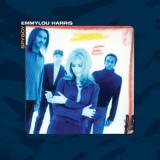
“A good song can survive and shine in different ways in the hands of different musicians,” says Emmylou Harris. “It can have different meanings at different times in your life. A good song can travel with you anywhere.” That philosophy has guided her fifty-year career in country music, during which she has covered countless songs across countless genres and put her own indelible stamp on each one. More specifically, it’s the philosophy that animates both Spyboy, her touring band in the late 1990s, and Spyboy, the 1998 live album that demonstrates how these musicians made her songs shine. Sequencing old songs alongside new ones, the album tests the tensile strength of each one, pushing them into wilder and more psychedelic territory while remaining grounded in earthy country music. It’s completely unique in her catalog, a crucial document of an important chapter in her career, and it’s finally getting reissued after years of being unavailable. “It’s such a special record,” she says. “Well, they all are, but this one is really, really special. That was such a fantastic band and such an amazing time.”
Spyboy grew out of Wrecking Ball, Harris’ groundbreaking 1995 collaboration with producer Daniel Lanois. In 1996 and 1997 together with Buddy Miller, Brady Blade and Daryl Johnson, The band, also named Spyboy, toured America and Europe together, never playing a song the same way twice. Buddy Miller brought along his recording gear and recorded nearly every show on the tour. When their time on the road ended, Miller and Harris sat down together and they culled through hundreds of tracks to choose the ones that best represented the Spyboy ethos of endless possibility. They whittled the original release down to 14 tracks and in 1998 Eminent Records released Spyboy on CD.

There’s a freedom in knowing we are all doomed, a sense of liberation from society’s morals and the considerations of commerce. That’s the territory trod by Sorrow on its lone album, 1992’s Hatred and Disgust. This album doesn’t bring you down, it takes you down. Down-tuned guitars, slowed- down tempos. Lyrics with a deservedly dim view of mankind. And fat as f*** riffs that will annihilate you. Finally released in the U.S. on vinyl and with the full support of the band, Hatred and Disgust comes in a blue smoke pressing limited to 1000 copies, complete with a lyric insert. If you like your doom metal with a side of thrash and death metal, this lost classic (remastered for vinyl by Mike Milchner) will satisfy like few others. Fans of Slayer, Obituary, My Dying Bride…take note.

The Sludge Of The Land is the new album by digital folklore and post-exoticism Italian duo Babau. Their first full length since 2023’s Flatland Explorations Vol. 2, with The Sludge Of The Land Babau lands on Impatience with their signature audio-prestidigitation at it’s most disorientingly pungent and zonked, a uniquely contemporary approach described as the sound of a continent moving; animals, plants and minerals included.
As part of a residency at Casa degli Artisti, Milan, in 2022, Babau turned their atelier into a recording studio and performing venue thanks to Francesco Piro, who produced the entirety of the album. There, the duo improvised with different acoustic and digital instruments for several hours a day. Returning after ten years to a sound more akin to a band or small orchestra, Babau re-explores tropes and themes of exotica and jazz from their unique and off-kilter perspective of terminally-online diggers-dwellers of the internet flatland.
An homage to digital content consumption and dopamine-infused sensory overloads, The Sludge Of The Land imagines itself as an abstract sonic wunderkammer of online detritus. By diving into the world of ‘sludge content’: audiovisual chaos produced by mixing different content using split screens or dizzying patchworks of videos, Babau celebrates the formless, viscous goo, spam, chum and slop of out-of-context moving image, fast paced digital videos and lo-fi mp4 artifacts. By endlessly spiraling into the non-spaces of The Net, Babau explore the uncharted parageographies of lavacasts, mysterious Chinese anthropozoomorphic legendary beings, vampiric doomscrolling glides and doppelganger, ctrl+c & ctrl+v spiritualism. These ghosts of pointless microevents and traveling-without-moving bedroom boredom are stuffed by Babau with the epic tone and compositional approach of exotica and world music 2.0 reveries, resulting in an absurd, playful narrative of the dangers and allures of the web.
Bringing together the sound of Richard Hayman and Black Dice, Korla Pandit and Sun Araw, Tony Scott and Carl Stone, once again the duo crafts a compelling audio-textual hallucination of transglobal chimera. A multi-fi, extremely layered treasure of fifth world music.
RIYL - Sun Araw, the strangest corners of the internet, Senyawa, digital wind instruments, Nuke Watch, Black Dice, exotica, hallucinating.
Babau is the pantropical project of Artetetra founders Matteo Pennesi and Luigi Monteanni, where their fascination with exotica, world music 2.0, and field recordings merges with the compositional and improvisational techniques of computer music.
Their latest work, All the Gurls were at the Women’s Archo Ashinto, was recently released by Bamboo Shows, while the previous Stock Fantasy Zone and Flatland Explorations Vol.2, were released by Discrepant. They were selected as SHAPE+ artists in 2023, and the duo has performed at various festivals in Italy and beyond, including Fusion, Club to Club, Terraforma, Nextones, Outernational Days, Camp Cosmic, and Saturnalia. For years, they have been striving to synthesize what has been described as the sound of a continent in motion—people, animals, plants, and minerals included.
The Sludge Of The Land was produced and mixed by Francesco Piro at Casa degli Artisti, Milan, and co-produced by Babau
Drums by Giovanni Todisco, bass by Francesco Piro and piano on A4 by Vittorio Cosmo.
Master by Nick Foglia.
Art by Luca Schenardi.


Musikalisch schwebt das Gespenst von Leonard Cohen aus seiner mittleren Schaffensphase über dem Album, und die Band räumt ein, dass dies eine wichtige Inspiration war – „das ist der wichtigste Maßstab – die Art von dystopischen Songs, die er mit einer satirischen Haltung schrieb, trugen dazu bei, den düsteren politischen Ton dieses Albums zu prägen“ – Alexi.
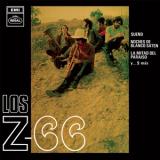
For the first time ever, the only full-length album by Spanish soul and garage legends Z-66 is being reissued. Z-66's signature blend of powerful soul, psychedelia, and pop-clearly influenced by bands like The Move, Stones, Vanilla Fudge, and Blood, Sweat & Tears delivers a bold, modern sound that remains fresh and compelling. Unlike other Spanish bands of the time, Los Z-66 enjoyed unique conditions that allowed their sound to stand out as one of the most advanced on the local scene in the late 1960s. As was the case with many other groups, their repertoire for entertaining discotheques had to include the hits of the moment and was not always open to the songs of the most daring international bands, which was the sound that most stimulated the musicians. In the case of Los Z-66, being based in Mallorca meant they had privileged access to hard to-find records, imported by foreign tourists, and to a much more modern atmosphere than in other parts of the country. Songs in Italian and French soon gave way to English hits by the Animals, the Stones, and the Beatles. But it was the offer received from Mike Jeffries, manager of Jimi Hendrix, the Animals, and others, to serve as the house band at the newly opened club Sgt. Pepper's that allowed the group to raise their live performances to a level rarely seen in these parts... They even soon incorporated the distorted sound of fuzz into their guitar when they received a fuzz face pedal as a gift from Jimi Hendrix himself, who was invited to play at the club's opening! Their excellent blend of stunning soul, psychedelia, and pop became their hallmark, not only in the band's concerts but also in the handful of singles and EPs they released on the Regal label. We are now re-releasing for the first time their only full-length album, originally published in 1969, which is actually a compilation of songs previously released in 45 rpm format, complete with two bonus tracks not included on the original LP plus a booklet with liner notes and rare photos.
"Released in 1968, “Il medico della mutua” (The Doctor of the Mutual Insurance) is one of the sharpest and most bittersweet comedies in Italian cinema. The film stars Alberto Sordi as Dr. Guido Tersilli, an unscrupulous Roman physician who climbs the professional ladder by exploiting the public healthcare system with ruthless irony. Directed by Luigi Zampa, the film offers a lucid and sarcastic portrait of Italy during the economic boom — a country racing toward modernity, yet flaunting all its moral contradictions.
Giving musical voice to this social satire is Piero Piccioni, one of the undisputed masters of Italian film music. His score for “Il medico della mutua” perfectly captures his elegant and sophisticated style: smooth jazz, orchestral groove, and an ironic touch that mirrors the double nature of the protagonist — respectable on the surface, opportunistic at heart."

TSSRCT returns with its second release, delivering a four-track EP by UFO95 that dives deep into minimalist, contemporary techno. Focused on raw textures this record explores a territory where noise meets precision. Punchy drums collide with saturated percussions, while delay-heavy treatments carve space into the mix, creating hypnotic tension across each track. It's a stripped-back yet forceful statement -- functional and experimental in equal measure.

The word "amateur" originates from the Latin word "amator," meaning "lover" or "admirer". This Latin term is derived from "amare," which means "to love". The French adopted "amateur" from Latin, and the English then borrowed it from French, initially retaining the sense of someone who loves or is devoted to something. Over time, the English usage of "amateur" also developed a meaning related to a lack of professional skill or experience. How did a word derived from love become a slur? Is love really so defenseless? They say love conquers all, but in reality isn’t love quite ridiculous? It has no intention, no motive, no agenda. How could it possibly prevail? It can’t be bought or sold, or so they say.Its mere existence can't be proven or even measured. What an impossible thing. Trying and failing, time and time again, no wonder cynicism always seems to win. I see “amateurism” as a delighted, even foolish, protest. Protest against everything. Of what’s expected of someone, or expected of someone to desire or strive for. To be elite, to be expert, to be professional, to be a master, to excel and succeed. Where’s the joy in that? I just want to have fun. I want to want. I want to love. And keep doing it, forever. I want to have fun, even when it’s tiring and sometimes even heaven is boring as hell. I want to be bad. I want to do my own thing. “I vant to be alone”. I want to be someone so dedicated to their passion that it starts to seem like there’s something wrong with them. All the way. We can take it all the way, and never get it back. ” - Molly Nilsson Amateur is the 12th studio album by Molly Nilsson. Deep in the teeth of a career that threatens to tip into something resembling a “legacy,” Molly Nilsson celebrates with an album recorded instinctively, quickly and bursting with so many moments of emotional brilliance and clarity it may be her greatest yet. Hers has been a career spent reaching out, perennially powerful in her earnestness, a warrior ridiculously defenceless and armed with a glittering sincerity. Shearing herself of the machinations of the music industry, recording at home, writing direct to the heart. Amateur is a jubilee for losers. A treatise in 13 songs, Amateur states clearly that we should live our life with eternal curiosity, offers us an open hand of comradeship out of the rat race. The songs on the album are both some of the most personal of Nilsson’s career and the most anthemic. First single How Much Is The World asks us to re-evaluate value in the face of a Neo-liberal system squeezing the life out of our loves. Pulsing opener Die Cry Lie satirises the commercialisation of emotion in the form of a shout-along diss-track. With a pounding rhythm track held down by gorgeous chord changes, heartbreaker Valhalla carries the torch for the main themes of the album: never growing up, making mistakes with kindness, moving on. When the drums crash in on the line “It’s going to get better now, you’ll see, going to be much better off without me” there is a world of feeling swirling about in the vocal delivery. One reading of the track might be that it’s a break up song but the subtext is classic Molly Nilsson: by living truthfully, making mistakes, we’re active agents against the myriad oppressions of the world. All The Way takes the theme for a run into the eternal sunset. It’s a manifesto for living fully. “Take it all the way, and never get it back” - it’s the process that’s the important point. The journey not the destination. Big Life, follows on like a part 2: An ode not only to Molly Nilsson’s career of endless gigs, endless connections with people, it’s a massive ode for following your dreams, doing it yourself. Closer The Bitter End is a powerful anthem for friendship, another definition of love infused in Nilsson’s work, A beautifully poignant ode to comradeship til the end, it seems to be the songwriter approaching aging, approaching life’s inevitability with the same vigour and earnestness, the same love of life she enjoyed at the onset of her career. There are moments on Amateur shrouded in reverb, slightly out of focus, forcing the listener to step deeper into the Mollyverse.. Nilsson’s open-armed beseeching to the world permeates every beat, every chord. These are songs exploding with life: the chunky, aggressive bassline on the punker Get A Life can’t hide its massive, catchy chorus. The sweeping Swedish Nightmare might be a tongue-in-cheek self-reference, but at its heart it’s a song about the duality of living life large, what is a dream, what is a nightmare? Molly Nilsson says you can’t have one without the other, and why would you want to? Here’s to making mistakes.

In between the folds of ceremony and commonality lies a perennial spring of musical expression.
A statement along the time continuum, or a testament to the resilient resourcefulness embedded in that truth, forms the philosophical approach of this album – the first outing of Dídac.
Studying an extensive archive of instruments, artifacts, and field recordings at the Musée d’ethnographie de Genève—a space steeped in folkloric gesture – Dídac encountered a cosmos of liturgical music and folk song. Anchored in reverance for tradition and transformation alike, this album navigates the old-world Mediterranean lore through a post-modern ambient lens, threading drone, gentle rhythm, electroacoustic textures and the crude tactility of archival material into one woven tapestry.
Under the guidance of Dr. Madeleine Leclair, Dídac was invited to work within one of the world’s most extensive ethno- musicological archives—L’AIMP. In the saturated basements and tape-lined backrooms of the museum, he submerged himself in the sounds of ritual and rural life: wax cylinders from the Eastern Mediterranean, tapes of liturgical hymn, the worn edges of communal song.
In a makeshift studio on the fourth floor of the museum, he sifted through the hours of material he collected, gradually discovering that the archive was no static source – It did not dictate; rather, it served as a companion—offering not answers, but questions. Not a beaten track, but a cluster of sonic clues and riddles. Samples do appear occasionally, tenderly interwoven into the dialogue of the songs. In Dídac’s self-titled debut, the past is not worn as ornament or kitsch; it is listened to and responded to. The museum, its archives, and the visit to Geneva became a foundational culisse of sorts, igniting a myriad of rough cuts and improvisational outtakes.
Dídac, or Diego Ocejo Muñoz, was born in Madrid in 1994 to a family of both Catalan and Castilian origin.
Brought up in a religious household, the influence of the Catholic Church innately shaped the social fabric, schooling and daily life. This lingering dominance led the adolescent Diego into a path of rejection of everything sacramental, promptly resorting to subversion in the shape of grafitti, skateboarding and underground music. Only later in life, after a rigorous venture as an acid and electro producer, the Church re-emerged before him in new light, invoking a deep fascination for its mysticism, iconography and choral tradition.
Spain in general and Catalonia in particular, has long served as a crossroads of the eastern–western Mediterranean continuum, with many of its cultures sharing aspects of way of life and ceremony. At the MEG, Diego found himself puzzled with this realization, resulting in a sonic amalgamation that reaches farther away from the rugged mountains of Catalonia than you might perceive at first encounter.
The deeply embedded memory of rite and public ceremony, religious hymn and landscape—sieved through the undercurrent of personal re-emergence, forms the emotional topography of this album. The record does not trace this landscape; it inhabits it. Its repetitive mysticism and ambient, wide-eyed gaze could possibly evoke (perhaps redundant) comparisons to artists such as Dimitris Petsetakis, or Popol Vuh’s late 70’s cinema scores.
The delicate lines between the sacred and the secular – between memory and re-invention – serve as a cipher to understanding this album in its entirety. Titles like Malpàs Mines or Pantocrator’s Portal Outro nudge toward a folkloric and devotional bedrock—places where labor and spirituality coexist, where names preserve both dust and veneration.
Nevertheless, this is far from mere nostalgia. It is a reclamation — singing alongside the spirits of the past, nurturing what still hums beneath the soil. It is an intimate reflection on tradition, rebellion, adolescence, ceremony and fantasy – a pastoral contemplation on what once was and what is to be.
