Following Sydenham, Njai and Punchard’s fresh take on Kraftwerk’s classic earlier this year, which picked up support from the likes of Optimo, India Jordan, DJ Bone, and more, Radio Slave recruits a pair of all-star remixers in Ricardo Villalobos and Gerd Janson to deliver a scintillating set of interpretations for his Rekids imprint.
Running Back’s Gerd Janson injects slap bass, funk-laden guitars, and twinkling synths over the original’s vocals for the ‘Dance’ mix, followed by a stripped-back instrumental version to kick off the A side. On the flip, Villalobos delivers a typically trippy affair, bringing constantly evolving strokes of modular mayhem and zapping percussion for over ten minutes, nervously settling into a chugging and deeply satisfying halftime groove.
Поиск:sat
Все
- A1: Brainwave Playground
- A2: Promised Land Utopia
- A3: Lucidity Gone
- A4: Life Out Of Balance
- B1: Satan's Waltz (Metamorphosis Stage 1)
- B2: Bambino Illuminatus
- B3: Bambino Criminale
- B4: Over The Rainbow
- B5: An Answer
- B6: V Day Baby
- B7: The Moaning Pyramid
- C1: Mind Splitting Lab (Metamorphosis Stage 2)
- C2: I Feel Seperated
- C3: Fascinating Child
- C4: 8-Bit Trauma
- D1: The Monarch's Pyramid
- D2: To You All Kids Will Come (Metamorphosis Complete)
Stylish, intelligent and cinematic, the second series of the cult UK TV series UTOPIA in 2014 reinforced the impact of Emmy Award winning
Series 1 and gained the show an even larger following. Integral to the action is Chilean composer Cristobal Tapia de Veer's original music
for the programme, recognised by the Royal Television Society who awarded it Best Music (Original Score), Record Collector who gave
it five stars and Mojo who placed it at No. 4 in their Top 10 Soundtracks of the year.
This record was originally released for Record Store Day 2015 and is repressed on a new colour by popular demand. Cristobal Tapia de Veer’s
music has more recently found a new audience with his soundtrack to HBO hit show The White Lotus and the film Babygirl (2024).
- Orchid Mantis
- Breach
Orchid Mantis, by Michelle Helene Mackenzie and Stefan Maier, is a work that draws its inspiration from the history of the Sanzhi Pod City, in northern Taiwan. Sanzhi Pod City was built from 1978 onwards, made up of buildings constructed from assemblages of `pods' inspired by the futuro houses of Finnish architect Matti Suuronen. The project was abandoned in 1980, following a number of accidents during construction and persistent rumours that the site was haunted. However, this wasteland of a city has allowed insects to proliferate, in particular five species of orchid mantis. It is this strange environment, made up of utopian buildings, proliferating insects and vegetation reclaiming the site, that serves as the imaginary space for Michelle Helene Mackenzie and Stefan Maier's music, a music of carefully designed pace and progression, drawing, through resonance and stridulation, subtle sonic materials that guide and accompany us into multiple worlds with admirable ease and grace. Breach, by American composer Olivia Block, engages in a dialogue between field recordings and synthesised sounds, creating a vibrant plea for wild spaces that face an ever-growing threat to their survival from human activities. The work is based on recordings collected in the San Ignacio lagoon in the Mexican part of Southern California. This lagoon is known as a breeding ground for eastern Pacific grey whales. With the help of precise electronics, the music unfolds like a drift, depicting the subjective soundscape of whales caught up in the noise of the Anthropocene. The composer uses otoacoustic emissions in particular, representing the sound saturation caused by humans in the habitat of these large marine mammals. Going beyond a merely descriptive dimension, Olivia Block manages to transcend her subject to offer a fascinating musical form that engages the listener in a constantly renewed way.
- Broken Bones
- Won't Give Up
- The Quiet
- Hex Key
- Anhedonia
- #1 Best Of All Time
- Take Me
- Mf
- Blow Up
- Blush
- Nothing Lasts Forever
- Feels So Wrong
- Here's Everything
ENG Mamalarky thrive in the in-between, a tri-coastal outfit straddling Atlanta, Austin, and Los Angeles, crafting a sound that feels both meticulously constructed and effortlessly unspooled. Their brand of indie rock is delightfully askew-swirling psych flourishes meet wiry guitar tangents, all anchored by tender, off-kilter hooks that burrow deep. It"s music that invites you into its strange little universe, full of inside jokes and late-night musings turned into melodic gold. Their sophomore effort, Hex Key - marking their Epitaph Records debut-lands in April, with plenty of mileage ahead as they road-test new material. A spring tour includes a run with Hinds and a stop at Treefort Music Fest, where their shape-shifting sonics will no doubt translate into hypnotic, full-bodied chaos. Formed in Austin in 2016, Mamalarky"s lineup has since scattered across time zones, but their chemistry remains unmistakable. Guitarist Livvy Bennett (formerly of Cherry Glazerr), keyboardist Michael Hunter (White Denim), drummer Dylan Hill, and bassist Noor Khan (Faye Webster"s touring bassist) operate like a band that"s spent years finishing each other"s musical sentences. Their songwriting thrives on kinetic interplay-nimble and restless, yet always landing in some deeply satisfying pocket. While indie-pop might be the easiest tag to slap on them, Mamalarky dodge the genre"s more predictable trappings. Instead of settling into breezy melancholy, they embrace complexity-knotty time signatures, rubbery basslines, and melodies that feel like they"re winking at you. It"s heady but never pretentious, the kind of music that rewards repeat listens, each spin revealing a new hidden corner.
- Wild World
- Hard Headed Woman
- Peace Train
- Oh Very Young
- Sitting
- Father & Son
- King Of Trees
- Where Do The Children Play?
- Lady D’arbanville
- A Bad Penny
- Bitterblue
- Another Saturday Night
Cat-O-Log Records setzt in Zusammenarbeit mit Universal Music Enterprises die Feier des 50-jährigen Jubiläum des klassischen Live-Albums von Cat Stevens, ”Saturnight” (Cat Stevens Live In Tokyo), fort.
Ursprünglich wurde das Album von A&M Records nur in Japan veröffentlicht. Jetzt ist das Live-Album in brandneuen Fromaten erhältlich. Die schwarze LP sowie die The Circle Store exklusive ”Lava Splatter” LP erscheinen in einer Klapphülle, die Texte und neue Notizen von Hallam Kite, Tourmanager Carl Miller und Bassist Bruce Lynch enthält. ”Saturnight” ist auch zum ersten Mal auf CD erhältlich, inklusive einem 16- seitigen Booklet, mit den Anmerkungen von Hallam Kite, Tourmanager Carl Miller und Bassist Bruce Lynch.
”Saturnight” wurde am 22. Juni 1974 im Nakano Sun Plaza in Tokio aufgenommen, auf der japanischen Etappe der Bamboozle Tour und war Cat Stevens’ erstes Live-Album.
Following the much-lauded trio of meditations, from Woo, Davis Galvin and Graintable, that launched the series, "Cosmos" continues the label's gentle exploration of music to accompany moments of nurture and patience. This composition from E Ruscha V, once again mirrors the quiet and satisfying tending of the season ahead, creating space for contemplation and the witnessing of gradual transformation.
A multi-disciplinary artist rooted in Los Angeles, E Ruscha V approaches instruments as living entities, each with their own organic character. On Cosmos, his synthesizers breathe and pulse with natural rhythms, creating textures that emerge and recede like early morning mist in a garden. Echoing his work as a visual artist and much like gardening itself, there’s an innate understanding of when to tend and when to let things just be and evolve.
‘Cosmos’ follows a path that Ruscha began exploring with his 2018 release, "Who Are You", on Beats In Space and continued through recent works like ‘Green Mirror’ under his alias Secret Circuit and ambient pieces for the "Slow Show" performances. Each project has been a cultivation season that invites listeners to pause, observe, and connect with cycles of natural
emergence.
His work in both galleries and performance spaces – including MOCA Los Angeles, Lafayette Anticipation in Paris, and LUMA Arles – reflects this understanding of how the environment shapes experience.
A synthesis of where space, sound, and organic movement find their natural home.
Dateline: April 10, 1970. Setting: The storied Fillmore West in San Francisco, CA. Context: Miles Davis, three days removed from his first session for Jack Johnson and, with newly recruited soprano saxophonist Steve Grossman in tow, opening shows for countercultural heroes the Grateful Dead on the latter’s home turf. Result: The initial rumblings of a thrilling era in which Davis and his cohorts would again upend jazz and popular conceptions of the genre with music steeped in groove, improvisation, and hang-on-for-your-life adventurousness. All captured on Black Beauty: Miles Davis at Fillmore West.
Mastered at MoFi’s California studio, pressed at Fidelity Record Pressing in California, and housed in a Stoughton gatefold jacket, Mobile Fidelity's numbered-edition 180g 33RPM 2LP set helps bring what went down that spring evening in Bill Graham’s venue to your listening room with exceptional clarity, balance, and presence. Originally only released in Japan in 1973 and unavailable in the United States until the late ‘90s on compact disc, this marks the first time Black Beauty has been issued on domestic vinyl. The wait is worth it.
Benefitting from quiet surfaces and excellent definition, these LPs present the band’s livewire energy and torrential storm of notes with captivating dynamics, pacing, and fullness. At its core, this audiophile reissue takes you into the walls of sound erected by a band learning on-the-fly the sheer power, will, and breadth of the electric jazz Davis was orchestrating and realizing, on the spot, would reach rock audiences that until that point had only a faint awareness of his mad-scientist experimentation. The sense of release and reach conveyed by these carefully restored records make it clear the veteran bandleader was in the process of a permanent shift that he’d chase for the next five years.
Given Davis was only a few months away from releasing the pioneering double album Bitches Brew, it shouldn’t come as a surprise that much of the fare here adheres to similar explorative approaches. Turbulent rhythms, provocative trumpet passages, and rich, saturated tonal colors that seemingly splash against a blank canvas take precedence over any traditional attempts at organization and melody. Davis and Co. intentionally play everything on a line with the bandleader signaling changes with his horn via coded phrases. The group speaks a common language — with each member having gone to achieve iconic status for their career contributions and technical prowess.
In the company of Grossman, Chick Corea (piano), Dave Holland (bass), Jack DeJohnette (drums), and Airto Moreira (percussion), Davis constructs themes around “Directions,” “Miles Runs the Voodoo Down,” “It’s About That Time,” the title track to Bitches Brew, and more from his then most-recent studio works and the in-progress Jack Johnson. His farewell to the popular standards that for nearly two decades remained a part of his repertoire arrive via a brief dalliance with “I Fall in Love Too Easily,” a shortened albeit aggressive “Masqualero,” and the “Theme” finale of “Spanish Key.” Initially, Black Beauty lacked specific track listings due to Davis’ increasing frustration with listeners over-analyzing his music.
In retrospect, it’s difficult to blame anyone for wanting to view what’s on display here with the aural equivalent of a magnifying glass. Leaning in rock directions, yet maintaining an ear for spaciousness and solos, Black Beauty survives as a snapshot of a thrilling moment amid a transitory period in which evolution came fast and furious. Just two months later, Davis would add another instrumentalist to the lineup in the form of organist Keith Jarrett, and the perpetually restless visionary would blast off to a more atmospheric and arguably more chaotic universe.
Consider, then, this live document a bridge to that galaxy and a breathtaking example of the possibilities of jazz itself.
350g
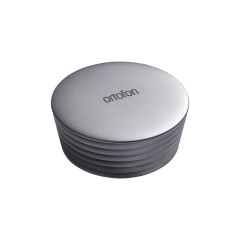
Der Ortofon Record Stabilizer wird in zwei Varianten angeboten: Standard und Heavy, beide wurden sorgfältig entwickelt, um nahtlos eine Vielzahl von Plattenspielern zu ergänzen. Diese Stabilisatoren sind von Grund auf neu gestaltet und verbinden eine elegante Ästhetik mit benutzerfreundlicher Funktionalität. Ihr müsst nichts vorbereiten: Legt den Stabilizer einfach vor dem Abspielen auf die Schallplatte, um eine deutlich verbesserte Wiedergabe mit reduzierten Vibrationen zu erreichen.
Mit höchster Präzision gefertigt, präsentiert sich der Ortofon Record Stabilizer in einer edlen, satinierten und matten Eloxierung – verfügbar in Silber oder Schwarz – mit dem markanten Ortofon Strukturrillen-Griff. Die Standardversion eignet sich perfekt für Einsteiger- und Subchassis-Plattenspieler und besteht aus Aluminium mit einer glatten Filzunterseite.
Verbessert euer Vinyl-Hörerlebnis mühelos mit dem Ortofon Record Stabilizer, bei dem Form und Funktion optimal zusammenspielen und für eine überragende Klangperformance sorgen.
This exclusive Record Store Day 2025 release will be available from 8:00am on Saturday 12th April in our Edinburgh shop, with remaining stock available to buy online from 8:00pm on Monday 14th April. Please sign in and click the 'notify me' link below to be kept up to date. Strictly 1 per customer.
Repress!
Super Rhythm Trax is excited to present Adonis’ resident DJ, Hannah Holland making her label debut.
These tracks leap out the speakers sounding super fresh and have been doing plenty of damage already featuring heavily in her sets during the last months.
3 larger than life HH productions take the scenic route around Acid, House, Techno and even some early jungle references for the eagle eared spotters amongst you with live percussion from Joy Joseph on the track ‘She’s Giving Cray’.
Jerome Hill also joins the party with an euphorically doom laden remix!
CSL presents Future Contact, a vinyl EP with 4 original tracks and remixes from ADJ & Fleck E.S.C. Advanced electro with Detroit overtones, powerful drums and spacey sounds for the originals. ADJ with his raw remix that overwhelms you with his bass, and to close the vinyl Fleck E.S.C. raises the adrenaline and gives more impact with atmospheric sounds!
- Ishi
- Many
- Tonbo
- Horo Horo
- Mushi Dance
- Spells
- Nami
- Wakaranai
- Dottsu
- Kodama
- Tent
- Metallic Gold
- Omajinai
- Ghost
Taba voices a subtle yet surprising shift for the Japanese musician and producer Satomimagae. Observing and absorbing the fleeting scenes and sounds of life flowing outside of her home studio, Taba unfolds as a series of vignettes that document the personal and the universal. Satomi sings beyond herself in an orbit of souls and systems known and unknown, seen and unseen, in the present and in the strange flux of memory, leaving linear songwriting to rest for circuitous stories expanded and expansive in tone and texture. Following the logic of taba, a Japanese term for a bunch, bundle or grouping together of different things, the album is assembled as a loose collection of short stories. Shapeshifting into something like a poet-narrator, Satomi casts her writer's eye to the often perplexing shapes that form from quotidian events and exchanges defining our increasingly alienated age. Where Satomi's last full-length, 2021's Hanazono, bloomed from the lush soil of a private inner sphere, the bird's eye of Taba searches to place the artist_somewhere, somehow_within a wider, wilder world. Collaborations with other artists and musicians close to Satomi's universe further elevate the album's sweeping sonics. Synthesizer lines from Norio, who also helps define the album's visual identity through photo and video, enliven the tender ballad "Kodama." The bell-like Rhodes piano ringing in and around Satomi's guitar on "Dottsu" is played by Akhira Sano, who created the cover art for her 2021 Colloid EP. Yuya Shito's clarinet was the missing puzzle piece that completed "Spells," and it was also Yuya who mixed Taba with an ear for its organic textures and elegantly frayed edges, giving utterance to a distinctly different energy than Satomi's earlier expressions. The tonal and rhythmic play that lay the foundation of these songs also animates a colorful palette of melodic gestures, noisy resonances and pointed moments captured by Satomi's close-at-hand recorder. While Taba is still carried by the innate intimacy that has defined Satomi's music to date, these songs channel her newly spacious and inquisitive songwriting approach, unlocking unusual layers in the process. Some are subsumed in the speculative poetics of sound design, while others peer through the window of bedroom pop. Gathering imagistic reflections, tracing vast ideations and quietly lingering in humble moments, Taba connects vivid lines between the individual and the collective, the constructed and the cosmic, the articulated and the felt. Satomi's sonic tales gain an eloquent coherence by the simple fact of existing in conversation, humming a harmony of parts that buzzes with the tangled circuitry of a life in motion. Taba is the fifth album from Japanese musician, songwriter and dream traveler Satomimagae, following her 2021 album Hanazono and the 2023 reissue of her debut album Awa, both for RVNG Intl. On Taba, Satomimagae leaves linear songwriting to rest for circuitous stories expanded and expansive in tone and texture, unfolding as a series of vignettes that document both the personal and the universal. Some of the songs on Taba feature intimate moments captured on Satomi's hand recorder, poetic moments of sound design animated by tonal and rhythmic bedroom pop foundations. As with Hanazono, Taba's album artwork features a wooden block print by Satomi's sister, the artist Natsumi Magae.
- Prelude
- Meet Me In The Garden
- Joyride
- Her Story (Interlude)
- Warrior Princess
- Breathe
- Note To Self (Interlude
- Lifeline
- Give It All To You
Meet Me in the Garden is a richly textured exploration of love, loss, and renewal. Co-produced by Felix Bloxsom (SIA, Genesis Owusu), Daniel Mougerman (The Bamboos), and Rita Satch herself, and mixed by Grammy-winning engineer Ben Kane (D’Angelo, Emily King), the album features contributions from some of Naarm/Melbourne’s finest, alongside a sweeping 12-piece string orchestra.
Blending smooth soul, contemporary R&B, orchestral flourishes, and stacked harmonies reminiscent of D’Angelo and Bilal, the album unfolds with cinematic beauty and emotional depth. It opens with a stirring string prelude by Mougerman before transitioning into the dreamy title track. Standouts include the meditative Breathe, the funk-fuelled Joyride, and Warrior Princess - a heartfelt tribute to Satch’s late grandmothers that helped her process grief through song.
Rooted in personal loss and spiritual growth, the album draws from Satch’s Kabbalistic studies and her belief in reunion beyond this life. With its timeless soul and modern edge, Meet Me in the Garden is a bold, soul-stirring debut that leaves a lasting impression.
The debut album from CEM, 'FORMA' was developed as a soundtrack to Mauro Ventura’s series of "action painting performances" and uses various bell sounds (cowbells, doorbells, Shinto bells, singing bowls) to pick out anxious giallo sequences and heaving Dadaist formations.
CEM's best known for pneumatic DJ sets that have propped up Berlin's queer underground for a decade at this point, but don't expect to find any vaped darkroom tek on 'FORMA'. Each of the six compositions were commissioned for Ventura’s performative installation at Volksbühne in 2022, and CEM opted to represent the piece's themes of labor and repetition by sampling an arsenal of bells and metal objects that anchor his varying widescreen vignettes. 'The Calling' is a relatively subtle introduction, establishing the space with double bass drones and ratcheting digitally altered chimes - it's 'Bells Corrupt' that cements CEM's concept more righteously, harking back to Goblin's iconic 'Suspiria' score without pastiching any of its Italo-prog themes. Cycling ritualistic bell loops with squashed, industrial-strength thuds and granulised laptop belches, CEM silhouettes the tension and the vivid color of Argento's film, chrome plating the result.
'An Industrial Satire' is even more convincing; this one takes its cues from legendary German sound artist Limpe Fuchs, and the first part integrates scraped, alien resonances with CEM's loping industrial rhythms and squelchy EBM bassline. The real shift occurs in the second part, when CEM's choppy electroacoustic minimalism falls away to unlock his rolling hand drum performance, that he matches with a ghaita sample lifted from the Master Musicians of Joujouka's 1971 album with Brian Jones. With the future-facing deconstructions a memory, 'Statue Garden' beds reedy organ drones in eerie gallery ambiance, and closer 'The New Sincerity Test' finds Lithuanian performance artist Gertrūda Gilytė skewering the wellness industrial complex over nauseous subsonic oscillations and scratchy noise.
- LP 1: Champagne Taste
- Nothing Romantic
- Waiting For The Rain
- Look What You've Done To Me
- I Knew Love
- Take Out Your Insides
- There's A Part I Can't Get Back
- Please Rewind
- Shooting Star
- Sunshine
- LP2: No Bills In Heaven
- Raggedy Anne
- Lady Daydream
- Crashing Highs
- Watch You Walk Away
Ltd. Deluxe LP 2x12"Red Vinyl[35,25 €]
Die beliebte New Yorker Rockband Sunflower Bean meldet sich neu belebt mit ihrem vierten Album zurück. In Eigenregie produziert, von Caesar Edmunds (The Killers, Wet Leg) gemischt und von Sarah Tudzin (Illuminati Hotties, Boygenius) engineert, liess sich die Band von Alternative Rock, verträumter Psychedelia und Arena-Ehrgeiz inspirieren, um mit "Mortal Primetime" das härteste und verletzlichste Album ihrer Karriere zu liefern. Die Songs sind ungeschminkt und offen, Dissonanz und Unsicherheit werden akzeptiert. Sunflower Beans breite Palette von Einflüssen würden die meisten Bands nicht wagen, in einem Satz zusammenzufassen, und diese Kühnheit hat sie undefinierbar gemacht. Der Power-Pop-Opener "Champagne Taste" kanalisiert Iggy Pops "The Idiot"-Phase, "Look What You've Done To Me" beschwört den beunruhigenden Wahnsinn und die Launenhaftigkeit von Kate Bush, und die hochfliegenden Powercords auf "Nothing Romantic" erinnern an Arena-taugliche 70/80er Hits von Heart, Pat Benatar und Joan Jett. "Manchmal denke ich, diese Platte ist wie eine Mischung aus Belle And Sebastian und Alice In Chains", sagt Frontfrau Julia Cumming.
- Fear Not The Tormentor
- Dakhma Curse
- Trance Of The Mummified
- Death Opens The Grave
- Religious Insanity Denies Slavery
- Horrific Distortions
- Five Blades
- The Southern Temple
4 Jahre nach dem schieren Ansturm von "Sumerian Promises" kehren Sijjin mit ihrem zweiten Werk "Helljjin Combat" zurück. Das Album beschwört sein eigenes Leben voller satanischer Bilder, teuflischer Ausschweifungen und biblischem Fatalismus. Sijjin folgen dem festen Pfad, den sie einst eingeschlagen haben, wenden sich aber endgültig der Hölle zu.
Aufgenommen live in den BlackStorm Studios in Karrantza, Baskenland & verziert mit einer authentischen und völlig trockenen 80er Jahre Analog-Sound Produktion. Obendrein klang Gerickes Gesang noch nie so dreckig wie auf "Helljjin Combat". Sijjins neuere Richtung konzentriert sich auf umfangreichere Songstrukturen, wie sie von den Paten des Metal-Wahnsinns Mitte der 80er praktiziert wurden, dabei kommen einem so berüchtigte Namen wie Infernäl Mäjesty, Nasty Savage, Possessed, frühe Slayer oder Megadeth in den Sinn.
Zusammenfassend lässt sich sagen, dass das Trio von Sijjin bei seinem Kampf in der Hölle einmal mehr bewiesen hat, dass es der Dreizack in der linken Hand des Teufels ist!
Deerhoof haben sich schon vor langer Zeit als eine der großartigsten Rockgruppen des Planeten etabliert - wer das für übertrieben hält, hat noch nicht genug Zeit damit verbracht, Deerhoof zu hören - das wahnsinnig erfinderische Quartett behandelt jedes seiner neuen Alben als eine Gelegenheit zur kreativen Wiedergeburt. Und doch sind sie irgendwie auch zutiefst zuverlässig, eine seltsame, aber wahre Beschreibung für eine Band, die so kreativ rastlos ist. Man weiß nie, wie ein neues Deerhoof-Album klingen wird, außer dass es immer nach Deerhoof klingen wird. Die Band wird durch solche Paradoxien definiert, wie "Noble and Godlike in Ruin" erneut bestätigt. Ihr neuestes Album ist entweder ein Porträt einer Welt, die in monströsen Hass, Entmenschlichung und Dollarzeichen abgleitet, oder ein eindringliches Selbstporträt der Band als Monster: ein intelligentes, sensibles, hybrides Wesen, das unermüdlich von Liebe singt, sich aber zunehmend von dieser Welt entfremdet. Die Musik ist fröhlich und ahnungsvoll, kybernetisch und zutiefst menschlich, alles zugleich. Streicher, die an avantgardistische Kammermusik und klassische Horrorfilm-Soundtracks erinnern, prallen auf Gitarren- und Basslinien. Das Schlagzeug ist manchmal gefiltert und klingt fast elektronisch, aber kein Computer könnte einen so funkigen und dynamischen Rhythmus erzeugen, bei dem jede winzige Variation von einem Snare-Schlag zum nächsten Welten der Möglichkeiten vermittelt. An der Spitze steht die unnachahmliche Altstimme von Satomi Matsuzaki. Eine Stimme der Einsamkeit, deren schlichte Ruhe seltsam außerhalb des Mahlstroms der Band zu stehen scheint, zu dem sie mit ihren zackig-präzisen Bassläufen selbst beiträgt. Als Einwanderin der ersten Generation in den USA hat sie nie versucht, ihren japanischen Akzent oder ihre Karaoke-esken Vortrag zu verbergen. Auf "Noble und Godlike in Ruin" wirkt dies abwechselnd als Ausdruck von Einsamkeit und als kühle Provokation gegenüber Systemen der Unterdrückung und Kontrolle. ,Kindness is all I needed from you", singt sie auf dem epischen Albumabschluss ,Immigrant Songs`. ,But you think we're in your house." Nicht lange danach explodiert der Song, sein eng gewickelter Art-Pop macht Platz für mehrere Minuten heulenden Lärm. Auch wenn das Thema düster sein mag - wie könnte es anders sein - tragen die Songs trotzigen Optimismus in ihrer Weigerung, sich den Konventionen oder überlieferten Weisheiten zu beugen. Da ist diese berühmte Zeile von Dylan Thomas über das Wüten gegen das Sterben des Lichts: "Noble and Godlike in Ruin" fühlt sich ein wenig so an. Die Welt mag untergehen, aber Deerhoof gehen schwungvoll unter.
Emerging from the suburbs of North London in the early 1990s, Hulusi was an experimental electronic music collective formed by four friends of multi-ethnic origin: Cypriot, Caribbean, Indian and English heritage. Cultivating their musical practice within very specific parameters of time and space, Hulusi instills the essence and spirit of the acid house movement (and its aftermath) that had taken much of England by storm from 1988 onwards. The ‘Dream’ EP was the collective's first release of their self-funded and limited output, offering up a categorically elusive record that could soundtrack the most esoteric and life affirming club moments, whilst simultaneously satisfying the ears and obscure desires of those found dwelling in the heavily occupied ‘chill out’ rooms and nocturnal after parties. As the emerging UK rave scene aligned with newfound accessibility of music production, the late 80s and early 90s became a fertile ground for experimental electronic music, spawning a generation of bedroom and basement producers interacting with and creating music for often the very first time. Like many, Hulusi was a musical project that connected the dots between DIY spirit, technological advancements and the burgeoning cultural phenomenon of acid house. The project operated outside of the then perceived, traditional band conventions, instead developing their sound and exchanging ideas through the format of demo tapes and floppy disks, nurturing their work through individual bedroom studios and feedback sessions. Considered a crucial and possibly defining element of the record, is Hulusi’s unconscious exploration of the groups hybrid cultural identity. Rooted in a shared desire for self-invention, the Dream EPreflects Hulusi's response to a world of rapid musical and technological change. Each track on the record draws inspiration from both Western and Eastern musical frameworks, symbolized through the record’s structure. The ‘Western Side’, featuring "Dream," echoes the ambient techno and acid house influences of early rave culture and bands like 808 State and Orbital. In contrast, the ‘Eastern Side’ of the record is highly decorated with samples, yet stripped back, through its purposeful use of organic sounds, reflecting the group's fascination with blending Western modernism with imagined Eastern themes. Despite operating in near obscurity, Hulusi - The Dream EP acts as an audible catalyst to transport the listener to a different time and place, offering a lucid snapshot into the musical and cultural explorations of the past whilst simultaneously remaining a timeless piece of music.