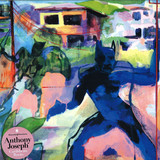
Third release of Dancing like Quagmire, italian white label (vinyl only) born to make you dance shouting 'GIGGITY GIGGITY GO'!!! Mini-album with five tracks deeply rooted in 20th century Russian culture in which Neotnas is showing his poetic music style wandering between rough drum patterns, old dusty samples (hard to dig for sure) and hypnotics saxophone melodies. A-side starts with dreamy downtempo intro Elin, followed by crispy broken rhythms of Colourful Tension and closes with breezy and fluffy Don't Rush with Dubjazz. B-side contains mighty deep house trip Morning Way, and outro Come, where the main character is undoubtedly Ivan Pona's magic sax which created an illusory atmosphere over Neotnas's soul beat.
quête:saxo beat
For his next release on Soundway Records,
Los Angeles-based Dexter Story hooks up with long time friend and compatriot of music, the saxophonist, jazz composer, producer and band-leader Kamasi Washington. A fierce, rumbling electro Ethio-Funk groove provides the platform for an intense and powerful interplay between Washington on tenor sax and Todd Simon on trumpet. An instrumental cover version of Tilahun Gessesse's 1970s cut of the same name, it's Story's homage to the oppressed Oromo people of Southern Ethiopia. Backed on the flip by the one cut from Story's 'Wondem' long-player that did not make it to vinyl when the LP version was cut, Nia Andrew's
sublime and atmospheric collaboration on Eastern Prayer
will keep all those happy who grumbled at it's exclusion
from wax first time around. This is a record that no lover
of Ethio-Jazz, Afro-Beat or Funk should be excused for not
owning.
Strut team up for the first time with respected French label Heavenly Sweetness for the brand new album by the inspired poet, novelist and musician, Anthony Joseph.The Caribbean is an influence that runs through Joseph's discography, obliquely or headon, suggested or on full display. It resonates on each of his albums, from the furious trance of 'Bird Head Son' to the more polished 'Time'. On 'Caribbean Roots', he has now decided to turn a guiding thread and a reference point into a communications cable - a powerful bond that makes light of distance and braves the seas to link his island to that of his friends in the Caribbean arc, dancing to the strains of tumbélé and mendé only a few miles
from Port of Spain where people live it up to rapso and soca beats. Caribbean Roots' represents a return to his roots for Anthony Joseph, who has always remained true to a powerful, deep-seated sense of his Caribbean identity. Having started
out as a joint project with the outstanding percussionist Roger Raspail (Cesaria Evora, Papa Wemba, Kassav), 'Caribbean Roots' swiftly grew into a creative force incorporating
the rhythms, sounds and vibes that rock the Caribbean from San Fernando, Scarborough, Kingston and Les Abymes to Port-au-Prince and Havana. Backed by a band made up
of a blend of local musicians, the album attempts to unite the different islands into a single entity whilst ensuring that the identity of each is in no way diluted by the mix instead creating a richer and stronger alloy. The saxophones of Shabaka Hutchings (The
Heliocentrics) and Jason Yarde, the trumpet of Yvon Guillard (Magma), the bass of Mike Clinton (Salif Keita) and the trombone of Pierre Chabrèle (Creole Jazz Orchestra) all combine to form a group of Caribbean All Stars to which Andy Narrell, the master of the steel pans, brings ringing drum beats. The album features bursts of catchy rhythms and slow percussive riff progressions, as on a film soundtrack, incandescent voodoo funk and rhythmic high-speed frenzies shot through with free-jazz sax. This reunion of the Caribbean diaspora was never meant to come up with a formula divisible into eleven separate tracks - its goal was to explore and discover new sounds. And all of this under Anthony Joseph's guidance, as he spins his lyrical blend of afro-futurism and surrealism, commemorating the Caribbean people's sometimes violent resistance to colonialism. Anthony Joseph, one moment a chronicler reciting his text against a background of simple percussion, the next a storyteller possessed by the power of a hypnotic bassline, then an adventurer chanting among mangroves where the rhythm section and the brass have created an impenetrable thicket. At turns, an MC too, strutting to a fat, throbbing groove in vocal tandem with Sly Johnson or David Rudder to pay tribute to Mighty Sparrow, the undisputed and indisputable king of calypso
Honey Soundsystem releases 'Cosmologist', the latest offering from our Resident DJ: Robert Yang aka Bézier. A multi-instrumentalist, Robert was trained in saxophone starting at age 10, before moving onto a Fender Telecaster after high school. After being exposed to Southern California rave culture in the late 90s, he moved onto DJing and collecting records. By the time he planted his roots in San Francisco in 2005, Robert had built an impressive analog synth-based studio, which also serves as the creative hub for his riveting live performances.
'Cosmologist' explores Robert's personal universe with three tracks that connect his varied musical lineages. "Cosmos", a celebration of the late 80s/early 90s KIIS FM universe, is built around an infectious freestyle hook that morphs into a seven minute tour of intersecting styles. "Ether" begins as gothic night-driving electro, but breaks into fantasy-scapes inspired by Italo and 1980s Japanese anime theme songs. The final track, "d. Quelle", clocks in at over 11 minutes, incorporating bebop jazz solos drawn from his early exposure to improvisation techniques by Charlie Parker, Cannonball Adderley, and Stan Getz. All songs have been mixed by Mark Pistel (Meat Beat Manifesto, Consolidated) at Room 5, San Francisco and EQed for vinyl by George Horn at Fantasy Studios.
- A1: Jone's Disco - Los Porcos
- A2: Comme Ça - Domenique Dumont
- A3: Berlin - Ruede Hagelstein & The Noblettes
- A4: Ol Fashioned Kiss - Ala.ni
- B1: C'est La Vie - Laure Briard
- B2: Samana - Bones & Beeker
- B3: Sonate Pacifique (Radio Edit) - L'impératrice
- B4: Hoping (Herbert's High Dub) - Louie Austen
- C1: Velo Patrol - Roscius
- C2: Plage Isolée (Soleil Levant) - Polo & Pan
- C3: Punks Still You - Justine & The Victorian
- C4: A Walk In The Dark - The Central Executives
- D1: Farewell To Wendo - Mock & Toof
- D2: Pulse - Shigeto
- D3: Speak Low - Billie Holiday
- D4: The Beat Generation - Bob Mcfadden & Dor
Hunting down the coolest sounds around the globe, the wewantsounds crew have curated another special mix for your Lazy Sundays. Dishing out a tasteful mix of new tracks from under the radar, this selection features a string of sunny pop, indie grooves, chilled electro and relaxed disco, the whole seasoned with a couple of leftfield cult classics and classy jazz tracks for good measure. Sunday Mixtape is the perfect sonic brew that will bring you back to life after a long night or hard partying. Many of the tracks in this selection have barely been heard outside of the underground circles and feature young artists who have just sprung out to life with the exception of UK soul diva ALA.Ni and the recent success of her melancholic jazzy album and L'Impératrice, the next disco big thing out of France, whose buzz is getting louder.
Here you'll find new French nouvelle vague singer Laure Briard, US groovy duet Bones & Beeker, minimal house producers Roscius and Shigeto as well as Domenique Dumont with a buzzing balearic beat.
Sunday Mixtape also features a few cult classics such as Mock & Toof's 'Farewell to Wendo', Louie Austen's 'Hoping' and Justine & The Victorian Punks' 'Still You', a sought after NY avant disco 1979 tune led by French expat fashionista Justine and saxophonist (and frequent Arthur Russell collaborator) Peter Gordon.
Saxophonist Sean Khan is a multi-instrumentalist distinguished for his ability to fuse traditional jazz with contemporary styles. His involvement in the West London broken beat scene as band leader of the cult soul/ jazz outfit SK Radicals and as a collaborator with the likes of the Bugz in the Attic collective, have seen his unique breed of jazz put to full effect in London's clubs, at nights like the legendary bruk orientated 'CoOp'.
In anticipation of Sean Khan's second album on Far Out Recordings: 'Muriel', this four track 12' release features remixes from 4hero and Nicola Conte with father of British Neo-Soul, Omar on vocal duties. 'Don't Let The Sun Go Down' is uplifting and sophisticated dance-floor jazz. Dego and Marc Mac (4hero), two pioneers of broken beat, jungle and UK dance music as a whole, re-work the single from 'Muriel' into a delicately crafted downtempo number, which tames the original somewhat with club focused intentions, yet retains all of its fluidity and groove. Along with the eminence of rhythmic elements, Omar's instantly recognizable, thick and soulful vocals are sparsely and subtly layered to create beguiling, unconventional harmonies. Elevating the track to its peak, Sean Khan's exquisite alto sax solo demonstrates both his technical prowess and keen understanding of jazz's history, whilst working to carve out its future. The B side hosts Nicola Conte's remix of 'Things to Say'. Renowned for his input and influence in the lineage of acid jazz and fusion, as a producer, Dj and musician, Nicola Conte provides a deeper, darker take on Sean Khan's unique blend of jazz. A bouncy 4/4 house beat skips along beneath contemplative, whirring Rhodes, while the ghostly soulful vocals of Diana Martinez and samples of Sean Khan's expressive sax playing see the track taken to more introspective yet still clearly club focused territory. The final track is the intro to 'Sister Soul', previewing more material from Muriel, Sean Khan's forthcoming studio album on Far Out Recordings.
Visibility Is A Trap is the new EP by Dalhous, comprised of four originals together with a masterfully understated Regis remix of 'He Was Human And Belonged With Humans'. The EP heralds the arrival of the Edinburgh-based project's sophomore album, Will To Be Well, due out on Blackest Ever Black in early Summer 2014. Dalhous first announced its existence in 2012 with the Mitchell Heisman 10', and last year released its debut full-length: An Ambassador For Laing. Both Visibility Is A Trap and the upcoming Will To Be Well LP reflect writer-producer Marc Dall's continued interest in the language and imagery of self-help, R.D. Laing and the anti-psychiatry movement. Though recorded after Will To Be Well, the tracks on Visibility Is A Trap at first appear to have more in common with the blue ethereal drift of Ambassador. While 'Information Is Forever' and 'A Change Of Attitude' are firmly in the ambient mode, 'Active Discovering' fizzes with arpeggiated energy, and a battery of percussion disrupts the calm surface of 'Sight Of Hirta'. Something is up. All is not as it seems. The Regis remix of Ambassador highlight 'He Was A Human And Belonged With Humans' finds Karl O'Connor in unusually pensive mood. In fact this near-beatless, dubwise version is unlike anything he has put his name to before. Discarding the rhythmic skeleton of Dalhous's original, he gives their weeping saxophone more space to roam and resonate, adding off-beat, sleep-deprived keys, murmured vocal fragments and swells of sub-bass pressure. It could be construed as a love letter to his former home in West Berlin; certainly it evokes and effortlessly updates the drugsick grandeur of later Neubauten or Low side 2.
Back in stock!
Some friends think that Shihab the man owes the balance of his soul to his beautiful Danish wife. They may be right; for Eros is the very essence of what Shihab plays.Yet Eros is a god with many a face. A tale of tender mournings Shihab's flute is telling in MAUVE - a piece that translates its title into delicately changing colors of sound. In UMA FITA DE TRES CORES he has his instrument wooing with the proud self-reliance of Latin grandezza. Calmly, softly, almost blandishly Shihab blows the solo flute in the Jimmy Woode composition MY KINDA WORLD. Serene and somewhat playful his own title ANOTHER SAMBA comes along - a most uncommon composition by the way: lasting for sixty bars as if growing independent out of itself, with solos that appear to be additional spinnings rather than improvised choruses; and yet; a perfect, self sustaining melody no element of which is superfluous. In the last of the pieces for flute, in Klook Clarke's THE WILD MAN, which is based on a flourish of trumpets, Shihab for the first time reminds of the sombre, the demon-like face of God Eros. He contrasts flawlessly intoned passages with challenging phrases, phrases raucously sung into the flute - really, he is a 'wild man' who is playing like that. This raucous challenging sound prevails throughout the four baritone-titles ('Shihab never withholds long to caress', Campi says). Shihab blows the instrument the same way he speaks: without any delay, directly coming to the point. And he treats it like a voice, not aiming at an artificially homogeneous sound in all the registers, but at their different modes of expression. In the high pitches the horn gains a brilliant tenor-like quality - for instance in PETER'S WALTZ, dedicated to Shihab's son Peter, and in Kenny Clarke's simple drum fills comprising theme JAY-JAY. In the deep register Shihab produces snotty sounds filling lady's ears with horrors like Pan - thus in JAY-JAY and in the boppy blues SET UP . Shihab's sense of a scurrilous humor breaks through in SEEDS (which reminds of the West-African heritage of jazz with its multiple rhythms and its renunciation of harmonious development - only the eight bars of the bridge base on a progression of chords): not only does he omit the notorious bombastic chord by the ensemble after his own final cadenza, he even ends with a minor second above the keynote. Seems as if Shihab now unrestrictedly conveys to his music all the experiences and emotions he formerly did not deal with in a musical way. Shihab the man need not be disturbed so that Shihab the musician may improvise passionate choruses. It would be unjust, however, to forget the choruses of the four other musicians for those by the 'born leader'. Francy Boland, taciturn and always introverted: he plays an extrovert, a masculine piano. Even with spare single note lines he produces a piercing and ringing sound that hitherto nobody except him has discovered, a bluesy sound bespeaking the very element of frustration that lies within the title of the trio number WHO'LL BUY MY DREAM. The unfailing feeling for rhythm the musicians of the CBBB praise with the arranger Boland, becomes manifest in the piano solo on SET UP. Francy's improvisation is rhythmically styled in a Monk-like manner, and yet no accent could be set differently. Maybe this is the secret of the Shihab-Combo. 'Rhythm is our business', this credo of Jimmy Lunceford could be the one of the five musicians as well. Sadi hits his vibes as dryly as if wanting to bring its ancestors to memory, the wooden chimes of West Africa's coastal tribes. To reach the fullest poignancy possible, he intentionally calms down even the resonance in MY KINDA WORLD. In UMA FITA DE TRES CORES Jimmy Woode bears out the crispy jazz beat against Sadi's Bongos and Klook's Latin-American percussion all by himself. Moreover - and that, too, is connected with the school of the Duke who was the first in the history of jazz to discover the instrument's potential as a melody instrument - Woode rips a marvelous counterpoint to the inventions of the other melody instruments, take for example PETER'S WALTZ. And then there is Kenny Clarke. Klook. On the entire record he only uses his brushes. Means by which different drummers only know to bring forward impressionistically blending noises: He drums a vigorous beat with them, fanciful fills, a solo, melodious and at once skillfully playing with cross rhythms in JAY-JAY. The 'born leader', the 'outstanding baritone saxophonist of modern jazz' (Joachim-Ernst Berendt), he could not wish himself different sidemen for this record overdue since some years.