Bloc Party return with their forthcoming sixth studio album Alpha Games, due 29 April 2022 via Infectious / BMG. Alpha Games is the band’s first studio album since 2016’s Hymns, and the first Bloc Party album written and recorded as this four piece; adding the musicality of Justin Harris (bass) and the unbridled energy and power of Louise Bartle on the drums to capture the spark of their live shows and to deliver the most exciting Bloc Party album yet.
Alpha Games, produced by Nick Launay & Adam Greenspan (Nick Cave, Yeah Yeah Yeahs, IDLES), includes new single Traps, which sees the band returning to the raucous, high-octane sound of their earliest work in an outburst of propulsive post-punk. The album’s 12 tracks veer from the intense and confrontational (Traps, Day Drinker) to melodic and introspective (If We Get Caught, By Any Means Necessary), and marks a new and important chapter in one of music’s most important voices in Kele Okereke and important bands in Bloc Party.
“Alpha Games was conceived on the road, playing in front of amazing crowds on our last tour and then brought to life with the fire and the frustrations of 2020,” says Kele Okereke on Bloc Party’s first new album in seven years.
“We wanted to can what was happening at those massive gigs in 2019, to showcase what Louise can do, what Russell is capable of and most importantly the electricity coming off the audience. We knew that Nick & Adam were the right choice of producers to do that and the result feels like fire in a bottle.”
quête:say lou lou
Linda Fredriksson (they/them) shares their debut solo album "Juniper" on We Jazz Records, 29 Oct 2021. Linda (of Mopo and Superposition) has been working on the compositions heard on the album for several years, composing them mostly on guitar, keys and by singing. Only later have they been arranged for the band heard on the album, including Fredriksson on saxes and various instruments, Tuomo Prättälä (of ilmiliekki Quartet) on rhodes, moog and piano, Minna Koivisto on modular synth, moog and OP, Olavi Louhivuori (of Superposition) on drums, and Mikael Saastamoinen (of OK:KO and Superposition) on bass, plus featuring the Swedish artist Matti Bye on piano.
At heart, "Juniper" is a "singer-songwriter album", performed by an instrumental jazz band. The end result is unique, personal, and as Linda themself puts it "quiet and introspective". The first single from the album is "Neon Light and the sky was trans", "a song from the shining streets – the beginning of something new", featuring field recordings of rain falling down behind the window of Linda's Helsinki working space.
It's a fitting introduction to an album full on wonders and carefully crafted secrets ready to be discovered. "Juniper" is a world unto itself, and Fredriksson describes the process as one of isolation and of learning slowly to do new things. After the demo stage, the songs were taken to the full band, but what's on the record often stays true to the minimal nature of the early demos. Linda credits their co-producer Minna Koivisto as a key ally in the process of maintaining the demo sessions' fragile beauty on the actual finished record.
With regards to instrumentation, those who have heard Linda Fredriksson in Mopo and Superposition are likely to be surprised by their credit listing including not only alto and baritone saxophones, plus bass clarinet, but also guitar, Rhythmic8 synths, ambience recordings and drum programming. Linda describes the way of finding new sounds through their beloved old guitar as follows: "It's an old acoustic guitar that has been hit by a car and is literally full of holes, but that makes the sound just perfect for this album and you can hear the instrument on 'Pinetree song' and 'Lempilauluni' (Finnish for 'My Loved Song')."
In fact, Linda began their music-making with guitar and vocals, and the debut of the hole-filled vintage acoustic guitar makes perfect sense here, while also describing the album's immediate sound perhaps better than any other individual instrument used. The influence list for the album name checks the likes of Feist, Neil Young, Susanne Sundfør, Alice Coltrane, Pharoah Sanders, Eric Dolphy and Fever Ray, yet the number one inspiration for Fredriksson prior to making the album was "Carrie and Lowell", the 2017 album by Sufjan Stevens. Different as the albums are in terms of instrumentation and general scope, it's fascinating to draw parallels between them by listening to the quietness and immediacy of the music. "Nana – Tepalle" also relates to the world of "Carrie and Lowell" in being a dedication to a lost family member, Linda's grandmother (she is featured in the digital single artwork).
Throughout the album, Linda plays their saxophones in a way that is serving music first and foremost. The musician's ego, so often at the forefront in jazz, takes a backseat, and the songs themselves remain. Linda thinks as a composer, utilising their instrument where and how necessary, not presenting "chops". "It's sometimes hard to play simple," they say, "but I tried to follow my instinct about what the songs need. The mood rules here, any solos or improvisations happen around that at all times."
"Juniper" can still be heard as a jazz album, but perhaps one reminding that the word doesn't need to mean any one thing in particular. At its best, jazz music is highly personal and "of the moment", both true on "Juniper". The album has been made in two different studios, three homes, two summer cottages and four working spaces. It was recorded with professional studio equipment but also with an iPhone and on a basic built-in laptop speaker. With that, "Juniper" stands as a remarkable musical diary of a creative musician and composer during the early 2020's.
We're all unabashed fans of Steely Dan so we take Steely Dan covers seriously. Mainly "why bother"? You can't improve on perfection right? However, when we heard Deep Heat's scintillating version of "Do It Again" we changed our minds. A totally brilliant funkier version of Steely Dan's first-ever hit which stands loud and proud in re-interpreting this classic song into something much more appropriate for today's more sophisticated dance-floors.
Originally released on the tiny Detroit label, Cu-Wu, original copies soon ran out. There is currently just one available in the entire world for $1000 and that'll be gone in a blink. The smart money says hold on for a mint reissue on the original label.
A great socially-conscious flip too, the uptempo funky "She's A Junky (Who's To Blame)". All in all, this is a killer double-sider and will also appeal to Steely Dan collectors and enthusiasts across the board. Expect strong demand. I mean who wouldn't want this within their collection? Absolute banger. Both sides!
- A1: Ceremony
- A2: All Roads Lead To Los Angeles (Feat Jaleel Shaw)
- A3: Blaming Mercury
- A4: Window To A Shimmering World
- A5: Chemical X
- B1: A Ring On Each Finger
- B2: Kamishinjo (Feat Jacob Mann)
- B3: Inner Crooner
- B4: Wax Hands (Feat Brandee Younger)
- B5: You've Got To Pull It Up From The Ground (Feat Theo Croker)
"We're a bunch of outsiders who refused to be kept out," says High Pulp drummer Bobby Granfelt. "We've never had an academic approach to jazz-most of us grew up playing in DIY bands-so it was the rawness and the energy and the absolute freedom of the music that called to us in the first place." Indeed, there's something defiant, something utterly liberating about High Pulp's remarkable ANTI- Records debut, Pursuit of Ends. Drawing on punk rock, shoegaze, hip-hop, and electronic music, the band's brand of experimental jazz is both vintage and futuristic all at once, hinting at times to everything from Miles Davis and Duke Ellington to Aphex Twin and My Bloody Valentine. The songs here balance meticulous composition with visceral spontaneity, and the performances are nothing short of virtuosic, fueled by raw, ecstatic horn runs ducking and weaving their way around thick bass lines and dizzying percussion. While the Seattle-based collective is centered around a crew of six core members, they also make judicious use of a broad network of collaborators on the album, wrangling special guests like sax star Jaleel Shaw (Roy Haynes, Mingus Big Band), harpist Brandee Younger (Ravi Coltrane, The Roots), GRAMMY-nominated trumpet?er Theo Coker, and keyboardist Jacob Mann (Rufus Wainwright, Louis Cole) to help stretch the boundaries of their already-expansive sonic universe. The result is a lush, cinematic collection that's as unpredictable as it is engrossing, an urgent, exhilarating instrumental album that manages to speak to the moment without uttering a single word.
This album doesn't blurt it out: There is no loud "Ta-Dah!", no exclamation mark. "The ghost that carried us away" flatters in a rather unobtrusive way. However, it has encircled you after the third song at the latest. Fragile hymns of nonchalant casualness, created by the 24-year-old Sindri Már Sigfússon. Guitars, piano, his almost bashful and yet so present voice. "Nature, mortality, love", these are the topics of his debut album. Even the one who listens only briefly, is able to make them out within the sounds. "Do you remember how the things look when you were young."
Reykjavik again. Iceland, the musical heartland. On top of that, there is a violinist with her voice in the clouds: Gudbjörg Hlin Gudmundsdóttir (violine, vocals, harmonica). There further are musicians Sindri shared his hometown and his passion: Orn (guitar, lapsteel) who forms together with Sindri and Gudbjörg the inner triangle of Seabear. Or Eiki, Orvar, Gudni and Dóri. One plays the flugelhorn, the slide-guitar or upright-bass. One belong to the live line-up of Sigur Rós (Eiki). Another is part of the sensational múm (Orvar). Some are stage members of Benni Hemm Hemm's Band - the other Icelandic artist on morr music. Sindri Már Sigfusson has invited them into his small studio, placed them in front of the only microphone, let them think about his musical thoughts. He likes the notion and the feeling of LoFi, Sindri says. Only for the recording of the drums three microphones were used. The result is reminiscent of the reduced stereo recordings of the 1960ies.
Libraries is the most direct promise that pop music is able to make. Tiny and gigantic, unobtrusive and exciting at the same time. A song like a blink into the most beautiful sunrise. A tumbling piano, swinging drums. Melodies, melancholy: "My little bird flew away from me". Or "hands remember", the singing being close to one's ear. "The voice of an old friend", a murmur, two violins. There is later "summer bird diamond", birds twitter to the accords of an old banjo, a glockenspiel. It is almost a radio play, chamber folk. And "seashell" at last, a pocket symphony, arranged around jumping drums. Sufjan Stevens would have done it in a very similar way.
- A1: Intro
- A2: I Know That You've Been Wounded (Church Hurt) (Church Hurt)
- A3: He'll Make A Way (Trust In The Lord) (Trust In The Lord)
- A4: Talk To God
- A5: In The Name Of Jesus (Everytime) (Everytime)
- B1: To Be Used By You (I Want To Be A Good Man) (I Want To Be A Good Man)
- B2: Who Do Men Say I Am?
- B3: Storm Of Life (Stand By Me) (Stand By Me)
- B4: In The Service Of The Lord
- B5: I Just Want To Be A Good Man (To Be Used By You) (To Be Used By You)
This album is a tribute to Pastor Wylie Champion, who died while we were in the process of releasing this, his first record, and his wife, Mother Champion, who died a few months earlier. We met Pastor Champion a few years ago while we were putting together another release, The Time for Peace Is Now: Gospel Music About Us. We found him in a collection of YouTube videos from the 37th Street Baptist Church in Oakland, California, put together by the pastor there, Bishop Dr. W.C. McClinton. There was quite a lot of talent in those videos, and among them was Pastor Champion whom we liked so much that we decided to make a record with him. Pastor Champion wasn’t like any other pastor you’ve ever met. As an itinerant preacher, a carpenter, and a father of five, he made a name for himself traveling up and down the California coast with his electric guitar. He traveled alone and he played alone, well into his seventies. The easiest way to describe him would be as an outsider gospel artist. Other than these bare facts, we never learned much about him—except that he was also the brother of the well-known soul singer Bettye Swann. In fact, most of what we knew about him we got from his sister’s Wikipedia page. We decided that because we met Champion through the 37th Street Baptist Church, we would record him there too. We recorded him live on a two-track Nagra reel to reel, as we wanted the album to be analog in the style of traditional gospel recordings. Over the course of two evenings (when the workday was done), Champion taught his band—musicians who had never played together before—a handful of songs, a small selection of the nearly 2,000 fragments of songs and sermons that he regularly performed. We listened in as they all got more familiar with the material and each other over time. At some point, we mentioned to Champion that he would have to be interviewed by someone to write notes for the album. He wasn’t too pleased with this idea, saying he’d had a hard life and he didn’t want to talk about it. Over the next few months, we kept asking Champion to talk to someone about his life. He told us that he didn’t want to talk about growing up in Louisiana, his mother being accosted by the Klan, or that his father was a gambler. He didn’t want to talk about being jailed for 90 days for using a whites only bathroom, being in gangs or having a street name. We told him that was fine—he could talk about what he wanted to talk about. And he told us that he didn’t want to talk about anything. You know, there are times when you make a record where it’s already made in your mind before you start. But then in the end, the record you thought you were making is not the record you made. We spent years puzzling over this one, trying to figure out what it was saying, who it was for, and how to get people to pay attention to it. But Champion knew that this record wasn’t going to be for everyone. He didn’t really care. The important part for him was just getting the message out there in the same way that he always had, travelling alone with his electric guitar. “I want to say what I mean,” he said, “be practical, precise, to the point, and, at the same time, diplomatic.” In other words, he just wanted to be a good man. God bless Pastor Champion and Mother Champion, peace be with them and their family. Love to all.
- A1: Choo Choo Ch'boogie
- A2: Five Guys Named Moe
- A3: Let The Good Times Roll
- A4: Is You Is Or Is You Ain't (My Baby)
- A5: G.i. Jive
- A6: Ration Blues
- A7: Jack, You're Dead
- A8: Blue Light Boogie (Parts 1 & 2)
- B1: Ain't Nobody Here But Us Chickens
- B2: Caldonia
- B3: Saturday Night Fish Fry (Parts 1 & 2)
- B4: I Want You To Be My Baby
- B5: Buzz Me
- B6: Salt Pork, West Virginia
- B7: Open The Door, Richard!
- 8: Boogie Woogie Blue Plate
This compilation album collects Decca tracks from
1942 onwards and covers Jordan's golden period;
featuring 11 Number 1's and 5 charting in the top 10.
Louis Jordan has left a real lasting legacy, as without
his ground breaking musical journey in the 40's & 50's,
we can genuinely say that none of the music we knew
and loved thereafter may have happened. Can't say
that about many artists, can you?
- A1: Who We Be
- A2: Leak It Out
- A3: Traffic (Feat Little Brother)
- A4: Say Now
- B1: Don't Give Up On Us (Feat Adi Of Growing Nation)
- B2: Git Sum (Feat Sean Price)
- B3: We Alright
- B4: Emc (What It Stand For) (What It Stand For)
- C1: The Grudge
- C2: Make It Better
- C3: Winds Of Change
- C4: The Show (Feat Lady Mecca)
- D1: Borrow You
- D2: Once More
- D3: U Let Me Grow
- D4: Feel It (Feat Money Harm Of Pruduct G&B)
The Hip Hop world had long been looking for a breath of fresh air when four legendary emcees stepped up, together, as EMC. EMC consists of the Midwest phenom Stricklin, the widely respected Lyricist Lounge duo Punchline & Wordsworth, and the Brooklyn-bred, battle-tested Juice Crew all-star Masta Ace. The Milwaukee born and raised Stricklin garnered attention in the late 90s while signed to Tommy Boy Records, and Punch and Words were integral in the success of the groundbreaking MTV program “The Lyricist Lounge Show” and have released EP’s both as a group and as solo artists. After the three toured extensively with Ace in 2001, the four became extremely close. Both the rappers themselves and the fans recognized the chemistry and, according to Masta Ace, “the group idea was a natural progression of the relationships we had all made from being on the road together. It wasn’t just about the music with us, we are pretty much like brothers.” EMC started a feeding frenzy in 2007 with the release of the 12” single “E.M.C.” and the subsequent 2008 full-length album The Show. With more than 20 tracks and appearances by Sean Price, Little Brother, Ladybug Mecca (of Digable Planets), DJ Eclipse, and Money Harm (of Product G & B), The Show satisfied even the most Rap-hungry fan. And while the album proved to be a showcase of lyrical talents, the beats themselves delivered as well, with production by Marco Polo, The Are of K-Otix, Ayatollah, Nicolay, Koolade, and more. Stricklin’s personality combined with the cleverness of Punchline, the wordplay and work ethic of Wordsworth, and the leadership of the Music Man himself Masta Ace, proved to be a massive success and this sought after album is now back in print and ready to be devoured by hungry rap fans once again.
Iiro Rantala plays the piano with “emotional magnetism and musical intelligence.”
He has a “virtuosic prowess as an improviser capable of enormous idiomatic and emotional range.” This praise from the American magazine Downbeat’s review of the Finnish pianist’s third studio-recorded solo album for ACT, ‘My Finnish Calendar’ (2019), sums up the astonishing variety which people who know his playing well might almost start to take for granted.
The citation for the 2016 JTI Jazz Prize in Trier also does well to define the way audiences take him to their heart: “Rantala can sweep listeners off their feet, he can be clown and magician, charmer and virtuoso, maverick and humorist.”
This is the emotional and stylistic versatility which Ranta-la brings to the live solo recital. It is a form he is drawn to strongly; there can be very few pianists who have explored the art of solo playing quite as intensively and consistently as Rantala. A typical recital will contain, among other things, pieces from his previous solo albums for ACT - ‘Lost Heroes’, ‘My Working Class Hero’ and ‘My Finnish Calendar’. As he explains, “I like the form of the solo recital because of the freedom and responsibility I have. Freedom comes from the fact of being alone on stage and responsibility from the fact that I can’t really rely on anything, except myself.”
‘Potsdam’, recorded live in concert at Nikolaisaal in Potsdam on 27 November 2021 is, however, the first time that one of Rantala’s many live solo recitals has been released as an album by ACT. It is a very fine exposition indeed of the contrast and the continuity of which he is capable, not just in the shape of the recital as a whole, but also within individual tunes. After a beautiful and welcoming ‘Twentytwentyone’, Rantala launches into ‘Time for Rag’, which sounds like the accompaniment for a madcap Buster Keaton film. The central section of John Lennon’s ‘Woman’ is quite clearly inspired by the driving R&B style of Richard Tee, a pianist whom Rantala particularly admires, but this leads masterfully into an ending which is at first wistful and calm, but then troubled by the Finn leaning into the piano and creating a dark and discomforting mood by plucking a low string.
There is a beautiful inevitability about the final two tunes on the album. The exuberance and brashness which inflect Bernstein’s ‘Candide’ overture right from the first fanfare are irresistible. Rantala follows this, by way of complete contrast, with ‘Somewhere’ from ‘West Side Story’. Potsdam was recorded the day after the passing of Stephen Sondheim. Rantala explains how deeply this affected
him: “Sondheim was magical. As a writer and composer. ‘West Side Story’ is one of the greatest achievements of mankind. And he was so young, when he wrote all those lines: ‘Say it loud and there’s music playing. Say it soft and it’s almost like praying, Maria’.
Live radio broadcast recording of their 1991concert from the legendary Quartier Latin Club during The Berlin Independence Days.
This 300 limited edition vinyl only release with double sided A3 poster captures BOB at the peak of their powers.
Includes tracks from their Indie top 10 album ‘Leave The Straight Life Behind’ , Singles, and the previously unreleased ‘You Can Stop That For A Start’.
When BOB hit the stage at the legendary Quartier Latin club during the Berlin Independence Days on October 21 1991, they were talking loud and saying something.
BOB had been touring relentlessly for five years. All over the UK and Europe. Headlining their own shows and supporting some of the biggest names in indie rock, but this gig was something else. It couldn’t have happened in any other place, or, at any other time.
In Berlin, the wall had come down two years previous.Things were changing. There was a freedom of movement, unknown for many decades. You could grasp the spirit of creativity.
In London, the underground indie scene of the mid to late 80’s was being replaced by the corporate music marketing machine they called Britpop.
On this recording we capture a milestone moment of this time.
Pink Vinyl
"In the beginning there was Jack... And Jack had a groove." We know this old tale pretty well. But what do these words really mean? And does this meaning even exist nowadays?
Our fellow musician and sound researcher Stas Sharifullin, known as HMOT, presents his report Jack Studies in the form of a release on the Instrument, Gost Zvuk sublabel. Formally, it is a reissue of his single Prolegomena to Home Music Ontology, released in 2017 on Cyland. But these old tracks have been expanded, remastered by Rupert Clervaux and complemented by the two new ones. HMOT originally prepared the tracks on Jack Studies for release on Gost Zvuk, so these instrumentations are finally coming home after a long journey. Context is everything - and in the new environment, this music speaks even louder.
Originally, house music was associated with HIV/AIDS activism and the fight against racial oppression, among other things - and this was completely lost in translation in Russia. House was stripped of its political and symbolic potential, and Jack Studies tries to show how the context is slowly fading from our memory. But it's not just an observation. It's a tool of light intrusion that the author has already tested in his DJ sets. Once, he says, he played Instrumentation IV (Encore) for eleven minutes at the Kantine am Berghain.
Now that we are finally talking about Western and Eastern ways of making it in music, Jack Studies is more relevant than ever. You can see it not only as a joke said louder this time, but also as a critique of modern house music. You can also see it as a reflection on our strangeness to house music and how we can interpret it in our own way; as Sharifullin astutely suggests, as home music. He sees no line between tragedy and comedy, citing the plays of Samuel Beckett as the root of Jack Studies' irony. "They are funny and somber at the same time. To me, this release is sad, but the music here is joyful." Home music is the paradox. But it is also the beginning of something new. And in the beginning there was... what? Jack Studies has an answer.
- A1: Alex North - Main Title
- A2: Duke Ellington - Main Title And Anatomy Of A Murder
- A3: Elmer Bernstein - Breakup
- A4: Miles Davis - Florence Sur Les Champs-Élysées
- A5: Adolph Deutsch - Randolph Street Rag
- A6: Henry Mancini And His Orchestra - Hub Caps And Tail Lig
- A7: John Barry - Car Chase - Night Chase
- B1: Barney Wilen - Témoin Dans La Ville
- B2: Jean Wiener - Grisbi Blues
- B3: Martial Solal - Duo
- B4: Michel Legrand - Juke-Box
- B5: Claude Bolling - Poursuite
- B6: Serge Gainsbourg, Alain Goraguer - Black March
- B7: Georges Delerue - Rock
- B8: Michel Magne - China Jazz Hot
- C1: Duke Ellington - Mood Indigo
- C2: Charlie Parker - Parker's Mood
- C3: Irving Berlin / Fred Astaire - Cheek To Cheek
- C4: Louis Armstrong And Ella Fitzgerald - Love Is Here To S
- C5: Dean Martin - Ain't That A Kick In The Head
- C6: Duke Ellington / Ella Fitzgerald - Drop Me Off In Harle
- D1: Irving Berlin - Blue Skies
- D2: Duke Ellington - Jubilee Stomp
- D3: Fats Waller - I Ain't Got Nobody
- D6: Ray Charles - What'd I Say
- D4: Frank Sinatra - Come Fly With Me
- D5: Billie Holiday - I Can't Give You Anything But Love
It’s been a decade since SLASH featuring Myles Kennedy and the Conspirators released their debut album together, and since then have been on one of the more impressive and unrelenting tears in rock ‘n’ roll, issuing two more hard-hitting, highly-acclaimed records, and rocking stages all over the world. Since their debut, SLASH has amassed album sales of over 100M copies, garnered a Grammy Award and 7 Grammy nominations, and was inducted into the Rock & Roll Hall of Fame.
Enter 4, the Dave Cobb-produced highly anticipated studio effort from SMKC. True to the band’s expanding legacy, it’s everything you’ve come to expect from SLASH, Myles Kennedy, Todd Kerns (bass), Brent Fitz (drums) and Frank Sidoris (rhythm guitar)... but also unlike anything you’ve heard from them yet. This time out, SLASH says, they captured a certain “magic” – the sound of five musicians and band mates listening to and playing off one another in the spirit of live, in-the-moment collaboration. “It has a very spontaneous, fun kind of thing to it, and I love that,” SLASH says of 4. “It’s the sound of the five of us just jamming together in one room.”
This is the first album to come from the newly formed relationship with Gibson Records and BMG
It’s been a decade since SLASH featuring Myles Kennedy and the Conspirators released their debut album together, and since then have been on one of the more impressive and unrelenting tears in rock ‘n’ roll, issuing two more hard-hitting, highly-acclaimed records, and rocking stages all over the world. Since their debut, SLASH has amassed album sales of over 100M copies, garnered a Grammy Award and 7 Grammy nominations, and was inducted into the Rock & Roll Hall of Fame.
Enter 4, the Dave Cobb-produced highly anticipated studio effort from SMKC. True to the band’s expanding legacy, it’s everything you’ve come to expect from SLASH, Myles Kennedy, Todd Kerns (bass), Brent Fitz (drums) and Frank Sidoris (rhythm guitar)... but also unlike anything you’ve heard from them yet. This time out, SLASH says, they captured a certain “magic” – the sound of five musicians and band mates listening to and playing off one another in the spirit of live, in-the-moment collaboration. “It has a very spontaneous, fun kind of thing to it, and I love that,” SLASH says of 4. “It’s the sound of the five of us just jamming together in one room.”
This is the first album to come from the newly formed relationship with Gibson Records and BMG
Pressed on DJ-friendly 7” vinyl in multiple colors - "Wakanda Funk Lounge” is a svelte four-song slab of hologram funk. Inspired to create a new, unofficial soundtrack to Marvel's Black Panther, SassyBlack says the EP “is about black freedom... Star Trek and Star Wars have always had bars and concerts. There’s no culture without music. And so when M’Baku invites me to come and perform in one of Wakanda’s funk lounges, this EP is the music I'd perform there." SassyBlack has been described as a “blaxploitation, sci-fi warrior queen.” She's also a multi-talented, space-aged songwriter, beatmaker, composer, and singer. Her music has been described as “electronic psychedelic soul,” with roots in experimental hip-hop, R&B, and jazz. Before going solo, she recorded and performed as half of the Afrofuturist hip-hop duo THEESatisfaction. Her music has received attention from Okayplayer, Afropunk, The Fader, Pitchfork, Bitch magazine, and others. The “Wakanda Funk Lounge” EP is a limited-edition, individually-numbered 7” single. Every copy is a different color. The cover was designed by visual artist Wutang McDougal. Drop the needle on any track and discover funky new tunes that remind us Wakanda’s main export is “VIBE-ranium.” This record is perfect for DJs who love 45s.
''I wanted to rock this time,'' says the multi-talented musical and literary
artist, and local Nashville hero, Tommy Womack, sitting making love to an
early morning cup of coffee at Bongo Java in East Nashville, ''they've
called me an Americana artist for over twenty years now, and it's a great
important genre; I've got nothing against it - I've had a great time being
part of the movement
But one day a while back, I had an epiphany. I thought, hey, I hate dobros
anymore! And if I hear another song about a train in the key of G, somebody's
gonna get hurt.'' ''I Thought I Was Fine' has more in common with the
Replacements than 'Car Wheels on a Gravel Road''' Womack continues as the
caffeine begins to kick in, ''It's up-tempo, and sometimes totally in your face. Look,
I'm 58 years old, I nearly died in a car accident on the way to a gig in 2015, I've
beaten back cancer three times since 2017. I've seen musician friends of mind
die before they hit my age, so I want to go back to my first love, rock and roll,
while I still have time.''Womack enjoys a tremendous affection in Nashville and
some among the rest of the world, for his (often intensely personal) songs that
are sometimes funny, sometimes sad, and have been noted by journalists and
fans of having songs able to raise laughter and tears within the same song. From
1985-1992, he played in the legendary post- punk college radio darlings
Government Cheese. Then came the bis-quits, from '92 to '94, who did a critically
acclaimed record for Jon Prine's 'Oh Boy!.' Womack has also written several
books, his first band, 'Cheese Chronicles', is a cult classic among both musicians
and fans.
- A1: Willie Ninja - I’m Hot (Louie Vega & Josh Milan Remix)
- A2: Willie Ninja - I’m Hot (Expansions Nyc Dub)
- B1: Willie Ninja - Hot (Louie Vega’s Why Because I’m Hot Original Mix)
- C1: Ralph Falcon - Break You (Radio Slave Remix)
- D1: Ralph Falcon - Break You (Original Mix)
- E1: The Messenger - End This Hate (Tensnake Remix)
- E2: The Messenger - End This Hate (Todd Edwards Original Mix)
- F1: Beltram Presents Phuture Trax - Future Groove (Agent Orange Dj Rework)
- F2: Beltram Presents Phuture Trax - Future Groove (Maxed Out Original Mix)
- G1: Kim English - Unspeakable Joy (Dr Packer Remix)
- G2: Kim English - Unspeakable Joy (Maurice Joshua Original Mix)
- H1: Byron Stingily - You Make Me Feel Mighty Real (Kevin Mckay Remix)
- H2: Look Out - Let Your Body Go (Franky Rizardo Remix)
part 2[37,77 €]
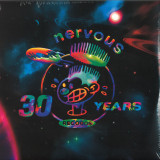
Nervous Records, the iconic label synonymous with the rise of house from the streets of New York City, will mark 30 years in the music industry by releasing the celebratory compilation LP ‘Nervous Records: 30 Years’ on October 1st (Part 1) and October 15th (Part 2).
Featuring original mixes of the label’s biggest tracks, plus remixes by some of its most celebrated acts, ‘Nervous Records: 30 Years’ is both a celebration of the past and of the future. Featuring a who’s who of electronic dance music, the long player sees names including Louie Vega, David Morales Darius Syrossian, Tensnake, Monki, Franky Rizardo, Danny Howard and more take on iconic Nervous cuts: ‘You Make Me Feel Mighty Real’, ‘Treat Me Right’, ‘Future Groove’, ‘Feel Like Singing’, ‘Get Up Everybody’, ‘Break You’, ‘Hot’, ‘End This Hate’, ‘Unspeakable Joy’, ‘Can Ya Tell Me’, ‘Jerk It’, ‘The Anthem’, ‘It Makes A Difference’, ‘Learn 2 Luv’ and ‘Don’t You Ever Give Up’.
The album marks one of the most enduring, extraordinary legacies to grace America’s illustrious music history, not just in electronica but far beyond. Founded in 1991 by Michael and his father Sam Weiss, and recognizable immediately by its distinctive character logo, the label grew rapidly, in no small part due to Michael Weiss’ practically unmatched passion for discovering new music.
“Louie Vega and Kenny Dope woke me at 4am on Tuesday night, Wednesday morning from their studio telling me they had something really different that I needed to hear,” Michael recollects. “I asked if they could play it over the phone. They said if I wanted to hear it I had to come to the studio. So of course I got myself up, got dressed and went there. That “really different track” ended up being ‘The Nervous Track’, a tune that became our signature release and was also highly instrumental in the emergency of London’s ‘Broken Beat’ movement.”
The label’s willingness to take chances on fresh sounds and innovative concepts rising up from the melting pot sidewalks of NYC ensured a body of work that has become a living musical history of the city. House cuts ‘Unspeakable Joy’ and ‘Nitelife’ (Kim English), ‘Get Up (Everybody)’ (Byron Stingily) and ‘Feel Like Singing’ (Sandy B) bump up against hip-hop anthems like ‘Who Got Da Props’ (Black Moon) and “Bucktown” (Smif-n-Wessun) and reggae cut ‘Take It Easy’ (Mad Lion); soulful flows from Mood II Swing (Kim English ‘Learn 2 Luv’, Loni Clark “Rushing”), Armand Van Helden (‘The Anthem’) and Nuyorican Soul (‘Mind Fluid’) sit alongside seminal techno singles like Winx’ ‘Don’t Laugh’. The young artists and producers who joined the Nervous Records’ family have gone on to become some of the most hallowed and celebrated dance acts of all time: Louie Vega, Kenny Dope, David Morales, Tony Humphries, Roger Sanchez, Armand Van Helden, Kerri Chandler, Kim English, Byron Stingily, Josh Wink, to name just a handful.
“We did a release with Josh Wink under his Winx alias entitled ‘Nervous Build-Up’,” Michael said. “It did well and it was obvious how talented Josh was. Subsequent to that release I was pretty persistent in asking him to continue to play me his new demos. During one phone conversation he said, “Mike I’m gonna play you something over the phone but don’t laugh when you hear it.” That demo ended up being ‘Don’t Laugh’, which became one of our biggest international hits and still to this day is one of America’s earliest and most impactful techno hits.”
As much a celebration of the label’s future as it is of their past, Nervous Records: 30 Years is but a marker in the imprints’ history, a clear sign of where they’ve been and also where they’re going. With 30 years behind them, the label’s determination to unearth new raw diamonds in the rough is as unwavering as ever.
“I’ve always been one to look at what others are doing (the industry at large) and think, “ok, are they doing this specific thing for a reason, or doing it because everyone else is doing the same thing” and make my decision based on that,” says Nervous Records’ General Manager Andrew Salsano. “In an age where data metrics and analytics reign supreme, I remain steadfast that they should be complementary to your decision and not the sole indicator to make one. So many songs today are written with 15 second hooks in mind for social media, and while there’s nothing wrong with that business model you will always be chasing the wave instead of carving out your own path and identity.
“My primary focus for the sound of the label has and will continue to revolve around signing good songs and music that has the ability to react at the street level first. The best results come from artists that are firstly given a bit of local love that grows into a global impact. Fresh ideas that express child-like curiosity and artists showing vulnerability in their music are also something I look for, artists and producers that are not making music with certain markets in mind, but rather their own style and signature that is unique but able to straddle the fine line of underground and overground.”
Still as raw, as underground and as finely tuned to the dance floor as they ever have been, perhaps the secret to the success - and the longevity - of Nervous Records has something to do with that hard, dogged, no-holds-barred NYC edge that runs through the veins of the label. With the next generation of producers rising from the clubs of New York, one thing is certain; Nervous Records will be there to find them, nurture them and bring them to the world at large, over the next decade and beyond.
Hypernatural, comprises of Dan Whitford, better known as one of the pillars of Melbourne heavyweights Cut Copy, Mirko Vogel, the engineer extraordinaire who has recorded for Modular and Room40, and Mike Gamwell, also known as Knightlife, who’s racked up several releases on Cut Copy’s own Cutters Records. You could say their roots are in Melbourne, Australia, but it seems unfair to pinpoint the trio to any specific location.
That’s because their sound lies somewhere deep in misty forests, or half-remembered dreams and subconscious wells of ancestral emotion. The transformative power of these 7 tracks was no accident however. The music was pieced together during two trips - one to the remote Swedish coast and another to the Scottish highlands. The three producers used a set of guidelines that allowed each of them to compose and arrange tracks separately yet collectively, like a connected Oblique Strategy. They took inspiration from the stark beauty of their natural surroundings, which had a huge effect on the music they were making.
The resulting tracks inhabit a world of their own, full of shimmering arpeggios and drifting pads, taut drums and sound effects. The opening track Longboat cruises into view with white noise washes and galley master rhythms, conjuring Old Norse battleships and a sense of sailing the open sea, destination unknown. The single Stormfront is a depth-charged deep house burner, bristling with atmospheric energy and rolling like thunder. With its cascading synth arpeggios and weighty drops, it swells like moody clouds on the horizon and releases tension like the first rain of a summer storm.
Hypernatural particularly succeeds in its world-building, and there’s a cohesion to the tracks despite their many differences in tempo and style. Spirit Walk joins marimbas with modular pulses, as well as slide guitar and snappy shakers, to bring out some Ry Cooder swagger. Unknown Caller taps into the phone line at the speed of 5G, sending breakbeats down the wire on a cold calling mission to recruit ravers for the next after hours. But there are also tracks nodding to blissed-out comedowns and daydreams. Both Changing Tides and New Dawn slow down time to an introspective moment, a catch of the breath, the witness to a beautiful moment. Album closer Valley harks back to classic rave-era ambient, an avalanche of optimism down a majestic mountainside.
Hypernatural evokes panoramic vistas and serene countryside, and you could certainly imagine it soundtracking a hike along coastal hills, or a field at a festival. But it also resides beyond the pastoral, finding a home in airport departure lounges and autobahn service stations, until it eventually settles down inside us - even without the headphones on.
Stormfront
Hypernatural’s single Stormfront is a depth-charged house-tempo burner, bristling with atmospheric energy and rolling like thunder. With its cascading synth arpeggios, raindance incantation and weighty drops, it swells like moody clouds on the horizon, and releases tension like the first rain of a summer storm.
Cat Power - vocalist, songwriter, musician and
producer Chan Marshall - releases her new album,
‘Covers’, via Domino.
Cover songs have always occupied a crucial place in
the Marshall canon, and ‘Covers’ௗcompletes a trilogy of
sorts, following beloved past Cat Power collections
‘Jukebox’ (2008) and ‘The Covers Record’ (2000).
While she frequently delights and surprises with the
songs she chooses to cover, it’s Marshall’s total
commitment to the performance - imbuing the songs
with a creative singularity that rivals her original work -
that make Cat Power covers so special.ௗ Says
Pitchfork, Marshall can “rearrange a song simply by
squinting at it.”
Produced in its entirety by Marshall, ‘Covers’ features
fully reimaginedௗsongs by Frank Ocean, Bob Seger,
Lana Del Rey, Jackson Browne, Iggy Pop, The
Pogues, Nick Cave and The Replacements and more,
plus an updated rendition of her own song, ‘Hate’, from
‘The Greatest’ (2006), retitled ‘Unhate’ for this album.
CD in clear tray in 6-panelled digipack.
Heavyweight vinyl with full colour labels, printed inner
sleeve and digital download card.
Press - Reviews in MOJO, Loud & Quiet, Uncut, Record
Collector, HiFi News, Aesthetica. Features in MOJO,
Uncut, Guardian Saturday Magazine, Kinfolk, Adam
Buxton podcast.
"Beyond the Permafrost" is a tightly played, thrashy as hell, and damn tuneful album. The disc combines classic thrash with a bit of melodic death and black metal, and a NWOBHM undercurrent, all of which is given a modern (though not glossy) production. An added twist are the scruffy and snarling (kind of like a CARCASS-y "Heartwork" era crossed with black metal) vocals of Chance Garrette. The guy strikes the balance between a truly sinister aura and good 'ole evil fun. Some death growls are smartly utilized as well. Count "Beyond the Permafrost" as one of those albums that just feels right. Hell bent and upping the irons, SKELETONWITCH gets "it" right on every single one of these smoking tracks. I'll even go out on a limb by saying that from the standpoint of talent and urgency of approach, SKELETONWITCH reminds me a little of THE BLACK DAHLIA MURDER when they first began their ascent. Crank this one really, really loud. - BLABBERMOUTH