The Dam Swindle curated compilation Heist Classics Vol. 02 delivers even more of the label’s biggest hits in a beautiful limited-edition package.
It’s safe to say that in it’s 10 years of existence, Heist Recordings has given us plenty of amazing music and has cemented itself as one of the key labels in today’s house scene. The first 3 compilations of this year have had an amazing response with radio and club tastemakers (re)discovering some of the best music that has come out on Heist. With support from Paul Woolford, Luke Slater, Antal, James Zabiela, Nightmares on Wax, a 10/10 in Faze Mag and various radio plays on BBC R1 with Pete Tong, Annie Mac and more, it’s safe to say that everyone has been loving these releases. Now, Dam Swindle conclude their 10-year anniversary releases with Classics vol. 2: a limited-edition collection with hits from Crackazat, Andy Hart, Kassian, Makèz and Nachtbraker.
The release kicks off with ‘Alfa’: Crackazat’s biggest hit to date (and that’s saying something, coming from a producer that has delivered jam upon jam in his career). It’s a signature Crackazat song with an off-kilter live key loop, shuffling percussion and pumping low end.
Andy Hart’s ‘Epsilon Girls’ was originally released in 2014 and has helped cement the artist and label’s position in the house music landscape. A vintage Barbara St. Clair loop gives the track a lovely human touch, which is countered by layers upon layers of glimmering electronics.
Different Planets is the track that really kickstarted the career of the talented duo Makèz. Released in 2019, the track has everything we’ve come to love from their recognizable sound: lively drums, catchy hooks and warm & jazzy chords. UK duo Kassian are represented on this package with their track ‘8th Movement’. Their sound has progressed towards techno in recent years which has given them support from artists across the board such as Ben UFO, Special Request and many more. Their Heist classic ‘8th Movement’ - still housey in its core - already has hints of their newfound style in its sound design and rolling energy.
We end the record with what might be Nachtbraker’s biggest track of his career: ‘Hamdi’. You’ll find him currently at work with artists such as Shanti Celeste where he recently released his Capichone EP, but the sound he developed in the early part of his career had Heist written all over it. ‘Hamdi’ is a proper anthem, with African drums, an ecstatic vocal sample and a killer groove.
The vinyl release of Heist Classics Vol. 02 is printed on colored 180grams heavyweight vinyl and is limited to 1000 records with a special design by our Art Director Bas Koopmans (Wellness.)
Enjoy the music and play it loud!
Lars & Maarten
Cerca:say lou lou
Hailing from Mexico City, Louie Fesco is as cool as his name states, he is never lame. Louie can make a Tiesto t-shirt cool, just by cutting off the sleeves and wearing it. Mr. Cool has graced many top labels over the last decade and made these labels even cooler, his outing on CV
Could be one of his best and coolest, #truestorybro.
On this crispy 12 inch he delivers a masterclass on party rocking grooves, proper basslines and drummy hooks (not to be confused with dummy hookers).
So to speak- a perfect weapon in your vinyl arsenal (not “Vinyl Arsenal” the amateur football team made up of various aging UK Djs).
On the remix duty, we get some heavy hitters from the ever mysterious Gathaspar. We heard he gets his inspiration from tiny elves that are only found in Munich catacombs. When asked about these tiny elves on Instagram, he leaves you on “seen”. His OP vinyl series are instant hits and collectors items among bearded vinyl nerds, and people who use a lot of bedroom hand lotion. These remixes are monsters- I know, I tested them myself in raves to people and they responded by dancing.
In short, if you are a Dj who likes nasty records to rock parties, this is a must, and if you’re a creepy Discogs shark, this is sure to go up in value.
Why do we even write these write ups?
I’m not sure, and if you are still reading this instead of listening to the 12 inch, I don’t know what else to say to you.
I guess I’ll give you the “ your good enough, your smart enough, and god darn it- people like you” words to get you thru the day.
Sincerely, Jay-the writeup guy.
The fourth Rebound Lounge EP. DJ Dog and Double Dancer keep on pushing the boundaries of their weird and wonderful genre Basketball House! The sound always changing and evolving into different territories, but still keeping their flavour and strickt concept. Here we got five new tracks as always, and a new fantastic color scheme and pic on the back of the sleeve. Limited edition and vinyl only. So not to miss!
Rebound Lounge a label and production project consisting of DJ Dog (aka DJ Fett Burger) & Double Dancer. They have been 'Rejuvenating the basketball house scene since 2016' as they like to say. A genre they claim to have invented and thus rejuvenated since day one. The music presented with sounds from the basketball world and weave this in to the productions. It can be a shoe rubbing on the wooden court, a cheering audience, a yelling coach or a heavy slam dunk. Sometimes clearly audible, sometimes hidden deep in the mix. From this mixture the unique Rebound Lounge sound is created.
Powerful downtempo ballad with heavy emotions from Louisiana based guitarist Chris McCaa.
Originally released as a 7” promo oriented record in 1983, the band had hopes of it leading to bigger projects but most of the pressing probably ended up in someone's basement with very few copies available online. 40 years later, “If I Had To Say Goodbye” is back again to bless your ears at the ending sets of special dancefloors.
Featuring a sound that is highly reminiscent Chris Rea's aesthetic, both in terms of vocal and guitar use, yet still breaking new ground in the power ballad department. Now in 12” 45rpm format with an extended edit by Castro on the B-side, remastered at Berlin's finest manmade mastering.
"‘Soil’ by Amsterdam-based producer and musician Jelee is heavily influenced by video game world-building. Like a beat alchemist, he carefully pours his love for beats into his lifelong passion for video game soundtracks. That far exceeds your typical 8-bits and bobs: Soil unfolds like a challenging adventure game, held together by a sonic palette of hip-hop-minded drum programming, jazz-inspired chords, and synthesized sounds.
The album features tight-knit homegrown collaborations with jazz multi-instrumentalist Guido Hoek, rising deejay Jerrau, producer lofi prototype (“one of Amsterdam’s best-kept secrets when it comes to beatmaking,” says Jelee), deejay, producer, and keyboardist Mo Wrights, and singer Erosi. With influences ranging from Brainfeeder’s roster to Zelda games, Jelee presents a multifaceted take on music.
Jelee’s music has been featured on compilations by Resilienza Records, Stamp The Wax, and Carista’s ‘Modern Intimacy Volume 1.’ Jelee is also known for his expressive live sets, such as the support act for Onra, Samiyam, and Salami Rose Joe Louis."
Nous'klaer audio presents Oceanic's debut album Choral Feeling. A rhythmically diverse electronic album full of sonic explorations and beautiful moments, all bound together by a sense of colour. The album touches on the core of what music can be for: a sense of togetherness, finding meaning in moments, a way to cope with loss and soundtracking dreams about a different future. The music on this album reflects that in the most personal way. Each track consists almost entirely of his friends' voices, recorded and transformed into the sounds you'll hear. No, you can But how Just think of anything How can it just be anything Why does it need to be more Because they're afraid of it. They're not afraid of the words Then what are they afraid of The power behind the words How can words have power If you say something, only you, maybe I can hear it. Perhaps someone sitting over near that tree can hear it too. If we say it together, maybe we can reach past that tree and reach that rock. But if us and a million others say them same thing, all at the same time. Then every tree and every rock everywhere will hear us. Trees and rocks don't have ears. No they don't but they do. Why don't they just cover their ears Because then they need to do that every time we use our voice. And use them we did and use them again we shall. They got tired of covering their ears, so they decided to cover our mouths. Won't they hear us now? We're safe here. For how long will we be safe? For now. Perhaps until later. Just try. Read the words like I've written, but do so like the birds in the trees. You are my sunshine A little louder You are my sunshine, my only sunshine, you make me happy When skies are grey You'll never know dear How much I love you Please don't take my sunshine away Beautiful. Shall we go teach the others When will we have enough to free ourselves We'll always have more than they do. We only need to not forget I'll never forget Sing it again. Artwork by Bob Verhoeven. Text by Gregory Markus.
Time for another chapter in the ever expanding Yellow Jackets series from Mother Tongue!
On the A side we have a real definition of a Banger….Marcellus Pittman’s rework of the Belgian 1983 cult track ‘Death Disco’ by Arbeid Adelt! Not much to say about this one, it's simply a nasty piece of industrial acid disco!
On the flipside Chicago’s modern answer to Sun RA , Jamal Moss, brings the listener to an astral ceremony with ‘An Astronomical Object’. Another crucial moment in Hieroglyphic Being’s breathtaking discography.
Yellow Jackets..Loud & Proud!
After the Ron Trent/Other Lands smashing combo, Yellow Jackets offers its third outing. This time contributions come from Detroit’s own Patrice Scott and Mother Tongue’s young members EDB & Gary Superfly.
Patrice Scott does what he’s known for: emotional tech funk, rich in melodies and deep in textures! ‘Mood Swing’ does exactly what the title says, keeping you dancing while mind travelling….Butter!!!
On the flipside EDB & Gary Superfly, who recently broke some necks with their jam ‘Pressure’ from the Madre Lingua album, deliver straight from “The Fifth Floor” a twisted bubbly acid number with swing a plenty and melodic overtones…a match made in heaven!
Once again full impact loud pressing 12 inch as in Yellow Jackets tradition!
- A1: Kim English - Treat Me Right (David Morales Club Mix)
- A2: Sandy B - Feel Like Singing (Adelphi Music Factory Remix)
- B1: Byron Stingily - Get Up Everybody (Darius Syrossian Remix)
- B2: Byron Stingily - Get Up Everybody (Parade Mix)
- C1: Pj - Can Ya Tell Me (Gerd Janson Piano Megamix)
- C2: Pj - Can Ya Tell Me (Gerd Janson Bonus Beat)
- C3: Pj - Can Ya Tell Me (Pierre’s Phat Dub)
- D1: Wonderboy - Jerk It (Sorley Street Mix)
- D2: Wonderboy - Jerk It (Felix Da Housecat Original Nooworld Underground Mix)
- E1: Innervision Ft Melonie Daniels - Don’t You Ever Give Up (Ian Friday Libation Vox)
- E2: Innervision Ft Melonie Daniels - Don’t You Ever Give Up (Ricanstruction Vocal)
- F1: Kim English - Learn 2 Luv (Ralf Gum Remix)
- F2: Kim English - Learn 2 Luv (Mood Ii Swing Club Mix)
- G1: Deep Creed - The Anthem (Monki Remix)
- G2: Deep Creed - The Anthem (Armand Van Helden Original Circle Mix)
- H1: Kim English - It Makes A Difference (Danny Howard Remix)
- H2: Danny Krivit & Kyle Smith Present Kim English - It Makes A Difference (Dub)
Black Vinyl[33,57 €]
Nervous Records, the iconic label synonymous with the rise of house from the streets of New York City, will mark 30 years in the music industry by releasing the celebratory compilation LP ‘Nervous Records: 30 Years’ on October 1st (Part 1) and October 15th (Part 2).
Featuring original mixes of the label’s biggest tracks, plus remixes by some of its most celebrated acts, ‘Nervous Records: 30 Years’ is both a celebration of the past and of the future. Featuring a who’s who of electronic dance music, the long player sees names including Louie Vega, David Morales Darius Syrossian, Tensnake, Monki, Franky Rizardo, Danny Howard and more take on iconic Nervous cuts: ‘You Make Me Feel Mighty Real’, ‘Treat Me Right’, ‘Future Groove’, ‘Feel Like Singing’, ‘Get Up Everybody’, ‘Break You’, ‘Hot’, ‘End This Hate’, ‘Unspeakable Joy’, ‘Can Ya Tell Me’, ‘Jerk It’, ‘The Anthem’, ‘It Makes A Difference’, ‘Learn 2 Luv’ and ‘Don’t You Ever Give Up’.
The album marks one of the most enduring, extraordinary legacies to grace America’s illustrious music history, not just in electronica but far beyond. Founded in 1991 by Michael and his father Sam Weiss, and recognizable immediately by its distinctive character logo, the label grew rapidly, in no small part due to Michael Weiss’ practically unmatched passion for discovering new music.
“Louie Vega and Kenny Dope woke me at 4am on Tuesday night, Wednesday morning from their studio telling me they had something really different that I needed to hear,” Michael recollects. “I asked if they could play it over the phone. They said if I wanted to hear it I had to come to the studio. So of course I got myself up, got dressed and went there. That “really different track” ended up being ‘The Nervous Track’, a tune that became our signature release and was also highly instrumental in the emergency of London’s ‘Broken Beat’ movement.”
The label’s willingness to take chances on fresh sounds and innovative concepts rising up from the melting pot sidewalks of NYC ensured a body of work that has become a living musical history of the city. House cuts ‘Unspeakable Joy’ and ‘Nitelife’ (Kim English), ‘Get Up (Everybody)’ (Byron Stingily) and ‘Feel Like Singing’ (Sandy B) bump up against hip-hop anthems like ‘Who Got Da Props’ (Black Moon) and “Bucktown” (Smif-n-Wessun) and reggae cut ‘Take It Easy’ (Mad Lion); soulful flows from Mood II Swing (Kim English ‘Learn 2 Luv’, Loni Clark “Rushing”), Armand Van Helden (‘The Anthem’) and Nuyorican Soul (‘Mind Fluid’) sit alongside seminal techno singles like Winx’ ‘Don’t Laugh’. The young artists and producers who joined the Nervous Records’ family have gone on to become some of the most hallowed and celebrated dance acts of all time: Louie Vega, Kenny Dope, David Morales, Tony Humphries, Roger Sanchez, Armand Van Helden, Kerri Chandler, Kim English, Byron Stingily, Josh Wink, to name just a handful.
“We did a release with Josh Wink under his Winx alias entitled ‘Nervous Build-Up’,” Michael said. “It did well and it was obvious how talented Josh was. Subsequent to that release I was pretty persistent in asking him to continue to play me his new demos. During one phone conversation he said, “Mike I’m gonna play you something over the phone but don’t laugh when you hear it.” That demo ended up being ‘Don’t Laugh’, which became one of our biggest international hits and still to this day is one of America’s earliest and most impactful techno hits.”
As much a celebration of the label’s future as it is of their past, Nervous Records: 30 Years is but a marker in the imprints’ history, a clear sign of where they’ve been and also where they’re going. With 30 years behind them, the label’s determination to unearth new raw diamonds in the rough is as unwavering as ever.
“I’ve always been one to look at what others are doing (the industry at large) and think, “ok, are they doing this specific thing for a reason, or doing it because everyone else is doing the same thing” and make my decision based on that,” says Nervous Records’ General Manager Andrew Salsano. “In an age where data metrics and analytics reign supreme, I remain steadfast that they should be complementary to your decision and not the sole indicator to make one. So many songs today are written with 15 second hooks in mind for social media, and while there’s nothing wrong with that business model you will always be chasing the wave instead of carving out your own path and identity.
“My primary focus for the sound of the label has and will continue to revolve around signing good songs and music that has the ability to react at the street level first. The best results come from artists that are firstly given a bit of local love that grows into a global impact. Fresh ideas that express child-like curiosity and artists showing vulnerability in their music are also something I look for, artists and producers that are not making music with certain markets in mind, but rather their own style and signature that is unique but able to straddle the fine line of underground and overground.”
Still as raw, as underground and as finely tuned to the dance floor as they ever have been, perhaps the secret to the success - and the longevity - of Nervous Records has something to do with that hard, dogged, no-holds-barred NYC edge that runs through the veins of the label. With the next generation of producers rising from the clubs of New York, one thing is certain; Nervous Records will be there to find them, nurture them and bring them to the world at large, over the next decade and beyond.
25 years ago the undisputed Godfather of Australian techno dropped LSD - the track that is - and at the time it was massively supported around the globe.
Here we are in the year 2021 and its time for the anniversary edition to be released on his bespoke label REFLECTOR. This release features a reimagining by producer Steve Ward and his Acid Manipulation accompanied by the newly remastered version of the HMC original.
Vinyl purists rejoice as this will be released first with a limited edition sleeve deigned by Adelaide/Australian Style Writer Kab 101 - be quick to secure your copy.
There will be a complete digital package including additional remixes to follow.
HMC was never one for hype so we’ll keep this brief except to say that we’re so excited for this to be played LOUD - again - across the sound systems of the world.
"I am sitting in a garden, I haven't left the property in weeks, someone is dropping off food once a week. I haven't seen a human being in ages, I feel like a reverse Schroedinger cat - do I exist when nobody sees me? I must be somewhere in France but I don't remember. I have lost my consciousness again. When I wake up I hear a broken record looping somewhere in the mansion. A washed-out opera. Behind the trees I see the dilapidated hermaphrodite sculpture in a field of verdant nettles and fern. I hear gunshots far afield, aeroplanes in the sky, sirens on the main road.
When unconscious I dreamt of sitting on the Concorde observing the scarab blue ocean and iridescent clouds from above, an erstwhile receding memory. Sometimes I hear the organ of the nearby Renaissance Cathedral merging with the Russian Church bells.
I am hallucinating again. Someone's humming in the kitchen? Singing? A Radio? I overhear two young women talking about art galleries in the neighbour's garden. Bees attack, again…..again and again. The hairspray finally intoxicates them. An amphoric japanese voice is whispering in my head saying I will die soon. Someone (something?) bangs on the vases. The fountain's water turns dark red.
Fleur calls and says mum died. The funeral will be televised on tuesday. We opt for the synthetic choir for the service. The call is suddenly interrupted. Mold is slowly taking over the house.
I go back inside."
Une Fille Pétrifiée is the debut album of new Black To Comm related entity Mouchoir Ètanche (after one recent 12" on Richter's own Dekorder label). Combining real and fake acoustic instrumentation, sampling, field recordings and excessive yet inaudible post production this is another sublime and ethereal statement. Influences are ranging from (French) Classical & Opera to the anecdotical compositions of Luc Ferrari, Chinese Opera, Chanson, Sacred Music / Church Music, JG Ballard and Surrealism.
Marc Richter records as Black To Comm for Thrill Jockey, Type and Dekorder and as Jemh Circs for his own Cellule 75 imprint. He also produces soundtracks and acousmatic multichannel installations for institutions such as INA GRM Paris, ZKM Karlsruhe and Kunstverein Hamburg.
2024 Repress
While during the 1990s - higher, faster, further! - the straight bass drum has been shooted around the globe, there arose a number of variations of more or less contemplative slow- and sacred music from all kinds of corners at the same time. In a sense, it’s the other side of the medal: Chillout, Lounge, Easy Listening, Trance, Muzak and elevator music, electronic music and intelligent techno… and of course and in particular: Ambient. In classical and new variations.
Beside the constant pushing forward of the so called „Sound Of Cologne“- Minimal Techno in the home of Kompakt, there was also a strong faible for ambient sounds. Not only because of the labels origin and its operator’s preference for the pop music of the 70s and 80s, there was evolving a variety of ambient music, that added the aspect of pop to the confusing diversity of genres during that time. Not pop in the sense of actual classic pop music: Pop in the sense of subculture, of Pop Art and, first and foremost, in the sense of pop as an attitude. This was how Pop Ambient was launched and the way it established its own authentic music with a high recognition value. Pop Ambient is indulging the beauty and the timelessness. Pop Ambient is a sonic cosmos of attitude for itself and has no fears of contact with adjoining genres nor with kitsch, art or carnival. It’s ambient if you do it nevertheless. ^
Während sich im Laufe der 1990er Jahre die gerade Bassdrum immer höher, schneller, weiter einmal um den gesamten Planeten geballert hatte, kamen parallel dazu etliche Spielarten mehr oder weniger kontemplativer Erbauungs- und Verlangsamungsmusik aus allen möglichen Ecken auf. Gewissermaßen die andere Seite der Medaille. Chillout, Lounge, Easy Listening, Trance, Muzak und Fahrstuhlmusik, Elektronika und Intelligent Techno… und natürlich und vor allem Ambient. In altbewährten und neuen Variationen.
Auch im Hause Kompakt gab es neben dem steten Vorantreiben des sogenannten „Sound Of Cologne“ - Minimal Techno ein starkes Faible für ambiente Klänge. Nicht zuletzt aufgrund ihrer popmusikalischen Herkunft und einer besonderen Vorliebe für die Popmusik der 70er und 80er Jahre, kristallisierte sich bei den Kompakt-Machern ab dem Jahr 2000 eine Spielart ambienter Musik heraus, die den vielschichtigen, unübersichtlichen Genres dieser Zeit den Aspekt des Pop hinzu fügte. Nicht Pop im Sinne eigentlicher, klassischer Popmusik. Pop im Sinne von Subkultur, von Pop-Art und vor allem von Pop als Haltung. So wurde „Pop Ambient“ aus der Taufe gehoben und etablierte eine genuine Musik mit hohem Wiedererkennungswert. Pop Ambient frönte hemmungslos dem Schönen und der Zeitlosigkeit. Pop Ambient ist ein Klang- und Haltungskosmos für sich, und hat dabei keinerlei Berührungsängste, weder mit angrenzenden Genres, noch mit Kitsch, Kunst oder Karneval. Ambient ist wenn man’s trotzdem macht.
UILTY RAZORS, BONA FIDE PUNKS.
Writings on the topic that go off in all directions, mind-numbing lectures given by academics, and testimonies, most of them heavily doctored, from those who “lived through that era”: so many people today fantasize about the early days of punk in our country… This blessed moment when no one had yet thought of flaunting a ridiculous green mohawk, taking Sid Vicious as a hero, or – even worse – making the so-called alternative scene both festive and boorish. There was no such thing in 1976 or 1977, when it wasn’t easy to get hold of the first 45s by the Pistols or the Clash. Few people were aware of what was happening on the fringes of the fringes at the time. Malcolm McLaren was virtually unknown, and having short hair made you seem strange. Who knew then that rock music, which had taken a very bad turn since the early 1970s, would once again become an essential element of liberation? That, thanks to short and fast songs, it would once again rediscover that primitive, social side that was so hated by older generations? Who knew that, besides a few loners who read the music press (it was even better if they read it in English) and frequented the right record stores? Many of these formed bands, because it was impossible to do otherwise. We quickly went from listening to the Velvet Underground to trying to play the Stooges’ intros. It’s a somewhat collective story, even though there weren’t many people to start it.
The Guilty Razors were among those who took part in this initial upheaval in Paris. They were far from being the worst. They had something special and even released a single that was well above the national average. They also had enough songs to fill an album, the one you’re holding. In everyone’s opinion, they were definitely not among the punk impostors that followed in their wake. They were, at least, genuine and credible.
Guilty Razors, Parisian punk band (1975-1978). To understand something about their somewhat linear but very energetic sound, we might need to talk about the context in which it was born and, more broadly, recall the boredom (a theme that would become capital in punk songs) coupled with the desire to blow everything off, which were the basis for the formation of bands playing a rejuvenated rock music ; about the passion for a few records by the Kinks or the early Who, by the Stooges, by the Velvet mostly, which set you apart from the crowd.
And of course, we should remember this new wave, which was promoted by a few articles in the specialized press and some cutting-edge record stores, coming from New York or London, whose small but powerful influence could be felt in Paris and in a handful of isolated places in the provinces, lulled to sleep by so many appalling things, from Tangerine Dream to President Giscard d’Estaing...
In 1975-76, French music was, as almost always, in a sorry state ; it was still dominated by Johnny Hallyday and Sylvie Vartan. Local rock music was also rather bleak, apart from Bijou and Little Bob who tried to revive this small scene with poorly sound-engineered gigs played to almost no one.
In the working class suburbs at the time, it was mainly hard rock music played to 11 that helped people forget about their gruelling shifts at the factory. Here and there, on the outskirts of major cities, you still could find a few rockers with sideburns wearing black armbands since the death of Gene Vincent, but it wasn’t a proper mass movement, just a source of real danger to anyone they came across who wasn't like them. In August 1976, a festival unlike any other took place in Mont-de-Marsan – the First European Punk Festival as the poster said – with almost as many people on stage as in the audience. Yet, on that day, a quasi historical event happened, when, under the blazing afternoon sun, a band of unknowns called The Damned made an unprecedented noise in the arena, reminiscent of the chaotic Stooges in their early adolescence. They were the first genuine punk band to perform in our country: from then on, anything was possible, almost anything seemed permissible.
It makes sense that the four+1 members of Guilty Razors, who initially amplified acoustic guitars with crappy tape recorder microphones, would adopt punk music (pronounced paink in French) naturally and instinctively, since it combines liberating noise with speed of execution and – crucially – a very healthy sense of rebellion (the protesters of May 1968 proclaimed, and it was even a slogan, that they weren’t against old people, but against what had made them grow old. In the mid-1970s, it seemed normal and obvious that old people should now ALSO be targeted!!!).
At the time, the desire to fight back, and break down authority and apathy, was either red or black, often taking the form of leafleting, tumultuous general assemblies in the schoolyard, and massive or shabby demonstrations, most of the time overflowing with an exciting vitality that sometimes turned into fights with the riot police. Indeed, soon after the end of the Vietnam War and following Pinochet’s coup in Chile, all over France, Trotskyist and anarcho-libertarian fervour was firmly entrenched among parts of the educated youth population, who were equally rebellious and troublemakers whenever they had the chance. It should also be noted that when the single "Anarchy in the UK" was first heard, even though not many of us had access to it, both the title and its explosive sound immediately resonated with some of those troublemakers crying out for ANARCHY!!! Meanwhile, the left-wing majority still equated punks with reckless young neo-Nazis. Of course, the widely circulated photos in the mainstream press of Siouxsie Sioux with her swastikas didn’t necessarily help to win over the theorists of the Great Revolution. It took Joe Strummer to introduce The Clash as an anti-racist, anti-fascist and anti-ignorance band for the rejection of old-school revolutionaries to fade a little.
The Lycée Jean-Baptiste Say at Porte d’Auteuil, despite being located in the very posh and very exclusive 16th arrondissement of Paris, didn’t escape these "committed" upheavals, which doubled as the perfect outlet for the less timid members of this generation.
“Back then, politics were fun,” says Tristam Nada, who studied there and went on to become Guilty Razors’ frontman. “Jean-Baptiste was the leftist high-school in the neighbourhood. When the far right guys from the GUD came down there, the Communist League guys from elsewhere helped us fight them off.”
Anything that could challenge authority was fair game and of course, strikes for just about any reason would lead to increasingly frequent truancy (with a definitive farewell to education that would soon follow). Tristam Nada spent his 10th and 11th unfinished grades with José Perez, who had come from Spain, where his father, a janitor, had been sentenced to death by Franco. “José steered my tastes towards solid acts such as The Who. Like most teenagers, I had previously absorbed just about everything that came my way, from Yes to Led Zeppelin to Genesis. I was exploring… And then one day, he told me that he and his brother Carlos wanted to start a rock band.” The Perez brothers already played guitar. “Of course, they were Spanish!”, jokes their singer. “Then, somewhat reluctantly, José took up the bass and we were soon joined by Jano – who called himself Jano Homicid – who took up the rhythm guitar.” Several drummers would later join this core of not easily intimidated young guys who didn’t let adversity get the better of them.
The first rehearsals of the newly named Guilty Razors took place in the bedroom of a Perez aunt. There, the three rookies tried to cover a few standards, songs that often were an integral part of their lives. During a first, short gig, in front of a bewildered audience of tough old-school rockers, they launched into a clunky version of the Velvet Underground's “Heroin”. Challenge or recklessness? A bit of both, probably… And then, step by step, their limited repertoire expanded as they decided to write their own songs, sung in a not always very accurate or academic English, but who cared about proper grammar or the right vocabulary, since what truly mattered was to make the words sound as good as possible while playing very, very fast music? And spitting out those words in a language that left no doubt as to what it conveyed mattered as well.
Trying their hand a the kind of rock music disliked by most of the neighbourhood, making noise, being fiercely provocative: they still belonged to a tiny clique who, at this very moment, had chosen to impose this difference. And there were very few places in France or elsewhere, where one could witness the first stirrings of something that wasn’t a trend yet, let alone a movement.
In the provinces, in late 1976 or early 1977, there couldn’t be more than thirty record stores that were a bit more discerning than average, where you could hear this new kind of short-haired rock music called “punk”. The old clientele, who previously had no problem coming in to buy the latest McCartney or Aerosmith LP, now felt a little less comfortable there…
In Paris, these enlightened places were quite rare and often located nex to what would become the Forum des Halles, a big shopping mall. Between three aging sex workers, a couple of second-hand clothes shops, sellers of hippie paraphernalia and small fashion designers, the good word was loudly spread in two pioneering places – propagators of what was still only a new underground movement. Historically, the first one was the Open Market, a kind of poorly, but tastefully stocked cave. Speakers blasted out the sound of sixties garage bands from the Nuggets compilation (a crucial reference for José Perez) or the badly dressed English kids of Eddie and the Hot Rods. This black-painted den was opened a few years earlier by Marc Zermati, a character who wasn’t always in a sunny disposition, but always quite radical in his (good) choices and his opinions. He founded the independent label Skydog and was one of the promoters of the Mont-de-Marsan punk festivals. Not far from there was Harry Cover, another store more in tune with the new New York scene, which was amply covered in the house fanzine, Rock News (even though it was in it that the photos of the Sex Pistols were first published in France).
It was a favorite hang-out of the Perez brothers and Tristam Nada, as the latter explained. “It’s at Harry Cover’s that we first heard the Pistols and Clash’s 45s, and after that, we decided to start writing our first songs. If they could do it, so could we!”
The sonic shocks that were “Anarchy in the UK”, “White Riot” or the Buzzcocks’s EP, “Spiral Scratch” – which Guilty Razors' sound is reminiscent of – were soon to be amplified by an unparalleled visual shock. In April 1977, right after the release of their first LP, The Clash performed at the Palais des Glaces in Paris, during a punk night organised by Marc Zermati. For many who were there, it was the gig of a lifetime…
Of course, Guilty Razors and Tristam were in the audience: “That concert was fabulous… We Parisian punks were almost all dressed in black and white, with white shirts, skinny leather ties, bikers jackets or light jackets, etc. The Clash, on the other hand, wore colourful clothes. Well, the next day, at the Gibus, you’d spot everyone who had been at this concert, but they weren’t wearing anything black, they were all wearing colours.”
It makes sense to mention the Gibus club, as Guilty Razors often played there (sometimes in front of a hostile audience). It was also the only place in Paris that regularly scheduled new Parisian or Anglo-Saxon acts, such as Generation X, Siouxsie and the Banshees, the Slits, and Johnny Thunders who would become a kind of messed-up mascot for the venue. A little later, in 1978, the Rose Bonbon – formerly the Nashville – also attracted nightly owls in search of electric thrills… In 1977, the iconic but not necessarily excellent Asphalt Jungle often played at the Gibus, sometimes sharing the bill with Metal Urbain, the only band whose aura would later transcend the French borders (“I saw them as the French Sex Pistols,” said Geoff Travis, head of their British label Rough Trade). Already established in this small scene, Metal Urbain helped the young and restless Guilty Razors who had just arrived. Guitarist for Metal Urbain Hermann Schwartz remembers it: “They were younger than us, we were a bit like their mentors even if it’s too strong a word… At least they were credible. We thought they were good, and they had good songs which reminded of the Buzzcocks that I liked a lot. But at some point, they started hanging out with the Hells Angels. That’s when we stopped following them.”
The break-up was mutual, since, Guilty Razors, for their part, were shocked when they saw a fringe element of the audience at Metal Urbain concerts who repeatedly shouted “Sieg Heil” and gave Nazi salutes. These provocations, even still minor (the bulk of the skinhead crowd would later make their presence felt during concerts), weren’t really to the liking of the Perez brothers, whose anti-fascist convictions were firmly rooted. Some things are non-negotiable.
A few months earlier (in July 1978), Guilty Razors had nevertheless opened very successfully for Metal Urbain at the Bus Palladium, a more traditonally old-school rock night-club. But, as was sometimes the case back then, the night turned into a mass brawl when suburban rockers came to “beat up punks”.
Back then, Parisian nights weren’t always sweet and serene.
So, after opening as best as they could for The Jam (their sound having been ruined by the PA system), our local heroes were – once again – met outside by a horde of greasers out to get them. “Thankfully,” says Tristam, “we were with our roadies, motorless bikers who acted as a protective barrier. We were chased in the neighbouring streets and the whole thing ended in front of a bar, with the owner coming out with a rifle…”
Although Tristam and the Perez brothers narrowly escaped various, potentially bloody, incidents, they weren’t completely innocent of wrongdoing either. They still find amusing their mugging of two strangers in the street for example (“We were broke and we simply wanted to buy tickets for the Heartbreakers concert that night,” says Tristam). It so happened that their victims were two key figures in the rock business at the time: radio presenter Alain Manneval and music publisher Philippe Constantin. They filed a complaint and sought monetary compensation, but somehow the band’s manager, the skilful but very controversial Alexis, managed to get the complaint withdrawn and Guilty Razors ended up signing with Constantin with a substantial advance.
They also signed with Polydor and the label released in 1978 their only three-track 45, featuring “I Don't Wanna be A Rich”, “Hurts and Noises” and “Provocate” (songs that exuded perpetual rebellion and an unquenchable desire for “class” confrontation). It was a very good record, but due to a lack of promotion (radio stations didn’t play French artists singing in English), it didn’t sell very well. Only 800 copies were allegedly sold and the rest of the stock was pulped… Initially, the three tracks were to be included on a LP that never came to be, since they were dropped by Polydor (“Let’s say we sometimes caused a ruckus in their offices!” laughs Tristam.) In order to perfect the long-awaited LP, the band recorded demos of other tracks. There was a cover of Pink Floyd's “Lucifer Sam” from the Syd Barrett era – proof of an enduring love for the sixties’ greats –, “Wake Up” a hangover tale and “Bad Heart” about the Baader-Meinhof gang, whose actions had a profound impact on the era and on a generation seeking extreme dissent... On the album you’re now discovering, you can also hear five previously unreleased tracks recorded a bit later during an extended and freezing stay in Madrid, in a makeshift studio with the invaluable help of a drummer also acting as sound engineer. He was both an enthusiastic old hippie and a proper whizz at sound engineering. Here too, certain influences from the fifties and sixties (Link Wray, the Troggs) are more than obvious in the band’s music.
Shortly after a final stormy and rather barbaric (on the audience’s side) “Punk night” at the Olympia in June 1978, Tristam left the band ; his bandmates continued without him for a short while.
But like most pioneering punk bands of the era, Guilty Razors eventually split up for good after three years (besides once in Spain, they’d only played in Paris). The reason for ceasing business activities were more or less the same for everyone: there were no venues outside one’s small circuit to play this kind of rock music, which was still frightening, unknown, or of little interest to most people. The chances of recording an LP were virtually null, since major labels were only signing unoriginal but reassuring sub-Téléphone clones, and the smaller ones were only interested in progressive rock or French chanson for youth clubs. And what about self-production? No one in our small safety-pinned world had thought about it yet. There wasn’t enough money to embark on that sort of venture anyway.
So yes, the early days of punk in France were truly No Future!
Salix is a bold new departure for modular synthesist Loula Yorke, seen here using an antique reed organ to explore the ancient roots of willow trees in magic, myth and medicine, as well as inviting another musician into her recording studio for the first time, clarinettist Charlotte Jolly.
The EP forms a sonic archive of a singular instrument: an antique free reed organ left behind by a previous encumbent of Asylum Studios, (the artists' co-operative in Suffolk where Yorke's Truxalis labelmate and life collaborator, Seiche, has a studio space). The organ is in poor condition and fascinatingly, painfully detuned. Yorke's recordings bring out its host of unusual quirks exacerbated by age and neglect: the powerful rhythmic creaking of the wooden treadles; the bone-shaking resonance emanating from its body at specific pitches; unexpected exclamations of harmonic collision from within the carcass redolent of a human voice; the piercing, shrieking whistles of broken reeds, and the powerful timbres unlocked via Yorke's experiments with various combinations of stops.
The three tracks that form Salix are inspired by a local weeping willow tree, a constant companion photographed over the course of a year. Boughs caught in a gyre. A maiden in mourning. Branches that gesture in the wrong direction. A tree turned upside down. A hand-woven willow basket, an old technology to gather and store. The journey of a lovelorn bard through the underworld, a bundle of willow under one arm for protection.
For the opening track, The Carrier Bag Theory of Fiction, Yorke recorded herself playing a simple unaccompanied improvisation on the organ, the only ornamentation being the processed sounds of the keys being struck and returning to their positions.
For Bundle of Styx, a spell of protection is cast and then broken. Yorke invited virtuoso clarinettist Charlotte Jolly into the studio to test combining the breathy textures of both brass and natural reeds, the instruments uniting and obsuring each other in turn during this one-take improvisation. The organ's unpredictable sharpened tunings take centre stage here, with Jolly using them as a point of departure to conjure a set of peerless harmonic improvisations live in the moment. Throughout the improvisation, Yorke, a self-taught musician, unpracticed on the organ, supports and challenges, freely admitting that she's not always sure what effect her decisions to move up and down the keyboard or pull out certain stops will have. Jolly's genius lies in her ability to meet and build on every uncertain pitch thrown her way, saying of the experience, "I love that Loula isn't classically trained, I can't predict at all what she's about to do."
For the final track, With the Red Dawn, Yorke has come up with another unique combination of textures, this time bringing her own specialism in modular synthesis to the fore. A ten-minute reed organ drone characterised with ever-shifting bass swells and overtones is layered with tuned sines, often shudderingly wave-folded, that ebb and flow both in intensity and harmonic colour according to the duty cycles of eight interrelated LFOs. These recordings are collaged with Yorke's singing voice and a langorous, ascending sequence across two octaves on Jolly's clarinet, all arranged to form a cohesive whole far greater than the sum of its parts. Smatterings of untuned percussion and a fragment of a conversation between the duo left in the final mix cements Yorke's unprecious DIY aesthetic into the release.
At its heart, Salix is like watching the wind in the willows; hundreds of thousands of identical tiny leaves moving in confluence on its branches; at once one thing and many things; moment-to-moment our perception makes out different individuals parts within this expanse of texture, before sinking back into the whole.
Somewhere close to Manchester’s ever changing city centre, as the sun fades and peeks through the newest glass facade, you’ll find Shaking Hand. One part in shadow, the other basking in prisms of light as they sketch out their own sonic landscapes in the dusty redbrick mill they call home. One that is just about clinging on from the encroaching developments that surround them.
Against this back-drop where buildings are constantly torn down & built back again, the three piece craft away. Pulling from early post-rock, and 90s US alternative rock, crafting their own brand of Northwest-emo. Assembling something new, yet nostalgic. Looking ahead towards the transforming horizon. Shaking Hand’s music is built on tension and release – quiets that stretch, louds that overwhelm. Repetition that feels both hypnotic and destabilising.
The band’s musical DNA runs through experimental guitar outfits like Women, Slint, Sonic Youth, Pavement, and Ulrika Spacek, balanced with the melodic sensibility of Big Thief and the dynamic intimacy of Yo La Tengo. Their compositions push against structure: sudden jolts of tempo, polyrhythms that almost fall apart, and riffs that unravel into something fragile or ecstatic. Yet, as Ellis notes, there’s an underlying warmth too: “Like walking through an empty city late at night but catching flickers of life in the buildings you pass.”
Early ideas like ‘Night Owl’ and ‘Sundance’ grew out of George’s lockdown “bedroom years,” where new tunings (open E, drop D, and stranger Pavement-inspired set-ups) opened up uncharted textures. Later, in grim rehearsal rooms, the murky epic ‘Cable Ties’ and the hypnotic ‘Mantras’ absorbed the gloom and grit of the band’s surroundings.
The album was recorded with producer David Pye (Wild Beasts, Teenage Fanclub) at Nave Studios in Leeds, housed in a converted church. “The live room was huge and perfect for capturing our sound,” says George. Determined to bottle their onstage energy, the band tracked the foundations live, layering vocals and guitars later. Soviet-era microphones, odd mic placements, and even phone-recorded demos fed into the mix. “You’ve got to watch out for David though,” Freddie laughs. “He made me play four tambourines in one hand, really hurt, man.”
Lyrically, the record drifts between abstraction and lived moments. George’s words often spill out instinctively, words falling into place before their meaning becomes clear. “A lot of the lyrics look like they’re buried in abstraction,” he says, “but when I look back I can see what they were about — whether that’s an emotional response at the time or just an observation of what was happening around me”. There’s contrast at the heart of it all – optimism vs. doubt, the lightness of youth vs. the monotony of work, a city in constant redevelopment vs. the people drifting through it.
The album artwork is taken from unused plans for the 1970s redevelopment of Los Angeles by architect Ray Kappe, entitled ‘People Movers’. Hypothetical buildings for real people, it feels a complement to the band’s own constructions. One thing’s for sure, Shaking Hand’s debut is built to last.
- A1: I Need A Break
- A2: Little Claws
- A3: Kill The Lie
- A4: Set In Motion
- A5: Wrong Shape
- B1: Don’t Gotta Think About U
- B2: No Regular No Chance
- B3: Everything’s Under Control (Feat. Pink Siifu)
- B4: Really Really Right
LA-based producer Real Bad Man and LA musician Genevieve Artadi announce their new collaborative album Everything Is Under Control, out October 3rd via the producer’s own Real Bad Man Records. Alongside the announcement, the duo are sharing two new singles from the forthcoming album, “Don’t Gotta Think About U” and “Little Claws”. The former is an electro pop banger that propels Artadi’s intoxicating vocals to the forefront and arrives with an accompanying visual. With Everything Is Under Control, Real Bad Man is proving his versatility as a producer, crafting intricate and lively electronic-forward foundations for an old friend in Genevieve to explore an eclectic, funky approach to her vocals.
Speaking about the single, Artadi says, "'Don’t Gotta Think About U' is about a person celebrating the explosion of her most recent unhealthy romantic relationship. Her spitefulness and delusion of freedom indicate she’s still inside the pattern she hasn’t yet realized she keeps signing herself up for. The sound is melancholic pop, the thread that has always tied Adam and me together despite our musical differences."
"I love juxtaposing dense drums and a very pretty voice," Real Bad Man says of collaborating with Artadi. "That’s what 'Don’t Wanna Think About U' is. We’re also trying to make something catchy at the same time, that’s what I’ve always been drawn to musically is blending genres and moods and get them to work together. As well as pulling Genevieve away from what she does with Knower and her solo stuff.
Real Bad Man’s collaboration with Artadi is a radical shift in approach for the producer, whose previous full-length projects this year were rooted in the distinct strain of underground hip-hop that he’s amassed an extensive catalog in. Everything Is Under Control marks an entirely different, and unpredictable, sonic approach for the duo, embracing experimentation and synth-led electronica that’s reminiscent of Artadi’s work as part with Pollyn (her former band with Adam/Real Bad Man) as well as current duo KNOWER with Louis Cole. Real Bad Man’s latest project extends his prolific run of collaborations this year, embarking in a new genre and sound entirely after releasing full-length projects with ZelooperZ (Dear Psilocybin), Boldly James (Conversational Pieces) and Willie The Kid (Midnight) in the first half of 2025.
Known for her complex, yet playful writing style, Genevieve Artadi has made a name for herself through four solo albums that stretch the gambit of jazz, dream pop and dance music. The last three albums were released on iconic label Brainfeeder Records and the fourth (Another Leaf) was made as part of her being a composer-in-residence with Sweden’s Norrbotten Big Band. She’s also been an accomplished collaborator with her bands Expensive Magnets, Pollyn and KNOWER, and performing and recording with the likes of Thundercat and Snarky Puppy.
Check out “Don’t Gotta Think About U” and “Little Claws” above, see below for more details on Everything Is Under Control and stay tuned for more from Real Bad Man coming soon.
Green Sleeve 2026 Repress
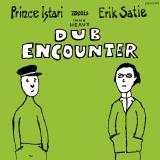
The earliest musical memories of young Prince Istari are of his mother beautifying the home with her piano playing. She would repeatedly play the tranquil pieces of Erik Satie. Skipping school and sitting in the sun, young Prince would listen to these catchy, calm compositions.
In the first week of 2024, the older Prince Istari rediscovered himself and found a box containing his mother's old sheet music. He transferred them to his computer and began spinning dub versions from them. It became a tapestry. As his mother used to say: "To weave a net, one must first spin." The form of the pieces dictated the direction each would take. The heavy dub transforms here into a light weightiness until it dissolves into a pure piano piece accompanied by a synthesizer. However, the last piece is much older, from the time when Prince was still known as Istari Lasterfahrer. The ending includes a distorted recording of Huberta, Prince's mother, playing a Gnossienne by Satie. At the end, she turns the sheet music, and the record can be turned back to the beginning.
In the essence of its material, this record rejects the Loudness War. The originality of the compositions guided the dub within their tracks, thereby imparting to each a form descriptive of its essence.
From his roots in House, Alex Finkin is a renowned producer and creative director. Working in his Paris studio he has developed numerous projects, notably his own (Roseaux), as well as commissions for radio and television. Meanwhile, with 30 years of production and DJing under his belt, Rocco Rodamaal belongs to the elite circle of House innovators who continue to influence the scene. He's played alongside some of the best in the industry showcasing his versatility and deep understanding of the genre, and remixed artists including Marshall Jefferson, Kerri Chandler, Louie Vega & Moodymann, Todd Terry, Barbara Tucker and Robert Owens to name just a few. Alex Finkin befriended Rocco Rodamaal, who he met via the soulful Parisian club Djoon, where Alex was resident from 2006 to 2014. They have since collaborated on a number of projects together, including "In Da Hood" released on COD3 QR in 2023. Kenny Dope's "O'Gutta" remixes are a series of house and club-focused reworks characterized by raw, gritty and often stripped-back percussion, which he now brings to "In Da Hood".
Ross McMillan, known professionally as Carlos Nilmmns, is a Scottish electronic music producer, DJ and composer originally from Glasgow. Over the years he has collaborated with a range of notable artists, including Grammy-nominated and Grammy-winning figures, including Kenny Dope, Carl Craig, Kevin Saunderson and Davina Bussey, plus respected artists like Niko Marks, Rolando, Laurent Garnier, Santiago Salazar, Hardrock Striker, Karl The Voice, Zadig, Ben Sims, Andrés (who worked with Jay Dilla and Moodymann), and YouANDme. His music has been released on Planet E, Trax, Cocoon, Ornaments, Circus, Virgin, Skylax/Universal Music France and more. His style draws from house, techno and jazz influences, often combining analogue and digital production methods. A returning regular and COD3 QR favourite, he's back with another stunner in "Latin Quarter".
K' Alexi Shelby is a prominent figure in electronic music and with a career spanning decades, he's established a significant influence on House and Techno. Throughout his career he's worked with many well-known artists and remixed tracks that are now key pieces. The cultivation of his massive musical catalogue has overflowed into albums and the three labels he heads. It's also led to legendary collaborations with artists such as The Pet Shop Boys, Robert Owens, Kenny Dixon, Roy Davis Jr., Maurice Joshua, Terry Hunter, Joe Smooth, Steve Silke Hurley, Tyree Cooper, Ron Trent, Glenn Underground, Larry Heard, DJ Pierre, Carl Craig, Felix da Housecat, Marshall Jefferson, Will Smith and countless others. Already respected around the world as a true underground House legend, he delivered "Flame" in 2025 for COD3 QR. Now he's back with "When I", another deep and sexy cut.
Benny Rodrigues a.k.a. ROD unveiled his new moniker, The Lost Souldancer when he dropped "No More Voices" for COD3 QR last year. In his own words, Benny says: "The Lost Souldancer is about coping with the loss of what once was. Finding comfort in the invisible rather than what can be seen. Disconnect to connect in order to be loved rather than liked." He continues this ethos with the delicate and melodic closing track "Life and Death".
- 1: Purgatory
- 2: In The Morning
- 3: Highway Ii
- 4: Hollywood
- 5: Country Suep
- 6: Patronised
- 7: The Rain
- 8: Big Jump
- 9 10: Days
- 10: Fornever
The track shows SUEP at their best - glistening synth pop with Marr-esque jangle, sweet but emotionally incisive. Singer Georgie Stott - also known for being the keyboardist of the recently ended Porridge Radio - is at peak performance, marrying catchy melodies with off-kilter storytelling.
Receiving acclaim across BBC 6 Music and the indie press for their ‘car boot sale’ pop music, SUEP rummage through the jumble bin of music history, selecting and reassembling its best parts into something playful, strange and deeply artful. The band are affiliates of the Gob Nation collective - including The Tubs, Sniffany & The Nits, Ex-Void, and others., described by the Guardian as uniting around “a leftfield sensibility, lacerating wit and snotty attitude.”
With a slightly darker edge than their delightful EP Shop or last year’s groovy The Rain, Highway II tells the story of hope slamming into disappointment - a Valentine’s date gone wrong. Tears, cigarette breaks, running makeup and snotty sleeves paint a picture of painful emotional dislocation. It comes with an incredible, multilayered dance-routine music video from frequent collaborator, artist Jess Power.
Singer Georgie Stott says: “The lyrics for this poured out of me on Valentine’s Day when me and my partner went out on a date in the Limehouse area, over the river from where we lived in Rotherhithe. I got drunk too quickly, he got grumpy, and tears started streaming down my face because I just wanted to have a nice romantic time. We made up in the Canary Wharf Wetherspoons at the end of the night, but I went to have a cigarette before, to get out all my sobs and wrote all the lyrics on my phone in one go. Then at a practice studio we quickly wrote it around some chords I made up in the room.”
Forever is a confident debut, a masterpiece of modern indie songcraft. Across the album SUEP dip into country, synthpop, garage rock, post punk, and pub rock, but always retain their signature penchant for melodic hooks, snappy structures and straight-to-the-heart lyrics. Artfully unpretentious, the album was recorded by friend Matt Green, best known for his work with The Tubs, and mixed by Mike O’Malley of the band caroline.
Led by Georgie Stott and Joshua Harvey, SUEP have become fixtures of south-east London’s underground through a series of shared living spaces, improvised studios and DIY venues. Now with George Nicholls (The Tubs, Joanna Gruesome, GN Band), William Deacon (PC World), and Louis Forster (The Goon Sax, Expiry) completing the line up, their debut is finally on its way.
Forever is a glimpse into one of the best bands on the scene, not fitting into any trend, but also never fading into obscurantism - SUEP are a band that wear a joie de vivre loosely but fashionably. Now is their time to shine.
- A1: Moth In The Headlights
- A2: Float Away
- A3: Göbekli Tepe
- A4: Absolute Cinema
- A5: Oh Brother
- A6: Medusa
- B1: Carpe Diem
- B2: Mannequin
- B3: This Fascination
- B4: Disappoint Me
- B5: All I Have To Do Is Dream
With their third album, Inanimate Objects of the 21st Century, Newcastle’s The Pale White prove once again that there’s no slowing them down. Following the success of their introspective sophomore album The Big Sad, brothers Adam (vocals/guitar) and Jack Hope (drums) return louder, sharper, and more defiant than ever. This third full-length is their most expansive yet: a record that blends the anthemic punch of classic rock with the urgency and edge of modern alternative.The title, Inanimate Objects of the 21st Century, is a nudge to the uncomfortable irony of our time – as technology accelerates, humanity feels increasingly frozen in place. Lead singer Adam Hope says: “Technology is moving, but we are not. Human civilization entered the 21st century wide-eyed and naive with mobile phones that would barely fit in our pockets. Fast forward a few decades and we’re so far from where we were that it almost looks like a bad 80’s sci-fi movie. Back then, that film would be watched in packed-out cinemas after an eagerly anticipated release, but now they stand emptier than they once were, attended mainly as a nostalgic experience in the age of Netflix and doomscrolling.
The birth of AI, algorithms, cryptocurrency, drones, holographic concerts, autonomous cars… we’re living in a strange transitional period which is both fascinating and terrifying in equal measure. We humans have now in fact become the inanimate objects - mannequins.After our softer, melancholic second album ‘The Big Sad’, we felt it was only right to move as fast as our world is moving and release our next within the year. ‘Inanimate Objects of the 21st Century’ is the evil twin, the Yin to The Big Sad’s Yang.”


![VARIOUS - [QR]V.093.STTP!.26](https://www.deejay.de/images/l/8/2/1218782.jpg)