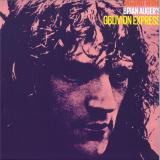
Strut Records highlights a landmark in British jazz-rock with Second Wind, the 1972 album from keyboard visionary Brian Auger and his powerhouse group Oblivion Express. Capturing a fully matured lineup, the record finds Auger expanding his fusion language - bridging jazz sophistication, funk-driven rhythm, and soul-infused songwriting with the clarity and fire that defined his early ’70s work.
Though Auger’s roots lie in the lineage of hard-swinging jazz organ and the improvisational fire of the ’60s British scene, he has never been an artist content with tradition. With Second Wind, he moves further into a hybrid language that fuses rhythm with harmonic depth and groove, without sacrificing sophistication. His playing is expansive yet precise, translating the electricity of live performance into a studio work that breathes with immediacy.
At the heart of this era of Oblivion Express is the telepathic rapport among its members. Vocalist Alex Ligertwood (in one of his earliest major recordings before Santana fame) brings a soulful intensity that feels both grounded and forward- looking. Second Wind contains tracks that have become deeply significant in Auger’s discography - original compositions Second Wind, and Truth to name a few - but it was Auger's high octane revisioning of Eddie Harris' Freedom Jazz Dance, (adding new lyrics to the original instrumental) that genuinely broke barriers. The track became a DJ friendly classic and highlighted the groups deeply original approach.
The rhythm section of Barry Dean and Robbie McIntosh balances weight and fluidity, giving Auger the space to stretch across Hammond organ, Rhodes, and keys with characteristic boldness. Their collective sound is one of seamless motion: jazz-inflected lines swelling into rock-driven crescendos, funk-leaning grooves locking with vocal hooks, moments of quiet clarity emerging between bursts of improvisation.
Second Wind stands as a pivotal moment in Auger’s discography: a record that bridges the exploratory spirit of his earlier projects with the more groove-oriented approach that would soon bring international attention. More than five decades later, it remains a vivid document of a band carving out its own language. Music born of instinct, collaboration, and a restless desire to push beyond the expected.
Suche:sb project
Studio Batsumi Returns with Ya Hu Ra — A Deep Listening Journey Through Analog Soundscapes.
London-based label Studio Batsumi returns with its second release, Ya Hu Ra, a four-track EP. Blending analog warmth with organic textures, the record includes four raw cuts that moves from broken beats and hypnotic melodic house on the A-side to downtempo, tribal rhythms and ambient soundscapes on the B-side.
Written and recorded between London and Paris from 2020 to 2025 by Federico Bigonzetti and Maxime Obadia, the project also features Cameron Cullen and DJ Himitsu (Enharmonics) on Kirtan (A2). The EP blends field recordings from Thailand, Vietnam, and Cambodia, crafting a sound that feels both intimate and vast.
The concept behind Ya Hu Ra was developed by label cofounder Marta Paccagnella, a study in sound archetypes where each track represents a different symbolic state: initiation, movement, trance, return. Whether on the dancefloor or in a living room, this release offers a rich and immersive listening experience, balancing club instincts with introspective detail.
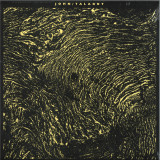
If there is one person, who has been causing a stir on the international club circuit recently, it is Barcelona's John Talabot. Already his debut “My Old School“ (which is meant literally by the way) on Permanent Vacation in 2009 and shortly after that the single “ Sunshine”, which he put out on his own Hivern Disc imprint, made him one of the most promising musicians of the Spanish electronic scene. And those two releases also already set the mark for John Talabot’s unparalleled music: raw, loopy, heavy on the kick drum, sample based, moderate on the tempo, distorted on the drums and light years away from the clean and ever revolving house sound of today. This unique style which also blends influences from afro beat, Detroit techno, Chicago house and cosmic disco, but also northern soul or the energy of Flamenco, immediately turned some heads around. James Murphy, Âme and Aeroplane started including Talabot music in their sets like it was the most natural thing. However - and this is quite rare - he not only gained legions of fans in the house and disco community, but also amongst the leftfield pop and indie rock followers. NME and Resident Advisor both had “Breakthrough“ features on John Talabot and he can be proud of a “Best New Music“ dubbing on
Pitchfork. (Being rather elusive on showing his face in magazines or the web it also came to some funny rumors that John Talabot was the alter ego of a well-known techno producer from Detroit).
At the same time he drew the attention of like-minded artists like James Holden and Luke Abott from Border Community, Blondes or Delorean, which lead to a bunch of fertile collaborations: Luke Abbott and Blondes remixed Talabot’s “Sunshine“ single , John Talabot remixed a track by Delorean and vice versa Delorean’s Ekhi contributed vocals to the track “Journeys “ on John’s album). Another example is the Young Turks Label (home of Jamie XX, Holy Fuck, El Guincho or SBTRKT ) on which he released the “Families“ EP in 2010. It was praised beyond limits. Pitchfork for
instance hailed: “… where pop and house influences sweetly buffer up against one another to provide an unyielding sense of elation“ and even brought Talabot a comparison with artists like Four Tet or Caribou.
While staying true to his sound, John Talabot has nevertheless shown a constant evolution as a producer since his first release. He has traced a solid musical path that has turned him into one of the big references of European House and has made him also a highly in demand Remixer (for the likes of The XX, Francesco Tristano’s “Aufgang” project, Shit Robot on DFA, Thaiti 80, Joakim or Teengirl Fantasy to name just a few ).
A progression that now crystallizes in “ƒin”, his first full-length album for Permanent Vacation. A record, in which the Barcelona mastermind sets aside the danceable immediacy to expand his stylistic palette more than ever. For that purpose, Talabot melts all the elements that have constructed his distinctive sound until now and makes them emerge from a new perspective, in which the construction of complex song structures, intricate rhythms and superpositions of ever-evolving melodies and atmospheres pick up the baton of the “a kick-drum and a sampler” philosophy of his initial productions. The result brings us 11 tracks (we should call them songs really!) dominated by dark ambiances, gaseous textures and bittersweet moods that, above all, reveal a kind of vivacity that’s really hard to find in contemporary electronics. “Fin” is far from being a track collection. From the majestic opener “Depak Ine“ to it’s solemn ending with
“So Will Be Now“ , one of the two tracks that features Talabot’s soul and label mate Pional, each song traces an overall dialogue with the rest, culminating a highly emotional journey through Talabot’s always compelling and unique musical vision.
Transparent Seaweed Green Vinyl[22,27 €]
Maggot Mass, the fifth full-length album by Pharmakon on Sacred Bones Records, marks the project's return after a five-year hiatus. This album signifies a departure from the original rules and structures established by Margaret Chardiet for Pharmakon, evolving into a new form. It retains the project's experimental roots in power electronics and noise while incorporating industrial and punk influences. The album stems from a profound disgust with humanity's dysfunctional relationship with the environment and other life forms. It explores the loneliness resulting from this broken bond and challenges us to acknowledge our personal and systemic responsibility. What peace can we make with privilege when the true cost of our comfort is not measured in dollars but in death? How can we reconcile with death when we impose the same hierarchical structures on it that we do in life? Is life worth living in the isolation of this self-imposed species loneliness? Humans often measure worth by accumulation _ money, assets, objects _ mistaking this for power and influence. Western heritage dictates a hierarchy, placing humans at the top, separate from the natural world. This delusion turns bodies into objects, land into property, and people into expendable tools. If our value were instead determined by our contribution to the ecosystem, who could claim that a human is more valuable than a maggot? Maggots recycle death into life, breaking down matter and nourishing new growth. They transform into flies, pollinating plants and sustaining the Earth's flora. In contrast, humans pollute rather than pollinate, with a select few profiting from exploitation at the expense of biodiversity and the well-being of many. In grappling with grief and loss on both personal and global scales, Margaret sought solace in the idea of rebirth through death, celebrating the beauty of regeneration through decay. However, she had to confront the stark reality of the disconnection from the earth under oppressive systems. Pharmakon is here imagining a path where the final act is to give back what was received from creation, offering our lives and deaths to sustain existence. once I slough off this human skin I will find my home and ancestral kin_ in the coffin-birth of my cadaver's ecosystem
On Chrystia Cabral's fourth album as SPELLLING, the Bay Area artist transforms her acclaimed avant-pop project into a mirror. Cabral's lyrics for Portrait of My Heart tackle love, intimacy, anxiety, and alienation, trading the allegorical approach of much of her previous work for something pointed into her human heart. The album's thematic forthrightness is echoed in its arrangements, making it the sharpest, most direct SPELLLING album to date. From the dark minimalism of her earliest music to the lavishly orchestrated prog-pop of 2021's The Turning Wheel to this newly energetic expression of her creative spirit, Cabral has proved again and again that SPELLLING can be whatever she needs it to be. The title track, with its propulsive drum groove and anthemic chorus of "I don't belong here," is the most potent embodiment of the album's turn toward emotional directness. Once the main melody emerged, Cabral used the song as a tool to process her anxiety as a performer and opted for a tighter, more rock-oriented composition. This transformation mirrors the album's broader shift toward energy and immediacy, driven by the core band of Wyatt Overson (guitar), Patrick Shelley (drums), and Giulio Xavier Cetto (bass), whose collaboration uncovers new contours of the SPELLLING sound. Cabral still writes and demos in isolation, but presenting the songs for Portrait of My Heart to her bandmates helped her discover their eventual lively, organic forms. So did working with a trio of producers_The Turning Wheel mixing engineer Drew Vandenberg, SZA collaborator Rob Bisel, and Yves Tumor producer Psymun. Key guest contributions further shape the album. Chaz Bear (Toro y Moi) delivers SPELLLING's first duet on "Mount Analogue," Turnstile guitarist Pat McCrory turns Cabral's original piano demo for "Alibi" into the crunchy, riff-y version that appears on the record, while Zulu's Braxton Marcellous gives "Drain" its sludgy heft. These parts aren't just incorporated seamlessly into the album; they feel like an integral part of its universe. Ultimately, though, Portrait of My Heart is nobody's record but Cabral's. She fearlessly draws the curtain back on parts of herself that she's never included in SPELLLING before_her feelings of being an outsider, her overly guarded nature, the way she can throw herself recklessly into intimate relationships and then cool on them just as quickly. "It's very much an open diary of all those sensations," she says.
- A5: Rubadub Feat Lindy & Dan Bushall
- B1: New Skank Feat T K
- B2: Rocksteady Feat Rodney P & Lindy
- B3: Countermeasure Feat T K
- B4: Gunshot Feat Darrison & Rodders
- B5: Bad Card Feat Dan Boskills
- A1: Alive Feat Red Star Lion
- A2: West End Story Feat Akala
- A3: Mucky Weekend Feat Rodders
- A4: Bang Bang Feat Ashley Slater
- B6: Give A Little Dub
The Dub Pistols reissue journey continues and some could argue we’ve saved the best for last. Originally released on CD in 2012, the tour-de-force of ‘Worshipping The Dollar’ is finally receiving the vinyl treatment it deserves.
Including festival big hitters such as Mucky Weekend, Alive and Bad Card, this outstanding LP is being pressed on stunning blue and white splatter vinyl and it sounds better than ever. With its hard-hitting beats, infectious melodies, and socially conscious lyrics, 'Worshipping The Dollar' still acts as a commentary on the current state of our world and the detrimental effects of greed. The album features collaborations with legendary artists such as Rodney P, Red Star Lion, and Lindy Layton, adding an extra layer of depth to an already dynamic sound.
From their early beginnings as a soundsystem project, Dub Pistols have grown into a party-rocking live band that ignites festivals and venues. Main man Barry Ashworth has even gone a step further by developing his own hugely successful ‘Mucky Weekender’ festival named after Worshipping The Dollar’s lead single. Mucky by name, Mucky by nature - the festival certainly isn’t for the light hearted!
‘Worshipping The Dollar’ serves as a testament to Dub Pistols’ enduring spirit and tenacity and you can now pre order the album on how it was originally meant to be listened – on glorious vinyl.
a Alive feat. Red Star Lion 04:42
b West End Story feat. Akala 03:42
c Mucky Weekend feat. Rodders 05:08
d Bang Bang feat. Ashley Slater [03:33]
[e] Rubadub feat. Lindy & Dan Bushall [05:00]
[f] New Skank feat. T.K. [04:18]
[g] Rocksteady feat. Rodney P & LIndy [04:20]
[h] Countermeasure feat. T.K. [04:40]
[i] Gunshot feat. Darrison & Rodders [05:42]
[j] Bad Card feat. Dan Boskills [05:22]
[04:16]
- A1: Burnt Cork Face
- A2: Exceptional Negro Prod. Deener
- A3: Child In Iron Collar Prod. Walz & Bohemia Lynch
- A4: Spook’s Blues Prod. Cities Aviv
- A5: Melanin Child Prod. Sb11
- A6: Grease Paint Tap Dancer
- A7: Black(S) N Control Prod. Walz
- B1: A Colored Night Prod. Lukah
- B2: A Black Man’s Worst Fear Prod. Deener
- B3: Beautifully Blackface Prod. Hollow Sol
- B4: Fly Blackface Fly Prod. Hollow Sol
- B5: Shoe Polished Face
Written and recorded in a firestorm of creativity during the mastering phase of Lukah's upcoming double LP with Real Bad Man, Permanent Blackface is a monstrous vignette displaying the true power of Lukah's songwriting and the technical brilliance of his team. The album flashes before you like a lightning strike illuminating a barren cityscape.
Introducing himself as Mr. Blackface, Lukah identifies the true artist's responsibility to hold a mirror to the listener in order to confront and disarm taboos. In both content and music, the record balances vulgarity and introspection, the horror of silence, and the comfort of colossal, discordant sound. Over 12 songs the celestial, often blood-soaked color palette of soul and R&B that gave emotional weight to Why Look Up and Raw Extractions has been scraped away like a charred skeleton. With a small cast of voices consisting entirely of Lukah's immediate family, and production duties handled in-house by WALZ, Deener, Hollow Sol, Cities Aviv, SB11, and Lukah himself, the record has the intimacy of a theater production. The only voices present are Lukah, joined by his mother providing scat vocals, and his grandfather discussing the Jungian self-hatred of the colonial project and its terrifying repercussions for contemporary Black Amer-icans, with a fitting invocation of Dr. Frankenstein's monster. The beats here are reminiscent of noir, 78rpm swing and big band, evoking the underlying horror of a pre-Civil Rights movement America, where segregational binaries invert-ed folk tales through the white terror of ghosts, the black "spook", and mythic themes of fate and free will. The whip-lash of shifting perspectives keeps your head on a swivel in way only Lukah's superior pen can elucidate. Will it trigger anger that first voice you hear on Permanent Blackface is Judy Garland singing "Sweet Chariot"? But isn't this just Lukah speaking through her, announcing he's got "The Southin his mouth"? As the internet endlessly debates intention and appropriation in our artistic history, the insignificance of this small sample is put into perspective: another white pebble in a black ocean of Lukah's creation. "If the sun don't shine today / pray the sun come out tomorrow...pray the sun pierce through the sorrow"
The album introduces an unnamed character beset by disposition. As the story's scope increases, the gaze of the mir-ror shifts. How would white society feel if historical roles were reversed? How does a presumed white listener experi-ence the trauma of interacting with police?
Ni A Nhw (‘Us And Them’) is a new collection of songs by Carwyn Ellis, sung mostly in his native Welsh. Drawn from his catalogue under four different guises - Colorama, Rio 18, Bendith and solo as Carwyn Ellis - it features songs spanning over a decade, most of which have not been available to stream before. Or on vinyl for that matter!
The music itself is mostly in a folk-pop / singer-songwriter vein so although it spans a number of years and projects, it holds together well. There are seasoned favourites - ‘Llythr Y Glowr’, ‘Gall Pethau Gymryd Sbel’ and ‘Ti’ have been staples on BBC Radio Cymru over the last 5 years or so. Covers include’Gorffennaf’ (‘Luglio’ in it’s original Italian) which was released with Rio 18 this Summer, and ‘Cân Am Gariad’ (Lesley Duncan’s ‘Love Song’) and ‘Hwiangerdd Takeda’ (‘Takeda no Moriuta’ in it’s original Japanese), both recorded with Bendith for their long-sold out 12” EP on Manchester’s legendary Aficionado label in 2017. Some of the songs on the album were previously only released digitally via Bandcamp as fund raisers during the Covid era - ‘Gair O Gysur’ as Rio 18 and ‘Drudwen’, ‘Cardigan Bay’ and ‘Ti’ as Carwyn Ellis himself.
As the album draws to its close, the tunes take a slightly more electronic turn, beginning with ‘Kerro’, from the Colorama mini album ‘Llyfr Lliwio’ originally released in 2011. The CD and streaming versions of the album close with the Begin remix of ‘Hapus?’ By Colorama, an epic Balearic chill out tune if ever there was one!
As Carwyn finishes work on the next Rio 18 album (due in 2024) this is a welcome reminder of his varied skills as a singer, songwriter, arranger, producer and collaborator - a colourful chameleon, comfortable working in any number of musical styles, and never prepared to sit still. This collection, following on from 2014’s ‘Dere Mewn’ CD, brings together all of Carwyn’s remaining Welsh rarities, whether solo, as a bandleader or as a collaborator. Ni a Nhw. Us and Them.
Opaque Mango Colored Vinyl. RIYL: Black Milk, Kendrick Lamar, Kamasi Washington, Mos Def, Blood Orange, Milo, Pharcyde, Blackalicious, Anderson Paak. Richmond, Virginia-based artist McKinley Dixon has always used his music as a tool for healing, exploring, and unpacking the Black experience in order to create stories for others like him. For My Mama And Anyone Who Look Like Her, Dixon's debut album on Spacebomb, is the culmination of a journey where heartbreak and introspection challenged him to adapt new ways of communicating physically and mentally, as well as across time and space. The language accessibility aspect of this project draws right back to communication and connecting," Dixon explains. "I think about the messaging, and how this can be a way for another Black person, someone who looks like me, to listen to this and process the past. Everything I've learned about communication for this album culminates with this bigger question about time. Is time linear when you're still healing and processing? Westerners look at time travel as something to conquer or control - it's a colonizer mindset. That's ignoring how time travel can be done through stories and non-verbal communication, and doesn't acknowledge how close indigenous people are to the land and the connections groups have because they've existed somewhere for so long. Storytelling is time travel, it's taking the listener to that place. Quick time travel. Magic." Never relying solely on beats, Dixon taps into a hybrid of jazz and rap, pulling in an array of piercing strings, soulful horns, percussion, and angelic vocalists throughout the album-plus features by Micah James, Lord Jah-Monte Ogbon, Pink Siifu, and more. Jazz instrumentals add a level of uncertainty, with the sounds and shifts evoking a lot of emotion and vulnerability. It's an energy he describes as "Pre-Kendrick Lamar To Pimp A Butterfly," the era when rap adopted more live instrumentation. The best way to sum up this album is: I was sad, I was mad, and now I'm alive," Dixon explains. "These things I talk about on the record have had harmful and brilliant effects on my timeline, and have forced me to be cognizant of the fact that living is complex. Rap has allowed me the language to communicate, and be someone who can communicate with people from all over. Knowing how far I've come, I think people will find trust in the message I'm sending."
Black Vinyl[21,22 €]
Maggot Mass, the fifth full-length album by Pharmakon on Sacred Bones Records, marks the project's return after a five-year hiatus. This album signifies a departure from the original rules and structures established by Margaret Chardiet for Pharmakon, evolving into a new form. It retains the project's experimental roots in power electronics and noise while incorporating industrial and punk influences. The album stems from a profound disgust with humanity's dysfunctional relationship with the environment and other life forms. It explores the loneliness resulting from this broken bond and challenges us to acknowledge our personal and systemic responsibility. What peace can we make with privilege when the true cost of our comfort is not measured in dollars but in death? How can we reconcile with death when we impose the same hierarchical structures on it that we do in life? Is life worth living in the isolation of this self-imposed species loneliness? Humans often measure worth by accumulation _ money, assets, objects _ mistaking this for power and influence. Western heritage dictates a hierarchy, placing humans at the top, separate from the natural world. This delusion turns bodies into objects, land into property, and people into expendable tools. If our value were instead determined by our contribution to the ecosystem, who could claim that a human is more valuable than a maggot? Maggots recycle death into life, breaking down matter and nourishing new growth. They transform into flies, pollinating plants and sustaining the Earth's flora. In contrast, humans pollute rather than pollinate, with a select few profiting from exploitation at the expense of biodiversity and the well-being of many. In grappling with grief and loss on both personal and global scales, Margaret sought solace in the idea of rebirth through death, celebrating the beauty of regeneration through decay. However, she had to confront the stark reality of the disconnection from the earth under oppressive systems. Pharmakon is here imagining a path where the final act is to give back what was received from creation, offering our lives and deaths to sustain existence. once I slough off this human skin I will find my home and ancestral kin_ in the coffin-birth of my cadaver's ecosystem
GER Jim Jarmusch und Carter Logan (Gründungsmitglieder von SQÜRL) kehren mit einer klanglichen Erkundung des filmischen Werks des dadaistischen Pioniers Man Ray zurück, einem fesselnden Projekt, das Musik und Film miteinander verschmilzt. In den vergangenen acht Jahren haben SQÜRL das Publikum mit ihrer Live-Vertonung von Man Rays Kurzfilmen in ausverkauften Konzerten an renommierten Orten wie dem Centre Pompidou in Paris, der Queen Elizabeth Hall in London und dem Art Institute of Chicago verzaubert. Der Höhepunkt ihrer Bemühungen fand im Frühjahr 2023 statt, zum 100. Jahrestag von Man Rays erstem Ausflug ins Filmemachen, als der neu restaurierte Film "Die Rückkehr zur Vernunft" bei den Filmfestspielen von Cannes seine Premiere feierte. Der von Womanray (Marieke Tricoire) und Cinenovo (Julie Viez) produzierte Film ist eine Anthologie mit vier Stummfilm-Kurzfilmen von Man Ray - Étoile de mer (1928), Emak bakia (1926), Le Retour á la Raison (1923) und Les Mysteres du Château de Dé. (1929) - jeweils gepaart mit einer Originalpartitur von SQÜRL. Jarmusch und Logan, zwei multidisziplinäre Künstler, die für ihre Experimentierfreudigkeit bekannt sind, wollten mit diesen Partituren einen ekstatischen Zustand schaffen, einen Raum zwischen Bewusstsein und Unterbewusstsein, Realität und Surrealem. Das daraus resultierende Album "Music for Man Ray", das aus einer Live-Aufnahme im Centre Pompidou in Paris im Februar 2023 hervorging, enthält verzerrte Gitarren, hypnotische Rückkopplungen, Loops und affektierte Synthesizer Logan: "Es ist eine Reise, auf die wir das Publikum mitnehmen wollen, indem wir Themen in diesen Filmen beleuchten. Sie sind eigenständig, aber es gibt auch wiederkehrende Anklänge im gesamten Programm." Jim Jarmusch fügt hinzu: "Wir sind sehr stolz darauf, die Begleitband von Man Ray zu sein." Nun erblicken sowohl der Film als auch die daraus resultierende Musik in Form von "Music for Man Ray" das Licht der Welt - beide stehen als Zeugnis für die kreative Synergie zwischen Man Rays bahnbrechendem Kino und der innovativen musikalischen Interpretation durch SQÜRL.
[ENG] Clear Vinyl. Jim Jarmusch and Carter Logan (founding members of SQÜRL) return with a sonic exploration of the cinematic works of Dadaist pioneer Man Ray, a captivating project that melds music and film. Over the past eight years, SQÜRL have been enchanting audiences with their live scores to Man Ray's short films across sold-out shows in prestigious venues like the Centre Pompidou in Paris, Queen Elizabeth Hall in London, and the Art Institute of Chicago. The culmination of their endeavor took place in the spring of 2023, on the 100th anniversary of Man Ray's inaugural foray into filmmaking, when the newly restored Return to Reason premiered at the Cannes Film Festival. Produced by Womanray (Marieke Tricoire) and Cinenovo (Julie Viez), Return to Reason unfolds as an anthology featuring four silent short films by Man Ray _ Étoile de mer (1928), Emak bakia (1926), Le Retour á la Raison (1923), and Les Mysteres du Château de Dé. (1929) _ each paired with an original score by SQÜRL. Jarmusch and Logan, two multi-disciplinary artists known for their experimental prowess, approached these scores as a way to create an ecstatic state, a space between consciousness and unconsciousness, reality, and the surreal. The resulting album, Music for Man Ray, born out of a live recording at the Centre Pompidou in Paris in February of 2023, features distorted guitars, hypnotic feedback, loops and affected synthesizers. In the words of Logan, "It's a journey we want to take the audience on, illuminating themes throughout these films. They are discrete, but there are also recurring echoes throughout the whole program." Jim Jarmusch adds, "We feel very proud to be Man Ray's backup band." Now both the film Return to Reason and the resulting music in the form of Music for Man Ray are seeing the light of day _ both stand as a testament to the creative synergy between Man Ray's groundbreaking cinema and the innovative musical interpretation by SQÜRL.
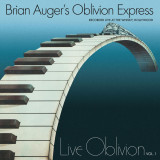
Live albums are often a ‘hit or miss’ affair but ‘Live Oblivion’ 1 & 2 buck that trend, Recorded across 2 nights in 1974 at the Hollywood venue The Whisky A Go Go. The group were finishing off a huge US tour that had roared down the east coast then across the Midwest and by the time they hit LA, as Brian recalls “we were all absolutely performing at our height. So I decided that I really needed to record the band live at that point”. Utilising the Wally Heider Mobile Truck, the scene was set for one of the greatest jazz-fusion live recordings to be made. The show opens with a hyper fast version of Beginning Again due to drummer Steve Ferrone being almost an hour late and running high on adrenaline, Brian remembers thinking “I don’t even know if I can play it that fast!” Fortunately, he and the Oblivion Express including stellar vocalist Alex Ligertwood rise to the challenge and the result is akin to some frenetic jazzy drum & bass but also pushes the group onto another level altogether for the rest of the show. Across both volumes there are no fillers and the highlights are many - Bumpin’ On Sunset, Freedom Jazz Dance, and Inner City Blues are all stunning, but especially the epic version of Maiden Voyage which Mos Def sampled on his 1997 'If You Can Huh! You Can Hear', and both DJ Mitsu in 2004 and 2017 Crimeapple both dipped into Live Oblivion to sample that fire for their own projects.
Vol. 2[26,01 €]
Live albums are often a ‘hit or miss’ affair but ‘Live Oblivion’ 1 & 2 buck that trend, Recorded across 2 nights in 1974 at the Hollywood venue The Whisky A Go Go. The group were finishing off a huge US tour that had roared down the east coast then across the Midwest and by the time they hit LA, as Brian recalls “we were all absolutely performing at our height. So I decided that I really needed to record the band live at that point”. Utilising the Wally Heider Mobile Truck, the scene was set for one of the greatest jazz-fusion live recordings to be made. The show opens with a hyper fast version of Beginning Again due to drummer Steve Ferrone being almost an hour late and running high on adrenaline, Brian remembers thinking “I don’t even know if I can play it that fast!” Fortunately, he and the Oblivion Express including stellar vocalist Alex Ligertwood rise to the challenge and the result is akin to some frenetic jazzy drum & bass but also pushes the group onto another level altogether for the rest of the show. Across both volumes there are no fillers and the highlights are many - Bumpin’ On Sunset, Freedom Jazz Dance, and Inner City Blues are all stunning, but especially the epic version of Maiden Voyage which Mos Def sampled on his 1997 'If You Can Huh! You Can Hear', and both DJ Mitsu in 2004 and 2017 Crimeapple both dipped into Live Oblivion to sample that fire for their own projects.
It's been a decade since John Carpenter recorded the material that would become Lost Themes, his debut album of non-film music and the opening salvo in one of Hollywood's great second acts. Those vibrant, synth-driven songs, made in collaboration with his son Cody Carpenter and godson Daniel Davies, kickstarted a musical renaissance for the pioneering composer and director. In the years since, Carpenter, Carpenter, and Davies have released close to a dozen musical projects, including a growing library of studio albums and the scores for David Gordon Green's trilogy of Halloween reboots. With Lost Themes IV: Noir, they've struck gold again, this time mining the rich history of the film noir genre for inspiration. Since the first Lost Themes, John has referred to these compositions as "soundtracks for the movies in your mind." On the fourth installment in the series, those movies are noirs. Like the film genre they were influenced by, what makes these songs "noirish" is sometimes slippery and hard to define, and not merely reducible to a collection of tropes. The scores for the great American noir pictures were largely orchestral, while the Carpenters and Davies work off a sturdy synth-and-guitar backbone. The noir quality, then, is something you understand instinctively when you hear it, as in connected in an emotional way. The trio's free-flowing chemistry means Lost Themes IV: Noir runs like a well-oiled machine_the 1951 Jaguar XK120 Roadster from Kiss Me Deadly, perhaps, or the 1958 Plymouth Fury from John's own Christine. It's a chemistry that's helped power one of the most productive stretches of John's creative life, and Noir proves that it's nowhere near done yielding brilliant results.
Red Vinyl[26,26 €]
Deluxe edition Tan and Black Marble Vinyl[28,36 €]
Cassette[14,50 €]
It's been a decade since John Carpenter recorded the material that would become Lost Themes, his debut album of non-film music and the opening salvo in one of Hollywood's great second acts. Those vibrant, synth-driven songs, made in collaboration with his son Cody Carpenter and godson Daniel Davies, kickstarted a musical renaissance for the pioneering composer and director. In the years since, Carpenter, Carpenter, and Davies have released close to a dozen musical projects, including a growing library of studio albums and the scores for David Gordon Green's trilogy of Halloween reboots. With Lost Themes IV: Noir, they've struck gold again, this time mining the rich history of the film noir genre for inspiration. Since the first Lost Themes, John has referred to these compositions as "soundtracks for the movies in your mind." On the fourth installment in the series, those movies are noirs. Like the film genre they were influenced by, what makes these songs "noirish" is sometimes slippery and hard to define, and not merely reducible to a collection of tropes. The scores for the great American noir pictures were largely orchestral, while the Carpenters and Davies work off a sturdy synth-and-guitar backbone. The noir quality, then, is something you understand instinctively when you hear it, as in connected in an emotional way. The trio's free-flowing chemistry means Lost Themes IV: Noir runs like a well-oiled machine_the 1951 Jaguar XK120 Roadster from Kiss Me Deadly, perhaps, or the 1958 Plymouth Fury from John's own Christine. It's a chemistry that's helped power one of the most productive stretches of John's creative life, and Noir proves that it's nowhere near done yielding brilliant results.
Black Vinyl[24,79 €]
Deluxe edition Tan and Black Marble Vinyl[28,36 €]
Cassette[14,50 €]
It's been a decade since John Carpenter recorded the material that would become Lost Themes, his debut album of non-film music and the opening salvo in one of Hollywood's great second acts. Those vibrant, synth-driven songs, made in collaboration with his son Cody Carpenter and godson Daniel Davies, kickstarted a musical renaissance for the pioneering composer and director. In the years since, Carpenter, Carpenter, and Davies have released close to a dozen musical projects, including a growing library of studio albums and the scores for David Gordon Green's trilogy of Halloween reboots. With Lost Themes IV: Noir, they've struck gold again, this time mining the rich history of the film noir genre for inspiration. Since the first Lost Themes, John has referred to these compositions as "soundtracks for the movies in your mind." On the fourth installment in the series, those movies are noirs. Like the film genre they were influenced by, what makes these songs "noirish" is sometimes slippery and hard to define, and not merely reducible to a collection of tropes. The scores for the great American noir pictures were largely orchestral, while the Carpenters and Davies work off a sturdy synth-and-guitar backbone. The noir quality, then, is something you understand instinctively when you hear it, as in connected in an emotional way. The trio's free-flowing chemistry means Lost Themes IV: Noir runs like a well-oiled machine_the 1951 Jaguar XK120 Roadster from Kiss Me Deadly, perhaps, or the 1958 Plymouth Fury from John's own Christine. It's a chemistry that's helped power one of the most productive stretches of John's creative life, and Noir proves that it's nowhere near done yielding brilliant results.
- A1: Goodbye Jackie Dandelion
- A2: Larry Bird
- A3: Cabra Drive
- A4: Bambi Feat Gotts Street Park
- A5: Woof Feat Biig Piig
- A6: Johnny Mcenroe Feat Wiki
- A7: Yoko Oh No!
- A8: Fat Ronaldo/Covent Gardens
- B1: Wagyu
- B2: Rainy Days
- B3: What If? Feat Charlotte Dos Santos
- B4: Citizen Kane
- B5: Peekaboo
- B6: Phantom Of The Afters
- B7: Heaven Shouldn't Have You
PHANTOM OF THE AFTERS is the 3rd album from Irish rapper Kojaque, out on his very own Soft Boy Records. With landmark projects Deli Daydreams and Town’s Dead, that saw him 2x nominated for Choice Music Prize, receive support from Radio 1, 1xtra, 6Music, support Loyle Carner & Lana Del Rey and headline festivals across Ireland, Kojaque changed the rap landscape (and Irish culture) for good. Collaborations on his latest project include Biig Piig, Wiki, Charlotte Dos Santos and Gotts Street Park. The album traces blurred outlines of childhood trauma, depression, grief and love, interweaving the physical and emotional journey of central character Jackie Dandelion with bigger questions about immigrant identity, homesickness, cultural stereotypes and ultimately the reconciliation of self. Kojaque has created a cinematic-universe that is bigger in scope but also more tender and intimate in approach than ever before. It’s this willingness to be vulnerable - grotesque, even - that’s captured in the album’s iconic artwork, which subverts the bigoted depictions of Irish caricatures in 19th and 20th century Punch Magazine cartoons and sees this particular Phantom of the Opera remove not just those distorted masks, but also his own.
With songs that are cocksure and contemplative, brutally honest but also refreshingly myth-making, PHANTOM OF THE AFTERS marks a new era from Kojaque: one of his generation’s most unique talents. In suitably audio-visual style, the album traces blurred outlines of childhood trauma, depression, grief and love. It interweaves the journey of central character Jackie Dandelion from Dublin to London with bigger questions about immigrant identity, homesickness, cultural stereotypes and ultimately the reconciliation of self. It’s this willingness to be vulnerable - grotesque, even - that’s captured in the iconic artwork, which subverts the bigoted depictions of Irish caricatures in 19th and 20th century Punch Magazine cartoons and sees this particular Phantom of the Opera remove not just those distorted masks, but also his own.
The record drops alongside one of its more brooding moments, ‘WHAT IF?’: a soulful ode to anxiety, and the crippling impact of fear in moving forward in life or your relationships. “I’ve been obsessed with Charlotte Dos Santos ever since I heard her project Cleo,” Kojaque comments. “She’s just got such a distinct voice and sound. I sent the track over hoping she’d be into it and she sent me back a near perfect hook.” A fully independent artist, Kojaque has brought a stellar lineup of guests together on his latest work: from Biig Piig, Charlotte Dos Santos and NY rapper Wiki (who featured on ‘JOHNNY MCENROE’) to Gotts Street Park (‘BAMBI’) plus production credits such as Calvin Valentine (Ryan Beaty), Tony Seltzer (Eartheater, Freddie Gibbs) and Karma Kid (Hak Baker, Shygirl).
PHANTOM OF THE AFTERS will see Kojaque continue to blaze a trail around the world. He first came to prominence with the genre-bending concept record Deli Daydreams: it became the first mixtape to ever be nominated for the Choice Music Prize, and demonstrated his prowess not only as a polymathic artist, but DIY label-head (co-founding Soft Boy Records, which was subject to a Boiler Room documentary) and visual artist (Kojaque has received a prestigious Royal Hibernian Academy Award for his film-making). Even as the rest of the world sat up and paid Irish Art some long-overdue attention, Kojaque’s creative output has remained thrillingly uncompromising. Tour-de-force debut album Town’s Dead examined everything from gentrification, masculinity and mental health to a gnarly love-triangle unfolding on New Year’s Eve, held together by a multi-hyphenate attitude. Once again nominated for the Choice Prize, Kojaque played a sold-out UK & European headline tour around the restrictive local lockdowns, with the album landing additional support across the likes of Radio 1, 1xtra, 6Music, plus shows with Lana Del Rey and Loyle Carner (who also sampled Kojaque on hugo). With his landmark projects to date, Kojaque changed the rap landscape (and Irish culture) for good. On PHANTOM OF THE AFTERS, you sense he’s just getting started.
Special tour only numbered 3 cd package. (Albums Inc: Joan Of All / Get Well Soon / Sarabeth Tucek) #33 MOJO AOTY 2023 #28 UNCUT AOTY 2023 Sarabeth Tucek emerges from a decade-long hibernation with a new double-album Joan of All under the new moniker SBT – a longtime nickname given to her by the many musicians she has worked with throughout her career. After retreating from the fevered pace of the record business to concentrate on other creative endeavors, Sarabeth began to piece together the music that would eventually become her most ambitious, personal project yet – the sprawling double-album Joan Of All, which will be released world-wide on 19th May 2023 via her own freshly-minted imprint Ocean Omen. Sarabeth Tucek officially broke onto the music scene 2003 performing a series of spellbinding duets with Bill Callahan on the acclaimed Smog album Supper. This was swiftly followed by a memorable appearance in the prize-winning Brian Jonestown Massacre documentary DiG! Sarabeth also contributed material to their 2005 EP release, We Are the Radio. One of Sarabeth's compositions covered by the band on that EP, "Seer," would later be retitled and released in 2006 as Tucek's debut single, "Something for You”, which became Steve Lamacq’s Single Of The Week on BBC Radio 6 Music. Her self-titled debut album produced by Luther Russell and Ethan Johns hit stores the following year and garnered rave reviews in the press, leading her to supporting Bob Dylan and unfaltering support at the BBC. In 2011, Sarabeth followed up her extraordinary debut with a raw, uncompromising album entitled Get Well Soon, praised as an unflinching meditation on the subject of grief. This release made many year-end lists and the title track was featured on the first season of HBO’s Girls.