STRIKER TRAXX proudly presents its very first release — STX101: BALLAN “Chantal Grooves EP”.
Born as the new sub-label of SUPREME STRIKER, itself a direct emanation of the Skylax Records universe, STRIKER TRAXX sets the tone for a new era: raw, uncompromising, and forward-thinking. As always, the visual identity is entrusted to the legendary H5’s exclusive artwork (Daft Punk, Air, Logorama), delivering a striking design that transforms each copy into a true collector’s object.
For this inaugural strike, we welcome Asaf Ballan, aka BALLAN, an artist emerging with force from the vibrant beatscape of contemporary electronic music. With Chantal Grooves EP, he delivers a 12-inch packed with five club-weapons that dive deep into the essence of house and tech house, reshaping them with his own relentless, pumpy twist.
The trip opens with “How Should I Start”, a perfect ignition, teasing anticipation while locking you instantly on the groove. “Goddamnit (Club Tool)” follows as a pure machine workout, echoing Kerri Chandler’s house foundations while pushing them into today’s territory. “Members Only Club” exudes exclusive sophistication, a secret-weapon built for late-night dancefloors. On the flip, “Keep the Frequency Clear” hypnotizes with razor-sharp frequencies, proof of BALLAN’s sonic craftsmanship, before “Futuro” launches us headfirst into tomorrow—where innovation collides with the Romanian sunrise aesthetic, infused with a heavier, raw energy.
Influenced by the minimal masters (Zip, Ricardo Villalobos, Raresh) yet unwilling to compromise on drive and power, BALLAN delivers here a record where every track stands as a killer. Chantal Grooves EP is both a homage to the roots of house and tech house, and a manifesto propelling the genre into its next evolution.
STRIKER TRAXX launches with a statement: this imprint is made for DJs and dancers who still believe in vinyl as a sacred object and in the dancefloor as a transformative space. With H5’s exclusive artwork (Daft Punk, Air, Logorama)and Skylax’s uncompromising vision, each release is conceived as a weapon for the underground, and a jewel for the true collectors.
Vinyl only. For devoted believers.
Search:se
Arizona-based producer Kareem Ali returns with Renewal, his second EP on the French label Noire & Blanche, a luminous blend of deep house, jazz, and Afrofuturism that captures both personal and collective transformation. Praised by Rolling Stone, Pitchfork, and Boiler Room for his visionary sound, Ali continues to expand the language of modern electronic music with a project rooted in emotion, movement, and hope.
Across five tracks, Feel Everything All At Once, On My Heart, Procession, Wake Up My People, and Want, Kareem Ali invites listeners to experience the full spectrum of feeling. Opening with the warm, jazz-infused pulse of Feel Everything All At Once, the EP unfolds into the hypnotic rhythms of Procession and the heartfelt refrain of On My Heart. The soaring horns and urgent groove of Wake Up My People capture the project’s spirit of resilience, before closing on Want, a meditative reflection on desire and renewal.
Drawing inspiration from Sun Ra, Miles Davis, and Underground Resistance, Kareem Ali continues his pursuit of what he calls Future Black Music — a sound that merges the spiritual depth of jazz with the cosmic potential of electronic music. With Renewal, he offers not just an EP, but a vision: music as liberation, rebirth, and awakening.
For their very first offering, Hanna & Robbie unveils a 5-track album making an ever possible encounter between psychedelic fractured grooves and mellow sci-fi haze in a divergent electronic shell. Planet42 carves a slow-burning path through severance and trance, a trip back to the subconscious like an escape or a sin, guiding both body and mind into unfamiliar exploration
Taking a fey look on electronic performance, where dubby-inspired and fractured rhythms tend to unveil ethereal ambiances, HR was born and raised in the emergent underground electronic French scene and started being moving targets in 2023 with a first live show at the Supercamp Festival happy few’s gathering.
With a mosaic of gritty textures, clubby breaks and otherworldly echoes in the lead-off project Planet42, Hanna & Robbie dives deep in this restless esoteric tension their identity is all about : an spunky early signal sculpting precise and intricate yet atypical tones revealing this crawling need of delivering unsettled arrangements and dreamscaped lines. Already in the move for their next in order work, it is settled in their experimentation lab that new doses of psychedelia and delusive resonances were written as an incipit to a future alternative live act.
- A1: Rock Me Amadeus (The Salieri Version)
- A2: America (The City Of Grinzing Version)
- A3: Tango The Night (The Heart Mix)
- A4: Munich Girls (Just Another Paid One)
- A5: Jeanny (Sus-Mix-Spect Crime Version)
- B1: Vienna Calling (The Metternich Arrival-Mix)
- B2: Männer Des Westens - Any Kind Of Land (Wilde Bube Version)
- B3: Nothin' Sweeter Than Arabia (The Relevant Madhouse Danceteria Jour-Fix-Mix)
- B4: Macho Macho (Sensible Boy's Song)
- B5: It's All Over Now, Baby Blue (No Mix)
- A1: Super Boiro Band - So I Si Sa
- A2: Bembeya Jazz National - Armée Guinéenne
- A3: Kaloum Star - Maliba
- A4: Balla Et Ses Balladins - Nyo
- B1: Quintette Guinéenne - Douga
- B2: Le Simandou De Beyla - Festival
- B3: Horoya Band - Zoumana
- C1: Kaloum Star - Gbassikolo
- C2: Sombory Jazz De Fria - Nana
- C3: Syli Authentic - Fabara
- D1: Balla Et Ses Balladins - Paulette
- D2: 22 Band Kankan - Deny
On October 2 1958, after over 60 years of colonial rule, Guineans voted overwhelmingly for their independence, and Guinea was declared a Republic with Sékou Touré as President. Guinea was the first of West Africa’s Francophone colonies to gain independence. To free Guinea from its colonial legacy, president Touré sought to restore dignity to his nation and give cause for Guineans to take pride in their culture, history and newfound freedom. To achieve this, he instructed his government to implement new cultural policies that were intended to revitalise and celebrate indigenous culture. The focus of these new policies was on music.
In 1961, President Touré launched authenticité, the name of his new cultural policy for Guinea. One of its first acts was to assemble the best Guinean musicians into a new state-sponsored orchestras that were tasked with presenting traditional Guinean music in a new and modern style. All musicians in Guinea’s orchestras were officially designated as members of the public service. During the years of Sékou Touré’s presidency (1958 – 1984), the government’s cultural policy of authenticité was applied strictly to the creative arts. Guinea’s sole political party, the Parti Démocratique de Guinée exercised complete authority over artistic production. The scale of the Guinean government’s commitment and efforts to invigorate its indigenous musical cultures was unmatched in Africa, and it presented a clear contrast to the minimal endeavours undertaken by Guinea’s former colonial rulers.
From 1967 to 1983, Guinea’s government presented selections of songs from the Voix de la Révolution catalogue on its own recording label, Syliphone. These recordings were described as ‘the fruit of the revolution’. Syliphone was revolutionary in many aspects: it was the first recording label to feature traditional African musical instruments such as the kora and balafon within an orchestre setting; it was the first to present the traditional songs of the griots within an orchestre setting; and it was the first government-sponsored recording label of post-colonial Africa. Syliphone represented authenticité in action, and over 750 songs were released by the recording label on 12-inch and 7-inch vinyl discs. All are highly sought after by collectors worldwide.
This is the second of a two-volume release which presents a selection of the best songs from Guinea's Syliphone recording label. This volume focuses on recordings from the 1970s, when Guinea’s authenticité policy had transformed the nation's music through a network of over 30 orchestras, each representing their local region, and each presenting Guinean musical traditions alongside the influences of Cuban music, jazz and funk.
Yeong Die would typically be described as DJ, musician, or “experimental” composer, but in reality she is a sculptor. Between the rapidly disintegrating boundaries of composition and sound design, her work employs a hunting and gathering of intangible material—bursts of memory, fragments of liminal space, interstitial banalities—materializing as boundless expressions that evade genre constructs. As an integral presence among Seoul’s most forward thinking sound artists, Yeong is in a constant uphill battle rejecting the reverence that so quickly creeps in and infects contemporary craft, that relegates even the most audacious attempts of her peers to pigeon-hole pastiche. Given this style-agnostic starting line, her ESP Institute debut 'Uncapturable' exudes non-urgency, an unfettered pace that allows breathing room, affording the listener freedom to mentally isolate and explore elements without fear of missing a “bigger picture.” There is a warm and welcoming feeling that invites repetitive, even studied listening. While half the work is somewhat singular in presentation—'1km', 'Like Your Flaw', or 'Burnt'—there are moments of meticulous complexity—'Morning Rum Punch' (featuring vocals by Cifika) and 'Did' (featuring a smattering of spoken words by icecream drum), both underground Korean peer artists. These moments feel more of like an acute focus on execution that compliments the overall shape of the album, rather than a dynamic contrast. Cifika’s vocals, in particular, command the listener’s periphery in a playful and refreshing way, exaggerating negative space and in-between moments that not only the paint an arresting stereo field but a remarkable sense of depth, not easily achieved without production sorcery. It is, without a doubt, these beautiful fleeting moments that we describe as 'Uncapturable'.
* Solid digital roots reggae classic from Rick Wayne, originally released on the Pathway To Freedom label in 1997, backed with a minimalist dub version with emphasis on the juggernaut rhythm,
* `Almighty Father’ has gained popularity in recent times due to its inclusion on shared recordings of late-1990 Jah Shaka sessions that have been circulated.
Presenting the third thematic volume on the “Aquapelagos" series - a collection of split LPs where selected artists offer their own take into water surrounded cultures and communities. After the initial release of the Anthology compilation Aquapelago in 2022 (Discrepant ,CREP91) and the split LP Atlantico by Lagoss & Banha da Cobra (Keroxen, KRXN027) as well as the direct collaboration LP Índico by Mike Cooper & Pierre Bastien we proudly introduce an the third volume in the series in the shape of no other than two inspiring artists, Vica Pacheco and Pak Yan Lau. Two different sound journeys inspired by the majestic and peaceful Pacific Ocean, the vastest, largest and deepest ocean of our planet.
Vica Pacheco’s composition takes a calm meditation approach where water flutes and synths brush shoulders to create a ever expanding mind journey whereas Pak Yan Lau’s ambitions Neo classical piece, The Ocean in Us, talks about that grand overwhelming feeling, that vast space deep under, on the bottom of the Pacific. Both compositions were recorded and created with the particular wet acoustics of the Tank in Santa Cruz de Tenerife in mind.
From Philip Hayward and Matt Hill’s liner notes: ‘’The Pacific is a complex space, comprising a third of the Earth’s surface. A cascade of islands runs along its eastern flank, down from the Kamchatka peninsula, through Japan, Taiwan, The Philippines, Melanesia and on to Australasia. In its watery heart the islands of Micronesia and Polynesia stretch across huge distances, north-east to the Hawaiian archipelago, south east to Rapa Nui and south west to Aotearoa and Chatham island. Closer to the shores of the Americas lie Tierra del Fuego, the Galapagos Islands, Haida Gwaii and the Aleutians. This is a space that resists easy characterisation. The Pacific laps the shores of Japan and Chile, the beaches of Australia’s East Coast and the cold, damp coasts of British Colombia and Alaska alike. Indeed, the space is so vast that it is a world in itself and one rarely navigated in its entirety. In this manner, strands of genres and the songs that reflect them are components in an intricate mesh of associations.‘’ Philip Hayward and Matt Hill, April 2022
Five years on from her debut on the label, Surgeons Girl returns to Livity Sound with an EP of explorative, synth-rich techno. In the time since A Violet Sleep announced Sinead McMillan's fulsome analogue sound, she's maintained a considered presence with live, hardware-rooted performance and a select handful of releases.
On A Moment To Machine EP, McMillan showcases a widescreen strain of techno that leans into the expressive, emotional weight of powerful synth composition while maintaining a fierce physicality tuned up for the club. 'Under This Space' and 'Razor's Whip' dart along upwards of 150 without sacrificing depth and subtlety, while 'Steps Right' and 'Silken Place' shelve drums in favour of cascading arpeggios. 'Rested' brings balance to the record with needlepoint rhythmic exploration and pensive pads, rounding out Surgeons Girl's ever-developing, highly personal approach to techno.
At the start of this summer, following a three-year hiatus for Daphni (punctuated only by his first ever collaborative Daphni track ‘Unidos’ alongside Sofia Kourtesis), he dropped ‘Sad Piano House’. The track represented something of a continuation in the Daphni catalogue, its roots growing from Cherry’s ‘Cloudy’ and its subsequent Kelbin remix, something in that song’s makeup having a profound effect when played on dancefloors by Snaith and countless others. ‘Sad Piano House’ deployed more intangibly irresistible bendy piano to equally satisfying effect and continues to achieve similarly rhapsodic dancefloor saturation.
Though a sizeable gap for Daphni releases, between Cherry and Butterfly however of course sits Honey, the latest Caribou album and one that saw the more instantaneous and dancefloor leaning traits of Daphni peaking through the cracks more than ever before. This blurring of the lines leads to an intriguing collaboration in Butterfly’s lead single ‘Waiting So Long (feat. Caribou)’. An unlikely duo - in that both artists are the same man, Dan Snaith - ‘Waiting So Long’ is not so much an identity crisis, ego trip, or the result of a chemical spill in the Snaith laboratory. It’s simply a track that Snaith felt for the first time belongs to both aliases, and might appeal to fans of both. He has never sung on a Daphni track before, and did not set out with the intention to do so this time, and yet this strange billing was born.
Daphni music has always been Snaith’s way of hitting directly to the core of the dancefloors he spends so much of his time playing to, and those dancefloors have been steadily expanding as his name grows, with the music following suit. This album however also draws from further back with a definite kinship to the very first Daphni album, the invigorating bag of ideas that was Jiaolong.
Butterfly is a showcase of the wonderful variety and surprising twists and turns that made that album such an exciting new prospect and that still to this day make Snaith such an intriguing DJ. There are more heavy hitters here, tracks that fill those dancefloors better than anyone, like ‘Clap Your Hands’ which picks up the energy of ‘Sad Piano House’ and flips it, exposing the gritty and intoxicating underbelly of Snaith’s hitmaking side, while retaining the playful urgency that runs through all of his work of late. Meanwhile ‘Hang’’s comic-strip horns are unpinned by gleeful force, unrelenting and thrillingly unshakeable. Elsewhere though comes a clutch of other tunes that might creep out somewhere more off the beaten path, a path Snaith has never stopped seeking in amongst his larger billings. ‘Lucky’ is squirmy and elusively intoxicating, ‘Invention’ skitters down meandering, inviting corridors, ‘Talk To Me’ grumbles and broods in the murk, and ‘Miles Smiles’ could roll on endlessly, so confident in its groove. There are no obvious peaks in these tracks or unifying moments, in fact many of them really have no business being on the dancefloor at all, and yet in the right setting, they could be the most fun to be had all night.
One such club is a good microcosm for the ethos of Butterfly as a whole. “Around the time I was finishing up this album I played a long set in a club called Open Ground in Wuppertal, Germany.” Snaith recalls, “It’s kind of, in one sense, the platonic ideal of the kind of club I’d want to play in. Every single decision has been taken, at great expense, with the aim of making the perfect sounding medium sized club room. But on top of it being the perfect acoustic environment it also is run by an amazing collection of people in a way that gives it a sense of community that dance music at its best provides. It is an absolute pleasure to play in that room to a crowd of people who come from all over. Playing in there you feel like you can play anything, and I played works in progress of pretty much every track on this album in my set there. Don’t get me wrong, I love playing a short set at a festival or in a more raw warehouse kind of club where you bang it out and only really functional music works but on record I guess the point of these Daphni records is to keep in mind a more expansive idea of dance music where the parameters are broad and the church is broad. I think that actually, putting really functional stuff next to weirder tracks (both on an album and in a dj set) might be the thing that’s still most interesting to me.”
This is the feeling that’s most palpable on Butterfly, and in every single time you see Snaith DJ. Right from the inception of the Daphni alias - and even before that – the thrill of trying stuff out, pushing at the boundaries has always been there and on Butterfly is present in all its twists and turns. It leaps all over the place and yet it hangs together, never feeling like a grab bag of dancefloor utilities but rather a distillation of all the strings to Snaith’s bow, exhilaratingly human and unified by one singular concept – simple and joyful exploration.
DiscoGram's self-titled label is quickly becoming our disco dealer of choice. This third massive gets us further hooked on the groovy goods. After a Brazilian flex last time out, there is more of an Afro overtone to this 12": 'Africa Tribal' is a percussive sun-soaked sound with expressive horns and equally expressive vocals over a ton of percussion, hand claps and wiggly grooves. 'Chillin' Out' is more US-flavoured with a low-slung and breezy vibe and sunny vocals. 'Coconut' ups the pace and injects florid feels with Philly strings and stomping drums. 'Hi Tension' then keeps its foot down with a heavy but funky disco sound and irresistible double-claps.
Coyote are back with another typically carefully curated collection of Baleraic re-edits and revisions via the reliable (and hush-hush) Magic Wand imprint. The Nottingham twosome kick things off themselves with 'Carpenter', a dubby and bass-heavy extension of a dreamy, folksy number (all jangling acoustic guitar, stoned male lead vocals and gentle hand percussion), before we're treated to the 'Pointless edit' of 'Six Blade Scalpel' - a languid, bass-heavy revision of a late 70s blues/soft-rock number crafted by Bedmo Disco's Sell By Dave. There's an Americana/neo-folk feel to Andy Kidd's sublime extension of Dan England's 'I Don't Feel That Way', while YZ's edit of 'Sapelo' is a horizontal, Rhodes-laden, spoken word-sporting ambient delight.
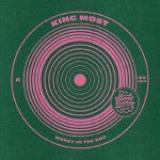
Earlier in the year, Washington, D.C-based Sol Power Allstars launched the Sweet Breeze Sound imprint, seemingly as a vehicle for oddball re-edits and nostalgic, sample-rich productions. Handling side A on release number three in San Fran's King Most, who crafts a hybrid 80s electro/proto-house jam out of echoing electronics, bobdypopping beats, and all manner of effects-laden samples (including a wealth from InDeep classic 'Last Night a DJ Saved My Life' ). Over on side B, Sol Power's own Marc Meistro takes over, laying down his own sparse, lo-fi, analogue-rich tribute to electro-era synth disco that once again nods to a variety of cult classics from the early 1980s.
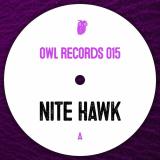
Nite Hawk is a new name to us, but one we'll be keeping an ear on, just off the back of this new EP on York-based John Deevechis's The Owl label. The opener plays with a classic rhythm and serves it up with a bleeping synth sequence that will also be familiar, while the rickety drums unfold in off-grid patterns. It's a great start before 'Shake Ya Rump' brings machine-made disco with sugary synths and playful vocals over funky basslines, then 'Be Together' closes with another cold analogue groove that ramps up the pressure and is the sort of tasteful and timeless crowd pleaser you will be playing forever.
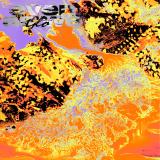
For their first release, it was pretty obvious for Hypnophone to give a new life to an all-time favorite but forgotten project : GLO. Released in 1995 on CD’s only, « Even As We » is the first and last album of the duo, composed of Stephan Lewry and Gilli Smyth, both ex-members of the legendary rock band GONG and pioneers of psychedelic music.
This double LP, carefully handcrafted and redesigned, is the result of a lovely 2 years collaboration between Hypnophone and Stephan. A cosmic, unique masterpiece, who also features a new thirteen minutes track, specially produced by Stephan while remastering the album in 2025. In the dear memory of Gilli ♡
Note: Includes two printed inner sleeves, transparent red vinyl and an A5 insert.
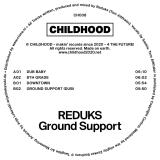
After a two-year pause, CHILDHOOD returns with a new 12", GROUND SUPPORT by REDUKS The release introduces REDUKS, a young Munich-based artist whose path crossed with Muallem through Blitz. What began as a working relationship quickly turned into a shared musical understanding. Despite the difference in generation, both are connected by a similar sensitivity: a deep respect for the past, an awareness of the present, and a clear instinct for what lies ahead. Sharing a studio, this connection naturally translated into music. REDUKS brings a rare combination of emotional intuition and technical precision -- a producer with a deep-rooted understanding of club music, yet unbound by formula. The result is a collection of four dub house cuts, each shaped for a different moment across the night. Timeless in character, the tracks lean into subtlety and function -- built for the dance floor, but never confined to it. This record also marks the beginning as the first release of an ongoing series.
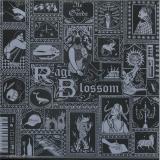
Born Bad Records knew exactly what it was doing when it signed this Nantes-based trio, whose sharply defined sound and raw authenticity stand out. With Rage Blossom, Île de Garde unveils an EP charged with palpable tension, somewhere between dark pop and psycho-wave. A catalogue of modern misdeeds, a David Lynch-like backdrop where Sylvia Plath’s poetry might cross paths with the controlled excesses of Fever Ray.
The EP opens with “Fear The Sun,” its Mike Oldfield-esque soundscapes plunging us into an apocalyptic and unsettling world. “Homicide Volontaire” follows with meticulous narration, a technical exercise evoking the anger and defiant lucidity of a Virginie Despentes. The hallucinatory hit “To Death” snaps like an anthem to collective dancing in the face of the inevitable. Since we’re going to die, let’s dance! On the B-side, “Ageless Woman” weaves together a half-mythological, half-mysterious text, carried by haunting backing vocals. “Birthday Girl,” featuring Kuntessa, radiates an ironic and joyful riot-grrrl energy, an uninhibited celebration of women’s liberation. Finally, “Boy,” a small post-punk jewel, closes the EP with an ending as surprising as it is delicate.
The group’s genius also lies in the complementarity of its musicians. Morgane Poulain anchors the drums with a dynamic that is both subtle and narrative, airy yet jagged. Cécile Aurégan, the architect behind a multitude of synths, builds powerful sonic landscapes, layer upon layer. Klara Coudrais, the band’s poetic figurehead, elevates her texts with a rich and plural vocal palette, giving life to several characters who vibrate with intensity. The band’s writing, hovering between darkness and light, echoes a kind of visceral poetry, exploring the seasons of the soul with authenticity and force.
With this EP, Île de Garde establishes itself as a band to watch closely, capable of translating on stage both the raw energy and the fine craftsmanship that define their music. An immersive journey, full of tension, urgency, beauty, and electric flashes.
Île de Garde, a Nantes-based trio with sharply drawn sonic contours and raw authenticity, unleashes its full arsenal on Rage Blossom, an EP radiating palpable tension between dark pop and psycho-wave. A catalogue of modern misdeeds, a David Lynch-like setting where Sylvia Plath’s poetry would meet the controlled excesses of Fever Ray. An immersive journey of tension, urgency, beauty, and electric sparks.
Opening track “Fear The Sun” plunges us into an apocalyptic and unsettling landscape. “Homicide Volontaire” continues with meticulous storytelling, a crime vignette evoking anger and the fierce lucidity summoned by a situation with no way out. The hallucinatory trance of “To Death” snaps like an anthem to collective dance in the face of the inevitable. Since we are going to die, let’s dance! “Ageless Woman” blends a half-mythological, half-mysterious text, carried by hypnotic backing vocals. “Birthday Girl,” featuring Kuntessa, releases an ironic and joyful riot-grrrl spirit, an uninhibited celebration of feminine liberation. Finally, “Boy,” a small post-punk case study, closes the EP with a simple, sensitive truth.
The three musicians propel and relay one another in this breathless race. Morgane Poulain drives the drums with a dynamic that is both subtle and narrative, airy yet staccato. Cécile Aurégan, architect of multiple synths, builds powerful sonic landscapes, layer after layer. Klara Coudrais, the storyteller, elevates her texts with a rich and multifaceted vocal palette, giving life to all their characters, both mythical and ordinary. The band’s writing, between darkness and light, proclaims a visceral poetry, exploring the seasons of the soul with authenticity and strength.
- A1: Slap, Whack And Blow
- A2: Duck Strut
- A3: The Needle Nose
- A4: Wiretap
- A5: Wigged Out
- A6: Nuclear Wind I
- B1: Kaye Okay
- B2: Siren's Sea
- B3: Midnight Heist
- B4: Nuclear Wind Ii
- B5: Planet Nine
The funky, atmospheric, evocative and sometimes downright weird output of companies such as DeWolfe, Cavendish, Burton and the ubiquitous KPM have always been a guiding inspiration for ATA Records, as evidenced in the spooky soundtrack works of The Sorcerers, the big band brass of The Yorkshire Film & Television Orchestra and even in the soul-jazz of The Lewis Express ('Theme From The Watcher).
Everything released on ATA is written and guided by the label heads Neil Innes and Pete Williams, who frequently dip their toes in the Library pond while working on other projects. These occasional one-off tracks have accumulated over the past few years and have now found a home on the first volume of an ongoing series : The Library Archive
Recorded using the same techniques and equipment used to create the now legendary catalogues of music sold to the film and television industry of the 60's & 70's, The Library Archive could easily sit alongside the plain minimalist covers of KPM or Telesound.
The fierce Brass of 'Whack, Slap & Blow' and 'Kaye Okay' could both be a Keith Mansfield cut, acting as a theme tune to a glamorous saturday night tv show circa 1972. 'Duck Strut' is a cheeky slice of Bass driven Brit-funk, Muted horns and flute adding an element of Quincy Jones amongst the grooving drums and percussion. 'The Needle Nose', 'Midnight Heist' and 'Wiretap' are amongst the more cinematic tracks on the album. Moody and atmospheric, they conjure up images of dark alleys, shadowy figures and dead letter drops. 'Wigged out' channels the wonky organ weirdness of Italian library legends I Marc 4 while 'Nuclear Wind I & II' use Moog and Mellotron as electronic counterpoint to ethereal voices. 'Siren's sea's' acoustic interlude conjures up images of distant clifftops, gossamer vocals enticing you onto the rocks before album closer 'Planet Nine' traverses the cosmos.