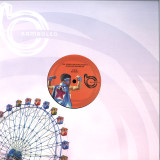
Wa Wu We is the artist alias and vinyl only label from Sebastian Mullaert. This is the fourth chapter, crafted in the Swedish woods. The rst 6 episodes of the Wa Wu We label will form a collection of records, united by their signi cant and unique cover art and the way they’ve been recorded; this being the focus on improvising expression, resting in meditation and the nature surrounding Sebastian’s studio. All 6 of these episodes will be released as vinyl only and will be limited to 500 copies each.
THE STORY Wa... the Wu are We? Let the question appear, and dissolve in the dance! Wa Wu We is back with the third vinyl release, and like before its vinyl only. Deep jams nurtured by the Swedish woods, the home of Sebastian Mullaert.
Cerca:sebastian d
- A1: Kirilik - The Beginning Of Everything
- A2: John Beltran - The Morning Moves The Sun
- B1: Sebastian Mullaert - In The Mist We Appeared
- B2: Jakojako - Deine Augen
- C1: The 7Th Plain - For Cocteaux And Budd
- C2: Len Faki - Find Your Way
- D1: The Persuader - Remembering Water Pearls
- D2: Ralf Hildenbeutel - April
- E1: Moritz Von Oswald - Silence
- E2: Kangding Ray - Treize
- F1: Tin Man - Lovely Acid
- F2: Antigone - Indiana Police
In a year of global shift and continuous changes, Figure takes a leap of faith and extends its catalog by introducing a completely new compilation series to the label. The Open Space series will feature forward-thinking Electronica and Ambient from a well-curated list of seasoned producers. Compositions that invite to let the mind wander, weaving stories, and conjuring up emotions.
While these softer genres have already played a respected role in former Figure releases, for the first time in the label’s history they are now being given the center stage. Volume 1 sets the mark by providing producers whom we’ve come to love for their dancefloor-centric output with an open space to showcase another side of their skillset. Open Space remains open to various strains of Electronica and Ambient, ranging from the introspective synth-monologues (Sebastian Muellaert / Kirilik), drony dub-experimentalism (Moritz Von Oswald), alive and breathing takes on the genre (JakoJako), to singular compositions which slowly build their own lasting narrative and thus develop a genuine, emotive quality (John Beltran / Tin Man ). Len Faki himself proves the artistic breadth of Open Space, sharing a powerful and conscious message through a rare and delicate moment of him exploring the form of spoken words. Other contributions include Jesper Dahlbäck as The Persuader, Luke Slater as 7th Plain, or Ralf Hildenbeutel - a former production partner of Sven Väth and now a successful composer of film soundtracks. Unfairly reduced to background music, it is not the kind of Ambient featured on the Open Space series. It is an engaging body of music, bonded by its contemplative, enveloping nature. Open Space bands together an array of fascinatingly skilled producers, finally given the opportunity to present some of their most creative and emotional material yet to date.
Simon Popp and Sebastian Wolfgruber aka Fazer Drums team up with Tunisian producer Azu Tiwaline for the second part of their hybrid Sound Measures series.
On the A side, the Munich-based duo's pure and raw drumming gets more melodic than on the first edition. With interwoven, polyrhythmic grooves they explore the concept of counterpoint, drawing inspiration from Gamelan, Afro-Cuban and Swing.
That's material made in heaven for Azu Tiwaline, who made sizeable waves this year with her Magnetic Service EP on Bristol's Livity Sound.
In her rework, she kept the focus on the drums, boiling down and rearranging the different parts into a 7-minute beast of a tune. Layers of her signature dubbed-out electronics add to the mystic aura, while maintaining the dynamics and musicality of the recordings.
- A1: My Number (Hot Chip Remix)
- A2: Mountain At My Gates (Alex Metric Remix)
- A3: Into The Surf (Hot Since 82 Remix)
- B1: The Runner (Rufus Du Sol Remix)
- B2: In Degrees (Purple Disco Machine Remix)
- B3: Mountain At My Gates (Sebastian Remix)
- B4: Late Night (Solomun Remix)
- C1: Inhaler (Tom Vek Remix)
- C2: What Went Down (Haxan Cloak Remix)
- C3: Wash Off (Kuu Remix)
- C4: Hummer (Surkin Remix)
- D1: Mountain At My Gates (Jono Ma Remix)
- D2: What Went Down (Bandwidth Remix)
- D3: Miami (Lissvik Remix)
- D4: Night Swimmers (Mura Masa Edit)
- E1: My Number (Totally Enormous Extinct Dinosaurs Remix - Extended)
- E2: Give It All (Lindstrom Remix)
- E3: Dreaming Of (Joe Corti Remix)
- F1: Balloons (Kieran Hebden Version)
- F2: Spanish Sahara (Mount Kimbie Remix)
- F3: Late Night (Koreless Remix)
From their early days hosting parties in Oxford through to the huge success of their two-part ‘Everything Not Saved Will Be Lost’ album, Foals have consistently explored their interest in dance and electronica. Now the band chart the most essential remixes from their career so far as they share the new remix package ‘Collected Reworks Vol 1’.
The tracks featured on ‘Collected Reworks’, are a compilation from an eclectic range of artists who have uncovered new angles to Foals’ discography. It includes one of their earliest remixes, from Ewan Pearson who blends Balearic bliss into ‘Olympic Airways’, as well as Solumun’s huge version of ‘Late Night’, which has been viewed over 50 million times at YouTube. Another standout moment is Hot Chip’s inventive interpretation of ‘My Number’.
‘Collected Reworks Vol. 1’ has been launched with Hot Since 82’s brand new remix of ‘Into The Surf’. The tech house producer / DJ behind ‘Buggin’’ and ‘Restless’ subverts the track from its original desolate beauty into something fresh and invigorating. The relentless driving beat maximises its energy throughout its eight minute duration, while its progressive leanings are given some unexpected throwback flavour with ‘80s style sax.
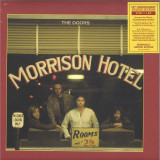
The Doors returned to their roots and were reborn a rock ’n’ roll band on Morrison Hotel, the group’s fifth studio album. Completed in only a few weeks and released in February 1970, the hard-charging album took its name from the Skid Row hotel in downtown Los Angeles that’s featured in the iconic cover photo taken by Henry Diltz.
Morrison Hotel: 50th Anniversary Deluxe Edition includes the original album newly remastered by The Doors’ longtime engineer and mixer Bruce Botnick, plus a bonus disc of unreleased studio outtakes, and the original album on 180-gram virgin vinyl. The music will also be available from digital and streaming services the same day.
For this new collection, the original album has been expanded with more than an hour of unreleased recordings taken from the sessions for Morrison Hotel. These 19 outtakes transport listeners into the studio with Jim Morrison, John Densmore, Robby Krieger, and Ray Manzarek for an unprecedented perspective on the making of the album. Botnick says: “There are many takes, different arrangements, false starts, and insightful studio conversations between the band – who were in the studio – and producer Paul Rothchild – who was in the control room. It’s like being a fly on the wall.”
Several of these unheard recordings spotlight how Queen Of The Highway and Roadhouse Blues evolved across multiple sessions. It’s especially interesting to hear how the band played with different bass players on Roadhouse Blues. Early versions include Harvey Brooks, who played on the band’s previous album, The Soft Parade. Later takes feature guitar legend Lonnie Mack on bass along with The Lovin’ Spoonful’s John Sebastian on harmonica who, due to contractual restrictions at the time, had to be credited as G. Puglese.
Among the treasure trove of unreleased outtakes are also rough versions of Morrison Hotel tracks Peace Frog and Blue Sunday, as well as The Doors rarity I Will Never Be Untrue. The collection also captures some incredible session outtakes of the band jamming on cover versions of the Motown classic Money (That’s What I Want) and B.B. King’s Rock Me.
For years, Frente Cumbiero has served as the torchbearer of a new wave of experimental exploration in the diverse modern-day cumbia canvas. Led by Mario Galeano Toro, a Colombian native and accomplished veteran of Bogotá's rich music scene, the group first connected with listeners outside of South America via their head-exploding 2010 debut on Names You Can Trust. "Pitchito" would become a cult favourite, a catalyst for the Brooklyn-based label, and soon after a bonafide rarity. Those beginnings of Frente Cumbiero focused on an honorary recognition of the massive musical impact that the many formations of cumbia have had over the decades within Colombia. Subgenres such as gaita, porro, vallenato, and caracolito, to name just a handful, have all played their part within the evolution of the country's tropical music lineage. That deep-digging determination coupled with a truly unique and talented musicianship has informed Frente's music, some of the most forward-thinking and reverential examples of the current tropical scene. It has led to some incredible opportunities and collaborations in Europe, Asia and the States, including genre-defying recordings with London's Mad Professor and Japan's Minyo Crusaders.
Still, Galeano Toro's assemblies with Frente Cumbiero have been scarce amongst his other exploits, splitting time as player and producer in other ground breaking projects like Ondatropica and Los Pirañas over the recent years. After three 45 single releases together with NYCT, the time away has left everybody wanting for more. Now, reassembled and seasoned with years of touring and gigging in a multitude of projects, the group's current quartet of Galeano Toro (keys and synths), Pedro Ojeda (timbales and percussion), Marco Fajardo (tenor sax) and Sebastián Rozo (bombardino) is a stripped down powerhouse of unadulterated psico-tropi swing, a beautiful Colombian musical stew, incorporating a host of flavors from the melting pots of the Pacific, Caribbean and Atlantic pathways. The final result is of course quite unclassifiable, simply a new breed of good music and a dancefloor delight.
Rose Colour Vinyl[19,96 €]
Repress
MARA is the debutalbum of Munich-based jazz group FAZER. The young musicians combine African and Latin rhythms with dubby basslines and melancholic melodies. The unusual lineup with two drummers (Simon Popp, Sebastian Wolfgruber), bass (Martin Brugger), guitar (Paul Brändle) and trumpet (Matthias Lindermayr) leaves an open space for unfettered improvisation. Through the concept of repetition and finely measured dynamics, Fazer create a drawing energy that can be felt directly at their live shows and has been captured perfecty on this record.
A stunning 17-minute-drumming-trip from feathery spheres through bold grooves to a dense thundery finish by Simon Popp and Sebastian Wolfgruber, the two drummers known for channeling World Music, Afrobeat and Jazz drumming in solo projects and with Munich-based Jazz quintet Fazer.
The B-side holds a rework by fellow Munich producers Zenker Brothers. The Ilian Tape heads and notorious audiophiles put their drum machines aside and weaved the recordings with layers of mystic synths into a tingling organic IDM tune.
Tobias., Neel and Sebastian Muellaert as Wa Wu We collaborate with the Konstrukt label for their 12th release. Each producer with a unique and refreshing approach towards electronic music.
Tobias. is up first with a beautiful track that balances on the border of rationality and emotion. His abstract sonic narrative discloses through tightly organized rhythms and noisy percussion. Neel follows up with a cinematic composition that submerges us into otherworldly oddities that guides us slowly through his composition. WaWuWe's formally known as Sebastian Mullaert relieves the tension. The Swedish composer made a 13-minute long stirring and relaxing B-side track, blessing us with soothing energy for the mind, body and soul.
Holy Fuck have today announced details of new album 'Deleter', which will be released on January 17th and is further previewed with the video for acclaimed latest single 'Luxe' (ft. Alexis Taylor). Having just concluded a US tour alongside Hot Chip, the seminal Canadian band will play a selection of European headline dates later this month (with a London show at Moth Club on October 23rd selling out immediately).
Arriving at a moment where attention spans are shot and anxieties are going into overdrive, 'Deleter', Holy Fuck’s fifth studio LP, is a defiantly full-bodied affair. Polyrhythmic and pleasure- focused, 'Deleter' sees Brian Borcherdt, Graham Walsh, Matt Schulz, and Matt “Punchy” McQuaid utilises their signature sound - seamlessly fusing the gauzy drive of krautrock and deep house’s dreamy ineffability, expertly blending purring motorik percussion with the sort of fuggy synthetic fizz and tang they are renowned for.
From the thrusting minimalism of opener ‘Luxe’ through to the triumphant chug of closing track ‘Ruby’, via club-ready rollocker ‘Free Gloss’ and the cosmic clatter of ‘San Sebastian’, Deleter is a record that joins the Holy Fuck dots within their widescreen, technicolour, crescendo- heavy sound.
"3x12" - Vinly Only.
The second instalment of minimood's multidisciplinary fusion series features Die Wilde Jagd with an extensive rework of the neo-romantic ’Morgenrot’ as well as a vast array of diverse remixes by Ancient Methods, CV313, Luigi Tozzi, Roman Flügel, Rude 66, Steve Bug, The KVB, Vactrol Park, and Variant. This gatefold 3x12" vinyl only release is visually enhanced with intricate hand-drawn artwork including inlay by Dusseldorf based artist Susanne Giring. Written and recorded by Sebastian Lee Philipp with his Uhrwald Orange studio collaborator Ralf Beck, ’Morgenrot’ originally appeared on Die Wilde Jagd's debut album in 2015.
For this release, Philipp and Beck re-visited the song: the ensuing ‘Fangschuss Version' enjoys an augmented arrangement, additional instrumentation and a haunting guest vocal by New- Zealand based singer Nina Siegler. In Philipp’s words, the 'Fangschuss Version' constitutes “a venture to capture the spirit that has been guiding this fusion release - a desire to explore the concepts of friendship, time, distance and memory. An attempt to unveil fragments of the unseen and to reveal the surge of a distant remembrance in an embracive listening experience." 'Morgenrot' subsequently gets a highly varied remix treatment by a range of carefully selected artists.
While Vactrol Park navigate the original audio material into beautiful ambient territory, Ancient Methods showcase an epic masterpiece of enchanting medieval-vibed techno. The KVB turn the track into a dreamy cold-wave trip and Rude 66 dives into a dark, primetime, anthemic dimension. For Roman Flügel, it’s a slow, organic, starry-eyed approach and Luigi Tozzi transforms 'Morgenrot' into hypnotic & loopy, minimal, deep techno. The rework by Steve Bug plays with the original's melody and a danceable kosmische-infused house cut emerges.
The final two remixes are both crafted by legendary Echospace Detroit mastermind Stephen Hitchell: absorbing deep trips into mesmerizing dubtechno by CV313 and into foggy lo-fi ambient by Variant.
Neverdogs welcome Ray Mono and GruuvElement’s to Bamboleo Records this October to deliver their split EP entitled ‘Unsolved Smoker’.
A regular fixture amongst some of the world’s biggest line-ups, from The BPM Festival to Sunwaves and beyond, whilst releasing on notable imprints including Roush and Deeperfect, Italian duo Neverdogs added the title of label owners to their resume to open 2019, releasing material to date from Roberto Surace, Sebastian Ledher, Calvin Clarke, Manuel De Lorenzi, Matteo Gatti, Cosmin Horatiu and themselves via their Bamboleo Records imprint. For the label’s seventh release, the pairing now welcome two new names to the label in the form of rising UK talent Ray Mono, who arrives fresh from appearances on META and Moxy Muzik, and ever-impressing London based duo GruuvElement’s.
Ray Mono opens the A-side as he works bumping kicks, distorted vocal snippets and hazy pads amongst lead track ‘Mandala’, whilst ‘Unsolved’ sees the introduction of rolling percussion, low-slung grooves and snaking bleeps throughout. On the flip, GruuvElement’s introduce off-kilter synth patterns and sharp drum licks with ‘Smoker’, before rounding out the EP with ‘Shiny’, a stripped back and up-front cut fusing organic production licks and ever-evolving electronic melodies in slick fashion.
This four-track-EP celebrates the spirit out of which Seilscheibenpfeiler was born. It contains two unreleased 1994 productions by Sebastian Szary’s Fundamental Knowledge project, which started the label back in the day. They are complemented with present day reworks by Fadi Mohem and Skeemask, breathing new life into these 25 years old but far from outdated tracks by adding a little extra punch through modern means of production.
Fadi and Skeemask deliberately don’t apply any specific modern elements to Szary’s vintage tracks, instead they enhance their classic Minimal-meets-Hardcore-meets-Acid feel. It’s a transmission from a Golden Techno Age where all was one, capturing the sweaty, hard, yet light footed sound of post-wall Berlin, with all its associations from Tresor to Love Parade.
„1994 - 2“ sounds hypnotic and airy, while rumbling on the lower end. What a perfect opportunity for Skeemask to flesh out the track with his hefty trademark breakbeats! Fadi Mohem revamps the acidic „1994 - 21“ with equal respect and efficiency, providing the kick drum power needed for big soundsystems.
If you don’t look at the titles, it may at first be hard to discern which is which, what’s past and what’s present – a fact that honors both versions new and old.
Renate Schallplatten's eighth release comes from Michal Zietara with Olympia Europa. The four-track EP, the Polish-born, Bavaria-raised, Berlin-based Renate resident's solo debut features three originals plus a remix from Ian Pooley.
Opener "Mr. Joy" is a late-night uptempo jam with a punchy bassline and warm pads. Chopped vocal samples come to the fore around the breakdown, raising the tension for maximum euphoria upon the beats' return. Ian Pooley's flowing remix on the A2 is in the signature '90s filter house style. The vocals lead the way, adding some warmth to a rather stripped-back affair. It's another peak-time cut that makes you want to close your eyes and move to the music. The punchy beats and upbeat melodies return on "Euro Robot," this time paired with intricate drums, fluttering vocals, and high-pitched keys. Closer "Pink Seal" is more downtempo and pensive, centered around coherent vocals and smooth pads. The beats feature less prominently, even fading away after a brief midsection. It's a cerebral track; a moment of self-reflection in an otherwise upbeat, high-energy EP.
The EP is Renate Schallplatten's second of 2019, following Longhair's label debut. Earlier EPs have landed from Moscoman, Sebastian Voigt, Wareika, and more.
Cosmo Vitelli hasn’t slept since 1973. Instead, he’s replaced slumber with the tireless exploration of electronic music, sharing his finds as an accomplished DJ and label manager as well as an esteemed producer, with heaps of records, remixes and edits under his belt. With his upcoming two-part LP on Malka Tuti, Cosmo brings forward his more diverse and somehow mature musical side, combining elements of post-punk, krautrock, electronica and pop on this first of 2 four-track records. The songs on the LP transcend style and genre. They manage to hold and playfully sustain an idea that echoes throughout them all - a musical “saying” as well as a personal life experience, and they reflect Cosmo’s prolific studio work of the past 2 years since he moved to Berlin. On the opening song A Brand New City he collaborates with longtime friend Julienne Dessagne (aka Fantastic Twins). Dessagne's vocals cut through the quirky and addictive percussion groove and synth sequence, leading to a a strong emotional melancholic melodic catharsis. On the following two songs Groupe Surdose & Die Alraune we find Cosmo collaborating with Sebastian Lee Philipp (of Die Wilde Jagd fame) to show his more post-rock/krautrock side. Groupe Surdose is an instant classic slow burning dance floor Krautrock tune while in Die Alruane we find poetic German lyrics sung by Lee-Philipp on top of organic grooves, guitars and an epic Saxophone line that together create a distinctive highlight for the record. The closing track Kuldip is the curve ball of them all, sealing the first part of his album with a Mediterranean mid tempo dance tune for the selectors and the middle-eastern inspired electro aficionados.
Next on Berlin's Renate Schallplatten is Longhair, a project formed by Marko Pelaic and Benedikt Bogenberger, two residents of Berlin's Wilde Renate. Mangostine, a four-tracker, follows last year's 12' on Dutch label Bordello A Parigi and a track contribution on House Is OK. It lands with an Axel Boman remix. The EP opens with the title track, its name drawn from the exotic fruit. Over a brooding bassline we hear light, fluttering melodies and uplifting keys, creating a peak-time roller that'll put smiles on faces across the dancefloor. 'Pans & Pots,' the A2, starts as a darker affair with trippy vocal samples and fluttering drum patterns, before warm keys and intricate instrumentation lift the mood to make for a fun-filled jam peak-hours feel-good jam. On the flip, Studio Barnhus head Axel Boman reworks the title track into a more subtle, deeper cut; the melodies remain but in the background, replaced at the forefront by tribal drums and abstract vocals. Closer 'Aquamen,' meanwhile, opens as a straight-edged techno cut with a heavy bassline and fluttering snares, before playful keys and intermittent sci-fi samples add some texture. It's another late-night jam that'll lift the energy without ever being too forceful. The release is Renate Schallplatten's first since 2017's various artist compilations. Earlier EPs have landed from Moscoman, Sebastian Voigt, Wareika, and more.
Das technisch versierte Naturtalent Leafcutter John (Planet Mu, Staubgold)präsentiert sich mit seinem siebten Album auf Border Community in Höchstform. "Yes! Come Parade With Us" ist ein kleines, perfektes, freudiges, utopisches Folk-Electronica-Kunstwerk, erstellt aus mehrschichtigen, gefühlvoll-modularen Synths, gelegentlichen Drum-Features (von Tom Skinner/Hello Skinny und Sebastian Rochford/Polar Bear) und Field Recordings, aufgenommen im Sommer 2017 auf einem 60-Meilen-Spaziergang entlang der Norfolk-Küste. Limitierte Formate.
Available on vinyl for the first time in 40 years, Outernational Sounds is proud to present a masterpiece from the Los Angeles jazz underground - Horace Tapscott's burning, spiritualised 1978 set, The Call.
One of the unsung giants of jazz music, the composer, bandleader, arranger, pianist and community activist Horace Tapscott was the undisputed keystone in the grassroots Los Angeles jazz scene. Throughout the 1960s and 1970s, his radical community arts and music formations the UGMA (Underground Musicians Association, later changed to UGMAA - Union of God's Musicians and Artists Ascension), and his protean big band, the Pan Afrikan Peoples Arkestra, were at the epicentre of music, culture and politics in the Los Angeles area.
From their 1960s base at the Watt's Happening Coffee House on 103rd St, to their decade-plus- long 1970s residency at the Immanuel United Church of Christ on 85thE St and Holmes Ave, Tapscott's groups were the beating heart of underground music in LA. Hundreds of musicians passed through and played their part. Major figures in LA jazz such as Arthur Blythe, Azar Lawrence, Jimmy Woods, John Carter, Bobby Bradford, Sonny Criss, Ndugu Chancler and dozens of others all paid dues or just got down with Tapscott, not to mention the core Arkestra regulars who have since become celebrated names - Nate Morgan, Jesse Sharps, Adele Sebastian, Dadisi Komolafe, Gary Bias, to mention only a few.
Tapscott and the Arkestra were down on the ground - playing fundraisers in park and street, organising teach-ins and workshops for young and old, mixing it with radical theatre groups, firebrand poets, political radicals, Black separatists, community groups and churches. They lived communally, and built an ark for the Black arts in the heart of the city. But as a result of this grassroots community focus and Tapscott's antipathy to the music industry, the Arkestra didn't record for nearly two decades. That only changed when long-time jazz fan Tom Albach started Nimbus Records. The label was initiated specifically in order to document Tapscott and his circle, and the first three records showcased Horace and the Arkestra.
The Call was put together from two studio sessions in April 1978, one at Hollywood Sage and Sound, one at United Western - the latter session had the addition of a string section, who can be heard on the moody Cal Massey composition 'Nakatini Suite' and Jesse Sharps' swinging modal trip, 'Peyote Song No. III', with its swirling soprano solo. In keeping with the communal nature of the Arkestra, the other two compositions, 'The Call' and 'Quagmire Manor at Five A.M.' are also by Arkestra members. But at the centre of the music is the builder of the Ark, the visionary whose original call to action started a movement whose legacy continues to this day - Horace Tapscott.
Heed The Call!
White Shadows In The South Seas is the title of a book written in 1919 by Frederick O'Brien as part of a trilogy he wrote based on his experiences living in the Pacific islands in the early part of the 20th century. His book was taken as the starting point for a film to be directed, initially, by Robert Flaherty (famous at the time for his groundbreaking documentary / fiction film Nanook Of The North) with W.S.Van Dyke as his support. The film, ultimately, apart from the title, had little to do with O'Brien's book and Flaherty left the film after a few months leaving Van Dyke to finish it.
I purchased O'Brien's book, along with many others, from Basement Books, a secondhand bookstore in Melbourne/Australia. Part of my 'Islomania' and on going fascination with all things Pacific. When I discovered there was a 1929 silent film based on the book I sought it out and started to present it as part of my 'Live Music/Silent films' repertoire. Tabu by Frederick Murnau, which coincidently also had Flaherty as co-director originally, was the first film I ever wrote / improvised a score for and presented as a live film/music performance. My repertoire extends to over 23 films now.
My eclectic and diverse musical and artistic interests extend into 'Hawaiian', 'Exotica', 'Ambient' and 'Electronic' Music. I have produced several volumes of so called 'Electronic, Ambient, Exotica' on CD and Vinyl, including Kiribati, Globe Notes, Rayon Hula ( on Vinyl, CD and digital format ) and most recently, New Globe Note on Vinyl and White Shadows In The South Seas on CD.
White Shadows In The South Seas features some of the music presented in my live screenings of the 1929 silent film.
The film is the story of Dr. Matthew Lloyd, an alcoholic doctor who is disgusted by the exploitation by white people of the natives on a Polynesian island. The natives dive for pearls, however, numerous accidents occur and one diver dies. In anger, Dr. Lloyd punches Sebastian, the employer. As revenge and to prevent further interruption of his activities, he tricks Dr. Lloyd onto a ship with a diseased crew (thinking they are ill) and his men rough him up and send the ship off into a storm. Dr. Lloyd survives and is washed ashore on an island where none of the natives have ever seen a white man before. Lloyd is rescued and ultimately falls in love with the chief's daughter, who is Taboo, hence Lloyd is prevented from pursuing his love for her. An incident occurs and a young boy is thought to have drowned but Lloyd is able to revive him, earning him points and permission with the chief's daughter. Lloyd begins to realise that the local islanders have no sense of the value of the black pearls which grow in abundance around their island and he starts to dive for them and collect them. One morning the white man Sebastian unexpectedly turns up on a scooner and starts to offer the islanders trade for their pearls. Llloyd tries to interrupt the encounter and is shot and dies. His wife and the islanders morn for his dead body and, symbolically, the passing of a way of life.
Mike Cooper plays - Electric and acoustic lap steel guitars / electronics / Zoom Sampletrack / Kaos Pad / Casio SK1 / Korg Drum Machine / Self Made Instruments.
It also features field recordings made on Pulau Ubin by Mike Cooper during a month as Artist In Residence for The Artist Village / Singapore.
I would like to acknowledge and thank Lawrence English (Room40 Records) for his assistance and encouragement with the original recordings and the CD version of White Shadows In The South Seas.
All music written and played by Mike Cooper PRS/MCPS - except Po Mahina (trad. Arr. Cooper) and Hilo Hanakahi (trad. Arr. Cooper)
Recorded and Mixed at the Steelworks in Rome 2012/2013.
A White Shadow In The South Seas
In February 2014 'A White Shadow In The South Seas' was the title of an audio-visual installation I made at the Teatro In Scatola in Rome, Italy, presented as part of a series of sound installations titled 'Visitazioni' produced by Proposte Sonore.
The essay below, as well as our collection of Hawaiian shirts, Exotica and Hawaiian vinyl records, was an inspiration for this installation.
'..the transformation and reconstitution of the souvenir commodity as an indigenous ethnic art form and a scarce relic of Hawai'i's romanticized past...' from - Clothing and Textile Reasearch Journal - From Kitsch to Chic by Marcia A. Morgado.
And....
Michael Thompson's Rubbish Theory (1979)
' ...a critical aspect of Western culture is the pre-disposition to see objects in terms of two overt categories: the transient and the durable. Objects identified as transient have finite life spans and lose value over time, whereas those identified as durable have infinite lives and over time increae in value....category assignments are arbitrary, but once assigned a category membership determines relative value. Fashion apparel-by defenition-is assigned to the transient category; paintings commonly are designated durables....how is it that transient objects.. ( e.g. Hawaiian shirts and vinyl records ) ..sometimes become durables.
Objects assigned to the rubbish category are largely invisible, have no value and, ideally, no life span. Fashion for example, no longer worn and relegated to the back of the wardrobe has fallen into the covert rubbish category. But rubbish can be rescued and transformed. Thompson says ' What I believe happens is a transient object gradually declining in value and in expected life span may slide across into rubbish. Here it exists in a timeless and valueless limbo where it has a chance to be re-discovered and be successfully transformed to a durable. Such transferes are radical: objects gradually slide from transcience to rubbish, but the transformation from rubbish to durable involves an all-or-nothing leap across two boundaries, that separating the worthless from the valuable and that between the covert and the overt. Things drift into obscurity but they leap into prominence.
The delightful consequence of this hypothesis is that in order to study the social control of value we must study rubbish.
The rubbish-to-durable transformation is accompanied by the development of highly specialized knowledge derived from the discovery of subtle variations and complex details that went unnoticed in the objects transient stage. The discoveries initiate renewed interest in the object and its market value begins to climb. As prices soar beyond the reach of ordinary people, the object becomes available only in high priced collectors' markets. Furthermore, as market values rise, the aesthetic value of the object undergoes a reassessment as well, and it becomes increasingly apparent that the objects intrinsic beauty has been overlooked. Ultimately the object is re -assigned as a durable and becomes recognized as a timeless classic.
Exotica, Ambience and Pacificism - A dialogue with Mike Cooper & Professor Philip Hayward Deputy Pro Vice Chancellor of Research Southern Cross University, Lismore, Australia.