Поиск:second apartment

Стили
Все
Keiji Haino / Jim O'Rourke / Oren Ambarchi - With pats on the head, just one too few is evil one too many is good that's all it is
 
7

The heavyweight trio of Keiji Haino, Jim O’Rourke and Oren Ambarchi return with their 12th and most epic release to date, the triple LP With pats on the head, just one too few is evil one too many is good that's all it is. Documenting the entirety of their final performance at the dearly departed Roppongi home of Tokyo underground institution SuperDeluxe in November 2018, the music spread across these six sides splits the difference between the guitar-bass-drums power trio moves and experiments with novel instrumentation that have defined the trio’s decade of working together. Containing some of the most delicate music the three have committed to wax since the gorgeous 12-string acoustic guitar and dulcimer tones of Only wanting to melt beautifully away is it a lack of contentment that stirs affection for those things said to be as of yet unseen (BT011), this wide-ranging release also offers up some of their most blistering free rock performances yet.

The side-long opening piece finds Haino on a single snare drum in duet with O’Rourke on unamplified electric guitar, playing in the lovely post-Bailey vein heard on his classic 90s recordings with Henry Kaiser and Mats Gustafsson. Spiky dissonance and ringing harmonics interweave with flowing melodic fragments as Haino single-mindedly explores the resonance of the snare like an untutored Han Bennink. On ‘Right brain, left brain; right, left; right wing, left wing. Just how many combinations can be made from these?’, O’Rourke moves to synth and electronics, joined by Ambarchi on drums, who at first focuses on sizzle cymbals before hypnotic cycles of gentle tom rhythms combine with electronic burbles and flutters to suggest a dream collaboration between Masahiko Togashi and Jean Schwarz. Ambarchi’s percussion is then joined by Haino on wandering, overblown flute, before the man in black switches back to the snare for a bizarre, stuttering drum duet.

For the first trio performance, Haino makes another new addition to his seemingly infinite catalogue of instruments, this time a homemade contraption he refers to as ‘Strings of Dubious Reputation’. Joined by O’Rourke on increasingly spaced-out electric guitar and Ambarchi on skittering percussion, Haino’s wonky, slack strings adds a definite ‘musique brut’ edge to this side-long performance, certainly one of the most enchantingly odd in the trio’s discography. When the group reconvene for the second set, spread out across the final three sides, they seem ready to breathe fire from the first instant. O’Rourke slashes distorted chords on the six-string bass, Ambarchi breaks into his signature irregular caveman thump, and Haino squeals and squawks on heavily delayed oboe before unleashing an overpowering electrical storm when he first picks up the guitar. For over half an hour, the trio pound out one of their most relentless performances, a constantly rearranging kaleidoscope of tortured fuzz guitar, insanely busy bass riffing and propulsive, tumbling drums. A hushed atmosphere initially reigns on the final long piece, given the mournful title ‘There are always things I wish to say but I can only convey them in this language August 6 August 9’. Haino’s clean guitar strumming calls up the shimmering tones of his PSF classic Affection, gradually building to a surging wall of sound, bass and drums lumbering through a roar of jet-engine guitar. Arriving in a deluxe trifold package with photos by Lasse Marhaug alongside inner sleeves with extensive live images, this epic release is perhaps the most remarkable document yet of this unique trio’s stamina and continuing inventiveness.

Сделать предзаказ19.01.2024

он должен быть опубликован на 19.01.2024

41,13
Shirley Hurt - Shirley Hurt

Shirley Hurt

Shirley Hurt

12inchMELO139LP
Melodic
08.12.2023

Temple, Bassey, MacLaine and now, Hurt; in a world of Shirleys, the name Sophia Ruby Katz has chosen for her music is perhaps prophetic as it captures her stunningly emotive vocal approach. And whilst Shirley Hurt might be the perfect nom de plume for the creative Toronto-based artist, it’s her self-titled debut album which positions her as protagonist of her own universe.

Traversing sonic landscapes, Shirley Hurt’s vocals ebb and flow like lyrical Ley lines tracking the contours of her own well-travelled map. By the age of 18, Hurt had travelled extensively, having lived in upwards of 20 different apartments and houses, as a result never really feeling “at home” anywhere. At this age was when Hurt found herself in New York, dipping her toes into various scenes and musical realms. The first and only place she ever felt at home, and a partial home-base for her, she travelled between Toronto and New York until the age of 26.When the project she was working on in New York reached a dead-end she returned West, moving in with musicians Harrison Forman (Hieronymus Harry, Zones) and Patrick Lefler (Roy, Possum). Being surrounded by their improvising at all hours, a new approach emerged. “Harrison is a virtuosic guitar player, and I hadn't picked up a guitar in any serious way since I was 16,” she says, “by osmosis I started playing again for fun.” Without agenda, the process grew organically from there.

Hurt and Forman decided to travel across the US and Canada in a trailer for half a year, with the entire album written in the final months of their trip. Hurt had been writing loose ideas here and there but felt blocked creatively. When the pair reached Berkley, they wound up house-sitting for a tuned-in friend who recommended she pray, in a very direct way, to remove the block. “I took her advice and to my surprise it worked. The album was conceptualized and finished within a couple of months.” Shapeshifting in tone and phrasing, Hurt’s music alchemizes the furthest corners of experimental indie folk, pop, and country into a singular sound with elegant unpredictability.

Whilst Shirley Hurt’s lyrical and structural ideas may have emerged on the road, the album was self-produced and recorded at Joseph Shabason (The War on Drugs)’s Aytche studio in Toronto’s West End. It was engineered by Nathan Vanderwielen and Chris Shannon (Bart), and Hurt enlisted collaborators Jason Bhattacharya, Nick Dourado, Patrick Lefler, and Harrison Forman to hone her vision. “I wasn’t sure what was going to happen with the songs until we returned to Toronto,” she recalls. “Joseph and I had been talking about working together after sending across some demos and Jason happened to recommend his studio at the exact same time, so everything came together naturally at that point.”

Whilst her most recent adventures may have seen Shirley Hurt bound for Texas as an official SXSW artist (hand-picked by Gorilla Vs Bear to perform at their own showcase), she currently resides in her native Canada, more specifically rural Ontario, close to friends and family, and is already working on her second album. The ties to lineage are interwoven in the fabric of the music. Hurt’s mother, artist Leala Hewak, instilled a lust for life and innate value of creativity in her from a young age as she explored the role of gallery owner, vintage jewellery show host, mid-century modern furniture expert, real estate agent, painter. Hurt’s father, a civil litigation lawyer and new-wave obsessed music lover with an extensive vinyl collection, introduced Hurt to a wide-range of artists at a young age such as Nina Hagen, Laurie Anderson, Tom Tom Club, and endless others.

In her video for ‘Problem Child’ Hurt’s grandmother walks her through a generationally revered pie-making process. One would be tempted to hear this, and other songs, as autobiographical. Yet, Hurt’s lyrics are rarely pulled from her relationships or personal history––at least not consciously. Rather, they arise from somewhere less tangible or defined. “Lyrics tend to come to me when I am doing non-musical things - washing dishes, brushing my dogs, walking to the grocery store. I have a lot of voice memos on my phone and half-filled notebooks and when I hear something, I have to stop what I'm doing to get the idea down. Usually it’s bits and pieces. It's rare a full song comes to me in one go, but it's great when they do, and those are often my favourites.”

Carving out a space of her own in an all-encompassing universe, Shirley Hurt is the introduction to a long artistic story, and if the journey so far is anything to go by, it will be stippled with evermore unpredictable chapters.

Сделать предзаказ08.12.2023

он должен быть опубликован на 08.12.2023

21,72
Mary Vision - Second Second Coming LP

Second Second Coming', Mary Vision’s sophomore LP, is a pastiche of many of Alex Fippinger’s influences, from Lou Reed to Spacemen 3. It is an effort to maximalize the minimal, and to create sound that is at once layered and clear. With that, the lyrics also touch on many subjects with an overarching general thesis: the exploration of self and culture under duress. The album allows you to tune into these explorations via different sonic sounds. You’ll find the pop sound in the first single, 'Fantasy (Ba Ba Ba)', for instance, right before you find yourself indulged in the psychedelic swirl of 'Love Drone'.
The writing experience was one initially based in home recordings. Alex Fippinger would manifest these recordings in his Brooklyn apartment and show them to the 7-piece band who always added a flavor not imagined by Alex himself. Yukary Morishima, who played bass on the record, is very prominent throughout. Aaron Peart found himself to be an integral piece to the writing as well, providing a specific flavor to the songs via lead guitar. Jack Dawson played keys for the first time on a Mary Vision record, adding a playful vibe that Mary Vision fans haven’t heard before. Guido Colzani added drums that are full, yet simple, giving the simple song structures a meaningful foundation. Max Braun held it down on the rhythm guitar, the crux of the songs. Mark Perro was a utility man, adding major guitar licks throughout as well as playing harmonium and providing next level backup vocals. Paul Blackwell engineered and produced this record to where it is now. From the opening chords of 'Window Pane' all the way to the come down of 'Riding Into the Sun', the album is a novel, an unforgettable night out on the town that you won’t forget. If a record could have a character-arc, 'Second Second Coming' would be the textbook example.

Сделать предзаказ13.10.2023

он должен быть опубликован на 13.10.2023

19,45
Sam Burton - Dear Departed LP

‘Dear Departed’, the second album from Sam Burton, arose from a time of rebirth. In the last few years, Burton basically started over. There’s a freedom in leaving everything behind, and Burton embarked on a wandering phase. He went and stayed at a friends’ family home in a rural region further north in California, where he holed up in a cabin and helped the grandmother farm to earn his keep. He crashed with friends all around Los Angeles, until he found himself a new gig and a new apartment of his own. Along the way, he was writing songs.

‘Dear Departed’ was produced by Jonathan Wilson (Angel Olsen, Father John Misty, Margo Price), and recorded at Wilson’s Topanga Canyon studio with some of the best studio players in LA.

Сделать предзаказ30.07.2023

он должен быть опубликован на 30.07.2023

23,32
Non Solo - Sarang EP

Non Solo

Sarang EP

12inchMM001
Masala Movement
16.06.2023

A tale of two Indians recorded in Cologne, Stockholm & Berlin.
Anurag Choudhary & Pawas Gupta are Non Solo.
Friends from more than two decades, these gentlemen decided to bring together their knowledge of music at Anurag's apartment in Stockholm back in 2008. Anurag’s life journey took him to Stockholm,
Sweden and Pawas’ culminated in Berlin, Germany; both cities a cultural and a musical powerhouse in their own right. Anurag, a professionally trained Flautist (bamboo Flute or “Bansuri”) in the traditional Hindustani Classical Music and Pawas, someone who has been exploring the realms of electronic music since 1997 as a DJ and releasing records under different monikers since 2007 decided to bring in their forces on a gloomy Stockholm afternoon.

You may ask, why Non Solo? Well, for obvious reasons!
In traditional Indian classical music you are trained as a soloist, mastering a single instrument and each instrumentalist has a deep understanding of the common syntax and rules of engagement that produce some brilliant duets. Both Anurag and Pawas have been pursuing their solo music careers and mastering their craft. However, ‘Non solo’ brought these two (soloists) together to collaborate on something that has not been done before in this way so two soloists coming together and forming NON SOLO.
It all started over a “Fika” which translates to “ a concept, a state of mind, an attitude and an important part of Swedish culture. Many Swedes consider that it is almost essential to make time for fika every day.
It means making time for friends and colleagues to share a cup of coffee (or tea) and a little something to eat” in Anurag’s favourite Cafe, not to forget his exquisite palette for Coffee. After a short brainstorming on how to create something new and fresh without it being too cliched and with the help of impeccably roasted coffee beans that were freshly brewed, the men decided to jam it out to see where this goes.

The first attempt resulted in the second track on the record “Svar” which means “note or tone” which was a one take track. Motivated and excited, they both decided to continue working on this project.
A few months later Anurag visited Pawas' previous Studio in Cologne to record, where Sarang, Tandav and Bhoop were born. Even though the creation had happened, they felt it wasn't the right time to put
it out there just yet. However, time flew by and after almost 14 years of waiting, the men came back to what they had created and decided it was now the time to release it.
The title track “Sarang” is inspired by raga Brindavani Sarang, where Anurag infuses the romantic and mystical flavour of this raga with his flute and Pawas brings his deep repertoire of electronic grooves and
atmospheric sounds to create an intelligent track that touches the listeners.
Svara is inspired by raga Hansadhwani (translated ‘svan song’ or ‘sound of swan’) is an endearing melange of Indian classical and house music.
Tandav is a high energy track based on a variation of Sarang raga. With Pawas’ in-depth knowledge of both Indian classical percussion and electronic music….. This track combines multiple rhythmic layers
manifesting in one exhilarating track that is filled with polyrhythmic cadence and interludes.
Bhoop is melancholy and nostalgia infused into one melodious offering inspired by raga Boopali laid over a bed of organic drums and bass.

The Feel:
Svara is falling in love, the feeling you get when you are walking after that first wonderful date, smile on your face and so much anticipation and joy in the heart for all that excitement that is about to come.
Sarang is being in love, when you start to experience all those emotions you didn’t know even existed inside your heart. It is a complete journey.
Bhoop has a tinge of melancholy, longing and missing each other , while Taandav is coming back together after a long time away from each other. Re-discovering each other and re-experiencing all those
emotions at an even deeper level and celebrating the togetherness, be it in friendship or relationship.
Non solo is first in its kind to bring the melodious/musical depth inspired by the raga traditions to the exhilarating rhythmic world of deep house and electronica.
Available now in your favourite digital store and on limited edition Vinyl with an exquisite typographic artwork by Shantanu Suman in collaboration with Masala Movement's Manoj Kurian!

нет на складе

Закажите сейчас, и мы закажем товар для вас у нашего поставщика.

12,56

Последний логин: 2 г. назад
2 BROTHERS ON THE 4TH FLOOR - 2 LP 2x12"

Dutch Eurodance group 2 Brothers On The 4th Floor was founded in 1990, when the two brothers Bobby and Martin Boer started experimenting with music in a small bedroom in their parental apartment on the 4th floor.

In 1995 and 1996, 2 Brothers on the 4th Floor further widened their success with the singles “Fly (Through the Starry Night)”, “Come Take My Hand” and “Fairytales”, changing their style to happy hardcore. These singles topped the charts in various European countries. At the end of 1996, the band released the single “There’s a Key” and their second studio album 2.

2 is available on vinyl for the first time as a limited edition of 1000 individually numbered copies on crystal clear vinyl. It includes remixes by Ferry Corsten and Charly Lownoise & Mental Theo.

нет на складе

Закажите сейчас, и мы закажем товар для вас у нашего поставщика.

38,24

Последний логин: 4 мес. назад
Sam Wilkes & Jacob Mann - Perform the Compositions of Sam Wilkes & Jacob Man LP

Of all the things that can and should and will be said of Sam Wilkes’ & Jacob Mann’s Perform the Compositions of Sam Wilkes & Jacob Mann, let’s begin at the beginning and acknowledge that it is an aptly named record indeed. An ideal collaborative effort (which is to say, greater than the sum of its parts), here we have two longtime friends, two luminaries of the New Weird Los Angeles — the experimental, genre-encompassing underground—who have, at last, devoted a full-length record to their signature musical admixture.

Since their meeting as USC music students (Wilkes studied bass, and Mann, jazz/piano), the two have, with a kind of ceaseless abandon, chased the music to the ends the earth — oftentimes quite literally; travel is a recurrent theme in Compositions’ track titles (Pre-board, Soft Landing, and Around the Horn), and the record’s second track, Jakarta, was sketched out in a hotel room in the city of the same name, where Wilkes and Mann were performing at a jazz festival in 2019. Having initially bonded over a mutual and abiding appreciation for the Soulquarians, the two have spent over a decade playing and traveling, together and separately, their styles coevolving all the while.

Across its thirteen tracks, Compositions captures the relaxed creative flow of two consummate musicians. Most of the record’s sessions (“four-to-five-day summits” in an apartment studio, occasioned by “blasts of inspiration”) began with casual improvisation, and, indeed, roughly half of the final material was composed in this manner: Wilkes and Mann squaring off, a Yamaha DX7 facing a Roland Juno 106, alternating leads, two co-pilots with no set course. And though the songs are polished to a shine, there are artifacts of the intimacy of these sessions. Yes It Is concludes with a snippet of just-intelligible studio chatter: “…A flat minor, then A major.” A figuring-it-out-as-we-go moment that briefly renders explicit the warmth, friendship, and creative freedom that is the album’s heart.

Сделать предзаказ21.04.2023

он должен быть опубликован на 21.04.2023

30,67
Pita & Friedl - Pita & Friedl LP 2x12"

Electronic music legend and head of Editions Mego, Peter Rehberg, teams up with zeitkratzer mastermind Reinhold Friedl. 3 side-long pieces melting electronic / contemporary avantgarde. Uncompromising.

When Peter "Pita" Rehberg and Reinhold Friedl first met each other, they did not like each other "at all," as Friedl emphasises with a hearty laugh. The two would however eventually bond over the years thanks to a mutual respect for each other's music. In the summer of 2021, they entered the studio together for the first time. Their joint album for Berlin's Karlrecords is a faithful document—no editing, no overdubs—of their improvisations during two recording sessions shortly before Rehberg's sudden and untimely passing on July 22nd of that year. The three pieces see Rehberg working with electronics and Friedl with his inside piano, proving that they had indeed managed to find a common ground—up to a point where it at times becomes hard to tell who plays what on this record.

Friedl ran into Rehberg in Zbigniew Karkowski's tiny Tokyo apartment in 1999 while organising the first edition of the Off-ICMC that was set to take place in the following year. "I came uninvited and slept a night at Zbigeniew's before Peter arrived and I had to move out," remembers Friedl, who ended up inviting the Mego founder to perform at the Off-ICMC even though he found it hard to relate to his music. "We had very different backgrounds: he came from industrial and I had roots in classical music and improv, a high-brow prick!" After having met several times at different concerts without ever really speaking to each other in the following years, a concert in Vienna in the late 2010s marked a turning point in their relationship (or lack thereof). Playing their sets back to back and loving every second of what the other was doing, the two finally clicked on musical level. "We met for dinner on each of the three following nights!," remembers Friedl.

The two would go on to become good friends, meeting regularly to discuss music and everything else while both were living in Vienna just a few minutes away from each other. Rehberg put out Friedl's collaboration with Eryck Abecassis, "Animal Électrique" on his Editions Mego label in 2020 and eventually they entered the studio twice for sessions that were completely improvised with no prior preparation. "Caciara," "Chiasso," and "Clamore"—named retrospectively after three Italian words for "noise"—capture the spontaneity of two artists who had always been outliers in their respective fields finding a common ground in sprawling dynamics and sonic intensity as well as enabling each other to expand their individual sound palettes. "Peter gave me cover," explains Friedl. "I had the feeling that I was able to do things I otherwise wouldn't play."

Сделать предзаказ03.03.2023

он должен быть опубликован на 03.03.2023

25,84
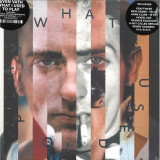
Sven Väth - What I Used To Play (12x12" boxset)
 
36

For this uniquely personal retrospective spread over twelve vinyl discs, Sven Väth takes us back to the early days of his DJ career. On What I Used To Play we meet great pioneers of electronic music, gifted percussionists, obscure wave bands, and innovative producers of a bygone 'new electronic' era. Rough beats and irresistible grooves from the identification stage of house, techno, and acid remind us not just how far electronic music has evolved over the past four decades, but how great it was to dance to EBM, techno, and house for the very first time.

If there is one protagonist of the electronic music scene who has remained curious, innovative and at the very cutting edge of music for over four decades, it's Sven Väth. His multi-layered artist albums and Sound of the Season mix compilations have been defining the genre for over two decades, and even today, he is constantly on the lookout for the next top tune to add to the highlights of his next set. At least, that's the case when he's not producing them himself as an artist or remixer. "Actually, it's always been part of my DNA to think ahead," and nothing had been further from his mind than looking back at his past, but when in spring of 2020 the international DJ circuit had to be scaled down to virtually zero, the 'restless traveler' suddenly had time. Time to stop and reflect on "how it actually was back then, at the very beginning of my career..."

"It was a great trip and with every track, beautiful memories came flooding back".
In the London apartment, he had just moved into, Sven has set up a "little music room", where he cocooned himself for several days, "to look way back for the first time and review my musical journey through the eighties, so to speak."

The interim result was six thematically oriented playlists with a grand total of 120 tracks from 'early 80s' to 'Balearic late 80s', together with excursions into afrobeat, European new wave, and EBM sounds and a few epochal techno/house tracks from the USA in between. From these 'Best of Sven Väth's favorites', the project What I Used To Play crystallized. Sven remembers how the Cocoon team reacted to his proposal: "They found the idea of making a compilation out of it MEGA from the beginning and everyone said 'Sven, go for it', but then, of course, the work really started, namely, to clear the rights and to get clean sounding masters of the up to 40-year-old tracks. There was also disappointment, of course. We couldn't clear certain titles because the rights holders in the USA had fallen out with each other or simply disappeared from the scene. In short, it wasn't easy, but now I can safely say we got the most important tracks."

Finally, after two years of research, curation, design, and administrative fine-tuning, the "little retrospective" from 1981 to 1990 is available. The exquisitely packaged, and three-kilo heavy box set is not only physically impressive, WIUTP is also the definitive record of Sven Väth's musical development. On each of the twenty-four sides of vinyl, you can trace track by track, what influenced him during which phase, and how he took off as a DJ from his parents' Queen's Pub straight into the spotlight at Dorian Gray. There and at Vogue (later OMEN), Sven became the style-defining player in the DJ booth that he still is today.


1981 - 1990: Future Sounds of Now

In the early eighties, the crowd in clubs like Vogue and Dorian Gray danced to what nowadays we call 'dance classics' - mainly disco, funk, soul, and chart pop. It was up to a new generation of DJs, including Sven Väth, the youngest protagonist in the Rhine-Main area at the time, to create their own club-ready music mix. Good new tracks and potential floor-fillers were rarities that had to be sought out and found, in order to prove oneself worthy.
Without MP3s, internet streaming, or other digital download possibilities, music didn't just gravitate to the DJ, instead, it had to be tracked down. In well-stocked record stores in Frankfurt and Wiesbaden or even in Amsterdam, London, or New York, Sven and friends sourced the material for countless magical nights. On WIUTP we can follow Sven's very personal journey through this wild, innovative era in which synth-pop, funk, hip-hop, and disco were successively replaced as 'club music' by house, techno, acid, and breakbeat. By the end of the decade, it was clear to see that these once exotic 'fringe' phenomena would soon become 'mass' phenomena.


Early 80s

Dirty Talk by the Italian-American duo Klein & M.B.O. represents the most innovative phase of the Italo-disco genre in the early eighties like no other track. Mario Boncaldo (I) and Tony Carrasco relied entirely on the original synthetic drum and percussion sounds of the Roland TR-808, coupled with the raunchy vocals of Rossana Casale and guitar accents of Davide Piatto. Of course, other tracks from this period were also influential in style, most notably Unit by Logic System, which worked as the perfect soundtrack to the laser lighting system at the legendary Dorian Gray club. With stomping beats and robotic rap interludes, Bostich by Yello also belongs on Sven's eternal playlist - after all, it caught the attention of Afrikaa Bambaataa, who invited the Swiss duo to perform at the Roxy in New York in 1983.


EBM Wave - Mid 80s

From today's point of view, the almost ten-minute-long, downtempo track Giant by Matt Johnson's band project The The, would probably not be considered an obvious club classic. However, a closer (re)listen reveals the rhythmic intricacies of the percussion overdubs by JG Thirlwell (aka Foetus) on Johnson's composition, and it becomes clear why this exceptional piece of music is one of Sven's absolute favorites. Other classics from this phase include Kaw-Liga by the mysterious The Residents, the hypnotic-synthetic Our Darkness by Anne Clark (and David Harrow), and last but not least, the somber, monotonous anthem Where Are You? by 16Bit, one of Sven Väth's projects together with Michael Münzing, Luca Anzilotti from 1986.


US House - Late 80s

You certainly can't talk about Chicago house without mentioning Frankie Knuckles. The resident DJ at the Warehouse not only gave the name to an entire genre, but also produced epochal floor fillers on the Trax label like the timeless Your Love, sung (and moaned) by Jamie Principle. Acid house protagonists Phuture also hail from Chicago, and on We Are Phuture (also released on Trax) we hear the chirping acid sounds of the legendary Roland TB-303 in full effect. Another featured classic is No UFO's by Detroit's Model 500 aka Juan Atkins, who is rightly considered the 'Godfather of Techno' even if the genre-defining track from 1985 still breathes with the spirit of hip-hop and electro from the first breakdance era.


Afrobeat

Le Serpent, by Algerian-born Abdelmadjid Guemguem, is a track that sounds completely different from everything else on WIUTP. Made in 1978, it's a monumental, rousing groove created without bass or synths, just with five congas! Even though Guem sadly passed away in 2021, his immortal, acoustic beats are understood all over the world and will continue to enrich many thousands of DJ sets for years to come. Another classic that not only Sven appreciates beyond measure is Hugh Masekela's Don't Go Lose it, Baby. In addition to being one of the most important jazz pioneers, the trumpeter and freedom fighter from Johannesburg was very experimental, integrating electronic sounds into his music in later years, in a similar vein to Miles Davis and Herbie Hancock. Dutch jazz pianist Jasper van't Hof's afrobeat project Pili Pili has also aged well. The trance-like, almost sixteen-minute-long track of the same name, manages to fill a whole side on the seventh of twelve vinyl discs in the WIUTP box.


UK-US-Euro - Late 80s

Time for a change of scene, in the truest sense of the word, and from a musical perspective, this section is like landing on another planet. First up is Andrew Weatherall's classic remix of Primal Scream's Loaded, featuring the iconic Peter Fonda sample (lifted from the 1966 biker film Wild Angels) that came to personify the mood triggered by the British Second Summer of Love in the late eighties: "We wanna be free to do what we wanna do, and we wanna get loaded...". This period also saw the emergence of M/A/R/R/S whose only single, 1987's Pump Up The Volume, became a club classic with support from DJ legend CJ Mackintosh. In this most eclectic of sections, we also encounter New York house and reggae producer Bobby Konders and his seminal Nervous Acid.


Balearic - Late 80s

Those who know him, know that Sven had already lost his heart to the 'magic island' of Ibiza as a teenager, so with that in mind, the WIUTP project couldn't end without a Balearic chapter. Inspired by Manuel Göttsching's E2-E4, the immortal, eponymously titled Sueño Latino belongs in there without question. Equally popular on the island was, and still is Break 4 Love by Raze, which thinking about it, would also fit perfectly into the house chapter. Last, but not least, there's an overdue reunion with Sven Väth himself, in his role as frontman of the successful Frankfurt trio OFF. Together with Michael Münzing and Luca Anzilotti (later of Snap!) this 'Organization For Fun' created the off-the-wall club hit Electric Salsa in 1986 which incidentally turned into an international chart smash, putting Sven in the enviable position of having to decide between pop stardom and a DJ career. Well, we all know how that decision turned out and the rest, as they say, is history. A not insignificant part of his story is What I Used To Play. Enjoy!

нет на складе

Закажите сейчас, и мы закажем товар для вас у нашего поставщика.

184,83

Последний логин: 8 мес. назад
tobi lou - Non-Perishable

Tobi Lou

Non-Perishable

12inchERE807
EMPIRE
06.01.2023

tobi lou cements a connection to countless listeners through his creativity. The Nigeria-born, Chicago-raised, and Los Angeles-based rapper and producer builds music meant to last with unpredictable flare and inimitable spirit. As the story goes, tobi lou flourished as a football player and baseball player until undergoing a dream-ending injury and jumping from a semi-pro career to the mic. A series of buzzing EPs—tobi lou and the Moon, tobi lou and The Loop, and tobi lou and The Juice—paved the way for his 2019 mixtape, Live on Ice. The latter included “I Was Sad Last Night I’m OK Now,” which racked up 42.9 million Spotify streams. Earning widespread acclaim, Pitchfork hailed 2020’s “Student Loans” as “a refreshing dose of joy.” Meanwhile, Lyrical Lemonade christened him, “Chicago’s Rising Superhero.” Along the way, he headlined shows coast-to-coast and shut down festival stages at Lollapalooza and beyond. He also collaborated with everyone from Smino to Dreezy. Throughout 2021, he assembled Non-Perishable out of his East Los Angeles apartment. He notably produced on every track, lending his touch to the entirety of the project. After amassing hundreds of millions of streams, packing shows, and receiving acclaim from GQ, W Magazine, and more, he architects an immersive experience on his second full-length project and the first installment of a 2022 trilogy, Non-Perishable.

Сделать предзаказ06.01.2023

он должен быть опубликован на 06.01.2023

21,81
Queen Of Jeans - Hiding In Place LP

Hiding in Place, the new EP from Philadelphia’s Queen of Jeans, opens with the springy pluck of a single note on electric guitar, like a ping from a satellite waiting for a response in a long, quiet expanse. Then, Miri Devora’s voice atop guitar and drums: “Hiding in place, conjure your face/Don’t wanna lose my mind.”

This is the title track’s invitation to a four-song study of loneliness, alienation, and the unraveling that comes with those states, but it’s also bookended with moments of levity: joy and romance burst through on second track “Why Hide,” a response of sorts to the title track’s cloistered anxiety. Devora wrote the songs at the start of the pandemic in March 2020 when she had just been laid off from her job of almost 10 years. Her partner, guitarist Mattie Glass, worked 11 hour shifts at a grocery store, so Devora was alone in their apartment for months on end. When they were written, these weren’t intended to be pandemic-specific.

Сделать предзаказ02.12.2022

он должен быть опубликован на 02.12.2022

25,17
THE RABBITS - THE RABBITS LP

The Rabbits

THE RABBITS LP

12inchMKY031
MESH-KEY
15.11.2022

Twisted and irreverent, The Rabbits combined ear-splitting guitar shrapnel with one of punk’s greatest-ever snot-nosed vocalists. With hints of PIL or Chrome, but beamed in from a parallel dimension and filtered through the warped lens of visionary loner Syoichi Miyazawa. First-ever vinyl release, fully remastered from the band’s original early ’80s cassette releases, and housed in a sturdy tip-on sleeve. Includes a double-sided, printed insert. Edition of 500

Singer-songwriter Syoichi Miyazawa’s tale is a confounding one.

He grew up in a small town in Yamagata Prefecture (in northern Japan), loved Dylan and The Beatles, and had very little exposure to, or interest in, underground music. And yet, shortly after 24-year-old Miyazawa arrived in Tokyo in 1978, he began performing solo shows at tiny clubs in the city, singing and playing guitar. His performances quicky devolved from brisk acoustic jaunts to lengthy, heavy dirges sung in a snot-nosed wail over a blown-out electric guitar detuned to produce a kind of sonic sludge.

At one of his earliest gigs, a mutual friend introduced him to Endo Michiro, who would soon become the legendary front man of Japanese punk icons The Stalin. It turned out Miyazawa and Endo had attended Yamagata University at the same time just a few years earlier, but hadn’t known each other at school. In Tokyo, they became fast friends, moved into the same apartment building, and for years were inseparable. Endo played guitar and drums on Miyazawa’s debut release, the “Christ Was Born in a Stable” flexi disc. But while Endo was social and outgoing, Miyazawa preferred to be alone, avoiding concerts unless he was performing.

Despite these antisocial tendencies, Miyazawa came to despise playing solo. In 1982, an eccentric high school student named Chika introduced herself at one of Miyazawa’s gigs, and Miyazawa asked if she’d play bass. She agreed and drafted two of her friends to play second guitar and drums. The Rabbits were born.

Miyazawa wrote the tunes, and had a clear vision for the group, but struggled to get the sound he wanted from the other members. His second guitarist was more of a fusion player, and Miyazawa took great pains to get him to tone down the shredding. The group quickly went through multiple line-up changes. Frustrated with the sound of their first proper recording (self-released as the “X1(x)” cassette), Miyazawa spent a full year mixing their second cassette, “Winter Songs,” on his own.

The hard work paid off — the sound of “Winter Songs” is striking, and unlike anything the band’s peers produced. There’s liberal use of delay on the vocals, giving the music a psychedelic feel, but the guitars are caustic, cutting through the mix like metal shrapnel. The rhythm section seems on the verge of teetering out of control throughout, an overdriven and pummeling current below abrasive slabs of guitar and vocals. Even at their most aggressive, though, The Rabbits had strong pop sensibilities, complete with cooing backing vocals and the occasional harmonica solo. Miyazawa delivers his borderline nonsensical lyrics with equal amounts of menace and gaiety, consistently riding that fine line as only a natural oddball can. At times, the band sounds like a distant cousin of PiL, Chrome or The Homosexuals, but beamed in from a parallel dimension and filtered through Miyazawa’s warped lens.

Although The Rabbits briskly sold all 500 copies of the "Winter Songs" tape, live audiences at the time seemed dumbfounded by the group, and would stare at them in silence. After two years together, The Rabbits called it quits in 1984.

When asked if any of the many legendary groups (Les Rallizes Desnudes, G.I.S.M., etc.) he shared stages with left an impression, Miyazawa recently revealed that he always left the venue as soon as he finished performing, so he never caught any of the other bands…

All of which is to say —

The Rabbits are one of the great punk bands of the early ’80s, but their leader had no interest in the punk scene and always thought he was making “normal” music. They rubbed shoulders with a slew of notable groups of the era, and their singer was best friends with arguably the most famous Japanese punk of all time, but Miyazawa shunned fraternization and purposefully distanced himself from his peers.

Could this be why so few underground music fans are familiar with the group, even in Japan? Why they seem to have been written out of the official history of Japanese punk? One can never know for sure, but Mesh-Key hopes to remedy this travesty by offering this compilation, the first-ever official LP by The Rabbits, to a new generation of punk and psychedelic music connoisseurs.
credits

Сделать предзаказ15.11.2022

он должен быть опубликован на 15.11.2022

27,10
Lee Tracy & Isaac Manning - Is it What You Want

As the sun sets on a quaint East Nashville house, a young man bares a piece of his soul. Facing the camera, sporting a silky suit jacket/shirt/slacks/fingerless gloves ensemble that announces "singer" before he's even opened his mouth, Lee Tracy Johnson settles onto his stage, the front yard. He sways to the dirge-like drum machine pulse of a synth-soaked slow jam, extends his arms as if gaining his balance, and croons in affecting, fragile earnest, "I need your love… oh baby…"

Dogs in the yard next door begin barking. A mysterious cardboard robot figure, beamed in from galaxies unknown and affixed to a tree, is less vocal. Lee doesn't acknowledge either's presence. He's busy feeling it, arms and hands gesticulating. His voice rises in falsetto over the now-quiet dogs, over the ambient noise from the street that seeps into the handheld camcorder's microphone, over the recording of his own voice played back from a boombox off-camera. After six minutes the single, continuous shot ends. In this intimate creative universe there are no re-takes. There are many more music videos to shoot, and as Lee later puts it, "The first time you do it is actually the best. Because you can never get that again. You expressing yourself from within."

"I Need Your Love" dates from a lost heyday. From some time in the '80s or early '90s, when Lee Tracy (as he was known in performance) and his music partner/producer/manager Isaac Manning committed hours upon hours of their sonic and visual ideas to tape. Embracing drum machines and synthesizers – electronics that made their personal futurism palpable – they recorded exclusively at home, live in a room into a simple cassette deck. Soul, funk, electro and new wave informed their songs, yet Lee and Isaac eschewed the confinement of conventional categories and genres, preferring to let experimentation guide them.

"Anytime somebody put out a new record they had the same instruments or the same sound," explains Isaac. "So I basically wanted to find something that's really gonna stand out away from all of the rest of 'em." Their ethos meant that every idea they came up with was at least worth trying: echoed out half-rapped exhortations over frantic techno-style beats, gospel synth soul, modal electro-funk, oddball pop reinterpretations, emo AOR balladry, nods to Prince and the Fat Boys, or arrangements that might collapse mid-song into a mess of arcade game-ish blips before rallying to reach the finish line. All of it conjoined by consistent tape hiss, and most vitally, Lee's chameleonic voice, which managed to wildly shape shift and still evoke something sincere – whether toggling between falsetto and tenor exalting Jesus's return, or punctuating a melismatic romantic adlib with a succinct, "We all know how it feels to be alone."

"People think we went to a studio," says Isaac derisively. "We never went to no studio. We didn't have the money to go to no studio! We did this stuff at home. I shot videos in my front yard with whatever we could to get things together." Sometimes Isaac would just put on an instrumental record, be it "Planet Rock" or "Don't Cry For Me Argentina" (from Evita), press "record," and let Lee improvise over it, yielding peculiar love songs, would-be patriotic anthems, or Elvis Presley or Marilyn Monroe tributes. Technical limitations and a lack of professional polish never dissuaded them. They believed they were onto something.

"That struggle," Isaac says, "made that sound sound good to me."

In the parlance of modern music criticism Lee and Isaac's dizzying DIY efforts would inevitably be described as "outsider." But "outsider" carries the burden of untold additional layers of meaning if you're Black and from the South, creating on a budget, and trying to get someone, anyone within the country music capital of the world to take your vision seriously. "What category should we put it in?" Isaac asks rhetorically. "I don't know. All I know is feeling. I ain't gonna name it nothing. It's music. If it grabs your soul and touch your heart that's what it basically is supposed to do."

=

Born in 1963, the baby boy of nine siblings, Lee Tracy spent his earliest years living amidst the shotgun houses on Nashville's south side. "We was poor, man!" he says, recalling the outhouse his family used for a bathroom and the blocks of ice they kept in the kitchen to chill perishables. "But I actually don't think I really realized I was in poverty until I got grown and started thinking about it." Lee's mom worked at the Holiday Inn; his dad did whatever he had to do, from selling fruit from a horse drawn cart to bootlegging. "We didn't have much," Lee continues, "but my mother and my father got us the things we needed, the clothes on our back." By the end of the decade with the city's urban renewal programs razing entire neighborhoods to accommodate construction of the Interstate, the family moved to Edgehill Projects. Lee remembers music and art as a constant source of inspiration for he and his brothers and sisters – especially after seeing the Jackson 5 perform on Ed Sullivan. "As a small child I just knew that was what I wanted to do."

His older brother Don began musically mentoring him, introducing Lee to a variety of instruments and sounds. "He would never play one particular type of music, like R&B," says Lee. "I was surrounded by jazz, hard rock and roll, easy listening, gospel, reggae, country music; I mean I was a sponge absorbing all of that." Lee taught himself to play drums by beating on cardboard boxes, gaining a rep around the way for his timekeeping, and his singing voice. Emulating his favorites, Earth Wind & Fire and Cameo, he formed groups with other kids with era-evocative band names like Concept and TNT Connection, and emerged as the leader of disciplined rehearsals. "I made them practice," says Lee. "We practiced and practiced and practiced. Because I wanted that perfection." By high school the most accomplished of these bands would take top prize in a prominent local talent show. It was a big moment for Lee, and he felt ready to take things to the next level. But his band-mates had other ideas.

"I don't know what happened," he says, still miffed at the memory. "It must have blew they mind after we won and people started showing notice, because it's like everybody quit! I was like, where the hell did everybody go?" Lee had always made a point of interrogating prospective musicians about their intentions before joining his groups: were they really serious or just looking for a way to pick up girls? Now he understood even more the importance of finding a collaborator just as committed to the music as he was.

=

Isaac Manning had spent much of his life immersed in music and the arts – singing in the church choir with his family on Nashville's north side, writing, painting, dancing, and working various gigs within the entertainment industry. After serving in the armed forces, in the early '70s he ran The Teenage Place, a music and performance venue that catered to the local youth. But he was forced out of town when word of one of his recreational routines created a stir beyond the safe haven of his bohemian circles.

"I was growing marijuana," Isaac explains. "It wasn't no business, I was smoking it myself… I would put marijuana in scrambled eggs, cornbread and stuff." His weed use originated as a form of self-medication to combat severe tooth pain. But when he began sharing it with some of the other young people he hung out with, some of who just so happened to be the kids of Nashville politicians, the cops came calling. "When I got busted," he remembers, "they were talking about how they were gonna get rid of me because they didn't want me saying nothing about they children because of the politics and stuff. So I got my family, took two raggedy cars, and left Nashville and went to Vegas."

Out in the desert, Isaac happened to meet Chubby Checker of "The Twist" fame while the singer was gigging at The Flamingo. Impressed by Isaac's zeal, Checker invited him to go on the road with him as his tour manager/roadie/valet. The experience gave Isaac a window into a part of the entertainment world he'd never encountered – a glimpse of what a true pop act's audience looked like. "Chubby Checker, none of his shows were played for Black folks," he remembers. "All his gigs were done at high-class white people areas." Returning home after a few years with Chubby, Isaac was properly motivated to make it in Music City. He began writing songs and scouting around Nashville for local talent anywhere he could find it with an expressed goal: "Find someone who can deliver your songs the way you want 'em delivered and make people feel what you want them to feel."

One day while walking through Edgehill Projects Isaac heard someone playing the drums in a way that made him stop and take notice. "The music was so tight, just the drums made me feel like, oh I'm-a find this person," he recalls. "So I circled through the projects until I found who it was.

"That's how I met him – Lee Tracy. When I found him and he started singing and stuff, I said, ohhh, this is somebody different."

=

Theirs was a true complementary partnership: young Lee possessed the raw talent, the older Isaac the belief. "He's really the only one besides my brother and my family that really seen the potential in me," says Lee. "He made me see that I could do it."

Isaac long being a night owl, his house also made for a fertile collaborative environment – a space where there always seemed to be a new piece of his visual art on display: paintings, illustrations, and dolls and figures (including an enigmatic cardboard robot). Lee and Issac would hang out together and talk, listen to music, conjure ideas, and smoke the herb Isaac had resumed growing in his yard. "It got to where I could trust him, he could trust me," Isaac says of their bond. They also worked together for hours on drawings, spreading larges rolls of paper on the walls and sketching faces with abstract patterns and imagery: alien-like beings, tri-horned horse heads, inverted Janus-like characters where one visage blurred into the other.

Soon it became apparent that they didn't need other collaborators; self-sufficiency was the natural way forward. At Isaac's behest Lee, already fed up with dealing with band musicians, began playing around with a poly-sonic Yamaha keyboard at the local music store. "It had everything on it – trumpet, bass, drums, organ," remembers Lee. "And that's when I started recording my own stuff."

The technology afforded Lee the flexibility and independence he craved, setting him on a path other bedroom musicians and producers around the world were simultaneously following through the '80s into the early '90s. Saving up money from day jobs, he eventually supplemented the Yamaha Isaac had gotten him with Roland and Casio drum machines and a Moog. Lee was living in an apartment in Hillside at that point caring for his dad, who'd been partially paralyzed since early in life. In the evenings up in his second floor room, the music put him in a zone where he could tune out everything and lose himself in his ideas.

"Oh I loved it," he recalls. "I would really experiment with the instruments and use a lot of different sound effects. I was looking for something nobody else had. I wanted something totally different. And once I found the sound I was looking for, I would just smoke me a good joint and just let it go, hit the record button." More potent a creative stimulant than even Isaac's weed was the holistic flow and spontaneity of recording. Between sessions at Isaac's place and Lee's apartment, their volume of output quickly ballooned.

"We was always recording," says Lee. "That's why we have so much music. Even when I went to Isaac's and we start creating, I get home, my mind is racing, I gotta start creating, creating, creating. I remember there were times when I took a 90-minute tape from front to back and just filled it up."

"We never practiced," says Isaac. "See, that was just so odd about the whole thing. I could relate to him, and tell him about the songs I had ideas for and everything and stuff. And then he would bring it back or whatever, and we'd get together and put it down." Once the taskmaster hell bent on rehearsing, Lee had flipped a full 180. Perfection was no longer an aspiration, but the enemy of inspiration.

"I seen where practicing and practicing got me," says Lee. "A lot of musicians you get to playing and they gotta stop, they have to analyze the music. But while you analyzing you losing a lot of the greatness of what you creating. Stop analyzing what you play, just play! And it'll all take shape."

=

"I hope you understood the beginning of the record because this was invented from a dream I had today… (You tell me, I'll tell you, we'll figure it out together)" – Lee Tracy and Isaac Manning, "Hope You Understand"

Lee lets loose a maniacal cackle when he acknowledges that the material that he and Isaac recorded was by anyone's estimation pretty out there. It's the same laugh that commences "Hope You Understand" – a chaotic transmission that encapsulates the duality at the heart of their music: a stated desire to reach people and a compulsion to go as leftfield as they saw fit.

"We just did it," says Lee. "We cut the music on and cut loose. I don't sit around and write. I do it by listening, get a feeling, play the music, and the lyrics and stuff just come out of me."

The approach proved adaptable to interpreting other artists' material. While recording a cover of Whitney Houston's pop ballad "Saving All My Love For You," Lee played Whitney's version in his headphones as he laid down his own vocals – partially following the lyrics, partially using them as a departure point. The end result is barely recognizable compared with the original, Lee and Isaac having switched up the time signature and reinvented the melody along the way towards morphing a slick mainstream radio standard into something that sounds solely their own.

"I really used that song to get me started," says Lee. "Then I said, well I need something else, something is missing. Something just came over me. That's when I came up with 'Is It What You Want.'"

The song would become the centerpiece of Lee and Isaac's repertoire. Pushed along by a percolating metronomic Rhythm King style beat somewhere between a military march and a samba, "Is It What You Want" finds Lee pleading the sincerity of his commitment to a potential love interest embellished by vocal tics and hiccups subtlely reminiscent of his childhood hero MJ. Absent chord changes, only synth riffs gliding in and out like apparitions, the song achieves a lingering lo-fi power that leaves you feeling like it's still playing, somewhere, even after the fade out.

"I don't know, it's like a real spiritual song," Lee reflects. "But it's not just spiritual. To me the more I listen to it it's like about everything that you do in your everyday life, period. Is it what you want? Do you want a car or you don't want a car? Do you want Jesus or do you want the Devil? It's basically asking you the question. Can't nobody answer the question but you yourself."

In 1989 Lee won a lawsuit stemming from injuries sustained from a fight he'd gotten into. He took part of the settlement money and with Isaac pressed up "Saving All My Love For You" b/w "Is It What You Want" as a 45 single. Isaac christened the label One Chance Records. "Because that's all we wanted," he says with a laugh, "one chance."

Isaac sent the record out to radio stations and major labels, hoping for it to make enough noise to get picked up nationally. But the response he and Lee were hoping for never materialized. According to Isaac the closest the single got to getting played on the radio is when a disk jock from a local station made a highly unusual announcement on air: "The dude said on the radio, 107.5 – 'We are not gonna play 'Is It What You Want.' We cracked up! Wow, that's deep.

"It was a whole racist thing that was going on," he reflects. "So we just looked over and kept on going. That was it. That was about the way it goes… If you were Black and you were living in Nashville and stuff, that's the way you got treated." Isaac already knew as much from all the times he'd brought he and Lee's tapes (even their cache of country music tunes) over to Music Row to try to drum up interest to no avail.

"Isaac, he really worked his ass off," says Lee. "He probably been to every record place down on Music Row." Nashville's famed recording and music business corridor wasn't but a few blocks from where Lee grew up. Close enough, he remembers, for him to ride his bike along its back alleys and stumble upon the occasional random treasure, like a discarded box of harmonicas. Getting in through the front door, however, still felt a world away.

"I just don't think at the time our music fell into a category for them," he concedes. "It was before its time."

=

Lee stopped making music some time in the latter part of the '90s, around the time his mom passed away and life became increasingly tough to manage. "When my mother died I had a nervous breakdown," he says, "So I shut down for a long time. I was in such a sadness frame of mind. That's why nobody seen me. I had just disappeared off the map." He fell out of touch with Isaac, and in an indication of just how bad things had gotten for him, lost track of all the recordings they'd made together. Music became a distant memory.

Fortunately, Isaac kept the faith. In a self-published collection of his poetry – paeans to some of his favorite entertainment and public figures entitled Friends and Dick Clark – he'd written that he believed "music has a life of its own." But his prescience and presence of mind were truly manifested in the fact that he kept an archive of he and Lee's work. As perfectly imperfect as "Is It What You Want" now sounds in a post-Personal Space world, Lee and Isaac's lone official release was in fact just a taste. The bulk of the Is It What You Want album is culled from the pair's essentially unheard home recordings – complete songs, half-realized experiments, Isaac's blue monologues and pronouncements et al – compiled, mixed and programmed in the loose and impulsive creative spirit of their regular get-togethers from decades ago. The rest of us, it seems, may have finally caught up to them.

On the prospect of at long last reaching a wider audience, Isaac says simply, "I been trying for a long time, it feels good." Ever the survivor, he adds, "The only way I know how to make it to the top is to keep climbing. If one leg break on the ladder, hey, you gotta fix it and keep on going… That's where I be at. I'll kill death to make it out there."

For Lee it all feels akin to a personal resurrection: "It's like I was in a tomb and the tomb was opened and I'm back… Man, it feels so great. I feel like I'm gonna jump out of my skin." Success at this stage of his life, he realizes, probably means something different than what it did back when he was singing and dancing in Isaac's front yard. "What I really mean by 'making it,'" he explains isn't just the music being heard but, "the story being told."

Occasionally Lee will pull up "Is It What You Want" on YouTube on his phone, put on his headphones, and listen. He remembers the first time he heard his recorded voice. How surreal it was, how he thought to himself, "Is that really me?" What would he say to that younger version of himself now?

"I would probably tell myself, hang in there, don't give up. Keep striving for the goal. And everything will work out."

Despite what's printed on the record label, sometimes you do get more than one chance.

нет на складе

Закажите сейчас, и мы закажем товар для вас у нашего поставщика.

11,72

Последний логин: 3 г. назад
crys cole - Other Meetings

Following on from last year’s acclaimed Sylva Sylvarum, the epic double LP from Ora Clementi (her collaborative project with James Rushford), crys cole returns to Black Truffle with Other Meetings. Originally commissioned and released on cassette by Boomkat Editions in 2021, Other Meetings is a major addition to the body of carefully hewn solo work cole has released over the last decade, offering up two side-long suites of her radically intimate approach to sound. After many years dominated by touring and travel, cole found herself in lockdown in her Berlin apartment, working in a limited space with minimal equipment. Digging through archives of recordings taken overseas and exploring the sonic potential hidden in the objects surrounding her (including a coffee pot and a vase of dying flowers), she crafted what in her liner notes she calls ‘an internal dérive, a journey that drifted through many places without a defining compass’. Totalling over 50 minutes, the two pieces unfold at an unhurried pace, each containing four individually titled subsections. Beginning with a sequence of the highly amplified small sounds characteristic of much of cole’s work, the opening moments of ‘The time between two durations of sleep’ are underpinned by a gentle rocking motion, weaving together contact mic crunch, metallic resonance, glimpses of bird song, and isolated drum machine hits, the sonic space expanding and contracting as focus moves between elements. Briefly side-lined by a tactile but unplaceable sizzling, this complex weave of voices then returns in a kind of dubbed-out ‘version’, the percussive accents echoing around the stereo space. In one of the record’s most beautiful and unexpected moments, these sounds are joined by a sparse melodic line performed on a broken 1980s digital synth, the vaguely New Age timbres being taken on a long, tonally ambiguous wander. Cole’s immersion in memories of travel comes to the fore in the final section of the first side, titled ‘Wat Paknam’ after a royal temple in Bangkok, where snatches of voices, ringing bells and distant waves of chanting blur together with synth tones into an increasingly abstracted wave of sound. The second side, ‘Slices of cake’, opens in a similarly hallucinatory outdoor space of echoing bird song and liquified traffic before abruptly zooming in on a microscopic world of subtly processed and highly amplified objects, explored with a starkness and quiet insistence that calls to mind the fringe not-quite-concrète of outsiders like Paul A.R. Timmermans or Knud Viktor, whose obsessive interrogation of dripping water might also serve as a point of reference for the following sub-section, the aptly titled ‘magischer Abfluss’ (magic drain).

While Other Meetings develops many aspects of cole’s previous work – the hyper-magnification of small gestures, the unsettling edits and fades partly inspired by hypnagogic states, the location recordings smeared into oneiric haze – it is almost as if these pieces are somehow songs, the remnants of an evaporated music of which nothing remains except isolated hits from a synthetic drum, a handful of notes, or simply a duration of emptied atmosphere. Radically reductive yet deeply musical, Other Meetings is a major work from an artist driven by an uncompromising and idiosyncratic vision.

Presented with an inner sleeve with photos and liner notes from the composer and remastered audio.

нет на складе

Закажите сейчас, и мы закажем товар для вас у нашего поставщика.

20,97

Последний логин: 3 г. назад
Lee Tracy & Isaac Manning - Is it What You Want LP

As the sun sets on a quaint East Nashville house, a young man bares a piece of his soul. Facing the camera, sporting a silky suit jacket/shirt/slacks/fingerless gloves ensemble that announces "singer" before he's even opened his mouth, Lee Tracy Johnson settles onto his stage, the front yard. He sways to the dirge-like drum machine pulse of a synth-soaked slow jam, extends his arms as if gaining his balance, and croons in affecting, fragile earnest, "I need your love… oh baby…"

Dogs in the yard next door begin barking. A mysterious cardboard robot figure, beamed in from galaxies unknown and affixed to a tree, is less vocal. Lee doesn't acknowledge either's presence. He's busy feeling it, arms and hands gesticulating. His voice rises in falsetto over the now-quiet dogs, over the ambient noise from the street that seeps into the handheld camcorder's microphone, over the recording of his own voice played back from a boombox off-camera. After six minutes the single, continuous shot ends. In this intimate creative universe there are no re-takes. There are many more music videos to shoot, and as Lee later puts it, "The first time you do it is actually the best. Because you can never get that again. You expressing yourself from within."

"I Need Your Love" dates from a lost heyday. From some time in the '80s or early '90s, when Lee Tracy (as he was known in performance) and his music partner/producer/manager Isaac Manning committed hours upon hours of their sonic and visual ideas to tape. Embracing drum machines and synthesizers – electronics that made their personal futurism palpable – they recorded exclusively at home, live in a room into a simple cassette deck. Soul, funk, electro and new wave informed their songs, yet Lee and Isaac eschewed the confinement of conventional categories and genres, preferring to let experimentation guide them.

"Anytime somebody put out a new record they had the same instruments or the same sound," explains Isaac. "So I basically wanted to find something that's really gonna stand out away from all of the rest of 'em." Their ethos meant that every idea they came up with was at least worth trying: echoed out half-rapped exhortations over frantic techno-style beats, gospel synth soul, modal electro-funk, oddball pop reinterpretations, emo AOR balladry, nods to Prince and the Fat Boys, or arrangements that might collapse mid-song into a mess of arcade game-ish blips before rallying to reach the finish line. All of it conjoined by consistent tape hiss, and most vitally, Lee's chameleonic voice, which managed to wildly shape shift and still evoke something sincere – whether toggling between falsetto and tenor exalting Jesus's return, or punctuating a melismatic romantic adlib with a succinct, "We all know how it feels to be alone."

"People think we went to a studio," says Isaac derisively. "We never went to no studio. We didn't have the money to go to no studio! We did this stuff at home. I shot videos in my front yard with whatever we could to get things together." Sometimes Isaac would just put on an instrumental record, be it "Planet Rock" or "Don't Cry For Me Argentina" (from Evita), press "record," and let Lee improvise over it, yielding peculiar love songs, would-be patriotic anthems, or Elvis Presley or Marilyn Monroe tributes. Technical limitations and a lack of professional polish never dissuaded them. They believed they were onto something.

"That struggle," Isaac says, "made that sound sound good to me."

In the parlance of modern music criticism Lee and Isaac's dizzying DIY efforts would inevitably be described as "outsider." But "outsider" carries the burden of untold additional layers of meaning if you're Black and from the South, creating on a budget, and trying to get someone, anyone within the country music capital of the world to take your vision seriously. "What category should we put it in?" Isaac asks rhetorically. "I don't know. All I know is feeling. I ain't gonna name it nothing. It's music. If it grabs your soul and touch your heart that's what it basically is supposed to do."

=

Born in 1963, the baby boy of nine siblings, Lee Tracy spent his earliest years living amidst the shotgun houses on Nashville's south side. "We was poor, man!" he says, recalling the outhouse his family used for a bathroom and the blocks of ice they kept in the kitchen to chill perishables. "But I actually don't think I really realized I was in poverty until I got grown and started thinking about it." Lee's mom worked at the Holiday Inn; his dad did whatever he had to do, from selling fruit from a horse drawn cart to bootlegging. "We didn't have much," Lee continues, "but my mother and my father got us the things we needed, the clothes on our back." By the end of the decade with the city's urban renewal programs razing entire neighborhoods to accommodate construction of the Interstate, the family moved to Edgehill Projects. Lee remembers music and art as a constant source of inspiration for he and his brothers and sisters – especially after seeing the Jackson 5 perform on Ed Sullivan. "As a small child I just knew that was what I wanted to do."

His older brother Don began musically mentoring him, introducing Lee to a variety of instruments and sounds. "He would never play one particular type of music, like R&B," says Lee. "I was surrounded by jazz, hard rock and roll, easy listening, gospel, reggae, country music; I mean I was a sponge absorbing all of that." Lee taught himself to play drums by beating on cardboard boxes, gaining a rep around the way for his timekeeping, and his singing voice. Emulating his favorites, Earth Wind & Fire and Cameo, he formed groups with other kids with era-evocative band names like Concept and TNT Connection, and emerged as the leader of disciplined rehearsals. "I made them practice," says Lee. "We practiced and practiced and practiced. Because I wanted that perfection." By high school the most accomplished of these bands would take top prize in a prominent local talent show. It was a big moment for Lee, and he felt ready to take things to the next level. But his band-mates had other ideas.

"I don't know what happened," he says, still miffed at the memory. "It must have blew they mind after we won and people started showing notice, because it's like everybody quit! I was like, where the hell did everybody go?" Lee had always made a point of interrogating prospective musicians about their intentions before joining his groups: were they really serious or just looking for a way to pick up girls? Now he understood even more the importance of finding a collaborator just as committed to the music as he was.

=

Isaac Manning had spent much of his life immersed in music and the arts – singing in the church choir with his family on Nashville's north side, writing, painting, dancing, and working various gigs within the entertainment industry. After serving in the armed forces, in the early '70s he ran The Teenage Place, a music and performance venue that catered to the local youth. But he was forced out of town when word of one of his recreational routines created a stir beyond the safe haven of his bohemian circles.

"I was growing marijuana," Isaac explains. "It wasn't no business, I was smoking it myself… I would put marijuana in scrambled eggs, cornbread and stuff." His weed use originated as a form of self-medication to combat severe tooth pain. But when he began sharing it with some of the other young people he hung out with, some of who just so happened to be the kids of Nashville politicians, the cops came calling. "When I got busted," he remembers, "they were talking about how they were gonna get rid of me because they didn't want me saying nothing about they children because of the politics and stuff. So I got my family, took two raggedy cars, and left Nashville and went to Vegas."

Out in the desert, Isaac happened to meet Chubby Checker of "The Twist" fame while the singer was gigging at The Flamingo. Impressed by Isaac's zeal, Checker invited him to go on the road with him as his tour manager/roadie/valet. The experience gave Isaac a window into a part of the entertainment world he'd never encountered – a glimpse of what a true pop act's audience looked like. "Chubby Checker, none of his shows were played for Black folks," he remembers. "All his gigs were done at high-class white people areas." Returning home after a few years with Chubby, Isaac was properly motivated to make it in Music City. He began writing songs and scouting around Nashville for local talent anywhere he could find it with an expressed goal: "Find someone who can deliver your songs the way you want 'em delivered and make people feel what you want them to feel."

One day while walking through Edgehill Projects Isaac heard someone playing the drums in a way that made him stop and take notice. "The music was so tight, just the drums made me feel like, oh I'm-a find this person," he recalls. "So I circled through the projects until I found who it was.

"That's how I met him – Lee Tracy. When I found him and he started singing and stuff, I said, ohhh, this is somebody different."

=

Theirs was a true complementary partnership: young Lee possessed the raw talent, the older Isaac the belief. "He's really the only one besides my brother and my family that really seen the potential in me," says Lee. "He made me see that I could do it."

Isaac long being a night owl, his house also made for a fertile collaborative environment – a space where there always seemed to be a new piece of his visual art on display: paintings, illustrations, and dolls and figures (including an enigmatic cardboard robot). Lee and Issac would hang out together and talk, listen to music, conjure ideas, and smoke the herb Isaac had resumed growing in his yard. "It got to where I could trust him, he could trust me," Isaac says of their bond. They also worked together for hours on drawings, spreading larges rolls of paper on the walls and sketching faces with abstract patterns and imagery: alien-like beings, tri-horned horse heads, inverted Janus-like characters where one visage blurred into the other.

Soon it became apparent that they didn't need other collaborators; self-sufficiency was the natural way forward. At Isaac's behest Lee, already fed up with dealing with band musicians, began playing around with a poly-sonic Yamaha keyboard at the local music store. "It had everything on it – trumpet, bass, drums, organ," remembers Lee. "And that's when I started recording my own stuff."

The technology afforded Lee the flexibility and independence he craved, setting him on a path other bedroom musicians and producers around the world were simultaneously following through the '80s into the early '90s. Saving up money from day jobs, he eventually supplemented the Yamaha Isaac had gotten him with Roland and Casio drum machines and a Moog. Lee was living in an apartment in Hillside at that point caring for his dad, who'd been partially paralyzed since early in life. In the evenings up in his second floor room, the music put him in a zone where he could tune out everything and lose himself in his ideas.

"Oh I loved it," he recalls. "I would really experiment with the instruments and use a lot of different sound effects. I was looking for something nobody else had. I wanted something totally different. And once I found the sound I was looking for, I would just smoke me a good joint and just let it go, hit the record button." More potent a creative stimulant than even Isaac's weed was the holistic flow and spontaneity of recording. Between sessions at Isaac's place and Lee's apartment, their volume of output quickly ballooned.

"We was always recording," says Lee. "That's why we have so much music. Even when I went to Isaac's and we start creating, I get home, my mind is racing, I gotta start creating, creating, creating. I remember there were times when I took a 90-minute tape from front to back and just filled it up."

"We never practiced," says Isaac. "See, that was just so odd about the whole thing. I could relate to him, and tell him about the songs I had ideas for and everything and stuff. And then he would bring it back or whatever, and we'd get together and put it down." Once the taskmaster hell bent on rehearsing, Lee had flipped a full 180. Perfection was no longer an aspiration, but the enemy of inspiration.

"I seen where practicing and practicing got me," says Lee. "A lot of musicians you get to playing and they gotta stop, they have to analyze the music. But while you analyzing you losing a lot of the greatness of what you creating. Stop analyzing what you play, just play! And it'll all take shape."

=

"I hope you understood the beginning of the record because this was invented from a dream I had today… (You tell me, I'll tell you, we'll figure it out together)" – Lee Tracy and Isaac Manning, "Hope You Understand"

Lee lets loose a maniacal cackle when he acknowledges that the material that he and Isaac recorded was by anyone's estimation pretty out there. It's the same laugh that commences "Hope You Understand" – a chaotic transmission that encapsulates the duality at the heart of their music: a stated desire to reach people and a compulsion to go as leftfield as they saw fit.

"We just did it," says Lee. "We cut the music on and cut loose. I don't sit around and write. I do it by listening, get a feeling, play the music, and the lyrics and stuff just come out of me."

The approach proved adaptable to interpreting other artists' material. While recording a cover of Whitney Houston's pop ballad "Saving All My Love For You," Lee played Whitney's version in his headphones as he laid down his own vocals – partially following the lyrics, partially using them as a departure point. The end result is barely recognizable compared with the original, Lee and Isaac having switched up the time signature and reinvented the melody along the way towards morphing a slick mainstream radio standard into something that sounds solely their own.

"I really used that song to get me started," says Lee. "Then I said, well I need something else, something is missing. Something just came over me. That's when I came up with 'Is It What You Want.'"

The song would become the centerpiece of Lee and Isaac's repertoire. Pushed along by a percolating metronomic Rhythm King style beat somewhere between a military march and a samba, "Is It What You Want" finds Lee pleading the sincerity of his commitment to a potential love interest embellished by vocal tics and hiccups subtlely reminiscent of his childhood hero MJ. Absent chord changes, only synth riffs gliding in and out like apparitions, the song achieves a lingering lo-fi power that leaves you feeling like it's still playing, somewhere, even after the fade out.

"I don't know, it's like a real spiritual song," Lee reflects. "But it's not just spiritual. To me the more I listen to it it's like about everything that you do in your everyday life, period. Is it what you want? Do you want a car or you don't want a car? Do you want Jesus or do you want the Devil? It's basically asking you the question. Can't nobody answer the question but you yourself."

In 1989 Lee won a lawsuit stemming from injuries sustained from a fight he'd gotten into. He took part of the settlement money and with Isaac pressed up "Saving All My Love For You" b/w "Is It What You Want" as a 45 single. Isaac christened the label One Chance Records. "Because that's all we wanted," he says with a laugh, "one chance."

Isaac sent the record out to radio stations and major labels, hoping for it to make enough noise to get picked up nationally. But the response he and Lee were hoping for never materialized. According to Isaac the closest the single got to getting played on the radio is when a disk jock from a local station made a highly unusual announcement on air: "The dude said on the radio, 107.5 – 'We are not gonna play 'Is It What You Want.' We cracked up! Wow, that's deep.

"It was a whole racist thing that was going on," he reflects. "So we just looked over and kept on going. That was it. That was about the way it goes… If you were Black and you were living in Nashville and stuff, that's the way you got treated." Isaac already knew as much from all the times he'd brought he and Lee's tapes (even their cache of country music tunes) over to Music Row to try to drum up interest to no avail.

"Isaac, he really worked his ass off," says Lee. "He probably been to every record place down on Music Row." Nashville's famed recording and music business corridor wasn't but a few blocks from where Lee grew up. Close enough, he remembers, for him to ride his bike along its back alleys and stumble upon the occasional random treasure, like a discarded box of harmonicas. Getting in through the front door, however, still felt a world away.

"I just don't think at the time our music fell into a category for them," he concedes. "It was before its time."

=

Lee stopped making music some time in the latter part of the '90s, around the time his mom passed away and life became increasingly tough to manage. "When my mother died I had a nervous breakdown," he says, "So I shut down for a long time. I was in such a sadness frame of mind. That's why nobody seen me. I had just disappeared off the map." He fell out of touch with Isaac, and in an indication of just how bad things had gotten for him, lost track of all the recordings they'd made together. Music became a distant memory.

Fortunately, Isaac kept the faith. In a self-published collection of his poetry – paeans to some of his favorite entertainment and public figures entitled Friends and Dick Clark – he'd written that he believed "music has a life of its own." But his prescience and presence of mind were truly manifested in the fact that he kept an archive of he and Lee's work. As perfectly imperfect as "Is It What You Want" now sounds in a post-Personal Space world, Lee and Isaac's lone official release was in fact just a taste. The bulk of the Is It What You Want album is culled from the pair's essentially unheard home recordings – complete songs, half-realized experiments, Isaac's blue monologues and pronouncements et al – compiled, mixed and programmed in the loose and impulsive creative spirit of their regular get-togethers from decades ago. The rest of us, it seems, may have finally caught up to them.

On the prospect of at long last reaching a wider audience, Isaac says simply, "I been trying for a long time, it feels good." Ever the survivor, he adds, "The only way I know how to make it to the top is to keep climbing. If one leg break on the ladder, hey, you gotta fix it and keep on going… That's where I be at. I'll kill death to make it out there."

For Lee it all feels akin to a personal resurrection: "It's like I was in a tomb and the tomb was opened and I'm back… Man, it feels so great. I feel like I'm gonna jump out of my skin." Success at this stage of his life, he realizes, probably means something different than what it did back when he was singing and dancing in Isaac's front yard. "What I really mean by 'making it,'" he explains isn't just the music being heard but, "the story being told."

Occasionally Lee will pull up "Is It What You Want" on YouTube on his phone, put on his headphones, and listen. He remembers the first time he heard his recorded voice. How surreal it was, how he thought to himself, "Is that really me?" What would he say to that younger version of himself now?

"I would probably tell myself, hang in there, don't give up. Keep striving for the goal. And everything will work out."

Despite what's printed on the record label, sometimes you do get more than one chance.

нет на складе

Закажите сейчас, и мы закажем товар для вас у нашего поставщика.

23,49

Последний логин: 3 г. назад
Drug Apts - Clean Living Under Difficult Circumstances

An explosive collision of garage punk and weirdo art rock from Sacramento's most exciting export since Mayyors. Clean Living Under Difficult Circumstances is a strange, haunting thrill ride driven by angular guitars, an unhinged drum attack and the dynamic, sometimes violent vocal delivery of Whittney K. Featuring long time members of the Sacramento punk scene, Drug Apts have released two E.P.s on Tyler Pope's (LCD Soundsystem, !!!) Berlin based label, Interference Pattern Records, the first produced by Death Grips' Zach Hill and Andy Morin, the second by Dub Genius and Slits producer Denis Bovell. "The band name is a reference to drug apartments, those Mid-Century Modern complexes scattered throughout Sacramento, with rows of palm trees out front and mock English names like Dorchester Court or the Royal Arms. Common features include: concrete stairs, prison-style walkways with dudes looking in your window every five minutes, moms beating their kids next door and cop car lights reflecting off the pool. An ex used to say, “I hate living in these fucking drug apartments,” and friends would say, “It’s three blocks that way, past the drug apartments.” We all spent time staying up and crashing in them, or we tried to sleep through the noise emanating from their windows. I hear they’re better these days, but who knows? So the name is rooted in places and times."

Сделать предзаказ20.05.2022

он должен быть опубликован на 20.05.2022

21,98
CHOCOLAT - TSS TSS

Chocolat

TSS TSS

12inch83833
Born Bad Records
28.02.2022

In 2006, Jimmy Hunt (then a proverbial punk-troubadour usually found in bars) and Ysael Pepin (bassist for Demon's Claws) started to jam here and there in one of the rooms of an apartment located above the late Zoobizarre in Montreal. Brian, Martin, and Dale eventually joined and the quintet recorded their first garage EP in two winter afternoons. Going against the ebb and flow of indie-pop, receiving praise in both languages all over Canada (La Presse, Exclaim!, Voir), Chocolat participated in the Francofolies de Montréal in 2007 and, in 2008, they were one of the first bands signed on a new label named Grosse Boîte, the French section of Dare To Care Records. They went on to release their first album, Piano élégant, which was met with great acclaim. It featured Beatle- esque melodies, a clearer sound and an addictive chanson side. During the two years that followed, between disheveled yet jolly efficient performances, Chocolat strung together shows and insolence, and even performed at the Vancouver Winter Olympic Games. Then, wanting to try something new, the band decided to take a break in the middle of 2010 and Jimmy Hunt eventually released his first solo album. Jimmy and Ysael kept contact and kept playing together, laying the foundations of an abstract project named Fantôme. Then, at the end of 2013, during the Holidays, while on a break from the tour promoting his second solo album, Maladie d'amour, Jimmy Hunt pitched some ideas on his tablet. The few demos he recorded consisted of linear sequences with drawling riffs interspersed with rhythmic breaks and rudimentary electronic effects. Realizing that Chocolat represented the ideal band to play these, Jimmy got the members together and invited his close friend Emmanuel Ethier (Jimmy Hunt, Cour de pirate) to replace Dale who had left for Europe. After only 3 practices, Jimmy booked the Victor studio in January 2014. For a few days, the guys recorded live and full band. In general, they stuck to the second or third take for each of the tracks. This allowed them to take advantage of the spontaneity of Ysael and Brian's garage games played on the mechanical tracks composed by Jimmy. As spring blossomed and schedules filled up, the guys managed to remotely mix what would become Tss tss, an album recorded between friends, a pop dump of white heat, a discharge of hypnotic rock, and, still under the Grosse Boîte label, an essential tool to hit the roads and travel across Quebec again.

Сделать предзаказ28.02.2022

он должен быть опубликован на 28.02.2022

16,77
Allen Ravenstine - Nautilus / Rue Du Poisson Noir

Composer, electronic music innovator, and Pere Ubu's original synthesist Allen Ravenstine returns to Waveshaper Media with the diptych LP (comprised of 1 EP per side) Nautilus / Rue De Poisson Noir, the final two parts in Raventine’s Tyranny of Fiction series. Waveshaper Media first came into contact with Ravenstine when we interviewed him in 2012 for our modular synthesizer documentary I Dream Of Wires.

Nautilus / Rue De Poisson Noir brings together 21 of the prodigious composer’s recent lyrical and abstract compositions collectively comprised of the sounds of analogue and digital synthesizers, alongside traditional acoustic instruments. The first 10 recordings, subtitled Nautilus, are found on Side A of this LP while the second 11, Rue Du Poisson Noir, comprise Side B.

Using a singular blend of acoustic and electronic instrumentation, each track on Nautilus, weaves its own wayward travelogue amidst stray bits of audio verité and wafting musical fragrances—by turns tropical and foreboding. Rue De Poisson Noir takes cues from its fragmentary companion both in palette and approach, slithering between cinematic intrigue, off-brand jazz, avant-garde mischief, and fried electro without ever batting an eye. Together they form a beguiling collection of hyperrealist miniatures that remains strange, restless, inquisitive and — most of all — evocative throughout.

For those in the know, Allen Ravenstine has been one of the most creative synthesizer players of the past forty-plus years. Ravenstine started out in the mid-1970s experimenting in his Cleveland apartment with an analogue EML 200 synthesizer, eventually creating a piece in 1975 that became known as Terminal Drive. While he had no intention of releasing his compositions, word got out about the kind of sounds he was experimenting with, which led to an invitation to join pioneering “avant garage” group Pere Ubu for the recording of the group’s first 45, “Thirty Seconds Over Tokyo.” He soon joined Pere Ubu full-time, bringing to the band’s sound unpredictable textures, effects, bleeps, squalls, pulsating washes of sound—whatever he felt could enhance the soundscape of the band’s performances and recordings.

By the early 1990s, Ravenstine had grown sick of the road, band infighting and the music industry in general. Deciding a change was needed, he opted to forego music altogether, making his living as an airplane pilot. His music career remained in limbo until 2012, when an interview for the I Dream Of Wires documentary, alongside Robert Wheeler who had succeeded him as Pere Ubu’s synthesist, turned into a recording session for the duo, leading to a series of collaborative releases. As well as having his 1975 Terminal Drive recordings released to great acclaim in 2017, Ravenstine has been prolific in recent years, with Nautilus / Rue De Poisson Noir now marking his 4th solo full-length.

нет на складе

Закажите сейчас, и мы закажем товар для вас у нашего поставщика.

18,78

Последний логин: 4 г. назад
Mara Simpson - In This Place

UK multi-instrumentalist and story-teller Mara Simpson's new album In This Place will be released on September 24th, 2021. A heady blend of alt-folk, analogue synth and classical composition, In This Place is a tale of quiet rebellion, and taking back control. Fittingly, the new album marks the start of another new journey for Mara. In This Place will be the first record to be released on Downfield Records, a non-profit imprint set up by Simpson, placing artists at it’s centre. “I want to try and promote transparency and equality, assist other artists to get public funding and to ‘pay’ forward the time and resources I’ve benefited from,” she says. The label’s mission is to see musicians paid fairly and release records through a creative and joyous process.

Whilst the struggles of 2020 will go down in history, for Mara it was 2019 that was the tough one. A year spent consumed by worry, whilst in and out of hospital with her one year old daughter, had left Mara feeling like she was playing a constant game of catch up with a world that wouldn’t slow down. With songs ready to be recorded for her new album, she headed into the studio. “I stepped into the studio not needing my hand held, just my voice heard” explains Mara, who quickly came to the realisation that she was working in a toxic environment. Enough was enough

It was whilst waiting for a train that she had the sudden realisation that the album she was recording would never see the light of day. Struck by an overwhelming feeling of failure, Mara began to ruminate on the time and money she had wasted but then something clicked. “Perhaps it’s something about train stations, the coming and the goings, that allows a stagnating frame of mind the grace and space to clear” she says. “The funny thing is, upon realising failure, the despair I’d been feeling was now replaced with something else...Relief”.

Feeling re-energised, Mara called her dream producer Ellie Mason, of Voka Gentle, and together the pair began working on a new record. “I’ve been more hands-on with this album than I’ve ever been, taking a much more active role in production. Throughout the whole process Ellie has heard my voice, and been open to any possibility” explains Mara. “We’ve stumbled across golden moments, recording four part harmonies in Brighton’s oldest church, using every drum there is in Brighton Electric, layering New Zealand bird song with tape delayed piano, all thanks to her nurture, playfulness and kindness” she continues.

Album opener ‘Serena’, named after the apartment building in Brighton where Mara’s daughter was born, is based on the experience of becoming a mother and the responsibility of making important healthcare decisions. “How will I know how to love you” she sings over undulating synths and sparse piano chords. Title-track ‘In This Place’ is about the confrontation between mother and new-born child. The ‘sizing-up’ of one another as they embark on a new journey together. “When I left home to travel around the world and was so worried about breaking my Mum’s heart,” says Mara. “I just remember her saying that your children are never yours to keep. This is a song about the rawest of loves, and the fact that however much we love someone, they are never ours, and the beauty in that.”

In addition to the experience of motherhood, the songs on In This Place take inspiration from a wide range of places, including Mara’s ‘second home’ New Zealand. ‘Christchurch’, written in response to the Christchurch Mosque shootings in 2019, layers New Zealand birdsong on top of swirling piano and moving choral vocals. ‘Fault Lines’ was inspired by The Waitangi treaty. Signed in 1840 in New Zealand by the British Crown and Maori chiefs. The British understood that the Maori were signing over land that the British could now govern and effectively ‘own’, however to the Maori people it is impossible to own land, in the same way that you can’t ‘own’ air. “We live and die, the land remains and we are just it’s keepers for the very short time we are here. This song is about us not owning this earth - how can we? We are only the guardians of it while we are here” says Mara.

Backed by a band of accomplished musicians (Jools Owen (Bears Den) on drums, James Smith (Anaïs Mitchell) on banjo, Alexandra Hamilton-Ayres on clarinet and strings by Poppy Ackroyd) on In This Place, Mara sounds the most confident she’s ever sounded. With her new material, Mara Simpson hopes to promote a gentle, yet radical shift toward kindness and it’s this warmth that can be both heard and felt across her new record.

Сделать предзаказ24.09.2021

он должен быть опубликован на 24.09.2021

25,17
Zwanie Jonson - We Like It

Hamburg's very own Christoph Kähler a.k.a. Zwanie Jonson has many names. He is, depending on your perspective, theee eternal drummer, who has toured with legions of seminal German bands of all genres, he is just as well theee eternal underdog, for whose solo debut album "It's Zwanietime" infamous DJ Koze invented his very first label Hoobert in 2007 - out of pure love and just to be able to release it. (Koze taken with it: "The sweetness and kindness that runs through all the songs makes you think Zwanie is on the verge of his enlightenment."). He's been called a fake Swede, JJ Cale from the Waterkant, taller than Jesus (sic!), but above all he's the man who makes Hamburg look like a sweet spot at the end of Laurel Canyon, Los Angeles.

In summer 2011, Zwanie's second album "I'm A Sunshine" was released by Staatsakt. The album track "Golden Song" became a late radio hit in 2015 through its use in the film "Victoria". In 2017 he released "Eleven Songs For A Girl", also on Staatsakt, and now his fourth album "We Like It" is scheduled for early august on Fun In The Church. Recorded virtually alone, just like any of Zwanie's

Сделать предзаказ06.08.2021

он должен быть опубликован на 06.08.2021

27,69
Продуктов на странице:
N/ABPM
Vinyl