Second chapter in the Alkaline series. Five electro cuts and one techno excursion, crafted by two artists with decades of dedication to electronic music.
On Side A, Raakel Bloody Raakel brings decades of discipline and formal training into a sharp, uncompromising sound. Active since the late 90s and rooted in both classical education and underground culture, his work reflects precision, intensity and structural control.
On Side B, Roi delivers three focused electro pieces forged through years of experimentation and dancefloor experience. His approach blends coherence, tension and forward motion, driven by a continuous commitment to evolving the language of electronic music.
Two trajectories. One alkaline framework. Built for those who understand the craft.
Cosmic Tribe · Research & Development in Sound.
No en stock
Última entrega hace 28 días disponible para reposición sin garantía
The mastering was done from the master tapes from the studio recording of the album. The cover is a reproduction of the original. The LP includes a printed sleeve. The cover includes a Glossy finish in order to respect the original edition as much as possible.
Released in 1981, "Sibou Odja" is Orchestra Baobab's second studio album produced at the Golden Baobab in Dakar by the young producer Ibrahima Sylla. After their masterpiece "Mouhamadou Bamba" recorded the same year, "Sibou Odja" would once again mark the history of Senegalese music by propelling the group's success into a new musical decade. Under the direction of the hard-hitting saxophonist Issa Sissokho and the irremovable guitarist Barthélémy Attiso, it is notably the young singer future icon of Senegalese salsa Médoune Diallo who will deliver one of his masterpieces with the irresistible "Autorail", song locomotive which celebrates the opening of the railway line connecting Dakar to Niamey. The Baobab symbolizing both rooting in traditional Senegalese values and the tree's ability to reach new heights, the group's sound is a perfect syncretism of Senegalese and Afro-Cuban imaginaries in which the montunos of electric guitars and the Vocal improvisations in the Wolof language subtly blend with the rhythms of Cuban sound and other boleros.
Shaped in the shadows and sounds of the legendary Topanga Canyon, California. The debut album from Biita Houdei is buoyed by a magic that feels wildly and beautifully untamed; wild-hearted sentiments that are shaped by the world around it, fascinated by the enchantment of it all, and delivered via a collective (harmony layered) voice that understands the complex nature of what it means to be alive in the here and now.
Produced by Haley Heynderickx, 'This Bed Was Made For Me' is a striking collection of stirring, signature folk songs animated by subtle instrumentation and orchestral flourishes. It feels lived in: vocals weave together in a beautiful harmonic dance, seasons shift, sunshine appears and bold psychedelic colours warm the horizon.
In the early stages of making her debut album, Biita Houdei knew two things: that she wanted the recordings to feel distinctly and palpably warm, and that she would sew a unique patch for every song on the album. The first of those things is subjective, though brightness pours in from all corners of This Bed Was Made For Me. The second became a laborious task she undertook throughout the process, the completion of which is testament to the slow process of it all, to the physical commitment and patience required to make a full work of art.
The patches she crafted during the making of This Bed Was Made For Me became a full quilt, one that now adorns the album’s front cover. Beneath it sits a striking collection of Houdei’s stirring, signature folk songs, brought into fruition with the help of fellow songwriter Haley Heynderickx, in her first lead production role, and the album’s producer/engineer Sahil Ansari. It’s also the first release Biita (pronounced “bee-tah”) is releasing under her newly-taken name, one that was gifted to her by her auntie and means "unique" in the Farsi language. “I proudly take this name,” Biita says of the change. “It makes me feel that much closer to my Persian heritage.”
Recorded across ten back-to-back and full days, the album touches on themes of love and heritage, of taking chances, the preciousness of time and the impact we all have on the world around us. A number of the songs were written in Topanga, California, while Biita settled into a new home as wild fires raged, and as she adjusted to a life which no longer held distinct seasonal changes, far from the Ozark Mountain home she felt so attached to. Such themes reveal themselves in a variety of ways across the album’s fourteen songs, that key sense of warmth retained in the bones of the album whether they are stepping into darkness or seeking out light.
The album feels lived in and alive; dust swirls, seasons shift, sunshine appears and is held. Biita calls it ‘psychedelic’ and there is indeed a sense of that in the world building, in the way the bold colours are always shifting. Formed of fourteen songs, and filling nearly forty-five minutes, This Bed Was Made For Me not only builds a whole world for listeners to inhabit but also implores you to stay a while. This was deliberate, indeed it’s Biita’s wish that listeners give the album dedicated time; to learn its shape, to explore it fully, away from the instant grab of playlists and skewed algorithms.
“Many of my favourite albums didn’t reveal themselves instantly to me,” Biita, now based in the Catskill Mountains of New York, explains. “Some did, of course, but I had to work to understand the full scope of the piece as a whole. I encourage people to dive deeper into everything that they choose to consume. It is not my intention to sound pretentious, but instead, I am trying harder to explain the gratitude I have for being able to craft every part of this album— using my hands, my brain, my voice, my visions. To me, it is an all encompassing work of art,” she continues. “Making the quilt was laborious. Taking the cover photo was laborious. No shortcuts, but rather a manual and tangible approach. I am thankful for the time it took.”
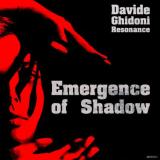
"Emergence of Shadow" (Mint Condition Records / Self Distribuzione)—the new album by Davide
Ghidoni, produced by Gianluca Pighi—is arriving: its digital release is set for Friday, September 11,
while the vinyl will be available starting Friday, September 18.
A trumpeter with a career marked by international collaborations, Ghidoni here signs his most
personal project to date. It is a predominantly instrumental record in which the trumpet becomes a
voice, a narrative, and an emotion. The only vocal track is "Come On Closer," performed by Heidi
Vogel (The Cinematic Orchestra), creating a moment of suspension and intensity within the project.
Davide Ghidoni’s passion for music and the trumpet was born in his childhood around the age of ten,
fueled also by Western films and Ennio Morricone’s soundtracks: those melodies, where the trumpet
played a central role in the duels of The Good, the Bad and the Ugly, deeply shaped the artist's
imagination and sound.
Ghidoni has always maintained an open and curious approach, letting himself be inspired by different
genres, artists, and musical cultures. His projects naturally coexist with influences ranging from rock
to soul, jazz to blues, and other languages that have left a mark on his path. Rather than identifying
with a single genre, he prefers to view music as a guiding thread capable of uniting different styles
through emotion, sensitivity, and respect for artistic identity.
"Emergence of Shadow" represents a new chapter in his journey. After numerous collaborations with
various artists, the musician felt the urge to undertake a completely his own project, giving shape to
ideas he had nurtured for a long time.
The record is inspired by the 1970s soul, rock, and blues sounds, but the goal is not to faithfully
reproduce or imitate those genres: the atmospheres, themes, and arrangements recall that sonic
world, yet are reinterpreted through a personal and original sensibility. The trumpet remains the
primary narrative element, supported by meticulous arrangements and a solid rhythm section that
enhance its character and expressive intensity.
Alongside the sounds that distinguish his path, the album also explores deeper emotional
dimensions. Some tracks are fluid and atmospheric, born from the desire to recount vibrations
without rigid schemes, letting melodies and dynamics guide the listener on an inner journey. The aim
is to offer an engaging listening experience in which music communicates directly, beyond words.
The album encapsulates everything Davide Ghidoni wanted to express and fully represents his
artistic identity: a timeless instrument to communicate emotions and engage in dialogue with different
musical traditions, always keeping the pursuit of musical quality and sharing with the public at its
core.
Rasco are Eden Atiya on guitar and vocals, Gaya Wajsman on bass and vocals, and Itay Hamudi on drums. Named after Charlie Megira’s “At the Rasco”, the trio draw on the melodic language of sixties surf, garage rock and pop, alongside the heavier textures of shoegaze and psychedelia. Influenced by artists including The Cramps, The Beach Boys, Elvis Presley and April March, their music is defined by electric guitar lines, close vocal harmonies and direct, melodic songwriting. The contrast between urban life and the natural world remains central to their work, reflected in songs that move between raw rhythmic energy and more intimate, atmospheric arrangements. Following their debut album Dmaot, Rasco’s forthcoming second album develops this sound through a broader dynamic range, more spacious production and a more focused approach to songwriting, while retaining the warmth and immediacy at the core of the band.
Ondrǣdan is the second aesthetic proposal by Sediments’ owners Pajaro Dune. This work is the result of a deep artistic experimentation and a thorough compositional refinement. Some of these materials have been distlilling in the studio for almost a decade of sound engineering and constant debate to make the experience much more profound.
From old English language, ondrǣdan it is a direct reference to our most primordial fears. Both an emotional yearning and a postapocalyptic kubriesque tale, the five works of this record capture five shades of rhythm and mood, where ambient, dub and downtempo meet in immersive narrative experiences. All them crowned with the luxurious sculptural artwork by Blanco Anyò who forces us look beyond the visceral to intuit the transcendent.
Pajaro Dune is the product that combines the creative minds of Jaime Romero aka Estrato Aurora and David Ortolà aka Syoqh aka d_o_ppelgaenger. More than half a life producing together from València, their multifaceted approach crystallizes in renowned works for Alpenglühen, Grabaciones Perpendiculares, The Monkey Bar, Eleve Music and now their own label.
|| We
become more from what is left,
deliver else than just the now,
build sound stories for the then. ||
No en stock
Última entrega hace 45 días disponible para reposición sin garantía
Fresh off of their 2020 offering Adult Themes, El Michels Affair is back with a new full-length release. Titled Yeti Season, this newest album has everything we've come to expect from EMA's patented cinematic style of instrumental soul music. Where Adult Themes inspired a soundtrack to an imaginary film, Yeti Season brings us to a different place in time_with new inspirations. Taken with Turkish-styled funk and an almost Mumbai-esque take on soul, El Michels Affair offers us a different kind of drama and imagination with Yeti Season. If you've been following along, this shouldn't be viewed as too far a departure for El Michels Affair. The first single off of Yeti Season showed their hand back in 2018. A double-sided banger, that release brought the musical textures to the fore that dominate this record. The first song, titled "Unathi," is fully realized with the beautifully haunting-yet-hopeful vocals of Piya Malik, formally of 79.5_another Big Crown artist. Singing in Hindi, Piya's ethereal voice is telling us to work and strive together toward progress. Even if you don't understand her language, you can still hear the urgency of purpose, creating a lasting vibe that sits on top of it all. Leon Michels explains that Piya had a vital influence on this record: "When Piya started singing in Hindi, she had a different voice, a different tone. I knew we had to do something together." And so Piya appears on three other songs on Yeti Season: "Zaharila," "Murkit Gem," and "Dhuaan." Each providing particular signatures to the album. "Zaharila" is a building and changing love song punctuated by blaring trumpets, driving drums, and Piya's pleading lyrics. While the more upbeat "Murkit Gem" opens with a fuzzed out, Wu-Tang-esque baseline that buoys Piya's stylings. The psychedelic guitar and Piya's changing tones and textures singing about an all-consuming love are what pushed "Dhuaan" on to the second single from Yeti Season. There is also a vocal appearance from Shannon Wise of The Shacks, yet another Big Crown artist. Her song called "Sha Na Na," lies more in the familiar EMA vein: melodic, hypnotic, soulfully visual. But between Shannon's airy singing, the jumpy baseline, moody vibes, the active drum lines, it sounds like a pensive walk home after a strangely dramatic night. So what is Yeti Season? It could be more of a feeling than an actual place or time of year. It's a heavy album_as evidenced by the signature musicianship and dramatic vocal expressions. But it's also a hopeful record, with phrasings, textures, and chord changes that hint at something better_or fuller_coming our way. You hear it in songs like "Ala Vida," with its stabby, pulsing chords laying a bedrock for EMA's bright, atmospheric horn lines. Or even in "Fazed Out," which leaves you with a feeling of determination, a striving for resolution even though the driving, march-like song structure should accompany some conquering army. This persistence has to come from the fact that Leon Michels and company finished this record during the lockdown. It was a tough and troublesome time. But look at what has come of it: Yeti Season_a record of high and heavy drama, but also one of hope and promise. It may take a year like 2020 behind us to find hope in a winter big footed creature like a Yeti, but that's where we are.
No en stock
Última entrega hace 47 días disponible para reposición sin garantía
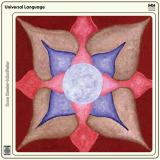
Universal Language is the second release on Magic Hollow and an exploration of the voice before song and before speech. Written and recorded during pregnancy and early motherhood, Rose Keeler-Schaffeler's album draws inspiration from the earliest forms of human communication: coos, cries, sighs and instinctive vocalisations that precede language yet already contain the seeds of music.
Best known as Keel Her, the cult DIY songwriter, producer and NTS Radio DJ whose fiercely independent body of work helped define a generation of bedroom pop, Rose reveals a strikingly different side of her musical practice here. Produced by Daniel O'Sullivan, Universal Language places the human voice at its centre, treating it not as a vehicle for lyrics but as the raw material from which music, language and relationships emerge.
With the exception of a handful of bass vocal parts performed by O'Sullivan, every voice heard on the album is Rose's own.
Across twelve meticulously composed pieces, layered vocal arrangements intertwine with subtle electronics, tape manipulation, synthesizers and understated drum machines. At times the music evokes the luminous purity of medieval sacred music; elsewhere voices dissolve into hazy ambient textures or unfold through hypnotic loops that blur the distinction between singer, choir and atmosphere.
The album was recorded during the first year of her son’s life. Many of its melodic contours and vocal gestures were inspired directly by his earliest sounds. His pre-linguistic attempts at communication became compositional material, guiding Rose towards a deeper exploration of the voice at its point of origin.
Deeply personal yet reaching towards something universal, Universal Language is a meditation on the human voice: our first instrument, our first language and our first experience of belonging.
Liam Sinigoi returns for the second edition of nonsono Records. A four-track dance floor geared EP, somewhere between the busy pitter-patter of UK clubland and lengthy studio sessions in solitude.
On the A1 'Orbiting Voices’, Sinigoi sparks the release with a seductive main room rocket. With a bass line and set of synths reaching for devilery, it has spirited its way into the dark rooms of London’s Fabric and beyond. This track speaks the language of well-seasoned techno journeys.
A remix sits on the A2, with Barcelona artist Ildec twisting out a driving jacking tool. A clean interpretation, nodding to its original with grit and punch to match.
In a groove-soaked minimal B1 track titled ‘Stretch’, suspense and atmosphere are toyed with as label boss Liam presents the identity of the label perfectly. A dapper lunge into deeper territories, with crunched percussion and metallic bells.
Written using the aftertaste of memorable mornings underneath trees in forest parties and global festivals, Sinigoi closes off the record with B2 ‘Darling’. The track emits a scent of cross-genre magic, progressing with fluidity throughout.
No en stock
Última entrega hace 62 días disponible para reposición sin garantía
In spring 2025, Abul Mogard and Rafael Anton Irisarri created the source material for their second album, Where Light Pauses in the Silence of the Sun, during a three-day residency at Morphine Raum in Berlin. Functioning as both recording studio and performance venue, the space has no stage, with the audience gathered around the performers. Working within an open framework, the duo reshaped the music each evening while recording the performances live to multitrack. Rotary speakers, modular synthesizers and bowed guitar formed the core of their sonic language, captured through a 1970s mixing console and microphones placed around the room.
Back in Mogard’s studio in Rome, the material was further crafted as motifs were stretched, fragments isolated, and tempos dissolved. Irisarri recorded additional guitar textures and treatments in New York, while passages recorded by Martina Bertoni and Andrea Burelli in Berlin reinforced the harmonic centres and brought breath, refinement and a new sensibility to their compositions. The process continued as Mogard’s layering and subtraction reassembled everyone’s parts into the final arrangement.
The album opens with “In the Eastern Wild,” building from a sparse outline into a monumental formation of low-frequency weight, its internal motion shaped by the rotating Leslie speaker. “Over the Domes” widens into a broader acoustic field, where sustained modular tones meet waves of softly plucked guitar. The music then turns inward with “A Blue Descent,” centred on Bertoni’s cello, whose growling timbre introduces a melancholic depth.
At the album’s centre, “In a Quiet Radiance” unfolds around a slow guitar ostinato, its luminous stillness opening into a more expansive and reflective state. Across its ten-minute span, Burelli’s violin lines and Bertoni’s lower cello phrases gradually surface, weaving through the harmonic field. Mogard brings Burelli’s processed voice to the fore, its emotive, operatic presence becoming one of the record’s pivotal moments. “Of Blessed Ages” suspends the sonic flow, shifting between parallel major and minor chords as lingering, slowly decaying melodies shape the music’s internal drift. The closing “Among Shadows” settles into a darker resonance as layered textures recede.
Mogard and Irisarri’s shared language balances restraint and maximalism. UK magazine Crack describes the music as “a tidal wave held in suspension,” while Dutch newspaper de Volkskrant writes, “What a colossal sound, and how this music strikes at the emotions.” Reflecting on the residency sessions, Irisarri recalls: “At moments I genuinely couldn’t tell if a sound was coming from me or from Abul. It stopped feeling like two people making decisions and began to feel like we were inside a system moving on its own."
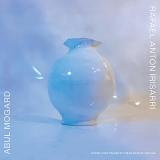
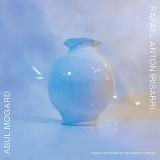
Marja de Sanctis’ cover artwork revisits the vessel sculpture from the duo’s first album, Impossibly Distant, Impossibly Close. There it appeared as raw, unfired clay. Here it has been fired in the kiln and finished with a glaze. Light gathers on its polished surface and spills into the surrounding space. As she explains, “I wanted to convey the idea of continuity within the duo, and the vessel became a kind of container for that idea. However, their music felt different this time, and with the collaboration of Martina and Andrea, I felt it should have a sleeker, softer, more glamorous look, very distant from the first raw appearance.” The transformation of the vessel from raw clay to fired form suggests a passage from immediacy toward permanence, mirroring the music’s gradual expansion.
No en stock
Última entrega hace 3 meses disponible para reposición sin garantía
NU-S3RVO Vol. 2 is the second compilation released by NU-S3RVO. In this release, we continue our exploration of the sounds of modern East Asia, shifting our focus toward female creators within the local scene. This album features works from seven producers based in Beijing, Shanghai, Hong Kong, Guangzhou, and Chengdu, spanning genres from Ambient and Bass to IDM and Techno.
The juxtaposition of “Eastern” and “Female” is not intended to annotate a specific identity, but rather to present an entirely autonomous field. For too long, the “East” has been constructed as a feminine, mysterious, and sensory-indulgent mirror of the “Other.” Such aesthetic norms act not only as gendered shackles but as extensions of colonial logic, forcing both women and the East to share a fate of being “spectacularized” for the gaze. Electronic music, as a creative medium, derives its radical freedom precisely from its departure from this destiny of “spectacle.” It represents the oscillator’s transcendence of physical acoustics and functions as a liberatory technology, offering creators a sanctuary to dismantle traditional constraints and reconstruct the self. In fact, since the inception of modern sound, women have been at the very core of inventing and defining the technologies, interfaces, and expressive techniques of the craft.
Stripping away the romanticized and semioticized cultural shells, each local artist in this compilation is a master of diverse technical crafts. Through their unique logic and emotional resonance, we aim to establish a decentralized acoustic language within the fissures of modern civilization.
No en stock
Última entrega hace 3 meses disponible para reposición sin garantía
For nearly four decades, since its founding during the mid 1980s, the Belgian imprint, Sub Rosa, has continuously plumbed the depths of numerous, radical creative histories, assembling a catalog of releases that has almost no equivalent, while remaining nearly impossible to nail down. That said, for most of its run, Sub Rosa has been primarily recognized for its rigorous explorations of the lesser explored shadows of experimental sound practice (sound-art, sound-poetry, early electronic and electroacoustic music, free-improvisation, etc.), delivering a remarkable body of artifacts that have collectively helped to rewrite history in their wake. While it's always been impossible to anticipate where the label might take us next, threading their catalog are plenty of releases that throw further wrenches in the cogs, expanding our understanding of what they pursue, as in the case of a handful of titles, appearing as early as the 1980s, dedicated to ethnographic field-recordings from various parts of the world. Among the most striking and celebrated of these was 2017's Ethiopian Urban And Tribal Music: Mindanoo Mistiru / Gold From Wax, comprising an astounding body of recordings made by Ragnar Johnson and Ralph Harrisson in Ethiopia during 1971, reissuing material originally released by Lyrichord the following year. Now, Sub Rosa returns to the incredible work embarked upon by the pair and captured on that same trip with Ethiopian Musics 1971, comprising the recordings originally released by Ocora shortly after their completion, expanded in this edition to include an entire disc of never before released music. Widely regarded as some of the most important field-recordings ever made of indigenous Ethiopian folk music (as captivating and intoxicating as they are revelatory: providing insights into the roots of the country's singular traditions of popular music and jazz that have come to be celebrated the world over), this incredible collection is issued by Sub Rosa in a beautifully produced 2LP edition, complemented by a four page insert providing detailed descriptions of each song, as well as notes by the ethnomusicologists and recordists, as well as a 2CD edition, with a twelve page booklet. Insanely good and absolutely essential for any fan of field-recording, ethnomusicology, the music of Ethiopia, or the label's mission at large. Once again, Sub Rosa has defied our expectations and delivered a remarkably important intervention in the history of recorded sound.
Located in the Horn of Africa region of East Africa, few cultures are distinctly singular, while being so diverse (containing 80 distinct ethnic groups who speak 70 languages and 200 dialects) as that of Ethiopia. The home to some of the oldest surviving sects of Judaism, Christianity, and Islam (each contributing important aspects of its collective cultural body), particularly the country's culinary and musical traditions have become celebrated the world over, and (generally speaking) feel entirely independent of those of its neighbors. Given this, it's unsurprising that, during the summer of 1971, the young ethnographer, Ragnar Johnson, accompanied by Ralph Harrisson, traveled to Ethiopia to begin his brief career as a field recording ethnomusicologist, capturing material on reels of magnetic tape that would be subsequently released across three LPs for Lyrichord and Ocora, respectively, coming to form a cornerstone of documentation and study of the country's many indigenous musical traditions, as well as providing wide, global access to them for the first time. While Johnson's recording career was relatively brief, ending toward the end of the decade when he began to focus more on teaching in UK universities, with a focus on the anthropology of art and social anthropology, his impact on the field was lasting. Between 1971 and 1979, in addition to those he made in Ethiopia, he made hugely significant recordings in Yemen (also issued by Lyrichord before being reissued by Sub Rosa) and Papua New Guinea, which were originally released by David Toop's Quartz Publications to wide celebration, before being revisited by Ideologic Organ in 2023.
While it's worth noting that commercial releases of ethnomusicological recordings by labels like Folkways, Lyrichord, and Ocora were still in their relatively early days when he entered the field, Johnson's recordings quickly stood apart for their vivid qualities and clarity of space, allowing them to stand the test of time. As he later stated: "I used a Uher Report L stereo tape recorder, BASF quarter inch tapes at a recording speed of seven and a half inches per second with two directional microphones mounted to record an isosceles triangle of stereo sound," he reveals. "The location of the microphones and musicians was critical. The musicians were fully informed of all aspects of the recording process."
Johnson's recordings are extremely vivid, there is a clear sense of space and the cries of the flutes exist across the entire stereo field. It's a reflection of Johnson's skill as a field recordist that his recordings continue to be reissued over forty years later. "I used a Uher Report L stereo tape recorder, BASF quarter inch tapes at a recording speed of seven and a half inches per second with two directional microphones mounted to record an isosceles triangle of stereo sound," he reveals. "The location of the microphones and musicians was critical. The musicians were fully informed of all aspects of the recording process… I used to enjoy being in the moment and hearing something wonderful despite the stress of the vigilance required to ensure that the recordings were accomplished according to plan. The responsibility is to record and document the music as effectively as possible so that it has been preserved for posterity. It is better to actually record music than to sit in a seminar room debating the ethics of recording music." It is this very ethos and sense of clarity that can be encountered across the length of Ethiopian Musics 1971.
For the sake of clarity, the two LPs of material that comprise Ethiopian Musics 1971 should be regarded as a single body of recordings alongside those made in Ethiopia by Ragnar Johnson and Ralph Harrisson during the summer of 1971 (previously issued by Lyrichord and reissued by Sub Rosa), and as two that have, until now, remained historically distinct. The first LP gathers that material released by Ocora during the early 1970s on Musiques Ethiopiennes, while the second comprises (as far as we can tell) twelve never before issued recordings, expanding the journey and making this the definitive edition of the release with its incredible total of 23 recordings of songs, allowing it ever greater scope to achieve the recordists' modus operandi of capturing the broadest and most diverse cross section of Ethiopia's many musical cultures, ranging from different forms of urban music captured in Addis Ababa, documenting largely orally transmitted idioms within which lyrical content is given greater emphasis than the instrumental components (played on masenko fiddles, craar and bagana lyres, washint flutes and kabaro drums), to folk idioms hailing from the Danakil desert and the border regions with Sudan and Kenya. There are songs sung and played in bars, divination chants, laments, dances, Christian songs, and Amharic sung poetry, to only begin to scratch the surface.
Ethiopian Musics 1971 is one of those rare albums where each musical moment is pure, intoxicating gold, while also being greater through the sum of its parts. There are the many songs, forming a rich tapestry of remarkable range across the respective two LPs/CDs (moments that wondrously flirt with sonic abstraction; hypnotic rhythms; pulsing chant; melodies that, in structural arrangement and tonal combination, help us reframe how such a thing might be understood, and a great deal more), each imbued with a remarkable directness and emotive sensibility, and there is the stunning quality of these recordings themselves, transporting each sound to our ears as though we intimately share its creator's space, while being imbued with the pure heart and remarkable spirit with which they were made. As we said before, it's little wonder, once heard, why these recordings and this music feels as fresh and relevant (enduring more than 50 years) today as when they were made. Once again, Sub Rosa has raised the bar with this essential addition to the incredible work that Ragnar Johnson and Ralph Harrisson did back in Ethiopia during 1971, radically expanding our access to the sounds that they captured with these stunning, beautifully produced 2LP and 2CD editions. Absolutely engrossing from the first sounding to the last, this one can't be missed.
For the second chapter of JESUS LOVES SKYLAX, we return to the source: raw emotion, machine soul, and the sacred pulse of the underground. A continuation of the Todd Edwards spirit — not imitation, but devotion. On the A-side, Byron The Aquarius opens with “House Music Was Good While It Lasted (Goodtimes)” — a bittersweet sermon in sound. Dusty, looping, hypnotic — somewhere between lost tapes and eternal truth, echoing the soul of Detroit at its most intimate. UK craftsman Tom Carruthers follows with “Crank Up” — raw, skeletal, almost industrial in its tension. A direct lineage from early machine music, channeling the stark energy of Cabaret Voltaire through a house framework. No compromise. Just rhythm and intent.
Flip the record.
Blue Mondays deliver “Warm Up For Ron Hardy (Disco Mix)” — a fever dream built for the booth. Loose, emotional, and dangerously effective. A tribute not in name, but in spirit — the kind of record that lives between two worlds, where disco dissolves into house under strobe lights and sweat. Closing the EP, CNVX – “L’Amour (Floorfillers Remix)” hits with pure peak-time electricity. Acid lines twisting through the mix, driven and ecstatic — a modern weapon forged in the language of the underground. A direct nod to the timeless pressure of Floorfillers energy, built for dancers who still believe.
✝ JESUS LOVES SKYLAX ✝
He still does.
No en stock
Última entrega hace 24 días disponible para reposición sin garantía
Few artists arrive as compellingly yet elusively as did Stuart Moxham upon the startling debut of Young Marble Giant's sole studio album, Colossal Youth. Initial excitement was thrust upon the young Alison Statton, who sang songs written by Stuart with a couple of exceptions. The unaffected tone of her voice was in steep contrast to the typical goings-on in that still quite punky time, but it was what she sang that fully sold it. Moxham's lyrics were both intensely personal and woefully oblique. There seemed to be a sort of story in there. Confusingly, that story often felt like it was Alison's rather than the fellow who'd penned it. The unexpected miracle a deal with Rough Trade and the album's subsequent success had the band stymied for a second act and it wasn't long before the group disintegrated, although circumstances often brought members and a few of their peers - among them Debbie Pritchard, Spike Williams, and a third Moxham brother, Drew. - Phil Moxham was the band's bassist - together in odd combinations and pairings. None of the three YMG members have been especially prolific, but it's Stuart's career that has seemed the least straightforward, as if he'd wondered, "What to do when your debut is a nearly perfect artefact?" In the case of his first "solo" full-length in thirty years, Stuart took the unusual step of entering an alien studio with American producer Dave Trumfio (who's also the leader of Pulsars and bassist for Mekons) and allowing him to decide what tracks (of a large number submitted by Stuart) to record, and how they'd be orchestrated. Or not. In this case - save for the writing and composing - it's really Dave's album as much as Stuart's. The tracks went with Dave back to LA, where they were mixed, a few parts added (including subtle backing vocals from the incredible Linda Smith) . . . then later unmixed and reworked by John Henderson and Roni Ayala back in Valencia. Both versions will be made available, and both have a compelling cohesion missing from some of Stuart's work since YMG. Stuart's minimalism is quite intact, the range of emotions quite wide. There are few artists operating today like Stuart Moxham, a composer of the upper echelon of innate talent who combines avant-garde ideas with deceptively forthright personal lyrics, solid hooks, ambience and vaguely off-centre instrumentation which defies the casual marketplace as confoundingly as it ever did to the underground, whatever that is these days. His songs have been admired and / covered by everyone from Lush to Kurt Cobain, adaptations in Japanese and even a French-language hit by Etienne Daho, adaptations by Hole, Galaxie 500, Magnetic Fields, Belle And Sebastian and many others - but a new Stuart Moxham album is a special kind of joy.
Actor, comedian, friend of the label, Aziz Ansari (of Parks and Rec fame) has visited Third Man a handful of times, even gracing us with a surprise live set back in 2013. For years we've been working hard to find something to release together and his second Comedy Central stand-up special, Dangerously Delicious, which was originally released in 2012, contains so many great moments (50 Cent's 1st grapefruit experience, anyone?), it just needs to be pressed into wax. So, here we've done it! Put the needle in the groove and let the good times roll, friends. Co-released with Comedy Central
Syrian-Armenian-American singer and producer KÁRYYN returns with her highly anticipated second album, PHYSICS UNIVERSAL LOVE LANGUAGE (PULL), out via Mute.
KÁRYYN creates music at the intersection of sound, spirit, and physics – sonic worlds that don’t just describe emotion, they conduct it. PHYSICS UNIVERSAL LOVE LANGUAGE exemplifies this with a title that encapsulates her lifelong endeavour to translate love into systems of energy and truth. At its heart, PULL is about courage: the courage to collapse, to love, to surrender, and to emerge.
Sonically, PULL is crafted from KÁRYYN’s voice, strings, modular synths, and gravitational beats, tuned to 432Hz – a frequency believed to support vibrational healing. Co-produced by KÁRYYN alongside Hudson Mohawke and James Ford, the record was further enriched by Marta Salogni’s sensitive and immersive mix, Jacques Greene’s melodic touch on ‘FWD’, and Joker’s detailed mastering. The result is a meticulously crafted work that is both deeply personal and expansively communal.
PULL is a bold, transcendent journey through KÁRYYN's own human revolution. It is about gravity. About the collapse and coherence that define human experience. It is, in every way, a gravitational pull toward the truth: a sonic architecture of love, rupture, and rebirth.
A kickstart without brakes – straight into the heart of the German-speaking rock scene with performances at Rock am Ring, Rock im Park, Lollapalooza, and more. And all of this completely independently – without a label, without a booking agency, without a producer. Because wasting time was never on the agenda for the punk & alternative trio from Frankfurt since their very first performance in May 2023 at the Warsteiner Band Contest, which they won right away. If we ended the band description at this point, everything would sound perfect. But if you take a closer look at the dozen singles that Friends Don't Lie have released in just 18 months, you'll discover a second layer: vulnerable lyrics about self-doubt, fears, and big emotions. At the same time, it becomes clear that the band also takes a political stance. It's about discontent – against racism, resentment, selfishness – against all forms of hatred. Friends Don't Lie are thus becoming the voice of a generation, as we last saw with acts like Kraftklub and Casper. In May 2026, Uncle M Music will release their long-awaited debut album, Zenit der Dramaturgie. Ten German-language rock/punk songs that set the bar extremely high and bridge the gap between Donots and Kraftklub.
On the new concept album Honest Work, ten songs tell stories from the adult lives of working people in the middle and lower classes. They work night shifts in hospitals, pump breast milk in storage rooms, wonder whether they should get a prescription for Ritalin, are summoned to the boss’s office for wearing the wrong clothes, or take a day off just to walk barefoot by a lake. Lyrically, Honest Work can best be described as “petty-bourgeois surrealism.” It’s an album about people trying – and often failing – to navigate systems that reduce them to anonymous data points, employees, and consumers. The album is full of desperate prayers: “Doctor, I think that I’ve got a disease” (Focus Disease), “Taking a day off… don’t even remember my own name” (Remind Me), “I serenade on company time” (Lean Dreams). In these lines, you can feel the dull ache of a generation whose emotional lives are filtered through corporate HR language and online shopping carts.
KNEECAP return to bend genre, language, and rules. The most talked about artists in the world are turning the page. A new chapter, new sounds, new manifestos.
A blistering album that revels in darkness while bursting through the void with illuminated revery. This is FENIAN.
Produced by Dan Carey (Fontaines D.C., Kae Tempest, Wet Leg), FENIAN upends expectations with an expansive sonic palate, traversing acid house, trip-hop, dubstep, and more - Masters of rave and rap theatre, FENIAN represents Kneecap’s most sophisticated exploration of language and sounds.
More darkness. More confrontation. More craic. More energy. More solidarity. More absolute bangers. And more fuel for the unrelenting engine that powers this unstoppable force. For their remarkable second album, Kneecap have come out fighting.
Throughout, the sirens and alarms ring, and the chorus’s blast. Revolutionary and rebellious, confrontational and impossibly catchy, inescapably intelligent and brilliantly rendered, FENIAN doesn’t just represent the next phase in Kneecap’s trajectory but stands as a remarkable record that thrills as much as it surprises. The mayhem of their breakout year is a memory now. But Kneecap are neither dwelling on that nor merely persevering through it. In FENIAN they excel, reaching a new peak that is undeniable in its mastery.
Pressure makes diamonds, and FENIAN glistens with Kneecap’s uncut gems.
No en stock
Última entrega hace 5 meses disponible para reposición sin garantía
Artist and multi-instrumentalist Flaer looks to the landscape to explore pastoral melancholy on debut release, Preludes. It is released in a second edition black vinyl, with an alternate cover artwork.
Ensconced in his family home in rural Leicestershire in the early months of 2020, painter and musician Realf Heygate (b. 1994) picked up his childhood cello for the first time in several years and began to play. Setting himself parameters to only record onto 4-track tape with acoustic instruments – cello, piano and acoustic guitar – he assembled a suite of instrumental compositions that form the basis of Preludes, his debut album as Flaer and the inaugural release on Odda Recordings.
Channelling the tension and unease between the pastoral idyll of the English countryside and the darkness which lurks beneath the surface, the mini-album draws inspiration from the analogue aesthetic of 1970s folk horror films, weaving field recordings of birdsong, church bells and the natural environment into chimerical melodies that reflect on Heygate’s childhood experiences of rural England.
“It was really important not to isolate the sound from its environment,” he explains, describing the compositional and recording process as “site-specific”. Developed over a series of intuitive musical enquiries, the mini-album’s uncanny quality emerges from combining raw demo takes with overdubs of almost orchestral grandeur.
Heygate points to the final track as indicative of the work as a whole: “‘Follow’ really is the mantra for the release and embodies the practical approach I was taking to music making: not to force the music but see where it takes you.”
As a painter, Heygate’s practice takes artefacts through sequences of reproduction that embrace the fluctuating materiality of the copy. Since obtaining a degree in Fine Art from Central Saint Martins in 2017, he has exhibited solo at Peter von Kant and Springseason galleries in London, and has participated in group shows at Saatchi Gallery, Cob Gallery and Senesi Contemporanea.
Describing his artistic practice as one of self-erasure, music instead provides Heygate with a more personal and autobiographical outlet. Where the two worlds combine is on Preludes’ striking artwork, which features paintings of 13th century stone carvings from the font of the church in the town where he grew up.
Speaking to a time where people were connected to the land in a more profound way, each symbol is assigned to a track on the album, which Heygate likens to giving them a title.
“To add that one juxtaposition might open a whole new interpretation or language that might be hard to find otherwise,” he explains.“Over time it might reveal itself to you, which is why I'm excited about it being released. To throw them out there and see what comes of it.”
Repress of the 1 st album of the fresh Afro funk sensation ! Recorded on analog equipment in Lyon in 2014 !
Peter Solo is a singer and composer born in Aného-Glidji, Togo, the birthplace of the Guin tribe and a major site of the Voodoo culture. He was raised with this tradition’s values of respect for all forms of life and the environment. With his new band, Vaudou Game, Peter Solo claims, and spreads this spiritual and musical heritage. Chants are at the heart of the Voodoo practice, but for times immemorial, harmonic instruments have never accompanied them. No balafon, no kora - only the “skins” support the singers. However, in 2012, Peter, along with his band based in Lyon, France, decided to explore and codify the musical scales that are found in sacred or profane songs of Beninese and Togolese Voodoo so they can be played easily on modern instruments. Peter composed the album Apiafo, using the two main musical scales of this tradition. The first musical scale on Apiafo leans towards raw Funk with a sound similar to the famous 70’s bands, L’Orchestre Poly Rythmo De Cotonou and El Rego. Funk, is the skeletal structure of this record, and provided the opportunity for Peter to invite his uncle, Roger Damawuzan - the famous pioneer of the 70s Soul scene - on two tracks. Their collaboration on “Pas Contente” is a highlight on this 100% analog album. Apiafo was entirely recorded, mixed and mastered with old tapes and vintage instruments. The second scale, which had never before been transposed for instruments, evokes deeper feelings and a sacred ambiance. The moving song Ata, an invocation to a supreme divinity is another highlight of this record. Even if some can recognize similarities between this scale and Ethiopian scales, they are in fact different. Peter, the only African band member, introduced the other musicians to the universal values of Voodoo and he taught them his native language. On the recording of Apiafo and during their live performances, the musicians all sing and answer Peter in the Mina language. The strive for authenticity, the analog sound and vintage looks don’t mean that Vaudou Game is looking backwards. This is Togolese funk, born in the post-colonial era but that never before explored its ancient roots so deeply and proudly.
(Extrawelt Remix) The second vinyl installment of 20 shifts focus toward cinematic structure, melodic depth, and genre-crossing reinterpretations. Collaborations and remixes involving Extrawelt, Noga Erez, Perfect Stranger, PRZ, and A. Balter underline Eitan Reiter's refined and flexible production approach.
20 (Part 2) is a 12-inch vinyl release featuring exclusive vinyl cuts that are not available digitally, offering collectors insight into Reiter's evolving sonic language.
LS003 completes the vinyl-only snapshot of 20, presenting carefully selected collaborations adapted for the physical format.
No en stock
Última entrega hace 12 días disponible para reposición sin garantía
Killer Groove Records proudly presents "Keep Your Step", the explosive comeback by Italian rock steady & early reggae ambassadors The Appetizers, a soulful celebration of reggae's timeless spirit.
"Keep Your Step" marks the band's much-awaited return, landing April 10th on limited edition LP, CD digipack and digital format featuring two exclusive bonus tracks.
The Appetizers deliver a masterclass in roots reggae music with their highly anticipated second studio album, bridging Jamaica's golden age with contemporary relevance. "Keep Your Step" is a heartfelt sonic journey where the band blends rocksteady and early reggae with funk and soul influences to create a sound that's both genuine and refreshingly modern.
The fourteen tracks move fluidly between infectious dancefloor fillers and socially conscious lyrics. From the laid-back swing of "Feel Like Dancing" to the hypnotic rhythm of "Thicker Than Water", the band demonstrates their versatility while remaining true to the roots of Jamaican sound. "A Message from The Meters" pays tribute to the legendary funk pioneers, while the instrumental "Catch This" and "Make It Reggay" highlight the band's musical prowess and the deep connections between reggae and funk.
Meanwhile, tracks like "Fussy Girl" and "Behind My Shoulders" explore love's complexities with humor and soul. The album's heart lies in its social consciousness. "Cool and Deadly", "The Life", "Stormy Weather" and the album title track "Keep Your Step" tell stories of perseverance through life's struggles.
With the hopeful anthem "We Shall Overcome," The Appetizers deliver a timely message about genuine human connection in a social media-dominated era. The digital edition closes with "Get Some Rollin'" and "Swing and Sway," rounding out the journey with two additional gems.
"Keep Your Step" pays homage to Jamaican music legends, from Jackie Mittoo and Tommy McCook to Toots & the Maytals, while carving out The Appetizers' own distinctive sound. This is a groove made for both the dance floor and the soul, proving that reggae's power to inspire, unite, and uplift remains as vital as ever.
The production stays true to The Appetizers' signature sound: organic tones, deep groove, and that live-room vibe you only get when real musicians are locked in together. Luca Monza and Claudio Mambrini, the band's core members, handled the artistic production. Mastering came courtesy of the great JJ Golden (Black Pumas, Sharon Jones & The Dap-Kings, Jr. Thomas & The Volcanos, The Frightnrs) at Golden Mastering in Ventura, California. JJ is one of the most trusted engineers working in this sound, ensuring every ounce of warmth and authenticity came through.
The Appetizers are a rocksteady and early reggae band formed in Milan in 2020 by musicians deeply embedded in the Italian and international reggae scene. Musicians from different paths united by a shared vision: recreating that vintage Caribbean and American sound with authenticity, respect and a forward-thinking edge.
Drawing inspiration from Jamaica's golden era and channeling the soul of Delroy Wilson, Alton Ellis, the early Wailers, and The Upsetters, The Appetizers carry forward the essence of bass culture with a pure, fully organic approach.
Their debut album Listen Up! (2022), released via Belgian imprint Badasonic Records (home to The Slackers, The Aggrolites, David Hillyard & Victor Rice), featured ten original tracks and a dub cut by Victor Rice. Distributed across Europe, the UK, the US, and Japan, it quickly earned international recognition among reggae connoisseurs and selectors worldwide.
Following extensive touring, including shows with The Slackers, Black Uhuru, Skip Marley, and more, the band returned to the studio to record "Keep Your Step", their second album produced by Killer Groove Records. Here the band expands its musical language, weaving together the spirit of historic Jamaican labels like Studio One and Treasure Isle with '60s funk, arriving at a warm, organic, and timeless sound: soul, Jamaican roots, and modern sensibility in perfect balance. Their lyrics explore heartbreak, social issues, and reflections on life and music, performed with dedication and respect for tradition while always pushing forward.
If you're into The Skatalites, The Ethiopians, and those classic Caribbean rhythms, this one's for you.
Following the strong reception of their second album, Totem of Quiet Mystic (2023) Jiyu have earned praises from outlets such as Jazzwise, Enlace Funk and The Chillout Tent, as well as support from a wide range of iconic DJs including Patrick Forge & Chris Coco. The singles to this new album, Cumulus & the Subterranean, Smell of Fire and Deep Woods, have immediately been embraced—drawing glowing reactions and airplay from dj's like, Phil Cooper, Dj Vadim, Fred Everything, David Patterson, Jon Kennedy and Curtis Colin
On this third album from Jiyu, the Copenhagen band stretch their cosmic–spiritual jazz language into deeper, wilder terrain. Dropping April 10th on vinyl and digital via Dubsoul Records, the record captures six musicians in full telepathic flight, recorded at 12 Ton Studio in Copenhagen. Across eight tracks, elastic basslines, jazz-dub-soul—tinted drums and percussion, Wurlitzer and jazz-guitar glow and flute-swept atmospheres drift between grounded groove and open-sky improvisation, while guest vocalist Mai Lan Doky adds dreamlike textures on Cumulus & the Subterranean. From the shuffled broken-beat pulse of Smell of Fire to the slow-burn haze of Deep Woods, the Wild Things album is a rich analogue-soul excursion—earthy, exploratory and tuned to the outer frequencies.
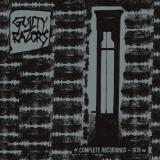
Writings on the topic that go off in all directions, mind-numbing lectures given by academics, and testimonies, most of them heavily doctored, from those who “lived through that era”: so many people today fantasize about the early days of punk in our country… This blessed moment when no one had yet thought of flaunting a ridiculous green mohawk, taking Sid Vicious as a hero, or – even worse – making the so-called alternative scene both festive and boorish. There was no such thing in 1976 or 1977, when it wasn’t easy to get hold of the first 45s by the Pistols or the Clash. Few people were aware of what was happening on the fringes of the fringes at the time. Malcolm McLaren was virtually unknown, and having short hair made you seem strange. Who knew then that rock music, which had taken a very bad turn since the early 1970s, would once again become an essential element of liberation? That, thanks to short and fast songs, it would once again rediscover that primitive, social side that was so hated by older generations? Who knew that, besides a few loners who read the music press (it was even better if they read it in English) and frequented the right record stores? Many of these formed bands, because it was impossible to do otherwise. We quickly went from listening to the Velvet Underground to trying to play the Stooges’ intros. It’s a somewhat collective story, even though there weren’t many people to start it.
The Guilty Razors were among those who took part in this initial upheaval in Paris. They were far from being the worst. They had something special and even released a single that was well above the national average. They also had enough songs to fill an album, the one you’re holding. In everyone’s opinion, they were definitely not among the punk impostors that followed in their wake. They were, at least, genuine and credible.
Guilty Razors, Parisian punk band (1975-1978). To understand something about their somewhat linear but very energetic sound, we might need to talk about the context in which it was born and, more broadly, recall the boredom (a theme that would become capital in punk songs) coupled with the desire to blow everything off, which were the basis for the formation of bands playing a rejuvenated rock music ; about the passion for a few records by the Kinks or the early Who, by the Stooges, by the Velvet mostly, which set you apart from the crowd.
And of course, we should remember this new wave, which was promoted by a few articles in the specialized press and some cutting-edge record stores, coming from New York or London, whose small but powerful influence could be felt in Paris and in a handful of isolated places in the provinces, lulled to sleep by so many appalling things, from Tangerine Dream to President Giscard d’Estaing...
In 1975-76, French music was, as almost always, in a sorry state ; it was still dominated by Johnny Hallyday and Sylvie Vartan. Local rock music was also rather bleak, apart from Bijou and Little Bob who tried to revive this small scene with poorly sound-engineered gigs played to almost no one.
In the working class suburbs at the time, it was mainly hard rock music played to 11 that helped people forget about their gruelling shifts at the factory. Here and there, on the outskirts of major cities, you still could find a few rockers with sideburns wearing black armbands since the death of Gene Vincent, but it wasn’t a proper mass movement, just a source of real danger to anyone they came across who wasn't like them. In August 1976, a festival unlike any other took place in Mont-de-Marsan – the First European Punk Festival as the poster said – with almost as many people on stage as in the audience. Yet, on that day, a quasi historical event happened, when, under the blazing afternoon sun, a band of unknowns called The Damned made an unprecedented noise in the arena, reminiscent of the chaotic Stooges in their early adolescence. They were the first genuine punk band to perform in our country: from then on, anything was possible, almost anything seemed permissible.
It makes sense that the four+1 members of Guilty Razors, who initially amplified acoustic guitars with crappy tape recorder microphones, would adopt punk music (pronounced paink in French) naturally and instinctively, since it combines liberating noise with speed of execution and – crucially – a very healthy sense of rebellion (the protesters of May 1968 proclaimed, and it was even a slogan, that they weren’t against old people, but against what had made them grow old. In the mid-1970s, it seemed normal and obvious that old people should now ALSO be targeted!!!).
At the time, the desire to fight back, and break down authority and apathy, was either red or black, often taking the form of leafleting, tumultuous general assemblies in the schoolyard, and massive or shabby demonstrations, most of the time overflowing with an exciting vitality that sometimes turned into fights with the riot police. Indeed, soon after the end of the Vietnam War and following Pinochet’s coup in Chile, all over France, Trotskyist and anarcho-libertarian fervour was firmly entrenched among parts of the educated youth population, who were equally rebellious and troublemakers whenever they had the chance. It should also be noted that when the single "Anarchy in the UK" was first heard, even though not many of us had access to it, both the title and its explosive sound immediately resonated with some of those troublemakers crying out for ANARCHY!!! Meanwhile, the left-wing majority still equated punks with reckless young neo-Nazis. Of course, the widely circulated photos in the mainstream press of Siouxsie Sioux with her swastikas didn’t necessarily help to win over the theorists of the Great Revolution. It took Joe Strummer to introduce The Clash as an anti-racist, anti-fascist and anti-ignorance band for the rejection of old-school revolutionaries to fade a little.
The Lycée Jean-Baptiste Say at Porte d’Auteuil, despite being located in the very posh and very exclusive 16th arrondissement of Paris, didn’t escape these "committed" upheavals, which doubled as the perfect outlet for the less timid members of this generation.
“Back then, politics were fun,” says Tristam Nada, who studied there and went on to become Guilty Razors’ frontman. “Jean-Baptiste was the leftist high-school in the neighbourhood. When the far right guys from the GUD came down there, the Communist League guys from elsewhere helped us fight them off.”
Anything that could challenge authority was fair game and of course, strikes for just about any reason would lead to increasingly frequent truancy (with a definitive farewell to education that would soon follow). Tristam Nada spent his 10th and 11th unfinished grades with José Perez, who had come from Spain, where his father, a janitor, had been sentenced to death by Franco. “José steered my tastes towards solid acts such as The Who. Like most teenagers, I had previously absorbed just about everything that came my way, from Yes to Led Zeppelin to Genesis. I was exploring… And then one day, he told me that he and his brother Carlos wanted to start a rock band.” The Perez brothers already played guitar. “Of course, they were Spanish!”, jokes their singer. “Then, somewhat reluctantly, José took up the bass and we were soon joined by Jano – who called himself Jano Homicid – who took up the rhythm guitar.” Several drummers would later join this core of not easily intimidated young guys who didn’t let adversity get the better of them.
The first rehearsals of the newly named Guilty Razors took place in the bedroom of a Perez aunt. There, the three rookies tried to cover a few standards, songs that often were an integral part of their lives. During a first, short gig, in front of a bewildered audience of tough old-school rockers, they launched into a clunky version of the Velvet Underground's “Heroin”. Challenge or recklessness? A bit of both, probably… And then, step by step, their limited repertoire expanded as they decided to write their own songs, sung in a not always very accurate or academic English, but who cared about proper grammar or the right vocabulary, since what truly mattered was to make the words sound as good as possible while playing very, very fast music? And spitting out those words in a language that left no doubt as to what it conveyed mattered as well.
Trying their hand a the kind of rock music disliked by most of the neighbourhood, making noise, being fiercely provocative: they still belonged to a tiny clique who, at this very moment, had chosen to impose this difference. And there were very few places in France or elsewhere, where one could witness the first stirrings of something that wasn’t a trend yet, let alone a movement.
In the provinces, in late 1976 or early 1977, there couldn’t be more than thirty record stores that were a bit more discerning than average, where you could hear this new kind of short-haired rock music called “punk”. The old clientele, who previously had no problem coming in to buy the latest McCartney or Aerosmith LP, now felt a little less comfortable there…
In Paris, these enlightened places were quite rare and often located nex to what would become the Forum des Halles, a big shopping mall. Between three aging sex workers, a couple of second-hand clothes shops, sellers of hippie paraphernalia and small fashion designers, the good word was loudly spread in two pioneering places – propagators of what was still only a new underground movement. Historically, the first one was the Open Market, a kind of poorly, but tastefully stocked cave. Speakers blasted out the sound of sixties garage bands from the Nuggets compilation (a crucial reference for José Perez) or the badly dressed English kids of Eddie and the Hot Rods. This black-painted den was opened a few years earlier by Marc Zermati, a character who wasn’t always in a sunny disposition, but always quite radical in his (good) choices and his opinions. He founded the independent label Skydog and was one of the promoters of the Mont-de-Marsan punk festivals. Not far from there was Harry Cover, another store more in tune with the new New York scene, which was amply covered in the house fanzine, Rock News (even though it was in it that the photos of the Sex Pistols were first published in France).
It was a favorite hang-out of the Perez brothers and Tristam Nada, as the latter explained. “It’s at Harry Cover’s that we first heard the Pistols and Clash’s 45s, and after that, we decided to start writing our first songs. If they could do it, so could we!”
The sonic shocks that were “Anarchy in the UK”, “White Riot” or the Buzzcocks’s EP, “Spiral Scratch” – which Guilty Razors' sound is reminiscent of – were soon to be amplified by an unparalleled visual shock. In April 1977, right after the release of their first LP, The Clash performed at the Palais des Glaces in Paris, during a punk night organised by Marc Zermati. For many who were there, it was the gig of a lifetime…
Of course, Guilty Razors and Tristam were in the audience: “That concert was fabulous… We Parisian punks were almost all dressed in black and white, with white shirts, skinny leather ties, bikers jackets or light jackets, etc. The Clash, on the other hand, wore colourful clothes. Well, the next day, at the Gibus, you’d spot everyone who had been at this concert, but they weren’t wearing anything black, they were all wearing colours.”
It makes sense to mention the Gibus club, as Guilty Razors often played there (sometimes in front of a hostile audience). It was also the only place in Paris that regularly scheduled new Parisian or Anglo-Saxon acts, such as Generation X, Siouxsie and the Banshees, the Slits, and Johnny Thunders who would become a kind of messed-up mascot for the venue. A little later, in 1978, the Rose Bonbon – formerly the Nashville – also attracted nightly owls in search of electric thrills… In 1977, the iconic but not necessarily excellent Asphalt Jungle often played at the Gibus, sometimes sharing the bill with Metal Urbain, the only band whose aura would later transcend the French borders (“I saw them as the French Sex Pistols,” said Geoff Travis, head of their British label Rough Trade). Already established in this small scene, Metal Urbain helped the young and restless Guilty Razors who had just arrived. Guitarist for Metal Urbain Hermann Schwartz remembers it: “They were younger than us, we were a bit like their mentors even if it’s too strong a word… At least they were credible. We thought they were good, and they had good songs which reminded of the Buzzcocks that I liked a lot. But at some point, they started hanging out with the Hells Angels. That’s when we stopped following them.”
The break-up was mutual, since, Guilty Razors, for their part, were shocked when they saw a fringe element of the audience at Metal Urbain concerts who repeatedly shouted “Sieg Heil” and gave Nazi salutes. These provocations, even still minor (the bulk of the skinhead crowd would later make their presence felt during concerts), weren’t really to the liking of the Perez brothers, whose anti-fascist convictions were firmly rooted. Some things are non-negotiable.
A few months earlier (in July 1978), Guilty Razors had nevertheless opened very successfully for Metal Urbain at the Bus Palladium, a more traditonally old-school rock night-club. But, as was sometimes the case back then, the night turned into a mass brawl when suburban rockers came to “beat up punks”.
Back then, Parisian nights weren’t always sweet and serene.
So, after opening as best as they could for The Jam (their sound having been ruined by the PA system), our local heroes were – once again – met outside by a horde of greasers out to get them. “Thankfully,” says Tristam, “we were with our roadies, motorless bikers who acted as a protective barrier. We were chased in the neighbouring streets and the whole thing ended in front of a bar, with the owner coming out with a rifle…”
Although Tristam and the Perez brothers narrowly escaped various, potentially bloody, incidents, they weren’t completely innocent of wrongdoing either. They still find amusing their mugging of two strangers in the street for example (“We were broke and we simply wanted to buy tickets for the Heartbreakers concert that night,” says Tristam). It so happened that their victims were two key figures in the rock business at the time: radio presenter Alain Manneval and music publisher Philippe Constantin. They filed a complaint and sought monetary compensation, but somehow the band’s manager, the skilful but very controversial Alexis, managed to get the complaint withdrawn and Guilty Razors ended up signing with Constantin with a substantial advance.
They also signed with Polydor and the label released in 1978 their only three-track 45, featuring “I Don't Wanna be A Rich”, “Hurts and Noises” and “Provocate” (songs that exuded perpetual rebellion and an unquenchable desire for “class” confrontation). It was a very good record, but due to a lack of promotion (radio stations didn’t play French artists singing in English), it didn’t sell very well. Only 800 copies were allegedly sold and the rest of the stock was pulped… Initially, the three tracks were to be included on a LP that never came to be, since they were dropped by Polydor (“Let’s say we sometimes caused a ruckus in their offices!” laughs Tristam.) In order to perfect the long-awaited LP, the band recorded demos of other tracks. There was a cover of Pink Floyd's “Lucifer Sam” from the Syd Barrett era – proof of an enduring love for the sixties’ greats –, “Wake Up” a hangover tale and “Bad Heart” about the Baader-Meinhof gang, whose actions had a profound impact on the era and on a generation seeking extreme dissent... On the album you’re now discovering, you can also hear five previously unreleased tracks recorded a bit later during an extended and freezing stay in Madrid, in a makeshift studio with the invaluable help of a drummer also acting as sound engineer. He was both an enthusiastic old hippie and a proper whizz at sound engineering. Here too, certain influences from the fifties and sixties (Link Wray, the Troggs) are more than obvious in the band’s music.
Shortly after a final stormy and rather barbaric (on the audience’s side) “Punk night” at the Olympia in June 1978, Tristam left the band ; his bandmates continued without him for a short while.
But like most pioneering punk bands of the era, Guilty Razors eventually split up for good after three years (besides once in Spain, they’d only played in Paris). The reason for ceasing business activities were more or less the same for everyone: there were no venues outside one’s small circuit to play this kind of rock music, which was still frightening, unknown, or of little interest to most people. The chances of recording an LP were virtually null, since major labels were only signing unoriginal but reassuring sub-Téléphone clones, and the smaller ones were only interested in progressive rock or French chanson for youth clubs. And what about self-production? No one in our small safety-pinned world had thought about it yet. There wasn’t enough money to embark on that sort of venture anyway.
So yes, the early days of punk in France were truly No Future!
No en stock
Última entrega hace 6 meses disponible para reposición sin garantía
As Selofan's fifth studio album, Vitrioli, from 2018, is a testament to the tragedy of life. The Greek duo, Joanna Pavlidou and Dimitris Pavlidis, who recorded the album in the Fabrika Records home studio, continue on in their poetic, but heartbreaking, music set to a dance beat. Between languages (Greek, English, German, and Spanish), Selofan feels on the brink of mania with Vitroli. However, the madness is controlled, the songs are restrained hysterics that culminate into the alchemic perfection of the band's specific moody sound.
From synthpop to synthpunk elements, the twelve-track LP leads listeners through dark corridors and into haunted, empty beds. There is a resignation to a doomed destiny with Vitroli—a trait that connects all Selofan releases—as a bitter pain and loneliness that cannot, or will not, subside.
The album begins with "Give Me a Reason" whose lyrics feel universal in this day and age: Give me a reason, to get out of bed / I could just watch the ceiling instead. Its heartbreak is profound as bells and voice pads echo under Joanna's voice. The adjacent music video for the song was directed by Dimitris Chaz Lee, and the band describes the video as "depicting the fragile nature, conflicts, emotional demands, and vulnerability of each person in a relationship."
"Billie Was a Vampire" is a story about an undead creature who works at a nightclub followed by the urgency of "Black Box." Brass sounds moan against the fast beat and suggest a frenzied need to escape.
"I'm Addicted" became the second single for the LP. I am addicted, you are mine, Joanna demands of the lover. The music video, also directed by Dimitris Chaz Lee, depicts a clean, white photoshoot primed for the most beautiful creatures of the Athenian wave scene. Alex Macharias, from the legendary Greek band In Trance 95, acts as the photographer for the session, as the models pose and flail under the bright bulbs. The director states: "Addiction is a mental state, something inside all of us. It altered our perception and created a parallel world of avant-garde beings and flashy lights making us part of this everlasting bond."
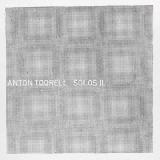
Anton Toorell’s second solo album, Solos II, deepens and intensifies the six-string language introduced on his 2022 debut, Solos. Rather than widening his scope, the Swedish guitarist, composer and producer sharpens his focus, homing in on the physical and sonic relationship between player, instrument and tuning. The result is three extended pieces of cascading tonality that feel disciplined yet light, their conceptual frameworks always secondary to the luminous sounds Toorell draws from two guitars.
Throughout Solos II, Toorell explores both the guitar’s potential for silvery, sometimes clashing textures and his own physical engagement with the instrument. Across ‘Volta’, ‘Cripta’ and ‘Scala’, he plays two guitars simultaneously: one fretted with the left hand using hammer-ons and pull-offs, while the right hand activates mostly open strings on a guitar resting in his lap. Despite the inherent complexity of this approach, the music never feels busy or demonstrative. Technique remains a quiet servant to Toorell’s compositional instincts and improvisational sensitivity.
The album leaves space for unplanned resonances and happy accidents, yet its structures are clear, resilient and finely balanced. The seventeen-minute ‘Volta’ unfolds as a shimmering continuum, its repeated figures gently reshaped through minute inflections, creating a sensation of constant motion. ‘Cripta’ spirals inward, cycling hypnotically in a way that recalls both Terry Riley’s iterative minimalism and the hallucinatory guitar loops of early Seefeel.
With the closing ‘Scala’, the recording environment comes fully into view. Captured in a 16th-century wine cellar at Palazzo Stabile in Piemonte, Italy, the room functions as a guiding presence and an implicit third instrument. Toorell tuned the guitars in response to the cellar’s reverberant character, seeking configurations that would open up the space itself.
France's near-revolution of May '68 was the zenith of that generation's struggle for a new kind of life. It kicked the country's small, but vibrant, counter-culture into overdrive, and birthed a local underground music scene. The bands it spawned made music with much less rock purity than groups from the UK and US. Their musical and cultural influences foregrounded improvisation, disjunction, and genre-blending: Soft Machine, Pink Floyd, Frank Zappa, free jazz, and radical politics. The introduction of the synthesiser in the early 1970s added fuel to the fire.
This collection of French underground music inaugurates a series to accompany "Synths, Sax & Situationists", the first English-language book to investigate this movement. It focuses on the music of the second wave of bands that emerged in 1972/3, which saw radicalised psychedelic and jazz influences merge with the future-music possibilities offered by new technology. The next volume will investigate the politically-charged bands that erupted in immediate aftermath of May '68.
The Buenos Aires–based producer’s second album on Umor Rex can be read on at least two levels. The most direct traces its origin to the influence of environmental music, as well as to some pioneers of electronic music. The album was recorded in a single session, making extensive use of loops that were later edited and condensed into the six pieces that make up Pequeño clima doméstico. This working method responds to a playful approach that runs through Entidad Animada’s musical intentions, which often start from a specific genre or aesthetic and then filter it through his own language.
From a more conceptual perspective, the record proposes music as a tool capable of modifying the perception of a moment. Rather than closed songs, the album functions as a device that allows one to tune a state, transform a space, or alter a mood. In this sense, it engages with the idea of functional music not as a utilitarian background, but as a means to equalize time, slow the pace, and reconfigure the listener’s emotional climate.
All songs written and performed by Entidad Animada. Recorded in August 2025 in Buenos Aires, Argentina.
Field recordings and processed textures by Guazuncho.
Mastered by José D’Agostino at Moloko Estudio, Frankfurt, Germany. Cover photo by Diego Berruecos. Layout by Daniel Castrejón.
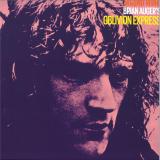
Strut Records highlights a landmark in British jazz-rock with Second Wind, the 1972 album from keyboard visionary Brian Auger and his powerhouse group Oblivion Express. Capturing a fully matured lineup, the record finds Auger expanding his fusion language - bridging jazz sophistication, funk-driven rhythm, and soul-infused songwriting with the clarity and fire that defined his early ’70s work.
Though Auger’s roots lie in the lineage of hard-swinging jazz organ and the improvisational fire of the ’60s British scene, he has never been an artist content with tradition. With Second Wind, he moves further into a hybrid language that fuses rhythm with harmonic depth and groove, without sacrificing sophistication. His playing is expansive yet precise, translating the electricity of live performance into a studio work that breathes with immediacy.
At the heart of this era of Oblivion Express is the telepathic rapport among its members. Vocalist Alex Ligertwood (in one of his earliest major recordings before Santana fame) brings a soulful intensity that feels both grounded and forward- looking. Second Wind contains tracks that have become deeply significant in Auger’s discography - original compositions Second Wind, and Truth to name a few - but it was Auger's high octane revisioning of Eddie Harris' Freedom Jazz Dance, (adding new lyrics to the original instrumental) that genuinely broke barriers. The track became a DJ friendly classic and highlighted the groups deeply original approach.
The rhythm section of Barry Dean and Robbie McIntosh balances weight and fluidity, giving Auger the space to stretch across Hammond organ, Rhodes, and keys with characteristic boldness. Their collective sound is one of seamless motion: jazz-inflected lines swelling into rock-driven crescendos, funk-leaning grooves locking with vocal hooks, moments of quiet clarity emerging between bursts of improvisation.
Second Wind stands as a pivotal moment in Auger’s discography: a record that bridges the exploratory spirit of his earlier projects with the more groove-oriented approach that would soon bring international attention. More than five decades later, it remains a vivid document of a band carving out its own language. Music born of instinct, collaboration, and a restless desire to push beyond the expected.
No en stock
Última entrega hace 7 meses disponible para reposición sin garantía
Yamila presents her second album on Umor Rex, Noor. Following Visions, Yamila returns with a work that merges nature-experience listening with expansive musicality. Noor was born from her time in an ecologist community, where she sought refuge in stillness, learned from animals, and tried to forget the human. In this communion with nature, she discovered a new compositional approach: reducing acoustic noise to allow unheard voices to emerge, transforming music into a possibility for interspecies dialogue.
Since ancient times, sound has been used to care for herds, to call across distances, to communicate with the non-human. Noor reimagines that ancestral role in a contemporary language, where epic harmonies collide with delicate micro-tonalities, and where rhythm unfolds not only as pulse but as movement for the body, a natural extension of Yamila’s work with dance companies and choreographers.
Her voice is interwoven with electronics and the resonant strings of Echo Collective, creating sonic landscapes that radiate intensity and fragility. At times monumental, at others almost whispered, Noor oscillates between composition and spontaneity, structure and suspension.
The album unfurls as a dialogue between the organic and the artificial, where sound grows like a sprout breaking through hard soil. Yamila’s music here is not only to be heard, but to be inhabited: a choreography of air, vibration, and resonance. Noor is both shelter and revelation, a reminder that music can still be epic, luminous, and deeply human, while listening beyond the human.
All music and voices by Yamila Ríos. Recorded at Destelheide by Christophe Albertijn. Strings by Trio Echo Collective (Violin: Margaret Hermant, Viola: Neil Leiter), (Cello: Stijn Kuppens), (Arrangements: Pierre Slinckx). Mastered by Rafael Anton Irisarri at Black Knoll Studio, NY. Photos by Assiah Alcázar. Design & layout by Daniel Castrejón.
No en stock
Última entrega hace 7 meses disponible para reposición sin garantía
A year and a half has passed since Slovak-Hungarian artist Adela Mede self-released her debut album ‘Szabadság’. Its liner notes described it as “a navigation”, a search through “the personal, familial, cultural, folkloric and geographic of her past and present.” Her second album, ‘Ne Lépj a Virágra’ no longer searches; here, she puts down roots and delves deeper into the earthy reality of her home, Central Europe. Mede sings in three languages with newfound conviction and grace – this is an album of profound faith and confidence in the potential of this fertile soil.
Composed and recorded during the last 18 months in Bratislava, Slovakia – a city where three countries meet, where the East and the West collide – 'Ne Lépj a Virárga' translates to “don't step on the flower”. Its themes – budding potential, recognizing the beauty in the ordinary, solidarity, turning despair into hope – emerged through Mede's wholehearted involvement with her community, teaching singing to both children and adults, and various grassroots volunteering initiatives. It features collaborations with local artists, Mede's singing students, as well as fellow Eastern European contemporary artists Martyna Basta and Wojciech Rusin.
Adela Mede embellishes carefully crafted songs with minimalist and folklore influences, but also embraces more experimental approaches. The result is a collection of quite varied yet consistent pieces which highlight Mede's proficiency as a singer, arranger, producer and improviser. It is a grounded, confident next step for the Bratislava-based artist. Whether her vocals are naked, heavily processed, warped and reversed, or looped and layered; whether the production is sparse and minimalist or overwhelming and swampy; none of that changes the fact that the gentle tentativeness of her debut is gone. This is “Central European music”, at its most striking and meaningful: patient, determined, embracing both complexity and possibility.
No en stock
Última entrega hace 8 meses disponible para reposición sin garantía
Finnish dub-techno craftsman TM Shuffle, head of Vuo Records, resurfaces with a deep and distilled EP that goes straight for the late-night heart of the dancefloor. Rooted in Tampere’s raw, analog dub sound, his productions have long balanced weight and warmth, smoked-out chords, rolling low-end and subtle shuffle that keeps the groove in constant motion.
The lead track “Kellari” dives into basement mode: pressure-cooker drums, slow-burning stabs and a humid, lived-in atmosphere that feels equally at home on a huge system or in headphones at 4 a.m. On the second original cut, TM Shuffle links up once again with long-time collaborator Monoder, the alias of Jussi-Pekka Parikka, known for his dubbed-out explorations on labels like Statik Entertainment and Pakkas-Levyt since the early 2000s. Their joint track stretches time, letting echo, tape hiss and distant melodic fragments float around a rock-solid groove, channelling years of shared studio language into one focused, hypnotic flow.
On the flip, Anton Kubikov (SCSI-9) steps in with a lush reinterpretation of Kellari. A true Russian techno veteran with a catalog that spans Kompakt, Force Tracks, Mayak and beyond, Kubikov melts the original into a widescreen, dream-state trip, soft-focus pads, gentle yet insistent percussion and that unmistakable rolling pulse that made his work so enduring. The remix doesn’t just extend the track; it opens a new dimension, turning the basement pressure into a slow-rising, celestial drift.
Pressed on limited coloured vinyl, this EP is built for selectors who like their dub techno deep, human and timeless, a record that will quietly live in bags for years and keep resurfacing whenever the room calls for true late-night elevation.
No en stock
Última entrega hace 42 días disponible para reposición sin garantía
Following the reissue of The Pocket of Fever, Ambient Sans presents the second chapter in Masahiro Sugaya’s visionary work for the avant-garde performing arts company Pappa TARAHUMARA.
Founded by Hiroshi Koike in 1982, Pappa TARAHUMARA blended dance, theater, music, and visual art into abstract, immersive stage worlds. Sugaya’s compositions became the sonic counterpart to this radical aesthetic—minimal yet deeply evocative, combining electronics, ambient textures, and delicate melodic gestures into a sound language both intimate and expansive.
Music From Alejo marks his first original stage score for the company: a work where repetition and silence intertwine with shimmering synthesizers and dreamlike motifs, conjuring atmospheres that feel suspended between reality and reverie. More structured than The Pocket of Fever yet equally poetic, the album reveals Sugaya’s gift for translating movement into sound, balancing modern composition with subtle echoes of Japanese tradition.
Reissued for the first time on vinyl, Music From Alejo includes a printed insert featuring an exclusive interview with the artist, alongside photographs from our visit to his home in Japan. Essential listening for anyone drawn to the ambient minimalism of Hiroshi Yoshimura, Midori Takada, or Brian Eno—reimagined here through the lens of Tokyo’s experimental scene of the 1980s.
No en stock
Última entrega hace 7 meses disponible para reposición sin garantía
Grupo um celebrate 50 years with release of lost dictatorship-era album nineteen seventy seven!
First time release - vinyl comes with printed innersleeves
Brazilian avant-jazz vanguardists Grupo Um celebrate their 50th anniversary, sharing a second previously lost 1970s album from the vaults. Nineteen Seventy Seven (titled after the year it was recorded) is another rip-roaring instrumental fusion treasure from the band which spawned from within Hermeto Pascoal’s famed mid-1970s São Paulo collective.
Like their debut album Starting Point, Grupo Um’s Nineteen Seventy Seven was recorded when Brazil's military dictatorship was at its most repressive. “There were no open doors to those who dreamt to be protagonists in creative instrumental music”, remembers drummer Zé Eduardo Nazario, “even popular composers and singers had to submit their songs to censors and many records were banned and confiscated from the stores.”
Just like Hermeto Pascoal's Viajando Com O Som (1977) and Grupo Um's previous album Starting Point (1975), both of which remained unreleased until the 21st century, Zé Eduardo asserts that the 1977 album was flatly 'without any chance to be released at that time."
Recorded at Rogério Duprat’s Vice-Versa Studios in São Paulo, the group were under both time and space restraints, “we chose the small Studio B,” Lelo Nazario recalls, “which had a Tascam (TE AC) 12x8 console and a 4-channel AMPEX AG 440 machine. Therefore, we had to record without overdubs, everything straight to tape.”
Expanding from a trio to a quintet, original Grupo Um members Lelo Nazario (keys), Zé Eduardo Nazario (drums), and Zeca Assumpção (bass) were joined by saxophonist Roberto Sion and percussionist Carlinhos Gonçalves. Carlinhos, Zé and Zeca had already played together in the group Mandala, while brothers Lelo and Zé had just finished a stint backing Hermeto Pascoal during his years in São Paulo.
Lelo was deeply immersed in modular synthesizer experimentation during this period, working extensively with the ARP2600 and EMS Synthi AKS. These electroacoustic explorations formed the sonic foundation for "Mobile/Stabile," one of his first compositions to merge modular synthesis with Brazilian music, a fusion that would ripple throughout the Brazilian jazz scene. The piece premiered at the first São Paulo International Jazz Festival in 1978, performed by Grupo Um with guest trumpeter Márcio Montarroyos. In a shocking moment, festival organizers interrupted the show mid-performance, sparking fierce backlash from both audience members and journalists who denounced the incident as artistic censorship during Brazil's era of political and cultural repression. The version on Nineteen Seventy Seven is the first recording of the composition.
Nineteen Seventy Seven combines Afro-Brazilian rhythm, modular synthesis and a plethora of whistles, percussion and effects pedals. Album opener “Absurdo Mudo” - so titled for the absurd difficulty it poses to the musicians performing it - starts out in a cloud of mysterious dissonance, before the haze breaks for a glorious keyboard and saxophone interplay atop an uptempo samba groove. “Cortejo dos Reis Negros (Version 2)” (Procession of the Black Kings), based on the maracatu rhythm, inverts the traditional jazz song structure by beginning with improvisations, which are followed by the theme and a final coda. “The studio also had two Parasound electronic reverb units,” Lelo notes, “and the timbre is very audible on the soprano sax and percussion.”
Grupo Um’s daring music represents a manifesto of resistance during the dictatorship years, but it’s one which remains just as relevant today. As Lelo puts it: “For me, the aesthetic issue has always been about combining contemporary avant-garde languages with Brazilian music, independent of categories and commercial interests. The result of this fusion takes music to a new level.”
Recording credits (1977)
Recorded at Vice-Versa B Studio, São Paulo, November 9, 1977
Produced by Lelo Nazario and Zé Eduardo Nazario
Engineered by Ricardo “Franja” Carvalheira
Lelo Nazario – Wurlitzer electric piano, acoustic piano, signal generator, percussion
Zé Eduardo Nazario – drums, percussion
Zeca Assumpção – electric bass
Carlinhos Gonçalves – percussion
Roberto Sion – soprano sax, clarinet
Release credits (2025)
Produced by UTOPIA Studio, São Paulo
Project Coordination in Brazil by Irati Antonio (Utopia Studio)
Tape Restoration and Digital Mastering by Lelo Nazario at Utopia Studio, July 2025
Liner Notes by Lelo Nazario and Zé Eduardo Nazario
Photography by Jorge Las Heras, Lelo Nazario, and artists' personal archives
Photo Restoration by Lelo Nazario
Artwork and Design by Alessandro Renaldin
"Brooklyn-based pianist Eva Novoa returns with The Freedom Suite: Novoa / Carter / Mela Trio, Vol. 2 — the second radiant release from her compelling trio with saxophone icon Daniel Carter and celebrated drummer Francisco Mela. This marks Novoa’s sixth album with 577 Records. The trio first came together live in 2021, followed by a series of performances, including appearances in Cambridge (Boston) and later at the Brooklyn edition of the NY Forward Festival.
"The Freedom Suite is an homage to jazz titan Duke Ellington — particularly his masterful big band suites and legendary orchestra featuring Johnny Hodges and other luminaries who helped define an era of jazz greatness. In contrast, Novoa presents her Suite in a more intimate format: the piano trio. The album comprises twelve pieces — mostly brief — with a few extended tracks such as Free to Be Free and Cyborgs.
"For this recording, Novoa also steps in as a vocalist on several tracks, including Mainstream Media, Big Grande, Global, Free to Be Free, Dream, and Cyborgs. These pieces often feature a vocal dialogue between Novoa and Mela, whose expressive, word-infused style draws from rich Cuban traditions.
'Words are powerful,' says Novoa. 'They define who we are, where we come from, and who we hope to become. Without words, there is no conversation — and without conversation, there is no real sense of time, space, or connection.'
The Freedom Suite emerged from deep philosophical and creative conversations — spoken, written, and improvised — between Novoa, Carter, and Mela. In the studio, Novoa introduced printed texts that served as thematic foundations for spontaneous, in-the-moment musical interpretation. The result is an urgent and organic interplay, where instruments speak to one another in a language as fluid as it is fearless.
"Standout track Cyborgs begins with Novoa’s percussive piano, exemplifying the trio’s dynamic, conversational energy. Creative Destruction features Novoa on electric harpsichord in a wild, electric exchange. While Free to Be Free stands out as the album’s leading single, it also captures the essence and message of the entire Suite.
"Recorded in 2021 at New York City’s legendary Sear Sound Studio, the album captures a creative explosion of sound and spirit. Novoa dazzles on piano, Fender Rhodes, electric harpsichord, Chinese gongs — even whistle — showcasing her expansive sonic palette. Together, the trio embodies the power of free improvisation and emotional storytelling.
"Originally from Barcelona, Spain, Eva Novoa has been cultivating her distinctive voice since childhood. Now a staple of the New York creative music scene, she has performed across the globe and collaborated with some of the most adventurous voices in jazz and beyond."
Since their formation, The Hirsch Effekt have carved out a unique niche in the German-speaking music scene. Yet, despite—or perhaps because of—their elusiveness, the band has captivated a devoted audience. Musically, The Hirsch Effekt have always embraced limitless possibilities. Acoustic, introspective moments—where bassist Ilja John Lappin brings out his cello or guitarist Nils Wittrock returns to his classical roots—sit naturally alongside massive progressive metal onslaughts. The band is equally at home on intimate club stages as they are at international festivals, evidenced by repeated appearances at Euroblast and numerous events across the UK. Recently, they toured Germany alongside scene giants like Leprous, Tesseract and traversed Europe with Caligula’s Horse. Yet between these extremes, The Hirsch Effekt continually create songs that flirt with radio accessibility—almost—because the band steadfastly resists any form of standardization. With their seventh album, Der Brauch, they continue this course uncompromisingly. While earlier works, despite their diversity, were still labeled “metal albums,” this new record explores paths first hinted at on the multilayered second album, Holon : Anamnesis—the same album that fans of VISIONS magazine voted the only German-language entry among the 20 best albums of all time. Der Brauch can be seen as a return to that pivotal point—and simultaneously as a bold step forward. Drummer Moritz Schmidt doesn’t entirely forgot blast beats, but the record demands a new heading. In the end, though, there is only one truth: it unmistakably sounds like The Hirsch Effekt.