Suche:second self

Styles
Alle
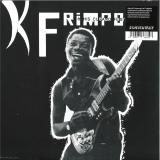
K. FRIMPONG & HIS CUBANO FIESTAS - THE BLACK ALBUM LP

Two Seminal albums from cult Ghanaian musician Alhaji K. Frimpong and his group the Cubano Fiestas, recorded in 1976 and 1977 respectively and considered to be some of the best highlife albums ever recorded, at the pinnacle of West African musical tradition and innovation.

Both originally self titled, they have become known by the colour of the covers - Blue and Black respectively. The Blue Album brings new arrangements to traditional Ghanaian melodies and features the masterpiece Kyenkyen Bi Adi M’awu (come back my love) - universally known in Ghana, covered and sampled by artists such as Chronnix, Gnarls Barkley and many more. The Black Album expands the electronic elements and features the equally visionary Hwehwe Mu Na Yi Wo Mpena, although the real gem is hiding on the B side: the extended groove of “Adam Nana”. Sinuously evolving guitar lines, clavinet vamps, harmonised vocal snatches and otherworldly percussion expand and contract over a full quarter of an hour - a Ghanaian repost to the Afro Jazz experiments going on at the same time on the other side of the Atlantic. Although popular in Ghana at the time of the release, the albums were never distributed internationally and original copies of the album are extremely rare.

The albums got a limited reissue in 2011 and have been unavailable since - even reissue copies sell for high prices on the second hand market

Auf Lager

Bei uns am Lager und sofort versandfertig

22,65
BAD BRAINS - BAD BRAINS

Bad Brains

BAD BRAINS

12inchORGMLP2179
ORG Music
19.09.2025

Bad Brains is the self-titled debut studio album recorded by American hardcore punk/reggae band Bad Brains. Recorded in 1981 and released on (then) cassette-only label ROIR on February 5, 1982, many fans refer to it as "The Yellow Tape" because of it's yellow packaging. Though Bad Brains had recorded the 16 song Black Dots album in 1979 and the 5-song Omega Sessions EP in 1980, the ROIR cassette was the band's first release of anything longer than a single. The release includes the original liner notes by Ira Kaplan of Yo La Tengo. This reissue marks the second release in the remaster campaign on the band's own Bad Brains Records imprint with Org Music. In coordination with the band, Org Music has overseen the restoration and remastering of the iconic Bad Brains' recordings. The audio was mastered by Dave Gardner at Infrasonic Mastering.

Auf Lager

Bei uns am Lager und sofort versandfertig

24,79
Alpyren - Musique de Niche Vol. 2

Musique de Niche Vol.1 barked for a Vol.2. The second opus of any relevant trilogy (did I just spoil a Vol.3?) undergoes always the hardest trial by fire: but the bois, Pierre Marty and Admo, once again delivered these flavors you didnt know your collection was missing.

Same city, different district and new inspirations: following the world premiere in Berlin of their Liveset, they hit the home studio, refining the last bits of this new EP and giving it a new twist while still echoing the first volume.

Tech-house yes, but is it really ?

Indecisiveness feels like we could've said maybe yes but no but...
Well: Alpyren did the quite impressive feat of pressing this feeling on a record - that's A1. The haunting voice sample is this sassy inner self trying to tell you whats up. At least, you're not alone: the quirky bleeps and the punchy bassline are there lending you a hand to make that surely bad decision.

By flipping the record or the usb, you get to the two tracks where they let their new inspirations hit the speakers.

B1 is out before GTA VI, but it could've been in the soundtrack if the game was actually happening between Los Santos and Marseille.G-funk with the Alpyren touch: for the floor, a tune that will make you sway. Broken beats, almost broken legs.

B2 is the freaky one of the bunch: starts with the gloomy sound signature of the duo, but we're back with more 80's inspirations.Darker synth pop with a twist: you end up following the kick with the head bobbing in sync, while all the FX sounds bring to the track this extra spice.

It's 5pm here at the Ordinateuf HQ and we've just finished listening to the latest masters of the new E.P by Alpyren 'Musique de Niche vol2'. Before we're back to more phone calls, we'd like to thank all the friends that bought the first volume: the support has been quite amazing so far.

Enjoy this new one - its got our paw of approval.

Auf Lager

Bei uns am Lager und sofort versandfertig

12,98
Stefan Wesolowski - Song of the Night Mists LP

The writer Max Sebald often pondered over the nature of human memory, specifically, how our thoughts and desires - and their results - overlap and mutate over time. In A Place in the Country, he writes of the significance of what see as “similarities, overlaps and coincidences”. Are they the “delusions” of the self and senses, or manifestations of “an order underlying the chaos of human relationships, ... which lies beyond our comprehension”?

Song of the Night Mists, the new album by post-classical composer Stefan Wesołowski, often feels it draws on Sebald’s premise.

On a simpler plane, the one where the market dictates the neatly ordered information we consume, Song of the Night Mists can be described thus: recorded in the main by Stefan Wesołowski in Gdańsk, both in his studio and in Saint Nicholas' Basilica, the album incorporates acoustic instruments - piano, violin, double bass - and classic synthesizers such as the Roland Jupiter-8, the Soviet Polivoks. A Roland Space Echo RE-150 tape delay was also pressed into service as an instrument. We also hear the basillica’s organ and field recordings from the Tatra Mountains. Other musicians were Maja Miro, who played the flute parts on ‘Glacial Troughs’ and brother Piotr Wesołowski, who played the organ on ‘Wilhelm Tombeau’. Sound engineer was Marcin Nenko, who was also on hand to record the basilica organ parts. The album was mixed in New York by Al Carlson (Oneohtrix Point Never, Jessica Pratt, Zola Jesus, Lady Gaga, and Liturgy) and Rafael Anton Irisarri handled the mastering.

Ostensibly, Song of the Night Mists is the last in a trilogy, following on from albums Liebestod (2013) and Rite of the End (2017). All three deal with existential matters such as love, death, decay and “an ultimate end”; apocalyptic and Promethean in spirit, and betraying very human conceits. The Sebaldian nature of the new record starts to make itself felt when Wesołowski talks of how he used sampling. One element is unexpected, that of sampling himself: “I go back to dozens of my own unused sketches and recordings, treating them as raw material to cut, slow down, reverse, and transform in every possible way.” Memory as sound, to be reemployed by the listener through their own imaginings.

Another set of samples made by Wesołowski plays another role. These are field recordings, originally created for an audio illustration of the formation of the Tatra Mountains, and used in a film by sound designer Michał Fojcik. Wesołowski: “You can hear cracking ice, streams, footsteps in the snow and the wind, and a real avalanche, recorded from the inside.” The “Tatra connection” on the album is also found in samples referencing composer Karol Szymanowski. The album’s title alludes to a poem about the mountains by Polish poet, Kazimierz Przerwa-Tetmajer.

Wesołowski’s Tatra recordings are “about a world without humans - about the fact that the world existed, was beautiful, and had meaning long before people arrived, and for the vast majority of its history, it was a place without us.” Wesołowski, using one iteration of the natural world, plays out in sound Sebald’s idea of another order, underlying the chaos of human relationships lying beyond human comprehension.

These feelings play themselves out on the five album tracks. Sonorous and rich, they illustrate tectonic shifts we have no control over. Wesołowski hints that the overall sound is a “meditation on the metaphysics of the non-human set against the spirituality that human presence has brought into it.” In that light, the opening number, ‘Core’, with its slow build, and crackling and straining sound effects, create an effect of the earth groaning into life in a creation myth. Once the piano part raps out a simple melody and modulated tonguing trumpet samples add to the overall atmosphere, the listener can certainly find a cue in the “spiritual”, or “human” side of the story. Human versus nature: from the strains and harmonic muscle stretches of the second number, ‘Glacial Troughs’, through to the powerful and filmic ‘Stalagmite’ and heart-on-sleeve romance expressed in closer, ‘Wilhelm Tombeau’, we listeners are cast as Friedrich’s wanderer, looking out over a landscape that will appear only if we engage with it.

Formations of melody appear incrementally, almost appearing by chance - like hidden footings in the rock shelves to give us something to grasp onto. Rhythms are used sparsely: the prolonged percussive taps on ‘Glacial Troughs’ are an anomaly and maybe there to give pace to the album to come; essentially to keep the listener strapped in. Elsewhere, percussion is used as an aid to mood, the two thudding, timpani-style passages on ‘Peak’ there to offset the short, beautiful, kosmische passage that splits them.

Elements of the borderline religious spirit that drove German electronic music in the late 1960s and 1970s also find a place on Song of the Night Mists. The swells and recessions of the organ find their emotional climax on ‘Wilhelm Tombeau’, a track which summons up echoes of the “mountain magic” vistas created by Popol Vuh or Tangerine Dream, especially with the slightly atonal wobble of the Mellotron that counters it.

This is a dramatic album, but it does feel a strangely short, or curtailed listen on ending, evoking the feeling one gets when waking from a dream, and, for all its incipient grandeur, a track like ‘Stalagmite’, for instance, ends on a minor note. Wesołowski admits that Song of the Night Mists is born of the all too human process of temptation, doubt and recalibration - Sebaldian overlaps and coincidences forming something that must live another life, away from its creator. In Wesołowski’s words, the album is “a newborn foal must stand up and walk right after birth.” Now it is yours to ponder.

Auf Lager

Bei uns am Lager und sofort versandfertig

28,53
Aerae - Nefanda

Aerae

Nefanda

12inchSMDE51
Samurai Music
25.07.2025

Plying refracted rhythms with an exacting poise, Aerae arrives on Samurai Music with a fully formed sound that plumbs the depths between techno immersion and D&B beat science.

An accomplished, palpable tension runs throughout Nefanda, Aerae's second solo release. Following up on the meditative pulse of her debut album on Annulled Music last year, the Paris-based artist digs deeper into ominous atmospheres filled with evocative reverb decays and taut, dynamic drum work - tools she wields to Redner tracks with specific meaning, coded by the Latin framing that runs through all aspects of her musical output. Contemplating the ancient language as an inescapable part of her European roots, on Nefanda Aerae ruminates on external trials and inner impulses, and conjures a jaw-clenching soundtrack to match.

'Mons' (translation: 'Mountain') speaks to challenges, strength and spiritual ascent, marked out by an urgent thrum of conga slaps and a 4/4 kick around the 170 BPM mark that finds power in minimalism even at the relatively high tempo.
The title track opts for a more broken framework, pivoting pointed percussion around a deft sub pulse while turning up the intensity with an exacting poise.

'Nefanda' translates as 'unspeakable,' or 'too horrific to name,' and the fraught, synthetic wraiths contorting through the track convey the dread the title implies.
'Fovea' (translation: 'pit') burrows deeper into spatial design with a looming low end rumble and subliminal sound sculpture, shaping out a dark, introspective chasm tipped towards disassociation. It's a powerful statement in any setting, but the all-consuming bass feels especially crafted for full, physical sound system immersion.

'Phrenesis' (translation: 'frenzy') rounds the EP out in fierce form, building up a high-pressure arrangement from ambient beginnings with ruthless control. There's a sense of duality in motion between half-time and double-time rhythmic elements, every incremental shift adding to the intensity of the track with the elegant, impactful touch that has fast become Aerae's calling card.

Finding her own language within the dialogue between techno, D&B and dark ambient, Aerae's music makes a vivid impression thanks to the ideas and intention that drive her in the studio. Nefanda confirms her status as a leading light in deep, psychedelic dance music, making something extremely personal that also reaches out beyond notions of the self like all the best transcendental music.

Auf Lager

Bei uns am Lager und sofort versandfertig

14,71
AV1 - Waves + Plants Pt. 2

Av1

Waves + Plants Pt. 2

12inchALT004.2
ALT Records
17.07.2025

The fourth release on ALT, the sub label of Cartulis Music, sees the return of AV1, the freshly formed French duo composed of Chris Carrier and Le Loup. Following the success of Waves + Plants Pt. 1 (ALT004.1), the pair now delivers the highly anticipated second chapter, pushing the boundaries of their sonic exploration

AV1 is the result of a deep-rooted connection between two of the most respected names in the Parisian underground scene. Chris Carrier, a prolific producer and DJ since the late ‘90s, has carved out a legacy with his unmistakable approach to house and techno. Le Loup, equally revered for his refined touch and forward-thinking productions, brings his own signature style to the table. Together, they craft an electrifying synergy built on a shared love for acid, deep grooves, and classicist house/techno foundations.

Waves + Plants Pt. 2 (ALT004.2) expands on the energy of the first release, offering a fivetrack journey through a diverse soundscape. Blurring the lines between trance, techno, breaks, and experimental sounds, the EP showcases AV1’s ability to merge different sonic textures into a cohesive, cutting-edge release. From hypnotic acid sequences to raw drum programming and ethereal atmospheres, each track presents a unique side of their creative vision.

This latest installment solidifies AV1’s place as a standout project in contemporary electronic music and reaffirms ALT’s commitment to releasing forward-thinking, genre-defying sounds.

Auf Lager

Bei uns am Lager und sofort versandfertig

14,08
Selfsame - False 02

Selfsame

False 02

12inchFALSE02
False Aralia
04.07.2025

‘selfsame’, the second 12” on false aralia, mirrors the structure of companion release ‘zero key’ in presenting an iterative exploration of versioning itself, unspooling a line of flight through four ascending rhythmic configurations. the objects at the center remain hard to glimpse: holographic percussion, snatches of breath, contorted blue chords, and roiling subs phase in and out of perception, interlocking, dissipating and reappearing as familiar silhouettes. the slow and quick domains of rhythm superimpose and bifurcate, perpetually just out of grasp, only visible in mutual reflection. the apparent solidity of the structure dissolves into a froth of microscopic activity upon close inspection.

Auf Lager

Bei uns am Lager und sofort versandfertig

23,32
Julien Mier - Gradually

Gradually, the latest album by Julien Mier, is a sonic journey that delves into the transitions of life, identity, and the blurred boundaries between art and personal growth. With a trilingual brain, Mier reflects on how language shifts have shaped his sense of self throughout his life and the music that he writes. Gradually is his exploration of shapelessness—an urge to break free from rigid musical genres and get closer to his most fundamental expression. The album is composed of nine tracks, each representing a distinct cultural and linguistic influence, all tied together by the theme of gradual evolution.

The first section, Ciel, Soleil, and Espace (French for Sky, Sun, and Space), draws on Mier’s French heritage, evoking the feeling of childhood memories bathed in a warm, nostalgic glow. This fluid, atmospheric section mirrors the soft, ever-changing air, symbolising a time of pure, untainted intention. It feels like a hazy, sepia-toned dream, as fleeting and elusive as the scent of an old friend. The gentle flow of the music mirrors the flow of wind, effortlessly shifting from one element to the next, a reflection of the innocence and clarity of youth.

The second section, Steen, Zee, and Zand (Dutch for Stone, Sea, and Sand), channels the influence of Mier’s childhood in a small Dutch dune village. These tracks are grounded in the hard-edged textures of electronic dance music, a genre that introduced him to a world of rhythm and movement. With a sonic palette of blues, greys, and more defined shapes, this section captures the solid, enduring forces of nature—earth, water, and stone. It’s a sonic landscape rooted in stability, a foundation from which everything can grow. The tracks build from the fluidity of the first section into more structured, rhythmic territories, mirroring the natural transition from childhood innocence to the discovery of deeper, more grounded musical influences.

The final section, Scrap (a collaborative track with the Japanese producer Daisuke Tanabe), Soil, and Spark, dives into the exploration of the world beyond familiar borders. Mier’s relocation from the Netherlands to Australia in 2016 is reflected in these pieces, which grapple with the contrast and complexity of different cultures and environments. These tracks are tinged with rust-red hues and a sense of eroded beauty, evoking a more fragmented, distorted view of the world. The music here is marked by tension, conflict, and the erosion of once-solid forms—symbolic of the digital and ecological storms that shape our modern existence. The closing piece, Spark, signals a new beginning, a hopeful initiation into the cycle of renewal.

The album artwork for Gradually is a conclusive visual representation of this journey, captured in the final frame of an analog film roll that began in the Netherlands and concluded with an image of the streets of Sydney, Australia—a perfect metaphor for the album’s narrative of gradual transition and discovery.

Auf Lager

Bei uns am Lager und sofort versandfertig

24,16
Robin Félix / Christian Pauchon - Incantation

For his second output on his own label, the Swiss electronic composer Robin Félix, takes this time the listener to West-Africa ; that said, Incantation is lightyears away from “world music”, but closer to the first “Fourth World” LP Jon Hassell recorded with Brian Eno. Moreover, Robin has teamed up with fellow Swiss sculptor, Christian Pauchon, who makes “woodoorina”, inspired by “bolis”, some rather objects used by the Bamanas in Mali and neighbouring countries, that ethnologists view as “fascinating mediators between man and his environment” ; a topic that led the Mauritanian Abderrahmane Sissako and Damon Albarn to compose the opera, The Theft of the Boli. Right from the outset of Goat Skin, one realises that Robin has applied his idiosyncratic way of (mis)treating field-recordings, to dissect and re-model an array of woodoorina calls (sometimes close to drones) entwined to a rhythmic pulse, conjuring up a starry night under which a shaman, adresses his incantations to the spirits of Nature. Robin Félix being who he is, as soon as Corten, his form of quiet electronics show that he is no stranger to Throbbing Gristle or Cosey Fanni Tutti, the self-explanatory Ritual Smoke taking it a little further. The spellbinding organic basses of Rains and Cauris, fused to textures that remind the experiments of David Toop and the electroacoustics of Pierre Henry, lead the listener even deeper into a contemporary avatar of a spiritual journey. In tune with the “call and response” mode, ubiquitous in African music, Pangi brings the EP even closer to the beating heart of the continent, the interactions of the sculptor and the composer blending to such a point that one may wonder if they have exchanged roles. As a meeting point of disciplines and art forms which are not supposed to meet, Incantation is also a convincing demonstration of what the word “inspiration” means, the superb visuals included ; of course, it requires a lot of finesse and respect on all sides

Auf Lager

Bei uns am Lager und sofort versandfertig

15,34
Hector Plimmer - Infinity Mirrors

DJ Support: Gilles Peterson (BBC Radio 6 Music), Tom Ravenscroft/Deb Grant – New Music Fix (BBC Radio 6 Music), Huey Morgan (BBC Radio 6 Music)

Infinity Mirrors is a representation of the ongoing process of learning about who we are and how we chose to live our lives. Taking moments to reflect on where we have come from, where we currently are, and where we might be going.

Thematically, this record explores a breadth of human experiences… Yearning to be with loved ones far away, battling with anxiety, recognising love felt for the first time, welcoming life into the world, learning to go with the flow & not get caught up on focusing on things that don't necessarily matter.

Written, developed and reworked over the five year period since second album Next to Nothing.

The process of this album spanned over two different studios, birth, death, the pandemic and more. Almost all of the music on this record was started between 2020 & 2021. It’s been an enlightening experience being able to go back to old tracks and re-work them to bring them up to date based on my lived experiences up until that point. With each new revision I have learnt something else about my creative practice and brought my current self into the music whilst also maintaining where I’ve been at previously.

This album has the most features on any of my records to date, both long time and brand new collaborators with guest appearances from Laura Misch, Marysia Osu, Andrew Ashong, Julia Biel, Dariés Street-Soul, Tawiah, Alexa Harley, Rohan Ayinde and Alex Cosmo Blake.

Auf Lager

Bei uns am Lager und sofort versandfertig

20,97
LU:K - UNITITLED

Lu:k

UNITITLED

12inchMMV003
MEMME VAEV
04.06.2025

*all original recordings from mid 90s Estonian released cassettes. Fascinating interpretations of the UK breakbeat and Jungle sounds recorded when the world felt like a much bigger place.

Since hearing the first breakbeats via the Finnish radio nightly shows introducing the burgeoning UK scene, Virko Veskoja, later head figure of Lu:k, was completely swept away by this new technological language that sounded like machines trying to initiate contact with people. The fluttering rhythm patterns, strings and vocal lines haunting the pathways of the infinite network. Like hip hop taken over by Skynet.

Reimagining it all in mid-90’s Estonia, a fresh and dirt-poor republic newly welcomed to the family of sovereign states on the outskirts of Eastern Europe, was challenging, to say the least. Finally, with the help of entry level music programs, custom-made soundcards and self-built computers by the other Lu:k-head Tõnis Valk, Lu:k took the first tentative steps in the history of Estonian jungle.

Eight Lu:k cuts have been compiled into a handy selection, a true sign of the times when uncertainty came with certain hope and optimism – new territories to chart, new frontiers to conquer. A time of innocence captured so sublimely in Lu:k’s music.

The compilation starts with menacing orchestration that sounds like the birth of a civilization, like in „2001: A Space Odyssey“, or the arrival of Godzilla, only to give way to sweeeet strings and the inimitable Minnie Riperton in “Lovin U”, combining all the essential elements of Lu:k in a track that has remained uncorroded by time since its inception in 1994.

The following “Demo 3” is its antithesis – fast and nervous, a harbinger of the darker days of neurofunk and techstep ahead. More in line with the social realities of the time, when something (or someone) could materialise out of thin air and attack you just as violently as those beats here.

“La:v” was Lu:k’s signature track throughout their brief career that went on only for a few years, 1994-1997. Lifted to heaven’s by Petula Clarks’s wonderful vocals, it perfectly captures the pure essence of creation. “I made it in my bedroom. Something like that just came out. Sorry”, says Virko apologetically.

From the themes of love we are led towards darker scenarios again with “Drunk-Drive”, a more vengeful cut reminiscent of early Ram Records’ nocturnal dangers, skylines shaped by basslines. Previously only available on the uber-rare “Raadiomaja valvelauas” CD compilation from 2005.

“In the Limelight” is lifted from their second album “Dreams in Drums” from 1996 (only released on cassette), and if it’s meant to address their new-found underground celebrity status in Estonia, there is surprisingly little elation here – the track rather consists of introspective strings and beats that sound almost melancholic.

Out of the remaining three tracks, “Proov2mix” and “Kadunud leitud” are the result of a treasure hunt amongst the old, obsolete harddrives – little nuggets that were condemned to obscurity until now. Between them, another vocal-led cut “010”, a non-album track only featured on two comps until now, is a strong reminder of Lu:k’s prodigious ability to handle vocal lines and morph them together with their own weaving synthetic melodies, strong pads and commanding beats.

Lu:k’s music has been largely unavailable for the better part of this century, with original tapes and CD’s changing hands for a small fortune. This vinyl release couldn’t come at a better time, bringing a seminal chapter of Estonian dance music’s mythical history to light again, both for the old-school acolytes and new converts.

All music by Virko Veskoja

Auf Lager

Bei uns am Lager und sofort versandfertig

15,92
LUC-HUBERT SEJOR - MIZIK FILAMONIK: SPIRITUAL SOUND

180 G. BLACK VINYL WITH LINER NOTES IN CREOLE, FRENCH, ENGLISH

Originally released in 1979, "Spiritual Sound" lives up to its name, a soaring, triumphant album, six tracks of spirit magic from Guadeloupe.

Telluric, intense, terribly alive, the gwoka drums of Guadeloupe carry the identity of a painful and fervent island. Marked forever by the crime of slavery, Guadeloupe's créolité cherishes the ka drums and their natural environment: the low-pitched boula drum with male goatskin, the high-pitched soloist makè drum with female goatskin, the chacha, ti bwa, triangle, calabash and other percussion instruments that surround them, and the voices - the fiery, proud, timbred, urgent voices of the gwoka.


This album is also a legend for its voices: in his then dazzling youth, singer Lukuber Séjor was one of the first gwoka artists to largely feminize the chorus of répondè, who converse with his text delivered in a straight and powerful voice.

And everything here sets new standards. In 1979, Mizik Filamonik - Spiritual Sound proclaimed a spiritual patriotism of ferocious intensity. The album by Lukuber Séjor - whose spelling alone is a battle - sets out to give Guadeloupe the intangible weapons of self-respect and self-knowledge, through a singular practice of traditional music.

The genesis of gwoka music is less straightforward than one might imagine... The drums performed the servile task of accompanying the work of slaves in the fields and during the “corvées” imposed by the administration, before being freely practiced by the common people after the abolition of 1848. At the heart of the conviviality of the Guadeloupeans furthest from the cities - geographically and socially - the gwoka drums come out for carnival, funeral wakes and neighborhood celebrations, but also during strikes, fits of anger and armed vigils of the riots and revolts that have punctuated the island's history. For generations, governors of the colony and then the prefects of the overseas department of Guadeloupe have been viewing the gwoka as a potential for turbulence and a threat to public order.

But as the Beatlesmania, “chanson engagée” and rock revolutions unfolded in Europe, young people turned to the drums of mizik a vié nèg (“bad negro music”, in Creole), which Guadeloupeans had learned to despise by following the “assimilation” process advocated by the school system and most of the political class. At the end of the sixties, in a Guadeloupe mourning the deadly repression of the May 1967 social movement, they played traditional music, refusing to wrap it up in tourist prettiness and madras folk costumes. Instinctively, they played a rough and contemporary gwoka, led by the incendiary Guy Konkèt. This was the era of decisive 45 rpm records such as Robert Loyson's Kann a la richès, which brought to light the fieriest words of union rallies.

At his home in Sainte-Anne, Lukuber Séjor played with flautist Olivier Vamur and his brother Claude Vamur, who cobbled together a drum kit from tin crockery and became, a few years later, the most influential drummer in Kassav'.

These were the years of the Bumidom program, when young Guadeloupeans were encouraged to emigrate to mainland France. At the age of twenty, Lukuber Séjor embarked on the liner Irpinia, disembarking at Le Havre and taking the train to the Gare Saint-Lazare - the route taken by thousands of young West Indians who went on to study or looked for work, all the while trying to maintain a link with their homeland. In this case, it's at the Antony university residence, where Lukuber played the drum and participated in a thousand gwoka updates and aggiornamentos, while exile reinforced the need for a spiritual link with the native land.

In 1978, Guy Konkèt played at the Salle Wagram, a historic event for West Indian music. After serving as répondè - i.e. backing vocalist - on one of his home-recorded albums, Lukuber joined his live band. Little by little, he became one of the key artists on a circuit parallel to French show business. At a student party in Caen, he met a young woman from Martinique who, at the time, was more motivated by her ambitions as a visual artist than by her vocation as a musician. Her name was Jocelyne Béroard and, a few years before she plunged into the Kassav' adventure and became the greatest West Indian singer of her generation, she designed the cover of Lukuber Séjor's LP.

This ambition was obvious and imposed its will. A more or less regular band was formed, with Roger Raspail, Rudy Mompière and Éric Danquin on ka drums, Claude Vamur on ti bwa, Olivier Vamur and Françoise Lancréot on flutes and Annick Noël on keyboards. Lukuber Séjor is set on wanting to extend the gwoka palette to other instruments, as the jazz-rock revolution opens a thousand new doors. Annick Noël will play a wide range of timbres and textures on electric piano and synthesizer. Another novelty: the répondè are two men and two women, Roger Raspail, Olivier Vamur, Françoise Lancréot and Maryann Mathéus ...

Mizik Filamonik - Spiritual Sound is a self-production in which the singer and leader sank all his savings, allowing him no more than a single day in the studio. The first side is more of a musical manifesto, with the first two tracks, Éritage and Penn é plézi, being instrumentals. The third, Son, forcefully celebrates the need for Guadeloupeans to connect with the gwoka. In fact, Jocelyne Béroard's cover shows a tambouyé in the shadow of a cloudy sky, against which a radiant sun is rising and whose light will soon flood the entire landscape. The silhouette and face of this man strongly evoke the immense Vélo, master of the ka, rejected at the time on the fringes of society.

The second side of the LP is surprising. Formally, three tracks are explicitly linked like the three parts of a triptych. Primyé voyaj evokes the appalling tribulation of Africans deported as slaves to Guadeloupe; dézyèm voyaj speaks of the Bumidom program and the economic, political and social forces driving young Guadeloupeans towards the mirage of prosperity in France; twazyèm voyaj closes the cycle with the emigrants' return from Europe after years away from their island...

This gwoka, obsessed with the need to save Guadeloupe spiritually, appeals far beyond the politicized audience. Mizik Filamonik - Spiritual Sound instantly became a classic, although Lukuber Séjor never really made a career for himself as a musician.

After all, the album was released in 1980, with no promotional resources in France or Guadeloupe - and therefore no concerts. The thirty-two-year-old author, composer and performer made his own third trip back to Guadeloupe. He set up a small woodworking business, which he lost in Hurricane Hugo in 1989. His other activity, teaching in a medical-educational institute, became the core of his professional life. He continued to be an active campaigner - a campaigner for the Creole language, a campaigner for the reawakening of identity, a campaigner for special education, a campaigner for a thousand causes that he ignited with his generous and perceptive enthusiasm, such as the defense of breadfruit fries...

The echoes of his 1979 album have not died down. Of course, the use of Penn é plézi as the theme tune for Radio Guadeloupe's funeral notices from 1980 to 1992 kept him in the collective memory, but he continues to sing and compose sporadically, as with his all-female

vocal group Vwapoulouéka... Still convinced that music is a means of liberating the spirit, he continues the journey of a young man eager to deploy the power of Creole music and language.

Bertrand Dicale
Auf Lager

Bei uns am Lager und sofort versandfertig

19,75
Luna Soul - First Move LP

Luna Soul

First Move LP

12inchLEGO368VL
LEGERE RECORDINGS
23.04.2025

"First Move" is the debut album from Luna Soul, founded by the German-Spanish duo Lisa Michèle Lietz and Jordi Arnau Rubio.

Lisa Michèle Lietz comes from Schwerin, learned the guitar from Ernst Ulrich Deuker, the bassist of German NDW heroes Ideal, and is a studied musicologist. Jordi Arnau Rubio was born in Barcelona. He left Spain as a teenager to work as a professional dancer throughout Europe. As a composer, Rubio draws inspiration from blues, jazz, soul and funk. They both started Luna Soul in 2019 and have since toured extensively through Germany, Spain and France. The ten songs from "First Move" carry the energy of countless live performances and were composed with sensitivity by Lietz and Rubio. Joel Sarakula, Daniel Fell and Paul Milne co-worked as songwriters on some of the songs. Sarakula also took over the production and gave the album its finishing touches.

The opener "Grow" is a heartfelt ode to resilience and self-discovery, before "No Way Home" paves the way to the dance floor with subtly interwoven funk and celebrates freedom and carefree joie de vivre. The first single "1979" gives the album a Mediterranean touch. The Spanish guitar provides an authentic and refreshing sound. With "Lights Out" and "City Lights," "First Move" delves deeper into the 1970s with a mood of nostalgia, optimism and urban promise: "The nighttime city skyline is a great metaphor for navigating through emotions when composing," Lietz and Rubio explain. "In our loneliness, we don't walk alone" it says in "City Lights": "We firmly believe that in moments of pain and coping with loss there are silent, invisible connections that carry us along, especially in challenging life situations, and provide a grounding. They provide support and hope in our increasingly digitalized world."

"Take yourself higher, you know you gotta do it" – that's the powerful message in "Hold On", the appropriate opener on the second side of the vinyl LP. With "Winterdance" and "Obvious" the album effortlessly glides through the sound aesthetics of the late Seventies and early Eighties.

"Just For Us Tonight" and "One More Night" finally sum up Lietz and Rubio's central credo: "It's about surrendering to the fascination of the moment," explain Luna Soul, "finding comfort in the midst of chaos and to celebrate those fleeting sparks of interpersonal connection that drive us and make us alive."

Auf Lager

Bei uns am Lager und sofort versandfertig

18,45
RED PIG FLOWER - PRACTICE LOVE LP 2x12"

Red Pig Flower brings you her sensational debut album Practice Love, available on Sound Of Vast from 10th April. Her unique sound sits upon the apex of a three-sided pyramid. With Berlin, Tokyo and Seoul as the base, Red is a third culture kid, greater than the sum of her parts. The centre is filled with her incredible appreciation and knowledge of house and electronic music from every pin drop through history.

So taken with Red Pig Flower’s sound, Honey Dijon invited Red to her Southbank Centre show to play alongside her. Moxie loves her that much, that she invited Red to record a mix and to guest on her NTS show. Alan Fitzpatrick, and Just Her are amongst Red’s growing posse of followers.

Practice Love is a culmination of all of Red Pig Flower’s life experiences, brimming with her positive energy and an outlook on life of pure love. Red has collaborated with like-minded artists at every level: the music, the cover art and video all produced with talented friends, who get Red as the wonderful person she is and understand her vision. Her label partner and good friend, Knock in particular helped make Practice Love the incredible album it is. So intuitive is their musical symbiosis, they made 20 tracks and carefully curated and ordered nine of these, making an album of tracks that stand out on their own, yet flow perfectly as an album. Practice Love will make you feel joyous when you play it. By the end, you will feel like you know Red like a friend.

Practice Love kicks off with I don’t care, it makes you feel good: a dreamy, tribal mantra of a track that does exactly what it says on the tin. Next up is I Love To Dance. Red’s beautiful soft vocal is sweet yet poignant, leaving you in no doubt of her sincerity. Thirdly comes Feel Good Music. Are you getting a feel from the track names yet that this is an album of warmth and positivity? You can imagine this one at a Café Del Mar sunset, where those who get the spirituality of Ibiza come together, in the moment to appreciate the beauty of a sunset and understand that no matter how many you see, each is magical and unique.

The three tracks so far have taken you to twilight. The titular Practice Love takes you by the hand onto the dancefloor. There is a double meaning to ‘Practice Love’- The first is to make love your practice. The second is that you need to practice love to be able to become a practitioner of love. The video, shot by her friend Jelly, features Red Pig Flower in Brick Lane, London, wearing a little piggy mask and offering free hugs. The first passersby ignore her sign, but Red isn’t disheartened, spreading the right message, dancing with joy. Her optimism is rewarded, making peoples day better on a cold English afternoon.

Fifth track Sax and Drugs takes things a little sleazier, the beat is filthy and the synths are sexy. Your body starts to move to this one before your brain even realises. The incredible Declan McDermott joins on saxophone, the funkiest synths and Red’s sultry vocal washing your soul with Laurent Garnier inspired sunlight. On Thisiz House Music, again featuring Declan, Red takes you even further back. About Frankie Knuckles O’Clock, with a portal straight to 2025.

By now, you will agree with me that Practice Love flows so, so well. I Wanna Meet Somebody follows incredibly, continuing the feeling that if you close your eyes, you’re dancing with David Mancuso at the Loft. No Money completes this EP-within-an-album. Perfect vocal samples, valve synth riff and 808 drum patterns showing that producers as good as Red Pig Flower make it sound effortless. The best albums finish memorably and No Genre is one of those perfect finishers. Think Andrew Wetherall’s production on Screamadelica. The lights are up in the club, nobody wants to go home, arms in the air wanting more.

Red Pig Flower explains: Practice Love resonates deeply with me because house music has always been a sanctuary—a place for unity, joy, and self-expression. As a nomad and outsider, club culture and house music became my shelter. The cities I’ve lived in—Seoul, Tokyo, Berlin, and London and more—nurtured me and shaped who I am today. That’s why the cover, by the incredible Carlos Sulpizio features their skylines, and the album is multilingual, representing the diverse influences in my life.

Practice Love is like a meal that has been prepared lovingly. They always taste better. And there’s plenty more to come from Red Pig Flower. How was your appetizer?

Auf Lager

Bei uns am Lager und sofort versandfertig

25,84
Celia - No Boca Do Sol / A Hora E Essa

Two tracks from Celia's awesome, sought after, second self-titled LP from 1972. 'Na Boca Do Sol' was written and arranged by Arthur Verocai and Vitor Martins, the original of which appeared on Verocai's self-titled LP. Fuzz guitar, drums, strings and Celias vocal combine to create an epic. 'A Hora é Essa' is the first track from the LP, a brilliant samba-funk workout, with strings and piano.
Also originally released as a 7' in 1972 on Continental, which is very difficult to get hold of now.

Auf Lager

Bei uns am Lager und sofort versandfertig

13,40
Persian - Questions EP

Emotional Especial returns to the music of Peter Reilly aka Persian, with a second EP diving into his extensive catalogue to celebrate this cult artist and evaluate his recent decision to retire from music production.

For over 20 years Reilly has been an exemplary electronic producer, a producer’s producer, a DJs producer, releasing over 50 EPs that crossed genres, from Breaks to Digidub, Electro to Garage, House to Jungle and on and on.

If this release is to act as an epitaph, then its exploration of Reilly’s wonderful programming, sampling and understanding of emotions is laid bare. Spread across a series of self-released edits hidden within limited run EPs, Questions appeared as something akin to beats interludes, across numerous releases over the last 10 years.

Bringing the best versions together on one EP, Questions 1, 2, 5, 3 and 7 have been re-edited, extended and sequenced into a continuous mix especially for this finale. Starting with the ambient breaks of Questions 1, this is a Balearic beginning where bubbling acid meets haunting refrain, before segueing effortlessly into the sunrise breaks of Questions 2. A nod to Carl Craig’s classic Incognito remix, the solo keys add a touch of jazz to a glide by shooting melody.

Side 2 rises. Question 5 heralds a half stepper Dub bassline riding the Amen breaks, the now familiar Brando sample, a wormhole in your brain that ties the EP together, joining the dots as strings float skywards, allowing Questions 3 break it all back down. Herbie Handcock inspired Funk Boogie beat, shouts out to his own Existence To Resistance label, leads to the pure ambient closing of Questions 7. A showcase again of Persian’s multi-genre dexterity and maybe, just maybe brings an influential music chapter to a close.

Auf Lager

Bei uns am Lager und sofort versandfertig

18,28
Samantha Fox - Touch Me

Samantha Fox

Touch Me

Pict-VinylDEMREC1271PD
Demon Records
14.02.2025

The first-ever vinyl reissue of the classic 1986 debut album from perennial pop icon and pin-up Samantha Fox. The only British female solo artist to score three Top Ten hits on both sides of the Atlantic in the 1980s, Samantha made her name as the nation’s favourite Page Three girl before launching an enviable music career.

Touch Me features four hit singles: the international smash ‘Touch Me (I Want Your Body)’ (#3 UK and #4 US), ‘Do Ya Do Ya (Wanna Please Me)’ (#10 UK), ‘Hold On Tight’ and ‘I’m All You Need’. Immediately establishing Samantha’s signature pop-rock sound, on its original release the album hit #17 in the UK, going silver, before reaching #24 in the US with a gold certification. Pressed on striking black vinyl with white and pink splatters to complement the original aesthetic, this edition boasts painstakingly rebuilt artwork and a newly designed inner bag featuring full lyrics. A strictly limited-edition picture disc is also available. Touch Me is reissued alongside Samantha’s self-titled second album and 1989’s I Wanna Have Some Fun.

Auf Lager

Bei uns am Lager und sofort versandfertig

29,87
Wolfgang Voigt - Earquake 1995 LP  2x12"

It is the year 1995 and it’s summer, the second extremely hot summer after 1994, and the asphalt on Gladbacher Straße in Cologne is glowing. Ravers in much too wide and much too colorful clothes doze off in the glaring midday heat. These are the last days of the legendary Delirium record store, a socio-cultural biotope that would later become KOMPAKT. In June 1995, the store moved deeper into the Belgian Quarter, to Brabanter Straße 42 near Friesenplatz.

Wolfgang Voigt liked to wear too-big sunglasses even back then, just as he already had the master plan for the next few years, the new store, the renaming to KOMPAKT, and the upcoming takeover of the musical world order by minimal techno in his head. On less sunny days, the musician Wolfgang Voigt was tinkering with his very own label Profan, a new sound, new pseudonyms and masquerades. His alter ego Mike Ink had grown tired, another self, one of many, was now pushing forward to become the next torch in the storm.

By early 1995, the first Grungerman EP, "Hout," had been released on Profan. A nucleus of ambient loops that already announced the sonic aesthetics of GAS, stoic rhythmic structures that would shape the coming decade of minimal house and techno, and an all-encompassing gloom and heaviness that didn't want to fit at all with the gaudy reality of the nineties between Loveparade, Mayday and VIVA House TV. This probably most hedonistic decade of the 20th century had celebrated, besides techno, above all a rough guitar music called Grunge, coined and immortalized by a depressive, hyperactive and narcoleptic young man with matted blond hair who had taken his own life a year before. In no other track has Wolfgang Voigt packed these inner and outer contradictions of his art as well as of the mid-nineties more ingeniously than in "In Tyrannis". From wall to wall there are four steps.

"Klang" by Wolfgang Voigt originally comes from the first and only GAS EP on Profan, "Modern", from the spring of 1995 and is one of the most beautiful exhibits of Voigt's sound of those years, which relentlessly runs its course somewhere between glistening sunrises on Ecstasy and bad drugs in the dark Liquid Sky Cologne. With "Hocker DJ 1" and "Hocker DJ 2" there are two more musical references to this myth-enshrouded place in Kyffhäuserstraße, where for a few years the entire, so-called Sound Of Cologne had literally settled down.


Wir schreiben das Jahr 1995. Es ist Sommer, der zweite extrem heiße Sommer nach 1994, und der Asphalt auf der Gladbacher Straße in Köln glüht. Raver in viel zu weiten und viel zu bunten Klamotten dösen ihren Rausch aus in der grellen Mittagshitze. Es sind die letzten Tage des legendären Delirium Plattenladens, eines soziokulturellen Biotops, aus dem später die Firma Kompakt hervorgehen sollte. Im Juni 1995 erfolgte der Umzug tiefer hinein ins Belgische Viertel, in die Brabanter Straße 42 in der Nähe des Friesenplatz.

Wolfgang Voigt trug schon damals gerne zu große Sonnenbrillen, so wie er bereits den Masterplan für die nächsten Jahre, den neuen Laden, die Umbenennung in KOMPAKT sowie die anstehende Übernahme der musikalischen Weltordnung durch Minimal Techno im Kopf hatte. An weniger sonnigen Tagen tüftelte der Musiker Wolfgang Voigt an seinem ureigenen Label Profan, an einem neuen Sound, neuen Pseudonymen und Maskeraden. Sein Alter Ego Mike Ink war müde geworden, ein anderes Ich, eines von vielen, drängte nun nach vorne, um die nächste Fackel im Sturm zu werden.

Anfang 1995 war die erste Grungerman EP “Hout” auf Profan erschienen. Ein Nukleus aus ambienten Loops, die bereits die klangliche Ästhetik von GAS ankündigten, stoischen rhythmischen Strukturen, die das kommende Jahrzehnt Minimal House und Techno prägen sollten, sowie einer allumfassenden Düsternis und Schwere, die so gar nicht zur knallbunten Realität der Neunziger Jahre zwischen Loveparade, Mayday und VIVA House TV passen wollte. Dieses wohl hedonistischste Jahrzehnt des 20. Jahrhunderts hatte neben Techno vor allem eine raue Gitarrenmusik namens Grunge gefeiert, geprägt und unsterblich gemacht von einem depressiven, hyperaktiven und an Narkolepsie leidenden jungen Mann mit verfilzten blonden Haaren, der sich ein Jahr zuvor das Leben genommen hatte. In keinem anderen Track hat Wolfgang Voigt diese inneren und äußeren Widersprüche seiner Kunst wie auch dieser Zeit Mitte der Neunziger genialistischer verpackt als in “In Tyrannis”. Von Wand zu Wand sind es vier Schritte.

“Klang” von Wolfgang Voigt stammt ursprünglich von der ersten und einzigen GAS EP auf Profan, “Modern”, aus dem Frühling 1995 und ist eines der schönsten Exponate des Voigtschen Sounds dieser Jahre; ein Track, der irgendwo zwischen gleisenden Sonnenaufgängen auf Ecstasy und schlechten Drogen im dunklen Liquid Sky Cologne unerbittlich seine Bahnen zieht. Mit “Hocker DJ 1” und “Hocker DJ 2” finden sich zwei weitere musikalische Referenzen an diesen mythenumrankten Ort in der Kyffhäuserstraße, an dem sich für einige Jahre der gesamte sogenannte Sound Of Cologne im wahrsten Sinne des Wortes niedergelassen hatte.

Auf Lager

Bei uns am Lager und sofort versandfertig

22,48
URBANATRIBÙ - FRIGO ISTERICO

Inedited tracks recorded at Kracklite Studio (Alessandria, IT) in 1998, without mistreating any DAW, only Macintosh and midi instruments mixed live.

Urbanatribù is a project born in 1994 by Flavio Gemma and Massimiliano Bocchio, both based in Alessandria (IT).
They started producing for the Minus Habens/Disturbance label in 1994/95, debuting in the compilation "Outer Space Communications V.3.01-T1". Their first self-titled album was released immediately after and in '96 "The Mix" with a remix by Francesco Zappalà. In the same year they were contacted by Digital Boy, releasing their second CD "Mondotondo". Also for D-Boy Records, two E.P.s were released under the name "Biomontana", dedicated only to DJs and fans of the goa genre. Since '97 they have been under SONY Edizioni, doing many gigs in that period in the best Italian clubs, including: Maffia, Lustando, Casalone, Leoncavallo, and remixing, together with Roberto Vernetti of Aereoplanitaliani, Elisa's first success "Labyrinth".
They continue to work on new unreleased songs, moving with Vernetti's mobile studio from London to Bologna with Maurizio Liguori of Technogod. In that period a song is released for Easy Tempo together with DJ Lele Sacchi. Their tour continues in 2001 performing live in historic clubs such as Cocoricó and Jaisse with their new project "Selenita", which sees them together with Francesco Zappalà. They also participated with him in "Planet Rock", RAI radio program with Luca De Gennaro.

Auf Lager

Bei uns am Lager und sofort versandfertig

14,08
Dr. Nojoke - wrongwrongrightright LP 2x12"

Dr. Nojoke

wrongwrongrightright LP 2x12"

2x12inchCLIKNOMAT03
Clikno
22.11.2024

The third chapter in CLIKNO's MAT (Music / Art / Text) EDITIONS series features four extended deep Minimal Techno tracks by Dr.Nojoke, titled wrongwrongrightright.

This release is accompanied by Dana Widawski's SelfMade 1-4, a series of four fayence-style plates created using traditional techniques to convey unconventional, socio-critical themes, and a text, solo moral judgement, by Marianne Klausen—a manual for a performance on moral judgment that explores the meanings and values of concepts like good, bad, wrong, and right—fusing auditory and visual art with writing into a unified experience.

At the core of Dr.Nojoke's wrongwrongrightright lies a deep, hypnotic quality, woven through layers of rhythm, melody, and noise, creating a transcendental pulse for the dancefloor. Notone on the A-side takes a more straightforward, acidic approach, while Cornips on the flipside is a deep minimal groover with a funky interplay of sounds. The second record dives even deeper with two more obscure tracks, Volasuri and Jilimuz, appealing to fans of Voices From The Lake and similar artists.

CLIKNO … art for dancing

Auf Lager

Bei uns am Lager und sofort versandfertig

22,27
Artikel pro Seite:
N/ABPM
Vinyl