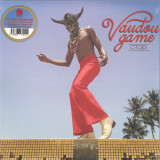
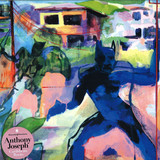
David Hanke is best known for his long-standing work as Renegades Of Jazz, as well as recent incarnations Dem Juju Poets and his exotic outfit Mankoora. The versatile producer and DJ returned to his blissful electronic roots with his latest project Keno earlier in 2018, released on the Agogo imprint.
Daviddelivers two sides of what he calls Krauthaus for Shapes of Rhythm. Kugelkreisis a mathematical word. Kugel in German means a ball/sphere and Kreis means circle. One is 2D and one is 3D.
The music is as intriguing as the terminology: long, psychedelic, deep and textured house music, suitable for those late night DJ sets or after parties.
On side A, Der Kugelkreis, spaced-out melodies mix with playful yet purposeful bass to create an ethereal atmosphere. It's got groove from the get-go. Tribal Afro-infused drum sounds propel it forward and, as such, Hanke is happy to tease us for almost three minutes before introducing the rest of his rhythm section. Drowsy horns float in a little later, adding another layer to the dreamy aesthetics.
The B side Permutation is also a long, deep excursion and features layered Fender Rhodes behind chopped, stabby vocals, before thunderous percussion chisels right through the middle of it all.
Available on limited-release vinyl 12" with fully printed outer sleeve, and digital
quête:section one
Mastered at half speed, 140g vinyl,
Sticker We Release Jazz (WRWTFWW Records' new sister-label) is proud to present its first release, the official reissue of Ryo Fukui's highly sought-after masterpiece Scenery (1976), sourced from the original masters and available on limited edition 180g vinyl mastered at half speed for audiophile sound and on digipack CD. Unquestionably one of the most important Japanese jazz albums ever recorded, Scenery reveals Ryo Fukui as a miraculously brilliant self-taught pianist fusing modal, bop, and cool jazz influences for a very personal, dexterous and game-changing take on classic standards made famous by Bing Crosby and John Coltrane among others. From 'It Could Happen To You' and its serene and calm intro which magically flows into a jubilant and upbeat piece, to the out-of-this-world piano solo of 'Early Summer", or the incredible teamwork of 'Autumn Leaves' where Fukui leads Satoshi Denpo (bass) and Yoshinori Fukui (drums) into groove heaven, every single note on the album oozes precision, confidence and flair and every single section slides seamlessly into one another, creating a supreme and elegant blend of jazz. Often compared to McCoy Tyner or Bill Evans, Ryo Fukui was a genius in his own right, a true master of his craft whose perfectionism gave birth to some of the greatest music ever recorded. Scenery is his magnum opus and an absolute must-have. The Hokkaido wizard-pianist followed Scenery with the soulful gem Mellow Dream (also available on We Release Jazz) in 1977. He then focused on improving his live skills, often performing at Sapporo's Slowboat Jazz Club (which he co-founded with his wife Yasuko Fukui) and releasing 2 live albums. Ryo Fukui sadly passed away in March 2016, leaving behind a legacy of works that is sure to captivate jazz lovers for generations to come.
With its lush live string and horn section, Can't Stop Loving You when originally released in 1990 was an immediate favorite in the UK, and represented famed House Producer Marshall Jefferson's movement toward utilizing live instrumentation in his productions. The track was released right around the time the Kiss FM London launched as a legal radio station, and Richard was support talent at the radio station launch party in Hyde Park London that was headlined by fellow Chicagoans Ten City.
The track also represented one of the last releases on the relaunched Sam Records imprint, before Michael Weiss ceased releasing new titles on Sam and started Nervous Records.
Krystal Klear has shown a unique ability to recognize sonic elements trends from past eras, and re-shape them to work for today's club crowds. With his two versions, he has done a masterful job remixing this early 90's dance classic.
Legendary Ghanain album - with one of the music iconic covers ever! - that fuses Highlife, afrobeat, folk and funk. Ambolleys debut solo album originally released in 1975, written and produced with Ebo Taylor.
Ambolley grew up during the peak of Highlife in Ghana and was a key figure in its fusion with soul and funk influences from the USA. He played in many bands including Houghas Extraordinaires, Meridians Of Tema, Ghana Broadcasting Band and the Uhuru Dance Band, for which he was recruited by his friend, Ebo Taylor. The group went to Nigeria in 1973 to play with Fela at his legendary Shrine spot.
'Simigwa' was a chance for Ambolley to release his own productions and to experiment to a certain extent. A main inspiration for this album was the work of the mighty Mr. James Brown, something that is evident from the rhythm section, horns, vocal stabs and percussion breaks throughout the record.
If you check the credits of The Rolling Stones' Goats Head Soup LP from 1973 you'll find a certain "Pascal" listed on the percussion section. That is none other than Los Angeles based artist Nicolas Pascal Raicevik (1933-1994), aka 107-34-8933, aka Head, aka Nik Pascal, aka Nik Raicevic. Besides his hitting the bongoes on the Stones album, Nik was a great artist on his own, both as a painter and as a musician. As a musician, he was a pioneer in the use of synthesizers, preceeding the Berlin school by some years when his Head LP was released on on Buddah in 1970. Buddah probably saw in Head the opportunity to cash in some money from the remains of the psychedelic scene - the three tracks on the LP are named after drugs used in the late sixties. The sounds, however, are accomplished works that show Raicevic as one of the most interesting pioneers in the use of synths. The album probably didn't do too well, since Buddah didn't renew the contract with Raicevic, who instead took his own way releasing his works on his very own Narco Records and Tapes label. Between 1968 and 1975 Narco would issue 4 LPs credited either to Nik Raicevic (Beyond The End... Eternity) or Nik Pascal (The Sixth Ear, Magnetic Web and Zero Gravity) plus one credited to 107-34-8933 (Numbers, which is in fact the same LP as Buddah's Head, albeit with different cover art). Copies of these LPs came with an ironic sticker over the shrinkwrap that read "Do not listen to this LP if you are stoned".
1972 saw the release of The Sixth Ear (Narco NR666), this time credited to Nik Pascal. A more complex work than Beyond The End..., it adds consistent rhythmic patterns to the mix with the addition of bongoes and also explores some interesting chord progressions.
Besides his musical explorations, Nik was also an interesting painter. His paintings are auctioned from time to time, and are consciousness expanding works influenced by abstract cubism and surrealism, some kind of Salvador Dalí on drugs exploring the outter and inner space. All the artwork on the sleeves of his LPs is done by himself. Spacey landscapes and psychedelic colours that fit perfectly to the music they contain.
"Nik Raicevic's music is at the intersection of radical psycho-electronic weirdness and kraut kosmische music (in particular the scifi-hypno-minimal modules of Conrad Schnitzler in Grun, Rot and Blau). It presents mega epic & tripped out electronic improvisations.
"This is an absolute must for collectors and fans of visceral, neurotic soundscapes." (progarchives)
"As far as late-60s / early-70s American Bedroom' Electronic Music goes, these LPS have to be among the first transmissions from this sector, made all the more attractive when coupled with Raicevic's alien topographIes - the covers are high-color portrayals of Venusian lanes, knotted growths, & future-past architecture in a style you might equate with Vintage' sci-fi pulp-novel covers - & copious Downer' sentiment. This music is imbued with a sort of lonely, anti-social sensibility that's about as far as you can get from the Academic' Early Electronic vector. I will say that if the Steve Birchall, Cellutron & the Invisible, and/or Pythagoron™ seed your garden, this will likely do the same." (twoheadeddog)
Never reissued before on vinyl format, the Wah Wah reissue features original sleeve artwork made of paintings and drawings by Nik himself and reproduction of the famous ironic "Do not listen if you are stoned" sticker. Limited edition, 500 copies only.
If you check the credits of The Rolling Stones' Goats Head Soup LP from 1973 you'll find a certain "Pascal" listed on the percussion section. That is none other than Los Angeles based artist Nicolas Pascal Raicevik (1933-1994), aka 107-34-8933, aka Head, aka Nik Pascal, aka Nik Raicevic. Besides his hitting the bongoes on the Stones album, Nik was a great artist on his own, both as a painter and as a musician. As a musician, he was a pioneer in the use of synthesizers, preceeding the Berlin school by some years when his Head LP was released on on Buddah in 1970. Buddah probably saw in Head the opportunity to cash in some money from the remains of the psychedelic scene - the three tracks on the LP are named after drugs used in the late sixties. The sounds, however, are accomplished works that show Raicevic as one of the most interesting pioneers in the use of synths. The album probably didn't do too well, since Buddah didn't renew the contract with Raicevic, who instead took his own way releasing his works on his very own Narco Records and Tapes label. Between 1968 and 1975 Narco would issue 4 LPs credited either to Nik Raicevic (Beyond The End... Eternity) or Nik Pascal (The Sixth Ear, Magnetic Web and Zero Gravity) plus one credited to 107-34-8933 (Numbers, which is in fact the same LP as Buddah's Head, albeit with different cover art). Copies of these LPs came with an ironic sticker over the shrinkwrap that read "Do not listen to this LP if you are stoned".
Magnetic Web was released in 1973. It appeared under the Nik Pascal monicker and showed a clear evolution in sound, favoured by the addition of an Arp 2600 and some rhythm boxes. It also included percussions and cymbals. The Two Headed Dog site thinks "this is his masterpiece in all of its acid-laced glory."
Besides his musical explorations, Nik was also an interesting painter. His paintings are auctioned from time to time, and are consciousness expanding works influenced by abstract cubism and surrealism, some kind of Salvador Dalí on drugs exploring the outter and inner space. All the artwork on the sleeves of his LPs is done by himself. Spacey landscapes and psychedelic colours that fit perfectly to the music they contain.
"Nik Raicevic's music is at the intersection of radical psycho-electronic weirdness and kraut kosmische music (in particular the scifi-hypno-minimal modules of Conrad Schnitzler in Grun, Rot and Blau). It presents mega epic & tripped out electronic improvisations.
"This is an absolute must for collectors and fans of visceral, neurotic soundscapes."
"As far as late-60s / early-70s American Bedroom' Electronic Music goes, these LPS have to be among the first transmissions from this sector, made all the more attractive when coupled with Raicevic's alien topographIes - the covers are high-color portrayals of Venusian lanes, knotted growths, & future-past architecture in a style you might equate with Vintage' sci-fi pulp-novel covers - & copious Downer' sentiment. This music is imbued with a sort of lonely, anti-social sensibility that's about as far as you can get from the Academic' Early Electronic vector. I will say that if the Steve Birchall, Cellutron & the Invisible, and/or Pythagoron™ seed your garden, this will likely do the same."
Never reissued before on vinyl format, the Wah Wah reissue features original sleeve artwork made of paintings and drawings by Nik himself, and reproduction of the famous ironic "Do not listen if you are stoned" sticker. Limited edition, 500 copies only.
If you check the credits of The Rolling Stones' Goats Head Soup LP from 1973 you'll find a certain "Pascal" listed on the percussion section. That is none other than Los Angeles based artist Nicolas Pascal Raicevik (1933-1994), aka 107-34-8933, aka Head, aka Nik Pascal, aka Nik Raicevic. Besides his hitting the bongoes on the Stones album, Nik was a great artist on his own, both as a painter and as a musician. As a musician, he was a pioneer in the use of synthesizers, preceeding the Berlin school by some years when his Head LP was released on on Buddah in 1970. Buddah probably saw in Head the opportunity to cash in some money from the remains of the psychedelic scene - the three tracks on the LP are named after drugs used in the late sixties. The sounds, however, are accomplished works that show Raicevic as one of the most interesting pioneers in the use of synths. The album probably didn't do too well, since Buddah didn't renew the contract with Raicevic, who instead took his own way releasing his works on his very own Narco Records and Tapes label. Between 1968 and 1975 Narco would issue 4 LPs credited either to Nik Raicevic (Beyond The End... Eternity) or Nik Pascal (The Sixth Ear, Magnetic Web and Zero Gravity) plus one credited to 107-34-8933 (Numbers, which is in fact the same LP as Buddah's Head, albeit with different cover art). Copies of these LPs came with an ironic sticker over the shrinkwrap that read "Do not listen to this LP if you are stoned".
Nik's last album, Zero Gravity (Narco NR123) came under the Nik Pascal name and had a fantastic side long piece on the title track which reminisces of the works of Cluster. B side features four tracks that also bear some Conrad Schnitzler reminiscences. This was to be Nik's last LP before he would sell all his synths to ex car racer and future electronic/ambient music star Steve Roach.
Besides his musical explorations, Nik was also an interesting painter. His paintings are auctioned from time to time, and are consciousness expanding works influenced by abstract cubism and surrealism, some kind of Salvador Dalí on drugs exploring the outter and inner space. All the artwork on the sleeves of his LPs is done by himself. Spacey landscapes and psychedelic colours that fit perfectly to the music they contain.
"Nik Raicevic's music is at the intersection of radical psycho-electronic weirdness and kraut kosmische music (in particular the scifi-hypno-minimal modules of Conrad Schnitzler in Grun, Rot and Blau). It presents mega epic & tripped out electronic improvisations.
"This is an absolute must for collectors and fans of visceral, neurotic soundscapes."
"As far as late-60s / early-70s American Bedroom' Electronic Music goes, these LPS have to be among the first transmissions from this sector, made all the more attractive when coupled with Raicevic's alien topographIes - the covers are high-color portrayals of Venusian lanes, knotted growths, & future-past architecture in a style you might equate with Vintage' sci-fi pulp-novel covers - & copious Downer' sentiment. This music is imbued with a sort of lonely, anti-social sensibility that's about as far as you can get from the Academic' Early Electronic vector. I will say that if the Steve Birchall, Cellutron & the Invisible, and/or Pythagoron™ seed your garden, this will likely do the same."
Never reissued before on vinyl format, the Wah Wah reissue features original sleeve artwork made of paintings and drawings by Nik himself, and reproduction of the famous ironic "Do not listen if you are stoned" sticker. Limited edition, 500 copies only.
Cassegrain announce collaborative EP. The Berlin based duo of Alex Tsiridis & Hüseyin Evirgen will release new work recorded alongside DJ Nobu, Tensal & Lady Starlight via their own Arcing Seas imprint in September. Leaning towards the more heady, high octane end of the genre - the three track EP showcases the duo's natural affinity for collaboration, maintaining Evirgen & Tsiridis' characteristic finish and atten-tion to detail, whilst providing ample space for the guests to properly colour the work. CT01, alongside Tensal, marries caustic drones with a potent lead sequence to produce a perfect peak time roller; whilst CN01, with DJ Nobu, riffs on a more melodic, stepping approach - maintaining that same rousing energy, but with a more psychedelic bent. CLS01, the duo's collaboration with La-dy Starlight comes in at almost 11 minutes, an ambient Techno journey that warps and shifts organi-cally across it's extended run time - complete with beat-less intro and multiple segues that work to bind the piece and it's different sections into one, cohesive narrative. Effective and impeccably produced - but with a keen ear for new & exciting sonics within the genre - this first collaborative outing proves an enviable addition to the duo's already impressive discogra-phy.
- A1: Paradize Disowned - Paradize Disowned
- A2: Dj Zero One - Gee Lee
- B1: Syndrome - Rubbish Two
- B2: V-Room - X-Centrik
- B3: Paradize - Infected By C.o
Muse have announced that their eighth studio album, 'Simulation Theory'. The eleven-track record was produced by the band, along with several award-winning producers, including Rich Costey, Mike Elizondo, Shellback and Timbaland. Each of the album's songs will be accompanied by a video.
Recent singles, 'Something Human', 'Thought Contagion' and 'Dig Down', as well as brand new track 'The Dark Side', are all available immediately as a download when you pre-order the album. 'The Dark Side' is instantly recognisable as a classic Muse track, featuring Matt Bellamy's unmistakable soaring vocals and blistering guitars and the driving rhythm section of Chris Wolstenholme and Dominic Howard that have become a hallmark of Muse's stadium-filling sound.
'Simulation Theory' follows 'Drones', released in 2015. Since then the internationally acclaimed three piece have toured extensively, taking the ground breaking 'Drones World Tour' to fans across the globe. This concert was filmed and released in cinemas worldwide for 'One Night Only' in July 2018.
Muse is Matt Bellamy, Dominic Howard and Chris Wolstenholme. Their last studio album, Drones, was released in June 2015 and debuted at No. 1 in 21 countries around the world including their first No. 1 album in the United States. The album went on to win the Grammy Award, their second, for Best Rock Album in February 2016. Since forming in 1994, Muse have released seven studio albums selling in advance of 20 million albums worldwide.
Widely recognised as one of the best live bands in the world, Muse have won numerous music awards including two Grammy Awards, an American Music Award, five MTV Europe Music Awards, two Brit Awards, ten NME Awards and seven Q Awards, amongst others.
Another very special EP on Al Zanders A to Z label
Teaming up this time with vocalist Sheyi, for a one-off foray into Broken Beat territory.
The story of its inspiration begins with a trip to Notting Hill Record & Tape Exchange...
After asking for some broken beat, the assistant ventured a withering opinion that "won't be monotonous enough, try the house music section instead"
Turns out it was Phil Asher of Co-op fame - who, after establishing a genuine desire for said genre - sold Al a bunch of West London music which became the influence for this EP.
Allowing Sheyi to shine over a bare bones, syncopated rhythm track on the title cut and an equally stripped down 'Satisfy' Al amps up the groove, with the G.I.T dub, which was made for IG Culture's radio show.
Limited run on these - don't snooze !
At first, it's difficult to pinpoint exactly what makes Our Girl so special, or why the Brighton-formed, London-based trio's music stands out within a busy crowd of fellow guitar-wielding-types. But if an explanation didn't jump out when they first emerged with a debut EP of mighty fuzz-soaked songs in November 2016, it surfaces with 'Stranger Today', a debut album of personal, emotional juggernauts that could have only been made by these three people: Guitarist / vocalist Soph Nathan, bassist Josh Tyler and drummer Lauren Wilson.
Since forming in Nathan and Tyler's Brighton home four years ago - Wilson joining as a late recruit when she was wowed by a demo of their self-titled debut track, and 'Stranger Today''s opener - Our Girl's members have only had pockets of time to work together. A day booked in a local studio here, a soundcheck there, full-time jobs and other projects meant the three rarely had a concentrated, collective patch. This changed in September 2017, when they stayed in Eve Studios in Stockport for a week, recording with Bill Ryder-Jones. Their week in Stockport became a crucial catalyst for what would follow. Ryder-Jones is a guitar virtuoso himself ('He did stuff neither me or Soph had ever seen anyone do before,' Tyler remarks), and he became an unofficial fourth member of the group.
'Stranger Today' is a special debut for several reasons: First, because it's the sound of a band beginning to grasp their own value and place in the world. Secondly, because you can hear the trio's hunger to finally get in the same room and put to tape years' worth of scrapbooks, half-finished ideas, and a slowly-forming feel for how their first album would actually sound. 'What band isn't itching to make their debut But it's quite frightening, knowing you're about to do it,' Wilson remembers.
The real clincher, however, is Our Girl's dynamic, and how it plays out across 'Stranger Today'. Best friends in person, the trio share the same close kinship and chemistry on record. On one side is Nathan's visceral lyricism, which has a habit of detailing and chipping away at precise moments; the first heart-flutter of a new crush; the moment a long-term friendship begins to ebb away. Around her, Tyler and Wilson's rhythm section carefully mirrors each feeling Nathan conveys. When she sings pointedly about love ('I Really Like It'), she's backed by a major-key afterglow. When the subject turns on its head ('Josephine'), out steps a wall of taut, earth-shaking noise. They each 'serve the song,' in Wilson's words, moving in sync but with their own personal slant. Not least on the closer 'Boring', where all restraint is thrown aside and the trio let out one final, violent thrash. They inhabit a space bigger than the first loves, sleepless nights and growing pains that define this record.
Nathan remembers being in Brighton four years ago, shortly after Our Girl formed, and realising, 'I was finally in the band I wanted to be in.' Almost half a decade later, and this eureka moment is sewn up on 'Stranger Today'. It's the sound of three friends totally at ease in their own space, discontent with being anywhere else; a vibrant document of what it's like to be young, invigorated and amongst people who feel the same.
Kevin Murning is a musician, producer and DJ from Cape Town, South Africa. He describes his music as fake jazz, probably because he dropped out of jazz school. At 23 years old, Kevin's music is youthful yet precise and his debut EP offers an intriguing cross-section into his varied musical experience to date. The release comes out via Cape Town based imprint, Quit Safari, home to some of SA's most exciting producers.
Kevin's debut comes in the form of a 5-track EP called Mode's Arp. Comprised of 3 originals and 2 remixes, the release serves as a dual functional one with tracks for home and club use. Taking 2 years to fully complete, Mode's Arp is a wonderfully considered body of work and speaks volumes about Kevin's talent and his ability to create music that is beautiful and banging. Both Kevin and Quit Safari label head, Zanasi Wifi, are on remix duty for the EP, taking the originals and recontextualising them into high octane percussive workouts.
DJ support already includes The Maghreban, Turbojazz, Severino, Laurent Garnier, Mystic Bill, Edmondson and more.
The Long Now is a duo featuring Richard Norris and Finnur Bjarnason, with special guests. They mix piano, voice, string section and electronics with the sound of the Icelandic breeze. The music sits within the post ambient, electronic, contemporary classical genre, with a strong sense of landscape, mood and melody. Richard Norris One half of the Grid, alongside Soft Cell's Dave Ball, one half of Beyond The Wizard's Sleeve with Erol Alkan... Richard Norris has a thing about working as a duo. With many productions and remixes under his belt, including tracks for Warpaint, Brian Eno, Tame Impala and many more, Richard brings an electronic sensibility to the Long Now. He has a long term passion for ambient, electronic, drone, soundtrack and modern classical music. Finnur Bjarnason Finnur Bjarnason is an Icelandic musician whose background is in classical music. Having trained to be an opera singer, rst in his native Reykjavík and later at the Guildhall School of Music and National Opera Studio in London, he then pursued an international career as an operatic tenor for over a decade, appearing in many of the world's most prestigious opera houses, singing everything from Montiverdi to Wagner to modern opera. As he has become ever more interested in where the boundaries between musical worlds get blurry, and particularly how the sound world of 'acoustic' singing world could best intersect with electronic music, he has begun an earnest exploration of the 'other side'. The Long Now play the Blue Dot Festival on Sat July 21st, with more dates to follow. The performance will be accompanied by a lm by BAFTA award winning director Kieran Evans, recently shot in Iceland. The band are currently preparing an album and series of live performances featuring piano, voice, electronics and string quintet.
After a debut outing on International Black last year with his best friend Mallard, LT graduates onto Rhythm Section INTL with a stunning debut solo effort: FOREST FLOOR.Aged just 20 years old, Lewis Taylor aka LT is another prodigal talent from the north of England, whose association with Rhythm Section goes back to his school days. A fan of the label from an early age, Lewis regularly made pilgrimages to the pool hall as soon as he was old enough to do so. It was these visits with his old school friend Mallard (who had recently moved down to London from Derbyshire to study music) which proved to be a formative influence, prompting him to try his hand at production...It turned out he was quite the natural, with his second ever effort as an 18 year old making it onto this very EP. Sitting somewhere between electro, house and techno with a healthy dose of breaks - LT constructs complex arrangements with as much of a nod to the retro summer of love stylings of Lone as to the new age bounce of the Pender Street Steppers. The piano house stabs of 'Untitled (Chesney)' reverberate around chopped breaks and screaming samples, anchored down by bouncy organ bass and FM lead synth which really begs the question: 'How did LT develop such a rich lexicon of club culture references in such a short time' We'd be tempted to believe it was just pure luck, if this mastery of rave aesthetics wasn't repeated throughout the EP...
Mesosphere fizzes with arpeggiated energy before giving way to a magnificent yet subtle drop that will serve festival main stages as well as it will back room clubs. Before the EP is over, LT has one more trick up his sleeve in Forest Floor - the titular track which is the musical equivalent of watching the sun rise through a misty glade after a night spent alone in the wilderness. With this gentle touch, LT proves he's more than another kid on Ableton making bangers - he has breadth, incredible musicality and a rare ability to transcript sceneries into sounds. Finishing with 'North Circular' possibly a reference to the free Parties on the London Orbital or merely just a coincidence you decide.
We couldn't be happier to welcome LT onto the RS INTL roster in what feels like a fulfilment of destiny. It's such a great honour to have nurtured and now introduce the next generation via the Rhythm Section platform.
The very first release of 2018 from Eureka!, is the well known Parisian sampling master S3A (Sampling As An Art) with his perfect definition between underground quality emotional house music and dancefloor efficiency.
He released from Lazare House Records, Hold Youth, Concrete Music, Local Talk, Phonogramme and Faces and with his background culture based on a solid knowledge of house music, soul, funk made him one of the most promising house artist of the French scene.
Mountain Charr contains 3 tracks in completely different styles. 'Doop Doop' is definitely a sound of S3A, with characteristic vocal cut up by adding powerful horn section and melodic piano loop.
'Emotional M1' is classic yet warm and cosy low deep groove track that is playable regardless of a time or place, from lounge to dancefloor.
To complete the package we have 'Denials', a more down tempo offering, but its melody is fascinating and yes, sexy.
This EP definitely brings you his predominant sense of sampling.
Artwork by Kouhei Asakura
First Ever Vinyl Reissue, Limited Edition To 500 Copies Only, Bonus Tracks Not On The Original Lp, Remastered Sound, Insert With Liner Notes By Nick Rossi And Photos, Beautifully Housed In Three Back-flapped 1960s Uk Style Picture Sleeve ! The Wynder K. Frog Story Evolves Around Mick Weaver. After He Switched From Piano To Organ He Joined A Band Named The Chapters That Would Soon Be Renamed Wynder K. Frog And Perform Material From James Brown's Flames, Booker T. And The Mgs Or Even Songs Learned Through Georgie Fame's Recordings And Graham Bond's Repertoire. Wynder K. Frog Moved To London And Became Regulars In The City's R&b Scene Playing At Swingin' London's Clubs Like The Tiles Or The Marquee. A Contract With Island Records Was Secured And -under The Wings Of Producers Like Chris Blackwell, Guy Stevens, Jimmy Miller Or Gus Dudgeon- Wynder K Frog, A Name That Would Eventually Be Used As A Pseudonym For Weaver More Than A Proper Band Name, Did Some Some Amazing Hammond Organ-ized Recordings And Issued In Three Lps And A Bunch Of Cool 45s.
At The End Of The 1960s, Weaver Would Quit The "band Scene" To Become One Of The Most In Demand Session Musicians And Throughout His Career He'd Be Heard Backing Names Such As Eric Burdon, Roger Chapman, Dave Gilmour, Keef Hartley, Alexis Korner, Ralph Mctell, Taj Mahal Or Otis Rush A.o, But His Lps As Wynder K Frog Are Classic Hammond Sound From The 1960s Uk And Will Appeal To Those Into Brian Auger, Graham Bond, The Artwoods, Zoot Money, Jimmy Mcgriff, Booker T. & The Mgs And The Likes.
Out Of The Frying Pan
Released At The End Of The Summer Of 1968, And With A Host Of Session Musicians That Included The Brass Section Of John Mayall's Bluesbreakers, Producer Gus Dudgeon Helped Weaver / Wynder K Frog To Improve The Results Obtained On The Debut Lp And Get One Step Closer To The Live Action. The Formula Was More Or Less The Same, Instrumental Hammond A Go Go Covers Of Hits From The Era, Including The Rolling Stones' "jumping Jack Flash", A Funked Up Version Of The Classic Tommy Tucker Blues Number "hi Heel Sneakers", An Exploding Cover Of "tequila" Or The Standard "green Door", But It Also Included The Sensational Weaver-penned "harpsichord Shuffle".
Steve Reich's Drumming is regarded as one of the most important musical works of the last century. Distilled through his studies of African percussion in Ghana during 1970 and Balinese gamelan music, Reich revolutionized our understanding of polyrhythms, sculpting a new sonic territory to illuminate the radical potential of Minimalism.Divided into four sections, performed without pause, Drumming is written for eight small tuned drums, three marimbas, three glockenspiels, piccolo and voice. The singers recite melodic patterns that mimic the sounds of the instruments, gradually rising to the surface and then fading out. The overall effect can be transfixing - pulling listeners into the rhythm and possessing a raw immediacy, directness and energy.The premier performances of Drumming took place in December 1971 in New York City - first at The Museum of Modern Art, then at Brooklyn Academy of Music and finally at Town Hall where this recording was made - and featured the composer along with a cast of longtime collaborators including Art Murphy, Steve Chambers, Russ Hartenberger, James Preiss, Jon Gibson, Joan La Barbara, Judy Sherman, Jay Clayton, Ben Harms, Gary Burke, Frank Maefsky and James Ogden.Originally released in 1972 by gallerist John Gibson in a small private edition, Drumming represents the culmination of Reich's investigation into rhythmic phase relationships and its early realization captures a remarkably organic feel, especially compared to the more widely known version on Deutsche Grammophon from 1974.This first-time vinyl reissue and first-time CD release has been carefully remastered from the original master tapes.
Shunter, the new album by the Berlin-based duo Driftmachine, is their most ambitious work to date. Although instantly recognizable, featuring their trademark Kosmische and Avant-garde sounds, it also presents a new journey into abstract and hallucinatory worlds. Filled with eerie textures, their electronic visions are darker and more vaporous than ever.
Driftmachine's fourth album (also the fourth one for Umor Rex) offers a new perspective on their ample sound spectrum and systemic narratives. Shunter overlaps and mutates their post-industrial-dub motives. It was conceived and produced in search of a very different kind of imagery, with sections of noise and field recordings intersecting with analogue sounds, a mixture of contrasted fragments, where the usual creative process of modular-synthesis leads Gerth and Zimmer to the discovery of a dark, hazy and diffused experience. There is a protean quality to the rhythmic elements, with tempos constantly contracting and expanding, a departure from the mono-beat-rhythms of "Nocturnes" and "Colliding Contours". The first half of Shunter is made of four pieces named "Shift", although individually separated, they are conceptually linked and can be understood as a sort of score. Imagine a late stage of the industrial revolution, with the interaction between heavy machinery and human beings. The second half of the album is not completely separated, but it has three other substantial melodic moments. Somewhere between the hauntological and the realms of archive-music, a huge range of subterranean beats and distinct patterns dotting the landscape of early electronic and post dub music.
All songs written & produced by Driftmachine (Andreas Gerth & Florian Zimmer), Berlin.
Mastered by Rafael Anton Irisarri. Design by Daniel Castrejón.
Fresh on Francis Harris' Kingdoms imprint comes Rasmus Juncker's 'Ophold' - six tracks of sublime atmospheres and textures. The Danish musician, sound composer and DJ fits perfectly with the label's aesthetic, joining the dots between ambient, leftfield electronica and modern classical.
Juncker has a background in studying jazz drumming and has been playing improvised music within the jazz domain for many years. He also started to DJ at the age of 14 and was introduced to the world of electronic music production at the same time.
When Rasmus started to think about his debut album he spent several months trying to find his own way to combine his favourite musical influences, improvisation, electronics and classical music. 'Almost a year later', Juncker says, "I went to a sensory deprivation floating tank in Copenhagen while researching for another performance and while I was lying there, floating in the water, deprived from most of my senses, I got the idea to do something drastic in my musical process. Philosophers like Immanuel Kant describe this deprived state as a mental 'Cesura', which became some sort of guideline for the album."
So Juncker decided to start working on the album by leaving the process as well as the final result completely open. 'I wanted to create sounds and music that I had no idea what they would sound like, but would feel like a mental 'Cesura', an 'Ophold' (in Danish)' he states.
He invited musicians, one after the other, to his studio. "I had an electronic musician to improvise patterns and new interesting sounds based on my experience in the deprivation tank. I chose some of the takes and some weeks later I invited a jazz guitarist to listen and improvise on top of what he heard. Then a classical string quartet and a double bass player came to my studio months later, and finally I recorded myself on percussion and drums.
Throughout the recording process I've been experimenting with special microphones in various setups, used noises from the recordings and the room became absolutely essential for the pieces." Juncker states.
"The material I used was all first take improvision which I arranged, layered and edited into compositions. The final pieces were mixed by Andreas Pallisgaard with the same improvised and experimental approach of the recording and the production. None of the musician met each other, but their sounds developed into something completely fantastic I think. The presence of the acoustic instruments and the depth and complexity of the synthesized layers gave some kind of an indescribable sounding music from another galaxy.
Track by track:
'Norddrum' starts proceedings - ethereal, grainy sounds merge and disassociate, as a distant rhythm gradually finds its way to the fore.
The second track, 'Sora' , clocking in at under 2 minutes, is an interlude full of strings, pads, and percussive hits, rich in feeling. This strong sense of sound design and seemingly disparate sounds woven together into a whole carries through into 'Eksotisk Tirsdag' - the strings, plucked instruments and electronics harking back to 4th world adventurers like Jon Hassel and Brian Eno.
'Cyklus' dives into drone textures, pulsing and modulating to create an unearthly soundtrack.
'Havekunst' is another 2 minutes interlude, this time bringing a fully charged rhythmic barrage to the front.
'Cesura', the final track is in essence the EP's centerpiece - a sprawling 8 minute journey that traverses tense, fibrous sections and on into pulsing modular passages, before opening up into glorious moments of wonder and brightness. It's a hugely bold yet fragile endeavour, in line with the whole release.
Raga Yaman
1) Alap
2) Jod
3) Jhala
4) Gat (Composition in Chautal)
Zia Mohiuddin Dagar : rudra veena
Manik Munde : pakhawaj
Gayathri Rajapur & Annie Penta : tanpuras
Recorded by unknown at the University of Washington, HUB Auditorium, Seattle, Washington 15 March 1986 , concert co-sponsored by the UW Ethnomusicology Division and Ragamala.
Original digitally processed audio recording made with Panasonic PV-9000 VCR, Sony PCM-F1, PZM mics. Mastered & Cut by Rashad Becker at Dubplates & Mastering 1117 & 0318.
Liner notes by Renaud Brizard, Stephen O'Malley & Ian Christe.
Front and back cover photos by Niranjan B. Benegal, Seattle Center Folklife Festival 1979. Elizabeth Reeke & Annie Penta on tanpuras.
Inner gatefold photography by Niranjan B. Benegal & Ira Landgarten.
Around ten years ago, deep into a cozy and hazy night following a concert with my sound brothers Daniel O'Sullivan and Kristoffer Rygg in London (as Æthenor), they graciously introduced me to a recording of rudra veena (a kind of noble deeper bass relative to the sitar, in a way) as performed by dhrupad master Zia Mohiuddin Dagar.
Dhrupad, for those who do not know, is a branch of Hindustani classical music said to "show the raga in its clearest and purest form". It's pacing concentrates heavily on the slow, contemplative alap section and works with specific microtonal gestures and deep characteristics of resonance ... in short I was hooked on this new (to me) and ancient form of music from the first listen, and feel that a more or less continual listening & reviewing of Zia Mohiuddin Dagar's recordings in the years that followed have influenced my own approach to music quite heavily (if, albeit, indirectly).
In early 2015 I was able to make contact with Zia Mohiuddin Dagar's son Bahauddin and some of his American students/disciples, primarily Jeff Lewis. Over time we developed a friendly and educational exchange, access a massive archive of recordings and developed these two paired titles for my label. It's been a long path to arrive at actually releasing them but also probably in many ways one of the most significant releases I've worked on. And I'm proud to be able to reveal these to date unreleased archival recordings of one of the masters of dhrupad, Z. M. Dagar, to the public for the first time.
Zia Mohiuddin Dagar was the nineteenth generation in a family tradition known as Dagar gharana, a rich lineage which continued and performed the musical form of dhrupad (Bahauddin Dagar continues the lineage as a master rudra veena dhrupad player of note today). Initially, dhrupad was a rigorous, austere, devotional genre that was sung in Hindu temples. But between the 16th and the 18th centuries, it became the preeminent genre in royal courts in North and Central India, and the Dagar gharana developed and continued publicly following the eventual loss of court patronage for dhrupad in the 19th century. The French ethnomusicologist Renaud Brizard covers the story of Zia Mohiuddin Dagar's life and teaching (a long story also in Seattle, my hometown!), the Dagar family and gharana, the rudra veena and more topics in an extensive set of liner notes in this release.
Raga Yaman was recorded at a public concert in Seattle at the HUB Ballroom at the University of Washington in March 1986 (the week after the accompanying release SOMA028 Ragas Abhogi & Vardhani was recorded) at the end of his last tour of the United States. Yaman was a special raga for Zia Mohiuddin Dagar, one of his signature raags. For centuries, Yaman has been considered as one of the most fundamental ragas in Hindustani music and is one of the first ragas which is taught to students. A deep knowledge of Yaman gives a key for understanding many other ragas. It's filled with tranquility, contemplation, pathos and spiritual yearning. .
-Stephen O'Malley, March 2018, Paris, France
- A1: A Min We Vo Nou We - Les Sympathics De Porto Novo
- A2: Asaw Fofor - Ignace De Souza & The Melody Aces
- A3: Dja Dja Dja - Stanislas Tohon
- B1: L´enfance - Elias Akadiri & Sunny Black´s Band
- B2: Mé Adomina - Picoby Band D´abomey
- B3: Nounignon Ma Klon Midji - Antoine Dougbé
- B4: Moulon Devia - Orch. Poly-Rythmo De Cotonou
- C1: Paulina - Black Santiago
- C2: Glenon Ho Akue - Lokonon André Et Les Volcans
- C3: Sadé - Sebastien Pynasco And L´orchestre Black Santiago
- C4: Baba L´oke Ba´wagbe - Super Borgou De Parakou
- D1: Gangnidodo - Cornaire Salifou Michel Et L´orchestre El Rego & Ses Commandos
- D2: How Much Love Naturally Cost - Gnonnas Pedro And His Dadjes Band
- D3: Idavi - Orchestre Poly-Rythmo De Cotonou
African Scream Contest 2
A great compilation can open the gate to another world. Who knew that some of the most exciting Afro-funk records of all time were actually made in the small West African country of Benin Once Analog Africa released the first African Scream Contest in 2008, the proof was there for all to hear, gut-busting yelps, lethally well- drilled horn sections and irresistibly insistent rhythms added up to a record that took you into its own space with the same electrifying sureness as any favourite blues or soul or funk or punk sampler you might care to mention.
Ten years on, intrepid crate-digger Samy Ben Redjeb unveils a new treasure- trove of Vodoun-inspired Afrobeat heavy funk crossover greatness. Right from the laceratingly raw guitar fanfare which kicks o Les Sympathics' pile-driving opener, it's clear that African Scream Contest II is going to be every bit as joyous a voyage of discovery as its predecessor. And just as you're trying to get o the canvas after this one-punch knock out, an irresistible Afro-ska romp with a more than subliminal echo of the Batman theme puts you right back there. Ignace De Souza and the Melody Aces' Asaw Fofor" would've been a killer instrumental but once you've factored in the improbably-rich-to-the-point-of-being-Nat-King-Cole-influenced lead vocal, it's a total revelation.
The screaming does not stop there, in fact it's only just beginning. But the
strange thing about African Scream Contest II's celebration of unfettered Beninese creativity is that it would not have been possible without the assistance of a musician who had been trained by the Russian secret services to "search and destroy" enemies of the country's (then) Marxist-Leninist president Mathieu Kerekou.
Already familiar to fans of the first African Scream Contest as a mainstay of ruthlessly disciplined military band Les Volcans de la Capitale, Lokonon André vanished in a cloud of dust at Ben Redjeb's behest with a list of names and some petrol money, only to return a few days later having miraculously tracked down every single name he'd been given. The source of this Afrobeat bounty-hunter's impressive people-finding skills - his training with the KGB - highlights the tension between encroaching authoritarian politics and fearless expressions of personal creative freedom which is the back-story of so much great African music of the 60s and 70s. Happily, in this instance, Lokonon was tracking the artists down to oer them licensing deals, rather than to arrest them.
Where some purveyors of vintage African sounds seem to be strip-mining the
continent's musical heritage with no less rapacious intent than the mining companies and colonial authorities who previously extracted its mineral wealth, Samy Ben Redjeb's determination to track this amazing music to its human sources pays huge karmic dividends.
Like every other Analog Africa release, African Scream Contest II is illuminated by meticulously researched text and eortlessly fashion-forward photography supplied by the artists themselves. Looming large - alongside Lokonon André - in the cast of biopic-worthy characters to emerge from this seductive tropical miasma is visionary space-nerd Bernard Dohounso, who laid the foundations for Benin's vinyl predominance by importing and assembling the turntables that would play the products of his Bond villain-acronymed pressing plant SATEL, a factory that would revolutionise the music industry in the whole region.
The scene documented here couldn't have been born anywhere else but in the Benin Republic , and the prime reason for that is Vodoun. It's one of the world's most complex religions, involving the worship of some 250 divinities, where each divinity has its own specific set of rhythms, and the bands introduced on the African Scream Contest series and other compilations from that country were no less diverse than that army of dierent Gods. At once restless pioneers and masters of the art of modernising their own folklore, the mystic sound of Vodoun was their prime source of inspiration.
One especially irascible Vodoun-adept was Antoine Dougbe, who styled himself The devil's prime minister' while turning ancestral rhythms into satanically alluring modern beats. As Orchestre Poly-Rythmo songwriter Pynasco has observed sagely, Evil is not elsewhere, evil extends into the house'. And African Scream Contest II is a gloriously cinematic road-trip through an undiscovered realm of music lore whose familiarity is every bit as thrilling as its otherness.
Written by Ben Thomson, March 2018
Raga Abhogi
1) Alap
2) Jod
3) Jhala
Raga Vardhani
4) Alap
5) Jod
6) Jhala
Zia Mohiuddin Dagar : rudra veena
Annie Penta : tanpura
Concert recorded at the home of Shantha and Niranjan B. Benegal, Seattle, Washington 9 March 1986.
Recorded by Niranjan Benegal. Files obtained from Jeff Lewis.
Mastered & Cut by Rashad Becker at Dubplates & Mastering 1117 & 0318.
Liner notes by Renaud Brizard, edited by Stephen O'Malley & Ian Christe.
Front and back cover photos by unknown.
Interior photography by Niranjan B. Benegal, Dan Neuman & unknown, Seattle 1978-1980. .
Around ten years ago, deep into a cozy and hazy night following a concert with my sound brothers Daniel O'Sullivan and Kristoffer Rygg in London (as Æthenor), they graciously introduced me to a recording of rudra veena (a kind of noble deeper bass relative to the sitar, in a way) as performed by dhrupad master Zia Mohiuddin Dagar.
Dhrupad, for those who do not know, is a branch of Hindustani classical music said to "show the raga in its clearest and purest form". It's pacing concentrates heavily on the slow, contemplative alap section and works with specific microtonal gestures and deep characteristics of resonance ... in short I was hooked on this new (to me) and ancient form of music from the first listen, and feel that a more or less continual listening & reviewing of Zia Mohiuddin Dagar's recordings in the years that followed have influenced my own approach to music quite heavily (if, albeit, indirectly).
In early 2015 I was able to make contact with Zia Mohiuddin Dagar's son Bahauddin and some of his American students/disciples, primarily Jeff Lewis. Over time we developed a friendly and educational exchange, access a massive archive of recordings and developed these two paired titles for my label. It's been a long path to arrive at actually releasing them but also probably in many ways one of the most significant releases I've worked on. And I'm proud to be able to reveal these to date unreleased archival recordings of one of the masters of dhrupad, Z. M. Dagar, to the public for the first time.
Zia Mohiuddin Dagar was the nineteenth generation in a family tradition known as Dagar gharana, a rich lineage which continued and performed the musical form of dhrupad (Bahauddin Dagar continues the lineage as a master rudra veena dhrupad player of note today). Initially, dhrupad was a rigorous, austere, devotional genre that was sung in Hindu temples. But between the 16th and the 18th centuries, it became the preeminent genre in royal courts in North and Central India, and the Dagar gharana developed and continued publicly following the eventual loss of court patronage for dhrupad in the 19th century. The French ethnomusicologist Renaud Brizard covers the story of Zia Mohiuddin Dagar's life and teaching (a long story also in Seattle, my hometown!), the Dagar family and gharana, the rudra veena and more topics in an extensive set of liner notes in this release.
Ragas Abhogi & Vardhani were recorded in a private house concert in Seattle at the home of the Benegals in March 1986 (the week before the accompanying release SOMA029 Raga Yaman was recorded). The Benegals were friends (& Shantha Benegal was also a student) of Dagarsahib who sometimes hosted Hindustani music concerts in their home. It's a rare glimpse of a more intimate, personal and perhaps different kind of performance considering the form of dhrupad.
-Stephen O'Malley, March 2018, Paris, France
Stephen O'Malley would like to especially thank Bahauddin Dagar, Jeff Lewis & Jody Stecher for their enthusiasm, cooperation, patience, insight & advice toward developing these editions. Thank you also to Laurel Sercombe & John Vallier from the University of Washington Ethnomusicology Archives, Shantha Benegal, Philippe Bruguière, Dan Neuman, Ira Landgarten, Renaud Brizard, Ian Christe, Peter Rehberg, Rashad Becker, Daniel O'Sullivan & Kristoffer Rygg, all for their direct or indirect cooperation, assistance & patience.
Re-mastering by: Ray Staff at Air Mastering, Lyndhurst Hall, London
This jazz recording is considered as the 'magnum opus' of master "drummer extraordinaire'', composer, arranger, producer, and leader Norman Connor's in a career that has spanned 4 decades. This recording is what many will consider the debut of the legendary vocalist Dee Dee Bridgewater who has since gone on to a brilliant career. Connor's put together an all-star group with Herbie Hancock and Onaje Allan Gumbs on piano and Fender Rhodes, Dr. Eddie Henderson on trumpet/flugelhorn, Carlos Garnett on tenor/soprano saxes, Gary Bartz on alto/soprano saxes, Buster Williams on bass, drummer/vocalist Bill Summers and Kenneth Nash on percussion, and effective, crucial cameos by master flautist Hubert Laws. On the song, "Love From the Sun'", Connors added Nathan Rubin on violin and Terry Adams on cello.
The 'best of the best' begins with the exotic theme of Hancock's "Revelation", doubled wordlessly and beautifully by Ms. Bridgewater over Williams bouncing ostinato bass pattern with flights of fancy from Hubert Laws on flute, and superb, luminous solos from Henderson's exotic trumpet, Garnett on soprano, and Hancock on Fender Rhodes. Garnett's "Carlos II" is another great composition with remarkable solos. Connors' own "Drums Around The Worlds'" is influenced by African and latin rhythms with emotional vocals from Summers and a drum-only section that builds in intensity. One of the high points of the album is Dee Dee Bridgewater's awesome, glorious vocalizing on Richard Clay's lovely "Love From The Sun", in one of the greatest performances in her career, arranged by Gumbs. Elmer Gibson's "Kumakucha" (The Sun Has Risen) is a blazing display of uptempo musicianship by Connor's driving drums, the propulsive congas of Summers and Nash, and exciting solos from Bartz, Henderson on trumpet, and Hancock's furious piano solo. The set ends with a marvelous "Holy Waters" composed and arranged by Garnett in a scorching performance by Bridgewater on vocals, Garnett unleashing one of the greatest solos in his storied career, followed by Gumbs' astute solo.
My Highest Recommendation.
By John Braswell
With MEL011, it is Melodies International's immense pleasure to direct their focus towards both Soul and House royalty, selecting and reissuing two of Frankie Knuckles' scarcer remixes of an all-time classic: Womack & Womack - MPB (Missin' Persons Bureau). Now known as Zekkariyas and Zeriiya, partners Cecil and Linda Womack, two eminent members in an extensive lineage of music artistry (i.e. Bobby Womack was Zekkariyas' brother, Zeriiya is Sam Cooke's daughter) engaged in one of music history's most successful and exciting singing and song writing partnerships in the early 1980s. Zeriiya says her process with Zekkariyas flowed like water, their shared complicity and talent led them to write and produce strings of chart topping hits and classic albums as Womack & Womack but also for other renowned artists of the time such as Patti Labelle, Teddy Pendergrass and the O'Jays to only name a few. The original version of Missin' Persons Bureau was first released in 1988 on 'Conscience' (Island Records), a classic album with impeccable instrumentation and thoughtful and relatable narratives that reflect on the nature of life, true friendship, love or in the case of MPB, it's subsequent loss. Following the release of the LP, Island records founder Chris Blackwell introduced the idea of getting Missin' Persons Bureau reworked by House legend Frankie Knuckles and whilst the Womacks weren't originally set on the idea of having their songs remixed by other artists, Blackwell, who Zeriiya describes as a 'record label manager seriously involved in making sure the project is what the creators really want it to be", had earned their trust. With these remixes, Frankie managed to turn a radio hit into underground club classics. The Paradise Ballroom mix conserves the essence of the original, reinterpreting the rhythm section whilst drawing it out over 8 minutes, with expert tension building and release clearly aimed at the dance floor.
Rhyw is Alex Tsiridis aka one half of Cassegrain. On this, his solo debut for Arcing Seas, his smoul-dering alien techno sound manifesto continues to thrive over three unique tracks.
The morphing, deconstructed acid of 'Unpunishable' - a molten statement of lusty intent - strikes first in a heady, hazy pummelling of doom-funk. 'Vertisol' pushes crisp and dry snaking percussion through an anechoic chamber; the bass end neatly warming at first then burning hard through your mid section.
An icy cold shot of 'Aqua Velva' is the final offering - a pushing sub-level trip through Rhyw's private domain - where tingling rushes of bass and static charges wash over us leaving a sinful residue.
Label info:
Arcing Seas is an anagram of Cassegrain. It started out as a secret alias, releasing a couple EPs on Our Circula Sound. The secret was less well kept after the duo appeared at Berghain under this name. A year later, after deciding to start a label, it finally made sense to bring the two together.
CASSEGRAIN = Co S o S o G o R o N o A o E o A o I = ARCING SEAS
* The follow up to Shawn's Timespan album for Pittsburgh Tracks is "...The Next Planet Over"--an EP featuring four new tracks from Pittsburgh's synth maestro. The EP opens with "Works on Paper", which is like a cross section of Shawn's acclaimed improvised live techno sets. The collection continues with "Last Light On" and "Switching Rails"--two deep, driving synth numbers that are the product of Shawn's interaction with the beautiful surroundings of Pittsburgh and its Midwestern grit. Finishing the EP is "One More Sometime" a rare downtempo excursion propelled by synth bass and lush atmospherics.
The Works of John B. McLemore, the star of one of last years biggest podcasts, S-Town, which is coming out on Dais. The story behind this release is truly fascinating.. the music itself is ambient remixes of Tor Lundvall's best works, but with John's idiosyncratic slant on them, with some having been woven together using the horde of clocks he use to keep in his basement. This story is really worth a read if you get a chance."In September 2012, I received an e-mail from someone named John B. who said he had assembled a lengthy remix of my music, which also incorporated some of his own material. John asked if I'd mind if he posted this recording on YouTube, to which I agreed. He also mentioned that there was a second part to his mix that was "roughed out", but never completed. I was curious to hear both parts, so shortly afterwards, John mailed me two CDrs which I enjoyed very much. The recordings were hypnotic and haunting, evoking images of vast fields at twilight. I was especially fond of the second disc which had a darker atmosphere and featured more of John's original material, beginning with ghostly clock chimes and ending with a mysterious piece using dried seed pods and other cryptic sounds that slowly built-up into an intense, almost claustrophobic environment.
My correspondence with John lasted about two months. In one of his final e-mails, John said "I have to observe that your paintings seem to have a great deal of loneliness involved in them... even multiple characters seem to be together alone, so to speak... I really appreciate looking at your paintings as well as your music, I think I have connected with the spirit of them both as much as anyone can." He went on to discuss his struggles with depression, caring for his aging mom and his concerns about the future. I tried to encourage his music as a possible outlet, perhaps as a means to help transform his feelings of loneliness into a more content solitude. Always easy to say, but as I well know, not always easy to do.
In his last e-mail in late October 2012, John sent me a beautiful slideshow of his Fall flower beds and his dogs. I was touched and I told him how much watching his video had brightened my day. That was the last time I heard from him.
Last year, I visited John's YouTube channel to see if Part One of his mix was still posted, which it was, and still remains. I was shocked and saddened to read in the comments section that he had passed away. The comments also suggested that John had received some sort of national attention recently. This quickly led me to the S-Town podcast. Although I had mixed reactions after listening, I was thankful that S-Town shed more light on John and his remarkable life... but somehow, I just couldn't place the person in the podcast with the person I had corresponded with. Had I not listened to S-Town, I would have remembered John as a very private, somewhat dark and lonely person. He may have been these things, but there was obviously far more to him than that.
After finishing the final episode, I decided to play the second, unreleased CDr of John's recordings for the first time in years. Listening to his clock chimes ringing in the dark was an eerie and chilling moment. I was reminded of a line from my song "29" which says "I live with dreams and a lonely mind, my clock is set to a different time". I wondered what those lyrics might have meant to him.
John had mentioned that he wasn't satisfied with his final mix, but I felt his work was too special not to be heard. I hope that these recordings offer another glimpse into the creative mind of a unique, complex and gifted individual who tragically left this world all too early."
Tor Lundvall
January 17th, 2018
JOHN B.'s NOTES:
This is what was intended to be the second part of my Tor Lundvall Remix series. Unfortunately I am dissatisfied with it due to a few defects, and it is highly unlikely that I will ever be able to complete it. Still it serves as a testament to my interest in the work of Tor Lundvall that I made it this far. Defects are as follows: The first movement is too 'fussy', and the first section of the fifth movement seems a bit long and may bore the listener, but since it consisted of so many slow moving textures, I don't know how I could redo it and still achieve what I was wanting to accomplish. Additionally, this recording was done just days before my Father died, and there are many feelings of guilt associated with the time spent on it. If you are receiving this recording, either you are one of my better friends, or you are a great admirer of Tor Lundvall, and requested that I send it to you.
1st Part: Basically a track of me fiddling around with old clock bells, and air turbulence mixed with Tor Lundvall and Field Recordings of rain, birds, cicadas, frogs and such.
2nd Part: My interpretation of Lundvall's Dark Spring. This track was inspired by the music of Carl Michael von Hausswolff.
3rd Part: Very ambient Field Recordings inspired by the work of Francisco Lopez.
4th Part: A Very Quiet passage consisting of delicate Field Recordings.
5th Part: Music performed entirely by me inspired by the Darker paintings of Tor Lundvall. Most of the instruments on this piece consisted of dried seed pods from the plant; Showy Rattlebox (Crotolaria Spectabilis), that I had collected and dried the previous Fall. There are other sounds from my own environment as well.
This mix was assembled in the Late Fall of 2003. There are some very Quiet passages in this piece, so it requires a nearly Isolated listening environment... It should be heard After Midnight, in the Late Fall of the year, and, not surprisingly, a Very Long Attention span is a Prerequisite.
John B. McLemore
September 10, 2012
The optimum effect of Music of the Five Elements will be achieved if each side of this recording is played through, from beginning to end without interruption. Music of the Five Elements, when used as a meditational or body work tool, rather than entertainment, will increase in effect over time. Overplaying or improper use, however, may eventually diminish its designed effect'
.
Music is the healing force of the universe. It's an ancient idea bandied about by Pythagoras and Plato. In the last century, music as medication has been explored by musicians as diverse as Albert Ayler, Spacemen 3 and Pauline Oliveros. Nowhere did this concept gain more traction than in the so-called realm of New Age Music, an entire movement of synth droners and echoey flautists recording home-baked healing mantras on 4-track. In recent years, thanks to cassette collecting devotees and open-minded music journalists, New Age has shed its flowing robes and is being mined for the truly incredible music that swells under its pastel surface. Musician/acupressurist Sam McClellan's 1982 Music of the Five Elements is one of those revelatory discoveries, an unrivalled work of intense research and focus, simultaneously a near perfect work of art and a scientifically sound elixir for body and mind.
After studying electronic composition at Hampshire College with Randall McClellan (no relation), Sam McClellan became intrigued with the possibilities of healing through music. He explored this idea by applying the ancient Chinese philosophy of medicine to the principles of musical composition. Using the pentatonic scale (the traditional scale of Chinese music), McClellan related each of the notes to one of the five elements (Wood, Fire, Earth, Metal Water), and created five variations for each. He experimented with tempo, beat, pitch, duration, and sound quality, studying the effect on people's energy levels. Using the results of his tests he developed a comprehensive theory of sonic healing and spent the next year composing an album designed to help people achieve inner balance, reducing anxiety and energy depletion.
Music of the Five Elements is not only the acoustic massage' that McClellan set out to make, but is a fully realized and peerless piece of music. Taking cues from Minimalism, American Primitive guitar (Fahey & Basho) and even psychedelia, the album is a continuous sound voyage for voice, synthesizer, guitar, bowed bass, piano, effects and ciao (Chinese flute) all played by McClellan himself. Although divided into sections, the journey is best undertaken as a whole, without distraction.
Ultra tight & rare Soul / Funk stylings from Mississippi's Natural High outfit. Originally released in 1979 on the Chimneyville label, an obscure soul imprint operating as part of the Miami Malaco label family tree. This one has it all - lush strings and orchestration, tight as rhythm section, amazing songwriting and everything else in-between.
Amazing that this group only cut one LP and a handful of singles. The talent on display here is truly of another level and one wonders how such an album came to be.
Either way, this is an amazing set of rarest of rare grooves and the LP has been a heavily coveted item by the rare record cognoscenti in the past. This is a 100% legit repress, made in conjunction with the rights holders and remastered to the highest possible standard, a truly essential record for fans of quality underground soul & funk. Now's your chance to bag a copy for a decent price! Quality all around
There are some records that manage to sound both of a time and utterly timeless and Bon Voyage Organisation's Jungle Quelle Jungle (a nod to Supertramp's Crisis What Crisis) is one of those albums. Its silken-smooth production, irresistible grooves, funk-tinged guitars, lush soundscapes and general glowing presence could easily lead one to believe that have dug up a lost disco gem from the 1970s. However, behind the disco-pop gleam lies eerie dystopian sci-fi ruminations of a futuristic bent and tones that can often feel as French as they do Asian or African.
This sort of cross-continental exploration is an expansion on BVO's previous two EPs, the man behind the Organisation, Adrien Durand, says. 'I tried to continue the musical expedition between dystopian Science-Fiction Haunted Africa - plus Haitian Vaudou on 'Soleil Dieu' - and futuristic Asia. Addressing, in a double entendre manner, some of the political issues that I am sensitive to.' In fact the jungle in question in the album's title is a metaphorical one and one that creates a vast series of environments for Durand to explore such subjects as world trade, utopian ideals and themes of idols, as well as of time and communication. However, one will need to speak French to decipher such explorations, as well as shake off the natural impulse to move with every glorious beat on its 13 tracks, of which are moved along by Maud Nadal and Agathe Bonitzer's golden vocals.
Durand is a full-time producer based in Paris, working with the likes of Amadou & Mariam, so it makes sense that this record would absolutely sparkle in this department. Durand feeds off the variety of musicians coming and going during recording sessions as well as the rotating members and numbers of people involved with the band but fundamentally he writes all songs on piano first before bringing them to record live. 'We recorded a rhythm section of five - drums, percussion, guitar and myself on bass/synth bass and keyboards - at La Frette which is a studio located in a mansion outside of Paris and fitted with a beautiful 1973 NEVE desk. We only used analogue gear, by taste really, and found it a pretty reliable way of doing things. This simply consists of putting good players together in a room and waiting for the right take to happen.' Two four-day sessions and a 'cooling off' period (to let the recordings settle) soon followed before Durand picked the material back up to give it a final polish.
The resulting album is one loaded with intricacies and idiosyncrasies, something that Durand puts down to his own unique approach. 'I don't consider myself much of a songwriter but I love arranging rhythm sections and I'm pretty proud of the ones on this record.' This applies when it comes to working with such musicians as Inor Sotolongo Zapata, who with Durand used traditional Cuban percussive instruments and explored Haitian rhythms. When Durand expands on some of the ideas and influences that were funnelled into the record, you begin to get a sense of the vastness of the sounds that fill his world, from Trevor Horn's production work on ABC's Lexicon of Love, to the literary work of JG Ballard to the visual flair of the original Blade Runner and even the Tuareg sounds of Tinariwen, due to the fact that his studio neighbours their manager's and he would hear their rhythms bleeding through the walls. You therefore end up with an album that offers tracks such as 'GOMA' that fuses Chinese and African rhythms as well as 'SI D'Adventure' a piece of pop music that is dazzlingly hook-laden.
As a result of this cooking pot of sounds, influences, thoughts and creations, Durand has more of a gumbo approach to making this music than a set-out scientific formula. 'There is no definite recipe for me to like the production of a record,' he says. 'Of course it really sticks out that my work is really influenced by the 1978-1983 period, the golden age and last stand of analogue studios and session musicians.' Whilst Durand adores the traditional and conventional music, he really views this as something bigger and wider. 'I have a taste for the otherworldly vibe from records coming from less sought-after musical scenes, particularly Poland, Haiti, Ethiopia, Somalia, Congo and early Cantonese pop. Languages and the rapport of the people involved in the making of those records really inspires me. I particularly hate the use of the word 'World Music' as a potpourri for everything that doesn't sound quite western enough.'
* From the pumping heart of The Magnetic System comes the 'dirtiest' Da-Da-dancefloor anti-jams with this lost 1979 blueprint of Italian conceptual cosmic disco played by the cream of the Goblin studio band. Ultra-rare and unscrubbed,Finders Keepers finally snip the trip from the cash machine to the trash machine.
* Carving its own grubby niche as an early prototype of cosmic disco cum Italo space funk whilst simultaneously harbouring Dada hat stand satire with a junkshop glam aesthetic, this ecological illogical poplitical crab cabaret clearly broke the mould before way before the jelly had set.
* Fans of 'other' obtuse outernational agit-camp might find a fantasy fusion between France's JP Massiera and Sweden's enviroMENTAL marvel Kaptain Zoom while trying to unravel the Madfilth tangle - but rest assured there were method men behind this madness and a portal to Italian funk royalty still festers
at the bottom of the psych rap scrapheap.
* Originally drip-fed out of Cesare Andrea Bixio's Cinevox stable as one of a tight grip of non-soundtrack LPs, made to test the label's commercial potential, Madfilth would follow the band Goblin (and their non-cinematic Roller) as well as the hens' teeth eponymous long player by the group The Motowns in what was perhaps the last-ditch attempt at custom built popsploitation - combining the skills of overqualified composers with undercooked conceptual mind belches. Naturally, after almost 40 years in the barrel, this micro-brewed oddity finally quenches the acquired taste of a new breed of shambolic psychotropic guzzlers proving that 1979 was obviously good year for fool's gold. The Madfilth medicine has finally come to cure your psychic ills so open wide and don't bite the spoon.
* It is beneath the flamboyant rhythm rants and vari-speed osric slop of alt-comedic sarcy-satirist Alberto Macaro (a genetic beneficiary of a vaudevillian comic bloodline) that we find The Magnetic System maestros Franco Bixio and Vince Tempera as the sonic driving force behind this unmarked treasure trove of
B-musical diamanté discoids. It will also come as little surprise that
Cinevox/Dario Argento favourites Goblin were not too distant from the whiff of this curate's egg with the men who many consider to be the group's greatest assets - bass player Fabio Pignatelli alongside sports rock drummer Agostino Marangolo. It was this unison that remained consistent throughout Goblin's career, weathering the temporary departure of Claudio Simonetti and
maintaining the stylistic heartbeat of the group. Madfilth's inclusion of Goblin synth Maverick Maurizio Guarini and the band's mid-period guitarist Carlo Penessi (founder of the band Etna) pinpoints the jobbing Goblin session group during the time they recorded the soundtracks for the films 'Buio Amiga' and 'Squadra Antigagsters'. This lesser-celebrated late 70s era also witnessed the mutating Goblin rhythm section providing discoid backbeats for records such as Giorgio Farina's 'Discocross' album, Simonetti's own Capricorn alter-ego and the homoerotic nightclub spin-off Easy Going - all of which, alongside Madfilth,
provide a strong mutual stylistic support system for their claim to cosmic disco's deep red bloodline.
TenGrams are brothers Alessandro and Davide, who collectively have a deep and long understanding of dance music. Davide is a co-founder of N.O.I.A, one of Italy's first electronic live acts to perform and record with drum machines and synthesizers as early as 1978. He was also behind seminal Italo outfit Klein + M.B.O and proto house hit 'Dirty Talk.' Since then they have released under an array of aliases, have clocked up numerous club hits and this new project brings them back to their electronic roots, with influences like sci-fi movies and old school electro and italo looming large.Devious' is a very breezy and energetic track with a rolling arpeggio and rich keyboards section over a simply but groovy Tr-808 pattern. Classical Italo Space Disco sound updated to nowadays. 'Translucent' sounds like a dreamy electro-ballad heavily influenced by Kraftwerk. 'Pop Song' keeps the same 80's electro vibes with simple, wistful melodies and a great funk bass line. 'Disco Dub' is a pretty damn cool early eighties electronica, with a great pumping 'robo-funk' Linndrum!
- A1: If Loving You Is Wrong I Don't Want To Be Right
- A2: The Rap
- A3: If Loving You Is Wrong I Don't Want To Be Right (Reprise)
- A4: All I Want Is A Fighting Chance
- A5: I'm Tired Of Hiding
- B1: It's All Over But The Shouting
- B2: It's Easy Going
- B3: I'm Through Trying To Prove My Love To You
- B4: Summer (The First Time)
One of soul music's great female voices, Millie Jackson's reputation was made by the release of Caught Up' and Still Caught Up', released in 1974 and 1975 respectively.
Here we reissue Caught Up' on vinyl. Both albums deal with infidelity - and see it from both the wife's and the lover's point of view. The combination of spoken word raps and forceful, risqué lyrics was to become Millie's trademark for several years to come
Side One belongs to the lover and gives us an eleven-minute plus version of 'If Loving You Is Wrong'.
Superb backing from the classic Muscle Shoals Rhythm Section line-up of Beckett, Johnson, Hood and Hawkins features throughout, with long-time Millie Jackson producer Brad Shapiro at the controls.
Experimental Spanish composer and multi-instrumentalist Pepo Gala´n makes his vinyl debut with an exquisite record of carefully orchestrated ambient pieces.
Conceived as a fierce response to the gradual decay of our society, "Human Values Disappear" takes us on a trip to the darkest corners of a dysfunctional world, painting a broken landscape with deeply arresting and meditative drones.
Composed initially on a vintage Casiotone, the album was further enriched with lush and spacious arrangements, giving the songs a newfound intensity. In this effort, Pepo Gala´n surrounded himself with talented artists Lee Yi and David Cordero, each of whom bring their unique approach to composition into play. The result is an eclectic, yet deeply cohesive palette of sounds that flow seamlessly into each other, creating a moody ambiance that permeates everything.
Despite the bleak tones and subject matter, Pepo Gala´n is able to strike a balance between darkness and hope, allowing glimpses of light ("Half Moon", "Old Testament") to filter through the sheer sonic intensity of the fiercest tracks ("We Are All Welcome Here", "Almost Alone in this Life"). This transition is better exemplified on the album's centerpiece "Sacred Autumn", a collaboration with David Cordero that starts off with an elegant string section, gradually building into a guitar feedback climax that slowly fades off, paving the way for an epic closing number.
By the time we hear the last sounds of "Few Dollar More", the emotional impact of the record is undeniable. "Human Values Disappear" is indeed one of the most sincere, enigmatic and life- affirming records that Pepo Gala´n has ever produced.
It's impossible to talk about this album without acknowledging the spectre of death that hangs over it - not only is it the third entry in Strata-East Records' Dolphy Series, a collection of archival recordings from some of the label's close associates honoring the recently deceased multi-instrumentalist, but it is actually dedicated to two members of the band, Wynton Kelly and Kenny Dorham, who died in between the recording sessions and its release. The point is driven home even further by the fact that the album begins with a tribute from Payne to the fallen Martin Luther King, Jr., a piece that acts as a de facto solo for Dorham - his playing all rosy elegance and regal warmth - before shifting into the lighter (though equally coolly-paced) "I Know Love," a showcase for Payne's sax. While not the most somber jazz track ever recorded, this opening suite is a low-key and mournful way to open the affair, but thankfully the album really picks off and shows these musicians more in their element the rest of the way.
"Girl, You Got a Home" is a funky piece, beginning very soulfully with some tight interplay among the rhythm section of Kelly, bassist Wilbur Ware and drummer Albert Heath. Ware is in especially fine form on this track, tying together the disparate passages of the piece by grounding the more ponderous moments in a deep funk, while Kelly's playing is especially ear catching in the way he stabs at his piano like it's an organ. After the first two tracks take up nearly twenty minutes, the four-minute "Slide Hampton" feels almost impossibly brief, a feeling that's enhanced by its quick, jittery, and infectious rhythm, driven by some really dexterous work from Kelly. The final track, "Flying Fish," may be the album's highlight, a Caribbean-inspired composition that casts the rhythm section as flighty ground for both Payne and Dorham to vamp on. The track is oddly danceable for something released on Strata-East, maybe the most fun moment ever for the label, and relentlessly uptempo. Though this release may be in part defined by the deaths that preceded it, it's clear that the recording process was actually a lot of fun for everybody, as their enthusiasm and energy jumps right out of the speakers. This is one of the first Strata East records I really got into and is still one of my favorites, a must-hear for any fans of the flightier moments of Dorham or Kelly's career, and a fitting tribute for both master musicians.
Nicole Willis, known for her collaborations with The Soul Investigators & Jimi Tenor produces an album including some of the tracks she composed with the former as well as originals specifically for a fresh collaboration with UMO Jazz Orchestra. Jimi Tenor, who is a multi-faceted artist, has penned all arrangements for the big band and their talented rhythm section. Pete Toikkanen who is a mega-talent guitarist from The Soul Investigators, along with the two, composed those original tracks that highlight their alternative influences. Indie god & personal hero of Ms Willis, Ian Svenonius introduces Ms Willis on the first track and wraps up the LP with a final plea.
Recorded in 1953 and 1954 with a veritable who's who of West Coast cool jazz including backing from Zoot Sims, Bud Shank, Shelly Manne, as well as arrangements from Jack Montrose, and Shorty Rogers, Chet Baker & Strings is a beautiful and airy collection of some of Baker's most sultry trumpet work. The string section perfectly complements the cool jazz quintet backing and makes this one of the Baker's finest and most unique sets. Essential.
Native New Yorker Son Of Sound aka Henry Maldonado returns to Delusions of Grandeur with another fine EP including two floor-friendly originals plus a stripped back remix from Aroop Roy. For those too young to have been buying records in the early 90's Henry was a key figure, involved in seminal releases on Strictly Rhythm as House 2 House, Maxi Records as Deja Vu and MAW Records as Rhythm Section. To say this guy has history is something of an understatement having made an important contribution to the first wave of deep house with productions dating right back to '91. More recently he has created magic for Jus Ed's Underground Quality, Classic, Razor n Tape and Local Talk as well as establishing his own District30 imprint.
We kick off with NY Iz All I Know, a warm, soulful yet pumping slice of what can only be described as proper house music! Looped up vocal chops bounce around a classic disco groove until things breakdown into a new chord progression and saw wave bassline which add an interesting twist to the arrangement. Skin Tight drops next introducing a funk break underneath the solid four on the floor kick. One of Henry's trademark chord progressions emerges and the elements build up around to form another masterclass in sample-heavy house perfection.
Aroop Roy steps up for the remix following a run of fine edits and originals on the likes of Freestyle, Basic Fingers and House Of Disco. NY Iz All I Know gets stripped back and pumped up, taking the key elements and adding his own disco inspired groove and Moogy synth business for a floor- pleasing gem that we're sure will help find him new fans from across the house and disco spectrum.
Les Disques du Crepuscule presents an expanded edition of classic festive album Ghosts of Christmas Past, featuring favourites from the original 1981 and 1982 editions now joined by newer tracks by Crepuscule artists.
Sometimes witty, sometimes melancholic, the original version of Ghosts of Christmas Past in November 1981 featured exclusive contributions from luminaries such as Tuxedomoon, The Durutti Column, Paul Haig, Michael Nyman, Aztec Camera, Thick Pigeon and The Names. Subsequent editions in 1982 and 1986 added songs by Antena, Mikado, The French Impressionists, Pale Fountains and Winston Tong.
For this new double CD version in 2015 Crepuscule have now added more chantons noel by Blaine L. Reininger, Section 25, The Wake, Marsheaux, Deux Filles, Stanton Miranda, Virna Lindt, B Music and Ultramarine.
'Crepuscule's Christmas cracker is here to rescue the festive season from the fogies and bores"(Melody Maker); "Aztec Camera's Hot Club of Christ is a busy, Django-esque run through a few well-known Christmas ditties, Michael Nyman's Cream or Christians is a silly but loveable fragmented organ collage in a typical English eccentric tradition, Tuxedomoon are in playful Residential mood' (NME)
Cover art by Jean-Francois Octave. The remastered 2xCD is sleeved in a deluxe 6 panel digipack.
Disc 1:
1. Section 25 Jesus Sweetly Sleeps
2. Miranda Dali Happy Xmas (War Is Over)
3. The Wake Jesus From the Block
4. Marsheaux We Met Bernard Sumner at a Christmas Party Last Night
5. Ultramarine Winter Circle
6. Isolation Ward Lamina Christus
7. Thick Pigeon Jingle Bell Rock
8. Aztec Camera Hot Club of Christ
9. Paul Haig Scottish Christmas
10. B Music Rocking Carol
11. Tuxedomoon Weihnachtsrap
12. Virna Lindt Festivo
13. Blaine L. Reininger Jingle Hell
14. Blaine L. Reininger Silent Blight
15. Blaine L. Reininger Xmas Blooz
16. The Durutti Column Snowflakes
17. Monks in the Snow A Theme for This Special Evening
Disc 2:
1. Hillcrest Club Breakfast at Christmas
2. Paul Haig Christiana
3. The Names Tokyo Twilight
4. The Durutti Column One Christmas For Your Thoughts
5. White Birds Possessed By the Stars
6. The Swinging Buildings Praying for a Cheaper Christmas
7. B Music Ode to Joy
8. Antena Noelle a Hawai
9. The Pale Fountains Benoît's Christmas
10. The French Impressionists Santa Baby
11. Simon Topping Peep Show International
12. Thick Pigeon Silhouettes
13. Deux Filles The Snow Falls and the Village Is Overflowing With Children
14. Mikado Message de Noël
15. Winston Tong The Twelve Days of Christmas
16. The Arcadians Write Your Letter
17. Michael Nyman Cream or Christians
18. Magazzini Criminali Honolulu 25 dicembre 1990
Betino's Records proudly presents its third release: an EP by the very sharp collective The Big Hustle. The band founded in 2014 by bass player and composer Sébastien Levanneur, brings
together 70's old school funk with the hippest actual sound with influences spanning from Steely Dan to Snarky Puppy, from Mandrill to Lettuce and from Herbie Hancock (Manchild era) to Soulive.
With mighty horn players, a rock and funky rhythm section, and percussions added to it, The Big Hustle's music has a very large variety of sound landscapes. Still, the music never loses the groove and always stays close to the funk.
The A side opens with "Afrorever", a tribute to African culture and music. The guest of honor on this song is legendary Malian musician Cheick Tidiane Seck, longtime partner of Salif Keita, and collaborator of Joe Zawinul, Carlos Santana and Damon Albarn to name a few. After Cheick's introduction, the songs jumps into a typical afrobeat vibe featuring a tight and powerful horn section, suddenly breaks into an electro funk groove and ends in a furious percussive party.
Second track on the A side is "Faure is the Magic Number". It is dedicated to Thomas Faure (co-composer of the track) and François Faure (both featured on this song on tenor sax and keyboards respectively). This piece displays the band's ability to blend jazz-funk groove with a heavy hip-hop beat. Kind of DJ Premier meets Steely Dan.
The B side starts with "Afrorever (Sun's Up Mix)". Through this mix, one can acknowledge instantly Olivier Portal's touch. From the very first chords, he conveys us into his realm blending warm and melancholy keyboards with an old school deep-house rhythm pattern.
The fourth track is called 1, 2, 1, 2'. It is a purely improvised moment in the studio while the band was sound checking before recording with special guest rapper Raashan Ahmad. Nicolas Gueguen had the good idea to press the R button and what you hear is basically what happened afterwards.
Enjoy!
Sampler 2[8,70 €]
Rick Lenoir and Larry Thompson aka Black Traxx dropped several volumes of their own brand of chopped up Disco sampling, deeper side of House. From 1991 through to 1994 the Black Traxx EP's were showing up in record stores, obviously giving respectful nods to other Chicago DJ's and producers the tracks included on the EP's contained a DIY spirit and rawness that were key ingredients. Lenoir, with the technical assistance of Gary 'Jackmaster' Wallace has revisited these classic releases for 2017 and the pair have turned in some special, exclusive extended versions of some of the highlights from the series.
Kicking off the first Black Traxx sampler is 'Climaxx', a stripped back, slow burning acid cut with more than a similarity to 'French Kiss' complete with ultra slowed down section in the middle. Far from a copycat, 'Climaxx' is it's own beast, a truly atmospheric track that tweaks in all the right places! 'Doctor's Housecall' is up next, a cut-up of Disco burner 'Doctor Love', a Chicago staple for sure. This is a brand new extended version of this jam, serious heat on this one, you all know the sample by now! Undoubtedly a nod to the legendary Ron Hardy and his mythical Muzic Box club, this one hits the spot.
On side-B we get a new version of 'Your Mind Is So Crazy' lifted off Volume III, this one's a pumping, breakbeat laced party starter. Vocal samples, synths and swinging drums all collide to form a real peak-time monster of a track, pure 90's style runnings! 'Retrospace' is the last track on sampler 1, it's a melding of Chicago House, breakbeat and bleeps. If you dig the sounds that emanated from Sheffield way back when, or the you're into the early hardcore sound pre-Jungle then this is the cut for you. Fast paced and funky, 'Retrospace' is a real hidden gem of a track, featured here in it's original form lifted from volume II.
This reissue has been realised with the full involvement of Rick Lenoir and Gary Wallace and is 100% legit! All exclusive extended edits have been made by Rick and Gary specifically for this release. Don't snooze, this one deserves a spot in any self respecting House heads record bag or DJ set, classic material made available again for 2017 - You can't stop it!
Clergy returns for its 9th instalment with a club ready EP of serious weapons from label mainstay, and one half of Works Unit, Reflec. The four track release opens with 'Acid Response', in which Reflec has combined a tough rhythm section with a growling 303 to create a high energy roller guaranteed to keep the dance floor moving. Continuing on this trend of heavy hitting rollers, 'Osmosis' is a drum track through and through, which incorporates dark and sweeping atmospherics into the groove true to Reflec's form.
The B side see's host to 'Canyon', a peak time Clergy anthem with heavy, driving drums complimented with a spacey and emotional pad on the breakdown. Clergy 009 is rounded off by a broken edit of 'Canyon' which exchanges the driving kicks for a fragmented rhythmic style, a nod to the UK roots of Reflec's musical style. .
As a contrasting follow-up to our first single from Rooteo &
Mahura's Metta album, the second single on Made In Green
Records keeps the format intact with entirely different results. Deadbeat's remix on part one was both respectful and subtly transformative; on part two, New York's upcoming Max McFerren, whose busy 2015 included EPs on Ultimate Hits, Allergy Season, and 1080p, brings us a startling reinterpretation of album closer 'Harmal' very much in keeping with the vein of raw, aggressive house coming from Brooklyn since that scene's resurgence. The original version of 'Harmal' finishes the album in fine style, blending tablas, celestial electronics, and short melodica phrases that gradually swell with layers of vocal samples and orchestal pads before reaching a climax and slowly dying away in gradually receding layers of ambient electronics. McFerren's remix leads off with only a bare framework of techno percussion. The entry of a sampled section of melody from the original signals a rapid transition to more abrasive territory, with sheets of metallic noise slashing through the high end, short vocal syllables stuttering, and an insistent bass pulse building up and breaking down with at least one element constantly in motion.
For someone who went from growing up in a secluded Norwegian forest to producing for some of the biggest hip-hop and pop megastars on the planet, Peder Losnegård has had quite the journey.
It was through a series of remixes that Lido catapulted into the sets of the most high-profile DJs around the globe, capturing the ears of numerous notable tastemakers. Reworking acts like Disclosure and Bill Withers, the producer set the Internet ablaze with talk of his four-note piano tag and speculation as to who was underneath the moniker. While his playful, restless musicality saw him adopt an array of aliases — but he'll keep those under wraps for now.
Debuting on Pelican Fly with 2014's 'I Love You' EP, followed by the 'Superspeed' EP, and remixes of Banks, Alt-J and MØ, Lido's anti-formulaic style emerged. His tracks bounce from one idea to another voraciously, but always with that clear Lido stamp. You don't just get a drum and a bassline on a track of his; you're more likely to get an entire string or brass section that elevates his sound to cinematic heights.
Sublunar is glad to introduce their new release. Following the trilogy signed by one of the two founders of the label, Sciahri, it is now time for a new artist's debut.
Ladan, young Iranian producer at her first release, presents 'Section', a record made of 5 carefully selected tracks that range from bass-driving techno to sharp experimental excursions.
The EP's opening piece is 'Spectres', characterised by an increasingly deep, disquieting atmosphere. The body of the piece is stroked occasionally by metallic elements which make the whole sonic spectrum resonate.
On the same side we find 'Zone.2', an elegant, propelling techno piece painted with a similar colour palette of the previous piece.
The B side starts with 'Rebound', where hypnotic, overlapping melodies and broken rhythms entwine in an enveloping, uplifting musical development.
We also get a glimpse of Ladan's fierceness with 'Fault Line', an outburst of stomping, plastic rhythms sculpted synthetically, followed by 'Knives', a razor-sharp groove that creeps under the listener's skin.
Emotional Rescue and Jamwax come together to present the first of three essential 12's from NY/Jamaican label Capo Disco, all officially licensed and remastered for the first time. The brainchild of reggae vocalist, musician, producer and label owner Glen Adams, the label married disco with his Caribbean roots to perfection. TIP! Born and raised in Jamaica, Adams story is a similar one to the performers of the golden period post-Independence. Initially discovered as a vocalist by Coxsone Dodd, he went on to work with such luminaries as Ken Boothe and Stranger Cole before co-founding The Heptones and working Duke Reid, Bunny Lee and Lloyd Charmers.
As a session organist he worked for The Hippy Boys, The Reggae Boys and later with Lee Perry's The Upsetters. Here he came in to the orbit of The Wailors, touring England with them in the early 70s and with Perry co-wrote Mr Brown. When most of The Upsetters became Marley's rhythm section, Adams stayed with Perry before making the move to Brooklyn in 1975.
There he started Capo Records, running it and it's sub-labels, successfully until the mid-80s. During these later years he ventured in to mixing Reggae with Boogie and Disco rhythms and released just four 12's under Capo Disco as well as recording boogie and hip-hop influenced releases with T Ski Valley and as Glen Adams Affair for SAM and Moonglow Records.
Here then the spotlight is on Adam's nascent disco releases and the series starts with the wonderful, uplifting A Beat For You. Actually appearing on a one off sister-label, Top Secret, this is a beautiful 'Lovers' anthem from Adams over a laidback dub-bass riddim. Backed with a simple instrumental Version, the space and interplay of the keys and guitar over drum and bass is superlative. 'There is a beat in my heart, just for you...just for you.'
The Haggis Horns will release their fourth studio album in September 2017 and as a little teaser, they drop a summer single worldwide on June 9th via their own Haggis Records, a feel good bouncing hip-hop/funk jam featuring guest UK MC/rapper Doc Brown. Think back to the dawn of hip-hop in the early 1980s when the first rap singles featured the Sugarhill Records house band laying down heavy funk grooves for MCs like The Furious Five and Treacherous 3 and you get the flavour. No-nonsense party hip-hop/funk for b-boys, soul sisters and funk brothers! And keeping with that old school flavour, it will come with a limited edition 7" vinyl pressing alongside the digital single and feature an instrumental version on the b-side with the Horns cutting loose on the solos.
Now in their 19th year, The Haggis Horns are still as popular and busy as ever playing clubs and festivals around the UK and internationally and finishing this new album for autumn release. Expect another slab of heavy funk and sweet soul with longtime vocalists John McCallum (Corinne Bailey Rae band) and Lucinda Slim on various featured tracks plus the hip-hop collaborations with Doc Brown. As always, their famous super tight rhythm section holds it down alongside one of the UK's best horn sections of the last 2 decades whose gig/recording credits include Mark Ronson, Amy Winehouse, Jamiroquai, Martha Reeves & The Vandellas and Lily Allen.
Ekoplekz returns with his fourth album for Planet Mu, in the shape of 10-tracker "Bioprodukt". The unique lo-fi, woozy sound of Bristol's Nick Edwards stays intact while he veers towards the nineties for inspiration: the bleep and bass sound of the north of England is one touchpoint and the acid gurgles of the 303 are another. While the murky lo-fi production levels and evocative melodies remain, they are now bolstered by a more muscular rhythmic chassis. Snappier kicks and snares mingle with dense layers of percussion and deep undulating sub-basslines adding a funkier edge, as typified by opening track "Elevation" where playful beats interlock with breezy keyboard flourishes to create something uncharacteristically upbeat. Similarly, the gentle, fluid motion of "Slipstream" and "Calypzoid" represent some of the most appealingly chilled grooves in the Ekoplekz canon to date. But the darker-edged material remains. "Expedition" has a pensive, percussion-heavy feel whilst "Acrid Acid" is a dirt-encrusted slow-mo techno meltdown. "Transcience" displays the Ekoplekz trademark dub-fx in full flight over a driving lo-end, before "Descent" leads down to the final section, where the beats fade out, replaced by rippling layers of spectral ferric ambience on the epic "Low-X Over", before finishing with the radiant looped stasis of "Denier Daze". The albums shifting, mperfect patterns and muted colours are visually mirrored in the beautifully realised sleeve by the Print Project.
Never before reissued, this legendary 1968 EMI recording is a revered Indian jazz rarity, a collectors' holy grail. Raga Jazz Style is an original Indian excursion into Indo-jazz fusion. A one-away recording from the almost unknown Bombay jazz scene, it is among the few jazz LPs to hail from the subcontinent.Closely contemporary with the UK-based explorations of Amancio D'Silva, John Mayer and Joe Harriott, Raga Jazz Style takes the melodic, scale-based raga system of Indian classical music and marries it with a swinging jazz rhythm section assembled by Bollywood's most highly acclaimed musical directors, the soundtrack composing duo Shankar Singh and Jaikishan Panchal.Singh and Panchal were a dominant force in Hindi film music from the late 1940s onwards. Shankar had been trained in classical tabla, while Jaikishan was an expert harmonium player. They worked together on well over a hundred films, and their innovative compositions and orchestral scoring revolutionised the music of the nascent Bollywood industry. Central to their sound was regular collaborator Sebastian D'Souza. From 1952 onwards, D'Souza would work on every Shankar Jaikishan soundtrack, eventually becoming Bollywood's most coveted musical arranger.
Originally from Goa, D'Souza had cut his teeth in the dance-band era, arranging and playing with his uncle's jazz bands in Lahore and Quetta. After Partition, he had moved to Bombay to follow the reliable work provided by the film industry, where Goan musicians had become the mainstay of Bollywood's film studio orchestras. Goans were also the core of Bombay's thriving dance-hall and hotel-based jazz scene, with artists including saxophonist Braz Gonsalves, guitarist Amancio D'Silva and trumpeter Chic Chocolate all working in the city during the post-war years.
The team assembled for Raga Jazz Style were drawn from this inventive and forward-thinking milieu. Pianist Lucilla Pacheco, saxophonist Manohari Singh and guitarist Anibal Castro were all fixtures on the Bombay jazz circuit, while drummer Leslie Godinho is reputed to have taught Joe Morello the 5/4 'Take Five' beat when they jammed together during Dave Brubeck's State Department tour of India. To this jazz backbone was added the sitar of Ustad Rais Khan, scion of long line of classical instrumentalists, and nephew of the renowned sitarist Ustad Vilayat Khan. Bombay's jazz modernists had been experimenting with the fusion of ragas and jazz since the 1950s, long before American or British jazz musicians had tuned in to Indian classical music. But very little of this exciting scene was ever captured on record. Raga Jazz Style offers a rare chance to hear the innovative sounds of the Indian jazz scene, as peerless composers Shankar Jaikishan and arranging supremo D'Souza join with veteran Bombay jazzers to explore classical themes in a jazz setting — eleven ragas to a swinging beat!This is a highly impressive inaugural salvo by Outernational Sounds, using original masters and beautifully rendered facsimile artwork, with 180g vinyl pressed at Pallas, in Germany.
Until he was about 20, Texas-born Melvin Sparks was a rhythm & blues guitarist, backing Jackie Wilson, Curtis Mayfield and Marvin Gaye as a member of The Upsetters. But Sparks gave up his seat on The Upsetters' bus in New York City, where a chance introduction to George Benson led him to a place in soul jazz history. Melvin played and recorded with Lou Donaldson, Leon Spencer, Bernard Purdie, Jack McDuff, Jimmy McGriff, Idris Muhammad, Dr. Lonnie Smith, Charles Earland, Grover Washington Jr., Reuben Wilson and so many more. Even during the quietest years of soul-jazz Melvin stayed relevant through hip-hop and r&b, a quick search at WhoSampled turns up more than 150 samples of his funky chicken scratch. And Melvin's legacy is heard in contemporary soul/funk bands like The New Mastersounds, Soulive and The Greyboy Allstars, all of whom he also guested with several times before his early departure from this realm in 2011.
This release documents Melvin's final band just months before his death. Organist Beau Sasser and drummer Bill Carbone had been working with Sparks for several years, and, despite the power dynamic - they were in their early 30s, Melvin an elder-statesmen of the genre - the unit was sharp, relaxed and performed Melvin's music with a jovial spirit. The trio played the Burlington, VT club Nectar's regularly, but this night featured two "onlys." Per the recommendation of Nectar's agent they used the "Grippo Horns," the only time Sparks used a horn section in the last several years of his life, and they allowed a multitrack recording of the show. Both were strong decisions.
The tracks on this album, lovingly mixed by guitarist, producer and Melvin Sparks fan Eddie Roberts, demonstrate that Melvin played as well in the final months of his life as at any time. Sparks counts "Whip! Whop!" off at what he said The Upsetters called a "showtime tempo," and peppers it, as well as most of the album, with quotes from jazz standards, pop songs and cartoon themes, all woven effortlessly into the bebop-funk dialect he helped create. He unfolds amiable melodies, patiently and methodically, through his several-minute lead on "Breezin'." And Sparks is audibly uplifted by the Grippo Horns helping him perform his 1973 arrangement of "Ain't No Woman" for the first time in decades.
From the whip-like crack of Yako's signature staccato vocals and impossible-to-memorize lyrics to the relentless overdrive tempo of their oneof-a-kind prog-core, Melt-Banana have long resided in a cybertopia of their own devising where the limits of technology and human capability are old-world concerns as quaint and cumbersome as bartering with a blacksmith. The demos for Fetch, their first studio album since the severely fried pop-punk of 1997's Bambi's Dilemma, were completed in March 2011, but the Fukushima earthquake changed everything, including
their ability to concentrate on recording. Which stopped completely.
Once they felt ready to return to their music, they decided to approach the songs on a sound-by-sound basis, choosing each tone with meticulous attention to detail, affirming their personal connections, being themselves naturally and openly.
Fetch scrapes glam shimmers off punk's outermost fringes and forges them into a rather intensely technical Deanscape packed with fantastical hybrids. Agata's guitar riffs, seemingly composed in tandem with skipping CD players, are more bad-ass than ever, bright and fractured like the soundtrack for a CC-Hennix-scored biker flick. The album is juiced with electronics and post-rock production, tempering what could easily be a
tiresome and predictable frenzy, yielding unexpected associations: Kate Bush climaxing on Walter White's blue meth; demos of late-period Wire playing metal run through Wasp synthesizers and Autotune; unripe wild
lychees keeping time on an Ankgor Wat tin roof during a monsoon.
They've been performing live as a duo since summer 2012, and will do the same for their '2 do what 2 fetch' tour in support of the album. After nearly 20 years of playing with a live rhythm section, their use of a PC, while opening possibilities for a variety of drum and synth voicings, does not signal a move away from the traditional live band sound, as heard, for example, via the future transmissions from downtown Noiseapolis on
2009's Lite Live: Ver. 0.0. Yako and Agata say they need to feel real band sounds onstage as much as someone in the audience. This is a group that routinely excels at several kinds of impossible simultaneously, so of course any new challenge they come up with for themselves is sure to blow the doors off your Mini Cooper. - First record as a duo expands the M-B sound
into multiple dimensions - LP includes digital download card; first
pressing on clear vinyl
Lessismore (formerly Lessismorecordings) was launched 10 years ago, and has been on hold for a few years. At the time the transition from vinyl to digital didn't feel right and now that the vinyl market is coming up again the love and faith to release a beautiful product (vinyl with cool artwork) is back.This 10 year anniversary is a good reason to revive from hibernation state and to start sharing great music again. The first few releases from the relaunch will represent re-releases of the strongest EP's from the back catalogue with remixes by respected artists.
The Alexis Tyrel remix of Estroe's Taxotere has a palpable energy which comes from the masterful fusion of pounding kicks and luminous synth stabs that swell and bulge out through the mix like bright flashes of summer lightning.
The Advent remix of MBC's Zeitlupe starts with a galloping synth that builds in intensity. Just as one is lulled into a "false feel" of the track, the synth part transforms into the syncopated groove of the original version. The track fluctuates between both patterns periodically. With several intriguing modifications of the main sound throughout, and with a pacey aggression, this track is both fierce and deep.
Gideon also remixes Zeitlupe and in his version the intensity is increased a little more. The main groove is prevalent again which drives this remix. However, the real profound sections are where the beat breaks down and yields to the resonantly electrifying lead synth which consumes all in its path. Conspicuously powerful and driving.
Once more on remix duties, this time Gideon interprets Alexis Tyrel's H for Hustler. Rhythm and percussion based, it exemplifies Lessismore's ethic - it is both fundamental and bold. Strong and steady machine like beats push the track along relentlessly while industrial scrapes grind away on top. The "Hustler" sample is sporadically placed but is still used enough to give a hypnotic feel to its use.
The original version of H for Hustler by Alexis Tyrel focuses on the basic elements that are at the core of timeless dance classics. The captivating and hypnotizing beat powers its way throughout. The "Hustler" sample is used rhythmically to great effect while the perfectly aimed machine-gun snares find their mark and are perfectly positioned to hold attention and build atmosphere where needed.
- A1: Hidden Element - Intro
- A2: Hidden Element - The Night
- A3: Hidden Element - Sunday
- A4: Hidden Element Feat. Kiyomi - Without You
- A5: Hidden Element & Detail - Zago
- A6: Hidden Element - Across The Universe
- A7: Hidden Element - Who Knows
- B1: Hidden Element - Bridge
- B2: Hidden Element Feat. John Lamonica - The Next Day
- B3: Hidden Element - No More Drama
- B4: Hidden Element & Physical Illusion - Long Way Home
- B5: Hidden Element & Sunchase Feat. Scoda Galina - Quiet Place
- B6: Hidden Element - Aura
Call it future-step. Call it deep-step. Call it autonomic. Call it whatever you wish, but one thing is for sure - Hidden Element hailing straight from Kiev, Ukraine fail to make their music disappoint. With a fresh take on electronic sounds ranging from breathtaking beat-less layers to +/- 170 BPM heavy hitters, these two have been making waves in the industry for some time already, releasing on 22:22, Alphacut, Med School, Pinecone Moonshine, and Translation - to name a few. But it is Absys Records that is the home for their full-length album entitled 'Together'. The release is a collection of 13 amazing pieces of work, each hitting a slightly different tone, but making a wonderfully coherent whole. An entity that is enjoyed best when all of its components are played together, as the title suggests. The album focuses in majority on a rather home-listening experience, with tracks like 'Aura' or 'The Night' setting the pace for a pleasant evening chill and boosting the laid-back mood even further with "Quite Place" or 'Without You feat Kiyomi' - both infused with lovely vocals - that can serve well as modern-day lullabies. But there are also more lively accents ('Long Way Home with Physical Illusion', 'Who Knows'), traces of live instrumentation ('The Next Day feat John LaMonica'), or ambient ('Bridge'). All in all, you get a fantastic cross-section of contemporary electronic music, a masterfully composed package of nothing but pure listening pleasure.
- 1: Plastic Ashtray (Evening Session 5/8/96)
- 2: First Day On A New Planet (Peel Session /4/96)
- 3: Kewpies Like Watermelon (Live Radio Scotland 1995)
- 4: Phasers On Stun (Evening Session 5/8/96)
- 5: Siamese (Evening Session /8/96)
- 6: No No Girl (Evening Session 21/1/98)
- 7: Hello Tiger (Peel Session 29//9)
- 8: Exidor (Peel Session 29/7/97)
- 9: Slain By Elf (Evening Session 21/1/8)
- 10: Flaming Skull (Peel Session 29/7/97)
- 11: Dice/Nae Dice (Peel Session 29/7/97)
It means Noisy Stars'' - Fergus Lawrie.
So it's coming up for the 20th anniversary of the We Are Urusei Yatsura' album, so what better time to look back at the broken Woolworths guitars, damaged eardrums and bleeding knuckles of Glasgow's lo-fi, Tokyo dreaming geek rock quartet
You could say it all began at the Glasgow Sound City event, when legendary BBC DJ John Peel came along to check out Urusei Yatsura at the 13th Note at the invitation of future Franz Ferdinand front-man Alex Kapranos. Liking the chaos that he saw, Peel invited the band to record a session for his show, asking live on air while guitarist and singer Graham Kemp was visiting the studio to talk about his Kitten Frenzy' fanzine the next day.
Peel arranged for us to record the session in Glasgow' says Kemp, We didn't have any amps or any money to get to London.' Producer Stewart Cruickshank told the band that it was the first Peel Session recorded outside of Maida Vale since the Undertones. So no pressure there then.
This began a long association with John Peel and the BBC, which saw the band record 5 Peel Sessions, 3 Evening Sessions for Steve Lamacq, play live to air for Mark Radcliffe, and appear regularly on Radio Scotland for John Cavanagh and Mark Percival. Digging through old C-90's that had been partly taped over with that week's charts, the band have pieced together a compilation of the best tunes for you, the discerning 90's indie rock aficionado.
..they sounded a bit like the Saints' - Thurston Moore, SELECT
Some of the recordings we did for the BBC, I think, are better than what eventually made it onto vinyl. We did Kewpies Like Watermelon' live in the control room for Radio Scotland and we had just learned it so it sounds really fresh and exciting. The version of Siamese' is the best we ever captured, and I love the Dice/Nae Dice' tune we wrote especially for Peel'. - Kemp
The challenge of recording and mixing four songs in a single day brought out the best in the band, and suited their impulsive, DIY rock n' roll spirit. The album, available on CD and vinyl, features 11 songs, including session versions of 6 singles, choice album tracks and live favourites from the only band who have been threatened by both the Yakuza and the Mafia (the latter incident generating the hilarious headline Nerds Threatened With Death' in the Sun newspaper'). The band have decided to call this hand-picked selection of the highlights of an eight year career', You Are My Urusei Yatsura, BBC Radio Sessions.
Other highlights of said career include, a number one indie single with a video shot in a Star Trek themed bar (Phasers On Stun), a Peel Festive Fifty placing (Kewpies Like Watermelon) an actual top 40 hit (Hello Tiger), numerous chaotic tours of Europe, UK and USA ,narrowly surviving a collapsing stage at Benecassim and a tent fire at Phoenix Festival, releasing three studio albums and 13 singles (including splits with Mogwai, the Delgados and the Blisters), taking Mogwai, Eska and Pink Kross on their first UK tours, supporting Super Furry Animals, Pavement and Teenage Fanclub, playing at Roskilde, Reading and T In The Park festivals, The CMJ festival in New York and MIDEM in Cannes.
The band consisted of the writers Fergus Lawrie (guitar and vocals) and Graham Kemp (guitar and vocals), with brother and sister rhythm section Elaine and Ian Graham on bass and drums respectively.
Strut team up for the first time with respected French label Heavenly Sweetness for the brand new album by the inspired poet, novelist and musician, Anthony Joseph.The Caribbean is an influence that runs through Joseph's discography, obliquely or headon, suggested or on full display. It resonates on each of his albums, from the furious trance of 'Bird Head Son' to the more polished 'Time'. On 'Caribbean Roots', he has now decided to turn a guiding thread and a reference point into a communications cable - a powerful bond that makes light of distance and braves the seas to link his island to that of his friends in the Caribbean arc, dancing to the strains of tumbélé and mendé only a few miles
from Port of Spain where people live it up to rapso and soca beats. Caribbean Roots' represents a return to his roots for Anthony Joseph, who has always remained true to a powerful, deep-seated sense of his Caribbean identity. Having started
out as a joint project with the outstanding percussionist Roger Raspail (Cesaria Evora, Papa Wemba, Kassav), 'Caribbean Roots' swiftly grew into a creative force incorporating
the rhythms, sounds and vibes that rock the Caribbean from San Fernando, Scarborough, Kingston and Les Abymes to Port-au-Prince and Havana. Backed by a band made up
of a blend of local musicians, the album attempts to unite the different islands into a single entity whilst ensuring that the identity of each is in no way diluted by the mix instead creating a richer and stronger alloy. The saxophones of Shabaka Hutchings (The
Heliocentrics) and Jason Yarde, the trumpet of Yvon Guillard (Magma), the bass of Mike Clinton (Salif Keita) and the trombone of Pierre Chabrèle (Creole Jazz Orchestra) all combine to form a group of Caribbean All Stars to which Andy Narrell, the master of the steel pans, brings ringing drum beats. The album features bursts of catchy rhythms and slow percussive riff progressions, as on a film soundtrack, incandescent voodoo funk and rhythmic high-speed frenzies shot through with free-jazz sax. This reunion of the Caribbean diaspora was never meant to come up with a formula divisible into eleven separate tracks - its goal was to explore and discover new sounds. And all of this under Anthony Joseph's guidance, as he spins his lyrical blend of afro-futurism and surrealism, commemorating the Caribbean people's sometimes violent resistance to colonialism. Anthony Joseph, one moment a chronicler reciting his text against a background of simple percussion, the next a storyteller possessed by the power of a hypnotic bassline, then an adventurer chanting among mangroves where the rhythm section and the brass have created an impenetrable thicket. At turns, an MC too, strutting to a fat, throbbing groove in vocal tandem with Sly Johnson or David Rudder to pay tribute to Mighty Sparrow, the undisputed and indisputable king of calypso
Cafe Bohemian is the debut EP from Sydney-based producer, t.hanks - one of the minds behind label Post Pluto. This glorious four track EP features lush string sections and warm 707 sequences in a percussive, deep house groove.
"Cafe Bohemian", the EP's title track, takes you on a journey through warm rhodes keys, soaring string melodies and dubbed out vocals. Its "Golf Club Mix" follows, bringing you into the club, with 707 jams paving the way for a dancefloor stormer.
After making some massive claims regarding electronic music last year which caused a stir in the dance music community, Mat Zo had a lot to live up to with his long awaited second album "Self Assemble". What didn't help was the fact that his first album, "Damage Control" was critically acclaimed by many within dance music and is now considered a modern-day masterpiece with mesmerising tracks such as The Sky and the massive Easy with Porter Robinson.Blending genres and sounds in a way only Zo can achieve, this record flows incredibly well as the tracks move from one to the other almost telling a story of the different styles of electronic music. At times the album is reminiscent of Zo's incredible Essential Mix from back in 2013 in the way that it progresses and constantly surprises the listeners. A lot funkier than Damage Control, it's no less incredible.
Beginning with the beautifully atmospheric "Order out of Chaos" which starts with an absolute wall of sound that boggles the mind in how Zo even went about designing something so complex, this sets the tone for the rest of the record in a cracking way. The melody soon crescendos and we're introduced in to the meat of the album with "The Enemy". Bringing out all the good funky vibes on this track, again Zo exhibits his insane production talents which are a staple of the album. Featuring vocals from the wonderful Sinead Egan, this is a great uplifting tune that'll no doubt have you dancing in your chair or in the club.
'Sinful" acts to continue the funky good-time vibes and transports us to a cool summertime drive. It has us yearning for happier times and again the guest vocals from I SEE MONSTAS go a long way in getting across this happy vibe. Featuring an uplifting almost french house inspired bassline and squelch synths that wouldn't look out of place on a Daft Punk or Madeon record, this is another stunning track from the record. "Patterns Emerging" feels like a bridge into the next section of the album and is unfortunately short. The orchestral element really brings out the emotion on this track and we only wish it was longer. "Killing Time" has those classic chopped up vocals that Zo uses to great effect and some nicely programmed drums that could be a nod to the drum and bass he used to put out under MRSA.'Smacked up on Jack" features some cool middle eastern sounds and a wacky vocal sample that helps to progress the album and keep the listener interested, again though we feel like it's a bit too short and are left wanting more. The next tune "Ruffneck Bad Boy VIP" is an absolute mammoth and one of our favourites off the record. Opening with an immense rhodes melodic sequence and after some nice vocals, the track rips into the electro house and dubstep infused banger that it really is. Some dirty, dirty sound design and drum production will have the dance floors going wild and shows us again why Zo is so good, it's a far cry from the funkier elements of the earlier stuff on the album and shows how Zo can show off a range of electronic sounds. "Lights Out" is a straight up hard hitting electro banger with an infectious vocal sample that only needs to be heard to be understood. Not much more needs to be said about it! Coming into the last section of the record, "Soul Food" returns us to the groove with an astonishing house beat and bass line that have us questioning how Zo makes it so hard not to smile listening to this album."Stereo no Aware" starts sounding like it's taken straight from a space movie epic and soon transforms into a goose bump inducing melody with a driving growling bass line that bring back the epic dubstep we all used to love a couple of years ago. Skrillex eat your heart out. Finishing off this record on a more emotional note, "Too Late" starts off like a guitar ballad and then transforms into something totally different. Egan's melancholic vocals enhance this track to great effect and is all backed by Zo's lovely downbeat production until we're treated to a monster of a climax around half way through the track which will surely blow the cobwebs right off you. Zo says goodbye to us with the phenomenal "The Last Transmission" and what a way this is to close out an incredible sophmore album for the English producer. The melancholic piano chords are a subtle and pleasing way to close out this journey of a record. Mat Zo really has outdone himself here and we're really looking forward to hearing some of these bombs dropped live. Surely a contender for album of the year at such an early stage, yet again it's only the best delivered by Mat Zo.
Latest album, Damage Control was Grammy-nominated for Best Dance/Electronic Album last year
Our leading lady of the series, Claudia, is back once again, this time with a double A-side.
'Macumba' is taken from one of her several self-titled LP's, the one in question released in 1970 on Premier, Brazil. Sought after in its original form.
Psychedelic, orchestral, MPB, exotica with hints of Bollywood! Horns strings and spaced out male vocals back Claudia's amazing lead. Highly unique.
'Baoba' is taken from Claudia's all-killer-no-filler Jesus Cristo LP,
from Odeon released in 1971.
Heavy on the strings and tough on the funk drums, before it breaks into a vocal jazz section, then back into the groove. Reminiscent of Swedish folk-funk singer Doris, whose album we reissued in the past.
- A1: Air With. Khalil Anthony
- A2: Jus Anutha Wunna Deez
- A3: Boogie Down With. Erik Rico
- B1: Sum Ol' Nex' Ish
- B2: A Fly New Tune With. Ta'raach
- B3: Turn It Out With. Dave Aju
- B4: I Can Hardly Breathe With. A Brother Is
- C1: Another Night Under The Glitterball
- C2: For Bae
- C3: Moon On The Hill With. Dj Kali
- D1: Vampires
- D2: Baked With. Malik Ameer
- D3: Take U 2 My House With. Khalil Anthony
- D4: For Those I've Lost Along The Way
Following two EP releases on Delusions Of Grandeur the time felt right for thatmanmonkz to get working on his debut LP. The Sheffield b-boy is no newcomer to production having been releasing music since the mid-noughties but has seen a definite rise in interest the last few years following essential releases on his own Shadeleaf label as well as remixes and productions for the likes of Classic, Kolour LTD and Kon's StarTime.
With his first musical love being Hip Hop it's easy to understand how his approach to house turns out so refreshing. Inevitably MPC's, big, bold samples, Jay Dee inspired grooves and a raw, underproduced sound all play a big part and never one to shy away from an interesting collaboration he has enlisted the skills of several vocalists including Detroit MC Ta'raach (whose credits include Slum Village and Jill Scott), Erik Rico (collabs include Ron Trent and DJ Spinna), Khalil, Dave Aju, Pete Simpson (as A Brother Is...) and Malik Ameer.
Things kick off with a low-slung soul jam entitled Air featuring Kahil Anthony complete with sparkling Rhodes arps and a dub-wise bassline underpinning a beautifully lazy groove. Jus Anutha Wunna Deez follows with a rough and ready house jam that clearly doffs its cap to those old Sound Signature and Mahogoni Music releases we know and love so much. Next up we have Boogie Down with Erik Rico rocking some Parliament inspired vocal business bringing the feelgood vibes to this rolling P-Funker. Some Ol' Nex' Ish goes for a jazz samba meets house fusion whilst A Fly New Tune goes strictly old school with a classic combo of dusty break, filtered fusion rhodes n bass sample, movie dialogue snippets and a masterful flow delivered by Ta'raach. Dave Aju steps up next on Turn It Out laying down a unison vocal refrain to compliment the bumping disco groove complete with a call and response section for some singalong party participation!
As we continue, Another Night Under The Glitterball sees thatmanmonkz back in familiar territory with a rock solid, deep jazz-house jam. On I Can Hardly Breathe we're treated to a downtempo gospel-infused affair which leads us perfectly into the most bumpy club- friendly track of the LP For Bae. Moon On The Hill is a collaboration with Italian DJ Kali and his Raw Standard crew and treats us to some distinctly mid 90's Kruder and Dorfmeister vibes to zone out to before heading off in an altogether more bonkers, psychedelic dancehall direction on Vampires. Baked is another classy thatmanmonkz take on Hip Hop featuring Malik Ameer on the mic. Take U 2 My House sounds like something Prince might have made in the mid-80's if he'd just come off a 3 day bender at Panorama Bar. And closing the show in perfect style and fashion we have For Those I've Lost Along The Way which is a blunted yet beautifully optimistic number that has echoes of Lonnie Liston Smith and a brilliant spiritual vocal sample which provides the perfect closer to an amazing debut LP.
With a solid collection of productions and remixes to his name, Arturo's music has helped define the unique and emerging Silicon Valley sound. This approach blends the driving, beat-laden beauty of techno with the soulful, deep melodies of house.
Born and raised in San Jose, California, Arturo Garces has been surrounded by dance music his entire life. The son of a serious collector of funk, soul and disco records, Arturo grew up listening to the roots of house music. Interested in making his own music, Arturo got hold of a sampler in 1995 and hasn't looked back since. These early influences are evident in his works as a DJ and producer today for labels such asMagnetic Recordings (DJ Sneak) and Phil Weeks' Robsoul imprint.
He has new projects and remixes coming out continually on the underground scene, hitting the right mood for the dance-floor consistently. In addition Arturo is the label manager for San Jose's house imprint Jump Recordings, Beat Bum Music, and techno label Resource Records. He also has a new Tuesday night residency in downtown San Jose, Ca Rhythm Ritual. With his hard work, dedication and passion for dance music, Arturo is definitely one to watch.
This is Arturo's 3rd release on Cross Section with the label boss Chris Simmonds on remix duties.
Awaking from the dreamstate of Gryningen's hazy library inspired 10", we find Aficionado's expert selectors well rested and in the mood for a dance.
Utilising their extensive network of global connections, Moonboots and Boardman enlist Hungarian producer San Laurentino to raise spirits and pulses with a deep and diverse collection of body movers.
Perfectly conjuring the nostalgic melancholy its title suggests, opening track 'First Love' takes us by the hand for one last dance under the stars.
Cinematic pads sweep around a snapping drum pattern as a signorina from Rimini embraces a Basildon boy, seeing out the summer season to the hair raising chords and spine tingling sequences of a San Laurentino's masterpiece.
While that holiday romance might have come to an end, 'Back To The Stars' leads you off in search of new experiences. Emotive pads, undulating bass sounds and celestial keys vie for attention while the solid kick, intricate percussion and lively hats play out a swaying rhythm. Then all of a sudden the track changes tack completely, tripping out to a modular melody and sinuous techno bassline before reaching a soul soothing conclusion.
On the B-side 'Long Way Home' lulls us into a false sense of security via a gentle drumbox bossa, before thick bass stabs and a tough new beat rhythm take control of our bodies. Once again San Laurentino packs the track with atmospheric chords but this time adds delicate guitars and subtle piano, balancing the steely rhythm section with deep emotional resonance.
Closing the EP with unrivalled sophistication, 'Amici' sees San Laurentino drop the tempo and concoct an irresistible low slung groove before expanding our minds with wavering pads, hypnotic chimes and misty synth vox.
The perfect finale to an EP certain to leave you misty eyed on the dancefloor. Officially Aficionado
* Quotes:
Randall - 'Heavy tunes Quarantine are cooking up' Ant TC1- ' Another release simply verifying further that Quarantine is a label that can do no wrong, constant and consistent quality, a shining light of an imprint, always has been'
Fabio- 'Drum and Bass the way its supposed to be from one of my favourite producers.
Rolling beats for the dance floor and a little something for the heads.'
Kasra (Critical) - 'This is great!'
* Quarantine's ever growing arsenal continues this time with debut single from Zero T.
* Hot on the heels of his 'Golden Section' LP on Dispatch Recordings.
* ''Lowball'' is an evolving, stomach churning piece of gutter tech. Leveling dance floors across the globe. Maybe even as you read this.
* "Thick and Thin" Demonstrates Zero T's command of Rolling beats and bass
pulled through a cascade of soothing summertime Rhodes. A musical DJ weapon.
* Both these tracks continue to establish the return of Quarantine and have been getting supported and played by Friction, Fabio, Doc Scott, Randall, Hype, Bailey, dBridge, Marky,
Ant Tc1 and many more.
Following almost two years of driving bass music promotion, in the form of compilation albums, free download round-ups, reviews, guest mixes & mix series CDs, the time has come to transcend from what first began as an online blog into our very own music label. After working with renowned artists such as El-B, Quest, BunZer0 and Phaeleh, as well as fellow promotional platforms FatKidOnFire & Deeper Vibrations - the Albion community has developed and grown to become recognised across the board of the bass music spectrum. This extension of our brand will help in pushing this music even more, enabling us to curate a fundamentally diverse sound beside the culture that we so passionately enjoy.The launch of Albion Collective Recordings is to be set in motion with In Pieces, a collaborative down-tempo effort conceived between Vaun and Jafu which is radiant in textural soundscapes. This particular piece has been doing the rounds as a clip on Deeper Vibrations' YouTube channel since 2013, inducing longing excitement for the song to finally surface.
Bristol based Daniel Brown, aka Vaun, has prospered into one of the scene's most prolific producers, covering multiple styles and turning out numerous releases for MindStep Music, Redshift-One and Soulstep Records. After recently hinting at the imminent release of an album, Brown can also reap in the keepsake of ALBION001 alongside Canadian artist James Fuller, aka Jafu, who likewise has blossomed astutely alongside his soulful Chord Marauders collective.In Pieces falls somewhere amongst immersive trip-hop and jazzy 2-step, an affectional arrangement that makes wonderful use of Marvin Gaye's a cappella in his classic Sexual Healing. The composition will certainly induce healing of the cerebral kind, with its stripped and delicate percussion work, dubbed out horns and soothing string sections. Encapsulated within Vaun & Jafu's musical offering is our label's statement of intent. That is, to champion unique music that emanates elegance such as this collaboration - and such as J.Sparrow's remix treatment. Ryan Wild aka Jack Sparrow, a Deep Medi Musik signee and one half of dubstep extraordinaire duo Author, has granted the scene with his tenacity to build profoundly stunning electronic music. Wild has the tempo notched up for his In Pieces edit but remains true to Vaun and Jafu's approach in the sense of its lavish spatial touch. The atmospherics breeze over with a soft vibrancy, as the electronic guitar solo recording from the original plays over the initial main section charmingly. This is all resulting in a simply sumptuous mix which goes right up there with his top drawer remix work for Annie Drury and De Niro & Y. To compliment J.Sparrow's sublime contribution and to also complete the package, the Black Butter Records assosciated and Bristol-based outfit Sly-One have whipped up an outright banger of a remix. Joe Cannon, Dave Constant and Oliver Read can already boast an admirable set of releases in the four years since they've joined forces, featuring on Shifting Peaks, Lost In Translation and 877 Records. Add that to a rude collaboration with fellow Bristol head & rasta emcee Buggsy and a remix for Bad Mojo on Meanbucket, Sly-One had clearly meant business from the offset - and have shown absolutely no let up for us at Albion Collective. Served with a side order of the trio's classic subtle cowbell hits, their 2-step/bassline fusion works wonders with the vamped-up vocal sample and is ready and waiting to rumble clubs & festivals for this summer and beyond. Early DJ support for the release has been noted from artists including Phaeleh, Quantum Soul, Thelem, J. Robinson, Walsh, K-Man, Nanobyte, Syte, Trashbat, Majora and D-Operation Drop & Foster. Radio airings to date stand at Sub FM on the BunZer0's legendary FOB Show, BBC Introducing showcased the release and Monki played the Sly One Remix on BBC Radio 1 Extra. The almighty
Dubstep duo Truth added the J.Sparrow Remix to their recent 'Chronicles' mixtape on Soundcloud, which was posted to their 75,000 plus following, Biscuit Factory Records owner and dubstep legend Walsh opened the edit on his latest podcast and J.Sparrow is set to showcase the version in a mix for the iconic Deep Medi label. Support is confirmed from digital publications such as FatKidOnFire,
GetDarker, Trusik and MTV Wrap up, which will involve a number of featuresm reviews, track premieres and artist spotlights. A review will also be printed in November's edition of Mixmag on Tomas Fraser's Grime/Dubstep page
This release blows the trio's instrumental palette wide open for a single continuous piece.
Begun as a one-off collaboration in 2009, the trio of Keiji Haino, Jim O'Rourke and Oren Ambarchi has now become a solid working group, refining its craft through a series of annual concerts at Tokyo's legendary SuperDeluxe. Much of their recorded work has focused on their intense, ritualistic take on the rock power trio of electric guitar, bass and drums, with last year's 'now while it's still warm let us pour in all the mystery' (BT09) containing a series of instant compositions of stunning power and concision that demonstrated how familiar and attuned to one another the three have become.
Presenting the entire first set of the trio's March 2013 concert at SuperDeluxe (the second set will follow on Black Truffle later this year), 'only wanting to melt beautifully away is it a lack of contentment that stirs affection for those things said to be as of yet unseen', their fifth release, blows the instrumental palette wide open for a single continuous piece focused on acoustic strings, synth, flute and percussion. Featuring one of Haino's most delicate and moving recorded vocal performances, the opening section of the record takes the form of a spare duet between O'Rourke's 12-string acoustic guitar and Haino's kantele (a Finnish variant of the dulcimer), behind which Ambarchi provides a hovering backdrop of wine glass tones. While on previous releases the listener has often sensed that Haino was firmly in the driver's seat, here O'Rourke takes centre stage with an acoustic guitar performance that takes the lyricism of John Abercrombie or Ralph Towner and refracts it through the free improvisation tradition of his mentors Derek Bailey and Henry Kaiser. The atmosphere of meditative, abstracted song is reminiscent of some of Haino's greatest recordings, such as the legendary 'Live In The First Year Of The Heisei' volumes recorded with Kan Mikami.
The III Rivers juggernaut sets forth once again, release number 4 The Charivari EP, putting Voiceless in the cockpit and leading the charge.
Second Nature sets a dark, sultry and ominous tone as Voiceless deploys a plethora of sounds and moods that resonate with all the tense drama of the label's affiliated club night, Bohemian Grove.
Big laser beam synths dart through a thick pitch black haze while a factory line percussion section hammers on.
Always keeping a foot in the sonic warfare division, we get three locked grooves loaded and ready for battle, funky, electrified technoid wobblers that should fight off most opposition with ease.
Flip the disc and Opt-out opens with a controlled urgency as a barrage of kick drums sets the train in motion. Voiceless layers up rich, untreated piano chords against the backdrop of dark industrial chaos, percussion artefacts career around the mix and various elements are put through an aural meat grinder before the familiar and welcoming piano motif returns like a long lost friend, guiding us through the smoke hand-in-hand. A beautiful juxtaposition of soulful melancholy and cold, glacial machines.
Final track Charivari really hits the accelerator as a tough and mechanical rhythm jolts against blurred, radioactive pads and searing string lines before collapsing into a fractal breakdown introducing mystical, weaving high end leads. An eyes-down fist pumper of the highest order and one that commands excessive smoke & strobe light abuse late, late into the session.
One to close off one of their infamous soirees in style, hoards of mutant dancers leaving the industrial backdrop of the club's venue and crossing paths with the early morning dog walkers and Sunday strollers. Four releases in and we've lost none of the quality control, unique drive and free minded 'true spirit' (to quote Tresor's legendary catchphrase). The label goes from the strength to strength and with it, brings a whole new generation of techno shamans under their wing.
'Believe" delivers a consummate body of work with which Nicole's considerable abilities in the studio are clear for all to hear. A wide-range of sounds that is sure to appeal to the idiosyncratic tastes of the various sub-sections of electronic music community. Furthermore, it lives up to the high-standards of previous Drumcode long-players and is an engrossing and impressive debut; and one that offers a smooth segue into the next chapter of an already exciting career.
Kicking off with the industrial techno grooves of 'Come And Lay' with the bass-heavy 'Do Your Thing' on the flipside.
Hails from Kurashiki Japan, Haruki Matsuo have released several house gems from highly acclaimed imprints such as Rush Hour and Night Moves. After his contribution to us on 2009's 'hub opus tokyo', op.disc welcomes his landing back with this superb 4tracker. Tough and subtle are the best words to describe Haruki's sound, you'll find his one-of-a-kind characteristics. As you'll see on tracks like 'Commando' or 'Section 1,' he doesn't lean on sleazy gimmicks - tidy drums and clean lines just keep the groove going. Feel what you feel...