Bank NYC is very excited to present the definitive statement of Collector, "No Prospects". Collector is the solo guise of Jason Campbell, resident of Newcastle, Australia. Since 2014, Campbell has been channelling the industrial malaise of his hometown through his unique take on heavy electronics. After a series of releases on global-spanning labels such Steel City Dance Discs (UK), Nice Music (AUS), Clan Destine (SCO) & Night People (US), the debut long-player for Bank NYC finds Collector embracing true album form for the first time in his discography. Across eight pieces, Collector delivers a bleak sonic narrative via a hardware-only approach to production: Analog drum machine patterns are intricately intertwined with menacing synth lines, and driving bass is met with the unrelenting clatter of tightly-sequenced field recordings taken straight from the heart of local industry.
Thematically, "No Prospects" navigates the downfall of Newcastle's BHP Steelworks at the end of the 20th century. Acknowledged widely as the largest de-industrialisation event in Australian history, the closure of the Steelworks in 1999 marked a dramatic cultural shift where blue-collar vocations were vanquished due to an economic slump, and were consumed by the trending cosmopolitanism seen in adjacent cities. "No Prospects" draws on Campbell's family lineage in the Newcastle's steelworks, providing a rich, personal context to an industry that both gives and takes away. The sharp intensity of the album is sustained by dramatic shifts in pace: the devestating slow burners of 'Two From Five' and 'Ricochet' are instinctually offset by the frenetic 'CFT' and 'Workers Club Collapse', which showcase Campbell's no-nonsense approach to shaping an almost club-ready breed of modern industrial techno. Although diverse across both sides, cohesion is found in Campbell's toolkit of samples that are unmistakably Collector. The album's eponymous track, 'No Prospects', serves as an introspective centrepoint - a largely arrhythmic excursion shrouded in familiar brooding, textural drones, and underpinned by the chug of machinery on the brink of collapse.
Although forever indebted to the spirit of local electronic outcasts, Bloody Fist Records, Collector's "No Prospects" is a remarkably distinct statement straight from the heart of Australia's Steel City. The complexity of arrangements speak to Campbell's long association in experimental music communities, whilst the persistent feeling of dread conveys a uniquely regional story of decay and futility. Pure Novocastrian industrial electronics.
Поиск:see f
Все
Two years in the making, 25-year-old Angelica Garcia's album Cha Cha Palace is the result of an artist's need to SAY SOMETHING. The second song on the record, "Jícama" might only be a minute and 25 seconds in its entirety, but the message spans generations and is one that resonates deeply for Garcia with her Mexican and Salvadoran roots. Singing/shouting, "I see you, but you don't see me Jímaca, Jímaca, Guava Tree_I've been trying to tell ya, but you just don't see, like you I was born in this country," Garcia tells the reality for millions of Americans unapologetically and with passion.That feeling of being between places is something Garcia knows well having been raised between multigenerational, multicultural, homes with step-parents and half-siblings. Additionally, she made the journey from the West Coast to the East Coast and back again multiple times before finally settling down in Richmond, Virginia.She fondly recalls Mexican ranchera music always playing throughout her childhood. Ranchera was ingrained within the maternal side of her family with her Mother, Grandmother, Uncle & Aunt constantly singing the traditional music throughout the home of her Grandparents.Like Mitski, Lorde, Billie Eilish, and Rosalía, Garcia isn't afraid to tear pages out of her diary and express emotions that might be difficult and oftentimes daunting to share given today's social and political environment. Like her peers, she joins a new chapter of musicians who are connecting with their audiences on a level that lives outside the reaches of technology, trends, and social media, the daily experience of feeling torn between saying something and doing something, for being a voice and speaking with your voice, of being Latina while being American. And it's humanity and honesty that audiences are looking for and will find in spades throughout each note of Cha Cha Palace.
Duke Ellington teams up here with bassist Ray Brown in a set reminiscent of Duke's work with Jimmy Blanton three decades before. In addition to the four-part "Fragmented Suite for Piano and Bass," the duo plays five standards (including "Pitter Panther Patter" from the Blanton days and three other Ellington-associated tunes).
This will be available on ltd edition pink vinyl, with only 250 copies pressed.
We are delighted to welcome the incredible Masal to the Up In Her Room family! Masal is a collaboration between Al Johnson and Ozlem Simsek. Ozlem is a Turkish multi instrumentalist whose middle eastern background is entwined with her western studies in classical music. Al performs psychedelic electronic music as Alien.
As Masal they weave harp, Theremin and electronics into a beautiful aural journeys. Having worked with legends such as Andy Bell & Mark Gardener of RIDE, and Sonic Cathedral, plus enjoyed radio play from the wonderful Simone Butler of Primal Scream on Soho Radio, and Mark Riley and Stuart Maconie on BBC 6 Music, we are very excited for you to see what the pair have been cooking up.
‘The Galloping Cat finds this unlikely pair of “neurodiverse nature lovers” collaborating on six meandering tracks of psychedelic grooves, electronic weirdness and motorik basslines mostly wordlessly exploring themes of self-discovery – and it’s stunning.
Sonic Cathedral – March 2023
The Galloping Cat is a work of compassion and tenderness. It’s also surprisingly funk (see ‘Dying Days’ and ‘Dokuz’) with Al revealing hitherto undiscovered Clyde Stubblefield-style chops behind the (digital) drumkit.’
Even Butterfly’s Make A Sound – March 2023
The Telescopes Radio Sessions collects together the essence of three live session recordings in 3 different countries over a three year period between 2016-2019. This is the third in a series of radio session releases from Tapete Records that have so far included The Monochrome Set and Comet Gain. More session releases are being lined up for the rest of the year and beyond - enjoy the sonics and stay tuned. Over the years I have read a lot on people’s impressions of The Telescopes. Some folk think it’s a collective, others imagine it used to be a band and feel nostalgia towards what they consider to be the original line-up (even though many had come before, during and since) and some people refer to it as currently a solo career. In a way this is all true and none of it is. When faced with these kind of questions, along with questions about the style of music that The Telescopes make I often say The Telescopes house has many rooms, which explains things perfectly for me but for people on the outside looking in it only serves to increase their confusion. For me, confusion isn’t such a bad thing. Everything is born into confusion, the sense we try and make of that chaos is interesting and excites me. The universe often disorientates, it sends me a jumble of thoughts and impressions coupled with a feeling of something I need to express… if I could only decipher the encryption. This is how The Telescopes music comes to be and it is also how The Telescopes came to me. I regard The Telescopes as an entity of it’s own that introduced itself in my darkest hour and I was chosen as its vessel. From the second it arrived I was obsessed to the point where there was nothing else. A bit like having an imaginary friend. As the obsession grew it began to infect others, everybody loved my imaginary friend and wanted a piece of it. As its success grew however, so did the corruption, until one day the entity fell silent. The silence lasted for years, I tried everything to reconnect but it was having none of it. I had been a bad caretaker, I had let the house become infested and I had lost my way. This epiphany served to remind me of simpler times when anything felt possible with this entity by my side. It had trusted me with something so simplistically profound and I had let it down. The realisation of this was a eureka moment. I am not The Telescopes, I never was and never will be, I am the caretaker, the lighthouse keeper and if a job is worth doing it is worth doing well. With this dawning, I felt a crack open up in the cosmic egg and a familiar confusion in my head. The entity had returned. It was time to start untangling its tangled threads once more, to make sense of what it was saying, this time without corruption. It’s all about listening. I listen to what my cosmic friend sends me and channel this expression into what you hear through your speakers. It may take one person to achieve this, it may take more. There is no set line up or instrumentation that can hold The Telescopes. Whatever it takes to hit the zone, whatever is available, absolute focus is imperative. Sometimes it takes sabotage to keep that line of vision intact, there is no room for preconceptions or complacency in making the music. The Telescopes music is the now
incarnate and a state of total being is necessary to achieve. From the outside looking in... again, it’s all about listening. What comes through your speakers is the only thing that matters. The music either reaches you or it doesn’t. Everything else may seem interesting or confusing but ultimately it is corruption. So if you’ve bought the record, read the sleeve notes and bought a ticket to see a live show, don’t be surprised if the line-up is or isn’t the same as the recording. The only thing that is for sure is that The Telescopes as an entity is speaking to you in its own voice in every scenario.
Of course the difference between albums and live shows is that you can play the record over and over again to the point where you know every line and every note that was played. Whereas with live events you are left with an impression that can only be replayed in your mind. It can be frustrating at times. When you are touring with a great line-up and feel like something exciting is happening, you want everyone to hear it, not just the people at the shows but the people that couldn’t make it on the night as well. There is no guarantee that there will be the same line-up at a live show as there is on the album. This is why live sessions are important, they document a side of things that is often fleeting. Here we have three sessions, all different people transmitting The Telescopes sound on each. Some are regulars, some dip in and out and some were just passing through. In each case The Telescopes chose them as their vessel and as the lighthouse keeper I did everything I could to help them on that journey while trying to be a good caretaker to the house of many rooms. The Telescopes have been invited in for many sessions over the years, the first two were for John Peel on BBC Radio 1. We also recorded a session for Marc Riley and Mark Radcliffe before their
celebrity when they had a show on BBC Radio Manchester. We could have compiled this album from those sessions, it was certainly considered but Tapete and myself believe this selection gives an exciting glimpse into that fleeting side of The Telescopes in a constant state of flux that is left mostly to myth and imagination. For those who listen to the records but have never had the chance to take in the live experience, welcome to the other side. For those that follow us live, here’s a little reminder and a keepsake. Infinite suns. Stephen Lawrie February 2024.
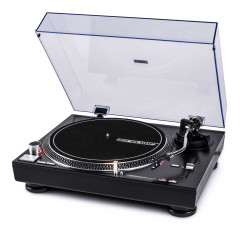
The RP-4000 MK2 is a solid DJ turntable for advanced users. The new MK2 version comes with several improvements, including a newly developed top panel and reworked metallic buttons with enhanced feel as well as a variety of functions. Precise motor control with 3 speeds: The precision-engineered die-cast platter is accelerated by a powerful motor with a high-torque direct drive of more than 1.8 kg/cm. The precise motor control with 3 speeds (33 1/3, 45 & 78 rpm) allows for the RP-4000 MK2 to play back any record. The pitch section with a selectable range of +/-8% and +/-16%, respectively, is suitable for the finest pitch adjustments. Statically balanced s-shaped tone arm: The RP-4000 MK2 features a statically balanced s-shaped tone arm with hydraulic lift and anti-skating mechanism. Via the universal connection for pick-up systems (SME) a large number of pick-up systems can be connected. Reverse function, pitch reset and extendible needle illumination: Additional features, such as reverse play and pitch reset, offer all DJs direct control of their turntable. With the push of a button the aluminium target light can be extended, so that the needle position can be seen in dark surroundings. Newly developed top panel and sturdy housing design: The new deep black metallic top panel construction is equipped with metallic buttons for start/stop, platter speed, pitch control, reverse function and tempo reset. The improved touch upon hit offers a clear haptic feedback. The sturdy construction with optimized damping features and shock-absorbing feet improve isolation from unwanted vibrations. With pick-up and headshell (made by Ortofon in Denmark): The RP-4000 MK2 comes with the high-quality OM Black pick-up, handmade by Ortofon in Denmark, pre-fitted to a headshell ready for immediate playback.
Technical data Turntable:
Type: direct drive turntable
Drive: quartz-driven high-torque direct drive
Motor: 8-pol., 3-phase, brushless DC motor
Turntable speeds: 3 speeds, manual (33 1/3, 45, 78 rpm)
Starting torque: > 1.8 kg/cm
Brake time: 50 dB (DIN-B)
Brake system: electronic brake
Platter:
Material: aluminium die-cast
Diameter: 332 mm
Tone arm:
Type: universal, statically balanced, s-shaped
Effective length: 230.5 mm
Overhang: 16 mm
Tracking angle error: < 3°
Applicable pick-up weight: 3.5 - 8.5 g (incl. headshell 13 - 18 g)
Anti-skating range: 0 - 7 g
Connections:
1x PHONO out (gold-plated), 1x GND
General:
Power supply: AC 115/230 V, 60/50 Hz (EU/US), AC 100 V, 50/60 Hz (JP)
Power consumption: 12 W
Dimensions: 450 (w) x 352 (d) x 144 (h) mm
Weight: appr. 9.8 kg
Included accessories:
Platter, OM Black pick-up system (by Ortofon), headshell, slipmat, counterweight, AC psu, instruction manual
Features
NEW in the MK2 version:
Newly developed top panel and reinforced housing construction
Reworked metallic buttons with improved feel & tactile response
Precision Pitch with selectable ranges of +/-8 % & +/-16 %
Tempo reset (Quartz Lock) feature
Superior finish in deep black metallic
Quartz-driven DJ turntable with high-torque direct drive
Designed for professional use
Powerful brushless DC motor with more than 1.8 kg/cm torque
Precise motor control with 3 speeds selectable (33 1/3, 45 & 78 rpm)
Reverse function: switch for forward/reverse playback
Precision-engineered die-cast aluminium platter with stable rotation
Statically balanced s-shaped tone arm with hydraulic lift and anti-skating mechanism
Universal connection for pick-up systems (SME)
Extendible needle illumination
Shock-absorbing feet for vibration isolation
Sturdy, heavy construction with optimized damping features
Prepared for dust cover (available as optional accessory)
Incl. slipmat, removable headshell and ready-mounted OM Black pick-up made by Ortofon
Repress!
StarWax magazine celebrates its fifteenth year, it is in the extension of the anniversary event that the vinyl Wild Star Wax 15 Years Edition in Partnership with Overdrive is born!
Curated and Seòected by Dj Coshmar for the most famous STARWAX magazine a powerful dancefloor combo for djs, diggers and clubbing addicted.
Available in stores from September 2022, the tracklist contains six tracks of cumbia, disco, creole funk, bass music and hip-hop that are available exclusively in this vinyl format, at exception of "An Tèt Aw" the last title of side A already available on the Lp of DjeuhDjoah &
Lieutenant
Introducing "Uprising Volume 2" by Zaratustra, the Highly Anticipated Second Installment of the Acclaimed Series on Skylax Records. Following the Groundbreaking Success of "Uprising Volume 1" in the Indie Dance Scene, Zaratustra Returns With a Collection of Tracks That Push the Boundaries of Genres, Inspired by Indie Dance, Italo Disco, Ebm, New Beat, Acid, and Ethnic Music. Prepare to Be Captivated by the Infectious Energy of "Uprising Volume 2." the Ep Opens With the Mesmerizing "Dark Clouds" (Club Mix), Reminiscent of the Futuristic Vibes of I-F's "Space Invaders Are Smoking Grass" and the Early 2000s Brilliance of Tiga. the Instrumental Version of "Amours Electroniques" Takes You on a Nostalgic Journey, Evoking the Spirit of Miss Kittin & the Hacker's Iconic Sound. Emilio Van Rijsel Delivers an Astounding Acid Trance Techno Remix of "Dark Clouds," Surpassing Expectations and Becoming an Undeniable Highlight of the Ep. for an Extra Treat, Those Who Purchase the Vinyl on Our Bandcamp Will Receive the Full Instrumental Version of "Dark Clouds," the Vocal Version of "Amours Electroniques" (Feat. Angst for Greta), and the Vocal Version of Naranja's Remix. Speaking of Naranja, the Ep Features a Dynamic and Uptempo Remix of "Amours Electroniques" (Instrumental) by the Talented Producer. Naranja's Remix Infuses the Track With a Pulsating Rhythm and Compelling Grooves, Elevating the Energy to New Heights While Maintaining the Essence of the Original. It's a Captivating Reinterpretation That Will Ignite Dancefloors and Leave Listeners Craving More. "Uprising Volume 2" Is a Powerful Testament to Zaratustra's Ability to Revive the Spirit of the Early 2000s New Wave and Electroclash Era. Each Track Encapsulates the Essence of That Time, Infusing It With a Modern Touch That Will Leave Listeners Craving More. Join the Uprising and Immerse Yourself in the Electrifying Soundscapes of Zaratustra. This Vinyl Release Is a Must-Have for Any Music Enthusiast Seeking a Sonic Adventure That Defies Genres and Rekindles the Spirit of a Bygone Era. Grab Your Copy of "Uprising Volume 2" and Witness the Evolution of Zaratustra's Artistic Prowess, as He Continues to Shape the Future of Electronic Music....
Within the first few seconds of the opening song on Australian troubadour Peter Bibby's latest album, we get an unvarnished look at the man behind the music as he observes the late-night scene of a local watering hole with increasingly bleary eyes:"No one seems to want to talk to me / 'cuz I'm the arsehole, probably." Indeed, that lovable ambivalence is at the heart of Drama King, Bibby's fourth studio album for Spinning Top Records. The project was produced by first-time collaborator Dan Luscombe (The Drones, Amyl and the Sniffers) and mixed by White Denim's Josh Block a frequent collaborator with Leon Bridges. An artist who has been celebrated as inherently working-class and wholeheartedly independent, Bibby comes by this caution honestly, having cut his teeth in the rough-and-tumble underground rock scene centered around Perth's Hyde Park Hotel in Western Australia. Bibby's affable personality has gotten him plenty of mileage as a live act. He's toured the U.S. with Pond and performed at the infamous open mic night at Pappy and Harriet's in the California desert. He's also taken the stage at international festivals such as Laneway, Falls, All Points East, South by Southwest and South Africa's Rocking the Daisies while notching his fair share of rowdy headlining shows.
Die italienische Symphonic-Power-Metal-Institution RHAPSODY OF FIRE kehrt mit einem ihrer bisher besten Werke zurück, einem weiteren Teil ihrer epischen Nephilim-Saga, die 2019 mit "The Eighth Mountain" ihren Anfang nahm. Ihr neues Epos heißt: "Challenge The Wind"!
Fragt man einen Power Metal-Fan, so wird er feststellen, dass RHAPSODY OF FIRE in 30 Jahren nicht nur ein Genre geprägt, sondern sich auch als Band weiterentwickelt und ein Vermächtnis als die unangefochtenen Könige des Symphonic Power Metal geschaffen haben.
Nach Klassikern wie Legendary Tales (1997), Symphony Of Enchanted Lands (1998) oder Dawn Of Victory (2000) zeigen RHAPSODY OF FIRE einmal mehr, was sie am besten können: Epische Orchesterarrangements, bombastische Chöre, schnelle und melodische Gitarren und eine packende Story, die dieses Werk an Symphonic-Power-Finesse zusammenhält. Für den letzten Schliff haben sich RHAPSDOY OF FIRE einmal mehr an einen der renommiertesten Tontechniker der Metal-Szene gewandt: Sebastian "Seeb" Levermann von Orden Ogan.
Mach dich bereit für "Challenge the Wind"!
Brooklyn Sounds legendary 1971 debut album, full of heavy Nuyorican underground salsa dura propelled by raw trombones and in-your-face percussion, born of the barrio streets and the band’s Caribbean heritage.
Fully authorized by producer Bobby Marin, with liner notes detailing the Brooklyn Sounds story, featuring never-before seen photos and pressed on 180g vinyl.
Colored[29,37 €]
Atmosphere and gravity lean into each other. They are simultaneously expansive, and anchoring. They hold us, and lend a sense of perspective. They provide a stability and a knowingness which is essential in the absolute, and yet we can't help but find ourselves gazing upward, outward and reaching towards that which sits outside those things and ways we know. Selene is a record about that this lingering desire for that which sits beyond. It is work that seeks new perspectives snatched from familiar vistas, and it meditates on that sense of anchor and perspective. The work is also a speculative hymn to the visions of the celestial zones that spill ever outward. These visions, once merely what we could perceive with the naked eye are now so much more. Our minds eye is fed in equal parts by radio telecopy, filmic dreams and fiction renders of a place most of us will never know first-hand. This recording ties into a linage that reaches back, while stretching forward. It is just one story of so many, told across places, across cultures, across generations. It sits in the in-between of before and after, and in that moment invites us to situate ourselves and lean into it.
- 1: To Be Chosen
- 2: Child Of Two Worlds
- 3: Take Flight
- 4: A Warrior’s Heart
- 5: Welcome To Hometree
- 6: The Sarentu Moot
- 7: On The Hunt
- 8: First Strike
- 9: Return Of The Sky People
- 10: Across The Boundless Range
- 11: Glade Of Light
- 12: Forest In The Sky
- 13: The Silk Harvest
- 14: Revelations
- 1: First Flight
- 2: Ash On The Winds
- 3: The Lodge
- 4: End Of The Line
- 5: Wind Flutes Call
- 6: Eywa’s Blessing
- 7: Zakru Never Forget A Friend
- 8: Take The Fight To Them
- 9: We Charge As One
- 10: Shadows Of The Past
- 13: The Woods Grow Still
- 14: Flight Of The Kinglor
- 15: New Beginnings
- 16: Going Home
- 17: They Have Made Us Warriors
- 18: The People’s Cry (Main Theme)
- 11: Wild Sky
- 12: Pandora Will Be Free
2LP Soundtrack for UbiSoft video game in the Avatar series on Translucent Blue & Pink Vinyl Set after the events of the first Avatar film, you’ll embark on a journey across the Western Frontier, a never-before-seen continent of Pandora, as you join other Na’vi clans to protect Pandora from the formidable forces of the RDA. Created in collaboration with Disney and James Cameron’s production company, Lightstorm Entertainment, you will experience a first-person open-world action-adventure game exclusively developed to maximize the power of new-gen consoles and PC. Abducted by the human militaristic corporation known as the RDA, you, a Na’vi, were trained and molded to serve their purpose. Fifteen years later, you are free, but find yourself a stranger in your birthplace. Reconnect with your lost heritage, discover what it truly means to be Na’vi, and join other clans to protect Pandora from the RDA.
Following the release of Eric Chenaux's last album Say Laura (2022), The Guardian wrote "the Canadian songwriter has one of the all-time great singing voices in popular music, an intensely romantic Chet Baker-ish instrument that seems to float with piercing direction, like a paper aeroplane thrown hard through mist." With Uncut describing his songcraft "as delicate and lovely as a rare orchid" and Record Collector praising the album's "sublime alien balladry" such are the accolades that have accrued throughout Chenaux's unique and consummately uncompromising solo music for well over a decade now. Delights Of My Life opens a new chapter for the singer/guitarist and formally introduces the Eric Chenaux Trio, with Toronto-based musicians Ryan Driver on Wurlitzer organ and Phillipe Melanson on electronic percussion. Driver is a longtime collaborator, appearing on several of Chenaux's solo albums (even embedded into the very title of the 2010 masterpiece Warm Weather With Ryan Driver). Melanson has a long list of involvements that include Bernice, Joseph Shabason, and U.S Girls, and a recent release with his Impossible Burger project on Chenaux's own experimental label Rat-drifting, but this marks the first fulsome involvement between the two as players on a recording. In many ways Delights Of My Life also picks up right where Chenaux's previous album left off, in its subversions of a classic, timeless jazz-inflected balladry, while the interplay of the trio formation indeed unfurls many new delights. Recording together at Chenaux's spartan home studio in rural France, Driver's harmonically warped organ and Melanson's electroacoustic sampling and percussion hold time in newfound ways. Where previously Chenaux relied on a freeze/sustain pedal and minimalist rhythmic triggers to generate both pulse and chordal foundations, Melanson now paints timekeeping with expressive and intricate colourations, through live deployments of fluid sampled percussion (including orchestral timbres like timpani, kettle drums, and woodblock) that blur the boundaries between acoustic and electronic. Driver also ramps up his role in the song arrangements (prefigured in his support playing on Say Laura), teasing out chords and melodic filigree on Wurlitzer that percolate more prominently with Chenaux's signature fried guitar solos and succulent singing. Both trio members add dulcet backing vocals, most notably on the 10-minute tour-de-force of fuzzed and ring-modulated swing "This Ain't Life" that opens the record. All seven songs on the album groove and sway, simmer and sparkle, like nothing in the inestimable Chenaux discography to date. Chenaux's tunes have the uncanny ability to sound like jazz standards; songs you feel you've heard before, though certainly never quite like this. Yet these are of course all originals, compositionally and interpretively, bent through an inimitable avant/out-music lens. Delights Of My Life conveys warm familiarity, shot through with the exuberantly experimental subversion and playful, even mischievous, iconoclasm that continues to mark Chenaux as defiantly, virtuosically, and genially one-of-kind.
SIMON AND GARFUNKEL’S SWAN SONG: BRIDGE OVER TROUBLED WATER FEATURES METICULOUS PRODUCTION, GORGEOUS SONGWRITING, AND HEALING SPIRIT
Sourced from the Original Master Tapes and Limited to 4,000 Numbered Copies: Mobile Fidelity’s 180s SuperVinyl 33RPM LP Plays with Staggering Detail, Clarity, and Definition
1/4" / 15 IPS analogue master to DSD 256 to analogue console to lathe
Unifying, soothing, comforting: Simon and Garfunkel's Bridge over Troubled Water quickly became the album of an era upon release in 1970, the benchmark set serving as a beacon of hope and hymn of reassurance during a time marked by polarizing changes, social unrest, uncertain politics, and the dawn of a new era. These uplifting reasons — to say nothing about the gorgeous songwriting, meticulous production, and watershed performances — attest to why it is more relevant than ever in our current climate. Music, Bridge over Troubled Water simultaneously suggests and proves, heals all wounds and lifts all boats.
The seminal effort Rolling Stone named the 51st Greatest Album of All Time reaches illustrious sonic and emotional heights on Mobile Fidelity’s 180g SuperVinyl 33RPM LP. Pressed on MoFi SuperVinyl and strictly limited to 4,000 numbered copies, this ultra-hi-fi collector's edition brings you closer to music that picks up where the duo's Bookends leaves off. You'll enjoy deep-black backgrounds and pointillist details. Seemingly every note, breath, and movement is reproduced with exquisite accuracy, clarity, and balance. Each rotation benefits from SuperVinyl’s ultra-low noise floor and superb groove definition.
The best-selling record in the U.S. for several years running and winner of six Grammy Awards — including nods for Record of the Year, Album of the Year, Song of the Year, and Best Engineered Recording — Bridge over Troubled Water endures as a staple of accessible sophistication, angelic elegance, effortless singing, unhinged ambition, and therapeutic spirit. While it would turn out to be the final studio set for a duo surrounded by creative and personal disagreement, Simon and Garfunkel's collaborative ethos and soaring harmonies — combined with reflective narratives centred on the American experience, friendship, romance, and farewells — combine to turn the 11-track work into a paean to resolution, reconciliation, calm, and balance.
Home to the legendary title track graced by Garfunkel's pacifying solo lead vocals as well as the equally famous folk ballad "The Boxer," Peruvian-based "El Condor Pasa," upbeat "Cecilia," and rock ’n’ rolling "Baby Driver,” Bridge over Troubled Water remains as renowned for its musical diversity as its lyrical poignancy. Moving beyond the templates they'd perfected on four prior albums, Simon and Garfunkel embrace a then-unimaginable swath of styles. Rock, pop, gospel, country, R&B, South American, and jazz strains course throughout the songs, each sparked with bold experiments yet grounded in a well-orchestrated melange of melody, rhythm, and classicism that makes everything personal, familiar, and warm.
Not for nothing is Bridge over Troubled Water one of the finest-sounding albums ever made. Featuring instrumentation helmed by members of Los Angeles' fabled Wrecking Crew as well as multiple choral and string sections, songs took hundreds of hours to complete and involved pioneering recording techniques. Evoking both Phil Spector's live"Wall of Sound" approach as well as inventive effects, Bridge over Troubled Water is a triumph of texture, atmosphere, and architecture. Our audiophile edition brings the record's unique traits to the fore.
Whether the reverberation generated by Garfunkel's cassette recorder on "Cecilia," echoing drums captured in a corridor heard throughout "The Boxer," automobile noises peppering "Baby Driver," layer upon layer of voices dotting "The Only Boy Living in New York," or echo-chamber percussion on the title track, details comes through with stunning accuracy, clarity, and dimensionality. In every regard, Bridge over Troubled Water exudes genius.
THE 1968 ALBUM ON WHICH JOHNNY CASH BECAME A LEGEND: AT FOLSOM PRISON AMONG THE MOST IMPORTANT AND POTENT STATEMENTS OF THE 20TH CENTURY
Johnny Cash already knew his way around Folsom Prison when he and his band stepped inside the institution’s forbidding walls on the morning of January 13, 1968 to record At Folsom Prison. He’d played there two years prior. But this time was different.
Cash took the stage that day for two shows amid a darkening sociopolitical atmosphere and a raging war in Vietnam, as well as the knowledge his career and health hung on by a thread. The Arkansas native shared many of the long odds and abject failures of the inmates for which he performed. The songs he chose, and the conviction with which he delivered them, say as much. The point at which Cash transformed from a country star into a legendary artist, and a bold statement about the American prison state and its commitment to rehabilitation, the triple-platinum At Folsom Prison remains one the most important, potent, and fabled records of the 20th century.
You can hear it echo off the walls of the room; pulse through the itchiness of the Tennessee Three’s acoustic-based boom-chick rhythms; crackle in the announcements conveyed over the intercom; ring in the comedy of the off-cuff remarks and pair of novelty tunes; sense it in palpable energy that wells up within Cash and his audience. And you can experience it like never before via Cash’s knockout singing. The bedrock foundation of all his music, the singer’s baritone resonates with profound degrees of depth, pliability, and passion that underscore how much this appearance meant to him — and the extent he was living the narratives.
Indeed, every song on At Folsom Prison serves a purpose and speaks to the conditions — mental, emotional, physical, geographical, legal, social — the inmates confronted on a daily basis. Beginning with the explicit messages of the opening “Folsom Prison Blues,” Cash makes it clear he understands and shares many of their plights. Not for nothing did the myth of Cash having done hard time persist for decades once this record hit the streets. That’s how real it is, and how dedicated Cash remains to conveying every note with the same truth he invests in the impromptu comments he makes between and amid songs.
Listen to the sorrow, regret, pity, and loneliness of Merle Travis’ “Dark as the Dungeon,” Cash pulling syllables til they threaten to break and inhabiting the mood of bleak phrases such as “pleasures are few” and “the sun never shines.” Witness the isolation, dejection, and sadness punctuating the walking-blues “I Still Miss Someone,” matched in gravity by a solemn reading of “The Long Black Veil” — a traditional dirge that involves murder, cheating, and deception. Cash cuts even deeper on a heartbreaking solo rendition of “Send a Picture of Mother” and plainspoken version of Harlan Howard’s “The Wall,” detailing a suicide disguised as jailbreak through cliched-jaw deliveries that softly curse the impossible situation.
In chronicling temptations, mistakes, mortality, punishment, and life “inside” — for better or worse, the stories of the disenfranchised, forgotten, written-off, and unrepentant — At Folsom Prison also has a blast playing the outlaw role. Cash captures wild-eyed craziness and out-of-control mayhem on a revved-up take of “Cocaine Blues,” taking extra satisfaction in its dastardly tales by way of voice that shifts into character for the sheriff and judge. The gallows humor and racing drama of “25 Minutes to Go”; quicksilver accents and resigned acceptance of “I Got Stripes”; train-whistle blare and twangy locomotion of “Folsom Prison Blues” — all fight the law only to see the law win.
Cash remains deeply committed at every moment, and inseparably connected with the tortured souls removed from the goings-on of the outside world. No wonder all but two songs here stem from the day’s first performance that saw Cash, Luther Perkins, Marshall Grant, and company give everything. As does the Man in Black’s soon-to-be-wife, June Carter. The couple’s fiery duet on “Jackson” scorches; their combination of surrender and fortitude “Give My Love to Rose” puts us in the dying protagonist’s shoes.
And with the closing “Greystone Chapel,” famously penned by convict Glen Sherley, who watched it all happen under the watchful eye of guards, Cash separates the corporeal from the spiritual, relaying lessons about salvation and survival. Heady themes to which he’d return for the remainder of his illustrious career.
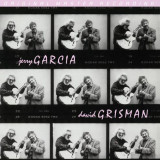
Unadorned with any post-production tricks or overdubs, Garcia/Grisman breathes with naturalism and presence. You will effortlessly detect the full body of the instruments, witness the woody grain textures, and get lost in the surprisingly velvety qualities of Garcia's lullaby-like singing. Our pressing also marks the first time this delightfully joyous affair has been issued in analogue form. You will never hear a better-sounding Americana-styled recording.
Pals since the mid-1960s, Garcia and Grisman bonded over their love for traditional folk and bluegrass. The two teamed up amidst what became a gold rush of top-notch productivity and creativity for Garcia. Partnering with bassist Jim Kerwin and percussionist/fiddler Joe Craven, the pair approaches every passage with innate ease, as if either musician could finish the others sentence. The affable chemistry and soothing interplay wash over a selection of songs as notable for their diversity as the way Garcia and "Dawg" turn them into the equivalent of old friends you haven't seen in years.
Exquisite melodies and jewel-shaped notes decorate the simple, convivial structures of tunes that hop, jump, skip, skitter, and bop. The atmosphere is reminiscent of the legendary gypsy-jazz exchanges between Django Reinhardt and Stephane Grappelli, and equally sharp. Swirling with Middle Eastern modality, the closing 16-minute-plus rendition of Grisman's rippling "Arabia" – complete with a section based on a Cuban fold theme - is alone enough worth the price of admission to this sensational session. But there's so much more.
The quartet delves into Celtic themes ("Two Soldiers"), jazz-grass ("Grateful Dawg"), old-world ballads ("Russian Lullaby"), and Appalachian flavours ("Walkin' Boss") with nonpareil skill and soulfulness. Garcia and Grisman's tandem picking throughout epitomize sublime. And for many listeners, the duo's revised version of the Grateful Dead staple "Friend of the Devil" ranks as the finest-ever recorded, the pace patient, the narrative vocals heartfelt, and the synchronous solos tailor-made for the enveloping progression. Better yet, it's all captured in astonishing fidelity.
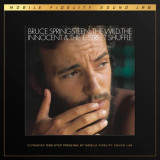
Released only eight months after his exhilarating debut, Bruce Springsteen's The Wild, the Innocent & the E Street Shuffle contains rousing dispatches from the boardwalk, the street, the beach, and the bedroom. It explodes with energy, dares to dream, teases with humour, crackles with tragedy, clings to hope, and overflows with discovery, youthfulness, and personality. It features an unforgettable cast of characters — corner boys, teenage hustlers, doomed lovers, jazz men, junk men, factory girls, fortune tellers, alley cats, pimps, escorts, and more — illuminated by vivid colour, breathtaking detail, and poetic action.
Musically, the heartfelt 1973 record is inhabited by sympathetic vignettes and cinematic arrangements steeped in rock 'n' roll, soul, jazz, and R&B. It finds the New Jersey native looking beyond the parameters of his preceding record and seeking to move on from environments he knows well (and chronicles here) by rushing headlong toward unknown territories, adventures, and people. Underpinned by the singer-guitarist's ambitious poetic enterprise and will to succeed, The Wild, the Innocent & the E Street Shuffle is the album on which Springsteen becomes the Boss.
Mastered on Mobile Fidelity's renowned mastering system, pressed at RTI on MoFi SuperVinyl, and strictly limited to 7,500 numbered copies, Mobile Fidelity's UltraDisc One-Step 180g 33RPM LP set is the definitive-sounding version of Springsteen's sophomore record. Benefitting from SuperVinyl’s nearly non-existent noise floor, superb groove definition, and dead-quiet surfaces, The Wild, the Innocent & the E Street Shuffle plays with a clarity, energy, presence, and openness that complement the expressiveness, dynamics, and scope of the seven restless songs that comprise a work Rolling Stone ranked the 345th Greatest Album of All Time.
Beyond the audiophile sonics that practically place you behind the console at 914 Sound Studios — listen to the separation between the instruments, natural decay of the notes, interplay within the widescreen soundstaging, and nothing-to-lose youthfulness of Springsteen’s voice — this reissue takes seriously this record’s influential merit by presenting it in packaging that underlines its status. Tucked in a beautiful slipcase, the LP is housed in a special foil-stamped jacket with faithful-to-the-original graphics. This reissue is made for listeners who prize sound quality and who want to engage themselves in everything involved with the invigorating set that busted Springsteen loose from the club circuit and landed him on the radio
Determined to liberate anyone within earshot and unafraid to come on strong, The Wild, the Innocent & the E Street Shuffle serves as the debut of the E Street Band — not only heard but seen for the first time by most of the public courtesy of the back-cover photograph. This is where saxophonist Clarence Clemons, organist-accordionist Danny Federici, and pianist David Sancious step out of the shadows — and drummer Vini Lopez and bassist Garry Tallent again stoke a fiery rhythmic engine that helps drive the untamed, reimagined big-band swing of “Kitty’s Back,” breathless R&B thrust of “Rosalita (Come Out Tonight),” and carefree dance steps of the funky “The E Street Shuffle.”
Of course, the main attraction remains a then-24-year-old visionary on the precipice of becoming a sensation and turning a then-bloated rock scene on its head. Recorded over three months while Springsteen and company were busy touring his debut LP, The Wild, the Innocent & the E Street Shuffle reflects the high-octane approach the vocalist embraced onstage and drifts away from the label-dictated acoustic-based frameworks of his debut. The set also witnesses Springsteen deepening his observational skills, with narratives such as the romantically tinged “4th of July, Asbury Park (Sandy)” and redemptive epic “Incident on 57th Street” mirroring changes taking place in the singer’s own life, small towns, and America at large.
A thrilling collision of memories, reflections, and composites — Sandy, Rosalita, and the latter’s parents are all based on actual people Springsteen knew, as is the community depicted in the opening track — the aptly titled The Wild, the Innocent & the E Street Shuffle resonates decades on due to its truths, authenticity, and spirit. Those characteristics — as well as the fact that many of its lengthy songs come on as the equivalent of sweaty, feverish soul revue that won’t stop until you’ve been exhausted — also explain how this now-iconic album triumphed over the reservations of industry “experts” that both demanded Springsteen re-record it and instructed deejays not to play it.
Yet there’d be no stopping a record that saw the past, present, and future, a band whose will would not be denied, and a phenomenon who was born to run. A never-ending invitation to act real cool and stay up all night, The Wild, the Innocent & the E Street Shuffle always feels alright.
Luxury Apartments have spent long enough pondering in the orb of creative frustration as art charged city dwellers and have alchemised a jagged piece of guitar work that calls on the past for a quick catch up before cracking on with their day as a witty, energised and wiry punk band. Formed before your favourite East London neighbourhood became full of high rises, cockapoos and pubs with Madri & Beavertown on Draft, there’s a whole swath of words you could use to describe Luxury Apartments, but doing so might draw too many parallels to estate agent listings wo we’re gonna let their track record and new LP do the talking… LA played with the likes of TOY, TELEGRAM, Deep Tan, Es, The Chisel and Rifle before even having an LP. Mixing dry humour with a belting live show served them well while the guys were woodshedding and earnt them early fans such as Graham Coxon and Jamie Reynolds, who I can only gather shed a single tear of seeing where they came from with all the chaotic guitar-busting, skin-splitting, bottle-smashing madness of an early LA show. But we’re here talking about NOW and NOW is the time to get your pre-order for their first LP, a half hour of power smashing the atoms of 80s c86 indie on lead track ‘Energy’, 77 punk on ‘Wire’ and new garage rock explosions on ‘Taliban’ which morph in to a piece of black wax that’s 100% guaranteed to get the disenfranchised wiggling, the fed-up hurling half bricks through foxtons windows and the punk lifers flipping off yet another boss before carving out another fork in their paths of resistance.
Eine Platte zu machen ist beides: Musik, die als Momentaufnahme festgehalten wird, und gleichzeitig eine Dokumentation des Zeitraums, in dem die Lieder entstanden sind. Wenn man dieser Dokumentation und dem Zeitrahmen einen Namen geben möchte (wie einem Albumtitel), stellt sich die Frage: Was ist seit der letzten Aufnahme passiert - auf persönlicher, sozialer und vielen anderen Ebenen? Was hat sich verändert? Oder ging es einfach nur um "mehr" vom Gleichen: in immer kürzerer Zeit zig Dinge parallel erledigen, optimieren, wiederholen? Entwickeln sich diese Dinge in die Richtungen, in die sie sich entwickeln sollten? Schreitet der Fortschritt überhaupt voran? Oder geht es einfach nur darum, das zu tun, was wir schon vorher getan haben - nur schneller, effizienter? Der Ausdruck "L'inertie polaire" (fast 35 Jahre alt) erklärt nicht alles, was in der Welt vor sich geht, aber eine, ziemlich unangenehme, Menge_ 3 Jahre nach Extract.Transform.Debase veröffentlichen The Antikaroshi ihr 6. Album, das inhaltlich direkt an den Vorgänger anknüpft. Das Trio setzt genau dort an, wo es aufgehört hat: Lieder, die sich Zeit nehmen, die atmen um dann im nächsten Moment hektisch zu lärmen! Die Lautstärke ist immer ein Mittel zum Zweck und das Spiel mit ihr ein Markenzeichen von The Antikaroshi. Während Drums und Bass die Grundlage bilden, aber trotzdem immer wieder bekannte Muster durchbrechen, ist die Gitarre hypnotisch und forschend. Die Vocals wechseln zwischen rezitativem und melodiösem Ausdruck und geben der Musik genügend Raum. So bilden The Antikaroshi die Welt ab, die sie umgibt: Hektik und Stillstand schließen einander nicht aus, sondern sind kulturelle Pole zwischen denen sich Gesellschaft entfaltet. Und so wird ihre Musik politisch: Während eine Handvoll superreicher Menschen bereits Abschied von diesem Planeten nimmt (Lost In Compassion), läuft die Medienmaschine geölt wie ein Uhrwerk und hat gelernt, schlechte Nachrichten als gute zu verkaufen (Shiny White Teeth). Kriege werden zu Friedensmissionen (Authority) und das Ergebnis rechtfertigt allzu oft die Mittel (Gravity), wenn es darum geht, der eigenen Schwerkraft zu trotzen. Sogar Seen stehen inzwischen zum Verkauf (Thousand Lakes) und alle verfügbaren Mittel werden genutzt (Sticky Hands). Die Menschen schwanken zwischen gegensätzlichen Sichtweisen, handeln gegen ihren Verstand und viel zu oft auch gegen ihr Herz (Doxa). Was lässt sich dem entgegensetzen? Solidarität und metaphorisch die Wölfe zu vertreiben (Homohominilupus). Und natürlich der kollektive Protest (Tang Ping).