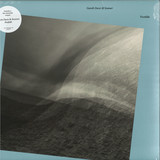
“Experimental trio Giraffe crystalize time on ‘Desert Haze’, their new LP on Marionette. Giraffe is the musical project of Sascha Demand (guitar), Jürgen Hall (keys), and Charly Schöppner (percussion). Sascha Demand is a composer that comes from a contemporary and improvised musical background, collaborating with the likes of Ensemble Integrales and Vinko Globokar. Jürgen Hall works in electroacoustic experimental projects, theatre and film scores, with releases on Staubgold and Edition Stora. Charly Schöppner is known for his popular music releases such as Boytronic on major production companies in the 1980´s and composes for theatre, dance, and film scores. With only a couple of releases to date on the wonderful Meakusma imprint as well as an EP on Marmo, little is known about Giraffe. After letting go of other artistic projects, the trio now focuses solely on Giraffe by continuously searching for and finding their own unique language.
Sascha, Jürgen and Charly have quite diverse musical backgrounds, though morphing into Giraffe they tower into one single composer. Their music is a critical statement, not in a political sense but rather an artistic one. Being mindful about what it means to create and how to position themselves as artists nowadays (without the constant hassle of being en vogue and short-lived trends) shaped their rather rare and stoic artistic stance. It is refreshingly honest to see their expression develop so naturally.
On Desert Haze, they’ve created a vibrant and minimalistic tribal sound that feels inspired by the Saharan traditional music of the Tuareg, Jazz, and German psychedelic krautrock. Giraffe themselves also list the radical music of the Viennese School (Schoenberg along with his pupils Berg and Webern) as well as the Köln School with its early electronic experiments as their main influence and inspiration. More precisely the composition process and the organization of musical material within space and time, where a conceptual and intellectual approach melds with an experimental yet expressive sound searching method.
Side A focuses on the trios studio work; it is built around tone color and pitch analysis of resonating prepared guitar sounds. Through a unique mixture of free improvisation and a serialism "rule set”, they develop instrumental layers and structures to form their tracks. Side B sees Giraffe playing more freely with a reduced setup - representative of what you may hear when listening to them live.
Desert Haze, along with its track-titles, showcases an almost mimetic approach to art. The haptic music grabs the listener not as a passive recipient but as an active resonant body to vibrate through. One can almost feel the Elements, pressure and heat forming a diamond, hypnotic overtones ringing through windy caves, shamanistic rhythms conjuring up mysterious and ancient landscapes - where the constant cycle of sedimentation and erosion reveals structures of fragile beauty - always gentle to the hand’s touch and the mind’s eye.”
Search:see know !
Selenicereus grandiflorus is native to the Greater Antilles, specifically the islands of Jamaica, Cuba, and Haiti. It can also be found growing among trees and rocks in countries across Central and South America, including Mexico, Honduras, and Nicaragua. Colloquially known as the “Queen of the Night”, Selenicereus grandiflorus produces majestic, nocturnally blooming flowers that open once a year before withering. When in annual bloom the flowers reach up to a foot in diameter and emit a fragrant vanilla aroma.
The flowers are supported by a tangled mass of spiny stems that grow thicker and stronger with each annual flowering, and are sometimes harvested for use in homeopathic remedies to improve heart health. Due to the uniquely transient beauty of this cactus, Selenicereus grandiflorus is considered a rewarding addition to any collection. Our botanists strive to source and produce high-quality specimens to enrich your mind as well as your ears. After many months in the field our team has returned with a diverse selection of sonic seedlings. Following a series of meticulous experiments in our research facility each seedling has been deemed safe for general propagation and cleared for release.
- A1: Lotus Eater - Tripholium
- A2: Shifted - K Pop
- B1: Efdemin - Entropie
- B2: L.b. Dub Corp - Look Shiny
- C1: Rrose - The Myth Of Purity
- C2: Lucy - The Goat God
- D1: James Ruskin - From Here On
- D2: Denise Rabe - Paralysed Spheres
- E1: Zeitgeber - Double Down
- E2: Adriana Lopez - It All Adds Up
- F1: Chevel - Va Lavorar
- F2: Alessandro Adriani - Two Journeys
- F3: Serena Butler - Giubia
Stroboscopic Artefacts releases ‘X – Ten Years Of Artefacts’, a 13-track album curated by Lucy, the nom de techno of Luca Mortellaro. It celebrates ten years of his label by boldly confirming its raison d’être: a continual redefinition of modern techno.
‘X – Ten Years Of Artefacts’ is a various artists album in which the label’s key artists respond to its tenth anniversary with fresh compositions. Artists with divergent perspectives and MOs are equally at home expressing themselves. These tracks’ timbres, tempos and moods differ greatly yet—somewhat improbably—they seem together, ideologically unified.
The album will be later complemented by a special remixes EP, with four new reworks of pivotal back catalogue material from the label (Donato Dozzy, Caterina Barbieri, Xhin and Klock). And from fall 2019, Lucy and an incredible cast of Stroboscopic Artefacts artists will begin an extended club tour to mark the anniversary.
On ‘X – Ten Years Of Artefacts’, Mortellaro features solo as Lucy, in collaboration with Rrose as Lotus Eater and together with Speedy J as Zeitgeber. (Rrose also appears alone with “The Myth of Purity.”) Shifted, Efdemin, L.B. Dub Corp (Luke Slater), James Ruskin, Denise Rabe, Adriana Lopez, Chevel, Alessandro Adriani and Serena Butler each feature, representing a group of singular artists whose relationships with the label range from years to months—Stroboscopic Artefacts’ past, present and future must exist simultaneously.
Back in September 2009, Lucy released “Why Don’t You Change/Dub Man Walking,” the first record from Stroboscopic Artefacts, which began a discography that, ten years later, is almost unparalleled in its ambition and vision. Put simply, Mortellaro wanted to create something that didn’t exist. Stroboscopic Artefacts would be respectful of, and indebted to, the great techno and electronic music artists of the past but would develop new paths forward for the label and the genre. The label refused to perpetuate the established dichotomies of electronic music — between the dance floor and home listening, between club music and experimental music, between the past and the future. It took risks knowing it wouldn’t always work. But within a year or so of the label’s inception, it was obvious Stroboscopic Artefacts’ approach had captured imaginations far beyond its Berlin base, showing us that the boundaries of techno are often constructs of limited imagination.
The label pursued constantly evolving methods of releasing music. It created concept-driven series like Monad, Stellate and Totem, establishing frameworks that would give freedom in limitation. Standout albums by Lucy, Xhin, Dadub, Zeitgeber, Chevel, Kangding Ray, Lotus Eater and Alessandro Adriani were deeply considered longform presentations.
With this new album, remix EP and tour, now is the moment for Stroboscopic Artefacts to look fondly at its past while drawing breath, reenergised, and hinting at new chapters.
The two collaborators, known separately for contemporary electronic music & free clarinet experimentations team up to create the delirious trip, Footfalls.
Two scenes are presented here, seemingly taken from different sides of the same desolated seaside setting, loosly inspired by poet and novalist T.S Elliot and Samuel Becket. In Towards the Door, Gareth Davis´ bass clarinet breathes slow, wave-like tones that merge with the oft-rythmic electronic textures from his counterpart. A third of the way in, Robin Rimbaud´s synth erupts into a Blade Runner-esque epic harmonic section that disappears as suddenly as it arrives - leaving ripples of oscillation in its wake, slowly unfolding into the sound of waves, as it arrives back where it begun : as a full circle, drawn in echo´s of sound.
Smokefall begins with the words „Invisible choirs“, subtly spoken by a woman’s voice among a blurred distant conversation, as textural sound effects creep forwards to the point where a slow progressing but steady LFO rhythm enters. Water, metal & smoke are absorbed into a creeping tribal passage, acompanied by long clarinet tones. The piece expands further and further into a state of ecstatic harmonic noise that fulfills all parts of your body – if played loud. Both artists from here on move into full on crushing electronics, all while Rimbaud´s Kilpatrick Phenol synth drives the background with its pulses and repetative bassline. The piece has an ellipse like rotation that makes one feel a sort of blissful vertigo that reverberates in your mind after the piece has ended.
Footfalls is an euphoric trip from two artists that – although prolific - manages to arrive at the perfect meeting point to deliver two hard to shake pieces of dizzying electro-acoustic perfection.
‘Green & Gold’ is the second collaborative release from Mr Key & Greenwood Sharps, the long awaited follow up to their
critically acclaimed 2015 album ‘Yesterday’s Futures’. The record was written and recorded between Greenwood Sharps’
cottage in the verdant English countryside and the off grid Finca in the foothills of the Andalusian Sierra Nevada, Spain where
Key is based.
The title has multiple meanings none of which are anything to do with weed or money. First and foremost, green and gold are
the colours which synesthete (a person who sees sound) Greenwood Sharps, composed the record in. It also alludes to the
dialogue between the green of the UK and the dusty gold of Andalucia which created the project. Finally green and gold speaks
of the dynamic between the sun and photosynthesising organisms, the driving force of life on earth.
‘Yesterday’s Futures’ took the listener on a meandering journey through a vast landscape of moods, sounds and ideas,
leading ultimately to redemption and the possibility of resolution. Thematically, ‘Green & Gold’ picks up where ‘Yesterday’s
Futures’ left off, but structurally it takes the opposite tack; an extended exploration of a single ubiquitous idea: universal love for
all things and all people and the challenge of maintaining these shiny ideals in day to day life, as our cynical side reasserts itself.
Key’s first output after an extended hiatus from releasing music makes it obvious that during this time he continued honing his
craft. The unique perspectives and disarming honesty which set him apart from his peers remain, but his technical prowess and
capacity to convey sentiment are notably enhanced. The same applies to Greenwood Sharps, who’s masterful production has
risen to new heights yet still maintains the rich and subtle sonic palette he has become known for.
Dropping alongside the EP is a short film featuring the works of long time collaborator Jamie Johnson, the man behind the
artwork for both ‘Green & Gold’ & ‘Yesterday’s Futures’. The short film is the visual counterpart to the EP and serves as the
perfect introduction to the world of ‘Green & Gold’ as it visually explores all the themes present in the music & provides a snap
shot of the incredible tracks on offer.
In a troubled and busy world, marred with anxieties and uncertainties, ‘Green & Gold’ comes as a breath of fresh air and offers some valuable food for thought for those searching for real heart felt substance rather than the sanitised, individualised &
commodified norm we have all become accustomed to.
Adapted Vinyl was a UK based techno label active in the late 90’s that picked up regular DJ support from taste makers of the time ranging from Jeff Mills to Mr C.
This, the label’s 7th record disappeared before a public release when the Integrale Muzique distribution company went out of business in 2008, but now gets its first official release date after years of very limited availability
Label founder Suade is the artist behind this release and these days he is best known as a highly-sought-after mastering engineer working for artists like Dense & Pika, Paranoid London, Jamie Jones and Vitalic.
Focusing his energies into family life and the fine tuning of other peoples music it’s rare to see Suade’s own music on a new release, but this hasn’t stopped him from collaborating on original tracks with the likes of Magda and Radioactive Man in recent years.
The EP has four contrasting tracks all with different moods and tempos all blended with Techno’s classic motoric drive.
With it’s absence from the usual music marketplaces creating something of a mystery this record ended up receiving a new, unofficial name on Discogs - The Citadel EP which is a title taken from the broken-beat second track on the B side of the record.
The Citadel is just one of the highlights on this eclectic EP, as it’s a Latronic Notron sequencer workout that patiently deploys layered synths in ever-shifting cross-rhythms for a languid 5 minutes before its deep, underpinning bass arrives evoking desert travel and arrival.
Baikal, named after the huge freshwater lake in Russia, is another stretched out meditation on tone and harmony acting as a foil to the delicate and vibrant Latin American percussion that filters in and out through a massive stereo Moog Modular system creating an energetic yet static, ritualistic atmosphere.
Trajan - the most driving track on the EP, gives a nod to the Probe era Richie Hawtin sound with a touch of Drexciyan melodics with shuffled percussion and bleeps over a snaking TB303 shaped bassline where the classic Acid box is given the role of control sequencer only commanding the thick, dirty oscillators of the big Moog.
A1 track Felix is a contrast yet again. A big room melodic Techno piece with another massive bassline and an almost orchestral level of layering, building to nine counter-melodies in total before letting rip with a classic TB303 acid line that builds from the heart of the track.
Funky soul-jazz organist Caesar Frazier crafted superior Hammond funk. 75, his second LP, is a rare gem. It’s comfortably his greatest artistic statement.
The follow-up to Hail Ceasar!, it’s a taut, grooving set that expands his sound and, put simply, it’s got better songs. The key elements of his debut album are all there – production from maestro Bob Porter, accompaniment from hip players (Bernard “Pretty” Purdie, Cornell Dupree, John Tropea) and arrangement from Horace Ott - but the overall sound is elevated. The tightly jamming, expressive jazz-funk makes for a richer, fuller, more satisfying experience.
75 is a mixture of hard-driving originals, deeply beautiful slower numbers to vary the tempo and a couple of classy covers. The crazy bombastic “Mighty Mouse” - a riot of horns, organ and in the pocket drums - became an acid jazz classic at Dingwalls and it’s easy to see (hear?) how. A blissed out, lushly instrumental take on Seals and Crofts’s “Summer Breeze” follows, perfect for those sunshine sets.
Side A closes with the heavenly “Sweet Children”. A loping, funky jazz masterpiece famously sampled by Kanye West for Common’s “Real People” from Be. It opens beautifully, with soaring sax and a funky horn section combining with weightless keyboard tones atop snapping drums. Unsurprisingly, the excellence endures right through to the end.
The B side opens with perhaps the album’s most famous track. "Funk It Down” contains the familiar “I can feel the funk” vocal refrain throughout. But it’s the gorgeous, insouciant bridge that you should all know and love, having been used as the hook for Gang Starr’s “Ex-Girl To Next Girl”. A great cover of Stevie Wonder's “Living for the City” comes next, with an unforgettable bass-line which anchors the entire heavy rhythm section workout. Dizzying organ, triumphant horns and sun-dappled guitar grooves combine to create “Walking On The Side”, rounding out a pretty smoking set.
This is one of those rare 70s funk-soul-jazz LPs on which a bad track cannot be found. It’s all essential. So of course finding original copies on vinyl at affordable prices has been tough for years.
Mastered brilliantly by Simon Francis, cut by Pete Norman and with painstakingly reproduced artwork by the Be With team, this fresh Be With reissue ensures this legendary LP now sounds, looks and feels as sensational as it should.
Sam went into an almost psychotic state when making music. He wasn’t himself. He was immersed in the creativity to such an extent that it was almost like a psychotic trance. Here’s an example. He found all this giant kelp down at Western Port bay and he would bathe himself in it for weeks. He would replenish the water and put salt in the bath, but leave the kelp in there. I used to ask Julie, his partner and wife, “How’s everything going?” and she’d say, “Just go and have a look at the bath.” - Tony Rogers
Sam Mallet could have pursued a career as a French literature professor in Paris, but decided his true calling was to remain in Australia, dedicate himself to his music and find the plateau; a word he used to describe the sensory worlds residing in music. Under the influence of Eno, Jon Hassell, Arvo Pärt, John Coltrane and Robert Fripp, Sam explored a wide variety of musical styles and put them to service soundtracking the time based works of his peers. He crafted spatial ambience, somber jazz, and drum computer driven rockers for short films and experimental video works, television shows (including the original Australian Wilfred series), feature films and live theatre. The avant garde Anthill Theatre, known for its departure from conventional staging practices and having a keen eye for talent, enlisted Mallet to provide soundtracks for approximately 40 productions throughout the 1980s and early 1990s.
Sadly, Sam passed away in 2014. A crucial piece of his legacy is undoubtedly the body of work he produced during his life, and the archive of recorded works is vast and deep. Sam seemingly saved everything, from fragments to finished pieces; and often repurposed previously released tracks by collaging them into new pieces. He self released a small number of cassettes and CDs from the mid 1980s onward, the contents of which were culled from soundtrack work and original pieces, but the majority of his music was experienced only within the ephemeral live performances.
Wetlands is the product of countless hours spent with this archive by Rowan Mason (Sanpo Disco/Recurring Dream) and Tony Remple (Musique Plastique), offering a dynamic survey of Sam’s work, and housed in a jacket evoking the minimal design and colour palette of his earliest cassette releases. Two selections of Sam Mallet’s music were featured on the compilation Midday Moon (also produced by Rowan), released last year by Bedroom Suck Records. Along with Left Ear Records’ Antipodean Anomalies, Midday Moon has served to highlight outlier musics and scenes from Australia and New Zealand, and Wetlands plunges deeper into the catalog of this obscure yet groundbreaking artist.
“This album will be part of the everlasting impact the Tribe collective had on our culture, on our hope and possibilities.” - Herb Boyd
Strut and Art Yard present the first compilation bringing together the modern era recordings of Tribe, Detroit’s acclaimed independent jazz collective.
Tribe began as a musical ensemble in 1971 co-founded by Saxophonist Wendell Harrison and trombonist Phil Ranelin that soon expanded into a broad amalgam including a live collective and independent record label. Ignored by the mainstream, many African American jazz artists in Detroit and across the US began creating their own small imprints and Tribe emerged alongside other cultural entities to express selfdetermination goals in the city: saxophonist Ernie Rodgers with his sessions at Rapa House; John and Leni Sinclair’s Artist Workshop; Bruce Millan’s Repertory Theater; the Hastings Jazz Experience and the Strata Corporation led by Kenny Cox. Harrison’s ideas of independence, self-determination and education were central to the Tribe ethos: “I might be possessed with a drive to get the knowledge out,” explained Harrison, “because I see this as sustaining the future of the jazz diaspora, the jazz tradition.” Tribe album releases like Harrison’s ‘An Evening With The Devil’ (1972) and Harrison and Ranelin’s ‘A Message From The Tribe’ (1973) became early ‘70s milestones in Detroit jazz.
In 1977, Harrison teamed up with pianist/composer Harold McKinney to form Rebirth Inc., aided by Detroit cultural warrior John Sinclair, a continuation of the Tribe community ethos. Musically, it formed a link with radio station WDET and began an outreach program to teach children and to publish Harrison’s jazz instruction books. Harrison continue to record extensively as a leader with his own labels, WenHa and Tribe, documenting the collective through sessions led by Phil Ranelin, Harold McKinney, Pamela Wise and more.
The ‘Hometown’ compilation places the spotlight on this later era of Tribe and Rebirth Inc., with rare and previously unreleased recordings from Harrison’s WenHa / Rebirth Studios and the SereNgeti Gallery And Cultural Center. Among many highlights, Harold McKinney and his “McKinfolk” family of musicians contribute the pulsing ‘Wide And Blue’ and dance celebration ‘Juba’; Phil Ranelin re-works his classic ‘He The One We All Knew’; Poet Mbiyu Chui (Williams Moore), pianist Pamela Wise and percussionist Djallo Djakate spark on the uncompromising ‘Ode To Black Mothers’ and the rallying cry of ‘Marcus Garvey’: “If we ever get together we will astound the world.” Harrison himself evokes the power and majesty of juju on ‘Conjure Man’.
‘Hometown’ comes as a 2LP gatefold and 1CD digipak fully remastered by Technology Works from the original session recordings. Both formats include exclusive sleeve notes by journalist Herb Boyd with rare photos from Wendell Harrison’s personal archive.
In order to celebrate 5 thrilling and inspiring years, we gathered well-known artists, Goldmin regulars and emerging talents. It was really important for us to express the elusive nature of the Goldmin sound, in the form of a compilation tracklisting. Over the past 5 years, we had the chance to meet most of these guys in person, follow their very own creative path, share ideas, thoughts and there's no doubt that they all had their part to play in crafting our sound. This intimate and stimulating kind of collaboration had to be expressed and there couldn't be a better way to capture what we've been busily working for, than a serie of Various Artists 12". What it comes down to is a quintessential, hard-to-follow Goldmin selection devoid of any specific standard or norm. And this whole compilation seems to reflect that non-septate artistic direction, this little something, which has grown throughout our whole catalogue, since the label's birth.That's why, picking these select few tracks, that could illustrate Goldmin Music's essential freedom was probably our toughest work yet. It was also important to pick only the most original and iconic tracks from each artist. In the end each track had to be their most Goldmin one and they all have been tried in all types of situations, in club at 1 and 5 AM, on the highway at night or even staring at the ceiling during a sleepless insomnia session. They all fullfilled their duty.
- A1: C'est Si Bon
- A2: When You're Smilling (The Whole World Smile With You)
- A3: Basin Street Blues
- A4: Nobody Knows The Trouble I've Seen
- A5: When The Saints Go Marching In
- A6: Body And Soul
- B1: La Vie En Rose
- B2: Go Down, Moses
- B3: Do You Know What It Means To Miss New-Orleans ?
- B4: Blues For Yesterday
- B5: Sometimes I Feel Like A Motherless Child
- B6: On The Sunny Side Of The Street
Limited edition (200 copies of orange transparent and 100 of yellow vinyl records with postcards-photos from Ms. Gia's family album)
Lua Preta is an Angolan/Polish duo consisting of vocalist/MC Ms. Gia of Angolan descent and experienced Polish DJ and producer Mentalcut. Together they bring the frenetic mixture of modern electronic music and African genres characteristic not only to Ms. Gia's native Angola but also to the whole continent - including kuduro, afrohouse, gqom and more.
'Polaquinha Preta' is a brand new EP by Lua Preta. With the music produced by Polish producer Mentalcut and vocals from Angolan Ms. Gia the release tells the story about Gia's childhood in Poland of the 80s and 90s and how she was seen as a foreign both here and back in Angola.
There are interesting guests on the record:
B4mba – Paris-based artist with roots in Senegal and Spain who raps both in French and Spanish. He's an author of the 'Baile Punk' EP in which he blends Latin American music with avant-garde electronic sound.
Isilda Viegas – Ms. Gia's mother hailing from Sao Tome e Principe. On the 'Polaquinha Preta' EP she's featured on 'Noemia' where she sings in forro language – a creole language native to her homeland. During colonial times Portuguese banned people from using forro. Currently only around 70 000 people use it.
Rafael Aragon – French DJ, producer and musician who has become one of the key players on the European global bass scene throughout the past ten years. In his music he relates to all the continents but especially to South America and Africa where his ancestors come from.
d B2 Noemia (Rafael Aragon Remix) feat. Isilda Viegas
Casino Times? aka Nicholas Church and Joseph Spencer
from London have been betting against the house for
close to 10 years already, winning big with releases on
Wolf Music, Needwant, Omena and their own Casino
Edits label. The pair also hosts the radio Show “What’s
My Derivative?” on Bloop Radio.
Since Mireia Record’s big cheeses RSS Disco have been keen to gamble with the Time’s
music, routinely lighting up dancefloors with it, a loose connection and mutual admiration
formed over the years and eventually lead to this fine record here.
RUSH & KAWAI
Casino Times demonstrate their cunning yet natural and flowing sound with two originals:
“Rush” and “Kawai”. Both tracks are a proper trip of its own, psychedelic pinball machines
that’ll catapult you to the further edges of the known sphere.
An arpeggiated melody line leads the “Rush”, while a rock solid foundation of hard hitting
drums keep you steady. The melody filters into acidic fringes and a strange voice guides the
traveler to the core of this outer-body experience.
By intertwining a pulsating E-Bass with sharp percussions and a brazen guitar chords,
“Kawai” steers the travels even further out of world’s reach. A whole ensemble of sirens and
vocal fragments warn of imminent rapture. After this, it’ll be hard to return to the mundane.New Release Information
KAWAI (Conga Fever’s Belgian Fries Remix)
Leading the string of three remixes is Mireia’s Conga Fever. Known by now for impeccable
and inspired productions he might just have outdone himself again with this interpretation
of “Kawai”.
Taking cues from Belgian New Beat while sounding unconditionally modern at the same
time, Conga Fever has crafted a bona fide festival anthem. After confidently building up
tension and taking his time in the breakdown, the remix manages to release an incredible
amount of energy. We’ve seen people out of their minds and literally stage dive to this one.
KAWAI (Rigopolar Remix)
A new face and dream cast to the label: Rigopolar aka Menio Brown. The Brooklyn-based
producer and DJ has been on our radar for some years with a string of captivating releases
for Tom Tom Disco, Nazca Records and an upcoming EP on Duro. Especially “Sun Of
Lemuria’s” hypnotic brittleness turned our heads.
Adding a new high point to his repertoire, Rigopolar’s take on “Kawai” is an expansive, dark
journey into the void. Powerful lasers and strobe lights appear to lead the way, emergency
broadcast voices beckon the dancers to the floor. The clobbering bassline and twitching
melody help to reach previously unseen heights.
RUSH (Filburt Remix)
Working his signature slow-burn magic on his remix of “Rush” is Filburt. More than happy to
welcome him back to the label. The O*RS label head, DJ and producer is responsible for
some of our favorite material in the past and does not disappoint with this remix either.
Lush pad sounds oppose salient drumming, slowly tightening the atmosphere while a robotic
voice evokes a melancholic mood. The whole night’s rooted on this fervid bassline and it’ll
carry you into next Monday
It's a strange new post-everything musical landscape we occupy.
The machines - you could argue - have been playing the humans for some time, and the conversation became pretty one-sided.
But you know, not everyone is singing from that hymn sheet. That Man Monkz enjoyed the apprenticeship at House PLC more than the opportunity to progress to middle management. Itchy musical feet meant extended exploration of fertile avenues of interest like the Madison Washington & Pan Amsterdam Hip Hop projects, meanwhile the pull of the 4/4 was never far from the studio door, and all accomplished with an assured versatility that shines.
Musical alliances formed in the disparate but related playgrounds of Detroit, Sheffield, Berkeley and Atlanta, all underpinned by an emphasis on seeking out collaborations and gigs, which represented a real exchange of energies, rather than a bank raid.
Letting things percolate in this more measured way means we've arrived here, a follow up of sorts to 2016's 'Columbusing'
This is Monkz allowing the ear ringing of gigs to feedback organically into bright dance floor flashes, which by virtue of their careful crafting are destined to last much longer.
On Zero Sum, we get a much greater economy of elements on the pared down dance floor ammo like 'Freaks N Prophets' & 'Chai Tea', a perfect counterpoint to beautifully realised pieces like 'Them Thangs feat Ms Fae' & 'After Dark with Nikki O' interspersed with funk-heavy workouts and sample jams like 'Easy Still', 'LvnLmtd' & the unashamedly KDJ influenced shamanism of 'WhatUthinkIDo'
It's a pick 'em and stick 'em ride of individual gems and a cohesive whole too. The opposite of thrown together, this has been worked and weathered, naturally. The House always wins, but sometimes...just sometimes.
And we used to be such a nice record label .... BKV 026 swells up from the Bristol swamp in the forms of post-human industrial duo Bad Tracking. Here they have assembled variously, one spacious black metal intro (with original screams), an industrial-pop earworm not unlike Depeche Mode imploding in a feedback tunnel, two itch-tek dancefloor riddims namecheking local venue bans and I just don't know what to call 'Wellspring' really, the end of days? Well you had it coming anyway…..
Known in town for upsetting local MPs and lisencees with their live performances as 'naked technology sex slaves' think cassette-induced self harm, total nudity, blood from ears, Bad Tracking are the most visceral thing we've seen in this new wave of Avon experimental - a breath of life into the longstanding tradition of industrial performance art (and an antidote to idle BR club culture). Lyrically touching on censorship and tech // sonically they use feedback as a punishing instrument of anguish and expression.Widower EPis truly chewed nail sonics, more human than all your noise records, genuinely more scary than your edgelord power electronics nonsense, more forward than all yer government funded experimental think-records.
You may remember Bad Tracking from their remix of 90s soundsystem legends Bush Chemists on Bokeh last year. It sounded like they played the original through 1,000 knackered tape decks and added one kick drum. It was total sacrilege and we loved it. Bad Tracking is Gordon Apps aka reputed jungle/drumfunk producer Relapse (who also moonlights as Avon Terror Corp's Olivia Mutant John, buy his shit) and poet / VHS video artist Max Kelan (who has lent his visuals to MVs from Hodge, The Pop Group, OM Unit, Young Echo to name only 4). They've released on tRewdindForward family labels like Mechanical Reproductions and champions of bad taste and good music - Fuckpunk.
Albert Tales release their two debut singles as a double A-side funk 45". Based in Israel, Albert Tales are a neo-soul, funk and soul band. After developing a cult following in Tel-Aviv they were picked up by UK Label Freshly Squeezed - and shortly after attracting the attention of Craig Charles, Disco Freaks as well as gaining direct support from local DSP platforms such as Spotify Israel and Apple Israel. Although only their first ever release, the quality of the music and the noise building around them hints towards their future potential. Released as a dinked 7 inch and with limited supply - we hope to see this early product transition into a collectors item down the line. Albert Tales will be entering the european festival circuit next year with plans forming for the UK, Italy and surrounding nations.
Warehouse Find!
Flight Mode makes a welcome return to Delusions, this time joining forces with Joel Brittain to come up with another killer release in the form of Burn This. Those who caught his last one It’s So Nice last year will know the drill…. epic, rolling, dubbed-out loopy uptempo house based around a classic disco bassline which patiently builds, increasing in intensity Wild Pitch style. Burn This treads similar waters with subtle arpeggios floating around an incessant groove whilst layers of vocal pads build to a crescendo over a beautiful ten minute ride. Completely flipping the script we’ve got the man like Medlar stepping up for remix duties and delivering just the kind of bonkers reworking we were hoping for. Keeping the trippy vibe of the original in place but opting for a more drum machine-programmed groove Medlar’s remix turns the shuffle factor up to ten and adds a rude bassline and intense synths which make it a real ear worm. Finally, Flight Mode gives us his own Tricky Dub of Burn This which adds a straighter 4/4 vibe and goes heavier on the FX creating a perfectly bubbling track which seems to simmer without ever boiling over.
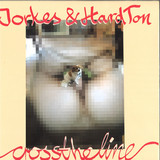
Taking inspiration from a vast musical sphere, the Munich-Vienna pair Jorkes are widely recognised for their open-minded and passionate approach to electronic music which is translated through their Freeride Millenium imprint and own unique productions. ‘Cross The Line’ will be the duo’s first outing since 2016 seeing them join up with the Italian pair Hard Ton who are known for releases on Wonder Stories, Luv Shack Records, Toy Tonics and many more. Jorkes invite Live At Robert Johnson artist Massimiliano Pagliara and Philpot founder SoulPhiction aka Jackmate for remix duties which tops off this distinctive release highlighting the openness and sensibility of their musical philosophy.
‘Cross The Line’ begins the EP with alleviating pads balanced harmoniously with alluring, heart-warming vocals and gentle keys drifting throughout before Massimiliano Pagliara delivers an infectious remix focusing on hypnotic bass grooves, effervescent drums and undulating pads fluttering naturally with the stirring modulations.
‘Jackmate’s Dub Mix’ deploys low-riding resonations fused with muffled tones and thrilling, shuffling rhythms within whereas ‘Jackmate’s 90s Mix’ focuses heavily on organic percussion rolling throughout with robust musical elements and looping vocals. SoulPhiction’s ’Dub Mix’ completes the pack with a tranquil take on the original laying focus on funk-infused instrumentals and subdued jazz drums.
Inland is Vanessa Wagner’s continuation of the exploration of the minimalist composers register to complete the solo continuum of the Statea released in 2016 with the Mexican producer Murcof. Inland highlights a set of pieces, mostly rare or unavailable to date (Moondog, Nico Muhly, William Susman, Bryce Dessner, Gavin Bryars...) and some other well known (Philip Glass, Wim Mertens, Michael Nyman) that Vanessa Wagner performs with her classic pianist background and velvet sound.
Lucie Antunes is a French classically trained drummer and percussionist, inspired by the pioneers of minimalism. Her debut album SERGEÏ is a tour de force of eclectic music that leaves the listener amazed, almost hooked up in Lucie’s magnetic spiral of sounds. The eclecticism that pervades SERGEÏ is shown by Lucie ability to create labyrinths of sounds through the use of unconventional instruments such as marimba, vibraphones, celesta, tubular balls, glockenspiel and ondes Martenot.
Sergei is a statement of freedom. The same childish freedom that we run behind and that we desperately seek. Lucie, with SERGEÏ, achieves her freedom and builds on it, the artist that she is with no compromises but only with the determined ambition to break the boundaries, to shake genres and to make the eyes smile.
With its fourth catalogue number, Steinlach returns to the vinyl format with a remix EP. On board are international friends of the label, who layed hands on Wice's originals with outstanding re- interpretations. While the A-side contains two groovy and club-oriented remixes of "Just kiddin", the trippy flipside focuses on the second outcome of the label and refers to the two pieces "Absent" and "Hertz".
The record opens with a fast-paced and jacking "Just Kiddin" version by Deep'a and Biri. The two guys from Tel Aviv re-interprate the clubby aspect of the piece, furnish it with a portion of percussions and accompany it with a volatile beat. Discharging the track with a big bang, they're leaving the listener with no chance but to move energetically to the groove patterns while cherishing the original lead melody.
Just like Deep'a and Biri, Jon Hester bets on the energy and the recognition value of the original synth line. As typical for Jon, he gives a more Chicago-style housey and bouncy touch to the composition. The lead is getting chopped, re-interpreted and re-arranged into a new groove and melody pattern, sure to inspire the floor to shake and to catapult everyone around into a frisky dancing mood. Suddenly, the well-known arpeggio of the original comes in and makes for the climax of this brilliant remix.
With side B, the club aspect of the record might not be left behind, but moved into more stripped and trippy terrains. The B1 track is fashioned as a ruthless "Absent" version, unmistakably having Refracted's writing all over it. The smallest variations of the synth line, drones, and pads, without resorting to typical drum rack aspects, find their way deep inside the listener's head, and draw them into their subtle rhythm. The unapologetic roughness of the interpretation is striking and makes it a brilliant peaktime weapon.
Rounding up the whole EP, the last remix of the record is a wonderful re-interpretation by the talented Australian that is Mosam Howieson. He ministered to Wice's personal favourite piece and crafted a loving and deep version of "Hertz", which translates the magic of the original into own words and emotions, adds a subtle groove to it, then invites to listen more carefully. One quickly dives into a hopeful world in which a certain magic seems to be present, and where everything seems to be alright. Be it as a perfect last piece after a long fulfilling evening, or as the outstanding means to make the sun rise in the morning-Mosam's interpretation sure hits the spot.
Special thanks go out to our close friends Simon Sandleitner who is always in charge of the great artworks and Roger Reuter (Roger23) for having always an open ear, his helpful advises and his thought-out criticism.