First detected in the 1950s, Quasars remained a mystery for years with the massive amount of energy seeming to come from a very small area of space. Over time, astrophysicists theorised and proved that these celestial objects are black holes forming the centres of galaxies. For the latest Micron Audio release, 6SISS creates a sonic exploration of the many aspects of these gigantic cosmological bodies resulting in a collection of tracks that reflect their density, power, and luminosity. Each of the four tracks, QUASAR I-IV, represents a different phase of interaction with a quasar's energy, from initial observation to a final, euphoric absorption into the quasar's core: fizzing and enigmatic synths suggest the radio waves that travelled for thousands of years before being detected, while other bassier sounds bring to mind the vast gravitational pull of galactic centres, slowly attracting stars and planets alike towards them. As with all Micron Audio releases, QUASAR reveals a deep appreciation of scientific discovery and knowledge. Whilst avoiding retro-futuristic clich?, the imaginative abstract storytelling genre of electro is perfectly represented in this collection, in which 6SISS yet again emits his own densely packed work to emanate across the universe with a bold radiant energy.
Buscar:see know
- A1: Music Not Numbers (Feat London Contemporary Orchestra & Chris Maddock)
- A2: Balance (Feat London Contemporary Orchestra & James Beckwith)
- A3: I`ll Take My Chances (Feat London Contemporary Orchestra, Ria Moran & Binker Golding)
- A4: Believe (Feat London Contemporary Orchestra)
- B1: Just A Little Bit (Feat London Contemporary Orchestra)
- B2: In Search For Goldilocks (Feat London Contemporary Orchestra & James Beckwith)
- B3: You Know (Feat London Contemporary Orchestra, Zola Marcelle & Nubya Garcia)
Jazz re:freshed are proud to present the third studio album by bassist and composer Daniel Casimir.'Balance'encapsulates 'Big Band Energy', with his signature combination of Classical, Jazz and cinematic sounds.
The albumpays homage to the traditions of big band composition and historical significance whilst illustrating contemporary sensibilities.
This ambitious project explores the balance between two large and full sounds of a big band and a string section and is inspired by icon Wayne Shorter's album'Emanon'which made a deep impression on Casimir during the process of creating the album.
An organic development of Casimir's last critically acclaimed album'Boxed In'which featured a jazz quintet alongside a mini chamber Orchestra and was comprised of a woodwind, brass, with a string quartet,'Balance'is a self produced album that takes his musical vision to the next level in his most ambitious body of work to date, leading 26 musicians.
Recorded in November 2022 at Livingston Studios, in a very conscientious recording process which saw piano, bass, and drums recorded together first, followed by trumpet, trombone, saxophone, and the string section and an all star band that consists of figures from the UK Jazz scene, Cassie Kinoshi, Binker, Nubya Garcia, Rosie Turton, Sheila Maurice-Grey and Jay Phelps to name a few alongside a stunning string section performed by the London Contemporary Orchestra.
The final day of recording enlisted the powerful vocal prowess' of Zola Marcelle and Ria Moran to finesse the masterpiece. The track'Music Not Numbers'is an encouraging call to all musicians to not allow streaming culture to affect their creative process and to continue expanding the intrinsic nature of music. Whereas track,'Search for Goldilocks'explores the second meaning behind the album title 'Balance', which is to seek balance within and discover the qualities in life that are "just right".
Debut collaborative album from Troth, the Nipaluna-based duo of Amelia Besseny and Cooper Bowman, and kindred spirit and legendary Mancunian free-form guitarist Jon Collin. A lavish dreamscape conjuring the dramatic beauty of uncharted mountains and streams, it documents both the crystilisation of ideas first shared during an Australian encounter in early 2023 and years of mutual appreciation.
Troth’s sonic universe, a constellation of drifting atmospherics, bedroom pop impulse and modern classical motifs, is deeply intimate and never rushed. Recent sides Forget The Curse and Idle Easel and live performances supporting the likes of Maxine Funke and Treasury of Puppies have seen Besseny’s soaring, celestial voice take centre stage, delicately adorned with Bowman’s synthesiser flourishes and homespun instrumentation. At their heart lies Bowman’s tireless collaborative instinct: his decade-long involvement in the Australian underground and his countless musical outfits (including contemporary trio Th Blisks, with Besseny and Yuta Matsumura).
Summer 2023 saw the duo host two shows for Collin in their former home of Mulubinba, regional New South Wales. Collin is perhaps best known for his playing, deconstructing and reconfiguring of the guitar and other stringed instruments, realised in solo works on his own Early Music and Winebox Press imprints, and collaborations on a trio of albums with Demdike Stare and live sessions with Sarah Hughes and Bill Nace. His unique style of playing, sometimes delicate, at other times frictional, refutes expectations of traditional instruments and fits perfectly within both Troth’s ethos and their lush sonic mise-en-scène.
The objects of devotion perhaps symbolise the group’s devotion towards each other during their music-making process, and the fruits from which they are borne. “I think, any music I have a hand in, is a dialogue with by the people I'm making it with. It's an ongoing conversation between people and sound”, reflects Bowman. The sacredness and ominousness of remote Tasmania is just as affecting, the interplay of Besseny’s haunting vocal washes, Bowman’s sparse instrumentation and Collin’s ritualistic strum evoking the eeriness that lurks beneath the seemingly limitless Australian landscape. “When I think about it, it sounds like being together at the bottom of the Earth. Watching, listening and playing together with no-one else in sight."
- Cold Outside
- Nick Of Time
- Lonely One
- It's My Time
- Left Unsaid
- Try Try Try
- Hall Of Mirrors
- Much Too Much
- Your Kinda Thing
- New Questions
- Kill City
- I'm Not Gonna Do It
- Don't Wanna Play
- Nashville Nights
- Today I Shot The Devil
- Tell Me Things
- Live With Me
- Just Another Day
The Fluid are arguably the great unsung band from the fertile underground rock scene of the late '80s and early '90s. The Denver five-piece - John Robinson (vocals), James Clower (guitar), Matt Bischoff (bass), Garrett Shavlik (drums), and the dear departed Ricky Kulwicki (guitar) - fused the fire of '80s hardcore with crunching Detroit protopunk, '60s garage rock, and '70s rock swagger. Think MC5, Faces, '70s Stones, all cranked up and really high on Sex Pistols and Black Flag singles. Rising from the ashes of early-'80s Denver bands Frantix (whose "My Dad's a Fuckin' Alcoholic" is a true gem of American punk) and White Trash, The Fluid were the first non-Seattle band to sign to Sub Pop, and Clear Black Paper was the second full-length album the label ever released. The label honchos were fans of Frantix, and happily got involved with The Fluid when the opportunity arose via the label's European licensing partner, Glitterhouse. Witnessing The Fluid's dominant live presence helped - a particularly fiery early show at Seattle's Central Tavern featured The Fluid, Mudhoney, Mother Love Bone, and Soundgarden all trying to outdo one another on stage. The band fit right in on Sub Pop's nascent roster of acts who, wherever they stood on the spectrum of punk/rock/metal, shared a commitment to thunderous riffs and explosive live shows. Legendary for their ferocious stage presence, The Fluid toured all over the US and Europe, holding their own and then some on bills with Mudhoney, Nirvana, Soundgarden, Dinosaur Jr., and other powerhouses of the era. From 1986 to 1993, The Fluid put out four albums and a number of EPs and singles, including a split 7" with Nirvana in 1991, before doing one album for a major label and promptly disbanding. Yet, while their partners-in-crime bulldozed into the mainstream, The Fluid remained something of a cult band, their audience confined to those who got hip during the band's existence, and crate diggers who nabbed original vinyl or CDs, which had quickly become rarities after selling through their original runs. Why? Record industry machinations? The fickle finger of pop culture? Being from Denver, not Seattle? Who the hell knows_ and who cares! The point is the band ripped, and the world deserves to hear them again. The Fluid took influences they shared with their contemporaries and ran in their own direction, focused on ass-shaking grooves more than misanthropic sludge. Rock anthems like "Cold Outside" sit alongside Stooge-oid rhythmic poundings ("Black Glove"), bluesy romps ("Leave It"), the occasional grungy dirge ("Wasted Time"), and raw punk bangers ("Is It Day I'm Seeing?" from the seminal 1988 Sub Pop 200 compilation). The band wasn't shy about their inspiration, either: scattered through their catalog are covers of The Troggs, The Rolling Stones, MC5, Iggy Pop and James Williamson, and Rare Earth. The Fluid stand out as champions of a feral, urgent, exuberant approach to rock 'n roll. As it turns out, that wasn't a recipe for stardom in the era of hyper-slick pop, boomer dinosaurs crying tears in heaven, and hair-metal power-ballads. But someone had to do it. To set things right, Sub Pop, The Fluid, and producer Jack Endino (Nirvana, Soundgarden, High on Fire, Mudhoney) teamed up to refresh and reissue The Fluid's entire indie-label catalog: their 1986 debut, Punch N Judy; 1988's Clear Black Paper; 1989's Roadmouth; the 1990 Glue EP (produced by Butch Vig, of Nevermind fame); and a treasure trove of rarities and previously unreleased material. All the music has been remastered from original tapes by Endino and JJ Golden, and the bulk of it has been meticulously remixed by Endino and the band, righting some sonic quirks that diminished the impact of the original records. Now, with their definitive material sounding better than ever, it's high time The Fluid get their due.
- You
- Goin' Away
- Saccharine Rejection
- Mouse Trap
- Turn Away
- Static Cling
- Preacher Man Blues
- My Future
- Madhouse
- 13: Th Nite
- Graveyard Tramps
The Fluid are arguably the great unsung band from the fertile underground rock scene of the late '80s and early '90s. The Denver five-piece - John Robinson (vocals), James Clower (guitar), Matt Bischoff (bass), Garrett Shavlik (drums), and the dear departed Ricky Kulwicki (guitar) - fused the fire of '80s hardcore with crunching Detroit protopunk, '60s garage rock, and '70s rock swagger. Think MC5, Faces, '70s Stones, all cranked up and really high on Sex Pistols and Black Flag singles. Rising from the ashes of early-'80s Denver bands Frantix (whose "My Dad's a Fuckin' Alcoholic" is a true gem of American punk) and White Trash, The Fluid were the first non-Seattle band to sign to Sub Pop, and Clear Black Paper was the second full-length album the label ever released. The label honchos were fans of Frantix, and happily got involved with The Fluid when the opportunity arose via the label's European licensing partner, Glitterhouse. Witnessing The Fluid's dominant live presence helped - a particularly fiery early show at Seattle's Central Tavern featured The Fluid, Mudhoney, Mother Love Bone, and Soundgarden all trying to outdo one another on stage. The band fit right in on Sub Pop's nascent roster of acts who, wherever they stood on the spectrum of punk/rock/metal, shared a commitment to thunderous riffs and explosive live shows. Legendary for their ferocious stage presence, The Fluid toured all over the US and Europe, holding their own and then some on bills with Mudhoney, Nirvana, Soundgarden, Dinosaur Jr., and other powerhouses of the era. From 1986 to 1993, The Fluid put out four albums and a number of EPs and singles, including a split 7" with Nirvana in 1991, before doing one album for a major label and promptly disbanding. Yet, while their partners-in-crime bulldozed into the mainstream, The Fluid remained something of a cult band, their audience confined to those who got hip during the band's existence, and crate diggers who nabbed original vinyl or CDs, which had quickly become rarities after selling through their original runs. Why? Record industry machinations? The fickle finger of pop culture? Being from Denver, not Seattle? Who the hell knows_ and who cares! The point is the band ripped, and the world deserves to hear them again. The Fluid took influences they shared with their contemporaries and ran in their own direction, focused on ass-shaking grooves more than misanthropic sludge. Rock anthems like "Cold Outside" sit alongside Stooge-oid rhythmic poundings ("Black Glove"), bluesy romps ("Leave It"), the occasional grungy dirge ("Wasted Time"), and raw punk bangers ("Is It Day I'm Seeing?" from the seminal 1988 Sub Pop 200 compilation). The band wasn't shy about their inspiration, either: scattered through their catalog are covers of The Troggs, The Rolling Stones, MC5, Iggy Pop and James Williamson, and Rare Earth. The Fluid stand out as champions of a feral, urgent, exuberant approach to rock 'n roll. As it turns out, that wasn't a recipe for stardom in the era of hyper-slick pop, boomer dinosaurs crying tears in heaven, and hair-metal power-ballads. But someone had to do it. To set things right, Sub Pop, The Fluid, and producer Jack Endino (Nirvana, Soundgarden, High on Fire, Mudhoney) teamed up to refresh and reissue The Fluid's entire indie-label catalog: their 1986 debut, Punch N Judy; 1988's Clear Black Paper; 1989's Roadmouth; the 1990 Glue EP (produced by Butch Vig, of Nevermind fame); and a treasure trove of rarities and previously unreleased material. All the music has been remastered from original tapes by Endino and JJ Golden, and the bulk of it has been meticulously remixed by Endino and the band, righting some sonic quirks that diminished the impact of the original records. Now, with their definitive material sounding better than ever, it's high time The Fluid get their due.
"This is the time that we, who have benefitted from the Last Poets shouldbe able to say, 'it's the Last Poets. It's them we should be honouring, because we did not honour them for so many years_"
KRS One wasn't just addressing the hip hop fraternity when he uttered
those words by way of introducing the video for Invocation - a poem
written thirty years ago, around the time of the Last Poets' last significant comeback. He was speaking to everyone who's been affected by the word, sound and power issuing from the most revolutionary poetry ever witnessed, and that the Last Poets had introduced to the world outside of Harlem at the dawn of the seventies.
In 2018 the two remaining Last Poets, Abiodun Oyewole and Umar Bin
Hassan, embarked on another memorable return with an album -
Understand What Black Is - that earned favourable comparison with theirseminal works of the past, whilst showcasing their undimmed passion andlyrical brilliance in an entirely new setting - that of reggae music. Trackslike Rain Of Terror ("America is a terrorist") and How Many Bullets demonstrated that they'd lost none of their fire or anger, and their essential raison d'etre remained the same.
"The Last Poets' mission was to pull the people out of the rubble o f their lives," wrote their biographer Kim Green. "They knew, deep down that poetry could save the people - that if black people could see and hear themselves and their struggles through the spoken word, they would be moved to change."
Several years later and the follow-up is now with us. The project started when Tony Allen, the Nigerian master drummer whose unique polyrhythms had driven much of Fela Kuti's best work, dropped by Prince Fatty's Brighton studio and laid down a selection of drum patterns to die for. That was back in 2019, but then the pandemic struck. Once it had passed, the label booked a studio in Brooklyn, where the two Poets voiced four tracks apiece and breathed fresh energy, fire and outrage into some of the most enduring landmarks of their career. Abiodun, who was one of the original Last Poets who'd gathered in East Harlem's Mount Morris Park to celebrate Malcolm X's birthday in May 1968, chose four poems that first appeared on the group's 1970 debut album, called simply The Last Poets. He'd written When The Revolution Comes aged twenty, whilst living in Jamaica, Queens. "We were getting ready for a revolution," he told Green. "There wasn't any question about whether there was going to be one or not. The truth was many of us still saw ourselves as "niggers" and slaves. This was a mindset that had to change if there was ever to be Black Power." He and writer Amiri Baraka were deep in conversation one day when Baraka became distracted by a pretty girl walking by. "You're a gash man," Abiodun told him. The poem inspired by that incident, Gash Man, is revisited on the new album, and exposes the heartless nature of sexual acts shorn of intimacy or affection. "Instead of the vagina being the entrance to heaven," he says, "it too often becomes a gash, an injury, a wound_" Two Little Boys meanwhile, was inspired after seeing two young boys aged around 11 or 12 "stuffing chicken and cornbread down their tasteless mouths, trying to revive shrinking lungs and a wasted mind." They'd walked into Sylvia's soul food restaurant in Harlem, ordered big meals, then bolted them down and run out the door. No one chased after them, knowing that they probably hadn't eaten in days. Fifty years later and children are still going hungry in major cities across America and elsewhere. Abiodun's poem hasn't lost any relevance at all, and neither has New York, New York, The Big Apple. "Although this was written in 1968, New York hasn't changed a bit," he admits, except "today, people just mistake her sickness for fashion." Umar is originally from Akron, Ohio, but had arrived in Harlem in early 1969 after seeing Abiodun and the other Last Poets at a Black Arts Festival in Cleveland. That's where he first witnessed what Amiri Baraka once called "the rhythmic animation of word, poem, image as word- music" - a creative force that redefined the concept of performance poetry and stripped it bare until it became a howl of rage, hurt and anger, saved from destruction by mockery and love for humanity. When Umar's father, who was a musician, was jailed for armed robbery he took to the streets from an early age where he shined shoes and raised whatever money he could to help feed his eight brothers and sisters. By the time he saw the Last Poets he'd joined the Black United Front and was ready to join the struggle. Once in Harlem, Abiodun asked him what he'd learnt in the few weeks since he'd got there. "Niggers are scared of revolution," Umar replied. "Write it down" urged Abiodun. That poem still gives off searing heat more than fifty years later. In Umar's own words, "it became a prayer, a call to arms, a spiritual pond to bathe and cleanse in because niggers are not just vile and disgusting and shiftless. Niggers are human beings lost in someone else's system of values and morals." And there you have it. It's not just race or religion that hold us back, but an economic system that keeps millions in poverty and living in fear - a system born from political choice and that's now become so entrenched, so bloated on its own success that it's put mankind in mortal danger. It was many black people's acceptance of the status quo that inspired Just Because, which like Niggers Are Scared Of Revolution, was included on that seminal first album. Along with their revolutionary rhetoric, it was the Last Poets' use of the "n word" that proved so shocking, but it would be wrong to suggest that they reclaimed it, since it never belonged to black people in the first place. There's never any hiding place when it comes to the Last Poets. They use words like weapons, and that force all who listen to decide who they are and where they stand. Umar's two remaining tracks find him revisiting poems first unleashed on the Poets' second album This Is Madness! Abiodun had left for North Carolina by then where he became more deeply enmeshed in revolutionary activities and spent almost four years in jail for armed robbery after attempting to seize funds related to the Klu Klux Klan. Meanwhile, the 21 year old Umar was squatting in Brooklyn and had developed close ties with the Dar-ul Islam Movement. A longing for purity and time-honoured spiritual values underpins Related to What, whilst This Is Madness is a call for freedom "by any means necessary," and that paints a feverish landscape peopled by prominent black leaders but that quickly descends into chaos. "All my dreams have been turned into psychedelic nightmares," he wails, over a groove now powered by Tony Allen's ferocious drumming. Those sessions lasted just two days, and we can only imagine the atmosphere in that room as the hip hop godfathers exchanged the conga drums of Harlem for the explosive sounds of authentic Afrobeat. Once they'd finished, the recordings and momentum returned to Prince Fatty's studio, since relocated from Brighton to SE London. This was stage three of the project, and who better to fill out the rhythm tracks than two key musicians from Seun Anikulapo Kuti's band Egypt 80? Enter guitarist Akinola Adio Oyebola and bassist Kunle Justice, who upon hearing Allen's trademark grooves exclaimed, "oh, the Father_ we are home!" Such joy and enthusiasm resulted in the perfect fusion of Nigerian Afrobeat and revolutionary poetry, but the vision for the album wasn't yet complete. He wanted to create a new kind of soundscape - one that reunited the Poets with the progressive jazz movement they'd once shared with musicians like Sun Ra and Pharoah Sanders. It was at that point they recruited exciting jazz talents based in the UK like Joe Armon Jones from Mercury Prize winners Ezra Collective, also widely acclaimed producer/remixer and keyboard player Kaidi Tatham, who's been likened to Herbie Hancock, and British jazz legend Courtney Pine, whose genius on the saxophone and influence on the UK's now vibrant jazz scene is beyond question. The instrumental tracks on Africanism are in many ways as revelatory and exciting as the Last Poets' own. It's important to remember that the kaleidoscope of styles and influences we're presented with here aren't the result of sampling but were played "live" by musicians responding to sounds made by other musicians. That's where the magic comes from, aided by Prince Fatty's peerless mixing which allows us to hear everything with such clarity. Music fans today have grown accustomed to listening to all kinds of different genres. Their tastes have never been so broad or all- encompassing, and so the music on this new Last Poets' album is as groundbreaking as their lyrics, and perfectly suited to the era that we're now living in. John Masouri
Ever wish you could travel back in time and be in the thick of the 1960s rock explosion? Well, until an actual TARDIS is perfected, this album is the next best thing. Recorded in the wee hours of May 26, 1966, A Session with the Remains is a no-holds barred romp through their club set, captured live-to-tape in Capitol Records' studios. Recorded as an audition for the label, the albums seethes and snarls, twists and shouts, rocks and rolls and generally embodies the force of nature that was the Remains. Performing a mix of originals and current hits, the band is in command at every step, rocking one minute and pausing to kibitz between songs the next.
In attempting to describe this album, reviewers have used words like "blazing," "explosive," "delirious" -- but honestly, none of these descriptions comes close to what is contained in the grooves. It's like trying to tell a stranger 'bout rock & roll, ya know? All you really need to do is listen. After all, one guitar lick is worth a thousand words.
This BLAZING, EXPLOSIVE, DELIRIOUS album was painstakingly sourced from the one-and-only original two-track analog mono master tape and wrestled onto high-quality vinyl and compact disc for your review. I'd like to thank you on behalf of the group and Sundazed for listening and I hope they pass YOUR audition!
"A religious totem of all that was manic and marvelous about mid-'60s pop." - Rolling Stone
"Blazing through a mix of originals and covers, the Remains explode in a torrent melody, searing guitar leads and furious drumming. This quartet's ability to play with such delirious abandon yet still nail the tunes' sharp hooks and abundant vocal harmonies marks it as one of rock's more talented and incendiary units. - Chicago Tribune -
- Angel's Egg 03:45
- Legend Of The Ohmu 04:06
- Fallslake 04:22
- Ten Dreams 12:06
- I See Signs Everywhere 04:12
- India 04:46
- Charango 02:46
- Susto 02:18
- Str8 Out A Swamp 03:10
- Everything Happens To Me 03:06
Sam Gendel, Benny Bock and Hans Kjorstad as Gendel Dream Trio.
Sam Gendel is known for his work with saxophones and wind controllers. Benny Bock is a keyboardist, composer, producer and sound designer from Oakland, California. Hans Kjorstad is a musician and composer in the field of contemporary microtonal music, informed by Norwegian traditional music and experimental improvised music.
Comes on 180g black vinyl.
- A1: Heaven, Or Paradise; And Hell (Ft Adrien Soleiman)
- A2: Our Dead Can’t Rest (Old Jugha Flute Dance)
- A3: Miracle
- A4: The Crane Has Lost Its Way Across The Heaven
- A5: Unraveling (Interlude)
- B1: Zephyr
- B2: Far From The Eye, Far From The Heart
- B3: What Solace Can I Give (Ft Adrien Soleiman)
- B4: …Nothing Matters More Than Touching You Although I Haven’t Touched You Yet
Lara Sarkissian’s long-awaited debut full-length, ‘Remnants’ is an ornate patchwork of ancient and modern sonic shapes that uses the vernacular of electronic music to reformulate Armenian traditions and memories. Taking digitally modeled instruments (such as the kanun, a large zither, and the duduk, an ancient double reed woodwind instrument), vocals, davul and dhol drums, tenor saxophone (from acclaimed Paris-based player Adrien Soleiman) and myriad electronic elements and techniques, Sarkissian tangles the old and the new, creating an immersive, narrative-driven experience that’s powered by history, mythology and her own familial connection to the West Asian landscape. It’s an album that’s best absorbed like a film; only multiple encounters can reveal its layered themes and references to industrial music, noise, various club styles, ambient and traditional folk.
Born and raised in San Francisco and currently based in Los Angeles, Sarkissian has developed her unique approach to composition over years of relentless experimentation across various disciplines. Her interest in music production initially stemmed from her filmmaking and video editing work, when she began to sculpt her own sound collages and scores to accompany the visuals. Since then, she’s constantly blurred the boundary between dance and experimental music, DJing around the world, producing AV installations and scoring film and video projects that have been exhibited in Berlin’s Gropius Bau, Montréal’s Musée d’art contemporain, the Music Center Los Angeles and other prestigious institutions, and releasing music with labels such as Tresor, Knekelhuis, All Centre, Silva Electronics and CLUB CHAI, the label and event series she co-founded. In recent years, she’s also been able to advance the theory behind her art, publishing a conversation with ethnomusicologist Sylvia Alajaji in the Journal of the Society of Armenian Studies in 2021, and unveiling her methodology in Norient’s ‘This Track Contains Politics – The Culture of Sampling in Experimental Electronica’ a year later.
‘Remnants’ is a new stage in Sarkissian’s evolution as an artist; not only is it her first proper album, but it’s the inaugural release on her new platform btwn Earth+Sky. She sees the label as a place to encourage collaborations between musicians and producers and prioritize sound in visual arts realms, and ‘Remnants’ is the ideal proof of concept. It opens with ‘Heaven, or Paradise; and Hell’, a track that’s inspired by the layout of the Armenian sharakan (or hymn) ‘Aravot Luso’. Sarkissian imagines the original piece’s harmonies and melodies as parts of a dreamy electronic opera, using digital kanun sounds to punctuate her woozy, evocative synths. Soleimen joins on tenor sax in the third act, while Sarkissian repeats the chant and Jace Akira adds ghostly traces of electric guitar and bass. And on the rousing ‘Our Dead Can’t Rest (Old Jugha Flute Dance)’, Sarkissian chops urgent davul and dhol drum rhythms with spine-chilling shvi woodwind sounds lifted from a documentary about Old Jugha. The title is a reference to the moving of graves by Armenian families; the area initially housed over 10,000 elaborately carved khachkars (cross stones), one of which is pictured on the album’s cover, provided by historian Argam Aivazian’s archive.
On ‘Miracle’, Sarkissian samples atmospheres from the post-Soviet Armenian comedy film ‘Կիսանդրի’ (Kisandri). She takes this opportunity to lighten the mood a little, powdering her smudged samples with tightly edited breaks and bass thumps. It’s not until the album’s middle section that the duduk, perhaps Armenia’s best-known instrument, makes its appearance. Its familiar reedy tones, popularized by Djivan Gasparyan on his many Hollywood soundtrack appearances, emerge on ‘Unraveling (Interlude)’, weaving through the acidic ‘Zephyr’ and ‘Far from the eye far from the Heart’, a post-punk inspired stomper. Sarkissian mutates the instrument almost beyond recognition, pitching and layering it into a voice-like wail that creeps between her woody, dancefloor-primed percussion on the former, and turning it into a gentle, ghostly moan on the latter. And she brings ‘Remnants’ to a close with two of her most cryptic tracks, marrying digital kanun strings with Soleiman’s resonant tenor hums on ‘What Solace Can I Give’, and looping the same saxophone sounds until they dissolve into the air on the beatless closer ‘…nothing matters more than touching you although i haven’t touched you yet’.
It’s an album that ties up Sarkissian’s various interests and experiences, finding a romantic, poetic glimmer of light in history’s darkness. But most of all, ‘Remnants’ is about the optimism of starting anew, and rebuilding a life from the pieces of everything that’s been left behind.
Who is Isabelle Lewis, anyway?
What kind of music does she make? Is she an opera singer? Does she write pop songs? Does she compose ethereal ambient soundscapes? Does she play chamber music on the violin? Is she producing dark, electronic beats?
Well… yes. But Isabelle Lewis is not so much a person as a project. Isabelle’s debut album, Greetings, credits a trio of composer–performers at its heart: producer Valgeir Sigurðsson, vocalist Benjamin Abel Meirhaeghe, and violinist Elisabeth Klinck. The sound of the elusive Isabelle Lewis is heard most clearly in the push and pull between them, the three-way tension that gives the album its musical and emotional drive.
Each of the three brings more to the collaboration than those epithets might imply. Elisabeth’s solo performance practice incorporates composition, improvisation, live electronics, and a close command of bowing and fingering techniques that make her fiddle sing, whisper or whistle as required. Benjamin is a self-taught countertenor - keening, crooning, and swelling to a voluptuous sensuality—but also an interdisciplinary stage director and performer. Well known for his work as a producer and studio collaborator, and as a composer of scores for film and stage, Valgeir’s solo discography interweaves meticulously crafted electronics, drones, noise, and other digital elements with acoustic instruments and vocals recorded with naked, unflinching clarity.
But the extravagant theatricality Benjamin brings to the aptly titled “Drama”—also featuring a heroic violin solo from Elisabeth—grapples against the thudding bass of the implacable digital backdrop. On “Mother, Shelter Me” Valgeir’s austere and detailed production throws the hushed violin and vocals into stark relief. The result is an exquisitely uncanny juxtaposition of past and present, human and mechanical, like a Rococo treasure viewed under cold fluorescent lights, or an 18th-century automaton slowly opening its clockwork eyes.
Even the lyrics seem somehow out of time. On “O Solitude,” Benjamin goes so far as to quote an entire song by the first great English opera composer, Henry Purcell, verbatim. No stranger to Purcell’s music, which has made its way into Benjamin’s theatrical productions as well, here Isabelle Lewis removes Purcell’s melodies and harmonies and sets the text, Katherine Phillips’s 17th century translation of a poem by Antoine Girard de Saint-Amant, to new music whose heightened, archaic character nevertheless seems haunted by Baroque ghosts.
Throughout the album, the outsized emotions and timeless archetypes of Benjamin’s lyrics feel like relics from some half-forgotten past—from the neatly rhymed couplets of “Fisherman,” a seemingly straightforward (but still somewhat askew) character study, to the abstraction of “Moonshell,” whose words seem like the fragments of some ancient, lost lament. It is just another of many ways in which Isabelle Lewis carefully distorts the listener’s notions of time. On a more micro level, time can stop for a moment of weightless, drifting ambience, and then plunge forward as the cloud of harmonies suddenly lock into tempo with the drop of the bass or the change of a chord. Or else that weightless moment is allowed to be, as in the aptly named prologue and epilogue to these Greetings (“Voicemail”/“…and farewell”), or in the interstitial tracks that bind the album together, connecting its dramatic peaks with expanses of meditative stasis.
The album as a whole is elegantly shaped, swelling from an intimate, interpersonal statement into something deeper and more spacious. The first half of the album leans slightly towards self-contained pop songcraft and ticking beats, while side B jumps off from “O Solitude” into the almost symphonic grandeur of songs like “Moonshell” or the instrumental “Not the water, air, or the dirt.”
But as it progresses, the contrasts only grow more sublime: antique and postmodern, human and machinelike. The ominous weight of the droning sub-bass and trombone (guest player Helgi Hrafn Jónsson) only makes the interplay between vocals and violins (guest player Daniel Pioro joining Elisabeth) seem more delicate and vulnerable. The ethereal string tremolos of “Moonshell” seem to pull against the heavy, shuddering electronics and layers of crooning vocals.
And that, in short, is where you will find Isabelle Lewis. Like an ancient stone archway, or a delicate house of cards, the architecture of Greetings is held together by the tension between opposing forces. Not just in Elisabeth’s playing, Benjamin’s singing, or Valgeir’s arrangements and production but in the conflict and contrast that generates the synergy between them.
Oh—Isabelle says hi, by the way. She’s looking forward to meeting you.
Lex first grabbed our attention following his brilliant release on B2 Recordings which became a staple vibe setter in Jimpster’s DJ sets and Sofa Sessions streams in 2021. Gaining his deep musical knowledge through his own revered record store Radical Soundz, the Greek DJ and producer has been immersed in dance music for over 20 years and considered one of the key figures in the Athens underground house scene. With releases and remixes on labels such as Leng, Samosa, King Street and Black Riot, Lex is making waves internationally with a unique sound that fuses live elements and expansive arrangements taking influence from masters such as Ron Trent but adding a warm, cosmic glow. Fellow Greek artist Locke joins pro- ceedings for this EP bringing his own psychedelic sound garnered from his years playing crazy events taking in South American jungle parties, burning hot African desert raves, the underground clubs of Berlin to the sparkling coastal shores of Baja California. Locke is more than just a DJ. He is a connector, educator and traveler whose soulful music has the crowds chasing the sun as he brings love and celebra- tion to the events he plays.
On title track 7 Day Path we’re treated to a beautiful spacious jam which unfolds across 7 minutes, driving, live percussion keeping the energy high whilst Herbie- esque synth leads help to create a beautifully paced and dynamic arrangement.
Next up we have Italian legend DJ Rocca onboard for a remix of 7 Day Path. The prolific producer and DJ has been a tour de force since the late 90’s collaborating with the likes of Howie B, Dimitri From Paris, Chris Coco, Daniele Baldelli and Jazzanova producing singles, remixes and albums for labels such as Sonar Kollekt- iv, Compost, Classic, Rekids, Futureboogie, !K7, Tirk, International Feel, Defected, Rotters Golf Club and Faze Action Recordings. Here he adds his trademark dubby disco wiggle pushing the original in a jazzy direction with live flute. Definitely one to be heard under the stars on a Croatian beach for maximum Adriatica effect!
Flipping over, things head deeper and darker with See No Ball featuring Locomot- ives, a more straight-up heads-down stripped back club jam with a repeated vocal, funky guitar chops and a smattering of improvised synth and Hammond B3 keeping things jazzy and musical.
Closing out this brilliant EP we have Catch Up With The Sun which drops the BPM’s for a low-slung cosmic jam loaded with good vibes.
Naoki Zushi. Perhaps best known for his stellar guitar contributions to psych folk group, Nagisa Ni Te, Zushi has had a parallel career, for several decades, slowly releasing solo albums that spotlight his exultant guitar playing. Originally released to CD only by Shinji Shibayama of Nagisa Ni Te’s Org imprint in 2018, IV has Zushi playing and writing at a peak, its six songs slowly unfurling with a kind of paradoxical understated grandeur. This is psychedelic guitar music at its most paced and considered, yet given to flights of inspiration, and in this respect, Zushi sits within a lineage of guitarists who’ve used their instrument both as textural anchor and improvisatory tool – think of figures like Phil Manzanera and Robert Fripp, but also Roy Montgomery, Liz Harris of Grouper, even Tom Verlaine on his instrumental solo albums. Like those artists, Zushi locates moments of deep emotional resonance amidst luxuriant textural and melodic exploration. Zushi’s history stretches back to the mid 1970s. While for many, he first appeared on the scene as a founding member of noise legends Hijokaidan, alongside Jojo Hiroshige, his musical contributions predate that encounter. He started out playing progressive rock and improvised music, making home recordings of when he was in high school. He was a member of Rasenkaidan (Spiral Staircase) alongside Hiroshige and Idiot (Kenichi Takayama), the group that soon mutated into Hijokaidan (Emergency Staircase). Zushi and Takayama would soon form Idiot O’Clock, in 1982; Zushi also led his own Naoki Zushi Unit, starting in 1983. But for many, Zushi’s first significant appearance on record was as a member of Shinji Shibayama’s mid-eighties psych-pop group, Hallelujahs, whose sole album was recently reissued on vinyl. That group mutated into Nagisa Ni Te, and Zushi has played a significant role as their lead guitarist for several decades. His own solo music has appeared sporadically – Paradise (1987), Phenomenal Luciferin (1998), III (2005) and IV, with a few recent, meditative offerings, For My Friends’ Sleep (2021) and Nocturnes (2022). With IV, though, Zushi achieved something remarkable, a kind of extended exploration of the time-altering properties of echoplexed, hypnotically spiralling guitar interplay. The opening ‘Mirror’, “a song about the mirror inside me,” Zushi explains, starts out as a lush psych-folk song, slow and gentle, but soon takes to the skies with a cat’s cradle of Fripp-esque guitars, before thick, droning chords sweep the song to a drowsy coda. ‘Nocturne’ weaves silver skeins of guitar melody around a cyclical chord pattern; it gathers energy and quiet intensity through insistent repetition. The rest of the album explores the nuance Zushi can draw out of simple elements, building on what ‘Mirror’ and ‘Nocturne’ offer – the profundity of a chord change; the melancholy of a few quietly sighed words; the exhilaration of a guitar solo bursting out of the speakers; the subtle shifts in emotional register offered by tone and touch. Throughout, there’s something quiet, yet ineffable, shading the contours of the songs, such that it makes perfect sense when Zushi says, “What I want to express through music may be ‘sense of mystery’.” A few of the songs had their basic parts recorded at LM Studio and Studio Nemu with Shibayama and Masako Takeda joining on bass and drums, respectively; much of the album, however, was tracked at Zushi’s home studio. That seems appropriate for a collection of songs that are expansive in their intimacy. Asked what drove the sessions, Zushi answers, “I thought I’d make IV an album that particularly focuses on the guitar play.” And focus it does, as Zushi’s sky-scraping, soaring, elemental tone is front and centre throughout. But these are no guitar heroics; rather, Zushi uses the guitar as conduit and diviner, a tool for spirit location, and IV is his most eloquent expression yet of such singular magic.
A Mountain of One return with their second single from eagerly awaited forthcoming album "Stars Planets Dust Me".
"Dealer" sees them push further into the Cosmos with a modern take on the electronic disco pulses of Kraftwerk and Giorgio Moroder mixed with organic sensibilities, Electric sitar and reverse guitar akin to the heady moments of The Beatles track "Tomorrow never knows". Criss crossing Balearic, psychedelia, disco and electronica.
”Dealer” shows the band, made up of musical soulmates Mo Morris and Zeben Jameson, have lost nothing in the past decade. Recorded over Skype during the coronavirus pandemic, with Mo now in Bali and Zeben in west London, a shimmering, modern classic, experimental but accessible, melodic and adventurous. As ever, it is utterly unique, made in a musical universe all of their own.
When A Mountain Of One first started performing, they quickly became one of the most- acclaimed bands out there, with the likes of i-D, Sunday Times Culture, Pitchfork, NME and more raving about them and their inspired and original approach.
Sold-out shows and awesome reviews followed with “Collected Works” and “Institute of Joy”, two phenomenal globally acclaimed albums that have stood the test of time,
This heady odyssey is mastered again by Global Electronic music icon "Ricardo Villalobos", and soon to also be remixed by Ricardo on a full album of his interpretations of the forthcoming album.
Their first single "Custards last stand" from the forthcoming album had radio support from NTS radio, Worldwide FM / BBC 6.
The forthcoming album “Stars Planets Dust Me” will be released March of 2022.
Repress! It's safe to say that hip-hop has never seen an album like Ol’ Dirty Bastard's 1995 solo debut Return to the 36 Chambers. The brief glimpses of ODB's unhinged genius provided by Wu-Tang Clan's landmark Enter the Wu-Tang album two years earlier were begging to be expanded on to a larger canvas, and, with RZA guiding production, the album promised to give Dirty the creative license to make one of the most bizarre, entertaining and original LPs in hip-hop history. With his raspy, drunken flow and dark sense of humor, Dirty fearlessly attacks from all angles, throwing himself fearlessly into punchy rhyme attacks (“Damage,” with GZA), drugged-out party jams (the monster singles “Brooklyn Zoo” and “Shimmy Shimmy Ya”) and bizarre, grimly hilarious fantasies of sex and violence (“Don't U Know” and the R&B-tinged “Sweet Sugar Pie”). Backed by RZA's appropriately gritty, dissonant beats and appearances from the Clan, Return became an instant hit, selling over 1 million copies and earning a Grammy Award nomination for Best Rap Album in 1996. The album stands as a high water mark in the Wu-Tang Clan's collective creative output and was selected as one of the Best 100 Rap Albums by The Source magazine in 1998. In honoring the legacy of one of hip-hop's most innovative releases, Get On Down is proud to present this incredible and unique special edition of Ol’ Dirty Bastard's Return to the 36 Chambers as a double LP which contains the complete original album, remastered for optimal sound quality.
- A1: Leandro Fresco / Thore Pfeiffer - Goldwasserfluss
- A2: Pass Into Silence - Mirage
- A3: Tamarma & Sebastian Mullaert - Follow Me
- A4: Sono Kollektiv Feat Nathalie Brum - Periadriatische Naht
- A5: Andrew Thomas Feat Julia Parr - Sunshine Night
- A6: Segensklang - Artifacts Of Synthese
- B1: Ümit Han - Im Delirium
- B2: Max Würden - Circles
- B3: Blank Gloss - Jennifer’s Convertible
- B4: Hendrik Meyer - Grün War Die Klamm
- B5: Triola - Zum Renngraben
Hello Everybody,
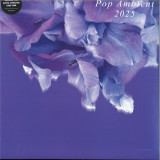
In recent years, the introductory texts for the Pop Ambient compilation series, which is released every year on Kompakt as the last release before the Christmas break, often began with the sentence "Every year again...".
“Every year again”, a quiet, almost unnoticed maxim of self-evidentness. Because this is already the 25th issue to be published this year.
25 years in increasingly fast-moving times in the even faster-moving music business is an eternity that doesn't just feel like it. It is all the more remarkable how I, as someone who is always restless and often driven by this fast pace himself, pleasantly almost haven’t realised how - in pop-ambient contexts - time does not pass (or passes differently) in the best sense.
When compiling the 25th edition I was asked, among other things, what it was like that I was still doing this and whether I had a favorite track. In the spirit of bringing all the tracks together I don't have a favorite track, or all of them. But I have a favorite part (moment) that I played. In this case it was a broad chord in a change of key at minute 2:55 in the piece Circles by Max Würden. A moment of majesty and familiarity that, at that moment, contains the entire Pop Ambient cosmos, that just works and doesn't explain anything - and I said: “...that's the reason why I'm still doing this.. .”
Pop Ambient is a statement without demands. Is promise without expectation. Is a path without a destination. Every year again.
Wolfgang Voigt, October 2024
And so to the facts:
01. Leandro Fresco / Thore Pfeiffer – Goldwasserfluss
The intercontinental collaboration between the two long-standing Pop Ambient artists Leandro Fresco from Argentina and Thore Pfeiffer from Mainz is a regular part of the series. They open this year's anniversary edition with the usual filigree.
02. Pass Into Silence – Mirage
The Japanese artist Tetsuo Sakae aka Pass into Silence returns to Kompakt 20 years after his legendary album “Calm Like A Millpond”. A master of tones that are as fine as they are stoic and crystal clear.
03. Tamarma & Sebastian Mullaert – Follow Me
For the first time, the well-known Swedish producer and DJ Sebastian Mullaert will be performing on Pop Ambient in cooperation with the Georgian sound artist Tamara Davitashvili. Their piece “Follow Me” fits confidently into the intimate, familiar sound cosmos.
04. Sono Kollektiv feat. Nathalie Brum – Periadriatische Naht
Sono Kollektiv is now a fixture on Pop Ambient, this time with Nathalie Brum. In particular, Luis Reich's characteristic flugelhorn always gives their sound that special jazzy touch.
05. Thore Pfeiffer – Phase Locked Loop 1
Thore Pfeiffer is a master of shimmering surfaces and hypnotically meandering loops.
06. Andrew Thomas feat. Julia Parr – Sunshine Night
An old friend from New Zealand is back with spherical sounds. Andrew Thomas, in collaboration with Julia Parr, sprinkles finely placed piano tones into distant soundscapes and even more distant voices.
07. Segensklang – Artifacts of Synthesis
We are pleased that Segensklang will be there again this year after his brilliant Pop Ambient debut last year. Deep and beautiful.
08. Ümit Han – Im Delirium
The Cologne producer Ümit Han is back for the third time. While he has so far explored the more emotional, soundscape aspects of the Pop Ambient universe, this year's piece "Im Delirium" rises to a pulsating mountain of sound with pearly, clear, effervescent sound crystals.
09. Würden & Schäfer – Analysis Of Variance II
In their track Analysis Of Variance II, Max Würden and Lukas Schäfer embed a finely placed beat impulse in a soft bed of modulating soundscapes and pleasant psychedelic spaceyness.
10. Max Würden– Circles
Max Würden once again shows his special feeling for one of the core statements of the Pop Ambient style spectrum. The abstract chord and soundscape movement between formal construction and emotional touchability, which seems like “pop music” under the microscope.
11. Blank Gloss – Jennifer’s Convertible
The Californian guitar-ambient duo takes us into their sublimely beautiful sound cosmos with their usual aplomb. Maximum condensed transparency. Lightness - heavy as gold.
12. Hendrik Meyer – Grün War Die Klamm
Another new addition is Hendrik Meyer. The versatile musician, also known for his MYR project distributed by Kompakt, leads us with a glistening, beautiful “wall of sound” determination into the eternity of a sunset that is only ended by the following track. Filmy Music.
13. Triola – Zum Renngraben
Jörg Burger aka Triola combines his typical “handmade” impulses and accents with a multi-dimensional, digital sound scenario in a pleasantly smoky, blurred stonewashed aesthetic.
As always, the indispensable final mastering by Jörg Burger ensures that everything is brought together and the sound is fine-tuned.
And like every year, the 25th edition is of course wrapped in an abstract, floral magic creation by Veronika Unland. Over the years, the grace of her imagery has increasingly merged with the musical aura to form an unmistakable magical symbiosis.
Hallo Leute,
In den vergangenen Jahren begannen die Anmoderationstexte zur Pop Ambient Kompilation-Reihe, die jedes Jahr als letzte Veröffentlichung vor der Weihnachtspause auf Kompakt erscheint, sinnigerweise immer mal wieder mit dem Satz “Alle Jahre wieder...".
„Alle Jahre wieder”, eine leise, fast unbemerkt zur Formel gewordene Maxime der Selbstverständlichkeit. Denn in diesem Jahr erscheint bereits die 25ste Ausgabe.
25 Jahre in zunehmend schnelllebigen Zeiten im noch schnelllebigeren Musikgeschäft, sind gerne mal eine nicht nur gefühlte Ewigkeit. Umso bemerkenswerter wie mir, als ewig Rastlosem und oft selbst von dieser Schnelllebigkeit Getriebenem, auf angenehme Weise fast entgangen ist wie sehr, in pop ambienten Zusammenhängen (gedacht), die Zeit im besten Sinne nicht (oder anders) vergeht.
Beim Kompilieren der 25sten Ausgabe wurde ich u.a. gefragt, wie es ist, dass ich das immer noch mache und ob ich ein Lieblingsstück hätte. Im Sinne des Zusammenbringens von allen Stücken habe ich kein Lieblingsstück, oder alle. Aber ich habe eine Lieblingsstelle, die ich dann gespielt habe. In dem Fall war es ein breit gesetzter Akkord in einen Tonartwechsel bei Minute 2:55 im Stück Circles von Max Würden. Ein Moment der Erhabenheit und Vertrautheit, der in diesem Moment den gesamten Pop Ambient Kosmos in sich trägt, der einfach nur wirkt und nichts erklärt - und ich habe gesagt: „...das ist der Grund, warum ich das immer noch mache...“
Pop Ambient ist Statement ohne Forderung. Ist Verheißung ohne Erwartung. Ist Weg ohne Ziel. Alle Jahre wieder.
Wolfgang Voigt, Oktober 2024
Und damit zu den Fakten:
01. Leandro Fresco / Thore Pfeiffer – Goldwasserfluss
Die interkontinentale Kollaboration der beiden langjährigen Pop Ambient Stamm-Künstler Leandro Fresco aus Argentinien und Thore Pfeiffer aus Mainz, ist regelmäßiger Bestandteil der Serie. Gewohnt filigran eröffnen sie die diesjährige Jubiläumsausgabe.
02. Pass Into Silence – Mirage
Der japanische Künstler Tetsuo Sakae aka Pass into Silence meldet sich 20 Jahre nach seinem sagenhaften Album „Calm Like A Millpond“ auf Kompakt zurück. Ein Meister der ebenso feinen wie stoisch-glasklaren Töne.
03. Tamarma & Sebastian Mullaert – Follow Me
Zum ersten Mal gibt sich der bekannte, schwedische Produzent und DJ Sebastian Mullaert in Kooperation mit der georgischen Klangkünstlerin Tamara Davitashvili auf Pop Ambient die Ehre. Ihr Stück „Follow Me“ fügt sich souverän in den intim-vertrauten Klangkosmos ein.
04. Sono Kollektiv feat. Nathalie Brum – Periadriatische Naht
Mittlerweile eine feste Größe auf Pop Ambient ist das Sono Kollektiv, diesmal mit Nathalie Brum. Insbesondere das charakteristische Flügelhorn von Luis Reich gibt ihrem Sound immer wieder diesen besonderen jazzigen Touch.
05. Thore Pfeiffer – Phase Locked Loop 1 Thore Pfeiffer ist ein Meister der flirrenden Flächen und hypnotisch mäandernden Loops.
06. Andrew Thomas feat. Julia Parr – Sunshine Night
Ein alter Bekannter aus Neuseeland meldet sich mit sphärischen Klängen zurück. Andrew Thomas, in Kooperation mit Julia Parr, sprenkelt fein gesetzte Klaviertöne in weit entfernte Flächen und noch entferntere Stimmen.
07. Segensklang – Artifacts of Synthese
Wir freuen uns, dass auch Segensklang nach seinem fulminanten Pop Ambient Debut im letzten Jahr auch dieses Jahr wieder mit dabei ist. Deep and beautiful.
08. Ümit Han – Im Delirium
Zum dritten Mal dabei ist der Kölner Produzent Ümit Han. Hat er bisher eher die emotional-flächigen Aspekte des Pop Ambienten Universums ausgelotet, schwingt sich sein diesjähriges Stück „Im Delirium“ mit perlend-klaren, sprudelnden Soundkristallen zu einem pulsierenden Klanggebirge auf.
09. Würden & Schäfer – Analysis Of Variance II
Max Würden und Lukas Schäfer betten in ihrem Stück Analysis Of Variance II einen fein gesetzten Beat-Impuls in ein weiches Bett aus modulierenden Flächen und angenehmer psychedelischer Spaceyness.
10. Max Würden – Circles
Max Würden zeigt einmal mehr sein besonderes Gefühl für eine der Kernaussagen des Pop Ambient Stilspektrums. Die wie „Popmusik“ unter dem Mikroskop anmutende, abstrakte Akkord- und Flächenbewegung zwischen formaler Konstruktion und emotionaler Berührbarkeit.
11. Blank Gloss – Jennifer’s Convertible
Das kalifornische Gitarren-Ambient Duo entführt uns mit gewohnter Souveränität in ihren erhaben-schönen Soundkosmos. Maximal verdichtete Transparenz. Leichtigkeit - schwer wie Gold.
12. Hendrik Meyer – Grün War Die Klamm
Ein weiterer Neuzugang ist Hendrik Meyer. Der vielseitige Musiker, u.a. auch bekannt durch sein über Kompakt vertriebenes MYR Projekt, führt uns mit gleißend-schöner „wall of sound“ Entschlossenheit in die Ewigkeit eines nur vom nachfolgenden Stück beendeten Sonnenuntergang. Film(Musik)reif.
13. Triola – Zum Renngraben
Jörg Burger aka Triola kombiniert die für ihn typischen „handmade“ Impulse und Akzente mit mehrdimensionalem, digitalen Soundszenario in angenehm rauchig-verwischter Stonewashed Ästhetik.
Für den alles zusammenführenden, klanglichen Feinschliff sorgt, wie immer, das unverzichtbare, finale Mastering von Jörg Burger.
Und wie in jedem Jahr ist auch die 25ste Ausgabe natürlich in ein abstrakt-florales Zaubergebilde von Veronika Unland gehüllt. Die Anmut ihrer Bildsprache ist über die Jahre immer mehr mit der musikalischen Aura zu einer unverkennbaren magischen Symbiose verschmolzen.
- A1: Apt A (1) 06 29
- A2: Apt A (2) 05 52
- B1: And All You Can Do Is Laugh (1) 05 35
- B2: And All You Can Do Is Laugh (2) 05 51
- C1: I Promise Never To Get Paint On My Glasses Again (1) 05 46
- C2: I Promise Never To Get Paint On My Glasses Again (2) 06 02
- D1: Jimmybreeze (1) 07 01
- D2: Jimmybreeze (2) 05 33
- E1: (Cloud Dead Number Five) (1) 05 23
- E2: (Cloud Dead Number Five) (2) 06 00
- F1: Bike (1) 07 13
- F2: Bike (2) 06 54
US version[44,33 €]
cLOUDDEAD's debut album, compiling six 10" EPs that appeared between 2000-2001, is aurally dense and obscured. A sprawling mass of miniature beat-suites and Dadaist lyrics, this strange and beautiful 3xLP would influence a myriad of sub-genres (cloud rap, hauntology, lo-fi hip-hop, etc.) in the two decades since its initial release.
Only the three members of cLOUDDEAD – Why?, Doseone and Odd Nosdam – can speak to the group's origins, but in the context of underground hip-hop towards the end of the 20th century, their arrival makes perfect sense. Cincinnati had a vital scene; home to Scribble Jam, an annual confluence of MCs, DJs, B-boys and graffiti artists. While the trio soon relocated to the Bay Area where they co-founded the Anticon collective, their Midwestern roots – in ramshackle basements of off-campus hovels, as the "cerberus of Southern Ohio" – would remain the atomic heart of their early recordings.
As Chris Martins writes in the liner notes, "The only reason we know their names today is because of how loudly and curiously they aired their insularity. They rewrote the entire world as they knew it through their own fucked perspective, and when those mysterious 10-inches started popping up in record shops, it wasn't just a puzzle to investigate: there seemed to be a whole cosmology hidden in those grooves."
Each side of the album represents one of those elusive 10-inches, each embodying a universe unto itself. Opening salvo "Apt. A" and "And All You Can Do Is Laugh" are perhaps most emblematic of the cLOUDDEAD experience. Why? and Dose create a new language through boundless non-sequiturs, sing-song non-choruses and call-and-response hooks, while Nosdam's dexterous production shifts from crackling ambience of Flying Saucer Attack to tight Ohio Players drum breaks and oblique film samples.
Taken all together, cLOUDDEAD is an original interpretation of hip-hop in the surreal Y2K glow – a bizarre meeting point between William Basinski's Disintegration Loops and MF DOOM's Operation: Doomsday. All it took was a Dr. Sample SP-202, Tascam cassette eight-track and cheap RadioShack mic. There's truly nothing like it.
This edition has been faithfully restored by Nosdam. European exclusive version comes on clear vinyl, incl. fold-out poster and liner notes insert.
- A1: The Universe Explodes Into A Billion Photons Of Pure White Light
- A2: Do The Supernova
- A3 21: St Century Man
- A4: Money Is Dust
- B1: The Multiverse Suite
- B2: Space Junk
- B3: Dark Matter
- B4: If You Enter The Arena You’ve Got To Be Prepared To Deal With The Lion
- C1: In The Graveyard
- C2: Hail To The Lovers
- C3: Magic Eye (To See The Sky)
- D1 57: 76 (The Breathing Song)
- D2: Dark Energy
- D3: The Hum Of The Universe
Pink Vinyl[30,21 €]
In 2015, Membranes released their first album for 25 years.
It was a critically acclaimed double album about life, death, and the universe. An ambitious work, it became the band's best-selling album in a long and unconventional career. “Dark Matter / Dark Energy” was both the band’s critically acclaimed return and best-selling release and, due to public demand, it is now reissued as a double vinyl album in stunning and experimental, ground-breaking new artwork and packaging.
The album which will be launched in December with gigs at the Albert Hall in Manchester and Shepherds Bush Empire in London was inspired by Membranes’ John Robb, meeting John Incandela the head scientist from the CERN project at a TEDx talk they were both giving.
Incandela had just completed his work on the Higgs Boson particle project, and Robb became friends with him and other scientists from the project. Their conversations about the universe were mind-blowing, and the album attempted to capture these in musical form.
The band toured the album around the world, supporting The Stranglers, The Sisters Of Mercy, and Mark Lanegan, who called the Membranes one of his favourite all-time post-punk bands and said that ‘John Robb is a legend - I’m truly honored to know him’.
The Membranes were formed in Blackpool in the late seventies and were big John Peel and music press favourites with their innovative bass driven discordant Death To Trad Rock sound providing a template and influence for many bands over the years including Big Black, Mercury Rev, The Wedding Present and even the likes of the Lambchop who covered them.
John Robb is also a well-known face on TV and radio as well as running the Louder Than War music and culture website and writing best-selling books like ‘Punk Rock - An Oral History’ and ‘The Art Of Darkness - The History Of Goth. He is currently working on his mémoires and a new Membranes album.
The new edition of the album comes in revolutionary and stunning new artwork gatefold sleeve, complete with lyric sheet, and a poster of the original album cover, all of which captures its interstellar themes.
- A1: The Universe Explodes Into A Billion Photons Of Pure White Light
- A2: Do The Supernova
- A3 21: St Century Man
- A4: Money Is Dust
- B1: The Multiverse Suite
- B2: Space Junk
- B3: Dark Matter
- B4: If You Enter The Arena You’ve Got To Be Prepared To Deal With The Lion
- C1: In The Graveyard
- C2: Hail To The Lovers
- C3: Magic Eye (To See The Sky)
- D1 57: 76 (The Breathing Song)
- D2: Dark Energy
- D3: The Hum Of The Universe
Clear Vinyl[30,21 €]
In 2015, Membranes released their first album for 25 years.
It was a critically acclaimed double album about life, death, and the universe. An ambitious work, it became the band's best-selling album in a long and unconventional career. “Dark Matter / Dark Energy” was both the band’s critically acclaimed return and best-selling release and, due to public demand, it is now reissued as a double vinyl album in stunning and experimental, ground-breaking new artwork and packaging.
The album which will be launched in December with gigs at the Albert Hall in Manchester and Shepherds Bush Empire in London was inspired by Membranes’ John Robb, meeting John Incandela the head scientist from the CERN project at a TEDx talk they were both giving.
Incandela had just completed his work on the Higgs Boson particle project, and Robb became friends with him and other scientists from the project. Their conversations about the universe were mind-blowing, and the album attempted to capture these in musical form.
The band toured the album around the world, supporting The Stranglers, The Sisters Of Mercy, and Mark Lanegan, who called the Membranes one of his favourite all-time post-punk bands and said that ‘John Robb is a legend - I’m truly honored to know him’.
The Membranes were formed in Blackpool in the late seventies and were big John Peel and music press favourites with their innovative bass driven discordant Death To Trad Rock sound providing a template and influence for many bands over the years including Big Black, Mercury Rev, The Wedding Present and even the likes of the Lambchop who covered them.
John Robb is also a well-known face on TV and radio as well as running the Louder Than War music and culture website and writing best-selling books like ‘Punk Rock - An Oral History’ and ‘The Art Of Darkness - The History Of Goth. He is currently working on his mémoires and a new Membranes album.
The new edition of the album comes in revolutionary and stunning new artwork gatefold sleeve, complete with lyric sheet, and a poster of the original album cover, all of which captures its interstellar themes.