Formed in 2005 in Sundsvall, Sweden, Technical Metal Masters SOREPTION are known for their razor-sharp technical riffs, schizophrenic time signatures topped with catchy chugging grooves and intense vocals. From this they have created their signature sound, not yet replicated by any other modern band, with a strong following to back. The band’s debut full-length Deterioration Of Minds brought major attention to the band as a formidable force in the genre. Deterioration Of Minds was released by Ninetone Records in 2010 and was rereleased by Unique Leader Records in 2014, and their follow-up punishing album “Engineering the Void” was released February 2014 also on Unique Leader Records to critical acclaim. 2015 saw SOREPTION take their technical prowess to the masses, with tours supporting extreme metal machine Cryptopsy, tech-death masters Origin, and the legendary death metal giant Cannibal Corpse. Following the on-road success, the industry and fans sat up and took notice, resulting in the band signing with Sumerian Records in 2018 releasing their next full-length “Monument of the End in the late summer of that same year. The album highlighted the growth of the outfit and continued razor-sharp precision that SOREPTION has become known for. Prior to the release of “Monument of the End” the band earned a spot on the 2018 edition of The Summer Slaughter Tour and followed it up with a support slot for Revocation on “The Outer Ones Global Invasion Part II” European Tour, solidifying them again as a live force to be reckoned with. When the world was shuttered from a worldwide pandemic, SOREPTION saw this as an opportunity to shift gears, refocus their tech machine and set out to create an album that is the natural continuation of ‘Monument of the End’, both musically and concept-wise. 2022 sees the return of SOREPTION to Unique Leader Records with the highly anticipated new album “Jord”, mixed and mastered by Buster Odeholm and featuring artwork by Caelan Stokkerman who handled artistic duties on their previous releases.
Search:see know
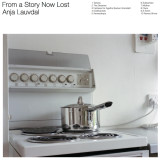
Produced by Laurel Halo and released via Norway's respected Smalltown Supersound label, Anja Lauvdal's first solo release, From a Story Now Lost, is a gorgeous musical essay reflecting on time, its perception, and lost histories rediscovered. Finally exploring her own voice after more than a decade of collaborative improvisational playing - starting at her time in jazz conservatory in Trondheim - the album is a jewel of subtle beauty and innovative detail. A freeform musician on piano, synthesizers, and electronics, Lauvdal's discography stretches back to 2013 and includes her participation in a myriad of ensembles and collaborations exploring the limits of sound and music in many forms, including noise, jazz, and more. Following her move to Oslo after graduation, she became deeply embedded in the music community there, touring with Jenny Hval as well as playing on her records. When pandemic hit and isolation was the norm, Lauvdal began working on her own, recording her improvisations in an attempt to capture something new for herself. Connecting to Laurel Halo via Smalltown's founder Joakim Haugland, the acclaimed American artist agreed to work with Lauvdal in shaping her solo record, becoming integral to its creation through all of its stages. Lauvdal credits Halo as a deep listener and gentle "thought-provoker", who contributed ideas as well as helping to shape the finished versions (Halo also worked alongside Rashad Becker on the final mix of the album). Together, they found a method of recording Lauvdal's improvisations, making small loops from those, feeding them back into the synthesizers, and making synthesizers out of the improvisations, which Lauvdal would then re-improvise with. She describes the end result, "like seeing different pieces of time around in the universe." While the record is based on Lauvdal's improvisations, some tracks were inspired Agathe Backer Grondahl, a Norwegian classical pianist and composer from the latter half of the 19th century. Lauvdal notes that Grondahl is not widely known, although her best friend Edvard Grieg is still considered Norway's most famous composer. Yet now, partly through Lauvdal, her story resurfaces and persists. "From a Story Now Lost means the story is still there," Lauvdal explains. "It hasn't gone anywhere even though nobody heard it, or maybe you're hearing it for the first time. And actually it was told a long time ago - maybe you weren't ready to hear that story at the time." This hints at the limitless nature of her music, as well as its new emotional texture. Direct in its vulnerability, immediate in its tenderness, From a Story Now Lost is a sophisticated evocation over restrained artistry spilling over with meaning.
As three souls plunge down from the heavens, death and destruction can be felt hanging in the air like a foul stench. Red clouds swirl around a black sun that never sets and an erratic clock ticks off-tempo, moving faster and slower before rewinding and starting anew.
“Let me paint you a picture…” vocalist Mikey Arthur sings, welcoming listeners with a dramatic opening scene. It takes a skillful guide to navigate the darkest depths of hell. And, as The Gloom In The Corner depict in their second full-length album Trinity, death is merely the beginning of the series of chilling adventures
Purposefully aligning their song count with unlucky number thirteen – a reoccurring symbol in the ever-unfolding Gloom Cinematic Universe or GCU – it comes as little surprise to longtime fans that each of the Australian quartet’s enticing tracks intertwine to form an interlocking tale; this time centered around the appropriately labeled unholy trinity.
Comprised of previously deceased characters Rachel Barker, Ethan Hardy, and Clara Carne, the group’s bloody battle is woven throughout the album as the anti-heroes determinedly claw their way back to Earth from the Rabbit Hole dimension, slashing, shooting, and extinguishing anyone who dares to oppose their quest. Yet, for the Girl of Glass, Ronin, and Queen of Misanthropy, there is clearly more to the story than what can be contained within a single package.
Projecting a wide and complex web of lore, plot twists, and tongue and cheek humor, frontman Mikey Arthur, guitarist Matt Stevens, bassist Paul Musolino, and drummer Nic Haberle, have been producing highly detailed concept releases since their formation. And, consistently filling in more missing pieces of the puzzle with every body of work, the band equate each new record to a fresh season of The Umbrella Academy dropping on the streaming service of your choice. Because, just as a great TV series captivates viewers with its music and storytelling, the quartet’s work provides a complete experience designed to allow fans to check in with their favorite characters, all the while enjoying a cinematic new soundtrack.
For those just joining the GCU, as well as those looking for a quick refresh, 2016 debut album Fear Me introduced listeners to main protagonists Julian “Jay” Hardy, a Section 13 agent consumed by anger over his girlfriend Rachel’s death, and Jay’s gloom (later known as Sherlock Adaliah Bones), a demonic entity who at times takes over Jay’s body as a host vessel. 2017 EP Homecoming tells the tale of Jay’s brother Ethan, a war veteran suffering from PTSD, who upon discovering his brother’s struggle, kills himself as part of a Dante-style rescue mission to bring Rachel back to life. In 2019 EP Flesh and Bones, we’re introduced to Clara Carne, a past witness to one of Jay and Sherlock’s crimes, who instead of taking revenge, began a twisted love story with Sherlock, only to be murdered by his forced hand. And 2020’s Ultima Pluvia EP where we finally learn of Sherlock’s past as an ancient warlord under the tyrannical King Baphicho, and see Sherlock and Jay’s deaths ushered in by Section 13 opponent and New Order leader Elias DeGraver and his gloom Atticus Encey.
After 2016’s Fear Me, the band admit that their original intention was to jump straight into the events of Trinity before pivoting to create Homecoming, Flesh and Bones, and Ultima Pluvia. However, upon reflection, primary storywriter Mikey Arthur believes that pushing the timeline back actually provided greater opportunity for the group to properly flesh out the songs and plotlines for their sophomore studio record.
Indeed, while Trinity re-introduces the three central “heroes” of this new arc, it’s important to understand that while familiar, the characters are not carbon copies of who they were earlier in the story. And neither is the band who brought them to life.
Fully embracing the weird and whacky has never been a struggle for The Gloom In The Corner. Rather, it’s together with this attitude that the group come away with special moments such as the fascinating old and new dynamic between neighboring tracks “Red Clouds” – a song whose initial version predates the formation of The Gloom In The Corner as an official band – and “Gravity” in which a demo intended for future material was adjusted to fit the sonic drop.
Mirroring this evolution in the band’s musical approach, a sense of growth can also be seen projected in the characters and story that the quartet chronicle across the thirteen tracks.
Classifying their individual sound as an intricate form of “cinema or theater-core” due to the depth and breadth of their musical approach, features, samples, symphonic elements, and conceptual nature, The Gloom In The Corner continue to prove that they’re more than just a simple concept band.
In fact, similar to character theme music in movies and video games, the group seamlessly play off their diverse sonic story in a variety of ways. Continuing to breathe new life into older staples from their catalog, the quartet reworked their infamous “Oxymøron” breakdown from Fear Me into an impactful moment in Trinity’s “Nor Hell A Fury” and sprinkled audio easter eggs of this sort all throughout their new music for fans to discover.
Listeners are also brought further into the world of the GCU with the help of what The Gloom In The Corner call their “casting process.” Like picking actors for a musical, the band meticulously selected eleven different vocal features and several additional voice actors to bring the album and characters to life. Described as a 50/50 split between notable talents such as Ryo Kinoshita (Crystal Lake), Joe Badolato (Fit For An Autopsy), and Lauren Babic (Red Handed Denial), as well as talented friends and family like Elijah Witt (Cane Hill) and Mikey’s sister Amelia Duffield, each featured artist brought their own touch and realistic spark to the characters they portrayed.
For in the end, as much as Trinity and it’s cast live within the confines of their own supernatural worlds, themes such as falling out of love (Gatekeeper), battling depression (Obliteration Imminent), and standing behind women’s empowerment (Nor Hell A Fury), are ones that many can relate to or understand. And, while most individuals may avoid drowning their woes by way of transforming into full-on egotistical murderers like the Queen and King of Misanthropy and the gang, The Gloom In The Corner have illustrated that time and time again, life’s a little more fun when you can crack a smile. Taking a page from the trinity’s playbook: try to avoid the end of the world. But if you can’t…at least spend it with a killer soundtrack.
- A1: Dua Lipa - Be The One
- A2: Avicii - Hey Brother
- A3: James Bay - Hold Back The River
- A4: Jessie J - Price Tag
- A5: Niall Horan - Slow Hands
- A6: Dermot Kennedy - Power Over Me
- A7: Years & Years - King
- B1: Katy Perry - Roar
- B2: Sheppard - Geronimo
- B3: Of Monsters & Men - Little Talks
- B4: The Weeknd - Starboy
- B5: Scouting For Girls - This Ain't A Love Song
- B6: Neon Trees - Animal
- B7: Lana Del Rey - Blue Velvet
- C1: Miley Cyrus - Malibu
- C2: Axwell & Ingrosso - More Than You Know
- C3: Dnce - Cake By The Ocean
- C4: Lorde - Royals
- C5: Mike Posner - I Took A Pill In Ibiza (Seeb Remix)
- C6: Ellie Goulding - Love Me Like You Do
- C7: Hozier - Take Me To Church
- D1: Bruno Mars - Locked Out Of Heaven
- D2: Icona Pop - I Love It
- D3: Tom Walker - Leave A Light On
- D8: The Teskey Brothers - Hold Me
- D4: American Authors - Best Day Of My Life
- D5: Tove Lo - Stay High (Feat Hippie Sabotage - Habits Remix)
- D6: Sam Smith - Stay With Me
- D7: Bastille - Pompeii
The Decades Collected compilations are part of the new Collected compilation series, which is a collaboration between Universal Music and Music On Vinyl. The compilations bring together the biggest names of each decade, combined with forgotten hits and less discovered gems, giving the listener an experience of listening to their favorite tunes while uncovering new musical grounds at the same time.
Various Artists - Tens Collected features Sam Smith “Stay With Me”, Lorde “Royals”, The Weeknd “Starboy”, Dua Lipa “Be The One”, Niall Horan “Slow Hands” and Ellie Goulding “Love Me Like You Do” amongst others.
- A1: St Pauli Second Line (Live)
- A2: Something's Missing (Live)
- A3: Arabesque Breakin&Apos; Suite (Live)
- A4: Theme From Beverly Hills Cop (Axel F)
- A5: Four Two Three (Live)
- A6: Silent Heroes (Live)
- B1: Carry On (Live)
- B2: Munich Psycholympics (Live)
- B3: Ghost Walk (Live)
- B4: Let The Music Play (Live)
- B5: Where Do We Go From Here (Live)
A unique longplayer by Germany's Funk champions The Mighty Mocambos: 'Scénarios' is a wild journey through iconic performances captured on 8-track tape, including celebrated versions of breakdance favourites like 'Axel F.' And 'Let The Music Play' as well as brand new original material composed especially for recordings in unusual settings.
Hamburg's deep funk chefs are known for their intuitive recordings that capture the energy of a live performance, and with this record they go all the way.
Just before the pandemic, the group recorded an in-store live session at legendary Hamburg record shop Groove City and taped an impromptu performance at JAM PDM! breakdance battle in Potsdam. Both were released on vinyl 45s, quickly sold out and became secret weapons for DJs. While most bands shifted their stage to the studio in 2020, producing an abundance of isolated lockdown-inspired material, the Mighty Mocambos – never shy of an antidote - took the mobile version of their recording studio on the road.
With no audience allowed at the Pitt Hopkins Music Session charity concert, the group used the occasion to compose meditative folk-soul instrumentals to be performed exclusively on stringed instruments. Sweaty funk does not work via video stream, but the format provided a welcome opportunity to create something entirely different. Even without electricity and drums, the cinematic "Four Two Three" and "Silent Heroes" are unmistakably recognizable as Mocambo themes.
When you follow Nina Simone's credo that an "artist's duty is to reflect the times", it became evident that once the world slowly started opening up again, further concerts would be captured on the group's portable Fostex R-8 tape machine. Luckily, restrictions fell on the very evening that the band hit the open air stage at the Import Export in Munich on September 11th 2021. The extended afrobeat-inspired jam on J.J. Cale's "Carry On" witnesses people celebrating and dancing together again for the first time after a year and the manic "Munich Psycholympics" unleashes all bottled-up energies that had being lying dormant.
The slightly kafka-esque "Ghost Walk" was taped during a soundcheck for a concert that was eventually called off for safety reasons, reflecting once more the uncertainty of the time. The last scénario sees the Mighty Mocambos returning to a packed indoor venue, playing "Let The Music Play" to a audience of b-boys and -girls – a testament to the sheer power of music. Featured as an encore here, an acoustic version of "Where Do We Go From Here?" (originally recorded with Lee Fields) closes the record and its restless voyage through unusual recording situations.
"Scénarios" differs drastically from other live albums as it does not seek to replicate existing material from studio albums. All songs were written or arranged especially for the live recordings in order to combine the group's DJ-friendly trademark sound with added vibes and momentum from the audience. Most of them were recorded while they were performed in public for the first time ever.
Comes in gatefold sleeve & includes download voucher.
d 04: Theme from Beverly Hills Cop (Axel F) Live
- A1: De'sean Jones & Ideeyah - Pressure
- A2: Donald Lee Roland Ii - Simba's Theme
- A3: Jason Hogans - Surrounded By Trees
- B1: John C & Meftah - Full
- B2: Meftah - When The Sun Falls
- B3: De'sean Jones - Psalm 23
- C1: Ian Fink - Moonlight (Duality/Detroit Live Version)
- C2: Kesswa - Chasing Delerium Feat. Nova Zai
- D1: Specter - The Upper Room
- D2: Raj Mahal - Hudsons
- E1: Raybone Jones - Green Funk
- E2: Whodat & Sophiyah.e - Don’t Know
- F1: Howard Thomas - Experiment 10
- F2: Mbthelight - Again (T’s Edit)
- F3: Sterling Toles - Janis
Growing up in Chicago, later Detroit-based music producer, Theo Parrish is internationally well known for his own inimitable downtempo house music style. The approach Parrish took to compiling DJ-Kicks was very ambitious, inviting his Detroit peers to produce a collection of brand new material, and in turn creating the first ever all exclusive entry to the esteemed series.
"Detroit creates. But rarely imitates. Why? We hear and see many from other places do that with what we originate. No need to follow. Get it straight. In the Great Lakes there are always more under the surface than those that appear to penetrate the top layer of attention and recognition. What about them that defy tradition? Those that side step the inaccurate definitions often given from outside positions? This is that evidence. Enjoy."
First official compilation by Theo Parrish
All exclusive unreleased material
Includes new music from Theo Parrish
Triple LP sampler containing 15 full length tracks
A true love letter to house music, Larson presents his account of the ubiquitous dance music genre diving deep into its origins. Connecting the dots with some of the genre’s most beloved innovators such as Larry Heard, Boo Williams, Ron Trent, Chez Damier or Chris Brann, the Belgian producer pays tribute by adding his own emphases. Setting a bright mood, at times aiming for the dance floor, at others comforting the listener into a casual vibe, Larson is not seeking, but spontaneously drawing attention with his graceful sounds, stripped to the bone and built on an intuitive factor.
Larson hails from Liège, the South Belgian city known for its meat balls and the mighty river La Meuse, and works as a sound editor in movie production. Recognised by those-who-know as one of the most quintessential figures of Liège’s burgeoning underground nightlife scene, the time is now for Larson to step forward. His 2x12” debut release dubbed ‘Interlace Joy Motions’ is one for the house heads, shifting between 121 and 130 BPM and showcasing the diverse sounds the producer has in store.
Opening track Our Inner Sun has smiles written all over. A simple yet effective piano loop, warm strings and a delicately running acid baseline are all Larson needs to set the standard for the beauty that is yet to come. Effortlessly entertaining for close to seven minutes, here is the essence of timeless house music at work.
Pushing up the speed up to 129 BPM, A2 brings the brand new label’s title track, Larson’s take on the many meanings the name may represent. Designed for jubilant dance floor action, Hi Scores is punchy and elegant at the same time.
On the flip side, Slack Breeze is an eleven-minutes-long breezy electro trip paying homage to Detroit music pioneer Juan Atkins and offers two mixes, nicely manufactured as one auditive whole on the vinyl record with a useful visual marker in between. Be aware of the slight tempo drop between the bold Club mix and the more laid back Sensual mix.
In a cultured and charming manner, Lethal Dance opens the second 12”. Driven by a fab bassline and soft as silk string arrangements, here is a slow burner for moments lost track of time. High Jazz Travel on C2 continues this trip to lofty spaces, speeding up the pace but holding on to Larson’s well crafted dream universe, with its mellow aura almost turning into a debonair lullaby for grown-ups.
Adding another layer to the cake is Chris ‘Funk’ Ferreira, the C12 resident DJ and ½ Senga Ferreira. Also active as the mixing engineer of this double 12”, on the D1 the Brussels based producer takes up the role as remixer with his stomping and energy building ‘Magic Force’ version of Hi Scores, contributing the single vocal sample to the EP. Things come to an end with Souvenir d’Enfance, a playful and innocent conga driven house track, cherished as a safe and sound childhood memory, forever in our hearts just as this excellent debut by Larson.
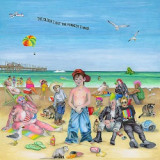
The Older I Get, the Funnier I Was, which follows Thomas’ brilliant 2020 HBO special The Golden One and his Can't Believe You're Happy Here EP released earlier this year, surveys a range of emotion and offers a broad sonic palette, moving between pop punk, electro, and the obvious influence of the singer-songwriters he grew up listening to in early childhood. It conjures the ennui of Bright Eyes alongside the barefaced storytelling of John Prine, the overstuffed lists of Fred Thomas with the lackadaisical humor of Colleen Green, among many others.
Thomas attributes the dexterity of the record to Duterte, who recorded and engineered most of it in addition to serving up plenty of encouragement when Thomas got down on the process. “As a comic, I used to test out new songs during sets to see if the funny bits were hitting, but since I wrote this in isolation I ended up writing lyrics and worrying less about making jokes,” Thomas says. That said, the album’s plenty funny. Stand-out and lead single “Rigamarole” opens with a Thomas-voiced infomercial that recalls his oft-cited lookalike Jim Carrey as the Grinch, before launching into a buoyant pop song about being depressed.
Whitmer Thomas will admit that when he traveled home to small town Gulf Shores, Alabama to record his HBO stand-up special, The Golden One, he expected to be greeted as a returning hero, a conquering king, or at minimum, a guy with a moderately successful career as an entertainer in Los Angeles. “I expected a big welcome home, open arms, but when I went back I realized: nobody fucking knows me. Nobody remembers me,” Thomas says. “In the years I’d been performing that show, I’d been romanticizing my childhood in this mythologized place, but the visit made me see that I’m not really from there anymore.”
The sense of alienation compounded when Thomas recognized how few people in town remembered his mom, to whom The Golden One is dedicated and largely about. Thomas grew up watching her perform with her twin sister at the legendary Flora-Bama Lounge, where he set the special, and still counts her as one of his musical influences. His new album, The Older I Get, the Funnier I Was, isn’t overtly about his mom, her presence is deeply felt throughout. While in Gulf Shores, Thomas discovered dozens of her old recordings, all of which had been wrecked by Katrina, but upon returning to LA, Thomas paid “a fancy place in Hollywood” to fix the tapes and hired Melina Duterte (Jay Som, Bachelor, Routine) to mix them. The two struck up a collaborative friendship, and Thomas had the sound of his mom’s voice back. “I was listening to songs she recorded when she was about my age, just these heartfelt, sweet Americana songs,” he says. “I decided then that I wanted to lose the Ian Curtis voice I always sing with; I wanted to do what came naturally, because my mom always sounded like herself, even when she was singing some cheesy reggae song about, like, Jamaica.”
Thus he went into The Older I Get, the Funnier I Was knowing it was time to retire his darkwave persona, and leaning into his natural, chirpier voice, which he says sounds “like a 12-year-old’s.” It makes sense: much of the album chronicles what Thomas calls “being a kid and feeling like you have no control and overcompensating by being annoying.” “So much of the album is about witnessing drug and alcohol addiction as a kid and seeing what it does to people, but also realizing that there's nothing you can do about it,” Thomas says. It’s familiar territory (see: “Partied to Death”) but the methodology is different this time around; true to its title, The Older I Get, the Funnier I Was isn’t always looking for laughs. Thomas might’ve left his hometown behind, but his kid self is still tagging along, a Peter Pan shadow he can’t untether himself from. The first line he sings on The Older I Get, the Funnier I Was is: “There should be a room at every party where you can just sit and watch a movie.” Find a 12-year-old who wouldn’t say the same.
Heist Recordings has been pushing the envelope for house music since day one and we’re always on the lookout for artists that represent our vision on electronic music. Our next guest on the label fits that profile and more. He is the embodiment of modern-day electronic funk and a true wizard on the keys: Atlanta raised cool guy Byron the Aquarius.
Byron has a solid history on the label: He remixed Parker Madicine back in 2017 and did a mad solo on the 2019 released Dam Swindle track ‘The life behind things’. We’ve done some shows together and stayed in touch while Byron was working together with Jeff Mills on his 2020 jazz crossover record ‘Ambrosia’ on Axis. Now, after a solid string of releases on labels like Shall not Fade and Purveyor Underground, Byron is making his solo appearance on Heist. His ‘Akira’ EP goes from dark basement grooves to dreamy broken beats and features a remix by New York dance music wizard Kush Jones.
The Akira EP kicks off with ‘I love yo’. In this track, Byron decides to leave his keys at home and goes in deep with a moody club workout. ‘I love yo’ is a track that juxtaposes dreamy samples with rough percussion and vocal chops with a clear nod to the work of Mr. G. The melody is mellow, but don’t be deceived; clever drum programming and plenty of sub take this track into the club vibe just the way Byron likes it: warm, hazy and sexy AF.
Byron is not known for delivering straightforward house tunes, but when he does deliver them, he does it in style. Enter ‘Get up’; the A2 of the EP. There’s everything we love about house music: smart vocal chops, driving percussion, classic house keys and a booming sub to get you bumping to this beat.
The B-side sees Byron up the tempo and take a deep dive into bass territory with ‘Love’. In this track, there’s lush pads running over a percussive broken beat and chopped R ’n B vocals to add some serious sex appeal. It’s deceptively simple and clean but ever so catchy, which clearly shows Byron’s prowess as an electronic music producer.
Going back to classic house mode, we’ve got ‘Success’: A spoken word house track that fits right in with the classics. Byron sets the mood with some bumpy key-and synth work while brainstorming about originality and blackness throughout the track. Even though the message underneath might be a serious one, Byron succeeds in delivering this in a fun, uplifting way that never gets pretentious or divisive.
The EP finishes with a remix by New Yorker Kush Jones. This is an artist who understands how to build a groove. He could take you anywhere from house to juke, footwork and techno, which is exactly why he’s been getting so much love for his music recently. Kush is an artist who sees no boundaries in his music and still manages to create his own sonic universe. His remix of ‘I love yo’ takes a dreamy approach with soft chords running over an electronic groove with a pure and improvised feel. All elements fit together perfectly and it’s the clever ad-hoc programming and arrangement that suck you into his unbounded world from the first beat.
As always, enjoy the music and play it loud.
Yours sincerely,
Maarten & Lars
After a crush at the Brussels World Fair in 1900, King Leopold II decided, for his own personal pleasure, to have the Japanese Tower and Japanese Gardens built. In order to create this little relocated Asian paradise, he had the wood, sculptures, paintings, ornaments, trees, workers, and their know-how imported. For a few years, he invited his entourage to enjoy it during large banquets and private receptions. He then had the idea of transforming the Japanese Tower into a luxury restaurant, but he died. This magnificent place remains closed to the public except during an annual opening.
"A Story of a Global Disease" is a short tale about artificial paradises of globalization, a melancholic walk through the exotic relics of free trade, where whim, appropriation, and appearances take precedence over otherness. Here, geishas eat chips, Europeans confuse Tokyo and Beijing, and tribal ceremonies begin with samples and drumkits.
These tracks have been initially recorded for the “ON THE GO” Beursschouwburg’s project in Oct. 2020. It has been originally and properly released on shiny pinky tape by the fantastic Bamboo Shows imprint and includes an unreleased track (Walk With Your Romance).
Naomie Klaus is a young artist from Marseille based in Brussels. In love with performance, constantly flirting with cinema and acting, Naomie seems to conceive her music as a big playground, a free zone of mischief in which she likes to experiment and interpret different identities, different characters. The result is funambulistic, a hybrid and synthetic form of a thousand influences that we can't really characterize: 90' Techno, loud Trip-hop, languid Pop, nonchalant Post-punk, dracular mass... Naomie Klaus doesn't know on which foot to dance and invites us to join a zone of in-between, has fun to plunge us in her strange tales for adults, where the princesses we meet are armed, hysterical, nymphos and badly dressed.
Following a B.F.E proposal to release on a limited vinyl edition, Teenage Menopause from France & Moli Del Tro from Brussels joined the project. Rude66 remastered these gems and Harrisson made the artwork.
- A1: Spotlight
- A10: Mirage (Don't Stop) (Don't Stop)
- A11: The Kill
- A12: Remember Where You Are
- A2: What's Your Pleasure?
- A3: Ooh La La
- A4: Soul Control
- A5: Save A Kiss
- A6: Adore You
- A7: In Your Eyes
- A8: Step Into My Life
- A9: Read My Lips
- B1: Please
- B2: Impossible
- B3: Eyes Closed
- B4: Overtime
- B5: Hot N Heavy
- B6: Pale Blue Light
- B7: 0208 (Feat Kindness)
- B8: Adore You (Endless Remix)
2021 has been an incredible year so far for Jessie Ware. ‘What’s Your Pleasure?’ re-entered the Top 10 following a brilliant Graham Norton performance of ‘Remember Where You Are’ which has proved itself to be one of Jessie’s most connective singles to date. In addition, Jessie has two BRITs nominations, one for Female Solo artist and one for Album Of The Year – the category with a historic four women up for the award. On 28th April Jessie returns with a brand new single ‘Please’ taken from the upcoming deluxe release of ‘What’s Your Pleasure?’ officially titled as ‘What’s Your Pleasure? The Platinum Pleasure Edition’. Released on 11th June, the album features 6 brand new songs and more.
Her newest track, ‘Please’ sees Jessie continue the energy of ‘What’s Your Pleasure’ in the form of a throwback to 70s and 80s dance music, and pulls it together in a wonderfully anachronistic style, all packaged with Ware’s outstanding vocals. The track fits perfectly into ‘What’s Your Pleasure - The Platinum Pleasure Edition’, Ware’s deluxe offering of her sensational 2020 record. This edition still bears the cohesive, complementary songwriting, the killer grooves and flawless production of the original version. The Platinum Pleasure Edition only serves to heighten the rich and powerful soul of last year’s release with tracks like Please, 0208 featuring synthpop visionary Kindness, the Endless Remix of ‘Adore You’ and a whole host more.
Talking about the upcoming deluxe and new single Jessie said: ”I had such an amazing response to the ‘What’s Your Pleasure?’ record that I didn’t want the lights to go up and the party to be over just yet! ‘Please’ is full of optimism and ready to be played in a place where we can all be together and flirt, dance, touch and kiss. A wonderful excuse not to stop the party from ending.”
It’s safe to say that the last twelve months have been pretty stellar for Jessie Ware. June 2020 saw Jessie release ‘What’s Your Pleasure?’ and gain not only her fourth UK Top 10 album of her career, but also her highest charting record when it entered straight into the UK Official Album Charts at No.3. As if this wasn’t amazing enough, she went on to release her first cookbook and continued her immensely popular podcast Table Manners and recently hit a massive milestone of 21 million individual listens, oftentimes featuring household names such as Dua Lipa, Kylie Minogue, Yungblud, Robbie Williams, Alanis Morissette., Dawn French and Dolly Parton to name a few.
Last year saw the album continue to receive widespread critical acclaim, with ‘What’s Your Pleasure?’ featuring heavily amongst ‘album of the year’ lists including for music critic Anthony Fantano, also known as The Needle Drop, who gave What’s Your Pleasure?’ the coveted no. 1 spot on his ‘Best Albums of 2020’ list, declaring it to be “a religious experience”. The record garnered praise from The Guardian who say it’s“Ware’s finest record yet"; Rolling Stone laude it as a “fantastic dance-pop record”; Pitchfork say “Jessie reminds us why we listen to dance music in the first place.”, GQ proclaim it as “the perfect album” and NME stated it was“pure escapism.”
Delia Derbyshire's work at the BBC's Radiophonic Workshop in the 60's was recognised initially for her realisation of the now iconic Doctor Who Theme which was written for the show by Ron Grainer. More recently though, she has been celebrated for her own compositions and experiments at what was then the cutting edge of electronic music. The AA side, Blue Veils and Golden Sands, was written for a TV documentary in 1967, a composition in which she used her own voice and a handy green BBC lampshade: "I analysed the sound into all of its partials and frequencies, and took the 12 strongest, and reconstructed the sound on the workshop's famous 12 oscillators to give a whooshing sound. So the camels rode off into the sunset with my voice in their hooves and a green lampshade on their backs."
On the A side is The Delian Mode, which was used as incidental music during The Sky At Night in 1969, finding critical acclaim in Gramophone Magazine's review of the album BBC RADIOPHONIC MUSIC (often known as The Pink Album), in September of the same year: "… Blue Veils and Delian Mode are probably the finest music here. It may be no accident that the latter is reminiscent of the beginning of Xenakis's OrientOccident for Delia Derbyshire follows the analytical approach of the more sustained electronic compositions. If her best pieces seem the most imaginative here—and they are—it is because she more fully explores the implications of her material."
„Techno. Simply Techno. The way I see it and like to hear it.“ is the simplistic idea behind RICO PUESTEL's new album THE VERGE, THE ROPE & THE ROOFTOPS. And that's what is delivered on this LP – 12 high density Techno productions following his highly anticipated 2021 album OBI THINE XI.
Besides the two special Electro jams OUT OF THE BOUNDS and SAVED AGAIN, all tracks deliver a coherent forward motion that have an inner connection while being able to work seperately and individually in a functional as well as special-moment-way throughout any Techno DJ set.
While there happens to be a deeper connection within, RICO PUESTEL himself recorded an album DJ mix, giving another perspective on how these tracks are intertwined.
As the opening of the CD is declaring: „This sound is relentless. It knows no stops. Standing on the verge. Climbing on the rope. Echoes from the rooftops.“
- A1: Ootw - Tapping Into The Machine 4 14
- A2: Bukez Finezt - Shaggy Mullet 5 31
- A3: Lewcid - Eschaton 2 26
- A4: Rational Soul - Hard R3S3T 3 00
- A5: Starkey Feat. Aprilfoolchild - Little Miss Sunshine 3 53
- A6: Jalaya & Dark Velvet - Infiltrate 3 40
- A7: Hawkword & Bakaman - Twist In The Sickness 3 02
- B1: Maysev - Gleam 5 15
- B2: Statx & Long Tongue - Caracara 3 40
- B3: Dgtlosgnl - Something For Your Mind 2 50
- B4: Prestus - Going Up 2 43
- B5: Dead End - Continuum 2 40
- B6: Not Yes - Forbidden Fruit 4 28
- B7: Dayzero, Finnoh & Jack - Dragon 5 10
Purple Vinyl in PicCover
"Since it's inception, the various artist compilation series SATURATED! has proven to be the epitome of curation in this small niche scene called bass music or whatever.
Each volume is carefully hand picked and is a picture in sound of the music at that point in time but overall has proven to be timeless.
The arrangement works in such ways that each tune flows perfectly into the next one and actually (given that you have two vinyls like a real dj), you could mix seamlessly from the first through the last track.
Saturate Records has become a hotspot for those seeking fresh sounds from well known and emerging artists within the scene.
Channeling the quintessential stylings of low-end driven beats from across the globe, they have been leading the way in all things bass heavy, broken-beat, experimental, glitch, hip-hop, psychedelic and trap for years now. Having featured releases from names like heRobust and G Jones early on in their careers, SATURATE! continues to help push the new school, hip-hop influenced sound forward with their fingers firmly on the pulse of future freshness.
A weird, wonky and wonderful journey through the raw attitude of the blistering beat driven electronic music scene.
- 1: Lettuce And Cabbage
- 2: Pay Me
- 3: Flamboyant (Feat. Frankie Storm)
- 4: Beastie Boyz (Feat. Ron Browz & Method Man)
- 5: Billy Joel
- 6: Feast (Bo Blakk & Milly D.o.d.)
- 7: Got It Movin (Feat. Ron Browz)
- 8: Faith (Feat. Ron Browz & American Bboy)
- 9: Shark Tank (Feat. Steel & Ruste Juxx)
- 10: Hood Up (Feat. Frankie Storm)
- 11: Squad (Feat. Ron Browz & Last American Bboy)
- 12: The Answer
Since making his mark in the ‘90s through the early aughts as a part of the legendary Boot Camp Clik and one half of “Da Incredible Rap Team” and duo Heltah Skeltah, Rock (also known as the Rockness Monsta) has been conservative with solo efforts. With one of the most distinct voices in hip-hop, the Brooklyn emcee released his full-length debut solo albumRockness AP in 2017, and now looks to step back into the spotlight with his sophomore album, Ether Rocks.
Produced entirely by Harlem, New York’s Ron Browz (Nas’s “Ether”, Jim Jones’s “Pop Champagne”, etc.), the project sees Rock’s ominous tone and sharp flow transposed from the traditional Boom-Bap beats of Da Beatminerz and others, into a sonic backdrop that retains grit yet bolsters an updated and more sophisticated style from the legendary emcee.
The 12 track LP boasts guest appearances from Method Man, Steele (Smif-N-Wessun), Ruste Juxx and more, and is available via DSPs, CD and vinyl through American B Boy Records in partnership with Fat Beats.
“Dope is dope. I'm trying to break out of the underground rap box and ease into ‘grown man rap’. This album is basically my way of showing y’all more sides to myself musically and conceptually. A lot of our culture wants you to do the same thing over and over. That’s understandable but not realistic as we are forever evolving as human beings. So, while I continue to serve jedi level barbarian bars, I’m adding some things to the menu.” – Rockness Monsta
- 1: Here We Go Again (With Norah Jones)
- 2: Sweet Potato Pie (With James Taylor)
- 3: You Don't Know Me (With Diana Krall)
- 4: Sorry Seems To Be The Hardest Word (With Elton John)
- 5: Fever (With Natalie Cole)
- 6: Do I Ever Cross Your Mind (With Bonnie Raitt)
- 7: It Was A Very Good Year (With Willie Nelson)
- 8: Hey Girl (With Michael Mcdonald)
- 9: S Inner's Prayer (With B.b. King)
- 10: Heaven Help Us All (With Gladys Knight)
- 11: Over The Rainbow (With Johnny Mathis)
- 12: Crazy Love (With Van Morrison)
(REISSUE)
Genius Loves Company is the final studio album by rhythm and blues and soul musician Ray Charles, posthumously released August 31, 2004. Recording sessions for the album took place between June 2003 and March 2004. The album consists of rhythm and blues, soul, country, blues, jazz, and pop standards performed by Charles and several guest musicians, such as Natalie Cole, Elton John, James Taylor, Norah Jones, B.B. King, Gladys Knight, Diana Krall, Van Morrison, Willie Nelson, and Bonnie Raitt. Genius Loves Company was the last album recorded and completed by Charles before his death in June 2004.The album is known as one of Ray Charles" most commercially successful albums. On February 2, 2005, Genius Loves Company was certified triple-platinum in sales by the Recording Industry Association of America following sales of over three million copies in the United States. It also became Charles" second to reach number one on the Billboard 200, after Modern Sounds in Country and Western Music (1962). On February 13, 2005, the album was awarded eight Grammy Awards including Album of the Year and Record of the Year.
Having already played to 40,000 fans this year in their native Ireland, The Coronas release their new single If You Let Me, and their highly anticipated new album Time Stopped, the follow-up to 2020’s intl breakthrough and critically acclaimed True Love Waits. Prior to the release of the Time Stopped album on the 7th October, the band will embark on a 25 date European, North American and Australian tour. The tour culminates in a 4 night run at the Olympia Theatre with the final show expected to be the band’s 60th consecutive sell-out show at the prestigious Dublin venue. Known for high energy live performances and audience singalongs, it’s not surprising that The Coronas were named #1 Live Act of the Year in Ireland’s Hot Press 2022 Readers' Poll.
Lead singer Danny O’Reilly explains the origins of the new single:
“If You Let Me” is a subtle declaration of support - lyrically it’s our answer to the Jackson 5’s ‘I’ll Be There’. When you see that someone you care about is going through a tough time and even though you know that you should wait until they ask for your advice or help, you can’t stop yourself from telling them how you feel about their situation.
Produced by long-time collaborator George Murphy (Mumford & Sons, The Specials, Ellie Goulding) and mixed by Grammy award winning Peter Katis (The National), sonically If You Let Me is a joyous, catchy, indie-rock jaunt that really shows The Coronas at their radio friendly, foot-tapping best.
- 1: Merry Christmas Baby
- 2: It’s Beginning To Look A Lot Like Christmas
- 3: Christmas Isn’t Canceled (Just You)
- 4: Merry Christmas (To The One I Used To Know)
- 5: Rockin’ Around The Christmas Tree
- 6: Glow (Feat. Chris Stapleton)
- 7: Santa Baby
- 8: Santa, Can’t You Hear Me (Feat. Ariana Grande)
- 9: Last Christmas
- 10: Jingle Bell Rock
- 11: Blessed
- 12: Christmas Come Early
- 13: Under The Mistletoe (Feat. Brett Eldredge)
- 14: All I Want For Christmas Is You
- 15: Christmas Eve
GRAMMY-winning global superstar Kelly Clarkson has released When Christmas Comes Around…, her ninth studio album via Atlantic Records. The 15-track collection sees Clarkson reunite with long time collaborators Jason Halbert, Jesse Shatkin and more for a mix of new original songs and Christmas classics.
The album features a mix of new original songs and Christmas classics, alongside show-stopping collaborations with Ariana Grande (“Santa, Can’t You Hear Me”), Chris Stapleton (“Glow”) & Brett Eldredge (2020’s hit single “Under The Mistletoe”). When Christmas Comes Around… marks the latest album from Clarkson since 2017’s Meaning of Life and her second holiday offering following 2013’s Wrapped In Red.
Kelly Clarkson is among the most popular artists of this era with total worldwide sales of more than 25 million albums and 40 million singles. The Texas-born singer-songwriter first came to fame in 2002 as the winner of the inaugural season of American Idol. Clarkson’s debut single, “A Moment Like This,” followed and quickly went to #1 on Billboard’s Hot 100, ultimately ranking as the year’s best-selling single in the U.S. Further, Clarkson is one of pop’s top singles artists, with 19 singles boasting multi-platinum, platinum and gold certifications around the world, including such global favourites as “Miss Independent” and “Because of You.” Clarkson has released eight studio albums (Thankful, Breakaway, My December, All I Ever Wanted, Stronger, Wrapped In Red, Piece By Piece, Meaning of Life), one greatest hits album, and two children’s books (New York Times Top 10 best seller River Rose and the Magical Lullaby and the follow up River Rose and the Magical Christmas). She is the recipient of an array of awards including three GRAMMY Awards, four American Music Awards, three MTV Video Music Awards, two Academy of Country Music Awards, two American Country Awards, one Country Music Association Award, and two Daytime Emmy Awards. She is also the first artist to top each of Billboard’s pop, adult contemporary, country and dance charts.
Whenever you think you've seen it all, SNC Recs comes round the corner with a brand new banger. Drum roll please for SNC007, shaken not stirred - the first Various Artists EP of the Ingolstadt based record label.
Fresh approach - with well known favorites. All artists on the EP have released solo or split EPs on SNC already. So you can look forward to The Duty Freedom, Raphael Schön, Maurice Paloni and Salomo. SNC 007 will make you shed a tear on the dancefloor with a late summer acid anthem from The Duty Freedom on the one hand, and on the other hand wrap you in a cozy blanket knitted from Salomo’s legendary soundscapes. However, the record not only creates romantic feelings, but also delivers breaky and trancey vibes by the Bavarian based producers Raphael Schön and Maurice Paloni, where you certainly won’t be able to stay still. What else could you ask for?
- A1: Rock This Mother
- A2: Talk To Me Girl
- A3: You Can Find Me
- A4: Check This Out
- A5: Jesus Going To Clean House
- A6: Hope You Understood
- A7: Is It What You Want
- A8: Love Is Everlasting
- A9: This Is Hip-Hop Art
- A10: Opposite Of Love
- A11: Do You Know What I Mean
- B1: Saving All My Love For You
- B2: Look Out Here I Come
- B3: Girl You Always Talking
- B4: Have A Great Day
- B5: Take My Hand
- B6: I Need Your Love
- B7: Your Town
- B8: Talk Around Town
- B9: Booty Head/Take A Little Walk
- B10: I Love My Mama
- B11: I Never Found Anyone Like You
Vinyl LP[23,49 €]
As the sun sets on a quaint East Nashville house, a young man bares a piece of his soul. Facing the camera, sporting a silky suit jacket/shirt/slacks/fingerless gloves ensemble that announces "singer" before he's even opened his mouth, Lee Tracy Johnson settles onto his stage, the front yard. He sways to the dirge-like drum machine pulse of a synth-soaked slow jam, extends his arms as if gaining his balance, and croons in affecting, fragile earnest, "I need your love… oh baby…"
Dogs in the yard next door begin barking. A mysterious cardboard robot figure, beamed in from galaxies unknown and affixed to a tree, is less vocal. Lee doesn't acknowledge either's presence. He's busy feeling it, arms and hands gesticulating. His voice rises in falsetto over the now-quiet dogs, over the ambient noise from the street that seeps into the handheld camcorder's microphone, over the recording of his own voice played back from a boombox off-camera. After six minutes the single, continuous shot ends. In this intimate creative universe there are no re-takes. There are many more music videos to shoot, and as Lee later puts it, "The first time you do it is actually the best. Because you can never get that again. You expressing yourself from within."
"I Need Your Love" dates from a lost heyday. From some time in the '80s or early '90s, when Lee Tracy (as he was known in performance) and his music partner/producer/manager Isaac Manning committed hours upon hours of their sonic and visual ideas to tape. Embracing drum machines and synthesizers – electronics that made their personal futurism palpable – they recorded exclusively at home, live in a room into a simple cassette deck. Soul, funk, electro and new wave informed their songs, yet Lee and Isaac eschewed the confinement of conventional categories and genres, preferring to let experimentation guide them.
"Anytime somebody put out a new record they had the same instruments or the same sound," explains Isaac. "So I basically wanted to find something that's really gonna stand out away from all of the rest of 'em." Their ethos meant that every idea they came up with was at least worth trying: echoed out half-rapped exhortations over frantic techno-style beats, gospel synth soul, modal electro-funk, oddball pop reinterpretations, emo AOR balladry, nods to Prince and the Fat Boys, or arrangements that might collapse mid-song into a mess of arcade game-ish blips before rallying to reach the finish line. All of it conjoined by consistent tape hiss, and most vitally, Lee's chameleonic voice, which managed to wildly shape shift and still evoke something sincere – whether toggling between falsetto and tenor exalting Jesus's return, or punctuating a melismatic romantic adlib with a succinct, "We all know how it feels to be alone."
"People think we went to a studio," says Isaac derisively. "We never went to no studio. We didn't have the money to go to no studio! We did this stuff at home. I shot videos in my front yard with whatever we could to get things together." Sometimes Isaac would just put on an instrumental record, be it "Planet Rock" or "Don't Cry For Me Argentina" (from Evita), press "record," and let Lee improvise over it, yielding peculiar love songs, would-be patriotic anthems, or Elvis Presley or Marilyn Monroe tributes. Technical limitations and a lack of professional polish never dissuaded them. They believed they were onto something.
"That struggle," Isaac says, "made that sound sound good to me."
In the parlance of modern music criticism Lee and Isaac's dizzying DIY efforts would inevitably be described as "outsider." But "outsider" carries the burden of untold additional layers of meaning if you're Black and from the South, creating on a budget, and trying to get someone, anyone within the country music capital of the world to take your vision seriously. "What category should we put it in?" Isaac asks rhetorically. "I don't know. All I know is feeling. I ain't gonna name it nothing. It's music. If it grabs your soul and touch your heart that's what it basically is supposed to do."
=
Born in 1963, the baby boy of nine siblings, Lee Tracy spent his earliest years living amidst the shotgun houses on Nashville's south side. "We was poor, man!" he says, recalling the outhouse his family used for a bathroom and the blocks of ice they kept in the kitchen to chill perishables. "But I actually don't think I really realized I was in poverty until I got grown and started thinking about it." Lee's mom worked at the Holiday Inn; his dad did whatever he had to do, from selling fruit from a horse drawn cart to bootlegging. "We didn't have much," Lee continues, "but my mother and my father got us the things we needed, the clothes on our back." By the end of the decade with the city's urban renewal programs razing entire neighborhoods to accommodate construction of the Interstate, the family moved to Edgehill Projects. Lee remembers music and art as a constant source of inspiration for he and his brothers and sisters – especially after seeing the Jackson 5 perform on Ed Sullivan. "As a small child I just knew that was what I wanted to do."
His older brother Don began musically mentoring him, introducing Lee to a variety of instruments and sounds. "He would never play one particular type of music, like R&B," says Lee. "I was surrounded by jazz, hard rock and roll, easy listening, gospel, reggae, country music; I mean I was a sponge absorbing all of that." Lee taught himself to play drums by beating on cardboard boxes, gaining a rep around the way for his timekeeping, and his singing voice. Emulating his favorites, Earth Wind & Fire and Cameo, he formed groups with other kids with era-evocative band names like Concept and TNT Connection, and emerged as the leader of disciplined rehearsals. "I made them practice," says Lee. "We practiced and practiced and practiced. Because I wanted that perfection." By high school the most accomplished of these bands would take top prize in a prominent local talent show. It was a big moment for Lee, and he felt ready to take things to the next level. But his band-mates had other ideas.
"I don't know what happened," he says, still miffed at the memory. "It must have blew they mind after we won and people started showing notice, because it's like everybody quit! I was like, where the hell did everybody go?" Lee had always made a point of interrogating prospective musicians about their intentions before joining his groups: were they really serious or just looking for a way to pick up girls? Now he understood even more the importance of finding a collaborator just as committed to the music as he was.
=
Isaac Manning had spent much of his life immersed in music and the arts – singing in the church choir with his family on Nashville's north side, writing, painting, dancing, and working various gigs within the entertainment industry. After serving in the armed forces, in the early '70s he ran The Teenage Place, a music and performance venue that catered to the local youth. But he was forced out of town when word of one of his recreational routines created a stir beyond the safe haven of his bohemian circles.
"I was growing marijuana," Isaac explains. "It wasn't no business, I was smoking it myself… I would put marijuana in scrambled eggs, cornbread and stuff." His weed use originated as a form of self-medication to combat severe tooth pain. But when he began sharing it with some of the other young people he hung out with, some of who just so happened to be the kids of Nashville politicians, the cops came calling. "When I got busted," he remembers, "they were talking about how they were gonna get rid of me because they didn't want me saying nothing about they children because of the politics and stuff. So I got my family, took two raggedy cars, and left Nashville and went to Vegas."
Out in the desert, Isaac happened to meet Chubby Checker of "The Twist" fame while the singer was gigging at The Flamingo. Impressed by Isaac's zeal, Checker invited him to go on the road with him as his tour manager/roadie/valet. The experience gave Isaac a window into a part of the entertainment world he'd never encountered – a glimpse of what a true pop act's audience looked like. "Chubby Checker, none of his shows were played for Black folks," he remembers. "All his gigs were done at high-class white people areas." Returning home after a few years with Chubby, Isaac was properly motivated to make it in Music City. He began writing songs and scouting around Nashville for local talent anywhere he could find it with an expressed goal: "Find someone who can deliver your songs the way you want 'em delivered and make people feel what you want them to feel."
One day while walking through Edgehill Projects Isaac heard someone playing the drums in a way that made him stop and take notice. "The music was so tight, just the drums made me feel like, oh I'm-a find this person," he recalls. "So I circled through the projects until I found who it was.
"That's how I met him – Lee Tracy. When I found him and he started singing and stuff, I said, ohhh, this is somebody different."
=
Theirs was a true complementary partnership: young Lee possessed the raw talent, the older Isaac the belief. "He's really the only one besides my brother and my family that really seen the potential in me," says Lee. "He made me see that I could do it."
Isaac long being a night owl, his house also made for a fertile collaborative environment – a space where there always seemed to be a new piece of his visual art on display: paintings, illustrations, and dolls and figures (including an enigmatic cardboard robot). Lee and Issac would hang out together and talk, listen to music, conjure ideas, and smoke the herb Isaac had resumed growing in his yard. "It got to where I could trust him, he could trust me," Isaac says of their bond. They also worked together for hours on drawings, spreading larges rolls of paper on the walls and sketching faces with abstract patterns and imagery: alien-like beings, tri-horned horse heads, inverted Janus-like characters where one visage blurred into the other.
Soon it became apparent that they didn't need other collaborators; self-sufficiency was the natural way forward. At Isaac's behest Lee, already fed up with dealing with band musicians, began playing around with a poly-sonic Yamaha keyboard at the local music store. "It had everything on it – trumpet, bass, drums, organ," remembers Lee. "And that's when I started recording my own stuff."
The technology afforded Lee the flexibility and independence he craved, setting him on a path other bedroom musicians and producers around the world were simultaneously following through the '80s into the early '90s. Saving up money from day jobs, he eventually supplemented the Yamaha Isaac had gotten him with Roland and Casio drum machines and a Moog. Lee was living in an apartment in Hillside at that point caring for his dad, who'd been partially paralyzed since early in life. In the evenings up in his second floor room, the music put him in a zone where he could tune out everything and lose himself in his ideas.
"Oh I loved it," he recalls. "I would really experiment with the instruments and use a lot of different sound effects. I was looking for something nobody else had. I wanted something totally different. And once I found the sound I was looking for, I would just smoke me a good joint and just let it go, hit the record button." More potent a creative stimulant than even Isaac's weed was the holistic flow and spontaneity of recording. Between sessions at Isaac's place and Lee's apartment, their volume of output quickly ballooned.
"We was always recording," says Lee. "That's why we have so much music. Even when I went to Isaac's and we start creating, I get home, my mind is racing, I gotta start creating, creating, creating. I remember there were times when I took a 90-minute tape from front to back and just filled it up."
"We never practiced," says Isaac. "See, that was just so odd about the whole thing. I could relate to him, and tell him about the songs I had ideas for and everything and stuff. And then he would bring it back or whatever, and we'd get together and put it down." Once the taskmaster hell bent on rehearsing, Lee had flipped a full 180. Perfection was no longer an aspiration, but the enemy of inspiration.
"I seen where practicing and practicing got me," says Lee. "A lot of musicians you get to playing and they gotta stop, they have to analyze the music. But while you analyzing you losing a lot of the greatness of what you creating. Stop analyzing what you play, just play! And it'll all take shape."
=
"I hope you understood the beginning of the record because this was invented from a dream I had today… (You tell me, I'll tell you, we'll figure it out together)" – Lee Tracy and Isaac Manning, "Hope You Understand"
Lee lets loose a maniacal cackle when he acknowledges that the material that he and Isaac recorded was by anyone's estimation pretty out there. It's the same laugh that commences "Hope You Understand" – a chaotic transmission that encapsulates the duality at the heart of their music: a stated desire to reach people and a compulsion to go as leftfield as they saw fit.
"We just did it," says Lee. "We cut the music on and cut loose. I don't sit around and write. I do it by listening, get a feeling, play the music, and the lyrics and stuff just come out of me."
The approach proved adaptable to interpreting other artists' material. While recording a cover of Whitney Houston's pop ballad "Saving All My Love For You," Lee played Whitney's version in his headphones as he laid down his own vocals – partially following the lyrics, partially using them as a departure point. The end result is barely recognizable compared with the original, Lee and Isaac having switched up the time signature and reinvented the melody along the way towards morphing a slick mainstream radio standard into something that sounds solely their own.
"I really used that song to get me started," says Lee. "Then I said, well I need something else, something is missing. Something just came over me. That's when I came up with 'Is It What You Want.'"
The song would become the centerpiece of Lee and Isaac's repertoire. Pushed along by a percolating metronomic Rhythm King style beat somewhere between a military march and a samba, "Is It What You Want" finds Lee pleading the sincerity of his commitment to a potential love interest embellished by vocal tics and hiccups subtlely reminiscent of his childhood hero MJ. Absent chord changes, only synth riffs gliding in and out like apparitions, the song achieves a lingering lo-fi power that leaves you feeling like it's still playing, somewhere, even after the fade out.
"I don't know, it's like a real spiritual song," Lee reflects. "But it's not just spiritual. To me the more I listen to it it's like about everything that you do in your everyday life, period. Is it what you want? Do you want a car or you don't want a car? Do you want Jesus or do you want the Devil? It's basically asking you the question. Can't nobody answer the question but you yourself."
In 1989 Lee won a lawsuit stemming from injuries sustained from a fight he'd gotten into. He took part of the settlement money and with Isaac pressed up "Saving All My Love For You" b/w "Is It What You Want" as a 45 single. Isaac christened the label One Chance Records. "Because that's all we wanted," he says with a laugh, "one chance."
Isaac sent the record out to radio stations and major labels, hoping for it to make enough noise to get picked up nationally. But the response he and Lee were hoping for never materialized. According to Isaac the closest the single got to getting played on the radio is when a disk jock from a local station made a highly unusual announcement on air: "The dude said on the radio, 107.5 – 'We are not gonna play 'Is It What You Want.' We cracked up! Wow, that's deep.
"It was a whole racist thing that was going on," he reflects. "So we just looked over and kept on going. That was it. That was about the way it goes… If you were Black and you were living in Nashville and stuff, that's the way you got treated." Isaac already knew as much from all the times he'd brought he and Lee's tapes (even their cache of country music tunes) over to Music Row to try to drum up interest to no avail.
"Isaac, he really worked his ass off," says Lee. "He probably been to every record place down on Music Row." Nashville's famed recording and music business corridor wasn't but a few blocks from where Lee grew up. Close enough, he remembers, for him to ride his bike along its back alleys and stumble upon the occasional random treasure, like a discarded box of harmonicas. Getting in through the front door, however, still felt a world away.
"I just don't think at the time our music fell into a category for them," he concedes. "It was before its time."
=
Lee stopped making music some time in the latter part of the '90s, around the time his mom passed away and life became increasingly tough to manage. "When my mother died I had a nervous breakdown," he says, "So I shut down for a long time. I was in such a sadness frame of mind. That's why nobody seen me. I had just disappeared off the map." He fell out of touch with Isaac, and in an indication of just how bad things had gotten for him, lost track of all the recordings they'd made together. Music became a distant memory.
Fortunately, Isaac kept the faith. In a self-published collection of his poetry – paeans to some of his favorite entertainment and public figures entitled Friends and Dick Clark – he'd written that he believed "music has a life of its own." But his prescience and presence of mind were truly manifested in the fact that he kept an archive of he and Lee's work. As perfectly imperfect as "Is It What You Want" now sounds in a post-Personal Space world, Lee and Isaac's lone official release was in fact just a taste. The bulk of the Is It What You Want album is culled from the pair's essentially unheard home recordings – complete songs, half-realized experiments, Isaac's blue monologues and pronouncements et al – compiled, mixed and programmed in the loose and impulsive creative spirit of their regular get-togethers from decades ago. The rest of us, it seems, may have finally caught up to them.
On the prospect of at long last reaching a wider audience, Isaac says simply, "I been trying for a long time, it feels good." Ever the survivor, he adds, "The only way I know how to make it to the top is to keep climbing. If one leg break on the ladder, hey, you gotta fix it and keep on going… That's where I be at. I'll kill death to make it out there."
For Lee it all feels akin to a personal resurrection: "It's like I was in a tomb and the tomb was opened and I'm back… Man, it feels so great. I feel like I'm gonna jump out of my skin." Success at this stage of his life, he realizes, probably means something different than what it did back when he was singing and dancing in Isaac's front yard. "What I really mean by 'making it,'" he explains isn't just the music being heard but, "the story being told."
Occasionally Lee will pull up "Is It What You Want" on YouTube on his phone, put on his headphones, and listen. He remembers the first time he heard his recorded voice. How surreal it was, how he thought to himself, "Is that really me?" What would he say to that younger version of himself now?
"I would probably tell myself, hang in there, don't give up. Keep striving for the goal. And everything will work out."
Despite what's printed on the record label, sometimes you do get more than one chance.