The Bluebeaters enjoyed a revival with their 2025 album Everybody Knows, released by Record Kicks. In 2023, to be included in a compilation created by Freedom Sounds Festival in Cologne (Germany), we reworked an extra track entitled TRINITY that had been left off the album. In addition to being included in the compilation, it became the first single on 7-inch vinyl released by the newly formed Caribb Roots.
Although we played it live, the recording of the song had been left half-finished, so we picked it up again, recorded the horns and vocals, and finished mixing it.
The song is linked to the very Italian tradition of Western film soundtracks, and Trinity is a seminal song in this sense.
Поиск:semi sense
Все
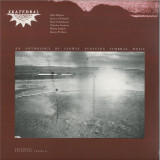
XKatedral Anthology Series II (An Anthology Of Slowly Evolving Timbral Music), featuring exclusive music from Kali Malone, Jessica Ekomane, Mats Erlandsson, Theodor Kentros, Wilma Hultén, and Maria W Horn.
"XKatedral Anthology II is the second instalment in a series of archival releases dedicated to presenting music by composers affiliated with XKatedral working within the realm of slowly evolving harmonic and timbral music. This double-vinyl set contains an array of pieces dating from 2018 - 2020. This collection of pieces focuses on the use of synthetic sound and algorithmic composition languages as tools for precise work within the realm of spectral exploration. In addition to this, the electronic instrumentation in many of the pieces is augmented by acoustic instruments.
The first piece on side A is Kali Malone’s Music for Low Quartet. This piece is an adaptation of the composition “Rose Wreath Crown” originally released on The Sacrificial Code in 2019. In this iteration, the music is scored for two double basses played by Vilhelm Bromander and Zach Rowden, and sine tone electronics performed by Malone herself. The recording of this piece was made at EMS in 2019.
Closing side A is Jessica Ekomane’s ‘First Light’. This computer music piece focuses exclusively on digital sound, layering razor sharp synthetic textures into an otherworldly dynamic weave. The music heard here is a reworked version of a piece originally commissioned by Semibreve in 2020.
Side B contains the work ‘Hands Melt In The Sun’ by Mats Erlandsson. This composition is built from electronically processed tuned zithers and synthetically generated tones arranged in a series of chordal inversions over a sustained fundamental tone. This music, written as a love-letter to the localized drone tradition of Stockholm in the years 2008-2012, was composed and recorded in seven days while in residence at Ställbergs Gruva in Bergslagen, in the summer of 2018.
Opening the second half of the collection is Rough Draft v.7 by Theodor Kentros. Kentros’ compositional practice usually combines acoustic and electronic source material and in this piece he molds the sound of the Buchla 200 and a collection of recorded wind instruments into a molten mass of sound. In its original form, this music was presented as a multichannel immersive work and even in the current stereo configuration it retains some of that enveloping sense of depth.
The second piece on side B, Inertia, is by Wilma Hultén, who makes her debut on record here. An exclusively synthetic piece, Inertia utilizes internal digital feedback in a sealed synthetic system to manifest a harmonic field that swells and abates throughout the length of the piece, interspersed by small gestural elements.
Closing Anthology II is Maria W Horn's work ‘Dies Irae’ for female vocal quartet, pitched glass and synthesis. ‘Dies Irae’ uses a modified form of traditional tonal harmonic language to invoke an uncanny and restless middle ground between the classical western polyphonic vocal tradition and contemporary electronic music. The version heard here is a live recording from Eric Ericssonhallen in Stockholm on May 30th 2020. Performing the piece here are the vocalists Katarina Henryson, Lisa Holmgren, Vilma Ogenblad and Paula Wegmann, as well as Maria herself on glass and electronics."
- 1: Nuvole I
- 2: Nuvole Ii
- 3: Nuvole Iii
- 4: Nuvole Iv
- 5: Nuvole Ix
- 6: Nuvole V
- 7: Nuvole Vi
- 8: Nuvole Vii
- 9: Nuvole Viii
- 10: Nuvole X
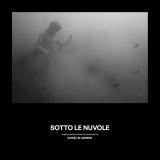
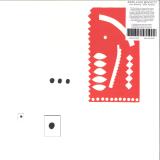
In Gianfranco Rosi’s portrait of Naples, Sotto le Nuvole, the ground shakes periodically. Between Mount Vesuvius and the Tyrrhenian Sea, the fumaroles of the Phlegraean Fields hiss volcanic gas and steam. Below the sleeping volcano, modern day Naples emerges in black and white and fills with voices, with lives. From the traces of history and the concerns of the present, Rosi documents a city immersed in its continuous past, with Daniel Blumberg’s minimal soundscape hovering in a sonic space between liquid and air.
Tasked with creating a soundscape that would suspend space within Rosi’s film, Blumberg called upon the extended technique of saxophonists Seymour Wright and John Butcher to create a gossamer fabric of traces and sounds abstracted from their instruments. Having transitioned from theoretical physics to the saxophone, John Butcher has always deeply considered space in the context of his playing. His concerns are with flow, density and how the saxophone is situated in the living world. Zeroing in on the core sonic properties of the mechanical and acoustic components of the saxophone, Seymour Wright has integrated its every breath, reed vibration, keypad clatter and hissed microtone of his alto into his own, unique improvisational language. In his work with these two seminal players, Blumberg makes his most concentrated soundtrack to date - reinforcing the film's sense of overlapping time and space, and pushing at the limits of experimentation.
Initially recorded in Daniel’s flat in London, Butcher and Wright centre themselves around long, consistent tones, so soft that it seems breath is being gently pulled from the saxophone's bell by an invisible hand. Blumberg himself adds haunting bass harmonica, and recordings of Wright’s launeddas - a traditional and ancient triple pipe polyphonic reed instrument from Sardinia, Italy. Blumberg then travelled to the volcanic region of Baia, next to Pompeii. Once a flourishing classical Roman city loved by Nero, Baia slowly sank under hydrothermal pressure, leaving the city in a kind of geological purgatory. Using specialised geophones and hydrophones, Blumberg took those initial recordings and amplified them underwater, sending them calling out across the ruins of Baia’s mosaics, Nymphaeum statues and villas.
“It was important to me that the music was whispered in the same landscape that Gianfranco has worked for the past three years, so that you can hear the volcanic air gulping, the lapping of the waves, the steam and bubbles popping against John and Seymour’s saxophone breaths – an echo from a suspended time.”
What emerges is deeply melancholic, tender, subtle and right at the edges of audio technology. Submerged in an aquarian mausoleum, the mysterious vibrations of the saxophone and its bell become an echo of an echo, wading from the future into the past. ‘Sotto le Nuvole’ is less a soundtrack than a process of aeration - a sonic puncture in the material of the film which allows its central message to breathe, and a remarkable experiment at the limits of the saxophone’s possibility.
Large Music is proud to announce the highly anticipated reissue of the iconic collaboration between Roy Davis Jr. and Jay Juniel: Transitions. Originally released in 1997, this seminal piece of Chicago house music has been remastered and is set to return to the world with the same raw energy and grit that made it a classic in the late '90s.
Coming on the heels of Roy Davis Jr.’s legendary hit Gabriel, Transitions captures the raw, emotional intensity of Chicago's underground house scene. Blending soulful melodies with thumping basslines, the EP brought forth an undeniable sound that resonated with house music fans globally. A testament to Davis’s versatile talent, Transitions also introduced Jay Juniel, who contributed his own dynamic flair to the project, creating a distinctive fusion of deep, experimental rhythms, intelligent spoken words and a vibrant club-ready pulse.
The reissue of Transitions offers fans both the original tracks and newly remastered audio to further elevate the listening experience. The gritty, hard-hitting vibe that defined the late '90s Chicago house movement is unmistakably present, from its throbbing basslines and kick drum to the smooth, haunting melodies. This release not only pays tribute to the timeless influence of Chicago House but also serves as a reflection of the ever-evolving nature of the genre itself.
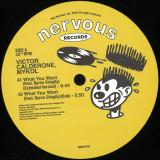
Equally adept on the decks and in the studio, Victor Calderone has travelled the world playing for thousands and created some of the electronic music industry’s most seminal tracks and remixes. His new double sided release on Nervous Recprds is a collaboration with highly respected producer / DJ Mykol. They have a created an EP that has the driving percussive force needed to move a dancefloor in 2025, and through its inspired usage of vocal and musical elements highlights their background as born and bred New Yorkers who grew up enmeshed in New York’s nightlife and musical culture.
'What You Want' features the legendary Byron Stingily, a Chicago house singer and Ten City vocalist with a famous falsetto. Here he serves up a moody spoken word sermon over chunky house drums with a dark energy and late-night sense of soul. Electric synth patterns wave in and out to bring great drama to this full-flavour groove. 'What You Want' also comes as a more pared-back but still jacking dub with plenty of smart studio effects.
'Take You Back' is a surging house sound with deep bass and drums and whimsical synth patterns that dance over the beats. Analluring female vocal pulls you in ever closer to a track that is both emotive and physical, steamy but sensuous.
The year is 2025, 30 years on from the release of the original “We Are Borg”, Bass Junkie’s first vinyl release under his Cybernet Systems alias. This seminal Electro Bass track, originally featuring additional production from the legendary Dynamix II out of Florida, was the first release on the short lived Panic Trax label. Using the same sounds salvaged from the original SP1200 disc, Bass Junkie has remixed this classic for the next generation…
Next up is “Bass Force”, delivering a heavy assault on the senses with its soaring synths and deadly Bass, pushing the envelope and bringing forth a new take on the Electro Bass sound.
Flip to side 2 for “Electron Spin Resonance”, a DMX driven track of relentless pounding rhythms, tape style edits and a ferocious marching bassline.
Finally Bass Junkie takes us back to the old school with “Proceed”, a homage to the 80s sound and the early trax that broke boundaries and made Electro a force to be reckoned with.
End transmission
Liner Notes by Martyn Pepperell
A collection of ten hypnotic guitar renditions that dive deeply into the traditional compositional musicality that underpins Harakami’s hallucinatory beatscapes before reconsidering them under a fresh, innovative and engaging new light. River: The Timbre of Guitar #2 Rei Harakami signals a new level of awareness and understanding of both Rei Harakami’s significance and Ayane Shino’s undeniable talent.
VITAL SALES POINTS:
In 1996 Tokyo-based label Sublime Records received a cassette demo from Rei Harakami, a 26-year-old Japanese experimental filmmaker, and musician. Within one year Harakami’s debut LP ‘Unrest’ was released. As the 21st century dawned, Harakami was becoming a critically acclaimed figure, and there was a feeling in Japan that Harakami would be an inevitable successor to such luminaries as Haruomi Hosono and Ryuichi Sakamoto. Sadly Harakami passed away at age 40 in 2011, leaving behind a musical legacy that seemed to deserve more recognition. A fitting tribute now comes from the incredibly gifted classical guitarist Ayane Shino. Continuing her album series ‘The Timbre of Guitar’ (the inaugural release of which was ‘Sakura’ - a cover album of Susumu Yokota's seminal album, released through the Swiss label, Mental Groove Records in 2021), she now presents ‘River ???? : The Timbre of Guitar #2 Rei Harakami’. Ayane has reworked some of Harakami’s standout tracks into an album of tranquil yet complex compositions helping to build a new level of awareness and understanding of Rei Harakami’s significance. A collection of ten hypnotic guitar renditions that dive deeply into the traditional compositional musicality that underpins Harakami’s hallucinatory beatscapes before reconsidering them under a fresh, innovative and engaging new light.
In the years that followed Harakami’s untimely passing, Sublime Records continued to sign and support new artists emerging from Japan’s rich and fertile electronic music scene. This eventually led to a meeting with gifted classical guitarist Ayane Shino in 2020. Although a new name within electronica, Shino’s classical resume is impeccable. She has performed with a range of prestigious orchestras in concert halls and at music festivals across Japan, Europe, and South America while playing classical guitar for numerous animations, movies and television commercials and holding various educational roles. These days, she also hosts the Tokyo Harmonics radio show, which is syndicated through Hyogo prefecture’s Ashiya Radio and TJS Radio in Los Angeles.
During her time completing a masters at Tokyo’s University of the Arts, Shino became fascinated by Brian Eno, Aphex Twin, Oneohtrix Point Never, Steve Reich, and, closer to home, Harakami and Susumu Yokota. ”I found myself in an environment where I was surrounded by fellow students who produced computer music, live electronics, and installations,” she explains. Following her meeting with Sublime, Hideoki Amano, the producer and owner of Musicmine, the parent company of the label, asked Shino if she would be open to transcribing and recording an album of covers of the late, great composer, producer and DJ Susumu Yokota’s music in incorporate into then-upcoming events commemorating the 5th anniversary of his death and reissues of his past works. “Yokota made music with the Roland TB-303 bass synthesizer and samplers, not in a way like a conventional instrumentalist, so I was aware it might be more of a challenge for her,” Amano explains. Fittingly, Shino was up for his suggestion, leading to ‘Sakura: The Timbre Of Guitars #1 Susumu Yokota’. Song by song, Sakura highlighted Shino’s free-flowing playing and prowess at translating electronic music into classical guitar shapes.
After considering Harakami’s background as an instrumentalist, Amano felt revisiting his catalogue should be the next step for Shino. Well-versed in how often classical versions of electronic music tend to fall flat, he asked her to examine Harakami’s songs closely, select the musical phrases suitable for guitar and create arrangements that would sound interesting to music listeners with a deep engagement with ambient, techno and electronica. In Harakami’s discography, Shino discovered “a sense of simplicity, warmth, moisture and a floating sensation.” “I was gripped by his songs, which had an array of sounds that gave me a sense of mystery but also coexisted with a sense of familiarity,” she explained. Moving beyond his official releases, Shino began digging through YouTube to find live recordings, radio appearances and obscure outtakes. Within her mind’s eye, imagining playing his songs on guitar was effortless. On her approach to the album, Ayane explains: “For this album, I succeeded in spinning some exquisite, silk thread like delicate tones, interwoven with human warmth, gentleness and simplicity. And I was also able to rework Rei Harakami's distinctive sound with a floating feel to it and transform it into a very classical guitar sound. I hope many people will be able to receive this group of sounds that I created in this album that I played with all my heart.” A record of limitless innate beauty, ‘River ???? : The Timbre of Guitar #2 Rei Harakami’ is a delicate and thoughtful body of work. A true masterclass in deconstruction and subsequent rebuilding, and an eternal lesson in how the art that we leave behind can outlive us all.

Eaux proudly announces a new collaborative mini-album from label boss Rrose and Polygonia. Containing six tracks and over 40 minutes of music housed in a fully printed sleeve with artwork by Jon-Paul Villegas, the record focuses squarely on the dancefloor while infusing it with the kinds of psychoactive drones, intricate polyrhythms, and relentless modulations that have come to identify both of their approaches to sound. Featured heavily are their shared interests in sonic shapes that resemble natural forms and conjure tactile feelings, in this case related to themes of skin-like surfaces and circulatory systems experienced simultaneously on a micro and macro level. While several of the tracks hover in a flexible tempo range between 125 and 130 bpm, "Stretcher" reaches up to 142, and the closing track "Vena Cava" trades the kick drums for spectrally processed percussion and endlessly diverging high-frequency pulses.
The story behind the release starts in 2022, when Rrose reached out to Polygonia after noticing that her tracks were appearing in their sets more frequently than any other artist. Never before had Rrose proposed a collaboration with someone they hadn't met before, but there was such an obvious connection in their approach to sound that it felt necessary. As it turns out, Polygonia had only become interested in techno after hearing Rrose perform at a festival in 2018. It all made sense, and they began sharing sketches and unfinished ideas with each other, trading them back and forth until they reached completion. Without any announcement of their collaboration, the two artists have since been asked to share the stage together several times. It seems there are other people out there sensing a connection...
Bios:
RROSE
Rrose is an alias of the multi-disciplinary artist Seth Horvitz, born and raised in California, and currently based in London. Active since 2011, the Rrose project explores the intersection of hypnotic techno, experimental composition and psychoacoustic phenomena with a meticulous touch. The first major breakthrough was 2012's "Waterfall" for Sandwell District which followed "Motormouth Variations," a collaborative project with composer, improviser, and activist Bob Ostertag. After the shuttering of Sandwell District, Rrose established Eaux, a home for further solo productions and collaborations. Building on his studies in electronic composition and history at Mills College, Rrose's electronic pieces blur the lines between thrillingly claustrophobic club tracks and destabilizing sound art explorations. In 2015, she released an extended version of James Tenney's postcard composition "Having Never Written a Note For Percussion" for solo gong, and in 2018 collaborated with Charlemagne Palestine on "The Goldennn Meeenn + Sheeenn" for two grand pianos. These works overlapped with the development of Rrose's singular techno: EPs like "Vanishing Pools," "The Ends of Weather" and "Arc Unknown" as well as 2019's debut LP "Hymn to Moisture" and last year's follow up "Please Touch." Rrose is also active as a touring DJ and live performer, equally comfortable commanding sweaty warehouse dancefloors and seated audiences in historic concert halls. Appearances include Unsound, Atonal, Semibreve, Dekmantel, Mutek, Sonic Acts, Nuit Sonore, Mostra, Parallel, Theatre Graslin, Nextones, and Berghain.
-----
POLYGONIA
Polygonia represents a multidisciplinary music and art project conceived by Lindsey Wang from Munich, Germany.
She draws inspiration from her many years of practicing various acoustic instruments and her keen interest for other cultural forms of expression, which she translates into the digital language of electronic music and art.
Her productions' soundscape exudes a mystical, organic quality, featuring intricate and compelling rhythms. Polygonia's sound palette ranges from energetic, groovy Deep Techno, Downtempo, Grey Area to textural and/or harmonic Ambient. Besides, she is not afraid to include influences from the genres House, Drum and Bass, Electro etc.. In addition inspiration from nature play a major role in many of her productions. Exemplary for her style are for instance her 'Otro Mundo' EP (2023) on Bambounou's Bambel Imprint, her 'Bloom' EP (2022) on the American record label Sure Thing, the release 'Deformed Human Nature' (2021) on her own label IO, as well as the album 'Abbilder einer vergessenen Welt' (2021) on the Korean label Huinali.
Her DJ and live sets too reflect her passion for different genres. Depending on the time of day and setting, Polygonia shows a different musical side. What unites all her dance music sets is the hypnotizing effect that invites to completely lose oneself in the world of sounds for a longer period of time. Several voices from the audience also confirm that the musician always tells a complex story within her mixes, allowing for very clear highs and lows. In the same set there can be very harmonic passages, which provide emotional moments and on the other hand extremely texture-heavy dark tracks, which establish a connection with the subconscious and put the listener in a kind of trance.
Polygonia has already visited numerous of prestigious venues. She is now a regular at Tresor or Berghain in Berlin and additionally started her residency in 2023 at Munich-based BLITZ club.
Life has changed in the eight years since the release of II. In ours, yours and Gala Drop themselves. Most times without noticing it, partly due to those two years of a semi-existence that still resonates and with the ongoing predatory gentrification process changing the landscape and life of Lisbon, home to the band since ever. Close to a decade and a half of existence, with various mutations along the way enacting new perspectives and moments of stillness and reflection to a sound that's been mutating itself to its own internal rhythm and agency under the guiding light of the core duo of Afonso Simões and Nélson Gomes. Now a trio, with Rui Dâmaso transitioning from II after the departure of Jerry the Cat and Guilherme Canhão, Gala Drop sound even more focused as a working band, with their new album title Amizade – friendship in Portuguese – making perfect sense in a celebration of their, by now, patented soundworld of cosmic inspiration: krautrock's endless and hypnotic potential, dub's sense of transient space, the throb of house, balearic dreams, polyrhythms and a communal sense of belonging.
Again, this sprawling sphere of influence opens itself to new shapes and inspirations, but there's a deeper sense of accuracy and direction, with the band channeling those legacies into something we can only grasp as the Gala Drop sound. An organic outcome of working steadily as a trio, made possible by a residency promoted by gnration in Braga, Amizade dwells on the psychedelic nature of the group through seven tracks made up of dreamy synth washes, loads of percussion, echoes, chilled guitars under a radiant aura. Gala Drop have never sounded as openly dubby as on 'Dub da Meia Noite' and 'Areal Dub' or capable of converging different tropes of the hardcore continuum – rave stabs and cut up vocals – on a slow burner as memorable as 'Monte do Ouro'. Or given free reign to electricity as on the narcotic guitars of 'Guitarra Voadora' – excepting the one off with Ben Chasny on 2012's Broda. 'Amizade' points towards all of that with comforting escapism and wrapping things up 'Raio' turns dubstep's original bass weight meditations into a cosmic funk workout. One last hug before we leave. An album that feels like a collective moment of celebration, just when we most need it.
Afonso Simões - Drums, percussion and synthesizers
Nelson Gomes - Electric guitar and electronics
Rui Dâmaso - Electric bass & guitar and synthesizer
Recorded by Budda Guedes at Estúdio Mobydick, Braga
Mixed by Gala Drop and Hugo Valverde at Estúdio Cão Andaluz, Lisboa
Mastered by Anne Taegert at Dubplates & Mastering, Berlim
Cover photo by Sara Graça
Design by Nicolai Sarbib
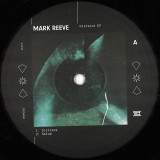
A firm Drumcode favourite, Mark Reeve is back with his latest techno opus.
Weaving his vitalising, biting techno through the seminal imprint since 2012, Reeve has since become a permanent fixture within Adam Beyer’s camp. He saw demand for his knockout ‘Run Back’ EP being matched and surpassed by his ‘Far Away’ EP. Staunch DC fans will also be familiar with Reeve’s output on the label’s A-Sides compilation series, and clubbers hot on the tails of Drumcode events will have caught him centre stage across a string of showcases, including the inaugural Drumcode Festival.
Reeve’s music invariably endorses an arresting sonic aesthetic, with intense melodies often driving in those eye-closing moments. The title track ‘Distance’ is an atmospheric opening gambit set to sonically massage the senses with uplifting pads and a radiant melody. ‘Serum’, a track recently road-tested by Beyer at a special event in collaboration with Cercle, soars and captivates as it progresses with a low-end rumble and intricate keys. ‘Fix Me’ is a vigorous techno workout that’s intent on energising a clubroom rammed with sweat-soaked dancers. Closing off the EP, ‘Filmwave’ rides a killer groove into a pit of punchy, powerful kick.
- A1: Circle Limit - Insence
- A2: Led-M - 713Aw
- A3: Missing Project - Poisson D'avril
- B1: Virgo - Clear Columns
- B2: Tensor - Solar Eclipse
- B3: Tek Of 606 - Moment Of The Decay
- C1: Misty Fuzz - In The End Of The Trip
- C2: Fossil - Green Tectonics (Virgo Mix)
- D1: Modern Living - Snow Bird
- D2: Tensor – Balloon
- D3: Toh Chisei - Cubby
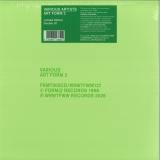
WRWTFWW Records is very pleased to announce the first-ever vinyl release of Art Form 2, the seminal 1998 Various Artists compilation from Tokyo’s cult label FORM@ RECORDS, now available as a limited edition double LP housed in a heavyweight sleeve, as part of the ongoing collaborative series between the Swiss and Japanese labels.
Initially available only in CD form, Art Form 2 emerges as a quiet artifact from an exploratory phase in FORM@ RECORDS’ late-1990s trajectory. The compilation drifts through the deeper layers of Tokyo’s electronic underground, where IDM, techno, ambient, and downtempo dissolve into one another within an atmosphere of deliberate experimentation. Both intimate and forward-looking, it preserves a moment in which a local scene, largely unseen, was patiently reshaping the future beyond the reach of prevailing global narratives.
Flowing with carefully sculpted rhythms, immersive sound design, and a subtle sense of machine soul, Art Form 2 reflects the maturity of the FORM@ aesthetic in 1998. The compilation resonates with the spirit of Warp’s Artificial Intelligence era, Carl Craig’s melodic futurism, Ken Ishii’s cerebral techno, B12’s deep electronics, and Ian O’Brien’s emotive touch, while remaining unmistakably rooted in its own local context. Timeless and singular, it stands as a beautifully preserved time capsule of underground electronic music.
Following the vinyl excavations of Virgo’s Landform Code (1998) and Remnants (1999), Art Form 2 continues WRWTFWW Records’ collaboration with FORM@ RECORDS. It is released simultaneously with Art Form I (1997), further expanding this archival series, which will continue with the forthcoming vinyl edition of Re-Form Ver-1.0 (1999).
'Flowers', the new EP from Elizabeth Davis, finds itself at the cross-section of many factors. In part, it’s the result of Davis’ obsession with a seminal folk song. But it also coincides with her rediscovery of the voice and language as an instrument. It was recorded during an autumn residency at Sternhagen Gut, the cultural refuge run by Gudrun Gut and Thomas Fehlmann, located deep in the Uckermark countryside halfway between Berlin and the Baltic coast.
The six tracks on 'Flowers' all take Pete Seeger’s ‘60s protest-folk song 'Where Have All The Flowers Gone' as their starting point. However, they veer off in different directions, from vocal loops and deconstructed lyrics, to instrumental drones and glitchy, manipulated rhythm tracks. Like many musicians, Davis has learnt composition by a process of disassembly, analyzing musical works piece by piece, and 'Flowers' began as one such forensic exercise. “But sometimes,” says Davis, “a source is so loaded up on meaning that the studies and experiments can become worthwhile and meaningful works in their own right.” 'Flowers' began to take on a life of its own, raising renewed questions about age-old themes such as war, authorship, translation and historical structures.
Davis is no stranger to cover versions. From studying violin to playing in free jazz and punk bands, interpreting other artists’ works has long been a key part of her musical approach. And since her radio show 'Deep Puddle' recently drew to a close after seven years, her experiments with narration and sound collage have found their way into her musical work once again. For 'Flowers', she cut up the source material (with a nod to Gysin and Burroughs), and reassembled the lyrics, the musical notes, and recordings by different performers, to create uncanny new forms.
But perhaps the biggest influence on 'Flowers' was conversations about music, art and pop subcultures with Gut. These dialogues helped Davis find a balance between far-out sound design experiments and catchy melodies, combining a certain avant-garde element and modern day songcraft. And it’s this sense of conversation, this revisiting of topics and renewal of ideas, that will keep us coming back to 'Flowers' long into the future.
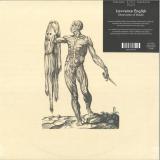
Do you remember the last time you were breathing consciously? Either way, you are likely doing it now. On his new album Observation of Breath« for the Swiss-based Hallow Ground label, Lawrence English worked exclusively with an organ for four compositions that are exercises in »maximal minimalism,« as their creator himself notes in a nod to Charlemagne Palestine, who coined this term. While it seems somewhat fitting that those four pieces based on a steady flow of air were conceived and recorded in a situation of accelerated standstill caused by a respiratory disease, the Room40 founder is not so much concerned with capturing the zeitgeist than rather incorporating the spirit of time itself. »It is a record about presence and patience,« he explains. Exploring the unique sonic affordances of a singular instrument, »Observation of Breath« is not only devoted to the durability of sound but also to its density. That it marks his debut on Hallow Ground after having shaped its sound by mastering most of the label’s releases in recent years is just as fitting then as its release following albums by Kali Malone and FUJI|||||||||||TA, whose innovative work with organ instruments have facilitated a rediscovery of their possibilities.English’s compositions however are neither directly indebted nor responding to these musicians. His exploration of the organ’s many facets started a decade ago when the composer was given access to an instrument built in 1889 that is presently housed at The Old Museum in Brisbane. After it had already played a crucial role on his seminal albums »Wilderness Of Mirrors« and »Cruel Optimism,« last year’s self-released »Lassitude« was the first record that English entirely composed and recorded with that instrument. »During the soft lockdowns, I spent many days playing to an empty concert hall, recording the pieces that became ›Lassitude‹ and then, this album,« says English in regards to an unfortunate situation that fortunately provided him with time and space—two major themes but also key qualities of the four new compositions. In this sense, he goes on, »Observation of Breath« resolves a number of the questions originally raised by »Lassitude.
Ston Elaióna is John Also Bennett’s first album for Shelter Press since his 2019 solo debut Erg Herbe. The American born, Athens, Greece, based flautist, synthesist, and composer weaves a strikingly singular electroacoustic excursion for bass flute and Yamaha DX7ii, largely recorded in the golden haze of the early morning hours - bending time at the otherworldly juncture of consciousness and place. Translating from Greek as “in the olive grove”, Ston Elaióna is permeated with the ambiences of the ancient and present world, guided into form by a playfully rigorous approach to sound.
Initially emerging during the mid 2000s as part of Columbus, Ohio’s noise scene, before relocating to NYC around 2010, Bennett’s diverse activities picked up an increasing sense of pace over the following decade - performing and recording as a solo artist (JAB), with the trio Forma and with CV &JAB, his prolific duo with his partner Christina Vantzou, as well as playing in Jon Gibson’s ensemble among many other multifaceted collaborations. However, since 2020 the flautist and electroacoustic composer has existed in a semi nomadic state: drifting between Brooklyn, Brussels, extensive tours, and Greece, where he finally came to rest in Athens last year.
Drawing upon a carefully honed attentiveness to the environments and experiences of everyday life, Ston Elaióna is a suite of nine pieces (with an additional track exclusive to physical formats), many of them composed and played live as the early morning sun touched the Parthenon, in full view from Bennett’s studio window in Athens. Bennett’s refinement and restraint, honed over his years adrift, led him to adopt a limited palette focused on his primary instrument, the bass flute, and a Yamaha DX7ii synthesizer tuned to just intonation scales. Alongside a handful of other keyboards, digital oscillators triggered by his flute, and occasional field recordings, this simple palette is reflected by the deeply emotive sense of minimalism that permeates the album’s two sides. Following two solo albums defined by outward facing temperaments - 2022’s Out there in the middle of nowhere (Poole Music), which used a lap steel guitar and generative oscillators to evoke the surreal landscapes of the South Dakota badlands, and the largely synthetic atmospheres of the 2024 anthology Music For Save Rooms 1 & 2 (Editions Basilic) - the shift in Bennett’s worldly circumstances offered an intuitive return to the calm, inward states of creative exploration that have historically defined JAB’s sound. In parallel, context provided clear sources of inspiration for many of the album’s themes, as well as sources for some of its sounds. The aura of Greece, from the ancient to the present, from its stones and olive groves to its traffic, figures heavily across Ston Elaióna’s two sides. John Also Bennett’s Ston Elaióna forms an elegantly rigorous world of electroacoustic sonority, bridging the expanse of time with the immediacies of environment and happening in the here and now: a profound sonic mediation on the countless dimensions unlocked by life in Greece.
- A1: Sofheso - Mnl
- A2: Shimetta-Inu - Bird Peck At Dead Dog
- A3: New Manuke - Fastest Motor
- A4: Ypy - Bfmix B-3
- A5: Jmt Synth Pinosaku - Tansun
- B1: Shimettainu - Dog Is Surrounded By Birds
- B2: Unbe - Vector Milk
- B3: Ypy - The Damo Ufo
- B4: Micro Futoshi - Reforest 1
- B5: Inoue Shirabe - Sleep Talk
- C1: Futoshi Moriyama - Time Limit
- C2: Opq - Ent
- C3: Futoshi Moriyama - Nico Electro
- C4: H Takahashi - 4
- C5: Micro Futoshi - Reforest 2
- C6: Unbe - 5 Cubic Meters
- D1: Bonnounomukuro - Enter The Exit
- D2: Futoshi Moriyama - Piano & Sampler
Enter a world unknown! Birdfriend is a cassette label run by Japanese musician/composer Koshiro Hino, aka YPY, who is also a founding member of the Osaka band goat. This compilation, available on CD and double vinyl, features 18 tracks by Japanese artists, from 2013-2017, previously available only on hard-to-find cassettes on the Birdfriend label, now available to you, the curious and courageous listener, worldwide on EM Records. Rejoice and enjoy the fractured rhythms and future-now timbres, questing intelligences and D.I.Y. energy, conveyed to you through hand-made synths, custom electronics, synths and samplers. Compiled by Hino, who also provides liner notes and cover art, these Japanese artists share a love of texture, semi-skewed rhythm, simple-yet-evolving structure, and a sense of humour; yet despite these similarities, there is a great variety across this release, making for an exciting and cohesive musical experience.
The first ASFON release has been a year-long labour of love that has come into being from what felt like a lucid dream, off in the distance, too crazy to believe was real. From our first meeting in the Freerotation yurt to late-night exchanges in Bristol, Winkles (Jamie Slater) has been sharing tracks that lingered long after the party ended. Their raw textures and warped sense of time found a natural home in our sets, eventually leading to the emergence of ‘The Unavoidable EP’, a collection of four diverse tracks which form a singular, immersive experience.
On A1 journey, The Unavoidable Consequence Of Familiarity, a knocking kick opens the door to this new sound world, introducing us to the granular clicks, crazed telephony and vocoded grunts which populate the deep space of Winkles’ imagination. Machines whir and perception shifts in the space between distant synth stabs, while a pulsating bassline battles to break through the filter and create a throbbing low end. Hallucinatory and deep, this is the perfect introduction to both the EP and the ASFON outlook.
Semi Stretches sees Winkles pick up a signal from beyond the outer rim, fire up the hyperdrive and lock into the rolling hum of intergalactic techno. Juggernaut bass forms the perfect counterpoint to the rapid fire rim shots trembling away up top as this Venusian club craft battles static, drives through the milky cosmic and transports the dancing bodies to a Multicoloured Plasticine Universe.
Cutting the engines and switching to suspended animation, Winkles lets us drift through a hazy dream-space where there’s no up or down, where twinkling arps, insectile electronics and hazy sirens coalesce into a psychotropic swirl.
Out of this multicoloured mirage comes Osaka-based astral traveller Erik Luebs, who translates that peak-time ambient bubbler into a Balearic chugger which emerges from the ether to add another dimension to the EP. Rubberised bass, velvet pads and nuanced percussion ensure this is perfect for poolside play in a land of pink sand and sideways tides.
A deep excavation from the archives of Italy’s electronic vanguard, Navigators finds Franco Falsini—founder of the seminal Interactive Test label—charting bold, genre-defying territory at the dawn of the internet era. Created in 1997 with an Amiga Tracker interfaced via MIDI to Roland samplers, the EP reflects a hands-on, forward-thinking production approach that sidestepped industry norms of the time.
Named after Netscape’s iconic browser, Navigators is imbued with the spirit of early digital exploration. Ethereal vocals from Ashram’s Bettina and Ilaria Ciampolini drift through intricate, off-grid arrangements, while contributions from Riccardo Falsini, Ubj, and Atma Lai add rich, unconventional textures. The result is a collection that resists simple classification, bridging ambient, trance, and proto-techno with a distinctly Italian sense of depth and atmosphere.
Tremendo Recordings proudly reintroduces this timeless work—unmistakably personal, quietly radical, and ahead of its time.
Between The Seed And The Timber is a cycle of six songs exploring ritual and mystical aspects of the modern era. At times both noir and psychedelic, they evoke a strong sense of nostalgia for a disappearing age. In contrast to industrial music’s dystopian semiotics, Jas Shaw challenges us to hear sounds inspired by machinery, electricity and mechanisation in a new light.
“I made the synth parts for a Swans gig,” says Shaw. “As SMD we’d supported Swans. James was away doing some production but I didn’t want to pass it up, so I offered to open solo. It turned out the gig was sooner than expected so I made all these synth things to do live.”
Shaw put the tracks to one side and forgot about them, only returning to them years later. “You know when you’ve changed as a person and you listen back to something from a different angle? I suddenly could hear what I had been after. It reminded me of experiences I’d had at Swans gigs. I wanted to achieve that energy and charge.”
Dubbing techniques are crucial to the sound of the record. “I set up a few synths on a table and had my mixer running loads of auxes back into the desk so it was all on the edge of feeding back. Then I realised that if I put a mic into the desk I’d have an extra feedback route. I found a setting where I could get it to build when I pointed the mic at the monitors but then turning it away you could put the brakes on the regen.”
Between The Seed And The Timber is Jas Shaw’s inaugural release for the London based, Kindred-affiliated TEETH label. TEETH is rooted in a reverence for texture, space, and sonic decay - amplifying experimental sounds that blend dreamlike melodies with weathered landscapes. Each release informs the next, with every track as vital as the last to complete the whole set.
Orchestrated by Jojo Mathiszig-Lee, founder of London’s Kindred, the label celebrates like-minded talent from the community, providing a platform for transgressing music.
Artworks are made by Scarlet Griffiths.
- A 1: Scoop
- A2: I Never
- A3: Breakdown
- A4: Slap 5. Cue
- B 1: Semitones
- B2: Paycheck
- B3: They Go Wild
- B4: All I Need
“My hero’s back,” Madeline Kenney sings on the second track of her newest effort, Kiss from the Balcony. In a sense, she means herself; made with friends Ben Sloan and Stephen Patota across just a few in-person studio sessions in Oakland, these tracks represent a culmination of Madeline’s musings on growth and resilience reaching back years, brought to life through this generative and vibrant collaboration. Close listeners can hear the breadth of stylistic elements and themes carried through from various eras of her work, which all come together in a cohesive and timeless record.
In two week-long intensive sessions, the three collaborators grew these nine songs from fragments, sketches, and seeds. With a background in experimental percussion and sound design, Ben Sloan brings an electronic sound to Kenney’s writing; Stephen Patota provides ingenious guitar melodies throughout and grounds the project in acoustic elements. Kiss from the Balcony was originally intended to be an EP, but the sessions brought forth such fruitful ideation and play that the project was expanded to a full length album. It sits in Madeline’s discography as a thematic and musical progression that sees her iterate on ideas about love and explore new sonic motifs through her work with Patota and Sloan.
Much of Kiss from the Balcony is a meditation on modern relationships, a feminist and utterly human contemplation of power and who holds it. “Hereditary backward leaning,” she describes in ‘Slap,’ of the female condition; “But no-one ever likes to see the girls break down / So they keep it to the bathroom floor” she sings in the rapturous opener, ‘Scoop.’ While the songs are shrouded in metaphor, the ubiquity of heartbreak and resilience decode much of the internal conflict Kenney depicts. The album sees her recognize the precarity and peculiarity of life and take it by the horns, realizing she controls her own narrative:
She explores the relationships between joy and suffering, choosing to see them as inseparable, two sides of a single coin. “It’s never over / When will they love me?” Kenney asks on ‘They Go Wide,’ describing her positionality both as a woman in relationship and as an indie artist in the modern music industry.
A playful hopefulness pervades the record, providing a sense of revelation in the journey throughout, Kenney’s radical acceptance of life as it is like a lyrical tongue out at the absurd.
- 1: Don't Lie Back
- 2: (That's When) It's Worth It
- 3: Instant Touch
- 4: Sex Without Stress
- 5: Fiasco
- 6: Intact
- 7: Tongue In Cheek
- 8: Stepping Out Of Line
- 9: Shakedown
- 10: America
Sense and Sensuality (1982) was the second and final album by seminal British post-punk band The Au Pairs. The four-piece group from Birmingham were very much in tune with the early 80s growth pangs from the first punk explosion - stripping down their music from their debut LP to a funkier, more rhythmic essence, and shifting the focus of their lyrics to the personal rather than the political.
The addition of horns and imaginative synthesizers allowed for more satisfying sonic diversity, from the disco-informed dance-punk of “Instant Touch” to the cabaret swing of “Tongue in Cheek”. While “That’s When It’s Worth It” takes several elements of popular post-punk - looping auxiliary percussion rhythms and a sporadically used horn section - and crafts them into a wild sound that’s equal parts dance, psychedelia, punk and art pop.
Their distinctly punk take on sex and gender politics, meanwhile, was their strongest thematic strain - and that’s truly where Sense and Sensuality shined. Despite only reaching #79 in the UK when first released, it’s now widely seen as one of the best post-punk albums ever.
Sense and Sensuality is now available as a limited numbered edition of 750 copies on translucent magenta coloured vinyl and contains an insert.