The Bluebeaters enjoyed a revival with their 2025 album Everybody Knows, released by Record Kicks. In 2023, to be included in a compilation created by Freedom Sounds Festival in Cologne (Germany), we reworked an extra track entitled TRINITY that had been left off the album. In addition to being included in the compilation, it became the first single on 7-inch vinyl released by the newly formed Caribb Roots.
Although we played it live, the recording of the song had been left half-finished, so we picked it up again, recorded the horns and vocals, and finished mixing it.
The song is linked to the very Italian tradition of Western film soundtracks, and Trinity is a seminal song in this sense.
Buscar:semi sense
- 1
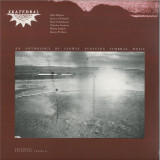
XKatedral Anthology Series II (An Anthology Of Slowly Evolving Timbral Music), featuring exclusive music from Kali Malone, Jessica Ekomane, Mats Erlandsson, Theodor Kentros, Wilma Hultén, and Maria W Horn.
"XKatedral Anthology II is the second instalment in a series of archival releases dedicated to presenting music by composers affiliated with XKatedral working within the realm of slowly evolving harmonic and timbral music. This double-vinyl set contains an array of pieces dating from 2018 - 2020. This collection of pieces focuses on the use of synthetic sound and algorithmic composition languages as tools for precise work within the realm of spectral exploration. In addition to this, the electronic instrumentation in many of the pieces is augmented by acoustic instruments.
The first piece on side A is Kali Malone’s Music for Low Quartet. This piece is an adaptation of the composition “Rose Wreath Crown” originally released on The Sacrificial Code in 2019. In this iteration, the music is scored for two double basses played by Vilhelm Bromander and Zach Rowden, and sine tone electronics performed by Malone herself. The recording of this piece was made at EMS in 2019.
Closing side A is Jessica Ekomane’s ‘First Light’. This computer music piece focuses exclusively on digital sound, layering razor sharp synthetic textures into an otherworldly dynamic weave. The music heard here is a reworked version of a piece originally commissioned by Semibreve in 2020.
Side B contains the work ‘Hands Melt In The Sun’ by Mats Erlandsson. This composition is built from electronically processed tuned zithers and synthetically generated tones arranged in a series of chordal inversions over a sustained fundamental tone. This music, written as a love-letter to the localized drone tradition of Stockholm in the years 2008-2012, was composed and recorded in seven days while in residence at Ställbergs Gruva in Bergslagen, in the summer of 2018.
Opening the second half of the collection is Rough Draft v.7 by Theodor Kentros. Kentros’ compositional practice usually combines acoustic and electronic source material and in this piece he molds the sound of the Buchla 200 and a collection of recorded wind instruments into a molten mass of sound. In its original form, this music was presented as a multichannel immersive work and even in the current stereo configuration it retains some of that enveloping sense of depth.
The second piece on side B, Inertia, is by Wilma Hultén, who makes her debut on record here. An exclusively synthetic piece, Inertia utilizes internal digital feedback in a sealed synthetic system to manifest a harmonic field that swells and abates throughout the length of the piece, interspersed by small gestural elements.
Closing Anthology II is Maria W Horn's work ‘Dies Irae’ for female vocal quartet, pitched glass and synthesis. ‘Dies Irae’ uses a modified form of traditional tonal harmonic language to invoke an uncanny and restless middle ground between the classical western polyphonic vocal tradition and contemporary electronic music. The version heard here is a live recording from Eric Ericssonhallen in Stockholm on May 30th 2020. Performing the piece here are the vocalists Katarina Henryson, Lisa Holmgren, Vilma Ogenblad and Paula Wegmann, as well as Maria herself on glass and electronics."
Large Music is proud to announce the highly anticipated reissue of the iconic collaboration between Roy Davis Jr. and Jay Juniel: Transitions. Originally released in 1997, this seminal piece of Chicago house music has been remastered and is set to return to the world with the same raw energy and grit that made it a classic in the late '90s.
Coming on the heels of Roy Davis Jr.’s legendary hit Gabriel, Transitions captures the raw, emotional intensity of Chicago's underground house scene. Blending soulful melodies with thumping basslines, the EP brought forth an undeniable sound that resonated with house music fans globally. A testament to Davis’s versatile talent, Transitions also introduced Jay Juniel, who contributed his own dynamic flair to the project, creating a distinctive fusion of deep, experimental rhythms, intelligent spoken words and a vibrant club-ready pulse.
The reissue of Transitions offers fans both the original tracks and newly remastered audio to further elevate the listening experience. The gritty, hard-hitting vibe that defined the late '90s Chicago house movement is unmistakably present, from its throbbing basslines and kick drum to the smooth, haunting melodies. This release not only pays tribute to the timeless influence of Chicago House but also serves as a reflection of the ever-evolving nature of the genre itself.
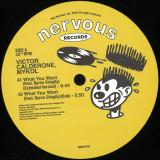
Equally adept on the decks and in the studio, Victor Calderone has travelled the world playing for thousands and created some of the electronic music industry’s most seminal tracks and remixes. His new double sided release on Nervous Recprds is a collaboration with highly respected producer / DJ Mykol. They have a created an EP that has the driving percussive force needed to move a dancefloor in 2025, and through its inspired usage of vocal and musical elements highlights their background as born and bred New Yorkers who grew up enmeshed in New York’s nightlife and musical culture.
'What You Want' features the legendary Byron Stingily, a Chicago house singer and Ten City vocalist with a famous falsetto. Here he serves up a moody spoken word sermon over chunky house drums with a dark energy and late-night sense of soul. Electric synth patterns wave in and out to bring great drama to this full-flavour groove. 'What You Want' also comes as a more pared-back but still jacking dub with plenty of smart studio effects.
'Take You Back' is a surging house sound with deep bass and drums and whimsical synth patterns that dance over the beats. Analluring female vocal pulls you in ever closer to a track that is both emotive and physical, steamy but sensuous.
The year is 2025, 30 years on from the release of the original “We Are Borg”, Bass Junkie’s first vinyl release under his Cybernet Systems alias. This seminal Electro Bass track, originally featuring additional production from the legendary Dynamix II out of Florida, was the first release on the short lived Panic Trax label. Using the same sounds salvaged from the original SP1200 disc, Bass Junkie has remixed this classic for the next generation…
Next up is “Bass Force”, delivering a heavy assault on the senses with its soaring synths and deadly Bass, pushing the envelope and bringing forth a new take on the Electro Bass sound.
Flip to side 2 for “Electron Spin Resonance”, a DMX driven track of relentless pounding rhythms, tape style edits and a ferocious marching bassline.
Finally Bass Junkie takes us back to the old school with “Proceed”, a homage to the 80s sound and the early trax that broke boundaries and made Electro a force to be reckoned with.
End transmission
Liner Notes by Martyn Pepperell
A collection of ten hypnotic guitar renditions that dive deeply into the traditional compositional musicality that underpins Harakami’s hallucinatory beatscapes before reconsidering them under a fresh, innovative and engaging new light. River: The Timbre of Guitar #2 Rei Harakami signals a new level of awareness and understanding of both Rei Harakami’s significance and Ayane Shino’s undeniable talent.
VITAL SALES POINTS:
In 1996 Tokyo-based label Sublime Records received a cassette demo from Rei Harakami, a 26-year-old Japanese experimental filmmaker, and musician. Within one year Harakami’s debut LP ‘Unrest’ was released. As the 21st century dawned, Harakami was becoming a critically acclaimed figure, and there was a feeling in Japan that Harakami would be an inevitable successor to such luminaries as Haruomi Hosono and Ryuichi Sakamoto. Sadly Harakami passed away at age 40 in 2011, leaving behind a musical legacy that seemed to deserve more recognition. A fitting tribute now comes from the incredibly gifted classical guitarist Ayane Shino. Continuing her album series ‘The Timbre of Guitar’ (the inaugural release of which was ‘Sakura’ - a cover album of Susumu Yokota's seminal album, released through the Swiss label, Mental Groove Records in 2021), she now presents ‘River ???? : The Timbre of Guitar #2 Rei Harakami’. Ayane has reworked some of Harakami’s standout tracks into an album of tranquil yet complex compositions helping to build a new level of awareness and understanding of Rei Harakami’s significance. A collection of ten hypnotic guitar renditions that dive deeply into the traditional compositional musicality that underpins Harakami’s hallucinatory beatscapes before reconsidering them under a fresh, innovative and engaging new light.
In the years that followed Harakami’s untimely passing, Sublime Records continued to sign and support new artists emerging from Japan’s rich and fertile electronic music scene. This eventually led to a meeting with gifted classical guitarist Ayane Shino in 2020. Although a new name within electronica, Shino’s classical resume is impeccable. She has performed with a range of prestigious orchestras in concert halls and at music festivals across Japan, Europe, and South America while playing classical guitar for numerous animations, movies and television commercials and holding various educational roles. These days, she also hosts the Tokyo Harmonics radio show, which is syndicated through Hyogo prefecture’s Ashiya Radio and TJS Radio in Los Angeles.
During her time completing a masters at Tokyo’s University of the Arts, Shino became fascinated by Brian Eno, Aphex Twin, Oneohtrix Point Never, Steve Reich, and, closer to home, Harakami and Susumu Yokota. ”I found myself in an environment where I was surrounded by fellow students who produced computer music, live electronics, and installations,” she explains. Following her meeting with Sublime, Hideoki Amano, the producer and owner of Musicmine, the parent company of the label, asked Shino if she would be open to transcribing and recording an album of covers of the late, great composer, producer and DJ Susumu Yokota’s music in incorporate into then-upcoming events commemorating the 5th anniversary of his death and reissues of his past works. “Yokota made music with the Roland TB-303 bass synthesizer and samplers, not in a way like a conventional instrumentalist, so I was aware it might be more of a challenge for her,” Amano explains. Fittingly, Shino was up for his suggestion, leading to ‘Sakura: The Timbre Of Guitars #1 Susumu Yokota’. Song by song, Sakura highlighted Shino’s free-flowing playing and prowess at translating electronic music into classical guitar shapes.
After considering Harakami’s background as an instrumentalist, Amano felt revisiting his catalogue should be the next step for Shino. Well-versed in how often classical versions of electronic music tend to fall flat, he asked her to examine Harakami’s songs closely, select the musical phrases suitable for guitar and create arrangements that would sound interesting to music listeners with a deep engagement with ambient, techno and electronica. In Harakami’s discography, Shino discovered “a sense of simplicity, warmth, moisture and a floating sensation.” “I was gripped by his songs, which had an array of sounds that gave me a sense of mystery but also coexisted with a sense of familiarity,” she explained. Moving beyond his official releases, Shino began digging through YouTube to find live recordings, radio appearances and obscure outtakes. Within her mind’s eye, imagining playing his songs on guitar was effortless. On her approach to the album, Ayane explains: “For this album, I succeeded in spinning some exquisite, silk thread like delicate tones, interwoven with human warmth, gentleness and simplicity. And I was also able to rework Rei Harakami's distinctive sound with a floating feel to it and transform it into a very classical guitar sound. I hope many people will be able to receive this group of sounds that I created in this album that I played with all my heart.” A record of limitless innate beauty, ‘River ???? : The Timbre of Guitar #2 Rei Harakami’ is a delicate and thoughtful body of work. A true masterclass in deconstruction and subsequent rebuilding, and an eternal lesson in how the art that we leave behind can outlive us all.
Eaux proudly announces a new collaborative mini-album from label boss Rrose and Polygonia. Containing six tracks and over 40 minutes of music housed in a fully printed sleeve with artwork by Jon-Paul Villegas, the record focuses squarely on the dancefloor while infusing it with the kinds of psychoactive drones, intricate polyrhythms, and relentless modulations that have come to identify both of their approaches to sound. Featured heavily are their shared interests in sonic shapes that resemble natural forms and conjure tactile feelings, in this case related to themes of skin-like surfaces and circulatory systems experienced simultaneously on a micro and macro level. While several of the tracks hover in a flexible tempo range between 125 and 130 bpm, "Stretcher" reaches up to 142, and the closing track "Vena Cava" trades the kick drums for spectrally processed percussion and endlessly diverging high-frequency pulses.
The story behind the release starts in 2022, when Rrose reached out to Polygonia after noticing that her tracks were appearing in their sets more frequently than any other artist. Never before had Rrose proposed a collaboration with someone they hadn't met before, but there was such an obvious connection in their approach to sound that it felt necessary. As it turns out, Polygonia had only become interested in techno after hearing Rrose perform at a festival in 2018. It all made sense, and they began sharing sketches and unfinished ideas with each other, trading them back and forth until they reached completion. Without any announcement of their collaboration, the two artists have since been asked to share the stage together several times. It seems there are other people out there sensing a connection...
Bios:
RROSE
Rrose is an alias of the multi-disciplinary artist Seth Horvitz, born and raised in California, and currently based in London. Active since 2011, the Rrose project explores the intersection of hypnotic techno, experimental composition and psychoacoustic phenomena with a meticulous touch. The first major breakthrough was 2012's "Waterfall" for Sandwell District which followed "Motormouth Variations," a collaborative project with composer, improviser, and activist Bob Ostertag. After the shuttering of Sandwell District, Rrose established Eaux, a home for further solo productions and collaborations. Building on his studies in electronic composition and history at Mills College, Rrose's electronic pieces blur the lines between thrillingly claustrophobic club tracks and destabilizing sound art explorations. In 2015, she released an extended version of James Tenney's postcard composition "Having Never Written a Note For Percussion" for solo gong, and in 2018 collaborated with Charlemagne Palestine on "The Goldennn Meeenn + Sheeenn" for two grand pianos. These works overlapped with the development of Rrose's singular techno: EPs like "Vanishing Pools," "The Ends of Weather" and "Arc Unknown" as well as 2019's debut LP "Hymn to Moisture" and last year's follow up "Please Touch." Rrose is also active as a touring DJ and live performer, equally comfortable commanding sweaty warehouse dancefloors and seated audiences in historic concert halls. Appearances include Unsound, Atonal, Semibreve, Dekmantel, Mutek, Sonic Acts, Nuit Sonore, Mostra, Parallel, Theatre Graslin, Nextones, and Berghain.
-----
POLYGONIA
Polygonia represents a multidisciplinary music and art project conceived by Lindsey Wang from Munich, Germany.
She draws inspiration from her many years of practicing various acoustic instruments and her keen interest for other cultural forms of expression, which she translates into the digital language of electronic music and art.
Her productions' soundscape exudes a mystical, organic quality, featuring intricate and compelling rhythms. Polygonia's sound palette ranges from energetic, groovy Deep Techno, Downtempo, Grey Area to textural and/or harmonic Ambient. Besides, she is not afraid to include influences from the genres House, Drum and Bass, Electro etc.. In addition inspiration from nature play a major role in many of her productions. Exemplary for her style are for instance her 'Otro Mundo' EP (2023) on Bambounou's Bambel Imprint, her 'Bloom' EP (2022) on the American record label Sure Thing, the release 'Deformed Human Nature' (2021) on her own label IO, as well as the album 'Abbilder einer vergessenen Welt' (2021) on the Korean label Huinali.
Her DJ and live sets too reflect her passion for different genres. Depending on the time of day and setting, Polygonia shows a different musical side. What unites all her dance music sets is the hypnotizing effect that invites to completely lose oneself in the world of sounds for a longer period of time. Several voices from the audience also confirm that the musician always tells a complex story within her mixes, allowing for very clear highs and lows. In the same set there can be very harmonic passages, which provide emotional moments and on the other hand extremely texture-heavy dark tracks, which establish a connection with the subconscious and put the listener in a kind of trance.
Polygonia has already visited numerous of prestigious venues. She is now a regular at Tresor or Berghain in Berlin and additionally started her residency in 2023 at Munich-based BLITZ club.
Life has changed in the eight years since the release of II. In ours, yours and Gala Drop themselves. Most times without noticing it, partly due to those two years of a semi-existence that still resonates and with the ongoing predatory gentrification process changing the landscape and life of Lisbon, home to the band since ever. Close to a decade and a half of existence, with various mutations along the way enacting new perspectives and moments of stillness and reflection to a sound that's been mutating itself to its own internal rhythm and agency under the guiding light of the core duo of Afonso Simões and Nélson Gomes. Now a trio, with Rui Dâmaso transitioning from II after the departure of Jerry the Cat and Guilherme Canhão, Gala Drop sound even more focused as a working band, with their new album title Amizade – friendship in Portuguese – making perfect sense in a celebration of their, by now, patented soundworld of cosmic inspiration: krautrock's endless and hypnotic potential, dub's sense of transient space, the throb of house, balearic dreams, polyrhythms and a communal sense of belonging.
Again, this sprawling sphere of influence opens itself to new shapes and inspirations, but there's a deeper sense of accuracy and direction, with the band channeling those legacies into something we can only grasp as the Gala Drop sound. An organic outcome of working steadily as a trio, made possible by a residency promoted by gnration in Braga, Amizade dwells on the psychedelic nature of the group through seven tracks made up of dreamy synth washes, loads of percussion, echoes, chilled guitars under a radiant aura. Gala Drop have never sounded as openly dubby as on 'Dub da Meia Noite' and 'Areal Dub' or capable of converging different tropes of the hardcore continuum – rave stabs and cut up vocals – on a slow burner as memorable as 'Monte do Ouro'. Or given free reign to electricity as on the narcotic guitars of 'Guitarra Voadora' – excepting the one off with Ben Chasny on 2012's Broda. 'Amizade' points towards all of that with comforting escapism and wrapping things up 'Raio' turns dubstep's original bass weight meditations into a cosmic funk workout. One last hug before we leave. An album that feels like a collective moment of celebration, just when we most need it.
Afonso Simões - Drums, percussion and synthesizers
Nelson Gomes - Electric guitar and electronics
Rui Dâmaso - Electric bass & guitar and synthesizer
Recorded by Budda Guedes at Estúdio Mobydick, Braga
Mixed by Gala Drop and Hugo Valverde at Estúdio Cão Andaluz, Lisboa
Mastered by Anne Taegert at Dubplates & Mastering, Berlim
Cover photo by Sara Graça
Design by Nicolai Sarbib
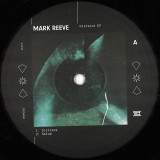
A firm Drumcode favourite, Mark Reeve is back with his latest techno opus.
Weaving his vitalising, biting techno through the seminal imprint since 2012, Reeve has since become a permanent fixture within Adam Beyer’s camp. He saw demand for his knockout ‘Run Back’ EP being matched and surpassed by his ‘Far Away’ EP. Staunch DC fans will also be familiar with Reeve’s output on the label’s A-Sides compilation series, and clubbers hot on the tails of Drumcode events will have caught him centre stage across a string of showcases, including the inaugural Drumcode Festival.
Reeve’s music invariably endorses an arresting sonic aesthetic, with intense melodies often driving in those eye-closing moments. The title track ‘Distance’ is an atmospheric opening gambit set to sonically massage the senses with uplifting pads and a radiant melody. ‘Serum’, a track recently road-tested by Beyer at a special event in collaboration with Cercle, soars and captivates as it progresses with a low-end rumble and intricate keys. ‘Fix Me’ is a vigorous techno workout that’s intent on energising a clubroom rammed with sweat-soaked dancers. Closing off the EP, ‘Filmwave’ rides a killer groove into a pit of punchy, powerful kick.
- A1: Circle Limit - Insence
- A2: Led-M - 713Aw
- A3: Missing Project - Poisson D'avril
- B1: Virgo - Clear Columns
- B2: Tensor - Solar Eclipse
- B3: Tek Of 606 - Moment Of The Decay
- C1: Misty Fuzz - In The End Of The Trip
- C2: Fossil - Green Tectonics (Virgo Mix)
- D1: Modern Living - Snow Bird
- D2: Tensor – Balloon
- D3: Toh Chisei - Cubby
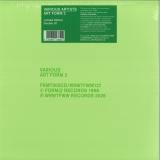
WRWTFWW Records is very pleased to announce the first-ever vinyl release of Art Form 2, the seminal 1998 Various Artists compilation from Tokyo’s cult label FORM@ RECORDS, now available as a limited edition double LP housed in a heavyweight sleeve, as part of the ongoing collaborative series between the Swiss and Japanese labels.
Initially available only in CD form, Art Form 2 emerges as a quiet artifact from an exploratory phase in FORM@ RECORDS’ late-1990s trajectory. The compilation drifts through the deeper layers of Tokyo’s electronic underground, where IDM, techno, ambient, and downtempo dissolve into one another within an atmosphere of deliberate experimentation. Both intimate and forward-looking, it preserves a moment in which a local scene, largely unseen, was patiently reshaping the future beyond the reach of prevailing global narratives.
Flowing with carefully sculpted rhythms, immersive sound design, and a subtle sense of machine soul, Art Form 2 reflects the maturity of the FORM@ aesthetic in 1998. The compilation resonates with the spirit of Warp’s Artificial Intelligence era, Carl Craig’s melodic futurism, Ken Ishii’s cerebral techno, B12’s deep electronics, and Ian O’Brien’s emotive touch, while remaining unmistakably rooted in its own local context. Timeless and singular, it stands as a beautifully preserved time capsule of underground electronic music.
Following the vinyl excavations of Virgo’s Landform Code (1998) and Remnants (1999), Art Form 2 continues WRWTFWW Records’ collaboration with FORM@ RECORDS. It is released simultaneously with Art Form I (1997), further expanding this archival series, which will continue with the forthcoming vinyl edition of Re-Form Ver-1.0 (1999).
'Flowers', the new EP from Elizabeth Davis, finds itself at the cross-section of many factors. In part, it’s the result of Davis’ obsession with a seminal folk song. But it also coincides with her rediscovery of the voice and language as an instrument. It was recorded during an autumn residency at Sternhagen Gut, the cultural refuge run by Gudrun Gut and Thomas Fehlmann, located deep in the Uckermark countryside halfway between Berlin and the Baltic coast.
The six tracks on 'Flowers' all take Pete Seeger’s ‘60s protest-folk song 'Where Have All The Flowers Gone' as their starting point. However, they veer off in different directions, from vocal loops and deconstructed lyrics, to instrumental drones and glitchy, manipulated rhythm tracks. Like many musicians, Davis has learnt composition by a process of disassembly, analyzing musical works piece by piece, and 'Flowers' began as one such forensic exercise. “But sometimes,” says Davis, “a source is so loaded up on meaning that the studies and experiments can become worthwhile and meaningful works in their own right.” 'Flowers' began to take on a life of its own, raising renewed questions about age-old themes such as war, authorship, translation and historical structures.
Davis is no stranger to cover versions. From studying violin to playing in free jazz and punk bands, interpreting other artists’ works has long been a key part of her musical approach. And since her radio show 'Deep Puddle' recently drew to a close after seven years, her experiments with narration and sound collage have found their way into her musical work once again. For 'Flowers', she cut up the source material (with a nod to Gysin and Burroughs), and reassembled the lyrics, the musical notes, and recordings by different performers, to create uncanny new forms.
But perhaps the biggest influence on 'Flowers' was conversations about music, art and pop subcultures with Gut. These dialogues helped Davis find a balance between far-out sound design experiments and catchy melodies, combining a certain avant-garde element and modern day songcraft. And it’s this sense of conversation, this revisiting of topics and renewal of ideas, that will keep us coming back to 'Flowers' long into the future.
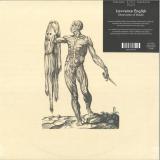
Do you remember the last time you were breathing consciously? Either way, you are likely doing it now. On his new album Observation of Breath« for the Swiss-based Hallow Ground label, Lawrence English worked exclusively with an organ for four compositions that are exercises in »maximal minimalism,« as their creator himself notes in a nod to Charlemagne Palestine, who coined this term. While it seems somewhat fitting that those four pieces based on a steady flow of air were conceived and recorded in a situation of accelerated standstill caused by a respiratory disease, the Room40 founder is not so much concerned with capturing the zeitgeist than rather incorporating the spirit of time itself. »It is a record about presence and patience,« he explains. Exploring the unique sonic affordances of a singular instrument, »Observation of Breath« is not only devoted to the durability of sound but also to its density. That it marks his debut on Hallow Ground after having shaped its sound by mastering most of the label’s releases in recent years is just as fitting then as its release following albums by Kali Malone and FUJI|||||||||||TA, whose innovative work with organ instruments have facilitated a rediscovery of their possibilities.English’s compositions however are neither directly indebted nor responding to these musicians. His exploration of the organ’s many facets started a decade ago when the composer was given access to an instrument built in 1889 that is presently housed at The Old Museum in Brisbane. After it had already played a crucial role on his seminal albums »Wilderness Of Mirrors« and »Cruel Optimism,« last year’s self-released »Lassitude« was the first record that English entirely composed and recorded with that instrument. »During the soft lockdowns, I spent many days playing to an empty concert hall, recording the pieces that became ›Lassitude‹ and then, this album,« says English in regards to an unfortunate situation that fortunately provided him with time and space—two major themes but also key qualities of the four new compositions. In this sense, he goes on, »Observation of Breath« resolves a number of the questions originally raised by »Lassitude.
Ston Elaióna is John Also Bennett’s first album for Shelter Press since his 2019 solo debut Erg Herbe. The American born, Athens, Greece, based flautist, synthesist, and composer weaves a strikingly singular electroacoustic excursion for bass flute and Yamaha DX7ii, largely recorded in the golden haze of the early morning hours - bending time at the otherworldly juncture of consciousness and place. Translating from Greek as “in the olive grove”, Ston Elaióna is permeated with the ambiences of the ancient and present world, guided into form by a playfully rigorous approach to sound.
Initially emerging during the mid 2000s as part of Columbus, Ohio’s noise scene, before relocating to NYC around 2010, Bennett’s diverse activities picked up an increasing sense of pace over the following decade - performing and recording as a solo artist (JAB), with the trio Forma and with CV &JAB, his prolific duo with his partner Christina Vantzou, as well as playing in Jon Gibson’s ensemble among many other multifaceted collaborations. However, since 2020 the flautist and electroacoustic composer has existed in a semi nomadic state: drifting between Brooklyn, Brussels, extensive tours, and Greece, where he finally came to rest in Athens last year.
Drawing upon a carefully honed attentiveness to the environments and experiences of everyday life, Ston Elaióna is a suite of nine pieces (with an additional track exclusive to physical formats), many of them composed and played live as the early morning sun touched the Parthenon, in full view from Bennett’s studio window in Athens. Bennett’s refinement and restraint, honed over his years adrift, led him to adopt a limited palette focused on his primary instrument, the bass flute, and a Yamaha DX7ii synthesizer tuned to just intonation scales. Alongside a handful of other keyboards, digital oscillators triggered by his flute, and occasional field recordings, this simple palette is reflected by the deeply emotive sense of minimalism that permeates the album’s two sides. Following two solo albums defined by outward facing temperaments - 2022’s Out there in the middle of nowhere (Poole Music), which used a lap steel guitar and generative oscillators to evoke the surreal landscapes of the South Dakota badlands, and the largely synthetic atmospheres of the 2024 anthology Music For Save Rooms 1 & 2 (Editions Basilic) - the shift in Bennett’s worldly circumstances offered an intuitive return to the calm, inward states of creative exploration that have historically defined JAB’s sound. In parallel, context provided clear sources of inspiration for many of the album’s themes, as well as sources for some of its sounds. The aura of Greece, from the ancient to the present, from its stones and olive groves to its traffic, figures heavily across Ston Elaióna’s two sides. John Also Bennett’s Ston Elaióna forms an elegantly rigorous world of electroacoustic sonority, bridging the expanse of time with the immediacies of environment and happening in the here and now: a profound sonic mediation on the countless dimensions unlocked by life in Greece.
- A1: Sofheso - Mnl
- A2: Shimetta-Inu - Bird Peck At Dead Dog
- A3: New Manuke - Fastest Motor
- A4: Ypy - Bfmix B-3
- A5: Jmt Synth Pinosaku - Tansun
- B1: Shimettainu - Dog Is Surrounded By Birds
- B2: Unbe - Vector Milk
- B3: Ypy - The Damo Ufo
- B4: Micro Futoshi - Reforest 1
- B5: Inoue Shirabe - Sleep Talk
- C1: Futoshi Moriyama - Time Limit
- C2: Opq - Ent
- C3: Futoshi Moriyama - Nico Electro
- C4: H Takahashi - 4
- C5: Micro Futoshi - Reforest 2
- C6: Unbe - 5 Cubic Meters
- D1: Bonnounomukuro - Enter The Exit
- D2: Futoshi Moriyama - Piano & Sampler
Enter a world unknown! Birdfriend is a cassette label run by Japanese musician/composer Koshiro Hino, aka YPY, who is also a founding member of the Osaka band goat. This compilation, available on CD and double vinyl, features 18 tracks by Japanese artists, from 2013-2017, previously available only on hard-to-find cassettes on the Birdfriend label, now available to you, the curious and courageous listener, worldwide on EM Records. Rejoice and enjoy the fractured rhythms and future-now timbres, questing intelligences and D.I.Y. energy, conveyed to you through hand-made synths, custom electronics, synths and samplers. Compiled by Hino, who also provides liner notes and cover art, these Japanese artists share a love of texture, semi-skewed rhythm, simple-yet-evolving structure, and a sense of humour; yet despite these similarities, there is a great variety across this release, making for an exciting and cohesive musical experience.
The first ASFON release has been a year-long labour of love that has come into being from what felt like a lucid dream, off in the distance, too crazy to believe was real. From our first meeting in the Freerotation yurt to late-night exchanges in Bristol, Winkles (Jamie Slater) has been sharing tracks that lingered long after the party ended. Their raw textures and warped sense of time found a natural home in our sets, eventually leading to the emergence of ‘The Unavoidable EP’, a collection of four diverse tracks which form a singular, immersive experience.
On A1 journey, The Unavoidable Consequence Of Familiarity, a knocking kick opens the door to this new sound world, introducing us to the granular clicks, crazed telephony and vocoded grunts which populate the deep space of Winkles’ imagination. Machines whir and perception shifts in the space between distant synth stabs, while a pulsating bassline battles to break through the filter and create a throbbing low end. Hallucinatory and deep, this is the perfect introduction to both the EP and the ASFON outlook.
Semi Stretches sees Winkles pick up a signal from beyond the outer rim, fire up the hyperdrive and lock into the rolling hum of intergalactic techno. Juggernaut bass forms the perfect counterpoint to the rapid fire rim shots trembling away up top as this Venusian club craft battles static, drives through the milky cosmic and transports the dancing bodies to a Multicoloured Plasticine Universe.
Cutting the engines and switching to suspended animation, Winkles lets us drift through a hazy dream-space where there’s no up or down, where twinkling arps, insectile electronics and hazy sirens coalesce into a psychotropic swirl.
Out of this multicoloured mirage comes Osaka-based astral traveller Erik Luebs, who translates that peak-time ambient bubbler into a Balearic chugger which emerges from the ether to add another dimension to the EP. Rubberised bass, velvet pads and nuanced percussion ensure this is perfect for poolside play in a land of pink sand and sideways tides.
A deep excavation from the archives of Italy’s electronic vanguard, Navigators finds Franco Falsini—founder of the seminal Interactive Test label—charting bold, genre-defying territory at the dawn of the internet era. Created in 1997 with an Amiga Tracker interfaced via MIDI to Roland samplers, the EP reflects a hands-on, forward-thinking production approach that sidestepped industry norms of the time.
Named after Netscape’s iconic browser, Navigators is imbued with the spirit of early digital exploration. Ethereal vocals from Ashram’s Bettina and Ilaria Ciampolini drift through intricate, off-grid arrangements, while contributions from Riccardo Falsini, Ubj, and Atma Lai add rich, unconventional textures. The result is a collection that resists simple classification, bridging ambient, trance, and proto-techno with a distinctly Italian sense of depth and atmosphere.
Tremendo Recordings proudly reintroduces this timeless work—unmistakably personal, quietly radical, and ahead of its time.
Between The Seed And The Timber is a cycle of six songs exploring ritual and mystical aspects of the modern era. At times both noir and psychedelic, they evoke a strong sense of nostalgia for a disappearing age. In contrast to industrial music’s dystopian semiotics, Jas Shaw challenges us to hear sounds inspired by machinery, electricity and mechanisation in a new light.
“I made the synth parts for a Swans gig,” says Shaw. “As SMD we’d supported Swans. James was away doing some production but I didn’t want to pass it up, so I offered to open solo. It turned out the gig was sooner than expected so I made all these synth things to do live.”
Shaw put the tracks to one side and forgot about them, only returning to them years later. “You know when you’ve changed as a person and you listen back to something from a different angle? I suddenly could hear what I had been after. It reminded me of experiences I’d had at Swans gigs. I wanted to achieve that energy and charge.”
Dubbing techniques are crucial to the sound of the record. “I set up a few synths on a table and had my mixer running loads of auxes back into the desk so it was all on the edge of feeding back. Then I realised that if I put a mic into the desk I’d have an extra feedback route. I found a setting where I could get it to build when I pointed the mic at the monitors but then turning it away you could put the brakes on the regen.”
Between The Seed And The Timber is Jas Shaw’s inaugural release for the London based, Kindred-affiliated TEETH label. TEETH is rooted in a reverence for texture, space, and sonic decay - amplifying experimental sounds that blend dreamlike melodies with weathered landscapes. Each release informs the next, with every track as vital as the last to complete the whole set.
Orchestrated by Jojo Mathiszig-Lee, founder of London’s Kindred, the label celebrates like-minded talent from the community, providing a platform for transgressing music.
Artworks are made by Scarlet Griffiths.
- A 1: Scoop
- A2: I Never
- A3: Breakdown
- A4: Slap 5. Cue
- B 1: Semitones
- B2: Paycheck
- B3: They Go Wild
- B4: All I Need
“My hero’s back,” Madeline Kenney sings on the second track of her newest effort, Kiss from the Balcony. In a sense, she means herself; made with friends Ben Sloan and Stephen Patota across just a few in-person studio sessions in Oakland, these tracks represent a culmination of Madeline’s musings on growth and resilience reaching back years, brought to life through this generative and vibrant collaboration. Close listeners can hear the breadth of stylistic elements and themes carried through from various eras of her work, which all come together in a cohesive and timeless record.
In two week-long intensive sessions, the three collaborators grew these nine songs from fragments, sketches, and seeds. With a background in experimental percussion and sound design, Ben Sloan brings an electronic sound to Kenney’s writing; Stephen Patota provides ingenious guitar melodies throughout and grounds the project in acoustic elements. Kiss from the Balcony was originally intended to be an EP, but the sessions brought forth such fruitful ideation and play that the project was expanded to a full length album. It sits in Madeline’s discography as a thematic and musical progression that sees her iterate on ideas about love and explore new sonic motifs through her work with Patota and Sloan.
Much of Kiss from the Balcony is a meditation on modern relationships, a feminist and utterly human contemplation of power and who holds it. “Hereditary backward leaning,” she describes in ‘Slap,’ of the female condition; “But no-one ever likes to see the girls break down / So they keep it to the bathroom floor” she sings in the rapturous opener, ‘Scoop.’ While the songs are shrouded in metaphor, the ubiquity of heartbreak and resilience decode much of the internal conflict Kenney depicts. The album sees her recognize the precarity and peculiarity of life and take it by the horns, realizing she controls her own narrative:
She explores the relationships between joy and suffering, choosing to see them as inseparable, two sides of a single coin. “It’s never over / When will they love me?” Kenney asks on ‘They Go Wide,’ describing her positionality both as a woman in relationship and as an indie artist in the modern music industry.
A playful hopefulness pervades the record, providing a sense of revelation in the journey throughout, Kenney’s radical acceptance of life as it is like a lyrical tongue out at the absurd.
- 1: Don't Lie Back
- 2: (That's When) It's Worth It
- 3: Instant Touch
- 4: Sex Without Stress
- 5: Fiasco
- 6: Intact
- 7: Tongue In Cheek
- 8: Stepping Out Of Line
- 9: Shakedown
- 10: America
Sense and Sensuality (1982) was the second and final album by seminal British post-punk band The Au Pairs. The four-piece group from Birmingham were very much in tune with the early 80s growth pangs from the first punk explosion - stripping down their music from their debut LP to a funkier, more rhythmic essence, and shifting the focus of their lyrics to the personal rather than the political.
The addition of horns and imaginative synthesizers allowed for more satisfying sonic diversity, from the disco-informed dance-punk of “Instant Touch” to the cabaret swing of “Tongue in Cheek”. While “That’s When It’s Worth It” takes several elements of popular post-punk - looping auxiliary percussion rhythms and a sporadically used horn section - and crafts them into a wild sound that’s equal parts dance, psychedelia, punk and art pop.
Their distinctly punk take on sex and gender politics, meanwhile, was their strongest thematic strain - and that’s truly where Sense and Sensuality shined. Despite only reaching #79 in the UK when first released, it’s now widely seen as one of the best post-punk albums ever.
Sense and Sensuality is now available as a limited numbered edition of 750 copies on translucent magenta coloured vinyl and contains an insert.
- Placelessness I
- Placelessness Ii
Following nearly 20 years of working together as a trio, and numerous cross-collaborations in different configuration between them, Ideologic Organ presents Placelessness, the debut full-length by Chris Abrahams, Oren Ambarchi, and Robbie Avenaim, comprising two long-form works at juncture of ambient music, minimalism, rigorous experimentalism and improvisation, and machine music. Having carved distinct pathways across a diverse number of musical idioms for decades, Chris Abrahams, Oren Ambarchi, and Robbie Avenaim are each, respectively, among the most noteworthy and groundbreaking figures to have emerged from Australia's thriving experimental music scene. Ambarchi and Avenaim first encountered Abrahams when seeing the Necks - the project that has served as the primary vehicle for his singular approach to the piano since its founding in 1987 - together during the late 1980s, not long after having met in Sydney's underground music community. The pair's collaborations date back more than 35 years, criss-crossing Ambarchi's pioneering solo and ensemble work for guitar and Avenaim's visionary efforts for SARPS (Semi Automated Robotic Percussion System), robotic and kinetic extensions to his drum kit. In 2004, fate brought the three together in a trio performance at the What Is Music? Festival, the annual touring showcase of experimental music founded and run by Ambarchi and Avenaim between 1994-2012. For the nearly two decades since, Abrahams, Ambarchi, and Avenaim have intermittently reformed in exclusively live contexts, in Australia and abroad, cultivating and refining the fertile ground first tilled in that early meeting. Placelessness is the first album to present this remarkable trio's efforts in recorded form. Placelessness is the joining of three highly individualised streams, working in perfect harmony; the point at which friendship, mutual respect, and decades of creative exploration produce a singular spectrum of sound. Featuring Abrahams on piano, Ambarchi on guitar, and Avenaim on drums, the album's two sides draw on each artist's enduring dedication to long-form composition. Its two pieces, Placelessness I and Placelessness II, initially began as a single, 40 minute work, before being divided and reworked into distinct, complimentary gestures for the corresponding sides of the LP. Beginning with restrained clusters of reverberant piano tones, Placelessness I progresses at an almost glacial pace, with Abrahams' interventions increasing met by sparse responses, darting within vast ambiences, on guitar and percussion by Ambarchi and Avenaim. Remarkably conversational within its convergences of tonal, rhythmic, and textural abstraction, over the work's duration a progressive sense of tension unfurls and contracts, refusing release, as each of the ensemble's members contribute to an increasingly tangled sense of density at its resolve.While an entirely autonomous work, Placelessness II rapidly realises a distillation of the energy hinted at across the length of its predecessor. Following a luring passage of harmonious calm, Abrahams' launches into shimmering lines of repeating arpeggios, complimented at each escalation of tempo by Avenaim's machine gun fire percussion work and Ambarchi's masterful delivery of tonality and texture, as the trio collectively generate dense sheets of pointillistic ambience within which individual identity is almost lost, before slowly unspooling into unexpected abstractions and dissonances that deftly intervene with the work's inner logic and calm. What could easily be termed a maximalist take on Minimalism, Placelessness is a masterstroke of contemporary, real time composition, that blurs the boundaries between ambient music, experimentalism, free improvisation, and machine music. Drawing on Chris Abrahams, Oren Ambarchi, and Robbie Avenaim's decades of respective solo and collaborative practice, and the culmination of nearly twenty years of working together as a trio, it's two durational pieces - Placelessness I and Placelessness II - take form with a startling sense of effortlessness and grace, neither shying away from explicit beauty or rigorously tension within their forms
- Collection 001 - 001 A 23:46
- Collection 001 - 001 B 23:48
- Collection 002 - 002 A 18:12
- Collection 002 - 002 B 20:54
- Collection 003 - 003 A 22:14
- Collection 003 - 003 B1 09:33
- Collection 003 - 003 B2 05:25
- Collection 004 - 004 A 16:11
- Collection 004 - 004 B1 07:08
- Collection 004 - 004 B2 09:52
- Collection 005 - 005 A1 08:38
- Collection 005 - 005 A2 08:54
- Collection 005 - 005 B1 07:14
- Collection 005 - 005 B2 03:53
- Collection 005 - 005 B3 03:57
- Collection 005 - 005 B4 04:03
- Collection 006 - 006 A1 17:35
- Collection 006 - 006 A2 05:12
- Collection 006 - 006 B 23:12
- Collection 007 - Merzrock B1 + Dubbing 5 11:21
- Collection 007 - Merzrock A1 + Anemic Pop 1 02:00
- Collection 007 - Merzrock A1 + Anemic Pop 2 08:32
- Collection 007 - E-Study #3-1 + Merzsolo 1 15:49
- Collection 007 - E-Study #3-1 + Merzsolo 2 05:58
- Collection 008 - Concrete Tape Ph#1~ 05:19
- Collection 008 - E8 A1 + 006 A1 06:03
- Collection 008 - Merzsolo 10/6.81 A1 10:36
- Collection 008 - E8 B2/Concrete Tape Ph#1~ 06:28
- Collection 008 - Sans Titre Merz 1 + Tape Loops 04:54
- Collection 008 E6 A3 + Concrete Tape Ph#1~ 06:46
- Collection 008 - Merzsolo 10/6.81 A5 + Violin 03:21
- Collection 009 - N.a.m.4 + E-8 06:11
- Collection 009 - Telecom 1/3 + N.a.m.5 17:32
- Collection 009 - E-3-1-1 11:24
- Collection 009 - E-3-1-2 01:50
- Collection 009 - Tape Loop + Noise 1 (Concrete Tapes) 02:39
- Collection 009 - Tape Loop + Noise 2 (Concrete Tapes) 04:25
- Collection 010 - 007 B1 + Ah Corps 11:47
- Collection 010 - E3 B2 + Ah Corps 11:28
- Collection 010 - N.a.m.6 With Radio & Tapes 22:47
Carrying on their longstanding dedication to the seminal output of Merzbow, Urashima returns with what is unquestionably their most ambitious release to date: “Collection 001-010”, a deluxe, 10 LP vinyl box set limited to 299 copies, gathering together the entirety of the project’s first ten releases, originally released in 1981. Encountering the band in its early incarnation of the duo of Masami Akita and Kiyoshi Mizutani, raw, exposed and bristling with energy, foreshadowing numerous trajectories they would follow over the coming years, these astounding full lengths - the majority of which have never been released on vinyl - come housed in a beautifully produced, deluxe wooden box, with each LP in its own individual sleeve reproducing the original artwork, and a LP-sized 32-page book containing reproductions of artworls and collages by Masami Akita, an interview conducted by Jim O'Rourke, and liner notes penned by Lasse Marhaug, Thurston Moore, and Akita himself, amounting to what is unquestionably one of the most historically significant releases we’re likely to encounter in 2025.
Deluxe Edition of 299 copies, remastered from the original analog tapes by Masami Akita, each LP comes in its individual sleeve reproducing the original artwork, also includes a LP-sized 32-page book. ** Since its founding during the late 2000s, the Italian imprint, Urashima, has become a definitive voice in the landscape of noise. Bringing forth beautiful limited edition releases, they’ve sculpted a singular vision of one of the most vibrant and revolutionary bodies of experimental sound to have graced the globe. Among the many projects that they have supported over the decades, there has been an undeniable dedication to the output of the seminal Japanese noise outfit, Merzbow, making a significant amount of the project’s out of print back catalog available across a range of formats. Now they return with what is arguably their most stunning and ambitious release dedicated to the project to date: “Collection 001-010”, gathering the entirety of Merzbow’s first ten releases, largely privately released by the band on cassette across 1981, in a deluxe, 10 LP vinyl box set. Representing what is effectively ground zero in Japanese noise and collectively amounting to some of the most sought after releases ever produced within that movement, Urashima’s truly beautiful collection comes fully remastered by Masami Akita himself from the original tapes, presenting all but a small number in their first ever vinyl pressings, with each LP housed in its own individual sleeve reproducing the original artwork, alongside a LP-sized 32-page book containing reproductions of artworks and collages by Masami Akita, an interview conducted by Jim O'Rourke, and liner notes penned by Lasse Marhaug, Thurston Moore and Akita himself. Towering with energy and groundbreaking creative vision, within the realms of noise and experimental music, releases don’t get more monumental or historically important than this!
Merzbow came roaring onto the Tokyo scene in 1979, and remains, to this day, one of the most prolific and aggressively forward-thinking projects in experimental music. Eventually becoming the solo vehicle for the efforts of Masami Akita, in its earliest incarnation the project was the duo of Akita and Kiyoshi Mizutani, taking their name from German artist Kurt Schwitters' pre-war architectural assemblage, The Cathedral of Erotic Misery or Merzbau, and quickly set out to challenge entrenched notions of what music could be. Embracing technology and the machine, even in its earliest iterations, Merzbow pushed toward new territories of the extreme, arriving at a space of pure, unadulterated sonic onslaught that has continued, for over 40 years, to set the pace for the entire genre of noise, and has remained one of the movement’s most important, definitive voices, continuously laying the groundwork for countless artists who have followed in its wake.
When dealing with historical gestures, there’s an invertible aura surrounding original line-ups and early statements, and rightfully so. It is often within a band’s debut that we catch the purest glimpse of the raw energy and creative ferment that made them what they are. This is certainly the case when regarding the coveted early releases of Merzbow, capturing the emergence of the project in its form as the duo of Masami Akita and Kiyoshi Mizutani as they helped set the blue print from the then emerging movement of Japanese noise. Over the course of its nearly five decades of activity, Merzbow has always been noted for how prolific and ambitious the project is. This was no less the case in the very beginning. While they were active for roughly two years prior, in 1981 alone they issued ten self-released cassettes numerically titled “Collection 001-010”, albums which have both individually and collectively become holy grails in the realms of noise, with only two - “Collection 007” and “Collection 009” - ever receiving vinyl reissues prior to now.
As Lasse Marhaug deftly articulates in the newly commissioned liner notes for “Collection 001-010”, despite having been recorded in different location across a span of time, the sum total of Merzbow’s first ten releases might be best regarded as a single release to be listened to in the same, durational sitting, with the material standing well apart from what most came to expect from Merzbow, while foreshadowing numerous trajectories the project would take over the coming years. Not only do these recordings feature a vast array of instrumentation - tapes, acoustic and electric guitar, violin, drums, voice, recorder, organ, found sounds, clarinet, homemade and prepared instruments, a vast arsenal of effects and electronics, and piano, to only begin to scratch the surface - the majority of which would disappear from the project’s active sources of sound generation over the subsequent years, but there is a slow pacing and raw sense of openness and exposure that reveals strong connections to the avant-garde improvisations of groups like AMM, Musica Elettronica Viva, and Gruppo di Improvvisazione Nuova Consonanza, the psychedelia of groups like Taj Mahal Travellers and Flower Traveling band (both of whom Akita mentions having seen in youth within his interview with Jim O’Rourke), and rock in general - albeit in fully abstracted forms - unspooling as brittle, pointillistic, textural, raw and abrasive forms, that occasionally flirts with unexpected tonal sensibilities. As Marhaug describes it in his excellent liner notes: «Sonically, “Collection” sounds more sparse and stripped. It’s dry sounding, up-front, no reverb, and there’s less heavy low-end grime and thin on the signature frequency sweeps. Viewed in a 1981 context, musically, it’s more akin to what the LAFMS (Los Angeles Free Music Society) pool of artists were doing at that time than what was happening in industrial music... There’s a strong playfulness throughout, like the sound objects are being explored for the first time, without neither restraint nor hurry. Events are allowed to be fully examined before the music moves on, or simply cuts off. To a large degree, the music on “Collection” feels acoustic in nature, although a Electro-Harmonix ring-modulator features prominently throughout.»
Easily described as a rarely encountered revelation into the original and earlier documented studio sound of Merzbow, “Collection 001-010” collectively amounts to an engrossing sonic journey in its own right, while also allowing for important, often overlooked connections drawn from numerous other creative wellsprings, notably free jazz, underground rock, the output of European and Japanese avant-garde music, as well as Dada, Fluxus, and Mail Art, much of which, beyond the illumination made possible by the sounds, Jim O’Rourke’s fantastic interview with Akita, published in the booklet, further explores, offering great insights into the origins of Merzbow and the thinking behind the project, as well as aspects of the earliest days of Japanese noise.
- Web Of Unfolding Appearance
- Figure Of Reflected Light
- Trancher And The Inheritors
- True Dimension (From The Opaque-Spike)
Entering its 26th year of activity, the morphing, Los Angeles based experimental outfit, Sissy Spacek, joins Shelter Press with Entrance, among the project's most captivating outings to date. Encountering the duo of John Wiese and Charlie Mumma joined in various configurations by an incredible cast of collaborators - Tim Barnes, Marco Fusinato, Aaron Hemphill, Brad Laner, Katsura Mouri, Ralf Wehowsky, and C Spencer Yeh - collectively transformed into a series a deeply intimate and delicate gestures of musique concrète, Entrance radically repositions the possibilities presented by group improvisation outside of time and place. Founded at the end of the last millennium, the Los Angeles based project, Sissy Spacek, initially emerged from the knotted, fiery context 1990s American noise and grindcore, producing sheets of visceral sonority that quickly set the scene on its head. Going through numerous evolutions, before eventually settling as a duo of John Wiese and Charlie Mumma - joined by a rotating and often recurring cast collaborators - over the last 25 years the band has continuously entered states of evolution that have defied the expectations of its own context, seeding the sonic extremes noise with subtle and sophisticated approaches to free improvisation and musique concrète. Fiercely positioning its efforts within the outer reaches of contemporary experimental music, while resisting the constraints of a singular sound or proximity, Wiese regards Sissy Spacek as being primarily centred around the practice of musique concrète and the pursuit of extremes. From its earliest releases - collage treatments of material gathered from the band's full throttle practice sessions - the project's conceptual framework has continuously evolved within a deeply engaged process of experimentation, not only reworking tactical approaches, but also definitions and perception regarding the location and action of their work. In recent years, this has led to an increasingly varied and diverse output. Percolating within, is a thread marked by a striking sense of delicacy and intimacy, driving forward while doubling as an unexpected challenge, in real time, to perceptions connected to the band's past. Entrance is the most recent of these. Embarking upon the four compositions that comprise the finalized four sides of Entrance, Wiese and Mumma enlisted longstanding collaborators, Tim Barnes, Marco Fusinato, Aaron Hemphill, Brad Laner, Katsura Mouri, and C Spencer Yeh, as well as new initiate, Ralf Wehowsky (of the seminal German electronic noise collective P16.D4), requesting a contribution of sounds from each, determined by a general set guidelines that dictated certain qualities the given sonorities, while allowing for the expression of each player's distinct creative voice. The sets of resulting recordings were then chopped, harvested, manipulated, and reassembled as the four tape compositions that make up the album - Web Of Unfolding Appearance, Figure Of Reflected Light, Trancher And The Inheritors, True Dimension (From The Opaque - Spike) - each blurring the lines of authorship and clear creative proximity in remarkable ways. Where historical gestures of musique concrète tend to draw upon non-instrumental sound sources - regarding its sonorous material as raw elements, unburdened by inherent meaning or association, to be transformed and imbued with musicality - Sissy Spacek turns this position on its head. Entrance comprises works of musique concrète that not only draw upon instrumental sound sources, with all their possible meanings or associations, but also individual characters and personalities of their players, crediting each resulting piece to its respective configuration of contributors. As such, Entrance is an effort of sound collage defined by a rare sense of intimacy and humanity: four pieces that often take on the resemblance of group improvisation, but have, in fact, been assembled outside of time and place. Bent under the ever-present hand of Wiese's tape treatments and manipulation, each of the album's four compositions unfurl startling states of sonic abstraction and percolating texture, marked by a striking sense of hard-shifting structure, that culminate as tense, driven manifestations of ambient music: scrapes, squeals, rattles feedback, rolling drums, bouncing tones, whispers, bent electronics, electric artefacts, and seemingly everything else under the sun, configured into immersive, sublime mediations in sound from the most improbable events.
- A1: 73 Mk8 Revisited
- A2: Metropolis Revisited
- B1: Music In My Mind Revisited
- B2: Jaxx Revisited
- C1: The Tree Knows Everything Revisited (Featuring Kirsty Hawkshaw)
- C2: Circles Extended Revisited
- D1: Mother Earth Revisited
- D2: Dirty Harry Revisited
- E1: F-Jam Revisited (Featuring Mc Conrad)
- F1: Aromatherapy Revisited
Red Vinyl[42,82 €]
‘Colours Revisited’, a revision of Adam F’s MOBO Award-winning 1997 debut album is a story of musical rebirth and passion. Adam F, realising that ‘Colours’ had found a new audience—partly thanks to artists like PinkPantheress—decided to recreate the album. Instead of simply remastering the tracks, Adam went all in. Over two years, he meticulously reworked the original music, from restoring vintage instruments like his Fender Rhodes piano to enlisting UK jazz legends like Julian Joseph. Vocalists including Kirsty Hawkshaw and the late MC Conrad re-recorded their parts, while new solos from world-class musicians added fresh life to the tracks.
“Colours holds a special place in my heart because it was not only my first solo album, but also because I had the opportunity to collaborate with diverse talents,” says the seminal producer on his ground-breaking album. “Musicians of a calibre such as Dave Ital (Guitars), The Jazz Great Julian Joseph (Keyboards and Fender Rhodes), MC Conrad (MC/Artist), Roni Jordan (Jazz a guitarist who had a hit with Miles Davis’ “So What”), Tim Philbert/Tim the Bass (Bass), Greg Leicester (Bass), Maurice Capillaire/MC MC (Live MC)…”
Adam continues “We were honoured to be nominated for MOBO “Best album of the year” alongside renowned acts of that time, including Hinda Hicks, Des’ree, Lighthouse Family, and Massive Attack. In fact, I was so convinced that we wouldn't win that I didn't prepare a speech, and that definitely showed in my genuine surprise. Colours also went on to be a top 20 UK National Chart hit which lead to Metropolis winning Tune of the Year at the Underground Awards. Music In My Mind from the same album was inspired from Herbie Hancock ‘Rocket’ and ‘I Thought It Was You’.
“Fast forward to 2020, I never thought of ever revisiting ‘Colours’. But it seems that time has come round full circle, the interest is there.” The revisited album deftly weaves together the energy of new live instrumentation with the 80’s British electronica and jazz fusion inspired sounds of the original.
The result is a project which not only brings the album into the glistening present but somehow manages to add further depth and sense of understanding of the original ‘Colours’, the influences latent within it and how and why it has gone on to influence so many others since it’s inception throughout the world. This is a must have album which pays homage to what has become a cornerstone of British electronic music history.
- A1: 73 Mk8 Revisited
- A2: Metropolis Revisited
- B1: Music In My Mind Revisited
- B2: Jaxx Revisited
- C1: The Tree Knows Everything Revisited (Featuring Kirsty Hawkshaw)
- C2: Circles Extended Revisited
- D1: Mother Earth Revisited
- D2: Dirty Harry Revisited
- E1: F-Jam Revisited (Featuring Mc Conrad)
- F1: Aromatherapy Revisited
Black Vinyl[41,98 €]
‘Colours Revisited’, a revision of Adam F’s MOBO Award-winning 1997 debut album is a story of musical rebirth and passion. Adam F, realising that ‘Colours’ had found a new audience—partly thanks to artists like PinkPantheress—decided to recreate the album. Instead of simply remastering the tracks, Adam went all in. Over two years, he meticulously reworked the original music, from restoring vintage instruments like his Fender Rhodes piano to enlisting UK jazz legends like Julian Joseph. Vocalists including Kirsty Hawkshaw and the late MC Conrad re-recorded their parts, while new solos from world-class musicians added fresh life to the tracks.
“Colours holds a special place in my heart because it was not only my first solo album, but also because I had the opportunity to collaborate with diverse talents,” says the seminal producer on his ground-breaking album. “Musicians of a calibre such as Dave Ital (Guitars), The Jazz Great Julian Joseph (Keyboards and Fender Rhodes), MC Conrad (MC/Artist), Roni Jordan (Jazz a guitarist who had a hit with Miles Davis’ “So What”), Tim Philbert/Tim the Bass (Bass), Greg Leicester (Bass), Maurice Capillaire/MC MC (Live MC)…”
Adam continues “We were honoured to be nominated for MOBO “Best album of the year” alongside renowned acts of that time, including Hinda Hicks, Des’ree, Lighthouse Family, and Massive Attack. In fact, I was so convinced that we wouldn't win that I didn't prepare a speech, and that definitely showed in my genuine surprise. Colours also went on to be a top 20 UK National Chart hit which lead to Metropolis winning Tune of the Year at the Underground Awards. Music In My Mind from the same album was inspired from Herbie Hancock ‘Rocket’ and ‘I Thought It Was You’.
“Fast forward to 2020, I never thought of ever revisiting ‘Colours’. But it seems that time has come round full circle, the interest is there.” The revisited album deftly weaves together the energy of new live instrumentation with the 80’s British electronica and jazz fusion inspired sounds of the original.
The result is a project which not only brings the album into the glistening present but somehow manages to add further depth and sense of understanding of the original ‘Colours’, the influences latent within it and how and why it has gone on to influence so many others since it’s inception throughout the world. This is a must have album which pays homage to what has become a cornerstone of British electronic music history.
Christened ‘High Tide’ after the sudden rising of the LA River basin during a particularly epic and rare rainfall, this cosmic slop funk jam was born from the minds of Devin Flynn (Pixeltan) and Eddie Ruscha (Secret Circuit), two individuals with a deep connection to Los Angeles’ tap water sources. While traipsing through the aisles of an Atwater Village bodega, the two mustered up a plan to create a rhythmic piece so delectable as to turn peoples’ heads inside out and pummel the senses with a wobbly Jah Wobble bass sound and a toy drum machine ‘no toy’ style back beat. They figured if they laced it up with enough electronic scuzz, the masses would be sure to want to sip from its nectar.
When DFA got wind it was all systems go and, from then on, all relevant parties knew that they should sit on the track for at least five years before it was released, otherwise the world at large would not be ready for it. The remixes are by Eddie himself - as Secret Circuit - and Dr. Dunks, aka Eric Duncan, a fellow Angeleno (at least at heart). Eric and Devin rolled through the streets as small children, shredding curbs and tagging local ice cream trucks, so it was inevitable they would reconnect and jam on ‘High Tide’.
Devin Flynn is an animator, musician and teacher who has worked on projects like Gary Panter’s web series Pink Donkey & The Fly and MTV2’s Wonder Showzen. He has previously released on DFA with Pixeltan, a trio - Flynn, Hisham Bharoocha of Black Dice and singer Mika Yoneta - that recorded with The DFA at the label’s inception, creating two seminal singles.
Eddie Ruscha is another DFA veteran, having remixed artists including Wolfram and Museum of Love. He has been making music for decades, as Secret Circuit and with myriad other aliases and collaborators, in addition to recording under his own name. He has released on labels like Beats in Space and Emotional Response, among others.
For fans of Young Marco, Suzanne Kraft, Prins Thomas, Khotin, Gaussian Curve.
- 1: The Spanish Master
- 2: Cesca
- 3: Tigris
- 4: First Light
- 5: Village Of The Sun
- 6: Ted
Village Of The Sun return today with the announcement of their highly anticipated debut LP “First Light”. Due out 4th November on heavyweight vinyl via London analogue specialists Gearbox Records, the record follows their widely acclaimed double A-side single “Village Of The Sun / “Ted”. Village Of The Sun is an enigmatic collaboration between UK jazz virtuosos Binker Golding & Moses Boyd and electronic music legend Simon Ratcliffe of Basement Jaxx fame. Born out of a shared passion for improvised instrumental music, the new project sees all three of the artists steps into relatively new territory, combining their respective sensibilities to create something all at once atmospheric and danceable. Evocative of some of Simon’s inspirations such as Alice Coltrane, Airto Moreira and Masters at Work, Village Of The Sun embodies a hybrid of electronic beats, heady jazz improvisation, and sheer, raw energy, breaking ground between pseudo-Samba rhythms, dreamy ambient textures, and explosive sax and percussion. The new single “The Spanish Master” is a total embodiment of what Village Of The Sun is at it’s heart. Combining atmospheric synth lines with percussive electronics, which gently ebb around Boyd’s intricate drumming and Golding’s expressive sax. With tension building around every element the track careens into a movement of frenetic drumming, electronic idiosyncrasies, and fervent sax breakouts, which find the trio performing at their energetic, adrenaline-fuelled best. The album is truly a project of passion and exploration, and one that refuses to follow just one path. Tracks such as “Cesca” and “Tigris” emphasise Ratcliffe’s ability to weave shapeshifting keys and electronics around Golding and Boyd’s interplay, changing the mood and direction of the track at a moment’s notice. Whereas the title track “First Light” channels the sound of the current UK jazz scene with Ratcliffe imbuing a sense of dramatic tension and release with electronic atmospherics and keys that ferment alongside the almost shamanic, semi-free sax lines and uncomprimising drums. As part of one of British dance music’s biggest ever acts, Basement Jaxx, Ratcliffe and collaborator Felix Buxton led the progressive house sound in the 90s/00s with ground-breaking albums Remedy and Rooty, and by releasing a string of Top 10 singles including Red Alert, Rendez-Vu, Romeo, and Where’s Your Head At?. Ratcliffe’s own solo work includes the 1995 EP City Dreams and the 2011 EP Dorus Rijkers - both releases prove his musical versatility and virtuosity. Speaking about the Village of the Sun collaboration, Simon says, “I’ve always liked improvised instrumental music. It has this intensity and eccentricity that takes me places.
- American River
- Methatonin
- Vixen
- B.f.f
- Nerve
- Piedmont
- Crybaby
- Gold Medal
- Duck Eat Duck
DESTROY BOYS" catalog vinyl is back in stock!
2024 has been a big year for the band with the release of their new album, Funeral Soundtrack #4 (available on Hopeless Records) and Epitaph Records are harking back to these two seminal vinyl releases from the band"s early days, just in time for Black Friday! "Sorry Mom" (2017) ( on vinyl for the first time!) and "Make Room" (2018)- both albums will be available on black vinyl. DESTROY BOYS formed in 2015, when founding members Violet Mayugba and Alexia Roditis were just 15 years old, and each release has marked a period of growth and change. "Looking back, our first three albums marked the deaths of things," says guitarist Violet Mayugba. "They were soundtracks to our funerals, whether they were for our ages, our mental states. We"ve gone through a lot of changes as a band and as people." "The first one (Sorry, Mom) was our high school album," Mayugba explains. "On the second record (Make Room), we went to college and were saying goodbye to our childhood. On the third one, we"d just gone through COVID and, speaking for myself, I lost my entire sense of self and gained a new one." Now, at 24, Mayugba and Roditis are standing firmly on solid ground with more resolute and confident than ever in their place as musicians.
Indian born, UK artist Michael Diamond, co-founder of Vasuki Sound label and club night, announces new EP Placid Wakefulness, featuring single ‘Reverse Entropy’. available on all platforms 5th December via Vasuki Sound.
A uniquely multifaceted talent, Michael Diamond’s unforgettable ‘jazzed electronic’ sound is informed by a spectrum of influences, not least by intersection of the scientific and practical worlds of electronic music. From the music scholarship he won to read Medicine at Oxford where he quickly discovered new ways in which the two worlds can co-exist, his days were spent immersed in academic studies of music perception and cognition, while his nights were spent alongside the likes of Ben UFO, Batu & Ross From Friends, playing at one of UK’s most long-established nights ‘Simple’. A chance encounter there also led him to connect with musical collaborator Alex Wilson – the BBC Young Jazz Musician of the Year semi-finalist and then musical director of Oxford’s Jazz Orchestra – who appears frequently across Diamond’s compositions and on Placid Wakefulness.
No stranger to a concept piece, Diamond’s previous project, the highly personal and critically acclaimed exploration of culture and identity, Third Culture (album of the month/year acknowledgments from Stamp The Wax, Juno and Phonica Records, also earning him a DJ Mag ‘One To Watch’, a Youth Music Awards ‘Rising Star’ nomination and a Gilles Peterson’s ‘Future Bubbler’ accolade) explored the experience of being a ‘third culture kid’ born in Kerala, India and growing up in the UK with a sense of fractured identity.
On Placid Wakefulness, Diamond honours his academic research working alongside world-renowned musicologist Professor Eric Clarke. Specifically how music may affect our sleepfulness and wakefulness, how instinctively we are soothed by some sounds and energised by others - ‘what it is about dance music that makes people go hard all night long?’ and ‘what is it about ambient music that makes people feel the opposite way - to lull them into this sense of calmness or rest?’, mindful of the unconscious ways his findings were already manifesting in his work as an artist. And while his research provides a framework for some of the ideas within the piece, Placid Wakefulness can be viewed as more of an unintentional byproduct, or case-in-point of his findings, rather than a piece consciously constructed in their image.
Across Placid Wakefulness’s four tracks we find the artist unpacking a range of sonic ideas on this theme, from ambient calm to club-adjacent rhythms. The EP opens with hypnotic lullaby of ‘A Way of Listening’ complete with transcendent flutes provided by Alex Wilson, cello by George Lloyd-Own and a mellow groove. On the more energised ‘Reverse Entropy’, rhythmic ambiguity moves to rhythmic disambiguation with a four-to-the-floor beat as the track progresses, releasing tension and inviting an urge to dance as a jazz sax moment transmutes into glorious techno percussiveness.
On ‘Turning and Turning’ the bpm shifts down a gear, a sonic dreamstate where tough textural rhythms create a kind of liminal state tension. Closing out the EP we return to a sense of restfulness with the EP’s title track, where a gorgeous picked guitar loop interplays with vibrating ambient pads and a slow and steady beat. The Placid Wakefulness EP is a captivating testament to Diamond’s singular artistic talent and the fascinating interplay of neuroscience and how we experience and enjoy music.
You could call Wishy's story a lucky one. After prior monikers and iterations, Wishy was born as a kaleidoscope of alternative music's semi-recent history, with traces of shoegaze, grunge and power-pop swirling together. On Triple Seven, Indiana songwriters Kevin Krauter and Nina Pitchkites' musical synergy proves itself to be a rare one-the kind that sounds like someone striking gold. Part sly wink and part warm gratitude, it's only fitting their much anticipated full length debut is titled Triple Seven, where Wishy's penchant for indelible hooks is couched equally in pillowy atmospherics and scathing distortion. By day Krauter works as a music teacher, giving drum and guitar lessons to students, while Pitchkites is a seamstress by trade and often makes embroidered merch for the band. Coming up in a scene defined by hardcore and emo, Krauter and Pitchkites instead found themselves writing melodies in their heads while driving to work, pulling music from the air and arriving at a blearier, more ethereal interpretation of Midwest expanse. Initially, their music oscillated between hazy dream-pop and heavier alt-rock. The subject of their songs create a loose web of vignettes and snapshots, capturing Krauter and Pitchkites in a whirlwind couple of years _ exiting the pandemic, embarking on an embryonic project, making sense of their musical pasts while forging a musical future alongside one another, each of them on a journey of self-acceptance and self-understanding. Sometimes gorgeous, sometimes festering, and always cathartic, Triple Seven is a vibrant and exhilarating document of self-discovery with the scope and heft of the bygone big-budget rock albums that inspired it.
- K Street Walker
- Duck Eat Duck World
- Junk
- Widow
- I Threw Glass At My Friend's Eyes And Now I'm On Probat
- No Respect
- Goldilocks Spot
- Cattywampus
- Word Salad
DESTROY BOYS" catalog vinyl is back in stock!
2024 has been a big year for the band with the release of their new album, Funeral Soundtrack #4 (available on Hopeless Records) and Epitaph Records are harking back to these two seminal vinyl releases from the band"s early days, just in time for Black Friday!
"Sorry Mom" (2017) ( on vinyl for the first time!) and "Make Room" (2018)- both albums will be available on black vinyl. DESTROY BOYS formed in 2015, when founding members Violet Mayugba and Alexia Roditis were just 15 years old, and each release has marked a period of growth and change. "Looking back, our first three albums marked the deaths of things," says guitarist Violet Mayugba. "They were soundtracks to our funerals, whether they were for our ages, our mental states. We"ve gone through a lot of changes as a band and as people." "The first one (Sorry, Mom) was our high school album," Mayugba explains. "On the second record (Make Room), we went to college and were saying goodbye to our childhood. On the third one, we"d just gone through COVID and, speaking for myself, I lost my entire sense of self and gained a new one." Now, at 24, Mayugba and Roditis are standing firmly on solid ground with more resolute and confident than ever in their place as musicians.
Brain Thrust Mastery, the second album by Californian art rockers We Are Scientists was originally released on Virgin Records in March 2008, its heady brew of retro futurism, indie and sparkling shiny power pop make it sound thoroughly contemporary - Working in conjunction with the band, this 2LP version of the album adds B-sides and tracks recorded live at London's Union Chapel and is pressed onto high-quality 180g vinyl. Named after founder members Keith Murray and Chris Cain's dress sense led a truck rental supervisor to surmise that they had to be academics, We Are Scientists were formed in Berkeley, California around the turn of the century. Their first 'proper' album, 2005's With Love And Squalor, became an underground hit as the band toured Britain, where they gained a substantial fanbase before the album was released in America the following year. Material for Brain Thrust Mastery was debuted on an early 2007 UK tour, before the band returned to the studio with producer Ariel Rechtshaid (who would go on to win Grammys with Vampire Weekend). We Are Scientists maintain a strong sense of theatre and comedy in their live performance - at this time, the group acted as their own support, offering seminars in self improvement called 'Brain Thrust Mastery'. The album is full of well-written pop songs, rich in hooks and melody. Lead single After Hours reached No 15 in March 2008, and after the release of the album the same month, it was followed by further hit singles Chick Lit and Impatience. A summer of touring, including performances at Glastonbury, T In The Park and Reading and Leeds underlined the group's popularity.
De School is thrilled to announce the release of HET ALTIJD: a 160-page journey back to and through its now-defunct club, art spaces, café, and restaurant, which closed their doors on January 15. HET ALTIJD archives De School’s essential facets, functions, spaces, and stories, from the pre-DS days to the moment the music stopped. In sync with De School’s eight-year- spanning program, the publication is a sensory and experience-based format that crisscrosses disciplines and allows those who enter to define their own route. The release of HET ALTIJD follows the launch of HET ARCHIEF, the extensive sound archives unlocked earlier this year.
More than a final form of documentation, HET ALTIJD was created to be an experience in itself, expanding on the time-erasing sense of exploration that a deep dive into De School embodied. Preserved records such as architectural sketches and art documentation are interwoven with original imagery by various creative contributors, including semi-anonymous portraits of club regulars, and post-closing snapshots taken just minutes after the very last dance. Recurring throughout the publication, and featured on the cover, is the abstracted thermal imagery of artist Loes de Boer, who chronicled the 66-hour closing (Het Einde) while upholding De School’s distinct sense of anonymity and wonder. In HET ALTIJD, the no-photo policy is simultaneously upheld and lifted—leaving space to roam and relive De School one last time.
HET ALTIJD refrains from a singular storyline and exclusively features text found in, on, and around Doctor Jan van Breemenstraat 1. Left-behind wall markings, toilet scribbles and sticky notes from the basement were photographed and excerpted to form fragmentary, touching, and tongue-in-cheek poetry that revive individual and collective memories. In addition, the non-linear graphic design and—lack of—binding allows anyone to (re)arrange their very own De School encounters. Holding HET ALTIJD together is a translucent red cover featuring the instantly recognisable grid: a final nod to De School, the warm hue of its seemingly endless hallways, and its enduring, all-encompassing foundation.
You could call Wishy's story a lucky one. After prior monikers and iterations, Wishy was born as a kaleidoscope of alternative music's semi-recent history, with traces of shoegaze, grunge and power-pop swirling together. On Triple Seven, Indiana songwriters Kevin Krauter and Nina Pitchkites' musical synergy proves itself to be a rare one-the kind that sounds like someone striking gold. Part sly wink and part warm gratitude, it's only fitting their much anticipated full length debut is titled Triple Seven, where Wishy's penchant for indelible hooks is couched equally in pillowy atmospherics and scathing distortion. By day Krauter works as a music teacher, giving drum and guitar lessons to students, while Pitchkites is a seamstress by trade and often makes embroidered merch for the band. Coming up in a scene defined by hardcore and emo, Krauter and Pitchkites instead found themselves writing melodies in their heads while driving to work, pulling music from the air and arriving at a blearier, more ethereal interpretation of Midwest expanse. Initially, their music oscillated between hazy dream-pop and heavier alt-rock. The subject of their songs create a loose web of vignettes and snapshots, capturing Krauter and Pitchkites in a whirlwind couple of years _ exiting the pandemic, embarking on an embryonic project, making sense of their musical pasts while forging a musical future alongside one another, each of them on a journey of self-acceptance and self-understanding. Sometimes gorgeous, sometimes festering, and always cathartic, Triple Seven is a vibrant and exhilarating document of self-discovery with the scope and heft of the bygone big-budget rock albums that inspired it.
But now it's official: this was no flash in the pan! Voodoo Kiss are back to stay. And their furious second album "Feel The Curse" is even more fun than their debut. With verve, vigor, punky grit and their typical sense of melodic heaviness, Voodoo Kiss blast, fabulate and groove their way through eight powerful examples of how this music of the eighties can be made exciting, original and rousing in the 21st century. Of course, the list of ingredients on "Feel The Curse" also reads like something straight out of the textbook of electric guitar music: the opening title track is a galloping banger with razor-sharp riffs and Pretty Maids flair, "Spellbound By Her Eyes" offers black romanticism and early Maiden vibes, "Dr. Evil" is the semi-acoustic intermezzo with Spanish guitars and eruptive thrash outbursts, "Lords Of Darkness" is a gripping semi-ballad with just the right amount of pathos and the closing "Dead Without A Grave" fires from all cylinders like Motörhead in their prime. Everything in, everything on.
You could call Wishy's story a lucky one. After prior monikers and iterations, Wishy was born as a kaleidoscope of alternative music's semi-recent history, with traces of shoegaze, grunge and power-pop swirling together. On Triple Seven, Indiana songwriters Kevin Krauter and Nina Pitchkites' musical synergy proves itself to be a rare one-the kind that sounds like someone striking gold. Part sly wink and part warm gratitude, it's only fitting their much anticipated full length debut is titled Triple Seven, where Wishy's penchant for indelible hooks is couched equally in pillowy atmospherics and scathing distortion. By day Krauter works as a music teacher, giving drum and guitar lessons to students, while Pitchkites is a seamstress by trade and often makes embroidered merch for the band. Coming up in a scene defined by hardcore and emo, Krauter and Pitchkites instead found themselves writing melodies in their heads while driving to work, pulling music from the air and arriving at a blearier, more ethereal interpretation of Midwest expanse. Initially, their music oscillated between hazy dream-pop and heavier alt-rock. The subject of their songs create a loose web of vignettes and snapshots, capturing Krauter and Pitchkites in a whirlwind couple of years _ exiting the pandemic, embarking on an embryonic project, making sense of their musical pasts while forging a musical future alongside one another, each of them on a journey of self-acceptance and self-understanding. Sometimes gorgeous, sometimes festering, and always cathartic, Triple Seven is a vibrant and exhilarating document of self-discovery with the scope and heft of the bygone big-budget rock albums that inspired it.
Marking its first decade of activity, Blume returns with the first ever vinyl reissue of the seminal “New Music for Electronic and Recorded Media”, from 1977, the third and final instalment in a suite of releases that includes James Tenney’s “Postal Pieces” and Ben Vida’s “Vocal Trio”. Unquestionably among the most important collections of experimental music to emerge during the 20th Century, “New Music for Electronic and Recorded Media” is the original feminist presentation in its context, releasing the work of Johanna M. Beyer, Annea Lockwood, Pauline Oliveros, Laurie Spiegel, Megan Roberts, Ruth Anderson, and Laurie Anderson under its collective banner. Includes newly commissioned liner notes by Jennifer Lucy Allen and Bradford Bailey.
Since its founding back in 2014, Blume has carved a unique place in cultural landscape, issuing free standing works, spanning the historical and contemporary, that represent singular gestures of creativity within the field of experimental sound. Joining their broad efforts in building networks of context and understanding that already includes the efforts of efforts of Werner Durand, Sarah Hennies, Bruce Nauman, John Butcher, Jocy de Oliveira, Mary Jane Leach, Valentina Magaletti, Alvin Curran, Julius Eastman, Alvin Lucier, and others, Blume delivers their third release in their first suite of releases for 2024, the fist ever vinyl reissue of the seminal “New Music for Electronic and Recorded Media” compilation, originally issued by Thomas Buckner's 1750 Arch Records in 1977. Out of print for decades on vinyl and arguably the most important feminist statement in the history of experimental music, illuminating the work of Johanna M. Beyer, Annea Lockwood, Pauline Oliveros, Laurie Spiegel, Megan Robert, Ruth Anderson, and Laurie Anderson - in a number of cases representing their recording debuts - during a crucial moment in the history of experimental music. Blume’s brand new edition - complete with newly commissioned liner notes by Jennifer Lucy Allen and Bradford Bailey, as well as reproducing Charles Amirkhanian’s original accompanying text - radically shifts perceptions of the past and present day with its truly revolutionary sounds.
Issued by Thomas Buckner's 1750 Arch Records in 1977, and out of print nearly the entire time since, “New Music for Electronic and Recorded Media” can be understood within two simple frameworks. On one hand, it is an astounding document of the landscape of experimental music toward the end of the 1970s. On the other, it is a historically significant feminist statement, being the first collection of experimental music entirely dedicated to female composers, a number of whom were grossly under-celebrated at the time, but have since gone on to be regarded as among the most important composers of their generation.
The eight pieces gathered by “New Music for Electronic and Recorded Media” - Johanna M. Beyer’s “Music of the Spheres”, Annea Lockwood’s “World Rhythms”, Pauline Oliveros’ “Bye Bye Butterfly”, Laurie Spiegel’s “Appalachian Grove I”, Megan Roberts’ “I Could Sit Here All Day”, Ruth Anderson’s “Points”, and Laurie Anderson’s “New York Social Life” and “Time To Go (For Diego)” - might be regarded as the first cohesive vision of alternate proximity or expression of experimental music to what has always been a frustratingly male dominated environment, and to the tropes, temperaments, and sensibilities that have been historically perceived to define it. It is an expanded vision of truth. While the presence of feminine sensibilities and temperaments in experimental music, however they may present themselves, were anything but new in 1977, “New Music for Electronic and Recorded Media” was the first opportunity, beyond the temporal limitations of live performance, to view them collectively, rather than as individualised expressions within a larger body of similar gestures (as was the case of Oliveros’ inclusion in Odyssey’s 1967 “New Sounds In Electronic Music” and “Extended Voices” compilations) where they might be confused for something else; to regard and celebrate a radical notion of feminine sonority for its unique characteristics and through its interrelations.
While its historical significance and groundbreaking nature can not be debated in its totality, nearly half a century on “New Music for Electronic and Recorded Media” remains compelling in both its musicality and the palpable sense of its lasting influence. Every composition across the album’s two sides is not only engrossing and deeply compelling - feeling as fresh and relevant as the day it was laid to tape - but clearly tangible in their lasting influence. Viewed in context, the album’s eight works feel like breath of fresh air when compared to much of what came before, and laid the groundwork for much of what was to come, introducing a new, often more holistic temperament and more sensitive and inclusive sensibility into the landscape of experimental music.
Particularly in the case of Annea Lockwood, Pauline Oliveros, Laurie Spiegel, Ruth Anderson, and Laurie Anderson, it's hard to throw ourselves back in time and imagine a moment when these composers rested in a fairly marginalised corner of the creative landscape. Blume’s brand new edition of “New Music for Electronic and Recorded Media” - complete with newly commissioned liner notes by Jennifer Lucy Allen and Bradford Bailey, as well as reproducing Charles Amirkhanian’s original accompanying text - brings us back to this confounding moment and points us toward a crucial moment of change set forth by these incredible composers and their sounds. Absolutely seminal and not to be missed.
Dive into the soulful world of Little Beaver with the long-awaited reissue of his 1972 debut album, Joey. Released on Cat Records, this album showcases the unmistakable talent of a musician who not only crafted the unforgettable guitar riff in Betty Wright's "Clean Up Woman" but also delivered the #2 R&B hit "Party Down."
Joey stands out as a masterful blend of Rhythm & Blues, Soul, and a touch of Funk & Blues, enriched by lush orchestrations that elevate each track. The album features the enchanting title track "Joey," which was produced by Betty Wright, "I'm Losin' the Feelin'," later covered by Gwen McRae, and the deeply evocative "Katie Pearl," adding layers of soulful resonance that speak directly to the heart.
Before his solo breakthrough, Little Beaver was a revered figure in the Miami Soul scene, known for his work as a bassist and guitarist since his early teens and as an arranger who brought magic to the music he touched. This release not only showcases his formidable skills as a guitarist but also highlights his deep, intuitive sense of songwriting that draws listeners into the emotional landscapes of his songs.
This reissue isn't just a return to the shelves; it's a celebration of a profound musical legacy that continues to resonate. Whether you're a long-time fan or new to his music, Joey by Little Beaver is an essential addition to your collection, offering a timeless journey through the depths of soul music. Don't miss the chance to experience this seminal album, beautifully remastered to capture the original warmth and spirit of Little Beaver's early work.
Nothing Makes Sense Without It, the seminal sophomore LP by Kind of Like Spitting, is finalyl getting the deluxe reissue that it deserves.. The group's second album, originally released in 2000, is a heartbreakingly tender effort, with songwriter Ben Barnett's signature, sullen voice aching across twelve slow-burners. Now, 24 years after its original vinyl pressing, the album has been reissued as a deluxe 2xLP featuring an entire extra LP of demos and unreleased tracks. Whether you're replacing your worn out original pressing or just discovering Nothing Makes Sense Without It, this reissue is a must have for both longtime die-hards or any fan of the music of Kind of Like Spitting's northwest indie contemporaries like Death Cab For Cutie, Pedro The Lion and Elliott Smith.
French saxophonist Musina Ebobissé unveils ARMAUN, his third release under the Blendreed name. ARMAUN – Ambient Resistance Music Against Urban Noise – takes a stand against the interference of invasive irritants with sublime slow motion music. Its four pieces evoke an ecstatic peace, allowing both artist and listener to breathe deeply. As the compositions unfold, each exhalation resonates at the frequency of the human mind in repose.
Layers of treated and reverberant saxophone fuse into a hypnagogic whole, as elongated melodies interact with their own fragmented and transformed echoes. In a semi dream state, existence is experienced at a languid pace, as each phrase decays into a haze of crosscurrents.
If ARMAUN recalls the fourth world music of Jon Hassell and Eno, it equally finds oblique kinship with André 3000's "New Blue Sun". Likewise, it shares essential DNA with vaporwave and the tape-loop experiments of Terry Riley. Conceived as a confluence of acoustic and electronic elements, Blendreed explores the intersection of jazz, ambient, post-rock and experimental music.
This is work of exquisite beauty with a direct function. It provides an antidote to the bombardment of our senses. After unhooking your mind from temporal entanglements, ARMAUN will absorb your soul.
Released in 1999 on Taylor Deupree’s 12k label, »optimal.lp« was the debut album by Dan Abrams under his Shuttle358 moniker. For its 25th anniversary, Keplar presents it on vinyl for the first time with three previously unreleased tracks—the digital version also includes a alternative version of »Tank«—as well as a new artwork recreated by Daniel Castrejón and a remaster by Andreas LUPO Lubich based on the original pre-masters that were been restored and cleaned up for the reissue project by Abrams. »optimal.lp« was inspired by the rich tradition of ambient music and the rhythmic complexity of 1990s electronica while also sharing many traits with the then-emerging clicks’n’cuts movement, making it a true sui generis piece of work—both informed by tradition and visionary, idiosyncratic and seminal for many artists after him.
Abrams developed an interest in ambient music when he was still a child, scouring through cassette tapes of environmental sounds, new age music, and world percussion. Discovering Brian Eno’s »Thursday Afternoon« as a young teenager marked a turning point for him. »It gave me the idea that ambient music could be an intentional creative act, that tone itself is a legitimate form of expression,« he says today. During the 1990s, he increasingly immersed himself in the electronica scene and the output of labels such as Instinct, where Deupree worked as an Art Director and released his first records as Human Mesh Dance. Abrams found a home on 12k after sending Deupree a demo tape that would later evolve into »optimal.lp,« released as the label’s fifth catalogue number.
Abrams was still in college when he started experimenting with a sound module, his laptop and a mixer as well as a MIDI card and a small controller. »Each note was composed in MIDI and played back when I was ready to record,« he explains his working process at the time. »The tracks could be replayed, but the sound interactions with glitches and noise would be a little different each time. I decided to base the concept of the album on these interactions.« Each piece started with a single sound or tone that, as Abrams puts it, already contained the entire composition: »I let these interactions guide me, and tried to complement them as I added sounds. It’s a conversation of sorts with the medium.«
While refining this technique that he would go on to use on every album until 2004’s »Chessa,« reissued by Keplar in 2021, he also used the first-ever Native Instrument product, the Generator soft synth, to write the record’s title track—possibly making it the first album on which it was being used. »optimal.lp« is marked by this curious interplay of cutting-edge technology, the limitations with which every college student with a small budget is faced, and boundless creativity. »I’ve talked with other artists about how we feel about our early work,« Abrams says today. »We all agreed that there were elements that remain a part of us in a timeless way, despite our techniques—or lack thereof—at the time. ›optimal.lp‹ has a lot of things that will always be with me, that are me. I think I left some clues in there for my future self.«
This sense of timelessness remains tangible after a quarter of a century after the album’s original CD release and is even being expanded upon by the vinyl reissue, which is complemented by three pieces that were made while Abrams was working on the album. The digital release even features an entirely new take on the original album’s final piece, »Tank.« While Abrams let one of the masters go through his customised reverb unit when preparing the reissue, he started recording the results of this accidental dialogue between past and present. It’s a fitting tribute to an album whose delicate circular rhythms, rich textures, and ethereal melodies are precisely so exhilarating because their interplay seems to suspend the passing of time altogether.
When Man Man released its last album, "Dream Hunting in the Valley of the In Between," frontman Honus Honus (née Ryan Kattner) was in a state of unrest, oscillating between hope and cynicism. Perhaps fittingly, the album dropped during the pandemic, a time at which we could all relate. But, much like that bizarre turn of events, the ennui now seems so distant to Man Man. A revived sense of purpose washes through Man Man's new album, Carrot on Strings, radiating a mix of calm and confidence. Kattner always embodied a wild-man pied-piper vibe: his melodic, unhinged art-rock was at once intriguing and angsty. He was so alluringly creative that you went along with it, even if you were never sure where Man Man would take you. Carrot on Strings is no less inventive, but its ethos is radical in context of the band's two-decade career. "When I was younger, I would feed off of chaos. I would, you know, be upset and get drunk and smash chairs," Kattner explains. "Now those chairs are in my head: It's less of an outward projection, more of an interior monologue." The name "Carrot on Strings" came to Kattner while experimenting with the sound of someone munching on the vegetable, which you can hear in the cacophonous, similarly named song. It alludes to how success always seemed to dangle uncertainly before him, often just out of reach. But listen intently and you'll hear a more content Kattner finding an uneasy peace: "Life, as far as I've known it, has always been side hustles. Would it be great if I could go into a studio and record for a year without figuring out how to finance it? Yeah, it would be," he says. "But ultimately, I need to keep making music because art is an extension of my psyche. It's how I have learned to translate the palpitations of my heart. Simply put, I'd go insane without it." Growing up as a multiracial Hapa kid (half Filipino, half white) with a father in the U.S. Air Force, Kattner lived an itinerant childhood that included a few pivotal years in Germany, where he honed in on an appreciation for out there German cinema and art. His film obsessions and screenwriting background were crucial to Carrot on Strings. The album nods to the films of Werner Herzog and Rainer Werner Fassbinder as much as Italo-disco, Randy Newman, goth rock, and avant pop. (Kattner continues to work in the film industry with an acting role in the upcoming horror-comedy movie Destroy All Neighbors, for which he also served as composer; music supervising season 1 & 2 of the Interview With The Vampire AMC TV series; and shopping around, with director Matthew Goodhue, a script he wrote that he describes as a Wim Wenders road movie on acid.) In a bid to not overthink anything - his last album took seven years to make - he recorded the bulk of Carrot On Strings in five days in Mant Sounds studio in Glassell Park, Los Angeles with "very chill" producer Matt Schuessler, who had worked on Man Man's cover of Neu!'s "Super" for the seminal Krautrock band's box set. The resulting album represents a newfound sense of self for Kattner, who finds himself inspired and at peace both personally and artistically in ways that eluded him for most of his first 15 years playing music. When, on Carrot On Strings, you hear Kattner croon humbly, or sing of the tension between his outsize stage persona and the thoughtful, soulful guy he actually is, you're hearing Kattner liberate himself. "I first got into music to escape from myself," he says. "And now, it sounds so corny, but I have zero doubt that music ended up saving my life."
- A1: Bonjour Tristesse 4:51
- A2: Bonjour Tristesse 3:45
- A3: Sense & Sensibility 2:34
- A4: Denial Is Not Just A River 3:59
- A5: Silence Is Golden 4:17
- B1: Pride & Predjudice 1:42
- B2: Från Ramberget Ser Jag Allting Som Någonsin Hänt Oss Här 3:43
- B3: We Will All Die 2:05
- B4: It's Not Fair To Compare 3:24
- B5: The Worse Is Over 7:28
- B6: Why The Caged Bird Sings 5:48
Since 2014 the music of Killers Walk Among Us has slowly spread worldwide and has grown a cult following among indie music aficionados celebrating the grandiose post rock crescendos mixed with Stefan Holmbergs heartbreakingly emotional lyrics and vocals. The album was praised upon its release by critics and fans alike, and since then the vinyl release has been a well sought out gem among record collectors. Now, in 2024, the surviving members of Killers Walk Among Us have regrouped for the 10 year anniversary of their self-titled album, recording the previously unreleased track When the Caged Bird Sings to be include on the re-mastered version of their seminal debut. The music shall prevail.
1STEP Process 180g 45rpm Double LP Pressed on VR900-Supreme Vinyl!
Mastered from the Analogue Mix-Down Tapes of the Original Digital Recording by Bernie Grundman!
Ultra-Luxe "Monster Pack" Jacket with a Deluxe 16-Page Booklet & Striking Outer Slipcase!
New lacquers cut after each run of 500 pressings!
Strictly Limited to 5,000 Numbered Pressings!
Impex 1STEP #5 celebrates Patricia Barber's 1999 "return" to The Green Mill, Chicago's fabled jazz club. Conceived as a "companion" to her Grammy-winning studio album Modern Cool, Companion finds Barber and her touring band in inspired form, playfully and energetically performing hits and deep tracks from her celebrated oeuvre.
The dynamic interaction between the artist and her reverent audience adds a palpable sense of space and community. At the same time, the fans' hushed attention creates a studio-like sense of precision and detail. The snap and crackle of Barber, her grand piano, and her onstage partners practically leaps off the groove into your listening room!
Companion's fan-favorite reputation is enhanced immeasurably by Jim Anderson's jaw-dropping, lifelike recording. Eschewing the crystalline sterility of digital recordings of the time, Anderson's sound is always warm, natural, and lacking unforced "hype."
Like Anderson, Impex aims to present great recordings that are as natural as possible. And we couldn't wait to put our favorite Patricia Barber release, using Jim's analog mix-down master tapes, on 180 grams of VR900 Super Vinyl. The deep, inky black backgrounds and absence of surface noise will pull listeners right into those three evenings in 1999, capturing a seminal modern jazz artist at a creative and professional peak and reveling in a perfectly rendered and joyous audio time capsule.
Finally, our deluxe Impex Treatment packages the whole party with a lovely outer slipcase, a booklet containing a new note from Patricia, and a dazzling array of photographs from the evenings by frequent Barber collaborator Valerie Booth, exclusive to our 1STEP. Heavy paper stock with spot gloss coating and a faithfully recreated exterior design will satisfy original fans and aesthetes throughout the music-loving world.
Keep It Simple!
That's what Tony Allen told me, whether on stage, in the recording studio or when we were working together on the album "The Source"(Blue Note 2017) in my studio. Obviously, if he repeated it at will, it's because it's so difficult, to express the essential, not to scatter, over-play, over-arrange. So natural for him, so constraining for others! For years he pushed us, the members of his group to develop our projects. I had something in mind, necessarily with him, unfortunately his unexpected demise decided otherwise.
It took a moment to accept his departure, to accept being a voice, to find a new path. The desire to continue the work started together, that of mixing styles, sounds to appropriate them and create new, authentic. The desire also to meet new people, another energy.
After composing music for this project, I asked my friend Ben Rubin, musician and producer to help me record it. I found in NYC what I was looking for, a sense of urgency, that of doing, generous and committed musicians. I knew Jason Lindner, a musician that I have been following for a long time and he was the first person I thought of for pianos and synthesizers. He has this ability to find new and powerful sounds, with a direct and unadorned playing. For the drums, I didn't especially thought about a musician whose playing could come close or far to Tony's. Ben suggested Josh Dion to me, I've been following him since his "Paris Monster" project, I love his ability to make his drums sound like a new instrument by playing the bass synth with his right hand, that forces him to keep it simple! He also plays 2 tracks in drum/synth mode on the album.
I'm also happy that he agreed to sing a song on this album.
So we recorded at the Figure8 recording studio in Brooklyn, Eli Crews providing the sound recording, we decided with Ben to create a powerful and assumed sound from the take. Many biases on the tones, whether on the drums and the keyboards. Back in my studio in Paris, I continued to search, to dig while recording additional saxophones, percussions and keyboards.
I met Tchad Blake during a week-long mixing seminar. His work on the album on is radical.
Keep it simple?
Difficult but I try to remain so on all the phases of evolution of this project, from writing to production, in the improvisation parts. Where I feel it the most is in the immediate joy of playing with Jason and Josh, of tweaking a few sounds in my studio to create the unexpected, surprise in the structures, authenticity. Simple as the desire to go towards something essential, to seek oneself, to find oneself, to doubt but also to invent oneself.
Keplar presents the first-ever vinyl edition of the 2003 album »From Tokyo to Naiagara« by Tujiko Noriko. This reissue with new artwork by Joji Koyama is an abridged version of the album as Tomlab label owner Tom Steinle and producer Aki Onda had originally intended to publish it alongside the original CD version. Written by the France-based Tujiko while she still lived in Japan, »From Tokyo to Naiagara« followed up on her two seminal Mego albums and marked a turning point in both the artist’s career and personal life: While she was preparing to leave Japan behind, she succinctly connected the dots between her experiments in pop music and her interest for more abstract sounds. Tujiko worked primarily with a Yamaha synthesizer and an MPC sampler while also incorporating contributions by other musicians such as Onda, Riow Arai and Sakana Hosomi into the pieces. Sometimes approaching an IDM and clicks’n’cuts-style production or working with trip-hop and hip-hop beats while using conventional song structures in the most unconventional of ways, the album showcases her multifaceted influences and skills as a singer and musician to full effect.
Tujiko fondly remembers the time when she made the album. »I had a lot of time for myself back then and I didn’t even feel like I was very busy,« she says today. She describes producing it in close collaboration with Onda, who would relocate to New York City shortly after, as »quite Tokyo and very local.« They explored parts of the city that they hadn’t yet been to for a photography project (finding, among other things, a coin laundry called Naiagara—a transliteration of Niagara). This left its mark on a record that mixes melancholia with joy. The driving opener »Narita Made,« named after one of Tokyo’s airports, already makes this clear: Tujiko’s wistful vocals and lyrics like »I miss you terribly« emphasises the sense of bittersweetness that forms the common thread for a sonically diverse and stylistically open-ended album—this music is looking back while moving forward. It is probably no surprise that its reissue too evokes tender memories of Onda and Steinle in Tujiko, while also reminding her of what lies ahead. »I have so much more to do and not enough time for that,« she muses, before quickly adding: »But I also feel less alone having that album again.«
Influenced in equal parts by the experience of strolling through previously unknown Tokyoite back alleys and thinking about the paths not (yet) taken, »From Tokyo to Naiagara« is precisely that: the perfect travel companion for a journey that leads its listeners from past to future.
The sophomore album from acclaimed US musician Vanderwolf and follow-up to 2022 debut '12 Little Killers' ("Soul, gospel, theatrical rock and more" Mojo), 'The Great Bewilderment' is a major rock record full of big emotions and adventurous songs. Whereas '12 Little Killers' was written and recorded during Vanderwolf's final years in London following the break-up of his semi-legendary band Last Man Standing, 'The Great Bewilderment' was mostly written during the pandemic, during which he relocated from New York to Los Angeles. For the recording, Vanderwolf reached out to an old friend, drummer Angie Scarpa, while a recommendation from John Cale's guitarist, Dusty Meadows, led to bassist H Chris Roy joining the band. Tim Sonnefeld contributes a variety of guitars, including beautiful crying feedback throughout album centrepiece "Gaza", which also features a guitar solo from Portishead's Adrian Utley. The album title itself is drawn from the mood of writing music during the pandemic. "I think we're still in that great bewilderment," insists Vanderwolf. "With threats to democracy, the division of opinion, plus this latest war on top of the war in Ukraine, and the climate crisis becoming acute, there's a looming sense that there's nothing we can do. 14 years of Tory corruption in an alleged democracy...that is bewildering. That a twice impeached President with 91 indictments against him can be the frontrunner in a presidential election...that is bewildering." As a music programmer and concert producer, Max Vanderwolf has worked for some of the worlds' most celebrated clubs and concert venues. These include New York's legendary Knitting Factory and London's internationally renowned Royal Festival Hall, where for 9 years he produced the Meltdown Festival working closely with artists including David Bowie, Patti Smith, Jarvis Cocker, Massive Attack and Ornette Coleman.
FYEAR is a Montréal-based ensemble led by composer Jason Sharp and poet/writer Kaie Kellough that fuses spoken word into genre-bending compositions for electronics, two voices, two drummers, and processed saxophone, pedal steel guitar, and violins. FYEAR incorporates drone, out-jazz, post-classical, ambient metal, avant-rock, and modular synthesis in a sonic and stylistic palette the opposite of collage or pastiche: the FYEAR ensemble integrates a unique and unified sound/aesthetic while traversing adventurous and variegated terrain. Kellough’s poetic materiality conveys acute political-existential themes, alternating between declarative, meditative, and cut-up/semiotic manifestations. This self-titled debut album is a supremely innovative 40-minute multi-movement work; an ardent mission statement that mines the interzone where Saul Williams, Moor Mother/Irreversible Entanglements, Shabazz Palaces, Zulu, Angel Bat Dawid, Damon Locks/Black Monument Ensemble, Shabaka Hutchings, and Matana Roberts are all iconoclastic neighbours. FYEAR melds improvisation and composition, traditional notation and graphic scoring, electronic and acoustic instrumentation, lucid recitation and abstract vocalization, balancing intensive structure with an expansive sense of exploration. Through several years of collaboration, development, workshops, commissions and performances conducted by Sharp and Kellough, their wordsound practice has culminated in this nine-piece group which also features poet/writer/activist Tawhida Tanya Evanson (present director of the Banff Centre Spoken Word program) violinists Josh Zubot and Jesse Zubot (Tanya Tagaq, Darius Jones, Joshua Hyslop), pedal steel player Joe Grass (Tim Hecker, Patrick Watson), drummers Stefan Schneider (Bell Orchestre) and Tommy Crane (The Mingus Big Band, Aaron Parks), with live visual typographics from Kevin Yuen-Kit Lo, who also designs the album art. Propelled by the vocal interactions of Kellough and Evanson, FYEAR interrogates our present and future post-capitalist polycrisis, invoking collective anxieties, emotions, and critiques. FYEAR re-poetizes our constructed, manipulated social/conceptual realities, re-inscribing questions about the future by setting them to a wildly dynamic and evocative temporal soundtrack: Who does it belong to? How will it be shared? How do we project a collective future into the contested challenges of climate change, global migration, wealth gaps, safety/precarity, identity/affinity, segmentation / segregation, all our seemingly irreconcilable histories and forward visions for the world we dream to inhabit
Stop. Breathe. Reload. And dive into "El Paso, Elsewhere: The Album". Black Screen Records, Lost In Cult Records and Strange Scaffold are teaming up to bring the original songs of RJ Lake and LAKE SAVAGE to life on glorious vinyl. "El Paso, Elsewhere: The Album" takes aim at the key songs that punctuate the game's dark and introspective journey through haunted hallways - with heavy doses of hip-hop, electronica and Trace-Wave coalescing into a pellucid vision of influences and a deeply entrenched sense of identity, akin to the works of seminal hip-hop artists such as Kendrick Lamar and Open Mike Eagle. All tied together within the beautiful gold foil cover artwork by Bri Neumann. RJ Lake shared some of their thoughts going into the creation of this album: "Months before the first thing I ever started working on with Nelson Dog Airport Game (that's not the actual title, but it might as well be) even came out, he asked me if I knew anyone who could make a horror game. I knew a guy. A few months in, we did a touch-base about the music and mutually agreed that none of it at that point was totally working. It was good (look, I'm not going to put myself down here; even back in 2020, it kicked ass) but it wasn't RIGHT. He gave me a bunch of reference materials and kept pointing to them and saying: 'Okay, but these? These are RIGHT. These have the juice we want.' The thing every single song he showed me had in common, was that every one of them had vocals. After some back and forth, we both agreed: 'El Paso, Elsewhere' had to be a rap record as much as it had to be a game. So, three and a half years later, here we are. This is probably the most lavishly mixed thing I've ever made, full of weird, intricate beats, layered vocals from both myself and Nelson, lyrics that go everywhere from bleak to so-party-that-you'll-die to totally ridiculous, loads and loads of genre switch-ups, and absolutely zero subtlety. For 'El Paso, Elsewhere', I made a full score, but that's not what this is. This vinyl is a fucking album and it's sequenced like one. Play it loud!" Alongside the LP, explore what happens after the events of "El Paso, Elsewhere" within the diaries of James Savage - an exclusive in-world archive of the thoughts and feelings directly from the heart and soul of our protagonist within the liner notes. As well as a 5-page excerpt from the "El Paso, Elsewhere" original script and never before seen concept art by Demente Animation Studio.
»Sound of Matter« is the debut album by Romanian sound artist and composer Simina Oprescu. The two pieces draw on research conducted with 15 historical church bells at the Märkisches Museum and the Stadtmuseum Berlin. After the artist had presented the results of her studies of the connection between matter and harmony in the form of a multi-channel installation, she has translated the underlying approach of this site-specific work into an album that unfolds slowly, consistently setting in motion subtle tonal changes that continuously change the mood of the two pieces. »Sound of Matter« is both minimalist and maximalist, creating an infinitely rich and multi-layered dronescape that modestly invites its audience to get lost in the sonic experience.
Oprescu has been fascinated by church bells since her childhood spent in Transilvania since the instruments were shrouded in mystery, as she explains in an in-depth essay that accompanies the album. Having received a Bachelor’s degree at UNArte in Bucharest and after studying at the Royal Conservatory of Mons in Belgium, Oprescu enrolled at Berlin’s Universität der Künste for an M.A. in Sound Studies and Sonic Arts. She started working with the archive of the Märkisches Museum, which included 15 historical church bells that were built between the 15th and the early 19th century.
Since every bell sounds different according to its shape, material, and density, Oprescu abstracted these qualities in the formula f = K1t/d^2√E/s(1-m^2). This enabled her to recreate the harmonic tone of the individual bells with Max/MSP. She then composed a piece with semi-overlayed tones, i.e. overlapping frequencies. Naturally, this resulted in a beating effect that provided the music with a sense of urgency, though the five second-long natural reverb of the Märkisches Museum’s Große Halle turned it into a »warm blanket of sound,« as the artist herself puts it. This is perfectly recreated on »Sound of Matter« due to the music being presented in mono, bringing out the intrinsic movement of the beatings with more nuance than a stereo version would.
»Sound of Matter« feels warm and welcoming even when different frequencies seem to create friction between each other or when the subtle beating effects turn into throbbing rhythms, like at the end of the record. It manages to explore both Oprescu’s personal fascination with church bells and psychological and psychoacoustic questions relating to them as well as philosophical issues connected with them. This music is profoundly physical, but also intellectually stimulating—perfectly at home in the catalog of the Swiss Hallow Ground label between records by Kali Malone, Lawrence English, or Siavash Amini.
The booklet features an in-depth essay on church bells by Simina Oprescu.
For more than 30 years, singer-songwriter and guitar hero Mary Timony has cut a distinctive path through the world of independent music, most recently as vocalist and guitarist of acclaimed garage-pop power trio Ex Hex (Merge) but also as a member of seminal postpunk band Autoclave (Dischord), celebrated leader of the deeply influential Helium (Matador), multifaceted solo artist (Matador, Lookout!, Kill Rock Stars), and a co-founder of supergroup Wild Flag (Merge). Described by Sleater-Kinney's Carrie Brownstein as "Mary Shelley with a guitar" and dubbed "a trailblazer and an innovator" by Lindsey Jordan a.k.a. Snail Mail, Timony has distinguished herself as one of her generation's most influential. Although she has remained a cult hero and critical favorite since the early '90s, Timony's many triumphs have long been counterbalanced by crippling doubt and self-nullification. Her fifth solo album, Untame the Tiger, approaches these emotions head on. Her first solo release in 15 years is a startling document of an artist fully coming into her own power during the fourth decade of her career. It is the product of lessons learned during life-altering struggle. The mystical, acoustic-driven Untame the Tiger emerged after the dissolution of a long-term relationship and was bookended by the deaths of Timony's father and mother. The album was recorded during a two-year period during which she was the primary caregiver for her ailing parents. The tectonic psychic shift Mary experienced due to this loss informs many of her lyrics. Standout track "No Thirds" "is a song about losing everything and having to keep on going," says Timony. "I wanted the verses to sound like a wide-open barren space, like driving across a desert, because that is what the song is about - losing people and the feeling that your future is a giant, wide-open blank space." The stripped-back acoustic instrumentation of "The Guest" conjures Sweetheart-era Byrds. Timony describes it as a song sung directly to loneliness: "I was imagining loneliness as a house guest who keeps knocking on your door. I thought it would be funny to say loneliness is the only one who always comes back." Untame the Tiger does not eschew Timony's guitar hero reputation; in fact, "Summer" relishes in it, a straight-up banger that you'd be half tempted to call "no frills" until its initial garage rock stomp breaks into the unexpected bliss of a twin guitar solo conclusion. "I wanted the recording to have the energy of the Kinks, early Dio and Elf, or Rory Gallagher," she explains. "I was also listening to a lot of Gerry Rafferty's first solo album and was inspired to have two simultaneous guitar solos." Untame the Tiger picks up the thread woven through Timony's freak-folk-anticipating solo albums of the early '00s. Basic tracks were recorded at Studio 606 in Los Angeles, with Timony backed by Dave Mattacks, drummer of legendary British folk-rock band Fairport Convention. "Mattacks is a hero of mine and one of my favorite musicians of all time. He is a true legend. I never in a million years thought he'd agree to play on my record," says Timony. "Before the session, I had a panic attack and had to go sit alone in the parking lot_ Once we started playing together, it felt so great that the fear subsided and turned into excitement. His playing felt instantly familiar, which makes sense because it's the foundation of many of my favorite records." Untame the Tiger was produced by Mary Timony, Joe Wong, and Dennis Kane. The album was recorded over the course of two years at Studio 606, Magpie Cage, 38North, and in Mary's basement Additional engineering by J. Robbins (Jawbox, Burning Airlines). Musicians include Chad Molter (Faraquet, Medications), David Christian (Karen O, Hospitality), and Brian Betancourt (Cass McCombs, Devendra Banhart, Hospitality). The album was mixed by Dave Fridmann (MGMT, The Flaming Lips, Mercury Rev), Dennis Kane, and John Agnello (Dinosaur Jr., Kurt Vile, Waxahatchee).
It’s a family affair. One formed almost thirty years ago, back in the mid-nineties, when the pair joined seminal French jazz combo Olympic Grammofon. For twenty-four years they have worked together as Bumcello, each complementing the other, echoing polar opposites. The Boom in Bumcello is none other than Cyril Atef, incisive drummer, relentlessly pushing beats towards new horizons. The Cello is Vincent Ségal, cellist without blinkers and extraordinary musical alchemist. Since 1999, these two die-hard music fans, coming together for mercurial results, have released one record after the other whilst conquering the hearts of their live audiences, old regulars as well as new recruits. We have all been seduced by the way their music leapfrogs categories - these two experts are much more interested in kindred spirits than pigeonholing, and this very spirit is celebrated on more than one track of this ninth record, whose concept is original to say the least.
Everything began with an idea by Cyril Atef - a soundtrack based upon drawings penned by Marin, Vincent’s son, architect and visual artist. The musicians involved then coached their reaction to these images on a score, and the pair were charged with collating and adjusting the results. These thirteen ink drawings, in a heroic fantasy vein, constituted a matrix which was then to serve as a guide, like a roadmap through a singular and multi-faceted labyrinth. The key to this sonic fresco is in Bumcello’s image – an eclectic aesthetic twinned with a great sense of contrast. Herein lies the trademark of this entity animated by the gift of musical ubiquity, gorged on scales and rhythms, capable of a slap as much as a gentle caress. From classical music to electronics, from improvised music to sophisti-pop, everything is allowed with no preconceived ideas. They can even reclaim the traditions of others, all the better to propel them towards new horizons - this is how the very history of music has always panned out.
If you listen between the lines and look at the details, more than one piece bears witness to the moments and individuals that have impacted the criss-crossing lives of Vincent and Cyril. The track Crash is the perfect excuse to create a Jamaican-style jam with New York inflections, and we can see, in capital letters, the name Hilaire Penda, playing alongside Bumcello at the Apollo Theater in the associated drawing. This bass player from Cameroon, who died on 5th November 2018, was more than just a friend for the two Frenchmen. He was one of the family. Similarly, they give a nod to another Cameroonian, and another departed friend - singer of rock band les Têtes brûlées, Zanzibar, through the vocals of fellow countryman Zanzi. The ghost of Rémi Kolpa Kopul, emblematic voice of Radio Nova, haunts the margins of Spark Av, in a vocal sample with a smattering of effects. As for I Remember Tim, it directly honours the memory of Timothy Jerome Parker, aka The Gift Of Gab, another friend who left us in 2021. Tim is depicted in a drawing with the docks of Oakland in the background, and it’s his alter ego within Blackalicious, Chief Xcel, who remotely added his signature to the track, notably by adding the words of Lateef The Truthspeaker to brass and woodwind sounds.
These are the only additions to Bumcello’s original nucleus, all the better to create a genuine musical concoction where Vincent Taurelle is in charge of production and mixing sessions recorded live and direct. He is also invited for a twinkle on the keys (piano, synths, Wurlitzer, organ), on a handful of tracks. Already at the commands of previous opus Monster Talk, always taking care over the slightest detail, the one that makes all the difference, this pianist is now also part of the family. “Everything he brings is perfect, whether added though slight touches or through very important choices”, say the two members of a combo which today, appears to us under the guise of a trio, adding an extra dimension to a far-reaching mix, in the image of the veiled or more explicit tributes making up the cornerstones of this release.
Booker, a drawing where we see the musicians enter a club, honours James Booker, great pianist from New Orleans who has always fascinated Vincent, in a genre that is off-beat and gender defying. Her Story was created by Cyril in support of the Iranian women’s movement. Aysyen Kampe evokes, even in the original drawing, a tradition that remains impactful for Bumcello – Haitian mysticism, and Ouï Khouïette Ouï conjures up the beats of the Allaoui, a war dance from Western Algeria, one they have taken part in in the past with the help of Cheikha Rabia. They deliver a metal version, original and surprising, especially as Marin Ségal’s drawing features the Nicholas Brothers, those iconic dancers of the 30s jazz scene!
Resolutely hard to pin down, Bumcello’s beats can initially take on the structure of disjointed house, though Sangre begins like a film soundtrack, “in a Mexican style” adds Vincent, who was at the origin of this track. A delicate alap on the cello can open up onto afrobeat rhythms, a well-pitched voice can enchant, like on the amazing The City Has Eyes which has everything of a hummable pop hit. Emblematic of this manner of encompassing all music without being exclusive, Le Grand Sommeil, a direct reference to the Howard Hawks movie inspired by Raymond Chandler, a precursor of David Lynch, begins nice and smooth but ends on a wild tempo, on a drum’n’bass tip, as in the good old days of Cithéa, when this Party story began in the other century.
- A1: Ale Hop - Head Transplant
- A2: Daniela Huerta - Tza Tun Tzat
- A3: Debashis Sinha - For The Waters Ever Taste The Heavens Up Parts I-V
- B1: Hexorcismos - ¿Acaso De Veras Se Vive Con Raíz En La Tierra?
- B2: Hexorcismos & El Irreal Veintiuno - Interferencias
- B3: Jessika Khazrik - Gebera
- C1: Khyam Allami - Mix V6
- C2: Kloxii Li - Anhaga
- C3: Kmru - Hidden Options
- C4: Maf - What's Heard Once Entered (Nommo)
- D1: Portrait Xo - Mutualism_151122
- D2: Simina Oprescu - Granularities
- D3: Visions Of Lizard - Barranca Del Muerto
For the last seven years, sound artist, technologist, and electronic musician Moisés Horta Valenzuela (aka Hexorcismos) has been studying artificial intelligence and generative art, wondering how these new technologies might be augmented into his musical process. Born in Tijuana and currently based in Berlin, Hexorcismos has long attempted to break down the permeable borders between musical styles and expressions, using the spaces in between to reinforce his politics and worldview. And on 'MUTALISMX - becoming sonic network', he expands his vision, inviting artists from across the globe to collaborate on work that questions the biases inherent in AI models, offering a collective alternative that could serve as a blueprint for further research.
The majority of AI art at this stage works with "big data", taking ideas from the cultural canon and muddying them with our contemporary reality. But if we accept that mass culture is always politically biased, always swaying towards historical prejudices, then there must be a counter-narrative. Hexorcismos began to develop a bottom-up approach, using "small data" to interrogate his idiosyncratic approach to art; he built a tool called SEMILLA.AI based on neural audio synthesis that could not only mimic his sonic fingerprint but transform it into another. So when he offered the synth to his network of collaborators, he gave them the option of either using only their data or sharing the signatures of each other artist involved in the project, blurring their identities into a mutual voice.
The result is a compilation that unspools with the coherence and fluidity of a single-artist album or adventurous DJ mix, genreless and boundless but unified by a singular message. Hunanese-American artist Kloxii Li for example takes rugged percussion and tense, industrial ambience, smudging her soundscape into a swirling gust of ghostly dissonance. Hexorcismos himself contributes two compositions: the lengthy, hypnotic 'Acaso de veras se vive con raíz en la Tierra', an AI-powered scramble of his pointed tribal guarachero experiments; and 'Interferencias', a collaboration with Mexican club veteran Bryan Dálvez, aka El Irreal Veintiuno that drives intense dancefloor rhythms into a dense haze of frozen drones and radio static. Elsewhere, Berlin-based Lebanese artist and writer Jessika Khazrik dissolves her voice into a mesh of obscured rhythms and dissociated whirrs, blending the organic with the artificial but retaining an overpowering sense of humanity.
Some artists were drawn to the nebulous aspects of the technology, searching for truth in a soup of different sounds, while others, such as KMRU, used Hexorcismos's synthesizer the examine their output. On 'hidden options', the Kenyan sound artist fed his immense catalog into the neural net, bringing out his mannerisms and tendencies in the process. Each track is singular but myriad, prompting both mutual respect and a sonic becoming, a feedback process between the artist and the tool, the individual and the collective. Data sets are made by people, and by engaging directly with musicians, Hexorcismos suggests a new way of utilizing a technology demonized and glorified without careful examination. Each artist owns their AI model, and alongside the album Hexorcismos will release SEMILLA.AI to the public (with custom-made models to start the process), allowing anyone to access this revolutionary technology.
Even the album's artwork reflects the political message, conceptualized by Chilean duo hypereikon, who used AI processes to develop a visual reflection of the technology and its possibilities. Operating outside of academia and capitalist enterprises, MUTUALISMX proposes an alternative future - one without borders that's not beholden to the Western canon, where independent labor can be prioritized and celebrated, and where creativity can truly flourish.
Sun Yellow LP[21,22 €]
Clear Vinyl
Blue Lake is the musical moniker of American born, Copenhagen based multidisciplinary artist and musician Jason Dungan, who signs to the Tonal Union imprint for the release of his new longform album ‘Sun Arcs’. It follows 2022’s release ‘Stikling’, earning a nomination for ‘Album of the Year’ at the Danish Music Awards plus warm praise from The Hum blog and musicians and DJs alike including Jack Rollo (Time is Away/NTS) and Carla dal Forno. A self taught player, Dungan began freely experimenting with self-built multi-string instruments, preferring to build his own hybrid 48-string zither and working in the realms of left-field ambient music, off kilter folk and improvised acoustic minimalism.
The starting point of ‘Sun Arcs’ saw Jason travel for a week alone to Andersabo, a cabin set in the idyllic Swedish woods just outside of Unnaryd, known also as the music project, festival and residency space which has been run by Dungan since 2016, hosting artists like Sofie Birch, Johan Carøe and Ellen Arkbro. Whilst writing 1-2 pieces per day, a conscious decision was made to leave behind everyday distractions and shut out the outside world to instead focus on the natural passage of time as Dungan recalls: “My only sense of time came from these daily walks out in the woods with my dog, and an awareness of the sun’s path as it moved across the sky each day.”
The album’s immersive world unfolds with the opener ‘Dallas’, an ode to his home state and a musical synthesis of these two disparate spaces (Texas and Denmark), the touchstones of Dungan’s life. A folk-esque single acoustic builds to a flowing arrangement of clarinets, organ and cello drones coupled with percussion. ‘Green-Yellow Field’ chimes in as the first of two solo oriented zither recordings twinned with the dreamlike title track ‘Sun Arcs’, both densely rich as cascading and overlapping harmonic tones resound. ‘Bloom’ emerges with a krautrock psyche before an eruption of cello drones, slide guitar and free-ranging zither playing, ushering in the anticipation of spring. With half of the recordings conceived in Andersabo, Jason returned to Copenhagen to form the album's centre piece ‘Rain Cycle’ which features a tempered Roland drum machine alongside shifting zither improvisations. ‘Writing’ explores the shimmering harp-like qualities of sweeping playing figurations with Dungan mapping out adjusted tuning “zones” on the zither for unconventional but creatively liberating effects. ‘Fur’ captures the feeling of openness and the momentum of time, seeing Dungan perform waves of solo clarinet, often in one takes and embellished with textural drones, a zither solo, and layers of guitar. ‘Wavelength’ the album's closer is fondly inspired by the film works of Michael Snow and Don Cherry’s seminal live album ‘Blue Lake’ (1974), as it builds out from a drone-generated zither chord and features an alto recorder solo. Dungan found a deep connection to Cherry’s stripped back performance ethos, focusing on the core beauty of minimal instrumentation creating a genre-less meeting between folk and jazz. A dialogue is formed between the solo and the bandlike performances, interlinked in a geographical duality with all finding a sense of commonplace as musical sketches of visited landscapes. The bountiful instrumentation ebbs and flows as further layers emerge with Dungan constructing his material much like an artist would, recording and reviewing, adding and subtracting.
Musically it portrays a form of double life led by an American-identifying person living in Scandinavia, and a new found presence in Denmark, seeking out underdeveloped marshlands and barren stretches of beach adrift from other rhythms and distractions. Highlighting their individual and potent importance Dungan concludes: “Both places feel like “me”, I think on some level the music is always some kind of self-portrait.” ‘Sun Arcs’ depicts the intricate balance of nature’s cycles and the paths outlined by the seasons, from a winter dormancy to a warm sun drenched scene. The album scales new glorying heights and further defines Dungan’s musical narrative, inhabiting a unique space in left-field, improvised and experimental music, borning his most accomplished compositions to date. A singular and visionary expression, drawing on an array of instruments and sound worlds with a renewed sense of joy and discovery.
The album's rich tapestry was mixed by Jeff Zeigler (Laraaji, Mary Lattimore, Kurt Vile /Steve Gunn) and mastered by Stephan Mathieu (Kali Malone, KMRU, Félicia Atkinson).
- A1: Into
- A2: To Be Lost
- A3: Called Your Bluff
- A4: Beats By The Pound
- A5: Put Your Title To Waste
- A6: The Indiacator
- A7: Mind State
- A8: Down 4 The Kaz (The 1St Take)
- A9: Ox Veterans (Feat Oh No)
- A10: Battle Drills (Feat Med)
- A11: Sleep If You Want (Feat Wildchild)
- A12: Corrections
- A13: Snake Eyes (Feat Med)
- A14: Tha Unstoppable
- A15: Friendly Fire (Feat Declaime)
- A16: Make Yo Ears Bleed
- A17: Battle Drills (Remix)
- A18: Called Your Bluff (Remix)
- A19: Average
Repress!
"Blackmarket Seminar", an album by Kazi and it's entirely produced by Madlib. Guest features by Madlib, MED, Wildchild, Declaime (Dudley Perkins) and Oh No. The album was recorded in 1996, remastered in 2016 and now available on CD and all digital platforms.
Message from Kazi:
We recorded this album in the wee hours at CDP studios back in '96. It was pretty much me, Madlib and Declaime in the lab when this album was recorded.
I learned so much from Lib cadence, rhyme patterns, timing and how to dig for records. What some people don't know is this cat actually took the time to show me how to make beats. I must say working with Lib was an amazing experience. The "Blackmarket Seminar" is a very raw and dark album. We came up with "Black Market" because at the time we were doing Hip Hop that nobody else was doing and to us you could only get it on the "Black Market". When you first play the album you'll hear characters on a skit in search of the black market seminar. We really tried to make it seem like the characters were outside walking around looking for it.
We recorded a new video for the song "To Be Lost" as it is about MCs selling out to remain in the game and still makes perfect sense in the present day.
Sourced from the Original Master Tapes and Presented in Audiophile Sound for the First Time: Mobile Fidelity’s Numbered-Edition 180g SuperVinyl LP Plays with Riveting Detail
Three decades before he released The Philosophy of Modern Song — an insightful book devoted to 66 tunes that both impacted his career and the music world at large — Bob Dylan issued Good As I Been to You. The under-heralded 1992 album, Dylan’s first solo acoustic album in nearly 30 years and first all-covers effort in nearly 20 years, can be seen as a prophetic prelude to what has become the Nobel Laureate’s celebrated late-career arc. It’s also an absorbing continuation of the custom Dylan has embraced since he first picked up a guitar.
Sourced from the original master tapes, pressed at RTI, and housed in a Stoughton jacket, Mobile Fidelity's numbered-edition 180g SuperVinyl LP of Good As I Been to You reveals the immediacy, detail, and stripped-down nature of recording sessions that took place in Dylan’s garage studio in California. Simple, raw, and unplugged, the record presents Dylan in peak form — and showcases a diversity of vocal phrasing, soulful chording, harmonica accents, and close-up ambience that on this reissue emerge like never before. As the first-ever audiophile edition of this almost-lost classic, this LP also benefits from SuperVinyl’s extraordinary properties: a nearly inaudible noise floor, superb groove definition, and dead-quiet surfaces among them.
Recorded and mixed by Micajah Ryan, and supervised by Debbie Gold, Good As I Been to You took shape at Dylan’s home shortly after the singer-songwriter completed sessions in Chicago with a full band. Unaccompanied, he again gravitated to existing works — in this case, traditional folk music — and, with Gold serving as a trusted advisor, performed the songs in multiple keys and tempos until he arrived at what he desired. That careful, determined albeit loose, organic approach emanates from this reissue, on which each note, movement, and space come across more directly, fully, and immediately than on the original formats. It helps draw a through-line to Another Side of Bob Dylan (1964) as well as the similarly themed follow-up, World Gone Wrong (1993) and immersive old-world storytelling of Tempest (2012) and Rough and Rowdy Ways (2020).
Well before Dylan made those renowned 21st century LPs, however, he needed to find a way out of a funk that — save for his 1989 collaboration with Daniel Lanois, Oh Mercy — followed him for years. As author Clinton Heylin reported Dylan admitting in 1997: “My influences have not changed — and any time they have done, the music goes off to a wrong place. That’s why I recorded two LPs of old songs, so I could personally get back to the music that’s true for me.”
Truth: Few, if any, concepts better encapsulate Good As I Been to You. It resonates with the same originality, honesty, resolve, and age- and time-defying relevance as the seminal Anthology of American Folk Music that fired Dylan’s imagination as a kid in small-town Minnesota and, later, per Greil Marcus’ That Old Weird America book, informed Dylan and the Band’s Basement Tapes sessions. This record also contains the type of music Dylan was playing during his acoustic sets at his period Never Ending Tour shows; within a year of the record’s release, Dylan would play half the album’s songs live.
As for those songs: Rife with strange mystery, common circumstance, and epic adventure, the stories appeal to our base instincts. Their themes — jealousy, temptation, sacrifice, love, revenge, identity, opportunity — operate on a fundamentally human level immune to trends, generations, or eras. They’re ancient and modern, serious and comical, open and disguised, simple and multi-layered. They talk of vengeance and justice (“Frankie & Albert”; “Jim Jones”), romance and tenderness (“Tomorrow Night,” “Froggie Went a Courtin’”), the troubled and trouble-free (“Hard Times,” “Sittin’ on Top of the World”). They lend voice to lovers scorned and freed (“Blackjack Davey”), the used and users (“Diamond Joe”), the powerful and powerless (“Arthur McBride,” “Canadee-I-O”), the followed and followers (“Little Maggie”). And akin to much of Dylan’s finest output, things are not always what they appear to be.
Spanning country, folk, sea shanty, bluegrass, and blues motifs, Good As I Been to You re-confirms Dylan’s position as an elite interpreter and sculptor — not of just structure but emotion. Dylan delivers the tunes as if he’s known them forever. He plays with a subtle sense of mischievousness and retains a largely upbeat demeanour; his eyes seemingly twinkle as he sings and picks. His guitar serves as the guidepost for shuffles, boogies, ballads, and mess-arounds while his innate feel for each specific arrangement and melody helps inform pacing, tone, attack.
Like a great author, he understands the importance of adhering to concision, luring an audience, holding their attention, and maximizing the impact of details, actions, and unexpected turns. Though already coarse and ragged, his voice feels ideal for the subject matter and his phrasing — from the clever ways he stretches syllables to underline meanings on the surprise twists of “Canadee-I-O” to the sheer delight he gets from singing “rowdy-dow-dow” on the protest song “Arthur McBride” — outstanding.
Repress!
Clear Vinyl
Three songs taken from Chip Wickham's spiritual jazz album Blue to Red get reshaped by Photay, Medlar, and Chip Wickham himself. The result is a lush ep, every bit as good as the combination of a wonderful original track and an uber-talented remixer could be.
Photay has deconstructed the peaceful Blue to Red to turn it into a bomb—a storming dance track that keeps the spiritual vibe intact. The extra beatless version soothes your ear while creating a certain sense of anticipation.
The original version of Interstellar blends fusion jazz with the sound of West London's seminal broken beat scene. Medlar has plucked the track apart, then rebuilt it by adding some extra perc and synth sounds to the bass-driven beats. The result is some deep and heavy and funky business.
And finally, Chip recovered a take of wonderful astral slow jam The Cosmos that didn't make it onto the album, one with no drums, and cooked up a roomy cosmic dub, full-on Space Echo.
It will be out in a limited transparent vinyl 12"
Following an inspiring moment during a back-to-back live appearance at Fool’s Gold Presents: A-Trak & Friends in Oasis Wynwood during this year's Miami Music Week, The Magician and long-time friend A-Trak have collaborated on the captivating new single 'Love On You' (ft. Griff Clawson).
The Magician - known for his seminal Magic Tapes compilation series - heads up Potion Records and is a veteran of high-profile collaborations with Kolombo and Samaran, amongst many more. He has a mystic touch and spellbinding sound full of emotion and has taken it to places like Ushuaia Ibiza, Tomorrowland, and CRSSD festival in San Diego while also holding down his influential residency at Elsewhere Brooklyn. Here, he works with A-Trak, a.k.a. Alain Macklovitch, a legendary talent on the decks, president of Fool's Gold Records and a quintessential cultural connector. His 25-year career has seen him take turns as an internationally renowned DJ and World Champion turntablist, as well as being one half of the Grammy-nominated duo Duck Sauce and The Brothers Macklovitch, all of which have meant he continues to reshape the very role of the DJ as tastemaker and storyteller.
Their sublime 'Love On You' (ft. Griff Clawson) is an uplifting dance track that radiates positive vibrations. The rhythm section is married to tender piano chords and plenty of subtle synth details that bring it to life. The standout feature is the well-treated vocal that sounds fresh and futuristic but comes laden with a bittersweet sense of emotion that hooks you in and is sure to be sung back by vast crowds worldwide.
Support from: Purple Disco Machine, Junior Sanchez, Feenixpawl, Swanky Tunes, Olugbenga, ROOG (Hardsoul), Mr. Belt & Wezol, Judge Jules, Sugarstarr, Keanu Silva, Dots Per Inch, DJ Phantasy, Micha Moor, Patric La Funk, Borgore, Don Diablo, Claptone.
- Most Likely You'll Go Your Way (And I'll Go Mine)
- Lay Lady Lay
- Rainy Day Women #12 & #35
- Knockin' On Heaven's Door
- It Ain't Me Babe
- Ballad Of A Thin Man
- Up On Cripple Creek
- I Shall Be Released
- Endless Highway
- The Night They Drove Old Dixie Down
- Stage Fright
- Don't Think Twice, It's All Right
- Just Like A Woman
- It's Alright, Ma (I'm Only Bleeding)
- The Shape I'm In
- When You Awake
- The Weight
- All Along The Watchtower
- Highway 61 Revisited
- Like A Rolling Stone
- Blowin' In The Wind
The live reunion of Bob Dylan and The Band during 1973-74 yielded one of the decade's most celebrated, dynamic, and astonishing tours. Captured on Before the Flood, the results portray the two artists' shared chemistry as well as Dylan's instinctive ability to challenge audiences, his group, and himself via inventive rearrangements of classics that simultaneously ward off nostalgia and renew with meaning. Said by noted critic Robert Christgau to be "at its best, the craziest and strongest rock and roll ever recorded," Before the Flood crackles with intensity, relevance, and unhinged performances.
Arriving at a crucial time for both Dylan and The Band, Before the Flood is the furthest thing possible from a nostalgia trip. It's where Dylan begins his now-trademark feat of turning songs upside-down, taking risks, challenging expectations, and leaving audiences riveted to the edge of their seats in anticipation of what might come next. He sings with unabated passion, the moods spanning bitterness to jubilation. And his willingness to play fast and loose with the music gives way to compelling shifts, under-the-surface textures, complementary intricacies, and a sense of newness and discovery on par with that of an adventurer embracing total freedom.
Before the Flood buries any notion of limits, safeguards, or borders. It is an open map, each song a route begging for exploration without need or concern for exactness or an appointed leader. Collaborative in every sense, it's a portrait of six inimitable musicians feeding off one another, trusting in their past history as they hurdle towards uncharted territory, using soulfulness as a compass and opportunity as their vehicle.
Wholly different than the live episodes heard on Bob Dylan Live 1966, The "Royal Albert Hall" Concert, Before the Flood is equally seminal and, from the perspective of witnessing an artist dare not only his audience but himself to break through to a new plane, even better. Utterly astounding.
Following on from the psychoacoustic concrète of Outside Ludlow / Desert Disco LP (BT075), Sam Dunscombe returns to Black Truffle with Two Forests / Oceanic. Dunscombe has been active in recent years on multiple fronts, including as a key member of the Berlin community of Just Intonation researchers and practitioners; working with composers like Taku Sugimoto, Mary Jane Leach, and Anthony Pateras; and the release of Horatiu Radulescu - Plasmatic Music vol. 1 (the result of many years performance research into the thought and music of this seminal Romanian spectralist). In parallel with these activities, Dunscombe has been deeply involved in research on the role of music in psychedelic-assisted psychotherapy, prompting these two side long pieces, composed using field recordings and digital synthesis. As Dunscombe explains in the accompanying liner notes, music plays a key role in psychedelic-assisted therapy, yet it is often restricted to stock forms of New Age, ambient and electronica. Taking seriously the potential for spatio-environmental sonic experiences to add to the therapeutic process, these two pieces are intended to suggest how ‘a music-as-environment approach may help to add options to the therapist’s toolbox’. ‘Two Forests’ begins in a central Californian sequoia grove. Bird songs and buzzing insect life are treated with a variety of time-based processing methods (slicing and recombination, primitive granular synthesis, delay, and so on), which strip the field recordings of their linear, documentary character, reframing them in an enchanted web of traces and echoes. Analysing the pitches found in the original recordings, Dunscombe used them to generate a large Just Intonation pitch set. These tones are woven slowly into the field recordings, gradually building in density and complexity until the forest has been transformed into an unreal space of infinite proportions. Emerging from this cosmic expanse in the final minutes of the piece, we find ourselves in the Amazon rainforest outside Manaus, Brazil. As Dunscombe writes, the piece creates ‘a sense of place-gone-strange, of space and time simultaneously expanding and contracting across octaves, miles, and minutes’. On ‘Oceanic’, several recordings of different beaches fade in and out to create a texture both homogenous and constantly shifting in both the rhythm of the waves and each recording's sense of depth and distance. Tones relating in simple ratios to the average rhythm of each beach float over each other, colouring the white noise texture of the field recordings with shifting hues. In both pieces, Dunscombe forgoes the easy consonance that bogs down much contemporary ambient music for a richer harmonic array informed by extended tuning practices and spectralism. The end results suggest a hitherto undreamt-of meeting of Radulescu’s undulating sonic masses and the discreetly processed location recordings of Irv Teibel’s ‘psychologically ultimate’ Environments. Looking beyond the insularity that can afflict experimental music culture, Dunscombe’s work is a moving argument for the healing power of expanded approaches to sound and music. Even outside of a psychedelics-assisted therapy, frequent immersion in Two Forests / Oceanic is almost guaranteed to produce beneficial psychological results.
Gombloh’s forgotten masterpiece
What if you have Brian Wilson and Bruce Springsteen rolled into one? And what if he came of age as an poor buskers in in Surabaya, Indonesia, but then summoned enough strength to record six albums that flew in the face of everyone in the country’s rock scene back in the early 1980s?
Genius, be they Brian Wilson or Soedjarwoto “Soemarsono” Gombloh, don’t conform to rules written for us mere mortals. They have their own way of doing things and in the case of Gombloh, writing music, conducting recording session and spending cash from his music, must be conducted on his own terms and his terms only. Studio time was expensive back in the early 1980s, yet Gombloh could be three-hour late for his session, and while engineers, session musicians and producers were jittery about the prospect of another botched session, Gombloh took his time for a nap before the recording begun.
Yet, some of his greatest works came into being in the wake of this napping session. Recording session for Sekar Mayang is no exception, despite the fact there’s foreboding sense of doom with Gombloh being unsure about the possibility of selling enough units to help his label break even. This is, after all, this is his last record with his band Lemon Tree’s. No one knew that Gombloh was operating with all his cylinders running and what came out of this Indra Record session, in the waning days of 1980, were some of the best compositions ever committed to magnetic tapes (to wax, if now you’re holding this on vinyl).
This is Gombloh at the peak of his creative genius. You can argue that his debut album Nadia & Atmospheer (what’s with the spelling mistake?) is the most sprawling and complex album (both sonically and thematically), but Sekar Mayang certainly had the best songs and I can make the argument that this album’s 10 songs are strong contenders for biggest hits in blues, country, psychedelic rock charts. “Prahoro & Prahoro” is one of those impossible song which appears to have sprung from a bottomless well of inspiration, encompassing King Crimson’s sprawling epic, Deep Purple’s deepest blues and Genesis’ most progressive tendencies. Or “Sekaring Jagat”, which begins as Lennon-McCartney lullaby before launching a thousand ships traveling to the end of the rainbow with children choir singing heavenly melodies backed by droning harpsichord and synclavier, while a buzzing Hammond B3 tightly locks with Gombloh’s guitar strumming.
For many of his fans, Gombloh is known as generous man of the people. A Robin Hood type if you please. He spent his royalty checks to buy foods for beggars and buskers and dish out some more to buy undergarments for Surabaya’s prostitutes. In Sekar Mayang, Gombloh went full Springsteen mode in “Mitra Becakan,” a social commentary that cut so deep you can end up with tears in your eyes and lump in your throat (even if you don’t understand any of its Javanese language lyrics). This is one the most devastating social commentary ever recorded for a pop song, and even if you discount the greatness of its musical composition, you chalk this up as a great social-realism poetry. His years of hanging out with pedicab drivers, street vendors and street-bound prostitutes certainly gave him enough insight into their (in)human condition.
Yet, a record this stellar was largely forgotten. First, this record was a flop upon its release in 1981. Indra Records reportedly only did one pressing on cassette tape and be done with it. For those who were lucky enough to have come across one of songs from this album on the radio were likely growing up in East Java, where Gombloh had a massive cult following early in the 1980s. Nothing was heard from this record again.
There were only a handful of cassette tapes from the first pressing found on second-hand market and I recently stumbled upon one online with a price tag of Rp 50 million (US$3,500). It’s no longer available now.
In Sekar Mayang, Gombloh harbours an obsession for a long-lost utopia, Java’s distant past, where farmers have their barn full of rice and corn, where blacksmith working around the clock making tools and children singing and dancing in their seminaries. Or the fact that he opens the song with stanza from Serat Weddhatama, arguably the most monumental poem in neo-classic Javanese literature, could be his pledge of allegiance. The question for him is should a modern-day Indonesia, rife with poverty, corruption and environmental degradation not be an anathema to that utopia?
In the end, you don’t need to be someone fluent in Javanese to enjoy this majestic record. And if this record turns out to be the last in Elevation Records catalogue and we shut down this label tomorrow, we will be very happy. Mission accomplished!
Miss Tiny is a brand-new musical project featuring acclaimed record producer and Speedy Wunderground label founder Dan Carey (Wet Leg, Slowthai, Fontaines D.C.) alongside Ben Romans-Hopcraft of Warmduscher / Insecure Men / Childhood fame.
A spiritually, and methodically united front, Miss Tiny’s universe is a thoroughly explored romance between heritage, rebellion, and years old friendship; a triptych of variables all gravitating towards one signalled output, with no real sense of time, or external pressures. Having spent the best part of a decade orchestrating haphazard jam-sessions, Carey and Romans-Hopcraft would eventually go on to discover a fundamental principle of their own. One which would come to define Miss Tiny, throughout her various forms and guises.
“We called it anti-recording,” continues Carey. “Only doing it for the pleasure of doing it”. When fully committing to this practice, the music meticulously follows two courses; refine, or degrade. Perfect the moment, or let it go; never to be heard, or re-lived ever again for fear that the action of pressing record, would inevitably take ownership of the occasion and lead the experimentation into a downward spiral towards something all-together tangible.
The irony of a seminal producer and critically revered musician banding together out of mutual distaste for recording, is not one that’s gone amiss. In fact, they’ll be the first to proudly call it into question- and yet still, Miss Tiny holds her own despite all peripheral associations, and would eventually go on to be documented. These aren’t ‘sit-down-and-write-a-song’ kinda songs. These spurts of spontaneity which would, in time, ultimately form the duo's debut EP ‘DEN7’, are years’ worth of trial and error. Trial and elation. A process in which strong technique and melodic-manipulation are the sole foundations required to reinvent the meaning of memory; be it guitar and drums, or flesh and blood.
Produced and recorded at Carey’s ‘Speedy Wunderground’ studio in Streatham, ‘DEN7’ is a masterful introduction to a group whose members need none. Through chopping, editing, and re-defining their improvised segments into songs which they could eventually go on to learn, Carey and Romans-Hopcraft by chance, stumbled upon gold-dust. Like Alice and her looking glass, our two protagonists effortlessly pass through all notions of engineered logic in order to see beyond the expected. The bigger picture perhaps. Or the magic in the small things that matter most.
- A1: Kaoru Inoue ‘Em Paz’
- A2: Gabby And Lopez ‘Drive From Miracles ‘ (Kaoru Inoue Remix)
- A3: Inner Science ‘Alight’
- B1: Aquarium ‘Rainy Night In Shibuya (外神田Deepspace Slow Down Mix)
- B2: Naohito Uchiyama ‘Shugetsu’
- B3: Keta Ra ‘Equals’
- C1: Yuu Udagawa ‘Infinite Possibility’
- C2: Noah ‘Gemini ― Mysterious Lot ‘
- C3: Sauce81 ‘Sign Of Secret Love’
- C4: Keita Sano ‘Tai + Dai’
- D1: Waltz ‘Folkesta’
- D2: Kuniyuki ‘ Free’
- D3: Ken Ishii Presents Metropolitan Harmonic Formulas
Vol. 2[29,20 €]
Still on and about after years of the most intense crate digging, gem mining, desperate head-scratching and avid schooling, thirsty as ever for the next musical thrill to wrap our ears and brains around, here comes the fruit of our life-long love story with Japanese electronics, Denshi Ongaku No Bigaku Vol. 1 and Vol.2. From the soul-fulfilling first crush felt upon hearing the iconic soundtrack of ‘Merry Christmas Mr. Lawrence’ by Ryuichi Sakamoto onto our release of Inner Science ‘Cosmo Tracks’, through the life-affirming sets of Laurent Garnier at Dijon’s seminal club, l’An-fer, which have at all times nurtured and expanded our taste for Easternmost delicacies, the influence of Japanese music on our vision and endeavours was paramount to the development of our catalogue, whether directly or indirectly.
This first volume gets the ball rolling with a fine assortment of mostly ambient, electronica and deep house-focussed joints. Draped in organic membranes and ASMR-like synth tapestries, K. Inoue’s nu-agey opener ‘Em Paz’ takes us on a ride across the most serene dreamscapes. Jazzing up these lush and oneiric coastal vibes, Gabby & Lopez ‘Drive form the Miracle’ merges a sense of Californian psychedelia with a straight out hard-bop swing. No stranger to our catalogue, Inner Science returns to serve up a crystalline slice of laid-back house on a mystique-imbued tip he holds the secret to. Flip it over and here comes Aquarium with the splendidly immersive ‘Rainy Night in Shibuya’, which very much feels like wandering amidst its neon-upholstered streets and swarming hallways in a bubble of your own.
Naohito Uchiyama treats us to a synth-drenched nocturnal ballad with the ‘80s-inflected vibes of ’Shugetsu’, whereas Keta Ra cuts a path of ethereal sublimation via the mischievously fun and bouncy balearic lounge of ‘equals’. Masterly crafted by Yuu Udagawa, ‘Infinite Possibility’ eases us in a realm where weightless pop and low-slung abstract hip-hop combine to further exhilarating effect. All in harp-driven brittleness and velveteen sub-bass stealth, Noah ‘Gemini - Mysterious Lot’ has us drifting to a lavishly orchestrated headspace, laying down an impressive work on textures and arrangements. All in on the sedated drip-tease flex, Sauce81 ’Sign of Secret Love’ is a blast of freaky hedonism, just as ready to cast its hypnotic spell down the sweatbox as it was upon its original release ten years ago.
Languid jacking house tune ’Tai+Dai’ from Keita Sano blows the winds of discoid luvin’ across the room with its impeccable balance of sharp, glimmering synthwork and driving bass onslaughts from the depths. An odd slice of reshuffled folk music, Waltz ‘Folkesta’ makes for some eerie invitation of sorts, enchanting and spookily haunting in equal measure. Back to a fevered, hip-swaying mindset, Kuniyuki hi-NRG jazz number ‘Free’ is an absolute wonder of piano and drums-driven boogie, cut from the same cloth as some of Blue Note’s finest Cuban jazz classics. Rounding off the package, Japanese legend Ken Ishii’s version of Larry Heard’s house Hall-of-Famer ‘Can You Feel It’ is pure bliss in a can, tailored to turn any crowd into a shapeless cloud of balmy euphoria and universal love, whatever the place or time.
- A1: Seiji Ono - Celebrate Your Life
- A2: Uyama Hiroto - Compass
- A3: J A.k.a.m - Pray
- B1: Yuu Udagawa - We Float
- B2: Jazztronik - Neon Forest (Vinyl Only)
- B3: Brisa - State Of Mind
- C1: Ryoma Takemasa - Deepn’(The Backwoods Remix)
- C2: The Backwoods - Cloud Nine
- D1: 909 State - Ratatatam (Hiroshi Watanabe Instrumental Remix)
- D2: Tomi Chair - Remorse (Satoshi Fumi Mix)
Vol. 1[28,53 €]
Still on and about after years of the most intense crate digging, gem mining, desperate head-scratching and avid schooling, thirsty as ever for the next musical thrill to wrap our ears and brains around, here comes the fruit of our life-long love story with Japanese electronics, Denshi Ongaku No Bigaku Vol. 1 and Vol.2. From the soul-fulfilling first crush felt upon hearing the iconic soundtrack of ‘Merry Christmas Mr. Lawrence’ by Ryuichi Sakamoto onto our release of Inner Science ‘Cosmo Tracks’, through the life-affirming sets of Laurent Garnier at Dijon’s seminal club, l’An-fer, which have at all times nurtured and expanded our taste for Easternmost delicacies, the influence of Japanese music on our vision and endeavours was paramount to the development of our catalogue, whether directly or indirectly.
This first volume gets the ball rolling with a fine assortment of mostly ambient, electronica and deep house-focussed joints. Draped in organic membranes and ASMR-like synth tapestries, K. Inoue’s nu-agey opener ‘Em Paz’ takes us on a ride across the most serene dreamscapes. Jazzing up these lush and oneiric coastal vibes, Gabby & Lopez ‘Drive form the Miracle’ merges a sense of Californian psychedelia with a straight out hard-bop swing. No stranger to our catalogue, Inner Science returns to serve up a crystalline slice of laid-back house on a mystique-imbued tip he holds the secret to. Flip it over and here comes Aquarium with the splendidly immersive ‘Rainy Night in Shibuya’, which very much feels like wandering amidst its neon-upholstered streets and swarming hallways in a bubble of your own.
Naohito Uchiyama treats us to a synth-drenched nocturnal ballad with the ‘80s-inflected vibes of ’Shugetsu’, whereas Keta Ra cuts a path of ethereal sublimation via the mischievously fun and bouncy balearic lounge of ‘equals’. Masterly crafted by Yuu Udagawa, ‘Infinite Possibility’ eases us in a realm where weightless pop and low-slung abstract hip-hop combine to further exhilarating effect. All in harp-driven brittleness and velveteen sub-bass stealth, Noah ‘Gemini - Mysterious Lot’ has us drifting to a lavishly orchestrated headspace, laying down an impressive work on textures and arrangements. All in on the sedated drip-tease flex, Sauce81 ’Sign of Secret Love’ is a blast of freaky hedonism, just as ready to cast its hypnotic spell down the sweatbox as it was upon its original release ten years ago.
Languid jacking house tune ’Tai+Dai’ from Keita Sano blows the winds of discoid luvin’ across the room with its impeccable balance of sharp, glimmering synthwork and driving bass onslaughts from the depths. An odd slice of reshuffled folk music, Waltz ‘Folkesta’ makes for some eerie invitation of sorts, enchanting and spookily haunting in equal measure. Back to a fevered, hip-swaying mindset, Kuniyuki hi-NRG jazz number ‘Free’ is an absolute wonder of piano and drums-driven boogie, cut from the same cloth as some of Blue Note’s finest Cuban jazz classics. Rounding off the package, Japanese legend Ken Ishii’s version of Larry Heard’s house Hall-of-Famer ‘Can You Feel It’ is pure bliss in a can, tailored to turn any crowd into a shapeless cloud of balmy euphoria and universal love, whatever the place or time.
Following nearly 20 years of working together as a trio, and numerous cross-collaborations in different configuration between them, Ideologic Organ presents Placelessness, the debut full-length by Chris Abrahams, Oren Ambarchi, and Robbie Avenaim, comprising two long-form works at juncture of ambient music, minimalism, rigorous experimentalism and improvisation, and machine music. Having carved distinct pathways across a diverse number of musical idioms for decades, Chris Abrahams, Oren Ambarchi, and Robbie Avenaim are each, respectively, among the most noteworthy and groundbreaking figures to have emerged from Australia's thriving experimental music scene. Ambarchi and Avenaim first encountered Abrahams when seeing the Necks - the project that has served as the primary vehicle for his singular approach to the piano since its founding in 1987 - together during the late 1980s, not long after having met in Sydney's underground music community. The pair's collaborations date back more than 35 years, criss-crossing Ambarchi's pioneering solo and ensemble work for guitar and Avenaim's visionary efforts for SARPS (Semi Automated Robotic Percussion System), robotic and kinetic extensions to his drum kit. In 2004, fate brought the three together in a trio performance at the What Is Music? Festival, the annual touring showcase of experimental music founded and run by Ambarchi and Avenaim between 1994-2012. For the nearly two decades since, Abrahams, Ambarchi, and Avenaim have intermittently reformed in exclusively live contexts, in Australia and abroad, cultivating and refining the fertile ground first tilled in that early meeting. Placelessness is the first album to present this remarkable trio's efforts in recorded form. Placelessness is the joining of three highly individualised streams, working in perfect harmony; the point at which friendship, mutual respect, and decades of creative exploration produce a singular spectrum of sound. Featuring Abrahams on piano, Ambarchi on guitar, and Avenaim on drums, the album's two sides draw on each artist's enduring dedication to long-form composition. Its two pieces, Placelessness I and Placelessness II, initially began as a single, 40 minute work, before being divided and reworked into distinct, complimentary gestures for the corresponding sides of the LP. Beginning with restrained clusters of reverberant piano tones, Placelessness I progresses at an almost glacial pace, with Abrahams' interventions increasing met by sparse responses, darting within vast ambiences, on guitar and percussion by Ambarchi and Avenaim. Remarkably conversational within its convergences of tonal, rhythmic, and textural abstraction, over the work's duration a progressive sense of tension unfurls and contracts, refusing release, as each of the ensemble's members contribute to an increasingly tangled sense of density at its resolve. While an entirely autonomous work, Placelessness II rapidly realises a distillation of the energy hinted at across the length of its predecessor. Following a luring passage of harmonious calm, Abrahams' launches into shimmering lines of repeating arpeggios, complimented at each escalation of tempo by Avenaim's machine gun fire percussion work and Ambarchi's masterful delivery of tonality and texture, as the trio collectively generate dense sheets of pointillistic ambience within which individual identity is almost lost, before slowly unspooling into unexpected abstractions and dissonances that deftly intervene with the work's inner logic and calm. What could easily be termed a maximalist take on Minimalism, Placelessness is a masterstroke of contemporary, real time composition, that blurs the boundaries between ambient music, experimentalism, free improvisation, and machine music. Drawing on Chris Abrahams, Oren Ambarchi, and Robbie Avenaim's decades of respective solo and collaborative practice, and the culmination of nearly twenty years of working together as a trio, it's two durational pieces - Placelessness I and Placelessness II - take form with a startling sense of effortlessness and grace, neither shying away from explicit beauty or rigorously tension within their forms.
- A1: Speedboat (2023 Edit)
- A2: Low Res Skyline (2023 Edit)
- B1: Blocks (2023 Edit)
- B2: Burma Heights (2023 Edit)
- B3: Skin Diving (2023 Edit)
- C1: Fukumachi (2023 Edit)
- C2: L O.9.V.e. (2023 Edit)
- C3: Cone (Mix 2)
- D1: Bueno (2023 Edit)
- D2: French Dub (2023 Edit)
- D3: Evil Dub (2023 Edit)
- E1: Blufarm (Abbey Road 2023 Edit)
- E2: Unknown Mind
- E3: Bueno (Ambient Mix)
- F1: Speedboat (96 Demo)
- F2: L O.9.V.e. (Boat Mix, 2023 Edit)
- F3: Redfarm (Abbey Road 2023 Edit)
Dance music has always been grounded in a sense of place. Chicago, Detroit, London, Berlin—a zip code can tell you as much about the music as the year it was made.
But beyond the nuts and bolts of the here and now lies a netherzone where some of the best electronic music floats, impossible to pin down. Swayzak’s Snowboarding in Argentina is one such record.
The title hints at its uncanny placelessness. The music has nothing outwardly to do with Argentina, for one thing. The work of UK producers David Nicholas Brown and James S. Taylor, it was recorded in a number of locations—mostly bedrooms—around London. Yet there is little that is quintessentially British about the music.
Instead, Brown and Taylor drew much of their inspiration from, on the one hand, the luminous chords and silky heft of Detroit techno, and on the other, the staccato drums and clipped textures that were then beginning to bubble out of Berlin and Cologne.
That brings us to the question of time. For if Snowboarding in Argentina belongs to nowhere, it is equally a product of nowhen.
On a practical level, the music took shape in the mid to late 1990s, although it took nearly 10 years for it to come to fruition. Brown and Taylor began jamming on instruments, then machines, in the late 1980s. Then, after Brown suffered a serious car accident, the two musicians began working together more seriously. Trial and error yielded a promising single with a downtempo vibe that a hired-gun studio producer promptly ruined; Swayzak retreated to their bedrooms.
They learned about Chain Reaction from a radio show, found new ways to burrow into the circuitry of their machines, and by 1996 they had hit upon their sound. brought 10 copies of the first to Berlin’s Hard Wax, sold them directly to the shop for a fistful of Deutschmarks, and turned around and spent the money on records; that’s how DIY electronic music worked in those days.) The album itself appeared in 1998 on London’s Pagan label and quickly built a cult following. It was clear that the music was in conversation with its contemporaries: Heard from the right angle, it was possible to imagine it as a halfway point between the proto progressive house of Underworld and the monochromatic minimalism of Kompakt. But it also didn’t quite sound like anything else around; it was a dispatch from an unknown territory that needed no special understanding to decipher.
A quarter century later, Snowboarding in Argentina sounds simply eternal. Certain hallmarks of ’90s production are available—the music’s almost murky warmth is a reminder of what electronic music sounded like before software swallowed everything into its digital maw—but there’s nothing dated about it. The exploratory nature of these tracks, as the result of experimenting with their machines’ limitations, never eclipses their musical or emotional essence.
Long since been deemed a classic, Snowboarding in Argentina remains an underdog in the annals of electronic music. Its semi-obscurity was surely not helped by the decision to publish nine of its original 12 tracks on the CD, and seven on the vinyl, with only four appearing on both formats. Twenty-five years after its original release, Lapsus’ Perennial Series edition unites, for the first time, all the album’s tracks as a single triple-vinyl package, rounding out the 12 original songs with previously unreleased material. Working off the original DAT premasters, Swayzak have created new edits of all the tracks. The result might be considered the definitive edition of the album as it was meant to be, after a 25-year journey. It seems fitting that an album so timeless would continue morphing throughout its lifespan. For fans, it’s the chance to hear a beloved album as never before. And for newcomers, it’s the perfect introduction to a record that, in its own quiet way, reshaped the sound of electronic music, opening up new frontiers unbound by cartography or calendars.
The core of Snowboarding in Argentina appeared on a series of three two-track singles in 1997. (Taylor brought 10 copies of the first to Berlin’s Hard Wax, sold them directly to the shop for a fistful of Deutschmarks, and turned around and spent the money on records; that’s how DIY electronic music worked in those days.) The album itself appeared in 1998 on London’s Pagan label and quickly built a cult following. It was clear that the music was in conversation with its contemporaries: Heard from the right angle, it was possible to imagine it as a halfway point between the proto progressive house of Underworld and the monochromatic minimalism of Kompakt. But it also didn’t quite sound like anything else around; it was a dispatch from an unknown territory that needed no special understanding to decipher.
A quarter century later, Snowboarding in Argentina sounds simply eternal. Certain hallmarks of ’90s production are available—the music’s almost murky warmth is a reminder of what electronic music sounded like before software swallowed everything into its digital maw—but there’s nothing dated about it. The exploratory nature of these tracks, as the result of experimenting with their machines’ limitations, never eclipses their musical or emotional essence.
Long since been deemed a classic, Snowboarding in Argentina remains an underdog in the annals of electronic music. Its semi-obscurity was surely not helped by the decision to publishnine of its original 12 tracks on the CD, and seven on the vinyl, with only four appearing on both formats. Twenty-five years after its original release, Lapsus’ Perennial Series edition unites, for the first time, all the album’s tracks as a single triple-vinyl package, rounding out the 12 original songs with previously unreleased material. Working off the original DAT premasters, Swayzak have created new edits of all the tracks. The result might be considered the definitive edition of the album as it was meant to be, after a 25-year journey. It seems fitting that an album so timeless would continue morphing throughout its lifespan. For fans, it’s the chance to hear a beloved album as never before. And for newcomers, it’s the perfect introduction to a record that, in its own quiet way, reshaped the sound of electronic music, opening up new frontiers unbound by cartography or calendars.
- 1: Left Here
- 2: Simple Human
- 3: River Wide Ocean Deep
- 4: Another Perfect Day
- 5: Heal Me
- 6: Sequence #7
- 7: Crawl
- 8: A Handful Of Doubt
- 9: Stranger (With A Familiar Face)
- 10: Wish
- 11: Simple Human (Bobby Jarzombek Drum Demo 2004)
- 12: Another Perfect Day (Bobby Jarzombek Drum Demo 2004)
- 13: Wish (Hideous Mix 2023)
Seminal progressive rock icons, FATES WARNING, back from a four-year recording hiatus, return to form with 2004's highly anticipated studio release "FWX". In 2003 fans of progressive rock & metal were treated to a U.S. TOUR that took almost fifteen years to come together. When DREAM THEATER, QUEENSRYCHE and FATES WARNING hit the road in the summer of 2003, both the members of Fates and the fans in attendance were in for the surprise of a lifetime. As far as Jim Matheos, Ray Alder and journeyman bassist Joey Vera were concerned, FATES WARNING would be the opening act on a national tour that would shine the spotlight squarely on co-headliners Dream Theater and Queensryche. Much to the band's delight, they were able to reach a whole new and very appreciative audience. Accolades for the band reached fever pitch during the tour with new fans embracing the band on every tour stop. This excitement has rejuvenated FATES WARNING and you can clearly hear it on "FWX", as the return of the more aggressive side of Fates has breathed new life into the recording of "FWX". Produced by guitarist Jim Matheos and vocalist Ray Alder, "FWX" is the best of FATES WARNING flexing their creativity combined with a new sense of purpose and drive.
Clear LP[22,65 €]
Blue Lake is the musical moniker of American born, Copenhagen based multidisciplinary artist and musician Jason Dungan, who signs to the Tonal Union imprint for the release of his new longform album ‘Sun Arcs’. It follows 2022’s release ‘Stikling’, earning a nomination for ‘Album of the Year’ at the Danish Music Awards plus warm praise from The Hum blog and musicians and DJs alike including Jack Rollo (Time is Away/NTS) and Carla dal Forno. A self taught player, Dungan began freely experimenting with self-built multi-string instruments, preferring to build his own hybrid 48-string zither and working in the realms of left-field ambient music, off kilter folk and improvised acoustic minimalism.
The starting point of ‘Sun Arcs’ saw Jason travel for a week alone to Andersabo, a cabin set in the idyllic Swedish woods just outside of Unnaryd, known also as the music project, festival and residency space which has been run by Dungan since 2016, hosting artists like Sofie Birch, Johan Carøe and Ellen Arkbro. Whilst writing 1-2 pieces per day, a conscious decision was made to leave behind everyday distractions and shut out the outside world to instead focus on the natural passage of time as Dungan recalls: “My only sense of time came from these daily walks out in the woods with my dog, and an awareness of the sun’s path as it moved across the sky each day.”
The album’s immersive world unfolds with the opener ‘Dallas’, an ode to his home state and a musical synthesis of these two disparate spaces (Texas and Denmark), the touchstones of Dungan’s life. A folk-esque single acoustic builds to a flowing arrangement of clarinets, organ and cello drones coupled with percussion. ‘Green-Yellow Field’ chimes in as the first of two solo oriented zither recordings twinned with the dreamlike title track ‘Sun Arcs’, both densely rich as cascading and overlapping harmonic tones resound. ‘Bloom’ emerges with a krautrock psyche before an eruption of cello drones, slide guitar and free-ranging zither playing, ushering in the anticipation of spring. With half of the recordings conceived in Andersabo, Jason returned to Copenhagen to form the album's centre piece ‘Rain Cycle’ which features a tempered Roland drum machine alongside shifting zither improvisations. ‘Writing’ explores the shimmering harp-like qualities of sweeping playing figurations with Dungan mapping out adjusted tuning “zones” on the zither for unconventional but creatively liberating effects. ‘Fur’ captures the feeling of openness and the momentum of time, seeing Dungan perform waves of solo clarinet, often in one takes and embellished with textural drones, a zither solo, and layers of guitar. ‘Wavelength’ the album's closer is fondly inspired by the film works of Michael Snow and Don Cherry’s seminal live album ‘Blue Lake’ (1974), as it builds out from a drone-generated zither chord and features an alto recorder solo. Dungan found a deep connection to Cherry’s stripped back performance ethos, focusing on the core beauty of minimal instrumentation creating a genre-less meeting between folk and jazz. A dialogue is formed between the solo and the bandlike performances, interlinked in a geographical duality with all finding a sense of commonplace as musical sketches of visited landscapes. The bountiful instrumentation ebbs and flows as further layers emerge with Dungan constructing his material much like an artist would, recording and reviewing, adding and subtracting.
Musically it portrays a form of double life led by an American-identifying person living in Scandinavia, and a new found presence in Denmark, seeking out underdeveloped marshlands and barren stretches of beach adrift from other rhythms and distractions. Highlighting their individual and potent importance Dungan concludes: “Both places feel like “me”, I think on some level the music is always some kind of self-portrait.” ‘Sun Arcs’ depicts the intricate balance of nature’s cycles and the paths outlined by the seasons, from a winter dormancy to a warm sun drenched scene. The album scales new glorying heights and further defines Dungan’s musical narrative, inhabiting a unique space in left-field, improvised and experimental music, borning his most accomplished compositions to date. A singular and visionary expression, drawing on an array of instruments and sound worlds with a renewed sense of joy and discovery.
The album's rich tapestry was mixed by Jeff Zeigler (Laraaji, Mary Lattimore, Kurt Vile /Steve Gunn) and mastered by Stephan Mathieu (Kali Malone, KMRU, Félicia Atkinson).
Opening with euphoric keys and soothing birdsong, Jman & The Argonautz’ debut LP ‘Therapy In Session’ feels like a seminal moment. Not just for the band (it’s not everyday you reveal your debut album to the world) but also in the HF canon.
As a label founded on emcees and breaks, the notion of releasing a fully fledged LIVE studio album, crafted by a 6-piece of likeminded and deeply connected musicians makes for a hugely refreshing kink in the arc, at a time when championing true art has never been more important.
The thing we love most about ’Therapy In Session’ is the sense of togetherness that runs through the album. From the aforementioned opening notes to the very last cymbal, every member bringing out the very best in one another as the track list unfolds. Everything poised and perfectly measured, Jman’s lyrical dexterity and Maddy’s accompanying melodies offering up a rich assortment of emotion and mood for the band to blanket in warm arrangements.
Above all else, ‘Therapy In Session’ represents catharsis for both Jman and The Argonautz; each track a deep dive into the highs and the lows, fears, lessons and regrets that life too often throws at us; 16-tracks, each eloquent and razor sharp at every turn.
In the words of Bill Brewster - DJ History
‘At the turn of the 1990s, there were few more successful New York house producers than Victor Simonelli. Under a dizzying array of aliases – Solution, NY’s Finest, Groove Committee, Critical Rhythm and Cloud 9 being amongst the better-known – the Brooklyn-born DJ/producer delivered a string of underground club hits during the city’s early ’90s house boom.’
BTG presents “Victor Simonelli: The Early Years Vol 1” a collectors edition double Vinyl release - 2 X 12’s in each Vol
Launching the first Behind The Groove collectors edition vinyl series is New York’s finest Victor Simonelli with ‘The Early Years Vol 1 & 2’ double Vinyl releases. Featuring seminal house tracks such as Cloud 9’s ‘Do You Want Me’, Solution’s ‘Feel So Right’, Instant Exposure’s ‘Wanna Be With You’ and rare mixes of Raiana Page and EZ-AL, this collection brings together classic and rare Victor Simonelli cuts that reflect the early raw energy and buzz of the New York House scene. With ‘Vol 2” scheduled to follow shortly after, this is the most comprehensive collection of rare Simonelli cuts that firmly establishes his esteemed role in 90s House Music as well as introducing new fans to his inimitable sound.
Victor Simonelli is one of the early kings of NYC sampling In house music. The real deal - Victor danced at the legendary David Mancuso’s Loft sessions and developed a serious appreciation for good music. He interned for Arthur Baker at his renown Shakedown Studios (where Arthur worked with the iconic Afrika Bambatta on the seminal dance floor ’Planet Rock’ track) and went on to release hugely influential releases on seminal NYC labels 4th Floor and Nu Groove. Victor’s music was championed by the hugely celebrated iconic House Music DJ pioneers, Larry Levan and Tony Humphries at Paradise Garage & Zanzibar/WBLS/Kiss FM respectively.
Revered as a New York house heavyweight and prolific producer since the turn of the 1990s, Victor Simonelli grew up in Brooklyn, NYC, nurtured by a music loving family, with an avid record collecting father who also worked as a local party DJ. He took music lessons in piano, drums, guitar and bass, before discovering his first love, tuning into NY’s Radio Mix Shows on WBLS, WKTU and WRKS,98.7 Kiss FM) where he discovered the art of mixing and in his own words, ’I just simply got lost in the music’.
Graduating from NYC’s Centre For Media Arts, Victor got an internship in the legendary producer, Arthur Baker’s Shakedown Studios. Soon graduating to editing, mixing and then producing he worked for artists David Bowie, Quincy Jones, Debbie Harry, Sinead O’Connor and Talking Heads. Teaming up with fellow NYC producer Lenny Dee to become the Brooklyn Funk Essentials, they released records ‘Critical Rhythm’ and ‘Subliminal Aurra’ on 4th Floor before Victor went solo as Groove Committee releasing the classic ‘I Want You To Know’ on the legendary Nu Groove Records. Paradise Garage legend, Larry Levan broke ‘I Want You To Know’ rocking 2 copies on his last tour of Japan whilst King of NY House Music,Tony Humphries broke Victor’s new ‘Feels So Right’ across New York on his WBLS/Kiss FM Mastermix show and at his legendary Zanzibar club sessions. It was only a matter of time before Victor’s name became synonymous with quality House music ensuring a worldwide platform for his productions.
In the early 90s alongside his own productions, Victor Simonelli worked on high profile projects, including James Brown’s album, “Love Overdue” BeBe and CeCe Winans single featuring Mavis Staples “I’ll Take You There” and Quincy Jones’ “I’ll Be Good To You” featuring Chaka Khan and the legendary Ray Charles. Never straying too far from his clubland roots, Victor worked with Danny Tenaglia on his classic “The Harmonica Track”.
DJ gigs across the world started flooding in and Victor found himself recording for a dizzying array of labels including Tribal America, Sub-Urban, Bassline, King Street Sounds and Vibe, under a wide range of aliases. He also produced, wrote and remixed for artists such Nile Rodgers (Chic), Afrika Baambata, Hall & Oates, Frankie Knuckles, Kerri Chandler, Madonna and Michael Jackson. Famed for his own productions “It’s So Good” by Creative Force, “I Know A Place” as Sound Of One - the first release on Roger Sanchez One Records -, “Dirty Games” as well as the “Street Players Vol 1 EP”, Victor went on to set up Suburban Records with Tommy Musto and Bassline Records with two other partners. Notable releases on this label include “Do You Feel Me”, Connie Harvey’s gospel inspired, “Thank You Lord”, Urban Blues Project’s “Deliver Me”, Colonel Abrams “Not Gonna Let”, and Mone’s “Better Way”. Never ceasing to produce, DJ, run his own label and host radio shows like Groove Lift, Victor has worked with virtually every NYC producer and has nurtured a next generation talents including Angel Moraes, Jazz ‘N’ Groove, Urban Blues Project, Harlem Hustlers, Jay Jay and Julius Papp. Victor’s releases have also been used on M&S’s “Salsoul Nuggett” hit and Eddie Amador’s underground smash ‘House Music’.
In the late 90’s Victor launched his new Westside Productions, notable for the “Latin Impressions 1 & 2” releases, opened up a studio in Italy as he found himself increasingly working in Europe and now divides his time between New York and Italy. Suffice to say his unique sound of uplifting and spiritual music has kept him at the forefront of House Music and he is credited as one of its leading exponents with his string of classic releases and remixes.
Behind the Groove, branches out from its digital platform to embark on a programme of releases from the iconic pioneer producers of House Music. Esteemed for their high quality features and mixes that continue to explore, celebrate and venerate the contributions of highly respected, scene-shaping Labels, Artists, DJs and Special Events, BTG seeks to bring these talents and tales to the attention of the wider community. Unlocking the stories surrounding the pivotal roles they played and continue to play today in shaping the underground music scene we have come to know and love.
BTG presents “Victor Simonelli: The Early Years Vol 1” a collectors edition double Vinyl release, released on May 12th 2023. ‘Vol 2” follows on May 26th 2023 . These releases are the most comprehensive collection of rare Victor Simonelli cuts that firmly establish his esteemed role in 90s House Music and introduces new fans to his carefree sound.
- A1: Musik 4 Da Soul (Feat Courtney Melody)
- A2: Garden Of Life (Tenor Fly Tribute)
- B1: Athos (Feat Lij Tafari)
- B2: Ancestorz (Jungle Fari)
- C1: Tottenham Story (Feat Akala)
- C2: Jungle Defender
- C3: Postcode Dance (Feat Martha Cecilia, Nãnci Corriea + Phoebs)
- D1: Senegal
- D2: Samurai Junglist (Feat Junglist Youths)
Mikail Tafari aka Congo Natty aka Conquering Lion aka X Project aka Rebel MC is back.
After releasing his acclaimed 31 track album last October on digital platforms, he comes with a 9 track double LP featuring the more uptempo tracks & Mixed Double CD Mixtape.
He created the tracks with his ‘Resistance Band’, featuring a rich talent of the established & new global artists from Brazil, Japan, Jamaica via Deptford & Tottenham. It crosses genres of Drum & Bass, Reggae, Jazz & shows the Rootz of Jungle. The Resistance Band include The cream of reggae: Courtney Melody, Reggie Stepper, Junior Delgado, Daddy Freddie & Carroll Thompson. The new school of uk vocal talent: Maverick Sabre, Eva Lazarus, Akala, Klashnekoff & Logic & the new jazz school : Shabaka Hutchins, Nubya Garcia on sax & Amrit Kaur on sarangi. Plus international artists: from Brazil – Monkey Jhayam, Japan : Junglists Youths, Fikir Amlak & Krar Collective from Ethiopia, but all have their rootz in Jungle.
Set to represent the global diaspora and giving a voice to the people on the upcoming album, Congo tells the most important story jungle music can tell whilst documenting the uprising and reflecting on where mankind, culture and the journey is at in 2023.
With a five decade deep discography spanning seminal and timeless releases like Street Tuff, Tribal Bass & Wickedest Sound (as Rebel MC), Junglist, Get Ready, Code Red, Under Mi Sensei, Get Wild, Kunta Kinte and more, Congo has played a founding and hugely influential role in one of the most phenomenal, boundary breaking music movements the UK has ever known.
Remaining on the front line of the musical rebellion to this day, Mikail understands jungle’s power to unite and break barriers. Weaving positive affirmations of his spiritual life as a Rastafarian into his song writing, he has been an consistent protagonist in the jungle uprising since the early 90s. Forever humble, he seeks to spread more positivity and encourage unity, whilst focusing on the new generation who will carry his torch into the next five decades.
Continuing to spread the Congo Natty message as a performer, musician, label owner, pioneer, revolutionary, humanitarian and father, Ancestorz (Rootz Of Jungle) is set to be his most personal, ambitious, timeless and expert album to date and his finest chapter yet.
- A1: The Leaders - Wait A Minute
- A2: Archie Shepp - Song For Mozambique
- A3: Oliver Lake Quartet - Tap Dancer
- A4: Karl Berger And Friends - Guitar Vibes
- B1: Sun Ra Arkestra - Mayan Temples
- B2: Muhal Richard Abrams Octet – Laja
- B3: Andrew Cyrille & Maono - Metamusicians’ Stomp
- C1: The John Carter Octet - Ode To The Flower Maiden
- C2: Diedre Murray, Fred Hopkins - Zebra Walk
- C3: Joseph Jarman, Don Moye Feat Johnny Dyani - Mama Marimba
- D1: Sun Ra Arkestra - Love On A Far Away Planet
- D2: The Don Pullen Quartet - The Sixth Sense
- D3: World Saxophone Quartet
Woke rhythms and high-spirited grooves from the vaults of two seminal Italian jazz labels, between the 70s and 80s. Intensely curated by Khalab.
Hyperituals is a philological investigation that deeply delves into the possibilities of sound, rhythm, remix, and endless sampling. Inspiring listening, interpretation, and reinterpretation.
This volume is dedicated to the catalogue of the Italian Black Saint. Thanks to a constant, cutting-edge, and meticulous commitment, Black Saint & Soul Note established themself as two of the most important imprints for international jazz. They always placed the artists, their visions, and their music at the centre, giving them total freedom of creative expression. By combining jazz tradition with the political vanguard sentiment of the time, the two labels were able to press and produce more than five hundred records, many of which are by some of the brightest names in creative jazz or the ‘avant-garde’ of the era.
Curated by Khalab, the selection - focused on rhythms, grooves, and Afrocentric traditions - blends moments in which the rhythmic aspect is powerfully explicit, with others in which the kinetic aspect dialogues on different levels with African American cultural contexts.
- A1: Derrick L Carter - End Of The Line (Got Change For A $20)
- A2: Monolith - Something Wonderful (Club Mix)
- B1: Smoke City - Mr. Gorgeous (And Miss Curvaceous) (Mood Ii Swing Vocal Mix)
- B2: Armando - The Future (Cajmere's Vision)
- C1: Anneli Drecker - Sexy Love (Röyksopp Romantiske Sløyd)
- C2: A Man Called Adam - The Calling (Stay With Me - Vocal Mix)
- D1: Ten City - That's The Way Love Is (Underground Mix, Extended Version)
- D2: Freaks - Flywithme (Part 1)
Part 1[29,20 €]
A tribute to the late Kenny Hawkes, London's dark lord of house music. Lovingly selected and curated by Luke Solomon, Jonny Rock and Leon Oakey.
Running from 1995 to 2002, 'Space' was a Wednesday night founded by Kenny Hawkes and Luke Solomon. It inhabited the underground world of Bar Rumba right in the heart of London's West End and took place each and every week. Kenny and Luke had both been regular fixtures on infamous London Pirate Radio station 'Girls FM', and were seeking a suitable place to play the kind of music they supported on their respective radio shows. They were presented with a weekly opportunity at Bar Rumba and snapped it up.
'Space' was THE place for 7 solid years, hosting local and international guests from the house music community week in week out, to 200+ hardcore and dedicated followers. Regular guest bookings read like a 'who's who' of the music scene with sets from Derrick Carter, Andrew Weatherall, DJ Harvey, Tom Middleton, A Man Called Adam, Ralph Lawson and Huggy, Harri and Domenic, Francois Kevorkian, Salt City Orchestra, Carl Cox, Chez Damier and Ron Trent.... the list goes on and on and on! Music from seminal record labels such as Classic, Prescription, Cajual, Paper, Relief was played on rotation amongst a killer mix of Disco classics, alternative 80s music, left-field B-sides and techno. The night undeniably became a cauldron of amazing music and midweek hedonistic chaos.
As Soho changed beyond recognition and clubbing moved Eastwards, Kenny and Luke decided to call it a day. Sadly, Kenny Hawkes died in 2011, leaving a huge hole in the dance music community. Kenny was a legendary figure with an unmistakable sound and DJ style, he had a warped sense of humour and a huge personality and he continues to be dearly missed by all to this day.
As a tribute to Kenny, his musical partner in crime Luke Solomon alongside 'Space' regular and DJ / Editor supreme Jonny Rock, and former Classic Records label boss Leon Oakey have joined forces to celebrate his life through music. 3 years of tweaking, pooling music and clearing tracks have culminated in 2 very special double albums and a digital compilation. A collection of 'Space' classics, underground jams and the tracks that shook the Shaftesbury Avenue dance floor, shaping one of London's most revered midweek sessions.
All profits from the compilation will be donated to the British Liver Trust.
A tribute to the late Kenny Hawkes, London's dark lord of house music. Lovingly selected and curated by Luke Solomon, Jonny Rock and Leon Oakey.
Running from 1995 to 2002, 'Space' was a Wednesday night founded by Kenny Hawkes and Luke Solomon. It inhabited the underground world of Bar Rumba right in the heart of London's West End and took place each and every week. Kenny and Luke had both been regular fixtures on infamous London Pirate Radio station 'Girls FM', and were seeking a suitable place to play the kind of music they supported on their respective radio shows. They were presented with a weekly opportunity at Bar Rumba and snapped it up.
'Space' was THE place for 7 solid years, hosting local and international guests from the house music community week in week out, to 200+ hardcore and dedicated followers. Regular guest bookings read like a 'who's who' of the music scene with sets from Derrick Carter, Andrew Weatherall, DJ Harvey, Tom Middleton, A Man Called Adam, Ralph Lawson and Huggy, Harri and Domenic, Francois Kevorkian, Salt City Orchestra, Carl Cox, Chez Damier and Ron Trent.... the list goes on and on and on! Music from seminal record labels such as Classic, Prescription, Cajual, Paper, Relief was played on rotation amongst a killer mix of Disco classics, alternative 80s music, left-field B-sides and techno. The night undeniably became a cauldron of amazing music and midweek hedonistic chaos.
As Soho changed beyond recognition and clubbing moved Eastwards, Kenny and Luke decided to call it a day. Sadly, Kenny Hawkes died in 2011, leaving a huge hole in the dance music community. Kenny was a legendary figure with an unmistakable sound and DJ style, he had a warped sense of humour and a huge personality and he continues to be dearly missed by all to this day.
As a tribute to Kenny, his musical partner in crime Luke Solomon alongside 'Space' regular and DJ / Editor supreme Jonny Rock, and former Classic Records label boss Leon Oakey have joined forces to celebrate his life through music. 3 years of tweaking, pooling music and clearing tracks have culminated in 2 very special double albums and a digital compilation. A collection of 'Space' classics, underground jams and the tracks that shook the Shaftesbury Avenue dance floor, shaping one of London's most revered midweek sessions.
All profits from the compilation will be donated to the British Liver Trust.
- A1: Logic System - Unit
- A2: Kraftwerk - Computerwelt (2009 Remastered
- B1: Whodini - Magic's Wand
- B2: Rocker's Revenger - Walking On Sunshine (Feat Donnie Calvin
- C1: Klein & Mbo - Dirty Talk (European Connection
- D1: Liaisons Dangereuses - Los Niños Del Parque
- D2: Yello - Bostich
- E1: The The - Giant
- F1: The Residents - Kaw-Liga
- G1: Clan Of Xymox - Stranger
- G2: A Split - Second - Flesh
- H1: Severed Heads - Dead Eyes Opened
- H2: The Weathermen - Poison!
- I1: New Order - Blue Monday
- J1: Anne Clark - Our Darkness
- J2: 16 Bit - Where Are You?
- K1: Phuture - We Are Phuture
- K2: Model 500 - No Ufo's (Vocal
- L1: Frankie Knuckles Feat Jamie Principle - Your Love
- L2: Quest - Mind Games (Street Mix
- M1: Jasper Van't Hof - Pili Pili
- N1: Guem Et Zaka Percussion - Le Serpent
- N2: Hugh Masekela - Don't Go Lose It Baby
- O1: Sly & Robbie - Make 'Em Move
- Q1: The Ecstasy Club - Jesus Loves The Acid
- R1: Foremost Poets - Reason To Be Dismal?
- S1: Lhasa - The Attic
- S2: A Guy Called Gerald - Voodoo Ray
- T1: M/A/R/R/S - Pump Up The Volume - Usa 12" Mix
- T2: Bobby Konders - Nervous Acid
- U1: Meat Beat Manifesto - Helter Skelter
- V1: Raze - Break 4 Love
- W1: Sueño Latino With Manuel Goettsching Performing E2-E4 - Sueño Latino (Paradise Version
- X1: Off - Electrica Salsa
- O2: Brian Eno - David Byrne - Help Me Somebody
- P1: Primal Scream - Loaded (Andy Weatherall Mix
For this uniquely personal retrospective spread over twelve vinyl discs, Sven Väth takes us back to the early days of his DJ career. On What I Used To Play we meet great pioneers of electronic music, gifted percussionists, obscure wave bands, and innovative producers of a bygone 'new electronic' era. Rough beats and irresistible grooves from the identification stage of house, techno, and acid remind us not just how far electronic music has evolved over the past four decades, but how great it was to dance to EBM, techno, and house for the very first time.
If there is one protagonist of the electronic music scene who has remained curious, innovative and at the very cutting edge of music for over four decades, it's Sven Väth. His multi-layered artist albums and Sound of the Season mix compilations have been defining the genre for over two decades, and even today, he is constantly on the lookout for the next top tune to add to the highlights of his next set. At least, that's the case when he's not producing them himself as an artist or remixer. "Actually, it's always been part of my DNA to think ahead," and nothing had been further from his mind than looking back at his past, but when in spring of 2020 the international DJ circuit had to be scaled down to virtually zero, the 'restless traveler' suddenly had time. Time to stop and reflect on "how it actually was back then, at the very beginning of my career..."
"It was a great trip and with every track, beautiful memories came flooding back".
In the London apartment, he had just moved into, Sven has set up a "little music room", where he cocooned himself for several days, "to look way back for the first time and review my musical journey through the eighties, so to speak."
The interim result was six thematically oriented playlists with a grand total of 120 tracks from 'early 80s' to 'Balearic late 80s', together with excursions into afrobeat, European new wave, and EBM sounds and a few epochal techno/house tracks from the USA in between. From these 'Best of Sven Väth's favorites', the project What I Used To Play crystallized. Sven remembers how the Cocoon team reacted to his proposal: "They found the idea of making a compilation out of it MEGA from the beginning and everyone said 'Sven, go for it', but then, of course, the work really started, namely, to clear the rights and to get clean sounding masters of the up to 40-year-old tracks. There was also disappointment, of course. We couldn't clear certain titles because the rights holders in the USA had fallen out with each other or simply disappeared from the scene. In short, it wasn't easy, but now I can safely say we got the most important tracks."
Finally, after two years of research, curation, design, and administrative fine-tuning, the "little retrospective" from 1981 to 1990 is available. The exquisitely packaged, and three-kilo heavy box set is not only physically impressive, WIUTP is also the definitive record of Sven Väth's musical development. On each of the twenty-four sides of vinyl, you can trace track by track, what influenced him during which phase, and how he took off as a DJ from his parents' Queen's Pub straight into the spotlight at Dorian Gray. There and at Vogue (later OMEN), Sven became the style-defining player in the DJ booth that he still is today.
1981 - 1990: Future Sounds of Now
In the early eighties, the crowd in clubs like Vogue and Dorian Gray danced to what nowadays we call 'dance classics' - mainly disco, funk, soul, and chart pop. It was up to a new generation of DJs, including Sven Väth, the youngest protagonist in the Rhine-Main area at the time, to create their own club-ready music mix. Good new tracks and potential floor-fillers were rarities that had to be sought out and found, in order to prove oneself worthy.
Without MP3s, internet streaming, or other digital download possibilities, music didn't just gravitate to the DJ, instead, it had to be tracked down. In well-stocked record stores in Frankfurt and Wiesbaden or even in Amsterdam, London, or New York, Sven and friends sourced the material for countless magical nights. On WIUTP we can follow Sven's very personal journey through this wild, innovative era in which synth-pop, funk, hip-hop, and disco were successively replaced as 'club music' by house, techno, acid, and breakbeat. By the end of the decade, it was clear to see that these once exotic 'fringe' phenomena would soon become 'mass' phenomena.
Early 80s
Dirty Talk by the Italian-American duo Klein & M.B.O. represents the most innovative phase of the Italo-disco genre in the early eighties like no other track. Mario Boncaldo (I) and Tony Carrasco relied entirely on the original synthetic drum and percussion sounds of the Roland TR-808, coupled with the raunchy vocals of Rossana Casale and guitar accents of Davide Piatto. Of course, other tracks from this period were also influential in style, most notably Unit by Logic System, which worked as the perfect soundtrack to the laser lighting system at the legendary Dorian Gray club. With stomping beats and robotic rap interludes, Bostich by Yello also belongs on Sven's eternal playlist - after all, it caught the attention of Afrikaa Bambaataa, who invited the Swiss duo to perform at the Roxy in New York in 1983.
EBM Wave - Mid 80s
From today's point of view, the almost ten-minute-long, downtempo track Giant by Matt Johnson's band project The The, would probably not be considered an obvious club classic. However, a closer (re)listen reveals the rhythmic intricacies of the percussion overdubs by JG Thirlwell (aka Foetus) on Johnson's composition, and it becomes clear why this exceptional piece of music is one of Sven's absolute favorites. Other classics from this phase include Kaw-Liga by the mysterious The Residents, the hypnotic-synthetic Our Darkness by Anne Clark (and David Harrow), and last but not least, the somber, monotonous anthem Where Are You? by 16Bit, one of Sven Väth's projects together with Michael Münzing, Luca Anzilotti from 1986.
US House - Late 80s
You certainly can't talk about Chicago house without mentioning Frankie Knuckles. The resident DJ at the Warehouse not only gave the name to an entire genre, but also produced epochal floor fillers on the Trax label like the timeless Your Love, sung (and moaned) by Jamie Principle. Acid house protagonists Phuture also hail from Chicago, and on We Are Phuture (also released on Trax) we hear the chirping acid sounds of the legendary Roland TB-303 in full effect. Another featured classic is No UFO's by Detroit's Model 500 aka Juan Atkins, who is rightly considered the 'Godfather of Techno' even if the genre-defining track from 1985 still breathes with the spirit of hip-hop and electro from the first breakdance era.
Afrobeat
Le Serpent, by Algerian-born Abdelmadjid Guemguem, is a track that sounds completely different from everything else on WIUTP. Made in 1978, it's a monumental, rousing groove created without bass or synths, just with five congas! Even though Guem sadly passed away in 2021, his immortal, acoustic beats are understood all over the world and will continue to enrich many thousands of DJ sets for years to come. Another classic that not only Sven appreciates beyond measure is Hugh Masekela's Don't Go Lose it, Baby. In addition to being one of the most important jazz pioneers, the trumpeter and freedom fighter from Johannesburg was very experimental, integrating electronic sounds into his music in later years, in a similar vein to Miles Davis and Herbie Hancock. Dutch jazz pianist Jasper van't Hof's afrobeat project Pili Pili has also aged well. The trance-like, almost sixteen-minute-long track of the same name, manages to fill a whole side on the seventh of twelve vinyl discs in the WIUTP box.
UK-US-Euro - Late 80s
Time for a change of scene, in the truest sense of the word, and from a musical perspective, this section is like landing on another planet. First up is Andrew Weatherall's classic remix of Primal Scream's Loaded, featuring the iconic Peter Fonda sample (lifted from the 1966 biker film Wild Angels) that came to personify the mood triggered by the British Second Summer of Love in the late eighties: "We wanna be free to do what we wanna do, and we wanna get loaded...". This period also saw the emergence of M/A/R/R/S whose only single, 1987's Pump Up The Volume, became a club classic with support from DJ legend CJ Mackintosh. In this most eclectic of sections, we also encounter New York house and reggae producer Bobby Konders and his seminal Nervous Acid.
Balearic - Late 80s
Those who know him, know that Sven had already lost his heart to the 'magic island' of Ibiza as a teenager, so with that in mind, the WIUTP project couldn't end without a Balearic chapter. Inspired by Manuel Göttsching's E2-E4, the immortal, eponymously titled Sueño Latino belongs in there without question. Equally popular on the island was, and still is Break 4 Love by Raze, which thinking about it, would also fit perfectly into the house chapter. Last, but not least, there's an overdue reunion with Sven Väth himself, in his role as frontman of the successful Frankfurt trio OFF. Together with Michael Münzing and Luca Anzilotti (later of Snap!) this 'Organization For Fun' created the off-the-wall club hit Electric Salsa in 1986 which incidentally turned into an international chart smash, putting Sven in the enviable position of having to decide between pop stardom and a DJ career. Well, we all know how that decision turned out and the rest, as they say, is history. A not insignificant part of his story is What I Used To Play. Enjoy!

The Belgian minimal synth band's three releases – a cassette and two vinyl EPs – were all titled »Against The Dark Trees Beyond«. This compilation collects the songs from these records.
"They were interesting times, the early eighties. Against a backdrop of cold war and economic crises, the DIY attitude of the earlier punk movement had spawned near countless new genres where artists and bands broke the three-chord guitar mould and experimented with new content matter, singular song structures and – in many cases – new instruments. Synthesizers became affordable and were no longer the sole privilege of rock millionaires. All around the globe, musical creativity boomed as never before, and Belgium was no exception: Digital Dance, Snowy Red, The Names, Pseudocode, Marine, 1000 Ohm, De Kommeniste, M.Bryo & D.M.T., De Brassers, Struggler, Siglo XX are but a few legendary names of bands and artists who started making a name for themselves.
In Leuven, things were happening as well. Until then, the music scene in this rather provincial town had been dominated by straightforward rock and blues acts. Not for much longer, though: in places like Arno'z and (later) The Gladhouse, where young budding artists met with kindred spirits, bands were often formed on the spot and, more importantly, started to make ripples.
Ludo Camberlin and Karel 'Bam' Saelemaekers already had a certain track record in Leuven's burgeoning music microcosm. But what they shared would become the cornerstone of A Blaze Colour (Against The Dark Trees Beyond): a fascination for new forms and instruments, a penchant for sonic adventure and a profound love for gripping songs. The full band name, by the way, was inspired by a phrase from the Irish-American novelist J.P. Donleavy, a writer who belongs in the definitely-worth-checking-out section.
After appearing on the first No Big Business LP (1981) with the instrumental 'Fisk', A Blaze Colour's first proper release, as was so often the case in those days, was a self-produced cassette. The music – which would later be dubbed 'minimal' – was characterized by the use of basic rhythm machines (Boss Dr. 55, mainly) and analog synthesizers (for the synth geeks: Korg Delta and MS20, Roland SH-2 and Jupiter IV, and the infamous Casio VL-1). Camberlin’s vocals, meanwhile, displayed an aloofness totally in sync with the zeitgeist. Equally important, though: all five tracks on this cassette were bona fide songs with a clear sense of structure, aided by a sonic mastery that demonstrated a high level of experience: 'Means To An End' started out as a proto-industrial track before bursting out into a moroderesque finale. The remix of 'Fisk' was as sprightly as the next river salmon, while 'Or Lie Again' proved the perfect soundtrack to a nightly walk through wet deserted streets. On the other hand, 'Through With Life', rife with disturbing sound effects countered by a slow portamento, could have been a prize track on a post punk 'Lamb Lies Down On Broadway'. And in true dramatic fashion, 'Follow The Signs' was the perfect ending of this five-song cycle: a driving sequencer and gripping chord progression coupled with a simple but powerful vocal line. Considering the limited technical means the duo was working with, this was no less than a triumph.
A few months later, the band released a seven-inch single on its own ABLACO label. 'Dark Trees Beyond', a quirky pop song, was coupled with 'Addict Of Time', a dark and brooding spoken word piece. Not the kind of single to storm hit parades, but it didn't go unnoticed. The Minny Pops' Wally van Middendorp, who had founded the Plurex label in 1978, invited A Blaze Colour to his studio in the Netherlands, to record an EP. It would prove to be a massive step forward: recording in a semi-professional studio offered great possibilities, the recently acquired TR-808 drum machine allowed for a broader rhythm palette, and the three new tracks (next to the re-recording of 'Through With Life') showed a band on the top of their game: 'The New Ones' was a wry and haunting song built around a live drum loop and an ominous bass pattern, while 'Nowhere Else' was a near-pop track with very un-minimal vocal harmonies. And it's a mystery why 'Altitude' – another instrumental – was never used in a stylized, high-profile detective soundtrack.
Another song from these sessions, the revved-up 'Cold As Ever' turned up on the high-profile Plurex "Hours" compilation, where it shone brightly, next to songs of a.o. X-Mal Deutschland, Nasmak, Minny Pops and Section XXV.
Meanwhile, Camberlin had already carved out a bit of a reputation for himself as a producer, while Saelemaekers was a respected graphic designer. It remains uncertain if this played a big part in the end of A Blaze Colour, but the fact remains: as studio recordings go, 'The Ultimate Fight' on the "No Big Business 2" compilation, was to be their swan song. What a way to go, though: maybe their best song ever, this was a synthetic bastard funk groove, complete with shout-out chorus and punch-drunk middle-eight. It shut a door, for sure, but it did so with a resounding bang.
So there it is and there it was. Short, sweet, visionary, pioneering and highly influential. And as anybody listening to this first ever compilation will be able to assess probably one of the most colourful electronic acts of its time.
On a more a personal note, A Blaze Colour proved to be instrumental in my own coming of age as a lyric writer, when Ludo and Bam graciously adopted some of my earlier writings, warts and all. To hear them translated into songs was no less than magic, and it certainly gave me the confidence to start our own band a bit later. And the magic continued when Ludo became our producer and Bam designed our record sleeves. But that’s another story, obviously. Because this is the place and the time to dive back into the wondrous world of A Blaze Colour!"
Bart Azijn (Aimless Device)
The elusive SW. returns to Avenue 66 with okALGORYTHM. His third LP for the label is a semi-opaque wandering through the shadowy byways of memory, driven by tough-yet-supple production and his unmistakable, unerringly original voice. Inspired by all night electronic radio shows of the '90s, okALGORYTHM pulses with rich imagination and a sense of purposeful meandering. Speaking in cryptic fragments, the artist hints at elusive reminiscences "back then on the autobahn, to Berlin, with friends" while also noting that some recollections are "of things that didn't happen that way."
To this end, the album drifts from the knotty synth spirals of opener "WHAtADAY" through the tense, technoid tropics of "stepCLASSixMOtor," the brightly melancholic Larry Heard-isms of "TROPyCALLhytsrIA" to the stately skronk of closer "What endingENDs." The rhythmic undergirding never lets up, suggesting a limitless night drive tinted in deep greens and refracted reds. Each of the album's ten tracks comes alive with warm, analog finesse and a palpable atmosphere, though they play out by turns urgent or unhurried, coaxing or inscrutable. Yet throughout, there's a consistently hypnotic quality which draws the listener deeper into the album's unique balancing act.
If listeners are trained to expect throwback anthems every time the '90s are referenced, here they might find a more apt touchstone in the wilder, left-of-center corners of Chicago's foundational epoch. Throughout the album, the spirit of jacking house is absorbed, metabolized and transmuted. Drawing on lineages of taut, nervy synth-and-drum machine workouts, SW. manipulates his hardware with the delicate, considered touch of a painter. Perhaps the memory that lingers longest from that bygone era is the sense of profound possibility that dawns before forms become rigidly calificed and commodified. Either way, adventurous listeners will find that okALGORYTHM blooms with a uniquely affecting grace and SW.'s inimitably obscure loveliness, infused with a somber glow and marked by shimmering, untraceable contours.
Exclusive to INDIE STORES: Hiss and Shake Records to release ‘Logically Yours’ – a limited edition, 5 x LP boxset of 50 essential recordings from seminal post-punk icon Lora Logic including 2 classic Essential Logic albums, early single releases, EPs, B-sides, rarities, vinyl exclusives + first new Essential Logic studio album in 43 years! Includes the classic Rough Trade Records releases ‘Beat Rhythm News (Waddle Ya Play?) + ‘Pedigree Charm’ + 2 retrospective compilations of early single releases, EPs, B-sides, rarities + vinyl exclusives ‘Aerosol Burns & Other Misdemeanours’ + ‘No More Fiction’ + new studio album ‘Land of Kali’ (first in 43 years) + 20 page booklet with introduction from Celeste Bell + Lora Logic Q+A. Susan Whitby, aka Lora Logic was one of the most distinctive talents from the post-punk era known for her intoxicating, rough-around-the-edges, yet exhilarating sax playing and haywire vocal style. Her offbeat, occasionally arresting lyrics tackled alienation, sexism, poverty and urban isolation, and with a complete disregard for convention, she carved her own path not only in her short-lived music career but also personal life. She was still in her teens when she answered an ad in Melody Maker “Looking for young punks,” and in 1976, with her friend Marion Elliot (aka Poly Styrene), she formed the punk band X-Ray Spex and acquired the pseudonym, Lora Logic. The duo soon achieved notoriety with the irresistible feminist protest single, ‘Oh Bondage Up Yours’ (1977) – Logic arguably stealing the show with her thrilling punk sax. “X-Ray Spex was my first band, I happened to be accepted, It happened to work, I happened to get famous overnight. I’d been playing sax in a cupboard in my room; I thought I better do something.” However, just prior to recording 'Germ Free Adolescents' (1978), X-Ray Spex's debut album, she found herself unexpectedly ousted from the band. With abundant enthusiasm and encouragement from Geoff Travis, founding director of Rough Trade Records, she went on to form Essential Logic, creating some of the most liberating and exciting music of the early post-punk era, not only as Essential Logic, but also as a solo artist. Hiss and Shake Records are pleased to present a limited edition boxset of 50 essential recordings from the irresistibly engaging Lora Logic archive, allowing for a new generation to become aware of her incredible creative output. Across 5 LPs, ‘Logically Yours’ includes in their entirety, the classic Rough Trade Records releases ‘Beat Rhythm News (Waddle Ya Play?) (1979) – Essential Logic’s sole studio album, and Lora’s solo album, ‘Pedigree Charm’ (1982) – her last studio album before turning her back on the music business, sad and disillusioned and fighting drug addiction, which saw her turn to a Hare Krishna lifestyle, alongside Poly Styrene, embracing a fresh new chapter. This totally absorbing and definitive collection also includes two retrospective compilations; ‘Essential Logic – ‘Aerosol Burns & Other Misdemeanours’, which comprises early single releases, B-sides and oddities including the gloriously chaotic ‘Aerosol Burns’, the essential punk/disco ‘Music Is A Better Noise’, and ‘Fanfare In the Garden’, showcasing Lora at her most pop. In addition, ‘Essential Logic – ‘No More Fiction’; contains 10 vinyl exclusives, including ‘Do You Believe in Christmas?’, recorded with the Krishna Kids Choir in 1985, alongside tracks recorded circa 1997, with Martin Muscatt, Dave Farren (Bad Manners) and Gary Valentine (Blondie), forming the basis of what would have been Essential Logic’s third studio album, ‘No More Fiction’. Having recently returned to the studio refreshed and rejuvenated, ‘Logically Yours’ also includes ‘The Land of Kali’ (co-produced by Youth), the first new Essential Logic studio album in 43 years, and features the forthcoming new single ‘Prayer for Peace’, a re-imagining of the X-Ray Spex track from the tragically overlooked album, ‘Conscious Consumer’ (1995) on which Lora also played sax. “Poly Styrene and I were living in a Krishna community in Worcestershire in the early 80s. We came together for the first time musically after X-Ray Spex to record the original version of this song. In 2019, I decided to record my own take as a tribute to the special times we shared. I hope Poly likes this new version too.” Further tracks penned for release from the album include the dystopian, lockdown-inspired ‘Alien Boys’ and ‘Sky Rocket’, written with daughter Malini, about the fairground of life. Despite her short-lived career in the music business, Lora still managed to perform and appear on releases with many artists including US experimental rock band Red Crayola between 1978 and 1981, and also appeared on recordings by The Stranglers, The Raincoats, Kollaa Kestää, Dennis Bovell, Swell Maps and later, Boy George. Undoubtedly an iconic figure of the UK post-punk scene, Lora Logic’s boldness, adventurousness and sense of fun can be seen as an influence on numerous female artists today including Karen O from Yeah Yeah Yeahs, Peaches and St. Vincent among others. Tracklisting: Essential Logic ‘Beat Rhythm News (Waddle Ya Play?)’ (1979). A1 ‘Quality Crayon Wax OK’ A2 ‘The Order Form’ A3 ‘Shabby Abbott’ A4 ‘World Friction’ B1 ‘Wake Up’ B2 ‘Albert’ B3 ‘Alkaline Loaf in the Area’ B4 ‘Collecting Dust’ B5 ‘Pop Corn Boy (Waddle Ya Do?)’…… Lora Logic – ‘Pedigree Charm’ (1982). A1 ‘Brute Fury’ A2 ‘Horrible Party’ A3 ‘Stop Halt’ A4 ‘Wonderful Offer’ A5 ‘Martian Man’ B1 ‘Hiss and Shake’ B2 ‘Pedigree Charm’B3 ‘Rat Allé’ B4 ‘Crystal Gazing’…..Essential Logic – ‘Aerosol Burns & Other Misdemeanours’. A1 ‘Aerosol Burns’ (1978) – Debut single A2 ‘World Friction’ (1978) – ‘Aerosol Burns’ B-side A3 ‘Eugene’ (1981) – Single A4 ‘Tame the Neighbours’ (1981) – ‘Eugene’ B-side A5 ‘Music Is A Better Noise’ (1981) – Single A6 ‘Moontown’ (1981) – ‘Music Is A Better Noise’ B-side B1 ‘Fanfare In the Garden’ (1981) – Single B2 ‘Stereo’ (1982) – ‘Wonderful Offer’ single B-side B3 ‘Rather Than Repeat’ (1981) – ‘Wonderful Offer’ single B-side B4 ‘The Captain’ (1979) – ‘Fanfare In The Garden’ B-side B5 ‘Soul’ (1983) – Previously unreleased on vinyl B6 ‘Stay High’ – Previously unreleased on vinyl….. Essential Logic – ‘No More Fiction’. A1 ‘Essential Logic’ (1991) – Vinyl exclusive A2 ‘On The Internet’ (1998) – Vinyl exclusive A3 ‘Under The Great City’ (1997) – Vinyl exclusive A4 ‘No More Fiction’ (1998) – Vinyl exclusive A5 ‘Love Eternal’ (1997) – Vinyl exclusive B1 ‘Barbie Be Happy’ (1998) – Vinyl exclusive B2 ‘Not Me’ (1998) – Vinyl exclusive B3 ‘The Beautiful and the Damned’ (1997) – Vinyl exclusive B4 ‘Marika’ (1997) – Vinyl exclusive B5 ‘Do You Believe in Christmas?’ (1985) with the Krishna Kids Choir – Vinyl exclusive……Essential Logic – ‘Land of Kali’ (2022). A1 ‘Prayer For Peace’ A2 ‘Alien Boys’ A3 ‘Mother Earth’ A4 ‘Never Know’ A5 ‘Charming Every Cupid’ B1 ‘Sky Rocket’ B2 ‘Serious’ B3 ‘Fallible Soldiers’ B4 ‘Land of Kali’ B5 ‘Beyond’
Human Remains follows Creatures of the Deep and Black Sarabande as the final installment of a trilogy of piano based recordings by Robert Haigh for Unseen Worlds. The trilogy marks the end of the late era of solo albums by Haigh before he steps away from music production. The title, Human Remains, was initially based on a painting of the same name by Haigh that is suggestive of an ancient structure resolute in the wake of overwhelming forces. As a metaphor for our current times, it could be interpreted as human frailty in the face of nature's unyielding dominion. Conversely, it could represent the persistence of human spirit and resourcefulness in the midst of catastrophe and upheaval. The album opens with 'Beginner's Mind' - a semi-improvised motif develops into an impressionistic refrain. This is followed by "Twilight Flowers" and "Waltz On Treated Wire" - intimate, monochrome piano portraits. Later tracks such as "Lost Albion" and "Signs Of Life" build on skeletal piano motifs with subtle electronic washes, textures and field sounds. The album ends with the elegiac "On Terminus Hill" where a stately piano refrain explores a series of sparse harmonic variations evoking a sense of closure.
Gelb's semi-surreal observations lace things together perfectly.” UNCUT. Filled with loud and lucky abandon; heady steady and direct singalongs for the heart in constant turmoil. Giant Sand’s esoteric journey to ‘Heartbreak Pass’ is an exotic journey through hails of Youngian guitars, off-the-cuff jazz piano rounds and beautiful alt-country yearning. While containing only new songs for this album, this feels like a greatest hits and as such is a perfect entry point for Giant Sand neophytes. Fire Records give ‘Heartbreak Pass’ a long overdue repress on white vinyl, with new liner notes and updated artwork. There’s a roll of the tongue, a couplet and some convolution underpinning Giant Sand’s 2015 opus ‘Heartbreak Pass’. So the story goes, so legend has it, a mere 30 years into their career, almost ten years ago, Giant Sand were regrouped and, for a fleeting second, someone made sense of it all (the words, the genre swapping sound, the roll call of friends and accomplices, the majesty of polar opposites attracting). On ‘Heartbreak Pass’ the result from this lengthy travelogue is a memoir filled with trinkets exchanged along the way. Sure, the Arizona desert is there, gritty and unforgiving but Howe's one-man-band is joined by a throng of well-wishers, this time around including Steve Shelley (Sonic Youth), Grant-Lee Phillips and Ilse DeLange (Common Linnets), The Voices Of Praise Choir, oft-time collaborator John Parish, Grandaddy’s Jason Lytle, Maggie Bjorklund on pedal steel, Italian singer/songwriter Vinicio Capossela and many more. It’s an album that travels far and shows its road weariness in places but it’s a celebration in all its ragged glory. In his original sleevenotes Howe pondered the fact that “The album is roughly broken into three volumes - loud and lucky abandon; heady steady and direct (Gelb's vision of Americana); and the heart in constant turmoil and something about a transponder.” He summarised: “I can't recommend it, nor do I regret it. It's been one life split into two.”
Tracks: A1 Heaventually A2 Texting Feist A3 Hurtin' Habit A4 Transponder A5 Song So Wrong A6 Every Now And Then A7 Man On A String B1 Home Sweat Home B2 Eye Opening B3 Pen To Paper B4 House In Order B5 Gypsy Candle B6 Done
- A1: Plays Albert Ayler 1 10 01
- A2: Plays Albert Ayler 2 09 45
- B1: Plays John Cassavetes 1 09 58
- B2: Plays John Cassavetes 2 09 57
- C1: Plays Hubert Fichte 1 10 01
- C2: Plays Hubert Fichte 2 09 59
- C3: Plays Cornelius Cardew 1 04 01
- D1: Plays Cornelius Cardew 2 04 03
- D2: Plays Robert Johnson 1 04 04
- D3: Plays Robert Johnson 2 04 00
Ekkehard Ehlers' seminal plays series was originally released on three 12inches (Staubgold) and two 7inches (Bottrop-Boy) in very limited runs. The entire series was previously only available as a CD compilation or digitally. Keplar finally presents it on double vinyl for the first time, featuring a new cover artwork.
Domestic ethnology: Ekkehard Ehlers plays.
‘Play’ is a word in English with many meanings attached. Each one sends you down a different cognitive pathway. When I think of ‘playing’, in the sense of a game, I think of an activity involving more than one person. When Ekkehard Ehlers plays, he is very much on his own. Or, at least, alone but at the same time keeping intimate company with the artistic innovators named in his titles. Robert Johnson. John Cassavetes. Albert Ayler. Cornelius Cardew. Hubert Fichte. Is he playing with them, against them, about them, for them, to them? This can never be known.
It is certainly a mistake to try to hear the ‘work’ of these originals in the sounds played by Ekkehard. They’re not cover versions. They’re hardly tributes in the conventional sense. Cassavetes and Fichte are not even musicians, although music played an important part in both their careers. Sure, there are little nods and flashes of recognition – tiny guitar licks among the minimal beats of ‘Robert Johnson 2’; rich bowed instruments in ‘Albert Ayler’, recalling the violin, cello and double bass arrangements on Ayler’s 1967 Live in Greenwich Village LP; the elongated organ lines of ‘Cornelius Cardew 1’ gesturing towards passages in Paragraph 1 of the British composer’s 1971 Marxist monolith, The Great Learning. Ekkehard is not so much playing these figures as allowing himself to be played by them.
Playing as an activity also suggests freedom. Maybe the only thing all five named persons have in common is that they were all quiet radicals. In music, literature and cinema, they all stepped, without self-promotion or fanfare, into unmapped territories. Once there they found it necessary to invent new languages in order to survive. Necessity was the mother of their inventiveness. They were also uncomfortable avant gardists. Lonely types, fighting their corners out on the margins, with little reward, often misunderstood, ridiculed or ignored.
All died unfairly young. Fichte a victim of HIV/AIDS, Cassavetes of cirrhosis of the liver. (‘Cassavetes 2’ sounds like a tender farewell played across the 59 year old alcoholic director’s death bed.) The deaths of Johnson, Ayler and Cardew have never been satisfactorily explained, and remain shrouded in myths and conspiracy theories. The pioneering expeditions of all five began in that spirit of playful freedom, but inexorably drew them towards the heart of darkness.
So these ‘plays’ are micro-dramas, sonic soliloquies, monolog-ins to the private accounts of various geniuses in Ekkehard’s ‘follow’ list. Hacked sensibilities. Artistic manifestos boiled down and distilled, skinned and dried in the digital smokehouse. (Ekkehard Ehlers Flays.) Each of these plays was originally floated out into the world alone on its own disc. The collected works play well as a team – a tranquil, introspective experience where each artist has his own identifiably unique sound character. As an album, Plays is a ‘Plattenragout’ – a ‘record stew’ – which was the title of Hubert Fichte’s LP review column in the leftist culture magazine konkret in the 1960s. The novelist’s work investigating the cultures of South America and the Caribbean islands has been called ‘domestic ethnology’. The writer himself referred to his ‘ethnopoesie’. Ekkehard Ehlers’s intuitive electronic portraits are a form of domestic ethnology in themselves. Invoking another of Ekkehard’s musical aliases, they are portraits of cultural ‘autopoiesies’ – creators whose works were strong enough to have their own self-regenerating life force. (by Rob Young)
All tracks written and produced by Ekkehard Ehlers.
Featuring Stephan Mathieu, Joseph Suchy, Anka Hirsch.
Tracks A1 to C2 originally released on three 12inches via Staubgold.
Tracks D1 to D4 originally released on two 7inches via Bottrop-Boy.
Plays originally released as CD compilation in 2002 by Staubgold.
Mastered by Rashad Becker.
Cut to vinyl by Lupo, Berlin, 2022.
Redesigned by Sandra Kastl, 2022.
Photos by Ludger Blanke
This is a limited edition pressing of 500, 140-gram, black vinyl records in deluxe tip-on “old style” jackets. Exquisitely printed on textured, water color paper. Digital download included. Be Earth Now comprises forty minutes of potent poetic recitation by Joanna Macy and Anita Barrows from their seminal translation of Rainer Maria Rilke’s The Book of Hours. Channeled in a spiritual fervor in 1899, The Books of Hours remains a profound and highly prescient body of work. Rilke’s poems illuminate paths of embodied mysticism, passionately express ecological grief, and reveal the exquisite expanses of the human heart. The Book of Hours, and now Be Earth Now, offer a poetic map for navigating the heartbreak, rage, and soaring love that so many of us feel in these ecologically urgent and socially emergent times. Rilke’s poems surge with passion and pain for a world that was already teetering toward peril at the turn of the last century, due to the rapid industrialization of Europe, and humankind’s increasing alienation from nature. This work flowed through Rilke in a torrent with sometimes as many as five or six poems arriving in a single day, each self-complete and with no need for later revision. While truly mystical poetry, Rilke’s musings on spirituality overtly critique fundamentalism and organized religion. Instead, Rilke extolls what he finds sacred in the mundane and conjures a sense of wonder for both the more-than-human-world and simply for existence itself. So, who better to give voice to these mystic treasures than Joanna Macy and Anita Barrows? Not only because of their enchanted translations, but also because these women are unquestionably two of our righteous elders. Macy and Barrows have worked diligently for many decades, through art, activism, education, psychology, and spiritual practice, to bring some balance back to this world. The same world that Rilke pleaded with his God to sustain for “just a few more hours,” so that we might have time to mend our relationship with the natural world, to cherish and connect with what is good and real, and to possibly even learn to “be earth now.” A1 Anita Barrows Recites Selections from Rainer Maria Rilke's 'The Book of Hours' B1 Joanna Macy Recites Selections from Rainer Maria Rilke's 'The Book of Hours'
- A1: Mallo Cup
- A2: Glad I Don't Know
- A3: 7 Powers
- A4: A Circle Of One
- A5: Cazzo Di Ferro
- B1: Anyway
- B2: Luka
- B3: Come Back Da
- B4: I Am A Rabbit
- B5: Sad Girl
- B6: Ever
- C1: Strange (Mp3)
- C2: Mad
- C3: Sad Girl
- C4: Nothing True/Glad I Don't Know
- C5: Luka (Live On Vpro 1989)
- C6: Interview With Lemonheads (Holland 1989)
- C7: Mallo Cup (Live On Vpro 1989)
- C8: Glad I Don't Know (Original Ep Version)
- C9: I Like To (Original Ep Version)
- C10: I Am A Rabbit (Original Ep Version)
- C11: So I Fucked Up (Original Ep Version)
Repress!
Note - Sleeve says contains a bonus CD, these represses do not have a bonus CD, they have a download card.
Fire Records will be reissuing the first 3 albums by the Lemonheads, Hate Your Friends (1987), Creator (1988) and Lick (1989), featuring copious bonus tracks and many never-before released rarities and live recordings on the download card. Together, these seminal albums showcase the band's early punk rock roots and trace the Lemonheads’ transformation towards becoming one of the most successful and influential bands in indie rock. Before the 90s. Before the internet. Before Nevermind. Back when something called “independent music” first began reaching a wider audience, through college radio, word-of-mouth, and that small “underground” record store you seem to find in every town…there was a band from Boston called Lemonheads. High school friends Ben Deily and Evan Dando, Lemonheads’ primary songwriters, co-guitarists and co-vocalists, first recorded together on 4-track cassette in the spring of 1985; by the end of the decade they—together with bass player Jesse Peretz, sometimes-guitarist Corey Brennan, and successive drummers Doug Trachten and John P. Strohm—had created a body of recordings which would see them on MTV’s fledgling “120 Minutes,” beating out the Grateful Dead on college radio charts, and entering the consciousness of a generation of music fans. Cited as influences by artists as varied as Billie Joe Armstrong and Ryan Adams, these fledgling Lemonheads recordings—part rock, part pop, part unique hybrid of the 80s punk styles beloved by the band members—mark the start of the trajectory that would eventually lead to “mainstream” success and stardom for a later version of the band. But they also represent a distinct, never-repeated phase of the band’s history: one that is finally receiving the attention it deserves. Lick is the third full-length album by the Lemonheads, and the last to feature founding member Ben Deily. It was the group's last independent label-released album before signing to major label Atlantic. An odd mixture of brand-new, and considerably older, sounds, 1989’s Lick brings together the output of several distinct recording sources: six brand new songs recorded with Minneapolis-based band friend and producer Terry Katzman, and a collection of older, B-side and never-released material originally overseen by producer and engineer Tom Hamilton. The difficulties of writing and creating a new full-length album every year (Hate Your Friends and Creator were released in 1987 and 1988, respectively) are clearly in evidence on Lick. While the newest material (“Mallo Cup,” “A Circle of One,” “7 Powers,” “Anyway”) hints at promising new song writing directions for both Deily and Dando, there’s an almost valedictory sense of the past in the inclusion of versions of “Glad I Don’t Know” and “I Am a Rabbit” (from the band’s first-ever, self-released EP), and the now-classic track “Ever,” a previously-unreleased tune from the original 1986 Hate Your Friends sessions. At moments, Lick almost sounds like an elegy for itself—or an elegy for a band that has reached the end of the beginning. Also audible in the heterogeneous songs are the tensions of line-up changes—and inchoate, growing frustrations. After various band break-ups or threatened break ups (such as Dando’s brief departure to play bass for Boston band the Blake Babies), the Lemonheads convened to record new material for Lick now featured Dando on drums, Peretz on bass, Deily on guitar (and “piano,” according to the album credits) along with the addition of long-time band friend—and former member of TAANG! labelmates Bullet LaVolta—Corey Loog Brennan on lead guitar. And yet the frenzied, quasi-ironic hammer-ons of Corey’s axe provide some of Lick’s most entertaining moments—like the unaccountably-translated-into-Italian paen to 70s detective Ironside, “Cazzo Di Ferro.” (The song’s music was originally composed by Brennan for his Italian punk band, Superfetazione.) After the album’s completion, Deily opted out of the subsequent European tour, before leaving the band permanently. Jesse Peretz stayed on to record their Atlantic records debut Lovey, but left after the supporting tour in '91. Since then, Dando has been the Lemonheads' sole permanent member. BONUS TRACKS: Features bonus tracks including several never-before-released live tracks from a 1987 radio session, live tracks and an interview from the 1989 European tour, and the 4 tracks of the Lemonheads self-released debut EP, Laughing all the way to the cleaners.
- 11: Non- Specific Song
- 12: Charterhouse
- 13: Happy Shopper
- 14: Useless Second Cousin
- 15: Ex- Cable Street Tomorrow Attacking
- 16: Son Of Nothing
- 17: Ropeswing
- 18: Rent Act
- 19: Invisible People
- 20: A Mess Of Paradise
- 21: No Soap In A Dirty War
- 22: Red Tape Red Light
- 23: Natural Disasters
- 24: Cottonmouth, Torture
- 25: Tied The Small Death
- 26: A Mess Of Paradise (Scarf Demo)
- 27: I’m Not Like Everybody Else
- 28: Set Me Free
- 29: Second Son
- 30: Everybody, Recycle
Deluxe reissue of their 1989 sophomore album pressed on pale blue colour vinyl.
Presented in a gloss laminated gatefold sleeve, which features the original LP plus a bonus disc with all the A and B sides, some compilation tracks and an outtake, plus a 12-page booklet containing previously unpublished lyrics and tons of contemporary reviews and photos.
Completely remastered for your listening pleasure.
In 1989, while the musical world was fêting serial-killer worshipping noise bands, white boys with dreadlocks and the first glimmers of techno, one band – The Wolfhounds – was describing the times and the country exactly as they were. Or at least as they saw it.
Well, not exactly. The privations of finding enough money to live on, a semi-permanent roof over your head and perhaps the hope of real change were all there in the lyrics along with the multitudinous shards of ideas in the music, both raging and reflective – but there was also a sense of magical realism and authentic personal circumstance imbued in it all.
Formed as a frantic noisy fusion of sixties garage and independent post-punk in Romford in 1984, by 1986 it was the band’s misfortunate to be corralled with the jangly and quirky bands of the era-defining C86 tape, given away free with the NME that year. The frustration of being lumped with the lumpen was already spilling over into a heightened creativity that would see the band release three LPs in 18 months, the first and perhaps most fully realised of which was Bright & Guilty.
The band’s sense of melody saw three singles taken off it, and all received plentiful radio play that resulted in enthusiastic audience responses when the band toured with My Bloody Valentine and the House of Love shortly after the LP came out. This renewed attention also saw them being threatened with legal action by the food company satirically targeted by one of the singles – Happy Shopper.
The band’s magpie listening habits also saw the first glimmers of an interest in sampling with the track Cottonmouth, hip hop in the drum rhythms of Invisible People and Son of Nothing, discordant post- hardcore in Non-specific Song and even percussive hints of Tom Waits’ Rain Dogs in Charterhouse.
The album’s lyrical themes have sustained the relevance of these 30-something year-old songs. The dictatorship of the class system over the economy is touched on in Charterhouse, the unfairness of housing policy in Rent Act and Red Tape Red Light, the desperation of not having enough money to even seek employment in Useless Second Cousin. But there is contemplation and mystery, too: Rope Swing’s nostalgia for pre-teen childhood, Invisible People’s detailing of intangible weaknesses.
Of all their peers, The Wolfhounds post-C86 output stands up straight and proud, and you’ll find echoes of their sound in Fontaines DC, Idles and many others – but not performed with the brashness, vigour and uniqueness of the originals.
- 1: Only Talking Sense
- 2: Niwhai
- 3: Where Is My Soul
- 4: Eyes Of The World
- 5: Mood Swinging Man
- 6: Bullets In My Hairdo
- 7: Paradise (Wherever You Are)
- 8: Last Day Of June
- 9: Suffer Never
- 10: Kiss The Road Of Rarotonga
- 11: Angel’s Heap
- 1: Weather With You (Demo)
- 2: Catherine Wheels (Demo)
- 3: Strangeness And Charm (Demo)
- 4: Prodigal Son (Demo)
- 5: Four-Stepping In 3/4 Time (Demo)
- 6: Four Seasons In One Day (Demo)
- 7: There Goes God (Demo)
- 8: In Love With It All (Demo)
- 9: It’s Only Natural (Demo)
- 10: How Will You Go (Demo)
Needle Mythology reissue a special expanded album edition of Finn, the album released by New Zealand’s most celebrated musical siblings Tim and Neil Finn to acclaim both from critics and long-time fans who had followed the pair’s work since their time in together in Split Enz. This is the first time Finn has received a vinyl release. Released in close collaboration with Tim and Neil, the newly-expanded Finn comes with an entire album The Finn Demos, which gathers together ten songs from 1989’s legendary Murchison St sessions, remastered by Miles Showell at Abbey Road Studios. Convening at Neil’s new Melbourne apartment with a view to making an album together, Tim and Neil embarked on an intensely productive period, writing several songs that would briefly result in Tim joining Crowded House for the resulting Woodface album. Assisted by the late Paul Hester on drums, the demos capture a host of songs that would go on to be played in arenas around the world in their newborn state: ‘It’s Only Natural’, ‘Catherine Wheels’, ‘Weather With You’, featuring a whole extra verse and the previously unreleased ‘Four Stepping in 3/4 Time’. For this release, long-time fan and collaborator on Neil’s 7 Worlds Collide project, Ed O’Brien (Radiohead) contributed liner notes, hymning the album’s “heavy” beauty and its “elemental energy.” Featuring brand new artwork designed by Needle Mythology’s James Gosling, the expanded Finn features newly-unearthed images of Tim and Neil taken by Darryl Ward during the sessions for the album. For this release, Tim and Neil have also shared the “listening notes” submitted by the brothers’ parents – something they would do for every song their sons wrote. For Finn, Tim and Neil enlisted the services of Tchad Blake, whose “feel”-based approach brought out the best in the brothers, who played every instrument on the record. Writing about the record for Mojo at the time, David Hepworth characterised Finn as a “warm and loose record” that hardcore fans would undoubtedly “adore”. Originally released on Parlophone Records, Finn spawned an unlikely top 30 hit, the mesmerising semi-improvised psych-rock fan favourite ‘Suffer Never’. The expanded double album edition of Finn has been cut at Abbey Road by Miles Showell and pressed on 180g vinyl at The Vinyl Factory.
Limited Baby Pink Vinyl LP. P.H.F. is the recording project of Auckland, NZ songwriter and producer Joe Locke. From its origins in Locke's 2008 bedroom productions, P.H.F. has gone on to collaborate with artists like Clairo and ARTHUR, toured globally, and had music released on pioneering vaporwave label Crystal Magic, before settling at its current home, Danger Collective Records. P.H.F's highly anticipated 2022 LP Purest Hell stands as a love letter to Locke's close friend and essential collaborator Reuben Winter (milk, Totems) who passed away in September 2020. Expanding on the genre-bending ambition of New Metal, Locke uses musical experimentation as a way to process grief, incorporating shredding guitar, careening breakbeat chops, and heavy electronics as a way of paying tribute to, and feeling closer to Winter. While tracks like "Skincare" and "A Letter From Purest Hell" draw power from a deep and impactful sense of loss, the album is more than just an elegy, but a celebration of life of a beloved friend and musical innovator. Locke rises to the occasion, and with the help of collaborators Fantasyluv, Rew, and fellow 909 Worldwide members 99jakes & Forcefeeded, crafts his strongest and most affecting collection of songs to date // Also Available From P.H.F. New Metal LP/CD, Anthology LP
Never released on vinyl before and pressed on black wax, an essential pressing from seminal songwriter Maria McKee. A lost gem, never released on vinyl, from the re-awakened singer/songwriter that falls between her Americana incarnation as Lone Justice and her near-operatic five-star stunner ‘La Vita Nuova’. From 2005, ‘Peddlin’ Dreams makes a vinyl debut in all its unbridled glory, as AllMusic mused, it’s “moving, utterly beautiful and carefully, artfully wrought. It is the work of a masterful songwriter whose senses of time, place and character are impeccable.”
Pachakuti is a musician and producer with family roots in Colombia. He plays keys, tenor saxophone and clarinet. While living and working in Berlin, he draws inspiration from the natural world, investigative travels, and ancestral traditions of Latin America and beyond. His expressive and rhythmical playing and his instantaneous compositions are directed at the human core, arousing subtle experiences. While not being conformed to one style, it always invokes a sense of liveliness and depth to be delved in. young.vishnu is a producer and DJ. He has studied philosophy and music in Hildesheim, Germany, which heavily influenced his views on meaning and mythology in music. In his DJ sets he selects and plays classic and contemporary Funk, Soul and Afrobeat. His practice as a DJ informs his work behind the boards directly, adding also more organic grooves and broader spectrum of musical styles to his in Hip-Hop based production. If you had to put one single tag on their forthcoming album Dédalo, the best choice would be Jazz. That being said, Pachakuti and young.vishnu's sound worlds might be better described in their own words: "We just make music and try to incorporate what we love about it". They are musical freethinkers with shared interests in eastern philosophy and botany who interweave Hip-Hop, Latin and Funk with musical storytelling and world mythology. Undoubtedly, their most ambitious work to date, Dédalo (Spanish synonym for labyrinth), recorded and produced over the course of a year, shows Pachakuti & young.vishnu's ambitions and growth. Where their debut work Semilla (2020) centered around the image of the seed, Dédalo takes on the entire garden. Besides playing multiple instruments by themselves, Pachakuti & young.vishnu invited a growing group of befriended musicians into the studio, including percussionist maestro Eric Owusu (Pat Thomas, Ebo Taylor, Jembaa Groove) and drummer Leon Raum (Bokoya, Wyl), as well as Brazilian newcomer vocalist Laíz, and members of their former band project Soularkestra. The 16 recorded songs, ranging from 1:19 to 14:58 minutes, take you on an emotionally honest, metaphoric journey through the maze of human existence, of modern society and mythic poetry. The mostly instrumental tracks build on expressive melodies, layered rhythms, and a wide range of musical instruments, merging the sounds of Jazz with the classical word of orchestras and choirs, and urban soundscapes with traditional instruments such as the Andean Kena and Charango, the Colombian Gaita and Marimba de Chonta, and an Indian harmonium. The Album thus weaves together past and future, and diverse cultural threads, sounds and ideas in an act of cultural appreciation and global conscience. Mixed and mastered by Roe Beardie at The Brewery Studios, Berlin. The album artwork itself merges the visionary art of Mexican painter Sergio Chávez Hollar with an original artwork-inlay of Brazilian artist Laíz and the work of Carsten Pölking of the Nima Compositions Archive.
Dédalo will be available digitally and on double-vinyl with inside-out print cover and colored inlay with credits and painting by Laís De Mello Barbero.
"Half a Klip" is a Vinyl Reissue of Kool G Rap's first solo release It was originally released in 2007: As is to be expected, G Rap fills out the lyrics sheet here with banana clips and stacks of body bags -- certainly not a disappointment (he played a big part in inventing this agenda after all), though the MC's steady, workmanlike approach and topical sameness leaves a lot of responsibility on the shoulders of his producers. t's open to debate as to whether there has ever been a rapper more influential, yet somehow less celebrated, than Kool G Rap. From his seminal work on Marley Marl's Juice Crew productions and Cold Chillin' Records, to the major contributions he gave to the blueprint of gangster storytelling in rap, the Kool Genius has remained relevant and consistent despite heaps of record label drama and the ever-diminishing attention span of the listening public. It's unlikely that the new Chinga Chang Records EP Half A Klip will do much to elevate G Rap's legacy, but there are still shining moments to remind us why the legendary MC is more than deserving of the little reverence he receives.IThus, the EP's best moments come when he is united with a strong hand behind the boards. Marley Marl's sinister keys and kettle drum composition for "With A Bullet" (inexplicably buried at track eight on this 11-track offering) is probably the best canvas for Rap's gangster mentality. DJ Premier contributes a strong track (merely serviceable by Premier standards, but a standout here) and the lesser-known Domingo also seems to be able to give G Rap room to run. Unfortunately, the rest is just middling with one true mistake, Critical Child's dismal "Turn It Out", which sounds like a cast-off from a Jim Jones studio session. In any event, this collection of new and unreleased material is not the next Road to the Riches. On the bright side, the MC behind Road to the Riches is still here (in every sense) and still doing it 20 years later.
Friends Of Hell draws from the most seminal of doom sources, saluting the great works of Pentagram, Candlemass, Saint Vitus and Cathedral along the way. But something nastier and grubbier lurks within the Friends Of Hell sound: a viscous, blackened streak that owes its leathery scars to Venom, Bathory and Hellhammer. The resultant hybrid makes perfect, horrifying sense, as songs like rampaging opener Out With The Wolves and the harrowing crawl of Gateless Gate conjure devilry, disgust and riff-driven destruction in equal measure. Heavy as hell but defiantly gritty and underground in spirit, Friends Of Hell avows that the old school is the only school. Not just one of the finest and fiercest doom metal records in recent memory, but also a subtly subversive twist on that arcane formula, Friends Of Hell once again confirms the timeless nature and the unerring, infernal power of The Riff.
Planet Mu presents ‘ADDLE’ – Bogdan Raczynski’s first album of new music in 15 years. Marking a change from the high-octane jungle tekno braindance for which he is most commonly known, here we find the Polish American musician in a more melodic and zen-like place of peace, which is ergonomic and decluttered, whilst also bittersweet and tinged with melancholy. ‘ADDLE’ is closest in spirit to 2001’s tender ‘myloveilove’, or the light-hearted ditties of this year’s ‘BANANS’ EP, but is also a markedly new milestone. A robust and bottom-heavy rhythm section juxtaposes with sad electronic tear jerkers, at points laced with the soft cooing wail of his vocals, which are loaded with a haunting, heavy and almost wounded emotion. Bogdan comments “Calm is great. You need to take a breather in the eye of the storm now and then. But the real growth happens in turbulence, when your feelings oscillate in and out of sync. It’s not dry land you’re after. You’re trying to build a new island while on a piddly raft. Beleaguered and weary you lay the foundation with your bare hands while the rain lashes your back; a new place for you and yours to moor yourself to until the next storm hits. ‘ADDLE’ is about that storm, its adjacent periphery, and what you look like, in and out, when you set foot. As space and time push against you, that process of adapting becomes an anchor. Among that state of being addled, out of flow, seemingly untethered, there is beauty.”
Although less unhinged and riotous than some of his previous work, ‘ADDLE’ is no less impactful. Lean, punchy and purposeful, this seemingly simple combination of beats and melody belies a razor sharp skill, which bursts with verve and virtuosity. Across its eight unique and moving tracks the listener experiences tenderness, feelings somewhere between unease and comfort, and a sense of reflection, with Bogdan seemingly gazing at twinkling stars, but with his view distorted by welling-up. Sonically, spaces range from razor-sharp choppage, juddering heavyweight head-nodders, bit-crushed siren squall and something akin to Philip Glass’ ‘Candyman’ score played through a high-tech-fairy-tale music box. There’s also a warming, life-affirming moment as close to deep house as Bogdan will ever comfortably get, neck-snapping metallic percussion, Casiotone on steroids and reverberant warehouse throb. Booming drum machines are a prominent factor too – reminiscent of early hip hop instrumentals – but spirited off somewhere, lost in purgatory. Bogdan Raczynski (born 1977) is a Polish-American electronic musician. Raczynski’s work draws inspiration from the chaotic breakbeats of jungle and hardcore rave as well as traditional Polish music and other sources. He has collaborated with Bjork, remixed Autechre, CLPNG and Jonsi from Sigur Ross, and toured with Aphex Twin, who commented how “his records are so underrated.” Bogdan was also a roster mainstay of Richard James’s seminal Rephlex label, with additional releases on Warp, Ghostly, Disciples and Unknown to the Unknown. A keen proponent of tech, he created a sample pack using pollution and recently collaborated with Polyend on a custom made banana-themed tracker.
Recorded in 1991 by the quintet of vocalist Billie Ray Martin and Birmingham-based electronic musicians Brian Nordhoff, Joe Stevens, Les Fleming and Roberto Cimarosti, Electribal Soul was conceived as the sequel to the band’s 1990 debut album, Electribal Memories.
Electribal Memories had yielded the hits ‘Talking With Myself’ and ‘Tell Me When The Fever Ended’ and pushed Electribe 101 to the forefront of a crossover electronic scene that fused dance music with pop savvy. They were snapped up by Phonogram, managed by Tom Watkins and hailed as “the next band to meet the Queen” by i-D. The band took the coveted support slot for Depeche Mode on their epochal World Violation tour and supported Erasure at Milton Keynes Bowl. Seen as the next big thing, everything pointed toward enduring critical success for Electribe 101, and the band settled into putting their second album together.
“There was a degree of confidence among us when we came to write the second album,” recalls Billie Ray Martin. “To me, the songs we put down sound like some of our finest moments.” More immediately lush and warm than the dancefloor-friendly structures of Electribal Memories, the clue to the sound of Electribal Soul lies in the second word in its title: soul. Songs like the aching sensuality of opening track ‘Insatiable Love’ or the emboldened defiance of ‘Moving Downtown’ showcase Billie Ray Martin’s distinctive vocal range as it moves from haunting quiet to dramatic, euphoric rapture. Lyrics from ‘Moving Downtown’ had found their way into ‘Pimps, Pushers, Prostitutes’ by S’Express, and the song would appear as ‘Running Around Town’ on Martin’s 1996 solo album. The strikingproduction on the version of the song presented on Electribal Soul suggests classic late sixties soul influences, such as those of legendary Motown producer Norman Whitfield, with the long shadow cast by Kraftwerk never being far away.
‘Deadline For My Memories’, the song that provided the title for Martin’s first solo album, was originally intended for the second Electribe 101 album. Its lyrics document a sense of freedom and liberation from the darkness of a bad relationship, accompanied by jazzy piano and organ sounds over a quiet rhythm and discrete electronics. In contrast, ‘A Sigh Won’t Do’ finds Martin in soothing vocal mode, despite its devastating message about the final ending of a strained relationship, her lyrics framed by restrained and subtle beats and sounds.
To spend time with Martin’s voice on Electribal Soul is to find yourself moved deep into the ordinarily impenetrable emotional corners of your own psyche. “I was into big ballads at the time and listening to all kinds of US and UK singers, and I was also young enough to want to prove myself as a belter of ballads,” explains Martin of the classic soul edge the album showcased.
Electribal Soul heads into darker territory with ‘Hands Up And Amen’. Originally written by Martin in Berlin in the period before moving to London and forming Electribe 101, the song was then perfected and enhanced by the band’s production nous. ‘Hands Up And Amen’ savagely documents the mugging of a woman in Queens, NY at gunpoint, only to resolve itself with a middle section that nods reverently toward gospel tradition. The song coalesces around a regimented break and burbling synths, finally ending with layers of urgent synth sounds.
Meanwhile, a cover of Throbbing Gristle’s ‘Persuasion’ takes us into a seedy world of sexual coercion and creepy infatuation, predating Martin’s chilling version of the track with progressive house unit Spooky two years later. Supported by a minimal, nagging rhythm and barely-fluctuating sounds, Electribe 101’s take on ‘Persuasion’ makes for uneasy listening, even though Martin manages to inject a sort of twisted sympathy for the protagonist as the song progresses.
That Electribe 101 were as comfortable offering complicated, nuanced tracks like ‘Persuasion’ alongside pop house bangers like ‘Space Oasis’ – written by Billie Ray Martin with Martin King before Electribe 101 was formed – is testament to the way the band wove their way effortlessly through electronic music reference points. Framed by light, jazzy piano melodies and string sounds, the energy of ‘Space Oasis’ soars so high that it could easily reach the moon, while highlighting how well-suited Martin’s voice has always been to club music. We hear the same reminder of her dance music credentials on ‘True Memories Of My World’, finding her describing a Hollywood actress who reflects on being used by directors to sell her ‘tears’.
Hooking up with the Birmingham-based Nordhoff, Stevens, Fleming and Cimarosti after placing a Melody Maker ad in 1988 (“Soul rebel seeks musicians – genius only”), it was clear that Martin had found a group that recognised the unique power and importance of her voice. Having worked with genres as diverse as reggae, rock and R&B, the four producers proved to be perfect collaborators, presenting carefully-sculpted backdrops that emphasised the towering emotional dexterity of her voice.
“Listening back to these tracks now, I was reminded of what a bunch of great musicians they were,” says Martin. “They had a rule that if a part still sounded good after a day or two then it could stay. If it bothered the vocals, it would go.” Even more so than on Electribal Memories, Electribal Soul places Martin at the captivating centre of these pieces, surrounding her voice with everything from dubby rhythms to chunky R&B beats to nascent trip hop breaks; wiry, acid-hued synths uncoil gently without ever dominating, while horn samples and lush, disco-inflected strings provide a rich, naturalistic accompaniment for Martin’s emotional outpourings.
The band finished mixing the album at London’s Olympic Studios in 1991. They were assisted by Apollo 440’s Howard Gray on production duties for ‘Deadline For My Memories’, ‘Insatiable Love’ and ‘Space Oasis’, with Gray supported by talented engineer Al Stone. Pre-release promo tapes were issued and an enthusiastic energy started to build around the band’s anticipated second album.
It was not meant to be. Against a backdrop of a worsening relationship with Tom Watkins, and a disinterested Phonogram, instead of receiving a positive reaction to the new tracks, Electribe 101 were swiftly dropped by their label. Electribal Soul languished, unreleased, and the band yielded to pressures that had been building and split up. After collaborating with Spooky and The Grid, Billie Ray Martin went on to release her seminal debut solo album in 1996, with it securing the era-defining hit ‘Your Loving Arms’, while the other group members continued to work together as The Groove Corporation.
Thirty years after the songs were recorded, we’re now finally able to hear what the second and final chapter of Electribe 101’s story sounded like. Electribal Soul shows that the band had really only just got started when they dropped their first album in 1990. Heard only by a select and privileged few, what followed elevated the band’s music to a completely new level, making Electribal Soul musical buried treasure of the most precious and rare variety.
Electribal Soul will be released on LP, CD and digital formats on 18th February 2022 through Electribal Records. The physical formats include extensive liner notes from Billie Ray Martin, and the album sleeve features unseen archive photographs by Lewis Mulatero from the original 1990 sessions with the band that were never used in the sleeve designs for Electribal Memories.
“Out of Our Hands” brings together Alvin Lucier and Jordan Dykstra who, through the hands of Ordinary Affects, have created debut recordings of two new compositions.
These companion pieces have similar orbits as they were not only both composed in Middletown, CT (where Alvin and Jordan lived for a number of years), but are about Middletown, at least from a starting point. Alvin’s piece — a homage to the location of the house in which he recorded “I am sitting in a room” back in 1969 — continues his study into slow-moving glissandi and carefully crafted beating patters by interweaving three string players within a minor third (voiced by two vibraphonists). The result is entrancing, almost psychedelic, and opens space where one didn’t expect. Like much of his previous work, it is conceptual and process-based; once the wheels get turning they go on and on, giving the listener time to approach the piece, sit with it, and then move back inward.
On the other hand, Dykstra’s piece “32 Middle Tones” (a pun on his Middletown street address and the harmonic microtonality utilized in the composition) is a very textural work. His piece asks the cellist to sustain pitches for extended durations — at times quietly singing in close proximity to the stopped pitch coming from the cello — while the rest of the ensemble (violin, viola, and 2 percussion) voice a sequence of chords separated by notated silences. The cello voice is sometimes alone, but never for too long as it finds itself supported from both the top and bottom in a harmonic embrace. This supportive structure involves a percussion section which colors the seemingly simple chords (major 6th, inverted minor 7th, inverted minor 2nd, etc.) with a non-traditional toolkit of bowed singing bowls, stone sheets, harmonicas, and even leaves.
This is music that gently gives the listener a sense of predictability but always in an unexpected (and subtly indeterminate) shade. Speaking of shade, the album’s cover photo was taken in 2019 in Alvin’s backyard in Middletown. Alvin and Jordan sit with similar demeanors in front of his favorite tree — a crooked aspen which early on looked to be doomed — but which he would often saunter over to spend time with, giving it whispers of blessings and encouraging words.The world was blessed with Alvin’s presence and hopefully this album will whisper to you and yours.
Artist statement:
“With Alvin’s recent passing I was overwhelmed with messages and calls from friends, collaborators, and his former students. Everyone had a heavy heart, no doubt, but were grateful for the memories and their gift to be around Alvin during his lifetime of prolific dedication to the arts, his fascination with poetic storytelling through scientifically-inspired minimalism, and his calm and warmhearted spirit. In his last few years on earth, Alvin was busier than ever — brainstorming new ideas, creating new pieces, and planning big things. While he was here, he was alive, and may his music — and spirit — live on forever, spreading from his corner of Church and High (where he recorded his seminal piece I am sitting in a room) to every corner, concert hall, and loudspeaker in the world.”
Jimpster’s lockdown LP was made throughout 2020 and finally sees the light of day at the end of February 2022 having been delayed around 6 months due to the ongoing vinyl pressing hold ups. Birdhouse is the revered producers seventh full length LP and can be considered a full circle as he takes a step away from the dance floor to revisit his early inspirations of jazz, 70’s fusion, library music, ambient and sample-based downtempo electronica. With its soulful touches, vocal and live musician features and trademark warm Jimpster production, we also think it could be his most accomplished and accessible yet.
The opening title track sets the tone for what’s to come with rustling percussion, widescreen choral samples, dub FX and drifting pads all coming together to create a sense of optimism. The first of six vocal features comes next. Ascension with UK vocalist Oliver Night (featured on IG Culture’s recent Earthbound LP) is a simple soul jam with live bass from Nick Cohen and Jimpster’s beloved Fender Rhodes joining the lo-fi drum groove.
Next up we’re treated to Voodoo featuring brilliant young NYC MC/poet/producer who first grabbed Jimpster’s attention with his mind-melting track Signs, released in 2020 on Youngbloods. Yoh’s sung (not sung) vocal flow adds a new dimension to the Jimpster sound and is hopefully the first of many more collaborations to come with this perfect pairing. Still Believe takes us on a tripped-out journey into slo-mo, lopsided MPC beats punctuated with otherworldly vocal samples, live bass and Rhodes making for an immersive late night mood.
The first of two tracks on the LP featuring London vocalist and songwriter Cairo drops next entitled Beautiful Day. Another incredibly talented young artist introduced to Jimpster through a mutual friend, Cairo adds a deep and uplifting vibe making for a track you’ll come back to time and time again. A slow-burning nu-soul groove which will draw you in with its warm glow. Lazarusman is a Johannesburg-native poet and vocalist known for his collaborations with Stimming, Joris Voorn and Booka Shade. Here he delivers a poem called Heavy, perfectly punctuating the haunting reverb-drenched horn, Detroit-esque chord stabs and filtered drums.
Future Paradise drops the BPM's further still for a slow-stepping synth ride mixing up rising arpeggios, dubby flugel horn FX and the lushest of strings. It’s been 15 years since Jimpster and Capitol A last joined forces on Left n Right from Jimpster’s Amour LP. Known for his work with Jazzanova, King Britt, Mark De Clive-Lowe and 2008 club anthem Serve It Up on Mantis, the San Francisco native MC delivers his inimitable flow to a blunted jazzy hip hop groove making for one of the LP highlights.
Up next, Rain is an intimate and understated slice of contemporary soul music which pushes another spellbinding Cairo vocal front and centre, underpinned by loose, crunchy beats, dusty keys and moogy flourishes. Picking up the pace, Doors Of Your Heart sees Jimpster get busy chopping up a funk groove whilst Nick Cohen lays down another killer live bass line. Lush keys, modular synths and some crazy FX processing take this into the stratosphere and call to mind some of his earliest productions in the late 90’s on his seminal LP Messages From The Hub.
Winding things down, Jimpster continues to revisit some of the sounds and flavours of his earliest work on Tell You, which goes seriously deep with touches of cinematic big band horns and a looped up vocal sample. Closing out the LP we have the aptly titled Full Circle complete with sublime Metheny/Mays-style pads, muted synth arps and subtle FX to drift away to.
Transparent Red Single Colour Vinyl Edition! YEAR OF NO LIGHT`s lengthy, sprawling compositions of towering walls of guitars and sombre synths irradiate a sense of dire solemnity and spiritual gravity, and couldn't be a more fitting soundtrack for such grim medieval scenarios. But there is also the element of absolution, regeneration, elevation, transcendence in the face of death. Consolamentum is dense, rich and lush and yet somehow feels starved and deprived. With debut album Nord (2006) and sophomore release Ausserwelt (2010), the band made themselves a name in the European avant-metal scene. Extensive tours of Europe, North America and Russia in 2013 and 2014, including two appearances at Roadburn festival, Hellfest and a spectacular performance in a 17th Century fortress in the Carpathian mountains introduced them to a broader and quickly growing international audience. The cinematic scope of their music implies that YEAR OF NO LIGHT are a group of artists that pay a great deal of attention to their visual representation, from the classy album artworks and merch designs to the carefully designed lighting design of their live show. With their seminal 3rd album Tocsin, released in 2013, YEAR OF NO LIGHT reached the peak of their career thus far - a logical decision that Consolamentum was made with the same team again: recorded and mixed by Cyrille Gachet at Cryogene in Begles / Bordeaux, mastered by Alan Douches at West West Side. "We wanted this album to sound as organic and analog as possible", comments the band. "All tracks were recorded live. The goal was to have the most natural, warm and clean takes possible, to give volume to the dynamics of the songs. We aimed to have a production with a singular personality." Consolamentum is huge, poignant, frightening, sublime, smothering and cathartic - and, much like its predecessor, "audacious, memorable and supremely confident." (Decibel magazine).
Recorded in Havana’s famed Egrem Studios, the group displays a cohesion forged by an intense performing and touring cycle. The musical conversation that began in the Areito studios three years earlier blossomed into an easy, intimate dialogue between good friends - allowing full, fearless musical expression and risk-taking outside of their comfort zones.
Building upon Perez Prado’s dissonant, near avant-garde vision of the mambo, and highlighting the Lucumí subtext of Cuban rhythms and styles, the band continues to explore, develop and expand the island’s rich rhythmic palette and repertoire - pushing the conventions of what is considered “mambo” - and drawing deeply from folkloric and religious traditions seldom heard in popular music. 16 Rayos is here to shine its musical rays on us, warm our hearts, and irresistibly move our bodies.
When Orquesta Akokán burst onto the global music scene a mere three years ago, their no-holds-barred 21st century take on the venerable Cuban mambo lit up stages around the world with a fierce and unremitting joy. Singer José "Pepito" Gómez, Chulo Records producer and multi instrumentalist Jacob Plasse, and arranger Michael Eckroth joined forces with a carefully curated selection of Havana’s most extraordinary musicians as Orquesta Akokán, polishing Cuban mambo’s golden sound to a luminous, contemporary sheen. Along the way Orquesta Akokán imbued these legendary Cuban grooves with a renewed vitality and powerful sense of akokán ---the Yoruba word used by Cubans to mean “from the heart” or “soul.”
On the Cuban side of the equation the Orquesta boasts some of the island’s greatest instrumentalists culled from members of near-mythical groups such as Los Van Van, NG La Banda, and Irakere (notably César Lopez, Orquesta Akokan’s point man in Havana). The ensemble for 16 Rayos shines a light on Cuba’s musical families and multigenerational legacy with the participation of two fabled Vizcainos on percussion - Roberto "Tato" Vizcaino Jr. and his father Roberto Vizcaino Guillot, a member of Chucho Valdes’ seminal 90’s quartet. Another family duo added their masterful legacy to the recording, with trumpeter Reinaldo “Molote” Melián bringing in his son, Reinaldo Melián Zamora, to play trumpet on several tunes alongside lead trumpet Harold Madrigal Frías. The winds and brass are rounded out with a rich saxophone section made up of young lion Jamil Shery and Germán Velazco (musical director for Pablo Milanés)on tenor, with Evaristo Denis on baritone and César López on alto, along with Yoandy Argudin and Heikel Fabián Trimiño on trombone. Coros were sung by Eddie Venegas and Luis Soto. Significantly, Orquesta Akokán added strings to the ensemble for the first time, with the participation of violinists Amelia Febles Díaz, Jenny Peña and Anabel Estévez Acosta, whose virtuosity stems from the classical training for which Cuban musicians are so renowned. The power and grace of Pedro "Tata" Francisco Almeida Barriel’s vocals lead the way on “4 de Octubre” and “Llegue con mi Rumba,” evincing why he is considered one of the Cuban rumba’s premier exponents. Another highly recognized singer, legendary guarachera Xiomara Valdés - who’s shared the stage with legends such as Beny Moré and Omara Portuondo and received the Ministry of Culture’s Distinción por la Cultura Nacional de Cuba as a significant contributor to Cuba’s musical legacy - is the featured guest on the title track.
Domino are immensely proud to announce the signing of my bloody
valentine, with new physical editions of the band’s seminal catalogue
being made available. ‘Isn’t Anything’ and ‘loveless’ have been
mastered fully analogue for deluxe LPs and also mastered from new
hi-res uncompressed digital sources for standard LPs, with each
being made available widely for the first time ever. Fully analogue
cuts of ‘m b v’ will also be available on deluxe and standard LPs
globally for the first time.
my bloody valentine, the quartet of Bilinda Butcher, Kevin Shields,
Deb Googe and Colm Ó Cíosóig, are widely revered as one of the
most ground-breaking and influential groups of the past forty years.
During an era in which guitar bands denoted, at best, a retroclassicism, not only did my bloody valentine sound unlike any of their
contemporaries, the band achieved the rare feat of sounding like the
future.
The second my bloody valentine album, ‘loveless’, was released in
1991. Musically, it took an unexpected leap forwards, standing ahead
of anything released at the time. Shields and the band moved further
towards a music of pure sensation, creating textures and tones that
could be felt as much as heard; with ‘loveless’ the band created an
album that overwhelmed the senses. ‘loveless’ is widely considered a
flawless whole and rightly regarded as a masterpiece; a 1990s
equivalent to ‘Pet Sounds’, ‘In A Silent Way’ or ‘Innervisions’, a record
constructed by exploring the edges of what a recording studio is
capable of. It is a record best experienced as a whole, in one sitting -
a listening experience like no other and unmatchable in its sonic
brevity.
Vol.3[21,30 €]
Exceptional recordings by this New age maestro. Only recently re-discovered by his friend JD emmanuel & the band Sun Araw. Originally released on cassette in 1983 and now for the first time vailable on 180g Vinyl. For fans of Joanna Brouk, JD Emmanuel and Pauline-Anna Strom.
Randall McClellan was a founding member of the electronic music studio at the Eastman School of Music in 1967 where he later received a Ph.D. in Composition, Theory and Musicology. A growing interest in North Indian music and vocal technique prompted him to develop his personal compositional practice into an active platform for inducing altered states of mind. He constructed his concerts to be spaces for harmonization of mind and body through a musical practice informed by his esoteric studies of ancient mystery schools and sacred geometry, believing these to be primarily teachings on intentional resonance.
These performances were given between 1977 and 1983 in semi-darkened spaces that allowed listeners to relax on carpeting while being enveloped by sound. Each improvisation lasts from twenty-five to forty-five minutes. An entire performance is up to three hours and is designed to provide an environment of meditative sound. They gained in popularity and were soon attended by larger audiences. His final live performance took place at New York City's Alternative Museum in October, 1983.
The “Music of Rana” Enviromental Series uses synthesizers, drone box, tamboura, voice and tape delay to create an environment of continuously evolving multi-layered melody. Described as subtle, graceful and of other worlds. The name RANA, meaning “Sunbreath”, has its origin in ancient philosophical concepts that recognized vibration as the fundamental creative force and central principle of the many esoteric mystery schools of the ancient world. It is now evident that the use of music for its ability to alter mind states and for its effectiveness as a therapeutic aid was music’s original purpose and an important concept of these mystery schools. In the broadest sense, the practice of music for its healing ability may well stand as our oldest continuous musical tradition.
This album is the first volume in the series, previously issued as a cassette in 1983, and part of the cassette box set published by Sun Ark in 2013. This music is based on principles outlined in Randall’s book, The Healing Forces of Music: History, Theory and Practice. These compositions are selected for their meditational and healing abilities. EQ settings of treble and bass levels determine the music's effect upon you. Please explore until the most comfortable settings are found.
FACT MAG: "These deeply meditative pieces are an expert take on how subtleties and concentrated listening go hand-in-hand. There is inherent beauty here, but it’s the deeper aspects that make the biggest impact."
Exceptional recordings by this New age maestro. Only recently re-discovered by his friend JD emmanuel & the band Sun Araw. Originally released on cassette in 1983 and now for the first time vailable on 180g Vinyl. For fans of Joanna Brouk, JD Emmanuel and Pauline-Anna Strom.
Randall McClellan was a founding member of the electronic music studio at the Eastman School of Music in 1967 where he later received a Ph.D. in Composition, Theory and Musicology. A growing interest in North Indian music and vocal technique prompted him to develop his personal compositional practice into an active platform for inducing altered states of mind. He constructed his concerts to be spaces for harmonization of mind and body through a musical practice informed by his esoteric studies of ancient mystery schools and sacred geometry, believing these to be primarily teachings on intentional resonance.
These performances were given between 1977 and 1983 in semi-darkened spaces that allowed listeners to relax on carpeting while being enveloped by sound. Each improvisation lasts from twenty-five to forty-five minutes. An entire performance is up to three hours and is designed to provide an environment of meditative sound. They gained in popularity and were soon attended by larger audiences. His final live performance took place at New York City's Alternative Museum in October, 1983.
The “Music of Rana” Enviromental Series uses synthesizers, drone box, tamboura, voice and tape delay to create an environment of continuously evolving multi-layered melody. Described as subtle, graceful and of other worlds. The name RANA, meaning “Sunbreath”, has its origin in ancient philosophical concepts that recognized vibration as the fundamental creative force and central principle of the many esoteric mystery schools of the ancient world. It is now evident that the use of music for its ability to alter mind states and for its effectiveness as a therapeutic aid was music’s original purpose and an important concept of these mystery schools. In the broadest sense, the practice of music for its healing ability may well stand as our oldest continuous musical tradition.
This album is the first volume in the series, previously issued as a cassette in 1983, and part of the cassette box set published by Sun Ark in 2013. This music is based on principles outlined in Randall’s book, The Healing Forces of Music: History, Theory and Practice. These compositions are selected for their meditational and healing abilities. EQ settings of treble and bass levels determine the music's effect upon you. Please explore until the most comfortable settings are found.
FACT MAG: "These deeply meditative pieces are an expert take on how subtleties and concentrated listening go hand-in-hand. There is inherent beauty here, but it’s the deeper aspects that make the biggest impact."
oracle and audioMER. are honoured to announce the release of a new LP; Reading the City with music by oracle, Laszlo Umbreit & Mira Sanders.
In 2019 oracle invited artist Mira Sanders to interact with their practice through her writing. Due to the corona crisis, their shared working time couldn’t happen in the planned way:
“The writing project was originally planned as an exchange while travelling together one week on the Buratinas boat, navigating on the canals and rivers starting from Brussels. Due to the sanitary conditions with the Covid19, the trip together could not be realised or at least was complicated.
Instead of seeing the situation as an obstacle, I saw it as an opportunity to travel with them from afar. Me, living outside the city and them, inside. My question was ‘how, through their voices echoing with the urban spaces, will I imagine the city’s everyday life?’. Because one of the things that oracle’s practice does is to offer ways to perceive and encounter the city and its inhabitants.
For the texts I was inspired by the recordings oracle sent me every day during one week. Besides that, the book Invisible Cities written by Italo Calvino gave me a way of structuring my imagination.” – Mira Sanders
Following this artistic exchange and during a collaboration with sound artist Laszlo Umbreit, the idea of the record Reading the City was born. The existing recordings and the written sci-fi episodes by Mira Sanders functioned as a source of inspiration for the electronic sound composition Places, infiltrated by the original voices and city soundscapes. The recordings of the texts From Afar reflect oracle’s playful and spontaneous way of interacting with their given environment. From Afar is an invitation for the reader to immerse in the city while being in movement. Each track on this side has its own identity or colour, often in relation to what Mira’s text evoked, but this also happened in an empirical way, by trial and error.
Places is a composition in movement, following the idea of interaction with imaginary cities but regularly coming back to a presence of the workshop’s raw documentary sound. While being a carefully edited piece, it tries to keep a certain sense of immediacy and improvisation through semi-random dropping of heterogeneous sound materials in the timeline. Accidents are welcome. The arc drawn by the journey through different “places” is an interpretation of what can happen inside (and outside) when experiencing the oracle practice: being around them, imagining what was felt at different moments in the street, from a distance, preparing the itinerary in the city beforehand, talking about what oracle could be as a record and if it can exist outside the moment it happens.
Tape
Tekanan is the full-length debut of Melbourne-based Indonesian-Australian drummer and sound artist, Rama Parwata. A thorough exploration of rhythmic capabilities and percussive improvisation under ever-shifting timbral and stylistic environments, Tekanan is Parwata’s examination and documentation of his vast musical influences in electro-acoustic improvisation, Indonesian gamelan music, free jazz, electronic music, R&B, and noise music, whilst still maintaining an entirely unique non-idiomatic musical voice. Tekanan sees Parwata experimenting with not only the drum kit, but additionally implementing no-input mixing boards, musique-concréte sampling techniques, junk percussion, electric guitar, and computer music production to create a relentlessly metamorphosing soundscape that abruptly, yet seamlessly oscillates between ethereal ambiances to turbulent barrages of rhythm and noise through five unique movements.
Aptly named after the Indonesian word for pressure and stress, Tekanan was composed by Parwata with the intent of it being a listening experience which would pressure the listener to have no clear indication of the direction of the music and where it will ultimately settle, leading the listener on a sinuous, yet intriguing aural journey. This title additionally applies to the pressure of the challenging nature of the music, in a performative sense, which pushed Parwata to his physical and mental limits to perform and compose.
“As cliche or banal this might sound, I tried to make a record that was purposely made to be hard to put into a box. I didn’t want to make a “drumming” record or a noise record or anything of the type, but a record that just contained "good” music (or what I constitute as being good). Many aspects of my musical life were injected into this release: gamelan music (the first music I was exposed to), noise, hip-hop, free-improvisation, Xenakis, jazz, electronic music. Ultimately this record is a homage to those musical influences.” - Rama Parwata
-
An active figure in Australia’s experimental music and art scenes, Parwata has worked with the likes of Marco Fusinato, Robin Fox, and Robbie Avenaim, and choreographers Stephanie Lake, Juliet Burnett, and Melanie Lane. He is also a member of seminal long-running Melbourne Doom Metal band, Whitehorse.
As of 2019, Parwata has been a co-curator and committee member of Melbourne’s legendary concert series, Make It Up Club, which has been presenting weekly avant-garde improvised performances since 1998.
Joviale is a multidisciplinary artist from North London making otherworldly, immersive music that plays with “minimal textures, killer interjections and vocals that are equal parts restraint and rage.” (The Times) Looping these high vocals with heady, emotional chords, they weave a screen around the listener, pulling them into chaptered, strangely sweet variations of the artist, divided out across albums, and designed to generate a performative atmosphere, both on stage and through the recording.
For their forthcoming EP Hurricane Belle NEVER SEVEN, spring 2021, Joviale combines warm sensual exposure with a flash of teeth, as the fictional Hurricane Belle whirls onto the scene, an embodiment of the “sense of electric and spiralised chaos” erupting from the artist’s centre. Hurricane Belle is a Champion that was inspired by Peter Shenai’s “Hurricane Bell” experiment, in which he cast brass bells modelled on the five stages of Hurricane Katrina. Industrial, insatiable and metallic, Hurricane Belle is embedded in the album not only through sound, but also through sight; the first single of the project, Blow, will be accompanied by a self-directed video, reflecting Joviale’s increased interest in the visual arts, and in building multisensory experiences. As written in the accompanying prose for the album, “Let yourselves into my breath, my rhythm and my core. Take pleasure in the whiplash of this collection.”
2019 saw the release of the artist’s debut EP Crisis, in which Joviale wielded narrative and storytelling to build a dreamy, silk-wrapped universe across songs such as Dreamboat, and Taste of the Heavens. As with Hurricane Belle, Crisis was created in collaboration with the producer Bullion, and it has been widely supported by press, including interviews in The Face and Coeval, and features in Dazed, Line of Best Fit, Guardian, The Times, Fader, Crack and Clash, among others. The EP also merited radio support from Huw Stephens on BBC Radio 1, Jamz Supernova on BBC 1xtra, Selector FM, Matt Wilkinson on Beats 1, Tom Ravenscroft, Tom Robinson on BBC 6 Music, Dan Alani on Reprezent, and Worldwide FM, among others.
Joviale belongs to a generation of artists with a strong sense of collaborative, interdisciplinary practice. The artist leans into this skill-sharing, research-led community, valuing project-based work that allows for the development of concepts related to visual and sound culture. This is reflected in them having recently directed a video for Laura Groves, as well as running a bi-monthly radio show on NTS over a period of twelve months. They carry a deep interest in the connection between the arts, ecological sciences, and semi-fictive encounters, as well as the wider London scene. In 2019, The Face described Joviale’s sound and aesthetic as “building the London artist a loyal fan base”, an effect that encompasses their involvement in the city’s music circuit; Joviale built a reputation for their live shows before releasing any official music. They have played support shows for artists that include Celeste, Zsela, Kate Tempest, Nilufer Yanya, Babeheaven, Kindness, and Westerman, and, in 2019, Joviale sold out their first headline show at Folklore, Hackney.
Domino are immensely proud to announce the signing of my bloody
valentine, with new physical editions of the band’s seminal catalogue
being made available. ‘Isn’t Anything’ and ‘loveless’ have been
mastered fully analogue for deluxe LPs and also mastered from new
hi-res uncompressed digital sources for standard LPs, with each
being made available widely for the first time ever. Fully analogue
cuts of ‘m b v’ will also be available on deluxe and standard LPs
globally for the first time.
my bloody valentine, the quartet of Bilinda Butcher, Kevin Shields,
Deb Googe and Colm Ó Cíosóig, are widely revered as one of the
most ground-breaking and influential groups of the past forty years.
During an era in which guitar bands denoted, at best, a retroclassicism, not only did my bloody valentine sound unlike any of their
contemporaries, the band achieved the rare feat of sounding like the
future.
With their debut album, ‘Isn’t Anything’ (originally released in 1988),
my bloody valentine revolutionised alternative music and heralded a
new approach to guitar music for generations to come. The album
birthed a sound which became a template for thousands of new
subgenres, heralding a new approach to guitar music and studio
production. Not only was it a new type of music, it paved the way for a
new type of journalism; inciting comparisons to elemental
phenomenon, tapping into how the music affected the psyche.
Shields and Butcher frequently sang in a similar vocal range that
allowed their voices to blend together. This had the effect of making
their gender indistinguishable, to the point where their voices could
be used as another melodic layer to complement the vertigo-inducing
sounds made by Shields’ guitars. It is a record characterised by the
ominous sense of space that inhabits many of its songs, which
veered between the harried and propulsive, to the subdued and eerie.
Domino are immensely proud to announce the signing of my bloody
valentine, with new physical editions of the band’s seminal catalogue
being made available. ‘Isn’t Anything’ and ‘loveless’ have been
mastered fully analogue for deluxe LPs and also mastered from new
hi-res uncompressed digital sources for standard LPs, with each
being made available widely for the first time ever. Fully analogue
cuts of ‘m b v’ will also be available on deluxe and standard LPs
globally for the first time.
my bloody valentine, the quartet of Bilinda Butcher, Kevin Shields,
Deb Googe and Colm Ó Cíosóig, are widely revered as one of the
most ground-breaking and influential groups of the past forty years.
During an era in which guitar bands denoted, at best, a retroclassicism, not only did my bloody valentine sound unlike any of their
contemporaries, the band achieved the rare feat of sounding like the
future.
The second my bloody valentine album, ‘loveless’, was released in
1991. Musically, it took an unexpected leap forwards, standing ahead
of anything released at the time. Shields and the band moved further
towards a music of pure sensation, creating textures and tones that
could be felt as much as heard; with ‘loveless’ the band created an
album that overwhelmed the senses. ‘loveless’ is widely considered a
flawless whole and rightly regarded as a masterpiece; a 1990s
equivalent to ‘Pet Sounds’, ‘In A Silent Way’ or ‘Innervisions’, a record
constructed by exploring the edges of what a recording studio is
capable of. It is a record best experienced as a whole, in one sitting -
a listening experience like no other and unmatchable in its sonic
brevity.
BLK JKS are a seminal force in the South African underground.
After an extended hiatus the Johannesburg foursome, championed by The Mars
Volta and TV On The Radio (amongst many others), return with a groundbreaking
new album.
Monster grooves meet guitar and brass driven afro-rock. Echoes of spiritual jazz, postapocalyptic funk, renegade dub and kwaito.
Features Malian guitarist Vieux Farka Tour and Beastie Boys accomplice Money Mark
on the track “Maiga.”
”This South African art-rock band traffics in complexity, cross-hatching not only rhythms
and textures but also the signifiers of genre”- The New York Times
“A prequel to 2009’s amazing After Robots … What occurs when you listen to Abantu is
that it is an Old Testament support to After Robots – where that album prophesied Afropunk, this album suggests the roots to that moment, an engrossing journey of Afrobeat,
fuzzy yet hugely suggestive drone and psych textures, and a bristling sense of both pride
and critique that sings through.” The Wire
“A dark and brooding number that simmers and smoulders as it goes, fueled by a driving
rhythm section and mournful horns.” - Brooklyn Vegan about single “Human Hearts”
“BLK JKS, an awe-inspiring exemplar of modern Africa’s indigenous sound, make a victorious return after an extended hiatus … They create something unique on this album.”
***** Morning Star
After the exceptional first volume of ‘Rakka’, Vladislav Delay is taken by the wanderlust again for a ravishing 2nd album of elemental electronics inspired by the Finnish wilderness. RIYL Shackleton, Rian Treanor...
Where 2020’s ‘Rakka’ represented some of Sasu Ripatti aka Vladislav Delay’s most intensely noisy textures and rhythmic complexity, as inspired by walks in his native Finnish wilderness, his follow-up further draws on and refines that experience in a beautifully brutalist bouquet of brambling distortion and tempestuous pulses that speak to the chaotic power of nature’s ecological interdependence. In the process ‘Rakka II’ fulminates Delay’s reactive sound even closer to the styles of Shapednoise, but still distinguished by his signature,
freehanded style of percussive tumult that reaches beyond techno and club music into an ecstatic, holistic hybrid of power ambient, black metal, avant-dub, free jazz, and extreme dance musicks.
While still breathlessly busy and densely overgrown, ‘Rakka II’ is intended as the romantic answer to the more hostile first volume. Its seven parts balance a sense of febrile passion with hyper-disciplined logic in more explicitly emotive, optimistic gestures that emerge from its atonal murk and convulsive structures.
Boundaries of discord and harmony are smudged almost into the red, but rendered with the spatial definition that become a hallmark of Delay’s best work for over 20 years, but never heard quite so wild and lushly semi-conscious as on cuts such as the soaring and collapsing ‘Raato’, or the craggy might of ‘Raaha’, and the heart-in-mouth headiness of ‘Rapaa.
It’s nearly a decade since William Doyle handed a CD-R demo to the Quietus co-founder John Doran at a gig, who loved it so much he set up a label to release Doyle’s debut EP (as East India Youth). Doyle’s debut album, Total Strife Forever, followed in 2014, as did a nomination for the Mercury Music Prize. A year later, he was signed to XL, touring the world and about to release his second album – all by the age of 25.
After self-releasing four ambient and instrumental albums, Doyle’s third full-length record – and the first under his own name – Your Wilderness Revisited arrived to ecstatic reviews in 2019: Line of Best Fit described it as “a dazzlingly beautiful triumph of intention” and Metro declared it an album not only of the year, but “of the century”. Just over a year later, as he turns 30, Doyle is back with Great Spans of Muddy Time.
Born from accident but driven forward by instinct, Great Spans was built from the remnants of a catastrophic hard-drive failure. With his work saved only to cassette tape, Doyle was forced to accept the recordings as they were – a sharp departure from his process on Your Wilderness Revisited, which took four long years to craft toward perfection. “Instead of feeling a loss that I could no longer craft these pieces into flawless ‘Works of Art’, I felt intensely liberated that they had been set free from my ceaseless tinkering,” Doyle says.
“The album this turned out to be – and that I’ve wanted to make for ages – is a kind of Englishman-gone-mad, scrambling around the verdancy of the country’s pastures looking for some sense,” says Doyle. “It has its seeds in Robert Wyatt, early Eno, Robyn Hitchcock, and Syd Barrett.” Doyle credits Bowie’s ever-influential Berlin trilogy, but also highlights a much less expected muse: Monty Don, presenter of the BBC programme Gardener’s World, Doyle’s lockdown addiction.
“I became obsessed with Monty Don. I like his manner and there's something about him I relate to. He once described periods of depression in his life as consisting of ‘nothing but great spans of muddy time’. When I read that quote I knew it would be the title of this record,” Doyle says. “Something about the sludgy mulch of the album’s darker moments, and its feel of perpetual autumnal evening, seemed to fit so well with those words. I would also be lying if I said it didn’t chime with my mental health experiences as well.”
Lead single “And Everything Changed (But I Feel Alright)” is representative of the album as a whole: eclectic and unpredictable, but also playful and properly danceable. On top of the gently pulsing electronics, soothing harmonies and glowing melodies, there’s a ripping guitar solo that ricochets around the song like a pinball. “I wanted to get back into the craft of writing individual songs rather than being concerned with overarching concepts,” Doyle says. Elsewhere there’s the synth pop strut of “Nothing At All”, pulsating static on “Semi-Bionic”, incandescent synths and enveloping soundscapes in “Who Cares”, and the ambient glitch groove of “New Uncertainties”.
Great Spans of Muddy Time is a beautiful ode to the power of accident, instinct and intuition. The result, however, is far from an anomaly: this celebration of the imperfect album is one that required years of honed craft and dedicated focus to achieve, “For the first time in my career, the distance between what I hear and what the listener hears is paper-thin,” Doyle says. “Perhaps therein reveals a deeper truth that the perfectionist brain can often dissolve.”
m 13. [a sea of thoughts behind it]
The mighty Channel One Studios,Kingston, Jamaica, has its place set in Reggae's Musical History.Its distinctive sound the studio created on opening its doors in 1972 to its closure in the early 1980's made it the Producers, Singers and Musicians studio of choice during this furtive period. Achieving that vibe and clarity, separated it from the other Kingston establishments.
Run by the Hookim Family's four sons, Jo Jo the eldest followed by Paulie, Ernest and Kenneth. Their father originally came from China and married a Chinese Jamaican lady and settled in the St Andrews district before moving to Kingston Town itself. The family business was built on jukeboxes and one armed bandit machines in and around Kingston. A lucrative venture until the gaming laws changed in 1970, outlawing the gaming machines. So the music side of the business would have to be expanded. So it was decided to open a studio to make the music to supply their already established Jukebox enterprise. The four brothers opened Channel One Recording Studios in 1972 at 29 Maxfield Avenue, Kingston 13. Initially as we stated the purpose of the studio was for the brothers use only, but this would soon change when the various Producers all looking for that Channel One sound came asking for studio time.
The brothers had used the services of Bill Garnet a renowned and well respected technical engineer on setting up the studio. They spent a lot of time laying out the space to get the right acoustics and picking the right quipment. They went with a four track API desk and the best quality microphones such as Neuman, Sony and AKG, vital in obtaining the quality sound and track separation that would prove so worthwhile after the music was recorded to give the best flexibility on the final mix downs. Jo Jo would take over the production duties after the initial hiring of Syd Bucknor a producer who had worked closely with Coxonne Dodds Studio 1 stable. The first release on the Channel One label would be 'Don't Give Up The Fight' by Stranger Cole and Gladstone 'Gladdy' Anderson.The initial two thousand run being swallowed up by their Jukebox interests and so the steady flow of hits would run up to the brake through hit of 1975 'Right Time' by the Mighty Diamonds.
1977 saw Jo Jo extending his stays in New York to a semipermanent status, returning mainly to oversee recording sessions and then taking the results back to America for worldwide distribution. His brother Paulies senseless killing in that year also added to Jo Jo's decision to spend more time with his Hit Bound Manufacturing set up in New York. The Channel One studio would be upgraded in 1979 to sixteen tracks and although Jo Jo and Ernest still covered the mixing and engineering duties Kenneth would now supervise sessions. An often untold part of Channel Ones history is the involvement of Producer Niney The Observer. The mid to late 1970's were heavy times both musically and politically and Maxfield Avenue was in the heart of this crossfire. Some artists and musicians were weary of using the establishment especially when sessions ended late at night and exiting the studio at these times could be somewhat dangerous. But Niney’s fearlessness seen him over running and in many cases running the all night sessions with his trusted set of musicians loosely called The Soul Syndicate. Having the run of the mighty Channel One studio's allowed Niney to build up and work on a stockpile of rhythms that he still has yet to unleash on the world. We have been lucky to select a bunch of material from Niney's vaults for this release. Some great unreleased rhythms and some different cuts to some tracks you might already know. Niney's work with Dennis Brown and his own distinctive heavy roots style productions have been documented and indeed his work on Channel Ones Yellowman releases stand tall also. We hope this fine set of Niney Productions set inside the hollowed walls of Channel One will sit beside them as they so richly deserve.
- A1: Transhuman
- A2: Hamburg - Dusseldorf
- A3: Zukunftmusik (Radiophonique) (Radiophonique)
- A4: Specimen
- B1: Clone
- B2: To The Limit
- B3: Zufallswelt
- B4: Plant In Fever
- C1: Shifted Reality
- C2: Kreiselkompass
- C3: Data Landscape
- C4: Transhumanist
- D1: Sexersizer
- D2: Maschinenraum
- D3: Let Yourself Go
- D4: Let Yourself Go (Beatsole Remix)
There are few genres in which German artists play such a central pioneering role as they do in electronic music, be it techno, electropop, trance or rave. At the frontline for many years were Kraftwerk and U96, two absolute trailblazers of this musical direction. While Kraftwerk wrote international music history mainly in the 1970s with cult albums such as Autobahn (1974), Radio-Aktivität (1975), Trans Europa Express (1977) and Die Mensch-Maschine (1978), U96 had a profound influence on the global pop music, rave and techno scene of the 1990s with hits such as ‘Das Boot’, ‘Love Sees No Colour’, ‘Night In Motion’ and ‘Heaven’. Transhuman, scheduled for release on UNLTD Recordings on 30th October 2020, will feature a spectacular collaboration between U96 (Ingo Hauss
& Hayo Lewerentz) and Wolfgang Flür, Kraftwerk’s drummer in the years between 1972 and 1987 and therefore involved in the most seminal albums by the group from Düsseldorf.
This remarkable cooperation was first announced and implemented by two joint numbers on U96’s 2018 offering Reboot. Transhuman sees U96 and Wolfgang Flür develop their creative exchange across a full album, creating fascinating sonic worlds. The title song ‘Transhuman’ and an updated version of ‘Zukunftsmusik (Radiophonique)’ will be released as lead singles, including, as we’ve come to expect from U96, experimental video clips. That New York record label Radikal Records immediately secured the rights to the album for the US and Canada points to major interest in this project, not only on these shores but also across the Atlantic.
“Transhuman is a stylistic mélange of our different histories,” describe Wolfgang Flür and U96 masterminds Hauss and Lewerentz an offering that is spectacular in many respects, featuring, along with typical U96 tracks such as ‘Clone’ and ‘Specimen’, numbers such as ‘Transhuman’, ‘Planet In Fever’ and ‘Sexersizer’ that are inspired by Flür’s past. Notably, the content has been reduced to the sheer basics, in other words: sparingly used associative statements with deep, but at times also playful and mysterious messages that the listener feels rather than consciously registers. The lyrics are about the transformation of people through technology and our massive interference in life on our planet. Hauss: “Pieces like ‘Zukunftsmusik’ and ‘Transhuman’ don’t tell a story in the classic sense, they articulate emotions and associations in very few words, bringing to mind recordings such as Radio-Aktivität, Autobahn and Die Mensch-Maschine. In addition Transhuman, features a number of melodies created on the basis of computer algorithms, in other words fractal music which takes us even further back in history, to Klaus Schulze, Stockhausen, the electronics laboratories of the fifties and sixties and the musique concrete compositional technique.”
- A1: Mega Corp - Jon Sewi
- A2: Gladdics - Black Soyls
- A3: It's Tea Time - Renegades Of Jazz
- A4: Jagged - Serafin Plum
- A5: Opera - The Maenads
- A6: Sheikah - Double Screen
- A7: Put It On Ice - Stubby Dials
- B1: The Cards - Lucinate
- B2: Waving At A Melting Square Tooth Of A Specific Rabbit (Short Version) - Woodpecking Mantis
- B3: Lucempight - Wrenasmir
- B4: Poets And Rockets - Jay Solomon
- B5: Midnight Sun - The Motion Orchestra
- B6: What - Teis Ortved
- B7: The Last Recording From Earth - Funki Porcini
This compilation sees the coming together of independent music makers from across the globe to meet in one place and gather as a single entity. That simmering hub of warmth and affection is known as Motor Jazz - a place for artists to congregate and share their devotion for songs that are infused with rhythms created by anodic wires, buttons and other digital paraphernalia. That's electronic music to you and me, and in this case electronic music with swing, a sense of freedom and improvisation that some might call 'Jazz'.
The album opens with the ominous drone of the Mega Corp., sounding like one of the parties responsible for 2020's almost post-apocalyptic feel. It's perhaps an unlikely opener for a what's a positive and optimistic collection courtesy of young musicians from across the globe, but we all need to be reminded of who's in charge sometimes, and Dutch producer Jon Sewi does just that!
The mood soon lightens though, with the soulful strings and enticing keys of Gladdics by the mysterious Black Soyls, before well established German musical artisan Renegades of Jazz brings the family in for It's Tea Time with ticking clocks, warm tea pots and slices of cake, whilst being serenaded by a very vintage sounding horn section.
Serafin Plum almost steer us into drum & bass territory with their off-the-wall percussive nugget Jagged, whilst keeping a calming hand on the shoulder (as all good parents should) with soothing keys, before it's playtime once again.
There's nothing conventional about the Motor Jazz family though, and after tea time and play time, it's time to rave! In Greek mythology, The Maenads were female followers of Dionysus; their name literally translating as "the raving ones". Often they were portrayed as being inspired by the god into a state of ecstasy through a combination of dancing and intoxication, during which time they would dress in fawn skins and carry a thyrsus - a long stick wrapped in ivy or vine leaves and tipped with a pine cone. With a sound ranging between Jazz, Techno, Rave and Breaks their track, Opera, delivers a psyche and Jazz influenced piece with colliding styles, busy drums and rich melodies.
Heading over to Dublin, Ireland, and multi-talented producer, musician and DJ, Donal Sharpson (aka Double Screen) makes his presence known with grandiose brass preempting a four-to-the-floor wood block frenzy in the shape of Sheikah, complete with enthusiastic whoops and a persuasive bassline. Meanwhile, somewhere below the Irish Sea, aquatic artiste Stubby Dials delivers the bass worrying Put It On Ice the only way he knows how - living in a submarine, he emerges from time to time to leave his master tapes on the beach with a note saying "Release this!" before submerging, never been seen again.
Back in the Netherlands, Bram van der Hoeven, otherwise known as Lucinate, is an electronic Jazz producer par excellence. His effortless balance of organic musical roots like Fusion, Bossa Nova and Soul, into the world of modern beat orientated sounds is something to behold, and with The Cards he offsets life-affirming keys with rolling drums reminiscent of some of the seminal liquid Drum & Bass he grew up with.
As the global Motor Jazz family expands, we head to Canada, where the wonderfully monikered Woodpecking Mantis brings a little acid to the party with his squelchy, stuttering and brilliantly entitled Waving At A Melting Square Tooth Of A Specific Rabbit……. We're guessing they like acid a lot in Canada.
We're going down under to Newcastle, Australia next, where things take a more serene turn. Wrenasmir, known to his parents as Craig Smith, used to be a baroque pipe organist before he discovered samplers and synthesizers. Now he makes imaginary soundtracks at his studio for the twilight beachside city that lives in his head - full of vinyl and pixels and bittersweet memories. The gorgeous Lucempight is exactly that.
Keeping things low key and tranquil, Poets And Rockets, the latest offering from Jay Solomon is a horn driven slice of futuristic dub that makes way for The Motion Orchestra's majestic Midnight Sun, complete with Alexander Bednasch on double-bass, Mark Matthes on violins, Andy Sells on drums and David Hanke on electronics and production. Though influenced heavily by neo-classical and jazz sensibilities they occupy a musical space that sits in neither sphere, with a compositional style that deftly fuses the orchestral and electronic worlds. The full Motion Orchestra album, All One, will be released later this year on Bathurst.
Sixteen year old, self taught producer and multi-instrumentalist Teis Ortved is something of a prodigy. The Copenhagen based wunderkind has so far self-released two EPs, and if What, his offering here, is anything to go by, he's going to be making big waves across the eclectic music spectrum for years to come.
If Teis is the new kid on the block then what better way to round off this compilation that with its patriarchal figure. Funki Porcini has over a quarter of a century of recordings in his back catalogue, and has spent fifteen of those years dedicated to the independent UK behemoth that is Ninja Tune records. The Last Recording From Earth is exclusive to this album and is in many ways the perfect closing song. Perhaps more concept art than traditional piece of music, the idea behind it is that an alien archeologist has found this recording tens of thousands of years after humans have disappeared into the sand…. You never know, it might just happen, and hopefully Them To Us will take on a whole new meaning.
In demand 7 inch sees a limited edition in translucent yellow vinyl.
Regarding the album: "This has not been off the decks since I first got it and have been hammering it to death on the show. One of the ESSENTIAL albums of 2011. Perfect in every sense and totally irresistable" Craig Charles (BBC 6Music) Two cover versions taken from the essential album GITANO REAL. I Believe in Miracles is an overwhelming take on the Jackson Sisters classic in a rumba funk fashion. Party stomper!! And on the other side, a longer trip departing from McFadden and Whitehead's seminal Ain't Non Stoping Us Now and touching the revered latin disco version of Charanga 76, only to end up as a fabulous clap-driven rumba stormer. Two very necessary sun-soaked tunes for any self-respecting dj on neat black vinyl. And yes, it's a limited edition!
(Record Store Day 2020)
Mannequin Records is proud to celebrate 40th years of Nocturnal Emissions with more reissues setup for 2020.
"Tissue of Lies" is the Nocturnal Emissions first album, released on the band's own Sterile Records label as EMISS001 in 1980. "Tissue Of Lies"
shows you Nocturnal Emissions Industrial roots, from noisy collages to classic power noise, reminding the early Throbbing Gristle and Cabaret Voltaire, Faust ('Tapes' period) or Conrad Schitzler's 'Schwarz'.
The Nocturnal Emissions project, masterminded by Nigel Ayers, has been on the cutting edge of new music since the 1970s. Nigel Ayers has been described as a Guerrilla Sign Ontologist, cutting-up and pasting the contents of the human psyche. With a background in avant-garde art, his work has grown from audio visual installations through underground video works which changed the shape of British television.
In the early eighties Nocturnal Emissions hit London with a barrage of seminal funk; pioneering the use of sound samplers, multi-cultural
collage and electronic noise. They became a shape shifting chameleon lightening the darkness of post-industrial music, combining extremist performance art and video displays with apocalyptic beat music. Nocturnal Emissions have since been credited as a catalyst for a
generation or two of sound workers.
However, at the height of their success, the Emissions decided to shun the crass commercialism that had developed around them, and to develop their work as a secret alchemy. Nigel Ayers has continued to work with a strong underground of cult support, avoiding music industry fashions, and following his own creative path he concentrated on creating a strong sense of a wilderness identity through sound.
Limited edition of 600 copies, on solid white vinyl.
Walter ‘Junie’ Morrison released his third solo LP, Suzie Super Groupie, in 1976. A slick, smooth and soulful record, it’s a genre-melting tour de force with rich elements of proto-boogie, funk and jazz. In short, this is yet another essential album reissue from Be With.
The sublime “Suzie Thundertussy”, is a favourite of Harvey and Theo, and was brilliantly sampled by Madlib for Kanye West’s “No More Parties In LA”. The track opens with a sinuous synth and combines Junie’s storytelling abilities with an emphatic vocal style and funky arrangements. The powerful bass and sinister chords create an undeniable groove, and the explosive chorus is full of ambition and joy.
“If You Love Him” is a great, mid-tempo soul song. With a swinging jazz-infused middle-eight, it demonstrates Junie was much more than a mercurial funkateer. The laconic groove of “What Am I Gonna Do” recalls “Fresh”-era Sly Stone, whilst the frantic “Super Groupie” showcases his sharp imagination and sense of fun. The lyrics range from humorous to dirty, all fuelled by an infectious groove and tight horn arrangements.
The P-Funk of B-side opener “Surrender” bounces and sparkles, with a strutting Junie backed by great harmony vocals and joyous horns. “Suzie” is a sleek, softer affair albeit with a disco pulse; a beautiful combination of bright, funky horns, fluid basslines and vigorous rhythms. “Stone Face Joe” is another character song, this time one that chugs along on a sweet boogie rhythm.
The winner for us, however, is the closing piece. An extended funk-rock jam, “Spirit” has a heart-rending spoken-word intro and, as a nod to Jimi Hendrix, creates a live concert sound, complete with screaming crowd and fuzzy vocals.
Junie made his name as the lead singer and keyboardist of the Ohio Players. As the mastermind behind “Pain”, “Pleasure”, “Ecstasy”, and the oft-sampled “Funky Worm”, he was beloved by countless musicians, not least Prince. As co-writer of some of Funkadelic’s seminal works - “One Nation Under A Groove”, “(Not Just) Knee Deep” – his standing as one of the structural fathers of funk is undisputed.
In late 2016, Solange’s “A Seat At The Table” featured a track called “Junie”, a tribute to the freedom he created in music. His work continues to be as relavent and inspiring as it was when it was first recorded.
In February 2017, Junie died, aged just 62. With records as mighty as Suzie Super Groupie, his legacy will live forever and Be With is proud to be able to do our bit to make this LP accessible again on vinyl.
Re-Release
Black Truffle is honoured to present the premier recordings of two recent works by legendary American experimental composer Alvin Lucier. A friend and contemporary of pioneers like Robert Ashley, David Behrman, Gordon Mumma, and Christian Wolff, Lucier has been crafting elegant explorations of the behavior of sound in physical space since the 1960s. Lucier is perhaps best known for I Am Sitting in a Room (1970), in which he repeatedly re-recorded his own speaking voice being played back into a room until the room's resonant frequencies entirely obscure the spoken text. Beginning in the early 1970s, he has written a remarkable catalogue of instrumental works that focus on phenomena produced by the interference between closely tuned pitches, such as audible beating, often using pure electronic tones produced by oscillators in combination with single instruments.
Demonstrating the restless creative drive of an artist now in his 80s, the two recent works presented here both feature the electric guitar, an instrument Lucier has just recently begun to explore. In Criss-Cross, Lucier's first composition for electric guitars, two guitarists using e-bows sweep slowly up and down a single semitone, beginning at opposite ends of the pitch range. The piece is a model of simplicity, exemplifying Lucier's desire not to 'compose' in the conventional sense, but rather to eliminate everything that 'distracts from the acoustical unfolding of the idea'. In this immaculately controlled performance of Criss-Cross by Oren Ambarchi and Stephen O'Malley, (for whom the piece was written in 2013), a seemingly simple idea creates a rich array of sonic effects - not simply beating patterns, which gradually slow down as the two tones reach unison and accelerate as they move further apart, but also the remarkable phenomenon of sound waves spinning in elliptical patterns through space between the two guitar amps.
In the comparatively lush Hanover, Lucier draws inspiration from the beautiful photograph that provides the LP with its cover, an image of the Dartmouth Jazz Band taken in 1918 featuring Lucier's father on violin. Using the instrumentation present in the photograph, Lucier creates an unearthly sound world of sliding tones from violin, alto and tenor saxophones, piano, vibraphone (bowed) and three electric guitars (which take the place of the banjos present in the photograph). Waves of slow glissandi create thick, complex beating patterns, gently punctuated by repeated single notes from the piano. The result is a piece that, like much of Lucier's instrumental music, is simultaneously both unperturbably calm and constantly in motion.
Stunning LP design by Stephen O'Malley including an inner sleeve with a portrait of Alvin Lucier by Kris Serafin.
Criss-Cross' recorded at Studios Ina GRM, Paris by Francois Bonnet and mixed by Alvin Lucier. Hanover' recorded in Zurich and mixed by Alvin Lucier.
Mastered and cut by Rashad Becker at D&M Belin.
Criss-Cross' recorded at Studios Ina GRM, Paris by Francois Bonnet and mixed by Alvin Lucier. Hanover' recorded in Zurich and mixed by Alvin Lucier.
Mastered and cut by Rashad Becker at D&M Berlin.
Dom (and his Roland s760 sampler) was once described by seminal magazine NME as the “Ridley Scott” of drum and bass. His epic early records helped form the blueprint of the scene today.
Originally releasing on No-U-Turn in 1994 and credited as one of architects of “Tech-step”. Dom was signed by the legendary Moving Shadow label in 1996 where he released 3 solo albums and a plethora of singles becoming their most prolific and influential artist in the history of the label.
Well known for his early alliances with school friends “Optical” and “Matrix”, Dom started his own label DRP (Dom & Roland Productions) in 2006 to collaborate with like-minded artists. Now 15 years in with an enviable roster from “Noisia” to “Amon Tobin” it is now the main home of Dom’s work.
Lost in the Moment is Doms 7th Album. In his own words “I wanted to make an album that gets back to the core of the elements I love about drum and bass. The timelessness of simple tracks! A sense of being lost in the subtlety of evolving soundscapes, rhythms and loops which hint at more complex detail and emotions. These are the things I find harder to find in this era of instant gratification and easily consumable music.”
Dom’s previous album Last refuge of a Scoundrel was signed to Metalheadz in 2016. It sold out on its first day. Mixmag gave it 10/10 and named it album of the year. It was runner up in DJ Magazines “Best of British” category across all genres.
“The combined forces of Frederik Valentin & Loke Rahbek first found a way into the world in 2017 with the album 'Buy Corals Online'. Together they now present 'Elephant', an eight-track album that composes an inquisitive space with it's parts.
The economy of movement across Rahbek and Valentin's new collaborative album makes for a gentle transmission of its abstract intimacies. This presence, which we caught glimpses of on their previous work 'Buy Corals Online', is shaped by the delicate interplay between acoustic instrumentation and synthetically rendered sounds. Hauntingly melodic at times, the album feels like a suite of uncanny lullabies that grant access to realities that can only be found in dreams.
Rahbek and Valentin are always leading us somewhere and showing us something—one piece of the scene at a time, coming and going with different parts of a puzzle that eventually settles into a complete form. And through all this we perceive an inviting restlessness on their behalf, encouraging us to stray further and further into the private space of 'Elephant'. Valentin is perhaps best known for his work in the exquisite atypical pop group Kyo, though his widereaching music and videography practices covertly underpin his flagship projects.
Most recently, Valentin has been working with Yung Lean as both producer on his 'Nectar' album as Jonatan Leandoer127 as well as on their commission for Sweden's Cullberg Ballet. As Croatian Amor, Rahbek has made similar forays into unworldly pop and his work with Christian Stadsgaard as Damien Dubrovnik has been as critical as their cofounding of Posh Isolation.
Modest interventions from processed field-recordings and semi-erupting synths invite you to zoom in enough to hear the human hand. An attention to listening, to how sounds cradle the small movements and gestures that naturally accompany the playing of guitar, piano, and viola, is acutely developed by Rahbek and Valentin.
It's in this way that 'Elephant' persuades us that even small stories unfurl into the most intricate and tremendous of sagas"
Celebrating its 25th anniversary, Far Out Recordings proudly presents two albums of previously unheard Azymuth demo recordings from 1973-75
Since their debut album release in 1975, Azymuth have risen to rank alongside the world’s greatest jazz, funk and fusion artists. As young men in Rio de Janeiro, they stood out for both their exceptional talent as musicians, and their wild rock ‘n’ roll antics in the predominantly middle-class worlds of bossa nova and jazz. Their signature ‘Samba Doido’ (crazy samba) sound ruptured the tried and tested musical structures of the day, resulting in what can only be described as an electric, psychedelic, samba jazz-funk hybrid.
Before they became Azymuth, José Roberto Bertrami (keyboards), Ivan ‘Mamão’ Conti (drums), Alex Malheiros (bass) and Ariovaldo Contesini (percussion) played backing band to just about every major artist in Brazil. Bertrami was also contracted as an arranger and songwriter at some the biggest labels of the era: Polydor, Philips, Som Livre, and EMI being just a few. Azymuth’s name can be found on record sleeves by the likes of Jorge Ben, Elis Regina, Marcos Valle, Ana Mazzotti and countless others. But at the dawn of the seventies, fascinated by developments in improvisational music - from jazz in the US, to progressive rock in the UK and of course samba, bossa and tropicália on home turf - the energetic young group were inspired and ready to move forward. Any spare moment in which they weren’t in sessions and writing music for other artists, they would be carving out their own sound.
These previously unheard recordings took place between 1973-75 at Bertrami’s home studio in the Laranjeiras district of Rio de Janeiro. At the time of recording, there was nothing in Brazil, less the world that sounded anything like them, so perhaps it’s unsurprising that when Bertrami presented his demos to the record companies he had been working for, he was turned away, and told in effect that the music was ‘wrong’.
One of the demos ‘Manhã’ would be picked up by Som Livre and Azymuth released their seminal debut album in 1975. Throughout the late seventies and eighties, the group released a series of now classic albums for Milestone Records, before taking an indefinite hiatus to pursue their individual careers.
When English producers Joe Davis and Roc Hunter arrived in Brazil in 1994 to record the first Azymuth album in over a decade, Bertrami dug out the demos which had sat virtually untouched for over twenty years. Joe recalls how he was “blown away by the freedom and intensity of the music, as well as the genius of the ideas musically.” Beginning a long and fruitful relationship, ‘Prefacio’ would be the first track Azymuth recorded for Far Out Recordings and was released on the Carnival album (1996).
Along with ‘Manhã’ and ‘Prefacio’, only a handful of these demos were ever professionally recorded and released, making this the first opportunity to hear many of these early Azymuth compositions in their raw, original form.
On every track the frenetic energy in the studio is palpable, giving the recordings a beautifully personal feel and a sense of the phenomenally creative vision Bertrami, Malheiros and Conti were realising at the time. Fifty years on, Azymuth’s earliest recorded music retains an ineffable, futuristic quality, standing amongst their most captivating and moving work.
Credits:
Keyboards: José Roberto Bertrami (Mini Moog Series One, Arp Omni, Arp 2600, Arp Solina Strings, Fender Rhodes 88, Hammond B3 with box speaker, Clavinet with Wah Wah)
Drums: Ivan ‘Mamão’ Conti
Bass: Alex Malheiros
Percussion: Ariovaldo Contesini
Produced by Azymuth and Jose Roberto Bertrami
Recorded at José Roberto Bertrami’s home studio in Laranjeiras, Rio De Janeiro, Brazil between 1973–1975.
Issue and project co-ordinator: Joe Davis
Tape transfers by Roc Hunter (thanks to Simon Hitner)
Mastered by Daniel Maunick at the Sugar Shack, Lanark, Scotland
Mastered by Frank at Carvery Cuts
All tracks published by Far Out Music Publishing/Westbury Music LTD
Celebrating its 25th anniversary, Far Out Recordings proudly presents two albums of previously unheard Azymuth demo recordings from 1973-75
Since their debut album release in 1975, Azymuth have risen to rank alongside the world’s greatest jazz, funk and fusion artists. As young men in Rio de Janeiro, they stood out for both their exceptional talent as musicians, and their wild rock ‘n’ roll antics in the predominantly middle-class worlds of bossa nova and jazz. Their signature ‘Samba Doido’ (crazy samba) sound ruptured the tried and tested musical structures of the day, resulting in what can only be described as an electric, psychedelic, samba jazz-funk hybrid.
Before they became Azymuth, José Roberto Bertrami (keyboards), Ivan ‘Mamão’ Conti (drums), Alex Malheiros (bass) and Ariovaldo Contesini (percussion) played backing band to just about every major artist in Brazil. Bertrami was also contracted as an arranger and songwriter at some the biggest labels of the era: Polydor, Philips, Som Livre, and EMI being just a few. Azymuth’s name can be found on record sleeves by the likes of Jorge Ben, Elis Regina, Marcos Valle, Ana Mazzotti and countless others. But at the dawn of the seventies, fascinated by developments in improvisational music - from jazz in the US, to progressive rock in the UK and of course samba, bossa and tropicália on home turf - the energetic young group were inspired and ready to move forward. Any spare moment in which they weren’t in sessions and writing music for other artists, they would be carving out their own sound.
These previously unheard recordings took place between 1973-75 at Bertrami’s home studio in the Laranjeiras district of Rio de Janeiro. At the time of recording, there was nothing in Brazil, less the world that sounded anything like them, so perhaps it’s unsurprising that when Bertrami presented his demos to the record companies he had been working for, he was turned away, and told in effect that the music was ‘wrong’.
One of the demos ‘Manhã’ would be picked up by Som Livre and Azymuth released their seminal debut album in 1975. Throughout the late seventies and eighties, the group released a series of now classic albums for Milestone Records, before taking an indefinite hiatus to pursue their individual careers.
When English producers Joe Davis and Roc Hunter arrived in Brazil in 1994 to record the first Azymuth album in over a decade, Bertrami dug out the demos which had sat virtually untouched for over twenty years. Joe recalls how he was “blown away by the freedom and intensity of the music, as well as the genius of the ideas musically.” Beginning a long and fruitful relationship, ‘Prefacio’ would be the first track Azymuth recorded for Far Out Recordings and was released on the Carnival album (1996).
Along with ‘Manhã’ and ‘Prefacio’, only a handful of these demos were ever professionally recorded and released, making this the first opportunity to hear many of these early Azymuth compositions in their raw, original form.
On every track the frenetic energy in the studio is palpable, giving the recordings a beautifully personal feel and a sense of the phenomenally creative vision Bertrami, Malheiros and Conti were realising at the time. Fifty years on, Azymuth’s earliest recorded music retains an ineffable, futuristic quality, standing amongst their most captivating and moving work.
Credits:
Keyboards: José Roberto Bertrami (Mini Moog Series One, Arp Omni, Arp 2600, Arp Solina Strings, Fender Rhodes 88, Hammond B3 with box speaker, Clavinet with Wah Wah)
Drums: Ivan ‘Mamão’ Conti
Bass: Alex Malheiros
Percussion: Ariovaldo Contesini
Produced by Azymuth and Jose Roberto Bertrami
Recorded at José Roberto Bertrami’s home studio in Laranjeiras, Rio De Janeiro, Brazil between 1973–1975.
Issue and project co-ordinator: Joe Davis
Tape transfers by Roc Hunter (thanks to Simon Hitner)
Mastered by Daniel Maunick at the Sugar Shack, Lanark, Scotland
Mastered by Frank at Carvery Cuts
All tracks published by Far Out Music Publishing/Westbury Music LTD
moogmemory is the latest album from multi-award winning pianist and composer Matthew Bourne, who has turned his considerable talents to the world of analogue synthesizers.
Very much in demand as a collaborator and co-conspirator, Bourne has his fingerprints on a huge number of projects, having worked with artists as diverse as John Zorn, Annette Peacock, Nils Frahm, Nostalgia 77, Amon Tobin and Broadway Project.
Growing from spontaneous improvised live performances, the album took shape in the studio as Bourne explored and moulded the vast sonic possibilities of voltage-controlled oscillators, creating beautiful, brooding landscapes of thick impasto and translucent sunbursts.
The seed for this project was planted when Bourne acquired an uncooperative 1982 Memorymoog, having it painstakingly modified and upgraded by Rudi Linhard in Germany .
Created without the use of computers or sequencers,Moogmemory is the first album to be recorded using only the Lintronics Advanced Memorymoog.
Bourne will tour moogmemory in collaboration with brilliant visual artist Michael England, who has worked with Autechre, Bola, Leila, Demdike Stare and many more.
The album will be available on CD and as a limited edition LP (with CD) in an intricate embossed sleeve designed by England.
Album press release written by Bourne fan Graham Massey (808 State).
The album follows the critical success of Radioland: Radio-Activity Revisited, a visceral live audio/visual experience created to mark the 40th anniversary of Kraftwerk's seminal album, with Franck Vigroux and video artist Antoine Schmitt.
Bourne's first solo studio album, Montauk Variations (The Sunday Times' Leftfield Album of the Year in 2012), was celebrated for its sense of stillness and serenity, marking an important musical turning point in his career and the beginning of a new creative direction.
Tracks from Montauk Variations have appeared on compilations by Bonobo and Needwant.
"It's been nearly five decades since Joe McPhee assembled a group of musicians to perform the weekend concerts that would become Nation Time, his debut LP. It was December 1970, thirty-one-year-old McPhee was inspired by Amiri Baraka's poem 'It's Nation Time,' and the students at Vassar College didn't know what hit them. 'What time is it?' shouted the bandleader. 'C'mon, you can do better than that. What time is it?!'
"The music on Nation Time came out of the fertile, but little-known creative jazz scene in Poughkeepsie, New York, McPhee's home base. Two bands were deployed, one with a funky free foundation featuring guitar and organ, the other consisting of a more standard jazz formation with two drummers and the brilliant Mike Kull at the piano. Across the concert and the next afternoon's audience-less recording session, the band was ignited by McPhee's passion and his gorgeous post-Coltrane / post-Pharoah tenor. On 'Shakey Jake,' they hit a James Brown groove filtered through Archie Shepp, while the sidelong title track is as searching and poignant today as it was during its heyday.
"Originally released in 1971 on CjR, an imprint started expressly to document McPhee's music, Nation Time has a sense of urgency and inspiration. Additional material from those December days would later appear on Black Magic Man, Hat Hut's first release. In fact, the first four records on this seminal Swiss label all featured McPhee.
"Nation Time was largely unknown a quarter century or so later, when it was first issued on CD through Atavistic's Unheard Music Series. On Corbett vs. Dempsey, we reissued the album along with all known tapes leading up to and around it as a deluxe box set, but the standalone LP has long remained incredibly rare. Now is the time for a new generation of freaks to lose their shit when settling into the cushy beat of 'Shakey Jake' and answer McPhee's call with the only appropriate response: It's NATION TIME."
– John Corbett
Jac Berrocal, David Fenech and Vincent Epplay return with Ice Exposure, their second album for Blackest Ever Black. A sequel and companion piece of sorts to 2015's Antigravity, its title couldn't be more apt: sonically it is both colder, and more exposed - in the sense of rawer, more volatile, more vulnerable - than its predecessor, capturing the combustible energy and barely suppressed violence of the trio's celebrated live performances with aspects of noir jazz, musique concrète, no wave art-rock, sound poetry and spectral electronics all interpenetrating in unpredictable and exhilarating ways. While there are moments of great sensitivity and even a cautious romanticism, the prevailing mood is one of anxiety, paranoia, and mounting psychodrama: close your eyes and Ice Exposure feels like a dissociative Hörspiel broadcasting from the seedy backstreets of your own troubled mind. Before he picks up an instrument or opens his mouth, Berrocal's unique and compelling presence can be felt: a combination of studied, glacial cool and anarchic, in-the-moment intensity that has served him well over a long and storied career. It was honed during his time as a theatre and film actor, and in the 70s Paris improv scene, it powered his influential Catalogue group in the 1970s, numerous seminal, sui generis solo sides, and far-sighted collaborations with the likes of Nurse With Wound, Lol Coxhill, Pascal Comelade and James Chance which have seen him come to be valorised by two generations of avant-garde agitators and eccentrics. Now in his eighth decade, it comes with an added gravitas, perhaps, but no less energy or vitality. On Ice Exposure, his lyrical, instantly recognisable trumpet playing is a key feature - see especially the ghostly, dubwise take on Ornette's 'Lonely Woman', the dissolute exotica of 'Salta Girls', and the sublime echo-chamber soliloquy 'Opportunity'. But more often it's his voice that commands centre-stage, whether casually discharging surreal poetic monologues or moaning in animal despair - a vocal tour de force that transcends language and culminates in the Dionysian frenzy of 'Why', Berrocal's half-spoken, half-howled exclamations jostling with David Fenech's slashes of dissonant guitar, over Badalamenti-ish, panther-stalk drums. Fenech's origins are in the mail-art scene of the early '90s, when he led the Peu Importe collective in Grenoble, and since then, in addition to his own recordings he has worked as a software developer at IRCAM and played with Jad Fair, Rhys Chatham and many others. Together with Vincent Epplay he is responsible for Ice Exposure's inspired arrangements and vivid, vertiginous sound design. Epplay is a visual artist and composer with particular interest in aleatory composition, concrete, and the reappropriation of vintage sound and film material. He and Fenech fashion a remarkable mise-en-scene for Berrocal to inhabit, one that embraces cutting-edge electronics while also paying homage to the best traditions of outlaw jazz and libidinous rock'n'roll ('Soundcheck' invokes the brutish spirit of Berrocal's hero Vince 'Rock N Roll Station' Taylor). On 'Blanche de Blanc', Berrocal's voice is framed by a groaning, ghoulish orchestra of industrial drones, while 'Equivoque' evokes the most humid and hostile Fourth World landscapes and 'Panic In Surabaya' lives up to its name, a hectic, pulse-quickening concrète collage that leaves you gasping for air. This is a searching and singular trio operating at the absolute peak of their powers, with an interplay that transcends studio and stage and occurs at an almost telepathic level. Ice Exposure is a triumph of that group mind, an underworld dérive as life-affirming as it is unnerving and psychologically precarious.
Panic In Surabaya
Neville Watson returns to DBA with The Midnight Orchard, his first full-length in five years. Watson is a key figure on the electronic music scene at large and has made regular appearances on Don't Be Afraid, as well as on celebrated imprints such as Crème Organization, Clone and Rush Hour, where he released some of his best-known work alongside Kink.
In a crowded landscape of factory-line jack trax and synthesis for the sake-of-it, it's little surprise that Watson's physical, arresting takes on house and techno have been such a staple in the record bags of the world's leading DJs for the past twenty years. Throughout The Midnight Orchard, Watson seamlessly bridges his futurist leanings gleaned from a lifelong commitment to electronic music with the anarchic spirit of his acid-house heritage.
The record still finds catharsis in the relentless pulse that has defined Watson's life since his early residencies where he peddled ecstatic escapism to towns on the commuter belts of London, notably via his involvement in seminal Reading party Checkpoint Charlie. However, there's a more somber, arguably introspective and perhaps even somewhat wistful tone at play throughout. This might surprise those who've invested their feet and hearts in tracks with titles like Night Of The Inflatable Muscleheads and Everything I Know About House (I Learned on Facebook).
In a move away from his previous musical leanings, The Midnight Orchard embraces a distinctly more UK sound, unapologetically chronicling the paranoia that can be found skirting the euphoria of rave. And while Watson has avoided the eyebrow-arching pitfalls of the self-serious DJ full-length, it must be noted that the rhythms here are more skittering, the atmosphere less jubilant and the signature lo-fi hiss, fully popularised and bastardised since Watson's last album, has taken on a more fore-boding tone.
Meanwhile, the atmosphere elsewhere harks to a more idealistic world, particularly on the cascading and subdued Eine Kleine Emusik, and the euphoric We Own The Night. Twin Tub and Reet Dux provide dubby, sensual moments of escapism. There's uncompromising, hard-nosed rhythms on Dee Sides, and cosmic electro throughout 4am in the Trees. The album then concludes in a bold fashion with Displays of Brotherly Love and the resolutely hopeful atmosphere of Phosphorescent.
Reflecting decades of immersion in club culture and taking inspiration from wider-found sounds, The Midnight Orchard is loaded with thrilling parallels and a sense of genuine unpredictability. Tracks like Come On In and Anarcho Midnight are layered with unease, utilising pitch dark arpeggios and skittish, growling electronics to devastating effect.
Having dedicated the last eighteen months of his life to the studio, Watson has rec-orded what is undeniably the most unexpected music of his career. Amid the dark-ness, The Midnight Orchard has borne fruit.
Winter thaw marks the return to Furanum of Uncto, the Silesian dyad Domink Muller and Rafal Furst, with their first full release of collaborative material since 2013's seminal FU009. Like its predecessor, Unctuous offers four cuts of viscerally engineered and rhythmically exacting dystopias, each ably situated within a striking 'synth-etic' narrative. It is this latter aspect of each arrangement that perhaps most noticeably demonstrates the pair's singular and evolving approach to composition, born out in the calculated emphasis on hardware-based expressionism.
The opening title track stands as a testament to the above: while deceptively sparse at the outset, its ponderous advance, both heavyset and indomitable as it gathers pace, is framed in the midst of an unfolding panorama of stark analog wails. Further interspersed with resonant timbres more akin to the vocalizations of some hell-beast luring its prey, the eponymous behemoth ingratiates its listener, beckoning submission to its will with the promise of exhilaratory assimilation. Such a hive-mind state attained, exhilaration does follow, yet so does a concomitant loss of agency, leaving one thoroughly subjugated and enslaved to its cadence. Perhaps as a manifestation of dramatic resistance to such a fate, 'Trust No One' daringly defies the impositions of its predecessor. Instead, it animates and emboldens the beholder through its rhythm, ineluctably driven by a sense of accelerating linear intensity. Thus arriving at a climactic percussive build whose isochronal blows shatter any remnants of doubt, angst transforms into raw conviction as one is propelled into a delirious realm of solipsistic certitude.
Situated amidst the foreboding sound of blade clashing with blade, 'Cold Knife', on the other hand, is driven by an entirely disparate off-beat progression. As its anticipatory rhythmic thrusts cut through an advancing fog of shivering drones with frigid precision, one seemingly undergoes a cyclical plunge into a state not unlike one marked by the visceral dopaminergic rush of contact with extreme cold. Finally, 'Metzgers Tochter' ('Butcher's Daughter') closes the EP with a ruthless exploration of the contrast between the gruesome and the feminine. In a similar way to the opener, the track's meter is staggered and undulating, yet also steadily punctuated with breathing room between its crushing blasts. Such scenery thus serves as a canvas for the expression of the titular character's 'beauty and the beast': a paradoxical synthesis of attraction and aural brutality, held in tension by the unceasing throbbing of the composition's beats.
Mastered & cut by CGB at Berlin's Dubplates & Mastering,
2022 Repress
HQ Gatefold, 3x12 140g Vinyl, black innersleeve, download code
EXTRAWELT are back! Although in fairness, they were never gone. On the contrary, since their first release on James Holden's Border Community Label dropped in 2005, Arne Schaffhausen and Wayan Raabe have been responsible for a plethora of classics including "Schöne Neue Extrawelt" and "In Aufruhr", their two seminal albums on Cocoon Recordings. The duo are one of the most booked live acts worldwide, commanding a huge fan base. Their performances are the stuff of legend, making them the absolute highlight at every club and festival they play. So it's with great pride and respect, that we can announce the release of Extrawelt's third album for Cocoon Recordings. "Fear Of An Extra Planet" completes the Cocoon trilogy and the excitement growing among their fans represents a new high in the history of EXTRAWELT!
Musically, of course, there's enormous pressure on EXTRAWELT to deliver, but this is dismissed with a playful disregard and they are clearly focused on the job in hand. The album title "Fear Of An Extra Planet" sounds cinematic, like some art-house science fiction film, without giving too much away.
However, from the first seconds of the opening track "Superposition", the album title makes 100% sense and sets the scene for the rest of the trip. We are immersed in wide open spaces and invited to explore dark and dusky worlds that transport us back to their Border Community years. Timeless and elegant, "Superposition" perfectly captures the epic, dream like quality that made James Holden's label so influential.
New Release Information Second up, "Gott ist Schrott" takes a much more minimalist approach with its retro 80s drum programming, monster bass lurking in the breaks and playful Rhodes/synth riffs that span the divide between early German techno and deep Detroit electro with a distinctive film soundtrack aesthetic. "Oddification" continues this theme, adding extra spice reminiscent of the techno-synth vibe of Detroit with a punchy, almost Prodigy-style breakbeat complete with shredded vocal samples that gives us a taste of what's in store. "Gentle Venom" then takes the breakbeat motif to the next stage. The main focus here is the classy sprinter of a bassline, peppered with a flurry of intricate and subtle effects and modulations, that immediately trigger an intense, movie-like 'in pursuit' feeling.
With - Das Grosse Flimmern" we cautiously approach the album's high point. It's still in keeping with the soundtrack aesthetics, but faster and with more urgency. Almost hypnotically, Extrawelt invade us with an energy and impetus that always radiates from their music. Next in line is "Silly Idol" and here Arne Schaffhausen and Wayan Raabe opt again for a more minimal tack, focusing even more intensely on the dance floor to reveal a pulsing, twisted heart to the album.
"Punch The Dragon" is the hidden gem of the collection, utilising and melting together the most bombastic and playful elements. This one is totally off the hook, a sensory overload in an acoustic widescreen format! Then we have the title track "Fear Of An Extra Planet" which perfectly sums up the album concept. It opens up like a film score, with minimal passages following dark sequences that morph into dreamy melodies, all grounded by cool, constantly alternating analogue drum patterns. If you're not listening closely, you might get the impression that three or four different titles are mixed together; such is the effortless flow of the album.
As we near our destination, "The Friendly Coroner" really does honour its name. The morbid charm of the title is captured by a fluid bassline and melodic arrangements that border on the absurd, until the funky drum beat finally drops. In our mind's eye we see a cheerful medical doctor removing his bloody gloves, hanging his smock in the closet and vibing out in his neon drenched workspace. And there we sit, glued to our cinema seat, submerged in the different textures EXTRAWELT have conjured up on "Fear Of An Extra Planet". Over the course of the last title, the strings usher in the final acknowledgments as the credits roll. The dramatic end of "2084" leaves us transfixed in front of a black screen in a large, dark room safe in the knowledge that we've just witnessed a science fiction epic.
This is NovaMute's first release since MOTOR (Bryan Black and Oly Grasset) over ten years ago. The Release will be 3 weeks available as VINYL ONLY.
Nova Mute, a subsidiary of Mute (Depeche Mode, Goldfrapp, New Order, Liars, Erasure, Moby), began in 1992 as a response to the growing demand for techno releases in the UK. Originally presenting white labels and imports, NovaMute went on to release records by Plastikman, Speedy J, Juan Atkins, Luke Slater and Joey Beltram to name a few, this is Nova Mute's first release since over ten years ago
Nicolas Bougaïeff presents his new EP on seminal British imprint NovaMute. As a producer he harbours a diverse musical background, having studied in a conservatoire setting whilst foraying into anti-authoritarian rave culture. He is also a respected lecturer, regularly teaching masterclasses in composition and speaking at global events such as Mutek and Ableton Loop - the results of which come to life in the inquisitive spirit of his productions. Cognitive Resonance explores elements of psytrance, gabber and techno through a compositional lens, drawing on the artist's love for avant-garde forms and long-standing relationship with the electronic music community. The title track lays out long, expansive phrases and warped crescendos to create a disorienting structure, whilst distant harmonies, distorted kick drums and shattering effects merge into a hypnotic form on 'Truthful Hyperbole'. Lastly, 'Fake News' mangles our sense of rhythmic familiarity, disrupting the 4/4 beat with a complex metre and sinister melody. This is NovaMute's first release since MOTOR (Bryan Black and Oly Grasset) over ten years ago. T as well as forging invaluable links with labels such as Tresor and Probe, which allowed them to license rare tracks for a wider audience. Forthcoming releases on NovaMute will include EP's from Terence Fixmer and Charlotte de Witte.
Following a number of exciting tunes released on the renowned Quintessentials, here comes Mat Chiavaroli's first long-player 'No Stranger To Madness". Warm Fostex tape hisses and MPC swings, the guy from the Pescara hills delivers 10 tracks for both your dancing and listening pleasure. The A- and B-side tracks are drenched in dusty funk samples, gritty chords and syncopated rhythms. In 'Aroma De Mi Vida' Mat chops obscure Rhodes riffs and layering them with more elements, just like in 'Whoja Vu", a heavy-sampled disco juggler very close to his previous Quintessentials releases. On the flip we find some deep chords melting with powerful gospel vocals, giving life to a track that annihilates boring dancefloors. There's a similar vibe in 'Jeep Ridaz' that reminisces about seminal Atavisme classics with broken detuned bits and agitated cut and pastes give a sense of randomness. The second part of this album shows Mat Chiavaroli's deeper side. 'Double Pain' is a tune that progressively brings you to many aspects of what Mat loves: saturated female vocals stick out while gloomy chords gently develop. 'Storia Losca' has a slightly different attitude with a huge synth presence, live percussion and dreamy pianos. The D side opens with 'The Quiet Bobobo", a distorted floor delight and ends with something closer to Mat's early music, disclosing a fresh collaboration with the young studio fellow P.Lok. 'No Stranger To Madness' fits many bills and is an impressive proof of what Mat's musical ability is.
Progression..., like a spark shooting through fiber optic cable or a bullet train churning through the next tunnel, the acid-techno arrangements of Detroit-based DJ/producer Rebecca Goldberg have a velocity to them that's spurred by reverence for the roots of electronic and techno music conceived in her hometown, from the Belleville Three to 'the Godmother of House Music,' DJ Stacey 'Hotwaxx' Hale.
Palpable in the pulse of Goldberg's latest EP 313 Acid Queen is an urgent and inspired, cool and confident sense of picking up a proverbial torch, of propulsion along with preservation, of continuation as well as re-invention. Born vigorously forth upon the blooms and grooves of her synth scores for these five songs is the sharpest demonstration, yet, of her signature sound and vision.
313 Acid Queen reaches to and re-enlivens the traditions of Detroit techno with Roland's contemporary iterations of the 808, 909 and 303 drum machines, quintessential sonic characters utilized by the region & genre's seminal producers. The title refers, also, to the Detroit area's predominant telephone area-code, as she audibly reaches out to touch the essence of her city's distinct and dynamic neighborhoods and landscapes, most evidently with the field recordings from city streets and the animal populace inhabitants in the majestic Belle Isle Aquarium.
These kinetic, contemplative and coolly exhilarating tracks were conceived to carry on the tradition of Detroit acid techno in the contemporary world. Fittingly, Goldberg's first vinyl release comes on March 13t h (3/13), distributed internationally through Detroit Underground, a multidisciplinary arts collective & record label. Goldberg's fellow Detroit producer Ryan McCray has a deep sound and keen sensibility for acid techno all his own; he fell in love with the 313 Acid Queen track 'Aquarium' and remixed it to be an exclusive bonus track for the vinyl release.
Uncto's seminal 2013 release Pain was an uncompromising exercise in rhythmical brutality amidst a conflux of themes of suffering, industry, man, and machine.
The record now sees itself reinterpreted and reimagined under the auspices of some of the scene's most eminent and accomplished forerunners in what is perhaps, as it arrives on an opulent red double-vinyl format, the label's most ambitious addition to its catalog to date.
Long-time trailblazers Exium first take on 'Dirty Minds' as they apply their unequalled peak-time treatment. While retaining the driving force of the original, the Spanish duo transmute its somber sense of narrative into a singular and infective pattern that unrelentingly maintains its intensity throughout. In contrast, Frenchman Mondkopf's reconstruction is a radical departure from its progenitor, almost as if the merciless titular oppressor ('Schinder') has been injected with an empathogenic truth serum and made to face the toll of his deeds. Serving as his final penance, the resultant insuppressible melodic radiance gushes to the fore as powerfully as his remorse and tears.
Continuing on the second record, Canadians Orphx draw upon the immense and unwieldy cyclicality of 'Judas Cradle' as they deconstruct the torture device into a prolonged yet unfaltering dirge. Harnessing the raw power of the original, they adroitly fuel and layer the modular solemn synths of the drawn-out nine minute epic. Finally, the unequivocal master of industrial cannonry, Ancient Methods (DE), takes on and reins in the unyielding beast of 'It,' leaving the monster not only tamed but fully subjugated to his will. Now capable of executing the most inscrutable order, itsees itself violently degenerated to the barest of elements and recombined anew, with the cadence of its frame shifted and staggered to the striding rhythm of a being more machine than flesh. Providing solace and closure are Uncto themselves, as they complement the compositions with two droning interludes.
Mastered by CGB at Berlin's Dubplates & Mastering, Pain Remixes will be available at fine vinyl retailers
- 1