Introducing the vinyl reissue of "Defective Breakdown" by The Defects, a cornerstone album in the history of Irish punk. Originally released in 1982, this album captures the raw energy and rebellious spirit of Belfast’s punk scene during a turbulent period. Known for their uncompromising lyrics and driving rhythms, The Defects became anthems for youth discontent and anti-establishment sentiments. Fronted by the powerful vocals of Buck Defect, with infectious guitar work from Geoff "Duke" Gilmore, the band brought a visceral sound that resonated with audiences far beyond Northern Ireland. Tracks like "Survival" and "Brutality" showcase their fast-paced, no-holds-barred approach to punk, combining aggressive instrumentals with direct, hard-hitting lyrics. This vinyl edition brings "Defective Breakdown" back to life with enhanced clarity and depth, giving both long-time fans and new listeners the chance to experience The Defects’ iconic sound as it was meant to be heard.
Buscar:sen
- Kailash
- Flayed Wish
- Power Children
- Cud
- And I Will
purple vinyl (FAME516LP) is for Indie stores only. Brand new album from Philadelphia's much loved neo-space rock stoner drone outfit. A euphoric transcendental journey to a mountain top nirvana, a psychedelic tapestry that slowly unwinds as they travel onwards into the inner mind. A 40-minute opus delivered from a hail of reverb soulfully caressed by a ceremonial flute, that makes way for a shroud of eld'-era Neil Young fog. Bardo Pond is your rather ruffled tour guide to this far off place, this distant sense of wonderment at the crossroads with bewilderment. "One of underground rock's most extraordinary enigmas" The Quietus
Firstly, I want to thank Soulox & Soeneido for their patience because I have slept on their music for years haha
They have both been sending me music for a long time which I was pretty slack on checking (as a lot of people may have also noticed when sending me music, there's a huge backlog to get through and not enough hours in the day!) but it wasn't until Pete Dev/Null was in London for an event and we met up in person to record a mix for Blog To The Oldskool (our show on Jungletrain) that I realised what these two were capable of. Pete started the show with Lavish and I had to know what it was straight away, he told me it was by Soulox & Soeneido and I felt so bad that I had probably not bothered to check this tune if they had sent it to me, but I knew I had to have it!
I messaged Soen the next day asking about this tune and thankfully it was still available, one thing led to another and this release now exists. Big thanks to both of them for their wicked tunes, big up Comfort Zone on his quality remix of Lavish and a special mention to Jay Vaz (of Dreaming Vinyl) who did the design for the b-side of this release.
DJ Support: Gilles Peterson (BBC Radio 6 Music), Tom Ravenscroft/Deb Grant – New Music Fix (BBC Radio 6 Music), Huey Morgan (BBC Radio 6 Music)
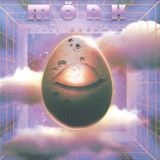
From Budapest, Mörk (pronounced Merk) play on the boundaries of jazz and soul music. After meeting as students, they created a band that not only toyed with sounds but the methods of delivering them too. They’ve played in kindergardens, climbing halls, tea rooms and living rooms, countering expectations of where and how you find music.
Following April's much loved ‘Astral Visions’ EP, played across Bandcamp Weekly, BBC 6 Music, FIP, Jazz FM and KCRW, their upcoming album ‘Still Dreamin’’ delivers even more soul and uplifting choruses, coupled with the synchronicity of a band that has been through so much together.
Es ist ein Fall von popkultureller Archäologie. Eine Spurensuche der elektronischen Musik. Nach über 30 Jahren tauchen verschollene Tapes von Holger Czukay wieder auf, die er einst "zur freien Verfügung" eingespielt hatte. Eine Sound-Meditation von 1997, die nun erstmals neu gemastert im Original und in einer "Version" von die ANGEL (Ilpo Väisänen / Dirk Dresselhaus) und Zappi W. Diermaier von der Krautrock-Legende Faust vorliegt.
Die Arbeiten aus dem Czukay-Studio sind eigenwillige Klangstrukturen, die Mastering-Ingenieur Dresselhaus alias Schneider TM einschätzt als "futuristisches Kleinod, das für seine Entstehungszeit musikalisch weit vorne ist." Für ein abstraktes Klanggebilde "tief und emotional" wie er sagt. Eine Komposition, die mit Avantgarde oder Neue Musik nur unzureichend beschrieben ist. Ein echter Czukay eben. Die Genese dieser Aufnahmen führt in die freigeistigen 1990er, als Holger Czukay in Köln mit jüngeren Techno-Kollegen wie Dr. Walker von Air Liquide mit Beats experimentierte und sich ansonsten sehr für die leise Explosion der digitalen Medien interessierte.
Es war der Tech-Pionier und Medienkünstler Arthur Schmidt alias Gvoon, der ihn in langen Gesprächen auf die (damals futuristische) Data-Maschine "RealityEngine" brachte, mit der sich virtuelle Welten erschaffen ließen. Vom Full-Body-Tracking-System bis zum gemeinsamen Prototyp eines "Internet-TV-Senders". Darauf liefen experimentelle Czukay-Videos, die er mit neuen Samples und Klangfragmenten ausstattete. Später wurde eine kontemporäre Show namens "Czukay/Gvoon:Magazine" daraus und auch die "Can-Live-Soloprojekts" im März 1999, ausgestattet mit der Body-Tracker-Technik von Gvoon. Die DDR-Vergangenheit seines Tech-Sparringspartners Schmidt, der ihm von seiner Zeit in Stasi-Haftanstalten erzählte, setzte in Czukay einen kreativen Prozess frei. Er setzte dieses Trauma in Töne um und machte ihm ein musikalisches Geschenk. "Gvoon-Brennung 1", eine Gabe, die Schmidt "irgendwann" einmal verwenden könne. Einfach so. Ein Soundtrack, der ganz profan auf Digital Audio Tape übergeben wurde.
Über 20 Jahre später brachte Schmidt das "Czukay-Geschenk" für eine zum Kunstwerk umfunktionierte Verhörzelle des Ministeriums für Staatssicherheit (MfS) wieder zum Einsatz. Als Installation für einen stockfinsteren, bedrückenden Raum mit Gummiwänden. Hier stieß wiederum Dresselhaus auf das Material. Ihm wurde klar, dass er dort mehr hörte als irgendwelche 1990er-Fragmente: "Es ist irgendwie Blues-mäßig, auf eine kybernetische und abstrakte Art." "Mit einem sehr langsamen Groove, der einen die gesamte Strecke aufmerksam hält", sagt Dresselhaus. Er beschreibt den Mastering-Prozess sowie die Neubearbeitung in Form der "Gvoon-Version 1" als Balanceakt zwischen Respekt vor dem historischen Material und einer zeitgemäßen Studio-Bearbeitung.
Eine respektvolle Verbeugung zum 87sten Geburtstag von Holger Czukay im März 2025.
Flutter Ridder is the duo of Norwegian multidisciplinary artists Espen Friberg and Jenny Berger Myhre, both of whom play important roles in Oslo’s contemporary art and music underground. The pair first collaborated during the production of Friberg’s debut solo record, “Sun Soon” (Hubro, 2022), quickly recognizing in one another a creative kinship rooted in a playful, intentionally naive approach towards making art. In November of 2023, the pair decamped to the coastal town of Hvisten in southeastern Norway to record what would become this debut, self-titled album in an ancient wooden church. Drawing from a palette of Friberg’s idiosyncratic Serge modular system and the church’s resident pipe organ and intoxicating acoustic reverb, they began recording and sculpting music informed by the notion that air and electricity share a common flow, a continuous current that can be directed through valves and potentiometers. The pair came to think of the Serge and pipe organ as sibling instruments, the former yielding characteristically unpredictable and complex timbres that complement the wooly, reedy drones and strange, microtonal overtones of the latter. At once sublime, liturgical, and whimsical, Flutter Ridder offers its listener a series of moving, cinematic natural landscapes, affirming the sensibilities of its makers and the indelible influence of the environment in which it was produced.
Another foggy day in Yorkshire. A steel grey sky. Raindrops tracing one another down the windowpane. Kirk Barley sits in his studio and assembles compositions from scraps of found sound and live instrumentation. Melodies swell, withdraw and repeat like waves. Time slows. Accelerates. Slows again. The light bends, tweaked at the edges. Twisted by rhythms that never quite resolve.
Written, recorded and produced by Barley in Yorkshire in early 2024, Lux picks up where 2023 LP Marionette leaves off, conjuring a mystical, reflective space between formal minimalism and sonic imaginaries of northern landscapes.
And yet, where Marionette relied at times on more recognisable field recordings, Lux leans into Barley’s skill as an instrumentalist and sound designer, working from a palette of short samples and utilising a variety of alternate tuning systems to build, layer and coax his compositions into being. Most evident on tracks ‘Vita’, ‘Sprite’ and ‘Descendent’, these tunings create an otherworldly harmonic language that is easier to perceive than describe.
Alongside more familiar instruments of guitar, bass, drums, organ and clarinet, here Barley draws on plastic saxophones and bells, and recordings of glass, wood and metal sound objects to provide the organic matter. Rather than directly representative of the natural world, Lux enters into a dialogue with it which, like the grasses and flowers of the album’s cover, exists somewhere between reality and artifice.
On album opener ‘Cache’, Barley constructs his own sense of time from a recording of an umbrella crank, a sparse and spectral piece which hints at memories embedded in the track’s title. Introspection blossoms into new life on ‘Vita’, crumpling again into the percussive ambience of ‘Verre’. A track that takes its harmonic lead from the clinks of glass, it features Barley’s long-time collaborator Matt Davies on drums, whose nuanced, tonally sensitive playing gives ‘Verre’ a fizzing, ice-like quality.
There are several moments where Lux picks up on themes Barley explored under electronic moniker Church Andrews on recent works with Davies, stretching and distorting temporalities most explicitly on ‘Descendent’, whose ritualistic air unfurls around a pattern in exponential decline.
Embracing the surrealism Barley absorbed over years watching classic film noir and the works of David Lynch and Federico Fellini, Lux wends its way through the enchanted sound worlds of ‘Sprite’ and ‘Balanced’ before arriving at the album’s title track.
An expression of his recent experiments in live, prepared guitar, ‘Lux’ brings the album back to earth, returning us to the room where the rain has stopped, the clouds have parted, and the soft warmth of the spring sun is pouring in through the open window.
Hüma Utku returns to Editions Mego with her new album. The title Dracones makes reference to the mediaeval latin term "Hic sunt dracones" (Here be dragons), marking the unexplored, dangerous places on world maps, expressing the fear of chaos, the unexpected and the unknown.
This new work by the Istanbul sound artist is a sonic journal of an expedition into uncharted territory, one which occupies self and domesticity. Inspired by Utku’s experience of matrescence, Dracones explores the themes of familial demonology, metamorphosis and homecoming as well as human relationship to the experience of love woven layers of euphoria, alienation and consumption.
Musically, Dracones traverses a wide array of sonic tools whereby industrial sounds are imbedded with certain psychological angles, this is an album where, all matter meshes into a sly snapshot of the human experience with a tension and release exposure occurring frequently with dark corners opening up to bright layers of electronic experimentation.
The haunting opening track ‘A World Between Worlds’ tackles pregnancy, of which Utku was experiencing when making this record. The emotional, physical, spiritual and mental experience of this journey is all documented here.. This track features the ‘Lyraei’, an electromagnetic string instrument and modern interpretation of the ancient lyre, that was built and played by Mihalis Shammas. ‘Comfort of The Shadows’ moves from within to without, what was once hidden is now exposed. Utku’s ability to conjure the visual in the sonic is at the forefront as howling electronics give a distinct impression of movement. ‘A Familial Curse’ presents a desire to break the cycle of generational trauma with a creeping sense of dread that rolls into an industrial rhythm prior to landing in a beautiful place represented with shimmering guitar tones. ‘Here be Dragons’ is a rich and dark evocation, a spooked surrender to the themes of the record whereby Utku’s wildly distorted voice beckons all manner of phantasmagoria over cello and recordings of her ultrasound. ‘Care in Consume’ engages in further sonic exploration as a means of conjuring ‘matriphagy’, with its unique psychic energy coursing through electronic veins. ‘A House within a House’ could also be read as a body within a body as the pulse of ultrasound audio rattle amongst a cage of thudding rhythms and swirling electronics, one also ending in optimism as an exquisite melody is born from the prior fire. The striking journey ends with the more soothing ‘Ayaz’a’, a track embracing love and all the hardships that a period of fundamental metamorphosis brings, this is a heartfelt dedication to her son and concludes an album draped in life, experience, joy and pain.
Dracones is a deeply visual journey through inner and outer worlds, a space where symbolic evocation is supreme and passive listening is not an option.
All tracks composed,performed and recorded by Hüma Utku
Buchla 100, vocals, cello, electric guitar performed by Hüma Utku
‘’A World Between Worlds’’ features the ‘Lyraei’ built, played and recorded by Mihalis Shammas
Buchla 100 recorded in EMS Stockholm 2022-2023
Mixed by Enyang Urbiks
Mastered by Heba Kadry, NYC
Cover Artwork by Marco Ciceri
Design by Tina Frank
Chris Ryan Williams (trumpet & electronics) and Lester St. Louis (cello & electronics) work together as HxH (H by H). Their skills have seen them move smoothly across various situations, constantly carving out new terrain and working in new configurations of musicians at a rapid pace. While worth reading, their biographies capture only a part of their complex rhizome.
HxH started about three years ago. The project is a direct response to all their activity with others and more importantly all their future leaning sonic desires. Their debut album STARK PHENOMENA is both their first studio recording and their first physical release. The album is appropriately set to be released by KMRU on his growing label OFNOT. It’s an ideal introduction to their sound world and their approach.
HxH describe their music as “electroacoustic,” but until recently the presence of Black musicians in this field has been greatly overlooked and largely ignored, making this phrase only partially appropriate. What HxH do really is to always be unpredictable. Every gig is a new soundscape. Sometimes you might hear echoes of Autechre or Robert Hood but then the sound-field will open up into a new terrain all their own. Chris and Lester bring together techniques from across the sound spectrum of electronic music and also draw on their deep backgrounds in Jazz, Improvisation, Classical and Noise scenes to create a sound that is true to them. After all, these two have worked with the likes of Bennie Maupin and the music of Black Fluxus artist Ben Patterson. Their rhizome is deep.
One of the ways that their unique approach manifests is in their merging of both acoustic instruments and electronic instruments in real time. This is something few have managed to do – but their spontaneous leanings work in both complex and accessible ways because of their deep understanding of landscape crafting. You can hear this clearly on the track “Pyrex Vision.” Their approach makes it tempting to compare their music to Sun Ra jamming with Laurel Halo – a comparison that would be only partly accurate.
Chris and Lester note that the sounds on STARK PHENOMENA are “imbued with such hopeful, gracious care; one that is far flung from obsessive carefulness or fuck the world carelessness, but more a caring embrace without the fuzziness of nostalgia.”
They note that when they began working together, they would “always come back to speaking on our concepts of an architecture of the expanse,” noting that their live sets often take on the joyfully noisy task of “dreaming big.” For HxH it was essential that STARK PHENOMENA have a quality that is “almost sculptural.” They consider the album “an object to be viewed from all sides.” This kind of thinking has resulted in them directly engaging with numerous sculptors and artists including Torkwase Dyson. Shape wise HxH’s sound fields work in a parallel to Dyson’s black architectural works.
They also note that the opening cut “BEACH” (the opening and longest track from the album) was “written weeks after our first gig in a studio session donated to us by our dear friend jaimie branch.” And that Pyrex Vision “was continually being edited months after sending our ‘final mixes’ to KMRU.” Their sound sources and samples come from studio sessions, live gigs, durational installations, 3am improvised downloads and more.
KMRU notes: "I think there is an in-between layer on this record. I was first caught by the Pyrex Vision track which organically flows between monologue, subtle field recording, and instrumentation. It's such a beautiful track, evoking deep emotion through simplicity. STARK PHENOMENA effortlessly glides in between imaginative mosaics of sounds — free yet complex — unlocking memories within its layers."
‘The Return of Pachyman’ is a supernatural force
from a brave new world that’s a little bit San Juan,
a little LA, and a whole lot of Channel One in
Kingston, Jamaica. Designed to be a resurrection
of sound systems from the past through which we
can celebrate a post-Trump future, the record
shows that blasting off into reggae’s deep space
has never gone out of style.
Pachy García (aka Pachyman) is perhaps best
known as the drummer / vocalist for the LA-based
band Prettiest Eyes, a unique pop-noise project
that reflects his other formative interest, synth
punk. He thinks of ‘The Return of Pachyman’ the
same way King Tubby might - an ‘X-ray’ of reggae
music, breaking it down to its bare bones.
Originally a guitarist, he moved to Los Angeles in
the early 2010s and developed his passion for
dub. From there, he started recording bass, drums
and piano and collecting recording equipment in
his basement studio, which he calls 333 House.
With ‘The Return of Pachyman’, García wants to
show how the Caribbean flow is transnational, a
vibe that resounds from Jamaica to San Juan to
Southern California. “With this project, I was
looking to make positive music and radiate good
energy; something to kinda disconnect from the
negative things that were happening at the
moment,” Garcia explains. “I am trying to make this
project a service for humanity in the sense that I
just wanted to shine a positive light.”
Bon Iver's debut full-length For Emma, Forever Ago has been making major waves in critics circles based on the strength of an early artist-pressed advance cd and a couple awe-inspiring sets at CMJ in October 2007. The New York Times called it "irresistible" and Pitchfork stamped its early review of the album with a Recommended tag. For those of you hiding away in a cabin of your own, it's time that you hear the story, and more importantly, the music. Bon Iver (pronounced: bohn eevair; French for "good winter" and spelled wrong on purpose) is a greeting, a celebration and a sentiment. It is a new statement of an artist moving on and establishing the groundwork for a lasting career. For Emma, Forever Ago is the debut of this lineage of songs. As a whole, the record is entirely cohesive throughout and remains centered around a particular aesthetic, prompted by the time and place for which it was recorded. Justin Vernon, the primary force behind Bon Iver, seems to have tested his boundaries to the maximum, and in doing so has managed to break free from any pre-cursing or finished forms. It wasn't planned. The goal was to hibernate. Vernon moved to a remote cabin in the woods of Northwestern Wisconsin at the onset of winter. He lived there alone for three months, filling his days with wood splitting and other chores around the land. This solitary time slowly began feeding a bold, uninhibited new musical focus. The days slowly evolved into nights filled with twelve-hour recording blocks, breaking only for trips on the tractor into the pines to saw and haul firewood, or for frozen sunrises high up a deer stand. All of his personal trouble, lack of perspective, heartache, longing, love, loss and guilt that had been stock piled over the course of the past six years, was suddenly purged into the form of song.
Japanese artists Yumiko Morioka and Takashi Kokubo unite for Gaiaphilia, a journey through ambient soundscapes that seamlessly blends Morioka’s graceful piano compositions with Kokubo’s immersive field recordings and atmospheric synthesisers.
This collaboration brings together two of Japan’s most influential pioneers in ambient and new age music, each with decades of groundbreaking work. Morioka, celebrated for her 1987 album Resonance—reissued to critical acclaim by Métron Records—infuses her introspective playing with Kokubo’s vivid environmental textures, creating a dialogue between nature and melody.
After releasing Resonance, Morioka stepped away from music, moving to America to raise her family. For years, her work was quietly cherished by fans, only gaining wider recognition with its reissue in 2020. A devastating wildfire destroyed her California home seven years ago, prompting her return to Tokyo where she became a chocolatier before rediscovering her passion for the piano in recent years, playing live shows and making new recordings.
Takashi Kokubo’s legendary discography spans over 30 years, and has found wider acclaim in recent years via YouTube algorithms and bootleg uploads, wracking up tens of millions of plays. Yet he is probably best known for his sound design work, specifically the Japanese earthquake alert sound as well as credit card payment jingles - his creations are pervasive in Japanese society.
“From our love and concern for our planet, we both offer a unique sensibility and spirit of inquiry which we express through our music.”
Rooted in shared philosophical interests, Gaiaphilia reflects a profound reverence for nature’s resilience and harmony. Themes of Gaia, Mother Earth’s renewal, and the interconnectedness of life are central, with inspirations drawn from cosmology, sacred geometry, and Japan’s mystical Katakamuna tradition. The album invites listeners into a meditative space where sound mirrors the delicate balance of the natural world.
A master of sound design, Kokubo enhances this vision with his distinctive field recordings, captured using a self-made binaural microphone shaped like a crash test dummy’s head. From the jungles of Borneo to the gentle rhythm of ocean waves, Kokubo’s globe-spanning recordings transform into immersive soundscapes that perfectly complement Morioka’s introspective piano compositions.
“The title, Gaiaphilia, is a newly created word to encompass our love and respect for nature and life, this feeling is the theme we hoped to express.”
Released on Métron Records on 12/03/25 and with artwork from Ventral Is Golden, Gaiaphilia marks a remarkable new chapter for Morioka and Kokubo. Recorded at Kokubo’s log house studio named Studio Ion in Yamanashi, their collaboration offers listeners a deeply emotional and transcendent experience, rooted in the timeless beauty of Japan’s natural landscapes.
- A1: Montego Bay - Everything (Paradise Mix) 04 59
- A2: Atelier - Got To Live Together (Club Mix) 06 06
- A3: Golem - Music Sensations 04 56
- B1: The True Underground Sound Of Rome Feat. Stefano Di Carlo - Gladiators 05 26
- B2: Eagle Parade - I Believe 04 26
- C1: Dj Le Roi - Bocachica (Detroit Version) 05 28
- C2: Green Baize - Synthetic Rhythm 01 41
- C3: M.c.j. Feat. Sima - Sexitivity (Deep Mix) 05 30
- D1: Kwanzaa Posse Feat. Funk Master Sweat - Wicked Funk (Afro Ambient Mix) 06 31
- D2: Progetto Tribale - The Bird Of Paradise 06 29
- D3: Mbg - The Quite 06 59
Vol 1[28,99 €]
Googling “paradise house”, the first results to pop up are an endless list of European b&b’s with whitewashed lime façades, all of them promising “…an unmatched travel experience a few steps from the sea”. Next, a little further down, are the institutional websites of a few select semi-luxury retirement homes (no photos shown, but lots of stock images of smiling nurses with reassuring looks). To find the “paradise house” we’re after, we have to scroll even further down. Much further down.
It feels like yesterday, and at the same time it seems like a million years ago. The Eighties had just ended, and it was still unclear what to expect from the Nineties. Mobile phones that were not the size of a briefcase and did not cost as much as a car? A frightening economic crisis? The guitar-rock revival?! Certainly, the best place to observe that moment of transition was the dancefloor. Truly epochal transformations were happening there. From America, within a short distance one from the other, two revolutionary new musical styles had arrived: the first one sounded a bit like an “on a budget” version of the best Seventies disco-music – Philly sound made with a set of piano-bar keyboards! – the other was even more sparse, futuristic and extraterrestrial. It was a music with a quite distinct “physical” component, which at the same time, to be fully grasped, seemed to call for the knotty theories of certain French post-modern philosophers: Gilles Deleuze, Félix Guattari, Paul Virilio... Both those genres – we would learn shortly after – were born in the black communities of Chicago and Detroit, although listening to those vinyl 12” (often wrapped in generic white covers, and with little indication in the label) you could not easily guess whether behind them there was a black boy from somewhere in the Usa, or a girl from Berlin, or a pale kid from a Cornish coastal town.
Quickly, similar sounds began to show up from all corners of Europe. A thousand variations of the same intuition: leaner, less lean, happier, slightly less intoxicated, more broken, slower, faster, much faster... Boom! From the dancefloors – the London ones at least, whose chronicles we eagerly read every month in the pages of The Face and i-D – came tales of a new generation of clubbers who had completely stopped “dressing up” to go dancing; of hot tempered hooligans bursting into tears and hugging everyone under the strobe lights as the notes of Strings of Life rose up through the fumes of dry ice (certain “smiling” pills were also involved, sure). At this point, however, we must move on to Switzerland.
In Switzerland, in the quiet and diligent town of Lugano, between the 1980s and 1990s there was a club called “Morandi”. Its hot night was on Wednesdays, when the audience also came from Milan, Como, Varese and Zurich. Legend goes that, one night, none less than Prince and Sheila E were spotted hiding among the sofas, on a day-off of the Italian dates of the Nude Tour… The Wednesday resident and superstar was an Italian dj with an exotic name: Don Carlos. The soundtrack he devised was a mixture of Chicago, Detroit, the most progressive R&B and certain forgotten classics of old disco music: practically, what the Paradise Garage in New York might have sounded like had it not closed in 1987. In between, Don Carlos also managed to squeeze in some tracks he had worked on in his studio on Lago Maggiore. One in particular: a track that was rather slow compared to the BPM in fashion at the time, but which was a perfect bridge between house and R&B. The title was Alone: Don Carlos would explain years later that it had to be intended both in the English meaning of “by itself” and like the Italian word meaning “halo”. That wasn’t the only double entendre about the song, anyway. Its own very deep nature was, indeed, double. On the one hand, Alone was built around an angelic keyboard pattern and a romantic piano riff that took you straight to heaven; on the other, it showcased enough electronic squelches (plus a sax part that sounded like it had been dissolved by acid rain) to pigeonhole the tune into the “junk modernity” section, aka the hallmark of all the most innovative sounds of the time: music that sounded like it was hand-crafted from the scraps of glittering overground pop.
No one knows who was the first to call it “paradise house”, nor when it happened. Alternative definitions on the same topic one happened to hear included “ambient house”, “dream house”, “Mediterranean progressive”… but of course none were as good (and alluring) as “paradise house”. What is certain is that such inclination for sounds that were in equal measure angelic and neurotic, romantic and unaffective, quickly became the trademark of the second generation of Italian house. Music that seemed shyly equidistant from all the rhythmic and electronic revolutions that had happened up to that moment (“Music perfectly adept at going nowhere slowly” as noted by English journalist Craig McLean in a legendary field report for Blah Blah Blah magazine). Music that to a inattentive ear might have sounded as anonymous as a snapshot of a random group of passers-by at 10AM in the centre of any major city, but perfectly described the (slow) awakening in the real world after the universal love binge of the so-called Second Summer of Love.
For a brief but unforgettable season, in Italy “paradise house” was the official soundtrack of interminable weekends spent inside the car, darting from one club to another, cutting the peninsula from North to centre, from East to West coast in pursuit of the latest after-hours disco, trading kilometres per hour with beats per minute: practically, a new New Year’s Eve every Friday and Saturday night. This too was no small transformation, as well as a shock for an adult Italy that was encountering for the first time – thanks to its sons and daughters – the wild side of industrial modernity. The clubbers of the so-called “fuoriorario” scene were the balls gone mad in the pinball machine most feared by newspapers, magazines and TV pundits. What they did each and every weekend, apart from going crazy to the sound of the current white labels, was linking distant geographical points and non-places (thank you Marc Augé!) – old dance halls, farmhouses and business centres – transformed for one night into house music heaven. As Marco D’Eramo wrote in his 1995 essay on Chicago, Il maiale e il grattacielo: “Four-wheeled capitalism distorts our age-old image of the city, it allows the suburbs to be connected to each other, whereas before they were connected only by the centre (…) It makes possible a metropolitan area without a metropolis, without a city centre, without downtown. The periphery is no longer a periphery of any centre, but is self-centred”.
“Paradise house” perfectly understood all of this and turned it into a sort of cyber-blues that didn’t even need words, and unexpectedly brought back a drop of melancholic (post?)-humanity within a world that by then – as we would wholly realise in the decades to come – was fully inhuman and heartless. A world where we were all alone, and surrounded by a sinister yellowish halo, like a neon at the end of its life cycle. But, for one night at least, happy."
Madronas’ debut LP Erogenous Biome is an amorphous, murky, cathartic offering. A duet of modular synthesizer and winds that’s equal parts doom and ecstasy, it’s the sound of a majestic butterfly emerging from it’s slimy chrysalis just in time to catch the sun setting on the end of days, a bewitching, heavy ceremony, a power-wash of both mind and spirit.
Tracked in one continuous take at Brooklyn’s Heavy Meadow studio, individual tracks were gleaned from the purge and eschew predictable structures, making for a dense, fluid suite of improvisation, like dancing smoke ribbons in the dark. The duo's chosen sound sources are seemingly opposite - Ry Fyan’s modular’s coming from electronic oscillators, Isaiah Barr’s saxophone and various flutes originating with the breath - but the visceral, imprecise, alive quality to the sound of both lends the record a thrilling combination of rapturous harmony and gritty, intense friction.
Opening the session in ritualistic, foreboding fashion, Voluntary lurches to life with rattles and wandering, bassy arpeggios before a suona’s cry signals the seance has officially begun. Ostraca Loam spits explosive modular rhythms and eerie shrieks for the flute to float above, while Detritus Harp smudges mechanical whirring, pensive horn and wind chimes for an untethered drift. Petrified Microdot swells with menacing sci-fi sequences and breathtaking sax runs until they both run out of breath, and Negative Lingam starts out in a panic of breathy riffing before exhaling into one of the most sublime passages on the record. Rhythmic pounding and undulating flutes punctuate Lenticular Shroud, before The Preparation Of The Novel sets the winds aside for a synthesized dual fit for electric dreams. The title track dominates the B-side, it's shimmering levity slowly unfurling to reveal itself as a kind of post-apocalyptic devotional music, deep space drifting grounded by earthly flutes, and Vale Of Cashmere offers an ascetic, contemplative closure, sparse flute and chiming rhythms organic or electronic - by this time it’s hard to know, it doesn’t matter either way.
Erogenous Biome is a world of it’s own, and one Impatience is honored to offer a window into.
RIYL - Senyawa, witchcraft, Colin Stetson , Civilistjavel, Mars (the planet), Finis Africae, raga, Stephen O’Malley, modular synthesizer, Anthony Braxton, Shabaka.
Madronas is Ry Fyan and Isaiah Barr. Fyan is a painter and tattoo artist, this is his first release. Barr is a prolific instigator of the downtown New York scene, producing and playing saxophone in jazz circles with his group Onyx Collective, as a player and/or producer on records by Nick Hakim, David Byrne and Wiki, performing live with William Parker and as part of his projects Universal Space Jam and Cafe Dewanee.
Erogenous Biome was recorded and mastered by Griffin Jennings at Heavy Meadow, Brooklyn.
Vinyl was cut by Beau Thomas at Ten Eight Seven Mastering, Berlin.
Artwork is by Ry Fyan, typography and layout by Nicolas Turek.
- Love In Store
- Can’t Go Back
- That’s Alright
- Book Of Love
- Gypsy
- Only Over You
- Empire State
- Straight Back
- Hold Me
- Oh Diane
- Eyes Of The World
- Wish You Were Here
If every significant artist has an underrated gem in its catalog, then Mirage is that album for Fleetwood Mac. An obvious return to relative simplicity after the dramatic tension of Rumours and experimental ambitions of Tusk, the 1982 album finds the band re-grouping after a brief hiatus and again climbing to the top of the charts. Extremely well-crafted, well-produced, and well-performed, the double-platinum effort distills the group’s hallmark strengths into a filler-free set that never runs short of addictive pop hooks or daft accents.
Sourced from the original analog master tapes, pressed at Fidelity Record Pressing in California, and housed in a Stoughton jacket, Mobile Fidelity’s numbered-edition 180g 45RPM 2LP set presents Mirage in reference sound for the first time. The efforts co-producers/engineers Ken Caillat and Richard Dashut went to capture the splintered albeit formidable band can be heard with stunning accuracy, range, depth, and detail.
Though Rumours understandably gets a permanent spot in the audiophile hall of fame, the smooth, clear, and dynamic sonics on Mirage confirm that the record that stood as Fleetwood Mac’s last effort for five years deserves a place in the same vaunted arena. The presence and imaging of Mick Fleetwood’s percussion alone on this reissue might have you wondering how this slice of soft-rock bliss has gone under-noticed for decades. Other prized aural aspects — separation, definition, impact, tonal balance — are also here in spades.
Like much surrounding Fleetwood Mac in the 1980s, arriving at Mirage was not easy. Caillat searched for studios located outside of Los Angeles on a mission to change up the vibe of the band’s prior recording sessions. Everyone settled on Le Chateau in France, where relations between some members remained icy — and cooperation with the producers strained. Battles with exhaustion, bitterness, and addiction further informed the proceedings at the 18th century complex in the French countryside, where even communal meals were allegedly eaten in silence.
Inevitably, the feelings that co-producer Lindsey Buckingham, Stevie Nicks, Christine McVie, and company harbored — as well as the situations in which they found themselves — drifted into the songwriting. In its rapid ascent to rock-star royalty status, Fleetwood Mac drifted apart, embarked on solo pursuits, and found it was lonely at the top. Emptiness, the illusion of dreams, the longing for love, the want to escape to bygone times of innocence and happiness: Such themes inform a majority of the narratives. Even if the lyrics regularly take a back seat to easygoing arrangements that allow Mirage to come on like a refreshing breeze on a sunny summer afternoon.
Home to three Top 25 singles in the U.S. and having occupied the pole position of the Top 200 album charts for five weeks, Mirage rightfully resonated with the mainstream and attracted listeners on both sides of the pond. And how, via a smart blend of sugary melodies, warm harmonies, interlaced notes, nimble rhythms, taut structures, and passionate vocals. Not to mention the presence of what arguably remains Nicks’ signature song, the biographical “Gypsy,” a meditation on the loss of her close friend Robin Anderson that teems with majesty, mystery, and mysticism — and which gets an assist from Buckingham’s shaded tack piano and richly strummed guitar chords.
Its ranking as an all-time classic aside, that No. 12 hit has plenty of company when it comes to brilliant pop turns on Mirage. On the subject of Nicks, the raspy singer gets a little bit country on “That’s Alright.” Its clip-clopping pace and two-stepping progression complement subtle vocal swells that emerge during the final verse of a tune that is ostensibly about leaving but still conveys forgiveness and grace. And what would a Fleetwood Mac record be without Nicks drawing on the tools of the supernatural — cards, dreams, wolves, and the like — on the twirling “Straight Back.”
Despite the potency of Nicks’ primary contributions, Mirage seemingly unfolds as a tight competition between Buckingham and McVie — and one that ultimately ends in a draw. Buckingham’s salvos include the contagious “Can’t Go Back,” a yearning to time-travel back to the past that’s complete with hall-of-mirrors backing vocals; “Oh Diane,” out-of- left-field ear candy sweetened with hiccupped vocals and salt-and-pepper-shaken grooves; the chiming “Eyes of the World”; and “Empire State,” a delightfully fluttering track whose high-range vocals, lap harp notes, and ringing xylophones hint at the galaxies of sound that would erupt on Tango in the Night.
Then there’s McVie. As elegant, understated, and coolheaded as she’s ever been on record, she pours her heart out on cuts that revolve around her inevitable split with Beach Boy Dennis Wilson. In the process, she punctuates Mirage with a characteristic not always associated with catchy pop music: emotional weight, and the sense of dreaded acceptance in the face of dreams deferred.
“I wish you were here/Holding me tight,” McVie sings over a delicate melody on the album-closing piano ballad “Wish You Were Here.” Though they hoped otherwise, for the members Fleetwood Mac, distance and separation were always close at hand. Believing otherwise, inviting nostalgia, and pretending everything was fine only amounts to a mirage.
The Irish producer t-woc makes his return to Rudimentary Records with Scenes, Journeys & Colors, his second LP for the label. The bones of the album was made during the 'quiet time' starting with a track that didn’t make the cut on this release but had provided the blueprint to that project titled ‘Street Soul Osaka’. It was a recent chance encounter with a lone boombox playing actual street soul on a pavement in Osaka that it became clear the project needed to be released and the album was completed in Dublin in 2024.
This album is crafted through a blend of samples, live instrumentation, field recordings and studio experimentation. The tracks are a mix of the slow and low, interspersed with minimal ambient pieces with a pronounced dub undercurrent, and a tip of the hat to the cosmos. There are also some vocoders and a fair dose of weirdness.
Since his 2016 LP for Rudimentary - ‘Sentinelas’, t-woc has released with Strangelove Records, Emotional Response, Macadam Mambo amongst others and is a regular contributor to DJ Sofa’s Elsewhere compilation series.
'It begins with a shoebox of mysterious provenance, full of recordings from the Vendée department on France’s western seaboard: songs of love and war, life and death, played out on land and sea. Songs passed down and sung by ordinary men and women, gracefully delivered with the poetic economy which unites the folk song of all peoples.
Next it takes a group of contemporary musicians to make selections from this treasure trove and sing these old songs anew; to sing them for their beauty, of course, and to reclaim the people’s tradition from those who would seek to exploit it for nefarious political ends. Who better for this task than Tartine de Clous, a singing trio from Vendée’s neighbouring department of Charente-Maritime, who burst into national and international consciousness with their debut album "Sans Folklore" in 2015? The result of their shoebox rummagings, the new album "Compter les dents", recorded in 2019 and finally seeing the light of day, is bound to delight old fans and win them many new ones.
Time makes many’s the alteration, and "Compter les dents" finds 'les garçons' - Geoffroy Dudouit, Thomas Georget and Guillaume Maupin - in a different state of being from their debut release. The trio, friends since youth, have certainly matured between albums, as one would expect; consequently the newer performances are more considered and poised, unfolding with a patient confidence. A relaxed domesticity prevails, something to do with the fact that the album was entirely recorded chez les amis, in contrast to the first album, which was mostly recorded at live performances in bars and night-spots across France.
Lending gravitas to the grain of their voices we mark a deepened richness, doubtless born of the various vicissitudes of daily existence which these gentlemen - and we too as citizens of this turmoiled globe - have weathered in the intervening years. Not too dissimilar, in fact,
from some of the vicissitudes detailed in those old Vendée songs. Plus 'ça change', right?
There’s a greater complexity and subtlety to their unique three-part harmonising, too. Their voices mesh in even stronger - almost telepathic - 'fraternité' than ever before: now commanding and mighty as a full-rigged counter-vessel, now gentle and lulling as a mother’s
cradle-croon, or as the whisper in a lover’s ear.
Three legendary figures of French traditional music, now sadly departed, preside as tutelary spirits over Compter les dents. They are: the late Claude Flagel, musician and ethnomusicologist; and the late Jean-Loup Baly of the well-known 1970s band Mélusine. Most of the album was recorded by Claude in the Brussels home he shared with his late wife Lou Flagel. The album is dedicated to the memory of Jean-Loup, Claude and Lou.
For the first time there are several guest instrumentalists working their magic to expand the Tartine de Clous sound. Jean-Loup plays a characterful accordéon on the song ‘La Veuve'. The other guests are: Maurice Artus (voice), Robert Thébaut (violin), Quentin Manfroy (piccolo, contrabassoon), Marceau Portron (cigar box guitar). Their contributions add even more conviviality to that which the trio of singers already share, a sensation which will doubtless be shared by those who happen to find a place in their lives for "Compter les dents".'
Liner notes by Alasdair Roberts.
- A1: Focused
- A2: Idntknwyt
- A3: Lover's Potion
- B1: G.r.e.a.t
- B2: Full Sentimental
- B3: Put Out The Fire
‘LIVE. SHIFT. DREAM.’ : three words for a first EP that invites you to embrace existence, shift gears when opportunities arise and keep your hopes and ambitions alive. That's what PAMELA is all about: electric energy, raw momentum, urgency. There's no time to get bogged down, it's all there in front of us, so let's make the most of it.
In this EP, each track is a facet of themselves, a distillation of their influences and raw energy. ‘Focused’ opens like an adrenalin rush, oscillating between desire and loss of control. ‘G.R.E.A.T.’ ? An explosive Britpop anthem, celebrating individuality with saturated synths and a heady riff. ‘IDNTKNWYT’ invites you to let go and dance without restraint. Then there's ‘Lover's Potion’, which reveals a softer, more intimate side, with a retro, hushed voice that's transporting.
And that's not all: ‘Full Sentimental’ is a powerful confession, where nostalgia becomes an outlet, while ‘Put out the Fire’ burns with urgency and sounds the alarm about the current climate situation.
Co-produced with Pierre Cheguillaume (who also produced Zaho de Sagazan), their tracks oscillate between LCD Soundsystem, The Cure, and Soulwax, blending into dance music tinged with indie rock and britpop. Showcasing their full power live, PAMELA will perform at La Maroquinerie (Paris) in March, after supporting Zaho de Sagazan on her Arena tour.
‘LIVE. SHIFT. DREAM.’ is more than just a start for PAMELA: it's an invitation to feel, to vibrate, and never stop.
“I saw a literal manifestation of the sacred feminine, and had this profound sense that I was meant to embody it,” recalls celebrated singer-songwriter Lindsay Lou after journeying through a hallucinogenic ritual that would inform the way she processed waves of grief in the sea of change ahead of her. The loss of her grandmother, the end of her marriage, and the overwhelming turmoil of the last few years found the Nashville-based artist on a spiritual journey of self-knowledge and healing with this gift from the mystic swirl. On her new album Queen of Time (due September 29th from Kill Rock Stars), Lou explores that quest across ten tracks of tender, heartbreakingly beautiful music. Featuring a gamut of guests including GRAMMY® Award-winners Billy Strings and Jerry Douglas, Queen of Time celebrates love and loss, but above all, the art of living as an unattainably—a vibrant, powerful woman who can share herself with the world, and yet define a mighty sense of inner self as well.
Sunset edition - 300 copies
Driving is Sam Wilkes’ Indie Rock record. Iit is the first release on Wilkes Records, an imprint borne of the artist’s emergent need to self-release. The songs presented here exist comfortably within the ever-expanding Wilkesian cosmos, characterized as they are by virtuosity, torqued experimentalism, and collaboration with a range of talented musicians. But Driving’s influences, its sincerity, and its allegiance to a certain pop sensibility reflects a departure for an artist who has primarily staked his claim within the experimental jazz idiom.
Take the first track, “Folk Home,” which inaugurates the album’s fecundity—a bright, green, humid, summer feel. A swirling, freakout coda of reversed vocals gives way, in no short order, to a caterwaul of flute work that conjures Van Morrison’s (in)famous Astral Weeks sessions. Standing beside Morrison, the usual suspects are all present, if somewhat abstractedly. Dylan, The Dead, Joni, the Fab Four. Wilkes has developed a reputation as an experimental jazz luminary, but his deep affinity for the pop/rock/folk idiom of the latter twentieth century rings clear throughout Driving. More so than any Wilkes release to date, Driving is a collection guided by and dedicated to the man’s attention to songcraft.
Written and recorded during a period of rain-damage induced renter’s itinerance (and the attendant desire to produce a kind of therapeutic, self-soothing, home-feeling music), Driving loosely charts the trajectory/experience of “a protagonist,” both Wilkes and not, “who has figured out how to live an enlightened and fulfilled life, but is unable to do so because he thinks about it too much.” This friction is surely relatable — a symptom of our compulsively self-aware present. But Wilkes avoids the obvious pitfalls of public hand-wringing. Rather, Driving’s nine tracks evince a genuine, and mature searching-ness, both sonically and lyrically. The ending refrain of “Own” serves like something close to a thesis— “Letting go // isn’t a concept // it’s an action.” In an attempt to beat back ego, hyper-cogitation, language itself, Wilkes arrives at an axiom that feels so true and familiar, you’d swear you’d heard it one hundred times before.
Driving’s final third is, fittingly, its most emotive and cathartic. Tracks seven and eight, “Again, Again” and “And Again,” form a diptych, joined most obviously by the jangling, recursive grooves of guitarist Daryl Johns. Wilkes is said to have encouraged Johns to go “full Lindsey Buckingham” (clearly a welcome and resonant prompt), but one also catches stray Knopfler vibes, some intermittent Fripp, and (perhaps more-so in tone than technique) the spirit of DIY prophet and jangling man himself, Martin Newell (the Cleaners from Venus). Wilkes has stated that he finds joy in creating musical environments suitable to the contribution and flourishing of his favorite musicians. Throughout Driving, and in these two tracks especially, he has more than succeeded.
The record closes with the titular track: a story-song that, according to Wilkes, poured out of him (melody, composition, and lyrics) in a single sitting. The tale is told plainly, bravely, starkly; a mistake was made, regrets have been had, and all is wrapped up in the recollection of a deeply felt adolescent heartsickness—a time when the narrator was first afire with music and automotive freedom. The song captures the moment when meaning inexplicably falls into place, when a long-nagging memory suddenly assumes narrative form, and the subsequent sense of lightness and unburdening. It is fitting that Driving, a record conceived as a form of self-therapy, should culminate with a sense of humble revelation. That Wilkes is plainly eager to share the vulnerable fruits of this labor constitutes Driving’s joyful offering.
Words by Emmett Shoemaker