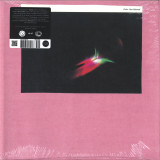
On his third album as Etelin, Alex Cobb explores the intricacies of separation and belonging using field recordings and electronics, reconfiguring the dividing line between what is artificial and natural in the process. Maintaining a sense of playful reverence and lurking melancholy in its glitchy pastoralism, Patio User Manual hums with a meticulous and singular energy. From the loops and static pulses of "The Chemistry of Cobalt" to the tension and release of "Electrical Sailing," the listener is pulled into a sound world at once ambivalent and radiant, reaching its denouement in the lovely melody that closes the final track, "Picnic at Gas Station Park". Although the album might bring to mind the nuanced and imaginative ambient music published by labels such as Mille Plateaux, Sonig, and Silent Records in the 1990s, it is, in the end, a world of its own and very much of today. The patio as a stage for alienated life, pyrrhic in its isolation, deceptive in its promise of distinction. Orientation as disorientation, often unseen inside the frame but felt in the bones. What is out there, anyway, other than the thing we fear the most?
"Another day of weird weather and screens. What type of perfume did Philip Johnson wear when he designed Glass House? Is it actually possible to flee to the country when you’ve internalized a lifetime of intellectualized urban living? When you buy a DIY patio kit, you get instructions for how best to embed concrete or brick or flagstone into the natural world. The patio will make you enjoy your environment more. It will become yours. You can stand on it and think “this is Mine.” The structuralists talked about the importance of fixed camera position, but didn’t properly interrogate it because to do so would be impossible. It’s hard to believe that it really wasn’t long ago that computer music seemed exciting, novel, even radical. We’re now thoroughly estranged from eating what’s in season. Walking around the woods in southern Ohio in spring, I thought about the curious imperative of the patio, how my kids get excited about picking oyster mushrooms, the dynamics of switched capacitor filters, and how adequacy is tethered to doubt." - AC, May 2024
Buscar:sen
- 1: Alan Vega, Bobby Gillespie, Andy Mackay - Blood On The Moon (Mekon Rebuild)
- 2: Renegade Soundwave - A.d.i.d.a.s
- 3: Bobby Gillespie - I Put A Spell On You
- 4: Robert Ames & Ben Corrigan - Chrome Ocean (Mekon Mix)
- 5: Rema-Rema - Rema-Rema (Mekon Mix)
- 6: Leslie Winer - When I Was Walt Whitman (Mekon Remix)
- 7: Hbar - Hendy
- 8: Mekon & Schooly D - Saturday Night (Hit By A Rock - Fucked Up Mix)
- 9: Mona Mur - Tied (Mekon Vs Hit By A Rock Mix)
- 10: Jiz - I Am The Moon
- 11: Zos Kia & Isabelle De Jour - May Day
John Gosling (aka Mekon) the English big beat/industrial musician and electronica producer, is set to launch his new label Hua Hua (pronounced wah wah) with an 11-track compilation album this July. A quick scan at some of the featured artists showcases a line up of legends - eighties rap sensation Schooly D sitting alongside Primal Scream mainstay Bobby Gillespie and John’s recently departed punk hero Alan Vega - even Roxy Music’s saxophonist and founder member Andy Mackay makes an appearance. And while John’s electronic alter ego Mekon is always on hand to remix and arrange, he’s far from the only producer behind the proverbial wheel.
“It’s stuff I had lying around and now I am finding ways to get it out of my system,” he says. “It’s all been brought to the world with brilliant new artwork by Isabelle de Jour, who also features on various tracks.”
Gosling is well known as a member of both Psychic TV and Coil (for the album Transparent). Gosling founded the groups Zos Kia with John Balance and Bass-o-Matic with William Orbit before recording as Mekon. He has also remixed under the name Sugar J. And that’s before we get to the fact that he has soundtracked some of the most forward-thinking fashion shows in the world - crafting the soundscapes for Alexander McQueen shows since the show Dante in 1996. Firstly working hand in hand with the late great Lee “Alexander” McQueen, then with his successor Sarah Burton. In the mid-to-late-nineties he was a core member of the group Agent Provocateur along with Matthew Ashman (originally of Bow Wow Wow), Dan Peppe, Danny Saber (of Black Grape) and Cleo Torez. He has also worked with artists such as Roxanne Shanté ('Yes Yes Y'All'), Marc Almond ('Delirious'), and Afrika Bambaataa. His third album “Something Came Up” featured artwork by Alexander McQueen.
John is as passionate about Suicide and Alan Vega and what he describes as “the new stuff”. Besides, he says, “that’s how people listen to music now. I think kids – my kids anyway – listen right across the board. People don’t see genres anymore. So it’s my definition of good music.” It’s safe to say that this is very much Volume 1. “Yes, it doesn’t cover everything and Volume 2 will be completely different.”
In Signal, Brendon Moeller takes his expertise in techno, ambient and dub techno into deeper ambient and drone territory, crafting a richly atmospheric journey through sound for Constellation Tatsu’s thoughtful cassette label.
This album gently balances textures, merging natural and synthetic elements for a unique sonic experience. Highlights include the track 'Light', which opens with a minimal drone and subtle, pulsing sub-bass notes, setting a calm yet immersive tone. In 'Wires', Moeller skillfully intertwines organic and electronic soundscapes, bringing together the natural and technological in seamless harmony. 'Nowhere' shifts to a more aquatic feel, conjuring the sensation of being submerged in an otherworldly lagoon. The serene, electronic layering in 'Bask' adds beauty and peace through calm sequencing and warm tones. Closing with 'Beam', Moeller expertly blends real-world sounds and hints of a surreal, alien atmosphere, rounding out an album that’s both tranquil and otherworldly. Signal encapsulates Moeller's thoughtful production approach, giving listeners a deep dive into ambient landscapes that feel as expansive as they are introspective and adventurous.
A long-lost vinyl album is back in stock: for the last 20 years, Kosmischer Pitch by Jan Jelinek, originally released in 2005 on ~scape, existed only as a digital download. Right on time for the 20th anniversary the remastered album is available again on vinyl. The digital version includes two previously unreleased pieces from that period.
What the press said about Kosmischer Pitch back in 2005:
“For Kosmischer Pitch, Jelinek draws from the obsessed-over rock produced by his German countrymen in the 1970s. (…) Trance-inducing repetition is constantly modulated by variations that hover on the threshold of audibility. (…) one of the more remarkable bodies of work in electronic music.” - Pitchfork
„Like the cosmic compositions it delicately references, Kosmischer Pitch is proof that the higher and lower pleasures can triumphantly combine.” - The Wire Magazine
“ The old Jelinek approach can also be heard on the new album - not least the “Pitch” in the title, which, as Martin Büsser explains in the info sheet, refers specifically to Wild Pitch House, generally to manipulation/exploitation of the sense of time - but there are striking differences: clear vintage synth, guitar and drum sounds, very subtle club references.” - Groove
“t's impossible to know how many layers of sound Jelinek has stacked up on any of these eight tracks, but each one seems to take on a shadowy, ghost-like life of its own as it morphs across time and space. Minimalist, yes, in a way, but thick as a wool rug.” - AllAboutJazz
Who doesn't love a bit of sophisticated soul? We certainly do and it's always good to hear some reworks of the soul great's finest cuts for the dancefloor. And that's what we have here on a new 7" that opens with a disco version of 'Cherish the Day' and doesn't go hard, instead building in some gentle drums and lo-fi melodies, swooning vocals and a mystical late night sense of romance. On the flip, we get a lovers rock version of 'Nothing Can Come Between Us' which adds plenty of lovely guitar lines to bring that island vibe while the shuffling drums lock you in gently.
Synth Sense have been in imperious form as of late. Following on from their Alien Transmissions release and the collaborative effort
with ASC, on Reject The System, Fragments From an Infinite Sequence sees them back in familiar territory; the unknown. As you'd
imagine from the titles, this is a vast collection of music that spans short of 30 mins, but explores infinite possibilities. Close your
eyes, open your ears, sit back and indulge in the world of Synth Sense.
Broken Parallels - Coming in at a second short of 15 mins, this track is a monster. A behemoth actually. This is pure futurism sculpted
into experimental electronic music. Dystopian backdrops set against a wash of cyberpunk influences which give way to abrasive
sounds and metallic percussion. Each listen reveals a new layer to take something in every time. A science fiction world of audio
waiting for your exploration.
You and Your Ghost - More darkness and perhaps more sinister than the A side. More abrasive percussion and deep dark science
fiction sounds set the scene. This is the musical equivalent to a heist on a space colony set in the 25th century.
Sphere Of Influence - Keeping with the dark sci-fi theme, Sphere Of Influence rounds up proceedings with its cinematic widescreen
expanse. Transmissions from undiscovered colonies intercepted by rogue governments.
Evocative and thought provoking mood music at its finest.
This EP further cements Diode's platform for releasing deep original music. A vague template for techno has been well and truly
flipped on its axis with this release. We hope you enjoy it as much as we do.
For the hotly anticipated third release on her critically acclaimed new record label Uppers and Downers, Dr. Rubinstein has tapped one of her favorite producers--Yerevan's Dave N.A.--to take the helm and deliver a smart and stunning rave EP pitched at the intersection of acid and jungle. A prolific producer, adventurous DJ, and co-founder of the ABC Community, Yerevan's collective hub for amplifying breakbeat,jungle, and drum & bass sounds in the Armenian rave community, Dave N.A. is no stranger to Uppers and Downers, just having contributed a vivacious, jungle influenced reinterpretation of Rubi's track "Extacid" to the label's second release, Rubi's Acid Spa Remixes. For the past decade, Dave N.A.'s productions have reliably offered a fresh, frenetic yet finely tuned take on classic rave genres and their acid-drenched antics while exploring the cutting edge of international experimental bass and hard rave idioms. 'XLSoundwaves' proves to be no exception, taking listeners on a boisterous yet atmospheric, tight yet sprawling sonic journey that combines acid, jungle, hard trance, breakbeat, and IDM influences amid a striking wash of captivating, high-definition ambient studio sound design.
'XL Soundwaves' kicks off with "BFLY," an expansive track that features tunneling hard trance 303 lines deftly weaving through bouncy jungle breaks at a sprightly 165, all emerging from and ultimately fading back into an ethereal plenitude of ambient pads punctuated by a soulful, resonant vocal refrain. Next up, "Radiance" offers an infectiously groovy, sidewinding jaunt through cheeky acid breaks that evolves into a crescendo of lush, eyes-to-the-sky ecstasy. "XL," the EP's third offering, brings the heat with fat basslines, frequent turntablist rave licks, and a freaky sense of humor, almost cinematically projected onto a vast horizon of sumptuous strings. The EP comes to closewith "A.I.R.," a thoughtful banger with a mischievous IDM sensibility that sets acid jungle adrift on an ocean of shimmering orchestral sampladelia and ambient synth radiance.
To some, Dave N.A.'s acid jungle opus might seem like an unexpected plot twist in thecuratorial trajectory of Uppers and Downers. Much to the contrary however, the 'XL Soundwaves EP' is a perfect early release, helping to establish the mission of Uppersand Downers as continuing the search across diverse international rave genres, traditions, and communities for producers and productions that resonate with Dr.Rubinstein's lifelong pursuit of soundtracking her ideal rave: one that offers ravers access to an ecstatic, joyful, affirmative, and inclusive sense of home, of feeling at homewith both oneself and one another through the music.
The Gentle Spring are a new group, formed by Michael Hiscock, Emilie Guillaumot and Jérémie Orsel. Michael has an illustrious pop history, having been a founder member of The Field Mice, possibly the most beloved band on Sarah Records in the 1990s. And with The Gentle Spring, it seems that history is repeating itself…
When Michael and his friend Bobby Wratten formed The Field Mice, the two of them very quickly created a set of songs whose emotional honesty, raw guitars and perfect pop melodies pierced the hearts of a generation of indiepop fans, kids who were unmoved by the posturing of mainstream indie, and who didn’t want to spend time in fields dancing at 24-hour raves. The Field Mice were the band who defined the meaning and the spirit of Sarah Records. Defiantly in love with pop, defiantly un-macho, defiantly…sensitive. And now, remarkably, Michael has done it again. With his new musical partner Emilie, The Gentle Spring have created a fresh new iteration of indiepop music. Once again, the songs are unafraid of raw emotions, brutally honest and is still in love with big pop melodies.
They are still….sensitive. But life is seen through a different lens now. There is wisdom, there is experience, and there is the ability to look back at the world with a mixture of regret and joy. These are very adult songs, and the arrangements reflect this. Rich acoustic guitars and Emilie’s haunting keyboard have replaced hectic drum machines and urgent distortion. And there is a third element to this music. Jérémie Orsel’s sophisticated guitar adds textures and melodies that give these songs a real depth, while maintaining an enigmatic distance, never quite overwhelming the vocal line. So things are clearer now.
But feelings are just as strong. The pain of unrequited love that made Field Mice songs so poignant hasn’t gone away. In some ways, the thought of roads not taken is more profound when experienced in retrospect. I Can’t Have You As A Friend entertains this notion, still moved by the allure of a different life, but shuddering with fear at what might have happened. Also still haunted by the past, The Girl Who Ran Away conjures up the ghost of a previous failed relationship, which threatens to undermine happiness in the present. In Severed Hearts, sung by Emilie, there is the stark recognition that some endings really are final: sometimes there can be no reconciliations. But the song cleverly moves on from this: it acknowledges that, even after the worst emotional loss, you have to pick yourself, you will move on. It’s sophisticated and it’s mature – but it will still break your heart. Sugartown is another song that plays this trick on you. It insists that there will always be lightness and shade. It warns you against complacency, but does it so kindly that you feel like you’ve been embraced. When Michael’s and Emilie’s vocals combine in the final chorus, telling us that we don’t live in Sugartown, you know they are right – and yet the sweetness of the singing makes you feel that – just for a moment – you do.the band perform as a trio and have already found a keen audience in France, where they are based. During a short tour of the UK in January, to coincide with this release, British audiences will get their first opportunities to see The Gentle Spring play these new songs live
- Limehouse Blues
- Stars Fell On Alabama
- Wabash
- Grand Central
- You're A Weaver Of Dreams
- The Sleeper
Cannonball Adderley Quintet in Chicago is revered among jazz aficionados as an essential document of late 1950s hard bop
It captures two of the greatest saxophonists in jazz, Adderley and Coltrane, at a time when they were both at a creative peak. The album is a vital recording from a golden era in jazz, featuring a rare and electric partnership between two saxophone giants. Its hard bop foundation, infused with hints of modal jazz, places it among the most important recordings of its time. The album was recorded the February 3, 1959 during a time when Adderley was playing as part of Miles Davis' group, and it captures the quintet during a pivotal moment in jazz history. On Cannonball Adderley Quintet in Chicago, you can hear Coltrane at a transitional stage, balancing between his earlier bebop style and the modal, more avant-garde approaches he would later pursue. His interaction with Adderley is fascinating because it blends his dense harmonic language with Adderley's more traditional, bluesy approach.Cannonball Adderley had been recruited by Miles Davis in 1957, joining what would become one of the most influential jazz groups of all time. Adderley's style was deeply rooted in the blues, and he brought a strong sense of soulfulness and swing to the Davis group. While Davis' style was often cool and restrained, Adderley's alto saxophone was the opposite: robust, fiery, and emotional. Adderley's command of the instrument was remarkable, and his ability to balance technical prowess with a highly accessible, bluesy feel is on full display throughout Cannonball Adderley Quintet in Chicago . His solos are expressive and lyrical, often imbued with a sense of joy and exuberance. This makes for a perfect contrast to Coltrane's playing, which at this point was becoming more dense and harmonically complex
- Despair
- Devil Woman
- Hell Better
- Hiq82
- Humanity One
- Last Days At Hot Slit
- Lazarus
- Monday
- Shape
- Sweet Jesus
- Indifference
Fluo Pink Vinyl[38,61 €]
This is the third release by Trevor Dunn (Mr Bungle, Fantomas, Trio Convulsant, various with John Zorn) and Kevin Rutmanis (Tomahawk, Melvins, Cows, Hepa/Titus) On this outing Trevor joins Lords and Lady Kevin (duo of Kevin Rutmanis and drummer/artist Gina Skwoz) for a full length LP "Last Days at Hot Slit"
Songs are loosely based on assorted gospel, blues and jazz songs, some original, some covers. Included is a re-working of Mingus "Devil Woman". The trio based the pieces on improvisations that were then arranged and used to build free standing songs. A multitude of instruments were exploited by all those involved, to create a sizzling blend of aural delicacies. The album title is from a collection by writer Andrea Dworkin, often sited as the Celine of feminism. Less outre perhaps than their previous recordings, these songs hover somewhere between soundtrack- like excursions, to jazz/ blues mutations to a demented "rock" sounding affair. Something for everybody, or perhaps, nobody! Uniting former and current members of Tomahawk, Last Days At Hot Slit marks a powerful reunion between Rutmanis and Dunn. The record took shape gradually, born from Rutmanis's raw, unconventional bass recordings. "I sent Trevor a phone recording of some hideous bass racket and asked if he wanted to add anything," Rutmanis shares. "What he sent back was something like delicious fresh cherries with ice and banana slices." The pair's combined creativity gave rise to a new, immersive soundscape, while their collaborative piece, Crackpot Whorehead, set the tone for the current formation of Lords and Lady Kevin."
Repress!
LOUIE VEGA RE-IGNITES THE DISCO CLASSIC 'DANCE (DISCO HEAT)' BY SYLVESTER
Grammy awarding winning producer & 5 time Grammy nominated Louie Vega continues to send dance floors into a peak hour frenzy with his remixes of disco classics on Nervous Records. The inspiration to delve into masters from this era began when he started remixing masters from the SAM Records catalogue, which is owned by Nervous Records, and with whom Louie has a long history going back to Nervous' early 90's origins. Louie is that unique producer who has had success in multiple genres of music including House, R&B, & Freestyle and he has brought that talent to help re-ignite New York disco classics like Vicky D's "This Beat Is Mine" and Convertion's "Let's Do It" featuring Leroy Burgess, as well as charting topping disco hits from John Davis & The Monster Orchestra "Bourgie Bourgie" & "Up Jumped The Devil".
This time, Louie put his focus on a track outside of the SAM Records catalogue, and one that was an international disco hit that also crossed over to becoming a 1978 pop hit, namely Sylvester / Dance (Disco Heat). Using elements from the 1978 version and combining them with his own original musical and percussion contributions, along with new vocal performances from renowned singer Cindy Mizelle, Louie has refashioned and reignited this 39 year-old production into a 2018 club anthem.
This past year has seen Louie continue to fortify his position as one of the industry's most prolific producers. Remixes from his Grammy - nominated best dance album "Louie Vega Starring...XXVIII' have consistently sold out on its vinyl release and hit number 1 on charts on multiple digital platforms. 2018 will see collaborations with Kenny Dope under their legendary and world-renowned Masters At Work and Kenlou monikers, as well as co-productions with The Martinez Brothers and Joseph Capriati.
Louie along with Anané Vega recently created one of the summer's premier club destination at their Ibiza summer residency The Ritual with Anané & Louie Vega at Heart. He continues to cross the globe from Europe to South Africa to Asia and back as one of the world's most sought after DJ's, and incredibly is able to maintain a weekly radio show on WBLS for the last 8 years and his NYC residency at Cielo under The Roots NYC moniker for over 13 years.
The “Vince Montana Tribute” (Louie Vega and Rick Wilhite from Detroit Rework) is a heartfelt and masterful production in which 2021 Grammy Award Nominee Louie demonstrates his appreciation for the disco sounds that he grew up on in the iconic borough of Bronx, NYC. The inspiration came about through an edit Rick sent to Louie. Louie added some of his own editing touches, and the resulting track got big response whenever Louie played it at his headlining sets. Given Louie’s longtime love and respect for Vince Montana, he decided to create an even bigger musical project. Bringing in Elements of Life band members Gene Perez (Bass), Axel Tosca (Fender Rhodes) and Luisito Quintero (Congas), and then adding a piano line himself, Louie was able to bring out the most authentic disco elements of this superlative groove but rework them so they are exactly in the pocket for today’s dancefloors worldwide.
Das achte Album der Punkrock-Gruppe Turbostaat: Wo sonst Möwen und Wattenmeer waren, sind jetzt Tauben und Beton
Junger Punk steht breit lächelnd in kahler Raumecke vor zerschlissener Tonbandmaschine; kurzgeschorene, blondierte Haare, schnittige Sonnenbrille mit dünnen Metallbügeln, angejahrte Lederjacke über buntem Flanellhemd; Trainspotting-Ästhetik. Beschriebenes Foto ist gewiss kein typisches Albumcover-Motiv - und doch ziert es das Cover vom neuen, achten Studioalbum der Husumer, Hamburger, Berliner Band Turbostaat. Der Mann im Zentrum des angegilbten Schnappschusses? Turbostaat-Stammproduzent und Toningenieur Moses Schneider in seinen späten Zwanzigern; oder in seinen frühen Dreißigern - jedenfalls in einem Lebensabschnitt vor Kamillentee und Hochglanz-Equipment. Dreck, Wut, Tatendrang, Aufbruchsstimmung, rotziger Pessimismus, unverhohlen grantiger Punk-Geist - das sind die Parallelen zwischen jenem Foto und der Platte, die es bebildert. Sie hört mit Fug und Recht auf den Namen 'Alter Zorn', klingt mehr nach Stunde null als nach Spätwerk-LP und probt - anstatt friedfertig zu umarmen - den unsanft aufrüttelnden Würgegriff.
Okay, geschenkt: Friedfertig umarmt haben Turbostaat ihre Hörer*innen auf musikalischer Ebene Zeit ihres Bestehens ohnehin nie. Da war immer mehr Understatement und nordfriesische Nüchternheit als Charmeoffensive oder Frohmut, immer mehr Sehnsucht als Wohlbehagen, immer mehr Krach, wirre Worte und bärbeißige Mine zum bösen Spiel als gut gelaunter Humbug. Turbostaat-Musik, das ist Punkrock, dem Wattenmeer-Nebel in den Lungen hängt - seitdem sich die Band 1999 in der schleswig-holsteinischen Provinz formiert hat und auch ein Vierteljahrhundert später.
Wo sonst Möwen, Wattenmeer-Nebel und graue Weiten waren, verdecken nun Taubenschwärme, endzeitlich versmogte Betonburgen und eine gottverdammte Bismarck-Statue, die dem Szeneviertel ihren metergroßen Arsch entgegenstreckt, die Sicht auf alles Schöne. 'Alter Zorn' blickt auf die »Affenstraße«, auf verwahrloste Eckkneipen, in der sich düstere Schatten stapeln, auf »Ruinen zwischen Glas und Stahl«, auf Metropolen voll »greller Sommerkotze« und Spiegelscherben, die immer enger werden - und nur selten starr auf’s offene Meer. Was den schwammigen Protagonist*innen des Turbostaat-Universums dennoch geblieben ist, ist die bohrende Einsamkeit - dieses wütend-resignierte Gefühl, es nicht zustandezubringen, »hier mitzumarschieren«. 'Alter Zorn' zeichnet eine Dystopie - eine Welt zwischen Novembergicht und Hitzestau, in der sich tote Schwäne im Graben stapeln, Panzer rollen, die Luft knapp wird, Obdachlose die Straße umarmen, alle alles mit Karte bezahlen, in Ledersitzen zittern, die Laune im Arsch und überhaupt »wirklich Sense« ist.
Das achte Album der Punkrock-Gruppe Turbostaat: Wo sonst Möwen und Wattenmeer waren, sind jetzt Tauben und Beton
Junger Punk steht breit lächelnd in kahler Raumecke vor zerschlissener Tonbandmaschine; kurzgeschorene, blondierte Haare, schnittige Sonnenbrille mit dünnen Metallbügeln, angejahrte Lederjacke über buntem Flanellhemd; Trainspotting-Ästhetik. Beschriebenes Foto ist gewiss kein typisches Albumcover-Motiv - und doch ziert es das Cover vom neuen, achten Studioalbum der Husumer, Hamburger, Berliner Band Turbostaat. Der Mann im Zentrum des angegilbten Schnappschusses? Turbostaat-Stammproduzent und Toningenieur Moses Schneider in seinen späten Zwanzigern; oder in seinen frühen Dreißigern - jedenfalls in einem Lebensabschnitt vor Kamillentee und Hochglanz-Equipment. Dreck, Wut, Tatendrang, Aufbruchsstimmung, rotziger Pessimismus, unverhohlen grantiger Punk-Geist - das sind die Parallelen zwischen jenem Foto und der Platte, die es bebildert. Sie hört mit Fug und Recht auf den Namen 'Alter Zorn', klingt mehr nach Stunde null als nach Spätwerk-LP und probt - anstatt friedfertig zu umarmen - den unsanft aufrüttelnden Würgegriff.
Okay, geschenkt: Friedfertig umarmt haben Turbostaat ihre Hörer*innen auf musikalischer Ebene Zeit ihres Bestehens ohnehin nie. Da war immer mehr Understatement und nordfriesische Nüchternheit als Charmeoffensive oder Frohmut, immer mehr Sehnsucht als Wohlbehagen, immer mehr Krach, wirre Worte und bärbeißige Mine zum bösen Spiel als gut gelaunter Humbug. Turbostaat-Musik, das ist Punkrock, dem Wattenmeer-Nebel in den Lungen hängt - seitdem sich die Band 1999 in der schleswig-holsteinischen Provinz formiert hat und auch ein Vierteljahrhundert später.
Wo sonst Möwen, Wattenmeer-Nebel und graue Weiten waren, verdecken nun Taubenschwärme, endzeitlich versmogte Betonburgen und eine gottverdammte Bismarck-Statue, die dem Szeneviertel ihren metergroßen Arsch entgegenstreckt, die Sicht auf alles Schöne. 'Alter Zorn' blickt auf die »Affenstraße«, auf verwahrloste Eckkneipen, in der sich düstere Schatten stapeln, auf »Ruinen zwischen Glas und Stahl«, auf Metropolen voll »greller Sommerkotze« und Spiegelscherben, die immer enger werden - und nur selten starr auf’s offene Meer. Was den schwammigen Protagonist*innen des Turbostaat-Universums dennoch geblieben ist, ist die bohrende Einsamkeit - dieses wütend-resignierte Gefühl, es nicht zustandezubringen, »hier mitzumarschieren«. 'Alter Zorn' zeichnet eine Dystopie - eine Welt zwischen Novembergicht und Hitzestau, in der sich tote Schwäne im Graben stapeln, Panzer rollen, die Luft knapp wird, Obdachlose die Straße umarmen, alle alles mit Karte bezahlen, in Ledersitzen zittern, die Laune im Arsch und überhaupt »wirklich Sense« ist.
Das achte Album der Punkrock-Gruppe Turbostaat: Wo sonst Möwen und Wattenmeer waren, sind jetzt Tauben und Beton
Junger Punk steht breit lächelnd in kahler Raumecke vor zerschlissener Tonbandmaschine; kurzgeschorene, blondierte Haare, schnittige Sonnenbrille mit dünnen Metallbügeln, angejahrte Lederjacke über buntem Flanellhemd; Trainspotting-Ästhetik. Beschriebenes Foto ist gewiss kein typisches Albumcover-Motiv - und doch ziert es das Cover vom neuen, achten Studioalbum der Husumer, Hamburger, Berliner Band Turbostaat. Der Mann im Zentrum des angegilbten Schnappschusses? Turbostaat-Stammproduzent und Toningenieur Moses Schneider in seinen späten Zwanzigern; oder in seinen frühen Dreißigern - jedenfalls in einem Lebensabschnitt vor Kamillentee und Hochglanz-Equipment. Dreck, Wut, Tatendrang, Aufbruchsstimmung, rotziger Pessimismus, unverhohlen grantiger Punk-Geist - das sind die Parallelen zwischen jenem Foto und der Platte, die es bebildert. Sie hört mit Fug und Recht auf den Namen 'Alter Zorn', klingt mehr nach Stunde null als nach Spätwerk-LP und probt - anstatt friedfertig zu umarmen - den unsanft aufrüttelnden Würgegriff.
Okay, geschenkt: Friedfertig umarmt haben Turbostaat ihre Hörer*innen auf musikalischer Ebene Zeit ihres Bestehens ohnehin nie. Da war immer mehr Understatement und nordfriesische Nüchternheit als Charmeoffensive oder Frohmut, immer mehr Sehnsucht als Wohlbehagen, immer mehr Krach, wirre Worte und bärbeißige Mine zum bösen Spiel als gut gelaunter Humbug. Turbostaat-Musik, das ist Punkrock, dem Wattenmeer-Nebel in den Lungen hängt - seitdem sich die Band 1999 in der schleswig-holsteinischen Provinz formiert hat und auch ein Vierteljahrhundert später.
Wo sonst Möwen, Wattenmeer-Nebel und graue Weiten waren, verdecken nun Taubenschwärme, endzeitlich versmogte Betonburgen und eine gottverdammte Bismarck-Statue, die dem Szeneviertel ihren metergroßen Arsch entgegenstreckt, die Sicht auf alles Schöne. 'Alter Zorn' blickt auf die »Affenstraße«, auf verwahrloste Eckkneipen, in der sich düstere Schatten stapeln, auf »Ruinen zwischen Glas und Stahl«, auf Metropolen voll »greller Sommerkotze« und Spiegelscherben, die immer enger werden - und nur selten starr auf’s offene Meer. Was den schwammigen Protagonist*innen des Turbostaat-Universums dennoch geblieben ist, ist die bohrende Einsamkeit - dieses wütend-resignierte Gefühl, es nicht zustandezubringen, »hier mitzumarschieren«. 'Alter Zorn' zeichnet eine Dystopie - eine Welt zwischen Novembergicht und Hitzestau, in der sich tote Schwäne im Graben stapeln, Panzer rollen, die Luft knapp wird, Obdachlose die Straße umarmen, alle alles mit Karte bezahlen, in Ledersitzen zittern, die Laune im Arsch und überhaupt »wirklich Sense« ist.
Das Ende von DARK FORTRESS war unausweichlich. Ihre turbulente Reise vom ersten Vertrag beim amerikanischen Label Red Stream Records im Jahr 2001 bis zur The Cosmic End Tour (mit The Spirit und Asphagor) im Jahr 2023 war dabei voller Höhen und Tiefen - wobei die Höhepunkte ganz klar überwogen. Letztendlich zeichnete sich das Ende von DARK FORTRESS schon mit der Veröffentlichung ihres viel gelobten letzten Albums "Spectres from the Old World" im Jahr 2020 ab. Wobei ein selbst ge-wählter Schlussstrich immer eleganter ist, als am Tropf zu siechen und langsam in Vergessenheit zu geraten. Kaum jemandem war jedoch bewusst, dass das letzte Album den frühzeitigen Nekrolog der Band bedeuten sollte. DARK FORTRESS hinterlassen dabei mit "Anthems from Beyond the Grave" ihr einziges Live-Album und gleichzeitig pechschwarzes Testament.V. Santura sagt dazu: "Ich hätte nie gedacht, dass DARK FORTRESS jemals ein Live-Album machen würden. Nachdem ich mir Monate nach der letzten Show die Mehrspuraufnahmen aus Rotterdam und Bochum angehört hatte, traf es mich wie der berühm-te Blitz: 'Heilige Scheiße! Wir klangen echt unglaublich gut.' Und ich bin selten zufrieden mit unseren Shows. All unsere harte Arbeit hatte sich auf dieser Tournee endlich ausgezahlt. Als Century Media das Material hörte, stimmten sie sofort zu: 'Wir müs-sen es veröffentlichen - es ist zu gut, um es ungenutzt verschwinden zu lassen!' Wenn das unser Ende ist - und das ist es defini-tiv - dann ist es ein würdiges Ende für DARK FORTRESS.""Anthems from Beyond the Grave" ist nicht nur ein Live-Album, sondern funktioniert auch als perfektes Best of inklusive Linerno-tes, welches auf die 29jährige pechschwarze Geschichte der Band zurückblickt.DARK FORTRESS ist tot, lang lebe DARK FORTRESS!
Brigid Mae Power’s latest release, Songs for You, is a heartfelt collection of cover songs dedicated to her father. This album features her unique interpretations of tracks written by legendary artists like Roy Orbison, Tom Verlaine, Neil Young, and Cass McCombs, among others.
With a minimalist yet emotionally resonant sound, Songs for You offers a fresh take on these timeless songs while remaining deeply personal. Brigid Mae Power’s ethereal vocals and atmospheric arrangements bring a sense of nostalgia, reflection, and heartfelt tribute, making this album a powerful bridge between memory and music.
While many of the songs are performed solo, Brigid is joined by Ryan Jewell on drums and Shahzad Ismaily on bass, with Brigid herself playing vocals, guitar, electric guitar, organ, and accordion. Tracks 1, 3, 4, 7, and 8 were recorded at Analogue Catalogue by Julie McLarnon, while tracks 2, 5, 6, and 9 were recorded at home. The album was expertly mixed by Sean McErlaine and mastered by Brian Pyle.
- Nebuchadnezzar Ii
- Ode To Ishtar
Yellow vinyl[24,58 €]
With Exile to Beyn Neharot, Wyatt E. created the soundtrack of the people of the city of Jerusalem who were sent in exile to Babylon by King Nebuchadnezzar II after the siege of the city in 587 BC. The album is divided into 2 parts: one devoted to the emperor and his military campaign that led to the exile, the other to an allegiance, real or otherwise, to the goddess Ishtar. The record is the first real album of the band (Mount Sinai/Aswan being an EP) and marks the band's debut on the Doom/Drone scene. It was first released by Jerusalem's label Shalosh Cult.
Yellow vinyl, limited to 300 copies. With Exile to Beyn Neharot, Wyatt E. created the soundtrack of the people of the city of Jerusalem who were sent in exile to Babylon by King Nebuchadnezzar II after the siege of the city in 587 BC. The album is divided into 2 parts: one devoted to the emperor and his military campaign that led to the exile, the other to an allegiance, real or otherwise, to the goddess Ishtar. The record is the first real album of the band (Mount Sinai/Aswan being an EP) and marks the band's debut on the Doom/Drone scene. It was first released by Jerusalem's label Shalosh Cult.
- A1: Long Hard Life
- A2: Everlasting Lover
- A3: The Road Home
- A4: Raleigh
- A5: Why Else Would I Call You?
- B1: It's A Shame
- B2: Hays, Kansas
- B3: Chemistry
- B4: You Never Did Love Me
- B5: Get Clean
“Hailing from Castlewood, VA in the heart of Appalachia, the five-piece 49 Winchester serves it up greasy, whether it’s Southern fried rock, honky tonk country, sentimental moments tickling the fringes of Americana, or a version of soul that takes all of those influences and stews them. It’s always Southern, but the variety of flavors you’re served keeps you on your toes for 10 tracks. And eventually an album you start off thinking might be good for a quick hoot turns out running through a range of emotions you may have not been ready for, though you sure do appreciate the ride afterwards.” - Saving Country Music Now, for the first time on vinyl, 49 Winchesters third album is available on standard black vinyl. ”…Country Music’s Buzziest of Buzz Bands”