Available only n Germany!
ANTI- Records is honored to share a never-before-heard album by Mark Linkous of Sparklehorse titled Bird Machine. Originally recorded in 2010 and mixed by Mark Hamilton (who also worked on It"s A Wonderful Life), Mark"s brother Matt notes "great care has been taken to archive and preserve Mark"s music.
We are very thankful for Mark and the beauty he brought to this world." Sparklehorse was an American indie rock band formed by singer-songwriter and multi-instrumentalist Mark Linkous in the mid-1990s.
Born on September 9, 1962, in Arlington, Virginia, Linkous began playing music as a teenager. Described as an artist who "compelled listeners to heed the beauty of darkness" by Pitchfork, Sparklehorse released many influential records, including the renowned albumsn Vivadixiesubmarinetransmissionplot and Good Morning Spider in the "90s, It"s A Wonderful Life and Dreamt for Light Years in the Belly of a Mountain in the early aughts, and a collaborative album Dark Night of the Soul released in 2010.
Throughout his career Mark collaborated with thought provoking artists like Vic Chesnutt, Daniel Johnston, Tom Waits, Danger Mouse, and David Lynch.
While Mark recorded in various studios, collaborating with other musicians and producers, he did much of his work in his home studio, Static King, often playing and recording everything on his own. He was "very much kind of a working-class guy with a very poetic sensibility, who was drawn to artists like himself, who worked in isolation," said NPR Fresh Air"s Ken Tucker.
Search:sen
- A1: Warm Winter
- A2: Speshal (Feat. Stove God Cooks)
- A3: Two 23’S (Feat. Conway The Machine)
- A4: Loverboy Interlude
- A5: Back To Shore (Feat. Wiz Khalifa & Elcamino)
- B1: Target Practice (Feat. Jim Jones)
- B2: Band Of Brothers (Feat. Benny The Butcher & Ransom)
- B3: Sal’s Pizza
- B4: Mint Green (Feat. Curren$Y)
- B5: Sharlene
Although Beyond Belief was completed in only a handful of all-night sessions, 38 Spesh and Harry Fraud took their time crafting this high level Hip-Hop music. Harry didn’t simply send Spesh a folder of beats to rap to, Spesh made the trip to Harry’s lab, and all the beats and lyrics were created on the spot. Fans and critics agree that this 10-track offer- ing is some of the strongest work in both artists’ catalogues. The LP boasts monster tracks like “Speshal,” “Band of Brothers,” and “Warm Winter.” Guests on the album include Benny The Butcher, Conway The Machine, Stove God Cooks, Ransom, Wiz Khalifa, Curren$y, Jim Jones, and ElCamino.
Recorded in 1995 and 1996, mostly in John Fahey"s room at a Salem, Oregon boardinghouse, the performances on Proofs and Refutations prefigure the ornery turn of the page that marked Fahey"s final years, drawing another enigmatic rabbit from his seemingly bottomless musical hat. Cloaked in the language of dogma - what is he proving? refuting? - this is Fahey dancing a jig in the Duchampian gap, jester cap bells a-jingling. True believers? He"s got something for you: an uncompromising vision that you can sneer at ("guy can"t play anymore and refuses to concede!") or embrace as evidence of his genius ("the reinventor does it again!"). Skeptics? He"s there with you, too: sending up the fallacy of certitudes altogether. Institutions, systems, accepted wisdoms. Heroes. Alternative facts, indeed. Right out of the gate, Fahey re-materializes before us, somewhere between Oracle of Delphi and Clown Prince at Olympus. Mounting a thundering dialectic from on high, "All the Rains" resembles nothing else in his extensive discography - betraying roots in everything from Dada to Episcopal liturgical chant - and contains nary a plucked guitar note. You can"t fool him! When the lap steel of yore appears on "F for Fake," it serves more as soundbed for an extended sequence of vocal improvisations, running the gamut from wordless Bashoian caterwauling to free-form (but decidedly fake) Tuvan, even revealing a burnished falsetto in the process. Fahey takes on a different kind of provocation in the two acoustic guitar-based tracks closing Side 1 - "Morning" parts 1 and 2 - the first of 4 recordings in this session that have him wrestling with the ghost of Skip James, perhaps Fahey"s effort to wrench the "bitter, hateful old creep" (his words) back into the grave. Anchoring Side 2 is the two-part "Evening, Not Night," the second half of his extended cathexis on James (and the latter"s avowed castration complex - another story for another day, perhaps). Bit of a chill in the air - where"s the impish Fahey from earlier? Unmistakably working through some psychic wounds here, we might think: the unheimlich rendered in glistening viscera. Or is he playing with our notions of authenticity, of his reputation as troubadour of raw emotional states, a pilgrim of the ominous, the simmering unconscious? These cards are kept decidedly close to the vest. The opening and closing pieces again feature Fahey"s guitar as drone soundbed - employing distortion, oscillation, and an altogether absurd quotient of reverb to create texture and harmonics that are - if we wanna go there - not dissimilar to the sustained tonic clusters of Tibetan singing bowls, the hurdy gurdy, Hindustani classical music, or La Monte freaking Young. Portions of this material appeared on obscure late "90s vinyl in the 7" or double-78 rpm format, but as a "session" it has lain dormant more than a quarter century now. Taken together, we can now see these tracks as secret blueprints to latter-day Fahey provocations, several years prior to records like 1997"s City of Refuge and Womblife.
Perth-based artist hub 823, led by the extraordinary producer / creator Ta-ku joins forces with Berlin's Jakarta Records for the release of Godblesscomputers's fourth full-length LP, "Faded Views." The LP melds bright electronic flourishes with laidback synth-driven backdrops, weaving tapestries of mellow folktronica and groovy jazz harmony with continuous sonic intrigue that will keep you grooving into a tropical disposition. Paying homage to his musical moniker, the Bologna-based producer makes timely metallic interjections amidst lush, effortlessly groovy soundscapes. Explore a world of found, recycled, and synthesized sound on "Faded Views" out everywhere September 8.
Bologna-based producer, DJ, and sound collector Godblesscomputers (122k Spotify listeners) has returned with the release of his fourth full-length record, "Faded Views." Godblesscomputers's latest LP "The Island" (2020, La Tempesta Dischi) earned him placement on Spotify playlists like "Brain Flood" and "Coffee Club." Since then, his appearance on Willie Peyote's track "La colpa al vento" landed GBC on "Best of Indie Italia 2022." On "Faded Views," it was Godblesscomputers's creative project to explore the sonic potentials of his direct environment, picking up recordings and threads of inspiration from the most commonplace occurrences. A sonic scavenger, Godblesscomputers explored the expanses of his-both digital and physical-soundscapes. "Faded Views" does the work of crafting a unified, yet complex compilation of the noises that mark the experience of being digital natives in ever-expanding dimensions.
Godblesscomputers's use of musique concrète and found-sound composition melds curiously with his undeniable electronic and techno acumen. Superimposing metallic electronica onto esoteric sound bytes creates the occasion for complex sound collage. "Faded Views" marks a decade since the genesis of the Godblesscomputers project; the entire LP testifies to how time warps perception and sound. Godblesscomputers's music seems to decorate time, both commemorating the moments passed with mind-melting sonic collages and looking forward to the infinitudes of the future with frenetic electronic experimentation.
Themes of impermanence and transience-hence "Faded Views"-pervade the record. Godblesscomputers blurs time as each track seeps into the next in what feels like a seamless transition. He makes these swift passages in genre as well-the record opens on "Colors" with a rich horn section which frictionlessly becomes a lo-fi dance groove. It is this melding of the analog and the electronic that makes sense of his found approach to beat-making: Godblesscomputers marries the found and the synthesized; the creator and the created; the past and the future. The process of sonic dissection and recomposition that drives much of Godblesscomputers's creative process yields not only assertive breakdowns and animated dance tracks, but also complex tapestries of sound that keep the listener ever-intrigued-piano, saxophone, and modular synthesis all find a natural home on tracks like "Hello." In an apt description, the producer's work has been described as "sounding like wood, metal, and microchip."
Godblesscomputers's artistic objective lies in blurring definitive lines, constantly shifting perspectives, genres, and origins of inspiration. On "Faded Views," this design cultivates a folktronica record that truly evades definition.
Feelgood lead single "Mirrors" is out June 30th and features a rich meld of warbling layers, mixing upbeat dance music with complex instrumentation. Stream second single, "Above the Lake," for a mellow summer cut on July 21. Finally, the effortlessly groovy third single "You Feel Me" captures a genre-warping foray into folktronica. Listen to "You Feel Me" on August 11.
All LP artwork and stunning single visualizers were single-handedly put together by multi-disciplinary designer Michael Norman. "Faded Views" will be available everywhere physically and digitally on September 8, 2023. Be sure to listen for focus track "Hello" that captures the vast scope of Godblesscomputers's musical prowess. Find the LP, CD, and digital release on 823's and Jakarta Records's Bandcamp and local record stores.
- A1: Paper Airplanes, Paper Hearts
- A2: Me Vs You
- A3: It's Days Like This That Make Me Wish The Summer Would Last Forever
- A4: Everyoneasked About You
- B1: A Better Way To A Broken Heart
- B2: I Will Wait
- B3: Sometimes Memory Fails Me Sometimes
- B4: Handsome, Beautiful
- C1: Crazy
- C2: Boston
- C3: Song For Chris
- C4: Letters Never Sent
- C5: Taxi
- D1: Last Dance
- D2: Let's Be Enemies
- D3: Solitaire
- D4: Across Puddles
- D5: Greek To Me
- D6: Outro
Queer tweemo from the pop fringe of Little Rock, Arkansas's thriving '90s DIY scene. Paper Airplanes, Paper Hearts gathers Everyone Asked About You's complete recorded works, including the Let's Be Enemies LP and their two and a half 7"s released between 1997-2000. Remastered from the original DATs for maximum nostalgic crunch, this deluxe 2xLP is housed in a gatefold tip on sleeve and includes a 20-page book crammed with flyers, photos, lyrics, and an extensive essay on this crucial missing link between midwest emo and the Moog synthesizer.
- 1: Paper Airplanes, Paper Hearts
- 1: 2Me Vs. You
- 1: 3It's Days Like This That Make Me Wish The Summer Would Last Forever
- 1: 4Everyone Asked About You
- 1: 5A Better Way To A Broken Heart
- 1: 6I Will Wait
- 1: 7Sometimes Memory Fails Me Sometimes
- 1: 8Handsome, Beautiful
- 2: 1Crazy
- 2: Boston
- 2: 3Song For Chris
- 2: 4Letters Never Sent
- 2: 5Taxi
- 2: 6Last Dance
- 2: 7Let's Be Enemies
- 2: 8Solitaire
- 2: 9Across Puddles
- 2: 10Greek To Me
- 2: 11Outro
Queer tweemo from the pop fringe of Little Rock, Arkansas's thriving '90s DIY scene. Paper Airplanes, Paper Hearts gathers Everyone Asked About You's complete recorded works, including the Let's Be Enemies LP and their two and a half 7"s released between 1997-2000. Remastered from the original DATs for maximum nostalgic crunch, this deluxe 2xLP is housed in a gatefold tip on sleeve and includes a 20-page book crammed with flyers, photos, lyrics, and an extensive essay on this crucial missing link between midwest emo and the Moog synthesizer.
- 1: Paper Airplanes, Paper Hearts
- 1: 2Me Vs. You
- 1: 3It's Days Like This That Make Me Wish The Summer Would Last Forever
- 1: 4Everyone Asked About You
- 1: 5A Better Way To A Broken Heart
- 1: 6I Will Wait
- 1: 7Sometimes Memory Fails Me Sometimes
- 1: 8Handsome, Beautiful
- 2: 1Crazy
- 2: Boston
- 2: 3Song For Chris
- 2: 4Letters Never Sent
- 2: 5Taxi
- 2: 6Last Dance
- 2: 7Let's Be Enemies
- 2: 8Solitaire
- 2: 9Across Puddles
- 2: 10Greek To Me
- 2: 11Outro
Queer tweemo from the pop fringe of Little Rock, Arkansas's thriving '90s DIY scene. Paper Airplanes, Paper Hearts gathers Everyone Asked About You's complete recorded works, including the Let's Be Enemies LP and their two and a half 7"s released between 1997-2000. Remastered from the original DATs for maximum nostalgic crunch, this deluxe 2xLP is housed in a gatefold tip on sleeve and includes a 20-page book crammed with flyers, photos, lyrics, and an extensive essay on this crucial missing link between midwest emo and the Moog synthesizer.
The Nag's Head was a warts-and-all vessel for the sonic meanderings of Brighton artist Stephen Maskell - taking in richly textural techno, corrupted pop and ASMR drone sculptures. His four releases on Kit Records documented the ecstatic mundanity of life in broken Britain, compositions welded together with snippets of pirate radio, ear-tickling art installations, altercations in terrible pubs, and other end-of-pier hallucinations.
Honky Tonk Cheeseballs is perhaps Maskell's final release, and represents the culmination of his digital dream diary approach. Gone is the Nag's Head moniker (pub burnt down in a possible insurance job?). In the embers we find Basil Neptune: a kind of sentient Airbnb profile, seeking out the smelliest, strangest sonic vestiges of Albion. Expect richly harmonic ambience, ghostly spoken word, and a few trademark booty shakers. All shot through the lens of... Scooby Doo? Zoinks.
For their fourth album, »Bear In Town«, indie avant-pop supergroup Spirit Fest made a virtue of distance, with group members split across Europe, and recording sessions taking place after a brief 2021 tour of Europe. It’s an object lesson in perseverance and commitment, as the music here is some of Spirit Fest’s most moving yet. The six songs on this album illuminate different aspects of the transnational quintet’s character – lovely, heart-rending pop songs; melancholy chants; the joys of simple repetition – with the group’s guitar pop tended by gentle flourishes of piano and electronics.
Some of those flourishes were spirited onto »Bear In Town« across the waves, with Mat Fowler (Bons, Jam Money) contributing from Britain, while the body of the music was recorded in a small apartment studio in Munich by the other members of Spirit Fest: Saya and Ueno (Tenniscoats), Markus Acher (The Notwist) and Cico Beck (Joasinho, Aloa Input). »Bear In Town« is concise and powerful, the infectious joy of the spirit communicated, beautifully, by melodies that balance the heartfelt with the melancholy. Reflecting on those sessions, Acher says, »I think the album captures how well we played together at that time.« It’s all the more impressive given this material was put down live in the studio, with a few vocal overdubs. The depth of feeling at the core of Spirit Fest’s music is evident from the opening notes of »Bear In Town«.
»Kou-Kou Land«, the first song on the album, recalls several earlier Tenniscoats songs, like »Baibaba Bimba«, in the way the musicians weave gentle complexity around a simple, repeated chant; the stop-start structure of »Kou-Kou Land« builds anticipation, while Saya’s simple melody is lovely, delivered in an absent-minded hum that’s deeply affecting. »Lost & Found« revolves around a delightful descending chord change that breaks up the swaying, folksy verses, gorgeous electronic whirrs and purring winds floating through the song. The following »In Our House« possesses such sweet sadness, it’s one of Spirit Fest’s most moving songs yet.
»Like A Plane« repurposes a song that Markus Acher originally wrote and recorded for his solo EP of the same title, released on a 2022 10-inch single on Morr Music. The original was a gentle, introverted lament, but the version on »Bear In Town« has a widescreen tenderness, its melancholy framed by raindrop piano. The album concludes with two moments of playful splendour, the bossa-inflected »Hill Blo«, and the driving title track, both led by Saya, who is in stunning voice on this album; on »Bear In Town«, her awestruck wonder perfectly captures the sense of possibility in the song’s capacious chords. Like the rest of the album, it’s full of kindness, rich with psych-pop splendour… a balm for troubled times.
bone color LP[28,53 €]
black LP[27,10 €]
The Gentle Good’s long awaited 5th album Galargan, is a stripped-back exploration of Welsh folk song performed with solo acoustic guitar, vocal and cello. The record came together during the isolation of the pandemic and is suffused throughout with a sense of romantic escapism and sadness born from the sorrow of these times.
A long-in-the-works project of ours, here comes A Tribe Called Kotori's first foray into full-length territories, as the immensely talented Rampue takes us on a melancholy-riddled ride across his phantasmatic mindscapes. A true sound explorer, deftly steering his ship down the junction of electronica, abstract and balearic-infused prog house, the Berlin-based vibist has us transfixed and elevated throughout the twelve cuts that form the backbone to this lushly textured promenade in sound - at times understatedly euphoric, at others rivetingly exotic.
Of the creative process that lead to 'Bubblebath Trance', Rampue explains "It all started and ended in the same moment: my cherished feline companion, my laptop awash with an unintended bath, and alas, a dearth of backups. The resultant calamity, an echo of chaotic tranquility." Under the generous layer of irony lies some unaltered truth about Rampue's debut long-player for A Tribe Called Kotori: this sense of serenity that goes with stepping into this warm and bubbling primitive chaos of sorts infuses the listening experience far and wide. Distantly emulating the "euphonious strains" of iconic PS1 video games soundtracks from his youth days, the album has us surfing a constant paradox of emotions, wistful but not abandoning itself to sorrow, dynamic yet suspended in some sort of mind-expanding stasis. As if you were looking at the world beneath you in exploded view, conscious of all thing, slowly moving up the many layers of our atmosphere towards uncharted skies.
A paragon of Rampue's most poignant take on classic electronica tropes, 'Harmonie' blazes with a poetic fire that engulfs about everything in its wake. Just figure yourself riding a chocobo across the sand-covered expanse of North Corel (toasting to the FFVII nerds here) as this blasts out in the distance. From this trancey bubblebath emerge lots of musical shades and nuances, from the nicely dubbed-out, brass-heavy coastal jazz of 'Schattenschranz' to the choppy, trip-hop-adjacent future electronics of 'Inside', via the exuberantly joyous mess of faux-organic number 'Tripomatic' and cinematic charisma of 'Ich hasse Sonne' high-flying orchestrations.
Connecting the dots between that trance-indebted ebullience and further downtempo-friendly attraction, 'Verfahren' perhaps encompasses best what 'Bubblebath Trance' is about: gracefully walking the tightrope in-limbo nostalgia-soaked inner movements and a powerful outward thrust, burning to let the feelings ooze out from the shell that holds them.Clad in purely 90s-compatible breaksy motion, 'Salz' is another attempt to reconcile emotional and physical dissonance, like kneading all states - solid, liquid and vaporous - into an impossible mega-vibe of its own; malleable, strong and enveloping in equal measure. Borrowing from two-step and UK garage, 'Take Away' is a definite high in Rampue's master unfolding of musical twists and turns, summoning a Boarder Community-esque atmosphere and clashing it alongside floor-ready footwork motifs to fascinating effect.
An ode to his studio companion, 'Buchla Trip' finds Rampue's exploring his machinic friend's quirky yet soulful array of electronic potentialities - making it sound like a conversation you'd have with R2-D2 in the heart of a Sandcrawler, whereas 'Kajal' beams us up to a fragmented headspace, halfway altered PC-Pop and arps-loaded electronica on amphetamines. Effusive and transporting, the title-track 'Bubblebath Trance' could well figure as the album's no.1 medley in essence: a bountiful lucid dream of dancing forms, colours and sentiments to wrap your head around, confidently drifting from a liminal state of consciousness down the rapids of one's troubled inner workings.
Rounding off the package, the languid ambient finale of 'Die Leiden des hungrigen Fruehstuecks' rubber-stamps the feeling that 'Bubblebath Trance' belongs to that rare category of albums. The ones that mint their own alphabet aside from typical norms and expectations, teaching you the ropes of their new language as it unreels between your ears - real and unreal, elusive to any other meaning than the one your guts and brains will be inclined to give it to, in real time. A crystal-pure object if you will, that shall not reveal its secrets, even after a thousand listens and just as many wowing moments.
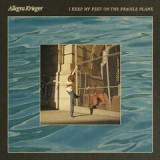
It contains all the signatures of her best lyricism: delicate and precise phrasings, moments that flicker between beauty and banality, meaning that forms through the accretion of observations, memories, and unexpected adages. This is an album that is at once post-theistic and devoted to a relationship with the divine, each song blinking in and out of "the fragile plane," a place Krieger describes as "a middle ground in the universe," both abstract and peaceful, where time, bodies, and names don't exist.
Krieger initially collaborated with Luke Temple and Jeremy Harris to record her vocals and guitar to tape at Panoramic Studios in West Marin, CA. As the album continued to form, Krieger envisioned instruments - like the French and English horn (Nancy Ranger and Priscilla Reinhart), electric guitar (Jacob Drab), and pedal steel (Kevin Copeland) - as characters which would walk in and out of the soundscape. What emerged from conversations with composer Sammy Weissberg, are brass parts that have a dark, almost surreal logic: horns arise to emphasize a word or phrase, fall out completely, only to rush back with dissonant orchestrations that gesture simultaneously toward deterioration and generation.
While Krieger takes inspiration from Elliot Smith's honesty, Judee Sill's cosmic reaching, and Joni Mitchell's sharp noticing, the dream-like association, harmonic dissonance, and angular melodic ascensions in each song are singularly and delightfully Krieger's.
"I Keep My Feet on the Fragile Plane" is a daring collection of songs by an artist who scries with both the cold glass eye of truth and the beating heart of empathy; who portrays life in all its twisted complexities.
Following on from his 2020 solo debut "Tyson, Crying", Walker further refines his electronic sound, landing somewhere between techno, dub and house.
Incendiary pieces of electronic music that masterfully ascend to the spirit realm to elicit a perfect amount of gurn. Containing tracks that are equally at home on the steroid laden beaches of Ibiza as they are at a house party being played to the last lobotomised dregs circling the bags at 5am. Perfectly crafted - both lush and sparse at the same time - Walker takes the psychedelic, krauty sensibilities of King Gizzard and launches them into an electronic universe.
- 1: Hello
- 2: A Love From Outer Space
- 3: Crack Up
- 4: Timewind
- 5: What's All This Then?
- 6: Snow Joke
- 7: Off Into Space
- 8: And I Say
- 9: Yeti
- 10: Conundrum
- 11: Honeysuckleswallow
- 12: Long Body
- 13: In A Circle
- 14: Fast Ka
- 15: Miles Apart
- 16: Pop
- 17: Mars
- 18: Spook
- 19: Sugarwings
- 20: Back Home
- 21: Down
- 22: Supervixens
- 23: Insect Love
- 24: Sorry
- 25: Catch My Drift
- 26: Challenge
A.R. Kive collates the three most astonishing works from that most miraculous of duos - A.R. Kane - comprising the ‘Up Home’ EP from 1988 that signified the band’s dawning realisation of their own powers and possibilities, their legendary debut LP ‘sixty nine’ (1988) and its kaleidoscopic, prophetic double-LP follow up ‘i’ (1989).
In founder-member Rudy Tambala’s new remastering, the music on these pivotal transmissions from the birth of dream pop, have been reinvigorated and re-infused with a new power, a new depth and intimacy, a new height and immensity. Vivid, timeless and yet always timely whenever they’re recalled, these records still force any listener to realise that despite the habits of retrospective myth-making and the
safe neutering effects of ‘genre’, thirty years have in no way dimmed how resistant and dissident to critical habits of categorisation A.R. Kane always were. Never quite ‘avant-pop’ or ‘shoegaze’ or ‘post-rock’ or any of those sobriquets designed to file and categorise, A.R. Kive is a reminder that those genres had to be coined, had to be invented precisely to contain the astonishing sound of A.R. Kane, because
previous formulations couldn’t come close to their sui generis sound and suggestiveness. This is music that pointed towards futures which a whole generation of artists and sonic explorers would map out. Now beautifully repackaged, remastered and fleshed out with extensive sleeve notes and accompanying materials, ‘A.R. Kive’ reveals that 35 years on it’s still a struggle to defuse the revolutionary and inspirational possibility of A.R. Kane’s music.
A.R. Kane were formed in 1986 by Rudy Tambala and Alex Ayuli, two second-generation immigrants who grew up together in Stratford, East London. From the off the pair were outsiders in the culturally mixed (cockney/Irish/West Indian/Asian) milieu of the East End, with Alex and Rudy’s folks first generation immigrants from Nigeria and Malawi, respectively. The two of them quickly developed and fostered an innate and near-telepathic mutual understanding forged in musical, literary and artistic exploration. Like a lot of second-generation immigrants, they were ferocious autodidacts in all kinds of areas, especially around music and literature. Diving deep into the music of afro-futurist luminaries such as Sun Ra, Miles Davis, Lee Perry and
Hendrix, as well as devouring the explorations of lysergic noise and feedback from contemporaries like Sonic Youth and Butthole Surfers, they also thoroughly immersed themselves in the alternate literary realities of sci-fi and ancient history (the fascination with the arcane that gave the band their name), all to feed their voracious cultural thirsts and intellectual curiosity.
It was seeing the Cocteau Twins performing on Channel 4 show the Tube that spurred A.R. Kane into being - “They had no drummer. They used tapes and technology and Liz Fraser looked completely otherworldly with those big eyes. And the noise coming out of Robin’s guitar! That was the ‘Fuck! We could do that! We could express ourselves like that!’ moment”, recalls Tambala - and through a mix of
confidence, chutzpah, ad hoc almost-mythical live shows and sheer innocent will the duo debuted with the astonishing ‘When You’re Sad’ single for One Little Indian in 1986. Immediately dubbed a ‘black Jesus & Mary Chain’ by a press unsure of WHERE to put a black band clearly immersed in feedback and noise, what was immediately apparent for listeners was just how much more was going on here - a
tapping of dub’s stealth and guile, a resonant umbilicus back to fusion and jazz, the music less a conjuration of past highs than a re-summoning of lost spirits.
The run of singles and EPs that followed picked up increasingly rapt reviews in the press, but it was the ‘Up Home EP’ released in 1988 on their new home, Rough Trade that really suggested something immense was about to break. Simon Reynolds noted the EP was: Their most concentrated slab of iridescent awesomeness and a true pinnacle of an era that abounded with astounding landmarks of guitar-reinvention, A.R. Kane at their most elixir-like.
If anything, the remastered ‘Up Home’ that forms the first part of ‘A.R. Kive’ is even more dazzling, even more startling than it was when it first emerged, and listening now you again wonder not just about how many bands christened ‘shoegaze’ tried to emulate it, but how all of them fell so far short of its lambent, pellucid wonder. This remains intrinsically experimental music but with none of the frowning orthodoxy those words imply. A.R. Kane, thanks to that second generation auto-didacticism were always supremely aware about the interstices of music and magic, but at the same time gloriously free in the way they explored that connection within their own sound, fascinated always with the creation of ‘perfect mistakes’ and the possibilities inherent in informed play.
‘sixty nine’ the group’s debut LP that emerged in 1988 had
critics and listeners struggling to fit language around A.R. Kane’s sound. As a title it was telling - the year of ‘Bitches Brew’, the year of ‘In A Silent Way’, the erotic möbius between two lovers - and as originally coined by the band themselves, ‘dream pop’ (before it became a free-floating signifier of vague import) was entirely apposite for the music A.R. Kane were making. Crafted in a dark small basement studio in which Tambala recalls the duo had “complete freedom - We wanted to go as far out as we could, and in doing so we discovered the point where it stops being music”. There was an irresistibly dreamy, somnambulant, sensual and almost surreal flow to ‘sixty nine’s sound, but also real darkness/dankness, the ruptures of the primordial and the reverberations of the subconscious, within the grooves of remarkable songs like ‘Dizzy’ and ‘Crazy Blue’. Alex’s plangent vocals floated and surged amidst exquisite peals of refracted feedback but crucially there was BASS here, lugubrious and funky and full of dread, sonic pleasure and sonic disturbance crushed together to make music with a center so deep it felt subcutaneous, music constructed from both the accidental and the deliberate, generous enough to dance with both serendipity and chaos. ‘sixty nine’ remains - especially in this remastered iteration - ravishing, revolutionary.
The final part of this ‘A.R. Kive’ contains 1989’s astonishing double-LP ‘i’ which followed up on ‘sixty nine’s promise and saw the duo fully unleash their experimental pop sensibilities over 26 tracks, plunging the A.R. Kane sound into a dazzlingly kaleidoscopic vision of pop experiment and play. Suffused with new digital technologies and combining searingly sweet and danceable pop with perhaps the duo’s strangest and boundary-pushing compositions, the album did exactly what a great double-set should do - indulge the artists sprawling pursuit of their own imaginations but always with a concision and an ear for those moments where pop both transcends and toys with the listeners expectations. Jason Ankeny has noted that “In retrospect, ‘i’ now seems like a crystal ball prophesying virtually every major musical development of the 1990s; from the shimmering techno of ‘A Love from Outer Space’ to the liquid dub of ‘What’s All This Then?’, from the alien drone-pop of ‘Conundrum’ to the sinister shoegazer miasma of ‘Supervixens’ — it’s all here, an underground road map for countless bands to follow.” Perhaps the most overwhelmingly all-encompassing transmission from A.R. Kane, ‘i’ bookended a three year period in which the duo had made some of the most prophetic and revelatory music of the entire decade.
After ‘i’ the duo’s output became more sporadic with Tambala and Ayuli moving in different directions both geographically and musically, with only 1994’s ‘New Clear Child’ a crystalline re-fraction of future and past echoes of jazz, folk and soul, before the duo went their separate ways. Since then, A.R. Kane’s music has endured, not thanks to the usual sepia’d false memories that seem to maintain interest in so much of the musical past, but because those who hear A.R. Kane music and are changed irrevocably, have to share that universe which A.R. Kane opened up, with anyone else who will listen. Far more than other lauded documents of the late 80s it still sounds astonishingly fresh, astonishingly livid and vivid and necessary and NOW.
Back in early 2020 I was trying to get in touch with Austin to see if he had any unreleased tracks from the 90's. My mate John Vinyl Junkie has been friends with Austin for years so was able to introduce me. Turned out Austin didn't have any unreleased tracks. However, he was up for repressing one of his early vinyl releases, The Austin EP. Sadly this was one I was missing from my collection so Austin sent me a couple of Near Mint copies I was able to get really good rips from. With the help some superb CEDAR mastering we got these tracks sounding better than ever! So with some amazing 2021 mastering we got this EP sounding better than the original. Due to issues with pressing plants (I should write a book!) this release suffered from delay after delay.
Minor Science—aka UK-born, Berlin-based musician Angus Finlayson—makes his Balmat debut with Absent Friends Vol. III, the third installment in a shape-shifting series across a variety of formats and platforms. And with it, he pushes forward his vision of ambient music as neither static vista or merely mood-setting atmosphere, but rather a dynamic matrix of textures, sensations, and even rhythms.
The first two Absent Friends—a 2014 set for Blowing Up the Workshop, and a 2017 cassette and web player for Whities (now AD93)—were hybrid affairs, part DJ mix and part collage, mostly featuring music made by other people. Then, in 2020-21, Finlayson developed the project into a live show of his own material. Armed with hundreds of bespoke stems created in his studio—idiosyncratic FX chains, feedback loops through cheap rack gear, heavily post-processed field recordings, found voices, etc.—he would improvise on four CDJs, mixer, FX, and live synths, extending techniques he learned as a club DJ into a live context, accompanied by visuals by Stockholm-based artist Paul Witherden.
Absent Friends Vol. III is an album of studio versions of the music developed for the live show. But in Minor Science’s world, even a category as simple as “studio versions” is slightly opaque. “Most of these tracks weren’t ‘composed’ in the studio,” Finlayson explains: “The sounds started out as stems and source material for the live show, and might not have been intended to go together—but then through performance, they settled into shapes that worked. I then recreated those performances in the studio.” That organic process of ideation and realization might help explain the unusual coherence of the album, in which sounds and textures flow seamlessly from one to the next, sometimes seeming to stand still, and sometimes looping back. There are virtually no melodies, few recognizable motifs or riffs, yet the eight-track album nevertheless moves with a distinctive logic and a determined sense of purpose, from the frozen-in-time shimmer of the opening “Introduction” through the early cuts’ studies of space and light; from the seemingly autobiographical “Summer Diary” through the rushing trance (yes, trance) arpeggios of “Contingency” and on to the dulcet denouement of the closing “Gather Your Party (Dispersed Mix).”
NEW 45 BY DEEP-FUNK PIONEER LUCKY BROWN RECORDED DURING THE NOW LEGENDARY SPACE DREAM SESSIONS!
In around 2001, Joel Ricci, the trumpet player/composer behind his former stage alias, Lucky Brown, went traveling on a worldwide "quest for funk". During that pilgrimage, he went to London England in time to attend Keb Darge's 'Legendary Deep Funk' 6-year anniversary at Madame Jojo's. While in the middle of the dancefloor, he was moved so significantly by this obscure brand of 'deep funk' Mr. Darge was unveiling, he became overcome by a mystical sense of 'coming home'. Additionally, he spent a week at Camden's Jazz Cafe to meet The Poets of Rhythm, The Breakestra, The Sugarman Three, DJ Snowboy, DJ James Trouble, and others. When Joel mentioned the nature of his quest to Neal Sugarman, he warmly invited him to come visit Brooklyn and kick it with members of Antibalas, Binky Griptite & The Mellomatics, and the Dap Kings. But before the trip back to the states, Joel spent some time in Paris playing his trumpet at a club called 'Cithea' where they would host weekly 'rare groove' jam sessions. During the jams, Parisian students of Tony Allen would overtake the stage with their instruments and their full African clothing, chant the word, 'Fela', and begin to play this intense free improvised funk and afrobeat. While traveling by train from Paris to the south of France to visit family, Joel began hearing this inspiring polyrhythm swirling in his inner ear and mixing with the "clack-clacka" of the train moving down the track. As soon as he arrived at his destination, he sat down at a piano and jotted down the polyrhythm, bass line and fundamental horn cluster on a piece of sheet music paper. The simple tune was finally rendered to tape ten years later with Lucky Brown's Crawdad Farmers aka The Funk Revolution on the Magik Carpet at drummer Olli Klomp's Lakeside log cabin in Stanwood, Washington. The tune became the title track to Lucky's first full-length on Tramp Records (Lucky Brown's Space Dream, TRLP-9011).
Space Dream is so titled in part to commemorate a soulfunk masquerade party Joel threw at a temporary all-ages Bellingham Washington music venue called 'The Pickford Dream Space'. This is Joel's stripped-down tape-only remix and re-edit which has never before appeared on 45RPM and commemorates the re-release, remaster and repackaging of upcoming Tramp LPs, "Space Dream" and "Don't Go Away", the fully realised 'director's cut' featuring Ricci's early group funk experiment: "The Funk Revolution."
Last year Low End Activist mapped out the depth and breadth of his sound with the Hostile Utopia album on Sneaker Social Club and now he returns with a fresh payload of future shock-outs from the grimy depths of his sound well. Recent times have seen LEA releases tipping towards MC guest spots but on this EP he’s turning inward with three varied, mutant workouts for soundsystem immersion.
‘Sent West’ makes no bones about its inspiration from the tough, boxy end of early dubstep, but as ever the kink in the Activist’s sound comes from the detail around the rhythm and his embrace of off-centre textures. ‘Neurosis’ plumbs even further down in its dogged pursuit of infinite subs and dystopian atmospherics, offering the kind of subliminal, wayward stepper to tweak nervous minds to distraction. ‘Dry Chat, Wet Rag’ stretches out on the B side with a phantom dub pulled from rad-blasted wastelands, caked in slime and tough enough to withstand any fallout.
Calling to mind the introspective, evocative work on the likes of Engineers Origins EP, this is LEA using the hardcore continuum to tell his most murked-out tales.