DANDANA is a musical collective with musicians from the Netherlands, Senegal and The Gambia with members Bas Ackermann, Ebou Gaye Mada, Filly Dioma, Jackson Loman, Joop de Graaf and Modou Joof. Their sound pays tribute to traditional West African rhythm and grooves, and the love for ambient and synthesizers. On this album, they combine spiritual griot music, traditional instruments from Senegal and The Gambia such as the sabar, xalam and balafon, percussion, electronic drum pads and a range of vintage synthesizers. Inspiration is drawn from West African psychedelic mandingue pioneers Guelewar, Ifang Bondi & Touré Kunda and the synth-driven vibes of bands like Air & Tame Impala.
Most of the album was recorded in The Gambia and Senegal in 2019. In these urgent times of COVID-19 and the Black Lives Matter movement it becomes clear that we have to free ourselves from the current system. 'Free The System!' is about the gap between the older and the younger generation. The old system can’t easily deal with young or new ideas. The system needs to be changed, we have to free ourselves from it.
Suche:sene
A stunning new production by the Rhythm And Sound ace, drawn from his recording sessions with some of Senegal’s greatest musicians — a griot clan of Sabar drummers from Kaolack in Senegal, led by Bakane Seck, with guest players and vocalists, including many mainstays of the bands of Baaba Maal, Youssou N’Dour and company.
Jeri-Jeri’s style of Mbalax is swingeingly masterful — heady and hard-grooving, with highly complex, fiercely succinct poly-rhythms — an ancient-futuristic music, mesmeric but sharp as nails, super-charged with drama. Featuring the lovelorn vocals of guest Mbene Diatta Seck, Sabar traditions are fused with furious Afro-Cubanismo, hard funk-rock, and shards of high-life.
Ernestus’ nasty, hypnotic, stripped dub — an Mbalax first — edges in the bass, profiles the talmbat and tungun drums, and scoops the semantics out of the singing.
- A1: Boulevards (Feat Denitia)
- A2: Consequence
- A3: What It Is (Feat Scienze & Lex-Us)
- B1: C-Side (Feat Denitia)
- B2: Daddy Warbucks (Feat Sene)
- C1: Interlude A
- C2: Expatria (Feat Thalma De Freitas)
- C3: The Night (Feat Melissa Mcmillan)
- C4: Expatria Interlude
- D1: Right Here (Feat Denitia)
- D2: More Or Less (Feat Marlon Craft)
- D3: Interlude B
- D4: With You (Feat Denitia)
Ltd. Purple Edition
Out 18th September, ‘What It Is’ is the second LP from Brooklyn- based multi-instrumentalist, composer, arranger and producer Sly5thAve; his first new music since the critically acclaimed project ‘The Invisible Man: An Orchestral Tribute to Dr. Dre’. The recording had been first devised as a benefit concert in LA which was attended by Dr. Dre who took to the stage to express thanks for Sly5thAve’s arrangements. Having spent the past three years performing the project with orchestras around the world, ‘What It Is’ sees Sly5thAve retain the high-quality that fans and critics alike have come to expect from him while stepping out with something considerably different, delving deeper into the worlds of hip hop, jazz and soul. Celebrating not only his own versatile musicianship but that of his collaborators and friends, ‘What It Is’ is a collection of tracks showcasing the best of the multi-faceted musician. A sought-after collaborator himself, Sly5thAve has attained much respect from his work with a host of highly fêted musicians including; Prince (as a member of the New Power Generation Band), Stevie Wonder, Gladys Knight, The Dave Brubeck Quartet, Taylor Swift, Janelle Monáe, Freddie Gibbs and Quantic.
DJ/producer Don Pascal has long been an advocate of fusing London’s sound system aesthetic with more traditional music from around the globe.
Following on from his 2014 release The Cali Experiment, (fusing Latin influences with the sounds of London’s underground club scene) we are happy to announce his forthcoming album The Dakar Experiment.
Featuring musicians from Senegal’s legendary evolving band Xalam, The Dakar Experiment is a sonic exploration fusing Senegalese musicianship and London’s Broken Beat scene.
As the homogenised sound of western pop permeates traditional music the world over, The Dakar Experiment offers an alternate pallet of influence, retaining tradition yet suggesting other possible paths.
The foundations of the album were laid at Henri Guillabert’s studio in Dakar over most of 2016 with Moustapha - Taffa – Cisse, Yahael Camara Onono and of course Henri and Don, then completed in London with an array of musicians, pulling on the city’s vibrant and re-emergent Broken Beat scene.
Featuring vocals by Lyric L, Rich BLK and Niara Scarlett, and remixes by EVM128, Trev and Xtra Brux, The Dakar Experiment is an exercise in finding what connects us in an increasingly divisive world.
Fifth studio album featuring Malcolm Catto, D'Alma, Idd Aziz and Modou Touré. Includes the singles Sua Alma, In The End and Afande. His most accomplished album to date Will Dorey aka Skinshape moved out of his comfort zone to create a new sound while retaining his trademark feel. While Skinshape has often been influenced by African music ‘Umoja’ directly incorporates styles and rhythms from the continent. Drawing on London’s vast talent pool from across the globe collaborators bring the essence of Senegal, Portugal, Ghana and Kenya via Norway no name but a few. The initial plan was to travel to various African nations to record ‘Umoja’. This proved to be an unnecessary step because Skinshape's hometown of London ended up bearing many fruits. It was a challenging project for Dorey taking a year and a half of dedicated work to complete with many ideas left unfinished along the way. The album has a very global feel which was enhanced at the end of the process by a collaboration with Japanese painter Ken-ichi Omura. Fans of Skinshape’s distinctive voice will not be disappointed as he features on ‘In The End’ and ‘Sun’. Long-time friend and collaborator Jon Moody (from the band Franc Moody) wrote the album’s horn parts.
Led by some of Senegal's most famous singers, like Youssou N'Dour and Laba Sosseh, Star Band achieved the perfect gumbo of Cuban and Senegalese sounds. Changüí, Guajira, Salsa, and Son mingled with cosmic Mbalax guitars, Sabar rhythms, Afro-Latin horns, and Spanish vocals spiced with a Senegalese twang.
With just two microphones and a four-track Revox tape recorder, Ibrahim Kassé, Star Band's founder and owner of Le Miami nightclub, recorded their entire catalog in his venue. Each album contained one stand-out Afro-Cuban tune, often covers of Cuban classics or original compositions using the deep, layered sound that had evolved over centuries from the roundtrip journey across the Atlantic. Six of Star Band's most psychedelic Afro-Cuban tracks, an ode to their finest hour, are selected here.
Remastered in the original mono, and accompanied by 12-page booklet containing an essay on Cubanismo in Senegal, a rare interview with Star Band guitarist Yakhya Fall and vintage photos from his personal collection, this album is the soundtrack to a time when Cuban music was the future for 1970's Senegal and commemorates the anniversary when another way — the Cuban way — was possible.
The drum and bass chart-topping artist, CURRENT VALUE, whose tunes are often a staple of Aphex Twin’s performances, returns to METHLAB RECORDINGS with his SENEX LP, which features twenty one of his most technical and innovative sonic works on the
ike-minded label.
A twin release with it's more upfront & riotous cousin PUER delivered via Souped Up Recordings, SENEX displays its half of the CURRENT VALUE sound with an expansive array of sonic sequences marked by their forward thinking sonic character and the singular timbres for which CURRENT VALUE is known.
Early in the album’s span come the glittering arpeggios of MEGACITY, which filter downwards above the bassline pursuit that plays out beneath their fluttering rays. Further in, DISMANTLE deconstructs a set of classic rhythms before reshaping them within the milieu of it's hazy pads under the pressure of it's mechanical low frequency generator.
An elysian piano melody wafts through the opening percussion of FRIENDLY TAKEOVER and therein masks the brutalist companion frequencies that await within the track’s second section.
ACCESS POINT surges within a stream of bitcrushed binary at the albums third quarter, and opens the way for the enigmatically warped sonics that course through the albums final sections and flow within the depths of it’s voidborne closing track, CRYSTAL BALL.
With SENEX, CURRENT VALUE delivers one half of his joint 11th and 12th albums as he explores his most experimental sonic leanings to both a further breadth and depth than ever before upon the METHLAB RECORDINGS label.
TERANGA BEAT proudly presents MAR SECK, a delicate singer and songwriter who marked the history of Senegalese music. TIP!A cross over between Cuban compositions and Senegalese Folklore, his songs gave birth to Salsa-Mbalax, the popular dance music of '70s Senegal that went onto influence a new generation of Senegalese musicians including a young Youssou N'Dour. Featuring 12 tracks recorded over three different sessions, ‘Vagabonde’ focuses on the best of MAR SECK’s career. The first recordings are taken from a raw and unreleased 1969 session at the Dakar National Radio. Recorded with his first group SUPER CAP-VERT from Rufisque, it captures an 18-year old MAR singing the first version of his now famous composition “Vagabonde”. The remaining six tracks from the session includes a beautiful cover of Fonseca’s “Sibouten”. A 1973 live recording is also featured here, made with the STAR BAND de DAKAR in Saint Louis. Previously unreleased, it comes from a time when MAR was establishing his name playing at the legendary Miami Club in Dakar, the “École de Passage” for all great Senegalese musicians. The final two tracks (one of them unreleased) finds MAR accompanied by the most complete band of Senegal, the NUMBER ONE de DAKAR. The 2LP & CD booklet includes photos and liner notes outlining MAR’s career. LP version comes with silk screen print, European 60s style, gatefold sleeve. All tracks are mastered & mixed from the original recording tapes.
Official first reissue of this Senegalese gem recorded in 1981 and produced by Ibrahima Sylla.
Remastered, available on a limited LP with 4 pages booklet.
At the dawn of the 1980s, Senegal was immersed in the "beautiful era" of Cuban influences, African-American soul and funk.
A group of passionate musician friends want to shine in this construction of a revolution in Senegalese music. Their credo will be to claim a spiritual search, that is the meaning of the word Gestü in Wolof. The group of friends gathers around the young guitarist leader As El Haji Malick Diouf who is joined on vocals by Tidiane Bathily, reinforced by Couri Ndiaye and Abdou Bâ, on drums Abdou Kane, on bass guitar Jean-Pierre Gomes, Madiama Diop (saxophone, clarinet) and finally on tumbas Djiby Ndiaye.
They released their first album Diabar in 1981, recorded at Golden Baobab studio under the direction of Senegalese producer Ibrahima Sylla. This unique record of the group will leave the youthful and dynamic imprint of a Senegalese musical revolution like the Orchestra Baobab or the Etoile de Dakar.
- A1: Laurent Garnier - Water Planet
- A2: Mono Junk - Beyond The Darkness
- B1: Psychick Warriors Ov Gaia - The Valley
- B2: Melody Boy 2000 - Plenty Of Love
- C1: Drax Ltd Ii - Amphetamine
- C2: Dan Curtin - 3Rd From The Sun
- C3: Front 242 - U-Men
- D1: The Prince Of Dance Music - E3 E6 Roll On
- D2: Pan Sonic - Lahetys/Transmission
- D3: Burial - Archangel
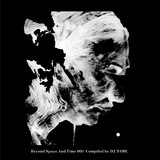
Beyond Space And Time is the new record label from Japanese music festival, Rainbow Disco Club (RDC). RDC has been welcoming music loving people to Japan for over a decade. Throughout the festival's history, RDC have been fortunate to constantly encounter performers and DJs who've collaborated with them in establishing a beautiful dance floor year in, year out. These relationships have lead RDC to start their own label, and now gives them the opportunity to reveal one of the best-kept secrets: What is in a DJ's record bag?
This time around, festival regular DJ Nobu kindly opens up his collection and shares the music he loves with us all. On visual duty we welcome Senekt - his representational yet contemporary drawing illustrates the emotion we feel from DJ Nobu.
We have much more music to come in future from artists that we trust and respect.
▼ DJ Nobu describes 10 tracks this way ▼
A1. Laurent Garnier - Water Planet
Highly respected French DJ/Producer Laurent Garnier has been releasing tracks for decades capturing the very essence of Detroit Techno and Breakbeat. He always manages to create something truly emotional. This is not his biggest hit, but it's my favorite.
A2. Mono Junk - Beyond The Darkness
This track represents the very early days of Techno with it's ravey atmosphere. It has a primitive feel, and the obscure mixdown sounds almost unbalanced. That said, this one really stands out when DJing. Very cool.
B1. Psychick Warriors Ov Gaia - The Valley
It was always my intention to include this track in a compilation if were I ever to do one. It has a fat underlying groove, with some indigenous spices thrown in. The whole thing is put together beautifully. No complaints!
B2. Melody Boy 2000 - Plenty Of Love
I wanted to include a track that had Jacking feel to it - that is my definition of dance music. This track mixes well in both Techno and House DJ sets.
C1. Drax Ltd. II - Amphetamine
This is my all time favorite track by Thomas P Heckman. It asks questions and strikes down all the boring 'wanna be cool' techno tracks. It is obviously a well known tune already, but I include it here because I'm often asked for it's track ID from new kids in the game. This is a classic that should be passed down.
C2. Dan Curtin - 3rd From The Sun
Curtin's refined synth grooves and bass lines make this a true timeless classic. It do not get tired of listening to his rhythms and melodies - he always gets it just right.
C3. Front 242 - U-Men.
The originator of Electric Body Music. Their husky vocals, hard rhythms and strong synth basslines made the group very popular at the time, and they are still to this present day. To me, this track represents what the Belgian New Beat scene is all about.
D1. The Prince Of Dance Music - E3 E6 Roll On
This is the track I played the most up until around 2006. It is a genuine house track that cuts through trends in music. A hidden floor killer.
D2. Pan Sonic - Lähetys / Transmission
Electronic music has existed for decades, and if you are to choose some of the best from all scattered & hidden places, Pan Sonic's 'Lähetys / Transmission' must be considered. The track emerges beautifully - breaking structures and transcending the past. Every layer of the piece is produced with such delicacy and care, that as a whole it magically drags you into the world of the unknown.
D3. Burial - Archangel
This track merges melancholic emotions with technological prowess at the highest level, and deeply impacted the dance music scene on it's release. I recently played this track at the end of my set at the forward thinking Terraforma Festival in Milan. It faded out to huge applause from the open minded crowd. A moment to be remembered.
Beyond Space And Time is the new record label from Japanese music festival, Rainbow Disco Club (RDC). RDC has been welcoming music loving people to Japan for over a decade. Throughout the festival's history, the organisers have been fortunate to collaborate with amazing performers and DJs who’ve provided a beautiful dancefloor year in, year out. These relationships have lead RDC to start their own label, and they are now given the opportunity to reveal one of the best-kept secrets: What is in a DJ's record bag?
This time around, festival regular DJ Nobu kindly opens up his collection, and shares the music he loves with us all. On visual duty we welcome Senekt - his representational yet contemporary drawing illustrates the emotion we feel from DJ Nobu.
DJ Nobu selects Pan Sonic's epic Lähetys /Transmission, for this limited one sided 7". It is the first time this track has been released on vinyl. The release is meant as a preview to his forthcoming vinyl compilation from DJ Nobu - a 2LP voyage that navigates much of his musical background, and includes all time favorites.
DJ Nobu describes the track this way…
"Electronic music has existed for decades, and if you are to choose some of the best from all scattered & hidden pieces, Pan Sonic's 'Lähetys / Transmission' must be considered. The track emerges beautifully - breaking structures and transcending the past. Every layer of the piece is produced with such delicacy and care, that as a whole it magically drags you into the world of the unknown."
We have much more music to come in future from artists and DJs that we trust and respect.
Limited edition (200 copies of orange transparent and 100 of yellow vinyl records with postcards-photos from Ms. Gia's family album)
Lua Preta is an Angolan/Polish duo consisting of vocalist/MC Ms. Gia of Angolan descent and experienced Polish DJ and producer Mentalcut. Together they bring the frenetic mixture of modern electronic music and African genres characteristic not only to Ms. Gia's native Angola but also to the whole continent - including kuduro, afrohouse, gqom and more.
'Polaquinha Preta' is a brand new EP by Lua Preta. With the music produced by Polish producer Mentalcut and vocals from Angolan Ms. Gia the release tells the story about Gia's childhood in Poland of the 80s and 90s and how she was seen as a foreign both here and back in Angola.
There are interesting guests on the record:
B4mba – Paris-based artist with roots in Senegal and Spain who raps both in French and Spanish. He's an author of the 'Baile Punk' EP in which he blends Latin American music with avant-garde electronic sound.
Isilda Viegas – Ms. Gia's mother hailing from Sao Tome e Principe. On the 'Polaquinha Preta' EP she's featured on 'Noemia' where she sings in forro language – a creole language native to her homeland. During colonial times Portuguese banned people from using forro. Currently only around 70 000 people use it.
Rafael Aragon – French DJ, producer and musician who has become one of the key players on the European global bass scene throughout the past ten years. In his music he relates to all the continents but especially to South America and Africa where his ancestors come from.
d B2 Noemia (Rafael Aragon Remix) feat. Isilda Viegas
After their brilliant label debut with "Grow Yes Yes" in 2017, Professor Wouassa now returns with their brand new third album on Matasuna Records.
The Swiss band's career spans more than 15 years, where they have played at many major festivals in Switzerland and abroad. The 11 members of the band have perfected their musical qualities over the years and captivate as a well-rehearsed live band with their energetic and rousing shows. So it isn't surprising that they supported concerts of Afrobeat legends like Ebo Taylor or Seun 'Anikulapo' Kuti.
Their still exuberant creativity can also be heard on their new work entitled Yobale Ma!, which in Wolof's language can be translated as "take me" or "get me". With their new album they take the listener to their musical island to explore the borders of Afrobeat and beyond.
The song Fallou Fall opens the album in a jazzy & big band way, and quickly switches to an afrobeat theme and solo. In the middle the song breaks into an Afro-style pattern, which is performed by Thaïs Diarra in Bambara (Malian dialect) in a traditional Mandingo way of singing. The track ends with a Sabar percussion part - a traditional Senegalese drum.
Yobale Ma is the single of the album, which is inspired by the funky guitars of a Nile Rodger and some typical fast Ghanaian highlife of Ebo Taylor.
The track Thiaroye Gare is about the Tirailleurs sénégalais, a unit of the French army who fought for France in WWII. After returning from captivity they were taken in Camp Thiaroye northeast of Dakar. Corrupt and racist colonial officials led to a revolt, which was bloodily suppressed by French troops.
From the musical point of view the song shows a link between afrobeat and funky James Brown rhythms, which ends in a fast afrobeat style with baritone saxophone and trombone solos.
Beguente Len in the middle of the album is a kind of interlude that represents Wouassa's own way of interpreting traditional afro beats and rhythms.
With the two songs Djongoma and Sama Yone Professor Wouassa leaves his usual afrobeat path to explore the "sound of the islands" (Mauritius, La Réunion, Cape Verde or Cuba) and blend it with their personal and unmistakable style.
With Iba Niawoulo the professors investigate a kind of Ghanaian highlife medium tempo with a chord progression from Serge Gainsbourg's song "Initial BB". The tracks change in the middle to a fast Rhythm'n'Blues beat, which is accompanied by afro guitars. The singer "Mamadou Diagne" talks about his alter ego in Dakar.
In Djougoudja typical afro rhythms are mixed with pure Ethiopian 70's brass sounds and funk guitars. As heard several times in other songs, the track breaks into a very personal and hard to describe Wouassa beat in it's middle. At this time, Mamadou Diagne recites a big slam about the spiritual ideas and the history of the famous senegalese theologian and poet Serigne Touba (Cheikh Ahmadou Bamba). Under his flow some sabar percussions (typical senegalese percussions) build a strong and intense musical rug.
Written by Chris Franck and Davide Giovaninni, Oba Lata draws on traditional Yoruban chant blending it with a live afro-beat groove. Edgy, rhythmical analogue synths, vocals, guitars and percussion tied together by the clave and driving afro bassline make this a credible dance floor contender. The vocals honour "Obatala", one of the main Orishas in Yoruban culture. He is seen as the creator of earth and a lover of peace and harmony.
NameBrandSound are IG Culture and Alex Phountzi. The duo were part of the original West London broken beat scene and are known for their involvement with New Sector Movements and Bugz in the Attic. This remix draws on some of the modern African rhythms like Gqom (Durban - South Africa) and Coupé-Décalé (Ivory Coast via Paris) and combines them with their own "bruk" sound. Stripped back vocals and instrumentation make this a remix focused heavily on groove.
This instrumental track 'Dakar' is the result of a recent trip to Senegal during the period of Ramadan. It features an 8 piece woodwind/horn section recorded in Belo Horizonte (Brazil) which has been beautifully arranged by Rafael Martini. A mid tempo groove leaning heavily towards North Africa combining acoustic and electronic elements to create a deep modal feel and mood.
- A1: Sembe
- A2: Anaata
- B1: Sembe (Dub)
Finnish electro-tropical ensemble Maajo is delivering a new Queen Nanny EP with Ismaila Sané from Senegal. Currently based in Finland, Sané started his career as a dancer and percussionist in Dakar in 1974. He has since pursued an extensive international career and worked with the likes of Jimi Tenor and Piirpauke. Ismaila and Maajo have produced two powerful songs in Jola language, spoken in Casamance, Southern Senegal. Sèmbè is an off-beat mix of disco reggae grooves, dancehall rhythms, trancey synths, and African gospel. The dub version on the flipside does what a dub is supposed to do, strips the track to its bones for bass-heavy sound system. The second track, Anaata, is a dark and mellow dub disco groover with an equally sublime vocal performance from Ismaila Sané.
291out ensemble return on Fly By Night with another well orchestrated project by Riccio.
The latest release on FBNM, 291out - Habbanera is thematically inspired by the 1982 Italian film score, "No Grazie il Caffè Mi Rende Nervoso" "No Thanks, Coffee Makes Me Nervous".
It was originally composed by James Senese and directed by Lodovico Gasparini, "Habbanera" has only previously been released on Senese's self titled LP in 1983.
This four tracker includes two new versions of the main title theme "Habbanera" and two remixes by the two Italian pioneers of house music and the balearic sound; Leo Mas and Fabrice.
291out "Original Version" is a cover of the main score theme, which also features on Senese's 1983 LP; the "Alternate Version" is also taken from the movie, but from a different scene, which has the same melody of the opening theme but with a different rhythm, never having been released before and completely reassembled by 291out.
Leo Mas & Fabrice provide two different cuts, one pitched-down boogie slow jam and one 4/4 dance-floor banger.
291out are:
Luca 'Presence' Carini: Electric Bass
Tancredi Duccio 'Nagarrius' d'Alò: Electric Guitar / Mandoline
Floriano 'Maja' Bocchino: Electric Piano
Antonio 'Totem' Bocchino: Drums
Den Lacava: Saxophone
On Pedro Vian's second album, the now Amsterdam-based artist opens up a new sonic chapter of his life, running through depths of emotions and feelings, traversing moments of euphoria, fury, serenity, hope and love. Recorded between 2014 and 2018, the self titled LP opens with a melodic flourish, drops down through mournful vocal driven pieces and lands on fast moving synths across a set of 12 deeply personal tracks.
A follow up to Vian's 2016 acclaimed debut album 'Beautiful Things You Left Us For Memories' - supported by Pitchfork, RA, XLR8R, Ransom Note, The Quietus, NTS - this sophomore LP shows the breadth and maturity of Vian's sound, falling in between the cracks of downtempo electronica, ambient and post rock. Pedro discloses: 'I have tried to be sincere, transparent and pure. During the recording process I have avoided artificiality. I do not like the overproduction of music. I like to feel the naturalness and the essence of the beat of the instruments. I like to look inside until I find something real with which to communicate'.
'Pedro Vian' arrives on Vian's own Modern Obscure Music imprint, home to like-minded artists such as Jamal Moss, Gavin Russom, Tevo Howard, Ivy Barkakati, Eterna and Sau Poler. Vian initially cut his teeth in the Barcelona scene, first as part of the duo Aster with JMII on Hivern Discs and Jamal Moss' Mathematics then as a solo producer on his own Modern Obscure Music, MM Discos and Spring Theory.
- A1: Jacob Mafuleni & Gary Gritness - Zvichapera
- A2: Elias Agogo - Some Music (Exclusive)
- A3: The Healing Force Project- Nyctophobia
- B1: Blay Ambolley - Walk For Ground (Aldubb Remix) (Exclusive)
- B2: Tiliboo - Dekondorr (Exclusive)
- B3: Trio Toffa - Titon To
- C1: The Sorcerers - The Horror
- C2: Onom Agemo - I Don´t Like It I Don´t Hate It (Exclusive)
- C3: Selma Uamusse - Mozambique (Exclusive)
- C4: David Hanke - Impala Roundabout
- D1: Raoul K - Just In A Moment To Find A Way To Sun Day
- D2: Andrea Benini - Jawa
Part two[22,06 €]
European music culture has never been closed, on the contrary - it has always integrated influences from all other parts of the world. Two Tribes makes an effort to give insight in how musicians living in Europe today incorporate and transfer musical traditions particularly from the African continent into their own oeuvre.
Featured on Two Tribes are a broad range of constellations, ranging from musicians with roots in African countries who reside in Europe to collaborations between European and African artists. Musically our compilation tries to capture at least a part of the enormous diversity that contemporary music from Europe of this kind has to offer. The spectrum ranges from classical - songs' using traditional instruments from both continents to electronic productions that combine musical heritage with current club culture. Our selection can only be a musical snapshot since there is so much movement in this genre at the moment.
As you can hopefully see and hear, the leitmotif while compiling Two Tribes was to keep an eye on the ease of handling different cultural influences amongst the featured artists. It was important to us that the included music doesn´t just copy African music styles one to one but has an own handwriting and builds a bridge between the musical legacy of both continents. With all the track included, we have found a number of great examples and decided to showcase twelve of them on this first volume. The music included refers to the musical traditions of Senegal, Kenya, Nigeria, Ivory Coast, Ethiopia, Morocco, Zimbabwe and South Africa amongst others. The involved musicians are spread all over Europe, from Finland to Great Britain, Italy, England, France and Portugal to Germany.
Be it organic or electronic music, we think that all of the tracks really deserve your ear! Tobi Kirsch & Ubbo Gronewold, June 2018
On her debut EP, Brussels-based multi-instrumentalist Esinam gives us an entrancing insight into her eclectic world of jazztronica.
Released 21st September via Sdban Ultra, her self-titled EP carries influences from different worlds geographically, culturally and musically. Blending traditional and modern instruments with her soulful voice, the acoustic sounds of the instruments are allowed to evolve and take on new dimensions, opening up a kaleidoscopic spectrum of sound and colour.
Esinam Dogbatse is part of a new generation of musicians bringing forth a cultural blend of music. Having opened for the likes of Nakhane and Témé Tan at Les Nuits earlier this year, Belgian rapper Baloji invited her to guest on his latest critically acclaimed album '137 Avenue Kaniama'. She has also supported Alsarah & The Nubatones, Selah Sue and Melanie De Biasio on her sold-out shows at Ancienne Belgique.
For the recording of the EP, Esinam joined forces with Jules Fradet from Studio Planet (Damso, Afrikan Prötökol). Producing and playing most of the instruments herself, the EP was mastered by LA-based producer Kelly Hibbert aka Almachrome (J Dilla, Madlib, Little Dragon, Flying Lotus, Ebo Taylor, Mark de Clive-Lowe and Arca).
Lead track 'Birds Fly Under a Heavy Sky' is a mesmerising opener that smoulders effortlessly against a backdrop of subtle beats and sensual rhythms, with Esinam's soft vocals and hypnotic flute providing the groove.
On 'Do Not Go Into That Black Night', she is dark and direct. It's a magnetic take on jazz noire that doesn't distract from the sultry inflections of her voice, while 'Gavoé' recalls the spirit of her Ghanaian roots in a ballet of instruments that display a level of personal freedom and sensitivity. Through merging different genres of music, we are warmly welcomed into Esinam's musical universe.
Esinam teamed up with Senegalese DJ and producer Ibaaku on the highly charged 'Electric Lady', who provided some distinctive musical hues. A track drenched in afro-futurist colours, sonic samples and collages freely mix with electric and raw sounds, supporting the energetic playing of the flute. The structure of the song remains true to Esinam's signature sounds: surprising ruptures, poetic atmospheres and constant affirmation of groove.
When Esinam performs live, she juggles traditional instruments such as the tama, kalimba and pandeiro, which she loops and blends with the sound of her flute and voice. It sometimes triggers dance, sometimes contemplation
It is said that every generation casts its mind back to a previous era in times of crisis; the resources that will allow us to decode the questions of our moment may lie in the myths of another era.
Le Renard Bleu, the new musical and cinematic collaboration between Lafawndah and composer Midori Takada, and filmmakers Partel Oliva, takes a cross- generational echo as ground zero for recovering a crucial myth for uncertain times: the blue fox.
As transmitted by Takada, the fox appears in both ancient Senegalese and Japanese folktales as the trickster archetype; belonging both to the heavens and to the earth, the fox is the agent of chaotic good, shaking the world up when its energy has become stagnant. Above all else, the fox is famous for its cunning nature.
Renard Bleu marks the first new music released by Takada in nearly twenty years; it would be difficult to overstate the importance of her return to the public eye. Her first solo record, 1983's Through the Looking Glass, has been rediscovered and heralded as a lost classic; the influence of her percussion trio, the Mkwaju Ensemble, continues to permeate and inspire a new generation entranced by its lucid beauty, playfulness, and sensual patience. Takada has performed in numerous film score orchestras, including the ensemble for Akira Kurasawa's Dreams, coincidentally a key influence on Renard Bleu.
In the ensuing years, Takada has worked closely with theater group the Suzuki Company of Toga on productions of Electra and King Lear, an experience, she says, that allowed her to pursue 'a unity of music, body and space.' Recent live solo performances have evinced the depths of her exploration of all three.
Equally, it is Lafawndah's freedom of tone, decentralized maps of ancient and modern music cultures, and alloying of devotional intensity with modern songcraft casts her as a distinct relative of Midori Takada's.
Over the course of two EPs, self- directed music videos, and countless live performances, Lafawndah has drawn out an uncompromising exploration of how theater, situational intervention, and choreography can amplify the affective palate of forward pop music. One can trace the influence of artists such as Meredith Monk, Carlos Sara, and Andy Kaufman as much as musical antecedents AR Rahmann, Missy Elliott, or Geinoh Yamashirogumi.
It is in a mutual commitment to this unity that Lafawndah, Takada and Partel Oliva find fertile aesthetic common ground.
The music of Renard Bleu originated in Takada's preoccupation with the legend of the fox; after constructing a vivid instrumental composition dramatizing the spirit animal's journeys through waterphone, bells, marimba and various forms of drums, Lafawndah responded - in her inimitable mix of fairytale and undertow-- with melodies and lyrics capturing a dialogue between her and the fox himself. Eventually, the duo met in Tokyo for a week of communing with the material at Avaco Creative Studios, where new elements were composed on site.
Created in partnership with KENZO and premiered today via their channels, it was Partel Oliva who imagined a contemporary cinematic frame for the myth of the fox to re- appear, creating a hybrid of choreography and narrative around Takada and Lafawndah's performance of their joint composition (also titled Le Renard Bleu.) Returning to film in Japan for the third time, Partel Oliva's moving image work (Club Ark Eternal, The Pike and the Shield) has set the standard for and revolutionized the fashion art film. Their deployment of original music, dance, and a highly stylized mis en scene coalesces here in the casting of Los Angeles krump artist Qwenga as the eponymous fox, stalking the halls of the ancient Noh theater in which Takada and Lafawnda's performance takes place.
Why call up the myth of the fox now In Le Renard Bleu, Lafawndah and Takada's collapsing of distance between generations, styles, and milieus intimates that the relationship to time must be shaken. The future lies in fragments in the past; to remember is to recover it; the fox rises to thicken the plot.