Pornbugs and Frink return with new vinyl release: "On The Other Side Of Fear" on Bondage-Music
Following the success of their collaborative EP "See Through My Eyes" in 2023, Pornbugs reunite with underground sensation Frink for their latest vinyl release, "On The Other Side Of Fear." This new project promises to take listeners on an exhilarating journey through the depths of grooving house music.
This vinyl release contains 4 deeply hypnotic and wildly addictive house music tracks, it feels like a warm audio embrace on a chilly night. Two of the tracks are on vinyl only
Search:sensa
To celebrate 20 years since the release of Kylie Minogue’s sensational album Fever, a special 20th anniversary edition of the album will be released on white vinyl including a print.
Following the immense success of Light Years, Kylie returned the following year with an album that would go on to be one of the most important and influential records of the 21st century. In collaboration with writers and producers such as Cathy Dennis, Richard Stannard, Julian Gallagher, Ash Howes, Rob Davis and many more, it led to colossal global chart success, winning Kylie both International Album and International Female Solo Artist at the 2002 Brit Awards.
Featuring Kylie’s iconic hit ‘Can’t Get You Out Of My Head’ which amassed a staggering 40 number ones across the globe, as well as ‘It’s In Your Eyes’ and ‘Love at First Sight.’
Daryl Systems: The Wall Street Investor Turned Synth Maestro_
Daryl Systems, a former Wall Street stockbroker, found his true calling in music after a successful career in finance. Born and raised in the heart of New York City, Daryl made his fortune in the high-stakes world of stocks during the booming 90s. By the mid-90s, he had amassed significant wealth, allowing him to retire early and turn his attention to his lifelong passion: music.
Daryl relocated to Sweden, a country known for its rich history of electronic music, and began amassing a vast collection of vintage synthesizers. Inspired by the analog sounds of 70s and 80s synth music, Daryl became deeply immersed in the world of electronic production, creating lush, nostalgic melodies with a modern edge. His music blends the warmth of classic synths with innovative soundscapes, capturing a sense of retro-futurism.
Daryl's work is rooted in the tradition of vintage synth music, drawing influences from early electronic pioneers, while adding his own contemporary twist. He quickly gained a reputation within the underground scene for his impeccable taste in synthesizers and his ability to weave intricate, atmospheric tracks. His unique background and sound have made him a sought-after producer within the global electronic music community.
Mr. Fantasy: The Latin Italo Lover and Synth Collector
Mr. Fantasy is a true embodiment of the Italo disco movement, with a deep love for the genre and a keen passion for synthesizers. Hailing from Latin origins, Mr. Fantasy’s music is a vibrant tribute to the golden era of 80s Italo disco, blending nostalgic melodies with rich, rhythmic layers. With a particular obsession for collecting vintage synthesizers, Mr. Fantasy's music brings the analog warmth of the past into the present, creating a captivating blend of melodic hooks and captivating synths.
He grew up listening to the Italo disco classics, developing a fascination for the genre's distinctive sound, which he now incorporates into his music. Mr. Fantasy’s tracks are filled with pulsating beats, dreamy synths, and smooth basslines, all influenced by the golden age of Italian disco and electronic music.
His passion for synthesizers is matched only by his dedication to creating the perfect track. By blending his Latin roots with the shimmering sounds of Italo disco and the energy of modern electronic dance music, Mr. Fantasy has carved a niche for himself in the underground electronic scene.
The Collaboration: "Sensazione Elettronica" EP
In a highly anticipated collaboration, Daryl Systems and Mr. Fantasy have teamed up to release a new EP for the Italian record label Maledetta Discoteca. This collaboration brings together their shared love for vintage synthesizers, the Italo disco influence, and a passion for deep, atmospheric electronics.
Sensazione Elettronica features four electrifying tracks that blend retro vibes with fresh, forward-thinking production. Drawing from their unique backgrounds—Daryl's transition from the world of finance to full-time music production, and Mr. Fantasy’s deep connection to Italo disco—they have created a sound that is both nostalgic and innovative.
The EP showcases their mastery of classic synthesizers, with catchy melodies, driving basslines, and smooth, atmospheric textures that transport listeners to a world of neon-lit discos and timeless electronic rhythms. It’s an exhilarating project that marks the beginning of an exciting new chapter in both of their musical journeys.
- A1: Maschen-Draht-Zaun (Radio Version) 03 27
- A2: Wadde Hadde Dudde Da (Radio Version) 03 31
- A3: Ho Mir Ma Ne Flasche Bier (Polka Mix) (Feat Dj Bundeskanzler) 03 19
- A4: Space-Taxi (Radio Version) (Feat Spucky, Kork & Schrotty) 03 34
- A5: Dicks On Fire - I Want Rock (Radio Version) 03 13
- A6: Dicks On Fire - S U.p.e.r.b.a.d. Motherfucker 03 17
- A7: Wir Kommen, Um Ihn Zu Holen (Radio Version) 03 11 Seite 2
- B1: Stefan Raab - Wir Kiffen! 16 47
- B2: Gebt Das Hanf Frei! (Radio Version) (Feat Shaggy) 03 40
- B3: Eddie Rodriguez – Sensaçion (Radio Eddie) 03 14
"Water Season" is a collaborative EP between the lo-fi duo Hooky and shoegaze artist Winter. They first met online as fans of each other's music and soon started corresponding with ideas, the first of which was writing "horseshoe." After relocating from Los Angeles to New York, Winter took a trip over to Philadelphia in the summer of 2024 where they all became good friends and spent the whole day writing songs together. They coalesced in their love for lo-fi, indie, electronica pairing beautiful melodies with experimentation, sampling, and guitar. In their own way they created a sonic snapshot of that intersection of time and feeling- the bittersweet and fleeting sensation of the end of summer fading into fall. Both bands will be playing shows together this year as well as touring to promote the EP.
Formed in the late 1990s after a residency at Silver Lake, California’s iconic Spaceland club, Tsar burst onto the music scene with their eponymous debut album on Hollywood Records in 2000. Produced by Rob Cavallo (Green Day, Goo Goo Dolls, My Chemical Romance) and mixed by Chris Lord-Alge (Bruce Springsteen, U2, Madonna), the album was an immediate critical sensation, even winning two awards from L.A.’s New Times magazine.
- Stone
- La Pelea Del Gobernador
- Pobre Gato
- Nunca Cambias
- Nada De Nada
- Algun Dia
- Swarlb
- Sookie Sookie
- Coge Mi Mano / Gimme Little Sign
- No Time
Discover the groundbreaking sound of Los Texao, a legendary Peruvian rock band that helped shape the music scene in the 1970s. Born in the culturally rich city of Arequipa, Los Texao's journey to stardom was paved with innovation, passion, and an undeniable connection to their roots. Their music fused the energy of psychedelic rock with Latin American influences, captivating audiences across their native Peru, Los Texao's psychedelic phase was marked by experimentation with new sounds and instruments. This release comprises their complete recordings, including all their singles and also covers of some of the most influential rock bands of the era, most of them previously unavailable on vinyl. Formed in 1969, the band took their name from Arequipa's emblematic flower, the nasturtium, and made an immediate impact with their debut at a local band contest. Soon after, they recorded their first 45 RPM single, which included covers of tracks by Chilean group Los Beat 4. But it was in the early 70s when Los Texao truly found their voice. With a dynamic lineup, including the talented Fernando "Feño" Humbser and Juan Núñez on guitar, Víctor Dibán on vocals and bass, and Edgar "Chito" Manrique on drums, their musical evolution began to take shape. The addition of Julio Torres, a keyboardist and guitarist from the iconic bands Los Beatniks and Los Dig It, further elevated their sound. Los Texao's psychedelic phase was marked by experimentation with new sounds and instruments. They embraced the emerging trend of playing rock in English, despite the language barrier, and incorporated cutting-edge gear. With the help of the legendary Peruvian jazz musician Jaime Delgado Aparicio, they created hypnotic tracks like 'Algún día' and 'Nunca cambias,' capturing the essence of 70s rock with swirling textures and atmospheric vibes. But it wasn't just the melodies that set them apart - their electrifying rhythms and powerful arrangements, like those heard in 'Stone' and 'La pelea del gobernador,' showcased their refined musicianship and intense dedication. Los Texao quickly became a sensation in Peru, performing in cities like Puno, Moquegua, and Arica (Chile), and sharing stages with iconic bands like Los Shain's, Traffic Sound, and Telegraph Avenue. Their infamous hit 'La pelea del gobernador' tells a tale of generational conflict and rebellious youth, captured in a live performance that still resonates with audiences today. The band's wild live shows became the stuff of legend, with fans packing into intimate venues to experience the raw energy of their loud, unapologetic rock. In addition to their 45s, Los Texao also recorded covers of some of the most influential rock bands of the era, including Cream, Steppenwolf, and The Guess Who, showcasing their versatility and love for classic rock. Unfortunately, this session remained lost for years and some of these covers have never been available on vinyl before. Despite their growing success, Los Texao eventually disbanded in 1975 due to personal and professional challenges. But their legacy never faded.
- Pharaoh's Dance
- Bitches Brew
- Spanish Key
- John Mclaughlin
- Miles Runs The Voodoo Down
- Sanctuary
Listen to This.” As the original working title for Bitches Brew, the instruction and invitation remains to this day as the best way to approach a record that shattered conventions, altered music history, and, 55 years later, still sounds far ahead of its time. The template for jazz fusion, Bitches Brew is rightly ranked by virtually every significant outlet among the 100 greatest albums ever made. Sewn together with vibrant colors, voodoo textures, and ethereal moods, the 1970 landmark emerges with supreme detail and nonpareil feeling on Mobile Fidelity’s UltraDisc One-Step 180g 33RPM 2LP vinyl set.
Sourced from the original master tapes, strictly limited to 5,000 numbered copies, and pressed at Fidelity Record Pressing in California, this definitive-sounding 55th anniversary reissue enhances every element of a double album that established new possibilities for studio recording techniques. You’ll hear wide and deep soundstages, separation between instruments, and an extremely broad dynamic range. If ever a jazz album can be said to have gone to outer space and back, this is it.
Davis conceived Bitches Brew by having the musicians stand in a semi-circle. There, he pointed at them with vague directions for tempo, solos, and cues. The collective improvisation and interplay spawned a galaxy of melodies and grooves that were later spliced together by producer Ted Macero. Benefitting from the ultra-low noise floor and superb groove definition of this pressing, these distinct creations take shape with utmost realism. Compositions stretch across jet-black backgrounds and paint canvases laden with millions of colors and shades. Juxtaposed percussion, loose jams, and melodic segues explode with impressionistic verve.
Bitches Brew also boasts visionary artwork. By design, the lavish packaging and gorgeous presentation of the UD1S Bitches Brew set call attention to such matters. Housed in a deluxe slipcase, it features special foil-stamped jackets and faithful-to-the-original graphics that illuminate the splendor of the recording. It is made for discerning listeners who desire to fully immerse themselves in everything surrounding the album, from the images to the tones. And this is one effort where every last detail matters.
Gathering a Hall of Fame-worthy lineup of musicians and tweaking it according to his desires, Davis follows through on his idea to “put together the greatest rock and roll band you ever heard.” Central to his proposition is the presence of two (and sometimes three) drummers and two bassists, a tactical move that makes rhythms a central focus. Akin to the futuristic album cover art, the drum-driven suites head toward distant universes and uncharted territories. At once hypnotizing and grooving, they chart maverick adventures via quixotic rock, funk, and R&B elements.
A without-a-net experiment involving interchangeable double-quintet lineups, Bitches Brew explores the previously unimaginable with electrified instruments — Fender Rhodes piano, processed trumpet, dissonant guitars, and bass among them — and an emphasis on feeling over composition. Mesmerizing and soothing, jarring and smooth, overt and subtle: The music seemingly covers an entire map of emotions and sensations, and like no record before, ties together the groundbreaking creativity of the multiple disciplines that were changing popular culture at the end of the 1960s and dawn of a new decade.
Conceptually, Davis described Bitches Brew as “a novel without words” and “an incredible journey of pain, joy, sorrow, hate, passion, and love.” The vast psychedelic expanses of warped echoes, liquid reverb, and tape loops confirm such ambitious contrasts of light and dark, fear and hope. Yet the most absolute characteristic of the watershed effort lies in how it resists definitive interpretation and encourages free thought — the very principles Davis used to conceive Bitches Brew.
More About Mobile Fidelity UltraDisc One-Step and Why It Is Superior
Mobile Fidelity Sound Lab’s UltraDisc One-Step (UD1S) technique bypasses generational losses inherent to the traditional three-step plating process by removing two steps: the production of father and mother plates, which are created to yield numerous stampers from each lacquer that is cut. For UD1S plating, stampers (also called “converts”) are made directly from the lacquers. Since each lacquer yields only one stamper, multiple lacquers need to be cut. Mobile Fidelity's UD1S process produces a final LP with the lowest-possible noise floor. The removal of two steps of the plating process also reveals musical details and dynamics that would otherwise be lost due to the standard multi-step process. With UD1S, every aspect of vinyl production is optimized to produce the best-sounding vinyl album available today.
- Good Company
- Tell Me
- Life On The Line
- Sunset Beagle
- Broken Hearts And Memories
- Breakdown
- Tv
- Good Ole Years
- Papi Bells Canyon
- Mister Romance
- Walk Away
- Change
The Walters, das in Chicago gegründete und in LA beheimatete Indie-Quartett, veröffentlicht endlich sein Debütalbum "Good Company" mehr als ein Jahrzehnt nach seiner Gründung 2014 auf einer Hausparty der DePaul University. In dieser Zeit wurde ihr erster Song "I Love You So" zu einer viralen Sensation mit 2 Mrd. Streams und 10 Mrd. TikTok-Aufrufen. Sie spielten ein triumphales Lollapalooza-Set in ihrer Heimatstadt, trennten sich, kamen wieder zusammen, unterschrieben bei einem grossen Label und machten sich wieder unabhängig. All diese Erfahrungen vereinen sich auf "Good Company" zu einem musikalischen Eskapismuswirbel: Harmonieschichten, inspiriert von Vocalbands wie Beach Boys und Four Tops, der reich strukturierte Progressive-Pop-Charme á la "Pet Sounds", die ruhige, nachdenkliche Lyrik von Folk-Legenden wie Neil Young, das Getöse moderner Acts wie Dr. Dog und The Strokes. Ein genre- und generationsübergreifendes Werk, das das Publikum mit Haltung und Reife anspricht. In allen Songs steckt ein erneuertes Gefühl von Vertrauen, Ehrlichkeit und musikalischer Freiheit – mächtige Waffen, wenn man sie mit der klanglichen Wärme kombiniert, die The Walters so unmittelbar fesselnd und beruhigend zugleich macht.
Incl. huge Barac remix. Welcome to an odyssey that only those with a unique understanding can embark on. We have gathered these artists to transport you to a world of fantasy, where anything is possible. Join us on this journey of sensations.
Argentine artist Nektar Agu unlocks this enigmatic path, where you may come face to face with your deepest fears. Are you ready? By grasping the essence of Leviosa, you will come to appreciate the magnificent masterpiece created by Barac. It is an honor for us to present this historic sound on our label—we still can’t quite believe it ourselves. The Romanian artist continues this journey with his signature sound, leaving us speechless as we follow him into the unknown. Closing the experience, Forty Eyes—a collaboration between our label owner, Lucas Moss, and Nektar Agu—immerses us in a pure atmosphere of grace, offering a breath of clarity after this bewildering passage through auditory flavors.
Âsan’s self-released Beychen EP is a raw odyssey through the chaos and catharsis of creation. Across four relentless tracks, the producer mirrors the turmoil of nearly losing their passion for music—only to rediscover it by dismantling old habits and surrendering to the unknown. What emerges is a vortex of psychedelic techno, where layered rhythms spiral into the deep-down and morphing soundscapes warp time itself.
The title track Beychen channels the claustrophobic unease of a creative block with its brainmelting progression, only to erupt in a complete loss of control and, therefore, relief. The other three tracks deliver visceral techno in similar fashion, each piece evolving like an own entity with hypnotic force. This is music for darkened rooms and muddy forest stages, where the dancefloor becomes a mirror for Âsan’s internal reckoning. Here, the anxiety of creation is not conquered, but alchemized.
Âsan, a New York-based producer and co-founder of the label Cellar Door, always chases a certain feeling in his work—an elusive sensation that guides his creative journey. For him, dancing begins in the head, as rhythms and soundscapes take shape in a space between thought and intuition. His music invites listeners to step into that headspace, where the body follows the mind’s spiraling patterns.
On ‘Cordial’, Ursula Sereghy traces the sensation of home; not as a place, but as something fleeting and deeply felt. Comfort appears in glimpses, nestled between moments of dissonance and unraveling structure. There is joy, but it carries the weight of absence, the quiet grief of realizing what was missing all along. A laughter that is both liberating and bittersweet.
Sereghy’s music moves with no fixed center, shedding hierarchies and opening itself to the unknown. Sounds unravel and reform: fragments of voices, reshaped textures, the shimmer of manipulated recordings all bending into semi-familiar contours. In this space, harmony is not a destination but an unfolding process, a web of shifting connections rather than rigid form.
Deeply drawn to natural processes, Sereghy’s music resonates with an elemental force: chemical reactions, unseen currents, the quiet logic of interconnection. Sound becomes a space where trust takes shape, where loss is acknowledged but never final, and where the act of feeling remains, above all, an act of survival. It is music in constant negotiation with itself - dismantling, reshaping, and reaching towards something vast, untethered and luminous.
Presenting an official reissue of Coke’s audacious, engrossing self-titled album from 1972, originally released on Manuel J. Mato’s collectible Sound Triangle Records imprint. It’s a heavy hit of Miami Latin-funk, dosed up with psychedelic garage rock and gritty soul excellence, making for an intoxicating blend of styles and genres on this highly sought-after LP.
Predominately sung in English, Coke’s only album under this moniker is a sumptuous melting pot of influences, tied together with bright funk drumming, flavourful organs and zesty horns. With a garage band attitude and sensibility, the lineup consisted of Paul Garcia on guitar, Ariel Hernandez on bass, Ruben Perez on drums, Jose Rubio on the keys, a host of guest horn players and Peter Fernandez on vocals, whose tone and delivery was often mistaken for that of a woman.
Produced by Mato, the record and band were well-received in Miami and Southern Florida at the time. Due to a lack of promotion outside of Florida and the threat of a lawsuit from the Coca-Cola corporation for usage of their name, the band fell into relative obscurity, becoming Opus following the dispute.
They say the cream always rises to the top though, with Coke being rediscovered by diggers and collectors searching for a rare groove. One of the standout cuts on the album 'Na Na' was recently featured on the soundtrack to the Netflix drama 'Griselda' (a biopic of Miami/Cuban crime boss Griselda Blanco). Other highlights include the crooner-jazz-rock ‘Got to Touch Your Face’, the psych ballad 'You Turn Me On' with a guitar line reminiscent of The Doors, and the Latin-rock groover, 'Te Amo Mas'.
Coke is a sensational crossover record, that draws from a sea of different influences. Fans of early Santana, garage-pysch, Nu Yorican and Latin-funk productions should all investigate this cherished album - it will have something for you.
Every so often an album of such deceptive genius, of such aesthetic clarity, comes across our desk and transfixes us. Thought Leadership's III Of Pentacles is one such work of art. It's an instant classic and glides into the pantheon of timeless guitar-soul totems. Originally out on cassette only, we present the first ever vinyl issue. It's a hideously limited pressing of 300 for the world, so don't sleep on this.
Thought Leadership has already garnered big support from such tastemakers as Ruf Dug, Jason Boardman, Nathan Gregory Wilkins, J Walk, Evan Woodward, Justin Robertson and Heavenly's Jeff Barrett. The first time we heard III Of Pentacles, we nearly wept at the thought that something so beautiful, so bursting with real hope, could even exist in this brutal world. To quote the Quietus, "imagine if Stockport was situated somewhere along the Pacific Coast Highway rather than the M60, and you’ll have some idea of the coordinates to the post-industrial, sunburnt dream space opened up here."
So, who is Thought Leadership? What do we know about them? They reside in Stockport and are obsessed with ethereal guitar records. That’s about it. That and these X ideas shared with you, the listener.
Captured on a multitrack recorder in a terraced house in Stockport, this is as DIY as it gets. Glaringly obvious is a love for classic Factory and early 4AD. Perhaps it is the proximity to the River Mersey where the ideas arrived, and there being but three miles between where this and the Durutti Column’s classic “LC” was recorded, as the two operate across a familiar aural plain. Be it geographic or otherwise, limited by a true economy of means, namely guitar, pedals and drum machine, the fruit borne from these humble tools has been indelibly shaped by the perma-gloom that hangs low over the Manchester and Stockport environs.
Ushered in on 808 kicks, “I” opens the record as a beautiful Sketch for Stockport; a chiming maj7 chord dripping in chorus and delay sets us on our way. The Vini Reilly comparisons are unavoidable. “II” is all John McGeoch, with its trippy goth-psyche arpeggiated pattern cascading across the stereo image. Do those drums swing? But goths don’t swing?! They do here. We’re treated to a bit of crunch on the lead guitar part and some really lush reverb. We even step forth into shoegaze territory, albeit briefly, for the middle eight. “III”, a firm Be With favourite, continues the dreamy psyche leanings of the previous track, with an even bigger melody this time. We’re hearing The Teardrop Explodes on quaaludes here. A proto-dream pop cut soaked in melancholy. But watch out! The coda finds Johnny Marr has gotten into the ‘ludes and gatecrashed the final bars with some incredibly ignorant B minor pentatonic noodling.
“IV” ditches the drum machine for the first in a suite of three beatless electric guitar duets. The first of these semi-improvised rubato ideas is a striking departure from the earlier playful pieces, coming over emo and moody. Greyscale sulking for Stratocaster. Sign us up. “V” contains some really lyrical phrasing; a gorgeous conversation between two guitars. Real Stopfordian Primitive; meditative, crude, rain-soaked. We cycle through the same feels, then end on an alluring chord that breaks the pattern. Sometimes thoughts are like this. “VI” creeps in all plaintive, then a huge reverberating descending guitar line comes tumbling in like something off those classic Dif Juz 12”s. There’s some Maurice Deebank in there too, for sure, and the coda nods to early Meat Puppets.
“VII” rounds out the A Side, and succinctly presents a summary of all ideas explored thus far on our journey. The drum machine is back, this time with some wispy delay, before both guitars enter together playing interlocking lines. As we start, we end, with the delayed 808 guiding us out.
Opening Side B, “VIII” sees us embark on the other side of our journey as we slow down and space out. The drum machine is here, but the guitars are different now. Think Sensations Fix or Göttsching at his most peeled out. Drones, ambient drifts of broken chords and distorted lead lines all swirl round the mix. Side B is one for headphones for sure. “IX” is almost too exquisite for words. A New Age Mixolydian voyage through the cosmos. If you’re unmoved by the end you’ve probably got no pulse. We were left blunted ineffable by this one, such is the smudged elegance radiating from this idea. All hail the Thought Leader.
“X” is a full circle moment, and a fitting end. If you’ve not already elsewhere across the platter, you will be getting heavy Robin Guthrie vibes from this piece. Like the rest of Side B, this improvised jam sticks within a framework of related chords but the celestial energies channelled might invite us to wander “outside”, especially when the Tubescreamer is engaged.
RIYL Durutti Coulmn, Cocteau Twins, Dif Juz, Sensations Fix, Spike and adjacent guitar musicks – but, ultimately, this is just its own thing; such is the strength of ideas presented. "It’s good music to chill out to." (??)
Be With is honoured to present the first ever vinyl release of III Of Pentacles, carefully remastered by Be With's engineer Simon Francisco to ensure it sounds better than ever after its initial tape release. Cicely Balston's expert skills have made sure nothing is lost in the cut whilst the records have been pressed to the highest possible standard at Record Industry, in Holland. The original tape cover artwork, so crucial to Thought Leadership's striking visual aesthetic, has been rejigged for vinyl issue here at Be With. Its stark presentation befits the music contained within. They inform us that they shuffled their tarot deck to ask what the album should be called and the card you see on the cover popped out. The III Of Pentacles tarot card represents teamwork, shared vision and the ability to achieve goals through collaboration. We like to think Thought Leadership and Be With have nailed this one.
- Waco Kool Aid
- Hand Me Down Love
- Girl From Plaquemine
- Bayou La Batre
- Almost Forever
- Felt My Heart Breaking
- Shotgun Religion
- Man On The Marquee
- Just In Case
- Another House
- It'll Come Back To Me
- Fog Rolls In
Andrew Duhon has a knack for telling the kind of stories that clearly cost the writer something to tell- the kind of honesty that feels noble and never half hearted. When a song written by a stranger heals you, even in the smallest way, that's a connection beyond entertainment, and that is the journey Andrew Duhon sets out on from his home in Louisiana. His songs are about recognizing our story as much as they are about telling his, and his coast to coast pursuits have given him a clearer view of the American Landscape than most are privy to. Still, after years of voyaging off to every corner of the country, a new sensation arises with each return home to New Orleans. From that familiar return comes The Parish Record, a snapshot of life venturing from and returning to one of America's purest cultural vignettes, and the beauty, conflict, and stories that come with it. The Parish Record was recorded at Dockside Studios in Maurice, LA, where deep in Cajun country sits a wood-panel barn engulfed in oak and cypress trees along the slow butterscotch bayou pace of the Vermillion River. In this isolated hub of Acadiana, Andrew Duhon embarked with his trio of most trusted musicians - Myles Weeks (James Hunter Six, Eric Lindell) on Bass, Jim Kolacek (Feufollet) on Drums, and Daniel Walker (Heart, Ann Wilson, Amy Ray) on Keys - to harness of the sound and feeling of their surroundings. "I wanted this record to feel like home. It wasn't time to get out of town or try out something new on this one. It was about believing in the songs from where the songs came from," Duhon says.
Barker's debutalbum Utility (on Berghain's Ostgut Ton label) was something of a sensation in the world of electronic music when it was released. Utility made numerous Best of 2019 year's end lists, including Pitchfork (8,2 review), The Quietus, DJ Mag, Resident Advisor (Recommends) and others. It also earned title of Mixmag's Album of The Year 2019. Now its finally time for the follow-up Stochastic Drift on Smalltown Supersound. And where Barker on Utility was "using ambient materials to remake techno" as Pitchfork's Philip Sherburne wrote, he takes this approach even further here creating - as the title suggests - a dreamy stochastic drift and beautiful freeform float.
*180g virgin leaded vinyl in a deluxe textured heavy gatefold cover, with paste-on artwork and special anti-static innersleeve.* Note: The pressing is absolute on point!!!!
Vincent Gallo and Harper Simon with a beautifully recorded suite of songs and instrumentals.
" More than two decades since he blew minds with a suite of brilliant releases on Warp, Vincent Gallo returns to the world of music at long last in Butterfly, his duo with Harper Simon, with the project’s full-length debut, “The Music of Butterfly”. A gesture of gentle, DIY / bedroom left-field pop, falling within the rough territory for which Gallo became renowned during the late '90s and early 2000s, while interweaving fascinating flirtations with minimalism and experimentalism, it’s a truly captivating piece of work that’s hard to get off the turntable after the first needle drop.
In the arts, the lines between genius and madness, as well as fact and fiction, often blur. Such, it seems, has always been the life of the artist, filmmaker, actor, musician, and composer Vincent Gallo. A cult figure and a member of various creative undergrounds for the better part of half a century, Gallo has courted controversy, ruffled feathers, and made some of the most singular statements to flirt at the outer edges of popular culture that can be called to mind. Arguably most well known for his work in film, during the late '90s and early 2000s - notably with his soundtrack for “Buffalo 66” and a suite of releases on Warp - Gallo became something of a sensation in the world of independent music for a visionary, incredibly unique and sensitive approach to sonority. For a time, the world was abuzz, waiting on bated breath for more, and yet time passed. Bar a few fragments, appearing here and there, almost nothing has been heard from Gallo, within the world of music, for more than 20 years. That is, until now, with the release of “The Music of Butterfly”, the debut full-length of Butterfly, his duo with Harper Simon: beautifully produced and issued by Family Friend Records - Gallo’s own label, founded in 1981 - in a deluxe edition that simply left us speechless: 180g vinyl in textured heavy gatefold cover with paste-on artwork and thick anti-static innersleeve. More or less picking up from where we last encountered him, spinning captivating melodies and gentle song-craft within the quieter temperaments of DIY, left-field pop, once again, and at long last, Vincent Gallo, encountered in an incredibly successful collaboration with Harper Simon as Butterfly, reminds us that he’s as much a force within the realm of music as he is within film. Not to be missed. This one isn’t going to sit around for long.
Vincent Gallo’s biography reads like the stuff of blaring beauty: a figure of moderate fame in his own right, who has remained at the centre of cultural ferment as the decades have rolled by. Born in 1961, in Buffalo, New York, as the story goes he ran away to New York City at the age of 16 and fell into the brewing counterculture of the Downtown scene, William Burroughs and John Giorno, in addition to the cream of his own peers, and began making paintings, music, and experimenting with film. In addition to being a member of the now legendary band Gray, with the artist, Jean-Michel Basquiat, and the filmmaker, Michael Holman, Gallo appeared in the cult 1981 film “Downtown 81”, before slowly beginning a career as an actor and catching the eye of Claire Denis, who brought his talents into the broader cultural gaze. Catapulted into the public by his own subsequent career as a filmmaker with “Buffalo '66” (1998) and “The Brown Bunny” (2003), both of which were marked by controversy and praise, Gallo further captivated the public with a partially brilliant, if not relatively brief, flurry of activity in the realms of music.
While Gallo had already been making music for roughly two decades at the time of his release of the “Brown Bunny” soundtrack, and the four release issued by Warp in rapid succession between 2001 and 2002 - “When”, “Honey Bunny”, “So Sad”, and “Recordings of Music for Film” - the almost fanatical fandom reached a fever pitch at the moment, allowing him, for some, to be regarded as much, if not more, as a musical artist than an actor and filmmaker. Anyway you cut it, in a few short years, he proved himself to be a polymath of rare talent. Somewhere along the way, while both were working as members of Yoko Ono's Plastic One Band, Gallo met the New York based, highly regarded singer-songwriter, guitarist, and producer, Harper Simon, who also happens to be the son of Paul Simon. The pair fell into an incredibly fruitful duo collaboration, which came to be called Butterfly, and “The Music of Butterfly” being their debut full-length release.
Written, performed, and recorded by Vincent Gallo and Harper Simon in New York City between the winter of 2018 and the spring of 2019, the ten tracks comprising “The Music of Butterfly” are cumulatively a gesture of gentle, DIY / bedroom left-field pop, falling within the rough territory for which Gallo became renowned during the late '90s and early 2000s, making one feel like barely a moment had passed since we’d encountered his graceful hand at song-craft. Stripped back and raw, while retaining a sense of warmth and intimacy, across the length of “The Music of Butterfly” the duo of Gallo and Simon weave something completely captivating at the juncture of minimalism, experimentalism, and pop: meandering moments of texture and tone, slowly forming toward flirtations of melody that flower into song and back again. Somehow playful and light, while also remarkably emotive and personal, it’s almost as though each of these tracks crystallised out the air, unlabored and exactly as they should be without a note or beat more.
An engrossing immersion into both Gallo and Simon’s remarkably accomplished minds, having followed the path toward one another after radically different experiences and careers, “The Music of Butterfly” is one of those records that’ll be hard to get off the turntable after that first needle drop, and rarely leave the listening pile for some time to come. Issued by Family Friend Records in a beautiful deluxe edition that is unmatched even among the most stunning recent productions we can call to mind - 180g vinyl in textured heavy gatefold cover with paste-on artwork and thick anti-static innersleeve - it’s lovely to have Gallo back in the musical mix after so many years. "
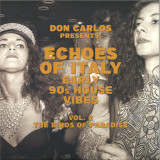
- A1: Montego Bay - Everything (Paradise Mix) 04 59
- A2: Atelier - Got To Live Together (Club Mix) 06 06
- A3: Golem - Music Sensations 04 56
- B1: The True Underground Sound Of Rome Feat. Stefano Di Carlo - Gladiators 05 26
- B2: Eagle Parade - I Believe 04 26
- C1: Dj Le Roi - Bocachica (Detroit Version) 05 28
- C2: Green Baize - Synthetic Rhythm 01 41
- C3: M.c.j. Feat. Sima - Sexitivity (Deep Mix) 05 30
- D1: Kwanzaa Posse Feat. Funk Master Sweat - Wicked Funk (Afro Ambient Mix) 06 31
- D2: Progetto Tribale - The Bird Of Paradise 06 29
- D3: Mbg - The Quite 06 59
Vol 1[28,99 €]
Googling “paradise house”, the first results to pop up are an endless list of European b&b’s with whitewashed lime façades, all of them promising “…an unmatched travel experience a few steps from the sea”. Next, a little further down, are the institutional websites of a few select semi-luxury retirement homes (no photos shown, but lots of stock images of smiling nurses with reassuring looks). To find the “paradise house” we’re after, we have to scroll even further down. Much further down.
It feels like yesterday, and at the same time it seems like a million years ago. The Eighties had just ended, and it was still unclear what to expect from the Nineties. Mobile phones that were not the size of a briefcase and did not cost as much as a car? A frightening economic crisis? The guitar-rock revival?! Certainly, the best place to observe that moment of transition was the dancefloor. Truly epochal transformations were happening there. From America, within a short distance one from the other, two revolutionary new musical styles had arrived: the first one sounded a bit like an “on a budget” version of the best Seventies disco-music – Philly sound made with a set of piano-bar keyboards! – the other was even more sparse, futuristic and extraterrestrial. It was a music with a quite distinct “physical” component, which at the same time, to be fully grasped, seemed to call for the knotty theories of certain French post-modern philosophers: Gilles Deleuze, Félix Guattari, Paul Virilio... Both those genres – we would learn shortly after – were born in the black communities of Chicago and Detroit, although listening to those vinyl 12” (often wrapped in generic white covers, and with little indication in the label) you could not easily guess whether behind them there was a black boy from somewhere in the Usa, or a girl from Berlin, or a pale kid from a Cornish coastal town.
Quickly, similar sounds began to show up from all corners of Europe. A thousand variations of the same intuition: leaner, less lean, happier, slightly less intoxicated, more broken, slower, faster, much faster... Boom! From the dancefloors – the London ones at least, whose chronicles we eagerly read every month in the pages of The Face and i-D – came tales of a new generation of clubbers who had completely stopped “dressing up” to go dancing; of hot tempered hooligans bursting into tears and hugging everyone under the strobe lights as the notes of Strings of Life rose up through the fumes of dry ice (certain “smiling” pills were also involved, sure). At this point, however, we must move on to Switzerland.
In Switzerland, in the quiet and diligent town of Lugano, between the 1980s and 1990s there was a club called “Morandi”. Its hot night was on Wednesdays, when the audience also came from Milan, Como, Varese and Zurich. Legend goes that, one night, none less than Prince and Sheila E were spotted hiding among the sofas, on a day-off of the Italian dates of the Nude Tour… The Wednesday resident and superstar was an Italian dj with an exotic name: Don Carlos. The soundtrack he devised was a mixture of Chicago, Detroit, the most progressive R&B and certain forgotten classics of old disco music: practically, what the Paradise Garage in New York might have sounded like had it not closed in 1987. In between, Don Carlos also managed to squeeze in some tracks he had worked on in his studio on Lago Maggiore. One in particular: a track that was rather slow compared to the BPM in fashion at the time, but which was a perfect bridge between house and R&B. The title was Alone: Don Carlos would explain years later that it had to be intended both in the English meaning of “by itself” and like the Italian word meaning “halo”. That wasn’t the only double entendre about the song, anyway. Its own very deep nature was, indeed, double. On the one hand, Alone was built around an angelic keyboard pattern and a romantic piano riff that took you straight to heaven; on the other, it showcased enough electronic squelches (plus a sax part that sounded like it had been dissolved by acid rain) to pigeonhole the tune into the “junk modernity” section, aka the hallmark of all the most innovative sounds of the time: music that sounded like it was hand-crafted from the scraps of glittering overground pop.
No one knows who was the first to call it “paradise house”, nor when it happened. Alternative definitions on the same topic one happened to hear included “ambient house”, “dream house”, “Mediterranean progressive”… but of course none were as good (and alluring) as “paradise house”. What is certain is that such inclination for sounds that were in equal measure angelic and neurotic, romantic and unaffective, quickly became the trademark of the second generation of Italian house. Music that seemed shyly equidistant from all the rhythmic and electronic revolutions that had happened up to that moment (“Music perfectly adept at going nowhere slowly” as noted by English journalist Craig McLean in a legendary field report for Blah Blah Blah magazine). Music that to a inattentive ear might have sounded as anonymous as a snapshot of a random group of passers-by at 10AM in the centre of any major city, but perfectly described the (slow) awakening in the real world after the universal love binge of the so-called Second Summer of Love.
For a brief but unforgettable season, in Italy “paradise house” was the official soundtrack of interminable weekends spent inside the car, darting from one club to another, cutting the peninsula from North to centre, from East to West coast in pursuit of the latest after-hours disco, trading kilometres per hour with beats per minute: practically, a new New Year’s Eve every Friday and Saturday night. This too was no small transformation, as well as a shock for an adult Italy that was encountering for the first time – thanks to its sons and daughters – the wild side of industrial modernity. The clubbers of the so-called “fuoriorario” scene were the balls gone mad in the pinball machine most feared by newspapers, magazines and TV pundits. What they did each and every weekend, apart from going crazy to the sound of the current white labels, was linking distant geographical points and non-places (thank you Marc Augé!) – old dance halls, farmhouses and business centres – transformed for one night into house music heaven. As Marco D’Eramo wrote in his 1995 essay on Chicago, Il maiale e il grattacielo: “Four-wheeled capitalism distorts our age-old image of the city, it allows the suburbs to be connected to each other, whereas before they were connected only by the centre (…) It makes possible a metropolitan area without a metropolis, without a city centre, without downtown. The periphery is no longer a periphery of any centre, but is self-centred”.
“Paradise house” perfectly understood all of this and turned it into a sort of cyber-blues that didn’t even need words, and unexpectedly brought back a drop of melancholic (post?)-humanity within a world that by then – as we would wholly realise in the decades to come – was fully inhuman and heartless. A world where we were all alone, and surrounded by a sinister yellowish halo, like a neon at the end of its life cycle. But, for one night at least, happy."
'It begins with a shoebox of mysterious provenance, full of recordings from the Vendée department on France’s western seaboard: songs of love and war, life and death, played out on land and sea. Songs passed down and sung by ordinary men and women, gracefully delivered with the poetic economy which unites the folk song of all peoples.
Next it takes a group of contemporary musicians to make selections from this treasure trove and sing these old songs anew; to sing them for their beauty, of course, and to reclaim the people’s tradition from those who would seek to exploit it for nefarious political ends. Who better for this task than Tartine de Clous, a singing trio from Vendée’s neighbouring department of Charente-Maritime, who burst into national and international consciousness with their debut album "Sans Folklore" in 2015? The result of their shoebox rummagings, the new album "Compter les dents", recorded in 2019 and finally seeing the light of day, is bound to delight old fans and win them many new ones.
Time makes many’s the alteration, and "Compter les dents" finds 'les garçons' - Geoffroy Dudouit, Thomas Georget and Guillaume Maupin - in a different state of being from their debut release. The trio, friends since youth, have certainly matured between albums, as one would expect; consequently the newer performances are more considered and poised, unfolding with a patient confidence. A relaxed domesticity prevails, something to do with the fact that the album was entirely recorded chez les amis, in contrast to the first album, which was mostly recorded at live performances in bars and night-spots across France.
Lending gravitas to the grain of their voices we mark a deepened richness, doubtless born of the various vicissitudes of daily existence which these gentlemen - and we too as citizens of this turmoiled globe - have weathered in the intervening years. Not too dissimilar, in fact,
from some of the vicissitudes detailed in those old Vendée songs. Plus 'ça change', right?
There’s a greater complexity and subtlety to their unique three-part harmonising, too. Their voices mesh in even stronger - almost telepathic - 'fraternité' than ever before: now commanding and mighty as a full-rigged counter-vessel, now gentle and lulling as a mother’s
cradle-croon, or as the whisper in a lover’s ear.
Three legendary figures of French traditional music, now sadly departed, preside as tutelary spirits over Compter les dents. They are: the late Claude Flagel, musician and ethnomusicologist; and the late Jean-Loup Baly of the well-known 1970s band Mélusine. Most of the album was recorded by Claude in the Brussels home he shared with his late wife Lou Flagel. The album is dedicated to the memory of Jean-Loup, Claude and Lou.
For the first time there are several guest instrumentalists working their magic to expand the Tartine de Clous sound. Jean-Loup plays a characterful accordéon on the song ‘La Veuve'. The other guests are: Maurice Artus (voice), Robert Thébaut (violin), Quentin Manfroy (piccolo, contrabassoon), Marceau Portron (cigar box guitar). Their contributions add even more conviviality to that which the trio of singers already share, a sensation which will doubtless be shared by those who happen to find a place in their lives for "Compter les dents".'
Liner notes by Alasdair Roberts.