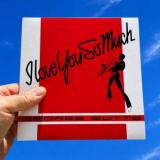
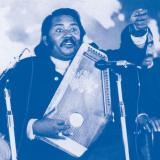
In the spring of 1971, somewhere between Brussels, Paris and a collective pop fever dream, Le Monde Fabuleux Des Yamasuki landed on vinyl. It sounded like nothing else then and it still does not today. More than half a century later, Sdban Records proudly presents a reissue of this singular cult album, available from April 3, 2026 on vinyl.
The album was produced by Jean Kluger and written both by Jean and Daniel Vangarde (aka Bangalter, later the father of Thomas Bangalter of Daft Punk), who were alreadywell ahead of their time, long before electronic music rewrote the rules of pop culture.
Released under the name Yamasuki, also referred to as The Yamasuki Singers, or The Yamasuki's, the project was never intended as a conventional band. It was a studio-born fantasy, a concept album disguised as a pop record. What began as a standalone single quickly expanded into a full-blown pan-cultural pop opera that ignored genres and common sense with joyful abandon.
Musically, the album sits at a delirious crossroads. Psychedelic pop collides with funk rhythms, samba and bubblegum melodies, full of chants and choruses in a phonetic pseudo-Japanese, written with the help of a dictionary. Kluger and Vangarde famously recruited a children's choir to perform the vocals, and for added spectacle, they brought in a Japanese judo grandmaster, whose ritualistic shouts and battle cries erupt throughout the record.
Several singles were released. One of them, Yamasuki, with accompanying dance move, appeared in the United Kingdom and France on John Peel's Dandelion label, a fitting home for a record that thrived on the margins of pop culture. Its B-side, Aieaoa, proved even more potent. In 1975, the song was reborn as A.I.E. (A Mwana) by Black Blood, an African group recording in Belgium, this time sung in Swahili. That melody would travel even further. Aie a Mwana became the debut single of English pop group Bananarama, and in 2010 it resurfaced once more as Helele, an official song of the FIFA World Cup, recorded by South African singer Velile Mchunu with Danish percussion duo Safri Duo. That version became the most widely known incarnation of the song. With Jean Kluger directly involved, it was less a cover than a continuation of the original idea.
The album's afterlife did not stop there. Over the years, Yamasuki has been quietly sampled, covered, and featured across media far beyond the realm of novelty pop. Kono Samourai was sampled in The Healer by Erykah Badu (2007), produced by Madlib, while Yama Yama has found its way into recent pop culture as well: appearing in the television series Fargo, on Angus Stone's project Dope Lemon, and on the 2008 Late Night Tales compilation curated by Arctic Monkeys drummer Matt Helders. Proof, if any were needed, that this strange little record carries a deeper musical DNA than its playful exterior might suggest.
This new reissue of Le Monde Fabuleux Des Yamasuki proves the renewed interest and respect for this cult album, faithful to the original spirit while finally giving it back the physical presence it deserves. In an era obsessed with genres and algorithmic neatness, Yamasuki still laughs, dances and karate-kicks its way past definitions. It reminds us that pop music can be playful without being disposable, strange without being cynical and joyfulwithout explanation. The world of Yamasuki was always fabulous, we are just lucky it found its way back to us!
Search:sense
Loud Ambient 2 picks up directly from where Loud Ambient left off. After picking the drum machines back up, we returned to the colourfield ideas that shaped the first record. Rothko remained a key reference, along- side a strong recommendation to spend time with the work of Josef Albers. We did exactly that, and it paid off.
Alongside the music, we created 50 new pieces of artwork for Loud Ambient 2. These became tools rather than decorations. Working this way felt open and rewarding, and brought a real sense of play back into the process. We already understood what a Loud Ambient track could be, so slipping back into that headspace felt natural. The tracks came together quickly, full of energy, movement and that familiar noodle quality.
The creative side landed easily this time. There is some- thing about working with colourfields that frees you up and pushes you further into abstraction. It removes hesitation and keeps the focus on instinct and response.
With the drum machines and synths loaded, we kept our heads down and made the kind of music we want to hear on a dance floor. Loud Ambient 2 is the result.
French duo Froid Dub keeps twisting its slow-motion dub DNA and hits hard with the release of Positive and Natural on Delodio— instant classic that grabs you from the very first spin with its “minimal maximal” drive. Hypnotic and raw, this eight-track manifesto glides across the holy trinity: 808, 303 and tape delays—colliding true-school dub synths, club culture and experimental twists. A masterclass of a record that flaunts its roots and stays deeply personal. Froid Dub once again proves its singular talent for pumping up a dance floor at an average of 85 BPM.
Hild unites US sound sculptor zake and UK-based rhubiqs in a transatlantic collaboration steeped in plenty of their signature patience and emotional gravity. Across four slow-burning movements, deep drones, hushed piano lines and glacial textures unfold with cinematic allure as vastness and intimacy coexist. Rooted in both artists' post-rock backgrounds, this record feels less composed than discovered, as if each passage emerges organically from silence. There is plenty of fragile beauty in the stillness and looming sense of loss, so this is the sort of record that has a profound effect despite its knowing restraint.
After years of shaping dancefloors worldwide and carefully curating the sonic and visual identity of Up The Stuss, Dutch favourite Chris Stussy presents his most expansive and personal statement to date with his debut album, ‘Lost, Found & Forgotten...’. Landing on 3rd April, the album unfolds across three interconnected chapters - ‘Lost’, ‘Found’, and ‘Forgotten’ - each revealing a different side of his creative world across 19 tracks while remaining tethered to a singular wider vision.
At its core, ‘Lost, Found & Forgotten...’ is an exploration of creative freedom. Visually and conceptually guided by the image of a kite, the album reflects movement, perspective, and balance. Floating freely yet always anchored, the kite mirrors Chris’s approach to music: unrestricted in emotion and imagination, but grounded in groove, craftsmanship, and intention. It’s a symbol that naturally extends the Up The Stuss identity; pointing skyward, embracing openness, and encouraging curiosity.
“This album has been a long time in the making, and I’m excited to finally share it with you. The process behind it - exchanging ideas with other artists and creating music outside of my comfort zone - has been an incredible experience. It gave me a true sense of freedom, allowing me to not think about boundaries or expectations. I’ve never been more proud of a project than this one. It’s deeply personal, and it represents my sound as a whole. I hope you listen with an open mind and find something in it that resonates with you.” - Chris Stussy.
The ‘Lost’ chapter opens the album by giving new life to music once left behind. These are tracks written across different moments in Chris’s journey, ideas that never quite found a home until now. Rather than relics of the past, they emerge re-discovered, refined, and fully realised. ‘
Found’ represents inspiration in motion. Sparked by collaboration, digging, and shared creative exchange, this chapter captures the moment when ideas connect, and colour floods the sky.
The album closes with ‘Forgotten’ - a nod to the deeper cuts, the B-sides, and the moments that reward patience. This chapter is for the heads and diggers; tracks that may not demand immediate attention but reveal their value over time.
- A1: Dark Sky Reservation
- A2: A Walled Garden
- A3: Blah! Blah! Blah!
- A4: Pray Silence
- A5: Where Have You Been All My Life?
- A6: French Cursive
- B1: Guernica Jigsaw
- B2: Eclipse
- B3: The Goldilocks Zone
- B4: Sirius Alpha, Sirius Beta
- B5: Under Artificial Lighting
- B6: Collared Dove
The new album by L.Y.R., their third commercial release, begins with the idea that the furthest points of light - stars - can only be seen in the dark. It’s a kind of contradiction that finds musical expression in these new tracks, the band always navigating towards sightings of hopefulness and constancy in an increasingly bewildering and storm-battered world.
The term dark sky reservation has its origins in environmentalism, and several tracks on the album deal with the messed-up weather of our contemporary planet, both meteorological and psychological, from descriptions of an earth deluged by thunderstorms to the soggy back-gardens of suburbia, a climate crisis brought on by rampant urbanism. In that context, dark sky reservations are those regions of the landscape where light pollution is discouraged and even outlawed, to allow scientists and casual stargazers to peer into the cosmos and see the glory of the constellations, patterns of light that have entranced and mystified us for hundreds of thousands of years.
It’s from those designated zones that human beings get a sense of their place in the universe, and experience the wonder of the here and now against a context of eternity and infinity. An alternative to the hectic craziness of everyday life, so often virtual and synthetic, the dark sky reservation is a place of refuge and dreaming, and like L.Y.R.’s music, such spaces are earmarked for contemplation and thoughtfulness.
L.Y.R. is author and current British poet laureate Simon Armitage, singer-songwriter Richard Walters and multi-instrumentalist & producer Patrick Pearson.
No Drama, the label founded by Roy Rosenfeld, continues its vinyl and digital series with a new release from Eli Nissan, an artist whose work consistently rewards close listening.
The musical material unfolds over 15 minutes and 4 seconds, offering a concise yet layered statement.
While Hedonism opens with driving percussion and a flexible groove, layering textures and effects into a high-energy, immersive cut built for peak-time moments, Shout closes the release with a deeper, more introspective direction, blending vocal samples with a laid-back, psychedelic flow balancing repetition and variation to create a sense of elevation and continuity.
Concise, versatile, and DJ-ready, the fifth edition of the No Drama catalog continues the path with clarity and purpose.
Portuguese techno force Lewis Fautzi debuts under his own name on Mutual Rytm with ‘Beneath The Surface’. Hailing from Barcelos, Portuguese maestro Lewis Fautzi has carved out a formidable reputation through a run of uncompromising releases and a sound rooted in tension, precision and raw power - exemplified by his recent outing on the agenda-setting Hayes Collective. He has previously established his fierce, potent sound on Soma, PoleGroup, Mord, and a number of other influential labels, while also heading up Faut Section. Having previously appeared on Mutual Rytm’s Federation Of Rytm III compilation under his Non Cyclic alias, he now steps out on SHDW’s label with a six-tracker busting full of impactful techno cuts. The heavily-requested ‘Beneath The Surface’ opens the EP with menacing low-end and tightly coiled pressure that's released through simmering valves and hissing synths. ‘The Hollow Cycle’ brings a loopy, tunnelling groove with a snaking lead and snaking metallic percussion, while ‘Inner Mechanism’ keeps things dark, deep and driving with a backlit glow that pulls you in. ‘Nonlinear Form’ is streamlined deep techno that fizzes with texture, spraying chords and a rumbling sub-bass, while closer ‘Anamorph’ rides meticulously designed broken beats with an ever-present sense of bass-driven foreboding. For digital purchasers, sparse and eerie bonus ‘Surface’ slams down with industrial weight and real warehouse grit, shaping up another weighty offering for the label.
Over the past few years, Munich based polymath Lindsey Wang has risen to the forefront of the club scene under her Polygonia alias, creating a stream of spectacular releases where she tirelessly twists techno into a living, breathing ecosystem.
As she appears on Timedance for the first time, Polygonia sculpts a set of four immersive, pressure‐loaded club tracks where earthy psychedelia brushes up against precision‐engineered rhythm, inviting dancers into a zone that feels both ritualistic and sharply futuristic.
“Ceaseless Motion” draws on deep‐focus sound design, restless percussion and subtly warped harmonies, all threaded by a quietly hallucinatory sense of detail that really takes our breath away, and will surely bring the distinctive dancer to the very front of the bass bins.
-- Including A4 insert with release text by Jeff Mills --
"If we're lucky, sometimes we can hear something that goes a bit beyond the boundaries of what we expect. And when this happens, we should be grateful for these experiences. The more "unexpected" we're gifted, the more magical life seems.
These works by Dimi Angelis are a bit more than what they seem. More than music or something to dance to, the sense they give me is that they are sonic pulses or a type of language we've yet to realize."
- Jeff Mills
The Reflex returns in unstoppable form with 'Whatson Ur Mind', the long-awaited vinyl drop after racking up over a million YouTube views. The A-side delivers pure feel-good heat by updating a disco-yacht rock gem into a modern dancefloor weapon with a carefree feel and loved-up sense of romance washing over the nodding bass. Meanwhile, the B-side flips into a soulful, synth-driven slow burner that channels deep funk and libidinousness. Already championed by Gilles Peterson and Ross Allen, this one's built for selectors who know their groove and dancers who like to move.
- A1: Worms In (Feat Laraaji)
- A2: Beneath The Overpass (Feat Shuta Yasukochi)
- A3: Gravel (Feat Loris S Sarid)
- A4: Highway At Night (Feat James Bernard & Marine Eyes)
- A5: Fading Form (Feat Kmru)
- A6: Death Display (Feat Diatom Deli)
- A7: Bloat (Feat Haruhisa Tanaka)
- A8: Larvae (Feat Ki Oni)
- A9: Autolysis & Putrefaction (Feat Green-House)
- B1: Clouded (Feat Golden Brown)
- B2: Countless Wheels Keep Turning (Feat Early Fern)
- B3: Everyone Passing (Feat Gregg Kowalsky)
- B4: Ways To Be Remembered (Feat Kallie Lampel)
- B5: Fur & Exhaust (Feat Ben Seretan)
- B6: Active Decay (Feat Patricia Wolf)
- B7: Melting Into Asphalt/Springing From The Earth (Feat Nailah Hunter)
- B8: Worms Out (Feat Laraaji)
Constellation Tatsu welcomes US artist Brendan Principato aka Saapato for what is a hugely conceptual new album based around decomposition. It was sparked when Saapato saw a dead fox lying by the side of the road on his way home from a job in a local warehouse. He used that as a jumping-off point to interrogate "transformation, interconnectedness, and renewal" and the five stages of decomposition, namely fresh, bloat, active decay, advanced decay and dry/remains. Several collaborators help him on his way as he sketches out various instrumental textures which variously have occasional shards of light, lingering melancholy and a subtle sense of hope.
Music From Memory is thrilled to present ‘Aquáticos’, a captivating new record from Los Angeles producer Eddie Ruscha and Brazilian guitarist Fabiano Do Nascimento. Blending Nascimento’s expressive, Afro-samba and choro-inflected guitar with Ruscha’s cosmic, groove-driven sound, ‘Aquáticos’ marks the start of a vibrant musical partnership—an organic, free-spirited collaboration full of interplay and vitality.
Conceived during the early 2020’s, ‘Aquáticos’ grew from a series of recording sessions in which the music unfolded naturally, in a state of effortless flow. Album opener ‘Nascer,’ the very first piece they recorded, captures such a moment perfectly: Nascimento’s 7- and 10-string nylon guitars weave seamlessly with Ruscha’s modular synths, drum machines, and vintage keyboards. Like much of Ruscha’s work under Secret Circuit and E Ruscha V, it is rich in lush, rhythmic textures—pulsing and bubbling with vibrant energy.
The initial session that produced the opening track set the tone for the record, establishing a template of intuitive interplay and musical freedom. Each subsequent session built upon the last, gradually shaping ‘Aquáticos’ across nine tracks, all characterized by melodic richness, rhythmic depth, and an unshakable sense of spontaneity.
‘Aquáticos’ pulls the listener gently into a celebration of musical conversation — a radiant, immersive journey where Ruscha and Nascimento’s instruments breathe together, echoing the joy, curiosity, and playful spirit that define their collaboration.
Sleeve art and design by Michael Willis.
Detroit original, Terrence Dixon, returns to Tresor Records to kick off 2026 with ‘When Stars Remember’. Despite his thirty-year career, Terrence has always managed to keep a lower profile than his peers; he has given few interviews, preferring instead to speak through his music, with cryptic song titles hinting at the thoughts swirling around their creation.
However, ‘When Stars Remember’ finds him stepping forward. “I wanted to get closer to the dancefloor. I consciously made this one feel louder…made with Tresor specifically in mind.” And the EP does just that: whilst many of the hall marks of a Terrence Dixon production are present, the drums are more forward; the synth arpeggios so bold that ‘monumental’ seems a better descriptor than ‘minimal’.
“I put three or four sounds together on the same track, layering to make something bigger”, he says of opening track ‘Mono Collapse’, though the statement could apply to any of the music appearing on the release as all four pieces fold in sonics to create something hypnotic; more than the individual parts: “If you stick with the same layered tones, and repeat it over, after a while your brain changes it on its own; you hear a lot of things: things that you didn’t notice at first, things that maybe aren’t even there.”
The absence of things is another main theme of the EP, especially what Dixon sees as ‘The Forgotten’, a group of fundamental principles like common sense, trust, loyalty, honesty and respect that are missing from modern life. “This world is different…the love is gone. But I love everybody, man. I think, secretly, everybody love everybody, but they just don’t know it.”
For more than two decades, Eamon Harkin has helped shape New York’s communal pulse. As a founder of Mister Saturday Night, Mister Sunday, Planetarium, and Nowadays, he’s created and DJed in spaces where dance, listening, and connection blur into something deeper — places where people come together to make sense of the world through sound.
On his new album, The Place Where We Live, Harkin turns that lens inward. Drawing on 25 years as a DJ and curator, he moves between house, techno, and ambient currents with a sense of stillness and searching. The result is a record that feels both physical and introspective — the sound of the dance floor seen through memory.
The title comes from psychoanalyst D.W. Winnicott’s idea of “the place where we live,” the psychic space between the inner and outer world — where play, art, and culture help us build meaning. For Harkin, an Irish immigrant long settled in another land, that idea resonates both philosophically and personally. The Place Where We Live captures the tension and beauty of the pulse of the club and the quiet of reflection — an album about belonging, transition, and the quiet resonance of finding home somewhere in between.
DISPLACES represents Fabris' most personal musical journey to date, inspired by the concept of hyperobjects and cartographic practices. The album sculpts a high-dimensional phased time-space composed of concrete materials and digital archetypes in a state of constant displacement. It delves into the symbolic and philosophical realms of mapping as one of the greatest sense-making mechanisms for life, in dialogue with object-oriented environments, superimposition and non-locality applied to cosmic, temporal, and emotional memory.
The sonic ecosystem expands on the image of navigating a path through a set of places, from the microcosm of quanta to the macro force of dark matter, from underwater depths to overland terrains, encapsulating the cyclical flow between birth and death, both in ecological and anthropological sense. The intersection of these shifting states is explored through the extensive processing of the langspil, Iceland's only traditional instrument, intertwined with manipulated field recordings of biophonies and geophonies captured across Icelandic and Venetian territories. These recordings form the backdrop for a meditative process that relocate familiar objects into unfamiliar realms, reflecting on the transformative power of self-reflection while encapsulating the fragmentation and entanglement found in nature and the human state. The record plunges the listener into a disconcerting and physical soundscape, as a “ghostly spectrality that comes in and out of phase with normalized human spacetime,” evoking sensations of suffocation and release as each layer continuously unfolds the palimpsest of the enclosed labyrinth.
“Extraction of the I” embodies a subatomic reaction—erupting as a molecular force that rises, only to re-submerge with a solitary exhale underwater. In this mutated dark space, beluga whales breathe into "Xanadu Phasing," creating a pulsating tension that releases only to unveil a frozen landscape.
In “Barricading the Ice Sheets” the glacial material morphs into a liquid tunnel of digital artifacts, building a wall of noise that shatters into scattered fragments of ice, resembling bird calls from another world.
A moment of stasis is offered with the appearance of an asymmetrical loop in Monolith I, evoking a primitive rite before an unknown force emerges.
The physical intensity of subsonic material in "A Quake in Being" interrupts the hieratic tone, detuning into polluted sonic matter sourced from relics of the First World War in the Venetian Prealps. The geography of this place reconciles with the original homeland in "The Map is the Territory," blending negative space with anthropogenic elements and exploited sounds of the langspil.
The burning density of "Wolf-Rayet" projects into the void, echoing the residual sounds of a local church as relics of fossilized religions. Wolf tones are the remains in Monolith II, introducing the final track, "Topography of Extinction," where evolving psilocin textures invite the listener to uncover deeper layers of meaning and dislocation.
Building a temple of sound from reduced elements, Decoder's Alchemy EP on T3R allows selected components to generate a strong and steady drive. Using a distinctly organic sound palette, the tone of the release is wordly, sometimes almost wooden with space taking the role of an active element. When melodies or chords appear, they introduce a subtle sense of melancholy, adding emotional weight without pulling the music away from its physicality. In its unfolding storyline, the EP suggests a broader narrative. While each piece explores a slightly different soundscaping approach, a consistent DNA runs through the release - reinforced by Sanskrit and Hindu references as an underlying conceptual thread. Percussion is handled with precision and imagination: Grooves shift, evolve, and reconfigure. Dark, driving sequences are softened by airy pads and atmospheric layers, creating a dual feeling of intensity and serenity. Filters and reverbs are applied with restraint, giving the music a sense of movement and breath. Alchemy showcases an emerging artistic voice driven by aspiration and exploration. Through confident craftsmanship, genuineness and self-reflection translate into a perfectly balanced, inspiring release. ? 2026 The Third Room Written and Produced by Gautham Gaug Mixdown and Mastering by Ahmet Sisman (The Third Room Studios) Artwork by Daniel Bornmann & Lennard Makosch (STUEDIO.XYZ) Distribution by Clone Pressing by Matter Of Fact
- 1: The Maker
- 2: Writhe And Coil
- 3: Plague Of Flies
- 4: May Your Memory Rot
- 5: Violent Obsession
- 6: No Savior
- 7: Blade Between The Teeth
- 8: Two Empty Caskets
- 9: Survive Or Die
- 10: Hell Is Home
Florida deathcore heavyweights Bodysnatcher return with their most punishing and purposeful statement to date. ‘Hell Is Here, Hell Is Home’, out April 10, is not an escape record, it is a confrontation. Brutal, unrelenting, and emotionally unfiltered, the album captures a band fully locked into its identity while sharpening every weapon in its arsenal. True to their roots, Bodysnatcher deliver a sound steeped in suffocating grooves, bone-crushing breakdowns, and feral intensity. ‘Hell Is Here, Hell Is Home’ pushes beyond pure aggression. The record explores cycles of trauma, self-destruction, survival, and the uncomfortable truth that for many, suffering is not a phase, it is a place.
This is deathcore grounded in lived experience, written from inside the fire rather than in hindsight. Across the album, Bodysnatcher balance sonic violence with a disciplined sense of control. Downtuned riffs grind with oppressive weight, drums hit with mechanical precision, and vocals swing between outright hostility and grim reflection. Each track feels deliberate, built not just to hit hard, but to linger. With this release, Bodysnatcher continue to cement their position as one of modern deathcore’s most uncompromising voices. ‘Hell Is Here, Hell Is Home’ is a record built for the pit, rooted in truth, unflinching and heavy in every sense, delivered with absolute conviction.
Jessie Ware returns with her new album ‘Superbloom’ – the crescendo of her latest era – out 10th April via Island EMI Records.
Superbloom’ erupts into a glittering rush of Studio 54-inflected groove-pop. Expanding Ware’s increasingly euphoric body of work as she explores our shared craving for touch, pleasure, intimacy and connection.
The album features recent single ‘I Could Get Used To This’, hailed as her “ultimate entry into divahood” and the first track to fully capture the record’s assured, expansive spirit, carried by cascading strings and a sense of full-bodied release
- A1: Poltergeist Party
- A2: Music Box Concerto
- A3: Rain Forest Rap Session
- A4: A Love Theme For Gargoyles
- A5: Bridge Of Promises
- A6: Exasperated Frog
- A7: Take Me To Your Leader
- A8: Deserted Palace
- A9: Pogo Rock
- B1: Wind Swept Canyon
- B2: The Abominable Snowman
- B3: Iraqi Hitch-Hiker
- B4: Free Floating Anxiety
- B5: Synthetic Jungle
- B6: Bee Factory
Transversales Disques proudly presents the first official LP reissue of "Deserted Palace", studio album written & performed by Jean Michel Jarre in 1972, during his work experience at G.R.M. (Groupe de Recherches Musicales).
In 1971, an order was placed with producer Francis Dreyfus to provide sound for public places such as airports and libraries. He decided to pass the project on to Jean-Michel, who had recently been signed by his record company.
These fifteen tracks are made with only two synthesizers (EMS VCS3 & Farfisa organ) in an experimental and very minimal style.
"It was a crazy album, totally homemade, with rhythms that I made in my student room, with a minimum of equipment and at the same time electronic sounds that I stole from the GRM where I went at night after stealing the keys to the studios. It is a pirate record, in every sense of the word, in which we find what I did afterwards.” JMJ
Audio restored & remastered
Including cuesheet poster/ Limited edition of 500 copies
Guests is the home recording project of Jessica Higgins and Matthew Walkerdine. Vaguely named as such to avoid any problems with the poster if they pull out of a gig (which has only happened once, about a year and half before any songs were actually written to be fair) but also to capture a sense of reverse hospitality. That is, arriving at your door with a bottle of good wine (can’t turn up empty handed) or a fist full of savoury or sweet snacks (time of day dependant); oversharing at the afters (and then passing out on your couch); reading to your toddler while you make their lunch or put everything back where it was meant to go (only to get torn apart again). So, something about what happens when private worlds meet each other, making or having been made a space for. But at times, it’s a different kind of intimacy, a temporal or material one, like the feeling of crisp fresh sheets, and abundant and soft, body-part appropriate towels in a hotel in a city you’ve been to before and love to go back to.
Their debut record, “I wish I was special”, was variously described as “a collage of concrète experiments and outerzone pop gestures, music that sounds as if it’s been written from the depths of a dream”; “music for people who love music but also hate it too”; “something like chasing ghosts or befriending a wild animal”; “pulling apart nervous sensations with haphazard ease and requisite humour”; and “a melody of refusal, of being all-in (…) finding the exact right WRONG sound to express the discontent”. Common Domestic Bird continues in this vein, layering synthesiser, keyboards and samples over rudimentary drum rhythms and field recordings, which are in turn sung or spoken with to create nine new songs.
Written and recorded between autumn 2024 and summer 2025 in Reading, Berkshire, the music has matured since its last outing, in a way, leaning less into collage and more toward structured composition and melodic depth, yet retains a healthy dose of indeterminacy and off-kilter rhythms for the forever-amateur. The songs on Common Domestic Bird hint at some “about”-ness through a series of discrete vignettes which sound a bit like architecture or end of year lists, gossip or over-thinking subjectivity, like disappearances and impressions, the support structure of the spine, letters and signs offs, things you could really do without and where they should go, hoping you’ll see something that isn’t there, pretences and performance. At times they feel kind of funny, others kind of sad or a bit angry and annoyed, a bit like you really.
- It Comes To An End
- Superimposed
- Hyperlocalize
- Thickness Of Signs
- Every Cell Thought Of Every Thinkable Thing
- Mementoes
- Collide
- Some Unimaginable World
A cocktail of rebellious queer vocal fragments, deceptive percussive granules and swaying hammered vibrations, upsammy and Valentina Magaletti's first collaboration trembles with suspense. The seeds of 'Seismo' were sown following a commission from Amsterdam's Rijksmuseum to soundtrack an exhibition of work from the Museum Boijmans van Beuningen in Rotterdam and the duo didn't want to approach their collaboration flippantly. So, wandering the museum's maze of rooms, they recorded various improvised percussive sounds with their arsenal of microphones, using the space to inform various rhythms and textures that were sculpted later into electroacoustic vignettes. This was just the starting point, though; as Magaletti and upsammy began performing together, the project evolved and 'Seismo' began to take shape. The duo had struck on a salient aesthetic concept, using mostly digital and acoustic mallet instruments to blur the boundary between their roles and create friction between the synthetic and the authentic. And the finished record is a phantasmagoric push-and-pull between its various conflicting elements: harmony and dissonance, randomness and predictability, openness and constraint. 'Seismo' isn't the first time that upsammy has studied her environment in search of revelation. On her acclaimed second album, 2024's 'Germ in a Population of Buildings', the Amsterdam-based DJ, producer and multidisciplinary artist erected her complex, unorthodox rhythms and eerie melodies around a modernist frame of field recordings collected in various cityscapes, countering heavyweight basslines with subtle, microscopic sounds. London-based Italian vanguard Magaletti, meanwhile, has applied her unique logic to innumerable projects at this point, working with everyone from batida icon Nídia and hardcore-dub outfit Moin to French writer Fanny Chiarello and British bass scientist Shackleton. For years she's approached the drums with criticism, attempting to challenge any preconceptions, something that's most visible on 2020's 'A Queer Anthology of Drums'. And both artists' thoughtful perspectives are welded together seamlessly on 'Seismo', a dizzying suite of eight eccentric statements that's fragile but never insecure, gauzy but not indistinct. An unnerving sense of space characterizes 'It Comes to an End' as Magaletti's in situ improvisations herald for upsammy's microscopic glitches and chiming pitch-bent melodies. It's almost unbalancing to witness the track's impossible dimensionality, the interplay between reverberant marimba hits and bone-dry synths, or percussion that's been recorded and processed in consciously different settings. A new architecture emerges in the sound itself that the two artists scan and explore meticulously, testing its boundaries with undulating hybridized rhythms on the invigorating 'Superimposed' and offsetting the powdery drums with liquified smacks and alien voices. The duo's vibrations are knotted with piano flourishes on 'Hyperlocalize', balanced with artificial clanks and clangs that disappear into the track's sonorous atmosphere, replaced by whispers and half-hallucinated insectoid chirps. 'Seismo' is an album that feeds off the energy generated by its juxtapositions: the tension and anticipation that's melted by rapid, hyperactive movement and the finely drawn rhythms disrupted by a layer of indistinct, barely perceptible microsounds. It's a collaboration that sounds like two minds challenging each other but not wrestling, each peering from their own distinct vantage point and imagining a third landscape shaped by optimistic, queer vibrations.
2026 Repress
London based composer, multi-instrumentalist and producer Akusmi announces 'Lines', an exhilarating new collection of works born from the desire to take where the acclaimed debut album 'Fleeting Future' left off - in search of new forms.
" 'Secant', I must have listened to this tune 3 times in a row, this one soundtracked my night drive through the winding roads" - Benji B, BBC Radio 1
'Lines' is presented as a Limited edition clear vinyl (500 copies only worldwide), printed in heavy-weight reverse board sleeve with a hand-numbered edition sticker. The vinyl edition also features 'Oblique' (A2), an exclusive version for the vinyl format, plus the now revered 'Longing for Tomorrow' - (Brandt Brauer Frick Remix), previously unreleased physically and now pressed on vinyl format, ending side B. The cover artwork features another collaboration with Dutch visual artist Sigrid Calon and design by label founder Adam Heron.
Formed with a sense of urgency and a reductive approach 'Lines' is almost entirely comprised of alto saxophone, clarinet and piano with embellishments of ambience and minimal percussive elements. Recorded in full at his home studio in London, Pascal Bideau speaks about the process:
"I wanted to go a bit more a bit more horizontal and ambient, work with layers of lines, might they be dotted or straight, and leave them to unfold and see where they would take me."
Akusmi uniquely finds the spaces in between experimental jazz, crossover classical and ambient music.
the first-ever reissue on studio mule of the debut album by japanese jazz legend and bassist yoshio ikeda.
having performed with such illustrious figures as sadao watanabe, masabumi kikuchi, and terumasa hino, ikeda’s first album as a leader features pianist and vocalist ichiko hashimoto—also known for her involvement with yellow magic orchestra—berlin-based jazz pianist aki takase, and leading japanese drummer motohiko hino.
avant-garde yet imbued with a distinctly japanese sense of melancholy, this is a work that resonates profoundly with the present moment.
the gem “whispering weeds,” highlighted by thrilling piano and hashimoto’s evocative scat vocals, was also included on a compilation by bbe.
remastered from the original master tapes by kuniyuki, the album has been revived with a richer, more lustrous sound in this definitive reissue.
Phantasy transports back to 1982 for a faithful reissue of the highly sought after ‘Fools Are Friendly’ from Xclusiv, carefully re-mastered from the original tapes.
The alias of sisters Karen and Maxine Berlinski, Xclusiv emerged inconspicuously from the London borough of Croydon with a sophisticated vision of cosmic disco pop, linking the suburbs with Soho’s neon-tinted nightlife. Decades later, and in close collaboration with the sisters, this highly sought-after record arrives lovingly reissued by Phantasy in its original, sensuous form.
Originally self-released on Le Maitre Music, a record label spun-off from their family-run fireworks and pyrotechnics company, ‘Fools Are Friendly’ has the irresistible sense of a radio hit that never was. A brilliant DIY reflection of the disco and soul that dominated the charts of the time, its glossy, primitive electronics echo the synth experiments of Giorgio Moroder or Didier Marouani, pioneers that were transforming pop music.
The extended mix provides an overture to the sisters’ twinned vocals, unfolding with delectable disco drama. In contrast, the Instrumental Mix lets the record’s blend of elements truly breathe, a synthesised version of Xclusiv’s irresistible vocal hook holding court between timeless arpeggios and subtle modulation.
2026 Repress
Akusmi is the project moniker of French-born, London based composer, multi-instrumentalist and producer Pascal Bideau, who signs to the new Tonal Union imprint for the release of his album 'Fleeting Future.' With its hallucinatory, genre-defying blend of minimalism, cosmic jazz and Fourth World influences, and in its quest for optimism in the face of unknown and limitless possibility. 'Fleeting Future' stands apart as an inventive and inspirational debut.
The creation of the album's richly colourful and multi-layered sound world was originally inspired by Bideau's journey to Indonesia, where he immersed himself in traditional Gamelan and gong music. Many of the themes, motifs and melodies on 'Fleeting Future' seed from the 'Slendro' scale, one of the essential tuning systems used in Gamelan. However it is not musical scales, but scales as in the size or extent of things that most fascinates Bideau, specifically he explains; "the compelling way things dramatically change when you shift from any given scale to another."
The album connects directly to nature and the wider world in its evocation of perceptive shifts and transitions from microscopic to macro scale, as evidenced by the opening title track 'Fleeting Future', on which a simple dotted saxophone line morphs and billows into synths, brass and strings, indicating the musical voyage that lies ahead. Like the start of a journey or adventure it is full of anticipation, its arborescent growth conveying the optimism of the unknown and of limitless possibility. The album centrepiece 'Neo Tokyo' is a vibrating, ebullient mass of colliding elements which feels like zooming in to the electron level, as it teeters on the edge of chaos. The title is a reference to Katsuhiro Otomo's Akira, a dizzying work of art set in a sprawling futuristic metropolis.
'Yurikamome', meanwhile, is an imaginary soundtrack inspired by Bideau's yearning to visit Japan which he fuels by watching Youtube videos of drives and rides through Japanese landscapes and cities. "It's amazing" he adds, "that we have the ability to access almost anywhere in the world and see what it's like, that people document it and upload it. It's never going to be any replacement for the real thing, but with places that really touch you, it works." The track is named after a Japanese monorail train line which rides from Shinbashi to Toyosu, a last journey that feels like a new beginning.
'Fleeting Future' was composed and recorded by Bideau between 2017 and 2019 in his North London studio and features additional contributions recorded in Berlin by Florian Juncker (trombone), Ruth Velten (saxophone) and regular collaborator Daniel Brandt of Brandt Brauer Frick (drums / electronic percussion). Having been living through uncertain times, one thing that keeps spiralling into the unknown is the future, about which Bideau leaves us with a final thought:
"The future is fascinating: It is constantly readjusting to new events. I feel we left a linear approach to the future to enter an arborescent one where all the data and information we have about what could happen is exponentially ever-growing. Following a branch might allow you to glimpse into what it may become, but the evolution of the whole picture might very well render the prediction totally obsolete, and even meaningless. In that sense, there is not one future but innumerable ones all cancelling each other. That's what makes it fleeting."
- 1-: Fire Graphics
- 2: Secret Speech
- 3: Ex-Human Shield
- 4: History's Biggest T-Shirts
- 5: Not A Sound In Heaven
- 6: Company Town
- 7: You Can't Say Dallas Doesn't Love You
Bristol experimental band SUGAR HORSE are delighted to announce that their third album, Not A Sound In Heaven, will be released on 10th April 2026 via Fat Dracula Records.
To celebrate the news, the band are sharing the bruising lead single ‘Secret Speech’, available to stream on all good digital service providers from 12th February 2026.
Also announced today are a run of April 2026 UK album headline tour dates and an appearance at StrangeForms Festival 2026, with tickets on sale now (see below for full listings).
“We are fortunate enough to live in what is generally known as ‘The West’,” says front man Ash Tubb of the lyrical themes behind the new track. “I say fortunate with gritted teeth, because I know—as I’m sure the reader knows—that living in the West isn’t always rosy. The vast majority of people struggle everyday to feed, clothe and house themselves. Let alone receive adequate healthcare, schooling and workers’ rights.”
“We are, however, where all the world’s wealth is hoarded. We are at the centre of Empire. The people outside of this empire—those of the Global South—have had their resources extracted and their populations exploited by our own governments, with very little given back in return. This won’t go on forever. It will inevitably end, as all great empires do.”
“We in The West have a choice to make in the meantime; either help create a new, fairer world, or let the greed of our ruling classes become the undoing of all of us.”
The first glimpse of new material from the quartet, ‘Secret Speech’ starts as Not A Sound In Heaven means to go on—a politically-charged wrecking ball of a song that smashes its way through the often unbelievable chaos and brutality of the 21st century with vitriolic malice.
How do you capture the machinations of the geo-political industrial war machine—and all the horrors that go with it—in the studio, without seeming trite or crass? That’s the question that Sugar Horse have posed themselves on their forthcoming third album Not A Sound In Heaven, and they must surely be one of the only bands in existence capable of delivering on just that premise with both musical substance and cutting philosophical insight.
“Ever since I was born I can remember visions of war, famine, and death being beamed directly into my living room via the magic of television,” says Tubb of the record. “These visions were accompanied by newsreader narratives designed to either humanise or dehumanise the people involved. We humanise our government’s allies and dehumanise their enemies. This is taken as common sense, or even wisdom to some degree. People watch the news and accept it as fact, simple and true.”
“As a person gets older they move in one of three different directions with this acceptance of reality; They embrace what they’re being told, they fall into a kind of trust free nihilism or they learn that there are deeper narratives at play.”
“Not A Sound In Heaven is an aged acceptance of the latter. An acceptance of sitting at the centre of a global empire of both military and economic dimensions. An acceptance that the stories we’re told as a nation, or what’s generally in the zeitgeist, isn’t necessarily reality itself.”
“How does a person cope with the weight—and, frankly, the guilt—of a society that perpetuates such distinct inequalities? A society that thinks a bit of killing abroad is fine, as long as it improves the lives of people at home. You can see why so many choose to embrace it. Hell, nihilism seems pretty sensible. Once a person decides upon pursuing a degree of truth however, things get a bit depressing. Beyond depressing...maddening.”
“This album explores this kind of breezy, frivolous subject matter in a manner that will no doubt be uplifting to the listener and massively financially rewarding for the artist.”
The new album follows on from their standalone AA single ‘What’s Your ETA? Let’s Have A Tear Up’/‘Would You Like Me To Be The Cat?’ which was released late last year as a surprise double drop.
- 1: Kill It, Kill It, Kill It
- 2: Hello Honey
- 3: Runs To Blue
- 4: I Got An Itch
- 5: Colored Lights
- 6: I'll Write You Love Songs Until I Die
- 7: Take It Easy On Me
- 8: Runnin' For It
- 9: I Ain't Gonna Cry
- 10: I Get Lonesome Singin' These Songs
Das vierte Album von Big Harp, "Runs To Blue", kommt mit Songs über Fernweh und Verlust, Liebe zu den eigenen Kindern und zum Partner, der Akzeptanz des Älterwerdens und der gleichzeitigen Wehmut darüber, dass wir nie wieder so sein können wie früher, genau zum richtigen Zeitpunkt. Es ist, als würde man Stefanie Drootin und Chris Senseney eines Abends zu Hause besuchen und ihnen zuhören, wie sie lachend und weinend Geschichten aus ihrer Vergangenheit erzählen und Hoffnungen für die Zukunft schmieden. Nur Akustikgitarre, Bass und zwei Stimmen, die sich blind verstehen: "Runs To Blue" ist das schlichteste Album von Big Harp. Gleichzeitig ist es aber das emotional komplexeste – zwei lange verbundene Leben, verdichtet zu zehn offenen und berührenden Songs. Eine Momentaufnahme im Leben eines Paares, dessen Beziehung mit Musik begann und ihr bis heute treu bleibt. Es klingt nach Folkmusik, weil es genau das ist: eine ehrliche Sammlung von Erlebnissen, vertont mit schlichten Melodien, die man mitsingen und immer bei sich tragen kann – kleine Erinnerungen an die Vergangenheit, die den Weg ins Unbekannte weisen.
"Big Harp war schon immer eine der besten und am meisten unterschätzten Bands unter meinen vielen talentierten Freunden aus dem Umfeld von Saddle Creek. Ihre Musik verbindet authentische Americana mit dem rebellischen Punk-Ethos, mit dem wir alle aufgewachsen sind. Chris und Stef sind für mich Helden." – Conor Oberst
66 pages, 175 x 129mm paperback w/ litho printed cover & french flaps.
The second outing for our short run book publishing imprint, The End books, takes the form of a reprint of Spanish Cante Jondo and Its Origin in Sindhi Music, originally published in Spanish in 1955 under the name Cante Jondo: Su Origen y Evolución and later in this English translation.
Aziz Balouch here presents his theory on the roots of flamenco's 'deep song' in modern-day Pakistan, a cultural journey that mimics the routes of his own life, having been brought up among the Islamic mysticism and devotional songs of Sindh before travelling to Gibraltar in the early 1930s and becoming transfixed with the cante jondo across the border in southern Spain. Positing this concept through personal accounts rather than solid theoretical backing, this text provides a valuable account of an extraordinary existence that crossed remarkable geographical, musical, and spiritual boundaries. Issued here with a new introduction from anthropologist of sound, the senses and Islam, Stefan Williamson Fa.
"It would be easy to place Balouch on the fringes, as an eccentric footnote in flamenco history. But that misses the shape of his life and work. He was a figure who moved intuitively across boundaries that our present categories of nation, genre, discipline tend to fix in place. His work predates the founding of the academic discipline of ethnomusicology, the global circuits of world music, and the marketplace logic of fusion projects by decades. He was not an ethnographer or a proto–world musician, but someone for whom the deep song of Andalusia and the devotional song of the subcontinent resonated along the same fault lines of feeling, and who spent his life trying to trace them.
This book is one of the few surviving traces of that attempt. To read it now is to encounter a perspective that resists tidy narratives of influence or origin, despite its title and what he claims to do. It stands instead as evidence of an idiosyncratic musical imagination, one that relied less on proof than on listening, and on the belief that certain echoes carry farther than history can easily explain."
— Stefan Williamson Fa
- A1: Ita Ayelala
- A2: Yanga
- B1: Kwanini
- B2: Nakupenda
- C1: Summerskin
- C2: Vanguard Drive
- D1: Cruisin Kruga
- D2: Dala What We Must
Marking twenty years since South African producer and DJ Esa Williams left Cape Town, Dala What We Must is a deeply personal and expansive debut LP, an exploration of movement, memory, and sound shaped by two decades of creative evolution.
Co-created with collaborator and multi-instrumentalist Robin G. Breeze, the album deftly combines field recordings, layered instrumentation, and emotionally resonant compositions into a nuanced, globally influenced body of work. It also stands as Esa’s most collaborative release to date, featuring contributions from musicians across London, Oaxaca, Nairobi, and Cape Town, each adding their own creative energy to a project built on openness, trust, and shared experience.
The album draws inspiration from Esa’s recent ventures into documentary scoring and soundtracking, with projects like Cursed (Audible) and The Invisible Hand teaching him to listen differently, to honour space, to serve the story. That sensibility permeates the album, resulting in music that breathes, lingers, and listens as much as it speaks.
The title, Dala What We Must, is a South African call to action: a reminder to do what’s necessary, even in uncertainty. Finalised in the months leading up to Esa’s transition into fatherhood, the record carries a sense of grounding, care, and quiet transformation.
Dala What We Must is a sonic reflection of journey and community, a deeply collaborative project rooted in connection and guided by intention.
- A1: Kwanini
- A2: Ita Ayelala
- A3: Yanga
- A4: Nakupenda
- B1: Summerskin
- B2: Cruisin Kruga
- B3: Vanguard Drive
- B4: Dala What We Must
Marking twenty years since South African producer and DJ Esa Williams left Cape Town, Dala What We Must is a deeply personal and expansive debut LP, an exploration of movement, memory, and sound shaped by two decades of creative evolution. Co-created with collaborator and multi-instrumentalist Robin G. Breeze, the album deftly combines field recordings, layered instrumentation, and emotionally resonant compositions into a nuanced, globally influenced body of work. It also stands as Esa’s most collaborative release to date, featuring contributions from musicians across London, Oaxaca, Nairobi, and Cape Town, each adding their own creative energy to a project built on openness, trust, and shared experience. The album draws inspiration from Esa’s recent ventures into documentary scoring and soundtracking, with projects like Cursed (Audible) and The Invisible Hand teaching him to listen differently, to honour space, to serve the story. That sensibility permeates the album, resulting in music that breathes, lingers, and listens as much as it speaks.
The title, Dala What We Must, is a South African call to action: a reminder to do what’s necessary, even in uncertainty. Finalised in the months leading up to Esa’s transition into fatherhood, the record carries a sense of grounding, care, and quiet transformation. Dala What We Must is a sonic reflection of journey and community, a deeply collaborative project rooted in connection and guided by intention.
Vivel is Alexander Eldefors’ second release under his own name. Built around eurorack and field recordings, many captured during still moments while traveling to visit family and friends. The album was created during a period of transition. It functions as an anchor in a time of change, representing a sense of home, safety, and stillness.
Alexander Eldefors is a producer, composer, and mixing engineer based in the countryside outside of Stockholm, Sweden. With a background as both a sound engineer and musician, he has spent years recording, mixing and playing in a wide range of bands and solo projects. In 2019, he consciously slowed down and returned to a more intimate and quiet musical expression, leading to the release of his debut album Bergen in 2020 under his own name. Bergen is the Swedish word for mountains and reflects the fact that Alexander grew up in the north of Sweden close to the mountains.
His music is minimalistic, melodic, and embracing, shaped by a deep connection to nature. Natural environments are a constant presence in his work, serving both as inspiration and as a sound source. Alongside this, he is drawn to the raw textures of everyday objects, working with foley sounds and field recordings. His arrangements unfold as organic sound collages, where elements blend freely and imperfections are preserved to maintain a natural, human feel.
First time reissue of JP free jazz rarity, pre-Seikatsu Kōjyō Iinkai group.
The single album self-released by the quartet Shūdan Sokai in 1977 is one of the most vital documents of mid-seventies Japanese free jazz, documenting Tokyo’s free scene at the precise moment when it began to shift to a handful of tiny venues on the western fringes of the city. In Free Jazz in Japan, Teruto Soejima identifies the extant venue Aketa no Mise in Nishi-Ogikubo as the pioneer of this decamping from the centre: a cramped basement beneath a rice shop, seating just 20 people. Musician-run, operated on a shoestring, these spaces offered a vital site for community, creativity, and a small measure of financial independence — “even though it was in a basement, in spirit it was a loft.”
Among the most active of the new venues was Alone in Hachiōji, nearly an hour from Shinjuku, in a district shaped by universities, lower rents, and a thriving counterculture. Originally opened in 1973 as a jazu kissa, Alone was unusually spacious and equipped with a stage, grand piano, and drum kit. Around 1974, Junji Mori and Yasuhiro Sakakibara began working there, booking free jazz players on weekends and establishing the venue as a crucial hub. Mori recalls early appearances by figures including Kazutoki Umezu, Toshinori Kondo, and others who would define the scene.
In early 1976, Umezu and pianist Yoriyuki Harada — recently returned from New York’s loft jazz environment, where they had played with musicians such as David Murray and William Parker — formed Shūdan Sokai with Mori and drummer Takashi Kikuchi. The name, meaning “mass evacuation,” pointed to their self-chosen exile in Hachiōji. With Alone as their home base, the quartet developed a music characterized by an infectious sense of enjoyment and a willingness to integrate free jazz with elements of song structure. Harada switched between piano and bass; the group experimented with rap-like vocal pieces, jabbering nursery rhymes over bass rhythms.
They returned to Alone on December 24 to record Sono zen’ya (Eve), releasing it on their own Des Chonboo Records, partially funded by advertisements from local businesses printed on the rear cover. The closing “Ballad for Seshiru,” dedicated to Harada’s newborn son, unfolds over a delicate piano melody that moves into emphatic chords as intertwining alto lines rise and spiral.
Alone closed in September 1977, and Shūdan Sokai soon dissolved, later morphing into the expanded Seikatsu Kōjyō Iinkai Orchestra. What remains is a recording rooted in a specific place and moment: a fiercely independent scene sustained by small rooms, close listening, and collective commitment.
It's 5 AM. The golden hour. That moment suspended on the lips of the night that is leaving us. Where the dance still refuses to die as sweat dries, bodies float and minds drift. Some immerse themselves in the dripping surroundings while others emerge or pretend. Outside, nature reclaims its rights. When the moon sets over Kizipolis, the music doesn't stop: it transforms us.
To celebrate our 10th anniversary, the pillars of the label were invited to compose the track they would play at this precise moment. The one that no longer seeks to prove itself, that accompanies the ebb of shadows, connecting the senses to the light.
Kizipolis Vol.1 is the soundtrack to an imaginary but familiar city, a city where raving is a way of life, where music acts as a climate, where at 5am, anything is still possible.
Nicaraguan-American artist Dagmar Zuniga makes music that feels both intimate and expansive: songs drift like disrupted signals, carried by harmony, tape hiss, and a strong sense of touch. Her debut solo album in filth your mystery is kingdom / far smile peasant in yellow music — written and recorded in New York, Norway, and Athens, Georgia over a period of five years on her longtime companion, the Tascam 424 — was uploaded to Bandcamp and YouTube in January 2025, quickly garnering over two hundred thousand views and the attention of artists such as Mount Eerie, who invited her to tour with them that summer. This year, what was once a jewel of tapped-in algorithms and message boards will meet the world at large, with in filth arriving digitally on March 4, and physically on April 10, via AD 93.
in filth is an atmospheric, devotional collage where one voice multiplies into a chorus of selves, sometimes delicate, sometimes severe; an effect created by Zuniga’s masterful layering of texture and complex harmonies. Synths glitter out like spears of sunlight from beneath clouds of moody, time-distorted guitars, and songs spin about themselves like tightly-wound music boxes, making use of a kind of hypnotic repetition, before melting apart into their components or slipping into the following track.
Zuniga began recording to tape as a teenager, drawn to the physicality of the medium — how a tape recording is fragile, mutable, and alive. Though her ethereal sound may draw easy comparisons to other female pioneers of psychedelic folk, she is influenced just as much by the darker sounds of Syd Barrett and The Fall. Like Barrett, Zuniga is a painter, and she is interested not only in recording music but in creating a full, self-contained artistic universe: she creates her own artwork, merchandise, music videos, and bootleg tapes of new and unfinished music that she exclusively sells at live shows (“If something is not material, it does not exist,” she insists). Her world has not gone unvisited, garnering her a monthly show on NTS Radio ‘World of Pain’, as well as a forthcoming appearance at Rewire Festival in April 2026.
Though Zuniga’s work explores themes of solitude and suffering, the suffering in her songs is not borrowed or displayed; it is held, then opened outward through empathy — an exacting practice of attention that insists on shared ground. Solitude, in her work, is not withdrawal but a starting point for connection. Likewise, over time, her recording process has become increasingly communal, with in filth featuring musicians Hayes Hoey, Austyn Wohlers (Tomato Flower), and Zach Phillips (Fievel Is Glauque). Newer recordings widen the circle even more. For Zuniga, collaboration is a way to “find a place between worlds,” echoing Badiou’s idea of love as a vision refracted through the prism of difference. Meaning emerges there — in the space between voices, between artist and listener. “I hope my music helps people work through difficult experiences,” she says. “The same way it helps me.”
Placid aka Paul Wise is the operator in chief at ‘We’re Going Deep’ – an online community and record label born out of a lifelong love affair with the many shades of electronic rhythm, and an obsession for collecting records since 1988. With a mission to share and release new music via his We’re Going Deep and We’re Going Back imprints, you’ll find only the best in underground Acid, Electro, IDM, Techno and House for the dance floor and your listening pleasure.
Up next in the label series, We’re Going Deep is excited to welcome 4 tracks of fresh material from pivotal electronic music maker Gerard Hanson, under his much prized E.R.P. alias. Renown for keeping his profile below the radar and letting the machines do all the talking for him. Hanson’s work as a producer has been much coveted since his debut back in the mid 90s as Convextion. Hailing from Dallas, Texas, he has become something of a hero in the underground Electro community. His work as E.R.P. has left a huge impression on labels such as Frustrated Funk, Bleep43 and Semantica over the years. Renown for his distinctive shimmering machine funk aesthetic, he ably summons the outer reaches of deep space listening thanks to his innate mastery of brooding, sci-fi soundscapes that few can equal.
Following releases for Apnea and Synchrophone, Hanson lifts off with a heartfelt tribute to our recently departed friend James Baker on ‘One4ReKab’. Ascending with the pulse of a steady kick drum, precision snares take hold as whispered vocals seep in and out of consciousness. Underpinned by trademark angular bass tones, soaring strings inject a deep sense of foreboding as all the parts fuse with a fierce glow. Stepping things a notch back as the sonic trajectory levels out, ‘Onward’ takes a more contemplative stance in a fusion of hypnotic drum programming that leads the fray whilst subtle arpeggios flow, all whilst wistful melodies wind you in.
Over on the flipside, Hanson revisits his 2008 composition “Multipole Vector” to launch yet another interstellar cruise by mission in the shape of “Multipole Vector II”. Leading with the simplest of bass progressions and metronomic beat programming, twinkling synth elements reach across the void as chords sweep to and fro to powerful effect. Ending out on the uplifting yet almost IDM inflected tones of “Self Unemployed”, this low tempo air rounds the EP off on an equally captivating note filled with playful charm, that makes this collection of music all the more pleasing.
Splatter Vinyl[20,97 €]
Fifteen years after it first surfaced on the short-lived Lithuanian netlabel Dumblys, Sraunus – Out Of The City returns remastered, recontextualized, and ready for a new wave of deep listeners. What once felt like a hidden gem now reads as a quiet cornerstone, a record whose significance only grew clearer with time.
Behind Sraunus is Paulius Markutis, one of Lithuanias earliest deep-dub explorers. His moniker translates to “flowing” or “fluid,” and that spirit runs through the entire album: the music breathes, circulates, and drifts with calm inevitability, revealing fresh details on every pass. Rooted in the classic Berlin-born dub tradition yet unmistakably shaped by Markutis own sense of space, mood, and narrative, the result feels beautifully suspended in time, warm in its chords, patient in its arrangements, and guided by a subtle emotional current. This is dub techno at its most enduring: fluid, deep, and endlessly replayable.
The reissue, part of Greyscales Archive Series, arrives on superbly pressed double vinyl, with artwork chosen with intent: Marija Marcelionytė-Paliukės “High Tide and Low Tide,” an image of perpetual motion that perfectly mirrors the albums flowing spirit.
Two foundational releases from Toronto's Strobe Records get a well-deserved reissue on the Clone Classic Cuts series, spotlighting a pivotal moment in North American dance music. While often overshadowed by the Detroit and New York scenes, Toronto's underground in the early '90s was brewing its own potent blend of house and techno - and these tracks are prime examples of that cross-border synergy.
The Hayden Andre Project's contributions sit at the perfect intersection of tribal house rhythms and the emotive, machine-driven pulse of early Detroit techno. There's a raw elegance here - a sense of deep groove layered with just the right amount of percussive tension. It's no surprise that these tracks became staples in the crates of DJs both then and now. The production feels timeless, with hypnotic arrangements that still command the floor over three decades later.
On the flip, Kingdom Come, another alias of Ron Allen, delivers lush, blissed-out house music that channels the soulful energy of New York's golden era while adding a uniquely Canadian sensibility. Allen's piano work, layered with warm pads and swinging drums, gives these tracks an unmistakable vibe - equal parts deep house ecstasy and garage swagger. It's the sound of 3 a.m. euphoria, of packed dance floors and emotional peaks.
Dennis Huddleston is 36, a prolific ambient producer who releases albums on a prolific basis but never lets the quality levels dip. He often roams around different labels and for this one lands on Pure Life with six more sublime and subversive sounds. 'Pre-Dream Condition' is a slow awakening that sharpens your senses then 'Manual Dream Transmission' continues the heavenly ascent with lush arps shimmering across an infinite horizon. 'A Bright & Tranquil Light' is soft focus and beautiful and 'Night Language' brings sharper melodic focus with 80s nostalgia ripping through the keys. Two more long-form and unhurried but dense ambient soundscapes close out a pure escape.
The long-awaited reissue of Toba makes it clear, once and for all, to fans and industry insiders that disco music produced in Italy between the late 70s and early 80s had no chance of success. What was disparagingly called "spaghetti disco", considered a poor imitation of real American disco music, only good for Japanese cartoons. This was the main reason that prompted Italians to record their songs abroad, as Fratelli La Bionda with their pseudonym D.D.Sound in Munich. Luigi Figini, with "Supercool" and "Percussion Sundance" by Edo Martin and Pino Santapaga (the same as "Step By Step" by Koxo), claimed that Kash was a one-off Swedish disco project, a lie that came to light when an Italian test pressing from the previous year, made by GDB, was posted !!! Amin-Peck followed the trend of passing off their songs as foreign music on the intuition of their Roman producers. So ''Love Disgrace'' was released on 7'' by a label called Connection, which never really existed, created for the purpose by Giancarlo Meo, confident that this would bring success to the Bolognese duo who were already creating 'proto Italo-Disco tracks' with a new-wave trend. To make the whole operation seem real, the London agency Ellie Jay Ltd. was involved, contacting Andy Fernbach of Jacobs Studios Ltd. The vinyl was also produced in the UK, otherwise the deception would have been discovered, then imported to Italy by Best Record. Italo-Disco was officially born after this, in 1982, not before! Everything makes sense now ! Real events that actually happened and purely invented names and anecdotes. Just think, even the image of Tony Balch used for the cover of Toba was taken from Grand Theft's 1978 album "Have You Seen This Band?" and reproduced on the new redesigned cover, as were the heads of the other musicians. The idea of a real band called Toba had finally come to fruition and would lead to a second sensational success the following year. Now it all makes sense! Facts and anecdotes that really happened and names and circumstances that are purely fictional. Finally, everything adds up! Real things and invented names of musicians and collaborators. It's important to clarify what we've said above, but we haven't talked about "Make Your Mind Up" and "Don't Take It" and the two masterful remixes performed by Dave Mathmos. In short: with the original versions we'll make Italo-Disco purists happy, with the remix versions we'll please new younger followers with more modern sounds and versions more in line with today's tastes and trends.